
Year: 2021

04 Feb 2021

Iteratively raises $5.4M to help companies build data pipelines they can trust

As companies gather more data, ensuring that they can trust the quality of that data is becoming increasingly important. An analytics pipeline is only as good as the data it collects, after all, and messy data — or outright bugs — can easily lead to issues further down the line.

Seattle-based Iteratively wants to help businesses build data pipelines they can trust. The company today announced a $5.4 million seed funding round led by Google’s AI-centric Gradient Ventures fund. Fika Ventures and early Iteratively investor PSL Ventures also participated, with Gradient Ventures partner Zach Bratun-Glennon joining the company’s board.

Patrick Thompson, Iteratively’s Co-founder and CEO, started working on Iteratively about two years ago. Before that, he worked at Atlassian and at Syncplicity, where he met his co-founder Ondrej Hrebicek. After getting started, the team spent six months doing customer discovery and the theme they picked up on was that companies weren’t trusting the data they captured.

“We interviewed a ton of companies who built internal solutions, trying to solve this particular problem. We actually built one at Atlassian, as well, so I was very much intimately familiar with this pain. And so we decided to bring a product to market that really helps alleviate the pain,” he told me.
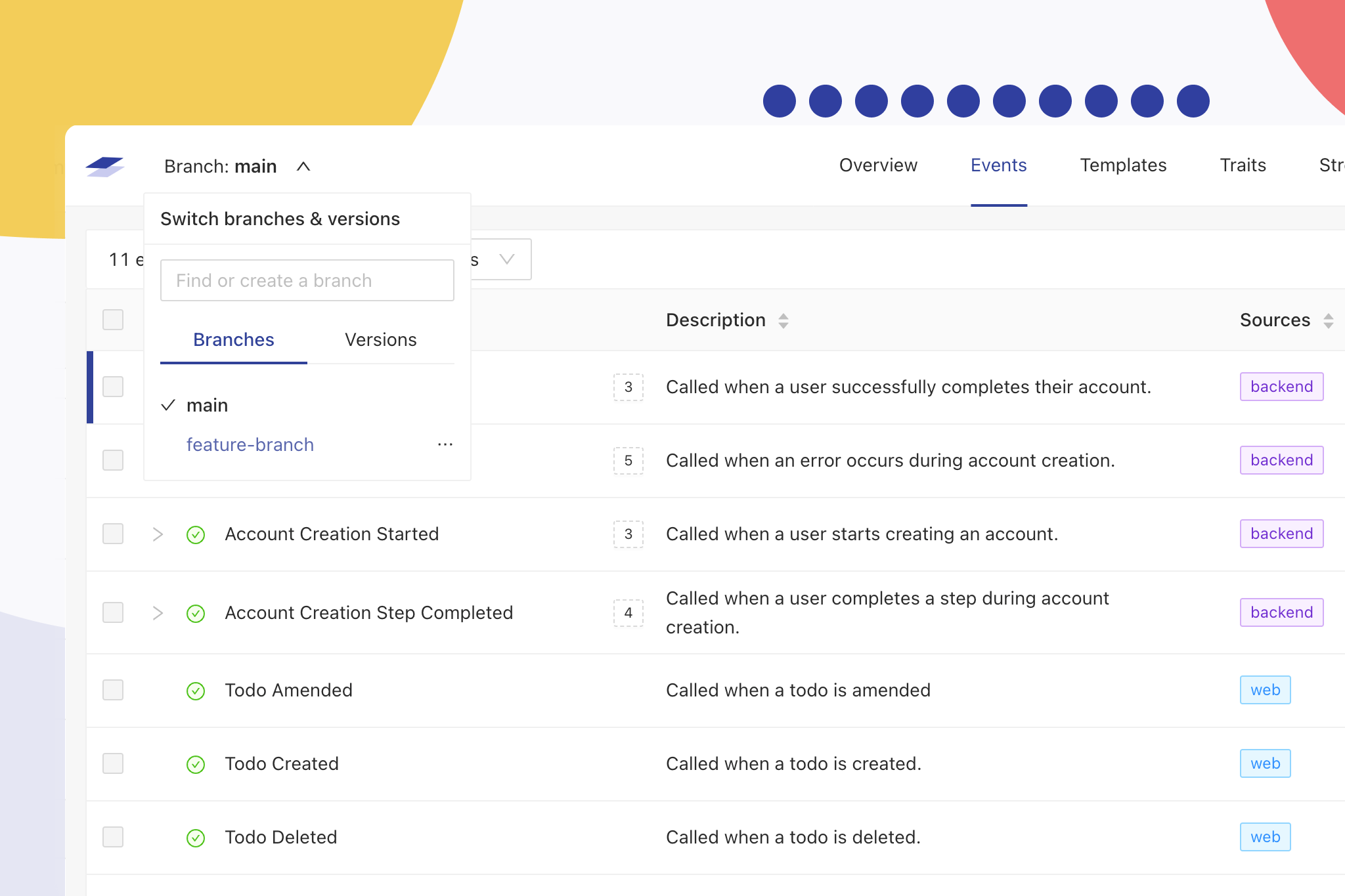
Image Credits: Iteratively

In a lot of companies, the data producers and data consumers don’t really talk to each other — and if they do, it’s often only through a spreadsheet or wiki. Iteratively aims to provide a collaborative environment to bring these different groups together and create a single source of truth for all stakeholders. “Typically, there’s a handoff process, either on a JIRA ticket or a Confluence page or spreadsheet, where they try to hand over these requirements — and generally, it’s never really implemented correctly, which then causes a lot of pain points down down the line,” Thompson explained.

Currently, Iteratively focuses on event streaming data for product and marketing analytics — the kind of data that typically flows into a Mixpanel, Amplitude or Segment. Iteratively itself sits at the origin of the data, say an app, and then validates the data and routes it to whatever third-party solution a company may use. That means the tool sits right where the data is generated, but this setup also means that none of the data ever flows through Iteratively’s own servers.

Image Credits: Iteratively

“We don’t actually see the data,” Thompson stressed. “We’re not a data set processor. We’re a wrapper over the top of your own analytics pipeline or your own third party SaaS tools, but we verify the payloads as they flow through our SDK on the client.”

Over time, though, that may change, he acknowledged and Iteratively may do some data processing as well, but likely with a focus on metadata and observability.

Since the company doesn’t actually process any of the data itself, it’s charging customers by seat and not based on how many events move through their pipelines, for example. That may obviously change over time as the company looks into doing some data processing on its side as well.

Currently, Iteratively has about 10 employees and plans to grow that to 20 by the end of the year. The company plans to hire across R&D, sales and marketing.

Iteratively‘s software has a unique approach to enabling company-wide collaboration and enforcing data quality,” said Gradient’s Bratun-Glennon. “Going forward, we believe that intelligent analytics and data-driven business decision making will differentiate successful companies and best-in-class products. Iteratively‘s mission, product and team are poised to give each of their customers these capabilities.”

04 Feb 2021

Extra Crunch is now hiring for reporter, editor and project manager positions

Extra Crunch is about to turn two years old and we now have a lot of demanding subscribers. Readers tell us that they want more articles — in even more depth — about the latest trends in early-stage startups and tech industries around the world.

We’re hiring for three key additional roles right now to help make this happen, including a project manager, a desk editor and a daily reporter.

If you think one of these positions is for you, please email a resume and a two-paragraph description of your interest and qualifications to ec_editors@techcrunch.com.

Daily reporter

We’re looking for someone who loves data-driven research and reporting to help us figure out what’s really going on across the world of new startups. You’ll work closely with the Extra Crunch core team to dig into emerging topics and ideas, chase down the right data and experts and put it all together in a multi-author newsletter with us.

Responsibilities:

  • Data-driven researching and reporting as needed for daily newsletter
  • Writing assignments for daily newsletter
  • Writing other assigned Extra Crunch articles from time to time

Qualifications:

  • Proven experience in tech and business reporting or in other fields that involve a lot of research related to startups
  • Strong internal motivation to figure out how the world really works
  • General interest in startups and technology
  • Ability to work closely in a small team

Compensation:

  • Freelance with flexible structures of 20+ hours of work per week
  • Highly competitive pay rates based on your qualifications
  • Remote-only

Desk editor

We’re looking for an editor who can bring clarity and nuance to any article they touch. The finer points of editing can make all the difference in how our readers understand the ideas we’re sharing. In this role, you’ll work closely with Extra Crunch editors to produce great articles from a wide range of writers.

Responsibilities:

  • Editing article drafts line by line for clarity, relevance and accuracy
  • Managing components of our product in WordPress, including some tagging and landing page content as directed
  • Updating components of our overall editorial calendar system
  • Communicating with Extra Crunch editors, TechCrunch staff and industry guest columnists as part of the production process

Qualifications:

  • Comfort with AP style
  • General awareness of the technology startup ecosystem as it exists in 2021
  • General awareness of the U.S. and global business environment as it exists in 2021
  • 5+ years editing in a journalistic environment preferred

Qualified applicants will be asked to complete an editing test as part of our hiring process.

Compensation:

  • Freelance with flexible structures of 20+ hours of work per week
  • Highly competitive pay rates based on your qualifications
  • Remote-only

Project manager

Extra Crunch relies on a number of internal databases to help us produce insightful articles. A main one right now is The TechCrunch List, which features hundreds of investors across 22 technology industries across the world, based on thousands of founder recommendations we get about that key person who wrote the first check — but there are more active and in the works. We need someone who can manage this whole system in close collaboration with Extra Crunch editors as it expands.

Responsibilities:

  • Producing internal data views for the TechCrunch editorial staff to produce articles with, using our databases and tools
  • Updating and analyzing our startup-focused databases using information from the editorial staff, other parts of TechCrunch (events, newsletters, etc.), and other sources
  • Communicating with founders, investors and others in the startup ecosystems that we cover
  • Developing new ways to use our existing databases
  • Developing and implementing new ideas together with the Extra Crunch team

Qualifications:

  • Proven ability to work with data tools like Airtable, Google Sheets and Excel
  • Passion for great data structure and process
  • Experience managing data-driven projects from idea through to analysis of results
  • General interest and familiarity with the startup world

Compensation:

  • Freelance with flexible structures of 20+ hours of work per week
  • Highly competitive pay rates based on your qualifications
  • Remote-only

If you think one of these positions is for you, please email a resume and a two-paragraph description of your interest and qualifications to ec_editors@techcrunch.com.

04 Feb 2021

Space Cargo Unlimited looks to space to make wine grape vines more resistant to climate change

The commercialization of space isn’t just about what new sensors we can put into orbit on cheaper and smaller satellites — it’s also about studying and leveraging the advantages of a microgravity environment on manufacturing and production. European startup Space Cargo Unlimited is focused on turning microgravity benefits into viable commercial ventures on Earth, and it just announced it will be working with global vine nursery company Mercier on applying the benefits of space to create more-hardy wine grape vines.

Space Cargo Unlimited has already done some work on how microgravity can impact wine — it shipped a crate of red wine to the International Space Station in 2019, and then returned it to Earth last year after a full 12 months aging aboard the station in near zero-G. Now, the startup has formed a subsidiary dedicated to in-space biotech specifically, Space Biology Unlimited, and it’s going to be the one working with Mercier on figuring out how to grow new grape vine varietals that are more resistant to changes in the climates in which they grown.

In addition to the case of Bordeaux that Space Cargo Unlimited sent up, the company also sent 320 vine canes (basically the core structure of a vine that results from the maturation of the juvenile shoot), and it just recently received those back on SpaceX’s cargo return trip from the ISS. Those canes, half from Cabernet grapes and half from Cabernet Sauvignon, have shown “unprecedented biological changes” according to Mercier CEO Guillaume Mercier in a statement. They’ll now be cloned and studied to see if they provide any advantages in terms of potential for growth on “our fast-warming planet,” he added.

Everything from battery production, to additive manufacturing, to basic chemical and medical manufacturing has been tested in a microgravity environment. Microgravity can reduce the physical strain of gravity, most obviously, to make production of complex structures possible where it wouldn’t be on Earth. The unique environment, which also includes a much different radiation profile, also leads to unexpected variances in the growth and development of organic structures that, while they don’t occur naturally on Earth, can sometimes be replicated to achieve useful outcomes.

The effects of microgravity have been studied using the ISS for years, but more affordable and frequent access to space has made it a much more promising commercial avenue for many companies and startups that previously wouldn’t have been able to justify the associated costs or time frames around the work. Space Cargo Unlimited is one of the companies that looks well-positioned to capitalize on this growing trend.

04 Feb 2021

Space Cargo Unlimited looks to space to make wine grape vines more resistant to climate change

The commercialization of space isn’t just about what new sensors we can put into orbit on cheaper and smaller satellites — it’s also about studying and leveraging the advantages of a microgravity environment on manufacturing and production. European startup Space Cargo Unlimited is focused on turning microgravity benefits into viable commercial ventures on Earth, and it just announced it will be working with global vine nursery company Mercier on applying the benefits of space to create more-hardy wine grape vines.

Space Cargo Unlimited has already done some work on how microgravity can impact wine — it shipped a crate of red wine to the International Space Station in 2019, and then returned it to Earth last year after a full 12 months aging aboard the station in near zero-G. Now, the startup has formed a subsidiary dedicated to in-space biotech specifically, Space Biology Unlimited, and it’s going to be the one working with Mercier on figuring out how to grow new grape vine varietals that are more resistant to changes in the climates in which they grown.

In addition to the case of Bordeaux that Space Cargo Unlimited sent up, the company also sent 320 vine canes (basically the core structure of a vine that results from the maturation of the juvenile shoot), and it just recently received those back on SpaceX’s cargo return trip from the ISS. Those canes, half from Cabernet grapes and half from Cabernet Sauvignon, have shown “unprecedented biological changes” according to Mercier CEO Guillaume Mercier in a statement. They’ll now be cloned and studied to see if they provide any advantages in terms of potential for growth on “our fast-warming planet,” he added.

Everything from battery production, to additive manufacturing, to basic chemical and medical manufacturing has been tested in a microgravity environment. Microgravity can reduce the physical strain of gravity, most obviously, to make production of complex structures possible where it wouldn’t be on Earth. The unique environment, which also includes a much different radiation profile, also leads to unexpected variances in the growth and development of organic structures that, while they don’t occur naturally on Earth, can sometimes be replicated to achieve useful outcomes.

The effects of microgravity have been studied using the ISS for years, but more affordable and frequent access to space has made it a much more promising commercial avenue for many companies and startups that previously wouldn’t have been able to justify the associated costs or time frames around the work. Space Cargo Unlimited is one of the companies that looks well-positioned to capitalize on this growing trend.

04 Feb 2021

Leafly and Jane partner to build a better online cannabis shopping experience

Today, two giants of the cannabis industry are announcing a partnership to create an improved retail experience for consumers and dispensaries alike. Through this partnership, Leafly and Jane’s technology solutions will offer dispensaries powerful tools to sync online e-commerce with in-store inventory — something that is sorely lacking in the cannabis world.

Legal weed shoppers know the pain. A handful of different apps report to show the inventory of local dispensaries and often do not line up with the store’s real-time inventory. What’s more, sometimes other dispensaries have different ways of listing the same product. There’s a good reason for the dispensaries: there’s not an industry standard UPC barcode and the dispensaries often have hundreds of fast-moving SKUs from dozens of vendors.

Leafly and Jane’s partnership seeks to solve the pain on both sides of the counter. Jane’s technology enables dispensaries to build a modern e-commerce platform through automation and machine learning. Jane’s technology will soon be built into Leafly’s Menu Solutions that works with over 30 point-of-sale systems. This should result in less tedious work for the dispensaries and a much more consistent online experience for the shopper.

Jane and Leafly have deep inroads into the cannabis world. According to this announcement’s press release, over the past year, Jane’s solution powered over 17 million orders and $2 billion in cannabis sales. Over 1,800 dispensaries and brands use Jane. Likewise, in 2020, more than 4,500 cannabis retailers used Leafly’s platform, and the company saw 120 million visitors to its online marketplace.

Despite the successes, Leafly experienced a turbulent 2020 with layoffs and leadership changes. Yoko Miyashita took over as the company’s CEO in August 2020 and has been focused on Leafly leaning heavily into building a better online shopping experience.

Right now, in early 2021, there isn’t an Amazon of weed or even a Shopify of weed for several reasons, but primarily because the cannabis industry is still under a federal prohibition. This solution pushes the cannabis industry closer to a modern e-commerce business. With Jane’s ability to standardize and auto-populate product listings, and Leafly’s deep point of sale integrations, both the consumer and dispensary sees benefits.

TechCrunch spoke to Leafly and Jane’s CEOs on this partnership. It’s clear that the two are excited about this project and see this partnership as a watershed moment for retail cannabis.

“[Dispensaries] don’t have a solution that can be seamless like a Shopify or Amazon,” Jane’s CEO Socrates Rosenfeldsaid. “I think, together with Jane’s ability to cleanse information in real-time, and essentially automate e-commerce for large brick and mortar selling sellers, combining that with Leafly’s consumer marketplace, we are making shopping for cannabis as simple as shopping on Amazon.”

TK explained that he sees this partnership goes behind an Amazon-like shopping experience. He sees this as a way of returning value and protecting local dispensaries by empowering them with technology.

“The problems in cannabis are unique enough, and the plant has a complexity that we want to honor,” Leafly CEO Yoko Miyashita said. We don’t think we can get there with antiquated ways of doing things. It’s bringing the intentionality around shared values to innovate and ultimately empower the communities that we serve.”

04 Feb 2021

Okta launches its new open-source design system with a focus on accessibility

Identity and access management service Okta today launched its new design system, both for its own corporate and brand use, but also as an open-source project under the Apache 2.0 license. The Odyssey Design System, as the company calls it, is similar to the likes of Google’s Material Design or Microsoft’s Fluent Design. It may not have quite the same number of features, but what makes it stand out is a focus on accessibility, with every element of the design system being compliant with the W3’s Web Content Accessibility Guidelines.

Brian Hansen, Okta’s SVP of Design, told me that until now, the company didn’t really have a unified design system. Instead, it had what he called a “glorified pattern library.” And while the engineers loved it, because it allowed them to build new UIs quickly, it was hard for the team to add new patterns. “And so it was limited in what it could do,” Hansen said. “And what you ended up having to do sometimes is compromise — particularly as a designer — and kind of shove the square peg into the round hole.”

Image Credits: Okta

Now that Okta has moved beyond its early startup roots, though, the team decided that it was time to go back to the drawing board and build a more fully-featured design system for the company — and you may soon see it yourself in Okta’s sign-in widget, which is where most users are likely to encounter it. But it’s worth remembering that Okta, the platform, also offers a plethora of backend tools for admins that most users never see. Those admins typically want a very information-dense user experience and a design that makes it easy for them to get things done and move on. Okta’s third group of users, Hansen stressed, is developers and what matters a lot to them — in addition to all the technical details — is documentation, which has to be easily readable (from a design perspective).

As Hansen noted, though, internally, it wasn’t a realistic project to simply switch every surface area to Odyssee at once. “As a designer, you want everything to be perfect all at once. But you also have to be pragmatic and live with some things that aren’t perfect,” he acknowledged. So while the Okta brand is now getting this refresh and some of the user-facing services, it’ll take a while before every Okta service can make this move.

For the admin console, for example, Hansen’s team decided that it would take years to switch out the UI. So instead, the team opted for a bridge strategy where it created the style sheets to essentially mimic the Odyssee design. “Then we can cut over to Odyssee-native components and they’ll blend in. We can’t have a Franken app — we can’t have two different generations of UI coexisting. That to me just ruins trust. No one would be happy with that,” Hansen said.

Developers who want to give Odyssee a try for their own projects can do so and explore the different components it has to offer. And designers can try it out in Figma, too.

04 Feb 2021

Microsoft launches Viva, its new take on the old intranet

Microsoft today launched Viva, a new “employee experience platform,” or, in non-marketing terms, its new take on the intranet sites most large companies tend to offer their employees. This includes standard features like access to internal communications built on integrations with SharePoint, Yammer and other Microsoft tools. In addition, Viva also offers access to team analytics and an integration with LinkedIn Learning and other training content providers (including the likes of SAP SuccessFactors), as well as what Microsoft calls Viva Topics for knowledge sharing within a company.

If you’re like most employees, you know that your company spends a lot of money on internal communications and its accompanying intranet offerings — and you then promptly ignore that in order to get actual work done. But Microsoft argues that times are changing, as remote work is here to stay for many companies, even after the pandemic (hopefully) ends. Even if a small percentage of a company’s workforce remains remote or opts for a hybrid approach, those workers still need to have access to the right tools and feel like they are part of the company.

Image Credits: Microsoft

“We have participated in the largest at-scale remote work experiment the world has seen and it has had a dramatic impact on the employee experience,” Microsoft CEO Satya Nadella said in a pre-recorded video. “As the world recovers, there is no going back. Flexibility in when, where and how we work will be key.”

He argues that every organization will require a unified employee experience platform that supports workers from their onboarding process to collaborating with their colleagues and continuing their education within the company. Yet as employees work remotely, companies are now struggling to keep their internal culture and foster community among employees. Viva aims to fix this.

Unsurprisingly, Viva is powered by Microsoft 365 and all of the tools that come with that, as well as integrations with Microsoft Teams, the company’s flagship collaboration service, and even Yammer, the employee communication tool it acquired back in 2012 and continues to support.

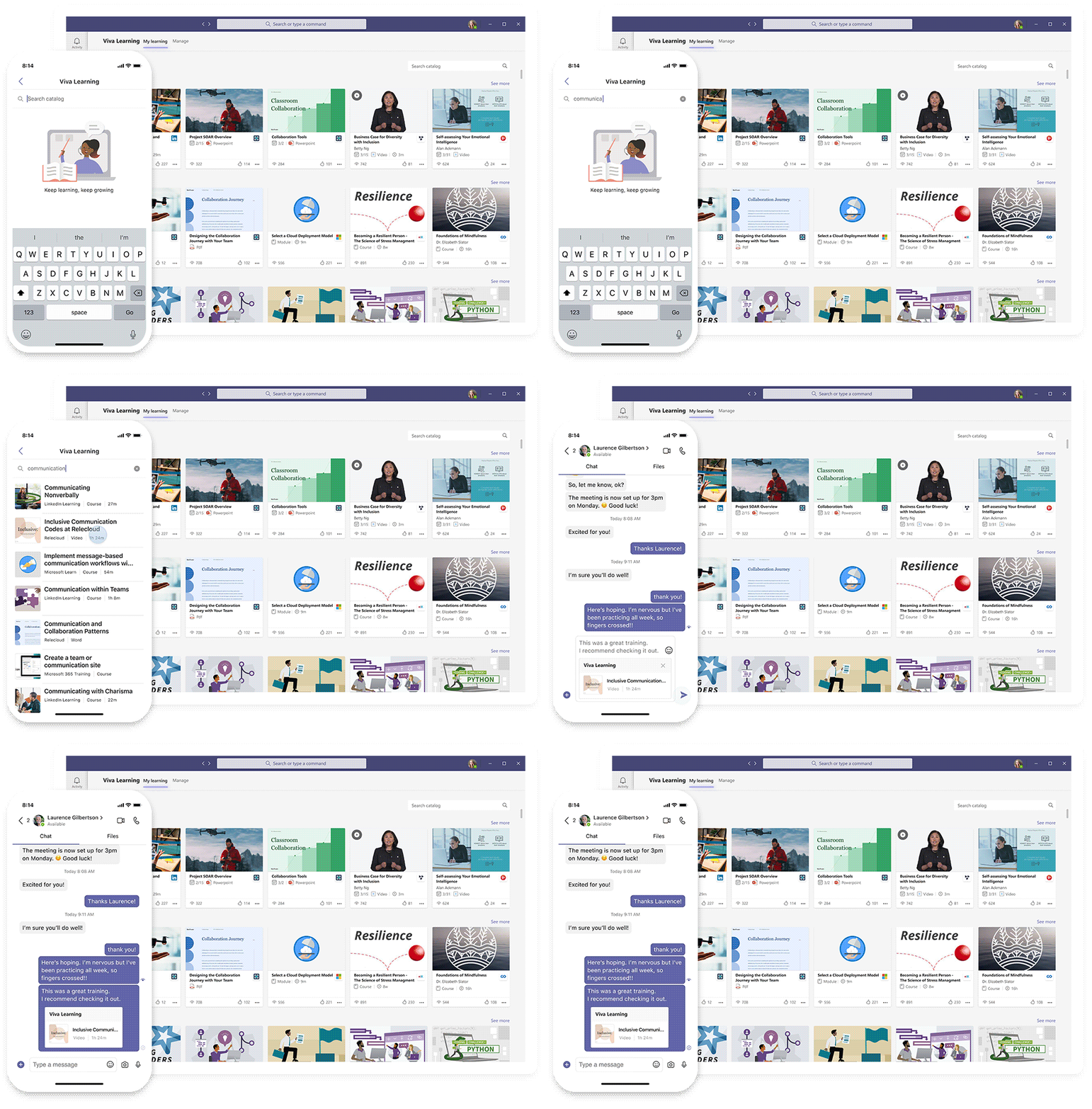
There are several parts to Viva: Viva Connections for accessing company news, policies, benefits and internal communities (powered by Yammer); Viva Learning for, you guessed it, accessing learning resources; and Viva Topics, the service’s take on company-wide knowledge sharing. For the most part, that’s all standard fair in any modern intranet, whether it’s from a startup provider or an established player like Jive.

Viva Insights feels like the odd one out here, especially after Microsoft’s kerfuffle around its Productivity Score. The idea here is to give managers insights into whether their team (but not individual team members) are at risk of burnout, for example, in order to encourage them to turn off notifications or set daily priorities (a good manager, I’d hope, could do this without analytics, but here we are, in 2021). It’s also meant to help company leaders “address complex challenges and respond to change by shedding light on organizational work patterns and trends.” Sure.

Because this is Microsoft in 2021, there’s also a lot of talk about employee well-being in today’s announcement. For most employees, that means fewer meetings, more focus time and turning off notifications after work. Obviously there are technical tools to help with that, but it’s really a question of company culture and management. I’m not sure you need analytics integrated with LinkedIn’s Glint for that, but you can now have those, too.

“As the world of work changes, the next horizon of innovation will come from a focus on creativity, engagement and well-being so organizations can build cultures of resilience and ingenuity,” said Jared Spataro, corporate vice president, Microsoft 365. “Our vision is to deliver a platform for the employee experience that helps organizations create a thriving culture with engaged employees and inspiring leaders.”

04 Feb 2021

Tovala, the smart oven and meal kit service, heats up with $30M more in funding

With more of us spending significant amounts of time at home because of Covid-19, our attention has turned increasingly to how and what we eat. Today, one of the startups that has seen a lift in its business as a result of that is announcing a round of funding to expand its operations.

Tovala, the smart oven and meal kit service — has closed a Series C of $30 million. David Rabie, the Chicago startup’s co-founder and CEO, told TechCrunch that it plans to use the funding in large part to open a second facility, most likely in Utah, to help with fresh food distribution to the western half of the U.S. Other investments will include improving customer service and bringing in more talent.

It will also slowly start to bring in more options for pre-made meals and recipes: Rabie said it is working on ways of working with leading restaurants and chefs to create meals to sell and cook in the Tovala oven.

“We think we can come closer to the restaurant experience because of the oven,” said Rabie. “By pre-making food rather than just reheating, we think we can open up reach for a local restaurant.”

The funding is being led by Left Lane Capital, with Finistere Ventures, Comcast Ventures, OurCrowd, Origin Ventures, Pritzker Group Venture Capital, and Joe Mansueto — all previous backers — also participating.

Originally incubated a Y Combinator, Tovala has attracted other interesting investors in the company, including poultry giant Tyson. Notably, this is the second round of funding for the startup in the space of six months, after it picked up $20 million in a Series B last June.

As with that round, the valuation is not being disclosed, but the company has hit some significant numbers, evidenced by this funding, which points to how its value may well be on the rise. Annualized revenue grew tenfold in the last 18 months (that is, including growth before Covid-19); employee numbers were up 40%; the company has passed 3 million meals shipped; and the company says that their ovens are being used 32 times on average each month by their owners (stats it can rack up because those devices are connected).

It is still not disclosing total user numbers, Rabie said.

Tovala’s oven sells for $299, but the company usually knocks off $100 if you also commit to six of its $11.99 meals over the next six months. Right now — possibly to tap into the wave of people who are rethinking how they eat in the wake of restaurant closures and simply spending more time at home — it seems Tovala is offering discounts of up to $130 to those buying the oven without the meal obligation, dropping the oven price down to about $170.

In addition to the company’s own pre-made meals, Tovala’s oven can cook hundreds of pre-made dishes and meals sold in stores by way of scanning package barcodes; and recipes that it devises and you can make yourself and program the oven to cook by way of the Tovala app. You can also use it in the same way that you might use any countertop oven, to toast, steam, bake and broil whatever you choose to independent of all that.

A profusion of meal kit and food delivery businesses have changed how a lot of people think about food at home, and Tovala has been building out a business in the hopes that it can cover a specific niche: people who want to eat fresh food they cook at home, but who don’t have time or interest in putting those meals together — not even when they come with items precut and measured by meal kit companies.

However, that is just one side of the business: Tovala’s ovens, Rabie said, are a central part of the vertical integration that the company has built, and they are here to stay as part of the proposition.

“We are in the business of getting high quality meals to people, and the oven is our vehicle for doing that,” he said. “We are both a tech and food company, and at no point do I see us getting out of oven business.”

Having said that, the company is also expanding with partnerships with others that produce ovens, too. Specifically, Tovala has a deal with LG to embed its software in LG ovens, to enable them to cook Tovala’s meals and the other dishes that can be programmed with its app an barcode scanning system. Rabie said the deal made sense since the kinds of full-sized ovens that will run Tovala’s software are “not the kind of product line that we will get into.”

It appears that LG is not an investor, and it’s not clear when these new devices will be rolled out: the deal between the two was announced back in 2019.

That partnership is a mark of how the hardware companies that are building connected appliances, and services around them, are knitting together more closely with incumbents to take their next scaling steps. In at lest two instances that has led to those startups getting acquired: BBQ giant Weber acquired June (which it had also invested in) earlier this year; and previously Electrolux acquired pressure cooker company Anova for $250 million.

An exit of that kind may or may not be on the menu for Tovala, but it’s a signal of the options that the startup has for moving from appetiser to main course in the future.

Rabie had told me that Left Lane’s interest was based on how it saw Tovala as a “Peloton”-like category definer for smart food preparation at home, in part because of how it could become part of a person’s daily habits and routines.

“The pairing of a meal subscription with a connected device has enabled Tovala to achieve a customer retention rate that is a step-function better than anything else we’ve seen in food delivery — in many ways similar to what Peloton achieved in a traditionally low-retention fitness industry,” said Jason Fiedler, co-founder and managing partner at Left Lane Capital, in a statement. “Our team brings a proven track record of investing in category-defining consumer subscription businesses, and we’re excited about Tovala’s potential to be the next major food tech company.” Fiedler is joining the board.

04 Feb 2021

A growing number of startups are creating APIs to assess and offset corporate carbon emissions

It was only a matter of time before application programming interfaces came for the carbon credit offsets — the voluntary programs that allow companies to cancel out their greenhouse gas emissions (on paper) by financing renewable energy projects or carbon sequestration projects globally.

Massive e-commerce and payments companies Shopify and Stripe are already providing emissions offsets as a service for their customers, but now a clutch of startups are looking to automate the process through software.

Among them are Cloverly, a startup launched internally by the massive southeastern utility, Southern Company; Patch, which was launched by two alums from the apartment management and short-term rental service, Sonder; Cooler.dev and now Pachama, which operates its own international offset marketplace focusing on reforestation and forest management.

It’s part of a new movement among early stage companies to launch services for businesses and consumers that offer ways to examine and reduce their environmental footprint.

For Pachama, the idea of incorporating an API into the business model was baked into the business plan from the beginning, according to the company’s co-founder and chief executive, Diego Saez Gil.

“Things got accelerated when we closed Shopify as a customer,” Gil said. “Shopify wanted to offer carbon neutral services. And they do. And we are already selling carbon credits to them, but we we were processing orders in a manual way… If you want to do this at scale, you need to automate the purchase of credits.”

Things accelerated for Pachama after the company inked another deal with the massive logistics company, Shipbob, which is offering their customers carbon neutral fulfillment services, Gil said.

In contrast with companies like Patch and Cloverly, Gil feels Pachama has an advantage thanks to its ability to tap its own offset marketplace to provide credits.

“We have the marketplavce and verification and monitoring service for everything that we bring through our platform,” Gil said.

Having this kind of background could provide greater transparency into the quality of the offsets on offer.

Carbon offsets have proven to be a useful, if fraught, mechanism for combating climate change. While most projects provide real benefits to communities in the form of renewable energy or reclaimed forestland or the preservation of existing forests and land, there can be problems with double counting or simply fraudulent projects whose value as a carbon offset is overstated.

A series of articles from Ben Elgin at Bloomberg News underscore the breadth of the problem, which even managed to include projects from well respected organizations like The Nature Conservancy.

“This comes to the question of net additionality,” said Gil. “What is the actual additional carbon sequestration or carbon avoidance of everything that’s around the project… We need to have a science based approach and very conservative assumptions when assessing the value of offsets.”

Transparency and accountability are critical to the development, monitoring and management of these kinds of offsets, especially as these offsets assume a more central role for companies looking to dramatically reduce the greenhouse gas emissions associated with their operations.

And these offsets are only a stop-gap measure. Ultimately businesses need to remove carbon emissions from their own operations as quickly as possible to reduce the risk of climate change having an even greater impact on society.

“It’s super exciting to me that there are a lot of companies that want to offer carbon neutral services. That’s going to become the norm, and they’re going to do it because customers want that,” said Gil.


04 Feb 2021

Joompay launches its bill-splitting payment app across Europe to take on Transferwise and others

Joompay, a startup with an iOS and Android app similar to Venmo and TransferWise, has now launched in Europe after obtaining a Luxembourg Electronic Money Institution (EMI) license. The app allows people to send and receive money with anyone, instantly and for free. However, it enters a crowded market, competing with peer to peer payment features from the likes of Revolut, N26, Monese and Monzo. Joompay was started by the founders of Joom, an ecommerce marketplace.

Users just need to know an email or a phone number to send money to someone — or a custom paytag that does not reveal any personal details. They can jointly pay a bill, make purchases online and send money to someone in another country. It also allows users to create customizable payment pages, share their personal Joompay URL, collect money from customers, and receive donations, not unlike Paypal.

“The app has been engineered to deliver a best-in-class and the first pan-European experience of peer-to-peer payment solutions,” Yuri Alekseev, CEO and co-founder of Joompay said in a statement. “The increasing popularity of non-cash payments during the pandemic ensured us that now is an excellent opportunity for further development.”

In December, Joompay became a Principal Member of the Visa card scheme, allowing it to issue its new Joompay cards across Europe.