
Year: 2021

28 Jan 2021

Online wholesale retailer Boxed taps Aeon for Asia expansion

Boxed, the New York-based online retailer that sells and delivers bulk-sized groceries, makes its foray into Asia by partnering with Aeon, one of Asia’s largest brick-and-mortar retail operators.

Unlike its consumer-focused business in the U.S., which has been described as “Costco for millennials,” Boxed is exporting its nascent software-as-a-service solution to Aeon in Malaysia. As part of the tie-up, the American startup will create an end-to-end e-commerce solution to aid Aeon’s digital transformation, which includes a storefront platform and inventory-picking software. Boxed declined to disclose the value of the deal but said it’s in the “several tens of millions of dollars.”

Malaysia, which is home to more than 30 million people, is Boxed’s first stop in Asia and Aeon’s biggest market outside its home base of Japan. Aeon employs some 10,000 staff in Malaysia, where it has pledged to spur local employment amid the pandemic through its virtual mall.

With Boxed’s technology, Aeon customers will have the flexibility to pick their chosen number of items and have them shipped in a box to their doorstep. Boxed doesn’t intend to provide last-mile delivery in Asia but will instead tap local courier services. Grab, for instance, is a potential partner, Boxed co-founder and CEO Chieh Huang told TechCrunch in an interview.

Foray into Asia

Through a mutual friend, Huang got in touch with Aeon, which was established 263 years ago in Japan and today operates 21,000 locations, from clothing chains, convenience stores to general merchandise stores, across 14 countries.

Working with Aeon was challenging at first, Huang said, as there were differences not only in time zones but also in cultural norms due to Aeon’s colossal size. It took numerous in-person meetings and international calls to eventually bridge the gap.

The partners are also exploring opportunities to work together in other Southeast Asian markets. Boxed will keep its enterprise-facing angle by licensing software to local retailers rather than expanding its consumer business to the region, which is already crowded with established e-commerce players like Shopee, Lazada and Tokopedia.

Digitizing traditional retailers

An Aeon mall / Source: Aeon

Prior to the SaaS deal, Aeon was already an investor in Boxed. In 2018, it led the e-commerce startup’s $111 billion Series D funding round so it could tap Boxed’s intel in retail digitization. Huang believed his company was chosen because it was one of the few e-commerce operators alongside JD.com and Amazon that have full control over the supply chain and users’ purchasing experience.

Boxed builds its own warehouse robots as well because “we are able to do it much cheaper ourselves than buying the robots,” argued Huang. “Most of the robots are very advanced because they are not able to control the environment. We own the fulfillment center so we can delete a lot of the things that are expensive, such as Lidar.”

Furthermore, the startup’s “box” model helps flat out the costs of shipping with each incremental item delivered, giving the platform a price advantage, the founder said.

Future of Boxed

Founded in 2013, Boxed has accumulated over seven million registered users. With a staff of 500 employees across the U.S., it’s now generating hundreds of millions of dollars in annual revenue.

In all, Boxed has raised over $270 million. Since its last financing round in 2018, the company has had little publicity. During that time Boxed was focused on fine-tuning its retail software solution, which has become its second and more profitable line of business. The firm’s margin is improving every year and getting close to profitability in 2021, said Huang. And like other e-commerce companies, Boxed saw growth in user demand through the pandemic.

Going public is “always on our mind,” said Huang. “I think it will surprise a lot of people how close we are to profitability.”

Reuters reported in September that Boxed was weighing up “a sale or going public through a merger with a blank-check acquisition company that could value it at around $1 billion.” To that, the startup gave a somewhat indefinite response:

“As a result of the shift to online, we’ve also seen increased demand from many parties looking to partner with us to accelerate growth both in our marketplace and new SaaS business. We are thoughtfully considering these options when it comes to the long-term success of Boxed.”
28 Jan 2021

Tecera launches with $225M to fund cloud consulting firms

As we move deeper into a cloud-centric world, everything was supposed to get easier, but in truth there’s a lot of moving parts, and companies need help getting everything to work. This takes people with a particular set of skills to help clients with tasks like integrations, managing hybrid and multi-cloud environments and getting data where you need it.

Tecera, a new venture capital firm launching today wants to attack this problem by investing in companies that can act as helpers and consultants. In a world where venture capital tends to gravitate mostly towards software and hardware, this is a distinctly different investment thesis.

Chris Barbin, founder and CEO at Tecera knows quite a bit about this. He was one of the founders at Appirio, a consulting firm founded way back in 2006 when cloud computing as we know it today was just getting off the ground. His former company had the vision and the foresight to start a firm to help companies use new tools like Salesforce, Google, Workday and AWS. Wipro bought the company in 2016 for $500 million after it had raised over $117 million, according to Crunchbase data.

Barbin believes that today, the level of complexity has only increased, and there will be a growing need for what he calls this people power to make everything work, and that takes a specialized kind of investor. “There’s been a flurry of investment activity into professional services-based companies over the last couple of years, but there’s never been an investment firm that is exclusively focused on these types of businesses,” Barbin explained.

During the firm’s research phase, the founders identified key platform companies like Salesforce, Twilio, Snowflake, DataDog and Cloudflare, and they estimate that there are between 7500 and 10,000 consulting companies supporting companies like this. “The goal of the firm is to help create a kind of a powerhouse for those emerging [platforms], or a firm or two that actually has the collection of those [SaaS platforms] in their toolkit,” he said.

The company will be targeting established firms with revenue between $5 and $20 million with aspirations to grow into the hundreds of millions, and will be doling out investments of between $5 and 20 million of capital per bet.

The firm is just getting started, but plans to have 8 employees by mid-year. Barbin indicated at least one investment was already in the pipeline, but wasn’t ready to give details just yet.

28 Jan 2021

Heights raises $2M for its subscription supplements aimed new ‘braincare’ category

New wellness startup Heights is formally launching this week, focusing on a category it describes as ‘braincare’. The startup will market “ultra high quality, sustainable plant-based supplements that feed your brain” based on what it says is scientific data.

It has raised a $2 million Seed funding round (£1.7M) via the Seedrs crowdfunding platform, with the round also including the institutional investor Forward Partners. Angel investors include Tom Singh (founder of New Look), Damian Bradfield (WeTransfer), Dhiraj Mukherjee (Shazam), Renee Elliot (Planet Organic), and celebrity investor Chris Smalling (an England and Manchester United professional footballer).

The funds will be used for customer growth and new product development, including soon-to-launch a ‘psychobiotic‘ probiotic aimed at cognition and mental health.

Customers first take a ‘brain health’ survey, then sign up for a monthly, quarterly, or annual subscription.

Customers need only take two capsules a day, thus hugely decreasing the complexity of juggling regular vitamin taking.

The product fits through a letterbox and the unusual bottle was designed by the well-known product design agency Pentagram. A content and coaching program included in the subscription helps customers, and another brain health survey happens after a month. Heights claims that “93%” improve their brain health score within one month.

Heights is not alone in this new market for what some describe as ‘designer vitamins’ and the arena is already populated by the likes of Hims / Hers, MotionVitabiotics and Bulletproof.

These companies broadly fall into the “Nootropics” category — vitamins and minerals designed to improve cognitive function, memory, creativity, or motivation, in healthy individuals. But the market is not small. The ‘self care’, ‘healthcare’, and ‘personal development’ market is worth over $1Trillion but supplements alone is worth at least $100BN+.

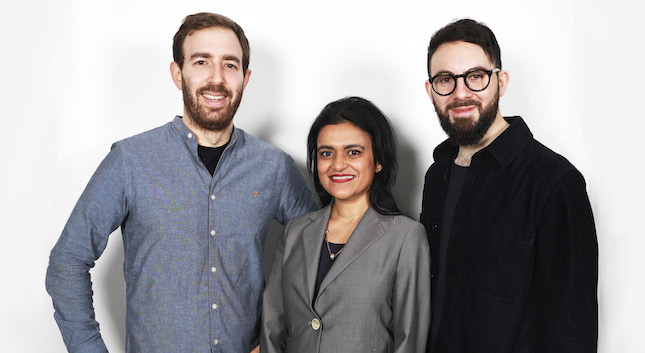
Heights founders Dan Murray-Serter and Joel Freeman, with adviser Dr Tara Swart.

Heights founders Dan Murray-Serter and Joel Freeman, with adviser Dr. Tara Swart.

However, co-founder Dan Murray-Serter says Heights is aiming to do something different to the aforementioned players.

In a text-based interview, he said: “Nootropics as a category really focus on quick fixes, which is why we’re working on the category creation of ‘braincare’ because there are no ‘quick fixes’ in life, and that terminology and category have essentially set people up with the same false hopes as ‘get-rich-quick’ schemes do. We’re set up differently — aka, starting with scientifically researched articles and journal references.”

He said Heights will be positioned more like a skincare or haircare brand, “because people understand that the daily habit/practice is what creates the longevity and impact, not just a one-day miracle.”

Murray-Serter says there are 20 key nutrients science says our brains need to thrive, and these are mostly found in a combination of buying multivitamins, omega 3s, and ‘nootropics’. He says Heights has sourced the “highest quality” ingredients in the most ‘bioavailable form’ in a patented capsule which makes it easier to digest for the body.

“One of the most common reasons the habit of taking vitamins doesn’t stick for people is that the bottle goes into a cupboard and gets ignored. So we started with design alongside quality,” he says. The Heights vitamins come in a distinctive, recyclable bottle which Heights will also aven recycle if you send it back to them.

Murray-Serter, who previously founded the mobile startup Grabble, says he came up with the idea for the startup after a bout of chronic anxiety and a 6 month-long period of insomnia. The problem was solved by high-quality, high-density vitamins and supplements, as opposed to normal supplements which usually only have the lowest recommended daily levels of vitamins inside them.

After starting a newsletter on the subject of optimizing cognitive performance with cofounder Joel Freeman, the pair amassed a following of 60,000 readers www.yourheights.com/sundays

and then came up with the idea of launching the actual product.

The company now has a ‘Braincare‘ podcast that has reached 100,000 downloads, and the founders have also been joined by key team member Chief Science Officer, Dr Tara Swart (pictured).

Two things may help Heights. Firstly, in the era of Covid-19, public health authorities and governments around the world have recommended taking Vitamin D to boost the body’s immune system should someone fall prey to the disease. It’s not insignificant that two Heights capsules contain 400% of the ‘Nutrient Reference Value’ (formerly known as Recommended Daily Allowance) of Vitamin D3, as well as many other supplements. Theoretically, one could take four normal tablets of this, but the customer experience and other added vitamins in Heights will appeal to many. Secondly, the growing awareness of mental health and interest in maintaining good mental health is now a regular subject of public discourse. So Heights appears to be well-positioned to ride both those waves.

28 Jan 2021

Fintech darling Nubank raises blockbuster $400M Series G at $25B valuation

While the pandemic has left some startups strapped for cash, the aptly-named Brazilian neobank Nubank is swimming in it. This morning, the company announced that it has raised a $400 million Series G round, putting their total funding to date at $1.2 billion. But even more remarkable, in addition to their new $25 billion valuation (up from $10 billion in 2019), is their customer base of 34 million users, which they’ve built up since the fintech’s launch in 2013.

“We’ve gone from 12 million customers in 2019 to 34 million solely based on word of mouth,” said David Velez, the company’s co-founder and CEO. By September last year, the company was onboarding 41,000 new customers per day. NuBank prides itself on having a $0 customer acquisition cost. Velez said the startup spends what would be marketing money on “great salaries” and superior customer service, which in turn creates “fanatic” customers who share their love for the brand with others.

The new valuation places NuBank as the fourth most valuable financial institution in Latin America and the largest digital bank in the world by the number of customers and app downloads. 

The round was led by both private and public investors including Singapore’s GIC, Whale Rock, and Invesco. Current investors Tencent, Dragoneer, Ribbit Capital, and Sequoia also participated in the round. Velez is a former Sequoia partner and is originally from Colombia though he attended Stanford University and worked in the U.S. for many years.

NuBank, based in São Paulo — the financial capital of Latin America and home to 12.8 million people — has expanded to Colombia and Mexico and plans to use the new funding to flesh out its operations in those markets while continuing to build out its product offerings in Brazil.

What started as a credit card company now functions as a full-service bank, minus the cumbersome bank branches, which is one way the company has been able to allocate its funding primarily toward growth.

“People were really done with being mistreated and paying high fees,” said Velez, speaking to Brazil’s notoriously bureaucratic and dreadful banking experience (liken it to going to the DMV, but regularly). Historically, to pay your monthly bills in Brazil, you had to go to a bank branch and wait in line — often outside in the heat — until it was your turn. The lines wrapped around the block like that of an Apple Store upon the release of the latest iPhone.

“It’s like they are doing you a favor by opening an account for you and then charging you 450% interest rate per year,” said Velez. “Our bet was that people would really like to be treated like humans,” he added.

In 1994, when the Brazilian real currency was introduced, it was pegged at 1:1 with the U.S. dollar. However, in recent years, with the country’s largest corruption scandal in history which saw three consecutive presidents jailed, impeached, and incriminated, respectively, the economy has plummeted. And COVID-19 certainly hasn’t helped. The exchange rate is now 1 USD to 5.40 BRL. With low exchange rates in Brazil, Colombia, and Mexico, a $400 million USD investment creates a sizable runway, especially since Nubank’s Brazil operation has been cash-flow positive since 2018.

The company is known for reaching the unbanked population in Brazil, especially those who simply weren’t in the financial position to get a credit card. Traditional banks are present in about 80% of Brazilian municipalities, but considering that Nubank’s app-based product is location-agnostic, it’s able to reach 100% of the municipalities, the company said. In addition, it’s been helping Brazilians build credit. Its Barney-purple credit card starts at a monthly limit of $50 reals per month (roughly $10 USD). If a customer pays on time the first month, their credit continues to increase over the following months. 

Amongst its slew of products, Nubank also offers a debit card and savings account, and while it doesn’t have branches of its own, money can be withdrawn from network ATM’s, as is common in the U.S.

“Nubank was born out of the conviction that people deserved better, more transparent and human financial services that would allow them to be in control of their money and their future. We started seven years ago in Brazil, a country with one of the most concentrated banking sectors in the world, and we were able to free millions of people of the bureaucracy and the pain. Through technology and human customer service, we were able to have a positive impact on their daily lives,” said Velez.

28 Jan 2021

UK’s competition watchdog still eyeing Facebook’s Giphy buy

The UK’s competition regulator will make a decision on whether or not Facebook’s purchase of Giphy has a ‘realistic prospect’ of substantially lessening competition by March 25, it said today, as it continues to scrutinize the acquisition.

“The Competition and Markets Authority (CMA) hereby gives notice pursuant to paragraph (b) of the definition of ‘initial period’ in section 34ZA(3) of the [Enterprise] Act that it has sufficient information in relation to the completed acquisition by Facebook, Inc of Giphy, Inc, (the Merger) to enable it to begin an investigation for the purposes of deciding whether to make a reference for a Phase 2 investigation,” it writes.

“The initial period defined in section 34ZA(3) of the Act in relation to the Merger will therefore commence on the first working day after the date of this notice, ie on 29 January 2021. The end of the initial period and the deadline for the CMA to announce its decision whether to refer the Merger for a Phase 2 investigation is therefore 25 March 2021.”

The Competition and Markets Authority launched a probe of Facebook’s $400M acquisition of the GIF-sharing platform back in June 2020.

The investigation put a freeze on Facebook’s ability to continue activities related to integrating Giphy into its wider business empire — such as integrating products or teams or working on business deals or contracts together — despite having already been completed the acquisition.

Facebook confirmed its plan to acquire Giphy in May 2020 — when it also announced its plan to integrate the platform into its photo and video sharing app, Instagram.

But those plans remain on ice as a result of competition scrutiny in the UK. (Last June Facebook and Giphy confirmed they were complying with the CMA’s order to pause integration activity.)

It’s another sign of the growing regulatory friction that tech giants are facing when they seek to grow via acquisition. Last year, for example, European regulators also spent months eyeing Google’s Fitbit acquisition — although they did finally clear the deal in December. But only after obtaining a number of commitments from the tech giant related to how Fitbit data could be used and rivals’ access to APIs.

In the Facebook-Giphy case, the UK watchdog will make a decision in March on whether to open a deeper and broader Phase 2 investigation (after which it would need to issue a final decision).

It could also decide at that point that there is no ‘realistic prospect’ of a substantial lessening of competition as a result of Facebook acquiring Giphy and conclude its intervene — lifting the bar on continued integration between the pair.

The regulator also has discretion to choose not to open a Phase 2 investigation for other reasons, such as if it believes the market is not of sufficient importance to justify the deeper dive or that benefits to customers from a merger outweigh any negative competitive effects.

Given the acquired business in this case is a platform for swapping reaction GIFs it certainly seems possible the CMA may decide that a deeper dive isn’t merited.

Although regulatory concern linked to Facebook’s grip on the social web has already delayed its product plans for Giphy by well over half a year — and the probe may yet drag on for longer. But we’ll know more in a couple of months.

28 Jan 2021

Berlin Brands Group commits $302M to acquire D2C and Amazon merchants

If the rise of direct-to-consumer businesses has been one of the big e-commerce trends of the last decade, then the growth of startups raising huge rounds to consolidate D2C players, to bring more economies of scale to the model, has definitely been a related theme of the past year.

In the latest move, a startup out of Germany called the Berlin Brands Group has announced that it plans to invest €250 million (about $302 million at today’s rates) to buy up smaller companies and bring them into its fold.

While a lot of the company’s would-be competitors in the consolidation race are focusing primarily on the Amazon Marketplace — leaning on fulfillment by Amazon (FBA) to carry out the distribution and logistics — Peter Chaljawski, the founder and CEO, tells us that it’s a different story in its existing target market of Europe.

“In the M&A market, one big difference between the U.S. and Europe is that the latter is more fragmented,” he said. “In the U.S., D2C sellers do a lot on Amazon. In Europe, there are still lots of alternatives. And in some markets like France, consumers don’t even like Amazon.” This is in addition, of course, to selling directly to consumers and bypassing marketplaces altogether, an area that Chaljawski said will continue to be a big focus for BBG. In all, BBG today says it uses some 100 channels to sell its products.

BBG is not your typical e-commerce startup, in that up to now it’s managed to build a big and profitable business largely on its own steam. And despite being a big e-commerce player in Berlin, BBC has no connection to Rocket Internet, the famous incubator of e-commerce businesses founded in the city.

The $302 million earmarked for acquisitions is coming off the startup’s own balance sheet. And from what we understand, it’s also coming ahead of BBG raising a significant round of outside funding to continue its growth. Although BBG has raised money (of an undisclosed amount, per PitchBook) in the past, this would be its first significant equity round when it closes.

BBG itself has built its own profitable direct-to-consumer business from the ground up. Founded in 2005 first focused on audio equipment (Chaljawski had ambitions to be a DJ in a past life) it has some 14 brands today, covering 2,500 items, that it has hatched and grown itself, which it sells in 28 markets.

The conglomerate model that BBG has taken covers a variety of categories, mostly in consumer electronics (including audio gear, fitness equipment and home appliances), and are sold under a range of different brands like auna, Klarstein and Capital Sports. To date, it says it has sold more than 10 million products, and it is profitable, making €300 million (around $363 million) in revenues in 2020.

Its focus for new acquisitions will include more brands and products in garden, home and living goods, sports, electronics and household appliances, with targets generating anything from €500,000 to €30 million in revenues.

While BBG has mostly been about organic growth, it started taking its first foray into inorganic expansion last December, with the acquisition of home goods brand Sleepwise, which Chaljawski describes as making “a very nice blanket.”

The comfort of a nice blanket might come in handy. Despite its success to date, a number of challenges lie ahead for BBG.

First of these are competitors. BBG’s strategy shift and acquisition plans come at a time when consolidators in the space are starting to emerge, armed with fistfuls of dollars to consolidate smaller brands that have emerged with success on marketplaces like Amazon’s (in fact, primarily the Amazon marketplace) but perhaps without obvious paths to scaling.

They include the likes of Thrasio (which most recently raised $500 million in debt to use to buy companies), SellerX, Heyday, Heroes, Perch and more.

This story from December in the FT (before that most recent debt round of Thrasio’s) estimated that there has been at least $1 billion raised collectively by these companies to build out new online consumer empires based on this model.

The vision for all of them is very clear: they want to create the next Unilever, P&G, or Sony, and they are leveraging new economic models and technology to bring in manufacturing, logistics, economies of scale, sales analytics and new innovations in marketing to do it.

Another challenge is how successful and efficient a company, which has up to now taken a very deliberate and organic path, will be in integrating lots of new brands, with the cultures and business partnerships relationships that exist with those, in tow.

The third is the sourcing of quality brands themselves. As we’ve pointed out before, taking just Amazon as one example, there is a ton of junk sold there, including a whole industry of those who buy off wholesale sites and resell on Amazon, which is one reason why so many merchants sell what look like identical products in specific categories. These marketplace sellers leverage things like SEO and armies of reviews to get their products sifting to the top of huge piles of search results, and they can often sell well, even if they are not great buys for you the consumer. That means misleading signals for a potential consolidator looking for hot companies to snap up.

The balance between how marketplaces are leveraged versus how much brands and their owners try to build these things on their own will be an interesting one to watch in the coming years. Amazon and its ilk have only continued to grow and become more efficient, although this sometimes means they are too powerful rather than more useful for third parties:

On the other hand, we’re seeing another persistent theme to help them: the presence of startups and bigger companies continuing to make tools to help the smaller players stay in the game on their own terms. They include biggies like Shopify, but also newer players like GoSite, Shogun and Xentral.

28 Jan 2021

Berlin Brands Group commits $302M to acquire D2C and Amazon merchants

If the rise of direct-to-consumer businesses has been one of the big e-commerce trends of the last decade, then the growth of startups raising huge rounds to consolidate D2C players, to bring more economies of scale to the model, has definitely been a related theme of the past year.

In the latest move, a startup out of Germany called the Berlin Brands Group has announced that it plans to invest €250 million (about $302 million at today’s rates) to buy up smaller companies and bring them into its fold.

While a lot of the company’s would-be competitors in the consolidation race are focusing primarily on the Amazon Marketplace — leaning on fulfillment by Amazon (FBA) to carry out the distribution and logistics — Peter Chaljawski, the founder and CEO, tells us that it’s a different story in its existing target market of Europe.

“In the M&A market, one big difference between the U.S. and Europe is that the latter is more fragmented,” he said. “In the U.S., D2C sellers do a lot on Amazon. In Europe, there are still lots of alternatives. And in some markets like France, consumers don’t even like Amazon.” This is in addition, of course, to selling directly to consumers and bypassing marketplaces altogether, an area that Chaljawski said will continue to be a big focus for BBG. In all, BBG today says it uses some 100 channels to sell its products.

BBG is not your typical e-commerce startup, in that up to now it’s managed to build a big and profitable business largely on its own steam. And despite being a big e-commerce player in Berlin, BBC has no connection to Rocket Internet, the famous incubator of e-commerce businesses founded in the city.

The $302 million earmarked for acquisitions is coming off the startup’s own balance sheet. And from what we understand, it’s also coming ahead of BBG raising a significant round of outside funding to continue its growth. Although BBG has raised money (of an undisclosed amount, per PitchBook) in the past, this would be its first significant equity round when it closes.

BBG itself has built its own profitable direct-to-consumer business from the ground up. Founded in 2005 first focused on audio equipment (Chaljawski had ambitions to be a DJ in a past life) it has some 14 brands today, covering 2,500 items, that it has hatched and grown itself, which it sells in 28 markets.

The conglomerate model that BBG has taken covers a variety of categories, mostly in consumer electronics (including audio gear, fitness equipment and home appliances), and are sold under a range of different brands like auna, Klarstein and Capital Sports. To date, it says it has sold more than 10 million products, and it is profitable, making €300 million (around $363 million) in revenues in 2020.

Its focus for new acquisitions will include more brands and products in garden, home and living goods, sports, electronics and household appliances, with targets generating anything from €500,000 to €30 million in revenues.

While BBG has mostly been about organic growth, it started taking its first foray into inorganic expansion last December, with the acquisition of home goods brand Sleepwise, which Chaljawski describes as making “a very nice blanket.”

The comfort of a nice blanket might come in handy. Despite its success to date, a number of challenges lie ahead for BBG.

First of these are competitors. BBG’s strategy shift and acquisition plans come at a time when consolidators in the space are starting to emerge, armed with fistfuls of dollars to consolidate smaller brands that have emerged with success on marketplaces like Amazon’s (in fact, primarily the Amazon marketplace) but perhaps without obvious paths to scaling.

They include the likes of Thrasio (which most recently raised $500 million in debt to use to buy companies), SellerX, Heyday, Heroes, Perch and more.

This story from December in the FT (before that most recent debt round of Thrasio’s) estimated that there has been at least $1 billion raised collectively by these companies to build out new online consumer empires based on this model.

The vision for all of them is very clear: they want to create the next Unilever, P&G, or Sony, and they are leveraging new economic models and technology to bring in manufacturing, logistics, economies of scale, sales analytics and new innovations in marketing to do it.

Another challenge is how successful and efficient a company, which has up to now taken a very deliberate and organic path, will be in integrating lots of new brands, with the cultures and business partnerships relationships that exist with those, in tow.

The third is the sourcing of quality brands themselves. As we’ve pointed out before, taking just Amazon as one example, there is a ton of junk sold there, including a whole industry of those who buy off wholesale sites and resell on Amazon, which is one reason why so many merchants sell what look like identical products in specific categories. These marketplace sellers leverage things like SEO and armies of reviews to get their products sifting to the top of huge piles of search results, and they can often sell well, even if they are not great buys for you the consumer. That means misleading signals for a potential consolidator looking for hot companies to snap up.

The balance between how marketplaces are leveraged versus how much brands and their owners try to build these things on their own will be an interesting one to watch in the coming years. Amazon and its ilk have only continued to grow and become more efficient, although this sometimes means they are too powerful rather than more useful for third parties:

On the other hand, we’re seeing another persistent theme to help them: the presence of startups and bigger companies continuing to make tools to help the smaller players stay in the game on their own terms. They include biggies like Shopify, but also newer players like GoSite, Shogun and Xentral.

28 Jan 2021

Google updates Play Store policies on gamified loyalty programs following confusion in India

Google has updated and broadened its Play Store policy on gaming loyalty programs to help developers better understand the practices that are permitted, months after confusion about the guidance prompted some backlash in India, the biggest Android market by users.

The company said on Thursday that it now specifies guidance on gamified loyalty programs that are based on a qualified monetary transaction in an app and offer prizes of cash or other real-world cash equivalent perks.

Scores of apps run gamified loyalty programs in their apps to appease and win users. Last year, the company sent notices to several Indian startups including Paytm, Zomato, and Swiggy whose in-app gamifying techniques, the company argued at the time, resembled gambling. The new policy covers developers worldwide, the company said.

“App developers in India are actively building uniquely Indian features and services. One example is the use of mini games, quizzes and other gamification techniques to delight users and convert them into loyal customers. These experiences are often launched during important festivals and sporting events, and getting it right within the specific time window is critically important,” wrote Suzanne Frey, Vice President, Product, Android Security and Privacy, in a blog post.

The company still does not permit real gambling apps in India, but said developers globally now will have the clarity on rules so they can better inform their strategies.

“This is one of the things we discussed when we spoke to several startup CEOs in India and around the world in the past few months. And, as part of the very first policy update of 2021 we are clarifying and simplifying the policies around loyalty programs and features,” wrote Frey.

A Google spokesperson told TechCrunch that the company will be outlining the full guidelines later today.

As part of the update, the company said it is also launching How Google Play Works, a repository of useful information and best practices to help developers. “It also contains India-specific details on programs that local developers can leverage to find success and scale. For users, this site helps to demystify key aspects of the Google Play platform, and explains how user security and protection remains at the heart of everything we do,” wrote Frey.

This is a developing story. More to follow…

28 Jan 2021

Female-led startups dominate Catalyst Fund’s inclusive fintech 2021 cohort

Catalyst Fund, a global accelerator managed by BFA Global, announced the 8th cohort for its Inclusive Fintech Program today.

The accelerator, backed by the JP Morgan Chase and Bill & Melinda Gates Foundation, runs the flagship program annually. With a focus on Kenya, Nigeria, South Africa, Mexico and India, selected startups receive £80,000 (~$100,000) in grant capital, six months of support and connections with follow-on investors.

In 2020, all five countries had representatives in the accelerator. However, the selected six startups this year are from Kenya, Nigeria, and South Africa. These startups offer embedded finance solutions; Maelis Carraro, Catalyst Fund MD, explains the thought process behind this selection in a statement.

“Today, fintech is rapidly evolving to the point where it’s no longer a standalone vertical. Embedded finance offerings have the potential to improve the value of products in adjacent sectors significantly while finding new ways to better reach and serve low-income individuals via touchpoints they already know and trust,” she said.

Here are the startups in the 8th cohort. First off, from Kenya, Koa enables users to save and invest, gaining control over their finances. Lami is an insurance platform and API that enables more individuals and businesses to access insurance coverage. Power allows gig and salaried workers access to earned wages and other financial services, and contribute to savings via partner banks. 

From Nigeria, Indicina facilitates lending for individuals and small businesses through AI-powered digital credit infrastructure. Jetstream allows businesses to export goods across borders and access trade financing in Nigeria and Ghana.

Representing South Africa, Kandua connects skilled home service professionals with access to customers, professional tools and digital financial services.

What is interesting about the companies in this cohort is that they are predominantly led or co-founded by women as all startups except Kandua have a female founder.

“It was a conscious decision to make this cohort more inclusive for women given the gap in funding and support to women founders, particularly in emerging markets,” Carraro said to TechCrunch. “For example, founders in our previous cohort were all male. We are consciously making an effort to support as many women founders as we can going forward.”

According to an IFC report, only 11% of seed funding capital in emerging markets goes to companies with at least a woman on their founding team. The numbers are lower for later-stage funding despite evidence that investing in gender-diverse teams leads to more substantial business outcomes.

These startups will join the Catalyst Fund’s existing portfolio of 37 companies, which have raised over $122 million in follow-on funding since 2016.

Lami CEO Jihan Abass says her insurance company will use the investment to enhance its platform features, get more third-party integrations, and put data security and ISO certifications in place. For Indicina and CEO Yvonne Johnson, the capital from Catalyst Fund will enable the company to expand its platform, which will include new AI capabilities to improve credit in Africa.

This cohort, which is all-African, represents Catalyst Fund’s continued effort to support fintech startups on the continent. It adds to the growth of a sector that has consistently received most of the VC money coming into the continent. Last year, fintechs accounted for 31% of the total funding raised by African startups per Briter Bridges data.

Catalyst Fund has the backing to keep this going. Last year, it announced $15 million in additional funding from the UK Foreign, Commonwealth and Development Office (FCDO) and JPMorgan Chase & Co., to accelerate 30 new inclusive fintech startups by 2022. 

Since then, the fund has financed 12 startups and will need to add 18 between now and next year to achieve that objective. But having funded Chipper Cash, Turaco, Sokowatch, Cowrywise, which just closed a $3M pre-seed round, among others, the total number of startups in its portfolio sits at 43.

28 Jan 2021

Ula raises $20 million to expand its e-commerce marketplace in Indonesia

Tokopedia, Lazada, Shopee, and other firms created an e-commerce market in Indonesia in the past decade, making it possible for consumers to shop online in the island nation. But as is true in other Asian markets, most small retailers and mom-and-pop stores in the Southeast Asian country still face a myriad of challenges in sourcing inventory and working capital, and continue to rely on an age-old supply chain network.

Nipun Mehra, a former executive of Flipkart in India, and Derry Sakti, who oversaw consumer goods giant P&G’s operations in Indonesia, began to explore opportunities to address this in 2019.

“Much like India, much of the Indonesian retail market is unorganized. In the food and vegetable category, for instance, there are lots of farmers who sell to agents, who then sell to mandis (markets). From these mandis, the inventory goes to small wholesalers, and so on. There are lots of players in the chain,” said Mehra, whose previous stints include working at Sequoia Capital India, in an interview with TechCrunch.

Mehra and Sakti co-founded Ula in January of 2020. With Ula, they are trying to organize this sourcing and supply chain for small retailers so that there is a one-stop shop for everybody.

Despite the pandemic, Ula made inroads in the Indonesian market last year and today serves more than 20,000 stores. And naturally, investors have noticed.

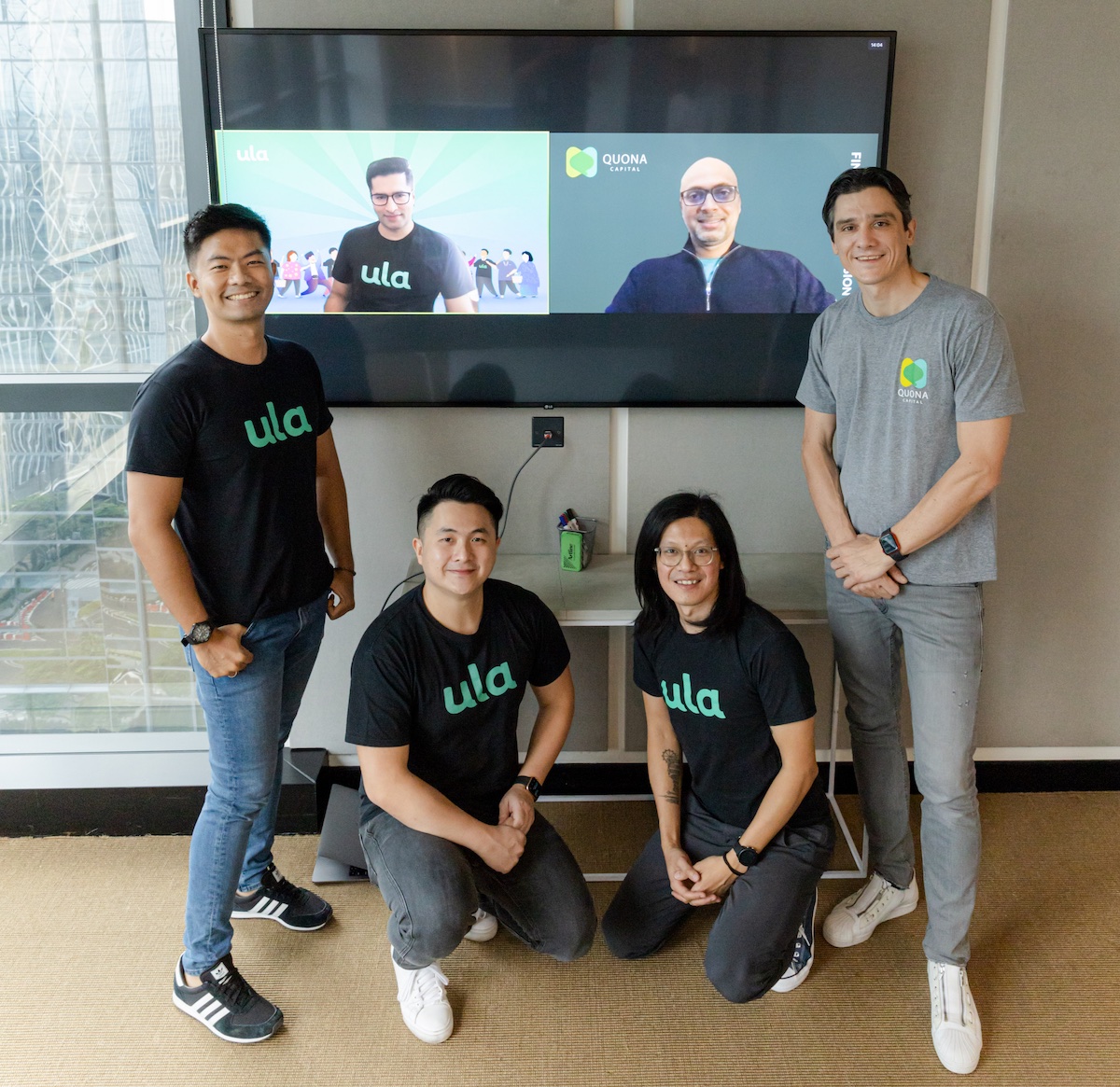
From left to right: Derry Sakti, Nipun Mehra (screen), Riky Tenggara, Ganesh Rengaswamy (screen), Alan Wong, and Dan Bertoli. Photo credit: Ula

On Thursday, Ula announced it has raised $20 million in a Series A financing round. The round was led by existing investor Quona Capital and B Capital Group. Other existing investors including Sequoia Capital India and Lightspeed — that financed Ula’s $10.5 million Seed round in June last year — have also participated in the Series A.

“If you look at the whole retail value chain, especially for essential goods, FMCG, staple, and fresh produce, it’s significantly fragmented,” said Ganesh Rengaswamy, Managing Partner at Quona Capital, in an interview. “Whereas the market has moved on in terms of being able to more efficiently consolidate, demand and supply. Ula is trying to redo the retail distribution ecosystem with a significant technology overlay. It’s connecting some of the largest players in the supply side to the smallest retailers and consumers.”

Additionally, Ula is providing these micro retailers, who usually operate from small shops that are extensions of their homes, with working capital so that they don’t have to wait to be paid by their customers to buy the new batch of inventory. (It’s a serious challenge that micro-retailers face in Asian markets. These shops have strong bonds with their customers, so often they sell them items without getting paid upfront. Collecting this payment often takes longer than it should.)

“Frictionless payment and offering credit to retailers so that they can more efficiently manage their cashflow are critical components of modern digital commerce,” said Rengaswamy. For Quona, which has backed several e-commerce and fintech startups in Asia, Ula checks both the boxes.

Mehra said last year was largely about expanding the Ula team and building the technology stack. The startup now plans to deploy the capital to reach more small retailers and expand within the nation.

Indonesia will remain Ula’s focus market. The opportunity in the region itself is very large. The retail spend is expected to surpass $0.5 trillion over the next 4 years, said Kabir Narang, Founding General Partner at B Capital Group, in a statement. Traditional in-store retail accounts for nearly 80% of the total retail market, according to some estimates.

Ula currently operates in the FMCG and food and vegetable spaces, but it intends to broaden its offerings to include apparel and eventually electronics.


A few more things from my notes:

  • Like many other startups in Asia, Ula largely relies on feet-and-street sales people to spread the word out about its offerings and onboarding new shops. The key to growing, said Mehra, is to get a few retailers who are very happy with the services and see its value and then tell their friends about it. It’s a learning he credited to Indian business-to-business e-commerce platform Udaan co-founders Amod Malviya, Vaibhav Gupta and Sujeet Kumar, whom he worked at Flipkart back in the day. Udaan co-founders have backed Ula.
  • Electronics is a category that is very popular among B2C and B2B e-commerce platforms. Mehra said he has always known that the startup could expand to electronics, so it has chosen to focus on other categories first that test the supply chain network.
  • Indonesia comprises of more than 17,000 islands, but only a handful of islands including Java and Sumatra contributes most to the GDP.
  • I asked Quona’s Rengaswamy to draw parallels between e-commerce and payments markets of India and Indonesia. He said India has made more inroads with creating frictionless payments. But on the flip side, this has created potential for startups in Indonesia to solve additional challenges.