Year: 2021

26 Jan 2021

The long road to the Qualtrics IPO

Speculation around the Qualtrics public offering is nothing new. All the way back in 2016, CEO Ryan Smith was dropping not-so-subtle hints about his intentions to file for IPO. After a decade bootstrapping, and growing to $50 million in annual revenue, the company was swayed into taking outside capital from Sequoia, and then again from Sequoia, Accel, and Insight Venture Partners.

TechCrunch has written about the entire journey, and considering the unusual circumstances of the public offering paired with Qualtrics’ position outperforming its peer group, we thought it smart to take a look back at how the whole thing came together.


2017

After years of dodging the question, or offering up vague answers, Smith said the following in an interview with TechCrunch back in 2017:

We know that there’s a huge opportunity here and we’re being very thoughtful about it because it’s not about going public. Going public is super easy to do. Just file the S-1 and we’re out,” Smith told [TechCrunch]. “It’s about being public and how that works and getting the house in order to make sure that that’s the case. We’re going to be a great public company. We’re going public.

Just a couple days later, literally, Qualtrics raised $180 million at a $2.5 billion valuation, again from Sequoia, Accel, and Insight Venture Partners. At the time, it was the biggest investment Accel had ever made. The growth of the company was staggering — the experience management startup had gone from $50 million in revenue in 2012 to $250 million in revenue in 2017.

TechCrunch and many others speculated that the massive raise may not signal a delayed IPO, but rather a final financial push before listing on the public markets.

Smith was coy about whether that speculation was warranted:

We raised the money because we can. An IPO isn’t an exit. It should be the beginning and we wouldn’t be going out if we didn’t think that more wealth could be created post-IPO.

The company also launched its XM platform in 2017, an experience management platform that Smith implied would one day be as ubiquitous as Workday or Salesforce software in every office, but for managing internal feedback and helping organizations uncover key business drivers, predict future customer needs, and retain employees.

Sequoia Capital partner Bryan Schreier said at the time:

Qualtrics is an outlier. They have delivered outstanding, accelerating growth at nine-digit revenue numbers all while staying cash flow positive. That is practically unheard of. It’s an incredible sign of confidence in Qualtrics’ continued growth trajectory and the huge market for its new XM Platform that all of its investors have come back to buy as many shares as they could at this new valuation.


2018

In October of 2018, Qualtrics filed its S-1, which included third quarter results for the firm. Revenue was more than $100 million (up $8 million from the quarter before) and nearly 75 percent of that was gross profit. It was a strong quarterly performance and the perfect primer for a public offering.

The original plan was to sell 20.5 million shares in its debut for $18 to $21, which would have grossed up to $495 million, putting its valuation between $3.9 billion and $4.5 billion.

And then the unexpected happened.

SAP swooped in with an $8 billion acquisition offer. An offer that Qualtrics did not refuse. Its public offering was delayed (or scrapped, depending on how you look at it) yet again.

The idea was that SAP’s operational data combined with Qualtrics’ customer and user data would be a devastating blow to the competition and give the duo an unmatched level of power. Think Facebook’s acquisition of Instagram. Think Eye of Sauron.

SAP CEO Bill McDermott said at the time:

The legacy players who carried their ‘90s technology into the 21st century just got clobbered. We have made existing participants in the market extinct.

If it wasn’t clear, he was talking about competitors like Oracle, Salesforce, Microsoft and IBM.

As part of the acquisition announcement, Qualtrics offered yet another revenue update, saying it expected excess of $400 million in revenue for 2018 and a forward growth rate of more than 40 percent, synergies from the acquisition notwithstanding.


2020

Post-acquisition Qualtrics was a quieter Qualtrics, so we’ll skip past 2019 to 2020. Just 20 short months after being acquired, another twist in the plot: SAP announced it would spin out Qualtrics in a new IPO.

Noting the company’s cloud growth had been in excess of 40 percent, SAP said the company would continue to be run by founder Ryan Smith and, interestingly, mentioned that Smith intends to be Qualtrics’ largest individual shareholder. SAP, of course, would retain majority ownership of the company.

Though the announcement lacked much meat with its potatoes, it implied that Qualtrics could grow even more rapidly if not encircled by SAP’s corporate arms.

The spin-out strategy was a rare move for a company like SAP.

As my colleague Danny Crichton wrote at the time:

While private equity firms will take a company private and sometimes quickly turn it around in an IPO, it is rare to see a large company like SAP make such a dramatic last-minute bid for a company only to reverse that decision just months later.

Here at TechCrunch we were excited about the impending IPO. Here was a company that had nearly gone public, now going public again.

And just as the year was coming to a close, Qualtrics dropped its first (second, technically) S-1 filing. After digging through the numbers this was our takeaway from the data:

Qualtrics is growing at over 30%, and after enduring some post-acquisition costs that appear at least partially related to how SAP handled equity compensation, is back to a more acceptable level of losses on a GAAP basis and is doing perfectly fine when we observe its adjusted (non-GAAP) results.

As often happens when a company goes public while having a large corporate owners, Qualtrics’ accounting was harder to parse the second time around, but the bones of a nicely growing software company at scale were still there. How investors would value Utah’s giant was the next question.


2021

A few weeks later, Qualtrics dropped what would prove to be its first IPO pricing interval, targeting a range of $22 and $26 per share, giving the company a far larger value than it had targeted during its first run at the public markets.  Of course, Qualtrics was not only benefiting from its own growth and whatever boost it received from synergies with SAP, but also from frothy SaaS valuations and a frenetic public market.

At that price, with 50 million shares up for grabs, the target raise was north of $1 billion. If that sounds high recall that Qualtrics posted a revenue run rate of around $800 million. The company’s growth has kept up as well, with the company’s Q4 2020 midpoint revenue expanding more than 23% compared to its Q4 2019 performance.

All said and done, the S-1/A pegged Qualtrics’ early 2021 valuation at anywhere from $11.2 billion to $13.3 billion. Alex Wilhelm is much better at breaking down the numbers than me (or anyone, really) so I urge you to take a look at his coverage.

Wilhelm was also astute enough to recognize that the share pricing for Qualtrics’ IPO would likely be adjusted higher. And it was!

Yesterday, Qualtrics raised its share price from $22 – $26 to between $27 and $29, putting the valuation range between $13.8 billion to $14.8 billion. Yowzah!

  • New Qualtrics low-end IPO run rate multiple: 16.2x.
  • New Qualtrics high-end IPO run rate multiple: 17.4x.

Wilhelm noted that the Qualtrics share price may go up yet again, but also explained that while the multiples in play may feel low, it’s tough to be certain:

Those do not seem to be particularly high multiples for Qualtrics, given recent market norms. However, trying to decipher the public market lately has been similar to reading the Rosetta Stone, but written in Wingdings. While on acid. So, you never know what is going to happen when a company starts to trade.

There is one thing we know for sure: Qualtrics has showed growth in revenue and more profitability than most software companies during its entire existence. We’ve been waiting for this IPO for years now, literally, and while many pieces of the puzzle are uncertain, we’ll get our answers soon enough.

Unless of course some giant firm swoops in with a $20 billion acquisition offer. Now wouldn’t that be fitting?

 

26 Jan 2021

Club Feast raises $3.5M to help restaurants deliver meals that only cost $5.99

Club Feast, a startup with a more affordable approach to meal delivery, is announcing that it has raised $3.5 million in seed funding led by General Catalyst.

The company was founded by Atallah Atallah, Gazi Atallah and Chris Miao. The basic concept is pretty simple: Restaurant delivery that only costs $5.99 per dish — cheaper that almost anything you’d find on other delivery services. (The startup also charges diners a $2 delivery fee, as well as a $1 fee for single meal orders.)

Atallah Atallah, who previously co-founded restaurant rewards company Seated and serves as Club Feast’s CEO, said the startup works with restaurants to select a few meals that they can afford to offer at the $5.99 price. Diners, meanwhile, sign up for a weekly meal plan and place their orders at least 24 hours ahead of time. The restaurant then knows exactly how much of a dish will be purchased, so they can plan ahead and cook in an efficient and economical way.

“We really work with them to create a meal that they can make at a price that works for their users,” Atallah said. Plus, he noted that with all the orders placed ahead of time, Club Feast and its partners can plan efficient delivery routes without having to build sophisticated algorithms for optimizing on-demand deliveries: “Sometimes the best solutions are the simplest ones.”

Club Feast CEO Atallah Atallah

Club Feast CEO Atallah Atallah

Of course, that requires more planning and upfront commitment from diners. However, Atallah noted that while meal credits are bought via weekly subscription, they can be paused or spent at any time. He also suggested that he doesn’t see Club Feast as a direct competitor to on-demand food delivery — instead, he suggested that he continues to use DoorDash and Uber Eats for spur-of-the-moment orders or special occasions, while Club Feast is a more affordable option for regular meals.

“With our price point, our average user orders eight times a month,” he said. “Why not make the pie much bigger?”

Atallah added that Club Feast is diversifying the food options on the platform by adding side dishes and desserts. And it could eventually introduce higher prices for fancier meals, but he said, “We want to make sure that does not affect the $5.99 concept.”

The startup currently makes deliveries in San Francisco and San Mateo, where it works with restaurants including The Halal Guys, Kasa Indian Eatery, HRD and Kitava. With the new funding, it plans to expand throughout the Bay Area and into New York City.

“The pandemic exposed significant gaps in the food delivery industry, and we’re proud to support Club Feast on their mission to make the experience more affordable for both restaurants and consumers,” said General Catalyst Managing Director Niko Bonatsos in a statement.

26 Jan 2021

Google’s BeyondCorp Enterprise security platform is now generally available

Google today announced that BeyondCorp Enterprise, the zero trust security platform modeled after how Google itself keeps its network safe without relying on a VPN, is now generally available. BeyondCorp Enterprise builds out Google’s existing BeyondCorp Remote Access offering with additional enterprise features. Google describes it as “a zero trust solution that enables secure access with integrated threat and data protection”.

Over the course of the last few years, Google — and especially its Cloud unit — has evangelized the Zero Trust model and built a large partner network around this idea. Those partners include the likes of Check Point, Citrix, CrowdStrike, Symantec and VMWare.

As part of BeyondCorp Enterprise, businesses get an end-to-end zero trust solution that includes everything from DDoS protection and phishing-resistant authentication, to the new security features in the Chrome browser and the core continuous authorization features that protect every interaction between users and resources protected by BeyondCorp.

“The rapid move to the cloud and remote work are creating dynamic work environments that promise to drive new levels of productivity and innovation. But they have also opened the door to a host of new security concerns and sparked a significant increase in cyberattacks,” said Fermin Serna, Chief Information Security Office at Citrix. “To defend against them, enterprises must take an intelligent approach to workspace security that protects employees without getting in the way of their experience following the zero trust model.”

26 Jan 2021

Plex launches a subscription-based retro game streaming service, ‘Plex Arcade’

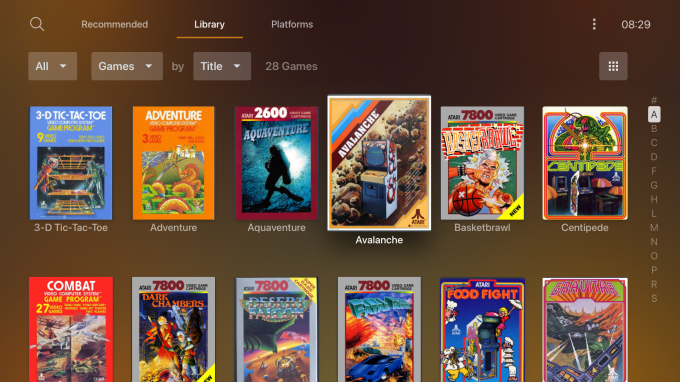
Plex, the media software maker that’s expanded into streaming in recent years, is adding to its service once again with today’s launch of game streaming. Unlike other game streaming efforts from companies like Microsoft or Google, the new “Plex Arcade” isn’t focused on top gaming titles and new releases, but rather on retro games. At launch, the service is offering around 30 games, including titles like Asteroids, Centipede, Missile Command, Adventure, and Ninja Golf.

The game streaming service was spun out of Plex’s in-house incubator, Plex Labs, and represents more of a passion project for the company, rather than some larger shift in direction, we’re told. The technology to make it available was already 95% built, so the team decided to put together the game streaming service as a surprise for users, as well as a way to expand Plex’s core mission of becoming a broader entertainment platform.

The company says it actually kicked around the idea of adding games to Plex for years, but over the course of 2020 in particular, the team was drawn to the idea even more out of personal interest and a need for a distraction.

Image Credits: Plex

The game service was built the help of new partner Parsec and its underlying, low-latency streaming technology, Plex says. This made it possible to bring fully playable game libraries to Plex.

To build the game library, Plex partnered with Atari to license a catalog of classic titles.

At launch, the full list of games include: 3D Tic-Tac-Toe, Adventure, Alien Brigade, Aquaventure, Asteroids, Avalanche, Basketbrawl, Centipede, Combat, Dark Chambers, Desert Falcon, Fatal Run, Food Fight (Charley Chuck’s), Gravitar, Haunted House, Human Cannonball, Lunar Battle, Lunar Lander, Major Havoc, Millipede, Missile Command, Motor Psycho, Ninja Golf, Outlaw, Planet Smashers, Radar Lock, Sky Diver, Sky Raider, Solaris, and Super Breakout.

Due to the partnership and licensing fees involved with the project, Plex Arcade will not be a free addition.

Instead, it will be offered as a separate subscription for $2.99 per month for existing Plex Pass subscribers (Plex’s existing $4.99/mo plan). For non-subscribers, Plex Arcade is $4.99 per month. A free, 7-day trial is also available.

Plex Arcade’s server will require either a Windows or Mac to run (due to Parsec’s limitations), which means it won’t work on Linux, NAS devices, or NVIDIA Shield. Gameplay, meanwhile, is restricted to iOS, Android (mobile or TV), tvOS, and the Chrome web browser.

It will also support Bluetooth and USB game controllers that are compatible with your device, or you can use a keyboard for Chrome-based gaming. Plex recommends the Sony DualShock 4 or Xbox One controller for the best results.

Image Credits: Plex

The company is taking a wait-and-see approach to expanding the service over time. If it demonstrates interest and traction in the form of subscriptions, Plex may consider growing it further.

Plex Arcade is the latest addition to what’s now a growing lineup of entertainment options for Plex users.

Over the past several years, the media software company has moved beyond being a tool to organize home media collections to also allow users to do things like stream live TV from an antenna or via the web, listen to music and podcasts, watch ad-supported movies and TV, watch the news, and more.

These efforts are slowly paying off in terms of user growth. In 2017, Plex had 10 million registered users. A couple of years later, it had 15 million. Today, Plex says it has 25 million users.

Plex Arcade is available as of today.

26 Jan 2021

Nomad’s charcoal grill suitcase is modern ingenuity combined with classic cooking

Dallas-based Nomad set out to take an age-old cooking method and modernize it – but not by introducing connected or smart features. Instead, the Nomad Grill & Smoker takes classic charcoal grilling and relies on clever industrial design to make it packable and portable, while making sure cooks of all expertise levels can make great-tasting food even if they’re cooking with charcoal for the first time.

Basics

Nomad’s grill looks like some kind of fancy protective case that you’d expect to see traveling with a film crew, crossed with maybe a modern Mac Pro. It has an anodized aluminum build that uses a unibody casting in manufacturing, with high external durability and internal heat retention. It measures roughly 2 feet by 2 foot, and is around 9.5 inches tall when closed, with a total weight of 28 lbs including the cast stainless steel grill grate that’s included int the basic package.

28 lbs may seem like a lot, but it’s remarkably light for the cook surface you get with Nomad, which adds up to either 212 square inches of space in single-grate closed mode (good for smoking) or up to 425 square inches in open grill mode, which can double the cooking surface with the purchase of an optional second grate and charcoal placed in either side (better for open flame BBQing).

The case features a strong and durable dual latch closure system, and a reinforced handle for toting it around. Silicon skids offer protection for surfaces when laying the grill down to cook, and there are two magnetic air vents on either side for controlling airflow and flame, which are adjusted simply by manually sliding.

Design and performance

Image Credits: Nomad

The Nomad design is deceptively simple – at heart it’s essentially a metal box. But looking below the surface a bit, it actually hides some very advanced construction, including a layered shell design that means the outside never actually gets too hot, which is great not only for chef safety but also for setting it down on a wide range of materials during the actual cook process. For a portable grill, that’s a huge benefit.

Looking at the grill grate specifically, it features a honeycomb design that helps better distribute the heat, which is also domed subtly to allow more clearance for the charcoal underneath. It’s removable, but also snaps into place in the grill itself using magnets, which is great for transport and also for ensuring things don’t move around with any bumps.

One other huge benefit that seems like a small thing at first glance is a built-in thermometer that’s molded into the case. This provides you easy, clear temperature readings for the grill, and it’s analog so there’s no power required – another big benefit for portability.

In practice, the grill works exactly as you’d expect a great charcoal grill to work, which is amazing given its size and portability. It should definitely be mentioned that you’re going to be much happier getting the grill lit if you pick yourself up a charcoal chimney, which eases the lighting process – but that’s a great accessory regardless what kind of charcoal grill you’re using.

Image Credits: Nomad

I was particularly impressed at the Nomad grill’s performance when it comes to smoking. It maintains an even and consistent temperature with the box closed, and it’s easy to moderate the temperature with the built-in vents if you need to adjust the cooking intensity. The proximity of the charcoal to the food also imbues it with great flavor.

Bottom line

The Nomad Grill & Smoker is $599, which is a fairly high asking price, but it’s also unique in the market for the convenience it provides combined with the performance it offers. Whether at home or on road trips, Nomad is a wonderful addition to any home cook’s arsenal, and an all-in-one supplement that can replace even a dedicated, more fixed installation charcoal grill if that’s the way you want to go.

26 Jan 2021

Meet the early stage founder community at TC Early Stage 2021

Building a startup is never easy, especially when you’re in the early innings and navigating a huge learning curve. Education, support and sage advice are arguably as essential to startup success as fundraising. Find all that — and connect with your early founder community — at TC Early Stage 2021.

We’re hosting two of these virtual bootcamps designed for early-stage startup founders and open to investors, later-stage founders and other startup enthusiasts. Early Stage part one focuses on operations and fundraising takes place on April 1-2 and Early Stage part two focusing on marketing, PR and fundraising runs July 8-9. This is not a lather, rinse, repeat scenario, folks. Each event features a distinct lineup of startup experts, topics, workshops and interactive Q&As.

We’re talking core startup disciplines like building a pitch deck, marketing, term sheets, fundraising, tech stack, operations, product-market fit, content development, growth and lots more.

Early bird pricing: We offer two pass levels — Founder and Innovator. Plus, don’t miss the sweet discount when you buy a ticket for both events.

Early Stage events offer lots of opportunity for meaningful connection and, because they’re virtual, you can connect with early stage founders and influencers across the globe. CrunchMatch, our free AI-powered networking platform, helps narrow the field so you connect and schedule meetings with people who align with your specific business goals.

Ashley Barrington, founder of MarketPearl, had this to say about networking at Early Stage 2020.

“The Early Stage virtual platform lets you network with attendees all over the world, and that was a big benefit. CrunchMatch made it easy to set up short networking sessions with other early-stage founders to learn what they’re working on, pool resources and connect for potential future opportunities. I also used it to meet founders in adjacent areas like climate or B2B SaaS — interesting people I wouldn’t necessarily have connected with otherwise.”

At Early Stage 2021 you’ll learn from the best experts in the startup ecosystem, develop the essential skills for startup success and tap into a support system to get you through the challenging times.

“TechCrunch does this thing — and they did it amazingly well in a virtual event — of connecting total strangers to create a genuinely supportive community. We’re all trying to do the same thing, which is bring our idea to life and make it a reality. I loved that unexpected benefit.” — Jessica McLean, Director of Marketing and Communications, Infinite-Compute.

Join us at Early Stage 2021 on April 1-2 and again on July 8-9 to learn, connect with community, expand your network and build a better startup.

Is your company interested in sponsoring or exhibiting at Early Stage 2021 – Operations & Fundraising? Contact our sponsorship sales team by filling out this form.

26 Jan 2021

How Atlanta’s Calendly turned a scheduling nightmare into a $3B startup

One big theme in tech right now is the rise of services to help us keep working through lockdowns, office closures, and other Covid-19 restrictions. The “future of work” — cloud services, communications, productivity apps — has become “the way we work now.” And companies that have identified ways to help with this are seeing a boom.

Today comes news from a startup that has been a part of that trend: Calendly, a popular cloud-based service that people use to set up and confirm meeting times with others, has closed an investment of $350 million from OpenView Venture Partners and Iconiq.

The funding round includes both primary and secondary money (slightly more of the latter than the former, from what I understand) and values the Atlanta-based startup at over $3 billion.

Not bad for a company that before now had raised just $550,000, including the life savings of the founder and CEO, Tope Awotona, to initially get off the ground.

Calendly is a freemium software-as-a-service, built around what is essentially a very simple piece of functionality.

It’s a platform that provides a quick way to manage open spaces in your calendar for people to book appointments with you in those spaces, which then also books out the time in calendars like Google’s or Microsoft Outlook — with a growing number of tools to enhance that experience, including the ability to pay for a service in the event that your appointment is not a business meeting but, say, a yoga class. Pricing ranges from free (one calendar/one user/one event) to premium ($8/month) and pro ($12/month) for more calendars, events, integrations and features, with bigger packages for enterprises also available.

Its growth, meanwhile, has to date been based mostly around a very organic strategy: Calendly invites become links to Calendly itself, so people who use it and like it can (and do) start to use it, too.

The wide range of its use cases, and the virality of that growth strategy, have been winners. Calendly is already profitable, and it has been for years. And more recently, it has seen a boost, specifically in the last twelve months, as new Calendly users have emerged, as a result of how we are living.

We may not be doing more traditional “business meetings” per week, but the number of meetings we now need to set up, has gone up.

All of the serendipitous and impromptu encounters we used to have around an office, or a neighborhood coffee shop, or the park? Those are now scheduled. Teachers and students meeting for a remote lesson? Those also need invitations for online meetings.

And so do sessions with therapists, virtual dinner parties, and even (where they can still happen) in-person meetings, which are often now happening with more timed precision and more record-keeping, to keep social distancing and potential contact tracing in better order.

Currently, some 10 million of us are using Calendly for all of this on a monthly basis, with that number growing 1,180% last year. The army of business users from companies like Twilio, Zoom, and UCSF has been joined by teachers, contractors, entrepreneurs, and freelancers, the company says.

The company last year made about $70 million annually in subscription revenues from its SaaS-based business model and seems confident that its aggregated revenues will not long from now get to $1 billion.

So while the secondary funding is going towards giving liquidity to existing investors and early employees, Awotona said the plan will be to use the primary capital to invest in the company’s business.

That will include building out its platform with more tools and integrations — it started with and still has a substantial R&D operation in Kiev, Ukraine — expanding its operations with more talent (it currently has around 200 employees and plans to double headcount), further business development and more.

Two notable moves on that front are also being announced with the funding: Jeff Diana is coming on as chief people officer with a mission to double the company’s employee base. And Patrick Moran — formerly of Quip and New Relic — is joing as Calendly’s first chief revenue officer. Notably, both are based in San Francisco — not Atlanta.

That focus for building in San Francisco is already a big change for Calendly. The startup, which is going on eight years old, has been somewhat off the radar for years.

That is in part due to the fact that it raised very little money up to now (just $550,000 from a handful of investors that include OpenView, Atlanta Ventures, IncWell and Greenspring Associates).

It’s also based in Atlanta, an increasingly notable city for technology startups and other companies but more often than not short on being credited for its heft in that department (SalesLoft, Amex-acquired Kabbage, OneTrust, Bakkt, and many others are based there, with others like Mailchimp also not too far away).

And perhaps most of all, proactively courting publicity did not appear to be part of Calendly’s growth playbook.

In fact, Calendly might have closed this big round quietly and continued to get on with business, were it not for a short Tweet last autumn that signaled the company raising money and shaping up to be a quiet giant.

“The company’s capital efficiency and what @TopeAwotona has built deserve way more credit than they get,” it read. “Perhaps this will start to change that recognition.”

After that short note on Twitter — flagged on TechCrunch’s internal message board — I made a guess at Awotona’s email, sent a note introducing myself, and waited to see if I would get a reply.

I eventually did get a response, in the form of a short note agreeing to chat, with a Calendly link (naturally) to choose a time.

(Thanks, unnamed TC writer, for never writing about Calendly when Tope originally pitched you years ago: you may have whet his appetite to respond to me.)

In that first chat over Zoom, Awotona was nothing short of wary.

After years of little or no attention, he was getting cold-contacted by me and it seems others, all of us suddenly interested in him and his company.

“It’s been the bane of my life,” he said to me with a laugh about the calls he’s been getting.

Part of me thinks it’s because it can be hard and distracting to balance responding to people, but it’s also because he works hard, and has always worked hard, so doesn’t understand what the new fuss is about.

A lot of those calls have been from would-be investors.

“It’s been exorbitant, the amount of interest Calendly has been getting, from backers of all shapes and sizes,” Blake Bartlett, a partner at OpenView, said to me in an interview.

From what I understand, it’s had inbound interest from a number of strategic tech companies, as well as a long list of financial investors. That process eventually whittled down to just two backers, OpenView and Iconiq.

From Lagos to fixing cash registers

Yet even putting the rumors of the funding to one side, Calendly and Awotona himself have been a remarkable story up to now, one that champions immigrants as well as startup grit.

Tope comes from Lagos, Nigeria, part of a large, middle class household. His mother had been the chief pharmacist for the Nigerian Central Bank, his father worked for Unilever.

The family may have been comfortable, but growing up in Lagos, a city riven by economic disparity and crime, brought its share of tragedies. When he was 12, Awotona’s father was murdered in front of him during a carjacking. The family moved to the U.S. some time after that, and since then his mother has also passed away.

A bright student who actually finished high school at 15, Awotona cut his teeth in the world of business first by studying it — his major at the University of Georgia was management information systems — and then working in it, with jobs after college including periods at IBM and EMC.

But it seems Awotona was also an entrepreneur at heart — if one that initially was not prepared for the steps he needed to take to get something off the ground.

He told me a story about what he describes as his “first foray into business” at age 18, which involved devising and patenting a new feature for cash registers, so that they could use optical character recognition recognize which bills and change were being used for, and dispense the right amount a customer might need in return after paying.

At the time, he was working at a pharmacy while studying and saw how often the change in the cash registers didn’t add up correctly, and his was his idea for how to fix it.

He cold-contacted the leading cash register company at the time, NCR, with his idea. NCR was interested, offering to send him up to Ohio, where it was headquartered then, to pitch the idea to the company directly, and maybe sell the patent in the process. Awotona, however, froze.

“I was blown away,” he said, but also too surprised at how quickly things escalated. He turned down the offer, and ultimately let his patent application lapse. (Computer-vision-based scanning systems and automatic dispensers are, of course, a basic part nowadays of self-checkout systems, for those times when people pay in cash.)

There were several other entrepreneurial attempts, none particularly successful and at times quite frustrating because of the grunt work involved just to speak to people, before his businesses themselves could even be considered.

Eventually, it was the grunt work that then started to catch Awotona’s attention.

“What led me to create a scheduling product” — Awotona said, clear not to describe it as a calendaring service — “was my personal need. At the time wasn’t looking to start a business. I just was trying to schedule a meeting, but it took way too many emails to get it done, and I became frustrated.

“I decided that I was going to look for scheduling products that existed on the market that I could sign up for,” he continued, “but the problem I was facing at the time was I was trying to arrange a meeting with, you know, 10 or 20 people. I was just looking for an easy way for us to easily share our availability and, you know, easily find a time that works for everybody.”

He said he couldn’t really see anything that worked the way he wanted — the products either needed you to commit to a subscription right away (Calendly is freemium) or were geared at specific verticals such as beauty salons. All that eventually led to a recognition, he said, “that there was a big opportunity to solve that problem.”

The building of the startup was partly done with engineers in Kiev — a drama in itself that pivoted at times on the political situation at times in Ukraine (you can read a great unfolding of that story here).

Awotona says that he admired the new guard of cloud-based services like Dropbox and decided that he wanted Calendly to be built using “the Dropbox approach” — something that could be adopted and adapted by different kinds of users and usages.

Simplicity in the frontend, strategy at the backend

On the surface, there is a simplicity to the company’s product: it’s basically about finding a time for two parties to meet. Awotona notes that behind the scenes the scheduling help Calendly provides is the key to what it might develop next.

For example, there are now tools to help people prepare for meetings — specifically features like being able to, say, pay for something that’s been scheduled on Calendly in order to register. A future focus could well be more tools for following up on those meetings, and more ways to help people plan recurring individual or group events.

One area where it seems Calendly does not want to dabble are those meetings themselves — that is, hosting meetings and videoconferencing itself.

“What you don’t want is to start a world war three with Zoom,” Awotona joked. (In addition to becoming the very verb-ified definition of video conferencing, Zoom is also a customer of Calendly’s.)

“We really see ourselves as a leading orchestration platform. What that means is that we really want to remain extensible and flexible. We want our users to bring their own best in class products,” he said. “We think about this in an agnostic way.”

But in a technology world that usually defaults back to the power of platforms, that position is not without its challenges.

“Calendly has a vision increasingly to be a central part of the meeting life cycle. What happens before, during and after the meeting. Historically, the obvious was before the meeting, but now it’s looking at integrations, automations and other things, so that it all magically happens. But moving into the rest of the lifecycle is a lot of opportunity but also many players,” admitted Bartlett, with others including older startups like X.ai and Doodle (owned by Swiss-based Tamedia) or newer entrants like Undock but also biggies like Google and Microsoft.

“It will be an interesting task to see where there are opportunities to partner or build or buy to build out its competitive position.”

You’ll notice that throughout this story I didn’t refer to Awotona’s position as a black founder — still very much a rarity among startups, and especially those valued at over $1 billion.

That is partly because in my conversations with him, it emerged that he saw it as just another detail. Still, it is one that is brought up a lot, he said, and so he understands it is important for others.

“I don’t spend a lot of time thinking about being black or not black,” he said. “It doesn’t change how I approach or built Calendly. I’m not incredibly conscious of my race or color, except for the last few years through he growth of Calendly. I find that more people approach me as a black tech founder, and that there is young black people who are inspired by the story.”

That is something he hopes to build on in the near future, including in his home country.

Pending pandemic chaos, he has plans to try to visit Nigeria later this year and to get more involved in the ecosystem in that country, I’m guessing as a mentor if not more.

“I just know the country that produced me,” he said. “There are a million Topes in Nigeria. The difference for me was my parents. But I’m not a diamond in the rough, and I want to get involved in some way to help with that full potential.”

26 Jan 2021

GitLab reshuffles its paid subscription plans, drops its Bronze/Starter tier

GitLab, the increasingly popular DevOps platform, today announced a major update to its subscription model. The company is doing away with its $4/month Bronze/Starter package. Current users will be able to renew one more time at the existing price or move to a higher tier (and receive a significant discount for the first three years after they do so).

The company’s free tier, it is worth noting, is not going away and GitLab argues that it includes “89% of the features in Bronze/Starter.”

As GitLab founder and CEO Sid Sijbrandij told me, this was a difficult decision for the team. He acknowledged that this is a big change for those on the Bronze plan. “I hope that they see that we we did our homework and that we have great legacy pricing,” Sijbrandij said, and added that the company will listen to feedback from its users.

To ease the pain, Bronze users will be able to renew their existing subscription before January 26, 2022 for an additional year at the existing price. They can also opt to move to the Premium tier at a discounted price for the next three years, starting at $6/user/month in Year 1, but that price then goes up to $9/user/month and $15/user/month in Year 2 and 3 respectively. For new users, the Bronze package is no longer available, starting now.

Image Credits: GitLab

In the end, this was a purely financial decision for GitLab. As Sijbrandij told me, the company was losing money on every Bronze-tier customer. “The Bronze tier, we were selling at a loss,” he said. “We were just losing money every time we sold it — just on hosting and support. To be a sustainable business, this was a move we had to make. It’s a big transition for our customers but we want to make sure we’re a sustainable company and we can keep investing.”

Sijbrandij told me the team looked at increasing the price of the Bronze tier to make it profitable. “We looked at all options, but in the end, you’re going to have an offering that is very similar to Premium. It would be too much overlap between the two,” he explained.

With this change, GitLab now offers three tiers: Free, Premium and Ultimate (it’s also doing away with the “Silver/Premium” and “Gold/Ultimate” naming).

The free tier, which in terms of total users is the most popular plan on GitLab, will remain in place. While it is surely a loss-leader for GitLab, it only comes with limited CI/CD credits and doesn’t include any support options, so the overall loss here must have been worth it for the company. Sijbrandij also noted that, as an open core company, having a free and open offering is simply a must.

26 Jan 2021

TikTok is being used by vape sellers marketing to teens

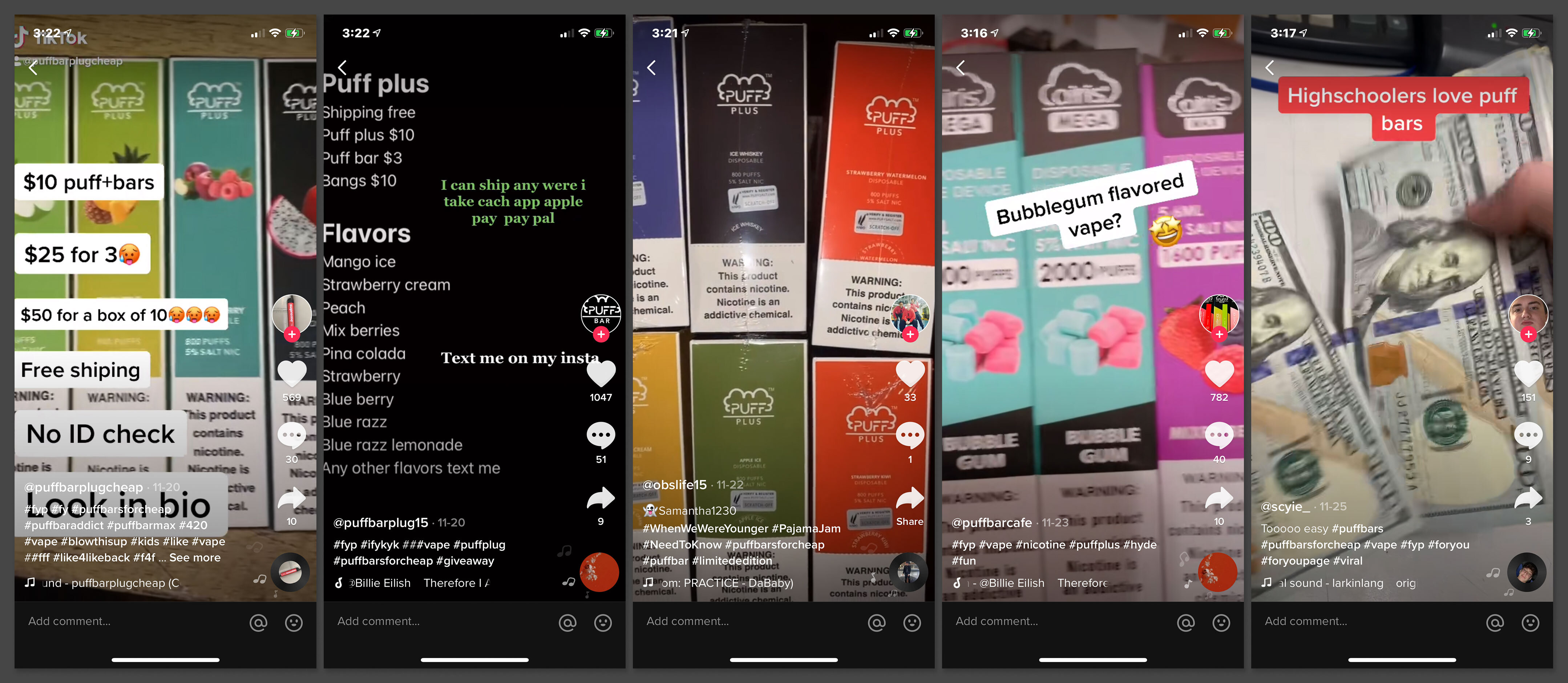
TikTok has a vaping problem. Although a 2019 U.S. law made it illegal to sell or market e-cigarettes to anyone under the age of 21, TikTok videos featuring top brands of disposable e-cigarettes and vapes for sale have been relatively easy to find on the app. These videos, set to popular and upbeat music, clearly target a teenage customer base with offers of now-unauthorized cartridge flavors like fruit and mint in the form of a disposable vape. Some sellers even promote their “discreet” packaging services, where the vapes they ship to customers can be hidden from parents’ prying eyes by being placed under the package’s stuffing or tucked inside other products, like makeup bags or fuzzy slippers.

Interest in flavored, disposable vapes that appeal to teens and young adults, in particular, has been growing in the wake of the FDA’s Juul crackdown.

In February 2020, the FDA first began to take enforcement action against illegally marketed e-cigarette devices, including those offering flavors besides tobacco or menthol, as well as those targeted towards minors — an action that was designed to target Juul.

As a result, disposable vapes like Puff Bar were adopted by some young people who were still in search of flavors like bubblegum, peach, strawberry and others. These cheaper disposables were easy to find, and continued to be available at convenience stores and gas stations.

But they’re also all over TikTok, ready to be shipped with anyone with a way to pay.

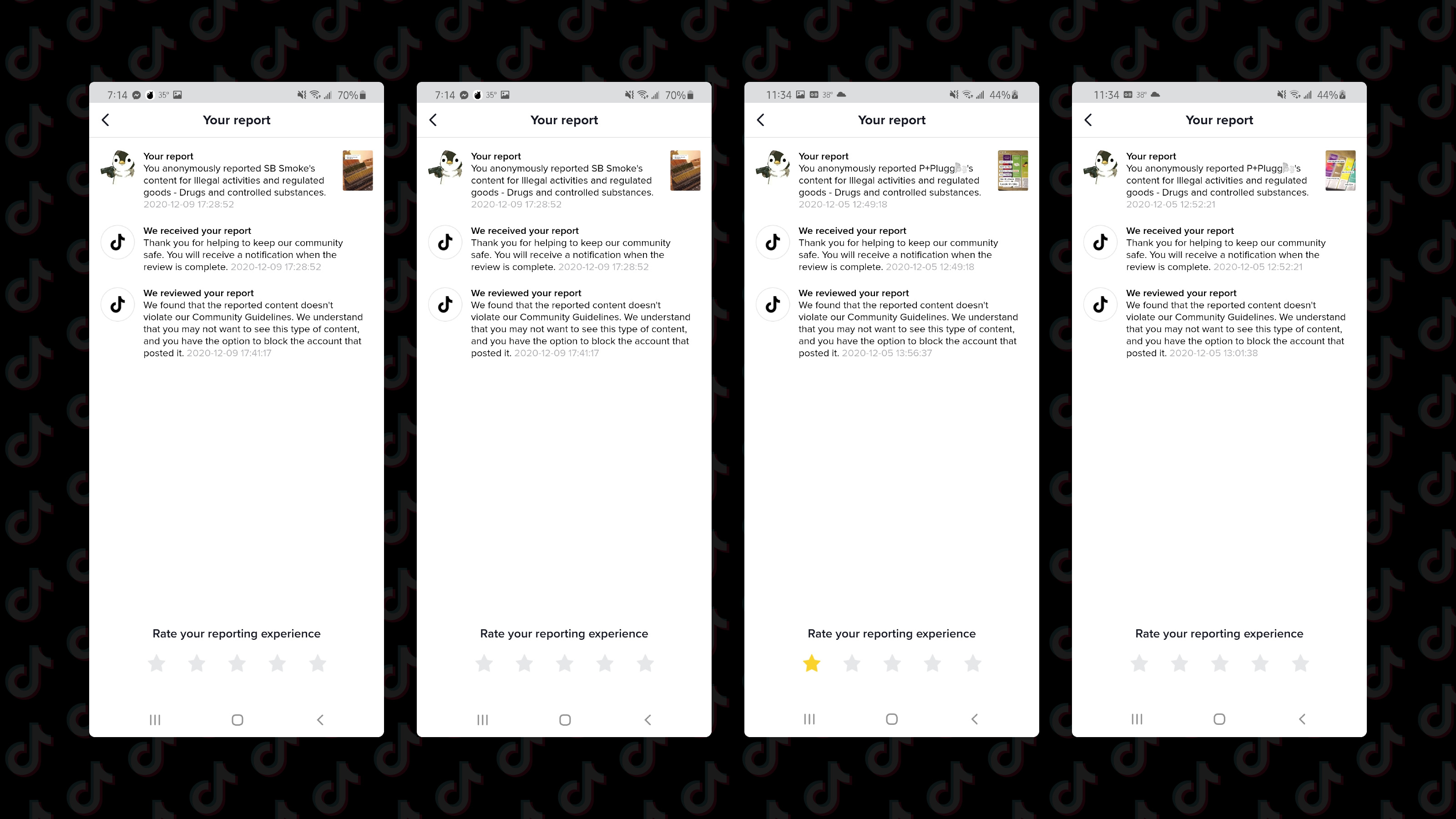
What’s more, when this content is reported to TikTok, it’s not always taken down.

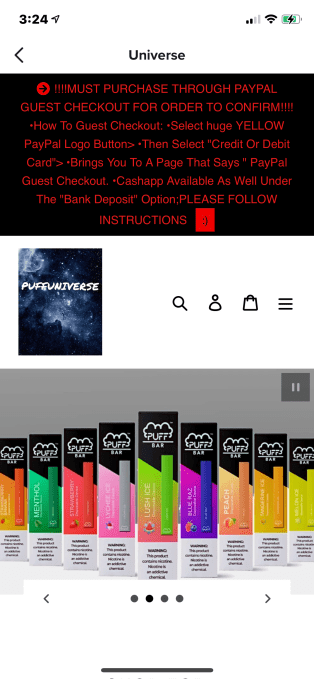
TechCrunch found vape sellers marketing on TikTok who have been using the app to communicate with customers through both videos and comments. They also direct viewers to what appear to be illegally operating websites. Their TikTok videos often show off the seller’s current inventory of vapes, including disposables like Puff Bar in teen-friendly flavors.

Essentially, the sellers are using TikTok as a way to create vape advertisements they don’t have to pay for that are capable of reaching young consumers — an audience whose interest in vaping hasn’t necessarily declined because of the FDA’s action.

According to nonprofit tobacco control organization Truth Initiative’s latest study, use of Juul decreased between 2019 and 2020, but it remains the most popular e-cigarette brand among 10th and 12th graders who were current vapers at 41%. The report also found that disposable products such as Puff Bar (8%) and Smok (13.1%) have gained during this time.

“Taken together, the 2020 National Youth Tobacco Survey (NYTS) and the new e-cigarette sales data report illustrate how the current federal policy enabled youth to quickly migrate to menthol e-cigarettes (especially Juul menthol pods) when mint-flavored products were removed from the marketplace, and for inexpensive, flavored disposable e-cigarettes such as Puff Bar to soar in popularity,” Truth stated in September 2020.

“With kid magnet names like cotton candy and banana ice, the market share of disposable products nearly doubled in just 10 months from August 2019 to May 2020,” it said.

The scale of the problem on TikTok is also significant.

Today, U.S. teens account for an estimated 32.5% of TikTok’s U.S. active users, according to third-party estimates published by Statista. The company has around 100 million monthly active users in the U.S., it said last year.

Meanwhile, videos tagged with popular vape and e-cigarette brands and keywords have racked up hundreds of millions of views.

For example, the hashtag for leading vape brand Juul (#juul) has 623.9 million views on TikTok, as of the time of writing.

Puff Bar, the maker of a single-use vaping product with Chinese origins, has 449.8 million views for the hashtag #puffbar. Other brands have some traction, as well. #NJOY has 55.3 million views, #smok has 40.1 million views, and British Tobacco’s #Vuse has 5 million views.

These are just the views associated with the hashtag itself. For every search, there are multiple variations. For instance, #puffbars, #puffbarplus and #puffbardealer have 66.8 million views, 9.6 million views and 8.9 million views, respectively. Tags like #juulgang (590.4 million views) have become popular enough that anti-vaping content creators have adopted them as a means of counter-programming against vaping content.

These trends are particularly concerning given the large, young demographic that uses TikTok. A third of its U.S. users may be 14 or under, in fact.

In the U.S. App Store, TikTok is rated for ages 12 and up and on Google Play, its content rating is “Teen.” But while TikTok has modified the default privacy settings for young people’s accounts and has been quick to block other controversial hashtags in the past (like those around U.S. election conspiracies), it has allowed vaping-related content to remain easy to find.

In addition to the popular vaping hashtags prevalent on TikTok, we uncovered numerous vape sellers operating under obvious account names such as “@puffsonthelow,” “@PuffUniverse” and “@Puffbarcafe,” for example. Their pages were filled with vape videos boldly marketing their current selections, hashtagged with vape-related terms like #puffbarchallenge, #puffplus, #vapetricks and others.

In some cases, we found vape sellers had even tagged their videos with #kids and other trending tags.

Knowing that their target market is often teenage vapers, many videos depicted how the seller could package the vape inside another product or hide it in the stuffing so parents wouldn’t find out. We saw videos of vapes packaged underneath candy, inside makeup bags, inside socks, underneath other lager products, and more.

Through links published to the account’s profile or referenced in the videos, TikTok users are redirected to the sellers’ websites or even Discord channels where they would only sometimes be presented with an age verification pop-up.

Often, they could just add items to a basket and check out. Many sellers also directed their customers to pay using PayPal, Venmo and/or Cash App, instead of accepting standard credit card payments.

None of this is legal, according to the Campaign for Tobacco Free Kids, a leading American nonprofit focused on reducing tobacco consumption, particularly among youth.

“It’s illegal to market these products or to engage in marketing that appeals directly to anybody under the age of 21,” Matt Myers, the president of the Campaign for Tobacco Free Kids, told TechCrunch. “And it’s illegal to actually conduct a sales transaction without age verification.”

Image Credits: TikTok screenshot

Plus, he adds, clicking a box on a website that says “I’m over 21,” does not qualify as a legal age verification for making these sales.

The FDA hasn’t issued specific guidance around online retail, but the law is clear that checking IDs is required to ensure retailers aren’t selling to underage users. That’s not happening with a pop-up box, and often there’s no box at all.

In addition, the FDA reminded TechCrunch that Congress recently established new limits on the mailing and delivery of e-cigarettes and other tobacco products through the United States Postal Service and through other carriers, which should limit access to these sorts of products through online retail purchases.

Myers, however, points out that the current FDA guidelines have made enforcement of this sort of “social” vape marketing more difficult than necessary.

“The images you’re seeing, the use of influencers, and the kinds of offers you’re seeing are governed by a federal standard by the FDA, which is very broad and very general,” Myers says “The FDA’s failure to articulate clear, specific guidelines means that everyone is in a constant what I call ‘whack-a-mole.'”

Enforcement, then, often depends on the FDA stepping in, which Myers says happens “on a very sporadic basis.”

“In many respects, the behaviors, the actions and the things you’re seeing do violate the law. But the mechanisms for implementing it that were put in place under this past administration are woefully weak and inadequate,” he says.

Image Credits: screenshots of TikTok

Another complicating factor is that public health groups — like the Campaign for Tobacco Free Kids, for instance — don’t have a relationship with TikTok, as they do with other social networks.

Over the last couple of years, over 100 public health groups came together to ask leading social networks like Facebook, Instagram, Twitter and Snapchat to clamp down on tobacco-related content and the use of influencers in marketing. As a result of these efforts, Facebook and Instagram implemented new rules to prohibit social media influencers from promoting tobacco-related products and developed algorithms to pick up on that sort of content.

Overall, the health organizations have reported seeing a reduction in tobacco and vape content on top social platforms, but these efforts have not yet included TikTok.

The Campaign for Tobacco Free Kids has not given TikTok a comprehensive review, Myers admits, due to the app still being relatively new.  But from what the organization has seen so far, TikTok is of growing concern.

“We’ve seen some of the most egregious marketing, use of influencers, direct offers of sale to young people [which] appear to be gravitating over to TikTok,” Myers says. “And we don’t see any evidence that TikTok has actually done anything.”

TikTok can’t claim ignorance of the problem, either.

Image Credits: TikTok screenshot

When a vape seller who unabashedly advertised “no ID check” was reported to TikTok through its built-in reporting mechanism, TikTok’s content moderation team said the content didn’t violate its guidelines. This same response was given when other vape sellers were reported, as well. (See below.)

TikTok claims this shouldn’t be happening. The company told us that it will remove accounts dedicated to posting vaping or e-cigarette content as soon as it becomes aware of them, and will reset account bios that link to off-platform tobacco or vaping sites.

It also says its Community Guidelines prohibit content that suggests, depicts, imitates, or promotes the possession or consumption of tobacco by a minor, and content that offers instruction targeting minors on how to buy, sell, or trade tobacco.

Image Credits: screenshots of TikTok reports

Reached for comment over whether it was aware of the problems on TikTok, an FDA spokesperson said it does not discuss specific compliance and enforcement activities.

However, an FDA spokesperson said the agency will closely monitor retailer, manufacturer, importer, and distributor compliance with federal tobacco laws and regulations and take corrective action when violations occur. In addition, the FDA said it conducts routine monitoring and surveillance of tobacco labeling, advertising and other promotional activities, including activities on the internet.

What’s been making matters more confusing is that the FDA has been accepting premarket applications for flavored vape devices, but has so far refused to list which companies — Puff Bar or otherwise — may have filed for these. That means health organizations don’t know which products the FDA has under review.

However, the agency told TechCrunch that regardless of whether a premarket application has been submitted, it’s enforcing lack of marketing authorization for any product where the manufacturer “is not taking adequate measures to prevent youth access to these products.”

That statement would then include these online Puff Bar retailers and their TikTok marketing efforts.

The FDA added that it has taken action against Puff Bar, specifically, in recent days.

It sent a warning letter to Cool Clouds Distribution, Inc. d/b/a Puff Bar, last July, notifying the company that it was marketing new tobacco products that lacked marketing authorization and that such products, as a result, were adulterated and misbranded.

Earlier this month, as part of an ongoing joint operation with the FDA, U.S. Customs and Border Protection seized 33,681 units of e-cigarettes, which included disposable flavored e-cigarette cartridges resembling the Puff Bar brand, including Puff XXL and Puff Flow, we’re told.

TikTok confirmed the activity we’re documenting is in violation of its guidelines and policies, but could not explain why there’s been such a disconnect between that policy and its enforcement actions.

“We are committed to the safety and well-being of our TikTok community, and we strictly prohibit content that depicts or promotes the possession or consumption of tobacco and drugs by minors,” a TikTok spokesperson told TechCrunch. “We will remove accounts that are identified as being dedicated to promoting vaping, and we do not allow ads for vaping products.”

26 Jan 2021

SetSail nabs $26M Series A to rethink sales compensation

SetSail wants to upend the way sales people get compensated by paying them throughout the sales cycle, rather than a single commission after the sale closes. Today, the startup announced a $26 million Series A.

Insight Partners led the round with participation from existing investors Wing Venture Capital, Team8 and Operator Collective. Today’s investment brings the total raised to $37 million, according to the company.

SetSail connects to your CRM, email, calendar and other systems that have signals about the progress of a particular sale, and then using machine learning looks at points in the sales cycle where it would make sense to reward the sales person for the progress they are making.

As CEO and co-founder Haggai Levi told me at the time of the startup’s $7 million seed round in July, the single commission system discourages risk taking:

“If I’m closing the deal, I’m getting my commission. If I’m not closing the deal, I’m getting nothing. That means from a behavioral point of view, I would take the shortest path to win a deal, and I would take the minimum risk possible. So if there’s a competitive situation I will try to avoid that,” he said in July.

He said the idea of changing the way we think about compensation resonated with sales executives during the pandemic, especially as everyone’s role got altered and teams became distributed because of COVID, but he says while rethinking compensation was certainly a big factor so was SetSail’s ability to connect to all of the sales systems to help build these new approaches to pay.

“I think it’s even beyond just compensation. […] It’s also connecting to all of your data using an end-to-end platform that helps you understand what’s happening between you, your reps and your customers and allowing you to tie that back in using behavioral science to machine learning-based compensation,” he explained.

The company began 2020 with five customers, a reasonable start for an early stage startup, but it ended the year with more than 20 including Cisco, Dropbox and HubSpot. It now has over 5000 sales reps using the platform.

In spite of the growing number of users, Levi says they have no plans to aggregate data, leaving each customer’s data as distinct to build the compensation packages that make sense to them. “We try not to play kind of the data, aggregator role because we want to make sure that every customer’s data is encrypted and secured in a completely different container. The trade off between getting knowledge between customers versus receiving their data is is too high in our opinion,” he said.

The company now has 35 employees with five more hired who will be starting in the next several weeks and plans to reach 70 by the end of the year. They are thinking hard about how to hire a diverse workforce. For starters, Levi says that the company board has two female members. He says hiring in general is a challenge for every CEO, especially early on, and hiring a diverse group even more so, but he says it’s important to be thinking about this from the start because from a gender perspective at least, you are losing half the talent pool if you ignore it.

When the pandemic is over, he sees having at least some in-person office presence in spite of being spread out across San Francisco, New York and Tel Aviv, but it will be probably be a hybrid approach and not require as much office space as they might have rented prior to COVID.