Year: 2021

26 Jan 2021

Sony’s tempts professionals with the top-shelf, top-tier Alpha 1

Sony is making a play for the top end of the professional digital camera world, where videographers and sports photographers demand immaculate image quality at high resolutions in short order. The new Alpha 1 beats pretty much everything on the market on paper, but it’ll set you back a cool $6,500.

This is, of course, well above the price range for ordinary consumers and even spendy enthusiasts and “prosumers.” It’s a professional tool, and in this range Canon has historically been the go-to with its 1D series, and more recently its R5, a full-frame mirrorless that leapfrogged the competition to great acclaim last year. But Sony clearly means to leapfrog the R5 in turn.

The Canon R5 ticked all the right boxes: full frame sensor, 45 megapixels at 20 frames per second, an excellent EVF, in-body image stabilization, and 8K video. Sony ticks them all too… but harder.

Rear view of the Sony Alpha 1 camera showing its screen and viewfinder.

Image Credits: Sony

The Alpha 1 will send down its 50 megapixel stills at 30 frames per second and with no viewfinder blackout (plus the backside-illuminated sensor will be more sensitive); its EVF has nearly twice the pixels and can refresh twice as fast, 240 fps; its 8K video is born at a higher resolution (the Sony uses the full 8.6K and downrezzes); it’ll shoot for half an hour without overheating (an R5 quirk); and so on and so forth.

Sony seems to have deliberately outdone Canon’s flagship in every way possible, though with no consideration for cost: the R5 goes for about $3800, while the A1 is $6500.

Yet photographers are no strangers to spending that kind of cash on a tool of the trade (a lens can run you as much or more). Anyone who shoots sports or nature knows that 30 fps instead of 20 fps may mean the difference between getting a cover shot and nothing at all. Visual effects artists who work closely with footage peep pixels all day will be able to tell an R5 8K from an A1 8K. Will it matter? Maybe, maybe not. Would you take the risk or pay extra to eliminate it?
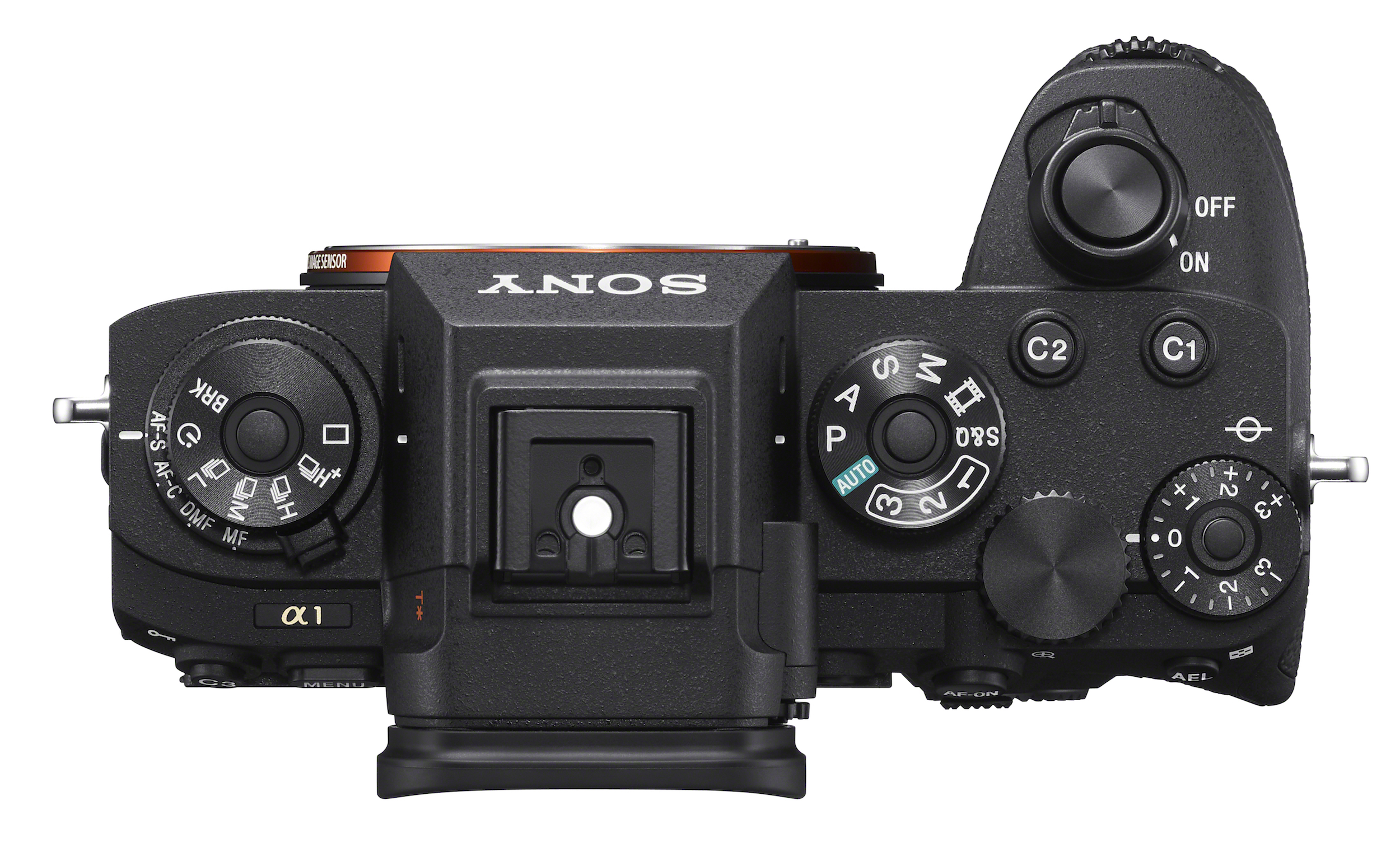
Top view of the Sony Alpha 1 camera showing its controls.

Image Credits: Sony

If it’s merely a question of money to get the best instead of almost the best, there are a lot of people out there who will write that check without a second thought. Of course, the R5 was released half a year ago and its successor (the “Mark II”) may change that calculus again.

To be clear, the R5 and A1 are both far more camera than most people will ever need. They’re the bleeding edge of the industry — an industry that has been shrinking steadily for years. Battling fiercely now over professionals may have long-lasting effects as bit players get edged out, unable to compete. It’s an investment in the markets that they think will last despite the constant creeping encroachment of smartphones.

More importantly for the rest of us, competition like this in the camera industry is good because it produces advances that trickle down to the models we can actually afford. Not that anyone really needs 8K, but that improved sensor readout and EVF sure would be nice to have.

You can read more about the Alpha 1’s specs here.

26 Jan 2021

Sony’s tempts professionals with the top-shelf, top-tier Alpha 1

Sony is making a play for the top end of the professional digital camera world, where videographers and sports photographers demand immaculate image quality at high resolutions in short order. The new Alpha 1 beats pretty much everything on the market on paper, but it’ll set you back a cool $6,500.

This is, of course, well above the price range for ordinary consumers and even spendy enthusiasts and “prosumers.” It’s a professional tool, and in this range Canon has historically been the go-to with its 1D series, and more recently its R5, a full-frame mirrorless that leapfrogged the competition to great acclaim last year. But Sony clearly means to leapfrog the R5 in turn.

The Canon R5 ticked all the right boxes: full frame sensor, 45 megapixels at 20 frames per second, an excellent EVF, in-body image stabilization, and 8K video. Sony ticks them all too… but harder.

Rear view of the Sony Alpha 1 camera showing its screen and viewfinder.

Image Credits: Sony

The Alpha 1 will send down its 50 megapixel stills at 30 frames per second and with no viewfinder blackout (plus the backside-illuminated sensor will be more sensitive); its EVF has nearly twice the pixels and can refresh twice as fast, 240 fps; its 8K video is born at a higher resolution (the Sony uses the full 8.6K and downrezzes); it’ll shoot for half an hour without overheating (an R5 quirk); and so on and so forth.

Sony seems to have deliberately outdone Canon’s flagship in every way possible, though with no consideration for cost: the R5 goes for about $3800, while the A1 is $6500.

Yet photographers are no strangers to spending that kind of cash on a tool of the trade (a lens can run you as much or more). Anyone who shoots sports or nature knows that 30 fps instead of 20 fps may mean the difference between getting a cover shot and nothing at all. Visual effects artists who work closely with footage peep pixels all day will be able to tell an R5 8K from an A1 8K. Will it matter? Maybe, maybe not. Would you take the risk or pay extra to eliminate it?

Top view of the Sony Alpha 1 camera showing its controls.

Image Credits: Sony

If it’s merely a question of money to get the best instead of almost the best, there are a lot of people out there who will write that check without a second thought. Of course, the R5 was released half a year ago and its successor (the “Mark II”) may change that calculus again.

To be clear, the R5 and A1 are both far more camera than most people will ever need. They’re the bleeding edge of the industry — an industry that has been shrinking steadily for years. Battling fiercely now over professionals may have long-lasting effects as bit players get edged out, unable to compete. It’s an investment in the markets that they think will last despite the constant creeping encroachment of smartphones.

More importantly for the rest of us, competition like this in the camera industry is good because it produces advances that trickle down to the models we can actually afford. Not that anyone really needs 8K, but that improved sensor readout and EVF sure would be nice to have.

You can read more about the Alpha 1’s specs here.
26 Jan 2021

Get feedback on your pitch deck from tech leaders on Extra Crunch Live

Extra Crunch Live 2.0 launches next week! Among several improvements, we’re thrilled to ramp up the Pitch Deck Teardown.

In short, folks can submit their pitch decks to get feedback from investors and founders alike.

The importance of the pitch deck can’t be underestimated. It is often the first point of contact between a company and venture investors, but how investors consume a pitch deck (and what they really think) is also a bit of a black box.

Are they speed-flipping through the slides or taking their time? Do they prefer more information on the team or context on the industry? More numbers or more words? How many slides is the right number of slides?

There are too many questions to count, and often very few answers. But we’re popping the lid off of that black box with the Pitch Deck Teardown. We’ve done Pitch Deck Teardowns at events like Disrupt and Early Stage 2020, and this year we’re cranking it up a notch.

Anyone can submit their pitch deck and hear what our guests, tech leaders across the industry, think of them. (Important note: Extra Crunch members will be prioritized on the list of decks we choose to show during the episode.)

We recently shared what you can expect from Extra Crunch Live in 2021. Here’s a refresher:

  • Series A – Learn how others have fundraised! We’ll have a segment dedicated to hearing from founder/investor duos who walk us through the Series A pitch deck that led to investment.
  • Pitch Deck Teardowns – Folks will have the opportunity to submit their pitch deck and get feedback from our guests, which will include VCs and founders (You can submit their pitch decks right here!).
  • Live Pitch-offs – Audience members can raise their hand to practice their elevator pitch in front of the audience and get real-time feedback from VCs.
  • Networking!! – The Extra Crunch membership is a community. ECL will be an opportunity to meet your fellow audience members, even in a virtual environment. Who knows? Maybe you’ll meet your next co-founder or investor!
  • Consistency – ECL will always be at 12pm PT/3pm ET on Wednesdays. When it comes to your calendar, set it and forget it.

We’ll announce all the speakers joining us in February tomorrow! Stay tuned!

26 Jan 2021

Mealco raises $7M to launch new delivery-centric restaurants

Mealco, a startup promising to help chefs launch new restaurants designed around delivery, is announcing that it has raised $7 million in seed funding.

It’s probably not news to anyone reading this that opening a restaurant can be an expensive, risky proposition — and of course, many restaurants have gone out of business during the pandemic.

But founder and CEO Daniel Simon (who was previously a developer and product lead at Applicaster, and has also worked with Tel Aviv restaurant group R2M) said that even in the best of times, it can take $1 or $2 million to get started, and “if you want to hit the ground running, 98% of your focus is not on the food or the customers.”

With Mealco, on the other hand, there’s no upfront cost for the chefs, and they get to focus on actually creating the dishes and the menu. Mealco locally sources the ingredients, which are then cooked using the startup’s kitchen infrastructure and offered for delivery via the standard delivery apps — Uber Eats, DoorDash, Postmates and Seamless.

Simon said that with Mealco, the process of getting a new restaurant up and running only takes six to eight weeks: “We tell [the chefs] they don’t need to chop any more onions or tomatoes. There’s Mealco software that can tell employees at the Mealco kitchen how to prepare [each dish].”

Cayenne

Cayenne. Image Credits: Mealco

Mealco also provides support around branding, marketing and social media, and gives chefs data how about the business is performing. The chef, he said, can “manage the restaurant from their mobile phone.”

The startup has already launched two restaurants delivering in Manhattan, Brooklyn and Queens — Mexican restaurant Tributo and Nashville hot chicken restaurant Cayenne (the latter with chef Hillary Sterling). And it says there are 50 chefs on the waitlist.

Asked whether any of Mealco’s partners mind being separated from the food preparation and the dining experience, Simon said it depends on the chef.

“If you want to open a single location and be in the kitchen every morning,” then he said Mealco isn’t for you. “That not wrong or right, it’s a preference … But most chefs are creators, they’re artists. They express themselves through food.” And in his view, Mealco allows them to focus on that creativity.

Rucker Park Capital led the round with participation from FJLabs. Simon said the plan is to launch throughout New York City and surrounding areas this year, before moving on to new cities next year.

“Over the past few years, we had the opportunity to see the evolution of the food ecosystem firsthand,” said Rucker Park Capital founder Wes Tang in a statement. “We believe the opportunity was ripe for someone to launch new brands in a new format. In Mealco, we found the most compelling model and novel mission.”

26 Jan 2021

Twitter’s new API platform now opened to academic researchers

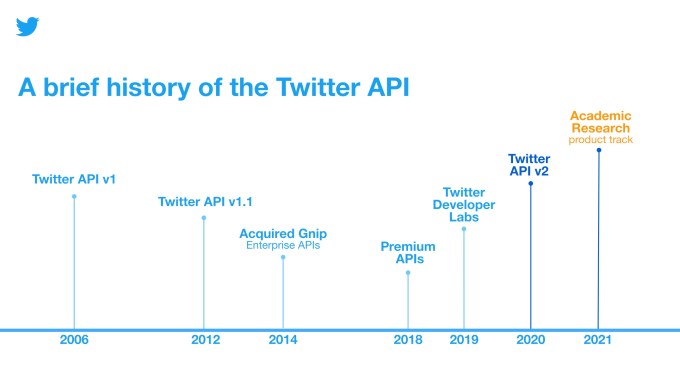
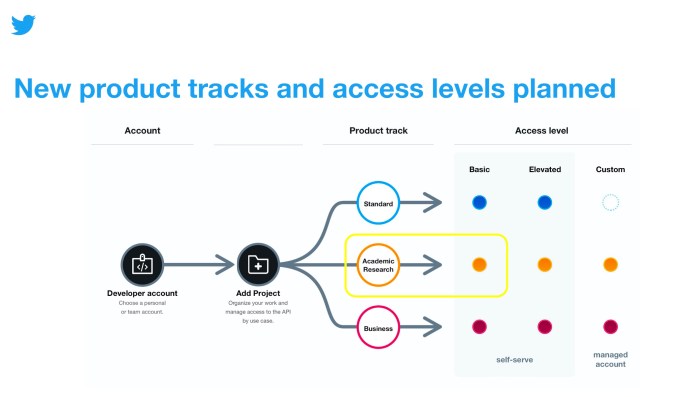
Twitter today is rolling out a new product track on its API platform, as part of its ongoing efforts to rebuild the Twitter API from the ground up. The track, which aims to serve the needs of the academic research community’s efforts, offers broader access to the Twitter archive and fewer restrictions on tweet retrievals, so researchers can access the entire history of the public conversation on Twitter’s platform.

In addition to gaining access to all the Twitter API v2 endpoints released to date and elevated access, researchers will gain access to more precise filtering capabilities.

Specifically, they’ll be able to access the full-archive search endpoint, which offers access to everything being said on Twitter. They can narrow searches for these historical tweets using start time and end time parameters.

Image Credits: Twitter

Researchers will also gain a significantly higher monthly cap on the number of tweets they can pull using the Twitter API v2. While on the Basic level of API access, this cap is set to 500,000, the Basic level of access on the Academic Research track is an initial monthly cap of up to 10 million tweets. This applies to the Recent Search, Filtered Stream, Full-archive search, and user tweet and mentions timelines endpoints, Twitter says.

The Academic Research track will gain access to certain operators that aren’t otherwise available, too, with the goal of helping them pull more precise user data. Today, these include: $ (aka cashtag), bio, bio_name, bio_location, place, place_country, point_radius, bounding_box, -is:nullcast, has:cashtags, and has:geo. 

Researchers can also add 1,000 concurrent rules when using the filter stream endpoint, instead of the limit of 25 available in the Standard track. Queries in the recent recent search endpoint can be 1024 characters long, compared with 512 characters in the Standard track.

Because of the elevated levels of access, those who want to gain access to the Academic Research product track have to first submit an application.

All applicants have to either be a master’s student, doctoral candidate, post-doc, faculty, or research-focused employee at an academic institution or university. They will also need to have a clearly defined research objective, and must be able to detail their specific plans for how they intend to use, analyze, and share Twitter data from their research.

Plus, the data used from the Academic Research product track can’t be used for any commercial purposes, Twitter notes.

Image Credits: Twitter

Academic researchers have been taking advantage of the Twitter API since its first introduction in 2006 and have used the data to study a variety of topics, Twitter says, like state-backed efforts to disrupt the public conversation​, ​floods and climate change​, ​attitudes and perceptions about COVID-19​, and​ ​efforts to promote healthy conversation online​.

However, the earlier version of the Twitter API didn’t make it easy for researchers to gain access to Twitter data — something the company wanted to correct with API v2.

Twitter to date has catered to the research community in other ways, with additions like a website dedicated to academic research, updates to its developer policy to make it easier to reproduce and validate others’ research, and even special endpoints, like the COVID-19 stream endpoint released in April 2020. But it hasn’t fully thought through, until the API v2, how it could build tools that would actually aid researchers in doing their work, instead of the researchers having to figure out ways to work around Twitter’s limitations.

The Academic Research product track was tested in private beta starting in Oct. 2020, and now this is being opened more broadly, where it will be made freely available.

Twitter says it’s planning to add higher levels of access across all its product tracks in the future, including this one, in time. The later levels will help researchers who need even more data than what’s being offered with today’s launch. Twitter also noted it’s looking into adding flexible access as well, which would help account for times when developers were consuming more or less data throughout the year.

26 Jan 2021

These investors want to back ‘ridiculously early’ female-led African startups

In 2019, female-led companies received less than 5 percent of the global venture capital. Bringing it to Africa, only 10 percent of the West African startups that cumulatively raised $1 million had at least one female co-founder in the past decade.

There are many stats to back up the underrepresentation of women in starting a company, raising money and general involvement in technology where the global tech workforce comprises 28.8% women.

In a male-dominated space, programs geared toward supporting female entrepreneurs have emerged to close the gap on all fronts. However, for those centered around female founders, most are quick to offer mentorship and training but tend to ignore the importance of raising money.

FirstCheck Africa, a female-focused angel fund that launched yesterday, is hoping to address this challenge. According to its website, “fixing capital access for female tech entrepreneurs in Africa needs an intentional, female-led approach.”

FirstCheck Africa was founded by Eloho Omame and Odunayo Eweniyi. Omame is the MD of Endeavor Nigeria, a program for high-impact entrepreneurs, and Eweniyi is the co-founder and COO of Piggyvest, a Nigerian fintech startup.

Omame’s experience working with founders and managing a VC firm (Amari Ventures) and Odunayo’s as a founder will prove vital to what FirstCheck Africa hopes to achieve: Making it easy for African women to raise capital and invest in tech.

The fund will provide between $15,000 to $25,000 in six women this year in exchange for modest equity. FirstCheck Africa plans to see each woman or female-led team through the ideation stage to a significant pre-seed round within 12 months.  

“We know we can generate solid long-term returns by investing in women, so we’ll write female founders’ first checks and be their earliest believers. We’re not afraid to invest ridiculously early in great women,” an excerpt in the statement read.

The fund also specifies that it is open to investing in mixed co-founder teams, with at least one woman. But the caveat is “only where it’s clear that the woman is a true partner and decision-maker, with a significant, equitable split of the founder equity.”

Already, FirstCheck has received over 600 applications from African female-led startups, Omame told TechCrunch. But she iterates that while only six will be selected, FirstCheck is in no hurry to announce the deals when asked how soon the firm expects to write its first check.

“We’ve been transparent with our investment goal as we’re backing up to six women-led, technology-driven businesses this year,” she said. “Outside that, there’s little interest from Odun or me to rush to announce deals. The work we’re doing is important and necessary, but it will take time.”

When you think about it, backing six startups in its first year is an impressive goal. For context, Microtraction, an already established early-stage VC firm, invested in seven startups last year. To achieve that, FirstCheck will need to garner support from local and international investors that are intentional about closing the gender funding gap on the continent. Without providing specifics around how much the fund is looking to raise, Omame says this is already happening.

That said, FirstCheck will be building a female-led investor community for women interested in backing startups by writing smaller checks. The notion behind this is to create opportunities for women around the continent to invest at more comfortable levels. And for African female entrepreneurs who need pre-seed and seed funding, the launch of FirstCheck is a plus to their selection pool.

The firm now joins Rising Tide Africa and SA-based Dazzle Angels among others as one of the few angel funds targeted to African female-led startups.

26 Jan 2021

Google open sources Tilt Brush VR software as it shuts down internal development

As Facebook and Apple begin to fire up more projects in the AR/VR world, Google has spent the last year shutting down most of their existing projects in that space.

Today, the folks at Google announced they had ended active development of Tilt Brush, a VR painting app that was one of virtual reality’s early hit pieces of software. The app allowed users to use virtual reality controllers as brushes to construct digital sculptures and environments.

While the company will not be pushing any new updates to the app, they did announce that they will be open sourcing the code on github for developers to build their own experiences and customizations. Google also notes that the app will continue to be available in the app stores on VR headsets.

“[W]e want to continue supporting the artists using Tilt Brush by putting it in your hands,”a blog post from Google reads. “This means open sourcing Tilt Brush, allowing everyone to learn how we built the project, and encouraging them to take it in directions that are near and dear to them.”

Google acquired the small studio behind Tilt Brush called Skillman & Hackett back in 2015.

Earlier this month, Tilt Brush co-creator Patrick Hackett announced he was leaving Google and would be joining the studio I-Illusions, the game studio behind VR title Space Pirate Trainer. According to LinkedIn, co-founder Drew Skillman stopped working on the VR project back in 2018 and now is part of the Stadia team at Google.

Last month, Google shut down Poly, its 3D object library which allowed users to share digital art including design made in the Tilt Brush software.

A Google spokesperson declined to comment further.

26 Jan 2021

The Tula Mic is a powerful portable recorder that doubles as a great USB-C microphone

Tula is a new company founded with the specific purpose of developing user-friendly hardware and software for sound capture, and its debut product, the Tula Mic, is now shipping after a successful crowdfunding campaign last year. Tula Mic is both a USB-C microphone input for computers and mobile devices, and also a dedicated recorder that has built-in storage and its own battery that can provide up to 14 hours of continuous use. It’s a strong intro offering that fits a lot of user needs at an attractive price point.

Basics

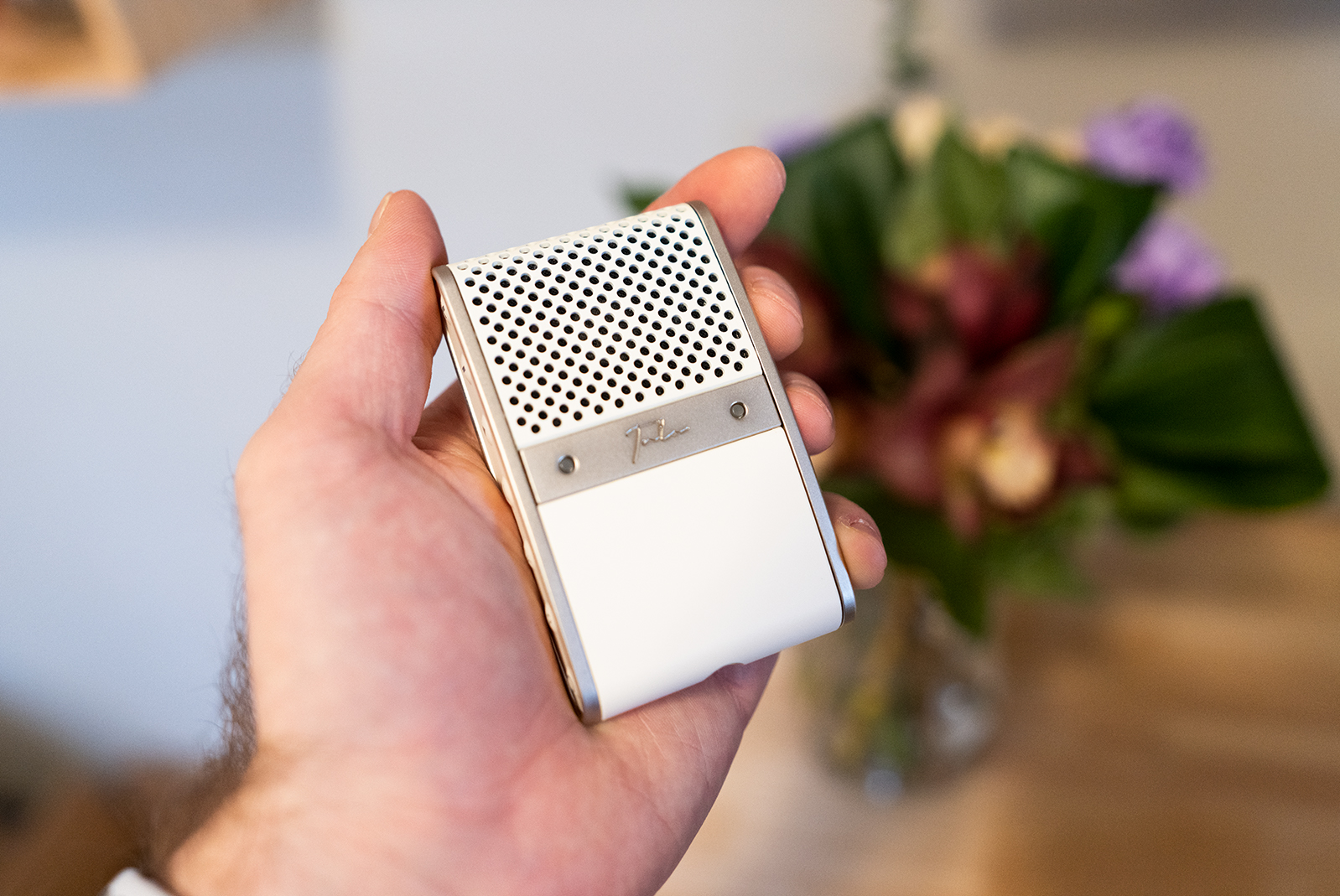
The Tula Mic is small – it’s definitely best described as ‘hand-held,’ taking up roughly the size and surface area of a deck of cards. The physical design includes microphone capsules up top, with control buttons running along either side, and a USB-C charging port in the middle of the back of the hardware. The top left side also features a standard 3.5mm port, which can be used not only for headphones for monitoring and playback, but also for input for lavalier microphones, effectively turning the Tula into a body pack.

Just below the grill that contains the recording capsule, there are two lights on the face of the Tula Mic. These including a gain/peaking indicator and a recording indicator, providing you with simple but effective visual feedback. There’s 8GB of built-in memory on board, and that built-in rechargeable battery that offers up to 14 hours of continuous recording. Inside, there are not just one, but two recording capsules, including one with a cardioid recording pattern for capturing audio from one user speaking towards the mic, and one with an omni pickup pattern for recording room sound, best for events or interviews.

The Tula Mic comes with a stand attached, which fold up and attaches magnetically to its midsection for easy transport. This is also removable, and can be swapped out for a standard microphone-mount threaded attachment point. It’s a simple and elegant design that proves very handy in active use, but the proprietary mounting method here means that if you ever lose one or the other of these accessories, you can’t just pick up a generic one like you could if they’d used a standard tripod thread instead, for instance.

Design and performance

Image Credits: Darrell Etherington

The Tula Mic’s design definitely conveys retro aesthetics, and its flat-sided oval shape is immediately eye-catching and recognizable. The unique look also provides great hand-holdability, and when used in stand mode, it’s immediately clear how a user should address the mic in use. The flip-down stand is elegant and keeps the mic firmly in place, thanks to its weighted metal construction.

The controls located down either side of the Tula Mic are each labelled, but I found that I definitely had to repeatedly reference the included user guide before I could consistently remember what each of them did. The icons are helpful, but not necessarily immediately intuitive. It’s nice to have physical controls, however, rather than touch sensitive surfaces or a screen for input.

The most important thing to note about the Tula Mic’s performance is that it sounds great, in both wired USB-C and standalone recorder mode. Having the ability to switch between omni and cardioid pickup patterns is also immensely useful in terms of the mic’s versatility as a one-size-fits-most solution, since you can use it for podcasting, for recording a class or lecture, and for recording a two-person interview all with equal ease and very high-quality results.

Lastly, Tula includes a built-in local noise cancellation algorithm, which allows you to capture a brief recording of room tone in order to automatically remove it from your subsequent recording. It’s a very handy and surprisingly effective feature, and one that should provide big benefits in terms of later using recordings from the mic with transcription services like Otter.ai.

Bottom line

At $199, the Tula Mic is already priced to match many of the leading USB microphones on the market today. The fact that it’s also a full-featured standalone digital recorder, many of which are also priced at or near that mark, really makes it an obvious choice for anyone looking for portable recording flexibility in a compact package.

26 Jan 2021

Zero, a plastic-free grocery-delivery startup, to launch in LA

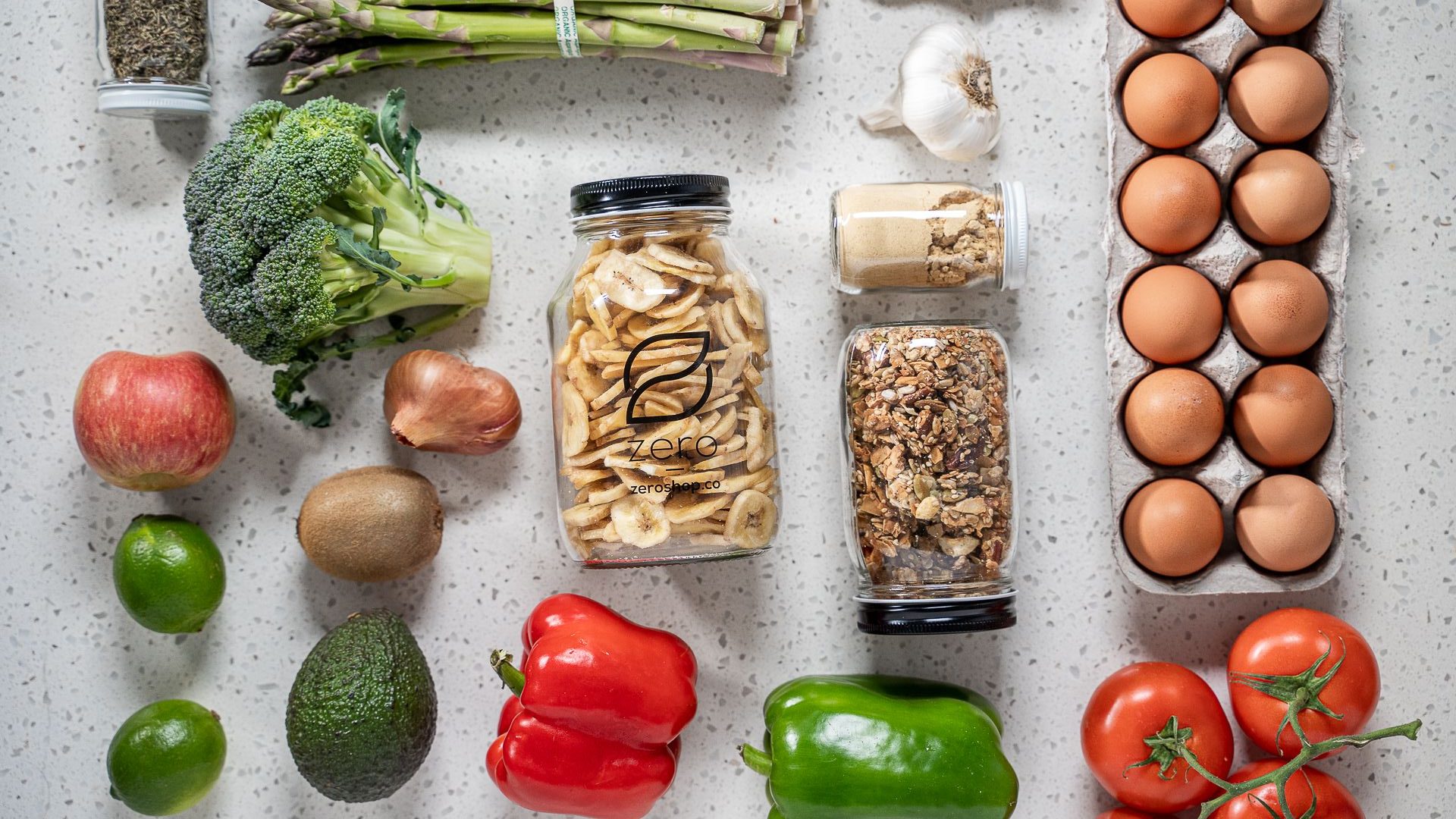
Plastic-free grocery-delivery startup Zero is gearing up to launch in Los Angeles on February 10, after solely operating in the San Francisco Bay Area. Zero works directly with suppliers to sell food and other household items in jars, boxes and other types of sustainable packaging, and offers next-day delivery.

Zero works with both big-name brands like Sightglass Coffee, Annie’s and Newman’s Own, as well as emerging vendors that are focused on sustainability, like Planet FWD, founded by Zume co-founder Julia Collins.

Zero members pay $25 per month to access discounted prices on food along with free deliveries. Zero is also available without a subscription, but prices on individual items cost a bit more, and delivery costs $7.99.

I’ve used Zero a couple of times and overall had a pleasant experience. The selection of food is pretty good, but I wasn’t able to find certain types of items like tortilla chips and mandarin oranges. On the plus side, Zero sells my favorite candy of all-time, Tony’s Chocolonely.

In total, Zero founder and CEO Zuleyka Strasner says there are just over 1,100 different items available in the store.

That’s partly because of the leg work that’s required to ensure the food manufactures are meeting Zero’s internal standards for packaging. In the case of chicken, Zero has worked directly with butchers to ensure they package it in compostable paper, which then goes into a compostable resealable bag, Strasner said. That took a lot of time, effort, energy and technology, she said.

Zero does allow plastic at some point in the supply chain process but ensures that plastic is not passed on to consumers. Using chicken as an example again, the chicken starts at the farm and then must travel to one of Zero’s butcher networks and then to a facility to get packaged and processed.

“So those farms and those parts of that transportation process do oftentimes involve plastic in there,” Strasner said. “And as the company grows, we get involved more and more and more into changing more and more of the processes and removing more and more of the plastic for each of our new manufacturing suppliers. So it’s always a journey for each farm, to start with that product going out to the customer plastic-free and then working backwards backwards backwards to removing more and more and more plastics.”

While it would be ideal for all of Zero’s partners to operate fully plastic-free, Strasner said it was important to make it as easy as possible for farms, suppliers and other stakeholders to get on board, “rather than setting up a set of rules and regulations that say either you’re plastic-free from the minute the chicken gets slaughtered all the way to getting it to the customer,” she said.

“That would not create the shift in the industry that we’re looking to create.”

The idea for Zero started to come into fruition for Strasner during her honeymoon in the Corn Islands in Nicaragua. During her trip, she was shocked at how much single-use plastic washed up on the shore, she told TechCrunch. Meanwhile, she had seen the zero-waste, anti-plastic movement growing and began to wonder what would happen if she went plastic-free. Going plastic-free made her think more about the supply chain and how foods are packed in the country, she said.

Given her background in technology, she began to think about how technology could be applied to the problem of plastic waste, “which must be solved within the next seven to 10 years,” she said. “Time is truly finite here and that’s the mission I decided to undertake.”

Zero began testing in 2018 and officially launched in November 2019. The majority of Zero’s customers are members and, overall, the company has “many, many thousands of customers,” Strasner said.

To date, Zero has raised $4.7 million in funding from investors like Precursor Ventures, Backstage Capital, 1984 and others.

“We aim to be and we will be the largest sustainability platform in this country,” Strasner said. “So whatever you need and desire — food, homewares or otherwise, certainly plastic-free but also just sustainable in general — you would come to us. Zero really is a movement beyond just food.”


26 Jan 2021

Airbyte is an open-source data pipeline platform

If you’re working for a company that handles a ton of data, chances are your company is constantly moving data from applications, APIs and databases and sending it to a data warehouse or a data lake. There are a few well-known platforms to extract, load and transform data, such as Fivetran and Stitchdata.

Airbyte is building an open-source data pipeline platform. An open-source alternative to Fivetran or Stitchdata is interesting because building and maintaining connectors require a ton of resources. If you’re just starting out with your data pipeline and you don’t have a big team, it creates a barrier to entry.

Sure, existing data pipeline platforms already provide dozens of integrations with popular sources and destinations. Popular sources include Salesforce, Stripe, Marketo, SendGrid, etc. Popular destinations include Redshift, Snowflake and BigQuery.

But there are a ton of small services that aren’t supported on traditional data pipeline platforms. If you can’t import all your data, you may only have a partial picture of your business.

A lot of companies end up building custom connectors for their applications. With this open-source approach, Airbyte thinks it can foster a community of users to build and maintain thousands of open-source connectors. When a company builds a custom connector, another company can use it, improve it and give back to the community.

“The open-source approach is the right approach,” co-founder and CEO Michel Tricot told me. “If somebody using a connector realizes that it’s broken, they can fix it for the entire community.”

The team behind Airbyte originally started with a product focused on marketing data. They attended Y Combinator and later pivoted because of the coronavirus outbreak. “In a COVID world, there’s no marketing budget,” co-founder John Lafleur told me.

Airbyte connectors run in Docker containers, which means they all operate independently from each other. You can schedule updates, refresh your connectors manually and monitor them individually.

Right now, there are 46 connectors — Airbyte is currently working on certifying them to make sure they’re production-ready. 250 companies are currently using Airbyte.