Author: azeeadmin

14 Jul 2020

Tesla lands another tax break to locate Cybertruck factory in Texas

Lawmakers in Texas just gave Tesla and its CEO Elon Musk another incentive to locate its next factory there.

Commissioners in Travis County, home to Austin and the possible next Tesla factory, approved Tuesday property tax breaks worth at least $14 million over 10 years. The incentives are on top of $46.6 million in property tax abatement that the Del Valle School District Board approved earlier this month. 

News of the approval pushed Tesla shares 3.5% higher in after-hours trading.

The agreement, which the Austin Statesman first reported, is the latest carrot dangled in front of Tesla in hopes of landing the automaker’s next factory, which is slated to assemble the all-electric Cybertruck and the Model Y for the East Coast market.

There are, of course, conditions to such an arrangement.

Under terms of the agreement with Travis County, Tesla must invest $1.1 billion in the new factory within the first five years. In exchange, Travis County will rebate 70% of the property taxes Tesla will pay. Once Tesla’s investment in the factory eclipses that $1.1 billion mark, the property taxes rebates will increase to 75%. Any investments in the factory beyond $2 billion, will give Tesla 80% in property tax rebates.

Travis County has estimated that a $1.1 billion investment by Tesla would generated $8.8 million in new tax revenue over a 10-year period, a figure that takes into account the property tax rebates.

If Tesla fails to hit the investment goal or if its falls 75% short of its jobs requirement in any year, the company won’t receive any property tax relief. The county will also have the ability to recoup tax rebates if Tesla breaches its contract.

The incentives packages has been approved quickly, illustrating the thirst by local governments to find ways to create new jobs, a point that Tesla is keenly aware of. The company has pointed to unemployment statistics in Travis County as part of its presentation, a figure that popped to more than 12% in April from 2.2% a year earlier.

Musk tweeted in March that the company was “scouting” locations to build a new U.S. gigafactory that will produce the Cybertruck and Model Y crossover.

Initially, Tesla was eyeing Nashville, but the focus quickly turned to a location east of Austin as well as land in Tulsa, Oklahoma. Lawmakers in Oklahoma have offered up their own incentives package, although details of what the state is offering has not been made public.

Tesla has promised Texas officials it will employ at least 5,000 people. About 25 of those workers are categorized as “qualifying” jobs and would be paid a minimum of $74,050, while the remaining would be middle income jobs with an annual salary of $47,147.

If the process to approve Tesla’s factories in Nevada and New York are any guide, state incentives are also likely. The company could, for instance, seek a taxpayer-funded grant from the Texas Enterprise Fund. There are other beneficial rewards Texas could offer Tesla such as allowing the automaker to sell directly to consumers, a method that is prohibited in the state.

14 Jul 2020

Dear Sophie: What are my F-1 and other immigration options after graduation?

Here’s another edition of “Dear Sophie,” the advice column that answers immigration-related questions about working at technology companies.

“Your questions are vital to the spread of knowledge that allows people all over the world to rise above borders and pursue their dreams,” says Sophie Alcorn, a Silicon Valley immigration attorney. “Whether you’re in people ops, a founder or seeking a job in Silicon Valley, I would love to answer your questions in my next column.”

“Dear Sophie” columns are accessible for Extra Crunch subscribers; use promo code ALCORN to purchase a one or two-year subscription for 50% off.


Dear Sophie: I’m graduating this fall with a Bachelor’s degree in molecular and cell biology. I hope to find a way to maintain my F-1 status to graduate. After graduation, I’m planning on applying for OPT.  I really want to work at a biotech startup. What options do I have to remain in the U.S. after OPT ends?

—Bright-Eyed in Berkeley

Dear Bright-Eyed,

Stay the course — you’re almost at the finish line. Even with everything going on, if you can maintain your F-1 status for the last semester, you should still be able to get OPT and STEM OPT and possibly a green card. As you know, OPT enables international students on F-1 visas to work for 12 months in their field of study after completing at least one academic year of studies. Like you, most students choose to wait to begin OPT after graduation. Many companies are starting to take the pledge to support international students.

14 Jul 2020

VidMob rethinks video production in the pandemic era

VidMob, which started out as a marketplace connecting marketers and video editors, now bills itself as a “creative technology platform.” There’s still a marketplace, but it’s part of a broader suite of tools for managing video production and turning those videos into online ads.

And the company has continued to evolve during the COVID-19 pandemic. Founder and CEO Alex Collmer me that how customers use the platform has changed substantially in recent months. For example, he said that one of the platform’s “best skills” involved taking existing footage — including footage shot for TV commercials — and other creative assets and turning them into social media ads. But of course, “Over the last few months, all physical shoots were canceled.”

So Collmer said that rather than simply treating VidMob as social media advertising tool, brands are increasingly turning to the startup for a way to manage remote video production. The result is that the company saw 100% year-over-year “logo growth” (a.k.a. new customers) in the first quarter, and then grew another 50% in Q2.

“What we have seen here is the acceleration of the digital transformation of the enterprise,” he said. “Pretty much every client we have, every marketer we talk to is looking very seriously at how to move all their creative operations onto some sort of unifying software platform, so that they feel safe in the event that they continue to have to work in a remote environment continue, and to be more efficient with existing media.”

One of those clients is Citi, whose vice president of corporate communications Megan Corbett told me her team has been working with VidMob since last year. She said that as as a result of the pandemic, like many marketers, “We were required to really be flexible and adjust and scale programs quickly.”

For example, in response to the #InItTogether hashtag, Citi used VidMob to create a series of inspirational videos showcasing the work of its employees — such as Mihir in the video above, who was 3D printing protective equipment for his communities.

“As we thought about how we told the stories, we realized that your colleagues are some of the most important heroes that you have,” Corbett said.

According to Citi, the videos have been viewed nearly 250,000 times since the campaign launched in early May, with 80% of that viewing on LinkedIn.

And although dealing with the initial pandemic and shutdown was difficult enough, the news keeps coming, with protests for racial justice, a COVID-19 resurgence, resulting closures and more.

“We’re going to be in a period of uncertainty for a while, but to be honest, I see that as an opportunity,” Corbett said. “Brands who understand what their consumers want, brands who are tuned into the cultural zeitgeist, brands [who] pivot quickly to create content that is relevant and engaging and drive business KPIs … that will be what wins in the future.”

Similarly, Collmer said that in a period of uncertainty, brands need to respond more quickly, rather than simply falling silent: “Shutting up and going away is not a great way to position yourself.”

14 Jul 2020

Daily Crunch: Behold, The TechCrunch List

TechCrunch launches a major new initiative, Amazon tests a smart shopping cart and ICE backs down from its controversial student visa rule change. Here’s your Daily Crunch for July 14, 2020.

The big story: Behold, The TechCrunch List

Back in June we published a story with the rather grandiose headline “How we’re rebuilding the VC industry. It was, in effect, announcing The TechCrunch List, which has been a months-long project to bring more transparency to who actually writes first checks for startups.

Today, we published the list — or at least the first version. I’ll let Managing Editor Danny Crichton explain:

The TechCrunch List is a verified, curated list of investors who have demonstrated a commitment to first checks and leading rounds from seed through growth, organized by market vertical …

Ultimately, The TechCrunch List is a living and breathing directory of the most active VCs who are willing to lead in the industry. We intend for the List to be regularly updated as founders give us more recommendations and investors change their tastes and their portfolios.

You can read about the 11 VCs who got the most enthusiastic recommendations from founders (Extra Crunch membership required) and browse the full list.

The tech giants

Amazon to test Dash Cart, a smart grocery shopping cart that sees what you buy — The cart, which will identify and charge you for items placed inside its basket, will first be tested in the Amazon grocery store opening in Woodland Hills, California.

UK U-turns on Huawei and 5G, giving operators until 2027 to rip out existing kit — The U.K. government is forbidding telcos from buying 5G equipment from Huawei and ZTE, and must remove any equipment from those companies by 2027.

Google Play Pass expands outside the US, adds more titles and annual pricing — Play Pass is the Android alternative to Apple Arcade, offering subscription access to a variety of apps and games.

Startups, funding and venture capital

Identity platform Auth0 raises $120M Series F funding round at $1.92B valuation — Developers can just add a few lines of code to connect applications to Auth0’s identity management service.

Blackstone’s growth investors lead a $200 million investment into Oatly, the oat-milk juggernaut — Celebrity investors include Oprah Winfrey, Roc Nation, Natalie Portman and former Starbucks CEO Howard Schultz. (I’ve tried the milk. It was fine.)

Everything you could possibly want to learn about fundraising will be covered at TC Early Stage — There will be in-depth sessions, as well as fireside chats with Figma’s Dylan Field, Minted.com’s Mariam Naficy, Sequoia’s James Buckhouse and Jess Lee and Greylock’s Reid Hoffman and Sarah Guo.

Advice and analysis from Extra Crunch

Investors are browsing for Chromium startups — Lucas Matney offers an overview of interesting browser startups building on top of Google’s Chromium project.

The IPO market stays hot, as nCino prices above range and Jamf targets a ~$2B valuation — Alex Wilhelm has the latest on IPO pricing.

(Reminder: Extra Crunch is our subscription membership program, which aims to democratize information about startups. You can sign up here.)

Everything else

After colleges sue, ICE backs down from student visa rule change — A dozen universities and colleges threatened legal action against the administration’s order to revoke visas for international students studying at U.S. colleges that plan to provide their classes exclusively online in the fall.

NBCUniversal’s streaming service Peacock officially launches tomorrow — The service has already been available to parent company Comcast’s Xfinity X1 and Flex cable customers since April, but tomorrow marks the launch to a general audience, with anyone in the United States able to sign up and access Peacock on a range of devices (but not Roku or Amazon Fire TV).

Hand-crank a level of Super Mario Bros. on Lego’s new 2,646-piece NES kit — This is beautiful but I would definitely lose some of those pieces.

The Daily Crunch is TechCrunch’s roundup of our biggest and most important stories. If you’d like to get this delivered to your inbox every day at around 3pm Pacific, you can subscribe here.

14 Jul 2020

Facebook to launch officially licensed music videos in the U.S. next month

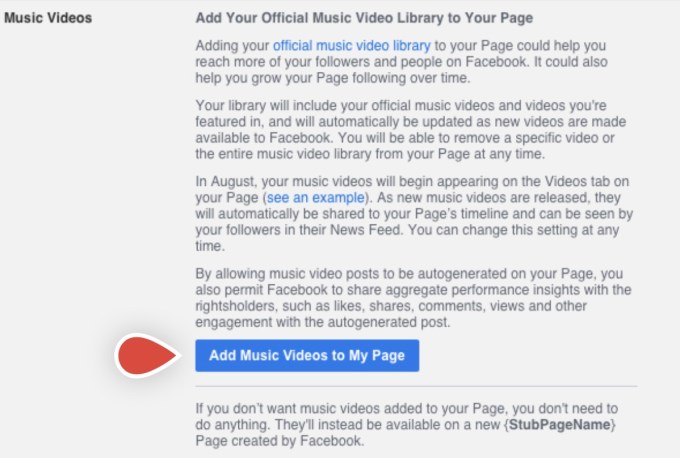
Facebook is preparing to launch officially licensed music videos on its social network in the U.S. next month, in a direct challenge to YouTube. In materials reviewed by TechCrunch, Facebook informed Page owners linked to artists they’ll need to toggle on a new setting to add their music videos to their page ahead of an August 1st deadline, at which point Facebook will automatically create a page of their videos if no action had been taken.

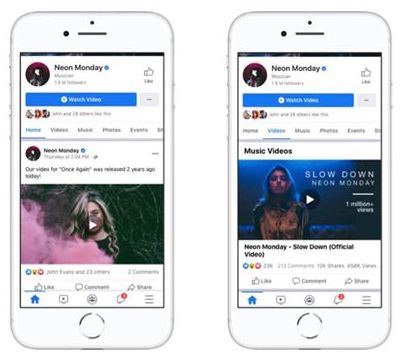
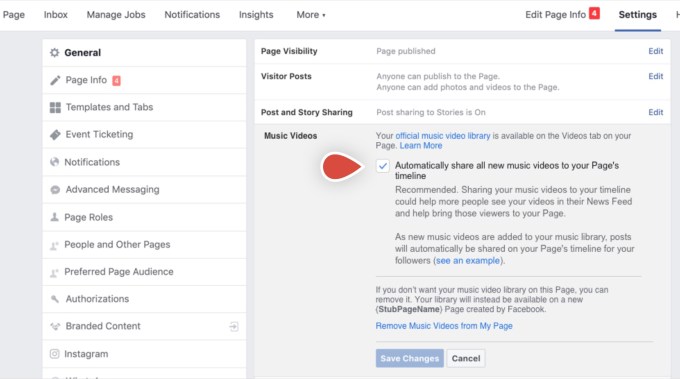
Artists will not have to manually upload their videos or even provide links, Facebook told the artist Page admins. Instead, by enabling the new setting, artists are giving Facebook permission to add music videos to their Page, where they can be discovered by fans on the Page’s Videos tab. This library will include both the artist’s own official videos and those they’re featured in, Facebook explained in its marketing materials.

Once enabled, the artists can edit or remove their videos from this destination at any time.

Above: Screenshots detailing to artist Page admins how to enable the Music video experience

Though artists are being strongly encouraged to enable the feature by August 1st, if they choose not to or miss the deadline, Facebook will create a separate official music Page on their behalf titled “[Artist Name] Official Music.” This Page will be created and controlled by Facebook and will be accessible by fans via the Facebook Watch tab and a new music video destination on the platform.

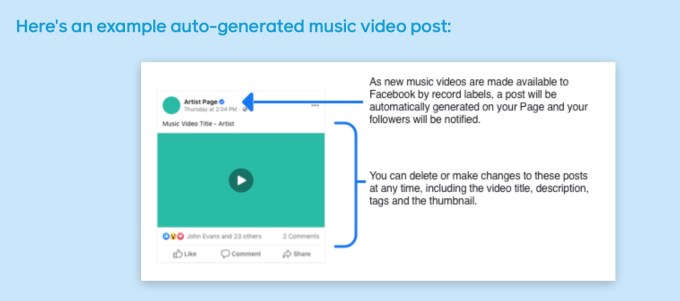
In an email sent to Page owners (see below), Facebook explained that whenever it receives a new release from a music label, the artist’s Facebook Page would automatically share the video directly on the page’s Timeline. This allows the new video to reach all the followers’ News Feeds. The setting for automatic sharing can be turned off at any time.

A partial screenshot of the email to artists leaked to Twitter, where it was amplified by social media consultant Matt Navarra. The addition had previously been reported by other smaller sites, as well. TechCrunch has also reviewed the marketing materials that explained in more detail how to enable the setting on artists’ Facebook Page.

By enabling the setting, artists are also giving Facebook permission to share aggregate performance insights with rightholders, including likes, shares, comments, views and other engagement data associated with these auto-generated posts, the materials noted.

In addition, artists can edit the auto-generated posts, including their title, description, tags and even the thumbnails.

Facebook’s expansion into music videos will present a significant challenge to YouTube, which accounted for 46% of the world’s music streaming outside of China as of 2017, according to a report from IFPI. Around the same time, YouTube had claimed over 1 billion music fans came to its site to connect with music from over 2 billion artists. More recently, the company reported it had paid out over $3 billion to the music industry in 2019.

Bloomberg late last year reported that Facebook was negotiating with the three largest record labels — Universal Media Group, Sony Music, and Warner Music Group — over rights to music videos. The report noted that record labels were interested in an alternative to YouTube, which they feel doesn’t pay enough.

Currently, artists under the major U.S. labels have not been able to share full music videos on Facebook due to licensing rights; they could only publish a short preview.

Though Facebook had prior deals with labels, the focus had been on the right to use licensed music in “social experiences” across Facebook, Instagram, Messenger and Oculus. That meant users could post personal videos with licensed music in the background without having their videos taken down. The prior agreements also enabled Facebook to test music-driven social experiences of its own. For example, Facebook tested a Musical.ly competitor called Lip Sync Live and later, a TikTok rival called Lasso, thanks to those deals. It rolled out Music Stickers on Facebook and Instagram, as well.

Facebook already offers a music video experience in Thailand and India. The company more broadly sees video as a major focus area for it, as videos help connect users and encourage social conversations. Facebook Watch, a dedicated video destination, emerged due to Facebook’s earlier video efforts and continues to expand.

Facebook, reached for comment, declined to offer a statement on its plans.

14 Jul 2020

SpaceX’s Starlink asks potential service testers for addresses, says private beta starts this summer

Starlink, the high-bandwidth, low-latency broadband internet service that SpaceX is in the process of deploying, has sent out an email to those who’ve registered their interest in becoming beta testers. The email asks for a specific address, to replace the previously requested zip codes (or area codes in Canada) for potential testers to help them be more specific about network availability.

The email asserts that SpaceX’s Starlink private beta will kick off this summer, with a “public beta to follow.” Those who’ve registered their interest and signed up to receive updates about the service will be notified “if beta testing opportunities become available,” SpaceX continues in the email.

SpaceX has continued to launch new batches of Starlink satellites as it grows its constellation ahead of its official service launch. So far, it looks like a very few select individuals have been able to actually use Starlink-powered internet connections, including SpaceX founder and CEO Elon Musk (naturally) and early SpaceX investor Steve Jurvetson .

To date, SpaceX has launched a total of 540 Starlink satellites, though a number have either been deorbited, deactivated or died, leaving a total of likely somewhere over 500 currently active. The company has three more launches confirmed as planned through August, including one that was delayed from June and that will now likely occur later this month.

Meanwhile, SpaceX has been lining up its regulatory requirements for operating, including applying for a telecom operator license in Canada with the intent of delivering connections to rural parts of the country. It’s also eligible for U.S. funding earmarked for companies that can narrow the broadband gap in the U.S., though it’s likely to miss out on a lucrative first tranche of those federal funds because of a requirement to demonstrate low-latency in existing connections during a window closing this week.

14 Jul 2020

Elon Musk rails against German court decision on Tesla Autopilot terminology

Tesla CEO Elon Musk disputed a German court ruling issued today that bans the company from using terms like Autopilot or “full potential for autonomous driving” on its website or other advertising.

In a tweet, Musk said “Tesla Autopilot was literally named after the term used in aviation. Also, what about Autobahn!?”

The Wettbewerbszentrale, an industry sponsored organization that focuses on anti-competitive practices, brought the case to the German courts, arguing that the terms mislead the public as to the capabilities of Tesla’s advanced driver assistant system.

Tesla vehicles come standard with Autopilot, an advanced driver assistance system that offers a combination of adaptive cruise control and lane steering. The more robust and higher-functioning version of Autopilot is called full self-driving, or FSD, which includes the parking feature Summon as well as Navigate on Autopilot, an active guidance system that navigates a car from a highway on-ramp to off-ramp, including interchanges and making lane changes. The system now recognizes and responds to traffic lights, as well.

Still, Tesla vehicles are not self-driving cars. The system requires a human driver to remain engaged at all times.

Wettbewerbszentrale also noted that Tesla’s announcements on its website imply that automated driving will work on city streets by the end of the year, which misrepresents the reality that some of the functions mentioned are still not legally permitted in Germany.

A Munich court agreed.

And while Musk might disagree, it’s unclear if he will direct Tesla to appeal the ruling. Tesla has not issued any official statements nor has the company responded to a request for comment. TechCrunch will update the article if Tesla responds.

This is not the first time that the terms Autopilot and FSD have sparked criticism and controversy. Over the years, organizations, players within the auto industry and the media have raised questions about the use of Autopilot and FSD for a system that provides Level 2 driver assistance.

This ruling is more than just a strongly worded remark. It carries weight and now raises the stakes for Tesla and how it brands or describes the ADAS on its vehicles in Germany. It could prompt other European countries, which tend to have stricter regulations about advertising, to follow suit.

14 Jul 2020

BlueOcean uses automation to deliver affordable brand audits in seven days

BlueOcean is a new startup offering companies a relatively fast and affordable way to see how their brands are performing and what they can do to improve.

CEO Grant McDougall and COO/President Liza Nebel (the pair founded BLueOcean with Chief Data Scientist Matthew Gross) told me that they’ve been developing the technology for two years. And although the startup is only officially launching now, it has already worked with prominent brands like Microsoft, Panda Express and Pabst Blue Ribbon.

BlueOcean is focused specifically on the world of brand audits, which are basically detailed analyses of the aspects of a brand that are and aren’t working — and according to Nebel (whose past experience includes working on brand and digital strategy at Ogilvy), a single audit can cost brands millions of dollars, often resulting in reports “that aren’t even actionable.”

With BlueOcean, on the other hand, a brand just provides two things — their website and a list of their competitors. Then they get their brand audit one week later, for just $17,000, including recommendations for how to improve.

To do this, the company says it’s applying an “automation-first approach.” McDougall said BlueOcean is pulling from hundreds of different data sources, which will vary from industry to industry, and applying algorithms to understand things like, “What’s the right taxonomy? How do we acquire that data?”

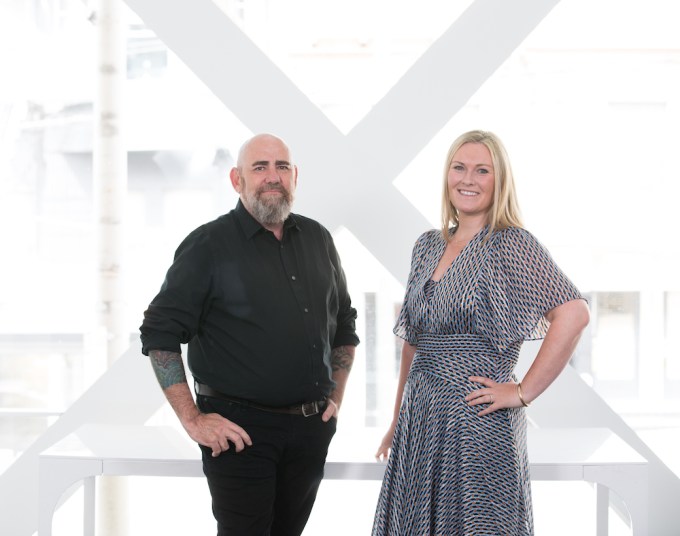
BlueOcean founders Grant McDougall and Liza Nebel

BlueOcean founders Grant McDougall and Liza Nebel

He added, “Strategically, we tend to move up in the organization,” giving both marketing teams and c-level executives the advice they need.

For example, Nebel said that one of BlueOcean’s clients include a large alcohol holding company, which recently launched a line of hard seltzer under an existing alcohol brand. The startup’s brand audit recommended that the company (which Nebel declined to identify) launch a separate hard seltzer brand instead — and now, the company will be launching three different brands.

Nebel also walked me through what she called the “five-minute version” of a brand audit for TechCrunch, which looked at our performance in terms of potential customers, positioning, messaging, offerings and existing customers. Ultimately, BlueOcean gave us a “moderate” score of 97 (but hey, we scored well on being “memorable” and “inspiring”) and recommended steps like publishing a more “steady drumbeat” of content on social media and improving our app experience.

“BlueOcean has become a great addition to further enable us to sharpen our ability to monitor, understand and act through the lens of brand across all of our commercial offerings,” said Microsoft’s director of brand strategy Tim Hoppin in a statement. “We’re excited to work with BlueOcean and use their tools and expertise to strengthen our relationship with the millions of global customers we connect with daily.”

14 Jul 2020

WhatsApp hit by outage, leaving users unable to send or receive messages

Facebook-owned WhatsApp is currently down, with users unable to send or receive messages on the end-to-end encrypted messaging app.

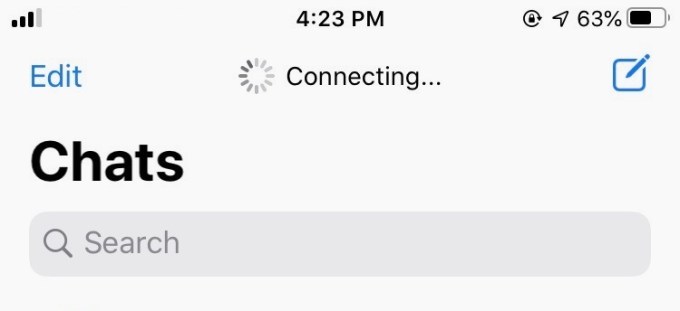
Affected users might see that WhatsApp is “connecting” to the service when trying to send a message. The outage started at about 4pm ET. We don’t know much more than that at this stage.

WhatsApp failing to connect to its servers. (Image: TechCrunch)

A spokesperson for Facebook did not immediately comment on the outage.

WhatsApp hit the 2 billion user mark earlier this year. Facebook bought WhatsApp for $19 billion in 2014 in what became one of the social media giant’s biggest purchases.

14 Jul 2020

After colleges sue, ICE backs down from student visa rule change

The Trump administration has backed down from plans to revoke visas of international students studying in the U.S., whose schools planned to take their classes exclusively online in the fall because of the coronavirus pandemic.

The reversal comes as over a dozen universities and colleges threatened legal action against the administration’s order. The multi-faceted effort also was led by attorneys general in 17 states, including D.C., led by Massachusetts Attorney General Maura Healey.

On Tuesday, Harvard and MIT had a remote hearing to share a case against ICE’s rule, which would have put the lives of millions of international students in jeopardy. Within minutes of the hearing, Homeland Security agreed to revoke its initial plans to only allow international students to stay in the country if they are taking in-person classes.

The new guidance, which is based on March 9 guidelines, will only benefit students who are currently enrolled. This leaves new students or individuals set to come to the United States in the fall in flux.

The rule, announced last Monday, was broadly met with fury from the academic community. Yale Law School’s Dean, Heather Gerken, posted a statement in opposition to the rule. One professor said that “I will teach outside in the snow if I have to,” if it means keeping students in the country.

Developing… more soon