Author: azeeadmin

14 Jul 2020

Investors are browsing for Chromium startups

A few months ago, we declared that “browsers are interesting again,” thanks to increased competition among the major players. Now, as more startups are getting onboard, things are getting downright exciting.

A small but growing number of projects are building web browsers with a more specific type of user in mind. Whether that perceived user is prioritizing improved speed, organization or toolsets aligned with their workflow, entrepreneurs are building these projects with the assumption that Google’s one-size-fits-all approach with Chrome leaves plenty of users with a suboptimal experience.

Building a modern web browser from scratch isn’t the most feasible challenge for a small startup. Luckily open-source projects have enabled developers to build their evolved web browsers on the bones of the apps they aim to compete with. For browsers that are not Safari, Firefox, Chrome or a handful of others, Google’s Chromium open-source project has proven to be an invaluable asset.

Since Google first released Chrome in late 2008, the company has also been updating Chromium. The source code powers the Microsoft Edge and Opera web browsers, but also allows smaller developer teams to harness the power of Chrome when building their own apps.

These upstart browsers have generally sought to compete with the dominant powers on the privacy front, but as Chrome and Safari have begun shipping more features to help users manage how they are tracked online, entrepreneurs are widening their product ambitions to tackle usability upgrades.

Aiding these heightened ambitions is increased attention on custom browsers from investors. Mozilla co-founder Brendan Eich’s Brave has continued to scale, announcing last month they had 5 million daily active users of their privacy-centric browser.

Today, Thrive Capital’s Josh Miller spoke with TechCrunch about his project The Browser Company which has raised $5 million from some notable Silicon Valley operators. Other hot upstart efforts include Mighty, a subscription-based, remote-streamed Chrome startup from Mixpanel founder Suhail Doshi, and Blue Link Labs, a recent entrant that’s building a decentralized peer-to-peer browser called Beaker browser.

Mighty

As front-end developers have gotten more ambitious and web applications have gotten more complex, Chrome has earned the reputation of being quite the RAM hog.

14 Jul 2020

Chrome competitor, The Browser Company, quietly raises $5M

A handful of Silicon Valley’s notable figures are backing a software startup looking to challenge Google Chrome’s dominance.

The startup, called The Browser Company, is led by Joshua Miller, who previously served as the Obama White House’s Director of Product and is currently an investor at Thrive Capital, an investment firm founded by Josh Kushner.

The New York startup has raised just north of $5 million in funding, a source familiar tells TechCrunch. The company’s backers include LinkedIn’s Jeff Weiner, Medium’s Ev Williams, Figma’s Dylan Field, Notion’s Akshay Kothari and GitHub’s Jason Warner.

The startup has been pretty vague in public about what exactly they’re working on. They’re building a new browser that seems to reject bare bones simplicity and embrace some of the more flexible interfaces of modern web apps. The browser’s backend is built, in part, on the bones of Chrome, utilizing open source Chromium which allows the upstart product to boast seamless support with broader web standards at launch.

“We love the internet, but it can be overwhelming,” the startup’s site reads. “What if a browser could help us make sense of it all?”

In a phone call, Miller wasn’t much more illuminating on what exactly the eventual release might look like.

“I’m going to be a little cagey just because we do have competitors that have more engineers and more money than we do,” Miller said in response to a question regarding product capabilities.

The Browser Company’s team of six isn’t the only young startup aiming to challenge Chrome’s one-size-fits-all approach to the browser market. For Extra Crunch, I dug into a number of the young browser startups that investors are backing. (Subscription required.)

Google’s Chrome flat-out dominates the browser market. In 2016, Google detailed that they had about 2 billion active installs of the application. Since then, as users of competitors like Firefox and Internet Explorer have dropped off significantly, the product has only cemented its lead.

Google’s efforts to build a version of Chrome suited for billions of people across the globe has led to a safe product that Miller says isn’t very “opinionated” about how people should use it. The Browser Company isn’t aiming to replace Chrome, he says, but is looking to find a subset of Chrome users whose needs it can better meet.

“I think one of the reasons that web browsers have remained somewhat stagnant in terms of their functionality is that the business model is built on top of is one of search ad revenue,” Miller says. “I think of Chrome and Safari as Toyotas or Hondas. They’re reliable, they’re affordable, they’re accessible and they’re simple. We’re trying to build the Tesla of web browsers.”

Miller says The Browser Company is hoping to start bringing on users to beta test the software later this year.

14 Jul 2020

Decrypted: As tech giants rally against Hong Kong security law, Apple holds out

It’s not often Silicon Valley gets behind a single cause. Supporting net neutrality was one, reforming government surveillance another. Last week, Big Tech took up its latest: halting any cooperation with Hong Kong police.

Facebook, Google, Microsoft, Twitter, and even China-headquartered TikTok said last week they would no longer respond to demands for user data from Hong Kong law enforcement — read: Chinese authorities — citing the new unilaterally imposed Beijing national security law. Critics say the law, ratified on June 30, effectively kills China’s “one country, two systems” policy allowing Hong Kong to maintain its freedoms and some autonomy after the British handed over control of the city-state back to Beijing in 1997.

Noticeably absent from the list of tech giants pulling cooperation was Apple, which said it was still “assessing the new law.” What’s left to assess remains unclear, given the new powers explicitly allow warrantless searches of data, intercept and restrict internet data, and censor information online, things that Apple has historically opposed if not in so many words.

Facebook, Google and Twitter can live without China. They already do — both Facebook and Twitter are banned on the mainland, and Google pulled out after it accused Beijing of cyberattacks. But Apple cannot. China is at the heart of its iPhone and Mac manufacturing pipeline, and accounts for over 16% of its revenue — some $9 billion last quarter alone. Pulling out of China would be catastrophic for Apple’s finances and market position.

The move by Silicon Valley to cut off Hong Kong authorities from their vast pools of data may be a largely symbolic move, given any overseas data demands are first screened by the Justice Department in a laborious and frequently lengthy legal process. But by holding out, Apple is also sending its own message: Its ardent commitment to human rights — privacy and free speech — stops at the border of Hong Kong.

Here’s what else is in this week’s Decrypted.


THE BIG PICTURE

Police used Twitter-backed Dataminr to snoop on protests

14 Jul 2020

Social Construct’s computer-optimized buildings could shake construction industry’s foundations

Construction is one of the largest industries still resisting the call of the 21st century, its practitioners opting for decades-old but tried and true methods. Ben Huh, of Cheezburger fame, aims to modernize the planning and assembly of buildings with software-generated floorplans and rooms that fit together like LEGO bricks.

Huh’s new company, Social Construct, handles everything from design to execution, leaving only the actual in-person work to construction contractors. By optimizing layouts, laying cables and pipes below floors instead of in walls, and standardizing both pieces and assembly, this new tech-informed method could reduce the time and cost of constructing a building by 20 to 30 percent.

The company emerged in 2017 out of a project at Y Combinator, where Huh worked after leaving web culture trailblazer Cheezburger. While researching the economics of construction, he was surprised at both the scale and dated nature of the industry.

Compared with the cost of manufacturing electronics or launching other large, multi-million-dollar endeavors, which have dropped precipitously, the costs and timeframes of construction have either remained fixed or increased for decades.

“There have been productivity increases everywhere, but not in construction. It peaks in the ’70s, then drops,” he explained, illustrating the problem as follows: “Imagine you have a 55-inch hole in your wall — it’s cheaper today to buy a TV to cover the hole than to get it fixed.”

It’s unarguably true, but why should that be? The simple fact is that most construction-related work hasn’t gotten any easier or more precise, and the jobs aren’t so desirable as they once were. So labor costs go up along with the costs of ever more sophisticated buildings. But this just raises another question: Why hasn’t the work gotten any easier or more precise?

It turns out that construction, although a huge industry, is a very fragmented one — and, understandably, rather risk-averse. Even if someone wanted to question the doctrines and practices by which buildings are made, they don’t command the capital to do so.

“People do stuff because it’s what they were taught to do. No one has the millions in venture dollars to say, ‘What if we did it different?’ All these benefits show up, but then you have to reinvent part of the wheel, and companies have no reason to. There’s just no reason a contractor would ever think about doing that,” Huh explained.

The industry has effectively insulated itself against a great deal of innovation with an “if it ain’t broke, don’t spend millions of dollars fixing it” attitude. It would take a venture-backed newcomer to upend the conventions that have held construction costs and methods in stasis for decades. So at least is Huh’s hypothesis, and he believes that Social Construct is that newcomer.

Computational construction

Huh recalls his team questioning the status quo: “We wondered, could we build a whole building out of precisely made parts, the way you’d build a plane?”

Turns out people have made attempts a few times, even before CAD made the idea so attractive. “They tried this in the 70s,” Huh said. “What they found out was they could never get the parts to fit. The designs assumed an idealized space – exactly 10 feet or whatever. but it’s never quite 10 feet, the parts just aren’t that precise. Half an inch of error over 10 feet is actually pretty good. So everyone works around each other, which means the parts have to be cut to fit. Flexibility is more important than precision.”

Where Social Construct’s process diverges from the industry norm is at the point where the general shape and purpose of the building and its floors have been decided. For instance, it may be a largely triangular building with flat corners, the elevator in the center, and with three one-bedroom and one two-bedroom apartments on each floor.

That sort of design can be roughed out by an architect in a few hours, but the specifics of where exactly everything goes, from water fixtures to electrical lines, can take much longer. So that’s where the computer takes over.

Image Credits: Social Construct

You could call it an AI, but Huh has deliberately shunned the term to avoid any suspicion of trying to take a ride on that particular hype train. Working from that level of detail, the Social Construct system plans out every aspect of the construction, optimizing the layout for a variety of parameters.

There are three key aspects:

First, construction uses pre-fabricated “assemblies,” of which there are about a hundred types total: walls with kitchen cabinets, walls with holes for shower fixtures, lighting and so on. These pieces can be carried by a single person or at most two, and snap into place onto the framing. This minimizes the chance that there will be any unusual dimensions or requirements that mean this wall has to be extra thick, or you need an extra length of piping to supply the bathroom sink. It also makes assembly and repair work simple. Where there are normal walls or non-standard widths, ordinary drywall is used.

Second, all the pipes, cables, and assorted in-wall infrastructure has been moved under the floor, the routes pre-determined by the computer. It all goes in a tiny space below the floorboards — which provides better sound and heat insulation as a side benefit. This further simplifies construction, as there is no need to adapt or improvise the angles, lengths, and other aspects of water or electrical work. The light switches don’t even need to be connected, as they’re wireless and kinetically powered.

Image Credits: Social Construct

Third, the layout is calculated to minimize the possibility of variance in measurements or construction. Cuts can never be perfect and microscopic errors add up so 20 feet hallway in the design document might actually need to be 20 feet and a quarter inch. The computer knows this and plans around it, avoiding situations that tend to create that type of variance wherever possible and allowing for last-minute adjustments when it’s inevitable.

So the sequence of events is that the basic “shell” of the building including all the usual stacks and structural pieces gets built as normal — that part doesn’t change at all. Once it’s done, the team measures the actual dimensions inside very, very carefully, which lets the computer design for exactly that space. Then the walls are raised per the generated plan, the cables are laid according to the same, the assemblies are carted in and click into place, and finally the hardwood floors are installed, with the pieces cut to fit what little differences from the plan have emerged.

Image Credits: Social Construct

“We compared this to a conventionally built building, and we’re seeing that we can save 20 percent on construction costs,” Huh said — and considering construction is about two thirds of a building’s entire budget, that may be saving tens of millions right off the bat. The Social Construct building was also finished 2 months faster.

Faster work may sound like less hours for subcontractors and the like, but Huh said they’re emphasizing that lower costs and quicker work mean more productivity, so take-home pay is comparable but jobs will be easier and more numerous.

[gallery link="file" ids="2016603,2016602,2016598,2016600,2016601,2016599"]

It’s important to note that Social Construct isn’t actually getting into the contracting side of things. The plan is to partner with, train, and certify contractors so that they can scale more like a platform than a boots-on-the-ground company — “Which makes us venture-backable,” Huh noted.

Right now the first building built with these methods has been sold and the company is looking for its next site, local partner, and land owner — and so they decided to exit stealth mode.

Social Capital already has about $17 million in funding, from Floodgate, S28 Capital, Felicis, Founders Fund, and (“of course,” Huh said) Y Combinator. They’ll be looking for more soon as they begin the process of truly scaling up, but it seems wise to have remained quiet until there was a whole building they could point to and say, “look, it works!”

So if your dream was to live in a computer-designed building and apartment, you’re slightly late — but it sounds like this will be the first of many.


14 Jul 2020

The IPO market stays hot, as nCino prices above range and Jamf targets a ~$2B valuation

Despite some market chop, the U.S. IPO market is still active, with fresh debut nCino pricing above its elevated price range, and Jamf moving to start its pricing process after filing to go public at the end of June. In addition to the pricing news, yesterday evening saw e-commerce software company BigCommerce commence its own IPO journey.

For the banking software company, its final IPO price of $31 per share means that it raised more capital than expected, filling its coffers and providing nCino with more operational flexibility. Pricing above a raised range is a strong result for any company in any market.

Let’s first examine the nCino news — TechCrunch is speaking to its CEO later today — and follow it with notes on the Jamf IPO price range to better understand where the Apple-focused IT shop is aiming to price its equity in its own public offering. Both data points should help us understand the current IPO climate of today, a key market to track as unicorns like Coinbase, Airbnb, DoorDash and others have either filed or are reported to be eyeing a public debut.

nCino’s strong pricing run

When nCino first set a price range for its IPO, the $22 to $24 per-share interval felt modest. TechCrunch wrote at the time that it would “not be a shock [if] nCino targets a higher price interval for its shares before it formally prices.” We did not expect that the company would be able to do even better than that, however.

14 Jul 2020

ClassPass co-founder Sanjiv Sanghavi joins Arcadia, bringing consumer marketing savvy to clean energy

“Helping navigate the elusiveness of product market fit” is how Sanjiv Sanghavi, the co-founder of ClassPass and itinerant startup executive describes his roles at different companies. 

From ClassPass through Knotel, Sanghavi has shepherded several businesses to growth and over a billion dollar valuations, now he’s looking to bring that branding and marketing savvy to the world of renewable energy as the new chief product officer at Arcadia.

The company encourages renewable energy development by offsetting its customers’ electricity usage by buying an equivalent amount of renewable power or investing in renewable energy projects that provide renewable credits to offset fossil fuel usage.

Sanjiv Sanghavi, ClassPass co-founder and now chief product officer at Arcadia. Image Credit: Arcadia

We founded Arcadia to aggregate the power of consumer demand to fight climate change,” said Kiran Bhatraju, the founder and chief executive at Arcadia, in a statement. “Sanjiv’s deep knowledge of creating and building engaging consumer products will be crucial in the coming years to help us continue to build a world-class home energy experience that people love, and the planet needs.”

Sanghavi will be integral to Arcadia’s expansion into the northeast as it looks to grow its footprint across the United States.

Over the past six months Arcadia has steadily built out its presence across the Atlantic seaboard as it staffs its New York office. The company added a senior vice president of design who previously worked at DoorDash, WeWork, and PayPal, Josh Abrams, and is actively hiring. 

I was drawn to Arcadia because of its lasting power; I wanted to build something that would make an impact for generations,” said Sanghavi. “I believe that what Arcadia is doing is astounding — we’re building a bridge from the people who are generating renewable energy to those who want to do something good.”  

 The company has raised $70 million to date, according to Crunchbase, from investors including G2VP, BoxGroup, Wonder Ventures and Energy Impact Partners. 


14 Jul 2020

OpenCV AI Kit aims to do for computer vision what Raspberry Pi did for hobbyist hardware

A new gadget called the OpenCV AI Kit, or OAK, looks to replicate the success of Raspberry Pi and other minimal computing solutions, but for the growing fields of computer vision and 3D perception. Its new multi-camera PCBs pack a lot of capability into a small, open-source unit and are now seeking funding on Kickstarter.

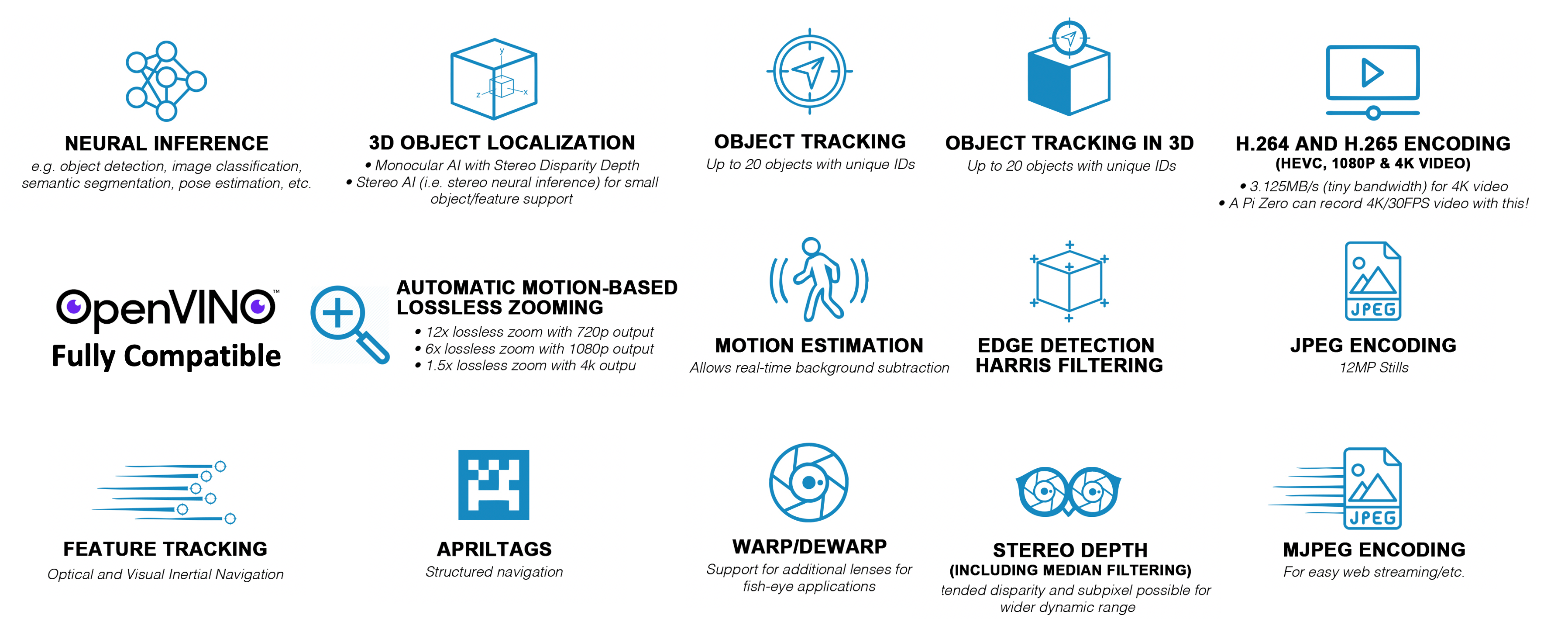
The OAK devices use their cameras and onboard AI chip to perform a number of computer vision tasks, like identifying objects, counting people, finding distances to and between things in frame, and more. This info is sent out in polished, ready-to-use form.

Having a reliable, low cost, low power draw computer vision unit like this is a great boon for anyone looking to build a smart device or robot that might have otherwise required several and discrete cameras and other chips (not to mention quite a bit of fiddling with software).

Image Credits: Luxonis

Like the Raspberry Pi, which has grown to become the first choice for hobbyist programmers dabbling in hardware, pretty much everything about these devices is open source on the permissive MIT license. And it’s officially affiliated with OpenCV, a widespread set of libraries and standards used in the computer vision world.

The actual device and onboard AI were created by Luxonis, which previously created the CommuteGuardian, a sort of smart brake light for bikes that tracks objects in real time so it can warn the rider. The team couldn’t find any hardware that fit the bill so they made their own, and then collaborated with OpenCV to make the OAK series as a follow-up.

There are actually two versions: The extra-small OAK-1 and triple-camera OAK-D. They share many components, but the OAK-D’s multiple camera units mean it can do true stereoscopic 3D vision rather than relying on other cues in the plain RGB image — these techniques are better now than ever but true stereo is still a big advantage. (The human vision system uses both, in case you’re wondering.)

The two OAK devices, with the world’s ugliest quarter for scale.

The idea was to unitize the computer vision system so there’s no need to build or configure it, which could help get a lot of projects off the ground faster. You can use the baked-in object and depth detection out of the box, or pick and choose the metadata you want and use it to augment your own analysis of the 4K (plus two 720p) images that also come through.

A very low power draw helps, too. Computer vision tasks can be fairly demanding on processors and thus use a lot of power, which was why a device like XNOR’s ultra-efficient chip was so promising (and why that company got snapped up by Apple). The OAK devices don’t take things to XNOR extremes but with a maximum power draw of a handful of watts, they could run on normal-sized batteries for days or weeks on end depending on their task.

The specifics will no doubt be interesting to those who know the ins and outs of such things — ports and cables and GitHub repositories and so on — but I won’t duplicate them here, as they’re all listed in orderly fashion in the campaign copy. Here’s the quick version:

Image Credits: Luxonis

If this seems like something your project or lab could make use of, you might want to get in quick on the Kickstarter, as there are some deep discounts for early birds, and the price will double at retail. $79 for the OAK-1 and $129 for the OAK-D sound like bargains to me based on their stated capabilities (they’ll be $199 and 299 eventually). And Luxonis and OpenCV are hardly fly-by-night organizations hocking vaporware, so you can back the campaign with confidence. Also, they flew past their goal in like an hour, so no need to worry about that.

14 Jul 2020

Announcing The TechCrunch List, a founder-friendly directory of first check and lead VCs

Nothing is more important for founders than finding their first check or the investor who will lead their round, and yet, finding the right VCs to invest in their startups is an arduous and agonizing prospect. By some counts, there are now tens of thousands of VCs scattered across all corners of the globe, investing in dozens of verticals across multiple stages of investing.

Who really invests in a particular space? Who really writes checks at the seed stage or the Series A? Who really is willing to lead a round before any other investors commit?

Here at TechCrunch, it’s one of the most common questions founders ask us, and also one of the most challenging questions to answer. So we decided to launch a new initiative to help guide founders to some of the investment leaders who can help catalyze a fundraise. Our goal was both simple and bold: to reinvent the venture capital industry by bringing more transparency to what has become an ever more opaque financial environment for founders.

The TechCrunch List is a verified, curated list of investors who have demonstrated a commitment to first checks and leading rounds from seed through growth, organized by market vertical.

After we announced the launch of the List and the mission behind it last month, we asked founders to submit their recommendations of which VCs were instrumental in their own fundraises. That call to action was abundantly answered: more than 1,200 founders submitted recommendations of their investors, hundreds of whom submitted paragraphs, and at times, literally pages of notes about how valuable their investors were (the longest recommendation we got was over 14 pages long). For those of you who submitted your information — thank you for passing it forward to other founders who are hoping to bring their dreams to reality.

We sifted through all those hundreds of recommendations, and coupled with complementary public data from sources like Crunchbase, we constructed our initial list of first check and lead VCs.

In all, 391 investors were included in this initial draft of The TechCrunch List, organized into 22 different verticals like consumer applications, enterprise infrastructure, digital biotech, and more.

We’re also excited to publish a list of 11 VC investors who had the most enthusiastic recommendations from founders based on both quantity of recommendations as well as the depth of the comments submitted to us. For an industry that can at times feel transactional and cutthroat, these statements from founders show that sometimes the most positive relationships can also be the most remunerative.

I am delighted as well to note that while the VC industry has — and continues to have — a poor track record when it comes to diversity across race and gender, founders seem particularly keen to highlight the commitment of women and people of color to their startups. The TechCrunch List as it stands today at launch includes 69 women (18%) and 111 people of color (28%), including 23 Black venture capitalists (6%). While those percentages are clearly far below equality, it is notable that these groups seem to get recommended at a higher rate than the VC industry average.

Ultimately, The TechCrunch List is a living and breathing directory of the most active VCs who are willing to lead in the industry. We intend for the List to be regularly updated as founders give us more recommendations and investors change their tastes and their portfolios. If you are a founder and haven’t submitted your recommendation, please feel free to do so. Other founders are counting on your generosity.

As with all product launches, this initiative took a village. The executive producer was Danny Crichton, and our data analyst and producer was Arman Tabatabai. Our product team was led by Santosh Ankola and Shikha Tandon with engineering led by Robin Julius and with technical assistance from Imversion. Our business and marketing efforts were led by Ned Desmond, Joey Hinson, and Travis Bernard. The illustrations for this project were designed by Nigel Sussman and Bryce Durbin. We thank the whole TechCrunch editorial, product, engineering, and business teams for their support.

Frequently Asked Questions

Something is wrong! How do I send in a correction?

If there is a correction needed to your entry, please email us. One question we often get is around the vertical(s) we selected for each investor. We use publicly available data to select the verticals for each investor, and so, to add or change these, please point us to evidence of your recent and active portfolio of investments in a different vertical.

I am missing! What do I do?

We built The TechCrunch List using submitted recommendations from founders and publicly available datasets like Crunchbase. While we had quite a bit of data to work with, it is by no means comprehensive. If you’re a VC and regularly write first or lead checks into startups, have your founders submit a recommendation as well as email TechCrunch with information about your recent investments. The most common reason an investor wasn’t included is due to a lack of directly attributable recent investments.

Is there a deadline for the next draft of The TechCrunch List?

No. We are processing all founder recommendations on a rolling basis, and as we get new submissions, we will publish an updated list with new data.

The list seems to be U.S.-centric. Are you going to expand out to other geographies?

Yes. Given our focus on Silicon Valley, our readership skews toward the U.S. and thus our recommendations and data skew that way as well. If you have data on investments in Europe, Asia, Latin America or Africa, please send them our way.

14 Jul 2020

The VCs who founders love the most

Over the past month, we have been asking founders to submit recommendations of VCs for The TechCrunch List, our newly-launched curated directory of investors who are ready to write first checks and lead venture rounds into startups. You can head over to the list itself to see all 391 investors across 22 verticals.

Beyond the final compiled list though, there was an even more elite group of investors who a wide number of founders just raved about in their recommendations. So while The TechCrunch List is a free resource for all founders, over here on Extra Crunch, we wanted to place special attention on a short list of 11 investors that founders were particularly effusive in their praise.

Let’s take a look.

Note: Recommendations were submitted “on the record.” However, out of an abundance of caution for the founders and their startups, we have elided certain specific details from these recommendations. They have also been edited for clarity.

Ben Ling of Bling Capital

14 Jul 2020

Identity platform Auth0 raises $120M Series F funding round at $1.92B valuation

Developer-centric identity platform Auth0 today announced that it has raised a $120 million Series F round led by Salesforce Ventures. Existing investors Bessemer Venture Partners, Sapphire Ventures, Meritech Capital, World Innovation Lab, Trinity Ventures, Telstra Ventures and K9 Ventures also participated in this round, as well as new investor DTCP.

With this, the company has now raised a total of $330 million, including its $103 million Series E round in 2019. The company says its valuation is now 1.92 billion.

Auth0’s marquee customers include the likes of Atlassian, AMD and Autotrader. The company, which now has 650 employees, says it grew both its revenue and customer base by 70 percent in 2019 and that it now has ‘thousands of customers’ who use the service to outsource their identity management.

“Achieving a Series F round of funding is an incredible milestone for our company, and we could not be more grateful to our new and existing investors for their support,” said Auth0 CEO and co-founder Eugenio Pace. “Nearly every app and service relies on secure authentication and seamless user experience. Our year-over-year growth is reflective of the persistent problem  that our technology is solving, and we are so proud to be part of our customers’ journey.”

The promise of Auth0 (pronounced auth-zero) is that developers only need to add a few lines of code to their applications to add access to its identity management service for external users and to give their own employees access to their intranet services, too.

“Auth0 is a leader in the large, fast-growing identity management market and has shown tremendous growth at scale,” said John Somorjai, EVP, Corporate Development & Salesforce Ventures at Salesforce. “Auth0’s expertise in end-to-end identity products is well-aligned with Salesforce’s Customer 360 platform. We look forward to supporting their growth with this new strategic investment from Salesforce Ventures to drive further innovation for customers.”

The company says it will use the new funding to “fuel continued innovation and go-to-market expansion” and the investors clearly believe that Auth0 is in a position to capture a good chunk of the identity and access management market, despite that fact that this is a competitive space with the likes of Okta, Ping Identity, Microsoft, IBM, Oracle and others all vying for a similar pool of customers.