For many freelance photographers, marketing their businesses and editing photos takes as much time, if not much more, than photoshoots. Founded in 2017, Auckland-based Narrative helps professional photographers with tools including a website builder and Narrative Select, an AI-based tool that identifies the best frames from a shoot, cutting down the amount of time it takes to go through hundreds or thousands of shots.
The company announced today that it has raised $2.58 million in seed funding led by Founders Fund, with participation from Icehouse Ventures.
The company said its website software, Narrative Publish, is currently used by tens of thousands of photographers. Part of the new funding will be used to market Narrative Select, which is available on a subscription basis, and build its user base as photographers around the world seek to recover from the the impact of COVID-19.
Narrative is also recruiting tech talent from the United States and United Kingdom to work at its offices in New Zealand, which is gaining more interest as an immigration destination because of its success in containing the spread of COVID-19.
Narrative Select uses machine learning to flag photos as desirable or undesirable, focusing in particular on people in the photo. For example, if a subject is blurry or their eyes are closed, the photo is flagged as undesirable. The company says Narrative typically tags 30% of photos in a batch as undesirable, making the editing process faster for photographers. Narrative Select will be expanded to cover fashion, commercial and lifestyle photography, too.
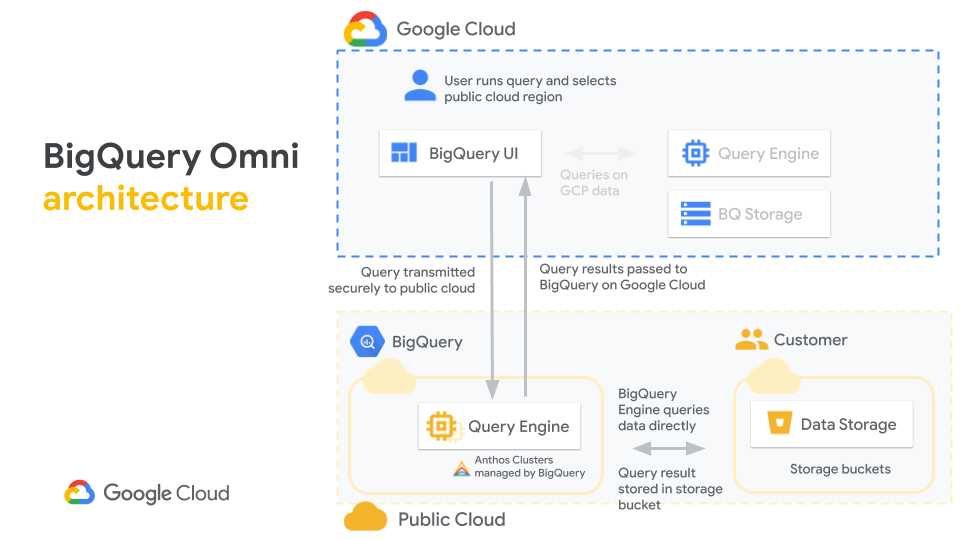
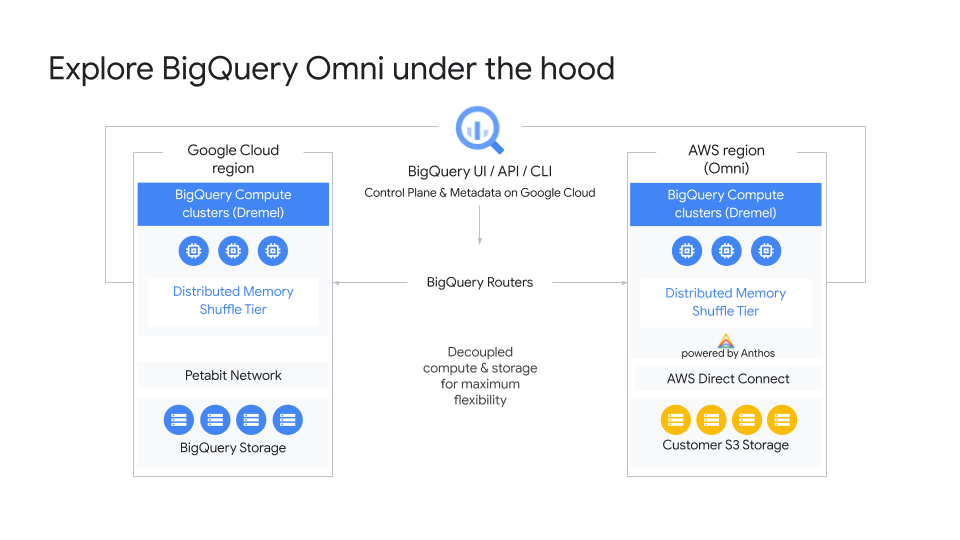
At its virtual Cloud Next ’20 event, Google today announced a number of updates to its cloud portfolio, but the public alpha launch of BigQuery Omni is probably the highlight of this year’s event. Powered by Google Cloud’s Anthos hybrid-cloud platform, BigQuery Omni allows developers to use the BigQuery engine to analyze data that sits in multiple clouds, including those of Google Cloud competitors like AWS and Microsoft Azure — though for now, the service only supports AWS, with Azure support coming later.
Using a unified interface, developers can analyze this data locally without having to move data sets between platforms.
“Our customers store petabytes of information in BigQuery, with the knowledge that it is safe and that it’s protected,” said Debanjan Saha, the GM and VP of Engineering for Data Analytics at Google Cloud, in a press conference ahead of today’s announcement. “A lot of our customers do many different types of analytics in BigQuery. For example, they use the built-in machine learning capabilities to run real-time analytics and predictive analytics. […] A lot of our customers who are very excited about using BigQuery in GCP are also asking, ‘how can they extend the use of BigQuery to other clouds?’ ”
Image Credits: Google
Google has long said that it believes that multi-cloud is the future — something that most of its competitors would probably agree with, though they all would obviously like you to use their tools, even if the data sits in other clouds or is generated off-platform. It’s the tools and services that help businesses to make use of all of this data, after all, where the different vendors can differentiate themselves from each other. Maybe it’s no surprise then, given Google Cloud’s expertise in data analytics, that BigQuery is now joining the multi-cloud fray.
“With BigQuery Omni customers get what they wanted,” Saha said. “They wanted to analyze their data no matter where the data sits and they get it today with BigQuery Omni.”
Image Credits: Google
He noted that Google Cloud believes that this will help enterprises break down their data silos and gain new insights into their data, all while allowing developers and analysts to use a standard SQL interface.
Today’s announcement is also a good example of how Google’s bet on Anthos is paying off by making it easier for the company to not just allow its customers to manage their multi-cloud deployments but also to extend the reach of its own products across clouds. This also explains why BigQuery Omni isn’t available for Azure yet, given that Anthos for Azure is still in preview, while AWS support became generally available in April.
Feel that? That’s the unmistakable and overwhelming sensation of nostalgia for your misspent youth coursing through your blood, as the 35th anniversary of the Nintendo Entertainment System is sneaking up on you. The original NES turns 35 years old tomorrow, and to celebrate another shocking reminder of our own mortality, Lego just announced another fantastic-looking set scheduled to arrive later this summer.
Image Credits: Lego/Nintendo
After a brief tease, the NES Building Kit is now officially official, featuring a buildable console, cartridge and controller (even the RCA ports are present on the system’s side). The game can be loaded into the system and locked in place, and the controller has its own cable that plugs directly into the front. The pièce de résistance, however, is that period-appropriate television set. There’s a buildable 2D Mario that runs and jumps along a level that unfolds and scrolls as you spin a hand crank.
Image Credits: Lego/Nintendo
Honestly, the execution is great. Just really, really clever. It plays on the boxy eight-bit graphics of the classic console, while offering an adorable counterpart to the already announced Mario set. The power of synergy is strong here. The Mario from the other set actually plugs into the top of the TV set once you remove a piece, with its speaker playing out the soundtrack and effects as his 2D counterpart makes his way through the level.
Image Credits: Lego/Nintendo
No word on pricing, but I’m willing to bet that the final price is no object for many fans. Also, knowing what we know about Lego, it seems safe to guess it’s not going to be cheap. There are 2,646 pieces in the set. It’s one of the most technically impressive Lego sets I’ve seen, starting with the detailed accuracy of the console and really taking it up a notch with the crank system that advances the background, as Mario, attached to a stick, bounds up and down. The Mario from the other set, meanwhile, appears to scan for the colors on the series of blocks at the top, outputting the corresponding sounds.
Honestly, this thing effectively triggers all of the human nostalgia centers simultaneously, and you’re powerless to deny it, so you might as well earmark some cash and set aside some shelf space. If I had to guess, I would put it somewhere in the ballpark of $300. Consider the Mario set the playable one for the kids and this one a complimentary conversation piece for their parents who grew up playing the original system. It’s available through the Lego site (and those brick and mortar stores that happen to be open) starting August , along with the Super Mario set). It will be available at additional retailers at some point next year.
Google Cloud today announced the private beta launch of Assured Workloads for Government, the company’s version of what some of its competitors would call their “government cloud.”
With Assured Workloads for Government, Google Cloud ensures that government agencies and their contractors can ensure that all data stays in its U.S. regions. Government agencies can also limit access to Google Cloud support personnel based on their citizenship, background check and geography. Later this year, Google will also enable a new support option that ensures that these users will get access from a U.S. Person, in a U.S. location with a target response time of 15 minutes for P1 cases.
Google Cloud notes that its system is also designed to allow government customers and contractors to meet the standards of the Department of Defense, the FBI’s Criminal Justice Information Services Division (CJIS) and the Federal Risk and Authorization Management Program (FedRAMP) — all while giving them users access to its full portfolio of services.
The company specifically notes that while other clouds build separate government cloud, the result of this is often that “government agencies having to run on less feature-rich, fortressed versions of commercial clouds to meet their needs.” It’s worth noting that Microsoft recently built out two new regions specifically for allowing government agencies to handle classified data on Azure, in addition to its regular Azure Government data centers. Similarly, with its GovCloud, AWS has long offered similar capabilities in two government-specific U.S. regions.
A heavyweight partnership between industry and academic sciences is throwing their considerable weight into an important task: Creating a new low-cost, rapid diagnostic test for COVID-19. Chemical industry leader 3M has partnered with MIT to create a diagnostic tool for COVID-19 that’s easy-to-use, and that can be manufactured cheaply and in large volume for mass distribution and use.
The test is currently the research phase, with a team led by MIT’s Professor Hadley Sikes of the school’s Department of Chemical Engineering. Sikes’ laboratory has a specific focus on creating and developing tech to enhance the performance of protein tests that are meant to provide rapid, accurate results.
3M is contributing its biomaterials and bioprocessing expertise, along with its experience in creating products designed to be manufactured at scale. The end goal is to create a test that detects viral antigens, a type of test first cleared for use in COVID-19 detection at the beginning of May by the FDA. These tests provide results much faster than the molecular PCR-based test – but do have a higher change of fall negatives. Still, their ability to be administered at point-of-care, and return results within just minutes, could help considerably in ramping up testing efforts, especially in cases where individuals aren’t necessarily presenting symptoms but are in situations where they could pose a risk to others if carrying the virus while asymptomatic.
The new 3M and MIT projects is part of the RADx Tech program created by the National Institute of Health (NIH) specifically to fund the development of tests that can expand U.S. testing deployment. An initial $500,000 of funding was provided to MIT and 3M from the program, and it can potentially receive further funding after achieving other development milestones.
Pricefx, the Munich-founded startup that offers cloud-based pricing software, has raised $65 million in Series C funding.
The round was led by funds advised by Apax Digital, the growth equity team of Apax Partners, with participation from existing investor Digital+ Partners. It brings the company’s total raise to date to $130 million.
Pricefx says it will use the new funding for further expansion and to consolidate its “leadership position” within the SaaS pricing industry. It will also invest in product innovation, extend its partner ecosystem, and consider making strategic acquisitions.
Founded in 2011, Pricefx provides a modular SaaS solution for price optimisation management (PO&M) and configure-price-quote (CPQ) for enterprises of any size.
Pricing optimisation software typically helps companies accurately define the price of goods across a vast and constantly changing spectrum of data and variables. This can include things like customer survey data and segments, competitor data, operating costs, inventories, and historic prices and sales.
CPQ software aggregates these variables, thus enabling companies to configure products or services in the most optimal way (i.e. bundling, up-sells, etc.), and price them according to costs, competition and local economic factors.
In May, Pricefx acquired French market leader Brennus Analytics, which adding AI capabilities to its pricing optimization solution.
To that end, Pricefx notes that SaaS solutions and pricing software in particular has faced increased demand since pandemic measures forced companies to “rapidly address” digital transformation and are looking for ways to become more competitive in a downturn. As a result, Pricefx says it has signed more than a dozen new customer deals since March of this year.
“Pricing is being recognized as a critical competency for global enterprises and Pricefx is leading the way for a SaaS-based approach,” says Marcin Cichon, CEO and co-founder of Pricefx, in a statement. “This investment from Apax confirms Pricefx’s resilience, ability to grow its customer base, and innovate – even during challenging times. This investment will further power our global commercial strategy and aggressive product innovation, by attracting critical talent, expanding our growing ecosystem of partners, and enabling further potential strategic acquisitions – all in pursuit of our mission to bring pricing solutions to as many companies as we can, as simply and effectively as possible”.
In the vein of increasingly popular at-home connected fitness machines like Peloton, Mirror, and Hydrow, boxing fans now have an option when it comes to getting a good workout in at home.
Cofounded by Jeff Morin (CEO) and Todd Dagres (Chairman), Liteboxer is launching today with a platform that was built from the ground up to give users the chance to get an exciting boxing workout at home.
Dagres, cofounder and General Partner at Spark Capital, came up with the idea for Liteboxer after falling in love with boxing with a trainer in a gym. It was incredibly difficult to replicate that workout at home with a heavy bag, said Dagres.
“I only was able to work out with a trainer once a week, and once a week is not good enough as we all know,” said Dagres. “So I tried to replicate the workout at home and I bought a heavy bag. It was just a dismal experience for me. It was so boring. If I could get myself to do it, it was a good cardio workout. It just was tedious and unpleasant. The bag is just sitting there, and it’s not doing anything to you so you kind of feel guilty punching it.”
Heavy bags also require a suspension system, and can often be messy with weight provided by sand or water. Liteboxer is a free-standing replacement for the heavy bag, which is equipped with a lighting system that guides the user through a workout of their choice.
The lights aren’t random. Liteboxer works with expert boxing trainers to provide a guided workout, which is led both by the lights and by voice/music via an app that can run on iOS or Android. The unit is also equipped with force sensors to give users metrics around force, timing, and accuracy on their workout, allowing them to see their progress over time.
Like Peloton or other connected fitness devices, Liteboxer comes at an up-front cost for the hardware and a recurring cost for access to the content. The free-standing unit, which is available for pre-order now, costs $1,495, while the all-you-can-eat subscription costs $29/month.
There are several different modes on the content side, including a Training Camp that gets users familiar with the system and how it works. On the other end of the spectrum, there are expert-guided boxing sessions. But, perhaps most interestingly, there is a level in between the two called Quick Play. Quick Play uses a patented Rhythm Technology to match the system up to the beat of a song. This gives the user the flexibility to say they’d like to go for one or three or five rounds, and simply box along with the beat of the music, allowing for a bit of customization when it comes to the general length of a workout.
Plus, Liteboxer offers the ability to challenge friends to the same workout as you, allowing you to see the results side by side.
The most important goal for Dagres and Morin is to create a habit among users.
“Not only do you get stronger, but this is also a mental exercise and a huge stress reliever,” said Dagres. “It helps with your mental acuity, and it’s more than just a cardio machine type of thing. So we want people to be habitual about it.”
He added that the goal is to get users on the platform three times a week, saying that you can get massive results in a few months on that schedule. The key to delivering those results, however, is habitual engagement. Dagres explained that the music-based rounds, the leveling up with trainers, and the social challenges are elements that encourage that habit.
Liteboxer has raised a total of $6 million in funding, with $2 million coming from a friends and family round, and $4 million coming from a seed round led by Will Ventures (the fund led by former NFL player Isaiah Kacyvenski). Other investors include Raptor Capital and Camros Capital.
Walmart is increasing its stake in Flipkart by investing an additional $1.2 billion in the Indian e-commerce giant. The fresh equity round from Walmart, which acquired majority stake in Flipkart two years ago, values Flipkart at $24.9 billion post-money, the two companies said.
The American retail group said the fresh capital would help Flipkart further grow its e-commerce marketplace in India as the world’s second largest internet market begins to recover from Covid-19 crisis.
“We’re grateful for the strong backing of our shareholders as we continue to build our platform and serve the growing needs of Indian consumers during these challenging times,” said Flipkart chief executive Kalyan Krishnamurthy in a statement.
“Since Walmart’s initial investment in Flipkart, we have greatly expanded our offer through technology, partnerships and new services. Today, we lead in electronics and fashion, and are rapidly accelerating share in other general merchandise categories and grocery, all while providing increasingly seamless payment and delivery options for our customers. We will continue innovating to bring the next 200 million Indian shoppers online,” he added.
Bharti Airtel announced on Tuesday it has partnered with Verizon* to launch BlueJeans video-conferencing service in India to serve business customers in the world’s second largest internet market.
The video conferencing service, branded as Airtel BlueJeans in India, offers “enterprise-grade security” — which includes encrypted calls, ability to lock a meeting, support for WebRTC — a cloud point presence in India to enable low latency, HD video and Dolby Voice, and can accommodate up to 50,000 participants on a call.
Gopal Vittal, chief executive of Airtel, said in a call with reporters Tuesday that the Indian telecom operator is exploring ways to bring Airtel BlueJeans to home customers as well, though he cautioned that any such offering would take at least a few weeks to hammer out.
Airtel BlueJeans is being offered to businesses at no charge for the first three months, after which the video conferencing service will be offered at a “very competitive” price, said Vittal. Airtel will offer customized pricing plans for large businesses and small businesses, he added.
Airtel already maintains a partnership with G Suite and Cisco Webex, and Zoom. However, Vittal said that its collaboration with Verizon was “special” and enabled it to host data in India itself.
Verizon acquired BlueJeans in April this year. At the time, BlueJeans had over 15,000 business customers. Hans Vestberg, chief executive of Verizon, said on Tuesday that the American telecom giant was hopeful that Airtel BlueJeans would make large inroads in the Indian market, though he declined to share any figures.
Vestberg said Verizon is open to extending this partnership with Airtel to serve the Indian telecom operator’s business in African market, though both are currently focused on serving clients in India.
Tuesday’s announcement comes as the video conferencing services gain momentum in India. Zoom app, which is also available to consumers, has already amassed over 35 million monthly active users in the country, according to mobile insights firm App Annie — data of which an industry executive shared with TechCrunch.
Reliance Jio Platforms, the top telecom operator in India, launched its video conferencing service JioMeet earlier this month. JioMeet is currently available to both consumers and business customers at no charge and a session on the service can last for up to 24 hours.
“We know we are not the first to launch a video conferencing in India, but we are confident that our differentiated offerings and brand value would stand out,” said Vittal.
Bharti Airtel announced on Tuesday it has partnered with Verizon* to launch BlueJeans video-conferencing service in India to serve business customers in the world’s second largest internet market.
The video conferencing service, branded as Airtel BlueJeans in India, offers “enterprise-grade security” — which includes encrypted calls, ability to lock a meeting, support for WebRTC — a cloud point presence in India to enable low latency, HD video and Dolby Voice, and can accommodate up to 50,000 participants on a call.
Gopal Vittal, chief executive of Airtel, said in a call with reporters Tuesday that the Indian telecom operator is exploring ways to bring Airtel BlueJeans to home customers as well, though he cautioned that any such offering would take at least a few weeks to hammer out.
Airtel BlueJeans is being offered to businesses at no charge for the first three months, after which the video conferencing service will be offered at a “very competitive” price, said Vittal. Airtel will offer customized pricing plans for large businesses and small businesses, he added.
Airtel already maintains a partnership with G Suite and Cisco Webex, and Zoom. However, Vittal said that its collaboration with Verizon was “special” and enabled it to host data in India itself.
Verizon acquired BlueJeans in April this year. At the time, BlueJeans had over 15,000 business customers. Hans Vestberg, chief executive of Verizon, said on Tuesday that the American telecom giant was hopeful that Airtel BlueJeans would make large inroads in the Indian market, though he declined to share any figures.
Vestberg said Verizon is open to extending this partnership with Airtel to serve the Indian telecom operator’s business in African market, though both are currently focused on serving clients in India.
Tuesday’s announcement comes as the video conferencing services gain momentum in India. Zoom app, which is also available to consumers, has already amassed over 35 million monthly active users in the country, according to mobile insights firm App Annie — data of which an industry executive shared with TechCrunch.
Reliance Jio Platforms, the top telecom operator in India, launched its video conferencing service JioMeet earlier this month. JioMeet is currently available to both consumers and business customers at no charge and a session on the service can last for up to 24 hours.
“We know we are not the first to launch a video conferencing in India, but we are confident that our differentiated offerings and brand value would stand out,” said Vittal.