Author: azeeadmin

23 Mar 2019

How Nuro plans to spend Softbank’s $940 million

Autonomous delivery startup Nuro is bursting with ideas since SoftBank invested nearly $1 billion in February, new filings reveal.

A recent patent application details how its R1 self-driving vehicle could carry smaller robots to cross lawns or climb stairs to drop off packages. The company has even taken the step of trademarking the name “Fido” for delivery services.

“We think there’s something neat about that name,” Nuro founder Dave Ferguson told TechCrunch. “It’s friendly, neighborly and embodies the spirit of a helper that brings you things. It wasn’t intended to extend towards literal robot dogs, although some of the legged platforms that others are building could be very interesting for this last 10-foot problem.”

Another section of Nuro’s patent shows the R1 delivering piping hot pizza and beverages, prepared en route in automated kitchens.

“We tried to build a lot of flexibility into the R1’s compartment so we could serve all the applications that people will be able to think of,” Ferguson said. “A coffee machine is actually a pretty good one. If you go to your local barista, those machines are incredibly expensive. Amortizing them over an entire neighborhood makes sense.”

As automated technologies mature, companies are focusing less on simply getting around and more on how services will connect with actual customers. Delivering goods instead of passengers also means fewer regulations to navigate.

That opportunity has prompted a number of companies, including e-commerce and logistics giant Amazon, FedEx, and numerous startups to explore autonomous delivery.  At CES this year, Continental unveiled a prototype dog-shaped robot for last-yard deliveries, while Amazon has unveiled a sidewalk robot called Scout that is already delivering packages to homes.

The first company to scale automated driving and delivery could start building revenue while those aiming for autonomous taxis are stuck in a maze of laws, safety concerns and consumer skepticism.

Origin story

Softbank’s capital allows Nuro’s founders to run with its many ideas. But even in its earliest days, they benefited from an early injection of cash.

Nuro was founded in June 2016 by Ferguson and another former Google engineer, Jiajun Zhu, after they received multi-million dollar payouts from the company’s infamous Chauffeur bonus plan. Chauffeur bonuses were intended to incentivize engineers who stuck with Google’s self-driving car project. However, the plan’s structure meant that anyone who left after the first payout in 2015 would also receive a large lump sum.

Lead engineer Anthony Levandowski appears to have earned over $125 million from the plan. He used some of the money to start Otto, a self-driving truck company that was acquired by Uber and subsequently became the focus of an epic patent and trade secrets theft lawsuit.

Court filings from that case suggest that Ferguson and Zhu received around $40 million each, although Ferguson would not confirm this. (Another Chauffeur alum, Russell Smith, got a smaller payout and quickly joined Nuro as its hardware lead).

Nuro completed its first Series A funding round in China just three months later, in a previously unreported deal that gave NetEase founder Ding Lei (aka William Ding) a seat on Nuro’s board. Ding was China’s first Internet and gaming billionaire, and was reportedly once the wealthiest person in China. However, his business empire, which spans e-commerce, education and pig farming, recently laid off large numbers of staff.

“William has been a board member and a strong supporter from the very start. But he’s not directing company decisions,” says Ferguson.

A second, U.S.-based round in June 2017 raised Nuro’s total Series A funding to $92 million.

A Nuro spinout

Nuro started pilot grocery deliveries last summer with a Kroger supermarket affiliate in the Phoenix suburb of Scottsdale. The pilot initially used modified Toyota Prius sedans and transitioned in December to its R1 vehicle. “We’re super excited about the application area,” says Ferguson. “87 percent of commerce is still local and 43 percent of all personal vehicle trips in the U.S. are for shopping and running errands.”

Meanwhile, Uber’s self-driving truck program, which had begun with the acquisition of Otto, was on its last legs. Although the program was not publicly canned until July 2018, many of its key personnel left in May. The LinkedIn profiles of engineers Jur van den Berg, Nancy Sun and Alden Woodrow show them going straight from Uber to found Ike, another self-driving truck startup, the same month.

When Ike came out of stealth mode in October, Nuro characterized its relationship with the new company as a partnership, where “we gave Ike a copy of our autonomy and infrastructure software and, in exchange, Nuro got an equity stake in Ike.”

In reality, Ike was more of a spinout. California and Delaware business records show that Ike was not incorporated until July, and shared office space with Nuro until at least the beginning of September. Ike’s founding engineers actually worked at Nuro after leaving Uber. Van den Berg can even be seen in a Nuro team photo that was shot in June and reproduced in Nuro’s Safety Report, wearing a Nuro T-shirt.

Ferguson confirmed that all three Ike founders had worked at Nuro before starting Ike.

“We are always looking for opportunities where the tech that we’ve built could help,” Ferguson said. “Trucking was a really good example, but we recognized that as a company, we couldn’t spread ourselves too thin. It made sense for both sides for the Ike co-founders to build their own independent company.”

Ike CEO Woodrow told TechCrunch recently that it’s using Nuro’s hardware designs and autonomous software, as well as data logging, maps and simulation systems. It raised $52 million in its own Series A in February.

Not to be outdone, Nuro quickly followed with an announcement of a $940 million investment by the SoftBank Vision Fund, in exchange for what Ferguson calls a “very, very significant ownership stake.” Nuro had been introduced to SoftBank after talks with Cruise fell through.

Thousands of bots

Apart from robotic dogs, what does the future hold for a newly cash-rich Nuro?

“We’re very excited about the Scottsdale pilot, but it’s basically one grocery store in one ZIP code,” says Ferguson. Shortly after our interview, Nuro announced that it would be expanding its delivery service to four more ZIP codes in Houston, Texas.

“Next year and onwards, we want to start to realize the potential of what we’re building to eventually service millions of people” Ferguson said. We’re aggressively expanding the number of partners we’re working with and we’re working on how we manufacture a vehicle at a large scale.”

Nuro will likely to partner with an established auto OEM to build a fleet of what Ferguson hopes will become tens or hundreds of thousands of driverless vehicles. Last week, it petitioned the National Highway Traffic Safety Administration (NHTSA) for exemptions to safety standards that do not make sense for a driverless vehicle – like having to install a windshield or rearview mirrors.

Nuro told NHTSA that it wants to introduce up to 5,000 upgraded vehicles called the R2X, over the next two years. The electric vehicles would have a top speed of 25 miles per hour and appear very similar to the R1 prototype operating in Arizona and Texas today. The R2X will have 12 high-def cameras, radars, and a top-mounted LiDar sensor. Nuro said it would not sell the vehicle but “own and centrally operate the entire fleet of R2Xs through partnerships with local businesses.”

“Providing services is also very expensive,” Ferguson explained. “Look at Uber or Lyft. As we scale up to the population we’re trying to serve and the number of verticals we’re looking at, it requires capital to operate until we’re profitable, which will not happen this year.”
23 Mar 2019

How Nuro plans to spend Softbank’s $940 million

Autonomous delivery startup Nuro is bursting with ideas since SoftBank invested nearly $1 billion in February, new filings reveal.

A recent patent application details how its R1 self-driving vehicle could carry smaller robots to cross lawns or climb stairs to drop off packages. The company has even taken the step of trademarking the name “Fido” for delivery services.

“We think there’s something neat about that name,” Nuro founder Dave Ferguson told TechCrunch. “It’s friendly, neighborly and embodies the spirit of a helper that brings you things. It wasn’t intended to extend towards literal robot dogs, although some of the legged platforms that others are building could be very interesting for this last 10-foot problem.”

Another section of Nuro’s patent shows the R1 delivering piping hot pizza and beverages, prepared en route in automated kitchens.

“We tried to build a lot of flexibility into the R1’s compartment so we could serve all the applications that people will be able to think of,” Ferguson said. “A coffee machine is actually a pretty good one. If you go to your local barista, those machines are incredibly expensive. Amortizing them over an entire neighborhood makes sense.”

As automated technologies mature, companies are focusing less on simply getting around and more on how services will connect with actual customers. Delivering goods instead of passengers also means fewer regulations to navigate.

That opportunity has prompted a number of companies, including e-commerce and logistics giant Amazon, FedEx, and numerous startups to explore autonomous delivery.  At CES this year, Continental unveiled a prototype dog-shaped robot for last-yard deliveries, while Amazon has unveiled a sidewalk robot called Scout that is already delivering packages to homes.

The first company to scale automated driving and delivery could start building revenue while those aiming for autonomous taxis are stuck in a maze of laws, safety concerns and consumer skepticism.

Origin story

Softbank’s capital allows Nuro’s founders to run with its many ideas. But even in its earliest days, they benefited from an early injection of cash.

Nuro was founded in June 2016 by Ferguson and another former Google engineer, Jiajun Zhu, after they received multi-million dollar payouts from the company’s infamous Chauffeur bonus plan. Chauffeur bonuses were intended to incentivize engineers who stuck with Google’s self-driving car project. However, the plan’s structure meant that anyone who left after the first payout in 2015 would also receive a large lump sum.

Lead engineer Anthony Levandowski appears to have earned over $125 million from the plan. He used some of the money to start Otto, a self-driving truck company that was acquired by Uber and subsequently became the focus of an epic patent and trade secrets theft lawsuit.

Court filings from that case suggest that Ferguson and Zhu received around $40 million each, although Ferguson would not confirm this. (Another Chauffeur alum, Russell Smith, got a smaller payout and quickly joined Nuro as its hardware lead).

Nuro completed its first Series A funding round in China just three months later, in a previously unreported deal that gave NetEase founder Ding Lei (aka William Ding) a seat on Nuro’s board. Ding was China’s first Internet and gaming billionaire, and was reportedly once the wealthiest person in China. However, his business empire, which spans e-commerce, education and pig farming, recently laid off large numbers of staff.

“William has been a board member and a strong supporter from the very start. But he’s not directing company decisions,” says Ferguson.

A second, U.S.-based round in June 2017 raised Nuro’s total Series A funding to $92 million.

A Nuro spinout

Nuro started pilot grocery deliveries last summer with a Kroger supermarket affiliate in the Phoenix suburb of Scottsdale. The pilot initially used modified Toyota Prius sedans and transitioned in December to its R1 vehicle. “We’re super excited about the application area,” says Ferguson. “87 percent of commerce is still local and 43 percent of all personal vehicle trips in the U.S. are for shopping and running errands.”

Meanwhile, Uber’s self-driving truck program, which had begun with the acquisition of Otto, was on its last legs. Although the program was not publicly canned until July 2018, many of its key personnel left in May. The LinkedIn profiles of engineers Jur van den Berg, Nancy Sun and Alden Woodrow show them going straight from Uber to found Ike, another self-driving truck startup, the same month.

When Ike came out of stealth mode in October, Nuro characterized its relationship with the new company as a partnership, where “we gave Ike a copy of our autonomy and infrastructure software and, in exchange, Nuro got an equity stake in Ike.”

In reality, Ike was more of a spinout. California and Delaware business records show that Ike was not incorporated until July, and shared office space with Nuro until at least the beginning of September. Ike’s founding engineers actually worked at Nuro after leaving Uber. Van den Berg can even be seen in a Nuro team photo that was shot in June and reproduced in Nuro’s Safety Report, wearing a Nuro T-shirt.

Ferguson confirmed that all three Ike founders had worked at Nuro before starting Ike.

“We are always looking for opportunities where the tech that we’ve built could help,” Ferguson said. “Trucking was a really good example, but we recognized that as a company, we couldn’t spread ourselves too thin. It made sense for both sides for the Ike co-founders to build their own independent company.”

Ike CEO Woodrow told TechCrunch recently that it’s using Nuro’s hardware designs and autonomous software, as well as data logging, maps and simulation systems. It raised $52 million in its own Series A in February.

Not to be outdone, Nuro quickly followed with an announcement of a $940 million investment by the SoftBank Vision Fund, in exchange for what Ferguson calls a “very, very significant ownership stake.” Nuro had been introduced to SoftBank after talks with Cruise fell through.

Thousands of bots

Apart from robotic dogs, what does the future hold for a newly cash-rich Nuro?

“We’re very excited about the Scottsdale pilot, but it’s basically one grocery store in one ZIP code,” says Ferguson. Shortly after our interview, Nuro announced that it would be expanding its delivery service to four more ZIP codes in Houston, Texas.

“Next year and onwards, we want to start to realize the potential of what we’re building to eventually service millions of people” Ferguson said. We’re aggressively expanding the number of partners we’re working with and we’re working on how we manufacture a vehicle at a large scale.”

Nuro will likely to partner with an established auto OEM to build a fleet of what Ferguson hopes will become tens or hundreds of thousands of driverless vehicles. Last week, it petitioned the National Highway Traffic Safety Administration (NHTSA) for exemptions to safety standards that do not make sense for a driverless vehicle – like having to install a windshield or rearview mirrors.

Nuro told NHTSA that it wants to introduce up to 5,000 upgraded vehicles called the R2X, over the next two years. The electric vehicles would have a top speed of 25 miles per hour and appear very similar to the R1 prototype operating in Arizona and Texas today. The R2X will have 12 high-def cameras, radars, and a top-mounted LiDar sensor. Nuro said it would not sell the vehicle but “own and centrally operate the entire fleet of R2Xs through partnerships with local businesses.”

“Providing services is also very expensive,” Ferguson explained. “Look at Uber or Lyft. As we scale up to the population we’re trying to serve and the number of verticals we’re looking at, it requires capital to operate until we’re profitable, which will not happen this year.”
23 Mar 2019

Startups Weekly: A much-needed unicorn IPO update

As I’m sure everyone reading this knows, female-founded businesses receive just over 2 percent of venture capital on an annual basis. Most of those checks are written to early-stage startups. It’s extremely difficult for female founders to garner late-stage support, let alone cash $100 million checks.

Maybe that’s finally changing. This week, not one but two female-founded and led companies, Glossier and Rent The Runway, raised nine-figure rounds and cemented their status as unicorn companies. According to PitchBook data from 2018, there are only about 15 unicorn startups with female founders. Though I’m sure that number has increased in the last year, you get the point: There are hundreds of privately held billion-dollar companies and shockingly few of those have women founders (even fewer have female CEOs)…

Moving on…

YC Demo Days

I spent a good part of the week at San Francisco’s Pier 48 in a room full of vest-wearing investors. We listened to some 200 YC companies make their 120-second pitch and though it was a bit of a whirlwind, there were definitely some standouts. ICYMI: We wrote about each and every company that pitched on day 1 and day 2. If you’re looking for the inside scoop on the companies that forwent demo day and raised rounds, or were acquired, before hitting the stage, we’ve got that too.

IPO corner

Lyft: This week, Lyft set the terms for its highly-anticipated initial public offering, expected to be completed next week. The company will charge between $62 and $68 per share, raising more than $2 billion at a valuation of ~$23 billion. We previously reported its initial market cap would be around $18.5 billion, but that was before we knew that Lyft’s IPO was already oversubscribed. Here’s a little more background on the Lyft IPO for those interested.

Uber: The global ride-hailing business flew a little more under the radar this week than last week, but still managed to grab a few headlines. The company has decided to sell its stock on the New York Stock Exchange, which is the least surprising IPO development of 2019, considering its key U.S. competitor, Lyft, has been working with the Nasdaq on its IPO. Uber is expected to unveil its S-1 in April.

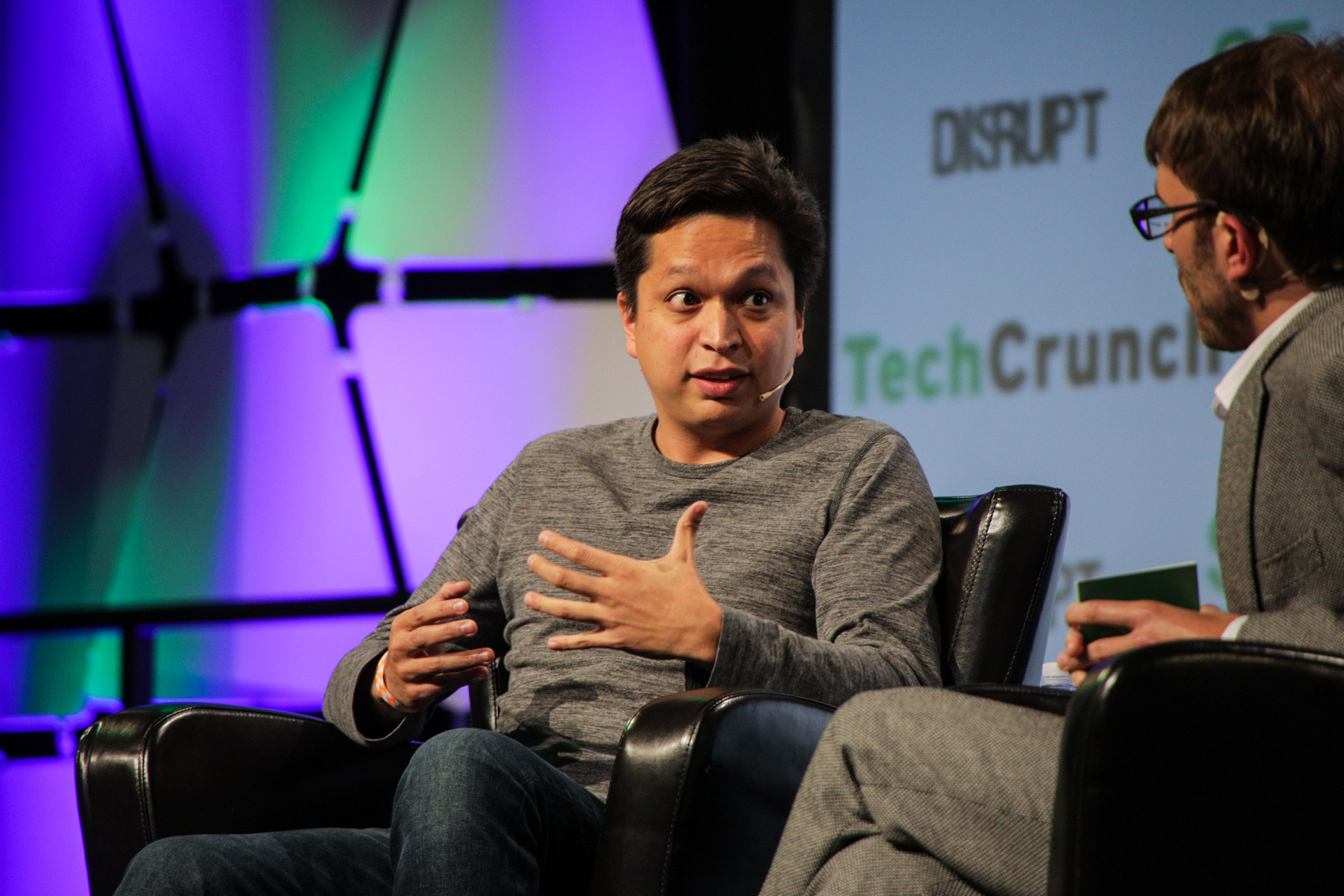
Ben Silbermann, co-founder and CEO of Pinterest, at TechCrunch Disrupt SF 2017.

Pinterest: Pinterest, the nearly decade-old visual search engine, unveiled its S-1 on Friday, one of the final steps ahead of its NYSE IPO, expected in April. The $12.3 billion company, which will trade under the ticker symbol “PINS,” posted revenue of $755.9 million in the year ending December 31, 2018, up from $472.8 million in 2017. It has roughly doubled its monthly active user count since early 2016, hitting 265 million last year. The company’s net loss, meanwhile, shrank to $62.9 million in 2018 from $130 million in 2017.

Zoom: Not necessarily the buzziest of companies, but its S-1 filing, published Friday, stands out for one important reason: Zoom is profitable! I know, what insanity! Anyway, the startup is going public on the Nasdaq as soon as next month after raising about $150 million in venture capital funding. The full deets are here.

Seed money

General Catalyst, a well-known venture capital firm, is diving more seriously into the business of funding seed-stage business. The firm, which has investments in Warby Parker, Oscar and Stripe, announced earlier this week its plan to invest at least $25 million each year in nascent teams.

Deal of the week

Earlier this week, Opendoor, the SoftBank -backed real estate startup, filed paperwork to raise even more money. According to TechCrunch’s Ingrid Lunden, the business is planning to raise up to $200 million at a valuation of roughly $3.7 billion. It’s possible this is a Series E extension; after all, the company raised its $400 million Series E only six months ago. Backers of OpenDoor include the usual suspects: Andreessen Horowitz, Coatue, General Atlantic, GV, Initialized Capital, Khosla Ventures, NEA and Norwest Venture Partners.

Startup capital

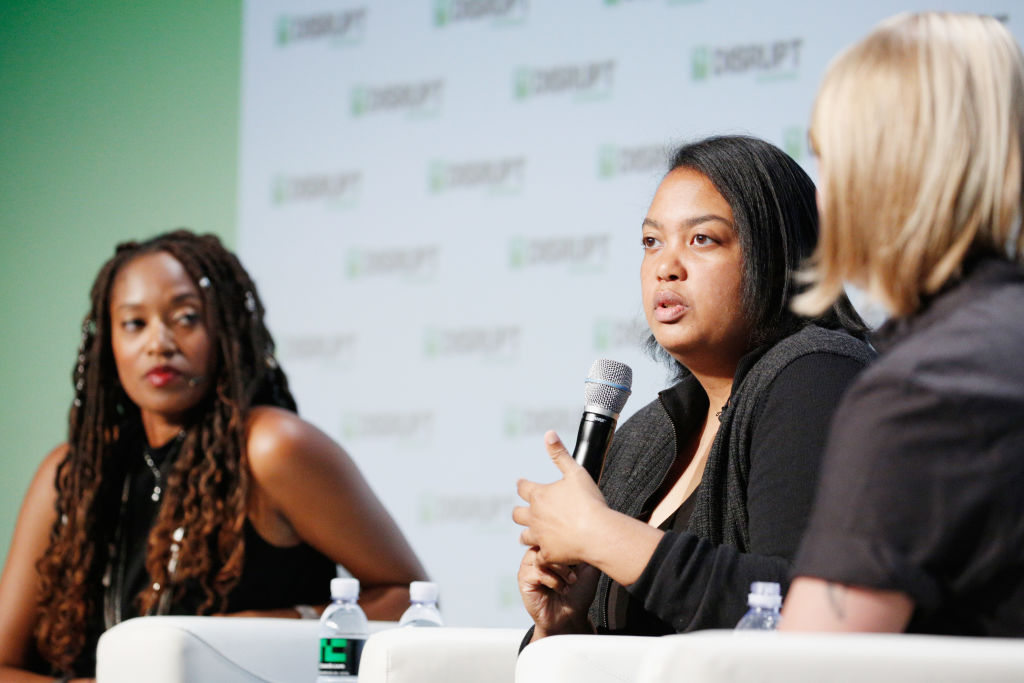
Backstage Capital founder and managing partner Arlan Hamilton, center.

Debate

Axios’ Dan Primack and Kia Kokalitcheva published a report this week revealing Backstage Capital hadn’t raised its debut fund in total. Backstage founder Arlan Hamilton was quick to point out that she had been honest about the challenges of fundraising during various speaking engagements, and even on the Gimlet “Startup” podcast, which featured her in its latest season. A Twitter debate ensued and later, Hamilton announced she was stepping down as CEO of Backstage Studio, the operations arm of the venture fund, to focus on raising capital and amplifying founders. TechCrunch’s Megan Rose Dickey has the full story.

Pro rata rights

This week, TechCrunch’s Connie Loizos revisited a long-held debate: Pro rata rights, or the right of an earlier investor in a company to maintain the percentage that he or she (or their venture firm) owns as that company matures and takes on more funding. Here’s why pro rata rights matter (at least, to VCs).

#Equitypod

If you enjoy this newsletter, be sure to check out TechCrunch’s venture-focused podcast, Equity. In this week’s episode, available here, Crunchbase News editor-in-chief Alex Wilhelm and I chat about Glossier, Rent The Runway and YC Demo Days. Then, in a special Equity Shot, we unpack the numbers behind the Pinterest and Zoom IPO filings.

Want more TechCrunch newsletters? Sign up here.

23 Mar 2019

Startups Weekly: A much-needed unicorn IPO update

As I’m sure everyone reading this knows, female-founded businesses receive just over 2 percent of venture capital on an annual basis. Most of those checks are written to early-stage startups. It’s extremely difficult for female founders to garner late-stage support, let alone cash $100 million checks.

Maybe that’s finally changing. This week, not one but two female-founded and led companies, Glossier and Rent The Runway, raised nine-figure rounds and cemented their status as unicorn companies. According to PitchBook data from 2018, there are only about 15 unicorn startups with female founders. Though I’m sure that number has increased in the last year, you get the point: There are hundreds of privately held billion-dollar companies and shockingly few of those have women founders (even fewer have female CEOs)…

Moving on…

YC Demo Days

I spent a good part of the week at San Francisco’s Pier 48 in a room full of vest-wearing investors. We listened to some 200 YC companies make their 120-second pitch and though it was a bit of a whirlwind, there were definitely some standouts. ICYMI: We wrote about each and every company that pitched on day 1 and day 2. If you’re looking for the inside scoop on the companies that forwent demo day and raised rounds, or were acquired, before hitting the stage, we’ve got that too.

IPO corner

Lyft: This week, Lyft set the terms for its highly-anticipated initial public offering, expected to be completed next week. The company will charge between $62 and $68 per share, raising more than $2 billion at a valuation of ~$23 billion. We previously reported its initial market cap would be around $18.5 billion, but that was before we knew that Lyft’s IPO was already oversubscribed. Here’s a little more background on the Lyft IPO for those interested.

Uber: The global ride-hailing business flew a little more under the radar this week than last week, but still managed to grab a few headlines. The company has decided to sell its stock on the New York Stock Exchange, which is the least surprising IPO development of 2019, considering its key U.S. competitor, Lyft, has been working with the Nasdaq on its IPO. Uber is expected to unveil its S-1 in April.

Ben Silbermann, co-founder and CEO of Pinterest, at TechCrunch Disrupt SF 2017.

Pinterest: Pinterest, the nearly decade-old visual search engine, unveiled its S-1 on Friday, one of the final steps ahead of its NYSE IPO, expected in April. The $12.3 billion company, which will trade under the ticker symbol “PINS,” posted revenue of $755.9 million in the year ending December 31, 2018, up from $472.8 million in 2017. It has roughly doubled its monthly active user count since early 2016, hitting 265 million last year. The company’s net loss, meanwhile, shrank to $62.9 million in 2018 from $130 million in 2017.

Zoom: Not necessarily the buzziest of companies, but its S-1 filing, published Friday, stands out for one important reason: Zoom is profitable! I know, what insanity! Anyway, the startup is going public on the Nasdaq as soon as next month after raising about $150 million in venture capital funding. The full deets are here.

Seed money

General Catalyst, a well-known venture capital firm, is diving more seriously into the business of funding seed-stage business. The firm, which has investments in Warby Parker, Oscar and Stripe, announced earlier this week its plan to invest at least $25 million each year in nascent teams.

Deal of the week

Earlier this week, Opendoor, the SoftBank -backed real estate startup, filed paperwork to raise even more money. According to TechCrunch’s Ingrid Lunden, the business is planning to raise up to $200 million at a valuation of roughly $3.7 billion. It’s possible this is a Series E extension; after all, the company raised its $400 million Series E only six months ago. Backers of OpenDoor include the usual suspects: Andreessen Horowitz, Coatue, General Atlantic, GV, Initialized Capital, Khosla Ventures, NEA and Norwest Venture Partners.

Startup capital

Backstage Capital founder and managing partner Arlan Hamilton, center.

Debate

Axios’ Dan Primack and Kia Kokalitcheva published a report this week revealing Backstage Capital hadn’t raised its debut fund in total. Backstage founder Arlan Hamilton was quick to point out that she had been honest about the challenges of fundraising during various speaking engagements, and even on the Gimlet “Startup” podcast, which featured her in its latest season. A Twitter debate ensued and later, Hamilton announced she was stepping down as CEO of Backstage Studio, the operations arm of the venture fund, to focus on raising capital and amplifying founders. TechCrunch’s Megan Rose Dickey has the full story.

Pro rata rights

This week, TechCrunch’s Connie Loizos revisited a long-held debate: Pro rata rights, or the right of an earlier investor in a company to maintain the percentage that he or she (or their venture firm) owns as that company matures and takes on more funding. Here’s why pro rata rights matter (at least, to VCs).

#Equitypod

If you enjoy this newsletter, be sure to check out TechCrunch’s venture-focused podcast, Equity. In this week’s episode, available here, Crunchbase News editor-in-chief Alex Wilhelm and I chat about Glossier, Rent The Runway and YC Demo Days. Then, in a special Equity Shot, we unpack the numbers behind the Pinterest and Zoom IPO filings.

Want more TechCrunch newsletters? Sign up here.

23 Mar 2019

Elon Musk defends tweets in SEC’s contempt proceedings

Tesla CEO Elon Musk argued Friday that his Twitter use did not violate a settlement agreement with the U.S. Securities and Exchange Commission and that the agency’s request to have him held in contempt is based on a “radical interpretation” of the order, according to court papers filed in Manhattan federal court.

The SEC has asked a judge to hold Musk in contempt for violating a settlement agreement reached last year over Musk’s now infamous “funding secured” tweet. Under that agreement, Musk is supposed to get approval from Tesla’s board before communicating potentially material information to investors.

Musk contends he didn’t violate the agreement and that the problem lies in the SEC’s interpretation, which he describes as “virtually wrong at every level.” The filing also reveals new details about the settlement negotiations, notably that the SEC sent Musk a draft agreement that would have required him to obtain pre-approval for all public statements related to Tesla, in any format.

Musk and Tesla never agreed to those terms. Instead, Musk says the agreement requires him to comply with Tesla own policy, which would require pre-approval for “written communications that contain, or reasonably could contain, information material to the company or its shareholders.”

The barbs traded via court filings are the latest in an escalating fight between the billionaire entrepreneur and SEC that began last August when Musk tweeted that he had “funding secured” for a private takeover of the company at $420 per share.  The SEC filed a complaint in federal district court in September alleging that Musk lied.

Musk and Tesla settled with the SEC last year without admitting wrongdoing. Tesla agreed to pay a $20 million fine; Musk had to agree to step down as Tesla chairman for a period of at least three years; the company had to appoint two independent directors to the board; and Tesla was also told to put in place a way to monitor Musk’s statements to the public about the company, including via Twitter.

But the fight was re-ignited last month after Musk sent a tweet on February 19 that Tesla would produce “around” 500,000 cars this year, correcting himself hours later to clarify that he meant the company would be producing at an annualized rate of 500,000 vehicles by year end.

The SEC argued that the tweet sent by Musk violated their agreement. Musk has said the tweet was “immaterial” and complied with the settlement.

23 Mar 2019

Extra Crunch: What’s the cost of buying users from Facebook and the other ad networks?

This post reveals the cost of acquiring a customer on every ad channel my agency has tested.

The ad channels include Facebook, Instagram, YouTube, Quora, Google Search, Google Shopping, Snapchat, LinkedIn and others.

Using this data, you can reduce your costs by identifying which channels are a likely fit for your own product. Then you can focus on testing just those channels to start.

I’m pulling data from my agency’s experience testing 15+ ad channels and running thousands of ads for dozens of Y Combinator startups.

This post leaves you with a prioritized to-do list of which channels might work for your product, and reference points for how much you can expect to pay if you get those channels to work.

Which ad channels should I use?

22 Mar 2019

Equity Shot: Pinterest and Zoom file to go public

Hello and welcome back to Equity, TechCrunch’s venture capital-focused podcast, where we unpack the numbers behind the headlines.

What a Friday. This afternoon (mere hours after we released our regularly scheduled episode no less!), both Pinterest and Zoom dropped their public S-1 filings. So we rolled up our proverbial sleeves and ran through the numbers. If you want to follow along, the Pinterest S-1 is here, and the Zoom document is here.

Got it? Great. Pinterest’s long-awaited IPO filing paints a picture of a company cutting its losses while expanding its revenue. That’s the correct direction for both its top and bottom lines.

As Kate points out, it’s not in the same league as Lyft when it comes to scale, but it’s still quite large.

More than big enough to go public, whether it’s big enough to meet, let alone surpass its final private valuation ($12.3 billion) isn’t clear yet. Peeking through the numbers, Pinterest has been improving margins and accelerating growth, a surprisingly winsome brace of metrics for the decacorn.

Pinterest has raised a boatload of venture capital, about $1.5 billion since it was founded in 2010. Its IPO filing lists both early and late-stage investors, like Bessemer Venture Partners, FirstMark Capital, Andreessen Horowitz, Fidelity and Valiant Capital Partners as key stakeholders. Interestingly, it doesn’t state the percent ownership of each of these entities, which isn’t something we’ve ever seen before.

Next, Zoom’s S-1 filing was more dark horse entrance than Katy Perry album drop, but the firm has a history of rapid growth (over 100 percent, yearly) and more recently, profit. Yes, the enterprise-facing video conferencing unicorn actually makes money!

In 2019, the year in which the market is bated on Uber’s debut, profit almost feels out of place. We know Zoom’s CEO Eric Yuan, which helps. As Kate explains, this isn’t his first time as a founder. Nor is it his first major success. Yuan sold his last company, WebEx, for $3.2 billion to Cisco years ago then vowed never to sell Zoom (he wasn’t thrilled with how that WebEx acquisition turned out).

Should we have been that surprised to see a VC-backed tech company post a profit — no. But that tells you a little something about this bubble we live in, doesn’t it?

Equity drops every Friday at 6:00 am PT, so subscribe to us on Apple PodcastsOvercast, Pocket Casts, Downcast and all the casts.

22 Mar 2019

This is how much money Pinterest execs made last year

Silicon Valley is known for its massive wealth. When these companies file to go public, we all finally get to know how much money these executives take home each year, and the millions they’ll take home after the IPO,

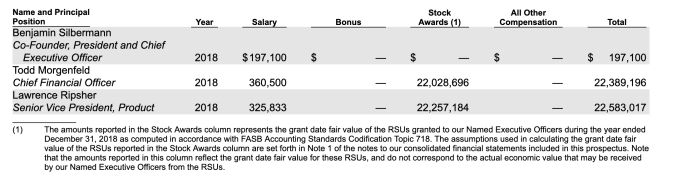
In Pinterest’s S-1, which it filed earlier today, we see that co-founder and CEO Ben Silbermann earned a salary of $197,100. But that’s actually nothing compared to Pinterest CFO Todd Morgenfeld, who earned a base salary of $360,500 with stock awards worth $22,028,196.

It’s still unclear just how much money the execs will make once Pinterest goes public. That’s because Pinterest did not break down stock ownership.

Meanwhile, fellow IPO-bound startup Lyft paid CEO Logan Green a salary of $401,529 and COO Jon McNeill $419,231 last year. At the high end, Green’s stake is worth nearly $523 million, while co-founder John Zimmer’s stake is worth north of $346 million.

Check out our full coverage of Pinterest’s S-1 below.

22 Mar 2019

Our 9 favorite startups from Y Combinator W19 Demo Day 2

Heathcare kiosks, a home-cooked food marketplace, and a way for startups to earn interest on their funding topped our list of high-potential companies from Y Combinator’s Winter 2019 Demo Day 2. 88 startups launched on stage at the lauded accelerator, though some of the best skipped the stage as they’d already raised tons of money.

Be sure to check out our write-ups of all 85 startups from day 1 plus our top picks, as well as the full set from day 2. But now, after asking investors and conferring with the TechCrunch team, here are our 9 favorites from day 2.

Shef 

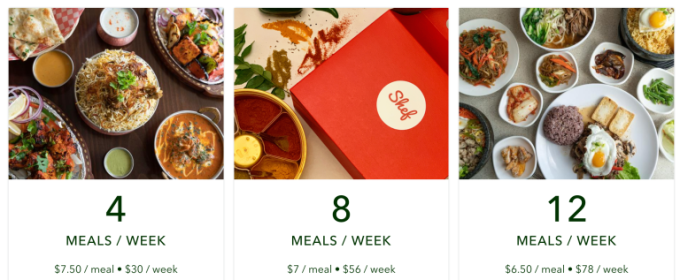
Two months ago, California passed the first law in the country legalizing the sale of home cooked food. Shef creates a marketplace where home chefs can find nearby customers. Shef’s meals cost around $6.50 compared to $20 per meal for traditional food delivery, and the startup takes a 22 percent cut of every transaction. It’s been growing 50 percent week over week thanks to deals with large property management companies that offer the marketplace as a perk to their residents. Shef wants to be the Airbnb of home cooked food.

Why we picked Shef: Deregulation creates gold rush opportunities and Shef was quick to seize this one, getting started just days after the law passed. Food delivery is a massive megatrend but high costs make it unaffordable or a luxury for many. If a parent is already cooking meals for their whole family, it takes minimal effort to produce a few extra portions to sell to the neighbors at accessible rates.

Handle

This startup automates the collection process of unpaid construction invoices. Construction companies are often forced to pay for their own jobs when customers are late on payments. According to Handle, there are $104 billion in unpaid construction invoices every year. Handle launched six weeks ago and is currently collecting $22,800 in monthly revenue. The founders previously launched an Andreessen Horowitz-backed company called Tenfold.

Why we picked Handle: Construction might seem like an unsexy vertical, but it’s massive and rife with inefficiencies this startup tackles. Handle helps contractors demand payments, instantly file liens that ensure they’re compensated for work or materials, or exchange unpaid invoices for cash. Even modest fees could add up quickly given how much money moves through the industry. And there are surely secondary business models to explore using all the data Handle collects on the construction market.

Blueberry Medical

This pediatric telemedicine company provides medical care instantly to families. Blueberry provides constant contact, the ability to talk to a pediatrician 24/7 and at-home testing kits for a total of $15 per month. They’ve just completed a paid consumer pilot and say they were able to resolve 84 percent of issues without in-person care. They’ve partnered with insurance providers to reduce ER visits.

Why we picked Blueberry: Questionable emergency room visits are a nightmare for parents, a huge source of unnecessary costs, and a drain on resources for needy patients. Parents already spend so much time and money trying to keep their kids safe that this is a no-brainer subscription. And the urgent and emotional pull of pediatrics is a smart wedge into telemedicine for all demographics.

rct studio

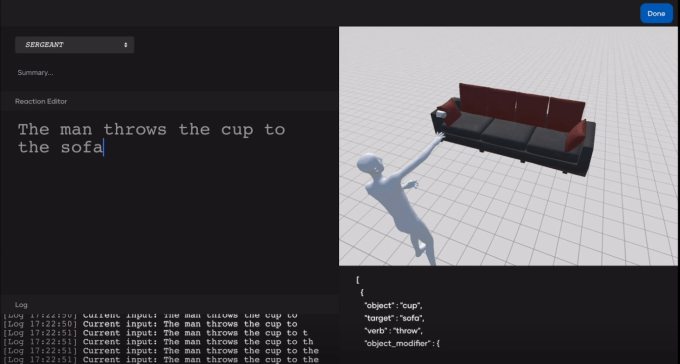
Led by a team of YC alums behind Raven, an AI startup acquired by Baidu in 2017, rct studio is a creative studio for immersive and interactive film. The platform provides a real time “text to render “engine (so the text “A man sits on a sofa” would generate 3D imagery of a man sitting on a sofa) that supports mainstream 3D engines like Unity and Unreal, as well as a creative tool for film professionals to craft immersive and open-ended entertainment experiences called Morpheus Engine.

Why we picked rct studio: Netflix’s Bandersnatch was just the start of mainstream interactive film. With strong technology, an innovative application, and proven talent, rct could become a critical tool for creating this kind of media. And even if the tech falls short of producing polished media, it could be used for storyboards and mockups.

Interprime

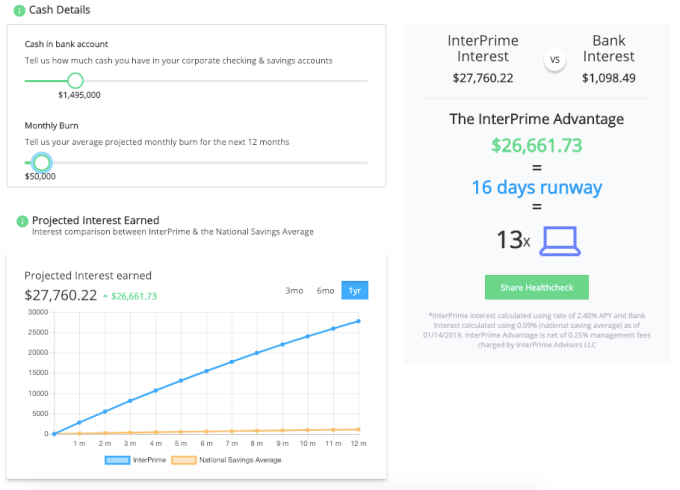
Provides “Apple level” treasury services to startups. Startups are raising a lot of money with no way to manage it, says Interprime. They want to help these businesses by managing these big investments by helping them earn interest on their funding while retaining liquidity. They take a .25 percent advisory fee for all the investment they oversee. So far, they have $10 million in investment capital they are servicing.

Why we picked Interprime: The explosion of early stage startup funding evidenced by Y Combinator itself has created new banking opportunities. Silicon Valley Bank is ripe for competition and Interprime’s focus on startups could unlock new financial services. With Interprime’s YC affiliation, it has access to tons of potential customers.


Nabis

Nabis is tackling the cannabis shipping and logistics business, working with suppliers to ship out goods to retailers reliably. It’s illegal for FedEx to ship weed so Nabis has swooped in and is helping ship and connect while taking cuts of the proceeds, a price the suppliers are willing to pay due to their 98 percent on-time shipping record.

Why we picked Nabis: Quirky regulation creates efficiency gaps in the marijuana business where incumbents can’t participate since they’re not allowed to handle the flower. As more states legalize and cannabis finds its way into more products, moving goods from farm to processor to retailer could spawn a big market for Nabis with a legal moat. It’s already working with many top marijuana brands, and could sell them additional services around business intelligence and distribution.

WeatherCheck

This startup measures weather damage for insurance companies. WeatherCheck has secured $4.7 million in annual bookings in the five months since it launched to help insurance carriers reduce their overall claims expense. To use the service, insurers upload data about their properties. WeatherCheck then monitors the weather and sends notifications to insurance companies, if, for example, a property has been damaged by hail.

Why we picked WeatherCheck: Extreme weather is only getting worse due to climate change. With 10.7 million US properties impacted by hail damage in 2017, WeatherCheck has found a smart initial market from which to expand. It’s easy to imagine the startup working on flood, earthquake, tornado, and wildfire claims too. Insurance is a fierce market, and old-school providers could get a leg up with WeatherCheck’s tech.


Upsolve

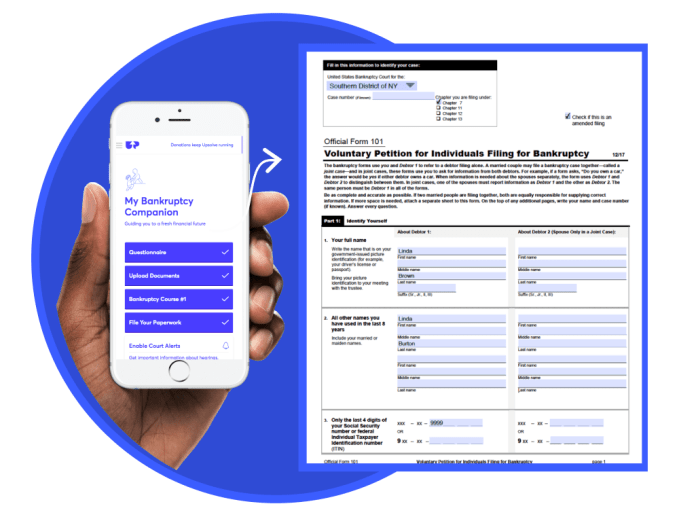
Upsolve wants to help low-income individuals file for bankruptcy more easily. The non-profit service gets referral fees from pointing non low-income families to bankruptcy lawyers and is able to offer the service for free. The company says that medical bills, layoffs and predatory loans can leave low-income families in dire situations and that in the last 6 months, their non-profit has alleviated customers from $24 million in debt.

Why we picked Upsolve: Financial hardship is rampant. With the potential for another recession and automation threatening jobs, many families could be at risk for bankruptcy. But the process is so stigmatized that some people avoid it at all costs. Upsolve could democratize access to this financial strategy while inserting itself into a lucrative transaction type.

Pulse Active Stations Network

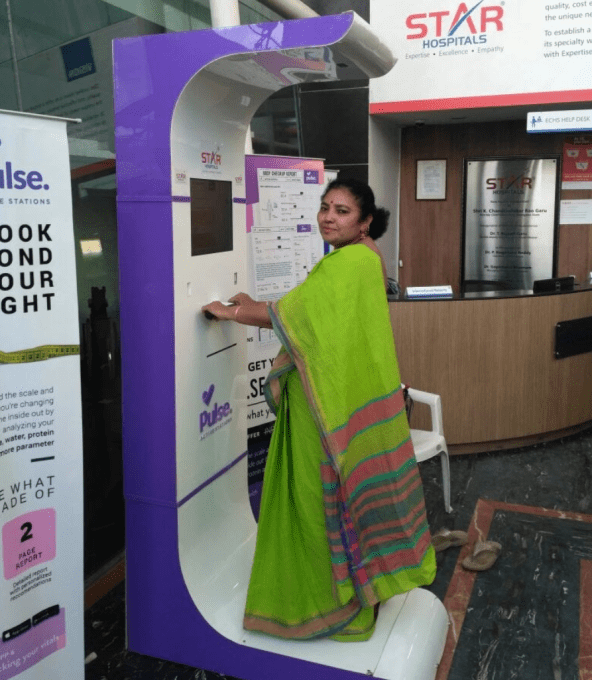
This startup makes health kiosks for India, meant to be installed in train stations. Co-founder Joginder Tanikella says that there are 600,000 preventable deaths in India as many in the region don’t get regular doctor checkups. “But everyone takes trains,” he says. Their in-station kiosk measures 21 health parameters. The company made $28,000 in revenue last month. Charging $1 per test, Tanikella says each machine pays for itself within 3 months. In the future, the kiosks will allow them to sell insurance and refer users to doctors.

Why we picked Pulse: Telemedicine can’t do everything, but plenty of people around the world can’t make it in to a full-fledged doctor’s office. Pulse creates a mid-point where hardware sensors can measure body fat, blood pressure, pulse, and bone strength to improve accuracy for diagnosing diabetes, osteoarthritis, cardiac problems, and more. Pulse’s companion app could spark additional revenue streams, and there’s clearly a much bigger market for this than just India.

More Y Combinator coverage from TechCrunch:

Additional reporting by Kate Clark, Lucas Matney, and Greg Kumparak

22 Mar 2019

Drone analytics startup Aria Insights suddenly shutters

Earlier this year, Helen Greiner-founded drone startup Cyphy Works announced a major change. The company was rebooting and renaming itself Aria Insights, a move that arrived with a new-founded, AI/data-driven focus. Now, just over two months later, the company is no more.

Reports that Aria had shuttered began surfacing earlier this week. Moments ago, the company confirmed the move in a tersely-worded statement offered to TechCrunch.

Aria Insights has ceased operations effective March 21, 2019.” That’s the sum total of the insight provided by Lance VandenBrook, the former CyPhy CEO who resumed that role as the company transitioned back in January. The move appears to be an abrupt one, with little to no information offered to external parties. It brings to mind last year’s sudden closure of Rethink Robotics, another company launched by a former iRobot cofounder.

Full disclosure, we announced last month that the company’s CTO would be appearing on-stage at our Robotics event next month. That, like everything else apart from Aria’s drones, appears to be up in the air at the moment.

More information as we get it.