Author: azeeadmin

20 Mar 2019

These ad execs have a venture fund they’d like to sell you

Mike Duda comes from the world of advertising. In fact, he spent 13 years at the renowned ad agency Deutsch, becoming the youngest partner in the company’s history until another creative, Brent Vartan, came along and stole the title. Little wonder that in 2010, when Duda struck out on his own to create Bullish (formerly known as Consigliere Brand Capital), he stole Vartan, later making him the firm’s second managing partner.

It isn’t that the two wanted to outgun their former employer exactly. Instead, the idea from the outset was to create an ad agency that also happens to be an investment firm. In a way, they stole a page from many Silicon Valley service firms that, beginning in the go-go dot com era of twenty years ago, worked for pay and, when the right opportunities arose, for equity.

It’s turned out to be a pretty good approach. Bullish, which is based in New York and works on a pay-for-performance compensation model, has managed to sneak checks into some of the biggest consumer new brands out there, including Warby Parker and Peloton and Harry’s and Casper, companies that have happily agreed to include Bullish as a syndicate partner including because of its advertising know-how.

In the meantime, to keep the lights on as those privately held companies have continued to operate privately, Bullish has also managed to land more traditional big-league clients, including Anheuser-Busch, Pepsi, Nike and Walmart. It also counted GNC as a client and reportedly turned heads when it dropped it in order to invest $250,000 in the three-and-a-half-year-old vitamin supplement startup Care/of.

With Bullish now contemplating fund two, we decided to sit down with Duda last week to learn more about how the whole things operates, and where he and Vartan are shopping now.

TC: You’d spent your career in advertising. What circles were you traveling in that you were also seeing seed-stage startups — good ones —  in need of funding?

MD: It was through outlier circles. Like, Peloton struggled to raise money, so it got104 angels to invest, including high-net worths, and us, who looked institutional, though I laugh at that now. [Founder and CEO John Foley] didn’t know how to play the VC game. He’d been the president of Barnes & Noble and he had this idea that people thought was crazy. He had a PPM for his fundraise — he didn’t have the [traditional] ten-page PowerPoint. So a lot of people in New York passed, and those same people now funding the Mirrors of the world and Tonals of the world.

It was a similar situation with Birchbox. It trouble raising money because its founders are women, and most of the guys they were talking to were like, ‘Well, my wife would get bored of this after a couple of months.’ But the target audience doesn’t have a seven-car garage in Palo Alto. It’s a mom of two in Cleveland who subscribes to the New Yorker.

On the agency side, we worked on Revlon for two years, so we get that a consumer doesn’t have to be like just someone we know. It isn’t, ‘Oh, it’s a product for women; let me ask my wife.’ We actually do focus groups to [find] consumer insights.

TC: So the pitch is that it isn’t just money you’re bringing but a full marketing group, too.

MD: A marketing group with people from places like Deloitte and A.T. Kearney and Goldman Sachs and RBC who try to understand what’s really going on among the says 330 million Americans out there – – not just in New York, San Francisco, L.A. or Boston, which are the hotbeds for consumer investment in VC. We look at stuff that could be disruptive for the normals, which is sometimes unsexy stuff like a stationary bike with a TV.

TC: A $3,000 stationary bike is for normal people?

MD: There were 1.6 million stationary bikes being sold in the U.S. every year [when Foley first began pitching investors]. Harry’s taking on Gillette before Dollar Shave Club came along [is another example]. The jeans I’m wearing are from a company called Revtown in Pittsburgh, Pennsylvania, founded by Henry Stafford, who was the North American president of Under Amour and [previously worked for both] American Eagle and Gap. So this was a first-time entrepreneur who had corporate experience was paranoid about raising too much money and promising investors too much too soon. And we’re attracted to entrepreneurs who don’t want to raise tons of capital before they build a profitable business.

That’s not the case with all of our investments, obviously. Casper and Peloton have both raised a fair amount of money, but their growth kind of followed suit.

TC: Why jeans?

MD: I think [Stafford[ was kind of ticked off and wondering why do people have to choose from either the Gap or a $200 pair of jeans. He wanted to build a great pair of jeans that sell for under $100 and that he can sell through great advertising. The pair I’m wearing right now is $75 and it’s a great pair of jeans. Not that I have the ability to stretch, but if I could put my foot over my head without them on, I could do it with them on, too, because they’re stretchy and durable and well-made. Also, from an operations from business standpoint, this is an adult who has built up businesses before and brings that sensibility so that we can get the scale right. Though a direct-to-consumer brand, it’s not too precious to go into physical retail earlier, either.

TC: Most direct-to-consumer brands are showing up in the offline world faster. 

MD: DTC 2.0 is definitely going to be more about going where your customers are. When Harry’s went into Target, it was a genius move, because there are people in Overland Park, Kansas who may not see its digital banners, but they’re in a Target, and they’re like, ‘That’s new, that’s interesting.’ So it’s another form of marketing.

TC: What about social media? All the platforms are already saturated. Who’s doing really novel things out there, in your view?

MD: I’ll maybe start with the stuff that just annoys us. First, I think a lot of VCs and other people involved with early-stage companies think marketing is a customer acquisition cost and it’s not. If you have to rely on Facebook and Google, you’ll never grow because your [costs] never go down.

When we think of DTC companies, we’re looking for is,  what can you do that gets talk value, not just at your initial PR launch but that [produces] advocates in a kind of flywheel talking about you. People do talk about this stuff. People like to be the one to discover something before anyone else and like to talk about it.

TC: What about TV spend? I’m always astonished to see fairly new brands spending what I’d guess is a lot of money on television ads.

MD: With digital marketing, the accountability is not there as much as people thought. And that’s why about a year ago, you started see the [men’s wellness company] Hims start spending $6 million or $7 million a month on TV advertising during March Madness. Was that a flawed strategy? No. TV works. That’s why you see companies that reach a certain size go to TV; it’s like some sort of validation that this a real company. TV is a storefront for companies that may not have one.

TC: I do wonder how these brands, many of which are great, deal with fickle customers. There are some old brands that I will always love — Patagonia, Hermes – – but a lot of newer brands that I love but I will throw over in two seconds for a newer, shinier brand when it also has a compelling product.

MD: It’s more like someone is probably not serving you well enough. They’re letting you forget about them. Is it Amazon’s fault that RadioShack and JC Penny are going out business? Probably not. They weren’t serving the customer. If you build a relationship with your consumer rather than advertising to her, you have a much better chance of keeping that person as a customer longer term. Patagonia makes great stuff, but so do other people. It’s that the company’s values are bigger than the product itself [that keeps people coming back].

TC: You’re going to start raising a fund later this year. How it will it be different than what you put together the first time around?

MD: We undershot our proposition the first time around. Being an executive at an ad agency, I wanted to be more conservative rather than sell the dream and not achieve it. It was actually harder to raise $10 million than what I was told it would have been if I’d been raising $25 million or $30 million. But we wanted to show proof of concept. Now, a lot of people have left the seed and pre-seed area as investors have raised bigger funds and we see a great opportunity, in a world where there is literally trillions of dollars in play, to get in as early as possible, then play pro rata defense [to maintain our stake]. And in our case, we’ll probably offer up later rounds to the [limited partners] who support us.

TC: A lot of seed and pre-seed deal flow comes to investors from Series A investors. Which are those firms in your universe?

MD: By and far, the most helpful firm to us was First Round Capital. Without their time, we wouldn’t be where we are.

I’m dating myself, but back in 2009, they did office hours. They were commercializing this angel VC investing thing. And I went to one of their office hours and [firm founder] Josh [Koppelman] spent 10 minutes with me and gave me his card and it was like a ‘Dumb and Dumber’ moment. I called my wife, and I was like, ‘He’s saying I have a chance!’ Then I flew to San Francisco to do another office hours . . .

TC: You flew cross country expressly for another of these office hours?

MD: Yes. And 78 people showed up. And it was like the land of broken toys. There were older gentlemen in three-piece suits, and a 19-year-old guy who showed up with a Rock’em Sock’em Robot and people who flew in from San Diego and Portland. And they just gave every one 10 minutes and I was like, ‘Here’s our proposition. It’s a marketing agency with a fund.’

And 75 of of the 78 people got 10 minutes, and two got 30 minutes, and one of them — me — got an hour and a half with Chris Fralic and Kent Goldman, who were kind enough to spend time with someone who kind of wanted to do what they do in a different way. Really, they’re the ones who gave me the confidence that this could work.

Photo above, left to right: Mike Duda, Brent Vartan. Courtesy of Mike Duda.
20 Mar 2019

Launching from YC, Eclipse Foods casts a long shadow over the $336 billion dairy industry

Eclipse Foods may be the company that finally takes milk out of the dairy business.

Ever since the acquisition of WhiteWave Foods by the French dairy giant Danone for over $10 billion investors have been thirsting for a technology that would give consumers a better tasting, more milky (for lack of a better word), milk substitute than the highly valuable (but not very tasty) almond, soy, and other plant based dairy alternatives.

There are at least $37.5 billion worth of other reasons for investors’ interest in the milk alternative category. That’s how much money will be spent on dairy alternatives by 2025, according to a newly released study by the market research firm Global Market Insights.

Enter Eclipse Foods. Founded by two veterans of the alternative sugars and proteins business, the company is going after the whole dairy industry, starting with a line of spreads and select additives for restaurants around San Francisco.

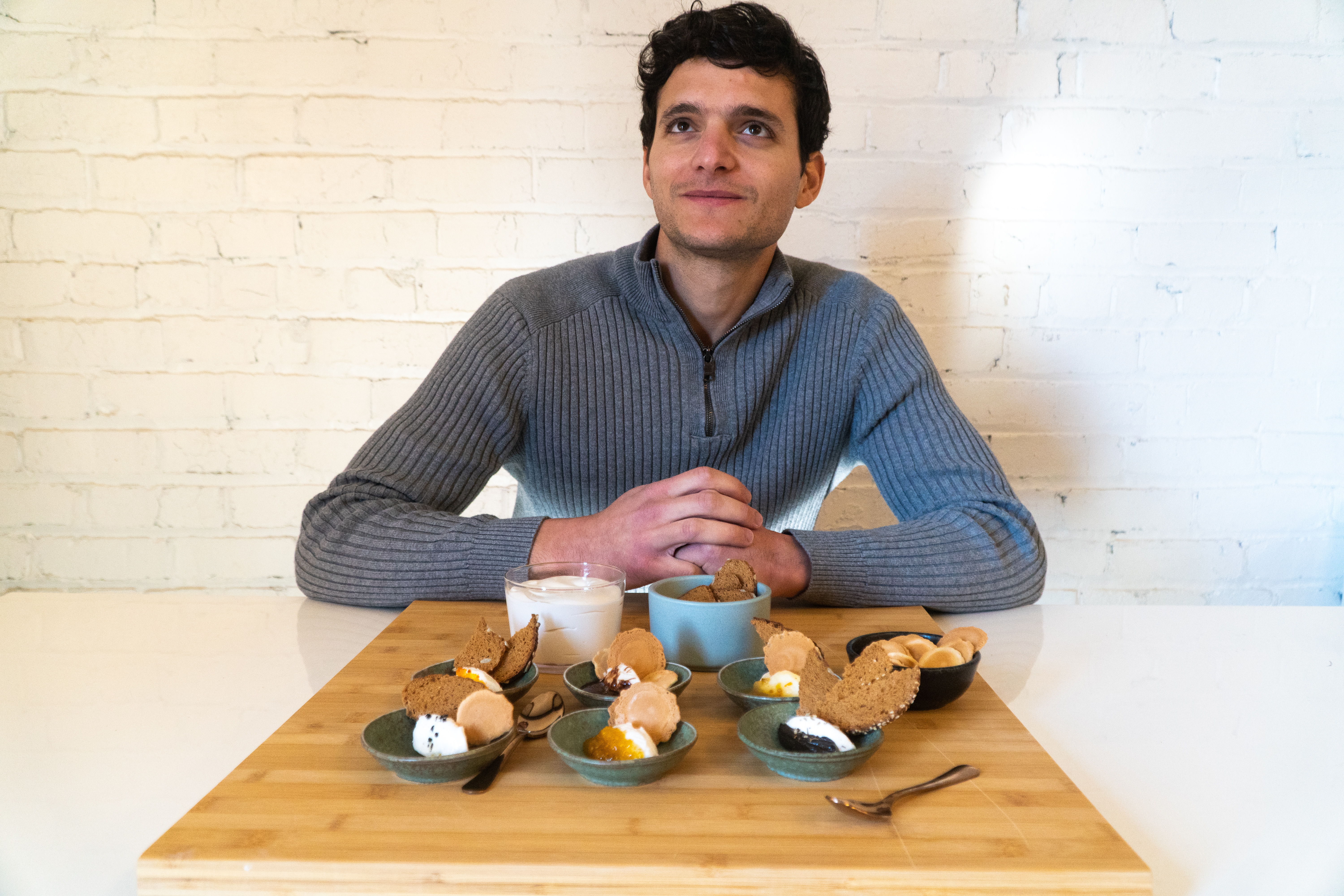
“We had an oh shit moment when we got our plant based milk to act just like the real thing,” says Thomas Beaumon, Eclipse Foods co-founder and the former director of product development at Hampton Creek (now known as Just Foods). “We’re not pureeing nuts or seeds or legumes. We asked, ‘What are the properties of milk?’ and built this dairy base of the exact amino acids and fat profile.”

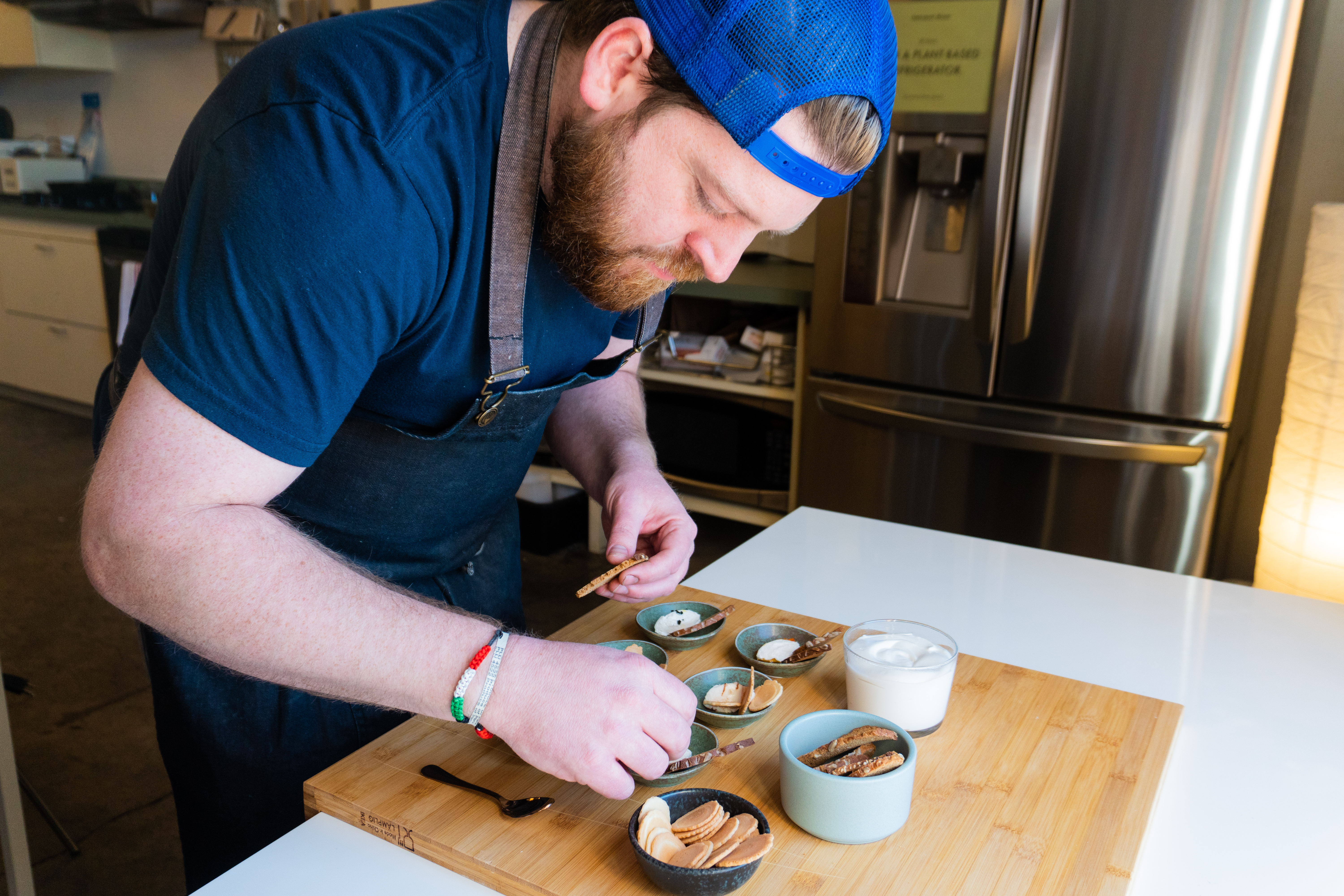
Thomas Beaumon in the kitchen (Courtesy Eclipse Foods)

Joining Beaumon on the journey to create the perfect milk substitute is Aylon Steinhart, a former specialist working with the Y Combinator aligned food technology incubator and think tank, the Good Food Institute.

The two men met at the launch event for Just Egg, the fourth product to debut from Just after the release of the company’s mayonnaise alternative, cookie dough, and porridge.

“We started talking about ideas and landed on this dairy platform,” recalls Steinhart. “It’s a place where we can make a big change very fast given the technological breakthroughs that we solved for early on.”

The demand is certainly coming on strong. According to Steinhart about 80% of millennials are consuming dairy replacements at least once a week.

Aylon Steinhart (Courtesy Eclipse Foods)

Humans didn’t start out drinking milk. Over the 300,000 odd years that some form of homo sapien has been stalking the planet, it has only been in the past 10,000 odd years that people decided to squirt the liquid out of a cow’s udders to consume it.

At first, humans couldn’t even consume the stuff without getting at least a little nauseous. They needed to develop a genetic mutation to even process the lactose sugars properly.

“The first time that we see the lactase persistence allele in Europe arising is around 5,000 years BP [before present] in southern Europe, and then it starts to kick in in central Europe around 3,000 years ago,” assistant professor Laure Ségurel of the Museum of Humankind in Paris, told the BBC earlier this year.

Segurel speculates that the health benefits of consuming milk might have been related to the exposure (and potential inoculation) to various diseases that may have otherwise spread from the animals to the humans that were raising them.

If that was the rationale, it’s increasingly unnecessary for modern living, and may indeed be more of a hazard to human health.

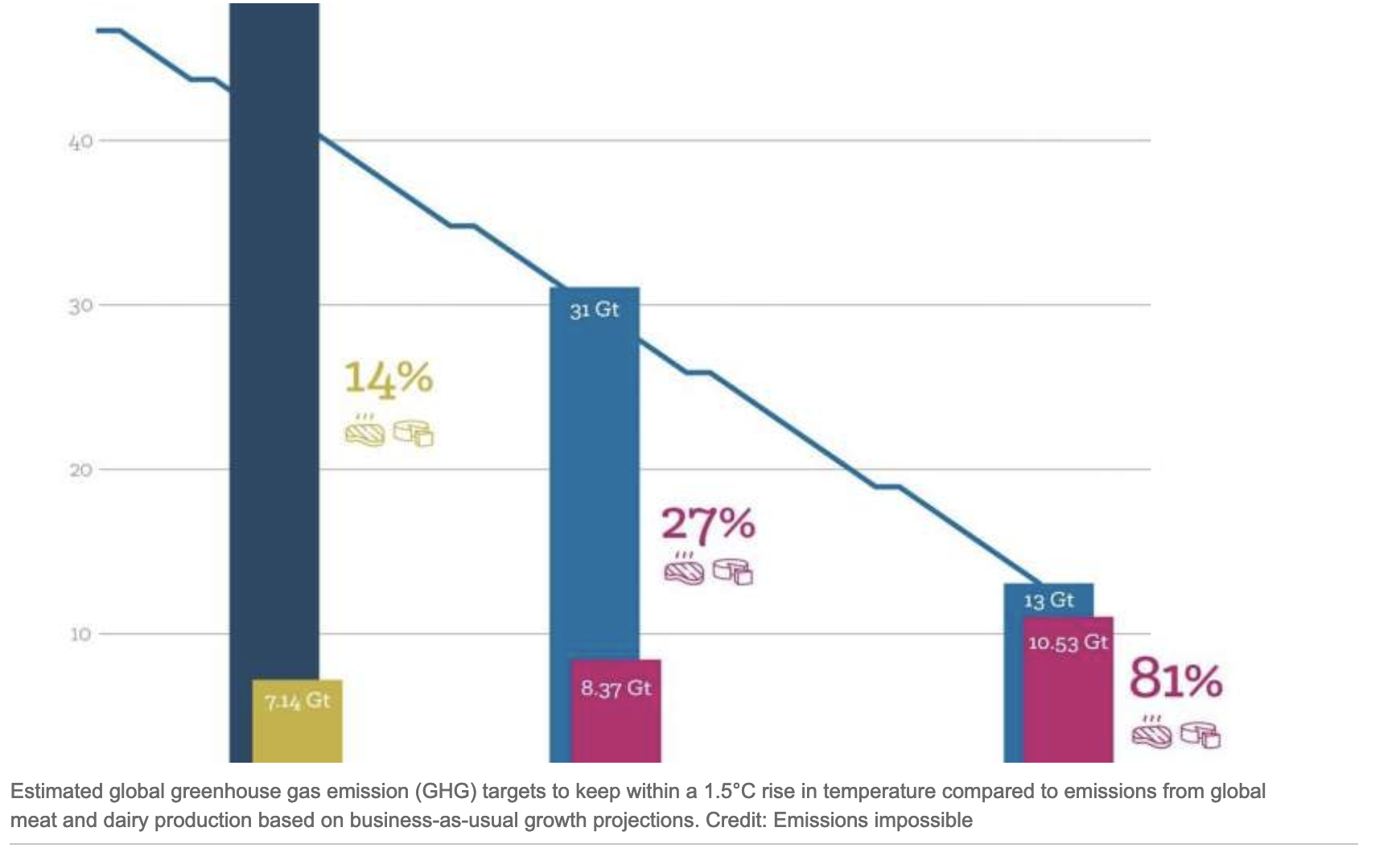
Global meat and dairy producers could count among the largest contributors to climate change if their growth remains unchecked, according to a report from the non-profit Grain.

They estimate that meat and dairy consumption should be reduced by 81 percent in order to meet global emissions reduction targets.


With the production of Eclipse’s dairy alternative, there’s no animal required.

“We have an off-the-shelf platform right now. The only additive will be water,” says Beaumon.

And unlike other alternative dairy products, Beaumon and Steinhart claim that theirs actually tastes good. And, as a Michelin starred chef, Beaumon should know.

The company’s first line of products will be a line of cream cheeses, including one for the bagel-and-schmear loving crowd. However, the majority will be more millennial focused, according to Steinhart.

“There will be various unique flavors that are culinarily focused,” he said.

Expect the first products to debut in an exclusive pilot with Wise Sons and through the ice cream maker Humphry Slochombe, a leader in high end ice cream in SF.

“Vegan cheese is gross,” he says.

20 Mar 2019

Launching from YC, Eclipse Foods casts a long shadow over the $336 billion dairy industry

Eclipse Foods may be the company that finally takes milk out of the dairy business.

Ever since the acquisition of WhiteWave Foods by the French dairy giant Danone for over $10 billion investors have been thirsting for a technology that would give consumers a better tasting, more milky (for lack of a better word), milk substitute than the highly valuable (but not very tasty) almond, soy, and other plant based dairy alternatives.

There are at least $37.5 billion worth of other reasons for investors’ interest in the milk alternative category. That’s how much money will be spent on dairy alternatives by 2025, according to a newly released study by the market research firm Global Market Insights.

Enter Eclipse Foods. Founded by two veterans of the alternative sugars and proteins business, the company is going after the whole dairy industry, starting with a line of spreads and select additives for restaurants around San Francisco.

“We had an oh shit moment when we got our plant based milk to act just like the real thing,” says Thomas Beaumon, Eclipse Foods co-founder and the former director of product development at Hampton Creek (now known as Just Foods). “We’re not pureeing nuts or seeds or legumes. We asked, ‘What are the properties of milk?’ and built this dairy base of the exact amino acids and fat profile.”

Thomas Beaumon in the kitchen (Courtesy Eclipse Foods)

Joining Beaumon on the journey to create the perfect milk substitute is Aylon Steinhart, a former specialist working with the Y Combinator aligned food technology incubator and think tank, the Good Food Institute.

The two men met at the launch event for Just Egg, the fourth product to debut from Just after the release of the company’s mayonnaise alternative, cookie dough, and porridge.

“We started talking about ideas and landed on this dairy platform,” recalls Steinhart. “It’s a place where we can make a big change very fast given the technological breakthroughs that we solved for early on.”

The demand is certainly coming on strong. According to Steinhart about 80% of millennials are consuming dairy replacements at least once a week.

Aylon Steinhart (Courtesy Eclipse Foods)

Humans didn’t start out drinking milk. Over the 300,000 odd years that some form of homo sapien has been stalking the planet, it has only been in the past 10,000 odd years that people decided to squirt the liquid out of a cow’s udders to consume it.

At first, humans couldn’t even consume the stuff without getting at least a little nauseous. They needed to develop a genetic mutation to even process the lactose sugars properly.

“The first time that we see the lactase persistence allele in Europe arising is around 5,000 years BP [before present] in southern Europe, and then it starts to kick in in central Europe around 3,000 years ago,” assistant professor Laure Ségurel of the Museum of Humankind in Paris, told the BBC earlier this year.

Segurel speculates that the health benefits of consuming milk might have been related to the exposure (and potential inoculation) to various diseases that may have otherwise spread from the animals to the humans that were raising them.

If that was the rationale, it’s increasingly unnecessary for modern living, and may indeed be more of a hazard to human health.

Global meat and dairy producers could count among the largest contributors to climate change if their growth remains unchecked, according to a report from the non-profit Grain.

They estimate that meat and dairy consumption should be reduced by 81 percent in order to meet global emissions reduction targets.


With the production of Eclipse’s dairy alternative, there’s no animal required.

“We have an off-the-shelf platform right now. The only additive will be water,” says Beaumon.

And unlike other alternative dairy products, Beaumon and Steinhart claim that theirs actually tastes good. And, as a Michelin starred chef, Beaumon should know.

The company’s first line of products will be a line of cream cheeses, including one for the bagel-and-schmear loving crowd. However, the majority will be more millennial focused, according to Steinhart.

“There will be various unique flavors that are culinarily focused,” he said.

Expect the first products to debut in an exclusive pilot with Wise Sons and through the ice cream maker Humphry Slochombe, a leader in high end ice cream in SF.

“Vegan cheese is gross,” he says.

19 Mar 2019

Waymo is gearing up to put a lot more self-driving cars on the road

Waymo is opening another technical service center in the Phoenix area, an expansion that will allow the autonomous vehicle technology startup to double its capacity in the area as it prepares to grow its commercial fleet.

The new 85,000-square-foot center will be located in Mesa and is expected to open sometime in the second half of the year. The company’s existing 60,000-square-foot facility in the Phoenix suburb of Chandler will remain.

The former Google self-driving project that spun out to become a business under Alphabet opened its first location in Chandler, Arizona in 2016. Since then the company has ramped up its testing, launched an early rider program, and slowly creeped towards commercial deployment. The early rider program, which launched in April 2017, had more than 400 participants the last time Waymo shared figures on the program.

In December, the company launched Waymo One, a commercial self-driving car service and accompanying app. The service isn’t widely available yet and Waymo-trained test drivers are still behind the wheel. (Waymo does have driverless vehicles on public roads in Phoenix).

This latest announcement signals that Waymo is still committed to its initial plan to eventually cover a large portion of the sprawling metropolis of Phoenix, which is about 600 square miles. Waymo currently operates in Chandler, Tempe, Gilbert and Mesa. It also means local residents will likely encounter more Waymo self-driving vehicles on public roads — an experience that hasn’t exactly sparked joy for some. (There have been several reports recounting fits of road rage directed at these autonomous vehicles.)

Waymo’s global fleet is about 600 cars, the large majority of which are in the Phoenix area. The new technical center will act as a second dispatch center as well as a place to maintain, clean and manage the fleet, according to the company.

It also means Waymo will hire more people in the months ahead. As Waymo noted in a blog posted Tuesday, this is not the first time it has grown its operations in Phoenix. Waymo expanded its full-service center in Chandler last year to 60,000 square feet, a facility that houses its operations and support teams, including fleet technicians, fleet dispatch, fleet response, and rider support.

19 Mar 2019

Media fragmentation is annoying consumers

Deloitte’s Technology, Media and Telecommunications division published its 13th-annual Digital Media Trends survey, focused on identifying changes in the ways US consumers engage with various types of media.

Led by an independent research firm, the survey had roughly 2,000 consumer respondents across demographics – with the report categorizing respondents based on age (Gen-Z: ages 14-21, Millenials: 22-35, Gen-X: 36-52, Boomers: 53-71, and Matures: 72+).

While already accompanied by a succinct 13-page executive summary, the report can largely be summarized in just a couple of sentences: more people are using streaming or alternative media services than ever before, largely due to more user freedom and customization, though the growing quantity and fragmentation of platforms are becoming more frustrating for users to manage.

The survey results directionally echo already well-discussed dynamics, which we’ve previously dug into such as here, here and here. Instead, the most poignant aspects of the report were not the answers or conclusions themselves, but the immense level of support many of them received.


Somewhat interesting:

19 Mar 2019

Netflix is experimenting with different episode orders for ‘Love, Death & Robots’

You probably know that Netflix is big on data and personalization — it tailors the shows and movies recommended to each user, and even tests out different images to promote those titles.

Now it’s extending that approach to the episode order of a new show, the animated science fiction series “Love, Death & Robots.”

Lukas Thoms, the founder of the LGBTQ nonprofit Out in Tech (and a product manager at Squarespace), pointed this out on Twitter. At first, he suggested that the episode order “changes based on whether Netflix thinks you’re gay or straight” — he noticed that on his account, the series started with an episode focused on a lesbian storyline, while for a straight friend, it started with the episode “that has the most realistic and explicit hetero sex.”

Turns out that’s not quite what was happening. Netflix tweeted back at Thoms that it’s “trying something completely new” by presenting four different episode orders to different viewers. However, it said, “The version you’re shown has nothing to do with gender, ethnicity, or sexual identity — info we don’t even have in the first place.”

Similarly, a company spokesperson told us, “We want to showcase the variety of shorts within the anthology series in different ways and see what works for our members. ”

But is your episode order still based on your Netflix viewing history? Thoms said he talked to a friend at Netflix, who told him it was a “100% random A/B test.”

So, just to recap: Netflix does not appear to be guessing at your sexual orientation, but it is experimenting with episode order as yet another thing to optimize, and another way it can collect data about viewer preferences.

Of course, this approach doesn’t make sense for serialized shows: If you jumbled up the order of “Russian Doll” or “The Umbrella Academy,” the story would become impossible to follow.

It could, conceivably, work for an anthology like “Love, Death & Robots,” where each episode stands alone — though even here, it feels like yet another step toward a streaming landscape that’s increasingly tailored to our personal preferences, and away from the idea that TV can provide a shared cultural experience.

19 Mar 2019

Salesforce finally embedding Quip into platform, starting with Sales and Service Cloud

When Salesforce bought Quip in 2016 for $750 million, it was fair to wonder what it planned to do with it. While company founder Bret Taylor has moved up the ladder to Chief Product Officer, Quip remained a stand-alone product. Today that changed when the company announced it was embedding Quip directly into its sales and customer service clouds.

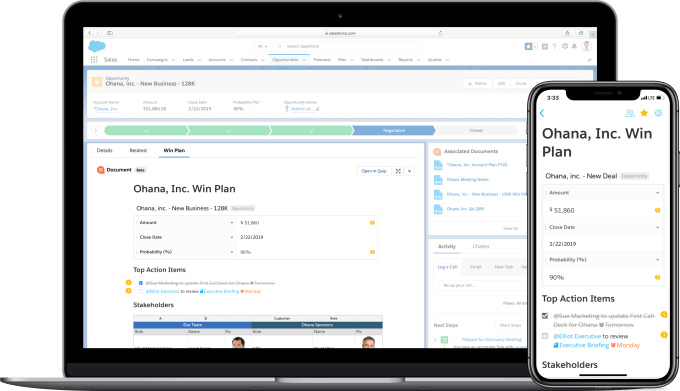
Quip is a collaboration tool with built-in office suite functionality including word processing, spreadsheet and presentation software. As a stand-alone product, it enables teams to collaborate around a rich set of documents. Quip for Salesforce is embedding that kind of functionality at the platform level.

Alan Lepofsky, who recently joined Salesforce as VP of Salesforce Quip, says the announcement is the culmination of a desire to embed the tool into into Salesforce. “By bringing productivity directly into the context of business workflows, sales and customer support teams can collaborate in brand new ways, enabling them to be better aligned and more efficient, ultimately providing a better customer experience,” Lepofsky told TechCrunch.

Quip appears as a tab in the Sales or Service Cloud interface. There, employees can collaborate on documents and maintain all of their information in a single place without switching between multiple applications or losing context, an increasingly important goal for collaboration tools including Slack.

Photo: Salesforce

Administrators can build templates to quickly facilitate team building. The templates enable you to start a page pre-populated with information about a specific account or set of accounts. You can take this a step further by creating templates with a set of filters to refine each one to meet the needs of a particular team, based on factors like deal size, industry or location.

In the service context, customer service agents can set up pages to discuss different kinds of issues or problems and work together to get answers quickly, even while chatting with a customer.

Salesforce has various partnerships with Microsoft, Dropbox, Google, Slack and others that provide a similar kind of functionality, and those customers that want to continue using those tools can do that, but 2.5 years after the Quip acquisition, Salesforce is finally putting it to work as a native productivity and collaboration tool.

“As an industry analyst, I spent years advising vendors on the importance of purpose and context as two key drivers for getting work done. Salesforce is delivering both by bringing productivity from Quip directly to CRM and customer service,” Lepofsky said.

The idea of providing a single place to collaborate without task switching is certainly attractive, but it remains to be seen if customers will warm to the idea of using Quip instead of one of the other tools that are out there. In the mean time, Quip will still be sold as a stand-alone tool.

19 Mar 2019

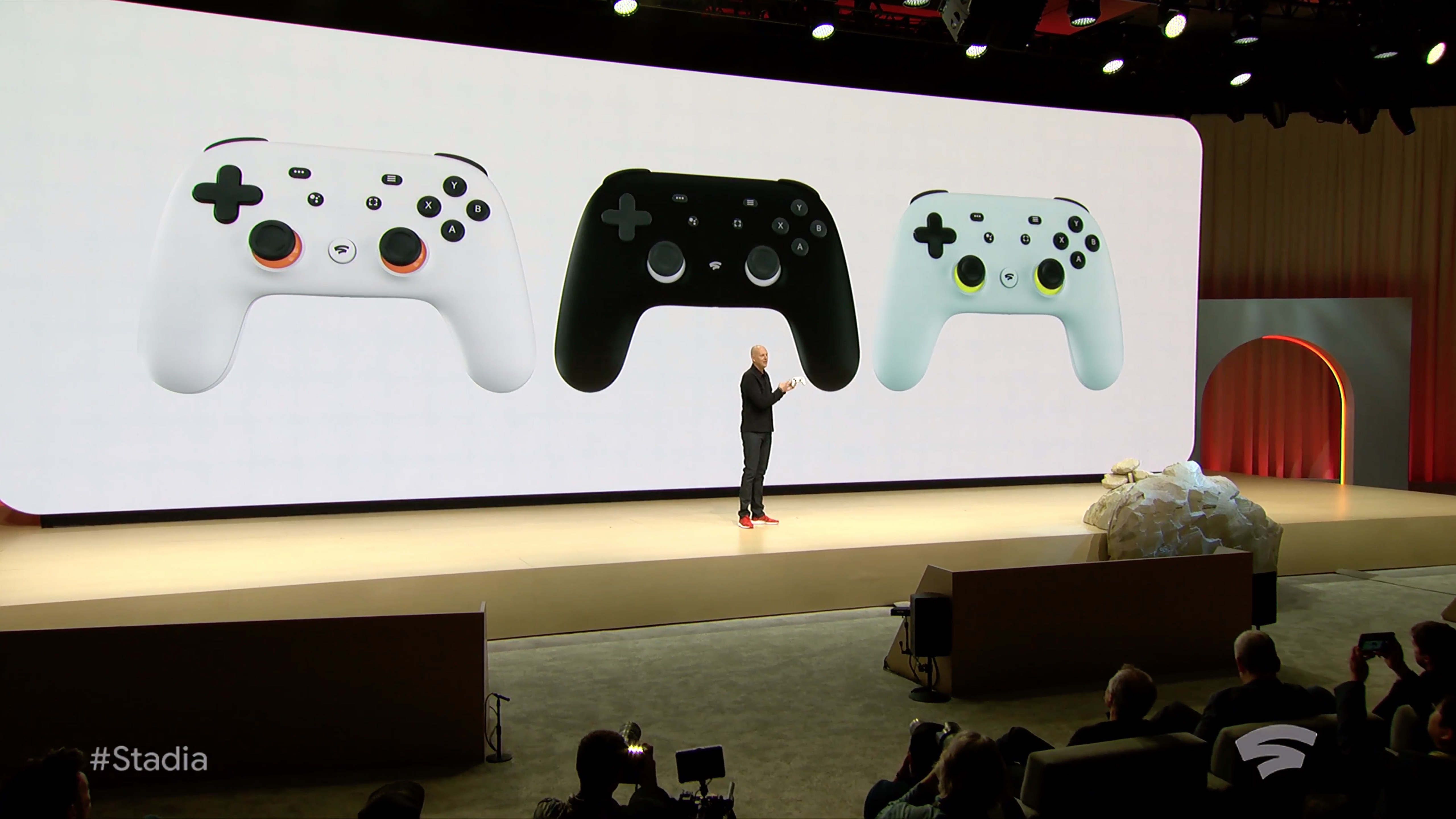
The 9 biggest questions about Google’s Stadia game streaming service

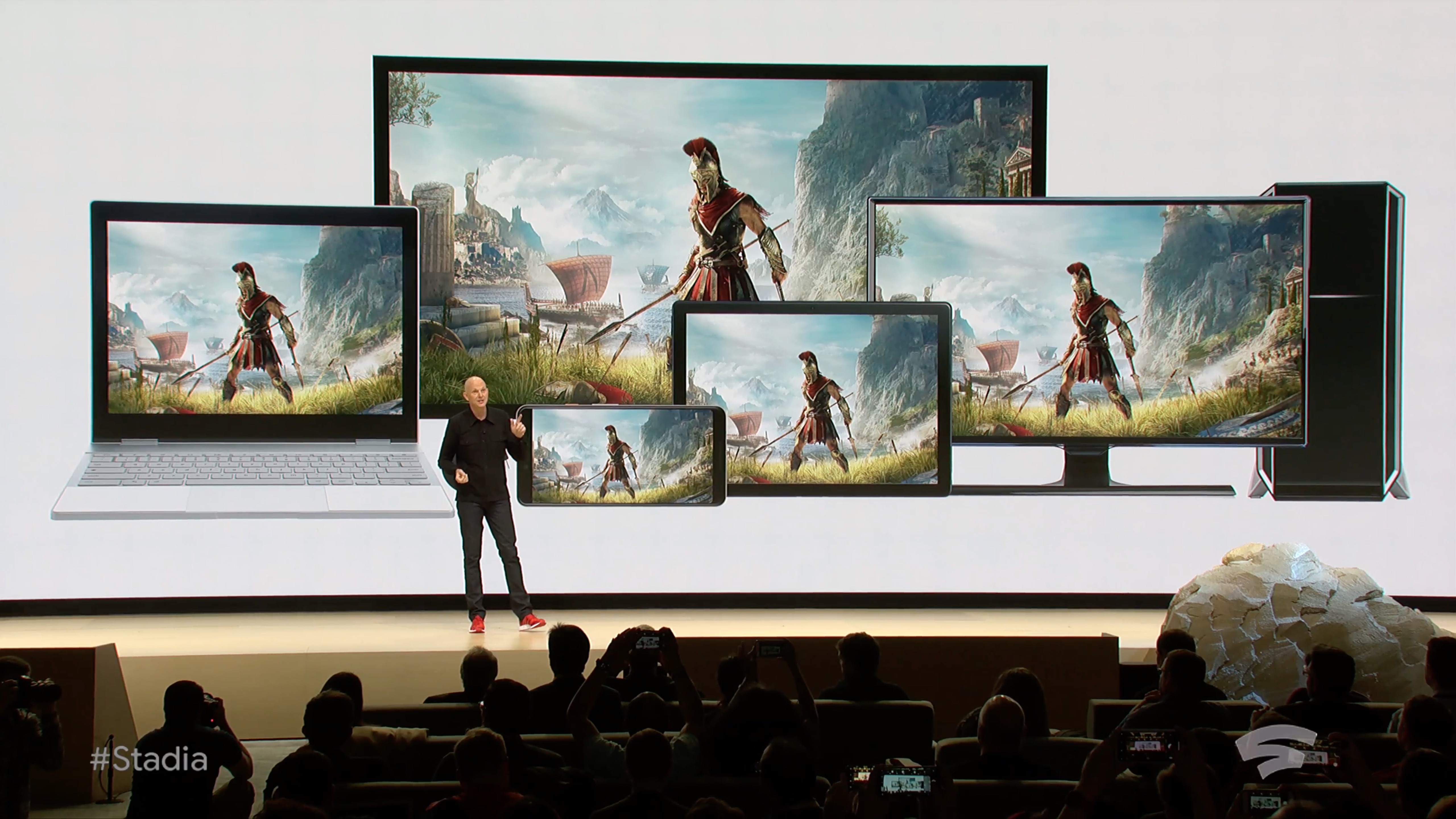
Google’s Stadia is an impressive piece of engineering to be sure: Delivering high definition, high framerate, low latency video to devices like tablets and phones is an accomplishment in itself. But the game streaming services faces serious challenges if it wants to compete with the likes of Xbox and PlayStation, or even plain old PCs and smartphones.

Here are our nine biggest questions about what the service will be and how it’ll work.

1. What’s the game selection like?

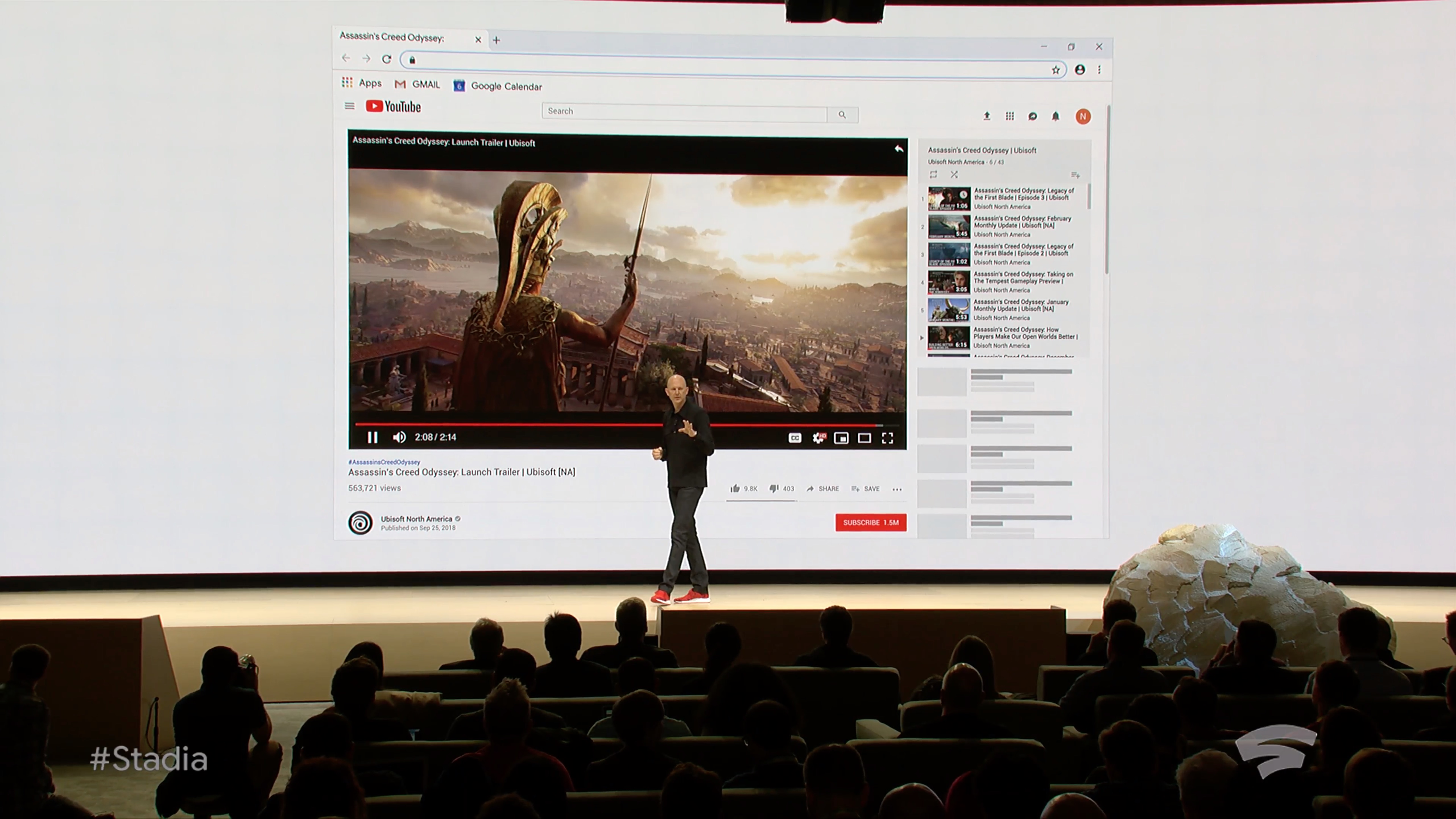
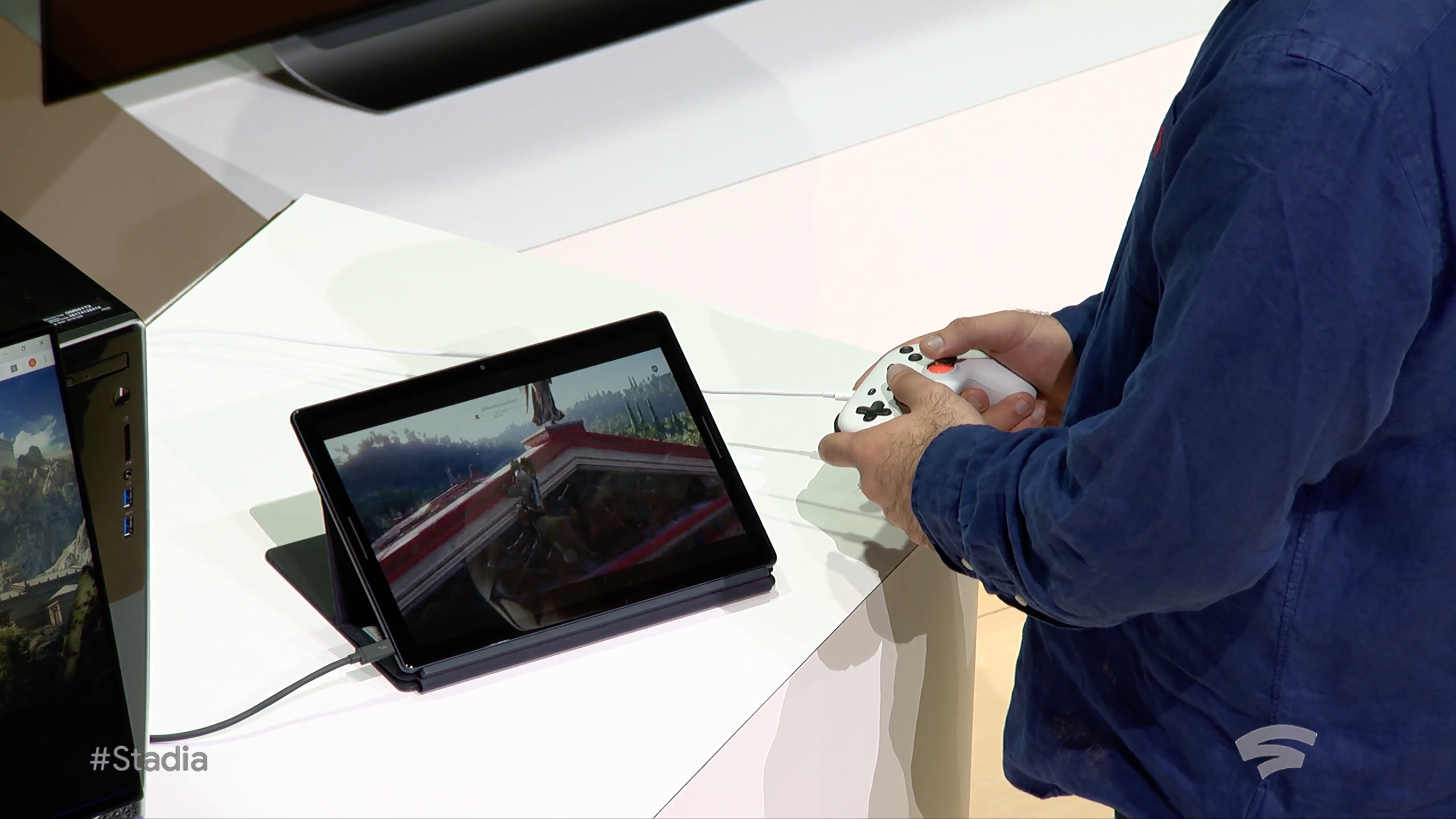
We saw Assassin’s Creed: Odyssey (a lot) and Doom: Eternal, and a few other things running on Stadia, but otherwise Google’s presentation was pretty light on details as far as what games exactly we can expect to see on there.

It’s not an easy question to answer, since this isn’t just a question of “all PC games,” or “all games from these 6 publishers.” Stadia requires a game be ported, or partly recoded to fit its new environment — in this case a Linux-powered PC. That’s not unusual, but it isn’t trivial either.

Porting is just part of the job for a major studio like Ubisoft, which regularly publishes on multiple platforms simultaneously, but for a smaller developer or a more specialized game, it’s not so straightforward. Jade Raymond will be in charge of both first-party games just for Stadia as well as developer relations; she said that the team will be “working with external developers to bring all of the bleeding edge Google technology you have seen today available to partner studios big and small.”

What that tells me is that every game that comes to Stadia will require special attention. That’s not a good sign for selection, but it does suggest that anything available on it will run well.

2. What will it cost?

Perhaps the topic Google avoided the most was what the heck the business model is for this whole thing.

Do you pay a subscription fee? Is it part of YouTube or maybe YouTube Red? Do they make money off sales of games after someone plays the instant demo? Is it free for an hour a day? Will it show ads every 15 minutes? Will publishers foot the bill as part of their normal marketing budget? No one knows!

It’s a difficult play because the most obvious way to monetize also limits the product’s exposure. Asking people to subscribe adds a lot of friction to a platform where the entire idea is to get you playing within 5 seconds.

Putting ads in is an easy way to let people jump in and have it be monetized a small amount. You could even advertise the game itself and offer a one-time 10 percent off coupon or something. Then mention that YouTube Red subscribers don’t see ads at all.

Sounds reasonable, but Google didn’t mention anything like this at all. We’ll probably hear more later this year closer to launch, but it’s hard to judge the value of the service when we have no idea what it will cost.

3. What about iOS devices?

Google and Apple are bitter rivals in a lot of ways, but it’s hard to get around the fact that iPhone owners tend to be the most lucrative mobile customers. Yet there were none in the live demo and no availability mentioned for iOS.

Depending on its business model, Google may have locked itself out of the App Store. Apple doesn’t let you essentially run a store within its store (as we have seen in cases like Amazon and Epic) and if that’s part of the Stadia offering, it’s not going to fly.

An app that just lets you play might be a possibility, but since none was mentioned, it’s possible Google is using Stadia as a platform exclusive to draw people to Pixel devices. That kind of puts a limit on the pitch that you can play on devices you already have.

4. What about games you already own?

A big draw of game streaming is to buy a game once and play it anywhere. Sometimes you want to play the big awesome story parts on your 60-inch TV in surround sound, but do a little inventory and quest management on your laptop at the cafe. That’s what systems like Steam Link offer.

Epic Games is taking on Steam with its own digital game store, which includes higher take-home revenue rates for developers.

But Google didn’t mention how its ownership system will work, or whether there would be a way to play games you already own on the service. This is a big consideration for many gamers.

It was mentioned that there would be cross platform play and perhaps even the ability to bring saves to other platforms, but how that would work was left to the imagination. Frankly I’m skeptical.

Letting people show they own a game and giving them access to it is a recipe for scamming and trouble, but not supporting it is missing out on a huge application for the service. Google’s caught between a rock and a hard place here.

5. Can you really convert viewers to players?

This is a bit more of an abstract question, but it comes from the basic idea that people specifically come to YouTube and Twitch to watch games, not play them. Mobile viewership is huge because streams are a great way to kill time on a train or bus ride, or during a break at school. These viewers often don’t want to play at those times, and couldn’t if they did want to!

So the question is, are there really enough people watching gaming content on YouTube who will actually actively switch to playing just like that?

Photo: Maskot / Getty Images

To be fair, the idea of a game trailer that lets you play what you just saw five seconds later is brilliant. I’m 100 percent on board there. But people don’t watch dozens of hours of game trailers a week — they watch famous streamers play Fortnite and PUBG and do speedruns of Dark Souls and Super Mario Bros 1. These audiences are much harder to change into players.

The potential of joining a game with a streamer, or affecting them somehow, or picking up at the spot they left off, to try fighting a boss on your own or seeing how their character controls, is a good one, but making that happen goes far, far beyond the streaming infrastructure Google has created here. It involves rewriting the rules on how games are developed and published. We saw attempts at this from Beam, later acquired by Microsoft, but it never really bloomed.

Streaming is a low-commitment, passive form of entertainment, which is kind of why it’s so popular. Turning that into an active, involved form of entertainment is far from straightforward.

6. How’s the image quality?

Games these days have mind-blowing graphics. I sure had a lot of bad things to say about Anthem, but when it came to looks that game was a showstopper. And part of what made it great were the tiny details in textures and subtle gradations of light that are only just recently possible with advances in shaders, volumetric fog, and so on. Will those details really come through in a stream?

Damn.

Don’t get me wrong. I know a 1080p stream looks decent. But the simple fact is that high-efficiency HD video compression reduces detail in a noticeable way. You just can’t perfectly recreate an image if you have to send it 60 times per second with only a few milliseconds to compress and decompress it. It’s how image compression works.

For some people this won’t be a big deal. They really might not care about the loss of some visual fidelity — the convenience factor may outweigh it by a ton. But there are others for whom it may be distracting, those who have invested in a powerful gaming console or PC that gives them better detail at higher framerates than Stadia can possibly offer.

It’s not apples to apples but Google has to consider these things, especially when the difference is noticeable enough that game developers and publishers start to note that a game is “best experienced locally” or something like that.

7. Will people really game on the go?

I don’t question whether people play games on mobile. That’s one of the biggest businesses in the world. But I’m not sure that people want to play Assassin’s Creed: Odyssey on their iPa… I mean, Pixel Slate. Let alone their smartphone.

Games on phones and tablets are frequently time-killers driven by addictive short-duration game sessions. Even the bigger, more console-like games on mobile usually aim for shorter play sessions. That may be changing in some ways for sure but it’s a consideration, and AAA console games really just aren’t designed for 5-10 minute gaming sessions.

Add to that that you have to carry around what looks like a fairly bulky controller and this becomes less of an option for things like planes, cafes, subway rides, and so on. Even if you did bring it, could you be sure you’ll get the 10 or 20 Mbps you’ll need to get that 60FPS video rate? And don’t say 5G. If anyone says 5G again after the last couple months I’m going to lose it.

Naturally the counterpoint here is Nintendo’s fabulously successful and portable Switch. But the Switch plays both sides, providing a console-like experience on the go that makes sense because of its frictionless game state saving and offline operation. Stadia doesn’t seem to offer anything like that. In some ways it could be more compelling, but it’s a hard sell right now.

8. How will multiplayer work?

Obviously multiplayer gaming is huge right now and likely will be forever, so the Stadia will for sure support multiplayer one way or another. But multiplayer is also really complicated.

It used to be that someone just picked up the second controller and played Luigi. Now you have friend codes, accounts, user IDs, automatic matchmaking, all kinds of junk. If I want to play The Division 2 with a friend via Stadia, how does that work? Can I use my existing account? How do I log in? Are there IP issues and will the whole rigmarole of the game running in some big server farm set off cheat detectors or send me a security warning email? What if two people want to play a game locally?

Many of the biggest gaming properties in the world are multiplayer focused, and without a very, very clear line on this it’s going to turn a lot of people off. The platform might be great for it — but they have some convincing to do.

9. Stadia?

Branding is hard. Launching a product that aims to reach millions and giving it a name that not only represents it well but isn’t already taken is hard. But that said… Stadia?

I guess the idea is that each player is kind of in a stadium of their own… or that they’re in a stadium where Ninja is playing, and then they can go down to join? Certainly Stadia is more distinctive than stadium and less copyright-fraught than Colosseum or the like. Arena is probably out too.

If only Google already owned something that indicated gaming but was simple, memorable, and fit with its existing “Google ___” set of consumer-focused apps, brands, and services.

Oh well!

19 Mar 2019

Kickstarter CEO Perry Chen steps down

Kickstarter CEO Perry Chen issued an open letter on the site’s blog today, noting that he will be stepping down from his role. The executive served as one of three cofounders for the service, launching the site in 2009, with Yancey Strickler and Charles Adler. He served as CEO for Kickstarter’s first five years and returned to the role two years back.

He notes in his post that he will stay on board with the service as chairman of the board, focusing “on high-level and long-term company needs.” Kickstarter will be promoting its Head of Design and Product Aziz Hasan as interim CEO, as Chen steps away from day to day operations.

“When I returned as CEO in 2017, I initially intended to spend about six months working to set up a long-term foundation to ensure Kickstarter remained aligned with its mission, and to set the next leader up for success,” Chen writes. “Those months quickly became two years dedicated to developing a better way to deliver on the core aspects of our service through a robust operating system, a strong product, and the team we have assembled at Kickstarter today.”

This key change in management comes as the company’s staff announced plans to unionize. Kickstarter employees are teaming with the Office and Professional Employees International Union (OPEIU) Local 153.

The staff notes in a statement,

Kickstarter United is proud to start the process of unionizing to safeguard and enrich Kickstarter’s charter commitments to creativity, equity, and a positive impact on society. We trust in the democratic process and are confident that the leadership of Kickstarter stands with us in that effort.

19 Mar 2019

Camera maker Insta360 raises $30M as it eyes 2020 IPO

Insta360, one of the pioneers in making 360-degree cameras, just raised $30 million in a Series C+ funding round from Chinese investors including Everest Venture Capital, MG Holdings and Huajin Capital.

The Shenzhen-based camera maker declines to disclose its latest valuation. It plans to use the fresh proceeds in research and development, marketing and after-sales services in its key international markets including the United States and Japan, which are the company’s second and third-largest markets behind China.

Some of its past backers include IDG Capital, Qiming Ventures, home appliance maker Suning Holdings Group and file sharing service Xunlei.

The company started making 360 cameras — thus the brand name — in 2014 when founder Liu Jingkang saw a gap in the market for compact, easy-to-use cameras shooting high-definition 360-degree footage. Over the years it has evolved into a four-pronged business covering all sorts of needs: 360 cameras for professionals and amateur users creating virtual reality content, action cameras for sports lovers, and smartphone accessories for average consumers.

In stark contrast to loss-making GoPro, which Insta360 rivals in the action camera vertical, the Chinese firm has been profitable since 2017 and is planning to file for an initial public offering in China next year, Liu told TechCrunch in an interview. The company declined to provide more details of the planned flotation but said the success of its action camera line has helped it achieve five-times revenue growth in two years and reach profitability.

From professionals to amateurs

Though the VR sector remains in its infant stage, Liu is optimistic that 360 content will become a much sought-after media form in the years to come.

“Many families will be consuming virtual reality content for entertainment in the future, so we have a huge market for 360 content. That’s why we make a 360 camera each year to keep our top-tier position,” said Liu.

insta360

The Insta360 One X / Photo: Insta360

The action camera market, by comparison, is more mature. Insta360 is riding a larger social trend of live blogging and short-form videos that has generated a huge demand for quality video content. Dozens of camera options, from Snap Spectacles to Tencent’s clone of the Snap glasses, are available to help people churn out content for video sharing apps, but Liu saw problems in many of these products.

“[Video-shooting] spectacles, for examples, are quite offensive. Not everyone wants to wear them,” said the founder. “Many cameras do a bad job at video stabilization, so people end up with unusable footage. Lastly, and this is the key issue, users don’t know how to handle their footage.”

To that end, Insta360’s latest answer to documenting sports events and traveling is a camera that can easily be held in hand or slipped into a pocket. Called the One X, the gadget shoots in 5.7K resolution at 30 frames per second, delivering pleasingly smooth stabilization even when thrown around. The camera also comes with a software toolkit that automatically selects and stitches users’ footages together, which makes sharing to TikTok and Instagram a cinch. Check out TechCrunch’s review of One X below:

Insta360 has also been chasing after the masses and its latest bid is an add-on lens that can instantly turn an iPhone into a 360-degree camera. The idea is that as users get a taste of the basic 360-degree experience, they may want to upgrade to a higher-end model.

“Insta360 has a rare ability to take cutting-edge imaging tech and put it into products that consumers want to use today,” said Gavin Li, senior director at Huajin Capital. “They’re moving faster and innovating more than their competitors, and they’re taking bold new approaches to the defining communication tool of our time: the camera.”