Author: azeeadmin

19 Mar 2019

Quantum-safe communication over the internet infrastructure? Yeah, that’s doable

Quantum computing promises to do many things for business and industry, processing data at far greater speeds and rates than today’s binary computers can accomplish. But it also promises to do something else — essentially render current security standards useless, as hackers will be able to utilize quantum systems to crack the cryptographic schemes that are used to protect systems today.

We’re closer than ever to the deployment of a commercial quantum computing system — which means that we need to develop a security scheme that will protect data exchanged between quantum computers on the existing internet infrastructure.

Researchers have developed ideas and theories about how to proceed, but we believe that the basic components of a solution are already out there — and it won’t require the development of new hardware or mechanisms to accomplish. Using a combination of overlay security, blockchain, advanced cryptographic systems and Merkle trees with Lamport signatures, we believe we can develop a practical, inexpensive — and even easy to implement — quantum-safe security system for internet exchanges.

That commercial-grade quantum systems are almost — if not already — here, as at least one quantum system has been sold, and a Maryland firm has recently developed a 79-qubit system. One of the operating principles of qubits — the quantum bits that are the bedrock of quantum computing — is the quantum entanglement that allows quantum gate operations over non-neighboring quantum bits (enabling teleportation of qubits). As a result, operations are completed far faster than in standard bit computers — meaning that, given Shor’s algorithm, hackers should have no problem breaking current security systems. Even without quantum computing, some of the algorithms that were thought to be impenetrable were found to be vulnerable; with the power of qubits at work, the danger is even greater.

The asymmetric encryption schemes proposed by Merkle, Diffie Helman and Rivest and Shamir and Addelman, pioneers in the use of cryptography for computer security, brought about a revolution in cryptography. Asymmetric encryption enabled the creation of a symmetric key among communicating parties in a communication link, and is even able to identify the intervention of a malicious party in the communication. This is possible because these encryption schemes allow for the signature of certificates, monolithically associating a public key with the description of the entity to which the public key belongs. The signature is issued by a trusted third party, the certificate authority. This public key infrastructure is the de facto security infrastructure in use today, securing the entire internet — including sensitive and super-secure communications for the military, government and financial institutions.

Open up your favorite tech website on any given day, though, and you’ll likely find news of a breach — sometimes a big one that compromised the data, finances and livelihood of millions. Clearly, even before the quantum computing era, there is work that needs to be done to shore up the internet.

Overlay security as a model

A model for quantum-safe communications is already in use — in the concept of overlay security, used by many services to secure their communications. Let’s take as an example the sending of credit card information to a web site. Clearly, sending that data in clear-text via a single message is asking for trouble. One alternative would be to send the data via different segments — i.e. sending one email with the first digits of the credit card and then another email with the rest. But savvy hackers could compromise the data on a server, essentially using the email servers and the internet server providers to carry out a man-in-the-middle or “tap in” attack, capturing part of or all the digits of the credit card.

But overlay networks provide a window to a solution. Overlay networks provide “closed” networks utilizing security protocols for services atop an existing network (in this case, the internet). As internet services have proliferated, each one — e-mail, SMS, push notifications, messengers such as WhatsApp, Facebook Messenger, Skype, Snapchat, LINE, LinkedIn, Telegram, Weibo, Slack, etc. — have created their own logical secured channels. Each channel, even if using the same physical infrastructure, is secured in its own overlay, with trust in identification and authentication of communications through the channel taken as a matter of faith.

This overlay system provides what could be a model for quantum-safe communications. If, for example, we were to send part of our credit card data (encrypted, of course) via WhatsApp, and another string via Gmail, we would in essence be reproducing the entangled aspect of quantum communications. In this sense, we are using the overlay network these services provide — with the accumulated secrecy, authenticity and identification of the diverse capabilities of the communication channels, applications and protocols — to ensure security.

With that, there are some flaws with this approach. Overlay security uses several channels and random numbers to obtain a high level of confidence in identification, authentication and secrecy. In a quantum-safe security system, security protocols could be used over each channel that would be part of the encrypted data that needs to be reassembled in order to get at the data. If the channels are known — i.e. if hackers know we are using SMS, e-mail, etc, and in which order to authenticate communications — each of those channels could be compromised, with the communication at the very least blocked.

Secret sharing the secret to Quantum-safe security?

One way around this is with the secret-sharing protocol developed by Professor Adi Shamir, which utilizes a variable number of channels to reconstruct a message, depending on the message. Shamir’s secret sharing is based on using polynomials over a finite field, where each “participant” — in our case each channel — receives one point of the polynomial; the secret is the free coefficient of the polynomial. For example, if the polynomial is a random linear function with the secret being the free coefficient, any two participants/channels can reveal the secret, but no single participant/channel has the information needed to reveal the secret. Following the logic, the more polynomials and the more channels, the more “esoteric” the secret becomes, and the more remote the possibility that a hacker can get at it.

Blockchain authentication

One of the “keys” (pun intended) for the public key infrastructure upon which the authentication systems we rely on are built is the certificate authority. A trusted authority signs off on a certificate that associates a public key with the entity description, thus providing assurances that the entity we are contacting and providing authentication to is indeed the entity we intend to contact, and not a rogue pretender. However, the certificate system is far from perfect, and there have been plenty of compromises (see here, here, here and here) over the years.

One way to bolster authentication is to entrust the verification to blockchains. Combined with secret sharing, blockchains could prove a formidable challenge to even the most talented of hackers.

In a blockchain, the identity of a trusted party would be carried out by numerous already trusted entities, including governmental, financial and notary entities. Each trusted entity would have a portion of the security secret (as described above) in its portion of the ledger; when a user seeks to ascertain the trustworthiness of a service or site that relies on this scheme, the security system searches through the ledger for the required polynomials, enabling the creation of a new random symmetric key that can be used in an advanced encryption standard (AES) authentication scheme over a single channel. Unlike the asymmetric encryption largely used today, AES is considered quantum-safe, and a long-enough key length should be enough to protect the communication from the super-charged quantum hacking software that will be working very quickly (taking into account the quadratic search speed-up implied in Grover’s Algorithm). Along with AES, secure hash algorithms (SHA) are also considered to be quantum-safe.

Quantum-safe signatures

Finally, we need a way to sign messages and transactions, like financial transactions, in a way that hackers will not be able to compromise. There are numerous signature schemes already in use, including Lamport one-time signatures, which can utilize a secure hash function, such as secure hash algorithms (SHA). Lamport signatures are fine for single-use authentication, but even better are Merkle trees, which include many private keys in the leaves (which also can be produced by several nested hash functions). Those leaves offer infinite possibilities for private keys, with the root of the tree serving as the public key. Distributing that public key over a blockchain ledger would provide even more security — giving even quantum systems a run for their money in trying to guess authentication information.

There’s been much wringing of hands in recent years about the seemingly inevitable Quantum Apocalypse — the end of security as we know it. In a sense, that’s accurate; if we are using standard systems that utilize standard bits and standard security protocols, then yes, quantum systems will probably kill them on the first day their superior computing power is unleashed.

But it doesn’t have to be that way. There are schemes and technologies — overlay, secret sharing, blockchain, advanced signature systems, etc. that can protect communications even over the standard, open internet. Those technologies are not theoretical; they exist, and are in use in some capacity or another right now. By implementing these systems now, we can segue into the quantum computing era with nary a worry.


19 Mar 2019

Alcohol e-commerce startup Thirstie raises $7M

Thirstie announced today that it has raised $7 million in Series A funding, and that it’s partnering with Drinkworks to power the e-commerce experience for the cocktail-making machine created by Keurig and Anheuser-Busch.

Co-founder and CEO Devaraj Southworth suggested that this is emblematic of the company’s current direction — rather than building a consumer app for alcohol delivery (which is what Thirstie focused on initially), the company now works with alcohol brands like Dom Perignon, Clos19 and Maker’s Mark to create e-commerce and delivery experiences.

Southworth said this is appealing to brands because “there’s a whole new generation of digital-first, mobile-first consumers and there’s an opportunity to increase revenue.” More important, he said, is “the data opportunity — the data belongs to our brand partners, the data doesn’t belong to a marketplace.”

And while Thirstie is now focused on building an enterprise business, it’s still taking advantage of the network of alcohol retailers that the company created for its consumer app.

Southworth explained said that while Thirstie allows you to order a bottle directly from the Dom Perignon website, it’s actually routing orders “through the network,” so they’re fulfilled by licensed retailers. This means alcohol brands can build a direct relationship with consumers while remaining compliant with the three-tier alcohol distribution system.

And from the Thirstie perspective, this also means building a substantial business without having to invest millions of dollars into marketing a consumer app.

Currently, Thirstie said it supports on-demand delivery in more than 30 cities, and can also ship to any location where shipping alcohol is legal.

Looking ahead, the Southworth plans to continue developing Thirstie’s data technology — not just creating dashboards where brands can view their own customer data, but also doing more to aggregate that data to give brands an anonymized, industry-wide view.

“Down the road, there are some very interesting products we can build that can — if the brands are interested — be shared,” he said. “It will be more of a shared marketplace, so all of the brands are going to benefit.”

Thirstie has now raised a total of $12 million. with the new funding coming from Queens Court Capital.

“While some companies have taken capital from industry players to rapidly accelerate the growth of their business, Thirstie realized this could create bias if done too early,” said former Citibank CEO Joe Plumeri (who invested through Queens Court) in a statement. “We admire that Thirstie decided it was more important to scale at a pace that is manageable and allows them to remain independent, and we’re excited to help them achieve their goals.”

19 Mar 2019

The top 10 startups from Y Combinator W19 Demo Day 1

Electric vehicle chargers, heads up displays for soldiers, and the Costco of weed were some of our favorites from presitigious startup accelerator Y Combinator’s Winter 2019 Demo Day 1. If you want to take the pulse of Silicon Valley, YC is the place to be. But with over 200 startups presenting across 2 stages and 2 days, it’s tough to keep track.

You can check out our write-ups of all 85 startups that launched on Demo Day 1 here, and come back later for our full index and picks from Day 2. But now, based on feedback from top investors and TechCrunch’s team, here’s our selection of top 10 companies from the first half of this Y Combinator batch, and why we picked each.

Ravn

Looking around corners is one of the most dangerous parts of war for infantry. Ravn builds heads-up displays that let soldiers and law enforcement see around corners thanks to cameras on their gun, drones, or elsewhere. The ability to see the enemy while still being behind cover saves lives, and Ravn already has $490,000 in Navy and Air Force contracts. With a CEO who was a Navy Seal who went on to study computer science plus experts in augmented reality and selling hardware to the Department Of Defense, Ravn could deliver the inevitable future of soldier heads-up displays.

Why we picked Ravn: The AR battlefield is inevitable, but right now Microsoft’s HoloLens team is focused on providing mid-fight information like how many bullets a soldier has in their clip and where there squad mates are. Ravn’s tech was built by a guy who watched the tragic consequences of getting into those shootouts. He wants to help soldiers avoid or win these battles before they get dangerous, and his team includes an expert in selling hardened tech to the US government.

Middesk

It’s difficult to know if a business’ partners have paid their taxes, filed for bankruptcy, or are involved in lawsuits. That leads businesses to write off $120 billion a year in uncollectable bad debt. Middesk does due diligence to sort out good businesses from the bad to provide assurance for B2B deals loans, investments, acquisitions, and more. By giving clients the confidence that they’ll be paid, Middesk could insert itself into a wide array of transactions.

Why we picked Middesk: It’s building the trust layer for the business world that could weave its way into practically every deal. More data means making fewer stupid decisions, and Middesk could put an end to putting faith in questionable partners.

Convictional

Convictional helps direct-to-consumer companies approach larger retailers more simply. It takes a lot of time for a supplier to build a relationship with a retailer and start selling their products. Convictional wants to speed things up by building a B2B self-service commerce platform that allows retailers to easily approach brands and make orders.

Why we picked Convictional: There’s been an explosion of D2C businesses selling everthing from suitcases to shaving kits. But to drive exposure and scale, they need retail partners who’re eager not to be cut out of this growing commerce segment. Playing middleman could put Convictional in a lucrative position while also making it a nexus of valuable shopping data.

Dyneti Technologies

Has invented a credit card scanner SDK that uses a smartphone’s camera to help prevent fraud by over 50 percent and improve conversion for businesses by 5 percent. The business was started by a pair of former Uber employees including CEO Julia Zheng, who launched the fraud analytics teams for Account Security and UberEATS. Dyneti’s service is powered by deep learning and works on any card format. In the two months since it launched, the company has signed contracts with Rappi, Gametime and others.

Why we picked Dyneti: Cybersecurity threats are growing and evolving, yet underequipped businesses are eager to do more business online. Dyneti is one of those fundamental B2B businesses that feels like Stripe — capable of bringing simplicity and trust to a complex problem so companies can focus on their product.

AmpUp

The “Airbnb for electric vehicle chargers.” AmpUp, preparing for a world in which the majority of us drive EVs, operates a mobile app that connects a network of thousands of EV chargers and drivers. Using the app, an electric vehicle owner can quickly identify an available and compatible charger and EV charger owners can earn cash sharing their charger at their own price and their own schedule. The service is currently live in the Bay Area.

Why we picked AmpUp: Electric vehicles are inevitable, but reliable charging is one of the leading fears dissuading people from buying. Rather than build out some massive owned network of chargers that will never match the distributed gas station network, AmpUp could put an EV charger anywhere there’s someone looking to make a few bucks.

FlockJay

Operates an online sales academy that teaches job seekers from underrepresented backgrounds the skills and training they need to pursue a career in tech sales. The 12-week long bootcamp offers trainees coaching and mentorship. The company has launched its debut cohort with 17 students, 100 percent of which are already in job interviews and 40 percent of which have already secured new careers in the tech industry.

Why we picked FlockJay: Unlike coding bootcamps that can require intense prerequisites, killer salespeople can be molded from anyone with hustle. Those from underrepresented backgrounds already know how to expertly sell themselves to attain opportunities others take for granted. FlockJay could provide economic mobility at a crucial juncture when job security is shaky.

Deel

20 million international contractors work with US companies but it’s difficult to onboard and train them. Deel handles the contracts, payments, and taxes in one interface to eliminate paperwork and wasted time. Deel charges businesses $10 per contractor per month and a 1% fee on payouts, which earns it an average of $560 per contractor per year.

Why we picked Deel: The destigmatization of remote work is opening new recruiting opportunities abroad for US businesses. But unless teams can properly integrate these distant staffers, the cost savings of hiring overseas are negated. As the globalization megatrend continues, businesses will need better HR tools.

Glide

There has been a pretty major trend towards services that make it easier to build web pages or mobile apps. Glide lets customers easily create well-designed mobile apps from Google Sheets pages. This not only makes it easy to build the pages, but simplifies the skills needed to keep information updated on the site.

Why we picked Glide: While desktop website makers is a brutally competitive market, it’s still not easy to make a mobile site if you’re not a coder. Rather than starting from visual layout tool many people would still be unfamiliar with, Glide starts with a spreadsheet that almost everyone has used before. And as the web begins to feel less personal with all the brands and influencers, Glide could help people make bespoke apps that put intimacy and personality first.

Docucharm

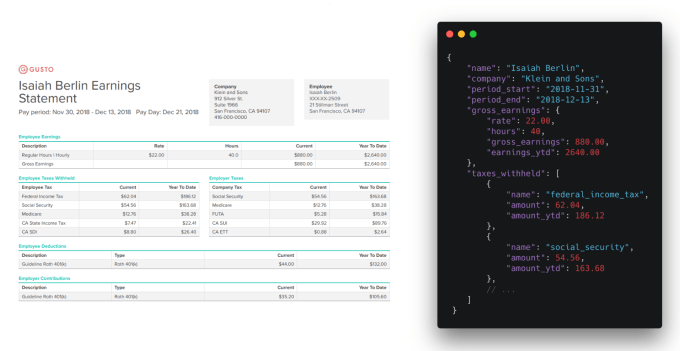
The platform, co-founded by former Uber product manager Minh Tri Pham, turns documents into structured data a computer can understand to accurately automate document processing workflows and to take away the need for human data entry. Docucharm’s API can understand various forms of documents (like paystubs, for example) and will extract the necessary information without error. Its customers include tax prep company Tributi and lending businesses Aspire.

Why we picked Docucharm: Paying high-priced, high-skilled workers to do data entry is a huge waste. And optical character recognition like Docucharm’s will unlock new types of businesses based on data extraction. This startup could be the AI layer underneath it all.

The Flower Co

Flower Co.: Memberships for cheaper weed sales and delivery. Most dispensaries cater to high-end customers and newbies that want expensive products and tons of hand-holding. In contrast, The Flower Co caters to long-time marijuana enthusiasts who want huge quantities for at low prices. They’re currently selling $200k in marijuana per month to 700 members. They charge $100 a year for membership, and take 10% on product sales.

Why we picked The Flower Co: Marijuana is the next gold rush, a once in a generation land grab opportunity. Yet most marijuana merchants have focused on hyper-discerning high-end customers despite the long-standing popularity of smoking big blunts of cheap weed with a bunch of friends. For those who want to make cannabis consumption a lifestyle, and there will be plenty, The Flower Co could become their wholesaler.

Honorable Mentions

Atomic Alchemy – Filling the shortage of nuclear medicine

YourChoice – Omni-gender non-hormonal birth control

Prometheus – Turning CO2 into gas

Lumos – Medical search engine for doctors

Heart Aerospace – Regional electric planes

Boundary Layer Technologies – Super-fast container ships

Additional reporting by Kate Clark, Greg Kumparak, and Lucas Matney

19 Mar 2019

Why convertible notes are safer than SAFEs

As the saying goes, where you stand on an issue often rests on where you sit. Translated into startup law and finance, your views on how to approach fundraising are often heavily influenced by where your company and your investors are located. As a startup lawyer at Egan Nelson LLP (E/N), a leading boutique firm focused on tech markets outside of Silicon Valley — like Austin, Seattle, NYC, Denver, etc. — that’s the perspective I bring to this post. 

At a very high level, the three most common financing structures for startup seed rounds across the country are (i) equity, (ii) convertible notes and (iii) SAFEs. Others have come and gone, but never really achieved much traction. As to which one is appropriate for your company’s early funding, there’s no universal answer. It depends heavily on the context; not just of what the company’s own priorities and leverage are, but also the expectations and norms of the investors you plan to approach. Maintaining flexibility, and not getting bogged down by a rigid one-approach-fits-all mindset is important in that regard.

Here’s the TL;DR: When a client comes to me suggesting they might do a SAFE round, my first piece of advice is that a convertible note with a long maturity (three years) and low interest rate (like 2 percent or 3 percent) will give them functionally the same thing — while minimizing friction with more traditional investors.

Why? Read on for more details.

Convertible notes for smaller seed rounds

Convertible securities (convertible notes and SAFEs) are often favored, particularly for smaller rounds (less than $2 million), for their simplicity and speed to close. They defer a lot of the heavier terms and negotiation to a later date. The dominant convertible security (when equity is not being issued) across the country for seed funding is a convertible note, which is basically a debt instrument that is intended to convert into equity in the future when you close a larger round (usually a Series A). The note’s conversion economics are more favorable than what Series A investors pay, due to the greater risk the seed investors took on.

19 Mar 2019

Apply to be a TC Top Pick at Disrupt San Francisco 2019

Savvy early-stage startup founders are making plans to attend our flagship event, Disrupt San Francisco 2019, on October 2-4 at Moscone North. It’s three jam-packed days of connection, inspiration and discovery that you don’t want to miss. But here’s a hot tip for founders who want to wring every drop of opportunity out of their time at Disrupt. Apply to be a TC Top Pick. It’s easy to do, and it’s free.

Earning our TC Top Picks designation is a highly competitive and curated process. TechCrunch editors will thoroughly review each application and select up to five standout startups in each of the following categories: AI/Machine Learning, Biotech/Healthtech, Blockchain, Fintech, Mobility, Privacy/Security, Retail/E-commerce, Robotics/IoT/Hardware, SaaS and Social Impact & Education.

All TC Top Picks receive a free Startup Alley Exhibition package, prime real estate in the Startup Alley exhibition hall and invitations to VIP events. You’ll also be interviewed by a TechCrunch editor on the Showcase stage. The Top Pick startups garner an intense amount of media and investor attention, which can take your business to the next level. But hey, don’t take our word for it. Take it from someone who experienced the value of applying to TC Top Picks firsthand.

Australia-based Sonder Designs earned a TC Top Pick designation at Disrupt SF 2018. The startup designed a keyboard — using E-Ink technology — and the keyboard’s display changes dynamically based on whatever application or language you use.

In five days, three of which included Disrupt, founder Francisco Serra-Martins reports they held 41 meetings with venture capitalists and 11 meetings with B2B customers. The company received more investor interest than it initially forecasted, which led them to increase the investment round size. They’re currently working on due diligence and closing a $2.2 million round.

Top Picks receive a lot of media attention — the gift that keeps on giving — and that invaluable exposure landed Serra-Martins on the Forbes 30 Under 30 list.

“Being a TC Top Pick at Disrupt San Francisco not only helped us close out an additional $1 million investment for our seed round, it was an incredible opportunity to highlight our technology to an international community and to engage with the San Francisco startup ecosystem,” said Serra-Martins.

That’s some serious ROI, amirite? Looking for more ways to get the most out of your Disrupt experience? Want to win $100,00 in equity-free cash? Apply to compete in Startup Battlefield, our epic startup pitch competition.

You have absolutely nothing to lose and everything to gain. Disrupt San Francisco 2019 takes place on October 2-4, and this is your chance to take your startup to a new level. Apply to our TC Top Pick program today.

Is your company interested in sponsoring or exhibiting at Disrupt SF? Contact our sponsorship sales team by filling out this form.

19 Mar 2019

Cities are getting more serious about micromobility data

Gone are the days when cities and tech startups are constantly at odds with each other. Passport, a mobility management startup, has partnered with Charlotte, N.C., Detroit, MIch., and Omaha, Neb. to create a framework to apply parking principles, data analysis and more to the plethora of shared micromobility services.

“For many cities, the only option has been to impose bans, fees or permit systems intended to cap the number of scooters allowed on their streets,” Passport CEO Bob Youakim told TechCrunch via email. “While this allows cities to temporarily control scooter deployment, there are greater benefits to achieve by aligning with new mobility providers.”

With Passport, those cities will be able to easily analyze scooter usage, parking patterns and curb utilization. Passport also enables cities to implement real-time curbside pricing and payments and better manage scooter placement. The idea is that cities and mobility providers will work better together if there are economic incentives in place.

“Cities already have a well-established system for charging cars to park on the curb and this same solution should be applied to other modes of transportation,” Youakim said. “By charging scooters to park with usage-based pricing, cities can more effectively manage scooters in their communities and naturally balance supply and demand.”

Passport has also partnered with scooter operator Lime to research ways in which a system of flexible parking charges could replace scooter caps.

“This is a prime example of cities and Lime collaborating to both determine the right fleet size through data and jointly achieve mode shift, sustainability and accessibility objectives,” Lime Director of Transportation Partnerships said in a statement.

In Detroit, the city outlined its official pilot program last October, capping the number of scooters each company could deploy at 400. When the scooters first landed in Detroit, they were very concentrated in the greater downtown area, Detroit Chief of Mobility Innovation Mark de la Vergne told TechCrunch via email.

As part of this program, the hope is to continue to increase the availability of scooters in underserved areas, as well as better manage the supply and demand economics.

“I’m very interested to see how these cities can work together to develop a new business/regulatory model that can be scaled nationally,” he said.

Over in Charlotte, the hope is to learn more about how to implement dynamic pricing and encourage people to wear helmets.

“We will be evaluating how this partnership shapes transportation mobility in Charlotte as it relates to e-scooters,” Charlotte Department of Transportation Deputy Director Dan Gallagher said. “As a city we want to be able to provide our community with the best transportation network that provides access to jobs, education, transit and housing.”


19 Mar 2019

Here’s how you’ll access Google’s Stadia cloud gaming service

Google isn’t launching a gaming console. The company is launching a service instead, Stadia. You’ll be able to run a game on a server and stream the video feed to your device. You won’t need to buy new hardware to access Stadia, but Stadia won’t be available on all devices from day one.

“With Google, your games will be immediately discoverable by 2 billion people on a Chrome browser, Chromebook, Chromecast, Pixel device. And we have plans to support more browsers and platforms over time,” Google CEO Sundar Pichai said shortly after opening the conference.

As you can see, the Chrome browser will be the main interface to access the service on a laptop or desktop computer. The company says that you’ll be able to play with your existing controller. So if you have a PlayStation 4, Xbox One or Nintendo Switch controller, that should work just fine. Google is also launching its own controller.

As expected, if you’re using a Chromecast with your TV, you’ll be able to turn it into a Stadia machine. Only the latest Chromecast supports Bluetooth, so let’s see if you’ll need a recent model to play with your existing controller. Google’s controller uses Wi-Fi so that should theoretically work with older Chromecast models.

On mobile, it sounds like Google isn’t going to roll out its service to all Android devices from day one. Stadia could be limited to Pixel phones and tablets at first. But there’s no reason Google would not ship Stadia to all Android devices later.

Interestingly, Google didn’t mention Apple devices at all. So if you have an iPhone or an iPad, don’t hold your breath. Apple doesn’t let third-party developers sell digital content in their apps without going through the App Store. This will create a challenge for Google.

Stadia isn’t available just yet. It’ll launch later this year. As you can see, there are many outstanding questions after the conference. Google is entering a new industry and it’s going to take some time to figure out the business model and the distribution model.

19 Mar 2019

Discount student tickets still available for TC Sessions: Robotics + AI 2019

Here’s a shout-out to students fascinated by the world of robots and artificial intelligence. There’s a limited supply of discounted tickets left for TechCrunch Sessions: Robotics + AI, a one-day conference that takes place at UC Berkeley on April 18. Apply now to reserve your $45 student ticket, and spend a full day learning from the best minds, makers and investors in the business.

What can you expect at TC Sessions: Robotics + AI? A jam-packed day of panel discussions, workshops, Q&As, demos and world-class networking. Here’s a sample:

  • A panel discussion on human-robot interaction with Anca Dragan (UC Berkeley’s Interact Lab), Rana el Kaliouby (Affectiva) and Matt Willis (SoftBank Robotics).
  • A workshop with Eric Migicovsky (Y Combinator): How to Launch a Robotics Startup
  • A Q&A with startup founders gives you the opportunity to ask questions of some of the greatest minds in technology
  • A robot demo by Marc Raibert featuring SpotMini, Boston Dynamic’s latest creation

In a classic “but wait, there’s more” moment, we’re holding back some juicy agenda updates, so keep checking back for the latest.

For students looking for an internship, or a job, in robotics or AI, networking is key. TC Sessions: Robotics + AI draws more than 1,000 of the industry’s top technologists, founders and investors for one powerful day. You’ll have ample opportunity to talk, connect and rub elbows with these dream-makers and game-changers.

You might wonder how you’ll connect with the people you’re most interested in meeting. Good news on that front. We’re making CrunchMatch, TC’s free business match-making service, available to all attendees. The CrunchMatch platform (powered by Brella) helps you find and connect with people based on specific mutual criteria, goals and interests. It makes effective networking easier and more efficient.

Just one month to go before TechCrunch Sessions: Robotics + AI takes place on April 18 at UC Berkeley’s Zellerbach Hall. Apply for your $45 student ticket today and, once we verify your student status, we’ll release your ticket. Can’t wait to see you in Berkeley!

19 Mar 2019

Daily Crunch: 85+ startups launch at YC Demo Day 1

The Daily Crunch is TechCrunch’s roundup of our biggest and most important stories. If you’d like to get this delivered to your inbox every day at around 9am Pacific, you can subscribe here.

1. Here are the 85+ startups that launched at YC’s W19 Demo Day 1

With more than 200 companies, the Winter 2019 class is by far YC’s largest yet. It’s so large, in fact, the accelerator had to change the way it does Demo Day — rather than all pitches happening on one stage, they were split across two stages (the “Pioneer” and “Mission” stages) running in parallel.

We were there, and as we do with each class, we’ve brought back our notes on everything we saw.

2. Apple upgrades the iMac line with boosted processors and graphics

The perennial favorite all-in-one is getting some key upgrades that will narrow the gap between the line and the high-end iMac Pro. The key additions are ninth-generation Intel processors and Radeon Pro Vega graphics.

3. Nvidia AI turns sketches into photorealistic landscapes in seconds

This is MS Paint for the AI age.

4. Atlassian acquires AgileCraft for $166M

AgileCraft provides business leaders with additional insights into the current status of technical projects and helps them understand the bottlenecks, risks and dependencies of these projects.

5. Instagram launches shopping checkout, charging sellers a fee

“Checkout with Instagram” launches today in the U.S. with more than 20 top brands, including Adidas, Kylie Cosmetics and Warby Parker, which will no longer have to direct customers to their websites to make a purchase.

6. Devin Nunes is suing Twitter over mean tweets from parody account of his mom

Simultaneously complaining that Twitter silences its critics while asking Twitter to silence his critics is a curious legal strategy — but it’s par for the course for Nunes.

7. HP built a better version of the Oculus Rift

Lucas Matney says the new HP Reverb is probably the best PC-powered consumer VR headset out there, when balancing price and feature set.

19 Mar 2019

Why a top antitrust lawmaker thinks it’s time to break up Facebook

When the newly-minted chair of a congressional antitrust committee calls you out, it’s probably time to start worrying.

In an op-ed for the New York Times, Rhode Island Representative David N. Cicilline has called on the Federal Trade Commission to look into Facebook’s behavior for potential antitrust violations, citing TechCrunch’s own reporting that the company collected data on teens through a secret paid program among many other scandals.

“After each misdeed becomes public, Facebook alternates between denial, hollow promises and apology campaigns,” Cicilline wrote. “But nothing changes. That’s why, as chairman of the House Subcommittee on Antitrust, Commercial and Administrative Law, I am calling for an investigation into whether Facebook’s conduct has violated antitrust laws.”

Cicilline’s op-ed intends to put pressure on the FTC, a useful regulatory arm that he accuses of “facing a massive credibility crisis” due to its inaction to date against Facebook. And while the FTC is the focus of Cicilline’s call to action, the op-ed provides an insightful glimpse into what Facebook actions are salient for the lawmaker that Bloomberg called “the most powerful person in tech” when he became the ranking member of the House Judiciary’s Subcommittee on Antitrust, Commercial and Administrative Law this year.

That committee, now led by a Democratic party increasingly interested in breaking up big tech as a platform pillar, is a potentially powerful mechanism for antitrust action against the monopolistic power brokers that dominate the Silicon Valley we’ve come to know.

“For years, privacy advocates have alerted the commission that Facebook was likely violating its commitments under the agreement. Not only did the commission fail to enforce its order, but by failing to block Facebook’s acquisition of WhatsApp and Instagram, it enabled Facebook to extend its dominance,” Cicilline wrote, noting a fine must be multiple billions of dollars to impact the massive company at all. As we reported last month, the FTC is reportedly looking at a potentially multi-billion dollar fine but such a costly reprimand has yet to materialize.

The lawmaker also cites Facebook’s “predatory acquisition strategy” in which it buys up potential competitors before they can pose a threat, stifling innovation in the process. Cicilline also views the company’s decision to restrict API access for competing products as “evidence of anticompetitive conduct” from the social giant.

Cicilline also takes a familiar cynical view of Mark Zuckerberg’s recent announcement that Facebook would weave its products together in a move toward private messaging, calling it “a dangerous power grab to head off antitrust action.” That perspective gives us a clear glimpse of the what lies ahead for Facebook faces as the antitrust headwinds pick up around the 2020 presidential race.

“American antitrust agencies have not pursued a significant monopoly case in more than two decades, even as corporate concentration and monopoly power have reached historic levels,” Cicilline wrote.

“It’s clear that serious enforcement is long overdue.”