Author: azeeadmin

08 Mar 2019

SpaceX makes history by completing first private crew capsule mission

SpaceX’s Crew Dragon capsule has safely splashed down in the Atlantic, making it the first privately built crew-capable spacecraft ever to complete a mission to the International Space Station. It’s one of several firsts SpaceX plans this year, but Boeing is hot on its heels with a crew demonstrator of its own — and of course the real test is doing the same thing with astronauts aboard.

This mission, Demo-1, had SpaceX showing that its Crew Dragon capsule, an evolution of the cargo-bearing Dragon that has made numerous ISS deliveries, was complete and ready to take on its eponymous crew.

It took off early in the morning of March 2 (still March 1 on the West coast), circled the Earth 18 times, and eventually came to a stop (relatively speaking, of course) adjacent to the ISS, after which it approached and docked with the new International Docking Adapter. The 400 pounds of supplies were emptied, but the “anthropomorphic test device” known as Ripley — basically a space crash test dummy — stayed in her seat on board.

(It’s also worth noting that the Falcon 9 first stage that took the capsule to the edge of the atmosphere landed autonomously on a drone ship.)

Five days later — very early this morning — the craft disengaged from the ISS and began the process of deorbiting. It landed on schedule at about 8:45 in the morning Eastern time.

It’s a huge validation of NASA’s Commercial Crew Program, and of course a triumph for SpaceX, which not only made and launched a functioning crew spacecraft, but did so before its rival Boeing. That said, it isn’t winner take all — the two spacecraft could very well exist in healthy competition as crewed missions to space become more and more common.

Expect to see a report on the mission soon after SpaceX and NASA have had time to debrief and examine the craft (and Ripley).

08 Mar 2019

Apple could launch augmented reality headset in 2020

According to a new report from Ming-Chi Kuo (via 9to5mac), a reliable analyst on all things Apple, the company has been working on an augmented reality headset and is about to launch the device. This pair of glasses could go into mass production as early as Q4 2019 and should be available at some point during the first half of 2020.

It’s still unclear what you’ll be able to do with this mysterious headset. Kuo says that it’ll work more or less like an Apple Watch. You won’t be able to use the AR headset without an iPhone as it’ll rely heavily on your iPhone.

The glasses will act as a deported display to give you information right in front of your eyes. Your iPhone will do the heavy lifting when it comes to internet connectivity, location services and computing. I wouldn’t be surprised if the AR headset relies on Bluetooth to communicate with your iPhone.

Kuo’s report doesn’t say what you’ll find in the headset. Apple could embed displays and sensors so that the AR headset is aware of your surroundings. An AR device only makes sense if Apple puts sensors to detect things around you.

Apple has already experimented with augmented reality with its ARKit framework on iOS. Developers have been able to build apps that integrate digital elements in the real world, as viewed through your phone cameras.

While many apps have added AR features, most of them feel gimmicky and don’t add any real value. There hasn’t been a ton of AR-native apps either.

One interested use case for augmented reality is mapping. Google recently unveiled an augmented reality mode for Google Maps. You can hold your phone in front of your face to see arrows indicating where you’re supposed to go.

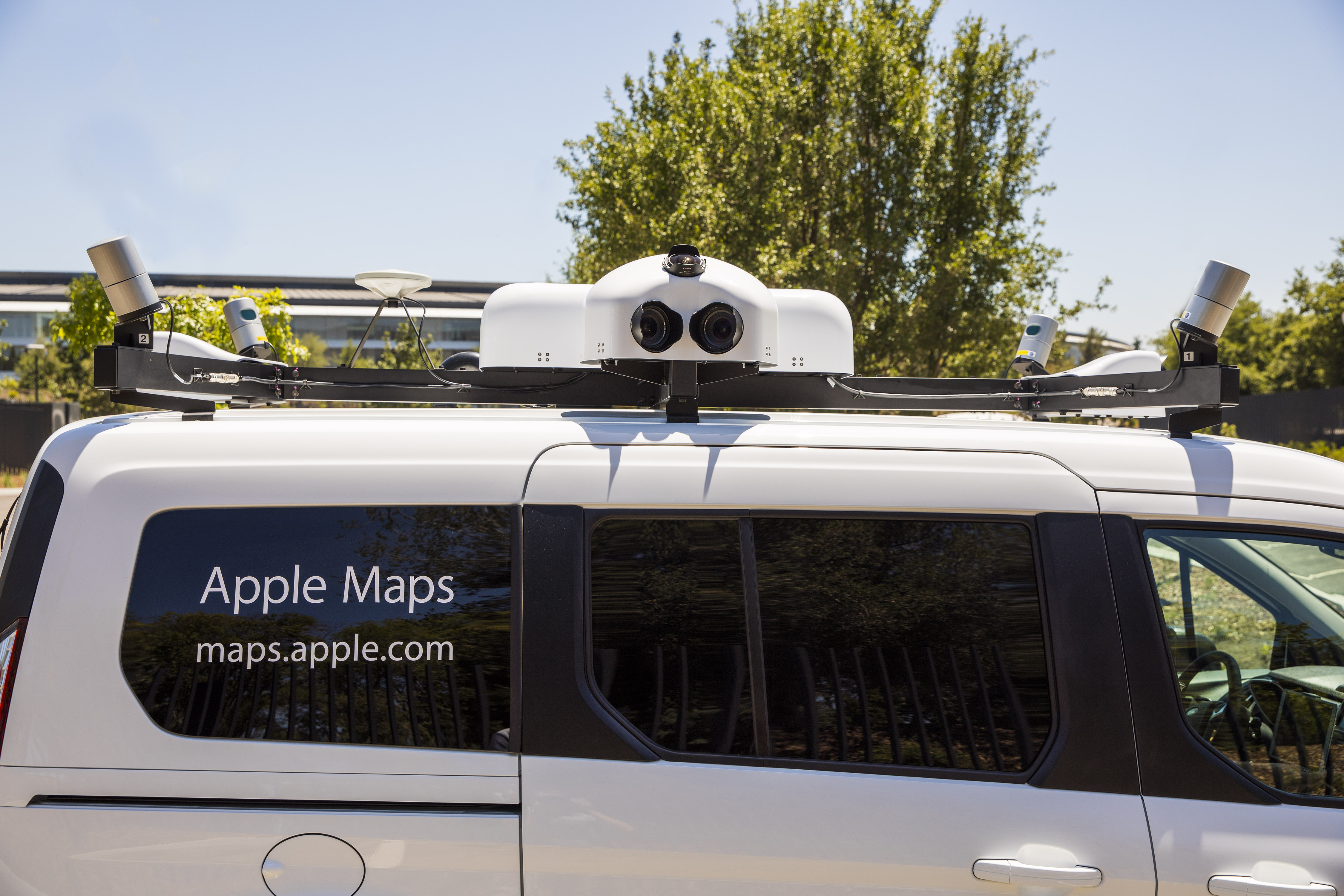
Apple has also been rebuilding Apple Maps with its own data. The company isn’t just drawing maps. It is collecting a ton of real world data using LiDAR sensors and eight cameras attached on a car roof. Let’s see if Apple Maps will play an important part in Apple’s rumored AR headset.

08 Mar 2019

Disney’s forthcoming streaming service will kill the Disney Vault

It looks like the Disney Vault is dead. For years, Disney relied on limited time releases of its films on DVD and Blu-ray to encourage sales. The strategy worked. Consumers snapped up the titles to build out their home video collections. But in more recent years, DVDs have given way to streaming. For Disney, that’s an opportunity to resell its movie library all over again – this time, by way of subscription. At a shareholder meeting week, Disney CEO Bog Iger announced the company’s forthcoming Disney+ streaming service would soon include the “entire Disney motion picture library.”

He clarified that this meant it would house the movies that were previously locked up in the Disney Vault, Polygon reported on Thursday, following the meeting.

“The service, which I mentioned earlier is going to launch later in the year, is going to combine what we call library product, movies, and television, with a lot of original product as well, movies and television. And at some point fairly soon after launch it will house the entire Disney motion picture library, so the movies that you speak of that traditionally have been kept in a vault and brought out basically every few years will be on the service,” said Iger. “And then, of course, we’re producing a number of original movies and original television shows as well that will be Disney-branded.”

There are, of course, movies that aren’t in the “Vault” – they’re no longer being released, period. But most people aren’t worried about whether or not they’ll gain access to Disney’s full historical archives – they’re interested in Disney’s classics as well as its newer films, and its Star Wars, Pixar and Marvel movies. In addition, Disney promises original programming will come to its streaming service, which will make it more attractive to consumers. It will even feature select non-Disney content at launch, to fill out its catalog.

Iger additionally noted that new films would arrive on Disney+ within a year of their release to theaters, and that films Disney is releasing this year – like Captain Marvel – will be included on the service, as well.

Disney+ will launch later this year, Iger also confirmed. But no exact date has been announced.

08 Mar 2019

Digital publisher Serial Box raises $4.5M

Serial Box, a startup bringing back the tradition of serialized fiction, has raised $4.5 million in seed funding.

The company actually disclosed the funding last week, when announcing a partnership to produce stories about Marvel characters, but it’s sharing more details about the round — namely, the fact that it was led by Boat Rocker Media, with participation from Forerunner Ventures, 2929 Entertainment co-founder Todd Wagner and Japanese business intelligence and media firm Uzabase.

“We carefully chose trusted partners for this round of investment,” said co-founder and CEO Molly Barton in a statement. “They see the big opportunity that we do to retool reading for the smartphone age, to take the best elements of traditional book publishing and innovate with influences from the audio, podcast, gaming and TV industries.”

Serial Box publishes stories in text and audio format, broken up into weekly episodes. The first episode of each story is free — then if you’re hooked, you can pay $1.99 for additional episodes or sign up for a season pass.

The idea of making readers and listeners wait for the next chapter of the story may seem strange. Hasn’t Netflix trained us to want to binge the full season, as soon as possible? Maybe, but anyone who’s watched “Game of Thrones” week-to-week knows that there’s still immense pleasure in waiting for smaller chunks of the larger story.

Behind the scenes, the company is borrowing from the TV production model, with a showrunner leading each writing time creating the stories. Serial Box writer include popular YA/science fiction/fantasy authors Gwenda Bond, Yoon Ha Lee, Max Gladstone and Becky Chambers. And as mentioned, the company will also be publishing stories based on Marvel characters, starting with Thor.

The company says it will launch its Android app next week, with plans for more product upgrades and content partnerships in the coming months.

08 Mar 2019

HealthJoy raises $12.5M Series B to help employees make the most of their healthcare benefits

Healthcare in the United States is so complicated that even employees with good benefits might have a hard time navigating their options. HealthJoy wants to help with a health benefits platform that uses AI to answer questions. The Chicago-based startup announced today that it has raised $12.5 million in Series B funding led by U.S. Venture Partners, with participation from Epic Ventures and returning investors Chicago Ventures, Sidekick Ventures and its co-founders.

This brings HealthJoy’s total funding, including a $3 million Series A announced in August 2017, to $9 million. The company will use its Series B to double its team to 250 people over the next 10 months. It currently has about 200,000 users, grew by 610% last year and expects to grow by 250% this year. USVP general partner Jonathan Root will join HealthJoy’s board.

Launched in 2014 by Justin Holland and Doug Morse-Schindler, HealthJoy’s app helps its users manage claims, deductibles, their health savings accounts and prescriptions, in addition to guiding them through point solutions, or specific services offered by a single vendor as part of their benefits package. For example, it might direct members to a telemedicine provider. Holland, HealthJoy’s CEO, told TechCrunch in an email that last year, telemedicine utilization was 27.3 percent across the startup’s entire book of business. He added that telemedicine usually translates into about $450 to $500 in savings per visit by avoiding office visits, urgent care or trips to the emergency room.

As another example of how HealthJoy has helped users, Holland says one employee was spending more than $10,000 every month on maintenance drugs, but that amount was reduced over 90% through strategies including alternative medications, an international pharmacy program and manufacturer assistance. This saved the employee more than $1,000 in out-of-pocket costs and the employer $8,000.

Holland became interested in the health benefits space after he injured his knee while skiing and had to schedule an MRI scan. Since he hadn’t reached the deductible on his individual Affordable Care Act plan yet, Holland needed to pay for the scan out-of-pocket. Researching MRI pricing “took me down a rabbit hole of the incredibly complex and non-transparent world of healthcare pricing,” he said. “At the end of several days of work, I found that two nearly identical MRIs could vary in cost from $500 to $5,000. That pricing disparity in itself seemed like a big problem worth solving.”

Holland and Morse-Schindler already had successful startup exits on their resumes (including OpenInstall, which was acquired by AVG Technologies in 2012, and FreeCause, acquired by Rakuten in 2010). The two decided to tackle the challenge of improving how consumers experience the healthcare system. At first they focused on a direct-to-consumer model with individual health plans, but then pivoted to working with employers in early 2017.

“We found out that our focus on the member was just as applicable to employees and that with increasing deductibles, employees were anxious to become healthcare shoppers. Over 40% of healthcare is considered ‘shoppable,’” Holland said.

Other tech companies focused on improving the health benefits space from different angles include League, Lumity, Lyra Health and Spring Health. Holland views those companies are potential partners for HealthJoy.

“Typically, we are not selling against competitors, but rather selling against lack of utilization for single point solutions” by gathering all services into one platform to increase utilization. “Benefit administration platforms are vital to us from an operational perspective and entirely complementary.”

08 Mar 2019

Elizabeth Warren wants to break up Google, Amazon and Facebook

The influential Massachusetts Senator and Presidential hopeful Elizabeth Warren has been a longtime critic of the consolidation of economic power by Amazon, Google, and Facebook. Now she’s making their break-up a key component of her Presidential platform.

Warren has just released her plan for breaking up big tech, in what seems like a watershed moment for a Democratic nominee. Since Al Gore famously (infamously?) “invented the internet”, Democratic candidates have turned away from serious regulation of technology companies, preferring instead to receive their campaign contributions.

Eric Schmidt and Google donors were hugely important to the Obama campaign, and big tech companies were among his biggest supporters.

Now, Warren has said (on Medium no less) that the massive market power that Google, Facebook, and Amazon wield is a threat and will be treated accordingly.

“Twenty-five years ago, Facebook, Google, and Amazon didn’t exist,” writes Warren. “Now they are among the most valuable and well-known companies in the world. It’s a great story — but also one that highlights why the government must break up monopolies and promote competitive markets.”

The parallel she uses to make her case is the breakup of Microsoft, which she weirdly calls “the tech giant of its time” (Microsoft is still a tech giant), and holds as perhaps the last example when government went toe to toe with the technology industry.

“The government’s antitrust case against Microsoft helped clear a path for Internet companies like Google and Facebook to emerge,” Warren writes.

But now the companies that flourished in the wake of the Microsoft case have, themselves, become too powerful, she argues.

“They’ve bulldozed competition, used our private information for profit, and tilted the playing field against everyone else. And in the process, they have hurt small businesses and stifled innovation,” writes Warren.

The key components of the Warren plan include passing legislation that would designate companies with annual global revenue above $25 billion that provide marketplace, exchange, or third-party connectivity as “platform utilities” and prohibit those companies from owning participants on their platforms.

It’s a dragnet that now encompasses Alphabet and Amazon (but I don’t think it touches Facebook?). The new law would also be required to meet a standard of fair and non-discriminatory use with their users, and platforms would be restricted from sharing user data with third parties.

For companies with revenues below $25 billion, they’d be required to adhere to the fair use standard.

Warren would give state attorneys general and private parties the right to sue a platform for conduct that violates those requirements and the government could fine a company 5% of their annual revenue for violating the terms of the new legislation.

As Warren notes, “Amazon Marketplace, Google’s ad exchange, and Google Search would be platform utilities under this law. Therefore, Amazon Marketplace and Basics, and Google’s ad exchange and businesses on the exchange would be split apart. Google Search would have to be spun off as well.”

The part of Warren’s plan would be the rollback of acquisitions that Warren deems anti-competitive. In Amazon’s case that means Whole Foods and Zappos, would have to be spun back out. Alphabet would have to unwind Google’s acquisitions fo Waze, Nest, and DoubleClick (but not YouTube?), and Facebook would have to part with WhatsApp and Instagram.

“Unwinding these mergers will promote healthy competition in the market — which will put pressure on big tech companies to be more responsive to user concerns, including about privacy,” Warren writes.

Her call for regulation is a big moment for the tech industry, it should also serve as a wake-up call for these companies to do more than just pay lip service to the problems their dominance is causing in the marketplace.


08 Mar 2019

Spotify announces expanded Samsung partnership focused on pre-installs and free trials

In August 2018, Spotify became Samsung’s go-to streaming music service provider following a strategic partnership between the two companies that initially focused on bringing Spotify to Samsung Smart TVs and a deeper connection with Samsung’s assistant technology, Bixby. Today, timed alongside the retail launch of Samsung’s Galaxy S10, the companies are expanding their partnership to make Spotify a pre-installed application on a range of Samsung devices, including the new Galaxy S10, S10+, S10e, S10 5G, as well as the Galaxy Fold and some of Samsung’s lower mid-range Galaxy A devices.

In addition, U.S. consumers buying the new Galaxy S10 will qualify for six months of free Spotify Premium access if they’re new customers, Spotify said.

The two companies had not offered many more details about their partnership plans since the announcement last year, saying only that a lot of discussions were taking place as to what’s next. However, a move to pre-install Spotify on Samsung phones was likely under consideration from day one – especially after the 2016 failure of Samsung’s own Milk Music streaming service, which meant it no longer had its own direct answer to Apple Music.

At the time of Milk Music’s closure, Samsung said it would shift to investing in a partner model for integrating the “best” music services on to its Galaxy family of devices. Later picking Spotify as the strategic partner made sense, as it’s a clear frontrunner in the space and one that’s not operated by a tech giant like Google’s YouTube Music/Google Play Music, Apple Music, or Amazon Music.

The Spotify-Samsung partnership not only means that Spotify now gets deeper integration on devices and services, like Bixby, it could potentially allow the two companies to work together on under the hood, cross-platform integrations, as well. This could benefit Spotify’s ambitious podcasting plans, as listeners could pick up where they left off as they switch between devices. That wouldn’t have necessarily been possible without a device partnership like this.

Spotify says the expanded Samsung partnership will see the music service pre-installed on “millions” of Samsung devices worldwide, starting today, March 8, 2019.

“We were very excited to be named Samsung’s go-to music streaming service several months ago and today’s news will only ensure a more seamless Spotify listening experience across devices for listeners around the world,” said Sten Garmark, VP of Consumer Products, Spotify, in a statement. “This partnership makes it easy for Samsung mobile users to access their favorite music and podcasts on Spotify, wherever they are and however they choose to listen.”

08 Mar 2019

Okta to acquire workflow automation startup Azuqua for $52.5M

During its earnings report yesterday afternoon, Okta announced it intends to acquire Azuqua, a Bellevue, Washington workflow automation startup for $52.5 million.

In a blog post announcing the news, Okta co-founder and COO Frederic Kerrest saw the combining of the two companies as a way to move smoothly between applications in a complex workflow without having to constantly present your credentials.

“With Okta and Azuqua, IT teams will be able to use pre-built connectors and logic to create streamlined identity processes and increase operational speed. And, product teams will be able to embed this technology in their own applications alongside Okta’s core authentication and user management technology to build…integrated customer experiences,” Kerrest wrote.

In a modern enterprise, people and work are constantly shifting and moving between applications and services and combining automation software with identity and access management could offer a seamless way to move between them.

This represents Okta’s largest acquisition to-date and follows Stormpath almost exactly two years ago and ScaleFT last July. Taken together, you can see a company that is trying to become a more comprehensive identity platform.

Azuqua, which had raised $16 million since it launched in 2013, appears to have given investors  a pretty decent return. When the deal closes, Okta intends to bring its team on board and leave them in place in their Bellevue offices, creating a Northwest presence for the San Francisco company. Azuqua customers include Airbnb, McDonald’s, VMware and Hubspot,

Okta was founded in 2009 and raised over $229 million before going public April, 2017.

08 Mar 2019

Samsung’s very good Galaxy S10 is now on sale

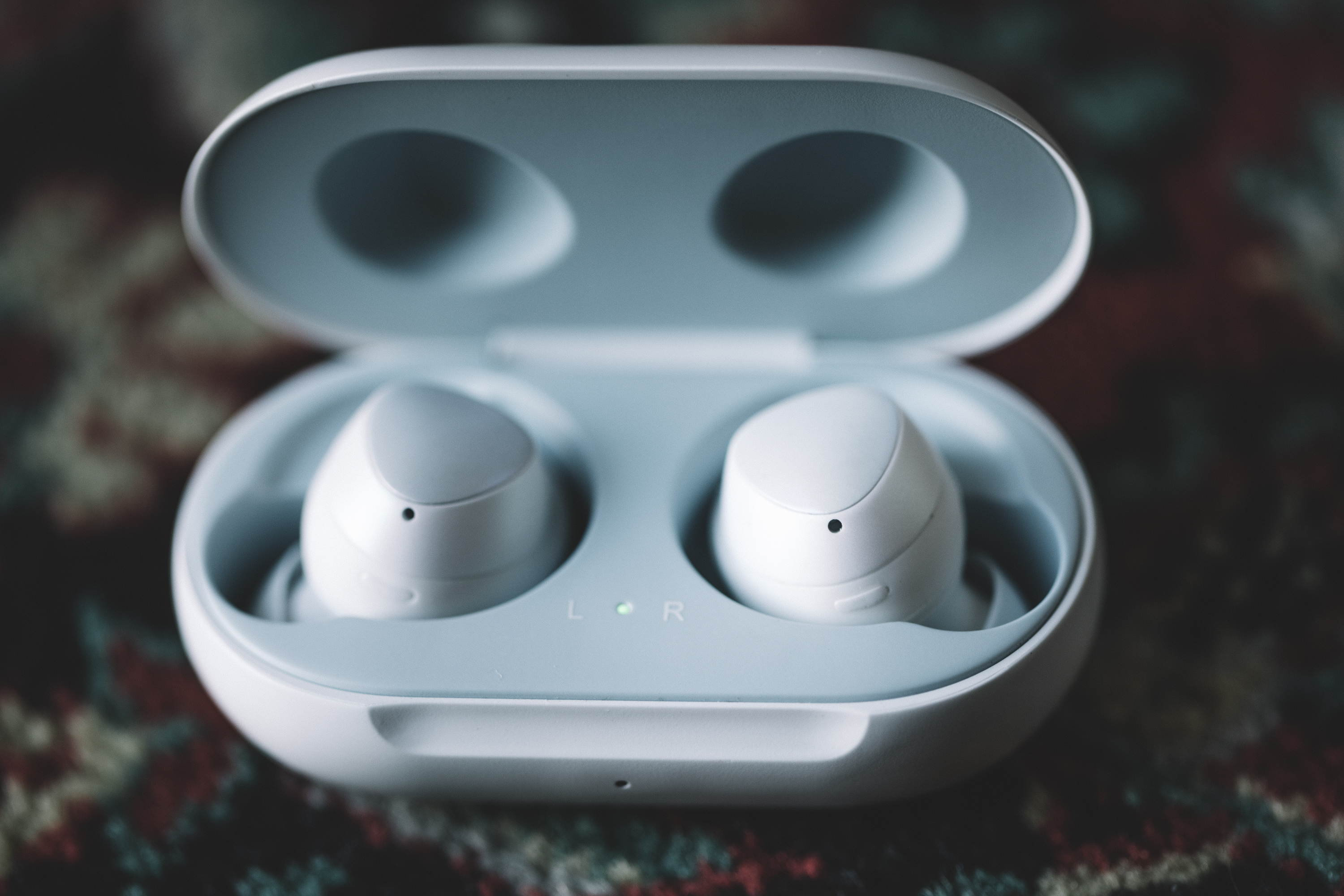
The Galaxy S10’s pre-sales were, by all accounts, quite brisk. In fact, the company ran out of the free Galaxy Buds its was bundling with the handset. That’s good news all around for Samsung, after sales for the S9 were reported to be fairly light.

For those waiting for the reviews — or simple wanting to pick one up in-store — the handsets are hitting retail today, and the company’s still offering up some extra perks. The big one is six months of free premium Spotify for “qualified purchases.” That news comes as the company announced that it will be bundling the music app on its devices.

A return to bloatware or strategic partnership in the fight against Apple? Poe-tay-toe, poe-tah-toe, I guess.

As for which purchases qualify, that will vary from region to region and carrier to carrier. There’s a LOT of fine print over here, if you’d like to see if you qualify. As it notes,

This Premium and Samsung 6 Month Trial Offer is available for a limited period only and must be redeemed before any applicable date advertised. Spotify reserves the right to modify or to earlier terminate this Premium and Samsung 6 Month Trial Offer at any time and for any reason. After such time, Spotify shall not be obligated to redeem any further attempts to take up this offer.

In addition to the S10, S10+ and S10e, the company’s new wearables, the Galaxy Watch Active and Galaxy Buds are also now available through Samsung’s site and retail channels.

08 Mar 2019

Changes at YC, $1.5B more for ride hailing, and Airbnb buys HotelTonight

Hello and welcome back to Equity, TechCrunch’s venture capital-focused podcast, where we unpack the numbers behind the headlines.

We’re back to basics this week with Kate Clark at the helm, Alex Wilhelm in the sidecar, and a stack of venture capital news and happenings to get through. And to make everyone feel included, we kicked off the episode with a roll-call of new VC funds.

Then, of course, we dug into the recent news out of Y Combinator . The famed accelerator is shopping around for a San Francisco HQ, signaling the end of an era where Silicon Valley ruled the world as home to YC and other the top-tier venture funds that have since moved South to The City by the Bay.

Next up was the new Grab round, a fresh $1.46 billion from the Vision Fund into what TechCrunch noted is now a $4.5 billion Series H. Amazingly, we’ve typed that out correctly. Grab, now topped up with about $8.8 billion in capital raised is not the ride-hailing shop that has raised the most capital, though it does round out the top three.

Next, Alex wanted to talk about Chime. Kate isn’t too big on fintech, but the $200 million round into the neo-bank brought its total capital raised to $300 million. That’s a lot of coin for the company which grew its accounts from one million last year, to three million. (Don’t forget that Acorns raised $105 million earlier this year.)

Changing gears, the Latin American scene, already hotting up, is going to get even warmer with the arrival of a new $2 billion fund from SoftBank . Called the SoftBank Innovation Fund, the Japanese telecom giant wants to raise a total of $5 billion to invest in emerging markets across South America. I know what you’re thinking: damn, that’s a lot of cash. Yes, yes it is.

Finally this week, hours before we hit record, Airbnb agreed to acquire the popular hotel booking app HotelTonight for what’s reported to be about a flat price to its last valuation (~$465 million). The deal made us wonder if the Airbnb IPO could be delayed due to the roughly half-billion deal (provided that reports bear out). We haven’t confirmed the transaction price, so more from us when we have it. Also, this is hardly Airbnb’s first buy.

That and we had fun. See you all in seven days!

Equity drops every Friday at 6:00 am PT, so subscribe to us on Apple PodcastsOvercast, Pocket Casts, Downcast and all the casts.