
Author: azeeadmin

07 Mar 2019

The Khashoggi murder isn’t stopping SoftBank’s Vision Fund

Money talks in the startup community, especially when SoftBank comes knocking with the megabucks of its Vision Fund.

Despite the public outcry around the firm’s dependence on money from Saudi Arabia in the wake of that country’s assassination of Washington Post journalist Jamal Khashoggi, deal flow for Softbank’s Vision Fund appears to be back to normal.

The $100 billion megafund has done 21 deals over the last two quarters, that’s as more than in the other quarters of the previous year combined, according to data from Crunchbase, thanks to an uptick from Asia. Since the October 2 murder, there have been 11 investments in U.S. companies, seven in Asia, two in Europe and one in Latin America. Just this week, the fund completed a near $1.5 billion investment in Southeast Asia-based ride-hailing company Grab.

While U.S. and European firms have more options, and therefore, perhaps deserve more scrutiny, Softbank’s cash is increasingly the only game in town for startups in Asia, where there are fewer alternatives for later stage capital outside of large Chinese private equity firms or tech giants — which come with their own risks.

The Vision Fund is seen by some critics as tainted money for its links to the Saudi Royal family. Saudi Arabia’s Public Investment Fund (PIF) is the fund’s anchor investor and it is controlled by Crown Prince Mohammed bin Salman, who has been strongly linked with the murder of Saudi journalist Jamal Khashoggi, an outspoken critic of the regime.

Khashoggi, a Washington Post columnist, was murdered on October 2 after he entered the Saudi consulate in Istanbul. His visit was part of an effort to obtain divorce documents in order to marry his fiancée, but it ended with his apparently gruesome death. Audio clips suggest he was beheaded, dismembered, and had his fingers severed before his body was dissolved in acid, although new reports suggest it may have been burned.
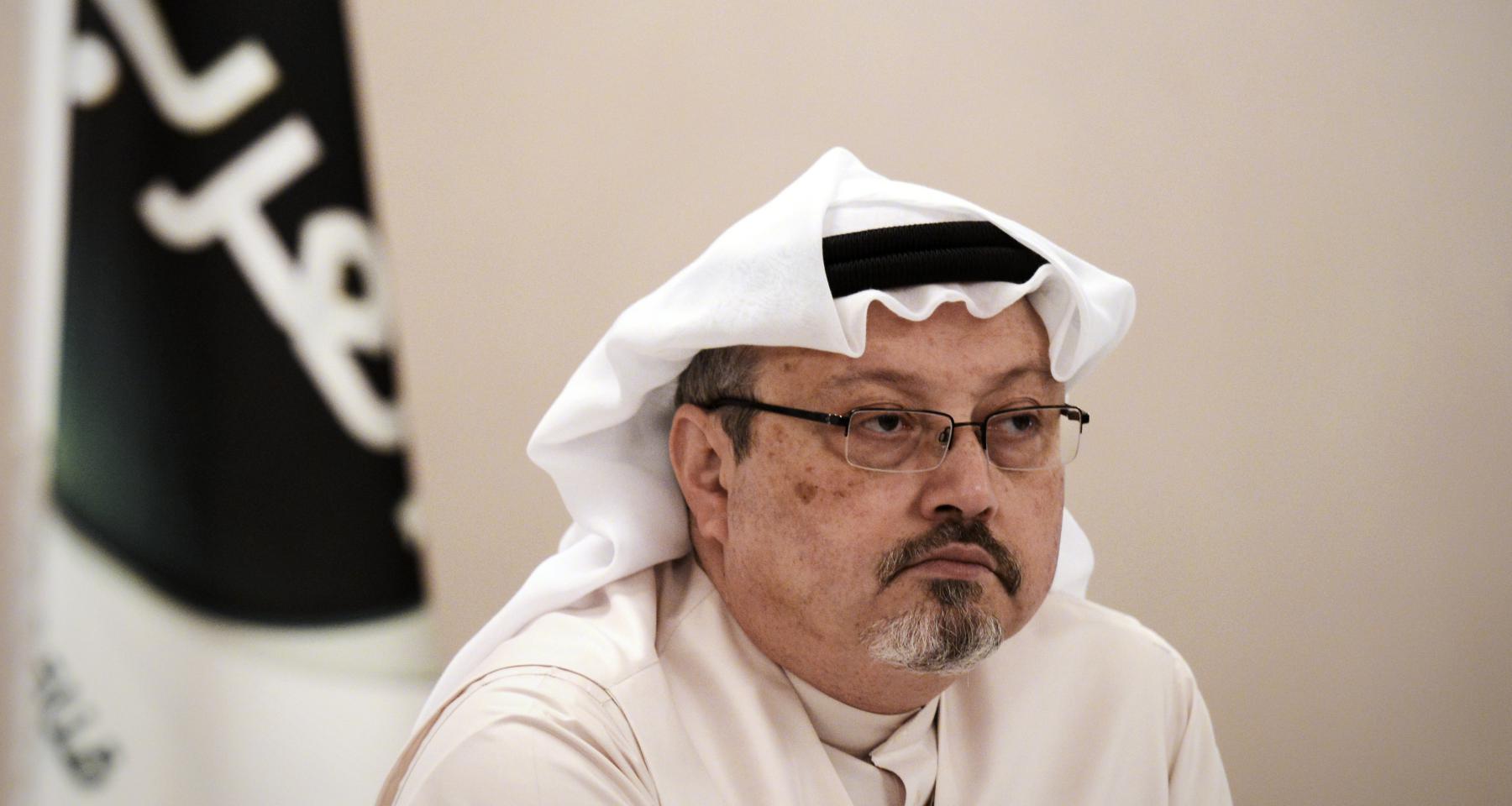
Jamal Khashoggi — pictured in 2014 — was murdered in the Saudi consulate in Istanbul last year [Photographer: Ohammed Al-Shaikh/AFP/Getty Images]

The Vision Fund is designed to finance ‘global winners’ which, like all investment funds, is set up to provide ‘unfair advantages’ to help its companies grow into hugely important businesses. On the financial end, as is the norm, it is built to provide handsome returns to the LPs, thus directly boosting the coffers of the PIF, the Saudi kingdom, and by extension the Saudi prince himself.

An investigation is going, but there’s already plenty of evidence to suggest that the murder happened at the request of the prince.

Sources within the U.S. State Department have reportedly said it is “blindingly obvious” that the Crown Prince ordered the killing — he reportedly threatened to shoot Khashoggi one year before. But, now that the apparent period of outrage is over, SoftBank has reverted back to writing checks and companies are taking them in spite of the links to Saudi Arabia.

For startups, the money flow means that a major source of capital for growth or subsidies for customers comes from the Saudi royal family’s pockets — a regime that would reportedly not hesitate to murder a critical voice.
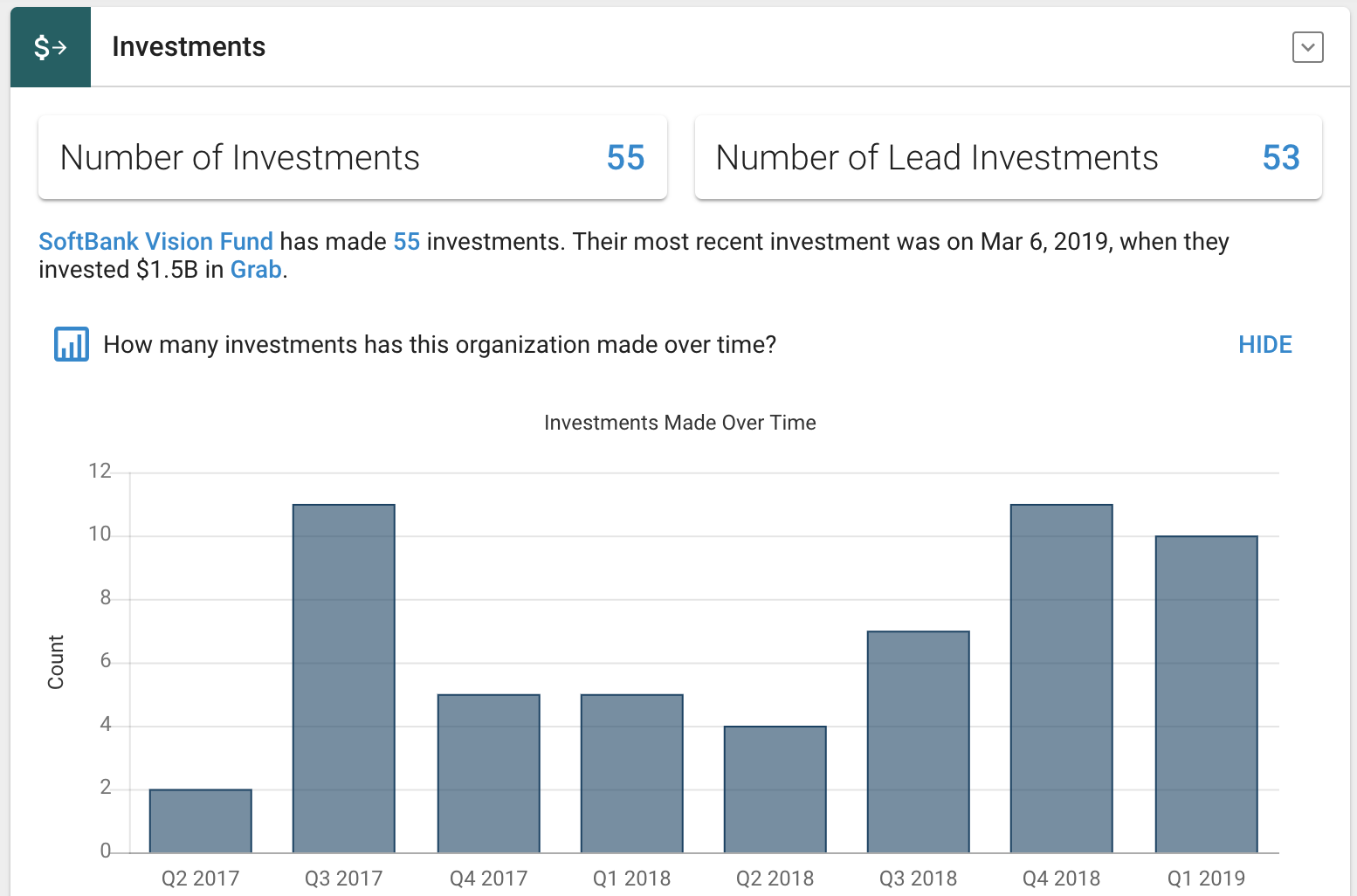
SoftBank’s Vision Fund has ramped up its deals over the past six months, according to data from Crunchbase

What are the companies saying?

SoftBank itself said it has a commitment to “the people” of Saudi Arabia that will see it deploy its capital unchanged, although Chairman Masayoshi Son did concede that he will wait on the findings of the investigation into the murder before deciding on whether PIF will be involved in a second Vision Fund.

The founders taking the capital have been more cautious. When questioned, executives talk about the specifics of their deal and their growth plans, most defer issues on the management of LPs, like PIF, to SoftBank. While offering words in support of the ongoing murder investigation, they manage to say little about the ethics of taking money from the Saudi regime.

Bom Kim, CEO of Korean e-commerce company Coupang — which raised $2 billion from the Vision Fund — told TechCrunch in November that the allegations around the murder “don’t represent us and don’t represent [Vision Fund] companies.”

“We are deeply concerned by the reported events and alongside SoftBank are monitoring the situation closely until the full facts are known,” Tokopedia CEO William Tanuwijaya told TechCrunch in December after the Vision Fund co-led a $1.1 billion round.
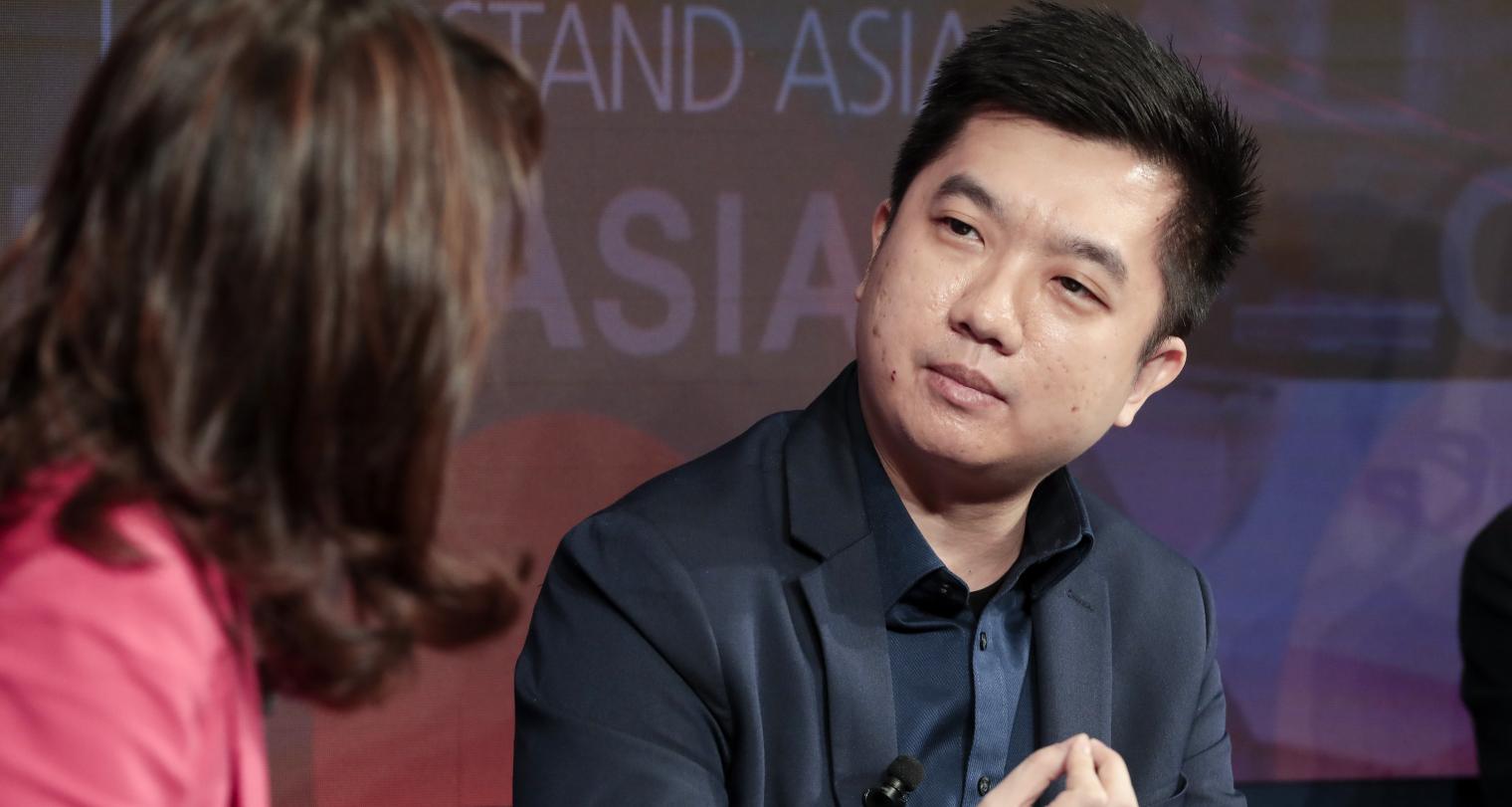
William Tanuwijaya is the co-founder and CEO of Tokopedia [Photographer: Jason Alden/Bloomberg]

OYO, the budget hotel network based out of India, did not respond to a request comment sent the day before this story was published. The startup raised $1 billion led by the Vision Fund in September.

TechCrunch was also unable to get a response to questions sent to Chehaoduo, the Vision Fund’s first China-based startup which raised $1.5 billion in February. The company is notable for being the only one of this group that didn’t count SoftBank as an existing investor prior to its Vision Fund deal.

The latest addition to the collection is Grab, the ride-hailing company in Southeast Asia that’s led by CEO Anthony Tan, who is very publicly a devout Christian. In a statement sent to TechCrunch this week, Grab defended its relationship with SoftBank, which first invested in Grab back in 2014:

What happened to Jamal Khashoggi was obviously horrible. We hope whoever is responsible is held accountable. We are not in a position to comment on behalf of SoftBank but from our perspective Son-san and the entire SoftBank team have brought so much value to the table for Grab – beyond just financing. They have brought advice, mentorship and potential business opportunities. The Vision Fund is about investing for the next 100 or 200 years and investing in trends that will move the needle for humanity in positive ways. This is a lofty and ultimately positive goal.
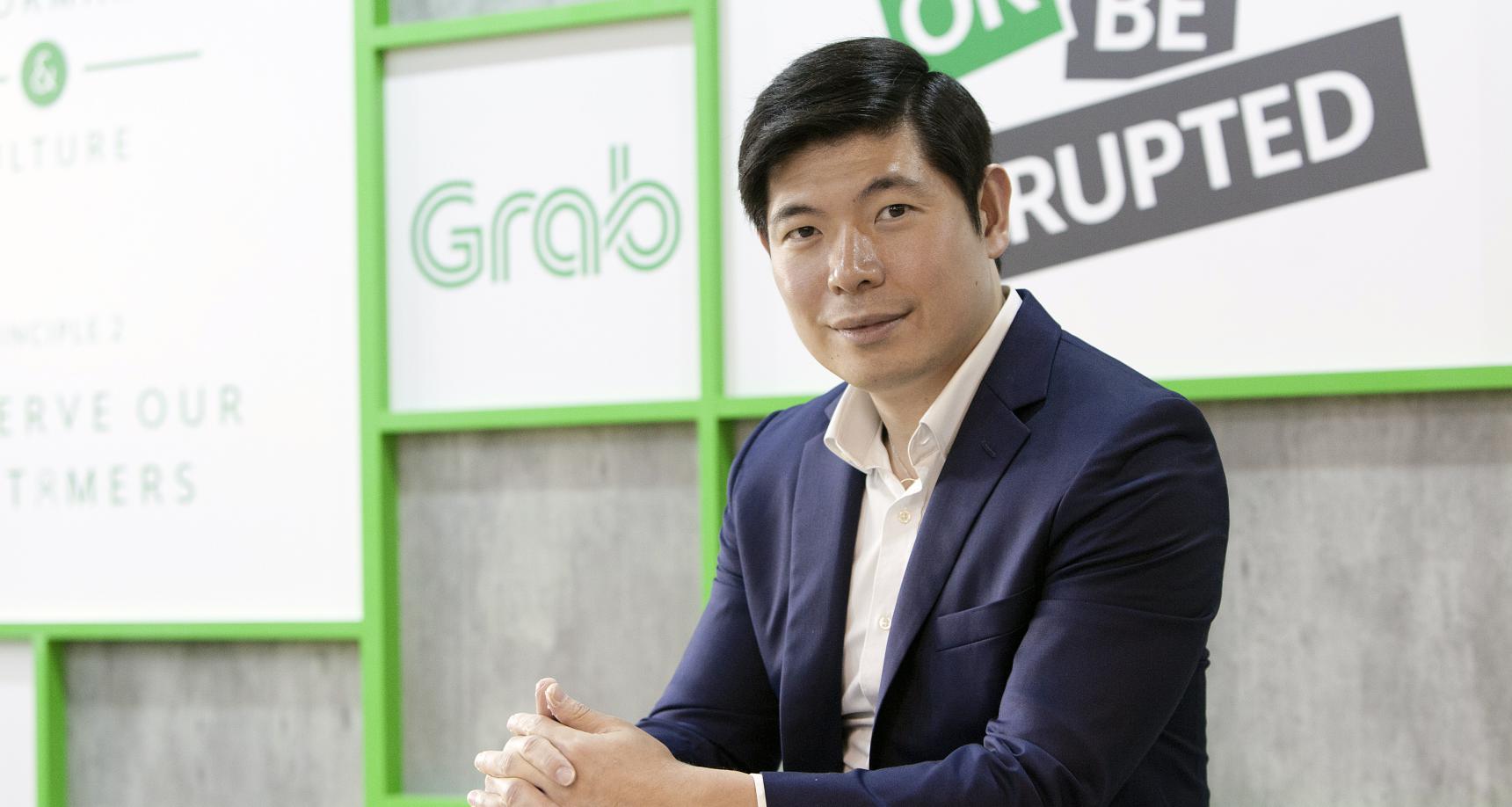
Anthony Tan is the co-founder and chief executive officer of Grab [Photographer: Ore Huiying/Bloomberg/Getty Images]

The Vision Fund is just getting started in Asia, however, with rumors suggesting it is planning to open offices in China and India. Singapore is presumably on that list, too, while the fund has been busy hiring a general team that will operate globally out of the U.S.

To date, the fund’s focus in Asia has been on some of the region’s largest (highest-valued) companies, but as it develops a local presence it is likely to seek out less obvious deals to grow its portfolio. That’s going to mean this question of ethics and conscience around the Vision Fund’s capital will present itself to more founders in Asia. Going on what we’ve seen so far, most will have no problem taking the money and issuing platitudinous statements.

Privately, VCs in the region who I have canvassed have told me that founders have little choice but to take the Vision Fund’s money. They explain that nobody else can offer billion-dollar-sized checks, while SoftBank is an existing investor in many of them already which gives it additional leverage. The fund also takes the aggressive approach of threatening to back rival companies if it doesn’t get the deals it wants, as we saw when Son said he’d consider a deal with Lyft when its Uber investment was uncertain.

That reality may be true — finding an alternative to a hypothetical $1 billion Vision Fund check is a daunting challenge — but we’ve reached a very sad time and place when the sheer size of an investment overrides important concerns about where that money came from.


07 Mar 2019

The Khashoggi murder isn’t stopping SoftBank’s Vision Fund

Money talks in the startup community, especially when SoftBank comes knocking with the megabucks of its Vision Fund.

Despite the public outcry around the firm’s dependence on money from Saudi Arabia in the wake of that country’s assassination of Washington Post journalist Jamal Khashoggi, deal flow for Softbank’s Vision Fund appears to be back to normal.

The $100 billion megafund has done 21 deals over the last two quarters, that’s as more than in the other quarters of the previous year combined, according to data from Crunchbase, thanks to an uptick from Asia. Since the October 2 murder, there have been 11 investments in U.S. companies, seven in Asia, two in Europe and one in Latin America. Just this week, the fund completed a near $1.5 billion investment in Southeast Asia-based ride-hailing company Grab.

While U.S. and European firms have more options, and therefore, perhaps deserve more scrutiny, Softbank’s cash is increasingly the only game in town for startups in Asia, where there are fewer alternatives for later stage capital outside of large Chinese private equity firms or tech giants — which come with their own risks.

The Vision Fund is seen by some critics as tainted money for its links to the Saudi Royal family. Saudi Arabia’s Public Investment Fund (PIF) is the fund’s anchor investor and it is controlled by Crown Prince Mohammed bin Salman, who has been strongly linked with the murder of Saudi journalist Jamal Khashoggi, an outspoken critic of the regime.

Khashoggi, a Washington Post columnist, was murdered on October 2 after he entered the Saudi consulate in Istanbul. His visit was part of an effort to obtain divorce documents in order to marry his fiancée, but it ended with his apparently gruesome death. Audio clips suggest he was beheaded, dismembered, and had his fingers severed before his body was dissolved in acid, although new reports suggest it may have been burned.

Jamal Khashoggi — pictured in 2014 — was murdered in the Saudi consulate in Istanbul last year [Photographer: Ohammed Al-Shaikh/AFP/Getty Images]

The Vision Fund is designed to finance ‘global winners’ which, like all investment funds, is set up to provide ‘unfair advantages’ to help its companies grow into hugely important businesses. On the financial end, as is the norm, it is built to provide handsome returns to the LPs, thus directly boosting the coffers of the PIF, the Saudi kingdom, and by extension the Saudi prince himself.

An investigation is going, but there’s already plenty of evidence to suggest that the murder happened at the request of the prince.

Sources within the U.S. State Department have reportedly said it is “blindingly obvious” that the Crown Prince ordered the killing — he reportedly threatened to shoot Khashoggi one year before. But, now that the apparent period of outrage is over, SoftBank has reverted back to writing checks and companies are taking them in spite of the links to Saudi Arabia.

For startups, the money flow means that a major source of capital for growth or subsidies for customers comes from the Saudi royal family’s pockets — a regime that would reportedly not hesitate to murder a critical voice.

SoftBank’s Vision Fund has ramped up its deals over the past six months, according to data from Crunchbase

What are the companies saying?

SoftBank itself said it has a commitment to “the people” of Saudi Arabia that will see it deploy its capital unchanged, although Chairman Masayoshi Son did concede that he will wait on the findings of the investigation into the murder before deciding on whether PIF will be involved in a second Vision Fund.

The founders taking the capital have been more cautious. When questioned, executives talk about the specifics of their deal and their growth plans, most defer issues on the management of LPs, like PIF, to SoftBank. While offering words in support of the ongoing murder investigation, they manage to say little about the ethics of taking money from the Saudi regime.

Bom Kim, CEO of Korean e-commerce company Coupang — which raised $2 billion from the Vision Fund — told TechCrunch in November that the allegations around the murder “don’t represent us and don’t represent [Vision Fund] companies.”

“We are deeply concerned by the reported events and alongside SoftBank are monitoring the situation closely until the full facts are known,” Tokopedia CEO William Tanuwijaya told TechCrunch in December after the Vision Fund co-led a $1.1 billion round.

William Tanuwijaya is the co-founder and CEO of Tokopedia [Photographer: Jason Alden/Bloomberg]

OYO, the budget hotel network based out of India, did not respond to a request comment sent the day before this story was published. The startup raised $1 billion led by the Vision Fund in September.

TechCrunch was also unable to get a response to questions sent to Chehaoduo, the Vision Fund’s first China-based startup which raised $1.5 billion in February. The company is notable for being the only one of this group that didn’t count SoftBank as an existing investor prior to its Vision Fund deal.

The latest addition to the collection is Grab, the ride-hailing company in Southeast Asia that’s led by CEO Anthony Tan, who is very publicly a devout Christian. In a statement sent to TechCrunch this week, Grab defended its relationship with SoftBank, which first invested in Grab back in 2014:

What happened to Jamal Khashoggi was obviously horrible. We hope whoever is responsible is held accountable. We are not in a position to comment on behalf of SoftBank but from our perspective Son-san and the entire SoftBank team have brought so much value to the table for Grab – beyond just financing. They have brought advice, mentorship and potential business opportunities. The Vision Fund is about investing for the next 100 or 200 years and investing in trends that will move the needle for humanity in positive ways. This is a lofty and ultimately positive goal.

Anthony Tan is the co-founder and chief executive officer of Grab [Photographer: Ore Huiying/Bloomberg/Getty Images]

The Vision Fund is just getting started in Asia, however, with rumors suggesting it is planning to open offices in China and India. Singapore is presumably on that list, too, while the fund has been busy hiring a general team that will operate globally out of the U.S.

To date, the fund’s focus in Asia has been on some of the region’s largest (highest-valued) companies, but as it develops a local presence it is likely to seek out less obvious deals to grow its portfolio. That’s going to mean this question of ethics and conscience around the Vision Fund’s capital will present itself to more founders in Asia. Going on what we’ve seen so far, most will have no problem taking the money and issuing platitudinous statements.

Privately, VCs in the region who I have canvassed have told me that founders have little choice but to take the Vision Fund’s money. They explain that nobody else can offer billion-dollar-sized checks, while SoftBank is an existing investor in many of them already which gives it additional leverage. The fund also takes the aggressive approach of threatening to back rival companies if it doesn’t get the deals it wants, as we saw when Son said he’d consider a deal with Lyft when its Uber investment was uncertain.

That reality may be true — finding an alternative to a hypothetical $1 billion Vision Fund check is a daunting challenge — but we’ve reached a very sad time and place when the sheer size of an investment overrides important concerns about where that money came from.
07 Mar 2019

Tesla’s new Supercharger slashes charging times

Tesla is rolling out a third generation Supercharger that is designed to dramatically cut charging times for its electric vehicles as it seeks to keep its edge over new competitors.

The V3 Supercharger, which was unveiled Wednesday at the company’s Fremont, California factory, supports a peak rate of up 250 kilowatts on the long range version of the Model 3. At this rate, the V3 can add up to 75 miles of range in 5 minutes, Tesla said.

Improvements to charging times are critical for the company as it sells more Model 3 vehicles, its highest volume car. Wait times at some popular Supercharger stations can be lengthy. Early adopters might have been content to wait, but as new Tesla customers come online that patience could dwindle.

Tesla says its improvements will allow the Supercharger network to serve more than twice as many vehicles per day at the end of 2019 compared with today.

The V3 is not a retrofit of the company’s previous generations. It’s an architecture shift that includes a new 1 MW power cabinet, similar to the company’s utility-scale products, and a liquid-cooled cable design, that enables charge rates of up to 1,000 miles per hour. Tesla uses air-cooled cable on V2 Superchargers.

The new power cabinet will provide a dedicated 250 kW to four Superchargers. This means that vehicles will no longer power share when charging.

Tesla announced other improvements in a blog post, including ones aimed at improving charging rates for its Model S and Model vehicles. When combined with the V3 Supercharger, the time spent charging is slashed by an average of 50 percent, Tesla said.

A new software feature called “On Route Battery Warmup” will also be released for all vehicles. This update prepares the battery pack to accept that vehicle’s peak power for the longest possible time, reducing average charge time by 25 percent, the company said.

Tesla plans to open thousands of V2 and V3 Superchargers in 2019. The V3 stations, which Tesla will begin installing in April, will be placed where there’s the highest use. Tesla has more than 12,000 Superchargers across North America, Europe, and Asia, according to the company.

Tesla plans to update its V2 Superchargers as well to provide a new peak charge rate of 145kW for single-vehicle charging.

Tesla will roll out V3 Supercharging to the wider fleet of vehicles — meaning beyond the long range Model 3s — to all owners in the second quarter. The company plans to ramp up V3 installations in North America in the second and third quarters. The V3 installations will begin in Europe and Asia-Pacific in the fourth quarter.

07 Mar 2019

Raisin, the marketplace for savings and investment products, acquires German banking provider MHB Bank

Hot on the heels of raising $114 million in Series D funding, Raisin, the pan-European fintech marketplace for savings and investment products, has acquired MHB Bank of Frankfurt, its main provider of banking services in Germany. Terms of the acquisition remain undisclosed and the deal is still subject to regulatory approval. However, the moves signals a stepping on the gas for Raisin’s geographical and product expansion ambitions.

In a call, Raisin CEO and founder Tamaz Georgadze explained that MHB Bank provides Raisin’s banking services in its largest market Germany. This sees the bank provide Raisin with account management and customer identification, as well as powering transactions — services that require an underlying banking license.

By purchasing the bank, Raisin can bring a key part of its infrastructure in-house and also utilise the full bank license to “passport” its various financial services, including its deposits marketplace and ETF-based investment product, to other European Economic Area (EEA) countries, faster.

Georgadze says that not having a banking license has been a bottleneck to Raisin launching in more countries across Europe. Although available to customers across the EU from the get-go, Raisin has dedicated local market offerings in the Netherlands, U.K., and of course Germany.

In addition, Georgadze says the acquisition will enable Raisin to streamline the on-boarding process for deposit banks as well as distribution partnerships, such as the ones it has with O2 Banking of Telefónica Germany and challenger bank N26.

“With the changes this takeover makes possible, we will be able to offer better services more sustainably to our customers and partners,” says Georgadze. “We want to grow ‘deposits as a service’ into a widely accepted market standard for banks across Europe”. As part of this, Raisin will invest heavily in the underlying technology powering MHB Bank’s banking service, which should also benefit the bank’s other customers, which includes CreditShelf and Exporo.

Originally founded in 2013, Raisin set out to open up the savings deposit market in Europe by taking advantage of EU-wide banking regulation, which goes some way to creating a financial services single market. Specifically, the problem the startup solves is that saving deposit rates differ not only from one local bank offer to another but more noticeably across Europe as a whole.

The Raisin marketplace lets you shop around and compare different rates European-wide. However, the key difference to a comparison site is that, via its own bank partner, the company offers consumers a single interface that includes account opening and anti-money laundering checks, making it easy to switch and continually ensure you get a competitive interest rate.

For the banks that integrate with the Raisin marketplace, especially smaller and midsize banks, including challengers, they get exposure to customers across Europe that might otherwise never be reached. It also gives them potential access to many more deposits, which helps with their own balance sheet lending and scale.

Notably — and relevant to the announced acquisition of MHB Bank — Georgadze tells me Raisin intends to continue using Starling Bank in the U.K. for its banking services, especially in light of Brexit. MHB Bank will be used to service Raisin accounts in Germany and elsewhere in the EAA.

Meanwhile, Raisin is disclosing that it currently has more than 165,000 customers, who can choose from over 250 products offered by nearly 70 European banks. These are accessible via the fintech’s seven “platforms,” including via Raisin’s direct-to-consumer sites and within the offerings of its distribution partners. The fintech’s investors include Index Ventures, PayPal, Ribbit Capital and Thrive Capital.

07 Mar 2019

Taxify rebrands as Bolt to expand its transport options beyond private cars

Taxify, the ride-hailing company from Estonia backed by Didi and Daimler and now active in 30 countries, is making a key shift in its business today as it gears up for its next stage of growth. The company is removing “taxi” from its name and rebranding as Bolt, the same name that it has been using for its new electric scooter service, to double down on providing multiple transportation options beyond private cars.

The shift in name and vision comes as the company has started talks for another round of funding, TechCrunch has learned.

Bolt last raised money in May 2018, when it closed a $175 million round at a $1 billion valuation led by Daimler. CEO and co-founder Markus Villig confirmed in an interview in London this week that the next big growth round will be coming in at a higher price tag — he referred to the $1 billion post-money valuation from the last round as a “good start” — in part because Bolt has expanded quite a bit in the interim: it had 10 million users in 25 countries back then; now, it has 25 million users in 30 countries now across Europe, Africa, and other territories.

The rebrand from Taxify to Bolt is serving a few purposes, Villig said. Tapping the basic meanings of “bolt”, the new name implies speed, as well as electricity.

“We are bullish that the future is fully electric and so we wanted a name that moved us away from the combustion engine,” he said.

Putting future engine technology to one side, the move away from using “taxi” in the name also underscores how the startup intends to widen its remit to cover more than just car-based rides. Cars may make up the vast majority of Bolt’s service today, but the plan is to add more scooters, other individual transport modes, and soon public transport links, he said, not unlike CityMapper’s multi-modal approach. “The old name was too restrictive.”

Bolt’s growth — Villig describes it as the solid number-two in the European ride hailing market after Uber in terms of rides and revenues — has not been without its bumps.

Key among those challenges is that the company has yet to launch a full service in the UK, and specifically London, the biggest ride-hailing market in Europe. Its efforts to come to London stretch back to 2017, during what was probably the height of tension between its chief rival Uber and London regulators. Tired of waiting for its operating license to get approved, Taxify tried to circumvent the process by buying a small firm that already had one and launched services that way. But the regulators were in no mood for funny business: after a mere three days of service, it got shut down.

Since then, Taxify (and now Bolt) has been quietly, and patiently, working on getting a license and approval to operate on its own steam.

“We hope to get going in the next couple of months in London,” Villig said.

That could, confusingly, involve yet another brand. At the end of last year, Taxify rebranded its London app as “Hopp” and started to accept driver sign-ups, but no passengers. It’s not clear whether Hopp will also now rebrand as Bolt, or how it will get used, but at the moment I’m seeing Hopp branding across several areas of the new Bolt site.

While London — and other tense markets for ridesharing startups like Spain and Germany — have all remained elusive, Bolt has used its home base of Estonia to edge into a number of other territories where rules have been less stringent and competition less fierce, including “most of the Central and Eastern European markets.” Sweden is the next country on its launch list, he added.

Driving to the beat of a different drum

To the ordinary passenger or driver, Bolt might look a lot like many other ride-hailing apps you might know such as Uber, but behind the scenes, the two have taken very different tracks when it comes to launching and growing services.

While Uber has pursued a strategy of global domination and (over the years) spending and launching aggressively to gain first-mover advantage in a number of markets, Bolt has done nearly the opposite. Villig — a 25 year-old who built the first Taxify app with his brother Martin when he was only 19 (he dropped out of university after six months to build the business) — is a firm believer in the fact that being a late entrant can be to a company’s advantage.

“Uber has burned most of its bridges in Europe by barging into cities and running as long as they could before getting shut down, and now it needs to recover from that.”

Bridges are not the only thing that Uber has burned. Villig believes that being a later entrant has also meant that Bolt has spent significantly less to educate the market and pick up new customers and drivers for its own private ride-hailing services.

“We are doing more than $1 billion (gross) in annual rides, which is more than five times the money we have raised. No one comes close to that, and we’re aiming to keep up that efficiency,” he said. “Right now, investors appreciate that there is a ride hailing company out there that is not burning $1 billion per year.” Bolt has raised around $185 million in total, with backers in addition to Daimler including China’s Didi, TransferWise’s Taavet Hinrikus, Korelya Capital and others.

Given that Bolt has two key strategic investors in the form of Daimler and Didi — both of whom have been making investments and acquisitions to consolidate their positions in the area of on-demand transportation — I asked Villig if he thought either might potentially try to acquire Bolt as part of their own expansion plans.

Didi, he said, has largely been a hands-off investor who was more involved when the company was younger but now is letting Bolt follow its own course in local markets.

“The industry is at the stage now where every market is unique, and you can’t simply transfer knowledge from one to the other. That means less cooperation with Didi,” he said.

Daimler, meanwhile, has amassed a huge number of “mobility” holdings, which last month grew even more when it combined its mobility efforts with BMW’s in a $1.1 billion deal.

Villig acknowledged that there have been multiple acquisition proposals in recent years, but nothing that he would want to entertain seriously for now. Still, he also likened Europe to the US as a market, where realistically there will only be two strong players — just as there is Lyft and Uber in the US.

That means ultimately someone will have to take the lead on consolidation, even if it doesn’t happen immediately.

“Many still the believe that ride hailing is a winner take all model, but now it’s clear that’s not the case. Every geography will have one or two winners. That’s been the big shift.”

07 Mar 2019

Podcasts, smart speakers soar as social media stalls, based on new survey

The 2019 edition of a popular annual survey shows usage of social media by Americans is stalling while ownership of smart speakers and tablets has soared over the last year, as has consumer engagement with podcasts. The results are promising for Amazon and Spotify in particular.

Earlier today, Edison Research and Triton Digital presented their Infinite Dial report with findings from a phone survey of 1,500 Americans (age 12+) during January and February. Since 1998, the report has tracked the adoption of mobile devices, social media services, and online audio.

Here are my key takeaways from it:

1. Social Media: Consistent with the trend from last year, the market for social media users appears to be saturated. The percent of Americans who say they have ever used social media is 79%, up from 78% last year but down from the 80% peak in 2017.

Among Facebook, Instagram, Pinterest, Snapchat, LinkedIn, and Twitter, only Instagram saw an increase in the percent of the population who say they use it (39% compared to 36% in 2018). Facebook lost roughly 15 million users since 2017 based on this survey data. While the majority of people age 55+ now say they use Facebook, that doesn’t make up for the drop in usage among those age 12-34 from 79% in 2017 to 67% in 2018 to 62% now.

Pinterest, which recently filed to go public, also appears to be losing popularity among that key demographic. Now only 31% of Americans in the 12-34 age group say they use the social pinning platform, compared to 36% last year, and only 1% say Pinterest is their most used social app (compared to 3% in 2015). In this context, potential competition from Instagram looks especially threatening.

2. Smart Speakers: 23% of Americans now own a smart speaker, with 16% of them owning an Amazon Alexa device (that’s more than twice the percent who own a Google Home device). Just two years ago, only 7% reported owning a smart speaker. The percent of those owners who have 3 or more devices has more than doubled from 11% last year to 26% this year as well. Many consumers are crossing a threshold from testing these speakers to making them a ubiquitous presence throughout their home.

3. Tablets: While ownership of smartphones is flat, there was a 12% year-over-year increase in the population of tablet owners from 50% of the population to 56%. According to Triton president John Rosso’s commentary, Amazon’s Fire tablet led the pack with 23% year-over-year growth.

4. Online Audio: 24% of respondents said they used Spotify and 12% said they used Amazon Music in the last month. That compares to 20% and 9%, respectively, last year and places Amazon Music on equal footing with Apple Music.

5. Podcasts: 32% of Americans are monthly podcast listeners compared to 26% in 2018, representing the largest year-over-year growth in that statistic since Infinite Dial began. The format saw a 33% surge in popularity among young people (age 12-24) from 30% listening monthly to 40% doing so.

A full 22% of Americans are weekly podcast listeners and those people consume an average of seven episodes per week. Also, in a notable symbolic shift, the majority (51%) of Americans now say they have listened to a podcast at least once.

Amazon’s gains: The explosion in smart speaker ownership is disproportionately benefiting Amazon with its Alexa devices and the same scenario is occurring in tablets with the Amazon Fire. The company is the most immediate winner in the growth of these markets.

Moreover, people who own a smart speaker are dramatically more likely to use Amazon Music as their primary music streaming service (16% vs. 9% for the general population of people who have used online audio).

This could be a mere correlation that Amazon Music has an older demographic (according to this data, it does) and smart speakers are bought by an older demographic; on the other hand, it may suggest causation that people who buy smart speakers often adopt the default Amazon Music streaming service. If the latter is true to a substantial degree, it suggests Amazon Music’s momentum against Apple Music (and other streaming services) is likely to only pick up.

Spotify’s podcast push is working: Spotify is making a big play into podcasting. Its market share is growing substantially, it surpassed Apple’s podcast app in popularity in several countries, and just announced a major commitment to the format that included acquiring Anchor and Gimlet.

According to the Infinite Dial survey, the percent of Spotify users aged 12-24 who listen to podcasts monthly jumped from 32% last year to 54% this year. That’s 69% year-over-year growth. This shows Spotify’s users are buying into its new promotion of podcast content. It also lends credibility to the argument that Spotify is expanding the market of podcast listeners, not just poaching users from other podcast apps.

As I argued in my analysis about the entry of music streaming services and Hollywood into podcasting, Spotify has the ability to rapidly ingrain podcast listening among its 207 million monthly active users and to make premium (subscriber-only) podcasts mainstream by bundling them into a music subscription that 96 million people already pay for.

You can review the the full Infinite Dial deck here.

07 Mar 2019

Nintendo brings virtual reality to the Switch with its new Labo kit

Google showed off virtual reality designed around cardboard in 2014, but it looks like Nintendo is ready to get in on the action now as well with a new Labo VR kit for the Switch that puts the system inches from your face.

In Labo fashion, there are some pretty outlandish projects to be built here. One of the projects involves the headset turning into an elephant mask with the controllers mounted to the trunk. The main VR kit retails for $79.99 which contains all six of the toy-con projects including the afore-mentioned elephant, VR goggles, a blaster, camera, bird and a wind pedal. You can also buy a $39.99 starter kit and purchase additional kits online after.


[gallery ids="1793837,1793839,1793836,1793838,1793840"]

This is hardly PlayStation VR, but like Nintendo’s other Labo demos, it looks like the aim is more around building out a fun concept rather than seriously engaging with a new form factor or gameplay mechanic.

The Switch isn’t a natural fit for virtual reality, largely due to the fact that a 720p screen split for two eyes results in an incredibly low-res experience. Though the content look like a lot of fun, this doesn’t sound very comfortable in my opinion. You don’t have to use the Switch in VR mode to play with the Labo VR projects though, Nintendo says you can also play without mounting your Switch to your face.

The kit is a way to “introduce virtual reality in a way that’s fun and approachable for both kids and kids at heart,” Nintendo of America incoming President Doug Bowser said in a statement. The sets launch April 12.

07 Mar 2019

Huawei is suing the the US government over “unconstitutional” equipment ban

Huawei has decided to go on the legal offence against the United States government after defending itself against alleged espionage and bank frauds linked to American sanctions on Iran. During a press conference late Wednesday, Huawei announced that it has filed a lawsuit against the U.S. government, arguing that a ban on the use of its products by federal agencies and contractors violated due process and is unconstitutional.

The company is the world’s largest maker of telecommunications equipment and a growing threat to Apple in the global smartphone race. At the center of the suit is Huawei’s claim that Section 889 in the National Defense Authorization Act, passed in August 2018, is unconstitutional. Section 889 contains restrictions that prevent federal agencies from procuring covered Huawei equipment or services, working with contractors that use covered Huawei equipment or services or awarding grants and loans that would be used to procure Huawei products.

During today’s press conference, Huawei rotating chairman Guo Ping said Congress has failed to provide evidence to support them or allowed Huawei due process of law. The company is seeking a permanent injunction against the restrictions.


“For three decades, we have maintained a solid track record in security,” said Guo. “Huawei has not and never installed backdoors and we will never allow others to install backdoors in our equipment. The U.S. government branded our services a threat. The U.S. government has never provided any evidence supporting their accusations that Huawei poses a serious security threat. The U.S. government is sparing no effort to smear the company. Even worse, it is trying to block us in other countries.”

U.S. officials have long warned domestic companies and other governments against using Huawei equipment over threats that China could be using its tech for spying. Concerns around Huawei have escalated as the Chinese company grows to play a key role in 5G, the network solution important to power driverless cars, remote surgeries and other futuristic tech.

Earlier this year, the U.S. Justice Department filed criminal charges against Huawei and its financial executive Meng Wanzhou over business practices that allegedly circumvent U.S. sanctions over Iran. Meng announced this week she is suing the Canadian governemnt and police of violating her rights when they detained her on behalf of the U.S. government in December.

Huawei executives, including founder Ren Zhengfei who rarely speaks out publicly, have firmly denied the presence of any backdoors in its equipment. Ren recently declared that the U.S. won’t hamper his company’s trajectory and that the arrest of Meng — his daughter — is a “politically motivated act [that] is not acceptable.”

07 Mar 2019

Personalized wine? This Milwaukee company just raised $8.5 million to prove it’s the future

Wine buying is daunting for most people, whether it’s online or off a menu or in an aisle filled with so many brands that it’s hard not to buy the same products time after time, just to stay sane.

Therein lies the opportunity for Bright Cellars, a nearly four-year-old, 40-person Milwaukee, Wisconsin-based startup that sells wines directly to consumers on a subscription basis. Other monthly wine clubs have been at things longer, sending out award-winning wines, or hand-selected wines, or small-batch wines paired with craft meats and artisanal cheeses. But Bright Cellars is trying to educate members about what wine they might like so can figure out these decisions for themselves.

More interesting, to us: Bright Cellars is also quietly building a portfolio of its own wines based on member feedback, even while Brand Cellars doesn’t use its own label. In short, it’s going the way of wine giants like Gallo and Constellation and creating a number of different brands with the help of different suppliers. (Gallo, for example, owns Alamos and Barefoot Cellars, among roughly two dozen other brands. Constellation owns Cooper & Thief and Clos du Bois, among others.)

Taking a step back, the company starts to appear more ambitious than might seem based on its website, which immediately invites users to take a quiz aimed at discerning their particular taste profile. Think questions like: Do you like milk chocolate or dark or are you Reese’s type of person? Do you like you like your tea with lemonade and ice, or hot served with a lemon slice?

While the quiz is whimsical, Bright Cellars founders Richard Yau and Joe Laurendi insist the data they are collecting is a valuable asset, and not just potentially for winemakers. (Yau says Bright Cellars doesn’t sell that information but suggests the company might consider selling its aggregated insights at a later date.) It’s helping them figure out how tastes are changing, and, ostensibly, putting them in a better position to cater to those changing tastes than companies that are dictating to their customers, instead of listening to them.

It’s a good enough story, at least, that Revolution Ventures just led an $8.5 million Series A round for the company. Bright Cellars’s seed investor, the Milwaukee-based venture firm, CSA Partners, which has a range of consumer-facing companies in its portfolio, also joined the round.

It helps that the company is based in the Midwest, where Revolution is largely focused on helping startups compete with their East and West Coast peers. Yau, a native of San Francisco, says he never expected to live in Milwaukee, but after Bright Cellars was admitted in its earliest days to a local, three-month accelerator program called gener8tor, he and Laurendi decided to stay put. “I really like it, I really like the people,” says Yau. “It’s definitely a smaller entrepreneurial community, but the founders here are very passionate and very supportive and in a larger ecosystem, we might not be connected to all the pieces here that make it work.”

That Yau and Laurendi were roommates at MIT is a nice twist, too. Though most MIT grads might be expected to work on AI-driven companies in cybersecurity, mental health, urbanization, or improving ed-tech, Yau isn’t shy about the fact that both he and Laurendi were aways more interested in starting a consumer company. Though they once worked on a parking app at a school hackathon, it was during a two-semester-long course in wine studies at neighboring Boston University to satisfy Yau’s burgeoning interest in wine that Bright Cellars was born. Says Yau, “We just realized that not a lot of people have time to take two semesters to learn enough about wine to feel like they understand it. We wanted to find an easier and more accessible way for people to get comfortable” with what they’re ordering.

It’s also the case that the market they’re looking to disrupt is a big one. According to data compiled by ShipCompliant/Sovos, which gathers data for the wine community each year, consumers spent roughly $3 billion on wine delivered to their doorsteps last year. Meanwhile, direct-to-consumer wine shipments jumped 9 percent between 2017 and 2018 to 6.3 million cases.

The same outfit says that one minor challenge to that growth are new, urban tasting rooms. A bigger change to which the industry is still adjusting is the growing number of customers who demand a more personalized experience. It seems unlikely that the broader industry has actual personalized wine in mind. If Bright Cellars takes off, that might change.

07 Mar 2019

Omidyar Network spins out its fintech investment arm as Flourish, with up to $300 million

After twelve years spent investing in impact-oriented financial services startups around the globe, the Omidyar Network, which serves as the family investment office for eBay founder Pierre Omidyar, is spinning off its financial inclusion investment arm as Flourish Ventures.

Equipped with up to $300 million in capital for operations and investments, the new Flourish will continue to invest around the Network’s core mission of backing companies with a dual focus on making a social impact and achieving quality financial returns.

Already, the new firm is one of the most active financial services investors globally, according to a report from FT Partners.

This double-bottom line approach has already yielded results for the company.

“After ten or twelve years with people becoming more broadly interested in the impact investment space, and we had an opportunity to reinvent ourselves,” says Tilman Ehrbeck, a managing partner at the newly independent Flourish.

Flourish is actually the third spinout from Omidyar Network’s investment and philanthropic arms.  two years ago, Omidyar spun out its U.S. emerging technology initiative as Spero and then last year launched a governance and citizen engagement-focused group called Luminate.

Now the organization, financed by Pam and Pierre Omidyar will launch Flourish as the latest independent entity.

“We feel that we are the right team at the right place at the right time,” says Ehrbeck.

Flourish, he says, is launching into a financial services environment that looks far different than it did when the Omidyar Network first identified financial services and inclusion as a focus area for its operations.

In the wake of the global financial crisis, financial services organizations indicated that they could not, or would not, deliver necessary access to consumers and small businesses. There was an erosion of trust, says Ehrbeck, and against a backdrop of stagnating wages and the changing nature of work, low and middle-income consumers and would-be entrepreneurs in emerging and established financial markets need all the help they can get.

Indeed, an entire generation of entrepreneur is leveraging a slew of technologies from blockchain, to the platforms that Omidyar’s network has helped create through its earliest investments in the market.

That includes companies like Lenddo, an online lender using alternative sources of social media data to determine the creditworthiness of applicants raised its first institutional capital in 2012 with capital from investors including the Omidyar Network. That investment and the company’s subsequent merger with another Omidyar Network company, EFL, is indicative of the formative role that Omidyar — and now Flourish — can play in the growth of a business.

We knew each other for three years. As we were looking to identify and scale we started to look at where there synergistic opportunities between smaller companies and could we put something together that would allow us to grow,” says Lenddo chief executive Richard Eldridge. 

That scaling has paid off in Lenddo’s expansion into more markets and a more robust product offering.

Stories like those repeat across the Flourish portfolio of companies and speak to the kind of value that the company provides to portfolio companies, said Eldridge.

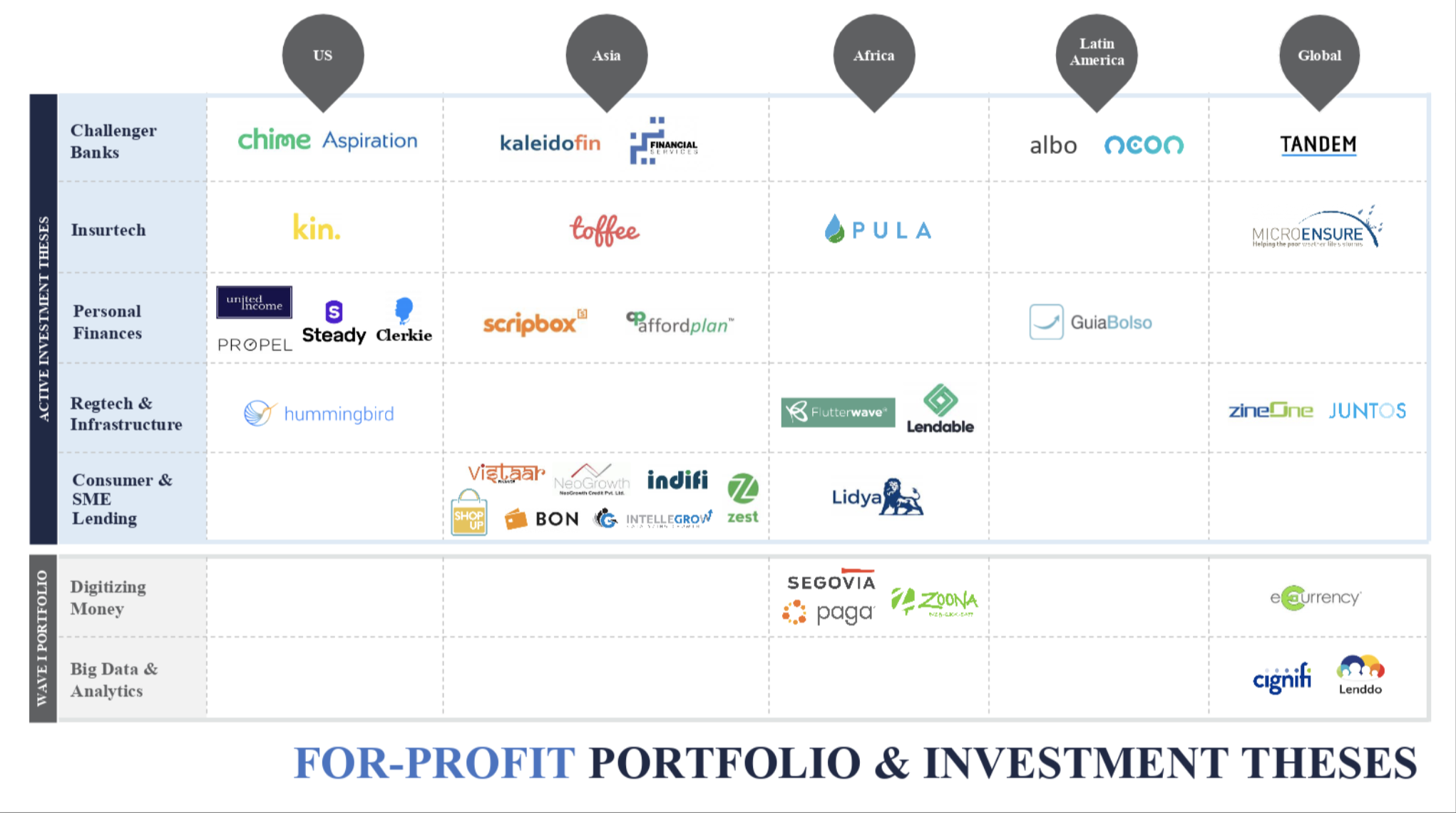
Indeed, Flourish’s global portfolio holds at least 40 fintech companies helping low- and middle-income households and small businesses. From challenger banks like Chime, Aspiration, Neon, Albo, and Tez; to insurance technology companies like MicroEnsure and Kin; and asset optimization tools, including United Income and Scripbox.

Given the explosion of interest in financial services offerings across challenger banks and through insurance technology offerings, Ehrbeck said it was a no-brainer for the company to spin-out, focus, and potentially expand.

With the spinoff, Flourish is taking the existent $200 million portfolio that the team had built at Omidyar and expanding that with the additional capital commitment from the Omidyar Group.

The firm is also starting to realize its first exits. The firm realized a 3x return on its investment in Asian Networks and has had another exit in the sale of Ruma to Go-Jek.

“It’s a carve out of a successful team that has momentum and that Pierre wants to double down on,” Ehrbeck says. “What’s carved out is the existing portfolio and a commitment to fund the next wave. The reason the number has a flexibility. Pierre gives us the capital we think we can deploy against opportunity.”

Flourish will do more than commit capital to financial services startups. It also has the opportunity to provide grants and encourage research around financial inclusion.

Some recent work from the firm included the financing of a study of 240 households called the U.S. Financial Diaries, which provided hard data around the illness that pervades a large swath of the U.S. population.

Investments from Flourish will fall into similar buckets as the firm’s previous operations under the umbrella of the Omidyar Network. Including alternative credit, challenger banks, insurance technologies, and low cost digital infrastructures that can level the playing field for financial services providers. 

“We find a gap in the system and try to fill it and improve it,” says Arjuna Costa, another partner on the new Flourish team coming over from Omidyar’s financial services group. 

“We have the impact of companies scaling and reaching and serving people and led to replicators and competitors and widespread adoption,” Costa says.

Lenddo and its credit-scoring business is a perfect example of the trend, according to Costa.

We started investing behind a number of companies that were coming up with using nontraditional data sets to try and score people,” he said. “We picked different data sets… we invested in the pioneering company using mobile payment data, the pioneering company using social media data, and the pioneering company using psychometric data.”

As those companies gained traction and new customers, proving the market demand, Omidyar’s investments could scale to higher value offerings around financial services.

“Initially talking about those deals other people in the industry looked at us and said that you’re nuts. And now it’s become the table stakes if you’re getting into lending,” Costa says. “After building this digital infrastructure to enable credit… Now there’s version two and version three of the infrastructure that’s coming up.”

Those higher value services are things like the agricultural lending business Rose Goslinga has launched for farmers in Africa.

“We bootstrapped our business for the first two years. They were the largest investor in our seed round,” Goslinga says of the Flourish commitment to her company, Pula Advisors

“Omidyar is extremely well known in the financial inclusion space. They had the first investment in micro-insurance ten or fifteen years ago. They are really seen as the blue chip of financial or insurtech investors,” Goslinga said. 

With their investment, it validated Goslinga’s attempt to provide credit and working capital loans to small farmers.

“We had quite a number of clients at that point but we didnt’ have any kind of institutional or financial investors at that point,” Goslinga says. “It was a stamp of approval for a lot of people later in.”

In mature markets like the U.S. Flourish’s approach is bit more nuanced, to serve a market with significant inefficiencies and baseline inequality, but one where the disparities manifest in different ways.

That’s why Flourish has gravitated toward businesses like Aspiration, which helps people bank more ethically — promoting sustainable investment portfolios and offering pay-your-own-fee for services; and Propel, which helps American consumers manage their public assistance benefits.

“At the highest level we look at the same criteria, we care about financial health and technology to promote financial health,” says Emmalyn Shaw, a partner managing the firm’s U.S. portfolio. “The U.S. as a more mature market tends to be a lot more competitive.”