Author: azeeadmin

07 Mar 2019

Sinemia’s new plan offers movie ticket discounts without a subscription

The world of movie ticket services has been undergoing quite an upheaval of the past year. Yesterday, MoviePass announced a strategic “refocus.” Today’s Sinemia news is decidedly less dramatic, however — as has been the case with most of the company’s recent announcements.

It has been toying with ways to tweak its subscription offering, and Simenia Limitless finds it offering discounts for users outside of the service. Rather than a reoccurring fee with a set (or unlimited) number of tickets, Limitless offers a blanket discount for an upfront amount.

So, users get $100 worth of tickets for a $70 one-time purchase. The new offering uses a digital or physical “debit” card that can be used to buy movies online or at the theater. Once the money is gone, the card won’t re-up unless the user makes another purchase. The caveat here, however, seems to be that the balance is only good one year. Oh and “convenience fees” may apply to the price of the movie.

As for which movies are included, here’s Sinemia,

Sinemia Limitless covers any type of movie ticket for any day at any theater location, including luxury cinemas and premium format screens, without any blackout dates. With Sinemia Limitless, customers can make multiple ticket purchases on the same day and buy movie tickets for as many people as they want with a single transaction. The new plan also eliminates the necessity of checking in with the app at the theater.

When tickets are purchase through partner theaters, users can also get an addition five-five-percent discount on the deal.

The company may be getting to a point where the abundance of options are honestly a bit confusing for the end user, but it’s nice to see Sinemia continuing to experiment with different models.

07 Mar 2019

Remix picks up $15 million to help cities make better decisions around transit

A San Francisco-based startup just raised $15 million to solve the complicated problem of transit infrastructure in urban environments. Remix was founded by Tiffany Chu, Dan Getelman, Danny Whalen, and Sam Hashemi in 2014 following a project they built during their Code For America fellowships.

The $15 million Series B round was led by Energy Impact Partners, bringing total funding to $27 million.

Remix allows cities to plan public transit infrastructure, quickly computing how a change in a certain bus or train route or the addition of a bike lane might affect the city overall, all through a drag and drop menu. The platform also looks at how to manage private transportation options like ridesharing, dockless bikes and scooters, etc.

“This is an industry that has changed faster in the last five years than it did in the last 50,” said Chu, cofounder and COO. “One of our challenges is explaining to people, the community, what are the impacts of certain decisions around the way things have always been?”

One of the ways Remix measures its own success and allows its users to do the same is through a metric called Jane. Jane is an icon that you can drop anywhere on the map and see how far that fictional person can travel in 15, 30, 45, and 60 minutes, and how many jobs they might have access to based on changes in the public transit.

More than 300 cities are using the Remix platform, and the company says that 100 million+ people will be impacted by plans that are either completed or in progress.

Alongside helping cities make better decisions for the community, it also helps those governments better express their decision-making process. This is especially important as governments and citizens weigh the impacts of single-occupancy vehicles on the environment. The EPA says that transportation accounts for 28 percent of all greenhouse gas emissions.

“Parking is such a huge, huge point of contention for every city and being able to explain to somebody why a transit lane or a bike lane or a parklet might be more beneficial for the community at large as opposed to having people freak out over removal of two parking spots,” said Chu. “That’s a shifting conversation we, as an industry, need to have in order for everyone to start moving in the right direction, away from single occupancy vehicles.”

Remix is currently working with a wide variety of markets, including HonoLulu, Auckland, Dallas, Seattle and New York.

07 Mar 2019

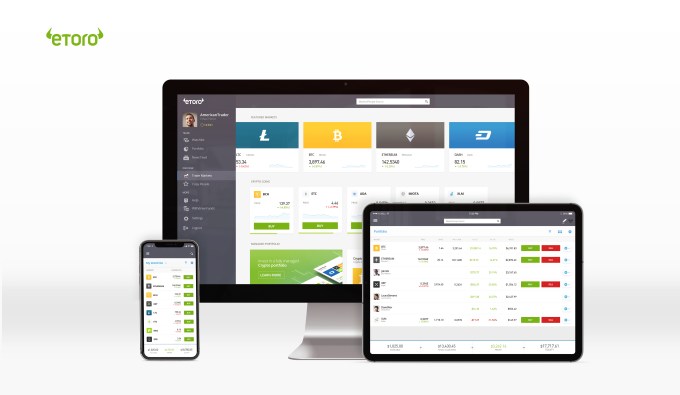
eToro bringing crypto trading and wallet to the US

eToro, the social investing and trading platform, announced that it will finally be launching its platform in the US. The platform, which already operates in more than 140 countries, will be available in 30 states and two territories with plans to expand elsewhere in the US after receiving the necessary regulatory sign-offs.

The US platform will only support trading for crypto assets at launch, but eToro plans to add additional asset classes within the next 12 months. In eToro’s existing markets, the company’s ten million-plus users are able to trade and hold over 1,500 different asset classes and markets, including stocks, bonds, cryptocurrencies, fiat currencies, commodities and more.

Though eToro even supports more advanced trading strategies – including short-selling and the use of leverage – the platform’s transparency and community engagement features act as great tools for beginners to learn the capital markets and learn how to trade.

eToro is equal parts trading platform, social network and educational resource. Anyone who signs up for eToro can see, comment and copy the trading activity of everyone else on the network, as well as their realized returns and losses to date (though only on a percentage basis to protect sensitive financial information). While learning from the strategies of their peers, users can opt to invest with virtual currency to practice and effectively train before actually risking their own money.

Alternatively, based on a trader’s track record, other users can choose to mimic their portfolio through eToro’s “CopyTrader” feature, which not only proportionally allocates funds to match the trader’s portfolio but can also automatically make any trade the copied investor makes. On top of that, members are also able to share, comment on, engage with or follow specific users, assets, or markets – allowing them to participate in the latest debate and news regarding their particular area of interest.

Despite being limited to crypto at launch, almost all the same features available in eToro’s existing geographical markets will be available in the US. And alongside its trading platform, the company is also launching its digital multi-signature eToro wallet where users can store, send and receive multiple coins across a multitude of cryptocurrencies.

Using their eToro accounts, US users can now transfer cryptocurrencies to and from their trading account and can easily convert between them as well. The wallet initially will support Bitcoin, Ethereum, Litecoin, Bitcoin Cash, Ripple and Stellar for US users but the company plans to make additional currencies available in the near future.

eToro users can make transactions, share trading activities, and portfolio performance with the community, allowing users to discuss ideas that are executed using real dollars.

The expansion plan, however, doesn’t come without risk. eToro is entering a competitive marketplace – alongside other popular trading platforms like Coinbase and Robinhood – and is launching its crypto-only version in the midst of “crypto winter”, where widespread weakness has plagued the sector.

Part of the strategy is attributable to the fact that crypto is a lighter lift from a licensing perspective relative to other asset classes in the strict and highly fragmented US regulatory environment. But eToro’s launch strategy is also firmly rooted in the company’s belief in the immense market opportunity that exists with the tokenization of assets.

“We think [the tokenization of assets] is a bigger opportunity than the internet and we have to be in the US when it happens given its the financial hub in the world,” eToro founder and CEO Yoni Assia said in a conversation with TechCrunch.

eToro is taking a long-term view with its strategy and isn’t thrown by the current crypto weakness. Assia equated the market softness to the dotcom bubble, where despite the crash, the internet still permeated and disrupted the economy in the long-run. And just like with the internet, Assia and eToro believe there will be more than enough room for multiple winners in the broader crypto ecosystem.

The company was the first platform in its markets to support Ethereum and Ripple and believes that as similar currencies and the next generation of investors mature, eToro will be there to support them wherever they are in whatever way they need.

“When I founded eToro, I envisioned a community where people could trade, invest and share their knowledge in a simple and transparent way,” said Assia. “eToro also acts as a bridge between the old world of investing and a blockchain-powered future, helping our users navigate and benefit from the transition to crypto assets for wealth building.”

07 Mar 2019

Hooch moves beyond subscription drinks, with rewards for travel, dining and more

When we first wrote about Hooch, it offered a fun, straightforward deal — for $9.99 per month, you could claim one free drink per day from participating bars and restaurants.

Since then, the company launched Hooch Black, a pricier subscription that includes perks like hotel discounts and concierge service. But even then, co-founder and CEO Lin Dai was hinting at plans to use blockchain technology to create what he called “a decentralized model for consumer rewards.”

Now Hooch is delivering on what Dai promised, with a relaunched app that rewards users for their purchases.

“We were super excited about the feedback and response [to Hooch Black] that we saw from our members,” Dai said. “What we decided to do is just completely update the app with rewards for consumers across four different categories — travel, dining, entertainment and e-commerce.”

He noted that while most loyalty programs reward you for using a specific card or for shopping with a specific company, Hooch has partnered with more than 250,000 merchants (including Marriott hotels, TAO restaurants, Starbucks, Uber, and Amazon). The company can actually scan the purchases made on any linked debit or credit card, and you’ll be rewarded whenever you spend money with those partners.

The rewards take the form of what Hooch is calling TAP rewards dollars — the exact reward will vary depending on the merchant, but the company says it could be as high as 10 percent of your spending.

Lin Dai, Hooch

Lin Dai, CEO of Hooch

Dai said TAP dollars are actually a stablecoin pegged to the U.S. dollar, but he emphasized that you don’t need to understand the backend to use the rewards. For most users, TAP dollars will simply be a digital currency that they can redeem for hotel bookings, restaurants credits and gift cards.

“Security is our top concern,” Dai added. The idea is to access your transaction history to verify your purchases (Hooch makes money by driving purchases for merchants), but without storing or sharing identifying information. “When we capture the consumer purchase information, we actually don’t capture any of their names or credit card numbers … We don’t store any identity.”

The program also comes with a big perk for enlisting your friends. There is an upfront reward of five TAP dollars, the real selling point is the fact that you’ll get 20 percent of their rewards — not just on their initial purchases, but for the entire time they use the app.

If you like the Hooch Black plan, you’ll still be able to sign up and pay for it. But the company’s emphasis has shifted to the broader rewards program, which you can join for free.

07 Mar 2019

Bird launches platform to let entrepreneurs manage their own fleet of scooters

Bird is launching its new program, Bird Platform, in New Zealand, Canada and Latin America in the coming weeks. First up is New Zealand, where Bird has partnered with a local entrepreneur to manage a fleet of Bird electric scooters. Residents of New Zealand will start to see Bird scooters on the streets next week.

The platform is part of Bird’s mission to bring its scooters across the world “and empower local entrepreneurs in regions where we weren’t planning to launch to run their own electric-scooter sharing program with Bird’s tech and vehicles,” Bird CEO Travis VanderZanden told TechCrunch.

Bird Platform works by selling the vehicles to these entrepreneurs at cost and then taking a 20 percent cut from the ride revenue.

“That way our interests are super aligned,” VanderZanden said.

As the manager of their own fleets, Platform entrepreneurs will be responsible for recharging the scooters, maintenance, and working with cities to obtain permits. Bird first announced Platform in November and intended to roll it out in December. But it took a bit longer than expected to work out the kinks, VanderZanden said. In New Zealand, there is just one entrepreneur on board, but that’s by design.

“We’re trying to keep it one per region so there are not any conflicts,” VanderZanden said.

Bird expects each region to initially operate hundreds and ultimately thousands of scooters. So far, Bird has signed deals with over five entrepreneurs to operate Bird Platform.

As noted earlier, Bird is only bringing Platform to places where the company wasn’t planning on launching — either at all, or anytime soon.

“Bird Platform is complementary,” VanderZanden said. “We think they’ll be happy staying on Bird Platform. We want to provide the best vehicles and best technology as long as they continue to invest and scale in the region.”

Bird has raised more than $400 million in funding to date and is reportedly in the midst of raising an additional $300 million.

07 Mar 2019

YouTube under pressure to ban UK Far Right activist after livestreamed intimidation

The continued presence of a UK Far Right activist on YouTube’s platform has been raised by the deputy leader of the official opposition during ministerial questions in the House of Commons today.

Labour’s Tom Watson put questions to the secretary of state for digital, Jeremy Wright, regarding Stephen Yaxley-Lennon’s use of social media for targeted harassment of journalists.

This follows an incident on Monday night when Yaxley-Lennon used social media tools to livestream himself banging on the doors and windows of a journalist’s home in the middle of the night.

“Every major social media platform other than YouTube has taken down Stephen Yaxley-Lennon’s profile because of his hateful conduct,” said Watson, before recounting how the co-founder of the Far Right English Defence League — who goes by the made-up name ‘Tommy Robinson’ on social media — used social media livestreaming tools to harass journalist Mike Stuchbery on Monday night.

Stuchbery has since written about the incident for the Independent newspaper.

As we reported on Monday, Facebook removed the livestream for violating its policies after it was reported but not before Stuchbery had received a flood of abusive messages from other Facebook users who were watching the stream online.

Yaxley-Lennon appears to have been able to circumvent Facebook’s ban on his own account to livestream his intimidation of Stuchbery via Facebook Live by using another Facebook account with a fake name (which the company appears to have since suspended).

Following the incident Stuchbery has reported receiving physical hate mail to his home address, which Yaxley-Lennon gave out during the livestream (an intimidation tactic that’s known as doxxing). He has also said he’s received further abuse online.

“Does the secretary of state think that it is right that YouTube, and the parent company Alphabet, continues to give this man a platform?” asked Watson, after highlighting another vlog Yaxley-Lennon has since uploaded to YouTube in which he warns other journalists “to expect a knock at the door”.

Wright responded by saying that “all Internet companies, all platforms for this kind of speech need to take their responsibilities seriously”.

“I hope that YouTube will consider this very carefully,” he told the House of Commons. “Consider what [Yaxley-Lennon] has said. What I have said, and reconsider their judgement.”

“We all believe in freedom of speech. But we all believe too that that freedom of speech has limits,” Wright added. “And we believe that those who seek to intimidate others, to potentially of course break the law… that is unacceptable. That is beyond the reach of the type of freedom of speech that we believe should be protected.”

We’ve reached out to YouTube for comment.

Stephen Yaxley-Lennon was banned by Facebook last month for repeat violations of its policies on hate speech. While Twitter banned Yaxley-Lennon a full year ago.

But he remains active on YouTube — where his channel has more than 350,000 subscribers.

The company has resisted calls to shutter his account, claiming the content Yaxley-Lennon posts to its platform is different to content he has posted elsewhere and thus that he has not broken any of its rules. (Though YouTube did demonetize videos on his channel in January saying they violated its ad policies.)

In a follow up question, Watson raised the issue of online harassment more widely — asking whether the government would be including measures “to prevent hate figures, extremists and their followers from turning the online world into a cesspit of hate” in its forthcoming White Paper on social media and safety, which it’s due to publish this winter — and thereby tackle a culture of hate and harassment online that he said is undermining democracy.

Wright said he would “consider” Watson’s suggestion though he stress the government must protect the ability for people to carry out robust debate online — and “to discuss issues that are sometimes uncomfortable and certainly controversial”.

But he went on to reiterate his earlier point that “no freedom of speech can survive in this country if we do not protect… people’s ability to feel free to say what they think, free of intimidation, free of the threat of violence”.

“Those who engage in intimidation or threats of violence should not find succour either online or anywhere else,” the minister added.

YouTube’s own community guidelines prohibit “harassment and cyberbullying”. So its continued silence on Yaxley-Lennon’s misuse of its tools does look inconsistent. (YouTube previously banned the InfoWars conspiracy theorist Alex Jones for violating its policies, for example, and there’s more than a passing resemblance between the two ‘hate preachers’).

Moreover, as Watson noted in parliament, Yaxley-Lennon’s most recent video contains a direct threat to doorstep and doxx journalists who covered his harassment of Stuchbery. The video also contains verbal abuse targeted at Stuchbery.

In one of the livestreams recorded outside Stuchbery’s home Yaxley-Lennon can also be heard making allegations about Stuchbery’s sexual interests that the journalist has described as defamatory.

YouTube previously declined to make a statement about Yaxley-Lennon’s continued presence on its platform. It has not responded to our repeat requests for follow up comment about the issue since Monday.

We’ll update this post if it does provide a statement following the government’s call to rethink its position on giving Yaxley-Lennon a platform.

07 Mar 2019

Spill picks up £650K seed round for its message-based workplace therapy app

Spill, the London-based startup that offers a message-based therapy app to help improve workplace well-being, has picked up £650,000 in seed investment. The round is backed by Passion Capital, Seedcamp and a number of angel investors, including Made.com founder Julian Callede and Urban co-founder Jack Tang.

Founded a little over a year ago by Calvin Benton and Gavin Dhesi, Spill aims to reduce the barriers associated with accessing mental health and well-being services, which it says typically leaves people in the U.K. with two choices: facing long wait times via the National Health Service or paying for expensive private therapy sessions. Instead, Spill is designed as a consumer-styled app that provides access to qualified therapists via text messaging, and paid for by employers.

“At the moment, if someone is going through a tricky time, the choices for accessing counselling are between either a months-long NHS waiting list to see a counsellor or forking out upwards of £60 a session to see a private psychotherapist,” Spill’s Dhesi tells me. “Both come with the baggage of an inflexible time commitment and the issue of stigma. We want to make another way possible; available whenever you need it, free at the point of use, and approachable rather than intimidating”.

Counsellors on the Spill app are BACP (British Association for Counselling and Psychotherapy) registered “or equivalent” and communicate using anonymous written therapeutic communication. The startup works with employers, workplaces or universities to make its app available to employees, individuals and students for free and as a workplace or student benefit. Customers include Hargreaves Landsown, Rightmove and Monzo Bank.

“Our typical business customers are progressive organisations of all sizes, from small startups with as few as only ten employees to larger fast-growing companies,” adds Dhesi. “Typical users are those who are dealing with life’s daily problems and who often think that their problems are ‘too small’ to speak to a professional. In fact, 84 percent of existing Spill users have not previously accessed any kind of mental health guidance or counselling before”.

But can text-based therapy really be effective? I suggest to Dhesi that message-based delivery might feel a bit like a poor person’s talking therapy. Naturally, the Spill co-founder pushes back. “If face-to-face counselling could be easily accessed by everyone who needed it, we wouldn’t need to exist,” he says. “By working via text, rather than the traditional method of face to face, we hope that we can reach a lot more people”.

On the Spill app, you start by answering you a few questions about who you are. This includes things like “Who are the most important people in your life” and “How important is work to you?”. Then, Spill will match you with your own designated Spill therapist. “You’ll be able to message them whenever you want, and they’ll reply with support, guidance and exercises,” explains the Spill co-founder.

Meanwhile, Spill says the app also provides benefits to counsellors and professionals who want to have a greater impact on more individuals. Co-founder Benton’s mother is a counsellor and his father is a clinical psychologist, arguably giving the team first-hand experience of the “supply side” of Spill’s solution.

Adds Dhesi: “For businesses, our main direct competitors are conventional EAPs (Employee Assistance Programmes). These often are phone lines that have very low usage and designed to help those with severe mental health issues. Spill, on the other hand, is a more preventative measure aiming its service towards life’s everyday problems”.

07 Mar 2019

SoftBank launches the Innovation Fund, committing $2B to invest in Latin America

While SoftBank continues to make big bets on startups out of its $100-billion Vision Fund, it has also launched another investment vehicle to invest in tech opportunities specifically in Latin America.

Today the group announced the SoftBank Innovation Fund, which is starting out with a $2 billion commitment to invest in tech startups in Central and South America, specifically starting in the countries of Argentina, Brazil, Chile, Colombia and Mexico, covering areas like e-commerce, digital financial services, healthcare, mobility and insurance.

Alongside this, it’s establishing a group called the SoftBank Latin America Local Hub, which will partner with companies that are already in SoftBank’s investment portfolio to help them break into the region.

The effort in Latin America is a big win for Marcelo Claure, who has been named CEO of SoftBank Latin America. Claure is already COO of SoftBank Group Corp., as well as CEO of SoftBank Group International and executive chairman of Sprint Corporation — all roles he will continue to keep as he takes on this new challenge.

“Growing up in Latin America I witnessed firsthand the creativity and passion of the people,” said Claure in a statement. “There is so much innovation and disruption taking place in the region, and I believe the business opportunities have never been stronger. The SoftBank Innovation Fund will become a major investor in transformative Latin American companies that are poised to redefine their industries and create new economic opportunities for millions of people.”

This is the first time that SoftBank has created a fund of this kind focused on a single region — although it has spearheaded big bets into specific countries like India in the past — and it appears to the be first time that it has formally established a group to help other portfolio companies expand in a region, although this is likely something that SoftBank would have been doing on an informal basis before now.

News of the this fund had been trickling out for some time, although a report in Bloomberg from January that broke the news had underestimated the amount that SoftBank would invest in it (it predicted $1 billion, while the actual starting amount is $2 billion).

SoftBank says that it has yet to determine where it will establish its HQ for this new effort. I don’t imagine this question will take on the heated race that we saw unfold around Amazon’s HQ2 decision-making process. Likely candidates will probably be cities where SoftBank has already established operations in the region.

Indeed, SoftBank no stranger to investing in Latin America as part of its bigger “BRIC” strategy. As a developing market with a growing middle class (more than 50 million people in the region have entered the middle class generating increased disposable income, SoftBank said), it is one of the fastest-growing regions for tech products and services. SoftBank estimates that the region accounts for 10 percent of the world’s population and 8 percent of the world’s GDP. Notably (given SoftBank’s previous focus on Asia) it points out that this means it has “two times the GDP of India and half that of China.”

So far, SoftBank’s investments in the region have focused on e-commerce and related consumer services. It was one of the early investors in Uber rival 99 in Brazil (which eventually was taken over by Didi, the Chinese transportation giant that SoftBank also partly owns). It has also put at least $100 million into Loggi, another startup out of Brazil that focuses on delivery services. In Mexico, it is also embarking on a joint venture with Didi to establish transportation services there.

It’s likely the strong track record it has had in those investments so far that have led SoftBank to extend its activities there, particularly since it has already established a strong bulkhead in different regions across Asia, including China and India.

“Latin America is on the cusp of becoming one of the most important economic regions in the world, and we anticipate significant growth in the decades ahead,” said Masayoshi Son, Chairman & Chief Executive Officer of SBG, in a statement. “SBG plans to invest in entrepreneurs throughout Latin America and use technology to help address the challenges faced by many emerging economies with the goal of improving the lives of millions of Latin Americans. I am grateful to our Chief Operating Officer Marcelo Claure for leading this initiative, in addition to his other responsibilities at SBG.”

As with other SoftBank investments that do not come out of its Vision Fund, the latter will potentially use this as a springboard to get involved as well. “Latin America presents significant opportunities for SoftBank Group, and the Vision Fund will have the ability to co-invest alongside the innovation Fund,” said Rajeev Misra, CEO of SoftBank Investment Advisers, who runs the Vision Fund. “Marcelo and team will offer invaluable expertise to help Latin American companies scale their operations, benefit from the greater SoftBank ecosystem, and grow into global market leaders.” The Vision Fund has come under some scrutiny because of its ties to Saudi money and the controversy surrounding that government’s human rights policies.

For investors like SoftBank, putting a lot of attention on this region makes a lot of sense. Not only does it help diversify by focusing on another (rapidly growing) region, but it gives the group one more way to sweeten the deal to invest in any fast-growing startup, by offering a helping hand in their efforts to expand to other regions by way of their network of contacts and existing services.

In addition to people getting more well off in the region, it has shown other indication of it being a healthy market for tech investment. It has 375 million internet users and 250 smartphone users, putting it ahead of the US in terms of sheer numbers. And retail e-commerce has nearly doubled in the last three years, going to $54 billion in 2018 from $29.8 billion in 2015.

Similarly, there is a big opportunity ahead with some 400 million people still without bank accounts or credit histories; and 79 percent of population living in urban areas but without great access to public transport. Healthcare has also been an area of underinvestment up to now, opening the door to building and expanding medical, wellness and other related solutions.

To be clear, there are already a ton of companies in the region, and so this is as much about getting closer to them, and helping them grow with funding, as it is about bringing in startups from outside the region to tap these opportunities. SoftBank hopes that by setting out its stall in the heart of it, it will have a shot at profiting from both.


07 Mar 2019

Cabify returns to Barcelona with a workaround for ride-hailing wait limits

Well that didn’t take long. Despite warning loudly and publicly that incoming changes to private hire vehicle rules in Catalonia would drive it out of Barcelona for good, and force it to fire thousands of drivers, Spanish ride-hailing firm Cabify has announced it’s back operating in the city from today — a month after it left.

The Spanish ride-hailing firm claims to have adapted its business model to comply with regulations, brought in by the local government by decree last month, which impose a waiting time of at least 15 minutes between a booking being made and a passenger being picked up.

The Catalan Generalitat has said it wants to make sure taxis and ride-hailing firms are not competing for the same passengers, and says it’s committed to a full restructuring of the law to ensure the sectors don’t overlap and come into conflict — following a series of taxi strikes which saw scenes of violence making. 

The new rules also prohibit private hire companies from displaying the real-time geolocation of vehicles in their apps prior to a booking. Only once a booking has been made can the location be displayed.

The decree also bans VTCs from plying for trade by freely circulating in the streets — requiring they return to a base, such as a parking lot or a garage, to wait for the next booking.

In a tweet confirming its return to Barcelona yesterday Cabify writes that from today it’s back on the streets of the Catalan capital, having adapted its business model to comply with the new regulations, though it does not specify exactly what changes it has made.

At the time of writing the ride-hailing firm could not be reached for comment. Cabify also did not responded to our email asking about its adapted model.

But local press is reporting its workaround for imposed wait limits before passengers can be picked up is to switch its business model for the region from being an intermediate platform to a transport company — working with a VTC firm with a local fleet of 300 cars.

According to El Pais, Cabify users are required to accept a renewable year-long contract (via new in-app T&Cs), at no additional cost — and then it will apply the wait time only once per customer, offering on-demand rides thereafter, i.e. once the ‘contract’ is in force.

In a follow up tweet to its users about its return to Barcelona, Cabify warns they need to accept its new T&Cs before being able to resume using the app in the city — highlighting its method for circumventing the wait-time restriction. (The Spanish have a phrase — hecho la ley, hecho la trampa — which does seem rather appropriate here.)

In a statement to El Pais the company avoided commenting on how it’s flouting the regional government’s decree — but described the adapted business model as “burdensome”, adding that it’s assumed “a series of costs” in order to return to Barcelona.

The company is reportedly banking on the Generalitat’s decree being struck down as unconstitutional by Spanish courts. So it’s intending the trick as a stopgap to keep serving the circa one million registered users it says it has in Catalonia.

We’ve reached out to the Generalitat for comment on Cabify’s return to Barcelona.

Elite Taxi BCN, one of the main local taxi associations that has been pushing for regulation of ride-hailing apps said Cabify’s actions demonstrate, without doubt, that it does not want to run a VTC service — but a taxi service.

Taxis argue their sector is more heavily regulated so ride-hailing companies acting like taxis constitute unfair competition.

The Elite association has also warned it has not ruled out further strike action to protest how Cabify is flouting the regional government’s rules.

Uber also left Barcelona last month ahead of the new rules coming into force — saying the regulation leaves it “no choice but to suspend UberX while we assess our future in Barcelona”.

We’ve asked the company whether it has any plans to relaunch a service in the city.

07 Mar 2019

Playfair Capital, the U.K.-based seed firm, announces $32M second fund

Playfair Capital, the U.K. seed investor, has raised a new $32 million fund to continue investing in promising early-stage tech startups.

The VC firm, founded by in 2013 by Federico Pirzio-Biroli, who is fund II’s sole LP, is an early investor in the likes of Stripe, Ravelin, Thought Machine, CryptoFacilities and Mapillary.

Pirzio-Biroli recently re-located to Kenya, but will still act as Chairman of Playfair Capital . Day-to-day, the fund will be managed by Chris Smith, who recently joined as a Partner. He’s been an active angel investor for over ten years, and is taking over management duties from Georgia Taylor Foster, who is said to have resigned after five years with the fund for health reasons.

Smith previously worked for fast growing B2B telecommunications company Plan.com, where he held senior roles including Sales Director, Head of Tech/BI and Head of Product Development. His has made 14 angel investments across the U.K. and U.S., and counts three exits to date: Nearbuy Systems (acquired by RetailNext), along with publicly listed MoPowered and Bidstack. Prior to that, he worked in the City in various roles.

To date, Playfair Capital says it has backed over 50 founding teams, and plans to invest the new $32 million fund over the next three to five years. The firm is targeting early-stage companies across all sectors, with a particular focus on deep tech — e.g. artificial intelligence, machine learning and computer vision — and B2B SaaS and marketplaces, which have traditionally been areas of strength for Playfair.

Its initial cheque size is typically $500,000, although I’m told that the Playfair team like to engage with founders at the earliest stages of a startup’s journey, including occasionally investing smaller amounts at the pre-seed stage. I expect that approach is reflected in a number of household names backed out of the firm’s first smaller fund.

Adds Pirzio-Biroli in a statement: “I’m delighted to be announcing Chris’s hire and the launch of Playfair’s Fund II. Our new investment team has great hands-on experience with startups and a track record of backing founders early and enthusiastically. The U.K. has proved a rich hunting ground for Playfair Capital, providing 80 percent of our current portfolio. With the new fund we will seek out startups that use deep tech and data to create a defensible proposition that has longevity. We are hugely excited about opportunities in the deep tech, SaaS and marketplace segments where we have already demonstrated success”.

Meanwhile, Smith will work with Joe Thornton, who has been with Playfair Capital for almost four years, and Henrik Wetter-Sanchez, who joins as an associate from Bank of America Merrill Lynch. Thornton joined Playfair in early 2015, having worked at Google and Facebook. For the last three years, he has been Playfair’s Head of Talent. He’s continue to support portfolio companies with recruitment but will also be sourcing and leading Playfair investments.