Author: azeeadmin

07 Mar 2019

Camelot lets Twitch and YouTube audiences pay for what they want to see

As the streaming world continues to grow, startups are looking to take advantage of the opportunity and grab a slice of the pie, and indeed create new revenue models around it entirely. 

Camelot, a YC-backed startup, is one such company.

Camelot allows viewers to place bounties on their favorite streamers, putting a monetary value on the things they want to see on stream. This could include in-game challenges like “win with no armor,” as well as stream bounties like “Play Apex” or “add a heartbeat monitor to the stream.”

When a viewer posts a bounty, other viewers can join in and contribute to the overall value, and the streamer can then choose whether or not to go through with it from an admin dashboard.

Because internet platforms can often be used for evil alongside good, cofounder and CEO Jesse Zhang has thought through ways to minimize inappropriate requests.

There is an option for streamers to see and approve the bounty before it’s ever made public to ensure that they avoid inappropriate propositions. Bounties are also paid for up front by viewers, and either returned if the creator declines the bounty or pushed through when the streamer completes the task, raising the barrier to entry for nefarious users.

Camelot generates revenue by taking a five percent stake in every bounty completed.

The platform isn’t just for Twitch streamers — YouTubers can also get in on the mix using Camelot and making asynchronous videos around each bounty. Not only does it offer a new way to generate revenue, but it also offers content creators the chance to get new insights on what their viewers want to see and what they value.

Cofounder and CEO Jesse Zhang believes there is opportunity to expand to streamers and YouTube content creators outside of the gaming sphere in the future.

For now, however, Camelot is working to bring on more content creators. Thus far, streamers and viewers have already come up with some interesting use cases for the product. One streamer’s audience bought his dog some treats, and one viewer of Sa1na paid $100 to play against the streamer himself.

Camelot declined to share how much funding it has received thus far, but did say that lead investors include Y Combinator, the Philadelphia 76ers, Soma Capital, and Plaid cofounders William Hockey and Zach Perret.

07 Mar 2019

VCs have growing appetite for “AgriFood”

Venture investors are pouring billions of dollars into feeding their hunger for food and agriculture startups. Whether that trend line is due to enthusiasm for the sector or just broader heavy investing in the VC space is much less clear.

According to a recent report published by AgFunder – a VC and investing marketplace focused on the agriculture and food sectors – the “AgriFood” space is booming. Using data from Crunchbase and several other data partners, the organization published its “2018 AgriFood Tech Investing Report” this morning, finding that investment in AgriFood companies increased 43% year-over-year, reaching $16.9 billion in 2018.

AgFunder classifies AgriFood tech as “the small but growing segment of the startup and venture capital universe that’s aiming to improve or disrupt the global food and agriculture industry.” Their definition is intentionally broad, encompassing everything from crop and livestock biotech, property management systems, and payments, to biomaterials and meat alternatives, all the way up to tech platforms for restaurants, grocers, deliveries and at-home cooks.

While some of the AgriFood tech categories – such as delivery or restaurant software – have long been popular destinations for venture capital, we’re now seeing a more diverse array of startups innovating across the entire food supply chain. According to the report, expansion in AgriFood is fairly consistent across upstream (agricultural and farming) subsectors to downstream (more consumer-facing) subsectors, with each group growing roughly 44% and 42% year-over-year respectively.

The data also shows growth occurring across almost all deal stages. AgriFood saw huge increases in the average deal size and total investment for late-stage companies in particular, as venture-backed startups have grown to global scale. And penetrating and attracting capital from international markets seems more feasible than ever. AgriFood investing, which traditionally has been largely US-centric, is rapidly becoming a global phenomenon, with more than half of total funding – and some of the largest rounds – now coming from companies and investors outside the US.

07 Mar 2019

Daily Crunch: Zuckerberg lays out his privacy vision

The Daily Crunch is TechCrunch’s roundup of our biggest and most important stories. If you’d like to get this delivered to your inbox every day at around 9am Pacific, you can subscribe here.

1. Mark Zuckerberg discovers privacy

In a long post published yesterday, the Facebook CEO laid out his vision for making Facebook’s products more privacy-friendly. But can Facebook reform its 15-year legacy as devourer of all things private with a single sweeping manifesto?

Taylor Hatmaker has a simple answer: Heck no, of course it can’t. (Except she says it less politely.)

2. Huawei is suing the US government over ‘unconstitutional’ equipment ban

At the center of the suit is the company’s claim that Section 889 in the National Defense Authorization Act — which contains restrictions that prevent federal agencies from procuring Huawei equipment or services — is unconstitutional.

3. Trump called Apple’s CEO ‘Tim Apple’ by mistake

Actual quote: “You’ve really put a great investment in our country. We really appreciate it very much, Tim Apple.”

4. Google gives Android developers new tools to make money from users who won’t pay

“Rewarded Products” will allow non-paying app users to contribute to an app’s revenue stream by sacrificing their time, but not their money. The first product will be rewarded video, where users can opt to watch a video ad in exchange for in-game currency, virtual goods or other benefits.

5. Tesla’s new Supercharger slashes charging times

The V3 Supercharger, which was unveiled Wednesday, supports a peak rate of up to 250 kilowatts on the long-range version of the Model 3. At this rate, the V3 can add up to 75 miles of range in five minutes, Tesla said.

6. Bird launches platform to let entrepreneurs manage their own fleet of scooters

Bird Platform sells the vehicles to entrepreneurs at cost and then takes a 20 percent cut from the ride revenue. The program is launching in New Zealand, Canada and Latin America in the coming weeks.

7. Google brings its Duplex AI restaurant booking assistant to 43 states

Starting this week, Pixel 3 owners in 43 U.S. states will be able to use the company’s AI technology to book appointments at any restaurants that use booking services that partner with the Reserve with Google Program but don’t have an online system to complete the booking.

07 Mar 2019

Airbnb agrees to acquire last-minute hotel-booking app HotelTonight

As Airbnb gears up for its big leap into the public markets, it’s expanding its accommodations platform to include more than just treehouses and quirky homes.

Today, the company has confirmed its intent to acquire HotelTonight, the developer of a hotel-booking application that lets travelers arrange last-minute accommodations. The deal was previously reported by The Wall Street Journal, which wrote in January that negotiations for the transaction had “gone cold.”

Airbnb is expected to complete an initial public offering as soon as this year, though co-founder and chief executive officer Brian Chesky has refrained from revealing a specific timeline. Like Uber, which plans to become the ultimate transportation company, Airbnb’s long-term ambition is to build an end-to-end travel platform complete with home sharing, hotel booking, business travel arrangements, experiences and more.

Airbnb declined to disclose terms of its HotelTonight acquisition. Once the deal is complete, the HotelTonight app and website will continue to operate independently, with co-founder and CEO Sam Shank reporting to Airbnb’s president of homes, Greg Greeley.

“We started HotelTonight because we knew people wanted a better way to book an amazing hotel room on-demand, and we are excited to join forces with Airbnb to bring this service to guests around the world,” Shank said in a statement. “Together, HotelTonight and Airbnb can give guests more choices and the world’s best boutique and independent hotels a genuine partner to connect them with those guests.”

Founded in 2010, San Francisco-based HotelTonight garnered a valuation of $463 million with a $37 million Series E funding in 2017, according to PitchBook. In total, the startup has raised $131 million in venture capital funding from Accel and Battery Ventures, which have participated in nearly every funding round for HotelTonight. Other early investors include Forerunner Ventures and First Round Capital.

[gallery ids="1794066,1794068,1794069"]

Airbnb, for its part, was valued at $31 billion in 2017, with a $1 billion round. In January, Airbnb said it was profitable for the second consecutive year on an EBITDA (earnings before interest, taxes, depreciation and amortization) basis.

HotelTonight offers discounts at hotels in the Americas, Europe and Australia. The company partners with hotels to offer un-sold rooms, catering to flexible travelers or those looking to make last-minute arrangements. The deal will make it easier for Airbnb users to book hotels without planning weeks or months in advance and will help Airbnb expand its community beyond short-term rental hosts and guests.

Airbnb introduced boutique hotels to its platform in early 2018 and has boasted its quick growth. In 2018, the business said it more than doubled the number of boutique hotels, bed and breakfasts, hostels and resorts available. Airbnb’s business travel unit, Airbnb for Work, also had quick success. Launched in 2014, it now accounts for 15 percent of bookings. In total, Airbnb offers some 5 million places to stay in 191 countries.

Airbnb is kicking off 2019 with an acquisitive streak. In January, the company acquired Danish startup Gaest, a provider of a marketplace-style platform for people to post and book venues for meetings and other work-related events. The company again declined to pinpoint the price, though given Gaest had raised just $3.5 million in equity funding, the deal pales in comparison to Airbnb’s HotelTonight acquisition.

2019 is stacking up to be a particularly busy year for unicorn IPOs, some of which were likely delayed by a weeks-long government shutdown at the start of the year. Lyft, which recently unveiled its S-1, is poised to be the first billion-dollar company to exit to the stock markets, followed by Uber, Slack and Pinterest. Will Airbnb nudge its way into that lineup? We’ll see.

07 Mar 2019

Sign up before March 11 and save $500 on Disrupt SF 2019 tix

Want to trim a cool $500 off your ticket price to Disrupt San Francisco 2019? It’s easy to do, but you need to act before registration officially opens on Monday, March 11. Simply sign up for our mailing list. Seriously, just click the link, fill out four fields and hit the Submit button. Talk about easy money.

There’s nothing like a Disrupt conference, and our San Francisco event — which takes place October 2-4 — promises to be an epic record-breaker. Attendance is set to exceed last year’s 10,000+ crowd, and we’re hard at work building a stellar lineup of speakers, panelists, demos, Q&A Sessions and workshops.

In addition to four stages of programming, you can expect another rousing Startup Battlefield pitch competition. Plus, like last year, the top prize is $100,000 in equity-free cash. Yowza.

Sure, it’s wicked exciting to watch Startup Battlefield live and in-person, but it’s even more thrilling to compete. Participating in Startup Battlefield is about as close to being Disrupt royalty as you can get. Throw your founder’s hat into the ring and apply to compete in Startup Battlefield right here.

Make sure to explore Startup Alley while you’re there — Disrupt’s exhibition floor and home to hundreds of early-stage startups showing their latest tech innovations. You’ll find a range of technologies with a focus on these tracks: Artificial Intelligence/Machine Learning, Blockchain, Biotech/Healthtech, Fintech, Gaming, Mobility, Privacy/Security, E-commerce, Robotics and more.

Startup Alley is a networking paradise where you just might find your next investment, co-founder, employee, developer or mentor. It’s home to the TC Top Picks, a cadre of roughly 40 extraordinary startups vetted and hand-picked by discerning TechCrunch editors. If you think you’ve got what it takes, apply right here today.

The ever-popular TechCrunch Hackathon returns to Disrupt SF this year, running in tandem with the conference. Over the course of two days, hundreds of uber-talented hackers, software engineers, devs, students and makers of many stripes will form ad-hoc teams and compete to create new products. Along with the main event, there will be plenty of sponsored hack contests, prizes, cash and swag. It’s exhausting, demanding and fun — and a great way to show your stuff to an influential crowd.

So many reasons to attend Disrupt San Francisco 2019 and so little time left to save $500 on your passes. Hurry and sign up for our mailing list before registration opens on Monday, March 11 — and we’ll see you in October!

Is your company interested in sponsoring or exhibiting at Disrupt SF? Contact our sponsorship sales team by filling out this form.

07 Mar 2019

Scaleway releases cloud GPU instances for €1 per hour

French cloud hosting company Scaleway is rolling out new instances with an Nvidia Tesla P100 GPU. The company is opting for simple pricing with a single configuration that costs €1 per hour ($1.13).

Many companies now use GPU instances to train models for their machine learning-powered app or service. Some companies also leverage these cloud instances to generate 3D models and other GPU-intensive tasks. If you don’t want to buy a bunch of expensive GPUs, you can leverage GPUs on demand with your favorite cloud hosting company. Once you’re done, you can shut down your cloud instance.

Scaleway’s RENDER-S instance is powered by an Nvidia Tesla P100 with 16GB of HBM2 memory. It comes with 45GB of RAM, 400GB of storage (local NVMe SSD so it should be super fast for video processing) and 10 cores of an Intel Xeon Gold 6148 with the AVX-512 instruction set. If you plan on keeping your instance running for a while, the RENDER-S instance costs €1 per hour or €500 ($567) per month, whichever is lower.

On Google Cloud, you can get an on-demand instance with an Nvidia P100 for $1.60 per hour in Europe and Asia, or $1.46 per hour in the U.S. Microsoft also sells cloud instances with a P100 GPU for $2.07 per hour. It seems like Scaleway is competing with those offers in particular.

Amazon also has GPU instances on Amazon Web Services. You can find instances with an Nvidia Tesla V100 GPU, a more powerful graphics processing unit. Those instances are also more expensive at over $3 per hour — prices vary slightly depending on the data center. You can also find AWS instances with older GPUs, but they don’t perform that well.

OVH also offers instances with Tesla V100 GPUs for €2.30 per hour ($2.61). I couldn’t find GPU instances on DigitalOcean or Linode.

Most people probably don’t need GPU instances. But it can be an important factor for companies looking for their next cloud provider. If you want to centralize everything under one bill, you need to pick a company with a large offering.

07 Mar 2019

How I podcast: Bullseye’s Jesse Thorn

The beauty of podcasting is that anyone can do it. It’s a rare medium that’s nearly as easy to make as it is to consume. And as such, no two people do it exactly the same way. There are a wealth of hardware and software solutions open to potential podcasters, so setups run the gamut from NPR studios to USB Skype rigs.

We’ve asked some of our favorite podcast hosts and producers to highlight their workflows — the equipment and software they use to get the job done. The list so far includes:

Ben Lindbergh of Effectively Wild
My own podcast, RiYL

For week three, I’ve asked my longtime friend and professional podcaster, Jesse Thorn, to share his thoughts. “America’s Radio Sweetheart” is the host of several long-running shows, including NPR’s Bullseye and the comedy podcast, Jordan Jesse Go. He’s also the owner and proprietor of Los Angeles-based podcasting network Maximum Fun, which hosts a ridiculous number of shows, including Judge John Hodgman, My Brother, My Brother and Me and Oh No, Ross and Carrie.

He’s highlighted his unique setup with a requisite side order of Hyphy.

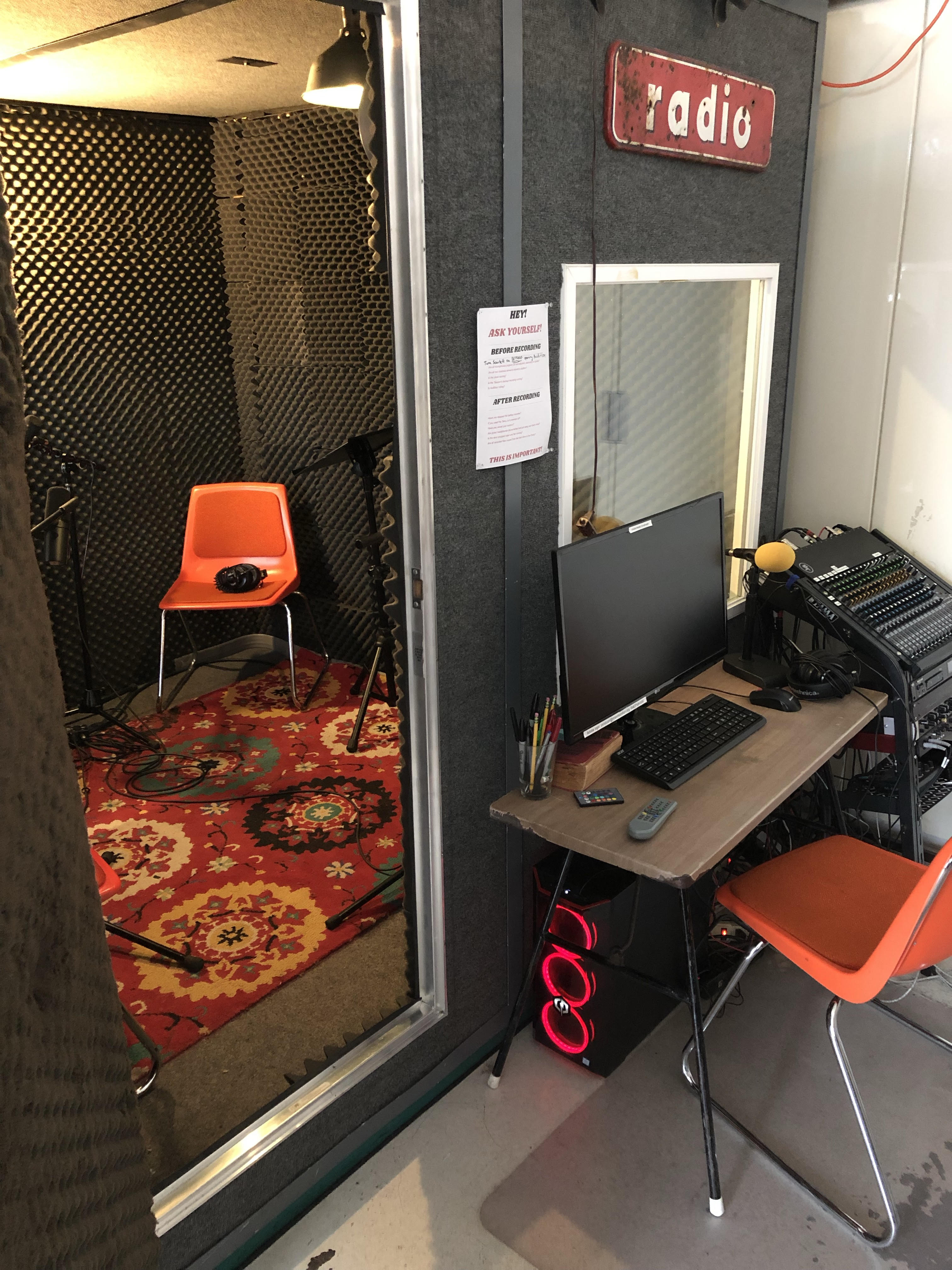
I bought this recording booth on Craigslist. For years, I recorded in my house, and walls lined with books and lots of soft furniture were enough to make my recordings sound passable, but then my wife told me to get an office. The intern in our living room kept waking up the baby.

The office is in a concrete loft building, very unforgiving for sound, so I ended up in a guy’s backyard in Harvard Heights, in central LA [checking out this booth]. He was a huge Samoan dude who’d run a Pacific Islander R&B label until his business partner went on tour as Justin Bieber’s vocal coach. I bought it for three grand, hired a guy with a van to bring it to the office and set it up, and we were in business.

Guests often comment on the booth — the spectrum runs from, “this is a little low-rent” to “what am I, in one of the Saw movies?” Honestly I think that helps keep our conversations human. It’s not quite soundproof; one of our producers is a particularly loud laugher and he ends up on the tape a lot. But honestly I kind of love it.

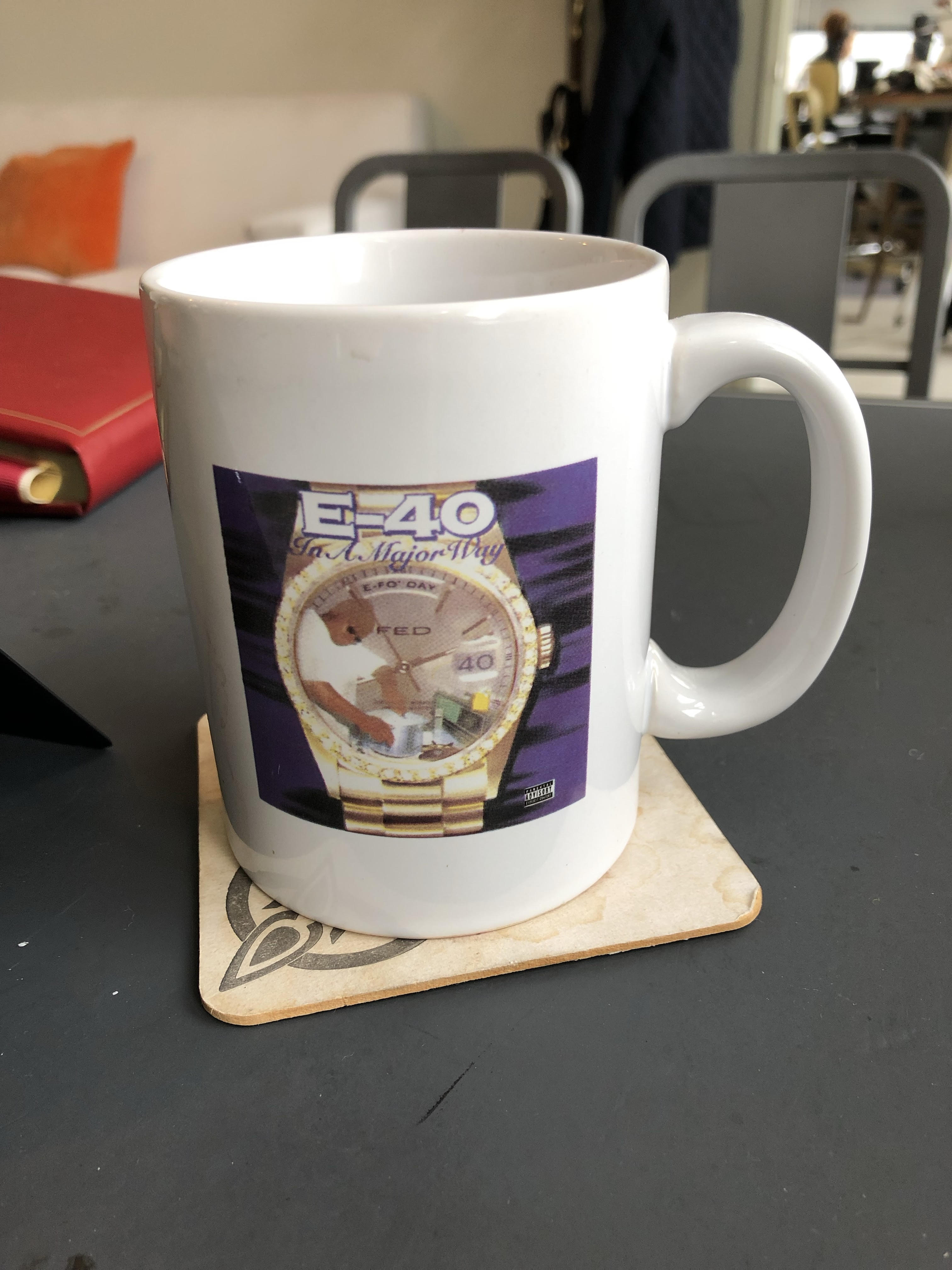
Also pictured: My lucky mug. It has E-40’s “In A Major Way” album cover on it.

07 Mar 2019

Huawei sues America as SoftBank spends more money

Today, a bunch of analysis on stories we have been covering the last few weeks.

You’re reading the Extra Crunch Daily. Like this newsletter? Subscribe for free to follow all of our discussions and debates.

SoftBank wants to spend more billions
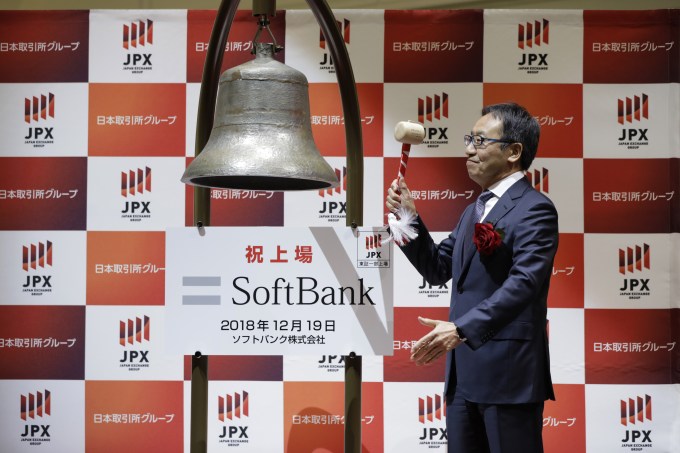
Kiyoshi Ota/Bloomberg via Getty Images

Three inter-related stories today on SoftBank and its Vision Fund. First, an analysis from my Bangkok-based colleague Jon Russell, who notes that controversies surrounding the murder of journalist Jamal Khashoggi hasn’t deterred the Vision Fund from its investments in the Asia-Pacific region:

The $100 billion megafund has done 21 deals over the last two quarters, that’s as more than in the other quarters of the previous year combined, according to data from Crunchbase, thanks to an uptick from Asia. Since the October 2 murder, there have been 11 investments in U.S. companies, seven in Asia, two in Europe and one in Latin America. Just this week, the fund completed a near $1.5 billion investment in Southeast Asia-based ride-hailing company Grab.

While U.S. and European firms have more options, and therefore, perhaps deserve more scrutiny, Softbank’s cash is increasingly the only game in town for startups in Asia, where there are fewer alternatives for later stage capital outside of large Chinese private equity firms or tech giants — which come with their own risks.

You should read the rest of Jon’s data analysis of where the Vision Fund is investing and why.

I want to comment though on this incessant framing of Khashoggi and SoftBank by the press. By now, we all know that Saudi Arabia and Abu Dhabi are the plurality of the Vision Fund’s capital. It’s a bit of an unfortunate circumstance, as I wrote in my year-end report on SoftBank:

There have been strong calls for Masayoshi Son to avoid Saudi Arabia in future fundraises, but that is complicated for one simple reason: there are just not that many money managers in the world who can a) invest tens of billions of dollars into firms backing risky technology investments, and b) are willing to ignore SoftBank’s massive debt stack and existential risks.

The murder of Khashoggi was heinous and wrong. Yet, there is a whole spectrum of bad LPs. Chinese government funds are among the heaviest investors in Silicon Valley as well, and of course, its record on human rights is hardly out of sync with Saudi Arabia. Many family offices with ties to unsavory industries and corruption permeate the LP lists at prominent venture capital funds.

I’d love to see less money laundering in Silicon Valley and cleaner capital sources. Until founders, VCs, and employees jointly work to make clean capital a priority though, I think the constant focus on one-off cases is shrill and mostly unhelpful.

The second major story is that SoftBank is launching another multi-billion dollar fund, this time in Latin America. The Innovation Fund, as my colleague Ingrid Lunden wrote, has $2 billion in capital to invest in the region. From the article:

This is the first time that SoftBank has created a fund of this kind focused on a single region — although it has spearheaded big bets into specific countries like India in the past — and it appears to the be first time that it has formally established a group to help other portfolio companies expand in a region, although this is likely something that SoftBank would have been doing on an informal basis before now.

We will have more on global expansion of the internet to the next billion users tomorrow, but suffice it to say, major investors are opening their checkbooks to regions outside the West as billions of consumers join the digital economy and become targets for investment. The first wave was around the seed stage in places like Latin America and Africa, but as that initial wave of startups mature, we can expect growth-stage VCs to start to intensely search for deals.

Finally, we have been tracking SoftBank’s horrifying debt situation for some time, which is complicated by the Japanese government’s goal of increasing competition among the country’s mobile service operators in a bid to lower prices.

Now, Japan’s prime minister Shinzo Abe intends to move forward with such plans. His cabinet this week approved a plan to force mobile operators to lower fees by separating service fees from device costs. Cabinet approval sends the bill to the legislature for a vote. From the Japan Times:

Two of the country’s three major carriers, SoftBank Corp. and KDDI Corp., through its au brand, say they already comply with the new rules, while NTT Docomo Inc. has said it plans to do so this spring.

SoftBank has argued that it is already in a strong position to handle these new laws, but with a new telecom entrant expected from ecommerce giant Rakuten, things are changing rapidly in the normally staid Japanese telco market, and that could put pressure on SoftBank given its debt load.

Huawei and the U.S. both have weak strategies
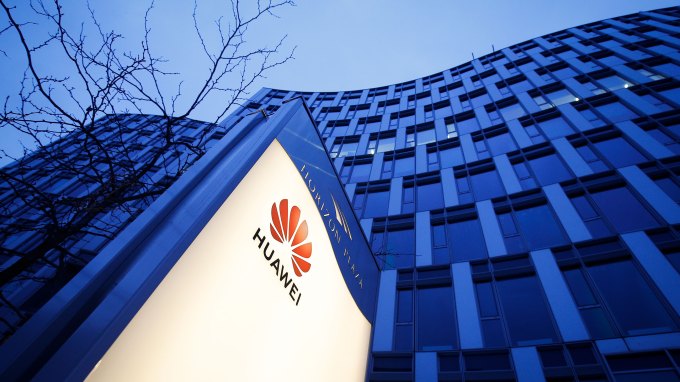
Horizon Plaza, the office building where the headquarters of the Polish branch of Huawei is located is seen in Warsaw, Poland

Photo by Jaap Arriens/NurPhoto via Getty Images

Last night, Huawei announced that it was suing the U.S. over last year’s ban on government agencies buying Huawei equipment, which was passed by Congress as part of the defense authorization bill. Legal scholars say that the lawsuit is highly unlikely to succeed, although it may delay implementation of the ban as the courts handle yesterday’s lawsuit.

Meanwhile, the U.S. continues to ratchet up pressure on its allies to ban Huawei, pressure that hasn’t been well-received.

Far from a nuanced battle over the future of telecommunications infrastructure, the U.S. and Huawei seem to be engaged in a muddy slugfest without a clear strategy on where this fight will lead.

The U.S. continues to demand a ban on Huawei even as it steadfastly refuses to provide evidence of backdoors or other security flaws in the company’s equipment. Given that Huawei’s competitors are almost exclusively American companies, the clear economic benefits of a ban for the U.S. increases the evidentiary standards. The U.S. has failed to provide that evidence.

As TechCrunch’s security editor Zack Whittaker wrote a few weeks ago:

The reality is that China is no more a national security threat than the U.S. is to China, which has its own burgeoning networking equipment business. Just as much as the U.S. and Canada might not want to use Huawei or ZTE equipment in their networks for fear of a surprise cyberattack ten years down the line, why should China, Russia, or any other “frenemy” state choose HPE or Cisco technologies?

Companies have an option: Is the enemy you know better than the one you don’t?

One theory of course is that the U.S. doesn’t have such evidence. Another theory that I would posit is that the U.S. does know about specific backdoors, but wants to use those backdoors for espionage rather than revealing them to the public. Whatever the reason, the continual lack of evidence but constant demands for a ban is stretching the patience for many of America’s most important allies.

Meanwhile, Huawei’s lawsuit is a weak strategy for confronting American intransigence on its cybersecurity. While its equipment has been purchased by rural American telcos due to its cost effectiveness, the U.S. is not a critical market for Huawei. Last year’s ban might have symbolic power, but no more or less than any other regulatory action against the company. If anything, the Streisand effect here is kicking in: more and more Americans (and presumably international news readers) now know about the ban.

Frankly, the U.S. and China are usually much more sophisticated than this.

Other news of companies spending (or not spending) billions

Photo from Lyft

Lyft S-1

I (finally) read through it last night, and I have to say that I have very little to say on it. Since Lyft files its S-1 through the emerging growth companies mechanism, it has to provide less disclosure about its business than a typical listing. I found the S-1 to reveal surprisingly little about the health of Lyft’s revenue model other than the obvious jaw-dropping losses. There is a little bit of cohort analysis, and some numbers around user spend, but very little in the way of city-by-city market share or changing spending and earning patterns of drivers and riders.

That said, one facet of the S-1 I found interesting is the cap table. Given Lyft’s profligate spending, it is interesting to see how much its early VC investors have been diluted over the years. Andreessen Horowitz owns 6.25%, Alphabet owns 5.33%, seed investor Floodgate owns 0.63% of the company, and most other firms are below the 5% reporting threshold. No one at Floodgate is crying at the math of 0.0063 x BIG HUGE VALUATION, but it is quite something to see how much these ownership percentages shrink on high-spending startups.

Remixing infrastructure

We’ve talked about infrastructure costs a lot around here, so it is exciting to see some great investments in the space. Remix grabbed $15 million in VC, which should help the SaaS urban transportation planning startup continue to grow.

There is a huge opportunity for new companies to enter these sorts of planning spaces — software here tends to be extremely old, as Bloomberg recently discussed. These may not be Lyft-scale businesses, but there is a serious chunk of change to made here, while improving society and the environment to boot.

Also on infrastructure, I finally got around to that Guardian article on concrete. I found it quite compelling:

After water, concrete is the most widely used substance on Earth. If the cement industry were a country, it would be the third largest carbon dioxide emitter in the world with up to 2.8bn tonnes, surpassed only by China and the US.

It’s worth the 15 minute read if you haven’t thought about the core material of most structures built on the planet today.

Obsessions

  • Perhaps some more challenges around data usage and algorithmic accountability
  • We have a bit of a theme around emerging markets, macroeconomics, and the next set of users to join the internet.
  • More discussion of megaprojects, infrastructure, and “why can’t we build things”

Thanks

To every member of Extra Crunch: thank you. You allow us to get off the ad-laden media churn conveyor belt and spend quality time on amazing ideas, people, and companies. If I can ever be of assistance, hit reply, or send an email to danny@techcrunch.com.

This newsletter is written with the assistance of Arman Tabatabai from New York

You’re reading the Extra Crunch Daily. Like this newsletter? Subscribe for free to follow all of our discussions and debates.

07 Mar 2019

Hammerhead raises $4.2M to build a smarter operating system for bikes

Hammerhead founder and CEO Piet Morgan is a bicyclist, and he started the company to create something he wanted for his rides— a better navigation system.

So Hammerhead crowdfunded its first product, the H1, and subsequently built Karoo, a “cycling computer” with features for navigation and training. But Morgan told me his ambitions is bigger than that.

After all, he sees a future where electric bikes need smart range projections, where bikeshare fleets need to be managed, where social training programs like Strava can pull data from the bike itself and where any bicycle should come with theft and crash alerts.

“There needs to be a software layer on the bike,” Morgan said. “That’s really what we’re trying to build.”

That future isn’t here yet, however, so Hammerhead is starting out by building a consumer device. And while Morgan eventually plans to license the software to bike manufacturers and other partners, he said there will be a common goal across the business: To build products that cyclists want to use.

Karoo

Karoo

That includes the Karoo device itself — a mountable, shockproof computer with a high resolution, anti-glare touchscreen. But Morgan argued that the real differentiator is the software, because the dominant products from companies like Garmin are built with “software that’s pretty rudimentary.”

Karoo, on the other hand, runs on a regularly updated, Android-based operating system called Karoo OS. It includes a mapping and turn-by-turn navigation system that the company is designed specifically for cyclists. And the real potential may be unlocked when the launches an app store for that will allow third-party software to run on the device.

Hammer is announcing that it has raised $4.2 million in seed funding led by Primary Ventures and KB Partners, with Primary’s Steve Schlafman and KB’s Keith Bank joining the board. Courtside Ventures, Maveron, Drummond Road Capital, MapMyFitness co-founder Robin Thurston and Zipp CEO Andy Ording also participated.

“What really makes us a compelling venture-scale opportunity is what I believe is really going to be almost a winner-take-all situation,” Morgan said. “The company that [defines] this category is going to be able to own it.”

07 Mar 2019

We want your feedback on our new membership service

We built Extra Crunch from the ground up to solve your toughest challenges as a builder and founder, ranging from deep dives on successful startups to addressing key issues that startups face.

And now that we’ve launched, we want to know what you think. Is there a specific topic you would like for us to cover? Are there certain product features that you would like to see improved? New features you would like added? How we can improve?

Head over to our community forum to share your thoughts. You can search and vote for ideas from others or post your own idea. Your feedback helps us better meet your needs.

Now if you’re not a subscriber, here is just a taste of what you’ve been missing:

Learn more about Extra Crunch and try it free.