Author: azeeadmin

04 Mar 2019

What critics get wrong about the “American AI Initiative”

There’s been a bit of hysteria – AIsteria, if you will – over the Trump administration’s recently issued American AI Initiative, formally known as ‘Executive Order on Maintaining American Leadership in Artificial Intelligence.”

The initiative is a broad strategy “to sustain and enhance the scientific, technological, and economic leadership position of the United States in AI R&D and deployment.”

But critics have complained it’s short on specific actions and lacks new funding to accomplish its goals, in contrast to China’s 2017 “Next Generation Artificial Intelligence Development Plan,” which allocated billions to establish China as the “premier global AI innovation center” by 2030.

As Babson College professor Thomas Davenport noted in a recent essay in The Conversation. 

One Chinese state alone has said it will devote $5 billion to developing AI technologies and businesses. The city of Beijing has committed $2 billion to developing an AI-focused industrial park. A major port, Tianjin, plans to invest $16 billion in its local AI industry.

“China is ready to leapfrog the USA in AI. The US initiative has NO money,” tweeted one skeptic, Moor Insights & Strategy analyst Karl Freund. 

While I wholeheartedly agree that the United States must not cede AI leadership to China or any other country, I find some of the critiques of the initiative overwrought. In fact, even if its value is largely symbolic – more of a vision statement than a detailed blueprint – I still believe the initiative can help move the national AI agenda forward.

Let’s unpack a few things.

While many talk about AI in the context of a rivalry between two superpowers – and it well may be that in some ways – AI is unlike similar global competitions of the past. Take the 20th century Space Race between the United States and the Soviet Union, for example. The effort would have never gotten off the ground, literally, without huge financial commitments from the U.S. government.

Money for AI’s advancement, however, is pouring in from the private sector. According to a report by CB Insights and PwC, venture capital funding of AI companies skyrocketed 72 percent last year, to $9.3 billion. The surge followed three years of steadily increasing investment, with a 28 percent average annual increase between 2015 and 2017.

And it’s not as though the government isn’t doing its part. IDC estimated the federal investment in cognitive and AI technologies is growing at a CAGR of 54.3 percent between 2018 and 2021.

Furthermore, while stopping short of specific dollar amounts, the initiative wasn’t exactly silent on the requirement for more government funding, calling on all relevant agencies to consider AI a top R&D priority and take that into account when developing budget proposals for fiscal 2020 and beyond.

Meanwhile, colleges and universities working on exciting research in AI and its enabling technology, machine learning, and more and more are offering AI-specific training to help solve a skills shortage in the field.

College students reportedly enrolled in introductory AI and machine learning classes in record numbers last year, the number of academic papers on the topic soared, and, according to a Stanford University analysis of transcripts, officials mentioned the technology in more than 70 congressional hearings.

I’m not surprised that Carnegie Mellon (no AI slouch, having introduced an undergraduate AI program last year) reacted very positively to the American AI Initiative. “The American AI Initiative’s focus on prioritizing research and development, responsibly leveraging data as a national resource and investing in an AI-ready workforce will bring new energy to our national innovation ecosystem,” the university said in a statement.

All of this points to the reality that the private sector, as has been the case so many times throughout the annals of U.S. innovation, is taking the lead in AI and counting on entrepreneurial spirit rather than government largesse to win the day.

As a Bloomberg editorial put it: “This contrasts favorably with (say) China, where the government is pumping billions of dollars directly into AI-related companies. This may advance the field somewhat, but it’s also a good way to sustain hopeless businesses, crowd out private investment, encourage cronyism, inflate bubbles, and generally make a hash of things.”

Simply by virtue of shining a bright spotlight on AI as a national priority, the initiative can have significant practical effects. For example, let’s say a VC firm is deciding whether to fund an AI startup or one in another hot space, such as the Internet of Things. The tone set by the initiative could tilt the decision in the AI firm’s favor.

It also could spur more universities to investigate interesting AI technologies in their labs, and further invigorate efforts to train the next generation of AI practitioners.

The American AI Initiative isn’t as cut and dried as the critics suggest. If it’s nothing more than a stake in the ground about AI’s essential role in the nation’s future, it’s still an important stake.

04 Mar 2019

Glossier launches its first spin-off brand, a line of Instagram-friendly ‘dialed-up’ beauty extras

Glossier, known for its line of understated makeup products and a cult-following of millennial Instagrammers, is getting colorful with the launch of its first spin-off brand, Glossier Play.

The company — led by founder and chief executive officer Emily Weiss, who built the nearly $400 million business from a makeup blog called Into The Gloss — has raised a total of $92 million in venture capital funding from top-tier consumer investors Forerunner Ventures, Index Ventures and IVP. Stitch Fix founder Katrina Lake and Forerunner founder and general partner Kirsten Green, are among the company’s board members.

Weiss introduced Glossier in 2014 as a clean-skincare and natural beauty advocate. Today, the direct-to-consumer business boasts a growing line of barely there makeup, designed to mimic Weiss’s own subtle, au naturale vibe. The launch of Glossier Play, inspired by 1970s’ nostalgia, is its first foray into bright colors, glitter and, in the brand’s own words, “dialed-up extras.”

“We wanted to explore color the Glossier way,” a spokesperson for the company said. “This meant developing high-quality products without the moody, expert-centric rhetoric of most luxury brands. Glossier Play is all about fun and creative expression. These products were two years in the making, and just like Glossier’s modern essentials, they are designed to stand the test of time (not trend-driven or fast fashion).”

Glossier Play’s initial line-up of “extras” includes colored eyeliners ($15), highlighters ($20), multi-purpose glitter gel ($14) and the “Vinylic Lip” ($16). Customers can purchase “The Playground,” a set that includes each of the new products, for $60.

The advertising campaign for the Instagram -friendly line will be led by none other than Instagram star Donté Colley, as well as pop musician Troye Sivan. The new line and future spin-offs will help Glossier compete with beauty incumbents, Estée Lauder and L’Oréal, for example, in a market estimated to be worth $750 billion by 2024.

Glossier, headquartered in New York, counts 200 employees, meager in comparison to its nearly 2 million — and growing — social media following. The company surpassed $100 million in annual revenue in 2018, it tells TechCrunch, and acquired 1 million new customers. In total, Glossier retails 29 products across skincare, makeup, body, and fragrance.

The company won’t be introducing additional brands this year and clarified it is not a brand incubator.

04 Mar 2019

Google found it paid men less than women for the same job

The story we’re used to hearing is that women get paid less than men. In Google’s case, according to its own internal pay audit, it turned out male-identified Level 4 Software Engineers received less money than women in that same role. That led to Google paying $9.7 million to adjust pay for 10,677 employees.

It’s not clear how many of the employees who received pay adjustments were men (TechCrunch reached out to Google about this, but the company declined to share any additional data) but Google does cite the underpaying of men as a reason for why the company paid more in adjustments for 2018 than in 2017. But The New York Times reports men received a disproportionately higher percentage of the money.

For 2017, Google paid just $270,000 to close any wage gaps for 228 employees across six job groups. Google also cited its new hire analysis as a reason why the company had to make more adjustments. The analysis, which entailed looking for discrepancies in offers to new hires, accounted for 49 of the total amount spent on adjustments. 

“Our pay equity analysis ensures that compensation is fair for employees in the same job, at the same level, location and performance,” Google Lead Analyst for Pay Equity and People Analytics Lauren Barbato wrote in a blog post. “But we know that’s only part of the story. Because leveling, performance ratings, and promotion impact pay, this year, we are undertaking a comprehensive review of these processes to make sure the outcomes are fair and equitable for all employees.”

Meanwhile, Google is still battling a class-action pay discrimination lawsuit and is the subject of a Labor Department investigation pertaining to compensation data.

04 Mar 2019

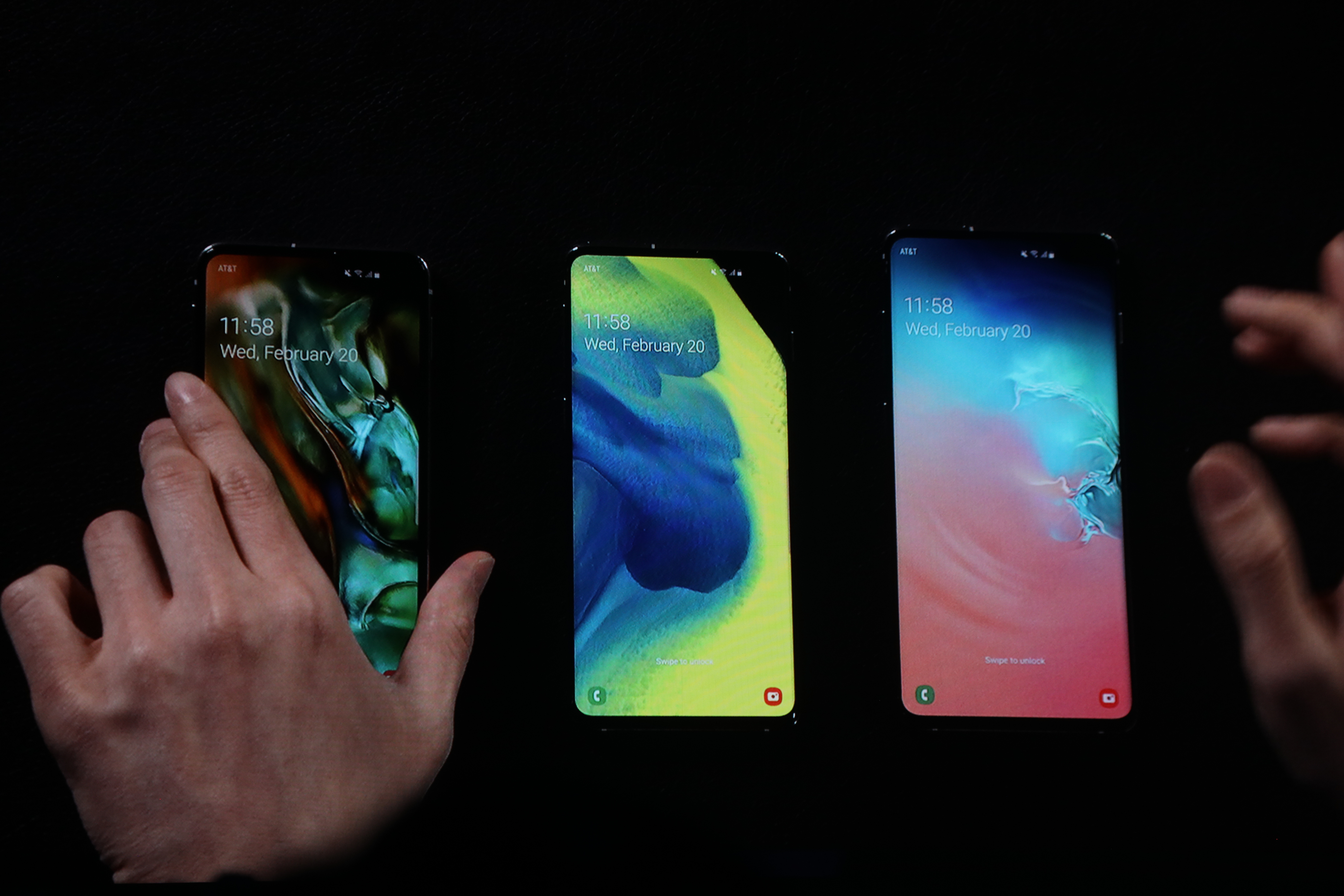
Galaxy S10 takes the ‘best smartphone display’ crown

As you may have gathered from our review of Samsung’s Galaxy S10, it’s a very solid phone with lots of advanced features. But one thing that’s especially difficult to test is the absolute quality of the displaymate — which is why we leave that part to the experts. And this expert says the S10’s screen is the best ever on a smartphone.

Ray Soneira has tested every major phone, tablet, and laptop series for many a year, using all the cool color calibration, reflectance and brightness measurement, and other gear that goes with the job. So when he says the S10’s display is “absolutely stunning and Beautiful,” with a capital B at that, it’s worth taking note.

OLED technology has advanced a great deal since the first one I encountered, on the Zune HD — which still works and looks great, by the way, thank you. But originally it had quite a few trade-offs compared with LCD panels, such as weird color casts or pixel layout issues. Samsung has progressed well beyond that and OLED has come into its own with a vengeance. As Ray puts it:

The Absolute Color Accuracy on the Galaxy S10 is the Most Color Accurate Display we have ever measured. It is Visually Indistinguishable From Perfect, and almost certainly considerably better than your existing Smartphone, living room HDTV, Tablet, Laptop, and computer monitor, as demonstrated in our extensive Absolute Color Accuracy Lab Measurements.

The very challenging set of DisplayMate Test and Calibration Photos that we use to evaluate picture quality looked absolutely stunning and Beautiful, even to my experienced hyper-critical eyes.

Make sure you switch the phone’s display to “natural mode,” which makes subtle changes to the color space depending on the content and ambient light.

And although he has enthused many times before about the quality of various displays and the advances they made over their predecessors, the above is certainly very different language from, for example, how he described the reigning champ until today — the iPhone X:

Apple has produced an impressive Smartphone display with excellent performance and accuracy, which we cover in extensive detail below. What makes the iPhone X the Best Smartphone Display is the impressive Precision Display Calibration Apple developed, which transforms the OLED hardware into a superbly accurate, high performance, and gorgeous display, with close to Text Book Perfect Calibration and Performance!!

High praise, but not quite falling all over himself, as he did with the S10. As you can see I rate smartphone displays chiefly by the emotional response they evoke from Ray Soneira.

At this point, naturally, the gains from improving displays are fairly few, since to be honest, not many people care or can even tell today’s flagship displays apart. But little touches like front and back sensors for ambient light detection, automatic calibration and brightness that take user preferences into account — these also improve the experience, and phone makers have been adding them on at a good clip as well.

No matter what flagship phone you buy today, it’s going to have a fantastic camera and screen — but if you like to see it all in black and white, read through the review and you’ll find your hopes justified.

04 Mar 2019

Anthony Levandowski will be speaking at TC Sessions: Robotics + AI April 18 at UC Berkeley

Late last week, we announced the schedule for April 18’s TC Sessions: Robotics + AI event at U.C. Berkeley, including some heavy hitters like Marc Raibert, Melonee Wise and Ken Goldberg. At the time, we noted that still had some big names left to reveal — and we weren’t joking.

Today we’re excited to announce that we’ll be joined by autonomous vehicle pioneer, Anthony Levandowski.

Levandowski is the co-founder and CEO of Pronto, a new startup developing aftermarket kits for semi-trucks. The company is touting the safety potential of autonomous vehicle technologies for cross-country hauls. “We are not building technology that tells vehicles how to drive,” he wrote in a Medium post announcing Pronto’s launch. “Instead, our team of engineers is building tech that can learn how to drive the way people do.”

Before founding Pronto, Levandowski served as the head of Uber’s autonomous vehicle program and helped Google develop its own initiative that ultimately became Waymo. The engineer began his career by building the autonomous motorcycle Ghostrider for DARPA’s Grand Challenge.

Early bird ticket sale ends in less than 2 weeks. Grab your ticket for just $249 today and save $100. Student tickets are on sale for just $45 and can be purchased here.

Are you an early stage startup in robotics or AI? Grab a $1500 demo table at the event and get your company in front of 1000+ tech enthusiasts and investors.

04 Mar 2019

Outdoor Tech’s Chips ski helmet speakers are a hot mess of security flaws

Sometimes the “smartest” gadgets come with the shoddiest security.

Alan Monie, a security researcher at U.K. cybersecurity firm Pen Test Partners, bought and tested a pair of Chips 2.0 wireless speakers, built by California-based Outdoor Tech, only to find they’re a security nightmare.

The in-helmet speakers allow users to listen to music on the go, make calls, and talk to your friends through the walkie-talkie — all without having to take your helmet off. The speakers are connected to an app on your phone.

You’re probably thinking: how bad can the security be on a simple-enough ski helmet speakers be?

According to Monie, who wrote up his findings, it’s easy to grab streams of data from the server-side API, used to communicate with the app, such as usernames, email addresses, and phone numbers of anyone with an account. Monie said the API returned scrambled passwords, but that password reset codes were sent in plaintext.

Worse, it’s possible to reveal a user’s precise geolocation, and listen in on anyone’s real-time walkie-talkie conversations.

The only thing worse than the security flaws are the company’s lack of response when Monie reached out to get the issues fixed. After a short email exchange over several days, the company stopped responding, he said.

“We really like the product but its security is sorely lacking,” said Monie in his report.

It’s the latest example of many where gadget makers don’t take little to no responsibility for the security of their hardware or software. Given these days so many devices connect to the internet – either directly or through an app — every company had to think like a security company.

Outdoor Tech did not return a request for comment.

04 Mar 2019

WarnerMedia hires Bob Greenblatt in leadership shuffle

Changes are afoot at WarnerMedia.

Last week, Richard Pleper announced that he was leaving the CEO role at HBO, following reports that WarnerMedia and its new corporate parent AT&T were pushing for network to get bigger and broader. Turner President David Levy is also departing.

Today, WarnerMedia announced  that former NBC Entertainment Chairman Bob Greenblatt (who The Hollywood Reporter had previously said was a likely hire) has joined as chairman of of WarnerMedia Entertainment and Direct-to-Consumer. That means Greenblatt will be in charge of HBO, TBS, truTV and the forthcoming WarnerMedia streaming service.

The company announced other leadership changes at the same time: CNN head Jeff Zucker will become the chairman of WarnerMedia News and Sports (which includes Turner Sports, Bleacher Report and AT&T’s sports networks, as well as CNN) and president of CNN. Warner Bros. CEO Kevin Tsujihara is taking charge of a new kids and young adults business that will include Cartoon Network, Adult Swim and Boomerang . (He’ll also be leading Otter Media and Turner Classic Movies.) And Turner International President Gerhard Zeiler is becoming WarnerMedia’s chief revenue officer.

“Adding Bob Greenblatt to the WarnerMedia family and expanding the leadership scope and responsibilities of Jeff, Kevin and Gerhard – who collectively have more than 80 years of global media experience and success – gives us the right management team to strategically position our leading portfolio of brands, world-class talent and rich library of intellectual property for future growth,” WarnerMedia CEO John Stankey said in a statement.

In addition to tinkering with its leadership structure, WarnerMedia has also been culling its existing streaming services in advance of its big direct-to-consumer launch.

04 Mar 2019

Can predictive analytics be made safe for humans?

Massive-scale predictive analytics is a relatively new phenomenon, one that challenges both decades of law as well as consumer thinking about privacy.

As a technology, it may well save thousands of lives in applications like predictive medicine, but if it isn’t used carefully, it may prevent thousands from getting loans, for instance, if an underwriting algorithm is biased against certain users.

I chatted with Dennis Hirsch a few weeks ago about the challenges posed by this new data economy. Hirsch is a professor of law at Ohio State and head of its Program on Data and Governance. He’s also affiliated with the university’s Risk Institute.

“Data ethics is the new form of risk mitigation for the algorithmic economy,” he said. In a post-Cambridge Analytica world, every company has to assess what data it has on its customers and mitigate the risk of harm. How to do that, though, is at the cutting edge of the new field of data governance, which investigates the processes and policies through which organizations manage their data.

You’re reading the Extra Crunch Daily. Like this newsletter? Subscribe for free to follow all of our discussions and debates.

“Traditional privacy regulation asks whether you gave someone notice and given them a choice,” he explains. That principle is the bedrock for Europe’s GDPR law, and for the patchwork of laws in the U.S. that protect privacy. It’s based around the simplistic idea that a datum — such as a customer’s address — shouldn’t be shared with, say, a marketer without that user’s knowledge. Privacy is about protecting the address book, so to speak.

The rise of “predictive analytics” though has completely demolished such privacy legislation. Predictive analytics is a fuzzy term, but essentially means interpreting raw data and drawing new conclusions through inference. This is the story of the famous Target data crisis, where the retailer recommended pregnancy-related goods to women who had certain patterns of purchases. As Charles Duhigg explained at the time:

Many shoppers purchase soap and cotton balls, but when someone suddenly starts buying lots of scent-free soap and extra-big bags of cotton balls, in addition to hand sanitizers and washcloths, it signals they could be getting close to their delivery date.

Predictive analytics is difficult to predict. Hirsch says “I don’t think any of us are going to be intelligent enough to understand predictive analytics.” Talking about customers, he said “They give up their surface items — like cotton balls and unscented body lotion — they know they are sharing that, but they don’t know they are giving up their pregnancy status. … People are not going to know how to protect themselves because they can’t know what can be inferred from their surface data.”

In other words, the scale of those predictions completely undermines notice and consent.

Even though the law hasn’t caught up to this exponentially more challenging problem, companies themselves seem to be responding in the wake of Target and Facebook’s very public scandals. “What we are hearing is that we don’t want to put our customers at risk,” Hirsch explained. “They understand that this predictive technology gives them really awesome power and they can do a lot of good with it, but they can also hurt people with it.” The key actors here are corporate chief privacy officers, a role that has cropped up in recent years to mitigate some of these challenges.

Hirsch is spending significant time trying to build new governance strategies to allow companies to use predictive analytics in an ethical way, so that “we can achieve and enjoy its benefits without having to bear these costs from it.” He’s focused on four areas: privacy, manipulation, bias, and procedural unfairness. “We are going to set out principles on what is ethical and and what is not,” he said.

Much of that focus has been on how to help regulators build policies that can manage predictive analytics. Since people can’t understand the extent that inferences can be made with their data, “I think a much better regulatory approach is to have someone who does understand, ideally some sort of regulator, who can draw some lines.” Hirsch has been researching how the FTC’s Unfairness Authority may be a path forward for getting such policies into practice.

He analogized this to the Food and Drug Administration. “We have no ability to assess the risks of a given drug [so] we give it to an expert agency and allow them to assess it,” he said. “That’s the kind of regulation that we need.”

Hirsch overall has a balanced perspective on the risks and rewards here. He wants analytics to be “more socially acceptable” but at the same time, sees the needs for careful scrutiny and oversight to ensure that consumers are protected. Ultimately, he sees that as incredibly beneficial to companies who can take the value out of this tech without risking provoking consumer ire.

Who will steal your data more: China or America?

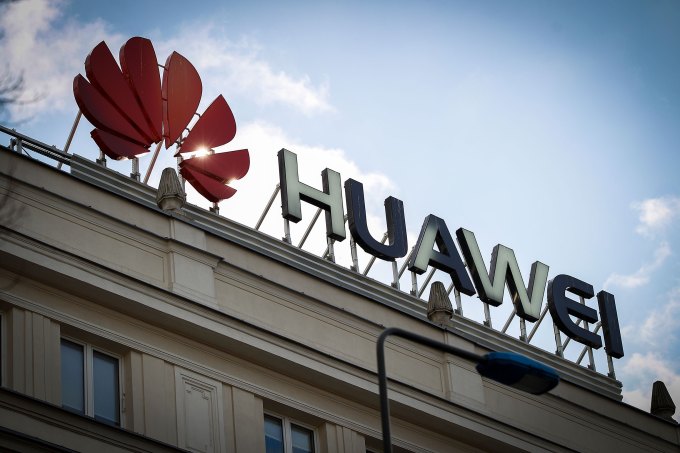
The Huawei logo is seen in the center of Warsaw, Poland

Jaap Arriens/NurPhoto via Getty Images

Talking about data ethics, Europe is in the middle of a superpower pincer. China’s telecom giant Huawei has made expansion on the continent a major priority, while the United States has been sending delegation after delegation to convince its Western allies to reject Chinese equipment. The dilemma was quite visible last week at MWC-Barcelona, where the two sides each tried to make their case.

It’s been years since the Snowden revelations showed that the United States was operating an enormous eavesdropping infrastructure targeting countries throughout the world, including across Europe. Huawei has reiterated its stance that it does not steal information from its equipment, and has repeated its demands that the Trump administration provide public proof of flaws in its security.

There is an abundance of moral relativism here, but I see this as increasingly a litmus test of the West on China. China has not hidden its ambitions to take a prime role in East Asia, nor has it hidden its intentions to build a massive surveillance network over its own people or to influence the media overseas.

Those tactics, though, are straight out of the American playbook, which lost its moral legitimacy over the past two decades from some combination of the Iraq War, Snowden, Wikileaks, and other public scandals that have undermined trust in the country overseas.

Security and privacy might have been a competitive advantage for American products over their Chinese counterparts, but that advantage has been weakened for many countries to near zero. We are increasingly going to see countries choose a mix of Chinese and American equipment in sensitive applications, if only to ensure that if one country is going to steal their data, it might as well be balanced.

Things that seem interesting that I haven’t read yet

Obsessions

  • Perhaps some more challenges around data usage and algorithmic accountability
  • We have a bit of a theme around emerging markets, macroeconomics, and the next set of users to join the internet.
  • More discussion of megaprojects, infrastructure, and “why can’t we build things”

Thanks

To every member of Extra Crunch: thank you. You allow us to get off the ad-laden media churn conveyor belt and spend quality time on amazing ideas, people, and companies. If I can ever be of assistance, hit reply, or send an email to danny@techcrunch.com.

This newsletter is written with the assistance of Arman Tabatabai from New York.

You’re reading the Extra Crunch Daily. Like this newsletter? Subscribe for free to follow all of our discussions and debates.

04 Mar 2019

Shift Technology raises $60 million to detect insurance fraud

Paris-based Shift Technology has raised another $60 million funding round. Bessemer Venture Partners is leading the round and existing investors Accel, General Catalyst, Iris Capital and Elaia Partners are also participating.

Shift Technology is all about detecting fraudulent insurance claims. There are 70 insurance companies around the world relying on its product, such as MACIF in France, Axa in Spain, Assurant, Chubb, CNA and HyreCar in the U.S. And given the size of those companies, it means that Shift Technology is processing a ton of claims every day.

It’s easy to sell this kind of products as fraudulent claims cost a ton of money. If Shift Technology can help you catch more fraudulent claims, you can spend a bit of money to save a lot of money.

The startup has already grown quite a lot since its previous funding round. They now have 200 employees and customers all around the globe. In addition to its headquarters in Paris, Shift Technology also has offices in Boston, London, Hong Kong, Madrid, Singapore and Zurich.

With today’s funding round, the company plans to hire more people in Boston including data scientists and developers. The company is also playing around with an automated claim processing solution.

Shift Technology is creating a strong barrier to entry. Thanks to its huge data set, it can create an AI-powered detection model that is getting more and more accurate. A new company would have a hard time catching up.

04 Mar 2019

Uber Rewards is now available to all riders in the U.S.

Uber Rewards is officially available to all riders in the U.S. This comes after Uber began rolling out Rewards late January.

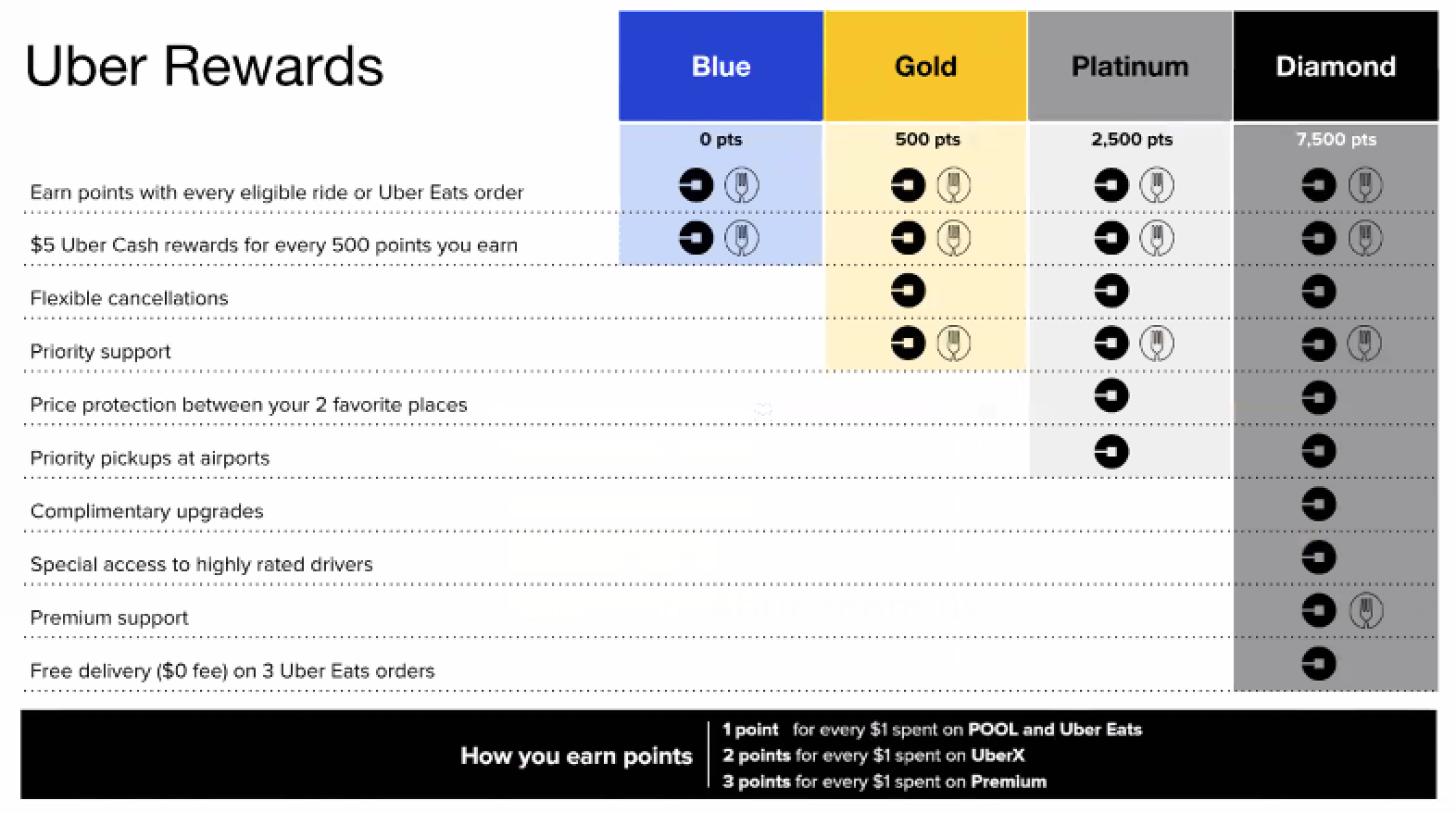
Uber’s loyalty program incentivizes you to be, well, loyal to Uber and not to its competitors. For example, every dollar you spend on UberPool, Express Pool and Uber Eats gets you one point. Once you hit a certain number of points, you can reach certain Rewards levels, like Gold, Platinum and Diamond. Diamond, which requires at least 7,500 points, gets you things like priority pickups at airports, free delivery on Uber Eats orders. Even the most basic level, Blue, gets you a $5 Uber cash reward for every 500 points you earn.

As we noted, Uber Rewards is now available to all of its U.S. customers. To enroll, head on over here. Uber will also count every eligible dollar you spent on Uber and Uber Eats in the six months leading up to enrolling in Rewards toward your membership level.

You can read more about how Uber’s loyalty program works here.