Author: azeeadmin

26 Feb 2019

Google’s new AI grammar checker are now live in Google Docs

Google today announced that its new machine learning-powered grammar checker is now live in Google Docs. The company first introduced this new feature at Cloud Next 2018, but it lingered in early access ever since.

Grammar checkers are nothing new, of course, and even Docs itself has long had one. What’s new here is that Google uses machine translation techniques to find obvious mistakes (see headline) as well as more subtle issues. It’s one thing, after all, to compare words in a dictionary to what you’re writing and mark up mistakes. It’s another to understand complex grammar rules, which can vary by region and style. The company claims that its machine translation technique is able to catch these kinds of issues because they are very hard to encode as a set of hard rules.

“Using machine translation, we are able to recognize errors and suggest corrections as work is getting done,” G Suite product manager Vishnu Sivaji explains in today’s announcement. “We worked closely with linguists to decipher the rules for the machine translation model and used this as the foundation of automatic suggestions in your Docs, all powered by AI.”

What Google is essentially doing here is training a model with correct sentences and then using the same kind of models it would use for translating sentences from English to French to translate incorrect sentences into correct ones.

26 Feb 2019

Google’s new AI grammar checker are now live in Google Docs

Google today announced that its new machine learning-powered grammar checker is now live in Google Docs. The company first introduced this new feature at Cloud Next 2018, but it lingered in early access ever since.

Grammar checkers are nothing new, of course, and even Docs itself has long had one. What’s new here is that Google uses machine translation techniques to find obvious mistakes (see headline) as well as more subtle issues. It’s one thing, after all, to compare words in a dictionary to what you’re writing and mark up mistakes. It’s another to understand complex grammar rules, which can vary by region and style. The company claims that its machine translation technique is able to catch these kinds of issues because they are very hard to encode as a set of hard rules.

“Using machine translation, we are able to recognize errors and suggest corrections as work is getting done,” G Suite product manager Vishnu Sivaji explains in today’s announcement. “We worked closely with linguists to decipher the rules for the machine translation model and used this as the foundation of automatic suggestions in your Docs, all powered by AI.”

What Google is essentially doing here is training a model with correct sentences and then using the same kind of models it would use for translating sentences from English to French to translate incorrect sentences into correct ones.

26 Feb 2019

Google’s Flutter toolkit will get web-based dev tooling

Google today launched version 1.2 of its Flutter cross-platform UI framework at MWC Barcelona. With this, Flutter now features support for Android App Bundles, Google’s latest technology for packaging Android apps more efficiently and for creating instant apps, too. In addition, the framework lays the groundwork for helping developers accept in-app payments and adds a number of new web-based tools, too.

It’s only been a couple of months since the Flutter team shipped version 1.0. In case you are wondering what happened to version 1.1: that was last month’s beta release and the team plans to ship roughly one 1.x update every month.

Unsurprisingly, this update comes with the usual stability and performance updates, as well as the latest Dart 2.2 SDK (by default, Flutter apps are written in Google’s Dart language), but the team also notes that it worked hard to improve iOS support, too, with support for floating cursor text editing, for example.

While Flutter always focused on mobile, the team also recently started talking about building desktop apps with the framework. To prepare for that, version 1.2 now features new keyboard events and mouse hover support. Project Hummingbird, the Flutter team’s project for bringing Flutter to the web, will also become available as a technical preview in the next few months.

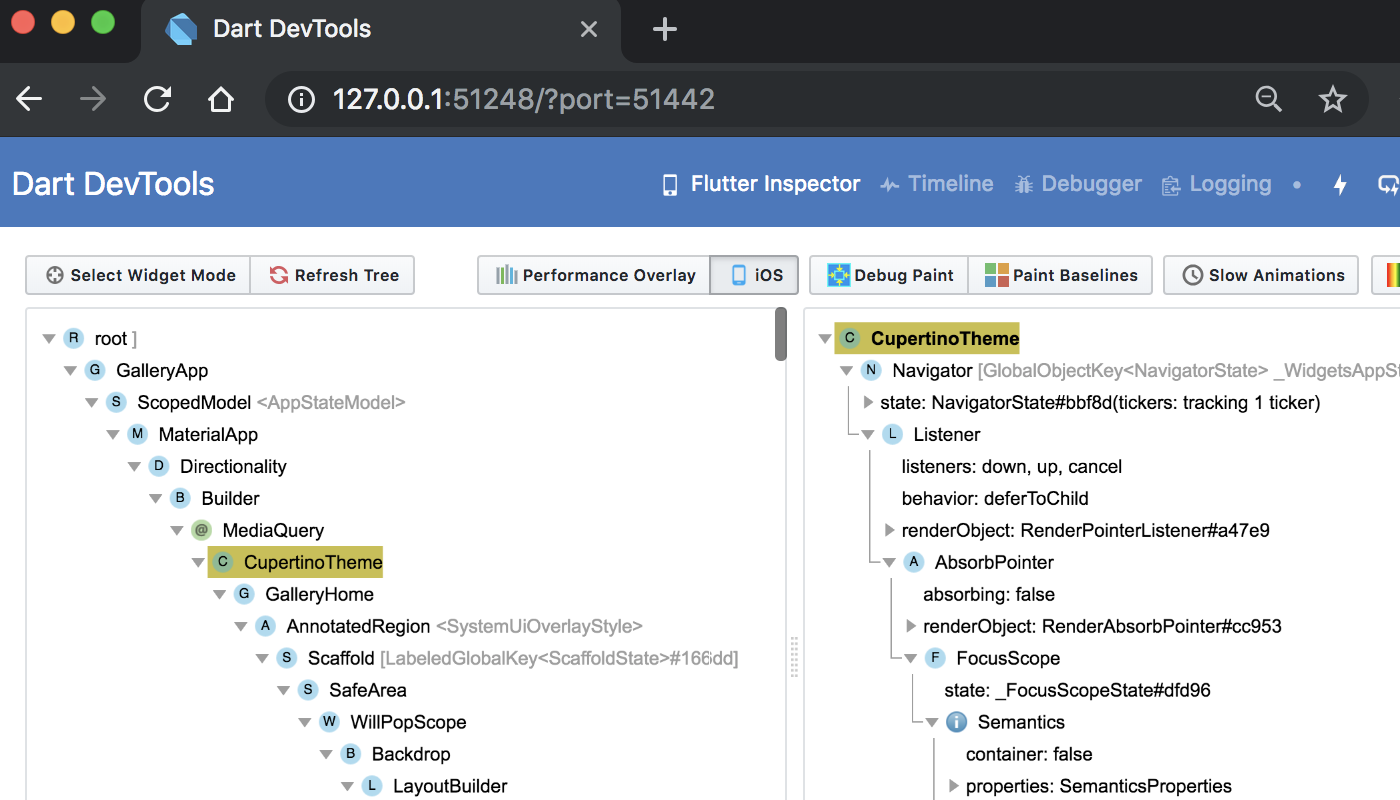
As far as the new dev tools go, it’s worth noting that Google already built Flutter support into Android Studio and added tools for Microsoft’s increasingly popular Visual Studio Code. Now, it’s also building new web-based programming tools, the Dart DevTools. These run locally and include a widget inspector, a timeline view, a source-level debugger and a logging view.

For now, these tools are officially in preview and are available for installation alongside the existing VS Code and Android Studio extensions and add-ins.

“We plan to invest further in Dart DevTools as a first-class unified tool for Flutter developers, and as integration for web-based experiences improves, we plan to build these services directly into tools like Visual Studio Code,” the team notes in today’s updates.

In addition to today’s launch, the Flutter team also announced a new contest: Flutter Create, which challenges developers to build something “interesting, inspiring and beautiful” with Flutter using 5K or less of Dart code. Among the prizes is a $10,000 iMac Pro, which, at 128 GB of RAM, isn’t likely to struggle with that 5K code base.

26 Feb 2019

Google’s Flutter toolkit will get web-based dev tooling

Google today launched version 1.2 of its Flutter cross-platform UI framework at MWC Barcelona. With this, Flutter now features support for Android App Bundles, Google’s latest technology for packaging Android apps more efficiently and for creating instant apps, too. In addition, the framework lays the groundwork for helping developers accept in-app payments and adds a number of new web-based tools, too.

It’s only been a couple of months since the Flutter team shipped version 1.0. In case you are wondering what happened to version 1.1: that was last month’s beta release and the team plans to ship roughly one 1.x update every month.

Unsurprisingly, this update comes with the usual stability and performance updates, as well as the latest Dart 2.2 SDK (by default, Flutter apps are written in Google’s Dart language), but the team also notes that it worked hard to improve iOS support, too, with support for floating cursor text editing, for example.

While Flutter always focused on mobile, the team also recently started talking about building desktop apps with the framework. To prepare for that, version 1.2 now features new keyboard events and mouse hover support. Project Hummingbird, the Flutter team’s project for bringing Flutter to the web, will also become available as a technical preview in the next few months.

As far as the new dev tools go, it’s worth noting that Google already built Flutter support into Android Studio and added tools for Microsoft’s increasingly popular Visual Studio Code. Now, it’s also building new web-based programming tools, the Dart DevTools. These run locally and include a widget inspector, a timeline view, a source-level debugger and a logging view.

For now, these tools are officially in preview and are available for installation alongside the existing VS Code and Android Studio extensions and add-ins.

“We plan to invest further in Dart DevTools as a first-class unified tool for Flutter developers, and as integration for web-based experiences improves, we plan to build these services directly into tools like Visual Studio Code,” the team notes in today’s updates.

In addition to today’s launch, the Flutter team also announced a new contest: Flutter Create, which challenges developers to build something “interesting, inspiring and beautiful” with Flutter using 5K or less of Dart code. Among the prizes is a $10,000 iMac Pro, which, at 128 GB of RAM, isn’t likely to struggle with that 5K code base.

26 Feb 2019

Here’s why you’re getting all those sweet Uber and Lyft discounts

In its final weeks as a private company, Lyft is reaching for every inch of the rideshare market it can get.

To do this, it’s revisiting an old strategy: discounts. If you’re a Lyft user, you may have noticed the company has been offering cheaper rides in the last few weeks. Why? To encourage riders to ditch the Uber app in favor of Lyft and to tack on additional rides from users who may have otherwise hesitated to dole out the cash. After all, a $13 ride is a lot different from a $7 ride.

According to a report from The Information, Lyft’s discounts were extended to roughly one-third of riders’ recent trips and helped Lyft gather an additional 4 percent of the U.S. rideshare market. Lyft now holds 34 percent of the market, while Uber claims the remaining 66 percent. The additional percentage points will give Lyft a leg up as it launches its road show, the final step ahead of its Nasdaq IPO, expected in April.

We’ve reached out to Lyft to confirm the details in The Information’s report.

Devoted Uber riders may have noticed discounts, too. The competing ride-hailing giant also unleashed a hefty dose of discounts to keep riders on its app. Uber, of course, is also in IPO registration, expected to debut on the public markets in the first half of 2019, likely one or two months after Lyft.

Lyft was most recently valued at $15 billion and will garner a valuation north of $20 billion with its highly anticipated debut. Uber’s last private market valuation was roughly $72 billion; it’s expected to surpass $100 billion upon its IPO.

This month’s discount war isn’t the first time the two ride-hailing companies have cheapened prices to entice riders despite criticism from investors, who’d rather the companies focus on profitability. But this is Silicon Valley, even in a run-up to an IPO, when companies should theoretically be hyper-focused on profitability, Uber and Lyft seem to be just fine with continuing to burn through cash by subsidizing rides.

Uber and Lyft filed in December a draft registration statement with the U.S. Securities and Exchange Commission for their respective floats.

Lyft has selected JPMorgan Chase & Co. as the lead underwriter of its IPO, along with Credit Suisse Group and Jefferies Group. The company has raised $5.1 billion in venture capital funding to date.

Uber, for its part, has reportedly tapped Morgan Stanley to lead its IPO. It has raised nearly $20 billion in a combination of debt and equity funding.

26 Feb 2019

Here’s why you’re getting all those sweet Uber and Lyft discounts

In its final weeks as a private company, Lyft is reaching for every inch of the rideshare market it can get.

To do this, it’s revisiting an old strategy: discounts. If you’re a Lyft user, you may have noticed the company has been offering cheaper rides in the last few weeks. Why? To encourage riders to ditch the Uber app in favor of Lyft and to tack on additional rides from users who may have otherwise hesitated to dole out the cash. After all, a $13 ride is a lot different from a $7 ride.

According to a report from The Information, Lyft’s discounts were extended to roughly one-third of riders’ recent trips and helped Lyft gather an additional 4 percent of the U.S. rideshare market. Lyft now holds 34 percent of the market, while Uber claims the remaining 66 percent. The additional percentage points will give Lyft a leg up as it launches its road show, the final step ahead of its Nasdaq IPO, expected in April.

We’ve reached out to Lyft to confirm the details in The Information’s report.

Devoted Uber riders may have noticed discounts, too. The competing ride-hailing giant also unleashed a hefty dose of discounts to keep riders on its app. Uber, of course, is also in IPO registration, expected to debut on the public markets in the first half of 2019, likely one or two months after Lyft.

Lyft was most recently valued at $15 billion and will garner a valuation north of $20 billion with its highly anticipated debut. Uber’s last private market valuation was roughly $72 billion; it’s expected to surpass $100 billion upon its IPO.

This month’s discount war isn’t the first time the two ride-hailing companies have cheapened prices to entice riders despite criticism from investors, who’d rather the companies focus on profitability. But this is Silicon Valley, even in a run-up to an IPO, when companies should theoretically be hyper-focused on profitability, Uber and Lyft seem to be just fine with continuing to burn through cash by subsidizing rides.

Uber and Lyft filed in December a draft registration statement with the U.S. Securities and Exchange Commission for their respective floats.

Lyft has selected JPMorgan Chase & Co. as the lead underwriter of its IPO, along with Credit Suisse Group and Jefferies Group. The company has raised $5.1 billion in venture capital funding to date.

Uber, for its part, has reportedly tapped Morgan Stanley to lead its IPO. It has raised nearly $20 billion in a combination of debt and equity funding.

26 Feb 2019

Elon Musk has until March 11 to respond to SEC contempt motion

Tesla CEO Elon Musk has until March 11 to explain why he should not be held in contempt for violating a settlement agreement with the U.S. Securities and Exchange Commission.

The SEC asked a judge Monday to hold Musk in contempt for violating the settlement agreement reached with the agency last year. Reuters was the first to report the judge’s order.

The SEC argued that a tweet sent by Musk on February 19 violated their agreement. Musk is supposed to get approval from Tesla’s board before communicating potentially material information to investors.

The tweet said Tesla would produce “around” 500,000 cars this year. He later sent another tweet that corrected himself. The second tweet said “meant to say annualized production rate at the end of 2019 probably around 500k, ie 10k cars/week. Deliveries for year still estimated to be about 400k.”

U.S. Judge Alison Nathan signed an order Tuesday that reads “Defendant Elon Musk shall submit to this Court by March 11, 2019, briefing to show cause, if any, why he should not be found in contempt of the Court’s Final Judgment,” according to the latest court filing.

Tesla declined to comment.

Musk took to Twitter on Monday following the SEC’s request to hold him in contempt, agreeing with a follower at one point and noting “Something is broken with SEC oversight.”

It appeared that Musk’s tussle with the SEC, which began with a now infamous “funding secured” tweet about taking the electric automaker private, had been resolved last October. The settlement with the SEC over securities fraud allegations, which Judge Nathan approved October 16, required Musk to resign as chairman of the Tesla board, to pay a $20 million fine and to set up disclosure controls and procedures relating to his tweets. Tesla also paid a separate $20 million fine.

The SEC alleged in its original complaint filed in September that Musk lied when he tweeted on August 7 that he had “funding secured” for a private takeover of the company at $420 per share. Federal securities regulators reportedly served Tesla with a subpoena just a week after the tweet. The SEC filed a complaint alleging securities fraud six weeks later.

The case is SEC v. Musk in the U.S. District Court, Southern District of New York.

26 Feb 2019

Facebook announces new program for premium video ads

Facebook is expanding its efforts around premium video advertising with a new program called Facebook Showcase.

This follows the announcement last fall of what the company calls In-Stream Reserve advertising — video ads with a curated list of hundreds of publishers, at a set price, with Nielsen-verified audiences. In fact, Facebook said at a press event today that In-Stream Reserve ads are reaching nearly 100 million U.S. viewers each month.

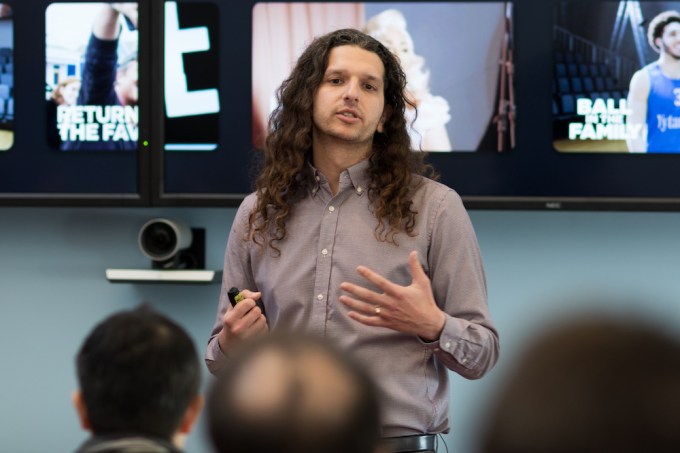
“That’s TV-like scale,” said Head of U.S. Agency Sales Erik Geisler (pictured above). He added that Facebook offers an effective way to reach the younger audiences that are moving away from linear TV, since 43 percent of In-Stream Reserve viewers are between the ages of 18 and 34.

How does Showcase change things? It combines this video advertising with the ability to run ads on a specific content category (including sports, fashion/beauty and the new additions of food and news), and to exclusively sponsor individual shows. And and now advertisers can buy those ads for the 2019-2020 broadcast year.

“It takes In-Stream Reserve from a quarter-by-quarter opportunity [to something] more in line with the upfronts,” Geisler said.

Facebook’s video destination Watch doesn’t exactly seem like a runaway success. In fact, Digiday just reported that Facebook won’t be renewing two-thirds of the news shows that it commissioned for Watch. However, Matthew Henick, who leads Facebook’s content and planning strategy, said he actually expects news content on Facebook to grow.

“We’re not cutting two thirds of what our final output would be, we’re reexamining previous commitments,” he said.

More broadly, Facebook has said that Watch is attracting 400 million viewers who are watching at least one minute of video each month, and 75 million viewers who are watching at least one minute per day. And those daily viewers are actually averaging 20 minutes per day.

Henick said that there are “three main pillars” to Facebook’s video strategy: community, interactivity and the ability to “co-watch” a show with others.

He also announced a new animated comedy called “Human Discoveries,” which will star Zac Efron and Anna Kendrick and premiere sometime this year, while also revealing more details about Facebook’s upcoming revival of “The Real World” — apparently it will also be streaming old seasons of the show, as voted on by Facebook users.

And while Watch is at the center of Facebook’s premium video strategy, it’s worth noting that Showcase ads aren’t limited to Watch; they can be viewed across Watch, the NewsFeed and Facebook Pages.

26 Feb 2019

Foot Locker takes a minority stake in kids clothing subscription service Rockets of Awesome

Foot Locker is taking a stake in the subscription-based shopping service, Rockets of Awesome – a startup that’s something of a “StitchFix for kids,” in that it sends out a personalized selection of children’s apparel in seasonal boxes, shipped to customers’ homes. The companies announced today that Foot Locker has made a $12.5 million minority investment into Launch Kids, Inc., dba Rockets of Awesome, which is part of the startup’s larger $19.5 million Series C.

The investment will see the two companies entering into a partnership, which involves Kids Foot Locker creating exclusive Rockets of Awesome in-store destinations where its customers can buy Rockets of Awesome products in the U.S. It will also begin to sell Rockets of Awesome merchandise on its website, kidsfootlocker.com.

This is a notable expansion for the kids’ clothing subscription service, which before now had focused on its personalized boxes and its own e-commerce sales, not an in-store presence.

The idea for Rockets of Awesome is similar to that of other clothing-in-a-box services, most notably StitchFix or Trunk Club for adults. But it also rivals those aimed at children like Kidbox, which announced a $15.3 million raise of its own last spring.

Launched in 2016, Rockets of Awesome first emerged from founder Rachel Blumenthal’s earlier startup, Cricket’s Circle.

As a parent herself (married to Warby Parker co-founder Neil Blumenthal), she was first focused on building a shopping site for new moms. Through user feedback, she learned that parents still ran into challenges shopping for kids as they got past the car seat and stroller phase. Taking kids shopping in stores is often frustrating, and kids outgrow clothes quickly – meaning last year’s summer or winter apparel needs a refresh the following year.

This led to the creation of Rockets of Awesome. The service has parents take a short quiz about their kids’ style preferences, then ships out seasonal boxes of quality, but affordable, clothing. Parents and children can then sort through the clothing, and send back what they don’t want. Parents can also shop Rockets of Awesome clothing from its website.

Each box includes pieces priced at $16 through $38, which tends to be slightly higher than rival Kidbox’s price points – Kidsbox’ whole box of half a dozen pieces can be had for under $100. Rockets of Awesome’s “whole box” deal is $150.

Having personally used both Rockets of Awesome and Kidbox, I’ve found the former’s clothing more expensive, yes, – but also more on-trend. For instance, it quickly picked up on the recent surge of interest in designs where the sequins flip over to change the pattern, unicorns and feminine takes on camo, in girls clothing.

Meanwhile Kidbox – perhaps because it relies on existing brands like Adidas, New Balance, Lucky Brand, and others to fill out its boxes – seems to ship more staples. Both are valuable services in their own way. However, Rockets of Awesome currently sees more traffic than Kidbox, according to data from SimilarWeb, which reports a higher website rank for the former both in the U.S. and worldwide.

Like others in this space, Rockets of Awesome also leverages technology to make data-driven decisions about merchandise R&D – meaning what kids like and parents buy will influence what sorts of things the company sells, combined with elements of human editorial curation.

The Foot Locker investment will allow Rockets of Awesome to scale its retail presence more quickly, than if it tried to do so on its own. And it will serve as a means of introducing parents to the Rockets of Awesome brand.

Foot Locker, meanwhile, benefits not only by diversifying its in-store assortment, but by grabbing a stake in a growing, digital-first brand at a time when the way customers shop is changing. Foot Locker has made other investments in digital-first companies, including sneaker marketplace GOAT, women’s luxury activewear brand Carbon38, tactical play and lifestyle brand Super Heroic, and footwear design academy Pensole.

“Rockets of Awesome is advancing the way parents shop for their kids. Foot Locker is also committed to evolving with the ever-changing retail landscape and adjusting to the speed of our customers. We are excited that our partnership with Rockets of Awesome will enable Kids Foot Locker to deliver new, innovative products and experiences,” said Richard Johnson, Foot Locker Chairman and CEO in a statement.

“We look forward to collaborating with them on brand development, product collections, and go-to-market plans to help realize additional growth for both companies.”

However, Rockets of Awesome tells TechCrunch there are no current plans for Foot Locker items to be included in its boxes. Instead, it aims to leverage Foot Locker’s experience to expand its omnichannel retail channels.

The next step will be to open its own experiential retail location in time for back-to-school.

“Our partnership with Foot Locker is a powerful validation of Rockets of Awesome’s ongoing progress in our mission to simplify parents’ lives and enable them to celebrate real life with their kids,” said Blumenthal. “With Foot Locker’s support, we look forward to bringing our unique, high-quality merchandise and convenient shopping experience to even more families everywhere,” she added.

Foot Locker offers 393 Kids Foot Locker locations across the U.S. and Canada, but it didn’t announce today how many would feature the Rockets of Awesome store-in-store shopping experience, or on what timeframe.

Along with Foot Locker, the Series C round included participation from August Capital, Forerunner Ventures, General Catalyst, Founders Fund, Burda Principal Investments, ACM and Signalfire. It brings the company’s total funding to $49 million, according to Crunchbase.




26 Feb 2019

Gradient Ventures, Google’s AI fund, leads $7M investment in English learning app Elsa

Google’s Gradient Ventures, the search giant’s dedicated AI fund, is casting its eye to Asia after it led a $7 million Series A round for Elsa, a startup that operates an app for English language learners.

The deal is Gradient’s first in Asia, and it includes participation from existing investors Monk’s Hill Ventures and SOSV. Elsa has now raised $12 million raised to date.

Elsa was founded in 2015 as a way to help non-English speakers improve their accent and general speaking ability. Vu Van, CEO and one half of the founding team, is a Vietnamese national who, despite being fluent in English, struggled to be understood after moving to the U.S. to study and then work. Together with speech recognition researcher Dr. Xavier Anguera — the startup’s CTO who leads its Portugal-based tech team — Van started Elsa to help people in the same predicament.

“I was very good at grammar, reading and writing but I realized people had a hard time understanding me because I had a very strong accent and my pronunciation wasn’t proper,” Van, who is based in San Francisco but travels extensively, told TechCrunch in an interview. “This impacts confidence when you apply for jobs or are even just meeting friends.”

“There are so many English learning solutions but they are mostly focused on expanding vocabulary or grammar, very few deal with pronunciation,” she added.

Elsa uses voice recognition and AI to grade a user’s speaking versus standard American English (and I thought us Brits were the global standard…) giving them a score at the end. That helps track their progress, while it focuses on pronunciation with a detailed review on how a user is speaking.

The service uses a freemium model that grants users full access to 1,000 courses for around $3-6 per month depending on the length of the package they opts for. That ranges from one month of access to 12 months. New content is added every week, Van said.

With this money in the bag, Elsa is going after growth in a number of its most promising markets.

The service has users in over 100 countries, but Vietnam is its top market with two million paying users. Partly because is it us Van’s home market, Elsa has doubled down on Vietnam with a local sales team and localized payments, including the likes of bank transfers and local wallets.

That’s the blueprint for expansion in its next three target countries; Japan, Indonesia and India. Already, Esla has opened an office in Tokyo and it is planning to introduce more localized content for Japanese users. Similar efforts will happen in Indonesia and India, where Van said the app sees strong engagement and downloads without any paid marketing efforts.

Elsa is also working on expanding its content from English to include other languages. Spanish is currently on the horizon and the company is already preparing the backend technology to make it possible.

“We have to build the voice recognition technology to recognize those languages accurately. We have the infrastructure but now just need to collect voice data to train the model,” explained Van.

Vu Van started Elsa in 2015 with Dr. Xavier Anguera to help non-English speakers improve their accent and general speaking ability.

Beyond geographic expansion, Elsa is also going after schools and classrooms. Already, in Vietnam, it is working with a handful of schools who have added the app to their classroom work. The company allows schools to upload their specific content or curriculum to Elsa to make it part of a student’s homework or assessment. Teachers can see if a student has completed oral homework, and the app grades their efforts.

“We want to help these teachers help their students,” Van said. “Even with the best intentions, they simply can’t teach speaking.”

The model for the education push sees schools pay a licensing fee per student, which Van said is subsidized while uploading their content is free.

Snagging investment from Gradient is a notable achievement for Elsa, but it will also allow the startup to tap into the company’s talent, too. That’s because Gradient operates a rotational program that allows Google employees to spend three to six months working at portfolio startups on secondment. That process hasn’t kicked off for Elsa just yet, but Van is hopeful of securing an engineer who might otherwise be prohibitively expensive for her company.

Gradient Ventures was founded in 2017 and this deal is the fund’s 18th, according to Crunchbase. Its previous investments include Canvass Analytics and Test.ai.

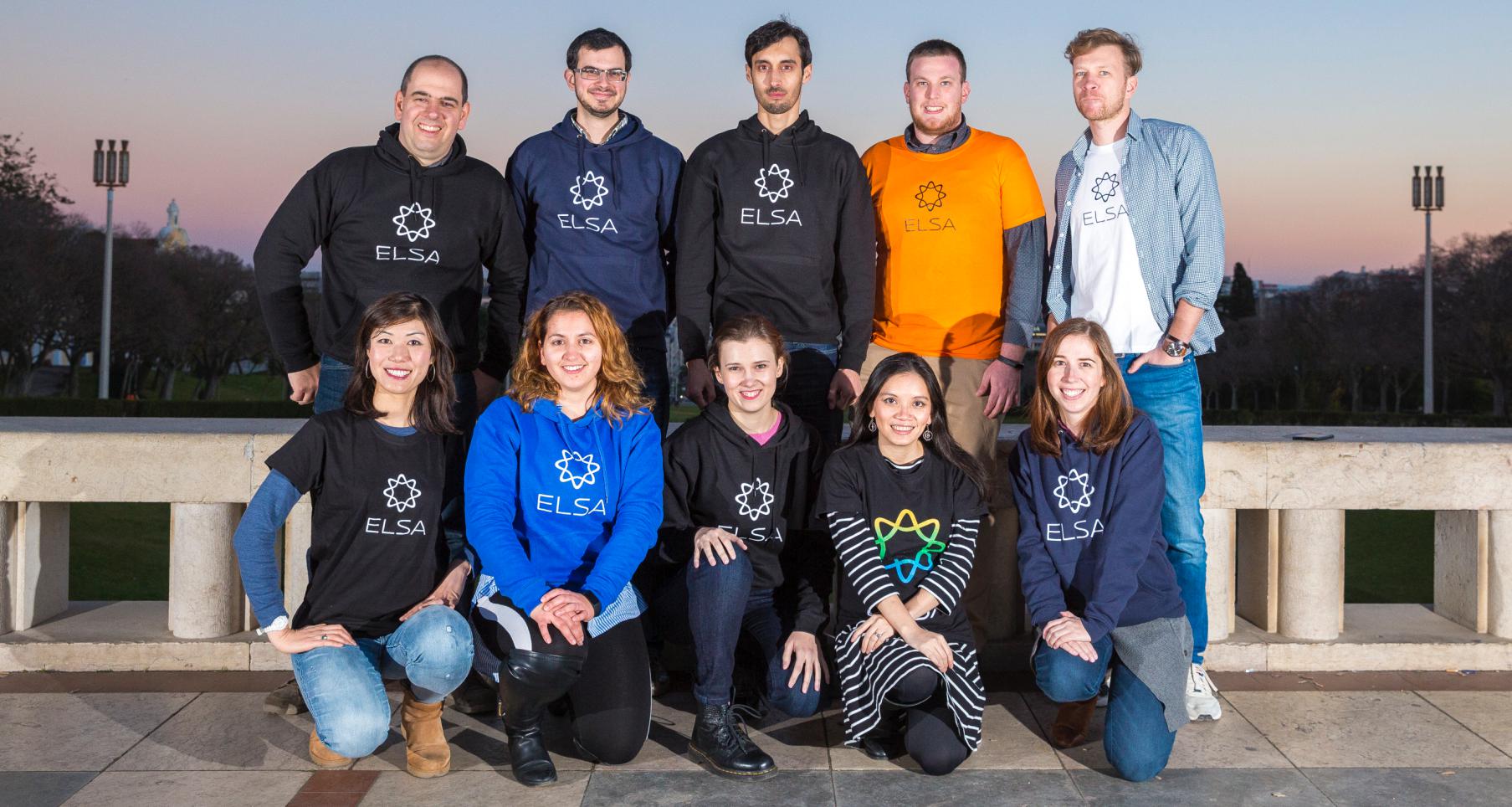
The Elsa team