Author: azeeadmin

26 Feb 2019

India’s entrepreneurial future

Few countries have more entrepreneurial potential than India. It’s home not just to the wave of IT offshoring firms of the 1990s and early 2000s, but also to some of the most interesting unicorn tech startups in the world, including Freshworks, Paytm, Oyo and of course Flipkart, which sold to Walmart last year for $16 billion.

India though is also at something of an economic crossroads. Unlike China, which as we discussed yesterday faces a conflict between open entrepreneurship and strict party control in its next stage of development, India must build up its indigenous startups while also opening up to the global economy.

That economic balancing act will be tough. As James Crabtree, a long-time writer of the Financial Times based in Mumbai, argues in his book The Billionaire Raj, India faces a triple threat of “inequality and the new super-rich, crony capitalism, and the travails of the industrial economy” as it seeks to move the country into middle-income status.

Crabtree, who built up access among India’s traditional business elite over many years, sees a nation that is starving for more government capacity. India has transitioned in a few short decades from a moribund economy languishing under a sclerotic and byzantine bureaucratic model (sometimes referred to as the “license raj”) into an increasingly open and competitive market for goods and services.

Yet, success outside of a scant few industries — namely IT services — has been undergirded by political access and the trading of favors. Crabtree chronicles a whole crop of entrepreneurs from across the country in industries as far afield as mining to liquor to aircraft to show the constant intermixing of Indian business and Indian politics.

That crony capitalism is at the heart of what he dubs today’s “billionaire raj” — a government that isn’t for the ultra-rich so much as it lacks any capacity whatsoever to stand up to its worst excesses and corruption. The book is one part travelogue, one part analysis, and one part biographical bookshelf that together paint a complicated portrait of India’s growth ambitions and challenges to scale.

Given where India’s fortunes have been made the past few decades, the book mostly ignores the tech industry, save for fleeting mentions scattered about. But I asked Crabtree in an interview last week where he saw the country headed, and how technology might underpin that.

“People thought that India was going to become the next hot market for Silicon Valley tech money after China, but it doesn’t look like that will be the case,” he explained. Unlike China, which created friction in market entry for foreign tech companies, India has been reasonably open. “The biggest search engine in India is Google, the biggest social network is Facebook,” he noted. “They don’t make much money in India, but they have spectacular user growth.”

“When I lived in Mumbai, there was a big tech investment wave in the after wave of the Alibaba IPO,” he explained. “There were these great hopes that India would follow the sort of hockey stick growth” seen in China. Yet, the country’s demographics don’t back that up. “India has a tiny middle class — 10-20 million” using a reasonable definition of the term “middle class.” That group is simply not large enough to support the valuation dreams underpinning some of India’s most-discussed unicorns. “Growing users is really easy, but growing revenues is just much more challenging,” he said.

The challenge ahead for India is that a form of economic nationalism is increasingly popular in Delhi. We have covered a bit of this change around data localization / sovereignty, but it is certainly much wider than those policies. “I think there is a slow but steady trend toward closure that is partly to do with India’s domestic politics” and partly due to international climate, Crabtree explained. The thinking is that, “China has produced Alibaba, Tencent, and Baidu [… but] India hasn’t produced any major global stars yet.”

Fueling that rift is a sense that foreign tech giants “don’t pay much in the way of tax, they are not Indian companies” and that they “haven’t behaved particularly well.” Crabtree was referring specifically to Facebook’s Free Basics program, which became deeply controversial in the country, although those feelings are not limited to just Facebook.

India has a massive election coming up in just a few weeks, which will decide whether current Indian prime minister Narendra Modi stays in power. Beyond just policy, Crabtree sees a major challenge for all foreign tech companies, but particularly those operating social networks. “The stakes are very high for how social media manages the stresses and strains of a competitive and potentially nasty Indian political campaign,” he said. “If they are blamed for something that went wrong… this would be immensely damaging.”

India has the potential to be the single largest democratic free market economy in the world. But it needs to simultaneously cut down on its corruption, create jobs for millions of new entrants to the labor economy every year, stand up a new generation of digital-first behemoths, all the while balancing the needs of an incredibly diverse and cacophonous democracy buffeted by global markets and tastes. That’s ultimately a tall order, but if India wants to migrate from a “billionaire raj” to an “entrepreneur raj,” it will have to do all of that — at once.

Talking about borders: Talent-friendly immigration driving tech north of the border

Roberto Machado Noa/LightRocket via Getty Images

Written by Arman Tabatabai

Yesterday, we talked about the growing difficulty of the H-1B visa application and approval process in the US, and how it threatens America’s long-term entrepreneurial edge. In a prime example of the connection between immigration policy and technology leadership — the FT put out a deep-dive analysis on the rapidly growing Toronto tech and startup scene, with much of the expansion attributable to Canada’s talent-friendly immigration policies.

Canada applies the “give grads a visa with their diploma” approach many have preached for in the US, providing multi-year work visas to foreign students upon graduation. And while the US continues to make the individual application process more difficult, Canada has streamlined its process. Applications for highly-skilled workers, as well as their families, are processed within just a couple weeks.

While there are clearly several intertwined factors behind the growth of Toronto as a tech hub, talent is certainly one of them, with the city having added nearly 100,000 jobs in a five-year period. Toronto offers a case-in-point precedent of how cities can use immigration to gain a technological edge, and why the United States’ misdirected crackdown is undermining its own.

Intel cancels agreement with China chipmaker in fight for next generation chip dominance

Photo via Intel Corporation

Written by Arman Tabatabai

Intel continues to shift its strategy as it tries to improve its position for next-generation chip leadership. At the MWC conference in Barcelona, Intel announced that it was terminating a multi-year partnership with one of China’s premier state-backed mobile chipmakers, Unisoc. As part of the original agreement announced roughly a year ago‚ Intel would share its new 5G modem chips with Unisoc to help Intel increase its lagging market share in China, while providing Unisoc technological know-how needed for it to compete with more-advanced competitor offerings.

Like many breakups, the two sides are saying the decision was mutual and not a result of the political tension between the US and Chinese governments. However, the Nikkei Asian Review reports that insiders say the US’ recent harsh tone with Chinese tech and semiconductor companies definitely played a role in the decision.

As we discussed yesterday, Intel has a lot of catching up to do after years of complacency and will now have to find a different avenue to make up ground in the Chinese market. Unisoc is also certainly feeling the pain of the lost knowledge transfer, as market share can disappear quickly in a highly competitive industry where IP is often the secret sauce. The cancellation of what seemed to be a mutually beneficial deal reinforces the fact that the fight for next-generation semiconductor dominance is just as much political as it is financial, if not more so.

Other news from around the world

Facebook’s censors are struggling at work

Casey Newton at The Verge offered us a deep-dive into the horrific working conditions and post-traumatic stress of working as a censor for Facebook and its contractors. While artificial intelligence and advances around computer vision may allow more of this to be automated in the future, Newton brings up a key question: what are we doing right now to help the working-class workers who keep social networks safe for users?

Could corporate VC unlock the Japanese startup market?

Pavel Alpeyev at Bloomberg has a deep-dive highlighting the rapid expansion of Japanese corporate venture capital. The trend is permeating the country’s largest companies across all industries, with the number of Japanese corporate venture arms increasing by more than 8x since 2015. The Japanese market has traditionally been viewed as an unfriendly environment for startups, but the growing availability of capital and support from Japan’s all-powerful incumbent corporations makes building a company seem more feasible. ~ Written by Arman Tabatabai

Mobile usage gender gap reinforces the social obligation for big tech

Leading mobile companies from around the world have been aggressively competing for ownership of emerging market populations. In a recent analysis, Yomi Kazeem at Quartz Africa highlighted the tremendous gender gap that exists in emerging market mobile usage — with female use up to 30% lower in some cases — which represents a significant untapped user base that Quartz estimates could generate $140 billion in revenue over the next five years. We plan on revisiting the topic of how incumbent tech will unlock growth in the future as we dive into Payal Arora’s book The Next Billion Users: Digital Life Beyond the West. ~ Written by Arman Tabatabai

Obsessions

  • We have a bit of a theme around emerging markets, macroeconomics, and the next set of users to join the internet.
  • More discussion of megaprojects, infrastructure, and “why can’t we build things”

Thanks

To every member of Extra Crunch: thank you. You allow us to get off the ad-laden media churn conveyor belt and spend quality time on amazing ideas, people, and companies. If I can ever be of assistance, hit reply, or send an email to danny@techcrunch.com.

This newsletter is written with the assistance of Arman Tabatabai from New York

26 Feb 2019

FTC creates antitrust task force to monitor tech industry

The field of technology and the business practices within it tend to advance faster than regulators can keep up. But the FTC is making a concerted effort with a new 17-lawyer tech task force dedicated to ensuring “free and fair competition” and watching for anticompetitive conduct among technology companies.

This isn’t necessarily a precursor to some big action like breaking up a big company or imposing rules or anything like that. It seems to be more a recognition that the FTC needs to be ready to ascertain quickly and move decisively in tech matters, and a crack team of tech-savvy staff attorneys is the way to do it.

The Technology Task Force will live under the competition bureau within the FTC, the director of which, Bruce Hoffman, commented as follows in the agency’s announcement:

Technology markets, which are rapidly evolving and touch so many other sectors of the economy, raise distinct challenges for antitrust enforcement. By centralizing our expertise and attention, the new task force will be able to focus on these markets exclusively – ensuring they are operating pursuant to the antitrust laws, and taking action where they are not.

That it is under this bureau and not the bureau of consumer protection gives a good indicator of its purpose. This won’t be a way for the FTC to, for instance, more closely scrutinize Google or Facebook’s shady user data practices. That said the lawyers are stated to have expertise in “advertising, social networking, mobile operating systems and apps, and platform businesses,” which I doubt they mention for no reason.

Instead it is likely to be more focused on investigating and reporting on potential anticompetitive practices that are the potential result of M&A deals or quasi-monopolies like Amazon and Facebook. The fascinating Amazon’s Antitrust Paradox paper from a while back noted all kinds of ways that company slips through loopholes while performing actions that look, walk, and talk like monopolistic ones.

But just what exactly constitutes such practices legally speaking is a matter of considerable debate. No doubt the lawyers and their tech fellow, with whom they will consult, will spend a great deal of time sifting through old cases and precedents and seeing what does and doesn’t apply. The team will be performing its own investigations of ongoing and completed mergers, and will also supply investigative services to other branches of the agency.

Essentially it’s an indication that the FTC will be taking tech antitrust more seriously going forward, and dedicating more and better organized resources to the task of monitoring the sector. That’s probably not the kind of thing big tech companies like to hear.

I’ve asked the agency some questions as far as markets they’ll be watching, behaviors they’re looking for, and so on. I’ll update this post if I hear back.

26 Feb 2019

theSkimm is launching a daily news podcast offering contextualized, nonpartisan coverage

News media company theSkimm is delving further into podcasting, with the launch of its first daily news podcast called Skimm This, set to launch on March 4. Similar to how theSkimm’s morning newsletter helps people keep up with the latest goings-on in the world, the new podcast also aims to help readers quickly understand the news of the day.

However, Skimm This will be different from other news podcasts currently on the market, the company says.

For starters, it will be released in the evenings – Monday through Friday at 5 PM – in order to reach people hitting the gym after work, commuters on their way home, or those who like to listen to podcasts during dinner prep, among others.

It will also not be a round-up of the day’s headlines, like other news podcasts.

Instead, Skimm This will focus on around four stories in total over the course of about 10 minutes. The top story will always be a national or international subject, and the podcast’s goal will be to provide more context and clarity around this story to help listeners understand why it’s important.

In addition, the company positions itself as a nonpartisan news source that only delivers facts, not opinions. Over half its audience said that’s what they wanted from a podcast, along with making the news relatable and easier to understand, the company notes.



Plus, theSkimm’s own data indicated that one-quarter (24%) of its female millennial users use podcasts to listen to news, and among those who do, 60 percent listen every day.

This isn’t the first podcast to launch from theSkimm. In February 2018, it launched Skimm’d from the Couch, a weekly podcast series where The Skimm’s co-founders and co-CEOs Carly Zakin and Danielle Weisberg interview female leaders – like Arianna Huffington, Taraji P. Henson, Whitney Wolfe, Katrina Lake, Reshma Saujani, Martha Stewart and Hoda Kotb – about their path to success.

The company also previously invested other media programming, including Skimm’d with… and Get Off the Couch for Facebook, and digital series Sip n’ Skimm.

But with Skimm This, the company is making a play to become more of a part of users’ daily routines – one which begins in the morning with the daily email newsletter that now reaches 7 million+ readers, continues throughout the day through theSkimm app calendar integration (which reminds you of important events), and now concludes in the evening with Skimm This.

theSkimm says it’s working with podcast and media company Cadence13 on Skimm This, and will distribute it to Apple Podcasts, Google Play and Google’s Android app, Stitcher, TuneIn, Spotify, iHeart and Radio.com.

There will also be a “flash briefing” version of Skimm This available at launch, where it will join the existing Daily Skimm briefing available on Alexa and Google Home.

The podcasting expansion comes at time when theSkimm’s growth for its newsletter business appears to have leveled off. Last May, when the company reported its $12 million Series C funding round with big names like Shonda Rhimes and Tyra Banks attached, it said its daily newsletter reached around 7 million subscribers. That’s roughly the same figure it’s reporting today.

The power of those readers is notable, though.

Since announcing the launch of Skimm This in today’s morning newsletter, the new podcast’s trailer shot to No. 1 on iTunes’ charts, in the News & Politics section (according to Podbay.fm data.)

Below is the trailer for Skimm This:

26 Feb 2019

Sapling, an employee management and on-boarding platform focused on distributed teams, lands $4 million in seed funding

Sapling, a three-year-old, San Francisco-based company whose employee management and onboarding software is being adopted by a small but growing number of mid-size companies with far-flung workforces, is announcing today that it has raised $4 million in funding from Gradient Ventures, which is Google’s AI fund, and Tuesday Capital, formerly known as CrunchFund.

It quietly secured the funding several months ago and has been using it to ramp up to the 50 people it currently employs.

The company’s founding team is the kind that investors like to see, meaning that in many ways, their previous work experiences led them to start Sapling.

Cofounder and CEO Bart Macdonald has spent his entire career in HR, working most recently in Melbourne, Australia, as a regional director for the global coding school General Assembly, where he hired and managed a 10-person marketing, sales and operations team.

Meanwhile, cofounder Andy Crebar (born in the same Sydney hospital as Macdonald, a day later) also knows the plight of individuals trying to seamlessly onboard new hires, having worked most recently on business development initiatives at a fintech startup called Credible Labs where adding headcount was, as at many companies, a point of frustration.

“I liked that Bart and Andy had lived through their own experiences dealing with crappy HR software in previous positions and thus really understood how customers view the problem,” says Tuesday Capital cofounder Pat Gallagher.  “The fact that neither are technical would have been an issue if we were investing pre product, but by the time we invested, they had proven they could build software that their customers loved.”

In fact, says Gallagher, his team was drawn to Sapling specifically because a handful of the firm’s portfolio companies has been using its onboarding software and “really raving about it.  It’s hard to find HR software that people really like, so that was a big positive for us and helped cut through the noise of the space that they operate in.”

So what’s so special about Sapling? Mostly, it seems, its approach brings together the tools and software that HR execs are already using, including ADP for payroll, or G Suite for productivity, and Lever for recruiting, integrations that also employ a heavy dose of AI to anticipate the behaviors of employees, making it easier for managers to recruit, aid, manage and support current and future staffers.

As Macdonald explains it on the simplest level, Sapling not only provisions software for them but it connects their tools “so they don’t have to  open 10 tabs. All they have to do is run their workflow inside of Sapling so that, for example, an employee can ask for time off in Slack,” and that request will automatically be reflected in the employer’s payroll and benefits systems (once approved).

Sapling currently works with companies with anywhere from 100 to 1,500 employees, including InVision, an eight-year-old commercial platform used by design teams to create digital products for mobile and desktop that is currently investing its Series F round. InVision, which has a large distributed workforce, says Sapling has saved the company 1,000 hours by speeding up communications and making employee engagement far more seamless.

What comes next for Sapling remains to be seen. It’s in an awfully crowded category, with no shortage of all-in-one HR solutions attracting venture capital. In the meantime, with low unemployment creating headaches for many outfits looking to keep its talent, Sapling is smartly positioning itself as an important tool in specifically helping companies with geographically distributed teams to retain and engage employees. Customers like Invision, along with Digital Ocean, KPMG, and Kayak, say it’s working, too.

Above, left to right: founders Bart Macdonald and Andy Crebar, courtesy of Sapling.

26 Feb 2019

Register your interest for Disrupt SF 2019 and save $500

TechCrunch is gearing up for another epic celebration of early-stage tech startups by offering equally epic savings to our flagship event, Disrupt San Francisco 2019, which takes place October 2-4 at Moscone North Convention Center. How’d you like to trim a cool $500 off the price of your Disrupt SF pass? Keep reading.

Simply sign up for our mailing list before the official registration opens in early March. One click, four fields and a submit button — that’s all that stands between you and the easiest $500 you’ll ever save. Registration’s just around the corner, so set your procrastinating ways aside and jump on this offer before it disappears.

Disrupt SF packs crazy value into three short days. It’s a gathering of the tech community’s best and brightest, where you’ll discover extraordinary new startups and learn about the latest innovations. Disrupt is networking on steroids — you might meet your next co-founder, the perfect investor, a future unicorn or a manufacturing whiz to help guide your startup to the next level.

Of course, Disrupt wouldn’t be Disrupt without Startup Battlefield, the world-famous early-stage startup competition. Last year, 21 incredible companies took the field, and Forethought emerged victorious to claim the Disrupt Cup and our first $100,000 prize — along with invaluable investor and media exposure. That sizeable chunk of equity-free cash returns this year, so keep checking back with us to see when you can toss your hat into the Startup Battlefield ring.

You’ll find hundreds of early-stage startups in Startup Alley on the exhibition floor. Exhibiting companies represent all areas of technology, from categories like, Artificial Intelligence/Machine Learning, Blockchain, Biotech/Healthtech, Fintech, Gaming, Mobility, Privacy & Security, E-commerce & Retail, Robotics/IoT/Hardware and more.

As you explore Startup Alley, don’t miss TC Top Picks. These rising stars are hand-picked by TechCrunch editors — a highly discerning bunch with an uncanny knack for predicting greatness. In the coming weeks, applications will open for founders to throw their hat in for both TC Top Picks and the Startup Battlefield program. You don’t want to miss that opportunity, so keep checking back.

There’s so much more to Disrupt San Francisco 2019 — world-class speakers, demos, workshops, the Hackathon, Q&A Sessions and more. This is your chance to see and experience it all at a $500 discount. Remember, you need to sign up for our mailing list before registration opens in early March. Act fast now, save big later.

26 Feb 2019

Daily Crunch: A closer look at Huawei’s foldable phone

The Daily Crunch is TechCrunch’s roundup of our biggest and most important stories. If you’d like to get this delivered to your inbox every day at around 9am Pacific, you can subscribe here.

1. Huawei’s folding Mate X: a closer look

Brian Heater got to check out the foldable phone (with a Huawei rep driving the demo), and he says it ran pretty smoothly. It’s also surprisingly thin, both folded and unfolded.

The Mate X looks cool, but with a price of €2,200, Huawei probably doesn’t expect to sell a lot of these. Instead, you should probably think of this as a proof of concept.

2. Microsoft CEO defends work on half-billion-dollar HoloLens military contract

“We made a principled decision that we’re not going to withhold technology from institutions that we have elected in democracies to protect the freedoms we enjoy,” Satya Nadella said in an interview.

3. Fortnite’s revenue dropped 48 percent in January, but the lull likely won’t last long

New numbers from SuperData show that revenue across platforms dropped by a hard-to-ignore 48 percent between December 2018 and January 2019. It’s worth remembering, however, that a game like Fortnite is designed to be cyclical, with players rotating in as fresh content debuts.

4. Pandora Stories launches, combining music and podcasting in a new format

The feature allows artists to build music playlists combined with voice tracks, where they can add a narrative and deeper insights — explaining, for example, what a song means for them, what inspired their music or the story behind the song.

5. Walmart acquires Israel’s Aspectiva, which analyses UGC to recommend products to shoppers

The startup will be joining Store No. 8, Walmart’s in-house incubation arm established in 2017 to help the company develop and roll out more innovative shopping experiences.

6. Tinder launches a Spring Break mode

The feature will allow students to swipe through potential matches before heading out to their Spring Break destination.

7. YieldStreet raises $62M to democratise alternative investments in shipping, real estate and more

To date, YieldStreet has seen more than $600 million invested on its platform from over 100,000 members, with an expected 12 percent IRR.

26 Feb 2019

Search marketing company Botify raises $20M

Botify, a search engine optimization company that works with customers like Expedia and Nike, announced today that it has raised $20 million in Series B funding.

Co-founder and CEO Adrien Menard said that the opportunity in SEO is “even bigger now than in the past,” and that the problem is much broader problem than many realize.

“Most people think about SEO in terms of keyword optimization, but
more than 50 percent of the pages in large websites are not being indexed,” he said. So Botify can identify which pages aren’t being crawled by Google, and then make recommendations on how to better organize your content.

Over time, Botify has also launched a keyword product, as well as tools like a JavaScript crawler and mobile versus desktop analysis. Menard said the company now offers a platform designed for “optimization of every stage of the search process.”

The new funding was led by France’s Idinvest Partners, with participation from Ventech. Botify has now raised a total of $27 million.

The company was founded in France, launching in the United States after taking the stage at TechCrunch’s Disrupt NY conference in 2016. Next, it’s opening what it calls a “second U.S. headquarters” in Seattle (the first is in New York City), which Menard said will mostly provide sales and support for West Coast customers.

In addition to announcing the funding and the new office, Botify has also grown its leadership team, with the hiring of Christophe Frenet as senior vice president of product and Rachel Meranus as chief marketing officer, as well as the addition of Neolane co-founder Stephane Dehoche and former BuzzFeed President Greg Coleman to its board of directors.

26 Feb 2019

Search marketing company Botify raises $20M

Botify, a search engine optimization company that works with customers like Expedia and Nike, announced today that it has raised $20 million in Series B funding.

Co-founder and CEO Adrien Menard said that the opportunity in SEO is “even bigger now than in the past,” and that the problem is much broader problem than many realize.

“Most people think about SEO in terms of keyword optimization, but
more than 50 percent of the pages in large websites are not being indexed,” he said. So Botify can identify which pages aren’t being crawled by Google, and then make recommendations on how to better organize your content.

Over time, Botify has also launched a keyword product, as well as tools like a JavaScript crawler and mobile versus desktop analysis. Menard said the company now offers a platform designed for “optimization of every stage of the search process.”

The new funding was led by France’s Idinvest Partners, with participation from Ventech. Botify has now raised a total of $27 million.

The company was founded in France, launching in the United States after taking the stage at TechCrunch’s Disrupt NY conference in 2016. Next, it’s opening what it calls a “second U.S. headquarters” in Seattle (the first is in New York City), which Menard said will mostly provide sales and support for West Coast customers.

In addition to announcing the funding and the new office, Botify has also grown its leadership team, with the hiring of Christophe Frenet as senior vice president of product and Rachel Meranus as chief marketing officer, as well as the addition of Neolane co-founder Stephane Dehoche and former BuzzFeed President Greg Coleman to its board of directors.

26 Feb 2019

Virtual phone number apps are gaming the App Store with duplicates

If you’ve searched the App Store for an app to get a second phone number, chances are you found dozens of apps with very little differences. A handful of companies are spamming the App Store with duplicated apps. This strategy is against Apple’s rules.

The App Store Review Guidelines are detailed rules that define what you can and cannot do on the App Store. As soon as you sign up for a developer account and submit an app to the App Store review team, you agree to comply with those rules. It’s a long document, but the rule 4.3 titled “Spam” is straightforward:

Don’t create multiple Bundle IDs of the same app. If your app has different versions for specific locations, sports teams, universities, etc., consider submitting a single app and provide the variations using in-app purchase. Also avoid piling on to a category that is already saturated; the App Store has enough fart, burp, flashlight, and Kama Sutra apps already. Spamming the store may lead to your removal from the Developer Program.

A tipster looked at a specific category in the App Store — VoIP apps that let you get a second phone number, send and receive calls and texts from that new number. I looked at that category myself and here are the results of my investigation.

Companies don’t even try to hide the fact that have submitted multiple versions of the same app with different names and icons. But core features remain the same. Apple hasn’t enforced its own guideline properly and developers took advantage of that grey area.

Example 1: TextMe

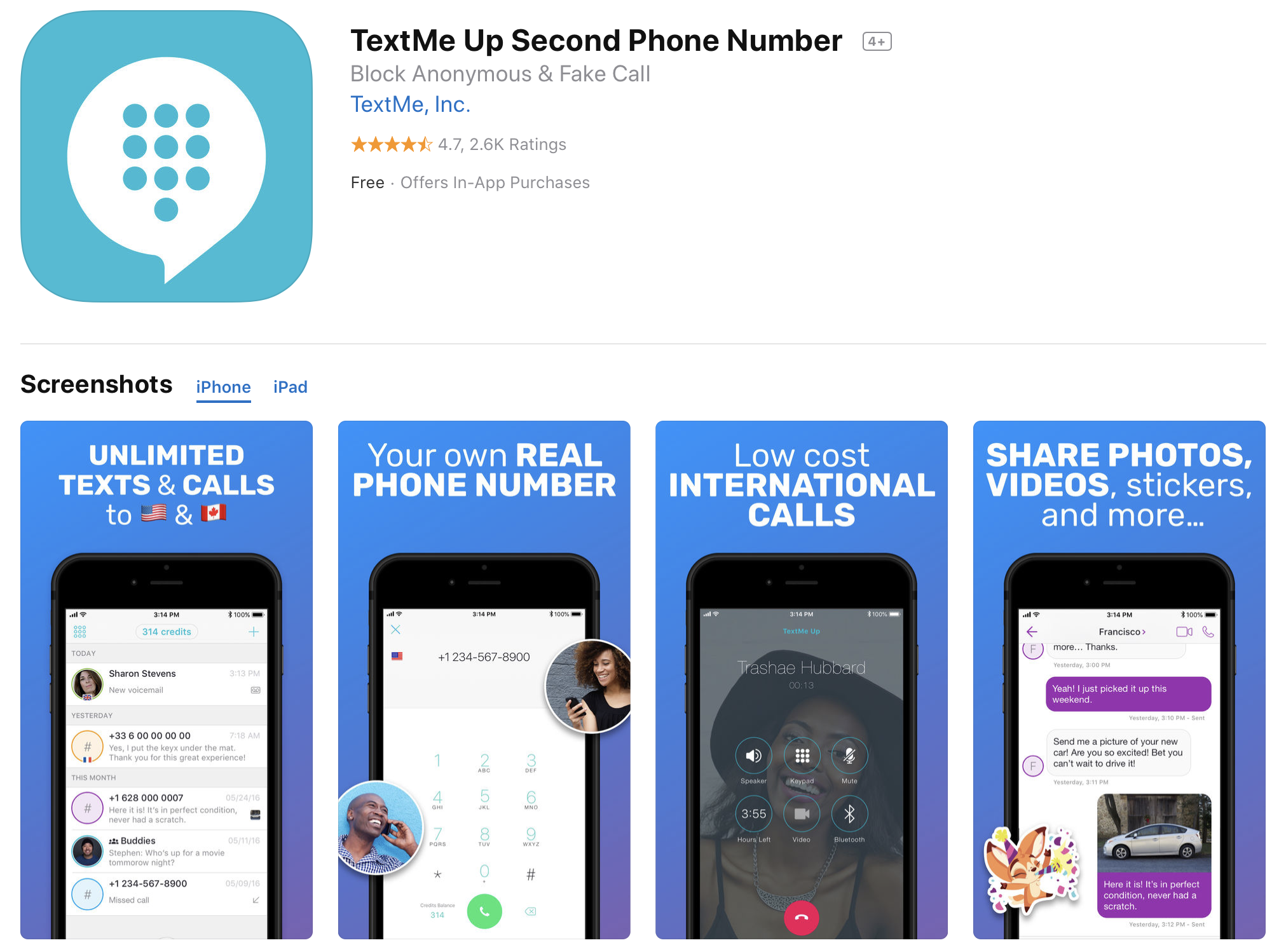
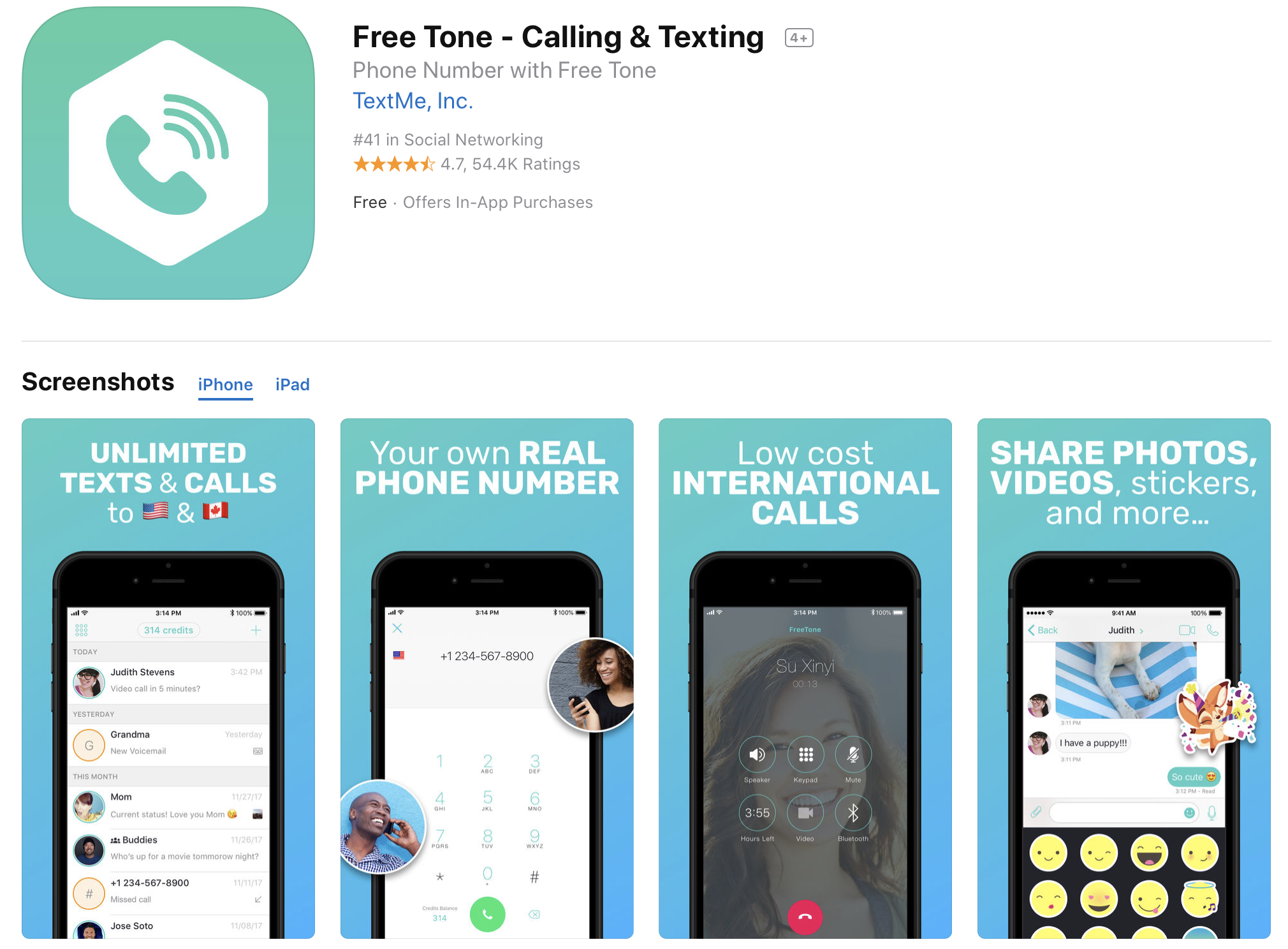
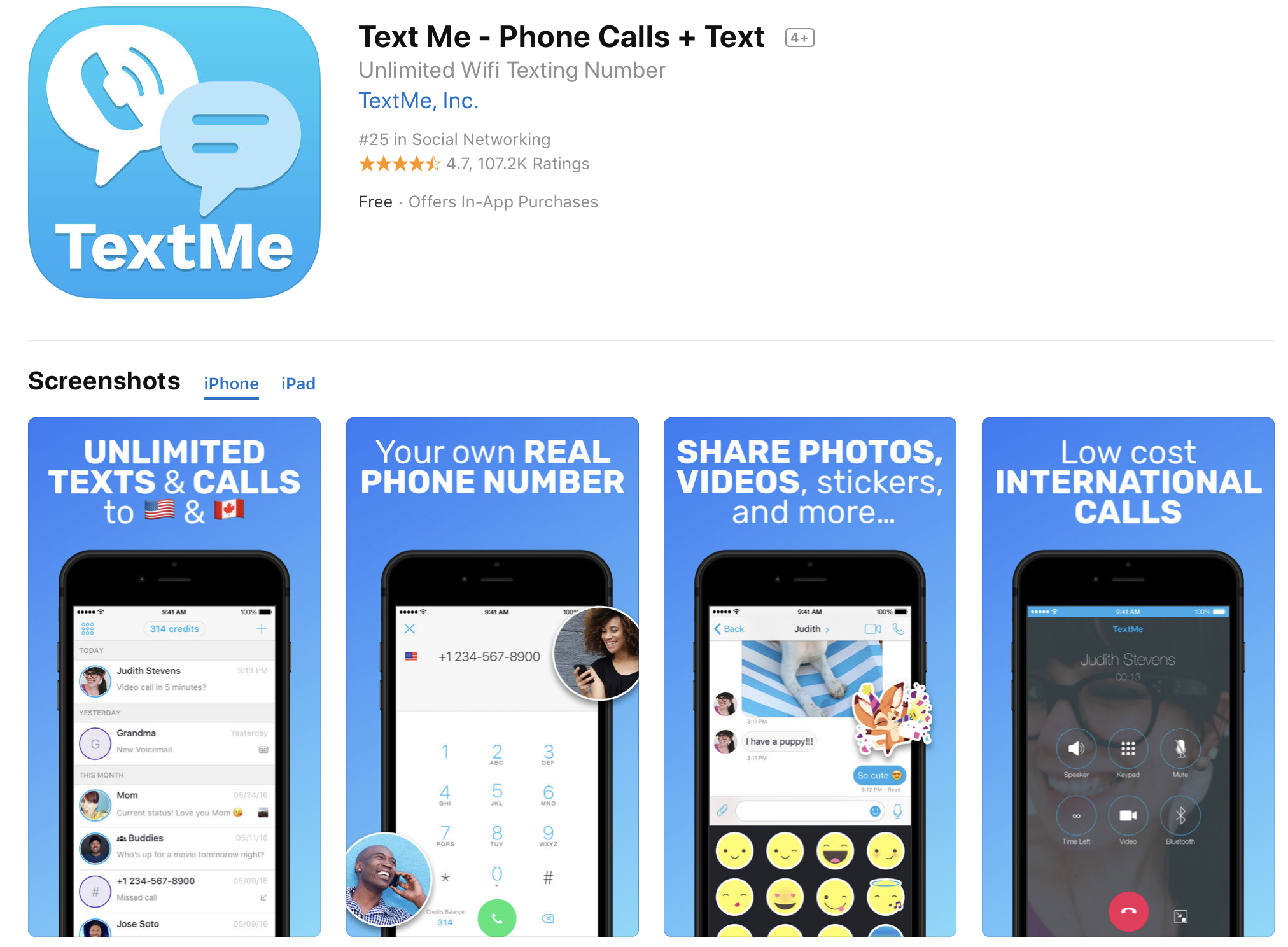
As you can see on the company’s website, TextMe currently operates three apps and is open about it — TextMe Up, TextMe and FreeTone. These three apps all have an average of 4.7 stars in the App Store with hundreds of thousands of reviews in total.

The wording is slightly different for each app. TextMe Up lets you “call & text anyone in the world from your mobile, tablet, and computer”, while TextMe lets you “get a new phone number and start texting and making calls for free” and FreeTone is all about “[enjoying] free calls & texts to the phone numbers in the US and Canada”.

But if you look at the App Store screenshots, the company doesn’t even bother changing the screenshots or marketing copy.

“Our apps have a different marketing target,” TextMe, Inc. co-founder and co-CEO Patrice Giami told me in a phone interview. “They share the same code base, but we can activate or deactivate some features in order to differentiate the apps. We manage that depending on the competitive environment and if we need to optimize distribution.”

Giami also believes that his company complies with the App Store guidelines. “Apple is doing a very systematic review — we’re constantly scrutinized because we release a lot of app updates. We’ve never been flagged or contacted by Apple — they’ve never said that we’re releasing complete clones of the same app,” he said.

TextMe uses the same developer account for its three apps, Text Me, Inc. Apple could easily compare those apps if it wanted to.

Example 2: BinaryPattern and Flexible Numbers LLC

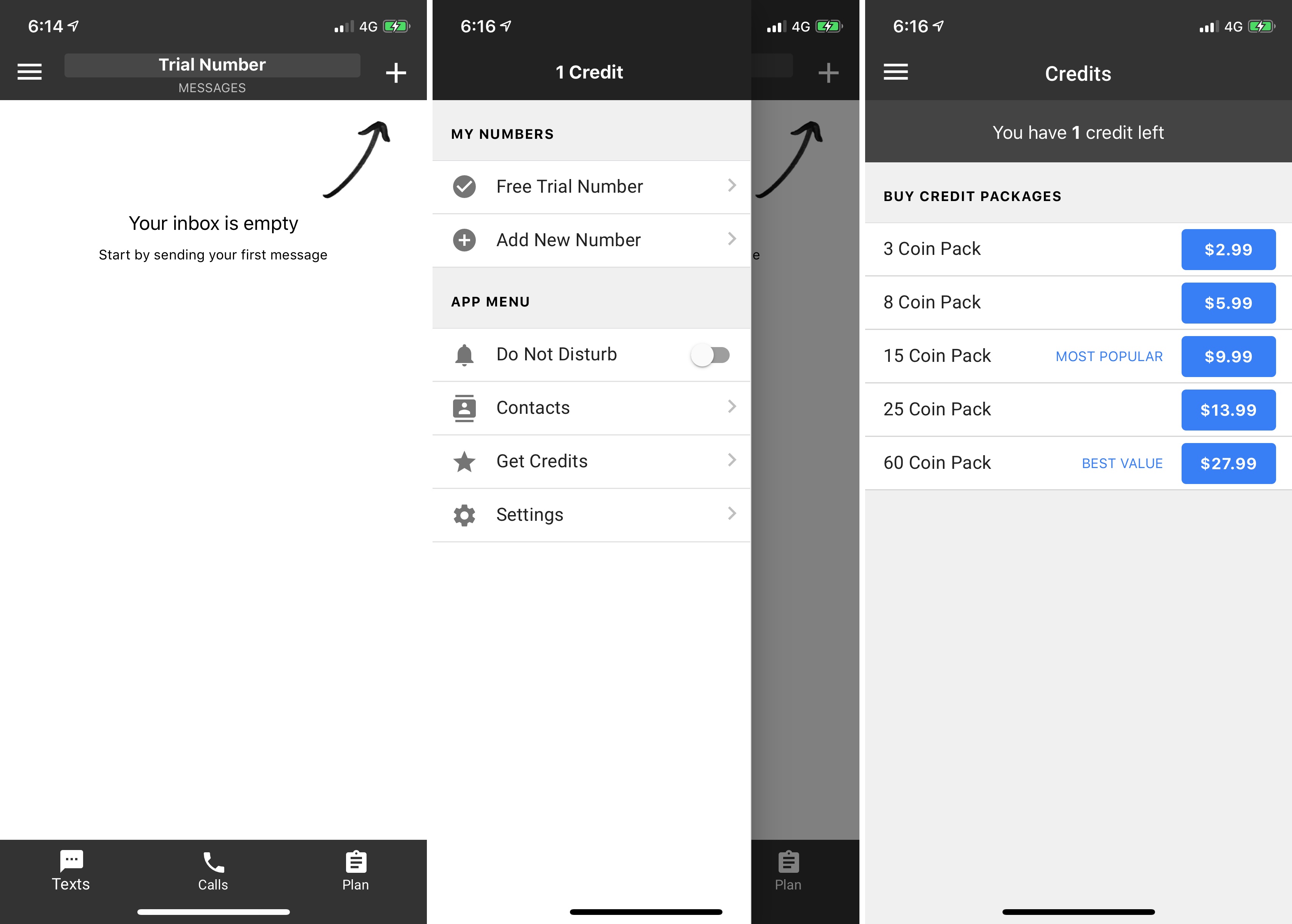
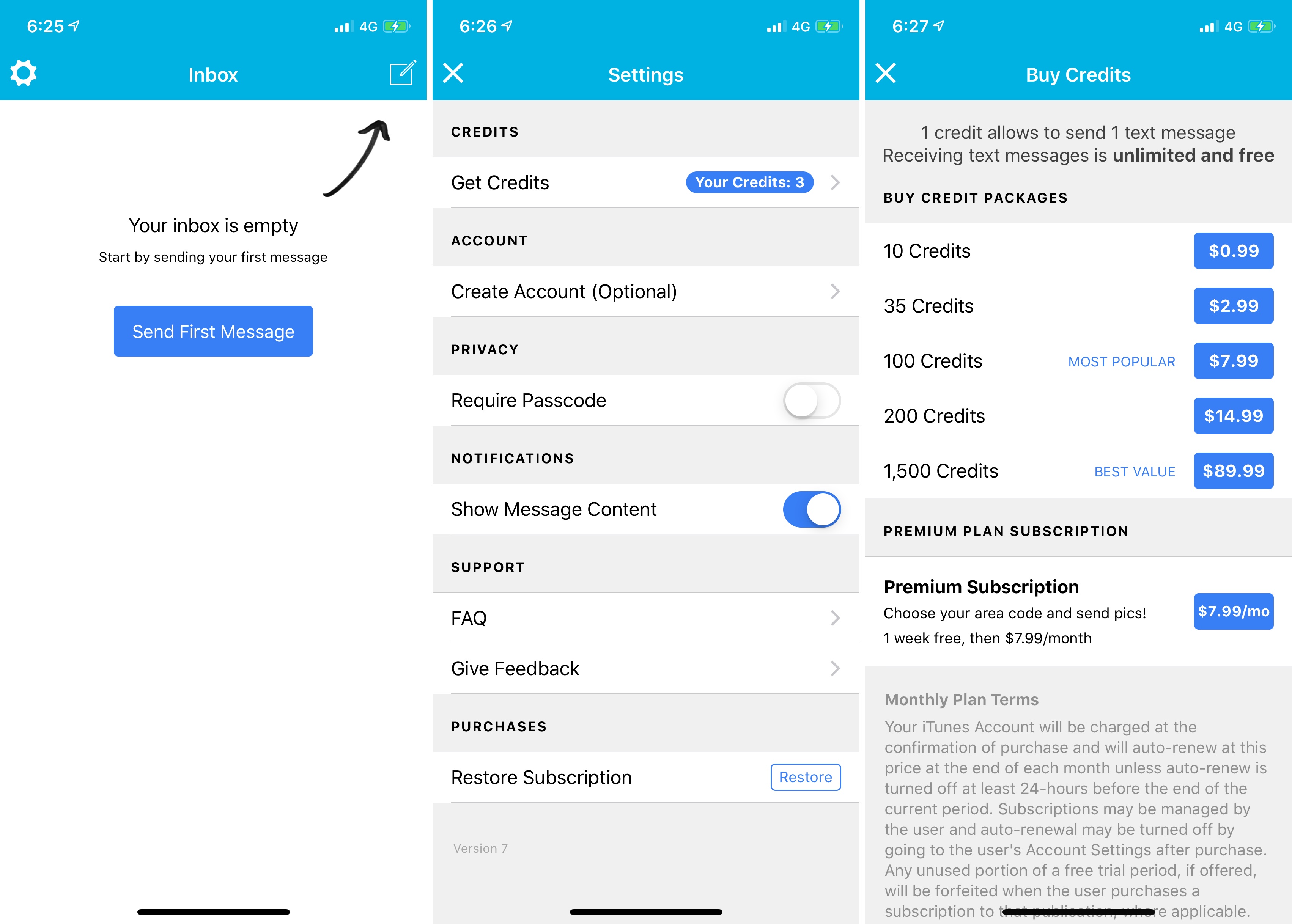
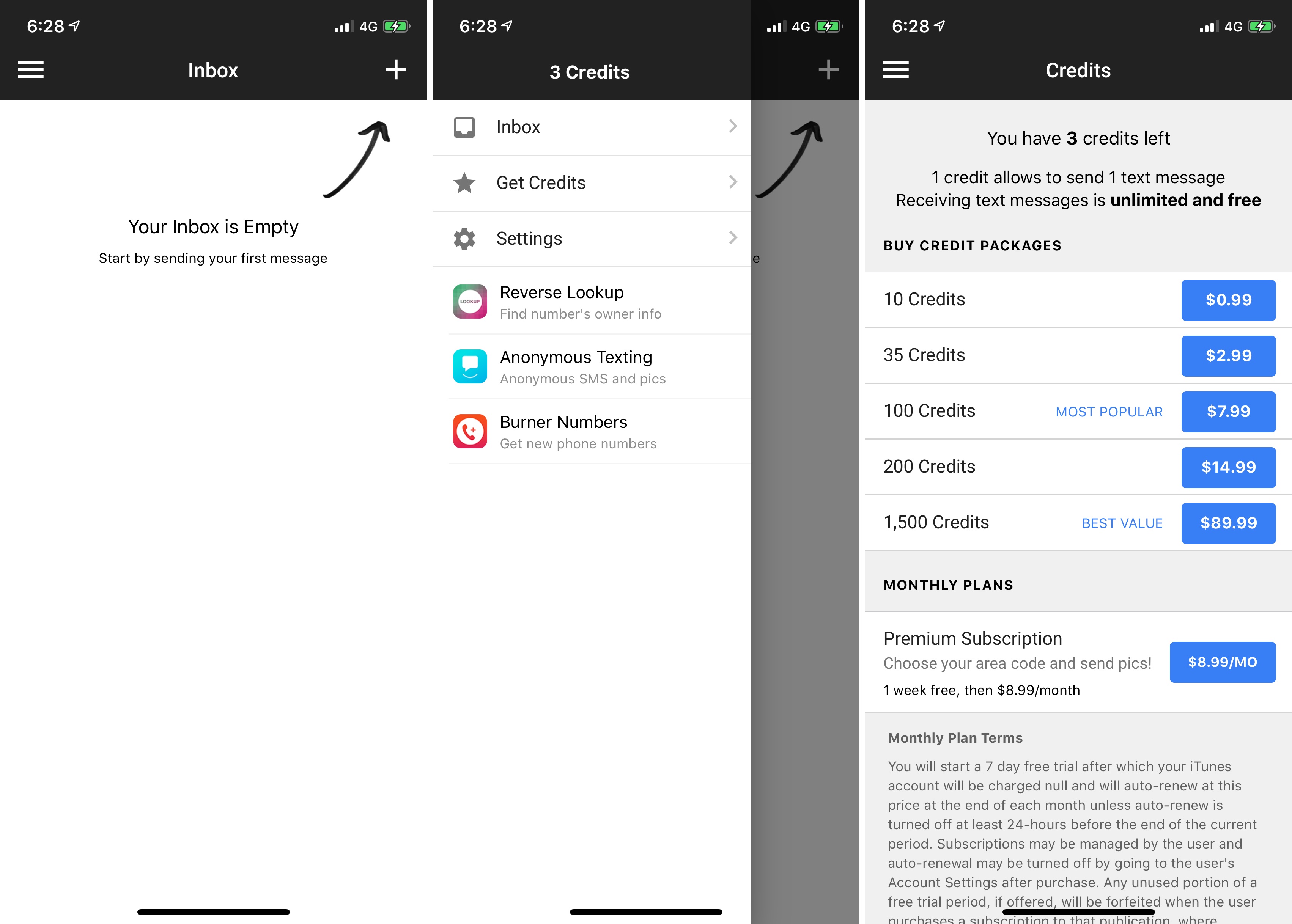
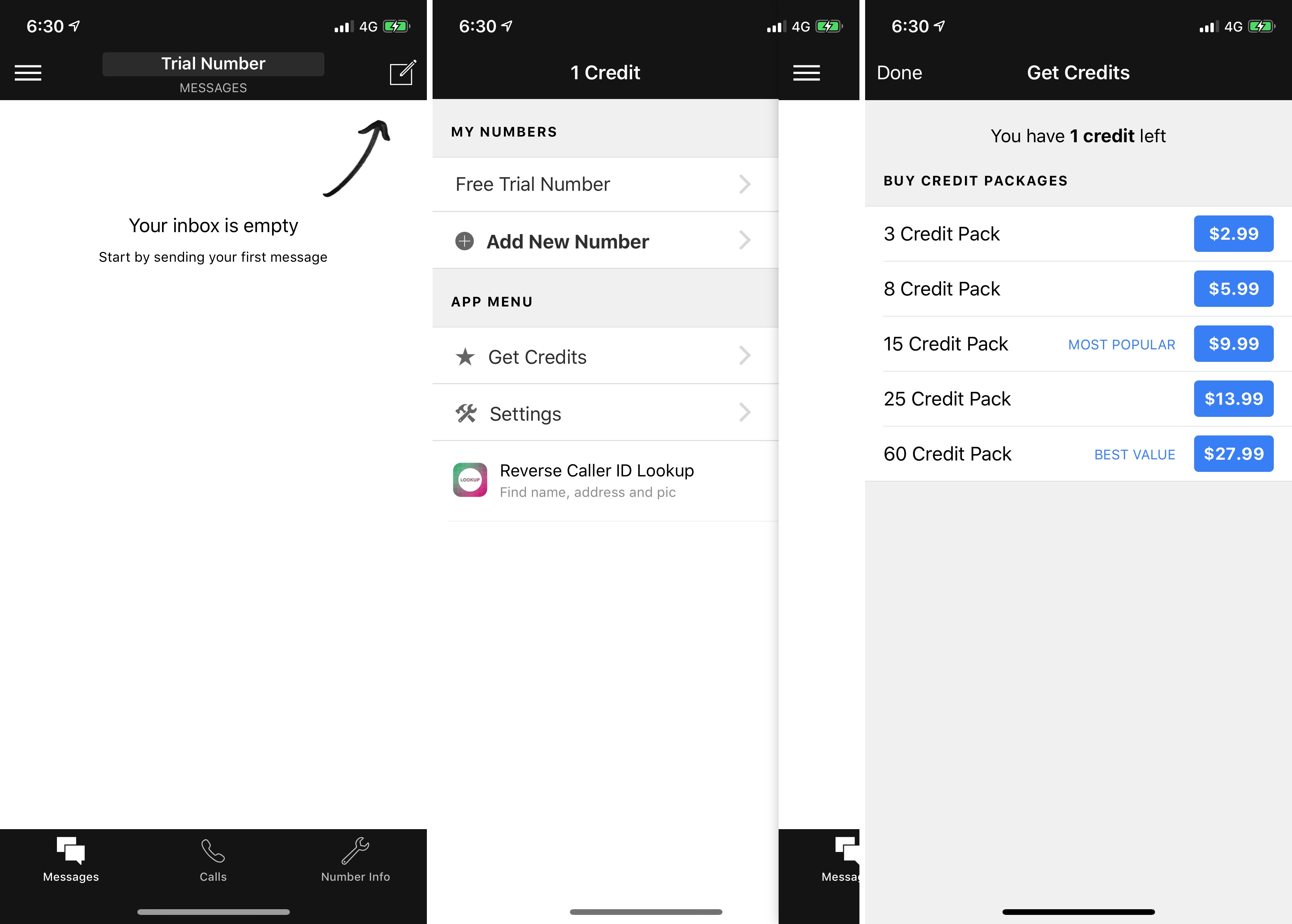
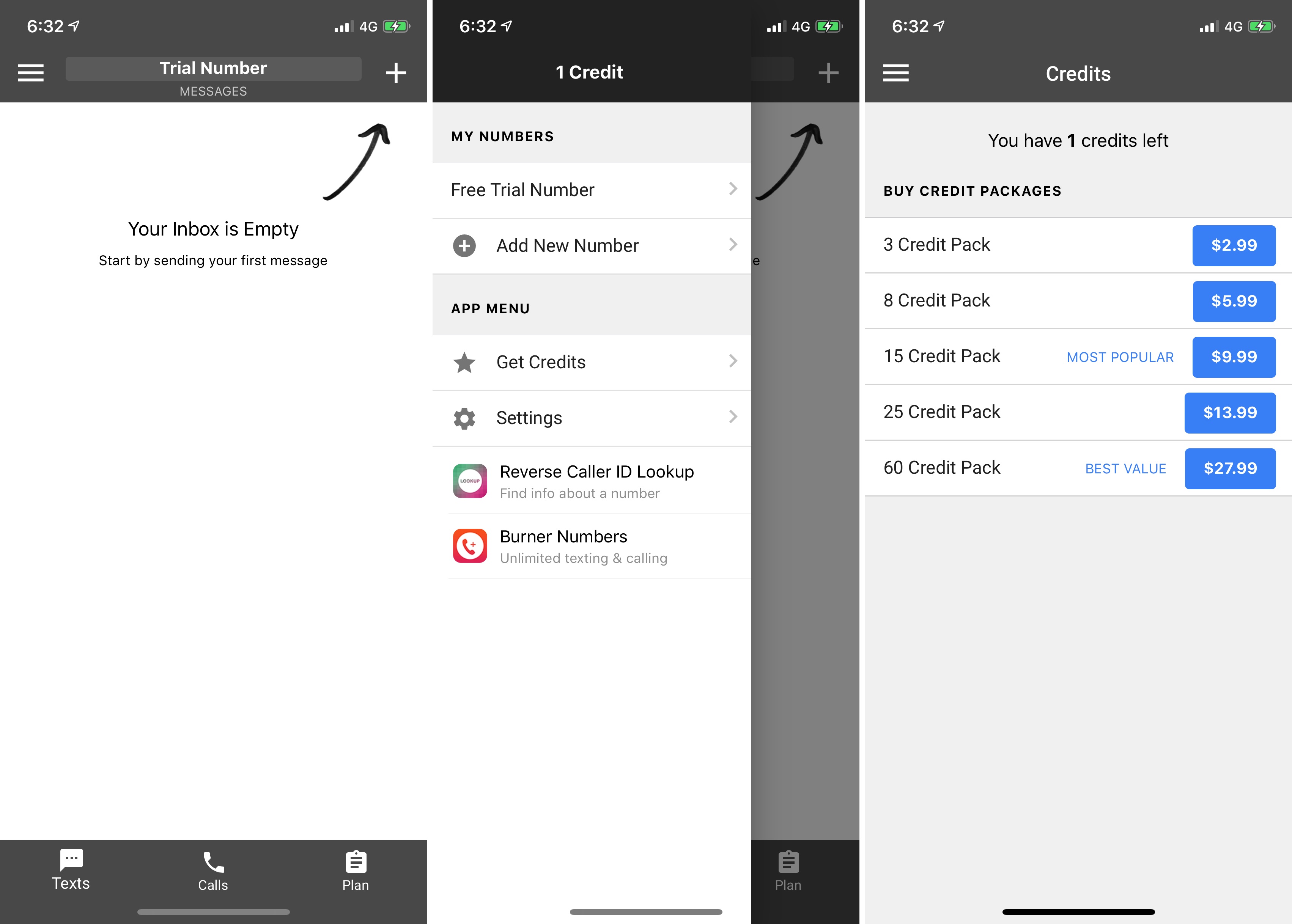
This case is a bit more sophisticated. The company behind those apps has two different developer accounts and tried to differentiate its App Store listings a bit. Similarly, buttons and colors slightly vary from app to another, but it’s the same feature set.

Here are a few screenshots I took:

Texting/Calling Phone Burner

Smiley Private Texting SMS

Texting Shield – Phone Number

Burner Phone Numbers SMS/Calls

Business Line Phone Number

I’ve reached out to BinaryPattern/Flexible Numbers and haven’t heard back.

Example 3: Appsverse Inc.

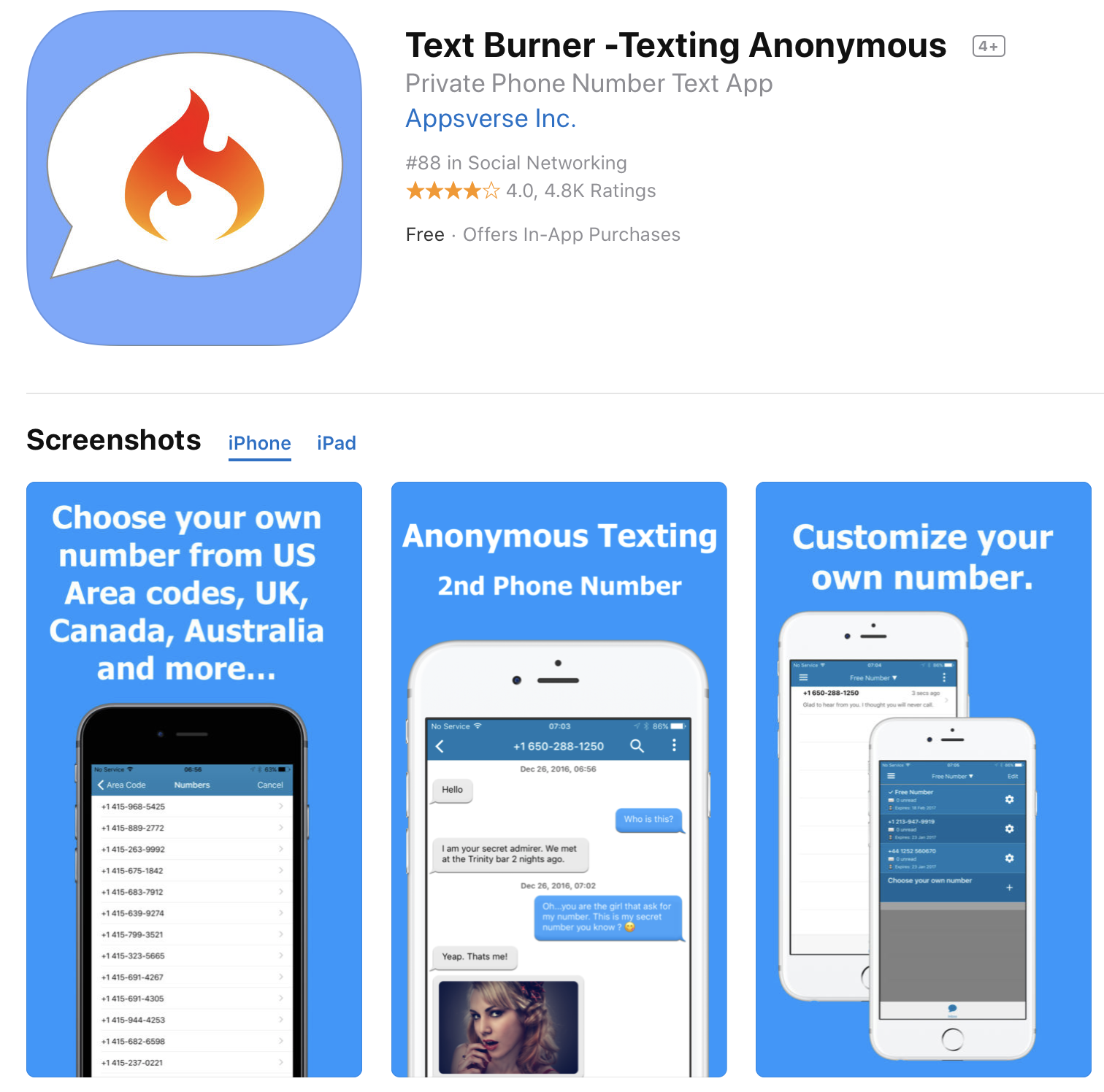
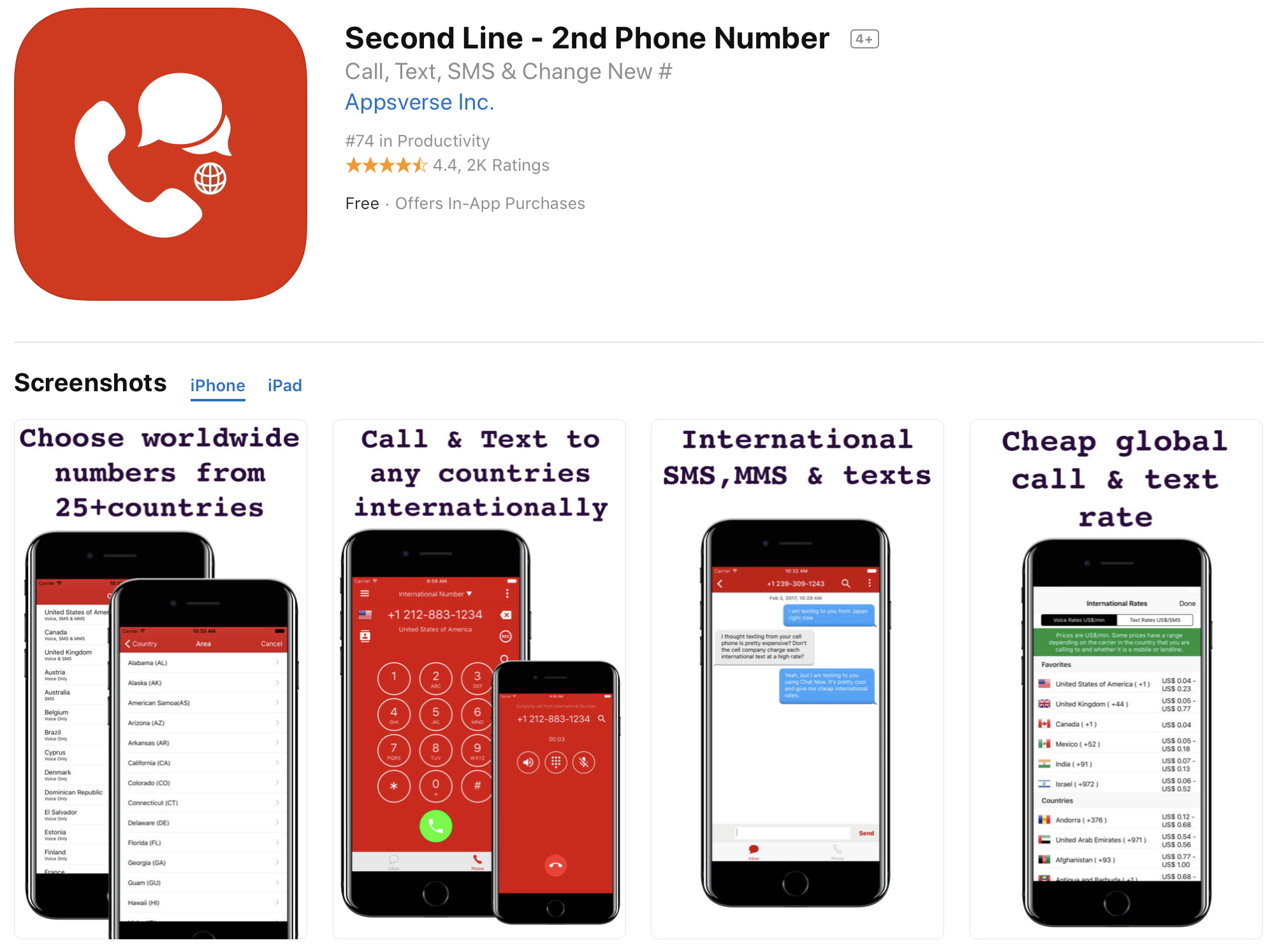
This time, Phoner, Second Line and Text Burner all share the same developer account. Even though these apps let you do the same thing, Appsverse has released its app in three different App Store categories — utilities, productivity and social networking.

By doing that, the company’s apps appear in multiple categories. Text Burner is #88 in social networking, Second Line is #74 in productivity and Phoner is #106 in utilities.

It seems a bit counterintuitive as Appsverse splits their downloads between multiple apps. But I believe the main reason the company is releasing multiple apps is for keyword optimization and App Store search results. It then picks a different category for each app, but it’s a side effect.

Appsverse has sent me the following statement:

“The guideline promotes a healthy App Store ecosystem that is good for both developers and users. It prevents proliferation of similar apps that does not have a differentiation in business model, features, use cases and demographic appeal.”

Example 4: Telos Mobile and Dingtone Inc.

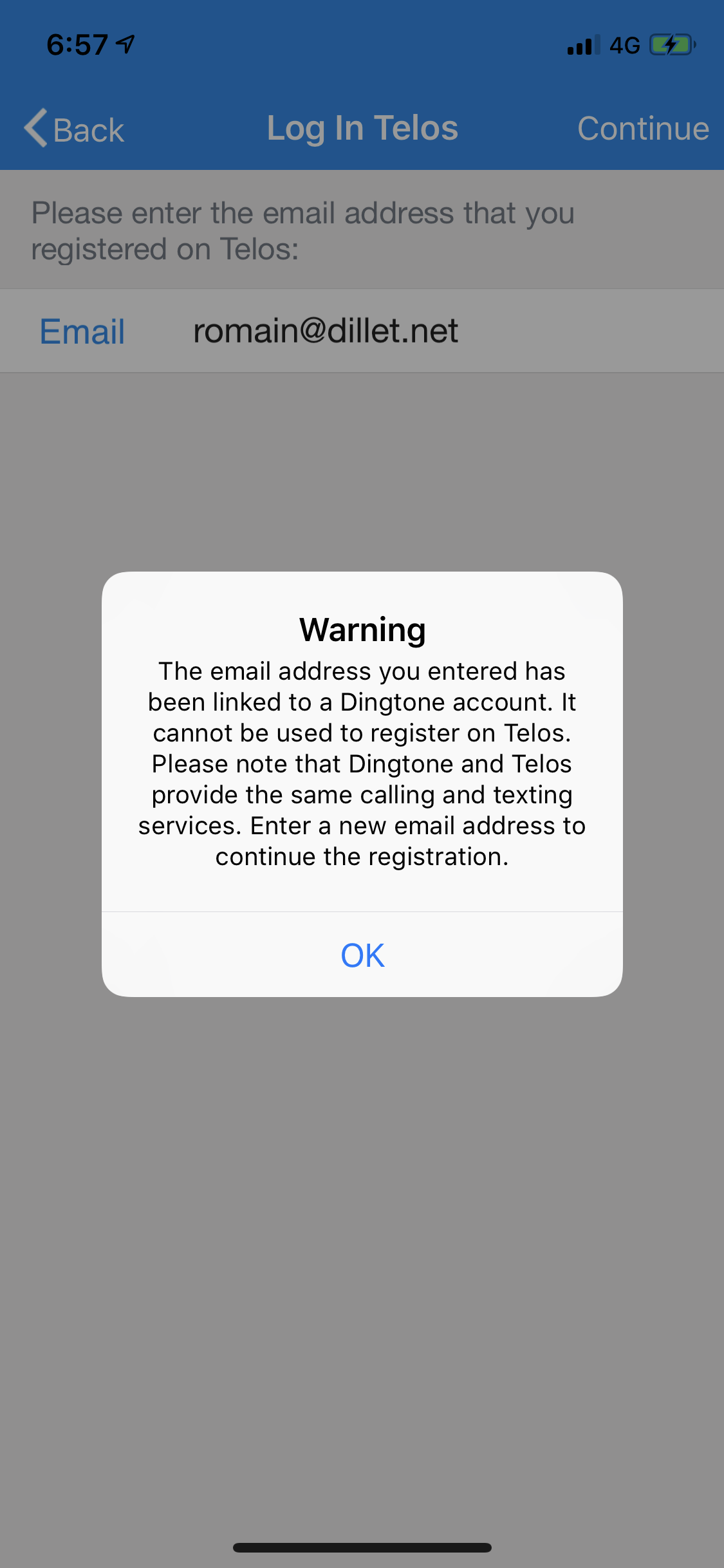
On paper, Dingtone and Telos look like two different apps from two different companies. I downloaded the Dingtone app and signed up with my email address. I then downloaded the Telos app and signed up with the same email address. Here’s the message I got:

I’ve reached out to Telos/Dingtone and haven’t heard back.

A level playing field

Those companies haven’t done anything illegal. They took advantage of Apple’s lack of oversight on an App Store rule. Releasing multiple versions of the same app is a great App Store optimization strategy. This way, you can pick a different name, different keywords and different categories. Chances are potential customers are going to see your app in their App Store search results.

While Apple is usually quite strict when it comes to App Store guidelines, it hasn’t enforced some of them. And this is unfair for app developers who play by the rules. They can’t compete as effectively with companies that know that they can ignore some rules.

26 Feb 2019

Virtual phone number apps are gaming the App Store with duplicates

If you’ve searched the App Store for an app to get a second phone number, chances are you found dozens of apps with very little differences. A handful of companies are spamming the App Store with duplicated apps. This strategy is against Apple’s rules.

The App Store Review Guidelines are detailed rules that define what you can and cannot do on the App Store. As soon as you sign up for a developer account and submit an app to the App Store review team, you agree to comply with those rules. It’s a long document, but the rule 4.3 titled “Spam” is straightforward:

Don’t create multiple Bundle IDs of the same app. If your app has different versions for specific locations, sports teams, universities, etc., consider submitting a single app and provide the variations using in-app purchase. Also avoid piling on to a category that is already saturated; the App Store has enough fart, burp, flashlight, and Kama Sutra apps already. Spamming the store may lead to your removal from the Developer Program.

A tipster looked at a specific category in the App Store — VoIP apps that let you get a second phone number, send and receive calls and texts from that new number. I looked at that category myself and here are the results of my investigation.

Companies don’t even try to hide the fact that have submitted multiple versions of the same app with different names and icons. But core features remain the same. Apple hasn’t enforced its own guideline properly and developers took advantage of that grey area.

Example 1: TextMe

As you can see on the company’s website, TextMe currently operates three apps and is open about it — TextMe Up, TextMe and FreeTone. These three apps all have an average of 4.7 stars in the App Store with hundreds of thousands of reviews in total.

The wording is slightly different for each app. TextMe Up lets you “call & text anyone in the world from your mobile, tablet, and computer”, while TextMe lets you “get a new phone number and start texting and making calls for free” and FreeTone is all about “[enjoying] free calls & texts to the phone numbers in the US and Canada”.

But if you look at the App Store screenshots, the company doesn’t even bother changing the screenshots or marketing copy.

“Our apps have a different marketing target,” TextMe, Inc. co-founder and co-CEO Patrice Giami told me in a phone interview. “They share the same code base, but we can activate or deactivate some features in order to differentiate the apps. We manage that depending on the competitive environment and if we need to optimize distribution.”

Giami also believes that his company complies with the App Store guidelines. “Apple is doing a very systematic review — we’re constantly scrutinized because we release a lot of app updates. We’ve never been flagged or contacted by Apple — they’ve never said that we’re releasing complete clones of the same app,” he said.

TextMe uses the same developer account for its three apps, Text Me, Inc. Apple could easily compare those apps if it wanted to.

Example 2: BinaryPattern and Flexible Numbers LLC

This case is a bit more sophisticated. The company behind those apps has two different developer accounts and tried to differentiate its App Store listings a bit. Similarly, buttons and colors slightly vary from app to another, but it’s the same feature set.

Here are a few screenshots I took:

Texting/Calling Phone Burner

Smiley Private Texting SMS

Texting Shield – Phone Number

Burner Phone Numbers SMS/Calls

Business Line Phone Number

I’ve reached out to BinaryPattern/Flexible Numbers and haven’t heard back.

Example 3: Appsverse Inc.

This time, Phoner, Second Line and Text Burner all share the same developer account. Even though these apps let you do the same thing, Appsverse has released its app in three different App Store categories — utilities, productivity and social networking.

By doing that, the company’s apps appear in multiple categories. Text Burner is #88 in social networking, Second Line is #74 in productivity and Phoner is #106 in utilities.

It seems a bit counterintuitive as Appsverse splits their downloads between multiple apps. But I believe the main reason the company is releasing multiple apps is for keyword optimization and App Store search results. It then picks a different category for each app, but it’s a side effect.

Appsverse has sent me the following statement:

“The guideline promotes a healthy App Store ecosystem that is good for both developers and users. It prevents proliferation of similar apps that does not have a differentiation in business model, features, use cases and demographic appeal.”

Example 4: Telos Mobile and Dingtone Inc.

On paper, Dingtone and Telos look like two different apps from two different companies. I downloaded the Dingtone app and signed up with my email address. I then downloaded the Telos app and signed up with the same email address. Here’s the message I got:

I’ve reached out to Telos/Dingtone and haven’t heard back.

A level playing field

Those companies haven’t done anything illegal. They took advantage of Apple’s lack of oversight on an App Store rule. Releasing multiple versions of the same app is a great App Store optimization strategy. This way, you can pick a different name, different keywords and different categories. Chances are potential customers are going to see your app in their App Store search results.

While Apple is usually quite strict when it comes to App Store guidelines, it hasn’t enforced some of them. And this is unfair for app developers who play by the rules. They can’t compete as effectively with companies that know that they can ignore some rules.