Author: azeeadmin

22 Feb 2019

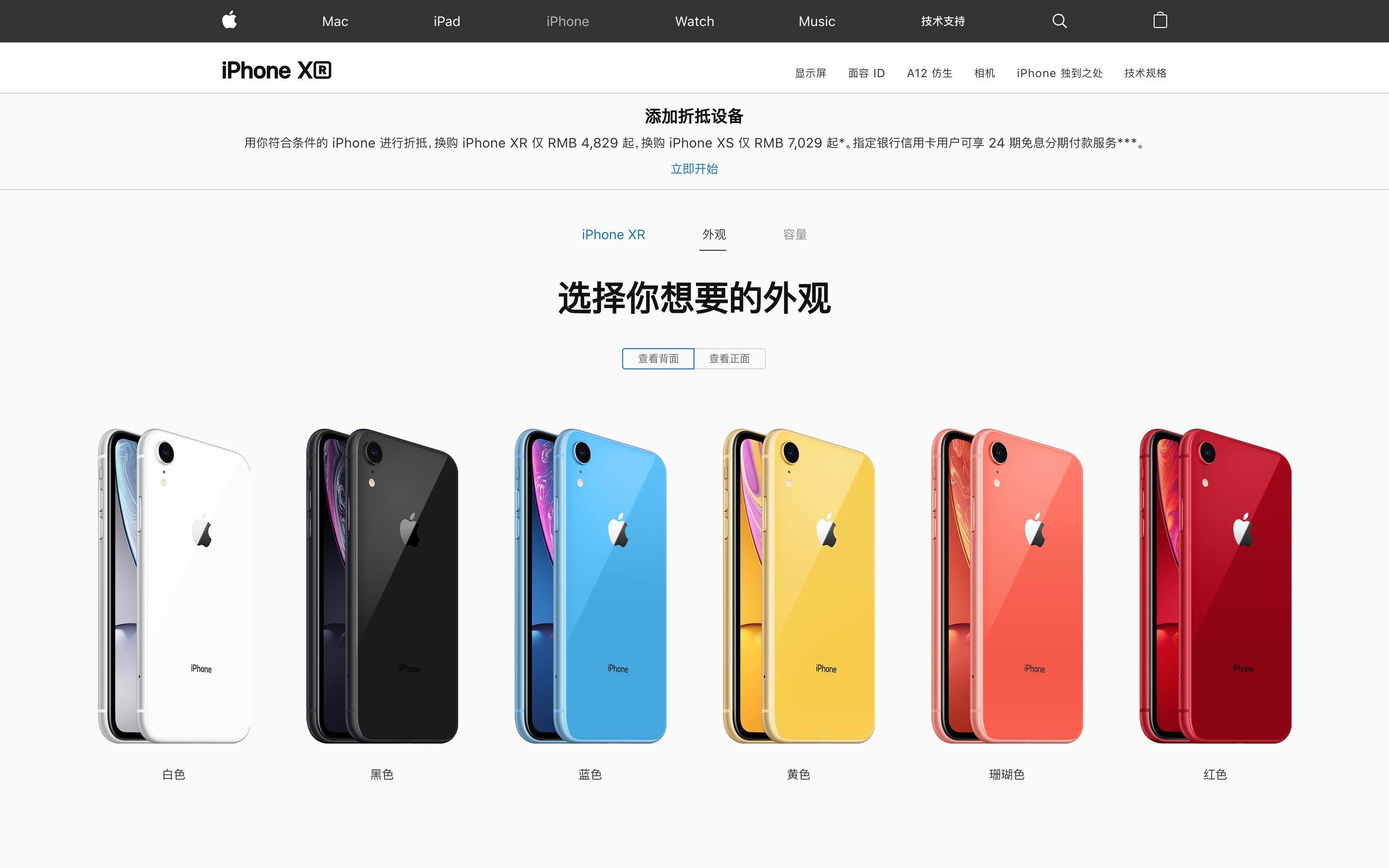
Apple is offering interest-free financing to boost iPhone sales in China

Apple is looking to get over its sales woes in China but offering prospective customers interest-free financing with a little help from Alibaba.

Apple’s China website now offers financing packages for iPhones that include zero percent interest packages provided in association with several banks and Huabei, a consumer credit company operated by Alibaba’s Ant Financial unit, as first noted by Reuters.

The Reuters report further explains the packages on offer:

On its China website, Apple is promoting the new scheme, under which customers can pay 271 yuan ($40.31) each month to purchase an iPhone XR, and 362 yuan each month for an iPhone XS. Customers trading in old models can get cheaper installments.

Users buying products worth a minimum of 4,000 yuan worth from Apple would qualify for interest-free financing that can be paid over three, six, nine, 12 or 24 months, the website shows.

Apple is also offering discounts for customers who trade in devices from the likes of Huawei, Xiaomi and others.

The deals are an interesting development that comes just weeks after Apple cut revenue guidance for its upcoming Q1 earnings. The firm trimmed its revenue from the $89 billion-$93 billion range to $84 billion on account of unexpected “economic deceleration, particularly in Greater China.”

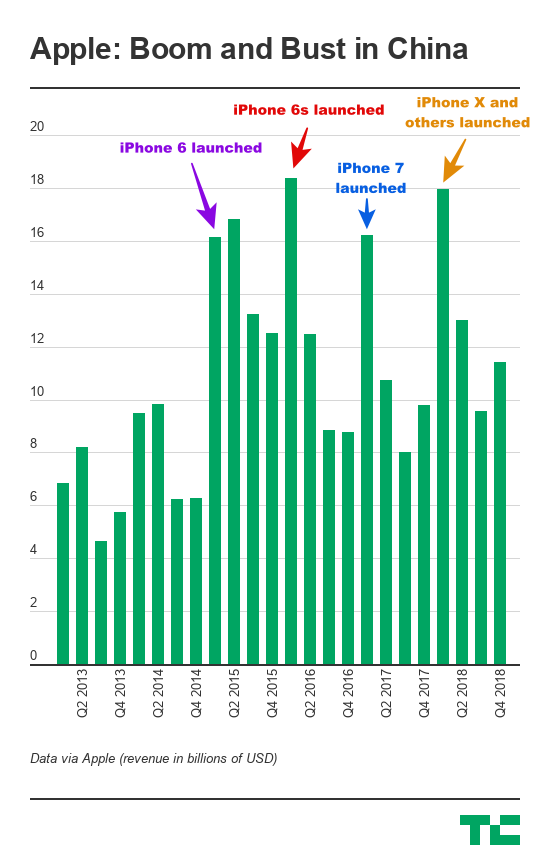
Offering attractive packages may convince some consumers to buy an iPhone, but there’s a lingering sense that Apple’s current design isn’t sparking interest from Chinese consumers. Traditionally, it has seen a sales uptick around the launch of iPhones that offer a fresh design and the current iPhone XR, XS and XS Max line-up bears a strong resemblance to the one-year-old iPhone X.

The first quarter of a new product launch results in a sales spike in China, but Q2 sales — the quarter after the launch — are where devices can underwhelm.

It’ll be interesting to see if Apple offers similar financing in India, where it saw sales drop by 40 percent in 2018 according to The Wall Street Journal. Apple’s market share, which has never been significant, is said to have halved from two percent to one percent over the year.

Finance is a huge issue for consumers in India, where aggressively priced by capable phones from Chinese companies like Xiaomi or OnePlus dominate the market in terms of sales volume. With the iPhone costing multiples more than top Android phones, flexible financing could help unlock more sales in India.

China, however, has long been a key revenue market for Apple so it figures that this strategy is happening there first.

22 Feb 2019

Rakuten’s Viber chat app plans to charge to operate chatbots in controversial move

Viber, the messaging app down by Japanese e-commerce firm Rakuten, is poised to implement a controversial new strategy that will see it charge companies that run chatbots on its platform.

The conventional wisdom is to work with content companies to help bring users to messaging platforms and keep them engaged but Viber, which has struggled to keep up with rivals like WhatsApp and Line, is turning that on its head.

Starting April 1, Viber will charge chatbot operators $4,500 per month for the ability to send up to 500,000 messages to users. Those who exceed that range will be eligible to send up to one million messages per month for $6,500. The new fees are being communicated to companies that operate Viber chatbots, but Viber hinted at its new monetization plans in an email to TechCrunch.

“Bots can be published for free; however, to ensure the highest discoverability and quality of content for bots, we will be introducing a commercial commitment in the coming months. A key aim with this move is to ensure that users are presented with a steady stream of highly relevant and relatable content and a commercial commitment is one key tool for ensuring a quality experience for users,” Debbi Dougherty, head of B2B Marketing & Communications for Viber, explained.

This is a risky strategy that is likely alienate companies that operate chatbots on Viber as well a brands who bought into a bot strategy.

These costs have come out of the blue, much to the surprise of startups that spent time developing chatbots for the Viber platform.

“For an early stage startup, this isn’t going to work,” Edmundas Balčikonis, co-founder of Eddy Travels — a travel concierge service that took part in Techstars’ Toronto program — told TechCrunch by phone.

Balčikonis said his startup was attracted to the Viber platform because it provided all the necessary documentation and APIs to build a chatbot up front and in public. Having spent eight months developing its Viber bot, Eddy Travels plans to double down on its efforts with Facebook Messenger and Telegram where its bot-based service runs without charge and has seen multiples more users and engagement.

“Viber encouraged us to built the bot, but never discussed the price and there’s no price in the website documentation,” he said. “Messenger is showing way more traction for us… we didn’t get any significant engagement on Viber.”

Indeed, the strategy seems to be quite the opposite that Viber needs to take if it is to gain marketshare from the chat app leaders. WhatsApp — the world’s largest messaging service with over 1.6 billion monthly active users — doesn’t currently support chatbots, but instead of playing to its strengths, Viber is trying to squeeze additional revenue here under the cloak of “a quality user experience.”

Times are already hard though at Viber. TechCrunch spoke to six chatbot startups who develop a range of services for customers, including banks, insurance companies and media, but we found that none run any projects on Viber. Each said their desire to work on the Viber platform would diminish further if they were forced to pay for the privilege.

The Viber service is popular in pockets of the world, including the Philippines, Myanmar and some Eastern European markets. Current CEO Djamel Agaoua, a seasoned advertising executive, promised to work on the revenue and business model when he took the helm in 2017. Under his leadership, Viber has pushed its communities chat feature for brands and tried to tap into e-commerce, but little is known of how that has progressed.

Rakuten’s recent 2018 financial report was released this month and it made scant reference to Viber, other than to note that the service and Rakuten Mobile, the company’s MVNO offering in Japan, had “substantially increased revenue thanks to their full-scale aggressive sales activities.”

No raw figures were provided but Rakuten’s ‘Internet Services’ division, which houses Viber and Rakuten Mobile, saw its annual revenue increase by 15.9 percent to 788.4 billion JPY. That’s around $7.1 billion and it sounds impressive, but the bulk of that revenue is from Rakuten Mobile, which has teamed up with traditional operator KDDI to take a crack at Japan’s mobile market.

What we know about Viber is that it has increased its content monetization — which included advertising, sponsored stickers and more — and that now accounts for the bulk of its revenue having surpassing income from Viber VoIP calling packages.
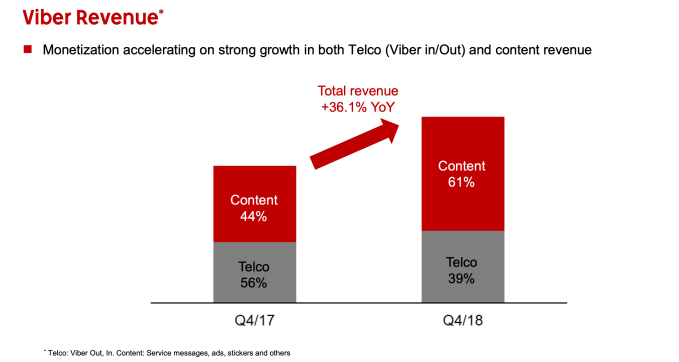
But, again, there’s no raw revenue data here. Rakuten also no longer provides active user information for Viber, which it said said has registered over one billion users since its creation in 2011. That’s not an informative statistic.

Things seem to be so bad that Viber doesn’t even provide an active user number to advertisers, according to a pitch deck seen by TechCrunch. The data shown includes a selection of actions that Viber claims happen per minute, including 1.2 million logins, but there’s no headline monthly active user statistic. Barcelona, which counts Rakuten as a sponsor, and Coke are among the brands that use Viber.

Now the service’s content monetization push has extended into chatbots, but the obvious risk is that companies and brands will simply go elsewhere where, frankly, they already have a larger and more captive audience.

Rakuten bought Viber for $900 million in January 2014, just one month before Facebook forked out $19 billion to acquire WhatsApp. The Viber deal seemed prescient. Sure it didn’t have the same scale as WhatsApp but it was comparable — 300 million registered compared to WhatsApp’s 450 million active — and teaming with a major internet company would bring a larger budget and opportunities.

The sad reality of today, however, is WhatsApp has grown into one of the world’s most important social services but Viber has floundered. Policies that are as short-sighted as monetizing chatbots will ensure Viber continues to be an also-ran. That surely wasn’t how Rakuten envisaged its acquisition progressing.


22 Feb 2019

China wants its rural villages to go cashless by 2020

Residents of even the tiniest far-flung villages in China may soon be able to pay on their phones to run daily errands as Beijing announced this month that it aims to make mobile payments ubiquitous in rural areas by the end of 2020.

The plan arrived in a set of guidelines (document link in Chinese) jointly published by five of China’s top regulating bodies, including the central bank, the Banking and Insurance Regulatory Commission, the Securities Regulatory Commission, the Ministry of Finance and the Ministry of Agriculture and Rural Affairs, in a move to make online financial services more accessible to rural residents.

The hope is that by digitizing the lives of the farming communities, from getting loans to buy fertilizers to leasing lands to city developers, China could bolster the economy in smaller cities and countryside hamlets. Hundreds of millions of rural Chinese have migrated to large urban centers pursuing dreams and higher-paying jobs, but 42 percent of the national population remained rural as of 2017. While scan-to-pay is already a norm in bigger cities, digital payments still have considerable room to grow in rural towns. All told, 76.9 percent of China’s adults used digital payments in 2017. That ratio was 66.5 percent in rural parts, according to a report released by the central bank.

Following the digital payments pledge was the release of the annual Number One Document (in Chinese) that outlines China’s national priorities for the year. Over the past 16 years, China has devoted the paper to its rural economy and this year, digital integration continues to be one of the key goals. More precisely, Beijing wants rural officials to ramp up internet penetration, the digitization of public services, sales of rural produce to city consumers, and more.

Those directives usher in huge opportunities for companies in the private sector. Tech heavyweights such as Alibaba and JD.com were already looking outside megacities a few years ago. Both have set up online channels enabling farmers to sell and buy as well as working with local governments to build up logistics networks.

Alibaba notably invested in Huitongda, a company that provides merchandising, marketing and supply chain tools to rural retail outlets. Despite posting the slowest revenue growth in three years, Alibaba saw exceptional user growth in rural regions. Similarly, JD’s daily orders from smaller Tier 3 and 4 cities were growing 20 percent faster than those in Tier 1 and 2 cities like Beijing and Hangzhou, the company said in 2017.

Other players went with a rural and small-town play early on. Pinduoduo, an emerging ecommerce startup that’s close on the heels of Alibaba and JD, gained a first-mover advantage in these less developed regions by touting cheap goods. Kuaishou, a Tencent-backed video app that rivals TikTok’s Chinese version Douyin, has proven popular in the hinterlands as farmers embrace the app to showcase the country life and sell produce through live streaming.

22 Feb 2019

Vynn Capital snags investment from Malaysia’s MAVCAP for its maiden Southeast Asia fund

Vynn Capital, a new entrant to Southeast Asia’s startup ecosystem, is gearing up to close its maiden fund after it landed an undisclosed sum from Malaysia Venture Capital Management Bhd (MAVCAP) as one of its anchor LPs.

Founded by former Gobi Ventures VC Victor Chua and Singaporean investor Darren Chua (no relation) one year ago, Kuala Lumpur-based Vynn is targeting a $40 million fund for Southeast Asia. The firm has already made four investments and, on the LP side, gone after traditional businesses and Southeast Asia’s family corporations. Landing MAVCAP — which is Malaysia’s largest investor has backed VC funds including Gobi — is a major coup for a debut fund.

“The investment from MAVCAP is a very good validation for Vynn Capital,” said Victor Chua, who is Malaysian. “Personally, having been active in the local and regional ecosystem, I’ve benefited from the growth trajectory of the ecosystem and am now able to launch a new fund that is addressing the need of the traditional businesses to be innovative.”

“The thesis of the fund is Southeast Asia, but through our investment we are focused on how it will be invested in Malaysian deals,” MAVCAP’s Shahril Anas told TechCrunch in an interview. “We have some carry and expect returns that we can invest into local entrepreneurs in Malaysia, we are also keen to look at how other countries’ economies interact with startups.”

Anas said the approach is to be very hands-off, MAVCAP has various other fund investments, but he reiterated that there may be specific data or insight that the organization looks to glean.

Southeast Asia is emerging from the shadows of China and India to become a target market for startups and, by extension, the investors who write the checks to finance them.

Beyond a cumulative population of over 600 million people, the region’s ‘digital economy’ is tipped to grow to $240 billion by 2025 from $31 million in 2015, according to a report from Google and Singapore sovereign fund Temasek.

Some of the other investors vying for a slice of the opportunity include new funds from Openspace Ventures ($135 million), Indonesia-focused Intudo ($50 million), Qualgro ($100 million) and Golden Gate Ventures ($100 million) and Sequoia India ($695 million).

22 Feb 2019

Uber is reportedly close to making a tactical exit from India’s food delivery industry

Uber has said adamantly that it won’t exit India (or any more markets) following a hattrick of retreats from China, Russia and Southeast Asia, but does that include its food delivery business?

The answer could well be yes. If media reports are right, Uber is on the cusp of a tactical exit from India’s food delivery industry.

India’s Economic Times is reporting that Uber is in the final stages of a deal that would see Swiggy, the food delivery service that recently raised $1 billion and expanded to general deliveries, eat up Uber Eats in India in exchange for giving the U.S. ride-hailing firm a 10 percent share of its business. Swiggy was most recently said to be valued at $3.3 billion following that billion-dollar round, which was led by Naspers and added Tencent to its cap table.

Uber Eats is touted as a major revenue generator for the company, The Information previously reported that it grossed $1.5 billion in sales in the first quarter of 2018 alone, and the company has pushed expansion hard in Asia. Uber Eats landed in India nearly two years ago but it finds itself in the middle of a dogfight between Swiggy, which raised capital three times last year, and Zomato, which is backed by Alibaba.

Already, the battle has taken its toll on peripheral players that include FoodPanda, the service acquired by Uber rival Ola in late 2017. Ola is reported to have slashed costs at FoodPanda and shift the focus to a more sustainable cloud kitchen strategy. Yet Zomato and Swiggy continue to be aggressive.

Based on that backdrop, and Uber’s upcoming IPO, it would make sense to consolidate costs and yet retain a stake in the market. Uber did exactly that through its exit deal with Grab in Southeast Asia, which saw it hand over its transport and food delivery businesses in exchange for a 27.5 percent stake in Grab. That deal, which I argued was a win not a loss for Uber, got the company out of an expensive subsidies war and gave it a stake in a growing business. It could well be a recipe that Uber repeats for India’s food delivery space.

22 Feb 2019

Uber is reportedly close to making a tactical exit from India’s food delivery industry

Uber has said adamantly that it won’t exit India (or any more markets) following a hattrick of retreats from China, Russia and Southeast Asia, but does that include its food delivery business?

The answer could well be yes. If media reports are right, Uber is on the cusp of a tactical exit from India’s food delivery industry.

India’s Economic Times is reporting that Uber is in the final stages of a deal that would see Swiggy, the food delivery service that recently raised $1 billion and expanded to general deliveries, eat up Uber Eats in India in exchange for giving the U.S. ride-hailing firm a 10 percent share of its business. Swiggy was most recently said to be valued at $3.3 billion following that billion-dollar round, which was led by Naspers and added Tencent to its cap table.

Uber Eats is touted as a major revenue generator for the company, The Information previously reported that it grossed $1.5 billion in sales in the first quarter of 2018 alone, and the company has pushed expansion hard in Asia. Uber Eats landed in India nearly two years ago but it finds itself in the middle of a dogfight between Swiggy, which raised capital three times last year, and Zomato, which is backed by Alibaba.

Already, the battle has taken its toll on peripheral players that include FoodPanda, the service acquired by Uber rival Ola in late 2017. Ola is reported to have slashed costs at FoodPanda and shift the focus to a more sustainable cloud kitchen strategy. Yet Zomato and Swiggy continue to be aggressive.

Based on that backdrop, and Uber’s upcoming IPO, it would make sense to consolidate costs and yet retain a stake in the market. Uber did exactly that through its exit deal with Grab in Southeast Asia, which saw it hand over its transport and food delivery businesses in exchange for a 27.5 percent stake in Grab. That deal, which I argued was a win not a loss for Uber, got the company out of an expensive subsidies war and gave it a stake in a growing business. It could well be a recipe that Uber repeats for India’s food delivery space.

22 Feb 2019

Japan’s Hayabusa 2 has landed on an asteroid, shot it with a special bullet, and returned to space

The Japanese spacecraft Hayabusa 2 has just completed the next phase of its multi-part, multi-year mission by shooting a bullet into the asteroid it had been circling and returning to space.

Hopefully, the spacecraft has been able to collect samples of asteroid material kicked off from the surface by the impact from the specially made bullet that the Hayabusa craft shot.

The landing and mining mission is the sequel to an earlier mission (the first Hayabusa voyage), which was a seven year voyage during which the spacecraft observed an asteroid, collected samples and returned to Earth.

Scientists said that collecting material from the Ryugu asteroid could offer clues to support a hypothesis of how water and life formed on the surface of the Earth in the early days of the planet’s formation. Ryugu is a near earth asteroid that scientists have identified as carbon-rich (a C-type), which may have water in their rocks.

Japan’s Hayabusa 2 is expected to return to Earth in 2020 with its rocky haul.

According to the rocket’s Twitter feed the rocket began its descent roughly 20 kilometers above the asteroid’s surface in the early hours of the 21st and touched down a few hours ago.

The descent and collection was supposed to take place last year, when the spacecraft deployed two rovers on the surface of the asteroid to scout its geography. Those rovers relayed images of a terrain that was a bit more rocky than scientists had expected, so more planning had to be done before the mission could be carried out.


22 Feb 2019

Baidu’s video site iQiyi adds 37M subscribers in 2018 amid mounting losses

China’s Baidu, which is often compared to Alphabet’s Google, is showing no signs of slowing down its pace of betting on video content as its core advertising unit feels the squeeze from rivals. The company’s latest financial results show its video streaming business iQiyi posted a net loss of 9.1 billion yuan or $1.3 billion in 2018, compared to just 3.74 billion yuan in 2017.

Not long ago, iQiyi announced raising $500 million in convertible notes to fuel its spending spree. The video site, which filed for a $1.5 billion U.S. IPO last February, aspires to be the “Disney of China” with a Netflix-style production house and a plan to merchandise a library of intellectual property. Baidu also felt the heat as content costs from 2018 jumped 75 percent to $3.42 billion mainly on account of iQiyi expenses.

The cash burn appears to be paying off. IQiyi added 36.6 million subscribers last year, bringing its total users to 87.4 million. 98.5 percent of them were paying, a promising ratio given Chinese users were long used to getting free content in a country with rampant online piracy. IQiyi’s most serious contender Tencent Video had 82 million users as of Q3.

2018 also turned out to be the first time Baidu has crossed the 100 billion yuan earnings mark as the firm pocketed 102.3 billion yuan ($14.88 billion) in total revenues, an increase of 28 percent from 2017.

In Q4 alone, Baidu’s total revenues grew 22 percent to $3.96 billion at a slower rate compared to the previous quarter. Online advertising from search results, news feed and video content still made up the majority of the company’s income despite the considerable resources the behemoth has poured into autonomous driving and other AI-focused efforts.

Meanwhile, Baidu’s lucrative advertising business is facing heightened competition from ByteDance, the fast-ascending new media company with a suite of news and video apps that are proven popular with marketers. The Beijing-based firm that’s also unnerved Tencent was expected to achieve $7.4 billion in revenues last year, Bloomberg reported citing sources.

To fend off attackers, Baidu has broadened its advertising inventory beyond the web to include the likes of elevators. In another move, Baidu paid $133 million in cash prizes luring users to its namesake search app on the eve of Chinese New Year. But its search service has over the years been a repeated target for criticism on issues ranging from false medical ads to more recently the subpar quality of its search results. Baidu has nonetheless held onto its commanding position in a market where Google is absent and smaller players like Bing and Sogou remain the underdogs.

On the AI front, Baidu made a total of 13 investments in 2018 that made it the most prolific corporate venture capital focused on the realm, according to a report from CB Insights. Microsoft’s M12 venture and Google Ventures followed closely behind.

Though Baidu’s AI business is far from achieving mass commercialization, the segment has scored some notable landmarks. Over 200 million devices now use DuerOS, the company’s answer to the Alexa voice assistant. Baidu’s autonomous driving open platform Apollo has accumulated 135 original equipment manufacturers (OEMs) including Volvo, which is working with its Chinese ally to deliver level four self-driving passenger vehicles that can operate on pre-mapped roads with minimum human intervention.

22 Feb 2019

Facebook removes its Onavo surveillance VPN app from Google Play

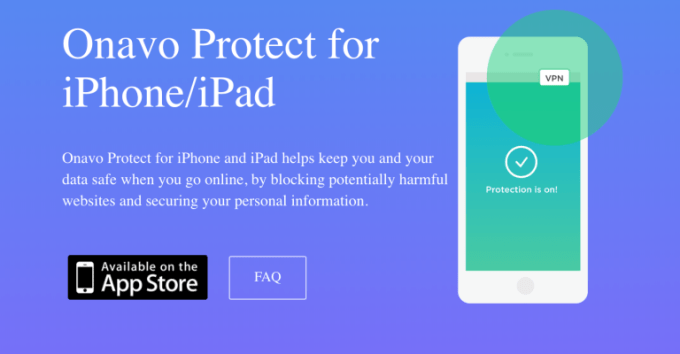
Facebook will end its unpaid market research programs and proactively take its Onavo VPN app off the Google Play store in the wake of backlash following TechCrunch’s investigation about Onavo code being used in a Facebook Research app the sucked up data about teens. The Onavo Protect app will eventually shut down, and will immediately cease pulling in data from users for market research though it will continue operating as a Virtual Private Network in the short-term to allow users to find a replacement.

Facebook has also ceased to recruit new users for the Facebook Research app that still runs on Android but was forced off of iOS by Apple after we reported on how it violated Apple’s Enterprise Certificate program for employee-only apps. Existing Facebook Research app studies will continue to run, though.

A Facebook spokesperson confirmed the change and provided this statement “Market research helps companies build better products for people. We are shifting our focus to reward-based market research which means we’re going to end the Onavo program.”

With the suspicions about big tech giants and looming regulation leading to more intense scrutiny of privacy practices, Facebook has decided that giving users a utility like a VPN in exchange for quietly examining their usage of other apps and mobile browsing data isn’t a wise strategy. Instead, it will focus on paid programs where users explicitly understand what privacy they’re giving up for direct financial compensation.

Facebok acquired Onavo in 2013 for a reported $200 million to use its VPN app the gather data about what people were doing on their phones. That data revealed WhatsApp was sending far more messages per day than Messenger, convincing Facebook to pay a steep sum of $19 billion to buy WhatsApp. Facebook went on to frame Onavo as a way for users to reduce their data usage, block dangerous websites, keep their traffic safe from snooping — while Facebook itself was analyzing that traffic. The insights helped it discover new trends in mobile usage, keep an eye on competitors, and figure out what features or apps to copy. Cloning became core to Facebook’s product strategy over the past years, with Instagram’s versions of Snapchat Stories growing larger than the original.

But last year, privacy concerns led Apple to push Facebook to remove the Onavo VPN app from the App Store, though it continued running on Google Play. But Facebook quietly repurposed Onavo code for use in its Facebook Research app that TechCrunch found was paying users in the U.S. and India ages 13 to 35 up to $20 in gift cards per month to give it VPN and root network access to spy on all their mobile data.

Facebook ran the program in secret, obscured by intermediary beta testing services like Betabound and Applause. It only informed users it recruited with ads on Instagram, Snapchat and elsewhere that they were joining a Facebook Research program after they’d begun signup and signed non-disclosure agreements. A Facebook claimed in a statement that “there was nothing ‘secret’ about this”, but it had threatened legal action if users publicly discussed the Research program.

But the biggest problem for Facebook was that its Research app abused Apple’s Enterprise Certificate program meant for employee-only apps to distribute the app outside the company. That led Apple to ban the Research app from iOS and invalidate Facebook’s certificate. This shut down Facebook’s internal iOS collaboration tools, pre-launch test versions of its popular apps, and even its lunch menu and shuttle schedule to break for 30 hours, causing chaos at the company’s offices.

In an attempt to preempt any more scandals around Onavo and the Facebook Research app or Google stepping in to block the apps, Facebook is now taking Onavo off the Play Store and stopping recruitment of Research testers.

22 Feb 2019

Watch SpaceX launch the first private moon landing mission

Calling all lunatics — the first fully private moon landing mission is about to take off from Cape Canaveral. A SpaceX Falcon 9 rocket carrying SpaceIL’s Beresheet lander is set to take off about an hour from now, at 5:45 Pacific time. Watch it right here!

The launch isn’t just the lander — in fact, the lander is only a small part of the payload. The primary passenger is Nusantara Satu, an Indian communications satellite that will provide connectivity to rural areas in the country difficult to reach by ordinary means. Once it gets to its geosynchronous orbit it will deploy the U.S. Air Force Research Lab’s S5 experimental satellite, which will track objects and debris around that altitude.

But by the time those deploy (about 44 minutes after launch), Beresheet will be well on its way; it’s entering a transfer orbit with an eye to lunar insertion and touchdown on the surface there in April.

Should it accomplish its task, the Israeli satellite will be the first private mission to land on the moon. So far it’s just been us, Russia and China — others have passed by or orbited, to be sure, but no one has made a soft landing and taken pictures, as Beresheet intends to do.

It was originally planned to do this for Google’s ill-fated Lunar Xprize, which went unclaimed despite serious interest — the truth is it was just a bit too ambitious for its own good. But several of the companies and teams that entered are still going strong, moving forward at their own paces.

At around $100 million, Beresheet will be the cheapest moon landing mission by far, and as the first to do so on a privately engineered and built (not to mention previously flown) rocket, as a secondary payload and with a private launch coordinator… let’s just say that it’s likely to set records all over the place if all goes well.

The first thing that needs to happen, of course, is takeoff. So tune in below at 5:45: