Author: azeeadmin

21 Feb 2019

DoorDash raises $400M round, now valued at $7.1B

Delivery company DoorDash is announcing that it has raised $400 million in Series F financing.

Earlier this month, The Wall Street Journal reported that the company was looking to raise $500 million at a valuation of $6 billion or more. In fact, DoorDash now says the funding came at a $7.1 billion valuation.

The round was led by Temasek and Dragoneer Investment Group, with participation from previous investors SoftBank Vision Fund, DST Global, Coatue Management, GIC, Sequoia Capital and Y Combinator.

DoorDash has been raising money at an impressive rate, with a $535 million round last March followed by a $250 million round (valuing the company at $4 billion) in August.

Co-founder and CEO Tony Xu told me the round is “a reflection of superior performance over the past year.” Apparently, the company is currently seeing 325 percent growth, year-over-year, and it points to recent data from Second Measure showing that the service has overtaken Uber Eats in U.S. market share for online food delivery — DoorDash now comes in second to Grubhub.

“I think the numbers speak for themselves,” Xu said. “If you just run the math on DoorDash’s course and speed, we’re on track to be number one.”
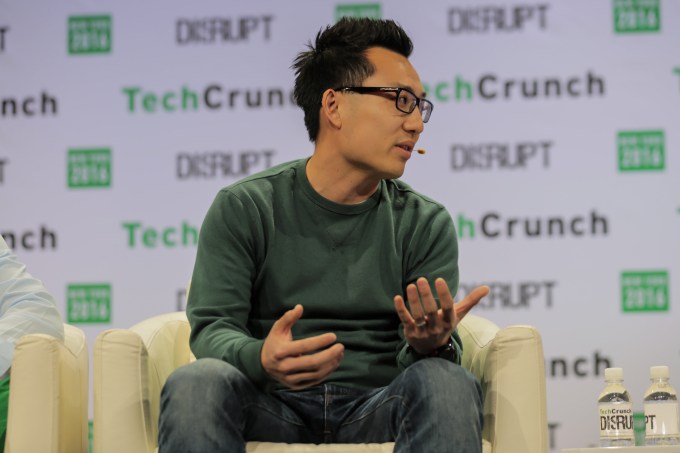
Tony Xu of DoorDash

He attributed the company’s growth to three factors: its geographic reach (3,300 cities in the United States and Canada), its selection of partners (not just restaurants — Walmart is using DoorDash for grocery deliveries) and DoorDash Drive, which allows businesses to use the DoorDash network to make their own deliveries.

He added that DoorDash has been “growing in a disciplined way, turning markets towards profitability.”

The funding, Xu said, will allow the company to continue investing in Drive, in its DashPass subscription service (where you pay $9.99 per month for free deliveries on orders of $15 or more from select restaurants) and in more hiring. And while DoorDash is currently available in all 50 states, Xu said there’s still plenty of room to cover additional territory in the U.S. and especially Canada.

“To me, this round … really changes the position of the company, not only as we march towards market leadership, but as we go beyond restaurants and become the last mile for commerce,” he said.

Not all of DoorDash’s recent news has been good. Along with Instacart, the company has been under scrutiny for subsidizing its driver payments with customer tips.

When asked about the criticism, Xu said the current compensation system was tested “not in a quarter, not in a month, but tested for months” before being implemented in 2017, and since then, there’s been a “significant increase” in retention among “dashers,” along with improved dasher satisfaction and on-time deliveries.

“When it comes to this pay model that has been in the press, the most important thing, I would say, is looking again at the facts and results,” he said.
21 Feb 2019

Pinterest files confidentially to go public

Visual search engine Pinterest has joined a long list of high-flying technology companies planning to go public in 2019. The business has confidentially submitted paperwork to the Securities and Exchange Commission for an initial public offering slated for later this year, according to a report from The Wall Street Journal.

Pinterest declined to comment.

Founded in 2008 by Ben Silbermann, earlier reports indicated the company was planning to debut on the stock market in April. In late January, Pinterest took its first official step toward a 2019 IPO, hiring Goldman Sachs and JPMorgan Chase as lead underwriters for its offering.

The company garnered a $12.3 billion valuation in 2017 with a $150 million financing.

Touting 250 million monthly active users, Pinterest has raised nearly $1.5 billion in venture capital funding from key stakeholders Bessemer Venture Partners, Andreessen Horowitz, FirstMark Capital, Fidelity and SV Angel. The business brought in some $700 million in ad revenue in 2018, per reports, a 50 percent increase year-over-year.

Pinterest employs 1,600 people across 13 cities, including Chicago, London, Paris, São Paulo, Berlin and Tokyo. The company says half its users live outside the U.S.

Pinterest will likely follow Lyft, Uber and Slack to the public markets, which have all filed confidential paperwork for IPOs or, in Slack’s case, a reported direct listing, expected in the coming months.

21 Feb 2019

Google ends forced arbitration for employees

Google is finally ending forced arbitration for its employees. These changes will go into effect for both current and future Google employees on March 21.

While Google won’t reopen settled claims, current employees can litigate past claims starting March 21.

For the contractors Google works with directly, it will remove mandatory arbitration from their contracts. The caveat, however, is that it won’t require outside firms that employ contractors to do the same. Still, Google says it will notify suppliers so that they can see if that approach would work for them.

This is a direct response to a group of outspoken Google employees protesting the company’s arbitration practices. Last month, a group of Google employees took to Twitter and Instagram in an attempt to educate the public about forced arbitration. That came about one month after this same group of 35 employees banded together to demand Google end forced arbitration as it relates to any case of discrimination. The group also called on other tech workers to join them.

Forced arbitration ensures workplace disputes are settled behind closed doors and without any right to an appeal. These types of agreements effectively prevent employees from suing companies.

Following the massive, 20,000-person walkout at Google in November, Google got rid of forced arbitration for sexual harassment and sexual assault claims, offering more transparency around those investigations and more. Airbnb, eBay and Facebook quickly followed suit. Despite some progress across the industry, the end of forced arbitration across all workplace disputes is not widespread.

Since getting rid of forced arbitration for cases relating to sexual harassment and assault, Google said it has been exploring the issue and ultimately decided on implementing a blanket change.

21 Feb 2019

Twitter’s latest test changes ‘Retweet with Comment’ so it looks more like a Reply

Twitter’s new prototype testing program isn’t the only way it’s working to fix conversations on its site. The company confirmed it’s currently running another public-facing test focused on making Twitter “more conversational” – but this time with Retweets instead of Replies. The test involves using a thin line to connect a quote-style retweet to the person commenting on the tweet, instead of placing the quoted tweet in a box as before.

Here are some visual aids.

Today, when you comment on a tweet you’re reposting, the original tweet is boxed in like this:

The new test sees Twitter eliminating the box entirely, and connecting the comment to the tweet using the same sort of line that is used today with Replies.

For example, here is a before and after of the change. (Click through to the tweet to view the images larger). You can see the original look on the left, and the update using the line on the right:

We asked Twitter if this was a permanent change or just a test, and a spokesperson confirmed it was the latter.

The test was available on Android on Tuesday of this week, but began rolling out to iOS users yesterday.

Despite the launch of the new testing program, the company said it would continue to A/B test various conversational features and other changes within its public app.

“The fact that we’re doing this [Twitter prototype testing program] doesn’t mean that we don’t do regular testing – like we do with all our development processes in our regular app all the time,” Sara Haider, Twitter’s director of product management, had noted in an interview at CES in January.

The prototype program, meanwhile, serves as more of an experimental testing grounds where Twitter users are able to directly influence the development process with their feedback and opinions.

Twitter had learned over the years that some of the best ideas come from the community itself. Many of its products – including @ Replies, the hashtag (#), tweetstorms (now “threads”), and Retweets (originally “RT”) – were developed in response to how people were already using Twitter. Now, Twitter hopes to tap into the hive mind to build whatever else in coming next.

But not all of Twitter’s changes are community-driven. (After all, I’m not sure anyone was really all that concerned about how Retweets were displayed.)

That means you’ll still see Twitter testing smaller changes like this one in the public app.

Whether or not the lines will eventually come to replace the box for Retweets still remains to be seen, however. While it does make the comment seem more like someone is continuing a conversation, the update arguably makes it easier to confuse a Retweet with a Reply, too.

“We’re working on updates to Retweet with Comment as part of our efforts to make Twitter more conversational,” a spokesperson for Twitter confirmed to TechCrunch. They also hinted we’d see more tests of this nature in the future, as well.


21 Feb 2019

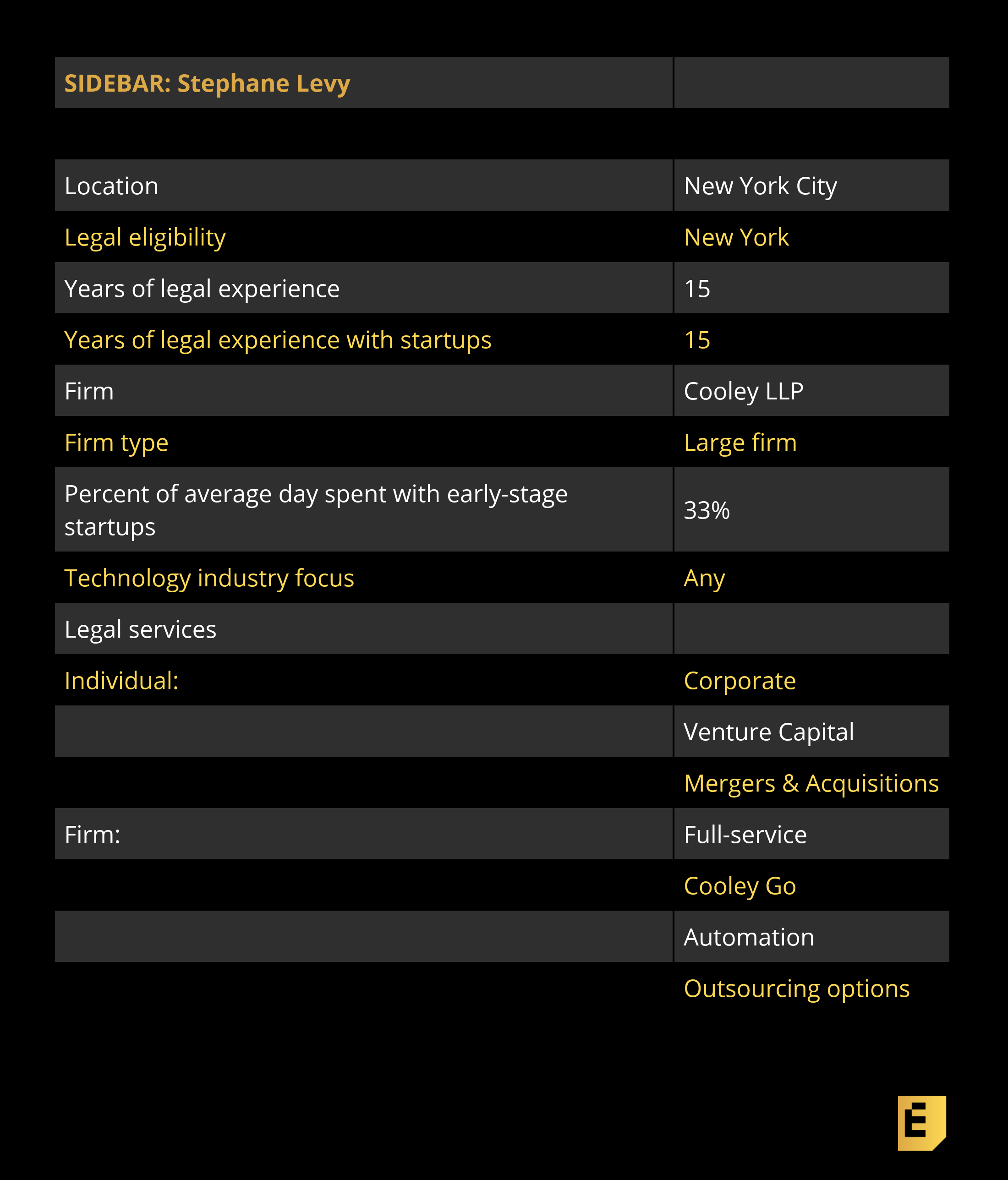
Verified Startup Lawyer: Stephane Levy

Stephane Levy got his start in the days of Silicon Alley almost two decades ago, and built up his practice with New York startups and beyond through all the ups and downs since then.

Today, as a partner at Cooley LLP, he works with a wide range of companies, from company formation, seed and later stage rounds, all the way through to M&A transactions and IPOs. He also teaches at Cornell University Law School as an adjunct professor, on legal matters affecting emerging companies and venture capital transactions.

“We met him in the very early days, and his help on all things relating to the company, investors, corporate decisions, fundraising, and just simple strategy has been spot on. He’s always someone I can rely on to give me honest feedback that will eventually play out to be true.” Sachin Kamdar, New York City, CEO, Parsely


On the New York startup scene

“I was probably one of a handful of tech lawyers in NY, at least of my vintage, working with startups and venture funds in the early and mid 2000s, so I kind of grew up doing that stuff in New York when most of the other corporate lawyers in the city were focused on more traditional M&A, private equity, capital markets, etc.”

When a client is having a rough time

“I’m not going to drop a company just because they are going through hard times or treat them any different. It’s a mixed bag out there, and at the end of the day you’ll have some really successful companies and some that are having a tougher time, but you have to take a long view. If a company is going through a really tough time — for example, they’re having trouble raising money — them not getting any attention from their lawyer will really compound some of the issues.”

What makes startup lawyers good

“The key is to try to bring your judgment to bare and say, “Listen, there’s going to be some risk. I’m not going to advocate you do everything on my punch list of ideal things you can be doing from a legal perspective, but if you have to focus on a few things to stay out of trouble for now, these would be them.” Not every lawyer is able to give that type of guidance or has, I guess, the experience or the judgment to be able to do that, but that’s something that entrepreneurs really value.”

Sample horror story

“Let’s say three founders take a third each and they don’t impose vesting. A year later, one of the founders leaves to go get a job somewhere and doesn’t want to give a portion of the equity back. Those are potentially really significant errors that could cost the company and the founders.  I just feel bad because the reality is we’ve automated a lot of our formation processes up front such that it really doesn’t cost much for founders to get state of the art documents in place from the get go.”

Below, you’ll find the rest of the founder reviews, the full interview, and more details like pricing and fee structures. This article is part of our ongoing series covering great lawyers and other experts who founders love to work with. More details here.

Click here to register for Extra Crunch, or log in here.

21 Feb 2019

Nintendo’s Reggie Fils-Aime retires (and Bowser claims the castle)

Reggie Fils-Aime is retiring after more than a decade spent as president of Nintendo of America. His career spanned many console generations, starting with the troubled Gamecube and ending with the fabulously successful Switch. Reggie will be succeeded by Doug Bowser, who has worked under him for the last four years.

In a statement provided by Nintendo, Reggie (who frequently went by his first name in familiar fashion) offered the following farewell:

Nintendo owns a part of my heart forever. It’s a part that is filled with gratitude – for the incredibly talented people I’ve worked with, for the opportunity to represent such a wonderful brand, and most of all, to feel like a member of the world’s most positive and enduring gamer community. As I look forward to departing in both good health and good humor, this is not ‘game over’ for me, but instead ‘leveling up’ to more time with my wife, family and friends.

In addition, he posted a video farewell on Twitter:

Reggie has been one of Nintendo’s most public and recognizable faces ever since the early days of his ascendancy, which coincidentally was when I began covering E3 regularly for work. I had the privilege of meeting him numerous times for interviews and Q&As, as well as just bumping into him at this or that event.

His indefatigably on-message manner, as if he had a prepared remark for every possible question, was impossible to be frustrated with because of his undeniable charisma and passion for the games and devices he was promoting. It may have been hard to tell where Reggie ended and Nintendo PR began (perhaps now we’ll never know), but he was never anything less than helpful and engaging in my experience.

When he took over Nintendo of America, the company as a whole was recovering from a down period marked by a console (the GameCube) that had not kept pace with the competition and a handheld that, while popular, was flagging and clearly old-fashioned.

As most will remember, however, the company soon turned all that around with the DS and Wii, two of the best-selling consoles of all time and ones that returned Nintendo to its household name status as well as vastly expanding the “gamer” demographic. Of course the Wii U was a disappointment (though home to many great games) but since then the Switch has restored confidence in the company’s ability to innovate and deliver. With some 20 million sold since launch, Reggie is leaving on a high note.

Reggie’s involvement from the outside seemed to be to pretend these things didn’t exist until 30 seconds before going on stage to announce them, after which he would tirelessly promote them to every outlet and fan that managed to make eye contact with him. He was accessible, friendly, and if not candid he was certainly honest and earnest at all times. He’ll certainly be missed by many, myself included.

Doug Bowser will take over as president on April 15, Reggie’s official last day. Bowser joined in 2015 and led the sales and marketing for the Switch, so you know he’s got momentum — plus, you know, the name.

I’ve asked Nintendo for any further information on Reggie’s departure, such as whether he’ll still be involved with the company at all, and will update this post if I hear back.

So long, Reggie, and best of luck on the next level!

21 Feb 2019

Robotics, AR and VR are poised to reshape healthcare, starting in the operating room

About 20 years ago, a medical device startup called Intuitive Surgical debuted the da Vinci robot and changed surgical practices in operating rooms across the United States.

The da Vinci ushered in the first age of robotic-assisted surgical procedures with a promise of greater accuracy and quicker recovery times for patients undergoing certain laparoscopic surgeries. 

For a time, it was largely alone in the market. It has skyrocketed in value since 2000, when the stock first debuted on public markets. From the $46 million that the company initially raised in its public offering to now, with a market capitalization of nearly $63 billion, Intuitive has been at the forefront of robotic-assisted surgeries, but now a new crop of startups is emerging to challenge the company’s dominance.

Backed by hundreds of millions in venture capital dollars, new businesses are coming to refashion operating rooms again — this time using new visualization and display technologies like virtual and augmented reality, and a new class of operating robots. Their vision is to drive down the cost and improve the quality of surgical procedures through automation and robotic equipment.

“There were 900,000 surgeries done using surgical robotics out of a total of 313 million surgical procedures,” globally, says Dror Berman, a managing director of Innovation Endeavors.

Berman is an investor in Vicarious Surgical, a new robotics company that plans to not only improve the cost and efficiency of surgical procedures, but enable them to be performed remotely so the best surgeons can be found to perform operations no matter where in the world they are.

“Robotics and automation present multiple opportunities to improve current processes, from providing scientists the opportunity to vastly increase experimental throughput, to allowing people with disabilities to regain use of their limbs,” Berman wrote in a blog post announcing his firm’s initial investment in Vicarious.

The $3.4 billion acquisition of Auris Health by Johnson & Johnson shows just how lucrative the market for new surgical robotics can be.

That company, founded by one of the progenitors of the surgical robotics industry, Fred Moll, is the first to offer serious competition to Intuitive Surgical’s technological advantage — no wonder, considering Dr. Moll also founded Intuitive Surgical.

Last year, the company unveiled its Monarch platform, which takes an endoscopic approach to surgical procedures that is less invasive and more accurate to test for — and treat — lung cancer.

“A CT scan shows a mass or a lesion,” Dr. Moll said in an interview at the time. “It doesn’t tell you what it is. Then you have to get a piece of lung, and if it’s a small lesion. It isn’t that easy — it can be quite a traumatic procedure. So you’d like to do it in a very systematic and minimally invasive fashion. Currently it’s difficult with manual techniques and 40 percent of the time, there is no diagnosis. This is has been a problem for many years and [inhibits] the ability of a clinician to diagnose and treat early-stage cancer.”

Monarch uses an endoscopy procedure to insert a flexible robot into hard-to-reach places inside the human body. Doctors trained on the system use video game-style controllers to navigate inside, with help from 3D models.

21 Feb 2019

Tesla Model 3 loses Consumer Reports recommendation over ‘reliability problems’

Consumer Reports has placed the Tesla Model 3 into that fun-to-drive, terribly unreliable category where brands like Alfa Romeo, Land Rover and Masterati also live.

Consumer Reports, which has a complicated relationship with Tesla, says it can no longer recommend the Model 3 because issues with the paint, trim and body hardware raises reliability questions. CR members reported the results in an annual reliability survey that includes data on about 470,000 vehicles.

The report caused Tesla shares to fall more than 2.7%.

The Model 3 is arguably Tesla’s most important vehicle. Tesla’s survival hinges on Model 3. It’s no longer just about being able to produce and deliver the vehicle cost effectively — although those are biggies. If more consumers turn to other electric vehicles, the sales momentum that helped Tesla have two consecutive quarters of profits could falter.

Owners appear to like, even love, the Model 3. It received top marks in CR’s recent owner satisfaction survey and also earned a positive road-test score. It’s a weird duality — and one the even CR acknowledges — that other aspirational, lifestyle and luxury vehicles share. Owners love the vehicles, despite persistent issues with the components inside them.

“While Teslas perform well in Consumer Reports’ road tests and have excellent owner satisfaction, their reliability has not been consistent, according to our members, which has resulted in changes to their recommended status,” Jake Fisher, senior director of auto testing at Consumer Reports, said in statement.

Tesla has asked Consumer Reports for more details about the issues customers reported. According to Tesla, CR said they had no more specific information to share.

“Not only are our cars the safest and best performing vehicles available today, but we take feedback from our customers very seriously and quickly implement improvements any time we hear about issues,” a Tesla spokeswoman said in an emailed statement. “That’s just one of the reasons why, in this very same survey from Consumer Reports, Model 3 was rated as the #1 most satisfying car, and why Tesla vehicles have topped Consumer Reports’ Owner Satisfaction survey every year since 2013 – the first year Tesla was included in it.”

The question of reliability has persisted for all of Tesla’s vehicles. CR doesn’t recommend the Model X or Model S either due to reliability issues. The Tesla Model X was included in CR’s top 10 least reliable vehicles list for 2019.

The CR survey revealed problems with the suspension, particularly in the 2017 Model S and hardware issues in the Model X. Owners in the survey cited numerous reliability problems with the Model 3.

Tesla noted that it has made “significant improvements” to correct any issues that Model 3 customers may have experienced that are referenced in this report. The automaker also cited that its return policy allows any customer who is unhappy with their car to return it for a full refund.

“This new data from Consumer Reports comes from their annual Owner Satisfaction survey, which runs from July through September, so the vast majority of these issues have already been corrected through design and manufacturing improvements, and we are already seeing a significant improvement in our field data,” the spokesperson said.

Tesla has the capability, which it uses often, to roll out software updates to fix bugs, improve performance, and treat customers to fun surprises. Paint and trim issues are a different matter, of course.

And despite this ability to fix and improve the vehicle over time, the CR reliability survey might be enough to turn potential customers away from Tesla and towards another electric vehicle brand.

It’s possible that Tesla’s fan base is strong enough to keep the sales momentum. Plenty of other brands and models, have a fervent following despite problems with the vehicle.

“In most cases, reliability issues will undermine satisfaction,” Fisher said. “But when a vehicle has an enthusiastic following, like with Tesla, owners may overlook some issues. We’ve seen this with other vehicles such as the Jeep Wrangler and Chevrolet Corvette.”

21 Feb 2019

Tesla Model 3 loses Consumer Reports recommendation over ‘reliability problems’

Consumer Reports has placed the Tesla Model 3 into that fun-to-drive, terribly unreliable category where brands like Alfa Romeo, Land Rover and Masterati also live.

Consumer Reports, which has a complicated relationship with Tesla, says it can no longer recommend the Model 3 because issues with the paint, trim and body hardware raises reliability questions. CR members reported the results in an annual reliability survey that includes data on about 470,000 vehicles.

The report caused Tesla shares to fall more than 2.7%.

The Model 3 is arguably Tesla’s most important vehicle. Tesla’s survival hinges on Model 3. It’s no longer just about being able to produce and deliver the vehicle cost effectively — although those are biggies. If more consumers turn to other electric vehicles, the sales momentum that helped Tesla have two consecutive quarters of profits could falter.

Owners appear to like, even love, the Model 3. It received top marks in CR’s recent owner satisfaction survey and also earned a positive road-test score. It’s a weird duality — and one the even CR acknowledges — that other aspirational, lifestyle and luxury vehicles share. Owners love the vehicles, despite persistent issues with the components inside them.

“While Teslas perform well in Consumer Reports’ road tests and have excellent owner satisfaction, their reliability has not been consistent, according to our members, which has resulted in changes to their recommended status,” Jake Fisher, senior director of auto testing at Consumer Reports, said in statement.

Tesla has asked Consumer Reports for more details about the issues customers reported. According to Tesla, CR said they had no more specific information to share.

“Not only are our cars the safest and best performing vehicles available today, but we take feedback from our customers very seriously and quickly implement improvements any time we hear about issues,” a Tesla spokeswoman said in an emailed statement. “That’s just one of the reasons why, in this very same survey from Consumer Reports, Model 3 was rated as the #1 most satisfying car, and why Tesla vehicles have topped Consumer Reports’ Owner Satisfaction survey every year since 2013 – the first year Tesla was included in it.”

The question of reliability has persisted for all of Tesla’s vehicles. CR doesn’t recommend the Model X or Model S either due to reliability issues. The Tesla Model X was included in CR’s top 10 least reliable vehicles list for 2019.

The CR survey revealed problems with the suspension, particularly in the 2017 Model S and hardware issues in the Model X. Owners in the survey cited numerous reliability problems with the Model 3.

Tesla noted that it has made “significant improvements” to correct any issues that Model 3 customers may have experienced that are referenced in this report. The automaker also cited that its return policy allows any customer who is unhappy with their car to return it for a full refund.

“This new data from Consumer Reports comes from their annual Owner Satisfaction survey, which runs from July through September, so the vast majority of these issues have already been corrected through design and manufacturing improvements, and we are already seeing a significant improvement in our field data,” the spokesperson said.

Tesla has the capability, which it uses often, to roll out software updates to fix bugs, improve performance, and treat customers to fun surprises. Paint and trim issues are a different matter, of course.

And despite this ability to fix and improve the vehicle over time, the CR reliability survey might be enough to turn potential customers away from Tesla and towards another electric vehicle brand.

It’s possible that Tesla’s fan base is strong enough to keep the sales momentum. Plenty of other brands and models, have a fervent following despite problems with the vehicle.

“In most cases, reliability issues will undermine satisfaction,” Fisher said. “But when a vehicle has an enthusiastic following, like with Tesla, owners may overlook some issues. We’ve seen this with other vehicles such as the Jeep Wrangler and Chevrolet Corvette.”

21 Feb 2019

CBS All Access releases a spooky, star-studded trailer for Jordan Peele’s ‘Twilight Zone’

A new version of “The Twilight Zone,” hosted and executive produced by “Get Out” director Jordan Peele, is set to premiere on CBS All Access on April 1.

CBS aired a teaser during the Super Bowl, but it didn’t include any actual footage. So this is the first time we’re getting a real taste of what the show will be like.

This trailer is still pretty fast-paced, not going in-depth on any of the stories. Basically, it’s a montage of famous people — including Kumail Nanjiani, John Cho, Sanaa Lathan, Adam Scott, Allison Tolman and Steven Yeun — looking scared or alarmed, accompanied by that oh-so-recognizable theme music.

CBS All Access has had fewer big, splashy content announcements than some of the other new (or yet-to-launch) streaming services, but with “Twilight Zone” and an entire lineup of Star Trek spin-offs, it could become a real destination for science fiction fans.

Peele, meanwhile, has been pretty busy. He’s got a new movie (“Us”) set for release in March, and “Weird City,” a series he co-created, just launched on YouTube Premium.