Author: azeeadmin

21 Feb 2019

CBS All Access releases a spooky, star-studded trailer for Jordan Peele’s ‘Twilight Zone’

A new version of “The Twilight Zone,” hosted and executive produced by “Get Out” director Jordan Peele, is set to premiere on CBS All Access on April 1.

CBS aired a teaser during the Super Bowl, but it didn’t include any actual footage. So this is the first time we’re getting a real taste of what the show will be like.

This trailer is still pretty fast-paced, not going in-depth on any of the stories. Basically, it’s a montage of famous people — including Kumail Nanjiani, John Cho, Sanaa Lathan, Adam Scott, Allison Tolman and Steven Yeun — looking scared or alarmed, accompanied by that oh-so-recognizable theme music.

CBS All Access has had fewer big, splashy content announcements than some of the other new (or yet-to-launch) streaming services, but with “Twilight Zone” and an entire lineup of Star Trek spin-offs, it could become a real destination for science fiction fans.

Peele, meanwhile, has been pretty busy. He’s got a new movie (“Us”) set for release in March, and “Weird City,” a series he co-created, just launched on YouTube Premium.

21 Feb 2019

Zoba raises $3 million to help mobility companies predict demand

Scooter share, bike share and ride hailing are quickly becoming staple commodities in cities all over the world. As companies in those respective spaces try to improve their economics, Zoba is aiming to contribute to those goals by predicting demand for scooters, bikes and, eventually, rides in particular areas. To support Zoba’s mission, the company has raised a $3 million seed round led by CRV with participation from Founder Collective, Mark Cuban and others.

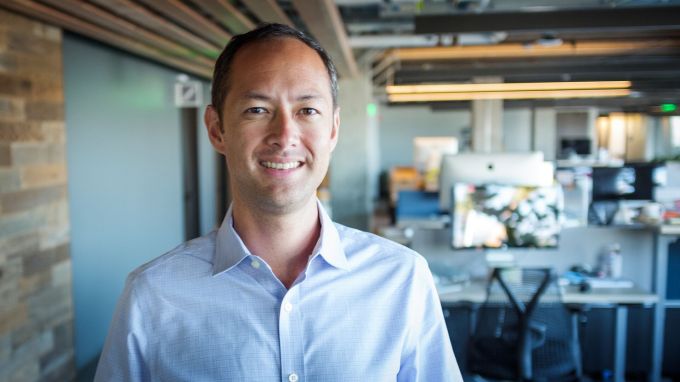
Using spatial analytics, Zoba aims to better understand the relationships between different phenomena in order to improve the efficiency of cities. Mobility is Zoba’s first focus, Zoba co-founder Dan Brennan told TechCrunch. More specifically, Zoba looks to better understand the relationship between demand and environmental data (e.g. weather), as well as city layout. From there, Zoba helps mobility companies determine the best places to put their vehicles.

“The key is this type of spatial analytics and machine learning is very specific,” Brennan said. “You don’t see a lot of data scientists trained in this. What we do is say, ‘no matter what skill set of your data scientist, you can look at all this spatial and temporal stuff.’ We’ll make it like you have three really highly trained spatial data scientists.” 

Zoba would not disclose which companies it’s working with, just that it’s working with some of the industry leaders in bike, scooter and car share. Down the road, Zoba also envisions working with on-demand delivery companies, as well as urban logistics companies.

“The world is experiencing a Cambrian explosion of smart mobility and logistics services, all requiring geo-based forecasting and optimization,” CRV general partner and Zoba board member Izhar Armony said in a statement. “We knew after meeting with the Zoba founders that they’re the best team to tackle this hard problem. What they’re doing will change the way we live and we’re excited for what’s to come.”

21 Feb 2019

Zoba raises $3 million to help mobility companies predict demand

Scooter share, bike share and ride hailing are quickly becoming staple commodities in cities all over the world. As companies in those respective spaces try to improve their economics, Zoba is aiming to contribute to those goals by predicting demand for scooters, bikes and, eventually, rides in particular areas. To support Zoba’s mission, the company has raised a $3 million seed round led by CRV with participation from Founder Collective, Mark Cuban and others.

Using spatial analytics, Zoba aims to better understand the relationships between different phenomena in order to improve the efficiency of cities. Mobility is Zoba’s first focus, Zoba co-founder Dan Brennan told TechCrunch. More specifically, Zoba looks to better understand the relationship between demand and environmental data (e.g. weather), as well as city layout. From there, Zoba helps mobility companies determine the best places to put their vehicles.

“The key is this type of spatial analytics and machine learning is very specific,” Brennan said. “You don’t see a lot of data scientists trained in this. What we do is say, ‘no matter what skill set of your data scientist, you can look at all this spatial and temporal stuff.’ We’ll make it like you have three really highly trained spatial data scientists.” 

Zoba would not disclose which companies it’s working with, just that it’s working with some of the industry leaders in bike, scooter and car share. Down the road, Zoba also envisions working with on-demand delivery companies, as well as urban logistics companies.

“The world is experiencing a Cambrian explosion of smart mobility and logistics services, all requiring geo-based forecasting and optimization,” CRV general partner and Zoba board member Izhar Armony said in a statement. “We knew after meeting with the Zoba founders that they’re the best team to tackle this hard problem. What they’re doing will change the way we live and we’re excited for what’s to come.”

21 Feb 2019

HTC revamps standalone VR headset to keep pace with Oculus while it looks to big business

HTC has had a little bit of a rough ride these past few years. After betting the farm on VR, the company has had to make some substantial business strategy shifts to keep the division kicking in the face of a less-than-robust headset market and a behemoth margin-less competitor that’s alright losing a few billion dollars.

HTC’s latest play, a revamped Vive Focus headset that features tracked motion controllers, could be seen simply as playing catch-up with Oculus and their upcoming Oculus Quest standalone headset, but it’s likely only aiming to keep pace with innovation to dissuade enterprise customers from switching teams.

The Vive Focus Plus maintains a lot of the system specs of the previous generation, but taps some souped up “visuals” and an interesting new controller tracking system which relies on ultrasonic feedback rather than camera-based optical tracking to locate the controllers in 3D space. The tracking system is a bit peculiar-sounding but Qualcomm built out support for the tech in its VR reference design headset and the Focus Plus is again powered by the Snapdragon 835 chipset, according to a spec list obtained by Road to VR.

Since launching the HTC Vive in 2016, HTC has gradually shifted its business to enterprise customers looking to outfit their organizations with headsets for training and design visualization purposes. The company has, at times, tried to play both sides especially with its desktop VR hardware with pricing focused on enterprise customers but marketing aimed at consumers as well. That’s easier given the Vive Pro’s compatibility with Valve’s SteamVR platform and the associated content, but HTC can’t just wander into a consumer mobile platform in the U.S. without a more concerted push.

No details on a release date or the enterprise pricing. The regular Vive Focus starts at $599.

21 Feb 2019

Logistics startup Flexport just raised a Softbank-led round at a whopping $3.2 billion valuation

Flexport, a 5.5-year-old, San Francisco-based full-service air and ocean freight forwarder, says it has raised $1 billion in fresh funding led by the SoftBank Vision Fund.

Earlier backers of the company, including Founders Fund, DST Global, Cherubic Ventures, Susa Ventures and SF Express, all participated in the round, which reportedly pegs the company’s post-money valuation at $3.2 billion.

According to Forbes, which broke the news earlier, Flexport generated revenue of $471 last year, up from $224.8 million in 2017, thanks in part to some customers who the company says spend more than $10 million a year to Flexport for its help in managing their supply chains.

The company is apparently moving so fast, it hasn’t had a chance to update its marketing materials. CEO Ryan Petersen tells Forbes the company now employs 1,066 people across 11 offices and four warehouses around the world. Its site states it has 600 employees.

Axios had reported last week that Flexport was in talks to raise money in a deal led by SoftBank that would value the company in the $3 billion range.

It had previously raised $305 million across five rounds, including, most recently, in April 2018, according to Crunchbase.

Flexport competes with numerous other freight forwarding online marketplaces that are focused on price comparison, as well as helping their clients book and track shipments. But its goal, seemingly, is to compete more directly with heavyweights like DHL, FedEx, and UPS. In late 2017, it said it was beginning to charter its own aircraft. Petersen tells Forbes that Flexport now has four warehouses around the world, too.

21 Feb 2019

Google’s ‘Digital Wellbeing’ features hit more devices, including Samsung Galaxy S10

Google’s latest effort to help users monitor and control their screen time, Digital Wellbeing, is making its way to more devices. Initially available exclusively to Pixel and Android One device owners, Digital Wellbeing’s feature set is now rolling out to Nokia 6 and Nokia 8 devices with Android Pie, as well as on the new Samsung Galaxy S10.

The site NokiaPowerUser was first to spot the addition to Nokia devices, which was picked up by XDA Developers and noted on their blog. XDA also noticed Digital Wellbeing was available in the Samsung Galaxy S10‘s device settings, which makes it the first non-Pixel or non-Android One phone to ship with Digital Wellbeing installed.

Digital Wellbeing, by way of background, is basically Google’s version of Apple’s Screen Time, and one of the key ways the company is addressing consumer concerns over device addiction.
This has been a hot topic in the tech industry in recent months, as people have become more aware of our unhealthy behaviors with regard to our use of smartphones and their apps. In fact, a number of those involved with mobile apps’ creation have since come out to say that they were complicit in building apps that exploited weaknesses in the human psyche for the sole purpose of addicting users.

One former Google exec, Tristan Harris, kicked off a whole movement focused on this problem. He also created the Center for Humane Technology, which encourages the implementation of new design principles that help put users back in control of their technology.

In the meantime, companies are rolling out features to give us control over our behaviors around existing technology.
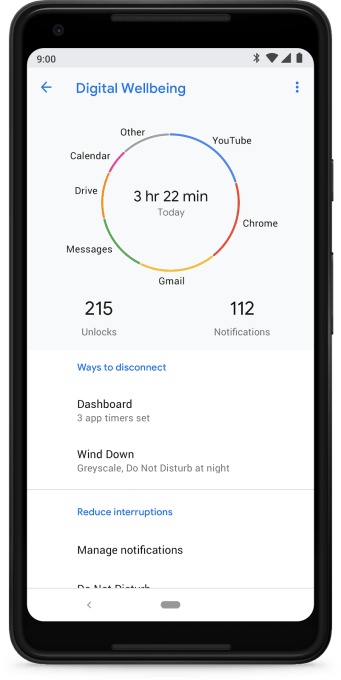
For example, Facebook last year changed how its News Feed operates to reduce time spent on its site in favor of wellbeing. And Facebook-owned Instagram introduced a time well spent feature, by informing users “you’re all caught up” instead of offering an endless scroll. YouTube lets you schedule reminders to take a break.

We also have OS-level features like Apple’s Screen Time and Google’s Digital Wellbeing for more comprehensive control and monitoring.

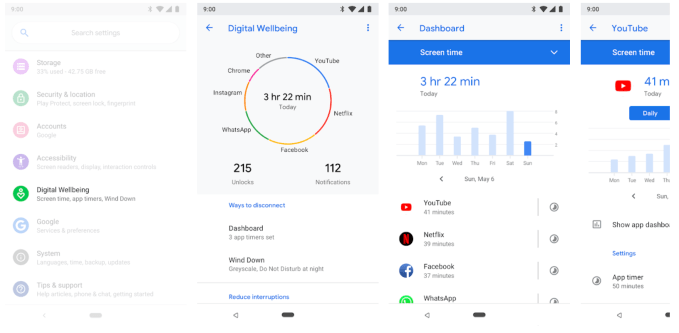
Specifically, Digital Wellbeing allows you to track your device addiction in several ways, including how often you check your phone, how many notifications you receive, how often you use apps, and more, and allows you to set limits on usage, and configure settings like a nightly “Wind Down” mode and Do Not Disturb settings.

Announced at Google I/O 2018, this feature set first debuted on Pixel devices last year as part of Android Pie. It later came to Android One devices last fall.

According to the standalone Digital Wellbeing app’s release notes, it exited beta on February 19. However, the note didn’t indicate it was coming to non-Pixel, non-Android One devices.

Google has not yet responded to a request for comment about the expansion of Digital Wellbeing.

21 Feb 2019

Google makes it easier to find prescription drug disposal sites

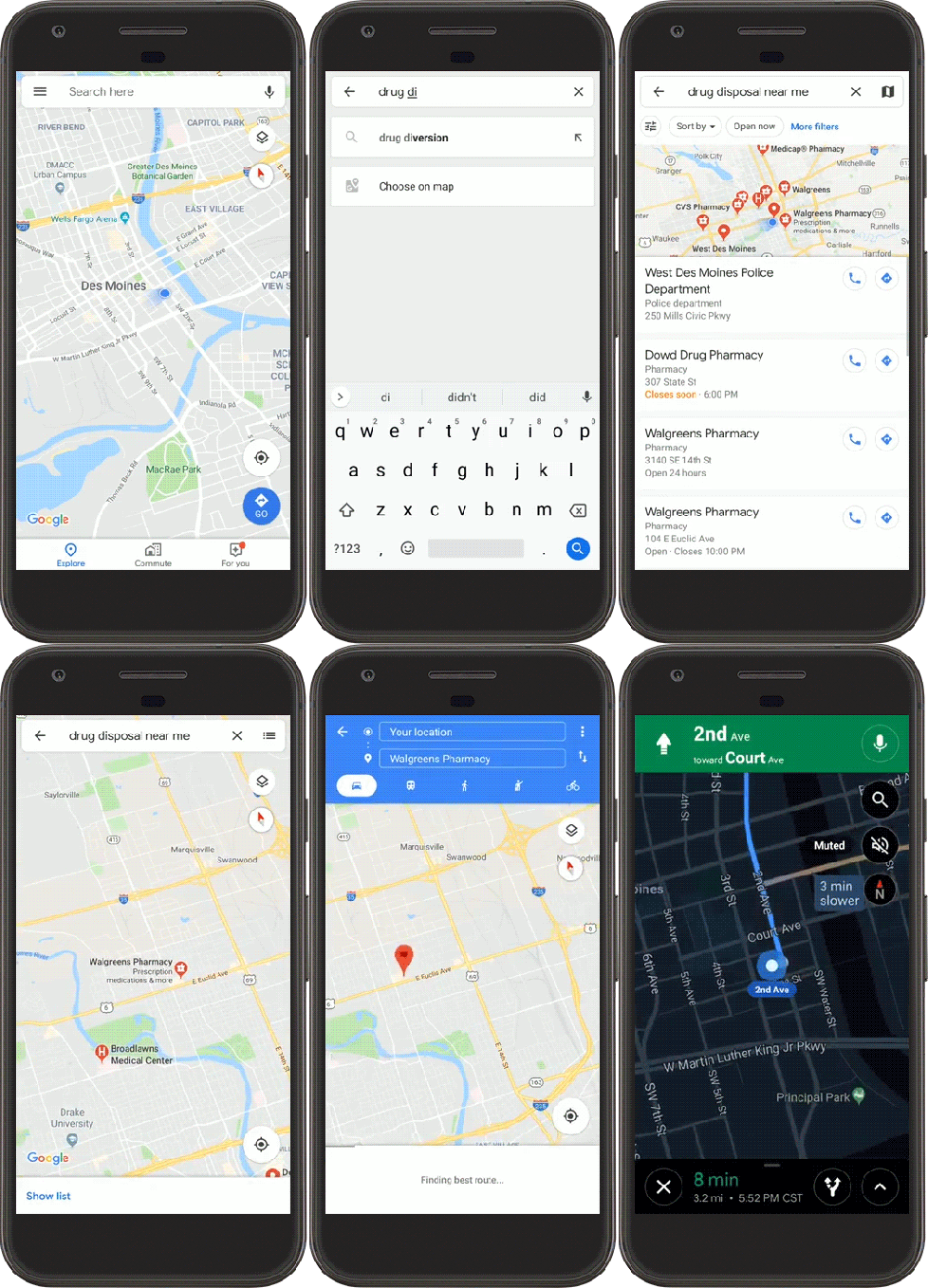
In an effort to combat the opioid crisis, Google will begin labeling places where people can safely dispose of their prescription drugs. Now, users can find clearly labeled drug disposal sites directly from searches for things like “drug drop off near me” or “medication disposal.”

Those locations include a network of hospitals, pharmacies and government buildings where people can drop off medication they might have left over from a surgical procedure so that it doesn’t fall into idle hands. As the company noted in its announcement, more than half of all prescription drug abuse cases begin with medication that people find through friends and family.

Google worked with Walgreens and CVS as well as the U.S. Drug Enforcement Administration and the U.S. Department of Health and Human Services on the new tool as part of a broader examination of what role tech can play in stemming the opioid epidemic. The idea grew out of an HHS hackathon to develop “data-driven solutions” to stem the flow of opiate abuse and dependence in the U.S. The pilot also coordinated with seven state governments to pool data on disposal sites.

The new pilot expands on a previous initiative between Google and the DEA that encouraged people to get rid of their leftover prescription drugs on two designated days a year rather than letting them linger in the medicine cabinet. Popularizing drug disposal and making it easy is just one piece of the puzzle when it comes to the opiate crisis, but it’s a significant one as tech figures out what role it can play to address one of the most devastating public health crises in the U.S. today.

21 Feb 2019

Freshworks launches a load balancer for handling customer inquiries

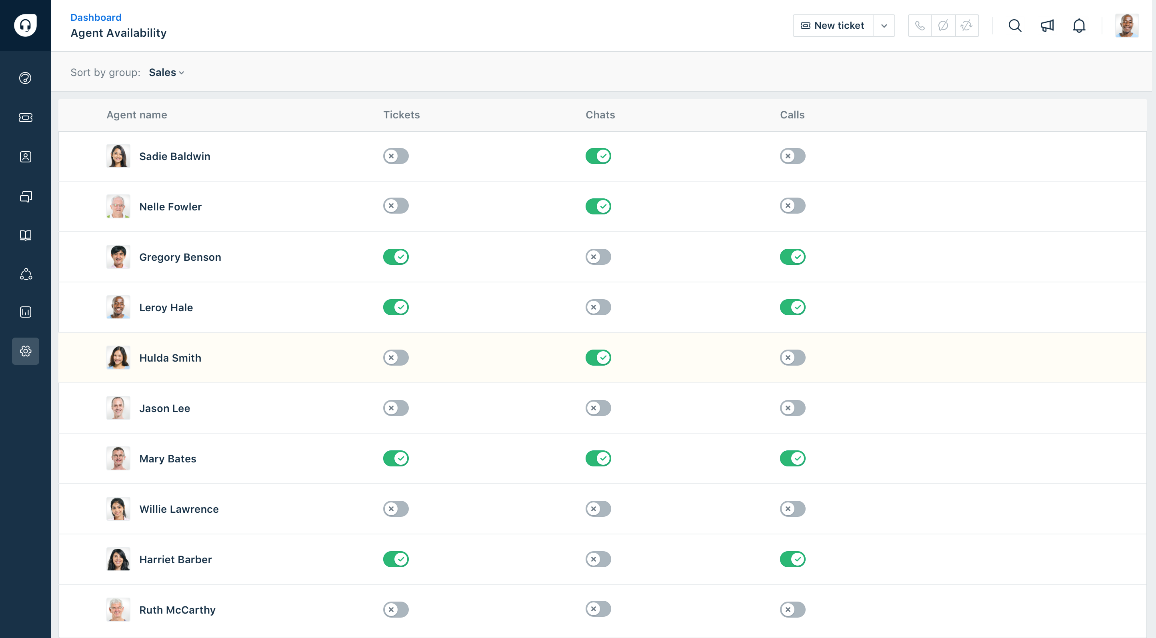
Customer engagement service Freshworks, which was valued at about $1.5 billion in its last funding round, today launched Omniroute, the latest product in its portfolio of tools for customer service agents.

Omniroute is essentially a load-balancer for routing multi-channel customer inquiries. Freshworks argues that earlier customer support solutions made it hard for agents to switch between inquiry types and for managers to efficiently route traffic.

“Modern consumers are able to reach out to brands across multiple channels and devices, and simply put, customer service teams are under siege,” Freshworks CEO and co-founder Girish Mathrubootham explained.

The promise of Omniroute is that it can automatically route a query to the right agent who has the bandwidth to handle it, based on what it knows about that agent’s skills and the nature of the inquiry. And if you regularly want to hang up your phone when an agent asks you for your order number right after you typed it into the system, then you’ll be happy to hear that the Omniroute will surface this information right on the agent’s screen.

Omnichannel is one of the biggest buzzwords in the marketing world, of course, but there can be little doubt that customers do expect to be able to reach a company across multiple channels, be that an online chat, phone call, text message or a Twitter DM (or, for those who still go outside, a sales agent in a store). Companies want to give customers a consistent experience across those channels, but they don’t always have the tools to do so.

It’s worth noting that Zendesk recently acquired Base, a CRM solution for salespeople that puts it into direct competition with Freshwork’s sales tools. Unsurprisingly, the Freshwork team is not overly impressed. “What Zendesk has done with Base CRM is too little too late,” Freshwork CMO David Thompson said. “You need your Sales CRM and Support CRM to integrate out of the box in order for customers to get the benefit. Bolt-on acquisitions don’t accomplish that seamless flow of data between marketing, sales and support.”

21 Feb 2019

Daily Crunch: Samsung unveils Galaxy S10 lineup

The Daily Crunch is TechCrunch’s roundup of our biggest and most important stories. If you’d like to get this delivered to your inbox every day at around 9am Pacific, you can subscribe here.

1. Here’s everything announced at Samsung’s Galaxy S10/Galaxy Fold event

Samsung announced five new phones, some new earbuds, a virtual assistant and a watch.

And one of those phones is foldable. Folded, the handset sports a 4.6-inch display that only takes up about three-fourths of the front. Unfolded, it turns into a 7.3-inch tablet. Pricing starts at $1,980.

2. Lyft reportedly plans to debut on Nasdaq next month

Two reports, one from Reuters, the other from WSJ, indicate Lyft plans to list its shares on Nasdaq next month. The WSJ, citing unnamed sources, reported Lyft may make the filing public as early as next week.

3. Clutter confirms SoftBank-led $200M investment for its on-demand storage service

There’s plenty of speculation right now around apparently disgruntled investors in SoftBank’s Vision Fund, but the drum continues to beat and the checks continue to be written.

4. Highlights & transcript from Zuckerberg’s 20K-word ethics talk

Zuckerberg said it would feel wrong to charge users for extra privacy controls.

5. Companies including Nestlé, Epic and reportedly Disney suspend YouTube ads over child exploitation concerns

Days after a YouTube creator accused the platform of enabling a “soft-core pedophilia ring,” several companies have suspended advertising on the platform. Other advertisers, including Peloton and Grammarly, said they are calling on YouTube to resolve the issue.

6. Trump calls for 6G cellular technology, because why the heck not?

6G isn’t a thing. But … maybe it could be?

7. Everything you’ve ever wanted to know about Patreon

TechCrunch’s media consultant Eric Peckham spent dozens of hours interviewing Patreon’s management team and investors, as well as poring over data, in order to write this deep analysis of the company and the lessons learned. (Extra Crunch subscription required.)

21 Feb 2019

Helen Yiang and Andy Wheeler will be speaking at TC Sessions: Robotics + AI April 18 at UC Berkeley

We’re just under two months out from this year’s TC Sessions: Robotics + AI event, and we’ve still got a lot left to announce. As noted, we’ll have Anca Dragan, Marc Raibert, Alexei Efros, Hany Farid, Melonee Wise, Peter Barrett, Rana el Kaliouby, Arnaud Thiercelin and Laura Major at the April event, and today we’ve got a pair of names to add to the ever-growing speaker list.

Today we’re excited to announce two additions to our VC panel, who will be discussing the wild world of robotics investments.

Founding and managing partner of FoundersX Ventures, Helen Liang will be joining us at the event to discuss the 20 early-stage robotics and AI startups in which she has invested. Liang brings a decade of product development to her work at her early-stage capital fund and also serves as founding president at Tech for Good.

Andy Wheeler is a founding partner at GV (formerly Google Ventures), focusing on bringing early-stage tech to market. He is a co-founder of Ember Corporation and a veteran of MIT Media Lab. His list of early investments include Carbon, Farmer’s Business Network, Abundant Robotics and Orbital Insight.

Early-bird tickets are now on sale — book your $249 ticket today and save $100 before prices go up. Students, did you know that you can save $45 with a heavily discounted student ticket? Book your student ticket here.