Author: azeeadmin

19 Feb 2019

Macquarie Capital Venture Studio adds three new companies to infrastructure tech portfolio

Macquarie Capital Venture Studio, the infrastructure-focused accelerator affiliated with the nearly $500 billion-dollar investment firm, Macquarie Group, has added three companies to its portfolio.

The companies, AirMap, Envoy Technologies, and Teralytic, provide services in airspace management for drones; electric vehicle sharing services; and soil analysis, respectively.

Through the venture studio, Macquarie tries to bring the companies into new markets through its connections with infrastructure and development projects around the world.

The Sydney, Australia-based investment firm has already invested in six companies for its accelerator program, launched in conjunction with R/GA.

Other companies in the Macquarie portfolio include the developer of redesigned solar axis trackers, Sunfolding; a company that produces water from condensation, Zero Mass Water; and a drone inspection company, Hangar Inc.

Envoy marks the second investment in electric vehicle charging infrastructure and services for Macquarie, since the company also invested in FreeWire Technologies. The venture program is also interested in the internet of things — backing the control system cybersecurity company, Mission Secure; and T-REX Group which provides data services and software for markets. 

“These companies have developed solutions that significantly optimize infrastructure and real assets and have the potential to transform their respective end markets,” said Stephan Feilhauer, Senior Vice President at Macquarie Capital, in a statement. “With their participation in MCVS, they will not only receive growth capital, but also access to Macquarie Capital’s global network of expertise, assets and clients at the intersection of infrastructure and technology.”

The Macquarie program includes a small equity investment and consultation with R/GA on a product development and marketing plan.

“R/GA is excited to collaborate with an industry leader like Macquarie Capital to launch this innovative Studio, leveraging our creative capital and network to create value for the participating companies,” said Stephen Plumlee, Global Chief Operating Officer of R/GA and Managing Partner of R/GA Ventures, at the time of the partnership announcement. “Rolling admissions and the module structure will enable R/GA to offer the participating companies an increased level of engagement and support.”

19 Feb 2019

Samsung’s foldable phone? Meet the Galaxy Fold

Samsung’s promised a much better look at its foldable phone at tomorrow’s big S10 event. We already caught a glimpse of the product late last year at the company’s developer conference, but among the many uncertainties with the product is what the hell the company will name the thing.

After all, the device essentially represents an entirely new category for Samsung, so older naming conventions could be out the window. The “Galaxy F” name has been floated, but, well, nobody wants that.

Perennial leaker Evan Blass (who’s most recently help expose the S10 to the world in recent months) says the handset will be the Galaxy Fold. Not bad, I guess. Probably one to go on — certainly a step up from the Galaxy F, which is, frankly, a bit too easily mocked.

So we have a name — and we should be getting more information on the thing tomorrow. And not a moment too soon, as we expect numerous foldable handsets to get some serious stage time next week at Mobile World Congress. 

19 Feb 2019

Why can’t we build anything?

Last week, California governor Gavin Newsom announced that he was intending to aggressively scale back plans for the state’s high-speed rail system, which in its most ambitious routing would have connected Sacramento to San Diego. The immediate cause was ballooning costs, which have risen from $33 billion to $77 billion and looked likely to exceed 1.6 Zuckerbergs within a couple of years (the local CA currency, otherwise known as $100 billion).

Unlike other megaprojects, Newsom — and California — were fortunate on the timing. The costs of the project skyrocketed so much and so early, that Newsom still had the credibility and political capital to kill the project. And while a short route from Bakersfield to Merced remains on the table, I don’t expect even that route to be ultimately constructed, since no one knows where either of those cities are.

Why can’t we (i.e. America) build anything? High-speed rail isn’t Silicon Valley whizbang magic technology, it’s definitely not Hyperloop. It’s pretty standard in a bunch of industrialized nations around the world. Clearly that question was on the minds of reporters, because we have been inundated with autopsies on HSR. Yet, the hot takes don’t seem to be adding up to anything meaningful (surprise).

So, we are going to explore this question over the coming weeks, as one of our newest obsessions here at Extra Crunch.

This weekend, I read a book called “Politics across the Hudson: The Tappan Zee Megaproject.” In the book, Philip Mark Plotch chronicles the forty years of planning that led to the reconstruction of the Tappan Zee bridge, which connects Rockland and Westchester Counties north of New York City over the Hudson River. If you want to read about the weeds of government dysfunction around infrastructure, this is your book. It’s a telling tale of patterns we see repeatedly when trying to build great things in the United States:

  • No one wants to talk about finance: Politicians love selling the value of a megaproject without actually discussing the ways they are going to have to pay for it. Yet, paying for it is the project, since it will ultimately affect how citizens enjoy the infrastructure.In the Tappan Zee case, politicians wanted to avoid talking finances because finances meant tolls, and increasing tolls meant losing elections. New York’s current governor Andrew Cuomo ends up avoiding this conversation through luck, as the state received huge indemnities from Wall Street banks related to Iranian money laundering and sanctions that helped fund the bridge (which one planner called “manna from god”).That avoidance has led to the “Willie Brown” model of infrastructure, named for the former San Francisco mayor who wrote about how to get infrastructure projects done:

News that the Transbay Terminal is something like $300 million over budget should not come as a shock to anyone.

We always knew the initial estimate was way under the real cost. Just like we never had a real cost for the Central Subway or the Bay Bridge or any other massive construction project. So get off it.

In the world of civic projects, the first budget is really just a down payment. If people knew the real cost from the start, nothing would ever be approved.

The idea is to get going. Start digging a hole and make it so big, there’s no alternative to coming up with the money to fill it in.

Of course, that model can lead to situations like Boston’s Big Dig, where the final ticket price for a project is so high, that it effectively bankrupts an entire city and its transportation system for years to come.

Infrastructure finance may not be a sexy topic, but it is absolutely critical to getting a project done. It’s hard to tuck tens of billions of dollars in a line item in the state’s budget, and it is hard to get the different funding levers of government involved when a project’s finances aren’t clear.

  • Lack of direction / lack of leadership: Building infrastructure is hard. It’s even harder in the U.S., where a patchwork of regulatory bodies and all levels of government are involved in infrastructure decision-making. In the Tappan Zee bridge case, there were nearly two dozen agencies involved, all with their own agendas and fiefdoms. A dedicated bus lane on the bridge was cut to avoid bringing in the Federal Transit Administration. The Tappan Zee is built at one of the widest points of the Hudson River rather than the narrowest since planners wanted to avoid the jurisdiction of the Port Authority.Here’s the thing though: there were real differences of opinion about the project and what it should accomplish. Some people wanted a rail line, some wanted bus rapid transit, some wanted carpool lanes, and still others wanted more lanes of vehicular traffic. Nothing got done because there was absolutely no consensus either from the communities involved or from their elected leaders.

    One might call a 40-year planning process dysfunctional, but another view would say that this is exactly government working as intended. Things don’t get built if there is no consensus, and that’s the value — and price — of democracy.The challenge though is that you can end up in these counter-veto game theoretic morasses (the book uses “wicked problems”), where no progress will truly ever get made because everyone has an incentive to block a project to get their vision included. Here is where leadership makes such a difference. A leader in these contexts can find points of compromise, build coalitions, set agendas and a vision, and create the momentum required to get these projects moving. Unfortunately, finding leaders in American politics is excruciatingly difficult.

  • Impossibly high expectations / feature creep: Every tech product manager knows the challenges of feature creep. Another person swings by, and they have a choice feature they want added that is going to take time and resources, and has limited benefit to the rest of the user base of the product. Unfortunately, infrastructure projects face many of the same challenges.

    When a megaproject looks like it has built up momentum, everyone tries to glom on to it, adding their pet project. What starts as a bridge replacement project soon morphs into a bridge replacement with a new 30-mile railroad, multiple train stations, a new bus rapid transit system, and a complete zoning overhaul for multiple counties. Yet, those extra “features” also add additional veto points and complications to the original project. They are effectively barnacles on the hull of an already slow-moving ship.

    Big projects galvanize our imaginations, but they shrink under the weight of their own mass. Better to down scale these projects into more bite-sized chunks with clear goals and deliverables rather than being all things to all people.


One thing I was surprised reading about the Tappan Zee bridge is that the actual construction phase was relatively uneventful. The bridge was built mostly on time and on budget, mostly due to extreme attention from the NY governors’s office to not allow deviations (except to stop construction on July 4th so that construction wouldn’t mar riverfront BBQs).

Four years and billions of dollars to rebuild a bridge might be ridiculous, but so were the 36 years of planning that proceeded the reconstruction. Maybe that pattern isn’t true for every project, but the lesson of Politics across the Hudson is that once the government had a plan and timing on its side, it was (relatively) smooth-sailing to the finish line.

Lawyers!

Classen Rafael / EyeEm via Getty Images

Startups need attorneys to succeed, and today, Extra Crunch is pleased to start helping you find the most helpful ones in the industry.

Extra Crunch managing editor Eric Eldon has published his deep-dive package into startup law and startup attorneys today. The package will include profiles of leading attorneys who have been identified by founders as the most helpful to their startups (today’s profile focuses on Cynthia Hess). We also have attorney Daniel McKenzie writing about “How and why you should work with a startup lawyer.” Finally, Eric and his team created a comprehensive overview of all the legal issues that come with building a startup that they compiled into a handy A-to-Z guide.

Our hope is that some of the thornier issues of building a startup can be made just a bit easier if you are armed with the right, vetted information. Let us know your thoughts.

“Mo Money, Mo Problems” for SoftBank
KAZUHIRO NOGI/AFP/Getty Images

Written by Arman Tabatabai

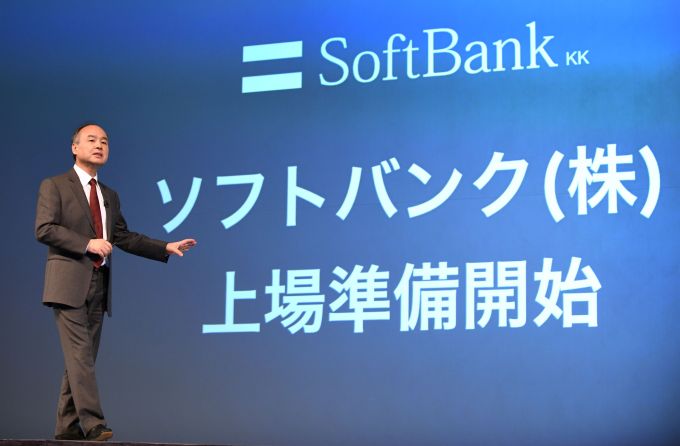
SoftBank’s voracious spending habits might be starting to catch up to the company. According to the Wall Street Journal, the Vision Fund’s two largest investors — the Public Investment Fund of Saudi Arabia (PIF) and Abu Dhabi’s Mubadala Investment Company — are growing increasingly frustrated with the fund’s investment process, governance structure, and the exorbitant valuations and prices paid.

Apparently, dishing out billion dollar checks like Halloween candy doesn’t make you popular with the people who give you those billions of dollars.

This isn’t the first time we’ve heard angry whispers from Vision Fund investors, with previous reports suggesting SoftBank significantly pared down previous investments in WeWork and other portfolio companies after facing serious LP pushback on the check size.

Part of the LP concern over SoftBank’s laissez-faire attitude towards check writing comes down to issues of governance. As we’ve previously discussed in our attempts to unravel SoftBank’s beast of a corporate structure, SoftBank often invests in companies at the SoftBank holding company level before selling the ownership to the Vision Fund at a later date. In the follow-on transactions, the Vision Fund often ends up paying more — in some cases billions of dollars more — than the initial investment. Now, LPs are concerned that they’re getting fleeced for billions on the back end as SoftBank drives up those investment valuations.

The ownership transfer process is just one aspect of the reportedly more general investor concerns around an opaque, complex, and disorganized investment process where SoftBank figurehead Masayoshi Son can overrule any investment decision with a “Gladiatoresque thumbs-up, thumbs-down”. According to the WSJ:

Concerns about valuation of the fund’s investments are closely linked to concerns about its investment process, in particular the power wielded by Mr. Son. In recent weeks, Mr. Son overruled objections from partners within SoftBank to a Vision Fund investment valued at as much as $1.5 billion into Chehaoduo Group, a Chinese online car-trading platform, according to people familiar with the matter. Chehaoduo was accused of fraud in recent weeks by a competitor.

And as LPs are growing concerned on how money is flowing out of the Vision Fund, SoftBank is also facing pressure from regulators on the money it is bringing in. While we’ve touched on SoftBank’s “love for leverage” before, credit agencies are once again expressing concern over the Vision Fund and SoftBank’s frothy debt levels, even noting that the company’s already junk-rated credit ratings have a better chance of getting downgraded further rather than improving.

All this goes to say that while sexy headlines and frequent nine-figure-plus deals make it easy to think SoftBank has a blank check to dish out to any unicorn they please, the clock may be striking midnight for SoftBank as they face the reality of their enormous spending, which may not bode well for their hopes for a second Vision Fund.

The Overlooked Element of the Amazon HQ2 Battle
Written by Arman Tabatabai

Amazon’s decision last week to halt plans to bring a second headquarters to New York City’s Long Island City neighborhood brought passionate responses from two completely schools of thought.

Some celebrated the breakup as a defeat of unjust corporate tax breaks, subsidies, and gentrification, while others threw up their hands in outrage over the disappearance of tens of thousands of jobs and future economic value that an Amazon presence would bring.

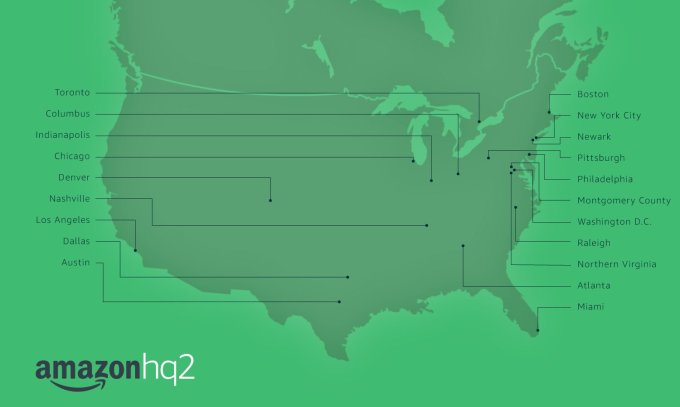
While these two arguments have been beaten to death, the remaining half of Amazon’s HQ2 development in Northern Virginia highlights an aspect of the controversial process that often gets overlooked.

Over the weekend, the Washington Post highlighted how Amazon’s pending arrival in Crystal City has helped accelerate large infrastructure projects that have long been in limbo, including public transport expansions, roadway expansions, and the construction of a new bridge to the Airport.

On top of financial investments into these projects from Amazon, the operational dates for the new HQ2 creates a timeline and has forced urgency to actually finalize plans and get these projects completed.

A huge but often overlooked political benefit of Amazon’s HQ2 process is this ability to catalyze action around public projects that otherwise may face the purgatory of public infrastructure development. While many have criticized Amazon for its auction-style selection process, many mayors and representatives from other cities that participated in the HQ2 process actually viewed the process in a positive light because they were able to unlock economic value and incentives for the city that would have been much tougher to realize otherwise.

Obsessions

  • More discussion of megaprojects, infrastructure, and “why can’t we build things”
  • We are going to be talking India here, focused around the book “Billonnaire Raj” by James Crabtree
  • We have a lot to catch up on in the China world when the EC launch craziness dies down. Plus, we are covering The Next Factory of the World by Irene Yuan Sun.
  • Societal resilience and geoengineering are still top-of-mind
  • Some more on metrics design and quantification

Thanks

To every member of Extra Crunch: thank you. You allow us to get off the ad-laden media churn conveyor belt and spend quality time on amazing ideas, people, and companies. If I can ever be of assistance, hit reply, or send an email to danny@techcrunch.com.

This newsletter is written with the assistance of Arman Tabatabai from New York

19 Feb 2019

You can now register .dev domains

Google today announced that you can now register .dev domain names. Google acquired the .dev top-level domain when ICANN opened up the web to new generic top-level domains (gTLD) a few years ago. At the time, Google acquired gTLD’s like .app, .page and .dev (for some reason, Google also owns .soy).

Right now, the .dev domains are still in an early access program, though. That means you’ll have to pay an additional fee that decreases every day until February 28 — and that early access fee is pretty steep.

Registering a new domain on GoDaddy, which is one of the many resellers that offer the new domain names, will set you back over $12,500 in extra fees today. Tomorrow, that price drops to just over $3,100. Come February 28, you can register any available domain and it’ll just cost you about $20 per year. The idea here, of course, is to manage demand (and to extract a few extra dollars from the companies that really need to have a given domain name).

Some of the companies and organizations that are already using the new gTLD are Google itself, as well as the likes of GitHub. Women Who Code, Jetbrains, Codecademy and Salesforce. And because this is 2019, there’s also Kubernetes.dev.

Like its .app domains, .dev domain will require HTTPS connections to protect users from ad malware, tracking injections and WiFi snooping.

“We hope .dev will be a new home for you to build your communities, learn the latest tech and showcase your projects—all with a perfect domain name,” Google explains in today’s announcement.

I never got the sense that there was all that much demand for non-.com or country-level domain names (does the world really need .ninja domains?), but if you always wanted a .dev domain, now would be a good time to get our your credit card.

19 Feb 2019

Deeply discounted student tickets for TC Sessions: Robotics + AI 2019

Are you a student within striking distance of Berkeley, California? Do you have a burning passion for robots and artificial intelligence? We have great news for you. We’re offering deeply discounted student tickets to TechCrunch Sessions: Robotics + AI 2019, which takes place at UC Berkeley on April 18.

Immerse yourself in our day-long event featuring interviews, demos, workshops and networking with some of the industries’ greatest thinkers, makers and heavy-hitters. Apply for a student ticket — they cost $45 — and save more than $200 on admission. Once we verify your student status, we’ll release your ticket.

If you’re looking for an internship or a job in robotics or AI, you won’t find a better networking opportunity anywhere. More than 1,000 attendees consisting of technologists, founders, researchers and investors will be on hand to learn, teach, meet and greet. It’s a full day focused on exploring the future of robotics and, as students, you represent that future. You never know who you’ll meet and where that chance connection might lead.

What else can you expect at TechCrunch Sessions: Robotics + AI? You’ll hear speakers like Marc Raibert — founder and CEO of Boston Dynamics, maker of online sensation Big Dog, the humanoid Atlas, the wheeled robot Handle and quadrupeds Spot and SpotMini. Spoiler alert: Marc’s bringing another special guest with him this year.

We’re lining up even more speakers to join the awesome roster of notable experts that we have on tap thus far: Anca DraganAlexei EfrosHany FaridMelonee WisePeter BarrettRana el KalioubyArnaud Thiercelin and Laura Major. You’ll also enjoy workshops aplenty and lots of demos along the lines of this gem — about building stronger humans — from last year.

Speaking of demos. If you’re a student founder, why not apply to demo your robot onstage? Spaces are limited, so don’t sit on this opportunity to show your stuff in front of a huge and hugely influential crowd.

TechCrunch Sessions: Robotics + AI takes place on April 18 at UC Berkeley’s Zellerbach Hall. We believe students are vital to the future of tech, and the proof is in the pricing. Apply for your $45 student ticket today. We’ll see you in Berkeley!

19 Feb 2019

YouTube revamps its strike system to include a one-time warning, consistent penalties

YouTube today announced a significant change to its strike system – the penalty system used when YouTube’s reviewers identify a video has violated the site’s Community Guidelines. These strikes could be issued against videos containing nudity or sexual content, violent or graphic content, harmful or dangerous content, hateful content, threats, spam, scams, or misleading metadata. In the past, YouTube’s penalties have been criticized for being unevenly applied and for being less than transparent – something YouTube now wants to change.

Before, YouTube had a “three strikes and you’re out” policy, but each strike had a different penalty. The first strike had resulted in a 90-day livestreaming freeze, while the second would result in a two-week freeze on video uploads.

Creators complained that these penalties didn’t match the source of the strikes.

With today’s changes, all strikes will now carry the same punishment: a temporary ban from YouTube activity, with the length of time increasing with the strikes.

Now, the first strike will result in a one-week freeze from YouTube activity, including the ability to upload video, live stream, and other channel activities. The strike will expire in 90 days.

A second strike in that 90-day period will now result in a two-week freeze on the ability to upload videos. And the third strike in any 90-day period will result in the channel being terminated.

While these strikes are a bit tougher – they begin with bans on uploads, instead of just on live-streaming – YouTube says getting to that first strike will be harder, as it’s also adding a warning system.

Before, the first violation resulted in a strike. Now creators will get a one-time warning with no penalty.

“We want to give you even more opportunities to learn about our policies, so starting February 25, all channels will receive a one-time warning the first time they post content that crosses the line, with no penalties to their channel except for the removal of that content,” the company explained in a blog post announcing the changes.

YouTube says the warning allows the creator the time to learn about its Community Guidelines so they can make content that applies with its rules.

The company will also offer more documentation and resources to help educate creators about its policies. It’s expanding the documentation in its Help Center to provide more details on what sort of things will result in strikes, including specific examples of common mistakes.

YouTube says it wants to be more transparent about its strikes, too. Before, creators may not have even been sure why their video was penalized. Now, YouTube will make it clear why the strike occurred, what it means for the channel, and what next steps are available – including appealing the decision, if the creator believes the strike was issued in error.

To help with this, YouTube says it will make its email and desktop notifications clearer and they’ll include more details. It’s adding new mobile and in-product notifications, as well.

Only a small percentage of videos break the Community Guidelines, says YouTube – just 2 percent do.

But those that do are often high-profile examples of everything that’s wrong with YouTube and its platform – a platform which today incentivizes outrageous content over quality, at times.

YouTube has recently faced a number of controversies related to the videos posted to its site, including Logan Paul’s suicide forest debacle; PewDiePie’s anti-Semitic and racist content; videos involving child endangerment and exploitation; and other issues that have led to advertiser pull-outs and brand freezes.

This week YouTube came under fire for enabling a pedophilia ring to surface in videos’ comments, too. That goes to show that YouTube has to do better with policing not just the content of the videos themselves, but also the broader community.

The new system will go into effect on February 25, 2019.

19 Feb 2019

Daily Crunch: Huawei founder remains defiant

The Daily Crunch is TechCrunch’s roundup of our biggest and most important stories. If you’d like to get this delivered to your inbox every day at around 9am Pacific, you can subscribe here.

1. ‘There’s no way the U.S. can crush us,’ Huawei founder claims

In a rare interview with the BBC, Ren Zhengfei defiantly claimed that Huawei’s business is growing stronger amid pressure from the U.S. government, which is pursuing criminal charges over alleged business dealings in Iran.

“The world needs Huawei because we are more advanced,” Ren said through a translator. “Even if they persuade more countries not to use us temporarily, we could just scale things down a little bit.”

2. Flipkart co-founder Sachin Bansal invests $92M in Ola

This represents Bansal’s most prominent and largest investment to date, and his first major deal since he left Flipkart following its sale to Walmart for $16 billion last year.

3. Coinbase buys blockchain intelligence startup to boost security and new asset discovery

Coinbase announced today that it has snapped up blockchain intelligence startup Neutrino in a deal of undisclosed size. Based in Italy, Neutrino has a major focus on services for law enforcement agencies working to track stolen digital assets.

Paul Jacobs, chairman and chief executive officer of Qualcomm Inc., gives his keynote address at the 2012 International Consumer Electronics Show (CES) in Las Vegas, Nevada, U.S., on Tuesday, Jan. 10, 2012. Qualcomm Inc., the largest maker of semiconductors for mobile phones, demonstrated a tablet computer and a Lenovo Group Ltd. television that run its chips, part of an effort to expand into a broader range of products. Photographer: Daniel Acker/Bloomberg via Getty Images

4. Qualcomm launches its next-gen 5G modem and mmWave antenna

5G phones obviously need 5G modems, so maybe it’s no surprise that Qualcomm decided to get ahead of the Mobile World Congress news cycle by launching its next-gen 5G modem and new mmWave antenna today.

5. Twitter names first international markets to get checks on political advertisers

Twitter has announced it’s expanding checks on political advertisers outside the U.S. to also cover Australia, India and all the member states of the European Union.

6. Amazon aims to make half of its shipments carbon neutral by 2030

Perhaps hoping to distract from Greenpeace’s latest report on its “dirty cloud,” Amazon announced a new environmental commitment, focused on reducing its carbon footprint. The company is calling this program “Shipment Zero.”

7. What you need to know about lawyers

One of the first calls every new founder has to make is to a lawyer. But with thousands of attorneys working with startups these days, who should you reach out to? Extra Crunch compiled a list of experts, verified by industry, so you can find the right people to grow your business the way you want.

19 Feb 2019

Nauto, a Softbank-backed mobility startup, acquires Newton

Nauto, the transportation company that aims to make human drivers safer and train autonomous vehicles for all types of scenarios, has acquired Newton Technologies for an undisclosed amount.

Newton Technologies aims to reduce the number of driving-related deaths to zero by leveraging AI to create solutions geared toward connected mobility, safety mapping and driver behavior analytics.

Newton’s driver assistant, for example, provides drivers with personalized risk profiles, safer routes and real-time warnings. This very closely aligns with the mission of Nauto Prevent, a product Nauto launched last June to prevent distracted driving.

“We have always held Nauto in high regard, and it has become clear that Nauto is the right home for Newton’s team and technology,” Newton Technologies CEO Lawrence Lin Murata wrote in a blog post. “We are beyond excited to join Nauto — doing so will allow us to take our work to the next level as we strive towards our shared goal of making driving safer and smarter. We are confident that, by joining forces with their talented team and leadership, we will be able to add value to the many drivers who rely on Nauto to stay safe.”

Pear Ventures had previously invested in Newton Technologies. To date, Nauto has raised $173.9 million from General Motors Ventures, Toyota AI Ventures and BMW iVentures. In July 2017, Nauto raised a $159 million Series B round from SoftBank and Greylock.

19 Feb 2019

Introducing the Verified Experts of Extra Crunch

TechCrunch is launching something a little different today. We’re going to help startup founders find the best outside experts to work with — so you can build a better company, faster.

From lawyers to accountants to executive coaches and a dozen more categories, the mesh network of service providers in Silicon Valley and other startup ecosystems is a vital part of how companies succeed.

But many early-stage founders don’t even know that this sort of help exists. Or maybe, you think you don’t need help yet. Or maybe, you know you need help — you just aren’t finding the right people through your own network.

Starting today, with our coverage of startup lawyers and startup law, we are beginning a long-term effort to solve these problems. It’s part of Extra Crunch, our new membership program that we launched last week.

Here’s what’s coming today, and beyond.

The verified experts

The core offering is an evergreen series of profiles of the people who founders love to work with. Based off of the word-of-mouth networks that already make startup hubs function in real life, we are conducting surveys of TechCrunch founder-readers to hear who their favorites are.

Since we began our first survey, about startup lawyers, in late December, we’ve gotten more than 1700 responses from company leaders around the country and the world. This a blueprint for how we plan to approach the other categories.

Here’s our process for determining who to cover, once an expert is nominated:

  • Does the total volume of feedback show that the recommenders have spent considerable time with the expert, on work that is directly relevant to technology startups?
  • Does the depth and enthusiasm of the feedback show that the expert is delivering in a way that makes a real difference to the companies?
  • We then verify the feedback with each recommender, independently research the expert to affirm their credibility (any lawyer in the US needs to be licensed in a state, for example), and finally, conduct a phone interview with the expert.

The product we’re launching today is, to begin with, a series of profiles that includes the founder recommendations and our interview. We’re starting the rollout with our first verified expert, a seasoned Silicon Valley attorney named Cynthia Hess who has been working with all sizes of startups for two decades. Go check out the article here. We have dozens more that we’ll be publishing in the coming weeks — but that’s just the start.

We’re going to provide interfaces that help you search through the many lawyers and other experts we profile, so you can find the people who are right for your company.

We’ll also begin rolling out more surveys in the weeks and months to come. If you share a recommendation about an expert who we decide to cover, we’ll provide you with a PDF copy of the published article (if you’re not an Extra Crunch subscriber) and a discount to subscribe (if you want to become one). Remember, when you provide a survey response, you can choose to stay anonymous, or you can provide your personal and company details for others to see.

We plan to leave each survey open indefinitely, to collect as much feedback as possible. We’ll use any new input to add to existing profiles or to decide who to interview next.

Because technology is swiftly evolving alongside service provider roles, we’ll also be covering software products as they are used to provide services. Even the most traditional law firms, for example, have recently started using document automation to help startups get through paperwork faster and cheaper. More on all that soon.

The expert context

In addition to the service providers themselves, we’re going to provide authoritative coverage of each service provider topic.

If you’re an early-stage founder, you should have some idea that there are a bunch of legal matters that you need to figure out. You can spend many hours digging through pages of search results, trying to piece together the right combination of free articles from law firms, investors or various types of vendors.

Or you can read our extensive guides, formatted as checklists so you know what you need to get done. As the first installment of that, take a look at our 5,000 word article covering the basics of corporate law for startups; we’ll be publishing a full series on startup legal matters in the coming weeks.

To go along with this topical coverage, we’re also providing guides about how to work with the experts, as professional counterparts. This often-overlooked aspect of building a company is crucial to getting the value you need from any expert. Go check out our guide on how and why to work with a startup lawyer, as a first example of this type of article.

We’ll also be publishing regular guest articles by legal experts, providing our own coverage of law-related startup issues, making updates to our guides as needed, and liberally linking to the other great resources out there.

We’ll take a similar approach for other service providers, as we roll those out over the coming year.

What’s next

Overall, our coverage of verified experts will form the how-to portion of Extra Crunch. As part of our overall goal of democratizing understanding of company-building around the world, it also includes a few other components.

One is the EC-1, which we launched last week with a 20,000 word case study of Patreon, the crowdfunding platform. This package of articles, which we plan to publish roughly every month, is intended to help startup founders and other practitioners understand the inner workings of what makes late-stage companies successful.

Another component is community. First, we’re beginning regular conference calls about all topics that we cover, including top companies, major issues in the startup world, and the latest from the verified experts. Second, TechCrunch Disrupt and other events are already a popular way for startups to meet each other and learn from the best. So, we’re providing significant event discounts to our members, and we’re working on a series of smaller meetups around Extra Crunch that we’ll have more to share about soon.

By becoming a member, you support our work developing these resources for any startup. You can find more details about Extra Crunch here.

And finally, a big thanks to everyone who has been immersed in this project so far, including Yvonne Leow (its editorial-product manager), Daniel McKenzie (the lawyer-founder author of many articles you’ll be reading), Henry Pickavet (the Editorial Director at TechCrunch, who ties it all together) and Danny Crichton (the executive editor of Extra Crunch, who also came up with this concept).

Have any questions, comments, criticisms or other thoughts — or want to get involved somehow? Email me at eldon@techrunch.com.

19 Feb 2019

Meet a great startup lawyer: Cynthia Hess

In late December, we launched our startup lawyer survey and to date we’ve received more than 1700 responses from startup leaders about hundreds of lawyers around the country and the world.

“Cynthia just gets it! She has ‘your’ hat on. She is not just doing a transaction. She is representing and working for you. Amazing!” Kara Goldin, founder and CEO of hint, inc.
Today we begin to publish the results of that survey, beginning with our first verified expert, a seasoned Silicon Valley attorney who has been working with all sizes of companies for two decades.

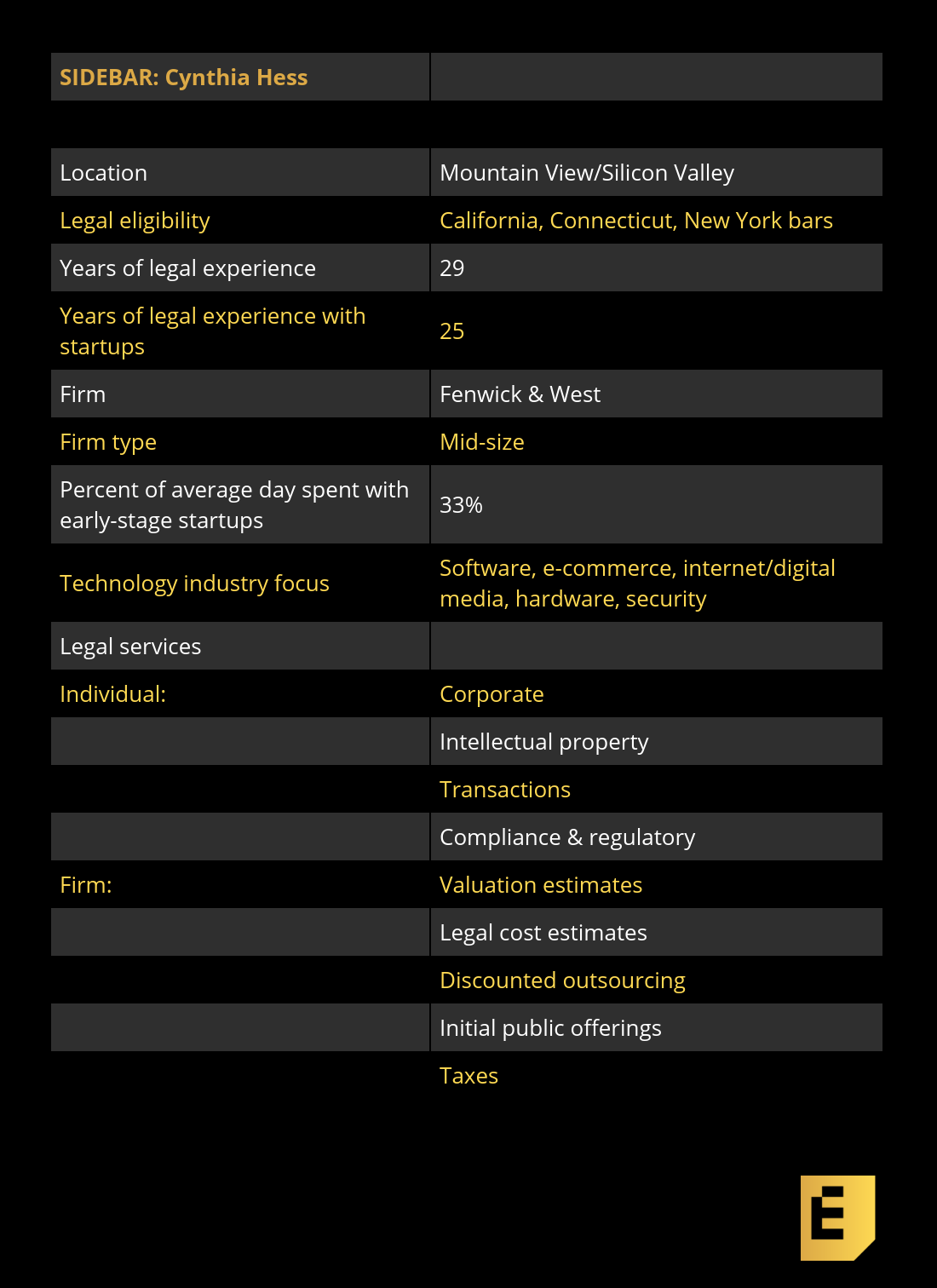
Cynthia Clarfield Hess has been a lawyer in Silicon Valley since 2000, working with all sizes of companies across their needs from company formation on. While you may see her name on various legal rankings services, she still splits her time between all stages of clients. 

Read on for more from Cynthia in the full interview, more founder reviews about her experience, as well as more details about her pricing and fee structures.


On simplicity early on

“Some founders think, ‘Let’s do something new and different. Let’s do this crazy kind of vesting or lots of bells and whistles on voting rights for common holders.’ I say try to avoid those things, especially in the early stage. Focus on your business and less on the legalities. We try to keep things as routine as possible to maximize efficiency so that founders aren’t spending their energy on the legal stuff and they can focus more on the business.”

On messy situations

“It’s oftentimes around the cap table — figuring out whether the cap table is accurate —we have had situations where we take over the legal work for a company and they think their cap table looks a certain way and they think these are their owners, and yet something was done wrong. For example, if the discount on conversion on a convertible note wasn’t calculated properly — and someone may actually be entitled to more shares, this could mean the representations that the company made in its financing weren’t accurate. We’ve had to go back and get releases from the parties involved, so that everyone understands that this is the state of affairs, and there are no rights to go back and ask for more.”

On startup client relationships

“I think startup clients like working with me because they know they’re not going to outgrow Fenwick or me. I’m going to be able to work with them all the way through their lifecycle, and there’s something comforting in knowing that when you start with us, we’ve got you covered.”

Below, you’ll find more founder reviews about Cynthia, the full interview, and more details about her pricing and fee structures.

Click here to register for Extra Crunch, or log in here