
Author: azeeadmin

11 Feb 2019

LinkedIn debuts LinkedIn Live, a new live video broadcast service

LinkedIn — the social network for the working world with close to 600 million users globally — says that video is the fastest-growing format on its platform alongside original written work, shared news and other content. Now it’s taking its next step in the medium in earnest.

Today, the company is launching live video, giving people and organizations the ability to broadcast real-time video to select groups, or to the LinkedIn world at large.

Launching in beta first in the US, LinkedIn Live (as the product is called) will be invite-only. In coming weeks, LinkedIn will also post a contact form for others who want to get in on the action. It’s not clear when and if LinkedIn will make it possible for everyone to create LinkedIn Live videos, but if you consider how it developed its publishing features for written work, that will come later. too.
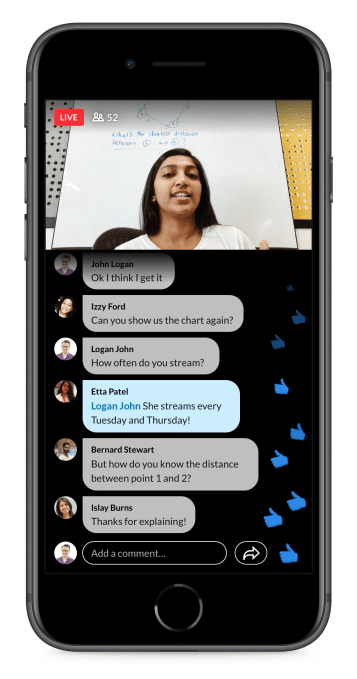
Initial live content that LinkedIn hopes to broadcast lines up with the kind of subject matter you might already see in LinkedIn’s news feed: the plan is to cover conferences, product announcements, Q&As and other events led by influencers and mentors, office hours from a big tech company, earnings calls, graduation and awards ceremonies, and more.

And to underscore how LinkedIn is keen to develop this — especially in its first phase — not as rough-and-ready user-generated content, but as streams of the kinds of videos that fit with its wider ethos, it has selected several third-party developers of live broadcasting streaming services that creators will work with to create and post more polished live video on LinkedIn.

These include Wirecast, Switcher Studio, Wowza Media Systems, Socialive, and Brandlive, “with more to come in the following weeks,” LinkedIn said.

There is another technical partner for LinkedIn’s live video effort, too: Microsoft, whose Azure Media Services, part of its cloud division, is providing encoding. Although Microsoft acquired LinkedIn in 2016, it’s mostly kept a distance in terms of knitting together product development between the two, so this is a notable exception. Skype, incidentally, is not part of this video effort.

Better late than never?

Compared to its competitors in the social networking sphere, LinkedIn has been a late bloomer when it comes to video.

Amid developments from competitors like Twitter and Facebook going back years to bring more engagement to its platforms with the use of moving pictures, the Microsoft-owned LinkedIn introduced its first native video features only in the summer of 2017.

But in the 17 months since launching video features, LinkedIn has seen a big boost in traffic and revenues from (non-live) video on its platform.

“Video is the fastest growing format on our platform right now, and the one most likely to get people talking,” said Pete Davies, the head of consumer products at LinkedIn. He and LinkedIn declined to give specific figures in terms of how many video creators or viewers there are, except to note that “millions” of LinkedIn members have used the feature.

Davies said that live video has been a big request — not least, I’d wager, because it is such a prominent part of how video is being used on other social platforms like YouTube, Facebook and Twitter, putting the functionality front of mind.
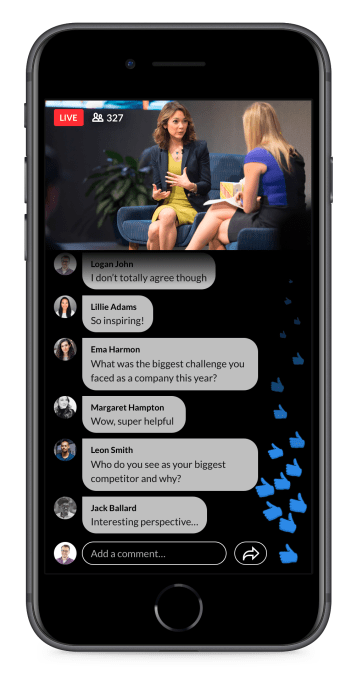
“Live has been the most requested feature,” he said. These other social platforms are serving as a template of sorts: as with these other platforms, users can “like” videos as they are being broadcast, with the likes floating along the screen. Viewers can ask questions or make suggestions in the comments in real-time. Hosts can moderate those comments in real-time, too, to remove harassing or other messages, Davies added.

There may be another reason beyond user requests for why LinkedIn is expanding video: it’s proving to be a strong engine for engagement and revenue growth at the company.

So far, the only monetization that LinkedIn has introduced around video is for video advertising. While Microsoft does not break out how much LinkedIn brings in in advertising revenues, much less video advertising, Microsoft reported in its last quarterly earnings that revenues at LinkedIn were up 29 percent with a reference to growing its ads business specifically: “with record levels of engagement highlighted by LinkedIn sessions growth of 30 percent.”

That it seems, is directly coming from its video products: LinkedIn tells me that video ads earn 30 percent more comments per impression than non-video ads and that LinkedIn members spend almost 3 times more time watching video ads compared to time spent with static Sponsored Content.

With LinkedIn looking at tapping into unique content with LinkedIn Live, there is a clear opportunity for the company to explore other ways of monetizing the content beyond ads. For example, it could charge viewers for unique experiences like conferences, or make certain Live events part of the company’s paid tier to lure in more premium subscribers. On the part of the broadcasters, it could potentially provide fee-based services to provide a platform to broadcast certain content like video-based earnings reports.

LinkedIn wouldn’t comment on future monetization plans and for now isn’t even putting in video ads into LinkedIn Live videos. “That will come down the road but for right now we are focused on awesome use cases,” said Peter Roybal, head of video product management, in an interview. “This could even be a way to try out some new ideas.”
11 Feb 2019

Russia plans to test a kill switch that disconnects the country from the internet

As a cyber-defensive measure, the Russian government will reportedly perform a trial run of a measure that would effectively cut the country off from the rest of the world’s web.

Last year, Russia introduced its Digital Economy National Program, a plan that would require Russian internet providers to remain functional in the event the country was cut off from worldwide internet. Under this plan, Russian ISPs would redirect web traffic to routing points within the country and rely on its own copy of the Domain Name System (DNS), the directory of domains and addresses that underpins the global internet.

The test run could be useful to the country for a few reasons. Primarily, Russia aims to simulate the drastic measures it would take in the case of some kind of cyber threat to its national security. But for a country notorious for its restrictive environment for individual and press freedom, the test may also be a useful way to see how the country could wield a more closely held internet to control its own people and guard against foreign interests.

The extreme measure, if successful, would allow Russia to effectively operate its own state-controlled internet and cut itself off from the world as it sees fit. While the test date is not yet known, it’s expected to happen before April 1 of this year, the last day for lawmakers to propose amendments to the Digital Economy National Program.

11 Feb 2019

Russia plans to test a kill switch that disconnects the country from the internet

As a cyber-defensive measure, the Russian government will reportedly perform a trial run of a measure that would effectively cut the country off from the rest of the world’s web.

Last year, Russia introduced its Digital Economy National Program, a plan that would require Russian internet providers to remain functional in the event the country was cut off from worldwide internet. Under this plan, Russian ISPs would redirect web traffic to routing points within the country and rely on its own copy of the Domain Name System (DNS), the directory of domains and addresses that underpins the global internet.

The test run could be useful to the country for a few reasons. Primarily, Russia aims to simulate the drastic measures it would take in the case of some kind of cyber threat to its national security. But for a country notorious for its restrictive environment for individual and press freedom, the test may also be a useful way to see how the country could wield a more closely held internet to control its own people and guard against foreign interests.

The extreme measure, if successful, would allow Russia to effectively operate its own state-controlled internet and cut itself off from the world as it sees fit. While the test date is not yet known, it’s expected to happen before April 1 of this year, the last day for lawmakers to propose amendments to the Digital Economy National Program.

11 Feb 2019

Lilt is building a machine translation business with humans at the core

The ability to quickly and automatically translate anything you see using a web service is a powerful one, yet few expect much from it other than a tolerable version of a foreign article, menu, or street sign. Shouldn’t this amazing tool be put to better use? It can be, and a company called Lilt is quietly doing so — but crucially, it isn’t even trying to leave the human element behind.

By combining the expertise of human translators with the speed and versatility of automated ones, you get the best of both worlds — and potentially a major business opportunity.

The problem with machine translation, when you really get down to it, is that it’s bad. Sure, it won’t mistake “tomato” for “potato,” but it can’t be trusted to do anything beyond accurately translate the literal meaning of a series of words. In many cases that’s all you need — for instance, on a menu — but for a huge amount of content it simply isn’t good enough.

This is much more than a convenience problem; for many language provides serious professional and personal barriers.

“Information on a huge number of topics is only available in English,” said Lilt co-founder and CEO Spence Green; he encountered this while doing graduate work in the Middle East, simultaneously learning Arabic and the limitations placed on those who didn’t speak English.

Much of this information is not amenable to machine translation, he explained. Imagine if you were expected to operate heavy machinery using instructions run through Google Translate, or perform work in a country where immigration law is not available in your language.

“Books, legal information, voting materials… when quality is required, you need a human in the loop,” he said.

Working on translation projects there and later at Google, where he interned in 2011, Green found himself concerned with how machine translation could improve access to information without degrading it — as most of the systems do.

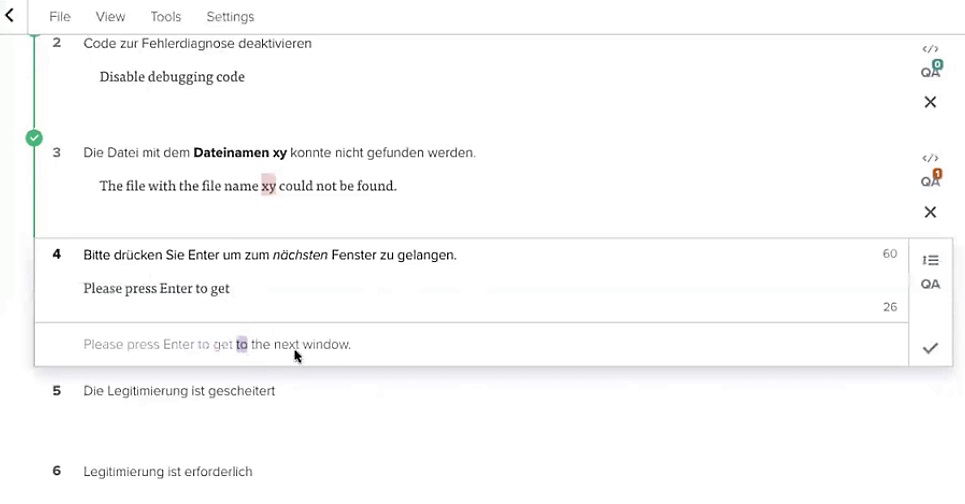
His realization, which he pursued with co-founder John DeNero, was that machine learning systems worked well not simply as a tool for translation, but as tool for translators. Working in concert with a translation system makes them faster and better at their work, lightening the cognitive load.

The basic idea of Lilt’s tool is that the system provides translations for the next sentence or paragraph, as a reference for structure, tense, idiom, and so on that the translator can consult and, at least potentially, work faster and better. Lilt claims a 5x increase in words per hour translated, and says the results are as good or better than a strictly human translation.

“We published papers — we knew the technology worked. We’d worked with translators and had done some large-scale experiments,” Green said, but the question was how to proceed.

Talk to a big company and get them interested? “We went through this process of realizing that the big companies are really focused on the consumer applications — not anywhere there’s a quality threshold, which is really the entire translation industry,” Green said.

Stay in academic research, get a grant and open-source it? “The money kind of dried up,” Green explained: money was lavishly allocated after 9/11 with the idea of improving intelligence and communication, but a decade later the sense of urgency had departed, and with it much of the grant cash.

Start a company? “We knew the technology was inevitable,” he said. “The question was who would bring it to market.” So they decided it would be them.

Interestingly, a major change in language translation took place around the time they were really getting to work on it. Statistical neural network systems gave way to attention-based ones; these have a natural sort of affinity to efficiently and effectively parsing things like sentences, where each word exists not like a pixel in an image, but is dependent on the words nearby it in a structured way. They basically had to reinvent their core translation system, but it was ultimately for the better.

“These systems have much better fluency — they’re just a better model of language. Second, they learn much faster; you need fewer updates to adapt to a domain,” Green said. That is to say, as far as domains, that the system can quickly accommodate jargon and special rules found in, say, technical writing or real estate law.

Of course, you can’t just sprint into the midst of the translation business, which spans publishing, real-time stuff, technical documents, and a dozen other verticals, and say “here, use AI!”

“There’s enormous structural resistance in the industry to automating in any real way,” Green said. There was no way a major publishing house was going to change the way it worked.

“We tried several business models before we found one that works. There really hasn’t been a company that has decided ‘Okay, this human-in-the-loop method is the fundamental way to solve this problem, let’s just build a company around that.’ So we’re vertically integrated, we work with big enterprises and governments, and we just own the entire translation workflow for them.”

A faster method that doesn’t adversely affect translation quality is basically an efficiency multiplier — catnip for organizations that have a lot of content that needs accurate translation but needs to get the most for their money.

Think about it like this: if you’re a company that puts out products in 20 countries that speak as many languages, translation of packaging, advertising, documentation, and so on is a task that’s essentially never done. The faster and cheaper you can get it done, the better, and if you have a single company that can handle it all, that’s just a cherry on top.

“We work with Zendesk, Snap, Sprinklr… we just take over the whole localization workflow for them. That helps with international go to market.” said Green. If a company’s translation budget and process before using Lilt limited it to targeting 5 or 6 new markets in a given period, that could double or triple for the same price and staff, depending on efficiency gains.

Right now the working on acquiring customers, naturally. “In Q4 last year we built our first sales team,” Green admitted. But initial work with governments especially has been heartening, since they have “more idiosyncratic language needs” and a large volume of text. The 29 languages Lilt supports right now will be 43 by the end of the year. A proofreading feature is in the works to improve the efficiency of editors as well as translators.

They’re also working hard on connecting with academics and building the translation community around Lilt. Academics are both a crucial source of translators and language experts and a major market. A huge majority of scientific literature is only published in English because it would be onerous to translate this highly technical text for others.

Green’s pet peeve seems to be that brilliant researchers are being put to work on boring consumer stuff: “Tech companies are kind of sucking up all the talent and putting them on Assistant or Alexa or something.” It’s a common refrain in frontier tech like AI and robotics.

Finally, Green said, “it’s my great hope that we can close this circle and get into book translation as we go on. It’s less lucrative work but it’s the third part of the vision. If we’re able to, it’s a choice where we’ll feel like we’ve done something meaningful.”

Although it may start out as support documents for apps and random government contracts, the types of content and markets amenable to Lilt’s type of human-in-the-loop process seem likely to only increase. And a future where AI and people work in cooperation is certainly more reassuring than one where humans are replaced. With translation at least, the human touch is nowhere near ready to be excluded.

11 Feb 2019

Lilt is building a machine translation business with humans at the core

The ability to quickly and automatically translate anything you see using a web service is a powerful one, yet few expect much from it other than a tolerable version of a foreign article, menu, or street sign. Shouldn’t this amazing tool be put to better use? It can be, and a company called Lilt is quietly doing so — but crucially, it isn’t even trying to leave the human element behind.

By combining the expertise of human translators with the speed and versatility of automated ones, you get the best of both worlds — and potentially a major business opportunity.

The problem with machine translation, when you really get down to it, is that it’s bad. Sure, it won’t mistake “tomato” for “potato,” but it can’t be trusted to do anything beyond accurately translate the literal meaning of a series of words. In many cases that’s all you need — for instance, on a menu — but for a huge amount of content it simply isn’t good enough.

This is much more than a convenience problem; for many language provides serious professional and personal barriers.

“Information on a huge number of topics is only available in English,” said Lilt co-founder and CEO Spence Green; he encountered this while doing graduate work in the Middle East, simultaneously learning Arabic and the limitations placed on those who didn’t speak English.

Much of this information is not amenable to machine translation, he explained. Imagine if you were expected to operate heavy machinery using instructions run through Google Translate, or perform work in a country where immigration law is not available in your language.

“Books, legal information, voting materials… when quality is required, you need a human in the loop,” he said.

Working on translation projects there and later at Google, where he interned in 2011, Green found himself concerned with how machine translation could improve access to information without degrading it — as most of the systems do.

His realization, which he pursued with co-founder John DeNero, was that machine learning systems worked well not simply as a tool for translation, but as tool for translators. Working in concert with a translation system makes them faster and better at their work, lightening the cognitive load.

The basic idea of Lilt’s tool is that the system provides translations for the next sentence or paragraph, as a reference for structure, tense, idiom, and so on that the translator can consult and, at least potentially, work faster and better. Lilt claims a 5x increase in words per hour translated, and says the results are as good or better than a strictly human translation.

“We published papers — we knew the technology worked. We’d worked with translators and had done some large-scale experiments,” Green said, but the question was how to proceed.

Talk to a big company and get them interested? “We went through this process of realizing that the big companies are really focused on the consumer applications — not anywhere there’s a quality threshold, which is really the entire translation industry,” Green said.

Stay in academic research, get a grant and open-source it? “The money kind of dried up,” Green explained: money was lavishly allocated after 9/11 with the idea of improving intelligence and communication, but a decade later the sense of urgency had departed, and with it much of the grant cash.

Start a company? “We knew the technology was inevitable,” he said. “The question was who would bring it to market.” So they decided it would be them.

Interestingly, a major change in language translation took place around the time they were really getting to work on it. Statistical neural network systems gave way to attention-based ones; these have a natural sort of affinity to efficiently and effectively parsing things like sentences, where each word exists not like a pixel in an image, but is dependent on the words nearby it in a structured way. They basically had to reinvent their core translation system, but it was ultimately for the better.

“These systems have much better fluency — they’re just a better model of language. Second, they learn much faster; you need fewer updates to adapt to a domain,” Green said. That is to say, as far as domains, that the system can quickly accommodate jargon and special rules found in, say, technical writing or real estate law.

Of course, you can’t just sprint into the midst of the translation business, which spans publishing, real-time stuff, technical documents, and a dozen other verticals, and say “here, use AI!”

“There’s enormous structural resistance in the industry to automating in any real way,” Green said. There was no way a major publishing house was going to change the way it worked.

“We tried several business models before we found one that works. There really hasn’t been a company that has decided ‘Okay, this human-in-the-loop method is the fundamental way to solve this problem, let’s just build a company around that.’ So we’re vertically integrated, we work with big enterprises and governments, and we just own the entire translation workflow for them.”

A faster method that doesn’t adversely affect translation quality is basically an efficiency multiplier — catnip for organizations that have a lot of content that needs accurate translation but needs to get the most for their money.

Think about it like this: if you’re a company that puts out products in 20 countries that speak as many languages, translation of packaging, advertising, documentation, and so on is a task that’s essentially never done. The faster and cheaper you can get it done, the better, and if you have a single company that can handle it all, that’s just a cherry on top.

“We work with Zendesk, Snap, Sprinklr… we just take over the whole localization workflow for them. That helps with international go to market.” said Green. If a company’s translation budget and process before using Lilt limited it to targeting 5 or 6 new markets in a given period, that could double or triple for the same price and staff, depending on efficiency gains.

Right now the working on acquiring customers, naturally. “In Q4 last year we built our first sales team,” Green admitted. But initial work with governments especially has been heartening, since they have “more idiosyncratic language needs” and a large volume of text. The 29 languages Lilt supports right now will be 43 by the end of the year. A proofreading feature is in the works to improve the efficiency of editors as well as translators.

They’re also working hard on connecting with academics and building the translation community around Lilt. Academics are both a crucial source of translators and language experts and a major market. A huge majority of scientific literature is only published in English because it would be onerous to translate this highly technical text for others.

Green’s pet peeve seems to be that brilliant researchers are being put to work on boring consumer stuff: “Tech companies are kind of sucking up all the talent and putting them on Assistant or Alexa or something.” It’s a common refrain in frontier tech like AI and robotics.

Finally, Green said, “it’s my great hope that we can close this circle and get into book translation as we go on. It’s less lucrative work but it’s the third part of the vision. If we’re able to, it’s a choice where we’ll feel like we’ve done something meaningful.”

Although it may start out as support documents for apps and random government contracts, the types of content and markets amenable to Lilt’s type of human-in-the-loop process seem likely to only increase. And a future where AI and people work in cooperation is certainly more reassuring than one where humans are replaced. With translation at least, the human touch is nowhere near ready to be excluded.

11 Feb 2019

Gmail gets a useful right-click menu

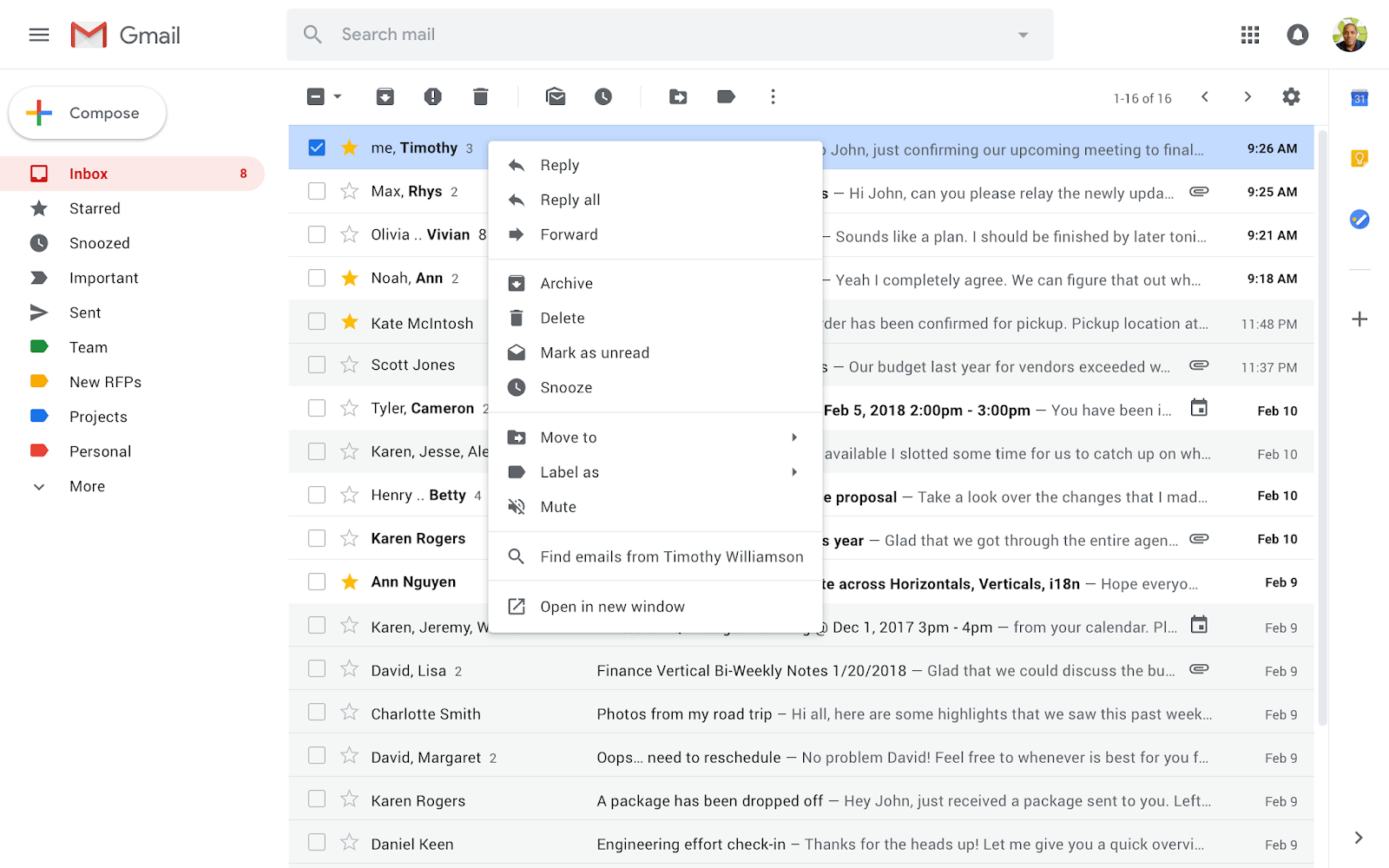
Google is giving Gmail a new right-click menu. And it’s about time. While you’ve long been able to right-click on any email in your inbox, your options were always limited. You could archive an email, mark it as read/unread and delete it, but that was about it. Now, as the company announced today, that’s changing and you’re about to get a fully featured right-click menu that lets you do most of the things that Gmail’s top bar menu lets you do, plus a few extra features.

Soon, when you right-click on a message in your inbox view, you’ll see a long list of features with options to reply to messages and forward them, search for all emails from a sender or with the same subject and open multiple emails in multiple windows at the same time. You’ll also be able to add labels to emails, mute conversations and use Gmail’s snooze feature, all from the same menu.

All of this is pretty straightforward stuff and none of it is especially groundbreaking, which makes you wonder why it took Google so long to implement it.

As usual, Google only tells us that it is rolling out this feature to G Suite users now (starting today for those on the rapid release schedule and on February 22 for those that follow the slower scheduled release cycle). But free users typically see these new features pop up somewhere around that same time frame, too.

11 Feb 2019

Mars One goes bankrupt as reality catches up to the doomed space scam

A grand mission to Mars that was always light on details has come to a decidedly terrestrial end. Mars One, a controversial space exploration project that made it as far as the “highly produced videos” stage of space colonization, has quietly filed for bankruptcy, according to a liquidation listing spotted by a Redditor on r/space.

As the post explains, the private company that spearheaded the Mars One spectacle is actually made up of two parts, a not-for-profit called the Mars One Foundation and a for-profit company known as Mars One Ventures. In 2016, Swiss financial services company nFin Innovative Finance AG picked up Mars One Ventures in a takeover bid.

In a statement on the takeover, Mars One’s leadership explained how the plan was still on track, in spite of appearances.

“The takeover provides a solid path to funding the next steps of Mars One’s mission to establish a permanent human settlement on Mars. Those steps include reducing the remaining 100 astronaut candidates to just 24, as well as continuing the mission design phase with Mars One’s technology suppliers.”

When contacted about the bankruptcy, Mars One Co-founder and CEO Bas Lansdorp told Engadget that the Mars One Foundation continues to operate but is stalled unless it receives an infusion of funds as Lansdorp works “to find a solution.”

Mars One was ill-fated from its inception, more grounded in CGI videos and marketing hype for a Mars mission reality TV show than any kind of scientific reality. And they couldn’t even get the show off the ground.

There were plenty of red flags for anyone willing to look, but the nature of its outlandish proposal allowed Mars One to prey on the intrinsic optimism and curiosity of would-be space explorers. As one finalist candidate revealed in an excellent exposé series on the company titled “All Dressed Up for Mars and Nowhere to go,” Mars One’s financial reality looked like a multilevel marketing scheme — not a scientific expedition.

“When you join the ‘Mars One Community,’ which happens automatically if you applied as a candidate, they start giving you points. You get points for getting through each round of the selection process… and then the only way to get more points is to buy merchandise from Mars One or to donate money to them.”

An MIT report in 2014 issued other telling warning’s about the project’s feasibility.

“… If all food is obtained from locally grown crops, as Mars One envisions, the vegetation would produce unsafe levels of oxygen, which would set off a series of events that would eventually cause human inhabitants to suffocate.”

Taken together, those two telling details tell you pretty much everything you need to know about a sadly small-minded company that sold the public a lucrative tale about its big red dreams.

11 Feb 2019

YC is hosting interviews in New York in a couple of weeks; here’s what you need to know ahead of time

For years, the popular accelerator program Y Combinator has interviewed applicants to its program in the Bay Area, reimbursing teams for their travel expenses. It will continue to do so, but the outfit tells us they are also hosting interviews in New York on February 23rd for the first time, and that plans to interview applicants in both Tel Aviv and Bangalore are in the works.

We were in touch yesterday with YC Partner Dalton Caldwell, who heads up admissions for the organization, to get a few more details that might be good for potential applicants to know.

TC: Remind us of what the in-person interview process involves. What are the steps to land time with one of the partners for an interview?

DC: Founders fill out an online application. The application is reviewed by YC partners. We invite select founders to meet us in-person for a 10-minute interview. We tell founders that day if they’re funded.

TC: And that application involves . . .

DC: The application asks for a one-minute video where founders can introduce themselves and their startups. There is no change from our standard application and interview process.

TC: How many people were accepted into the winter class and how many were rejected?

DC: We’re not yet announcing the stats from the Winter W19 batch. We’ll keep you posted on when those go live.

TC: When might YC revisit a team to whom it has said no?

DD: In a typical YC batch, about the half companies have applied multiple times before being accepted. If you’ve applied before and not gotten in, we strongly encourage you to apply again. Having made progress since your last application is a strong signal to us.

TC: How many times do people typically apply to yc before they are accepted?

DC: I don’t have this data handy. But roughly half the companies in a typical YC batch had a founder that applied more than once. Some teams apply once and get in, but we’ve also had teams that applied six times before they were accepted.

TC: Why is it necessary to host these interviews elsewhere?

It isn’t necessary for YC to do this, but it seems like a good thing to do. We often plan events for founders around the world and realized we could use those opportunities to interview local startups.

TC: What are you and the rest of YC looking for in these very short in-person interviews?

DC: YC interviews let us meet the founders and have a conversation about what they’re building. We ask questions and look at what they’ve built so far. The conversation helps us understand how founders think about the problem they’re solving.

TC: Will the interview process be any different in Tel Aviv or Bangalore versus here in the U.S.?

DC: Founders will experience the same process as the interviews we host in the Bay Area.

TC: YC  says a “small number” of interviews will be taking place in a couple of weeks. What does that mean?

DC: We don’t have an exact number of interviews in mind. We’ll see what comes in and plan accordingly.

TC: Any ideas from now regarding how many startups YC can accommodate for its summer batch?

DC: We don’t set a specific number in advance.

TC: Is this a first step toward anything else, like Y Combinator New York?

DC: We’re staying in the Bay Area for now — but we’re always looking for ways to better support founders who are based in other cities and internationally.

11 Feb 2019

Epix launches a $6 per month streaming service offering 4K video and offline access

MGM-owned Epix is joining other premium networks like HBO, Showtime and Starz with the launch of its own over-the-top streaming service aimed at cord cutters. The service, called Epix Now, offers access to Epix’s original series and thousands of Hollywood movies and classic films for $5.99 per month, and supports offline viewing and 4K video, the company says.

Initially, Epix Now is available on Apple TV, iOS and Android devices, but Roku and Amazon Fire TV apps are arriving soon.

Epix has been working for some time to reposition its network to better compete in the streaming market.

Following MGM’s $1 billion acquisition of Epix in 2017, the company last year announced plans to enhance the service’s offerings with a variety of original series. MGM said by spring 2019, it aimed to have 50 to 60 hours of original scripted content, and 70 to 80 hours of scripted fare, in addition to its first-run theatrical and library film content, according to Deadline.

As of today’s launch of Epix Now, the network has been making good on those promises.

Its service now includes access to several new original shows, including: “Pennyworth,” the origin story of Batman’s butler, Alfred; “Godfather of Harlem,” starring Forest Whitaker; “Perpetual Grace, LTD.,” featuring Sir Ben Kingsley; the docu-series “PUNK” from Iggy Pop; and “Elvis Goes There,” with Elvis Mitchell.

Returning originals include “Get Shorty,” starring Chris O’Dowd and Ray Romano; “Berlin Station,” starring Richard Armitage, Ashley Judd and Richard Jenkins; and “Deep State,” starring Mark Strong and Joe Dempsie.

Epix also features unscripted series and films like the late-night comedy docu-series “Unprotected Sets” from Wanda Sykes; Mark Burnett’s boxing competition “The Contender;” 2018 Sundance audience award-winner “This Is Home: A Refugee Story;” and sports documentary “Serena.”

Meanwhile, the network’s film library includes both new and classic movies, like “A Quiet Place,” “Daddy’s Home,” “Transformers: The Last Knight,” “Fences,” “Barbershop: The Next Cut, “Me Before You” and franchises like James Bond, Rocky, Mission Impossible and Star Trek.

On connected TV devices, Epix Now users can also stream all four Epix linear live channels, and on mobile, they can download content to watch offline.

This is not the first time that Epix has made its content available for streaming, however.

In addition to offering a way for authenticated pay TV customers to stream its shows and movies online, the company had also offered access through streaming TV services like Sling TV and PlayStation Vue, as an add-on.

In February, Epix said it would launch a standalone subscription service at some point in the future, but had declined to share a time frame for those plans.

Though new to the standalone streaming market, the company believes there’s plenty of room for growth as more consumers cut the cord with traditional pay TV.

For example, HBO had grown its streaming service to more than 5 million subscribers, as of last year. And CBS’s streaming properties, CBS All Access and Showtime, had grown to a combined more than 5 million subscribers as of that time, as well.

Epix additionally believes its support for 4K Ultra HD streaming will help differentiate it from others.

“2019 is poised to be an incredible year of growth for our network,” said Michael Wright, Epix president, in a statement. “Launching Epix Now and providing consumers nationwide with access to our premium original programming and blockbuster movies is an exciting moment for our company and solidifies our commitment to bring high-level storytelling to as many people as possible. We look forward to welcoming new audiences to our network,” he said.

11 Feb 2019

Paris sues Airbnb for illegal listings and seeks $14.2 million

The City of Paris first warned Airbnb and it is now taking action. Mayor of Paris Anne Hidalgo told the JDD that the city is suing the company for 1,010 illegal listings. The fine could be worth as much as $14.2 million (€12.625 million).

Based on current legislation, you can’t rent an apartment more than 120 days a year. If you want to rent an apartment on Airbnb in Paris, you first have to register your apartment with the city. The city then gives you an ID number so that they can track how many nights you’re listing your apartment on Airbnb.

And yet, many listings still don’t have that ID number. The Mayor’s office flagged around 1,000 apartments back in December 2017 and said Airbnb was dragging its feet. The company had little intensive to comply as hosts were responsible for their own listings.

Thanks to a new law, the responsibility is now shared between the hosts and the platform. The City of Paris can now fine Airbnb for all those illegal listings, up to €12,500 per listing.

According to Hidalgo, Airbnb has been putting too much pressure on the housing market. She thinks that 65,000 apartments are now reserved for Airbnb in Paris alone. In some areas, it has become quite hard to find an apartment because of that. Local shops also suffer because tourists have different needs. In addition to better monitoring, Hidalgo is also in favor of restricting listings to 30 nights per year.

Airbnb told the JDD that it has complied with regulation and informed all Airbnb hosts about the new rules. The company also says that regulation in Paris doesn’t comply with European regulation. It’s clear that this fight is not over.