Author: azeeadmin

08 Feb 2019

FDA chief summons Altria and JUUL to Washington to discuss teen vaping

The head of the U.S. Food and Drug Administration is calling Altria and Juul to meet in Washington to discuss their tie-up and how it impacts the companies’ plans to combat teen vaping. Earlier this year, Altria  href="https://techcrunch.com/2018/12/20/juul-labs-gets-12-8-billion-investment-from-marlboro-maker-altria-group/">invested $12.8 billion investment in Juul.

“After Altria’s acquisition of a 35 percent ownership interest in JUUL Labs, Inc., your newly announced plans with JUUL contradict the commitments you made to the FDA,” Commissioner Scott Gottlieb wrote in a strongly worded letter addressed to Altria chairman and chief executive, Howard A. Willard III.

“When we meet, Altria should be prepared to explain how this acquisition affects the full range of representations you made to the FDA and the public regarding your plans to stop marketing e-cigarettes and to address the crisis of youth use of e-cigarettes,” Gottlieb wrote.

The commissioner sent a similarly worded message to Juul’s chief executive, Kevin Burns.

As part of that deal, Juul is getting access to Altria’s retail shelf space; the company is sending out direct communications pitching Juul to adult smokers through cigarette pack inserts and mailings to the company’s database of customers; and the two will combine the power of their respective sales and distribution backend which reaches roughly 230,000 retailers across America.

The recent deal comes only months after Juul released its plan to combat teen vaping — something the FDA had required of the company.

In the commitments it made last year, the vape manufacturer and retailer said it would expand its secret shopper program to make sure underage buyers weren’t getting access to its products; pull its campaigns from social media; and limit sales of non-traditional cigarette flavors (menthol, mint, Virginia tobacco, and “classic” tobacco) to the company’s website — which requires age verification.

Gottlieb isn’t the only one who has a problem with Juul. We’ve written about how the company has lowered the barrier to entry for nicotine addiction.

For Gottlieb, the addition of Altria’s marketing firepower and network of 230,000 retail locations likely isn’t an indicator of a company that’s willing to winnow down access to its products.

“I am aware of deeply concerning data showing that youth use of JUUL represents a significant proportion of the overall use of e-cigarette products by children. I have no reason to believe these youth patterns of use are abating in the near term, and they certainly do not appear to be reversing,” Gottlieb wrote. “Manufacturers have an independent responsibility to take action to address the epidemic of youth use of their products. My office will contact you to arrange a meeting to discuss these issues. Pursuant to your request, we intend to schedule this as a joint meeting with both Altria and JUUL.”
08 Feb 2019

Athenascope nabs $2.5M seed led by First Round to bring gamers AI-edited highlight reels

As massive cross-platform gaming titles become even larger time-sucks for a lot of people, it’s probably worth reflecting on how to savor your in-game accomplishments.

Streaming of eSports celebrities on sites like Twitch has taken off like no one imagined, but for the most part the toil-heavy editing processes has left this attention largely focused on those with the ambitions of making gaming their full-time gig.

Athenascope is a small startup aiming to tap computer vision intelligence to record, review and recap what more novice gamers were able to pull off in their latest battle royale with a short, shareable highlight reel. The team is led by Chris Kirmse, who previously founded Xfire, a game messaging client that Viacom bought in 2006 for north of $100 million.

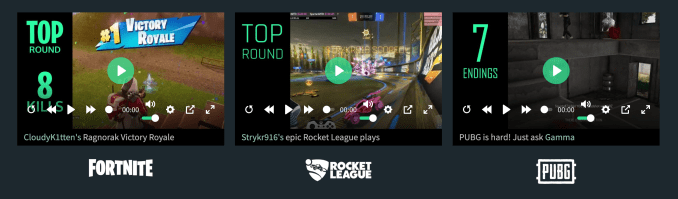
The company announced this week that they’ve closed a $2.5 million seed round led by First Round Capital to grow its tools and its team. They’re also rolling out their AI highlight reel tool for gamers. The tool is pretty customized for individual titles; they’re launching with support for Fortnite, Rocket League and PUBG, but Kirmse hope to expand that list significantly in the future.

Josh Kopelman, a partner at First Round Capital who is joining Athenascope’s board, highlighted that a lot of existing tools for gaming entertainment are “really skewed towards the high-end.”

“They’re not democratized, they’re for professional gamers,” Kopelman told TechCrunch. “What I think Chris is trying to do with Athenascope is enable anyone to create these high-quality game highlights — what the pros have to do manually.”

The company is tackling a problem familiar to video-editing software companies, how do you prevent footage from dying on the device. The answer here is the same as many others have posited, tapping computer vision deep learning to do the heavy lifting in determining what footage is interesting and worthy of a highlight reel. Athenascope has some key advantages over the companies like GoPro that are trying to do the same with real world video, namely the games they support operate in fundamentally more predictable ways and 2D interface cues offer some pretty healthy indicators of when exciting stuff is going down.

The game isn’t a plug-in that needs pipeline access to your Fortnite account or anything, the product simply analyzes exactly what you’re seeing when you play. The startup is also working on cool tools that allow you to see multiple perspectives of individual moments in gameplay by essentially syncing together footage from other people involved in a match that are also Athenascope’s service and giving a sort of multi-view replay.

The company has broader ambitions of how it can evolve these gaming insights with computer vision, including ways to help gamers learn about their strengths and weaknesses in a way that lets Athenascope serve as a sort of computer vision coach. For now though, the big focus is on getting gamers these entertaining snapshots of their gaming experiences in an intelligent way.

08 Feb 2019

‘Amazon Live’ is the retailer’s latest effort to take on QVC with live-streamed video

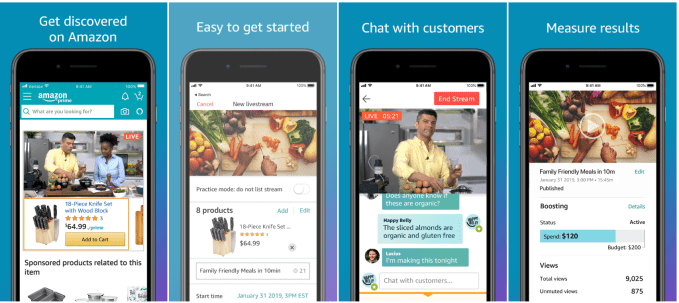
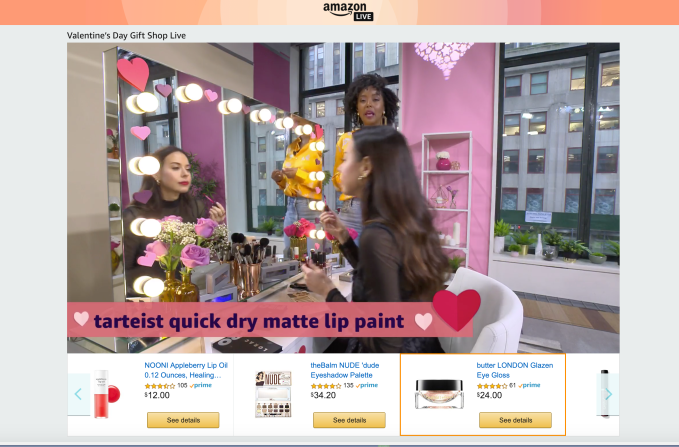
Amazon is taking on QVC with the launch of Amazon Live, which features live-streamed video shows from Amazon talent as well as those from brands that broadcast their own live streams through a new app, Amazon Live Creator. On the live shows, hosts talk about and demonstrate products available for sale on Amazon, much like they do on QVC. Beneath that sits a carousel where shoppers can browse product details and make purchases.

More than one video streams on Amazon Live at the same time, so shoppers can tune to the one that most interests them.

For example, Amazon Live is currently streaming a Valentine’s Day Gift Shop show, a cooking-focused show (In the Kitchen with @EdenEats) and Back to Business Live, which is showing off products aimed at daycare centers and schools.

You can tap on the different videos to change streams, scroll down to watch recordings of those videos that were recently live or view which live shows are coming up next.

On the web, the live-streaming site is available at Amazon.com/Live, but it’s not listed yet in Amazon’s main navigation menus so it remains hard to find. On mobile, there’s now a section labeled “Amazon Live” that’s appearing on both the iOS and Android app’s main navigation menu as of a recent app update.

We’ve confirmed the page Amazon.com/Live is newly added, though this is not the first time Amazon has offered live streams.

The retailer has dabbled in live streaming in the past, with mixed results.

Two years ago, it pulled the plug on its short-lived effort, Style Code Live, which also offered a QVC-like home shopping experience. The live show featured hosts with TV and broadcast backgrounds, and brought in experts to talk about beauty and style tips.

But Style Code Live focused only on fashion and beauty.

Amazon Live, on the other hand, covers all sorts of products, ranging from smart home to games to toys to kitchen items to home goods to electronics to kitchen items and much more. It’s also positioned differently. Instead of being a single live video show featuring only Amazon talent and guests, live streaming is something Amazon is opening up to brands that want to reach a wider audience and get their products discovered.

Above: Amazon Live hosts – according to LinkedIn, they are not Amazon employees

You may have seen some of these live-streamed videos from brands in the past.

On Prime Day 2017 and again in 2018, Amazon aired live video streams promoting some of the Prime Day deals. These videos were produced by the brands, very much like some you’ll now find on Amazon Live.

The company has also aired live-streamed content on its Today’s Deals page, and has allowed brands to stream to their product pages, their Store and on Amazon.com/Live before today.

Amazon now aims to make it easier for brands to participate on Amazon Live, too.

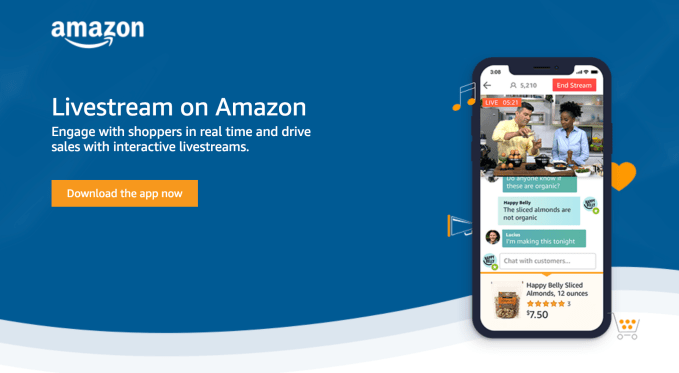
On a website detailing Amazon Live, Amazon touts how live-streaming video can drive sales, allow a brand to interact with their customers in real time — including through chat during the live stream — and reach more shoppers. One early tester, card game maker “Watch Ya’ Mouth,” is quoted saying that live streaming had helped to increase daily visits to its product detail page by 5x and “significantly grew our sales.”

The informational site also points brands to Amazon’s new app for live streaming, Amazon Live Creator.

Available only on iOS, the app allows a brand to stream its video content directly to Amazon.com on desktop, mobile and within the Amazon mobile app. The app supports streaming directly from the smartphone itself or through an encoder using a professional camera.

It also includes built-in analytics so brands can determine how well their stream performed, including things like how much of their budget they’ve spent on “boosting” (a way to pay to reach more shoppers), total views, unmuted views and other metrics.

According to data from Sensor Tower, Amazon Live Creator was released yesterday, on February 7, 2019, and is currently unranked on the App Store. It has no reviews, but has a five-star rating.

Currently, the live-streaming feature is open to U.S. Professional Sellers registered in the Amazon Brand Registry, Amazon’s website says, and live streaming from China and Hong Kong is not supported.


Amazon has been interested in live streaming for some time. The company patented its idea around live video shopping last year and was spotted hiring for its Amazon Live efforts before that.

However, Amazon had claimed at the time that its live-stream shopping experiences were “not new.”

That’s true, given that live streams that would sometimes appear around big sales, like Prime Day, for instance. But Amazon has promoted its live video directly to online shoppers since Style Code Live.

This week’s launch of the Amazon Live app for brands and Amazon’s move to create a dedicated link to the Amazon Live streams on its mobile app indicates that live video is becoming a much bigger effort for the retailer, despite its attempt to shoo this away as “old news.”

This increased focus on live video also comes at a time when Instagram is being rumored to be working on a standalone shopping app, and is heavily pushing its creator-focused IGTV product into users’ home feeds. QVC itself just announced its new identity and plans to venture deeper into e-commerce. And, of course, YouTube has capitalized on how both live and pre-recorded video demos from brands and influencers can help to sell products like makeup, electronics, toys and more.

Amazon formally declined to comment.

08 Feb 2019

One of Tesla’s biggest investors upped its stake by more than $30M

Baillie Gifford & Co., the second-biggest shareholder of Tesla stock, has increased its stake in the electric automaker and energy storage company.

A regulator filing posted Friday shows Baillie increased its stake in Tesla from 7.64 percent at the end of the third quarter to 7.71 percent at the end of the fourth quarter. That doesn’t sound like much, but it translates into Baillie purchasing nearly 109,000 Tesla shares in the fourth quarter. That pencils out to a ballpark of $32 million worth of shares, if based on Friday’s price alone. CNBC was the first to report the filing.

The U.K.-based investment management firm Baillie now owns 13.2 million shares of Tesla stock, according to the regulator filing. That translates to more than $4 billion worth of Tesla, based on the latest share price of $304.26.

Last month, Tesla reported it earned $139 million in the fourth quarter — its second consecutive quarterly profit.

The company managed to string together two profitable periods in a row thanks to sales of the Model 3 and despite several headwinds in the fourth quarter, including a non-cash charge of $54 million attributable to non-controlling interests, higher import duties on components from China, a price reduction for Model S and Model X in China and the introduction of a lower-priced mid-range version of Model 3.

Baillie Gifford is the largest outside shareholder of Tesla stock. CEO Elon Musk, Tesla’s largest shareholder, owns about 20 percent of the company.

Baillie appears to be increasingly interested in electric vehicles. In October, the company took a stake in Nio, the Chinese electric vehicle automaker that recently became a publicly traded company.

Baillie Gifford now owns an 11.44 percent stake in Nio, according to a regulatory filing. The company disclosed that it had purchased 85.3 million shares.

08 Feb 2019

OakNorth raises $440 million from SoftBank and Clermont

British startup OakNorth has raised a $440 million funding round from SoftBank’s Vision Fund as well as the Clermont Group. The company is creating a digital bank and focuses on loans for small and medium enterprises and the technology behind those loans.

Today’s funding round is the biggest funding round in a European fintech company. OakNorth has raised $848 million in primary funding since its creation.

With this funding round, the company plans to double down on what it already does. The company can issue fast and flexible loans to businesses and property developers in the U.K. OakNorth uses big data and machine learning to assess the risks and monitor its portfolio. The company has lent over $3.7 billion overall, and there hasn’t been a single default or late payment.

But that just part of OakNorth’s business. The company also licenses its platform to other institutions. Banks leverage OakNorth Analytical Intelligence platform for their own loan books, from origination to credit analysis and portfolio monitoring. Multiple banks already use it in the U.S., Europe and Asia.

While OakNorth doesn’t provide any current account, individuals and businesses can also open various savings accounts with OakNorth. OakNorth manages 34,000 savings accounts.

The company plans to expand to the U.S. as well. OakNorth doesn’t want to open a bank in the U.S. Instead, the company will focus on partnerships with American banks and loan origination for those banks.

08 Feb 2019

Carbonite to acquire endpoint security company Webroot for $618.5M

Carbonite, the online backup and recovery company based in Boston, announced late yesterday that it will be acquiring Webroot, an endpoint security vendor, for $618.5 million in cash.

The company believes that by combining its cloud backup service with Webroot’s endpoint security tools, it will give customers a more complete solution. Webroot’s history actually predates the cloud, having launched in 1997. The private company reported $250 million in revenue for fiscal 2018, according to data provided by Carbonite . That will combine with Carbonite’s $296.4 million in revenue for the same time period.

Carbonite CEO and president Mohamad Ali saw the deal as a way to expand the Carbonite offering. “With threats like ransomware evolving daily, our customers and partners are increasingly seeking a more comprehensive solution that is both powerful and easy to use. Backup and recovery, combined with endpoint security and threat intelligence, is a differentiated solution that provides one, comprehensive data protection platform,” Ali explained in a statement.

The deal not only enhances Carbonite’s backup offering, it gives the company access to a new set of customers. While Carbonite sells mainly through Value Added Resellers (VARs), Webroot’s customers are mainly 14,000 Managed Service Providers (MSPs). That lack of overlap could increase its market reach through to the MSP channel. Webroot has 300,000 customers, according to Carbonite.

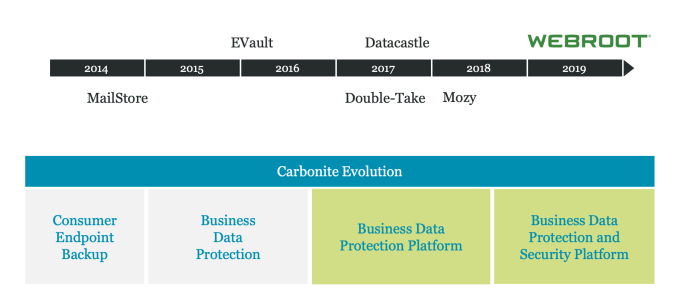
This is not the first Carbonite acquisition. It has acquired several other companies over the last several years, including buying Mozy from Dell a year ago for $145 million. The acquisition strategy is about using its checkbook to expand the capabilities of the platform to offer a more comprehensive set of tools beyond core backup and recovery.

Graphic: Carbonite

The company announced it is using cash on hand and a $550 million loan from Barclays, Citizens Bank and RBC Capital Markets to finance the deal. Per usual, the acquisition will be subject to regulatory approval, but is expected to close this quarter.

08 Feb 2019

Amazon may be rethinking its New York City headquarters

Amazon’s decision to open HQ2 in New York City has been a controversial decision since day one. The company has been championing the estimated 25,000 jobs the move could bring to the metropolitan area, while citizens and local government officials have balked at promised tax breaks and the added strain on housing and an aging infrastructure.

The unexpected friction has apparently been enough to cause Amazon to reconsider its plans for Queens’ Long Island City neighborhood. That’s according to a new report from the Bezos-owned Washington Post.

The paper cites “people familiar with the matter,” including one who stated, anonymously, “The question is whether it’s worth it if the politicians in New York don’t want the project, especially with how people in Virginia and Nashville have been so welcoming.”

After a months-long protracted campaign that had local governments falling over one another to be the site of the company’s second headquarters, Amazon no doubt expected minimal pushback here. And certainly New York City rolled out the red carpet for the company in closed-door meetings — much to chagrin of the city council and high-profile progressive politicians like Alexandria Ocasio-Cortez.

Amazon has experienced much less pushback with its Virginia proposal, while plans to start hiring locally in New York have been delayed as city government reviews the plans and awaits feedback from constituents. 

Update: Amazon has responded with a comment, “We’re focused on engaging with our new neighbors – small business owners, educators, and community leaders. Whether it’s building a pipeline of local jobs through workforce training or funding computer science classes for thousands of New York City students, we are working hard to demonstrate what kind of neighbor we will be.”

08 Feb 2019

Daily Crunch: Bezos accuses National Enquirer of blackmail

The Daily Crunch is TechCrunch’s roundup of our biggest and most important stories. If you’d like to get this delivered to your inbox every day at around 9am Pacific, you can subscribe here:

1. Jeff Bezos accuses National Enquirer of blackmailing him — and publishes the details himself

Amazon CEO Jeff Bezos says he is being blackmailed with nude selfies by AMI, owner of the National Enquirer, over claims the publisher has acted as a political operative. In a Medium post, Bezos described the process by which he has been targeted by AMI.

AMI, meanwhile, says it was engaging in “good faith negotiations.”

2. Apple tells app developers to disclose or remove screen recording code

This follows an investigation by TechCrunch that revealed major companies, like Expedia, Hollister and Hotels.com, were using a third-party analytics tool to record every tap and swipe inside the app.

3. Spotify will now suspend or terminate accounts it finds are using ad blockers

In an email to users, the streaming music and podcast platform said its new user guidelines “mak[e] it clear that all types of ad blockers, bots and fraudulent streaming activities are not permitted.” Accounts that use ad blockers in Spotify face immediate suspension or termination under the new rules, which go into effect on March 1.

4. T-Mobile plans to offer à la carte media subscriptions, but no TV ‘skinny bundle’

The mobile operator’s strategy will focus on helping customers pick and choose which paid TV subscriptions they want to access — a move that very much sounds like T-Mobile is going the “Amazon Channels” route with its mobile streaming plans.

5. Woody Allen just sued Amazon for $68 million

Woody Allen filed a $68 million suit with the Southern District of New York over a four-picture deal with Amazon. The suit arrives as Allen’s latest film, “A Rainy Day in New York,” has been set in limbo, months after completion.

6. Sprint calls AT&T’s 5G E label ‘false advertising’ in new lawsuit

AT&T’s adoption of the “5G Evolution” label has already been controversial among industry followers and fellow carriers alike for watering down the meaning of next-gen connectivity — and now Sprint is looking to do something about it.

7. Subscription startup Scroll acquires news aggregator Nuzzel

Tony Haile, who previously led analytics company Chartbeat, is trying to rethink the business model for news at his new startup, Scroll. Now he’s adding aggregation and curation to the mix with the acquisition of Nuzzel.

08 Feb 2019

Item tracking startup Adero is laying off 45% of staff, just weeks after it pivoted

Pivots can be the making of a startup, helping teams refocus on a good idea when previous things haven’t worked. But sometimes, they are just one more step on a difficult track. TechCrunch has learned and confirmed that Adero — an Amazon-backed maker of Bluetooth-enabled tracking tags that until last December was known as TrackR — is laying off at least 45 percent of its staff. The cuts come as Adero refocuses on building software instead of hardware products, and attempts to build a B2B business that reduces its emphasis on the consumer market, ahead of plans to raise another round of funding.

The layoffs, which started last week, follow a pivot about two months ago from selling individual tracking tags — a business that had become increasingly commoditized — to developing solutions to organise and track groups of items that tend to be used together (such as the contents of a school backpack).

It’s not clear exactly how many employees are being affected, but when the pivot was announced at the end of November, the company had 60 employees, which would work out to 27 employees in this latest cut.

A spokesperson said that layoffs were  being made to put more focus on building software instead of hardware.

“As our new brand grows, we can now move to the next chapter in developing the intelligent organization platform,” he said. “As a result, we’ve parted ways with a portion of the team that was brought on to help design and deliver the consumer product. We will both support the consumer products and focus new energy on developing the platform that powers our consumer products so it can power the experiences of our strategic partners.”

The layoffs and shift at Adero underscore the more general, continuing challenges of building hardware startups. If the product is unique, chances are that the economies of scale to manufacture it will be too capital-intensive for even well-capitalised startups.

But often, the products are just not unique enough. Adero, for example, competes with Tile and a plethora of smaller brands selling tracking dongles are either very similar, or fulfil a similar purpose, and that in turn commoditizes the core product. The mission then becomes building services around the hardware that are in themselves distinctive, or at least trying to be.

“It took a superhuman effort to develop and deliver a new product from scratch — hardware, software, cloud — in nine months,” CEO Nate Kelly wrote in an emailed statement when contacted to provide more detail about the layoffs.

“We threw everything we had into that work and are happy to say that not only did we launch but we have, since launch, delivered two updates to iOS, one to Android and will be delivering… a firmware update that increases the reliability of the product and releases new functionality like removing the limits on the number of taglets.”

Adero’s relaunch in December saw the company building a new line of large and small tags that allowed users to group items that often travelled together to help track them more logically, with plans to add more predictive and other intelligent features over time. “We did more than launch new products, we also built a platform, Activefield, that can scale across many products, many companies and unlimited use cases,” Kelly said.

He added that now the company is trying to work with more (unnamed) strategic partners. That B2B shift also has translated to cutting costs and streamlining particularly in “areas where we had bulked up” to launch the consumer product. “We don’t need that level of support anymore,” he said.

“Now that we’ve launched on our website and on Amazon” — which is an investor in Adero — “we will continue to take our product into other channels and countries, but the push in consumer comes second in focus to the further development of the platform and the deployment into a number of strategic partners,” he said. “This is all very ambitious and we are a small company with limited resources so I’m having to make some changes to the org that makes us leaner and sharpens our focus on deploying our ‘powered by Activefield’ strategy.”

He said that while Adero will continue to support its consumer products, “we hope to come back to you soon to share some good news on partnerships.”

He added that Adero also hoped to have more news of a new round of funding later this quarter. To date, the company has raised about $50 million, but its valuation has yo-yoed from $150 million in August 2017, to just $40 million in July 2018. Investors in the company, in addition to Amazon, include Foundry Group, NTT and Revolution.

While the company would only confirm 45 percent of employees were laid off, our tipsters paint a slightly more dire picture of the company. One tip we received described the layoffs as covering “almost everyone” and another noted that “the majority of the team” at the Santa Barbara-based startup were now gone. “Very few remain to help close the business,” it said.

The news caps off a tricky year for Adero. In January 2018, still branded TrackR, it laid off around 42 employees — at the time just under half its employees. The layoffs came as it was emerging that the startup’s core product, its Bluetooth tag, was becoming increasingly commoditized, with dozens of me-too trackers sold alongside it on Amazon and other marketplaces. (Its biggest rival, Tile, has also seen some big changes and also appears to be shifting its focus to a wider home IoT play.)

Around the time of those layoffs, first one and then both of the company’s founders — Chris Herbert and Christain Smith — stepped away from day-to-day roles at the company. Herbert had been CEO and he was replaced by Kelly, who had been the COO.

Then came the funding round at a big devaluation. “Foundry and Revolution [two of the startup’s investors] were hoping that they would put this money in and I could fix and scale things, similar to how I’d scaled Sonos and so on,” Kelly said about the funding in November (his experience includes Sonos, Tesla and Facebook). “But within six weeks, it became evident that we didn’t need to scale but figure out what the future was and where this is going.”

Where this is going continues to be the question as Adero takes its next steps.

08 Feb 2019

Uber’s JUMP bikes are seeing high utilization rates

In the past year, more than 63,000 people took 625,000 rides on JUMP bikes in San Francisco, JUMP announced today. Each JUMP bike in San Francisco saw an average of seven rides per bike day compared to the docked bike industry average of one to two per day.

JUMP initially launched 250 bikes at the beginning of the year, followed by an additional 250 more in October. While fewer bikes on the road may correlate with the number of rides per bike per day, JUMP says its utilization rate remained consistent at over eight rides per bike per day post-expansion from 250 bikes to 500 bikes.

In San Francisco, there are 1,200 Ford GoBikes with about 5,500 active riders. Last year, Ford GoBikes saw 1.4 million total trips, according to the SFMTA. As of October, on a trip per bike per day basis, Ford GoBikes saw one to two trips per bike while JUMP saw eight to ten per bike per day. On an industry-wide basis, docked systems see an average of one to two rides per bike per day, according to 2017 data from the National Association of City Transportation Officials.

Meanwhile, JUMP rides have continued to decrease the number of Uber rides. In July, Uber reported finding the number of car trips decreasing by 10 percent while trip frequency of JUMP + Uber increased by 15 percent.

“Since that study was released in July, those trends have remained consistent,” JUMP CEO Ryan Rzepecki wrote in a blog post. “As overall engagement (Uber + JUMP) increased, Uber car trips decreased and Uber trips during peak period decreased even more for Uber users who started using JUMP on the Uber app.”

A couple of months ago, JUMP unveiled its next generation of pedal assist bikes featuring 4G capabilities, on-board diagnostics, retractable cable locks and phone mounts.