Author: azeeadmin

09 Feb 2019

What to expect from Mobile World Congress 2019

I’ve said it before, and I’ll say it again: 2019 just might be the year that smartphones get fun again. After years of similar form factors and slight upgrades, the mobile industry’s back is against the wall.

For the first time ever, sales are down, owning to economic factors and slower upgrade cycles. Most people who want good phones have had access to them for a while, and smartphone makers are providing fewer compelling reasons to buy new ones.

With their backs against the wall, handset makers are getting creative. We’ve already seen some early fruits from companies late last year and last month at CES. But MWC is really going to be their time to shine. It’s a much larger mobile show, and all parties know that everyone’s bringing the big guns.

Here’s what we expect to see in Barcelona February 24-28.

Huawei: The company looks to have a lot on tap for the event — in part because the North America-based CES is kind of a non-starter. CEO Richard Yu has hinted at a foldable and a 5G handset — which could well be the same phone. More mainstream are the P30 and P30 Pro. The company’s done a good job keeping it under wraps, but rumors about three or four rear-lenses have made the rounds.

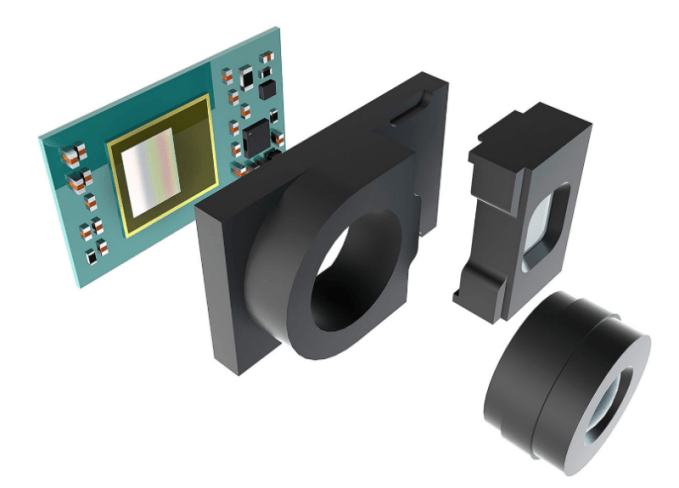
LG: As is its move, LG has already announced the G8 ThinQ. We know that the new flagship will feature a front-facing camera with Time of Flight sensor that brings potential tricks like face unlock, along with AR applications. The V50 is also reportedly on tap, potentially bringing 5G along for the ride.

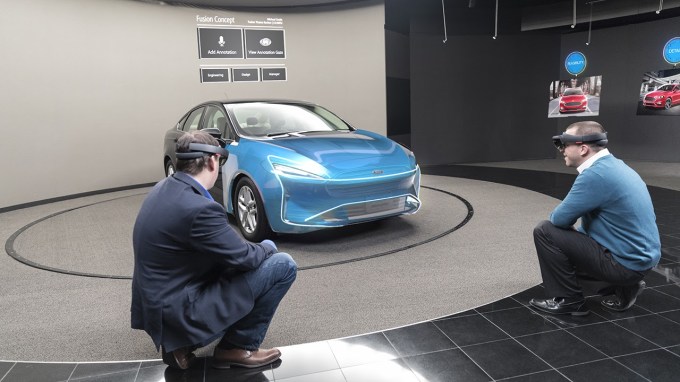
Microsoft: A surprise addition to this year’s show, Microsoft’s already announced an event for February 24, where we expect the company will show off the HoloLens 2. The next-gen version of the headset will arrive as the rest of the hardware and software world is finally ready to embrace augmented reality in earnest.

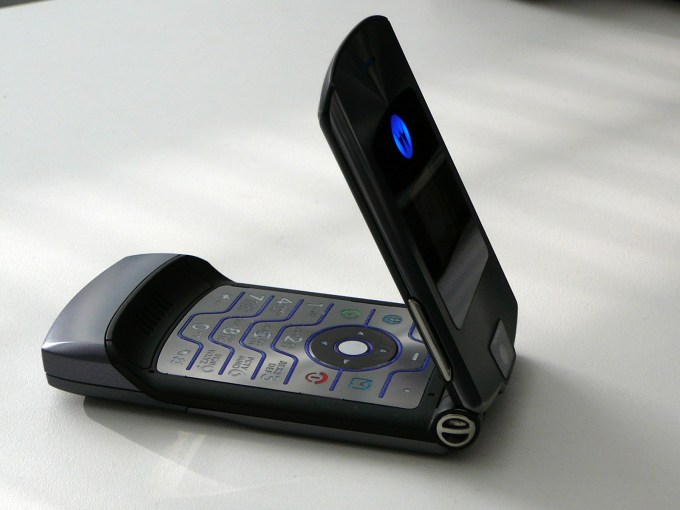
Motorola: The recent launch of the G7 may have taken the wind out of MWC’s sails, but rumors of a foldable Razr reboot are making the rounds.

OnePlus: We know that a 5G handset and the OnePlus 7 are both in the pipeline — and, perhaps, one and the same? There’s also tell of a closed-door event at the show, but most aren’t expecting any big unveils from the company.

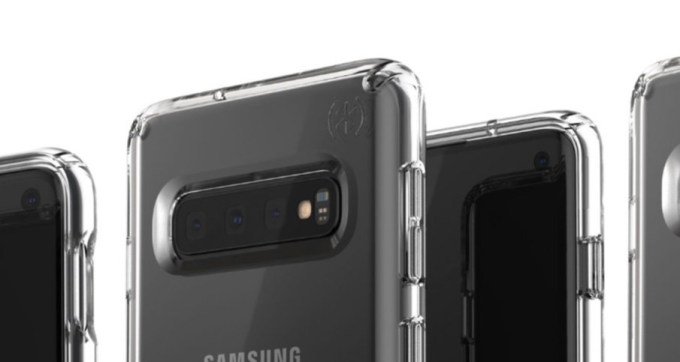
Samsung: Don’t expect a ton out of Samsung this year. The company (inconveniently) is holding its big event a mere days before. Expect the S10 and all its iterations to get a big unveil that week in San Francisco, along with a preview of the company’s upcoming foldable. That doesn’t leave a heck of a lot for MWC, but perhaps we’ll get a peek into the world of wearables or PCs.

Sony: While Xperia phones have long felt like a bit of a loss leader, the electronics giant has always made a big show of launching flagship devices. Those, in turn, have long been a launchpad for some exciting camera tricks. This year, the Xperia XZ4 appears to be on tap for the event. The handset looks to be an interesting one, with a reported 21:9 aspect ratio display and a beefy 4,400 mAh battery.

09 Feb 2019

Netflix reportedly paid $10M for campaign documentary featuring Alexandria Ocasio-Cortez

Freshman Congresswomen and meme queen Alexandria Ocasio-Cortez is headed to Netflix. The streaming service said this week that it has snapped up ‘Knock Down the House,’ a Sundance award-winning documentary profiling the campaigns of four female progressive candidates, including Ocasio-Cortez, in the 2018 midterm election.

The documentary raised money via a Kickstarter campaign last year and it grabbed the Festival Favorite Award at the 2019 Sundance Film Festival, beating 121 other contenders to land the highest number of audience votes.

That acclaim and the rising star of Ocasio-Cortez looks to have made the picture a hot commodity. Deadline reports that Netflix is spending $10 million to secure the film, a price that — if true — would make it the most expensive Sundance documentary deal to date. It apparently beat off competition from NEON, Focus, Hulu and Amazon to land the production, according to Deadline.

‘Knock Down the House’ is produced by New York’s Jubilee Films and it profiles the campaigns of Las Vegas businesswoman Amy Vilela, Saint Louis nurse Cori Bush, coal miner’s daughter Paula Jean Swearengin in West Virginia and New York-based Alexandria Ocasio-Cortez, who worked double shifts at restaurants to pay her family’s bills.

None of the women had previous political experience, but they gained attention after taking on heavyweight incumbents because they believed that the American system needed to change. Of the challengers, only Ocasio-Cortez won the vote and made it to Washington.

“It is a transcendent moment when skilled filmmakers are able to train their lens on a major transformation,” Lisa Nishimura, VP of Original Documentaries for Netflix, said in a statement. “With intimacy and immediacy, [filmmakers] Rachel Lears and Robin Blotnik, bring viewers to the front lines of a movement, as four women find their voice, their power and their purpose, allowing all of us to witness the promise of true democracy in action.”

This is not Netflix’s first major foray into U.S. political programming. The company signed up former U.S. President Barack Obama and his wife Michelle in a production deal announced last year, although the exact content that’ll come from that collaboration is not clear at this point.

“They have their eyes on film and television, fiction and non-fiction. They want to do programming, storytelling that fits in with what they did during the presidency, obviously,” Netflix chief content officer Ted Sarandos said last year, although he did rule out a focus on politics.

Obama was the first guest on David Letterman’s Netflix show and he indirectly features in the company’s catalog under ‘Barry,’ a drama that’s based on his life as a college student.

09 Feb 2019

Ambitious Singapore startup Delegate wants to bring its event booking platform to the US

It’s not often that you hear about a startup from Singapore with ambitions to expand to the U.S, but that’s exactly the goal for event booking service Delegate.

Founded in August 2015, the company aims to be a one-stop shop for booking an event, that covers corporate and professional functions, celebrations like weddings and more personal events such as birthdays or get-togethers.

Beyond the essential step of securing a venue, Delegate’s platform covers a range of different needs that include: food and beverage, photography and videography, flowers and decor, entertainment such as bands, invitation and gifts, event staff, production equipment and transport.

“We saw a huge gap in the market,” co-founders Melissa Lou and Jacqueline Ye, who both worked in the event industry prior to starting Delegate, told TechCrunch in a recent interview. “There was no one resource for finding events and resources.”

The Delegate platform covers venue booking, catering, staffing, entertainment and more.

But, beyond being a booking platform for consumers, Delegate has a smart hook that attracts those on venue and event hosting side. In addition to helping them generate bookings via its sites, Delegate offers a subscription ‘Pro’ product that helps them manage daily operations, generate leads, collect bookings and handle collaborations with others in their supply chain.

There’s also an element of granularity with the consumer side of the business. Delegate has set up options to make the myriads of suppliers, venues and more navigable for less experienced customers. That includes a ‘deals’ section for, well, deals and an inspiration board for the planning process which is itself inspired by Pinterest’s visual approach.

Coming soon, the company hopes to add payment plans to help make it easier to pay for major events, as well as a new offering focused squarely on business users and API integrations for third-party services.

Lou and Ye started the business nearly four years ago with around 100 vendors thanks to their personal and business networks. Today, it claims 1,700 vendors and 70,000 users across Singapore and Hong Kong, its first expansion market.

Delegate co-founders Jacqueline Ye and Melissa Lou (left and right) want to expand their service to the U.S. market.

Already present in two of Asia’s top event locations, where average spend is among the highest for the region. But since those countries are limited in size — Singapore’s population is just shy of six million, Hong Kong’s is around seven million, it makes sense that Delegate is now looking for its next moves. Lou and Ye said they plan to launch the service in “key cities” in Australia and the U.S. to tap what they see as lucrative markets, while Korea and Taiwan are also on the radar closer to home in Asia.

“We see these markets as a good fit for us,” Lou explained. “They have a fair share of corporate events already and, in particular, Australia is a good country because we have a good network there.”

Entering the U.S. might sound implausible to some, but already soft launches of the platform in LA and Austin have drawn interest from over 100 vendors, the Delegate co-founders said. That’s without any major marketing push to either businesses or consumers, and it gives the company optimism. Already the U.S. is a listed location on their service but, for now, there are less than a dozen vendors and there’s no specific location.

Beyond early outreach, the company has raised funds for expansion. Last month, Delegate announced a $1 million pre-Series A round from an undisclosed family office (with apparent links to the event industry) and angel investors who founded Zopim, the Singapore-based startup that sold to Zendesk for around $30 million in 2014.

That network and Saas expertise is likely to help with those ambitious global expansion plans, although Lou and Ye said they aren’t planning to raise their Series A just yet. They say they plan to stretch their runway and keep their costs lean, a practice the founders say they have stuck to since bootstrapping without outside funding for the first year of the business. It’s unlikely bet for most startups in Southeast Asia, but if Delegate can gain even just a small foothold in the U.S, it would be a massive validation of its business model and niche, and no doubt precipitate that larger Series A round.

09 Feb 2019

Startup names may have passed peak weirdness

For years, decades even, startup names have been getting weirder. This isn’t a scientific verdict, but it is how things have seemed to someone who spends a lot of hours perusing this stuff.

Startups have had a long run of branding themselves with creative misspellings, animal names. human first names, made-up words, adverbs and other odd collections of letters. It’s gone on so long it now seems normal. Names like Google, Airbnb and Hulu, which sounded strange at first, are now part of our everyday vocabulary.

Over the past few quarters, however, a peculiar thing has been happening: Startup founders are choosing more conventional-sounding names.

“As we reach the edge of strangeness… they’re saying: ‘It’s too weird. I’m uncomfortable,’” said Athol Foden, president of Brighter Naming, a naming consultancy. While quirky startup monikers haven’t gone away, founders are increasingly comfortable with less-unusual-sounding choices.

Foden’s observations are reflected in our annual Crunchbase News survey of startup naming trends. We’re seeing a proliferation of startups choosing simple words that describe their businesses, including companies like Hitch, an app for long-distance car rides; Duffel, a trip-booking startup named after the popular travel bag; and Coder, a software development platform.

But fortunately for fans of offbeat names, the trend is only toward less weirdness, not no weirdness. Those who wish to patronage seed-stage startups can still buy tampons from Aunt Flow, get parenting tips from an app called Mush or get insurance from a startup called Marshmallow.

Below, we look in more detail at some of the more popular startup naming practices and how they are trending.

Creativv misPelling5

For a long time, it seemed like a vast number of startups selected names largely by disabling the spell checker.

Most desirable dictionary words were already in use as domains or too pricey to acquire. So founders took to dropping vowels, subbing a “y” for an “i” or adding an extra consonant to make it work. The strategy worked well for a lot of well-known companies, including Lyft, Tumblr, Digg, Flickr, Grindr and Scribd.

These days, creative misspellings are still pretty common among early-stage founders. Our name survey unearthed a big number (see partial list) that recently raised funding, including Houwser, an upstart real estate brokerage; Swytch, developer of a kit for converting bikes to e-bikes; and Wurk, a provider of human resources and compliance software for the cannabis industry.

However, creative misspellings are getting less popular, Foden said. Early-stage founders are turned off by the prospect of having to spell out their names to people unfamiliar with the brand (which for seed-stage companies includes pretty much everyone).

Puns

One of the more fun naming styles is the pun. In our perusal of companies that raised seed funding in the past year, we came across a number of startups employing some sort of play-on words.

We put together a list of seven of the punniest names here. In addition to Aunt Flow, the list includes WeeCare, a network of daycare providers, and Serial Box, a digital content producer. Crunchbase News also created its own fictional startup — drone chicken delivery startup Internet of Wings — in an explainer series on startup funding.

Perhaps some day business naming will harken back to the industrial age, when corporate titans had exceedingly boring and obvious names.

Real companies with pun names that have matured to exit were harder to pinpoint. A couple that have gone public are Groupon and MedMen, a cannabis company that went public in Canada and is valued around CA$2 billion.

For some reason, it appears pun names are more popular in the brick-and-mortar world than the tech startup sphere. Restaurants specializing in the Vietnamese noodle soup Pho have dozens of play-on-word names memorialized in lists like this. Ditto for pet stores.

Personally, I’d like to see more internet startups rolling out pun-based names. Foden would, too, and he has even volunteered one suggestion for someone who wants to start a business applying artificial intelligence to artificial insemination: Ai.ai.

Made-up words that sound real

There are more than 170,000 non-obsolete words in the English language, per the Oxford English Dictionary. Startups, however, are convinced we need more.

Hence, one of the more enduringly popular business-naming practices is to come up with something that sounds like an actual word, even if it isn’t.

We put together a list of examples of this naming style among recently seed-funded startups.

It includes Trustology, which is building a platform to safeguard crypto assets; Invocable, a developer of voice design tools for Alexa apps; and Locomation, which focuses on autonomous trucking technology.

Naming advisors like to see the made-up word name trend on the rise, Foden said, because it’s the kind of thing companies pay a consultant to figure out. Another advantage is it’s easier to top search results for a made-up word.

Normal-sounding names

Lastly, let’s look at those rebel startups choosing familiar dictionary words for their names.

We put together a list of some here. Besides the aforementioned Duffel, Hitch and Coder, there’s Decent, a healthcare startup; Chief, a women’s networking group; Journal, a note organizing tool; and many more.

Startups are less concerned than they used to be with snagging a dot-com domain that contains just their name. Commonly, they’ll add a prefix to their domain (joinchief.com, usejournal.com), choose an alternate domain (Hitch.net) or both.

Overall, Foden said, startups today are putting less emphasis on securing a dot-com suffix or an exact domain name match. Google parent Alphabet, in particular, made the alternate domain idea more palatable. It helped to see one of the world’s richest corporations forego Alphabet.com in favor of abc.xyz.

Where is it all going?

They say history repeats itself. If so, perhaps some day business naming will harken back to the industrial age, when corporate titans had exceedingly boring and obvious names like Standard Oil, U.S. Steel and General Electric.

For now, however, we live in era in which the most valuable companies have names like Google and Facebook. And to us, they sound perfectly normal.

Methodology: For the naming data set, we looked primarily at companies in English-speaking countries that raised seed funding after 2018. To broaden the potential list of names, we also included some companies funded in 2017. We also tried to limit the lists, where possible to companies founded in the past three years, although there were occasional exceptions.

09 Feb 2019

Startups Weekly: Spotify gets acquisitive and Instacart screws up

Did anyone else listen to season one of StartUp, Alex Blumberg’s OG Gimlet podcast? I did, and I felt like a proud mom this week reading stories of the major, first-of-its-kind Spotify acquisition of his podcast production company, Gimlet. Spotify also bought Anchor, a podcast monetization platform, signaling a new era for the podcasting industry.

On top of that, Himalaya, a free podcast app I’d never heard of until this week, raised a whopping $100 million in venture capital funding to “establish itself as a new force in the podcast distribution space,” per Variety.

The podcasting business definitely took center stage, but Lime and Bird made headlines, as usual, a new unicorn emerged in the mental health space and Instacart, it turns out, has been screwing its independent contractors.

As mentioned, Spotify, or shall we say Spodify, gobbled up Gimlet and Anchor. More on that here and a full analysis of the deal here. Key takeaway: it’s the dawn of podcasting; expect a whole lot more venture investment and M&A activity in the next few years.

This week’s biggest “yikes” moment was when reports emerged that Instacart was offsetting its wages with tips from customers. An independent contractor has filed a class-action lawsuit against the food delivery business, claiming it “intentionally and maliciously misappropriated gratuities in order to pay plaintiff’s wages even though Instacart maintained that 100 percent of customer tips went directly to shoppers.” TechCrunch’s Megan Rose Dickey has the full story here, as well as Instacart CEO’s apology here.

Slack confidentially filed to go public this week, its first public step toward either an IPO or a direct listing. If it chooses the latter, like Spotify did in 2018, it won’t issue any new shares. Instead, it will sell existing shares held by insiders, employees and investors, a move that will allow it to bypass a roadshow and some of Wall Street’s exorbitant IPO fees. Postmates confidentially filed, too. The 8-year-old company has tapped JPMorgan Chase and Bank of America to lead its upcoming float.

Reddit CEO Steve Huffman delivers remarks on “Redesigning Reddit” during the third day of Web Summit in Altice Arena on November 08, 2017 in Lisbon, Portugal. (Horacio Villalobos-Corbis/Contributor)

It was particularly tough to decide which deal was the most notable this week… But the winner is Reddit, the online platform for chit-chatting about niche topics — r/ProgMetal if you’re Crunchbase editor Alex Wilhelm . The company is raising up to $300 million at a $3 billion valuation, according to TechCrunch’s Josh Constine. Reddit has been around since 2005 and has raised a total of $250 million in equity funding. The forthcoming Series D round is said to be led by Chinese tech giant Tencent at a $2.7 billion pre-money valuation.

Runner up for deal of the week is Calm, the app that helps users reduce anxiety, sleep better and feel happier. The startup brought in an $88 million Series B at a $1 billion valuation. With 40 million downloads worldwide and more than one million paying subscribers, the company says it quadrupled revenue in 2018 from $20 million to $80 million and is now profitable — not a word you hear every day in Silicon Valley.

Here’s your weekly reminder to send me tips, suggestions and more to kate.clark@techcrunch.com or @KateClarkTweets

I listened to the Bird CEO’s chat with Upfront Ventures’ Mark Suster last week and wrote down some key takeaways, including the challenges of seasonality and safety in the scooter business. I also wrote about an investigation by Consumer Reports that found electric scooters to be the cause of more than 1,500 accidents in the U.S. I’m also required to mention that e-scooter unicorn Lime finally closed its highly anticipated round at a $2.4 billion valuation. The news came just a few days after the company beefed up its executive team with a CTO and CMO hire.

Databricks raises $250M at a $2.75B valuation for its analytics platform
Retail technology platform Relex raises $200M from TCV
Raisin raises $114M for its pan-European marketplace for savings and investment products
Self-driving truck startup Ike raises $52M
Signal Sciences secures $35M to protect web apps
Ritual raises $25M for its subscription-based women’s daily vitamin
Little Spoon gets $7M for its organic baby food delivery service
By Humankind picks up $4M to rid your morning routine of single-use plastic

We don’t spend a ton of time talking about the growing, venture-funded, tech-enabled logistics sector, but one startup in the space garnered significant attention this week. Turvo poached three key Uber Freight employees, including two of the unit’s co-founders. What’s that mean for Uber Freight? Well, probably not a ton… Based on my conversation with Turvo’s newest employees, Uber Freight is a rocket ship waiting to take off.

Who knew that investing in female-focused brands could turn a profit for investors? Just kidding, I knew that and this week I have even more proof! This is L., a direct-to-consumer, subscription-based retailer of pads, tampons and condoms made with organic materials sold to P&G for $100 million. The company, founded by Talia Frenkel, launched out of Y Combinator in August 2015. According to PitchBook, it was backed by Halogen Ventures, 500 Startups, Fusion Fund and a few others.

Speaking of ladies getting stuff done, Bessemer Venture Partners promoted Talia Goldberg to partner this week, making the 28-year-old one of the youngest investing partners at the Silicon Valley venture fund. Plus, Palo Alto’s Eclipse Ventures, hot off the heels of a $500 million fundraise, added two general partners: former Flex CEO Mike McNamara and former Global Foundries CEO Sanjay Jha.

If you enjoy this newsletter, be sure to check out TechCrunch’s venture-focused podcast, Equity. In this week’s episode, available here, Crunchbase editor-in-chief Alex Wilhelm and I chat about the expanding podcast industry, Reddit’s big round and scooter accidents.

Want more TechCrunch newsletters? Sign up here.

09 Feb 2019

Feel the beep: This album is played entirely on a PC motherboard speaker

If you’re craving a truly different sound with which to slay the crew this weekend, look no further than System Beeps, a new album by shiru8bit — though you may have to drag your old 486 out of storage to play it. Yes, this album runs in MS-DOS and its music is produced entirely through the PC speaker — you know, the one that can only beep.

Now, chiptunes aren’t anything new. But the more popular ones tend to imitate the sounds found in classic computers and consoles like the Amiga and SNES. It’s just limiting enough to make it fun, and of course many of us have a lot of nostalgia for the music from that period. (The Final Fantasy VI opening theme still gives me chills.)

But fewer among us look back fondly on the days before sample-based digital music, before even decent sound cards let games have meaningful polyphony and such. The days when the only thing your computer could do was beep, and when it did, you were scared.

Shiru, a programmer and musician who’s been doing “retro” sound since before it was retro, took it upon himself to make some music for this extremely limited audio platform. Originally he was just planning on making a couple of tunes for a game project, but in this interesting breakdown of how he made the music, he explains that it ended up ballooning as he got into the tech.

“A few songs became a few dozens, collection of random songs evolved into conceptualized album, plans has been changing, deadlines postponing. It ended up to be almost 1.5 years to finish the project,” he writes (I’ve left his English as I found it, because I like it).

Obviously the speaker can do more than just “beep,” though indeed it was originally meant as the most elementary auditory feedback for early PCs. In fact, the tiny loudspeaker is capable of a range of sounds and can be updated 120 times per second, but in true monophonic style can only produce a single tone at a time between 100 and 2,000 Hz, and that in a square wave.

Inspired by games of the era that employed a variety of tricks to create the illusion of multiple instruments and drums that in fact never actually overlap one another, he produced a whole album of tracks; I think “Pixel Rain” is my favorite, but “Head Step” is pretty dope too.

You can of course listen to it online or as MP3s or whatever, but the entire thing fits into a 42 kilobyte MS-DOS program you can download here. You’ll need an actual DOS machine or emulator to run it, naturally.

How was he able to do this with such limited tools? Again I direct you to his lengthy write-up, where he describes, for instance, how to create the impression of different kinds of drums when the hardware is incapable of the white noise usually used to create them (and if it could, it would be unable to layer it over a tone). It’s a fun read and the music is… well, it’s an acquired taste, but it’s original and weird. And it’s Friday.

08 Feb 2019

Transportation Weekly: Amazon’s secret acquisition and all the AV feels

Welcome to Transportation Weekly; I’m your host Kirsten Korosec, senior transportation reporter at TechCrunch. I cover all the ways people and goods move from Point A to Point B — today and in the future — whether it’s by bike, bus, scooter, car, train, truck, robotaxi or rocket. Sure, let’s include hyperloop and eVTOLs, or air taxis, too.

Yup, another transportation newsletter. But I promise this one will be different. Here’s how.

Newsletters can be great mediums for curated news — a place that rounds up all the important articles a reader might have missed in any given week. We want to do a bit more.

We’re doubling down on the analysis and adding a heaping scoop of original reporting and well, scoops. You can expect Q&As with the most interesting people in transportation, insider tips, and data from that white paper you didn’t have time to read. This isn’t a lone effort either. TechCrunch senior reporter Megan Rose Dickey, who has been writing about micro mobility since before the scooter boom times of 2017, will be weighing in each week in our “Tiny But Mighty Mobility” section below. Follow her @meganrosedickey.

Consider this a soft launch. There might be content you like or something you hate. Feel free to reach out to me at kirsten.korosec@techcrunch.com to share those thoughts, opinions, or tips.

Eventually, we’ll have a way for readers to sign up and have Transportation Weekly delivered each week via email. For now, follow me on Twitter @kirstenkorosec to ensure you see it each week.

Now, let’s get to the good stuff.


ONM …

There are OEMs in the automotive world. And here, (wait for it) there are ONMs — original news manufacturers.


This is where investigative reporting, enterprise pieces and analysis on transportation will live.

We promised scoops in Transportation Weekly and here is one. If you don’t know journalist Mark Harris, you should. He’s an intrepid gumshoeing reporter who TechCrunch has been lucky enough to hire as a freelancer. Follow him @meharris.

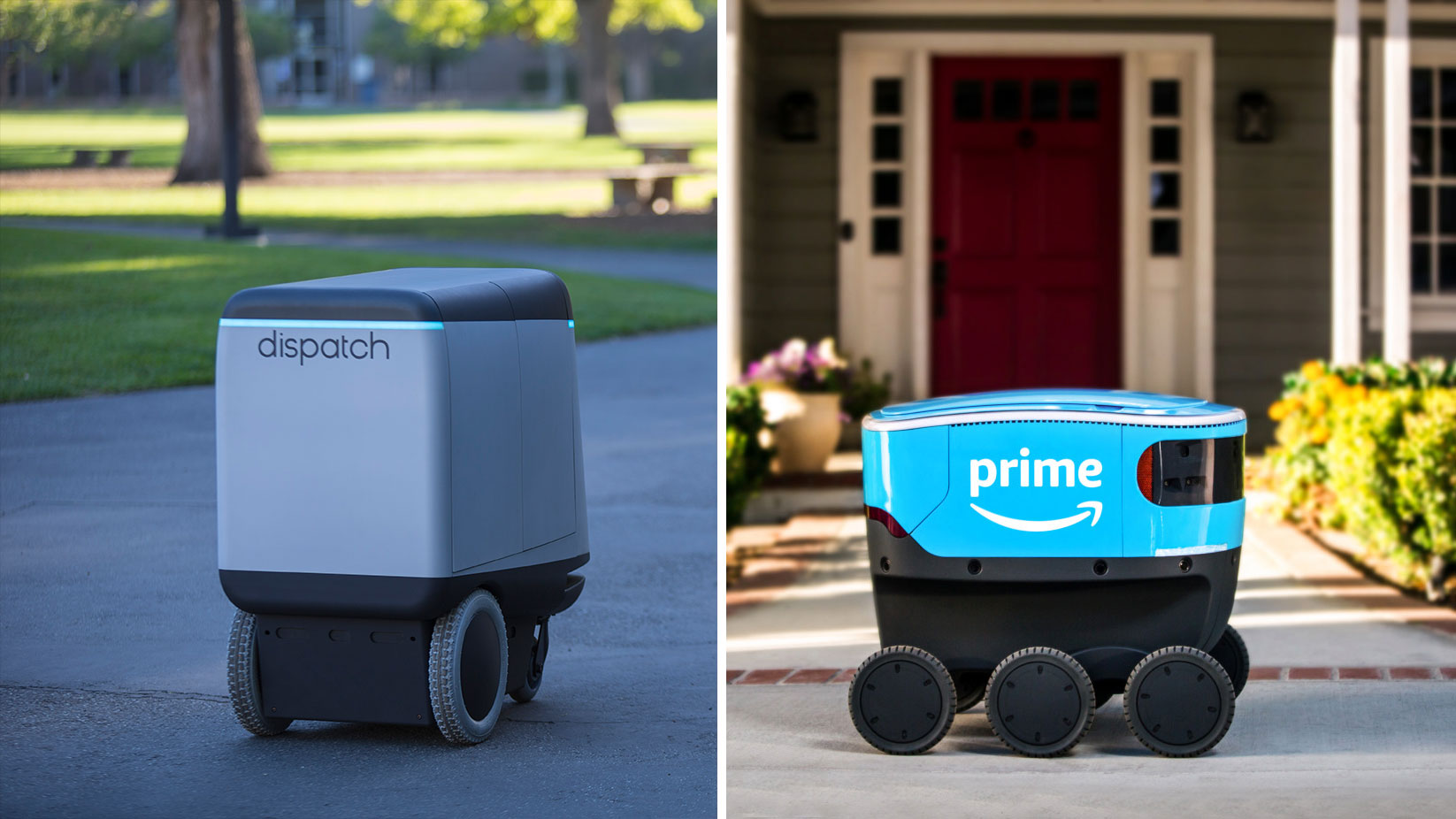
Amazon quietly acquired robotics company Dispatch to build Scout

dispatch-amazon-scout
Remember way back in January when Amazon introduced Scout, their autonomous delivery bot? There was speculation at the time that Amazon had bought the Estonian-based company Starship Technologies. Harris did some investigating and discovered some of the intellectual property and technology behind Scout likely came from a small San Francisco startup called Dispatch that Amazon stealthily acquired in 2017.

It’s time to stop thinking about Amazon as just an e-commerce company. It’s a gigantic logistics company, probably the biggest on the planet, with a keen interest — and the cash to pursue those interests — in automation. Think beyond Scout. In fact, wander on down this post to the deal of the week.


Dig In

Each week, transportation weekly will spend a little extra time on an approach, policy, tech or the people behind it in our ‘Dig In” section. We’ll run the occasional column here, too.

This week features a conversation with Dmitri Dolgov, the CTO and VP of engineering at Waymo, the former Google self-driving project that spun out to become a business under Alphabet.

waymo-google-10-years

Ten years ago, right around now, about a dozen engineers started working on Project Chauffeur, which would turn into the Google self-driving project and eventually become an official company called Waymo. Along the way, the project would give rise to a number of high-profile engineers who would go on to create their own companies. It’s a list that includes Aurora co-founder Chris Urmson, Argo AI co-founder Bryan Salesky and Anthony Levandowski, who helped launch Otto and more recently Pronto.ai.

What might be less known is that many of those in the original dozen are still at Waymo, including Dolgov, Andrew Chatham, Dirk Haehnel, Nathaniel Fairfield and Mike Montemerlo.

Dolgov and I talked about the early days, challenges and what’s next. A couple of things that stood out during our chat.

There is a huge difference between having a prototype that can do something once or twice or four times versus building a product that people can start using in their daily lives. And it is, especially in this field, very easy to make progress on these kinds of one-off challenges.

Dolgov’s take on how engineers viewed the potential of the project 10 years ago …

I also use our cars every day to get around, this is how I got to work today. This is how I run errands around here in Mountain View and Palo Alto.


A little bird …

We hear a lot. But we’re not selfish. Let’s share.
blinky-cat-birdAn early investor, or investors, in Bird appear to be selling some of their shares in the scooter company, per a tip backed up by data over at secondary trading platform EquityZen. That’s not crazy considering the company is valued at $2 billion-ish. Seed investors should take some money off the table once a company reaches that valuation.

We’ve heard that David Sacks at Craft Ventures hasn’t sold a single Bird share. We hear Tusk Ventures hasn’t sold, either. That leaves a few others, including Goldcrest Capital, which was the lone seed investor, and then Series A participants Lead Edge Capital, M13, and Valor Equity Partners.

Got a tip or overheard something in the world of transportation? Email me or send a direct message to @kirstenkorosec.

While you’re over at Twitter, check out this cheeky account @SDElevator. We can’t guarantee how much of the content is actually “overheard” and how much is manufactured for the laughs, but it’s a fun account to peruse from time to time.

Another new entrant to the mobility parody genre is @HeardinMobilty.


Deal of the week

There’s so much to choose from this week, but Aurora’s more than $530 million Series B funding round announced Thursday morning is the winner.

The upshot? It’s not just that Aurora is now valued at more than $2.5 billion. The primary investors in the round — Sequoia as lead and “significant” investments from Amazon and T. Rowe Price — suggests Aurora’s full self-driving stack is headed for other uses beyond shuttling people around in autonomous vehicles. Perhaps delivery is next.

And believe it or not, the type of investor in this round tells me that we can expect another capital raise. Yes, Aurora has lots of runway now as well as three publicly named customers. But investors like Sequoia, which led the round and whose partner Carl Eschenbach is joining Aurora’s board, T. Rowe Price and Amazon along with repeaters like Index Ventures (general partner Mike Volpi is also on the board) have patience, access to cash and long-term strategic thinking. Expect more from them.

Other deals that got our attention this week:


Snapshot

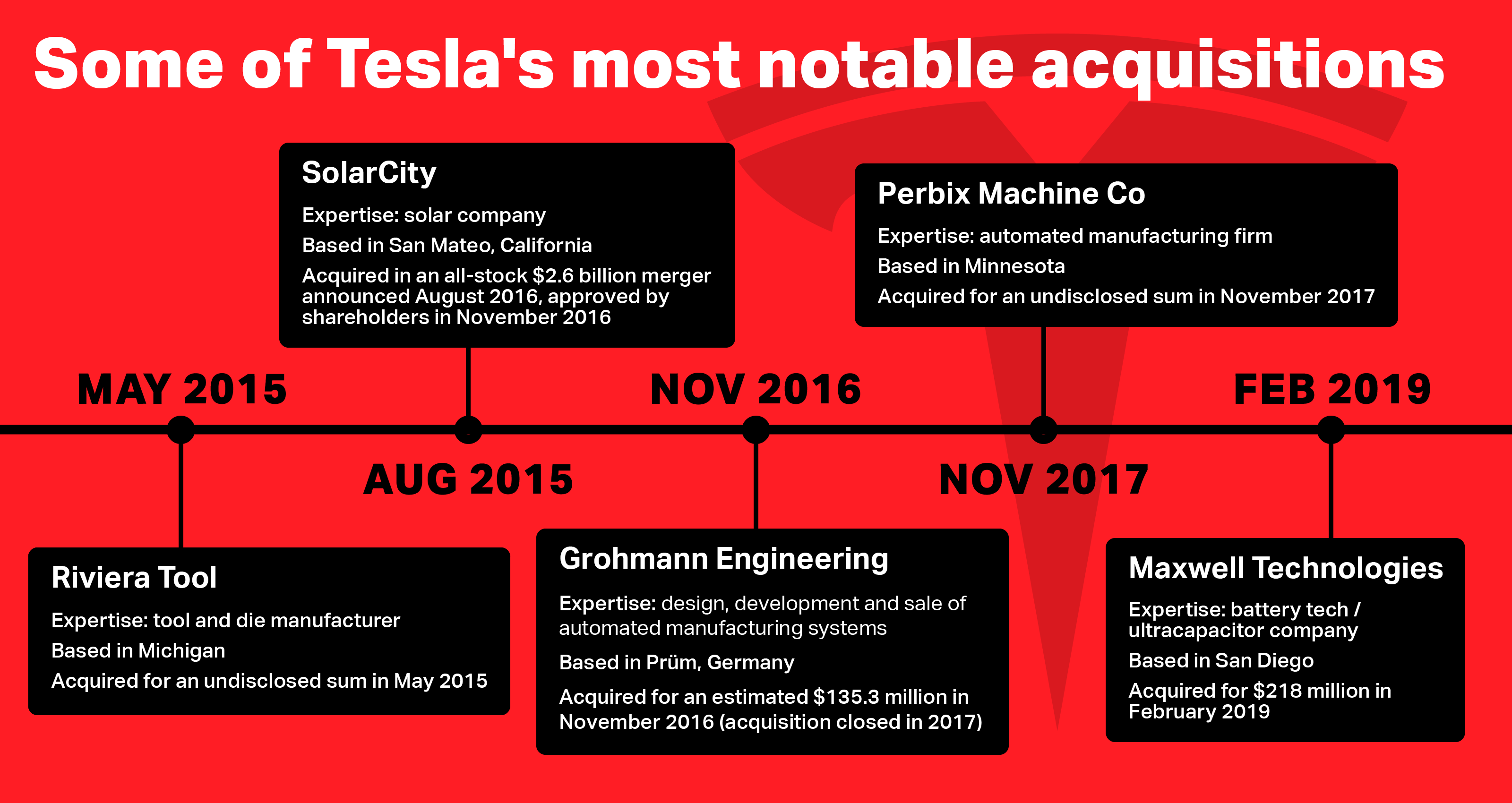
Speaking of deals and Tesla … the automaker’s $218 million acquisition this month of Maxwell Technologies got me thinking about companies it has targeted in the past.

So, we went ahead and built a handy chart to provide a snapshot view of some of Tesla’s noteworthy acquisitions. tesla-acquisitions-chart1

One note: Tesla CEO Elon Musk tweeted in 2018 that the company had acquired trucking carrier companies to help improve its delivery logistics. We’ve dug in and have yet to land on the company, or companies, Tesla acquired.

The deals that got away are just as interesting. That list includes a reported $325 million offer to buy Simbol Materials, the startup that was extracting small amounts of lithium near the Salton Sea east of San Diego.


Tiny but mighty mobility

Between Lime’s $310 million Series D round and the seemingly never-ending battle to operate electric scooters in San Francisco, it’s clear that micro mobility is not so micro.

Lime, a shared electric scooter and bikeshare startup, has now raised north of $800 million in total funding, surpassing key competitor Bird’s total funding of $415 million. Thanks to this week’s round of funding, Lime’s micromobility business is now worth $2.4 billion.

Lime currently operates its bikes and scooters in more than 100 cities worldwide. Over in San Francisco, however, Lime has yet to deploy any of its modes of transportation. Since last March, there’s been an ongoing battle among scooter operators to deploy their services in the city. The city ultimately selected Skip and Scoot for the pilot programs, leaving the likes of Lime, Uber’s JUMP and Spin to appeal the decision.

A neutral hearing officer has since determined SF’s process for determining scooter operators was fair, but the silver lining for the likes of JUMP, Spin and most likely, Lime, is that the city may open up its pilot program to allow additional operators beginning in April.


Notable reads

Two recent studies got my attention.

The first is from Bike Pittsburgh, an advocacy group and partner of Uber, that published the findings from its latest AV survey based on responses from local residents. The last time they conducted a similar survey was in 2017.

The takeaway: people there, who are among the most exposed to autonomous vehicles due to all the AV testing on public roads, are getting used to it. A bit more than 48 percent of respondents said they approve of public AV testing in Pittsburgh, down slightly from 49 percent approval rating in 2017. 

  • 21.21% somewhat approve
  • 11.62% neutral
  • 10.73% somewhat disapprove
  • 8.73% disapprove

One standout result was surrounding responses about the fatal accident in Tempe, Arizona involving a self-driving Uber that struck and killed pedestrian Elaine Herzberg in March 2018. Survey participants were asked “As a pedestrian or a bicyclist how did this change event and it’s outcome change your opinion about sharing the road with AVs?”

Some 60 percent of respondents claimed no change in their opinion, with another 37 percent claiming that it negatively changed their opinion. Nearly 3 percent claimed their opinion changed positively toward the technology.

Bike Pittsburgh noted that the survey elicited passionate open-ended responses. 

“The incident did not turn too many people off of AV technology in general,” according to Bike Pittsburgh. “Rather it did lead to a growing distrust of the companies themselves, specifically with Uber and how they handled the fatality.”

The other study, Securing the Modern Vehicle: A Study of Automotive Industry Cybersecurity Practices, was released by Synopsys, Inc.and SAE International.

The results, based on a survey of global automotive manufacturers and suppliers conducted by Ponemon Institute, doesn’t assuage my concerns. If anything, it puts me on alert.

  • 84% of automotive professionals have concerns that their organizations’ cybersecurity practices are not keeping pace with evolving technologies
  • 30% of organizations don’t have an established cybersecurity program or team
  • 63% test less than half of the automotive technology they develop for security vulnerabilities.

Testing and deployments

Pilots, pilots everywhere. A couple of interesting mobility pilots and deployments stand out.

Optimus Ride, the Boston-based MIT spinoff, has made a deal with Brookfield Properties to provide rides in its small self-driving vehicles at Halley Rise – a new $1.4 billion mixed-use development in Virginia. 

This is an example of where we see self-driving vehicles headed — for now. Small deployments that are narrowly focused in geography with a predictable customer base are the emerging trend of 2019. Expect more of them.

And there’s a reason why, these are the kinds of pilots that will deliver the data needed to improve their technology, as well as test out business models —gotta figure out how to money with AVs eventually — hone in fleet operational efficiency, placate existing investors while attracting new ones, and recruit talent.

Another deployment in the more conventional ride-hailing side of mobility is with Beat, the startup that has focused its efforts on Latin America.

Beat was founded by Nikos Drandakis in 2011 initially as Taxibeat. The startup acquired by Daimler’s mytaxi in February 2017 and Drandakis still runs the show. The company was focused on Europe but shifted to Latin America, and it’s made all the difference. (Beat is still available in Athens, Greece.) Beat has launched in Lima, Peru, Santiago, Chile and Bogota, Colombia and now boasts 200,000 registered drivers. 

Now it’s moving into Mexico, where more competitors exist. The company just started registering and screening drivers in Mexico City as it prepares to offer rides for passengers this month. 

TechCrunch spoke at length with Drandakis. Look out for a deeper dive soon.

Until next week, nos vemos.

08 Feb 2019

Waymo CTO on the company’s past, present and what comes next

A decade ago, about a dozen or so engineers gathered at Google’s main Mountain View campus on Charleston Road to work on Project Chauffeur, a secret endeavor housed under the tech giant’s moonshot factory X.

Project Chauffeur — popularly know as the “Google self-driving car project” — kicked off in January 2009. It would eventually graduate from its project status to become a standalone company called Waymo in 2016.

The project, originally led by Sebastian Thrun, would help spark an entire ecosystem that is still developing today. Venture capitalists took notice and stampeded in, auto analysts shifted gears, regulators, urban planners and policy wonks started collecting data and considering the impact of AVs on cities.

The project would also become a springboard for a number of engineers who would go on to create their own companies. It’s a list that includes Aurora  co-founder Chris Urmson,  Argo AI co-founder Bryan Salesky as well as Anthony Levandowski, who helped launch Otto and more recently Pronto.ai.

What might be less known is that many who joined in those first weeks are still at Waymo, including Andrew Chatham, Dmitri Dolgov, Dirk Haehnel, Nathaniel Fairfield and Mike Montemerlo. Depending on how one defines “early days,” there are others like Hy Murveit, Phil Nemec, and Dan Egnor, who have been there for eight or nine years.

Dolgov, Waymo’s CTO and VP of engineering, chatted recently with TechCrunch about the early days, its 10-year anniversary, and what’s next.

Below is an excerpt of an interview with Dolgov, which has been edited for clarity and length.

TC: Let’s go back to the beginning of how you got started. Take me to those first days at the Google self-driving project.

DOLGOV: When I think about what drew me to this field, it’s always been three main things: the impact of the technology, the technology itself, and the challenges as well as the people you get to work with. It’s pretty obvious, at this point, that it can have huge implications on safety, but beyond that, it can impact efficiency and remove friction from transportation for people and things.

There is this sense of excitement that never seems to die off. I remember the first time I got to work on a self-driving car. And it was the first time when the car drove itself using software that I had written, you know, just earlier in the day. So this was back in 2007. And that completely blew my mind. (Dolgov participated in the DARPA Urban Challenge in November 2007 before the Google project launched)

TC: What were these 10, 100-mile challenges that (Google co-founder) Larry Page came up with? Can you describe that to me a little bit?

DOLGOV: This was probably the main milestone that we created for ourselves when we started this project at Google in 2009. And the challenge was to drive 10 routes, each one was 100 miles long. And you had to drive each one from beginning to end without any human intervention.

These were really well defined very clearly, crisply defined routes. So in the beginning, you’d engage the self driving mode of a car, and then had to finish the whole 100 miles on its own.

The routes were intentionally chosen to sample the full complexity of the task. In those early days, for us, it was all about understanding the complexity of the problem. All of the routes were in the Bay Area. We had some driving in urban environments, around Palo Alto,  we had one that spent a lot of time on the freeways and went to all of the bridges in the Bay Area. We had one that went from Mountain View to San Francisco, including driving through Lombard Street. We had one that went around Lake Tahoe.

We tried to cover as much of the complexity of the environment as possible. And what’s really great about that task is that it really helped us very quickly understand the core complexity of the space.

TC: How long did it take to complete these challenges?

DMITRI: It took us until the fall of 2010.

TC: It’s kind of amazing to think that the project was able to complete these challenges in 2010, and yet, there still seems to be so much more work to complete on this task.

DOLGOV: Right. But I think this is the nature of the problem. There is a huge difference between having a prototype that can do something once or twice or a handful of times versus building a product that people can start using in their daily lives. And it is, especially in this field, when we started, it’s very easy to make progress on these kinds of one-off challenges.

But what really makes it hard is an incredible level of performance that you need from your system in order to make it into a product. And that’s number one. And number two, is the very long tail of complexity of the types of problems that you encounter. Maybe you don’t see them 99% of the time, but you still have to be ready for that 1% or 1.1%.

TC:  When you think back to those early days — or maybe even more recently — was there ever a moment when where there was a software problem, or even a hardware problem that seemed insurmountable and that maybe the tech just wasn’t quite there yet?

DOLGOV: In the early days, we had all kinds of problems that we faced. In the early history of this project, we only set out to solve some problems without really knowing how we were going to get there.

You start working on the problem, and you make progress towards this. Thinking back to how these past few years have felt to me: It’s been much less of a here’s one problem, or a small number of really hard problems and we kind of hit a wall.

Instead, it’s been more like hundreds of really hard problems. None of them feel like a brick wall because, you know, the team is amazing, the technology is really powerful, and you make progress on them.

But you’re always juggling like, hundreds of these types of really complex problems, where the further you get into solving each one of them, the more you realize just how hard it really is.

So it’s been a really interesting mix: on one hand, the problem getting more difficult, the more you learn about it. But on the other hand, technology making more rapid progress and breakthroughs happening at a higher rate than you would have originally anticipated.

TC: When did you realize that this project had changed (beyond the official announcements)? When did you realize it could be a business, that it was something that could be a lot more than just solving this problem?

DOLGOV: I would describe it as more of an evolution of our thinking and investing more effort into more clearly defining the product and commercial applications of this technology.

When we started, in that very first phase, the question was, “is this even feasible? Is technology going to work?” I think it was pretty clear to everybody that if the technology succeeded then there was going to be tremendous impact.

It wasn’t exactly clear what commercial application or what product would deliver that impact. But there was just so many ways that this technology would transform the world that we didn’t spend much time worrying about that aspect of it.

When you think about it, what we’re building here is a driver: our software, our hardware —the software that runs in the car, the software that runs in the cloud. We look at the entirety of our technology stack as a driver.

There are about 3 trillion miles in the U.S. that are driven by people. In some cases, they drive themselves, in some cases, they drive other people, in some cases, they drive goods. Once you have the technology that is “the driver,” you can deploy it in all these situations. But they have their pros and cons.

Over time, our thinking on ‘what are the most attractive ones?’ and ‘in what order do we tackle them?’ has matured.

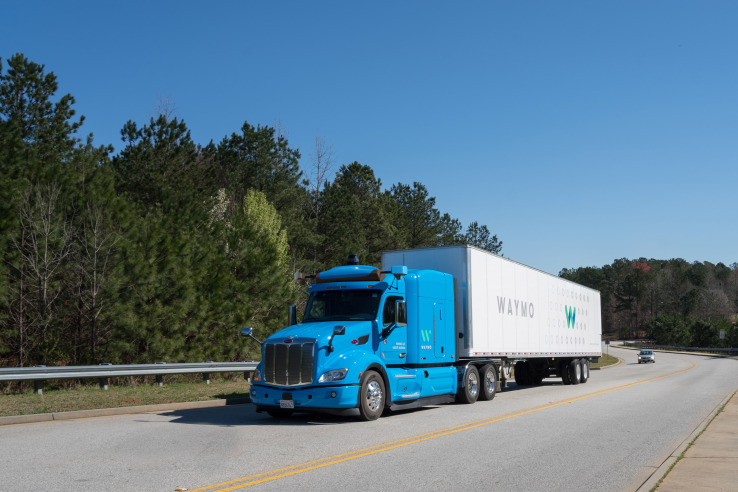
This is what they’re doing today as a result of all of that work. Ride hailing is the first commercial application that we’re pursuing. Beyond that we are working on long-haul trucking, long range deliveries. We’re interested, at some point, deploying the technology in personally owned cars, local deliveries, public transportation, so forth and so on.
TC: What application are you most excited about? The one that you think maybe is overlooked or one you’re personally the most excited about?

DOLGOV: I’m super excited about seeing the technology and the driver being deployed in, you know, across the globe and across different commercial applications. But I think the one that I am the most excited about is the one we’re pursuing as our number one target right now, which is ride hailing.

I think it has the potential to affect positively the highest number of people in the shortest amount of time.

I also use our cars every day to get around, this is how I got to work today. This is how I run errands around here in Mountain View and Palo Alto. It’s wonderful to be able to experience these cars and it just removes a lot of the friction out of transportation.

TC: So you you take a self driving car to work every day right now?

DOLGOV: Yes, but in California, they still have people in them. 

TC: How long have you been doing that?

DOLGOV: Awhile. Actually, it seems like forever.

I’ve always spent time in the cars. I think it’s really important to experience the product that you’re building and have direct experience with the technology. This was obviously the case in the early days of the project when there was a small group of us doing everything.

As the team grew, I would still make sure I would experience the technology and go on test rides at least weekly, if not more frequently.

When we started pursuing the ride-hailing application, and we build an app for it, and we built out infrastructure to make it into a user-facing product, I was one of the earlier testers.

That must have been three years ago.

TC: Did you expect it to be at this point that you are right now, 10 years ago, did you expect like 10 years from now, this is where we’re going to be? Or did it happen faster or slower than you anticipated?

DOLGOV: So for me, I think on one hand, I would not have predicted some of the breakthroughs in the technology on the hardware front, on the software and AI and machine learning back in 2009. I think the technology today is much more powerful than I would have probably said in 2009.

On the another hand, the challenge of actually building a real product and deploying it so that people can use it has turned out to be more difficult than I expected. So it’s kind of a mix.

TC: What were some of those technological breakthroughs?

DOLGOV: There were a number of things. LiDARs and radars became much more powerful.

And by powerful, I mean longer range, higher resolution and more features, if you will, in terms of the things that they can measure — richer returns of the properties of the environment. So that’s on the sensing side.

Compute, especially in the hardware-accelerated parallel computation, that’s been very powerful for the advancement of neural networks. That has been a huge boost.

Then there’s deep learning and the neural nets themselves have led to a number of breakthroughs.

TC: Yeah, with the last two examples you gave, I think of those as being breakthroughs more recently, in just the last few years. Is that about the timeframe?

DOLGOV: We’ve always used machine learning on this project, but it was a different kind of machine learning then today.

I think in 2012 is probably when, on our project, there was meaningful effort and when we were working together with Google on both the self-driving technology and deep learning.

Arguably, at the time Google was the only company in the world seriously investing in both the self driving and deep learning.

At that point, we didn’t have the hardware to be able to run those nets on the car, in real time. But there were very interesting things you could do in the cloud.

For deep learning, 2013 was a pretty big year. I think this is when ImageNet won a big competition and it was a breakthrough for deep learning. It outperformed all the other approaches in the computer vision competition.

TC: In 2009, could you imagine a world in 2019, where numerous self-driving vehicle companies would be testing on roads in California? Was that something that seemed plausible?

DOLGOV: No, no that’s not the picture I had in mind in 2009 or 2010.

In those early days of the project, people kind of laughed at us. I think the industry made fun of this project and there were multiple funny spoofs on the Google self-driving car project.

It’s been pretty amazing to go from, ‘oh there is small, group of crazy folks trying to do this science fiction thing at Google’ to this becoming a major industry that we have today with dozens, if not hundreds, of companies pursuing this.
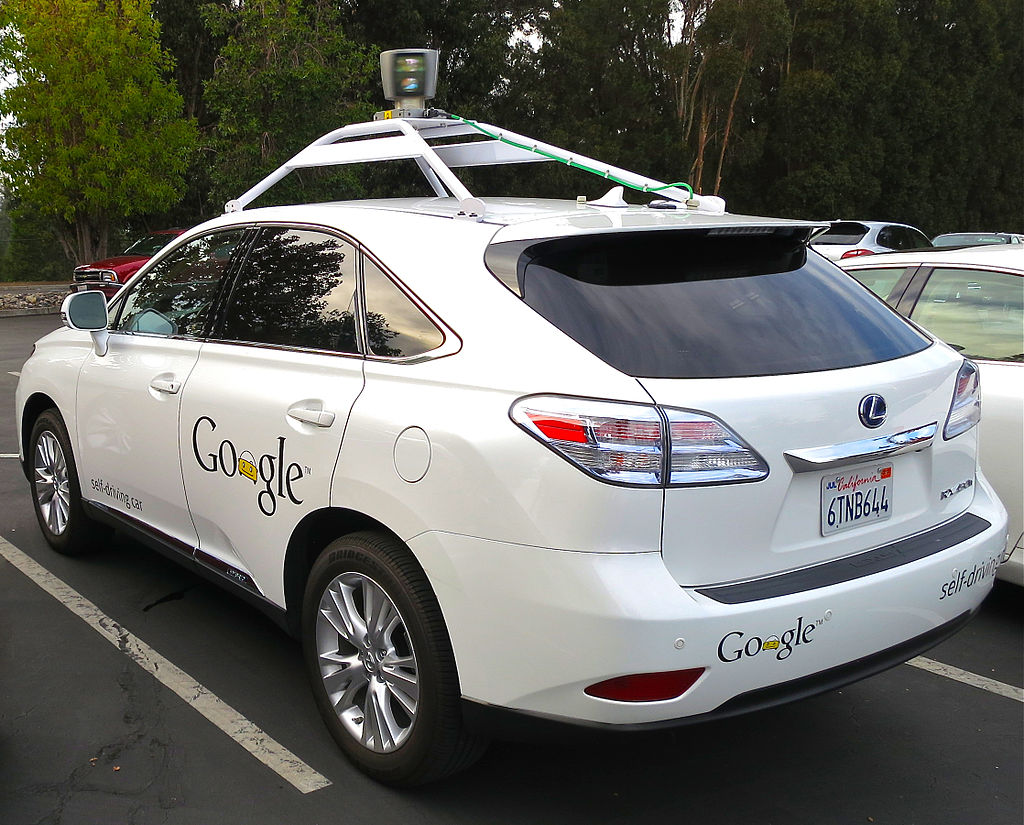
Google’s self-driving Lexus RX 450h

TC: What will be the tipping point that will get folks on board with self driving vehicles in their city? Is it a matter of just pure saturation? Or is it something else that that all the companies, Waymo included, are responsible of helping usher in?

DOLGOV: It seems like there’s always a spectrum of people’s attitudes towards new technology and change. Some of the negative ones are more visible. But actually, my experience over the last 10 years, the positive attitude and the excitement has been overwhelmingly stronger.

What I what I have seen over and over again, in this project that really is very powerful, and that is powerful and changes people’s attitudes from, uncertainty and anxiety to excitement and comfort and trust is being able to experience the technology.

You get people into one of our cars and then go for a ride. Even people who are anxious about getting into a car with nobody behind the wheel, once they experience it and once they understand how useful of a product it is, and how well the car behaves, and they starting trusting it, that really leads to change.

As the technology rolls out and more people get to experience it firsthand, that will help.

TC: Are the biggest challenges in 2009 the same as today? What are the final cruxes that remain?

DOLGOV: In 2009, all the challenges were all about one-off problems we needed to solve and today it’s all about turning it into a product.

It’s about the presentation of this self-driving stack and about building the tools and the framework for evaluation and deployment of the technology. You know, what has stayed true is that it’s all about the speed of iteration and the ability to learn new things and solve new technical problems as we discover them.


08 Feb 2019

Facebook picks up retail computer vision outfit GrokStyle

If you’ve ever seen a lamp or chair that you liked and wished you could just take a picture and find it online, well, GrokStyle let you do that — and now the company has been snatched up by Facebook to augment its own growing computer vision department.

GrokStyle started as a paper — as AI companies often do these days — at 2015’s SIGGRAPH. A National Science Foundation grant got the ball rolling on the actual company, and in 2017 founders Kavita Bala and Sean Bell raised $2 million to grow it.

The basic idea is simple: matching a piece of furniture (or a light fixture, or any of a variety of product types) in an image to visually similar ones in stock at stores. Of course, sometimes the simplest ideas are the most difficult to execute. But Bala and Bell made it work, and it was impressive enough in action that Ikea on first sight demanded it be in the next release of its app. I saw it in action and it’s pretty impressive.

Facebook’s acquisition of the company (no terms disclosed) makes sense on a couple of fronts: First, the company is investing heavily in computer vision and AI, so GrokStyle and its founders are naturally potential targets. Second, Facebook is also trying to invest in its marketplace, and using the camera as an interface for it fits right into the company’s philosophy.

One can imagine how useful it would be to be able to pull up the Facebook camera app, point it at a lamp you like at a hotel and see who’s selling it or something like it on the site.

Facebook did not answer my questions regarding how GrokStyle’s tech and team would be used, but offered the following statement: “We are excited to welcome GrokStyle to Facebook. Their team and technology will contribute to our AI capabilities.” Well!

There’s an “exciting journey” message on GrokStyle’s webpage, so the old site and service is gone for good. But one assumes that it will reappear in some form in the future. I’ve asked the founders for comment and will update the post if I hear back.

08 Feb 2019

Lyft says it has more wheelchair accessible vehicles available in NYC

Lyft, which has faced at least one lawsuit pertaining to its alleged discrimination against people with physical abilities, announced today it has expanded its wheelchair-accessible vehicle (WAV) service in New York City. Details on the blog are very scarce (we’ve reached out to Lyft for more info) but Lyft now has more than 20 partners in New York City to help increase WAV access.

“With more accessible rides on the road, we’ll be better able to help New Yorkers with physical disabilities get around the city,” Lyft wrote in a blog post.

But it’s not clear how many wheelchair-accessible vehicles are available now than before. Previously, Lyft had just a five percent success rate for finding wheelchair-accessible vehicles for riders, while Uber had a 55 percent success rate, according to a 2018 report from the New York Lawyers for the Public Interest. For both of these companies, they were able to find for non-accessible rides 100 percent of the time.

The lack of WAVs on Lyft and Uber have resulted in lawsuits for both companies. Last March, Disability Rights Advocates filed a class-action lawsuit against Lyft, alleging the company discriminates against people who use wheelchairs by not making wheelchair-accessible cars available in the San Francisco Bay Area.

The case, filed in Alameda County Superior Court, alleges Lyft directly violates the law by not providing an equal and accessible transportation option to all. The suit specifically alleges Lyft is in violation of the Unruh Civil Rights Act, which guarantees people with disabilities are entitled to full and equal accommodations. The suit also alleges Lyft is in violation of the California Disabled Persons Act.

At the time, a Lyft spokesperson told TechCrunch it currently has “partnerships and programs in place to provide enhanced WAV access in various parts of the country, and are actively exploring ways to expand them nationwide.”

Meanwhile, Uber has faced at least two lawsuits regarding its lack of wheelchair-accessible vehicles in both New York and California. In November, however, Uber took steps to ensure people who rely on wheelchairs can get rides when they need them. Through a partnership with paratransit service provider MV Transportation, Uber has been able to add hundreds of wheelchair-accessible vehicles to its platform in six markets, including New York City.

We’ll update this story as we learn more from Lyft.