Author: azeeadmin

07 Feb 2019

Someone could scoop up Slack before it IPOs

Earlier this week, Slack announced that it has filed the paperwork to go public at some point later this year. The big question is, will the company exit into the public markets as expected, or will one of the technology giants swoop in at the last minute with buckets of cash and take them off the market?

Slack, which raised over $1 billion on an other worldly $7 billion valuation, is an interesting property. It has managed to grow and be successful while competing with some of the world’s largest tech companies — Microsoft, Cisco, Facebook, Google and Salesforce. Not coincidentally these deep-pocketed companies could be the ones that come knock, knock, knocking at Slack’s door.

Slack has managed to hold its own against these giants by doing something in this space that hadn’t been done effectively before. It made it easy to plug in other services, effectively making Slack a work hub where you could spend your day because your work could get pushed to you there from other enterprise apps.

As I’ve discussed before, this centralized hub has been a dream of communications tools for most of the 21st century. It began with enterprise IM tools in the early 2000s, progressed to Enterprise 2.0 tools in the 2007 timeframe. That period culminated in 2012 when Microsoft bought Yammer for $1.2 billion, the only billion dollar exit for that generation of tools.

I remember hearing complaints about Enterprise 2.0 tools. While they had utility, in many ways they were just one more thing employees had to check for information beyond email. The talk was these tools would replace email, but a decade later email’s still standing and that generation of tools has been absorbed.

In 2013, Slack came along, perhaps sensing that Enterprise 2.0 never really got mobile and the cloud and it recreated the notion in a more modern guise. By taking all of that a step further and making the tool a kind of workplace hub, it has been tremendously successful growing to 8 million daily users in roughly 4 years, around 3 million of which were the paying variety, at last count.
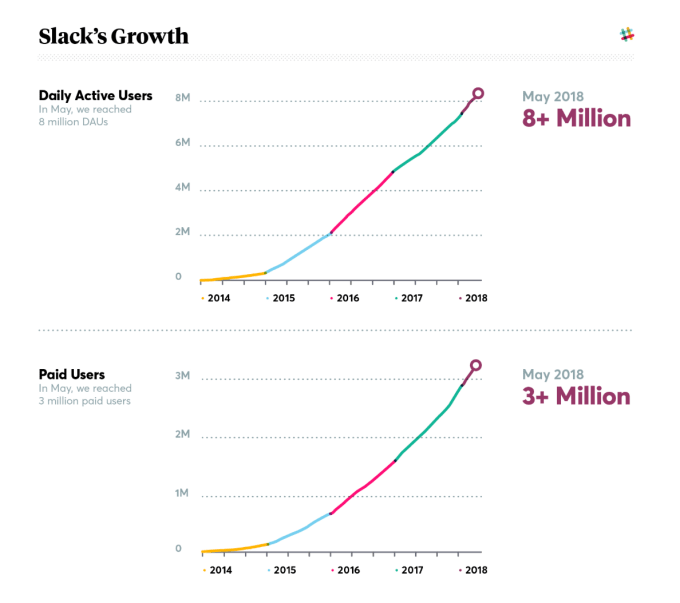
Slack’s growth numbers as of May 2018

All of this leads us back to the exit question. While the company has obviously filed for IPO paperwork, it might not be the way it ultimately exits. Just the other day CNBC’s Jay Yarrow posited this questions on Twitter:

Not sure where he pulled that number from, but if you figure 3x valuation, that could be the value for a company of this ilk. There would be symmetry in Microsoft buying Slack six years after it plucked Yammer off the market, and it would remove a major competitive piece from the board, while allowing Microsoft access to Slack’s growing customer base.

Nobody can see into the future, and maybe Slack does IPO and takes its turn as a public company, but it surely wouldn’t be a surprise if someone came along with an offer it couldn’t refuse, whatever that figure might be.


07 Feb 2019

Daily Crunch: Instacart CEO apologizes

The Daily Crunch is TechCrunch’s roundup of our biggest and most important stories. If you’d like to get this delivered to your inbox every day at around 9am Pacific, you can subscribe here:

1. Instacart CEO apologizes for tipping debacle

On the heels of a recently filed class-action lawsuit over wages and tips, as well as drivers and shoppers speaking out about Instacart’s alleged practices of subsidizing wages with tips, Instacart is taking steps to ensure tips are counted separately from what Instacart pays shoppers.

“While our intention was to increase the guaranteed payment for small orders, we understand that the inclusion of tips as a part of this guarantee was misguided,” said CEO Apoorva Mehta in a blog post. “We apologize for taking this approach.”

2. Match Group fully acquires relationship-focused app Hinge

Last year, Match Group acquired a 51 percent stake in the relationship-focused dating app Hinge, in order to diversify its portfolio of dating apps led by Tinder. The company has now confirmed that it fully bought out Hinge in the past quarter.

3. German antitrust office limits Facebook’s data gathering

A lengthy antitrust probe into how Facebook gathers data on users has resulted in Germany’s competition watchdog banning the social network giant from combining data on users across its own suite of social platforms without their consent.

4. Twitter Q4 beats on sales of $909M and EPS of $0.33, but MAUs slump to just 321M

Twitter’s Achilles’ heel remains user growth.

5. Amazon, Sequoia invest in self-driving car startup Aurora

Aurora, the buzzy startup founded by early pioneers of self-driving car technology who led programs at Google, Tesla and Uber, has raised more than $530 million in a Series B round led by Sequoia, a round that also includes “significant investment” from Amazon and T. Rowe Price Associates.

6. Why Spotify is betting big on podcasting

In an interview with TechCrunch, Spotify’s chief R&D officer Gustav Söderström admits that the company wasn’t doing a particularly good job serving up podcasting content: “The user experience was really poor.”

7. Skype can now blur the background during video calls

The Microsoft-owned service’s latest addition is a screen-blurring feature designed to obscure your messy room or any other background details that you’d rather not display to the other party on the line.

07 Feb 2019

Hired buys Y Combinator grad Py, launches assessment tool

To better measure aptitude of applicants, online career marketplace Hired has acquired Py, which helps companies like Opendoor and Niantic identify talent with app-based interactive courses on Python, iOS development and more.

As part of the deal, Hired will launch a new feature called Hired Assessments, leveraging tools from the Py platform, as well as a tiered subscription model. The base-level package, called Hired Essential, will provide enhanced search functionality, tools to help candidates arrive to interviews as prepared as possible and more. A spokesperson for Py declined to disclose terms of the deal but did say that Py counts 500,000 users who’ve completed 2 million coding assignments. They also offered this little anecdote:

Py’s co-founder, Derek Lo had initial conversations with Hired’s VP of Strategic Development, Andre Charoo back in October of 2018. But it wasn’t until Lo randomly met one of Hired’s co-founders at a Y Combinator networking event that the partnership started to come into fruition. The Hired co-founder that Lo met was Allan Grant — also a part of the Y Combinator community — and he wasn’t aware of the initial conversations but agreed to have Lo over to his house the next day to share advice about running an early-stage startup. Over coffee at Grant’s house, Lo learned a lot about the purpose of Hired and began to understand why Hired would be a great fit for his product and team. From there, the rest was history. 

Derek Lo, founder and chief executive officer of Py, first began building the mobile app in May 2016 before completing Y Combinator’s accelerator program in summer 2017. Lo started the company in his dorm room after becoming frustrated with Yale’s computer sciences courses, which he felt were useless when it came to real business applications.

Lo has joined Hired as its head of product.

In a conversation with TechCrunch while Py was still completing the accelerator, Lo said the company had decided to turn down a $1 million investment offer because it was unnecessary for such an early-stage startup. At the time, the Py team had brought in $20,000 in pre-seed funding from Dorm Room Fund, plus another $100,000 from the Yale Venture Creation Program. In total, Py has raised $615,000.

“With Py founder Derek Lo, we saw a shared vision for making hiring easier for everyone,” Hired’s vice president of strategic development Andre Charoo said in a statement. “For companies, this means helping them hire in-demand talent quickly and predictably, and for job seekers, it is about empowering them to land their dream job. By combining Py’s technical assessment expertise with Hired’s dependable pipeline of first-rate talent, we’re ready to transform today’s hiring standards.”

Hired Assessments will include online coding quizzes, standardized testing, projects and a “live code” environment where hiring managers can “view, rewind, fast forward and save live candidate challenges.” The features are customizable so companies can tweak assessments based on their hiring needs.

Hired Essential will use machine learning to curate lists of candidates for available roles, as well as help candidates arrive at interviews prepared with a clear outline of hiring steps, expectations and tips.

Founded in 2012, San Francisco-based Hired is backed by venture capital firms including Comcast Ventures, Sherpa Capital, Lumia Ventures and Uncork Capital. To date, the business has raised $133 million, most recently at a post-valuation of $550 million, according to PitchBook.

07 Feb 2019

The Raspberry Pi store is much cooler than an Apple Store

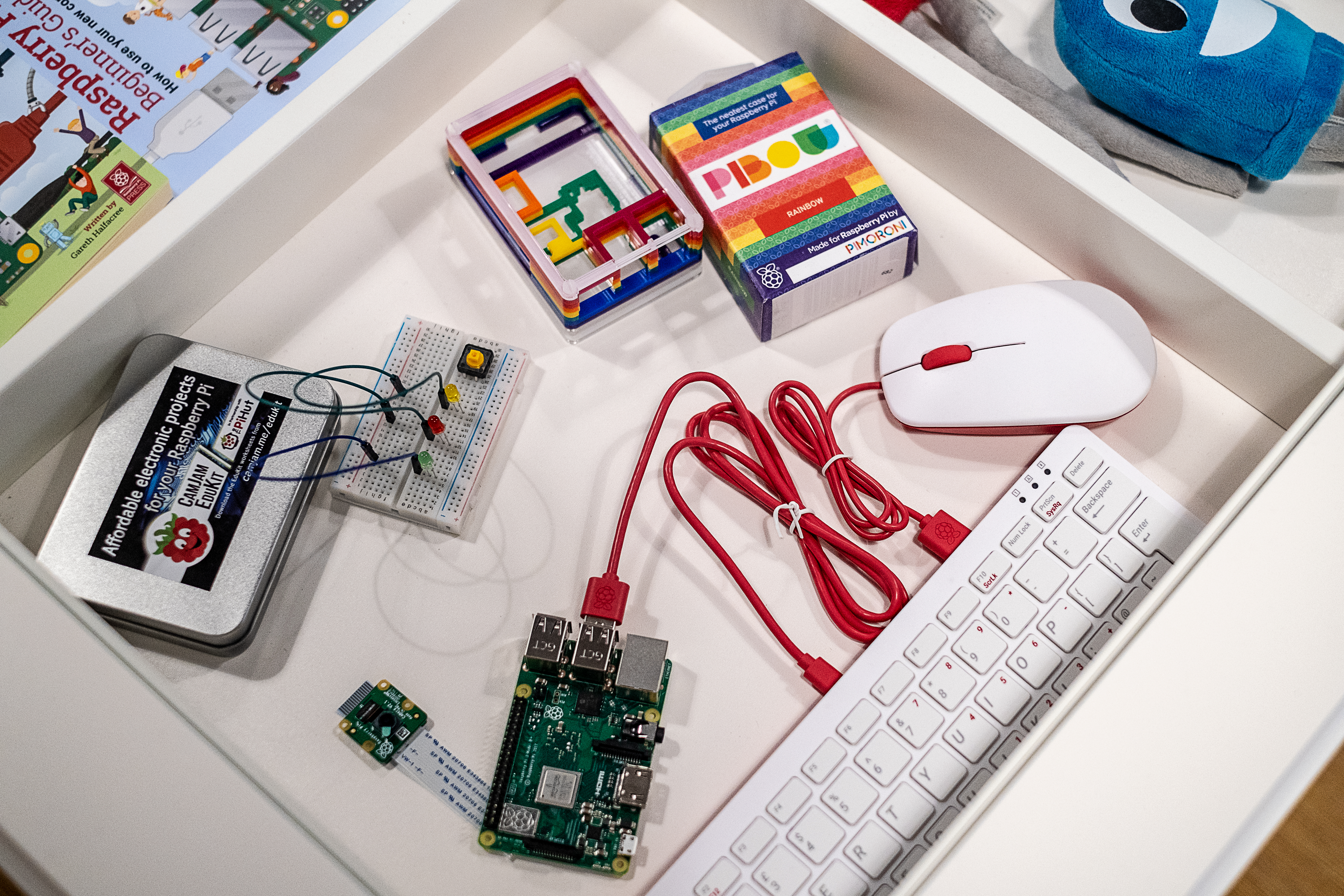
The Raspberry Pi Foundation just unveiled a brand new project — an actual store. If you live in Cambridge in the U.K., you can now buy a bunch of sweet Raspberry Pis to tinker and develop some cool stuff.

The Raspberry Pi has always been about making coding more accessible. And a physical retail space fits the bill. The foundation has developed a lineup of insanely cheap computers with an ARM-based processor, a bunch of ports, Wi-Fi and Bluetooth.

The latest flagship model, the Raspberry Pi 3 Model B+ costs only $35. But if you want something smaller and cheaper, there are other models for various needs.

Maybe you just need a tiny computer for some internet-of-things project. You can opt for the Raspberry Pi 3 Model A+ for $25 in that case. It has a bit less RAM and fewer ports, but it works pretty much like any Raspberry Pi. There’s also power-efficient models that cost less than $10 — the Raspberry Pi Zero models.

I never really thought about Raspberry Pi stores. But the introduction video makes a strong case in favor of such a store. The product lineup is getting a bit complicated and it’s always good to be able to talk to someone about your projects.

Moreover, the foundation can use this store as a showcase for some cool examples. You can also buy goodies, such as mugs and plushy toys. Those white-and-red keyboard and mouse look cool too.

07 Feb 2019

Update to iOS 12.1.4 to re-enable Group FaceTime

That nasty FaceTime bug is now a thing of the past. You can now download and update your iPhone and iPad to re-enable Group FaceTime again. iOS 12.1.4 is a bug fix release and doesn’t contain any new feature other than this one.

Shortly after people found out that you could eavesdrop on somebody’s microphone or camera by starting a fake Group FaceTime call, Apple disabled Group FaceTime altogether. If you’re running iOS 12.1.3 or earlier, you simply can’t start or join a FaceTime call with more than two persons.

The company has been working on a fix to re-enable Group FaceTime without the nasty bug. And that update is now available.

“We have fixed the Group FaceTime security bug on Apple’s servers and we will issue a software update to re-enable the feature for users next week,” Apple said in a statement last week. “We sincerely apologize to our customers who were affected and all who were concerned about this security issue. We appreciate everyone’s patience as we complete this process.”

Back up your iPhone or iPad to iCloud or your computer first using iTunes. You can then head over to the Settings app. Tap on ‘General’ then ‘Software Update’ to download and install the patch. The update is still propagating on Apple’s servers so it could take a few minutes before you see it.

07 Feb 2019

LG’s next flagship is getting a 3D front-facing camera

LG’s never been much on waiting for a big show to announce its latest offering. Mobile World Congress is still weeks away, and the company just dropped what’s likely to be the biggest new feature of its upcoming flagship, the G8 ThinQ.

Clunky naming conventions aside, the handset once again finds LG focusing its efforts on imaging, with a time-of-flight sensor built-in to the front-facing camera array (sensor pictured above, incidentally). Here’s LG on what that means,

While other 3D technologies utilize complex algorithms to calculate an object’s distance from the camera lens, the ToF image sensor chip delivers more accurate measurements by capturing infrared light as it is reflected off the subject. As a result, ToF is faster and more effective in ambient light, reducing the workload on the application processor thereby also reducing power consumption.

For the end-user, that means the camera will be more capable of advanced face recognition than what most Android handsets currently offer. The addition of depth sensing brings more advanced biometric authentication, closer to what you get with the iPhone. The feature also goes a way toward validating earlier leaks of the phone, which bring a larger top notch.

As for the rest of the details — LG’s got to save something for MWC, I guess. 

07 Feb 2019

Google Fiber pulls out of Louisville

It wasn’t that long ago that cities across the U.S. were vying for Google Fiber, the company’s high-speed internet service. Since the launch of the project in Kansas City in 2012, Google Fiber launched in about a dozen more cities, most recently Huntsville, San Antonio and Louisville in 2017. But you can now strike Louisville from that list because Google today announced that it will shut off its fiber network there on April 15.

The reason for that is simple, Google says (but these things never really are). It says it tried a few new things when it launched in the city, including putting the fiber lines into shallower trenches. That didn’t work very well.

“We’re not living up to the high standards we set for ourselves, or the standards we’ve demonstrated in other Fiber cities,” the company writes today. “We would need to essentially rebuild our entire network in Louisville to provide the great service that Google Fiber is known for, and that’s just not the right business decision for us.”

It’s a rare admission of defeat for Google Fiber, though it’s no secret that the company isn’t exactly bullish on the prospect of the service anymore. Louisville was supposed to be somewhat of a comeback for Google Fiber, which like so many Google services is now under more pressure to generate a profit. Clearly, that didn’t work out. If this were still a major growth and focus area for Google, it would have done exactly what it isn’t doing in Louisville: rebuild the entire network.

Customers in the city will get free access to the service until it shuts down.

07 Feb 2019

Food delivery service Postmates confidentially files to go public

Shortly after closing a $100 million pre-IPO round, food delivery business Postmates has confidentially filed documents with the Securities and Exchange Commission for an upcoming public offering, Bloomberg first reported and the company confirmed in a blog post.

The company will debut on the stock exchange at a more than $1.85 billion valuation — the valuation it garnered with its $100 million in January. In total, Postmates has raised $681 million in venture capital funding from investors including Spark Capital, Founders Fund, Uncork Capital and Slow Ventures.

The 8-year-old company has tapped JPMorgan Chase and Bank of America to lead its upcoming float.

Postmates, which competes with several large players in the food delivery space including Uber Eats and DoorDash, say it completes 5 million deliveries per month and is reportedly expected to record $400 million in revenue in 2018 on food sales of $1.2 billion.

Currently, it operates in more than 550 cities, recently tacking on another 100 markets to reach an additional 50 million customers.

Postmates is next in a long line of tech unicorns planning to make the leap into the public markets in 2019. Slack most recently filed confidentially to exit, following Lyft and Uber, which similarly submitted private SEC documents at the tail-end of 2018.

07 Feb 2019

Foot Locker invests $100 million in GOAT Group

Foot Locker, the mostly mall-bound retailer of mass market sneakers, has invested $100 million in the sneaker marketplace and retailer of primarily rare and exclusive high-end athletic and lifestyle shoes, GOAT Group.

The companies said that the investment would eventually lead to Foot Locker and Goat Group combining their efforts across their digital and physical retail platforms.

GOAT said in a statement that the company would use the investment to accelerate its global operations, expand its omnichannel experience and its technologies.

GOAT

IT Manager Clint Arndt, CEO Eddy Lu

In an interview, GOAT co-founder and chief product officer declined to disclose the company’s valuation, its revenues, how sales break down across geographic regions, or how it will work with Foot Locker going forward.

In 2018 several top sellers on GOAT sold over $10 million worth of sneakers up from $2 million in 2017, according to the company. GOAT Group now counts over 600 employees, up from 200 a year ago, with 12 million users currently active on the platform. That figure is up massively from last year when 2.5 million folks were on the platform.

Over the same period GOAT boosted its sneaker listings to 750,000 from 200,000 and now has 150,000 vendors selling to over 12 million customers. With growth like that no wonder Foot Locker wants a sip of that GOAT stew.

“At Foot Locker we are constantly looking at new ways to elevate our customer experience and bring sneaker and youth culture to people around the world,” said Richard Johnson, Foot Locker, Inc.’s Chairman and Chief Executive Officer, in a statement. “We are excited to leverage GOAT Group’s technology to further innovate the sneaker buying experience and utilize their best-in-class online marketplace to help meet the ever-growing global demand for the latest product. Together, Foot Locker and GOAT Group’s shared commitment to trust and authenticity in the sneaker industry will provide consumers with unparalleled experiences and diversified offerings.”

One savvy online observer commented that the deal was the equivalent of Blockbuster investing in Netflix back when that now-defunct video rental service was still in its waning days, before it became obsolete.

“In 2015, we pioneered the ship-to-verify model with a mission to bring a seamless and safe customer experience to the secondary sneaker market,” said Eddy Lu, co-founder and Chief Executive Officer of GOAT Group. “With over 3,000 retail locations, Foot Locker will support our primarily digital presence with physical access points worldwide, bringing more value to our community of buyers and sellers. Having Foot Locker as a strategic partner will also expand our business as we continue to scale our operations both domestically and internationally.”

Last year, GOAT raised $60 million as it announced its largest strategic move to date — acquiring the physical retailer Flight Club to begin pushing into real-world in-store experiences.

Scott Martin is joining the GOAT Group’s board of directors and extends Foot Locker’s investments in startup companies and brands, which already included the women’s luxury activewear brand Carbon38; tactical play and children’s lifestyle brand Super Heroic; and footwear design academy PENSOLE.

GOAT has raised $197.6 million since it was launched it 2015. The company competes with other vendors like Stock X.

In an interview with Highsnobiety, NPD Group senior sports industry advisor Matt Powell said, “The sneaker resale market has been disruptive to the primary market. Foot Locker is investing in that disruption and believes that the resale market will continue to grow and its wants a piece of that growth.”

07 Feb 2019

Google open sources ClusterFuzz

Google today announced that it is open sourcing ClusterFuzz, a scalable fuzzing tool that can run on clusters with over 25,000 machines.

The company has long used the tool internally and if you’ve paid particular attention to Google’s fuzzing efforts (and you have, right?), then this may all seem a bit familiar. That’s because Google launched the OSS-Fuzz service a couple of years ago and that service actually used ClusterFuzz. OSS-Fuzz was only available to open source projects, though, while ClusterFuzz is now available for anyone to use.

The overall concept behind fuzzing is pretty straightforward: you basically throw lots of data (including random inputs) at your application and see how it reacts. Often, it’ll crash, but sometimes you’ll be able to find memory leaks and security flaws. Once you start anything at scale, though, it becomes more complicated and you’ll need tools like ClusterFuzz to manage that complexity.

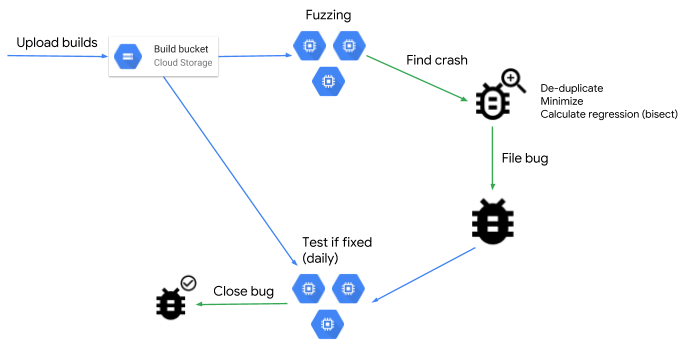
ClusterFuzz automates the fuzzing process all the way from bug detection to reporting — and then retesting the fix. The tool itself also uses open source libraries like the libFuzzer fuzzing engine and the AFL fuzzer to power some of the core fuzzing features that generate the test cases for the tool.

Google says it has used the tool to find over 16,000 bugs in Chrome and 11,000 bugs in over 160 open source projects that used OSS-Fuzz. Since so much of the software testing and deployment toolchain is now generally automated, its no surprise that fuzzing is also becoming a hot topic these days (I’ve seen references to “continuous fuzzing” pop up quite a bit recently).