Author: azeeadmin

07 Feb 2019

Apple tells app developers to disclose or remove screen recording code

Apple is telling app developers to remove or properly disclose their use of analytics code that allows them to record how a user interacts with their iPhone apps — or face removal from the app store, TechCrunch can confirm.

In an email, an Apple spokesperson said: “Protecting user privacy is paramount in the Apple ecosystem. Our App Store Review Guidelines require that apps request explicit user consent and provide a clear visual indication when recording, logging, or otherwise making a record of user activity.”

“We have notified the developers that are in violation of these strict privacy terms and guidelines, and will take immediate action if necessary,” the spokesperson added.

It follows an investigation by TechCrunch that revealed major companies, like Expedia, Hollister and Hotels.com, were using a third-party analytics tool to record every tap and swipe inside the app. We found that none of the apps we tested asked the user for permission, and none of the companies said in their privacy policies that they were recording a user’s app activity.

Even though sensitive data is supposed to be masked, some data — like passport numbers and credit card numbers — was leaking.

Glassbox is a cross-platform analytics tool that specializes in session replay technology. It allows companies to integrate its screen recording technology into their apps to replay how a user interacts with the apps. Glassbox says it provides the technology, among many reasons, to help reduce app error rates. But the company “doesn’t enforce its customers” to mention that they use Glassbox’s screen recording tools in their privacy policies.

But Apple expressly forbids apps that covertly collect data without a user’s permission.

TechCrunch began hearing on Thursday that app developers had already been notified that their apps had fallen afoul of Apple’s rules. One app developer was told by Apple to remove code that recorded app activities, citing the company’s app store guidelines.

“Your app uses analytics software to collect and send user or device data to a third party without the user’s consent. Apps must request explicit user consent and provide a clear visual indication when recording, logging, or otherwise making a record of user activity,” Apple said in the email.

Apple gave the developer less than a day to remove the code and resubmit their app or the app would be removed from the app store, the email said.

When asked if Glassbox was aware of the app store removals, a spokesperson for Glassbox said that “the communication with Apple is through our customers.”

Glassbox is also available to Android app developers. Google did not immediately comment if it would also ban the screen recording code. Google Play also expressly prohibits apps from secretly collecting device usage. “Apps must not hide or cloak tracking behavior or attempt to mislead users about such functionality,” the developer rules state. We’ll update if and when we hear back.

It’s the latest privacy debacle that has forced Apple to wade in to protect its customers after apps were caught misbehaving.

Last week, TechCrunch reported that Apple banned Facebook’s “research” app that the social media giant paid teenagers to collect all of their data.

It followed another investigation by TechCrunch that revealed Facebook misused its Apple-issued enterprise developer certificate to build and provide apps for consumers outside Apple’s App Store. Apple temporarily revoked Facebook’s enterprise developer certificate, knocking all of the company’s internal iOS apps offline for close to a day.

07 Feb 2019

Apple tells app developers to disclose or remove screen recording code

Apple is telling app developers to remove or properly disclose their use of analytics code that allows them to record how a user interacts with their iPhone apps — or face removal from the app store, TechCrunch can confirm.

In an email, an Apple spokesperson said: “Protecting user privacy is paramount in the Apple ecosystem. Our App Store Review Guidelines require that apps request explicit user consent and provide a clear visual indication when recording, logging, or otherwise making a record of user activity.”

“We have notified the developers that are in violation of these strict privacy terms and guidelines, and will take immediate action if necessary,” the spokesperson added.

It follows an investigation by TechCrunch that revealed major companies, like Expedia, Hollister and Hotels.com, were using a third-party analytics tool to record every tap and swipe inside the app. We found that none of the apps we tested asked the user for permission, and none of the companies said in their privacy policies that they were recording a user’s app activity.

Even though sensitive data is supposed to be masked, some data — like passport numbers and credit card numbers — was leaking.

Glassbox is a cross-platform analytics tool that specializes in session replay technology. It allows companies to integrate its screen recording technology into their apps to replay how a user interacts with the apps. Glassbox says it provides the technology, among many reasons, to help reduce app error rates. But the company “doesn’t enforce its customers” to mention that they use Glassbox’s screen recording tools in their privacy policies.

But Apple expressly forbids apps that covertly collect data without a user’s permission.

TechCrunch began hearing on Thursday that app developers had already been notified that their apps had fallen afoul of Apple’s rules. One app developer was told by Apple to remove code that recorded app activities, citing the company’s app store guidelines.

“Your app uses analytics software to collect and send user or device data to a third party without the user’s consent. Apps must request explicit user consent and provide a clear visual indication when recording, logging, or otherwise making a record of user activity,” Apple said in the email.

Apple gave the developer less than a day to remove the code and resubmit their app or the app would be removed from the app store, the email said.

When asked if Glassbox was aware of the app store removals, a spokesperson for Glassbox said that “the communication with Apple is through our customers.”

Glassbox is also available to Android app developers. Google did not immediately comment if it would also ban the screen recording code. Google Play also expressly prohibits apps from secretly collecting device usage. “Apps must not hide or cloak tracking behavior or attempt to mislead users about such functionality,” the developer rules state. We’ll update if and when we hear back.

It’s the latest privacy debacle that has forced Apple to wade in to protect its customers after apps were caught misbehaving.

Last week, TechCrunch reported that Apple banned Facebook’s “research” app that the social media giant paid teenagers to collect all of their data.

It followed another investigation by TechCrunch that revealed Facebook misused its Apple-issued enterprise developer certificate to build and provide apps for consumers outside Apple’s App Store. Apple temporarily revoked Facebook’s enterprise developer certificate, knocking all of the company’s internal iOS apps offline for close to a day.

07 Feb 2019

Congress flaunts its ignorance in House hearing on net neutrality

It’s amazing, and yet should surprise no one, that this country’s elected representatives can be either so cynical or so ignorant that two decades into the net neutrality debate, the basics still elude them. Today’s hearing in the House saw Members of Congress airing musty arguments and grandstanding generically as if they had just been informed of the internet this week.

The hearing today at the House Energy and Commerce committee was entitled “Preserving an Open Internet for Consumers, Small Businesses, and Free Speech.” Newly ascended Chairman Frank Pallone (D-NJ), who has been extremely outspoken on these issues for the last few years, gave an introduction that was unmistakably hostile to the present FCC and its replacement of 2015’s net neutrality rules.

The witnesses that would be examined for the next three hours represented both sides of the issue, and it must be said were earnest and well spoken. But the same could not be said for many of the Representatives who were ostensibly there to inform themselves about possibly ways to create federal, bipartisan net neutrality legislation. (You can watch the full hearing here.)

Saying it over and over doesn’t make it any more true

All the old canards were trucked out as if they have not been addressed over and over for years.

The most frequent argument was that Title II, the statutory authority on which the 2015 rules were based (there’s a whole story there if you’re curious), is too old — it was first established in the 1934 Communications Act as a way to regulate interstate communications. Why, these lawmakers asked repeatedly, should we be using rules established in an era when the telegraph and telephone were how people communicated?

The obvious answer we’ve had for years is of course that we don’t; the rules have been updated over and over again to avoid their becoming out of date, though it’s entirely reasonable to suggest we do so again.

Nevertheless, Billy Long (R-MO) wasted everyone’s time with a poorly executed stunt where he had people identify huge photos of recent House Speakers and then brought up Thomas Rainey, the Speaker from 1934. “Even Speaker Rainey would admit that a bill he passed should not be governing this century’s internet,” he ventured. (It’s hard to say. Rainey fast-tracked the entire New Deal and then died in office a month after the Act was passed. He likely would have objected to being used as a prop in this fashion.)

A Representative Soto (R-FL) also made a particular point of how old the law was, suggesting it had last been updated in 1984. Amazingly, he seemed unaware or unwilling to mention the monumental and highly relevant total revisitation of the law that is the 1996 Telecommunications Act.

Only Anna Eshoo (D-CA) seemed to perceive the absurdity of this argument. “A lot of references have been made to old laws. Title II has just been beaten to a pulp. You know what the oldest one is? The constitution. That’s got so much dust on it, maybe we should throw that one out too,” she joked.

But she had her knives out as well, calling out those present for their unconvincing sudden change of heart regarding how important the internet is to their constituents. Nearly everyone who spoke, it must be said, took 30 seconds to a minute of their allotted five to explain for the nth time how precious the internet and freedom of speech on it are.

“Everyone says that they love the internet, how important it is,” Eshoo said. “Where were so many people two years ago, when ripping privacy off the internet went through here like a bolt of lightning? Were you here, Michael? You weren’t here.”

She was referring to the reversal of the Broadband Privacy Rule just after the election, which was a rather nasty piece of work that seemed entirely motivated by industry interests and was widely decried by activists and constituents. It’s a valid question. Who can believe a legislator who says they care if they voted for that repeal? (It’s unclear which Michael she was calling out.)

Not so much a question as a comment…

A few sets of leading questions let the ISP witnesses (Joseph Franell, a very decent-seeming CEO of a rural telecom, and Michael Powell, a canny but likable head of a major trade group NCTA) explain at length how they felt that edge providers like Google and Facebook were the real enemies who were limiting speech on the internet.

That is of course something we should be talking about, and in fact it is an ongoing international discussion. But in the context of a net neutrality debate, it’s a massive red herring.

Net neutrality is about moving bits around without interfering with them, not what businesses like social networks or search providers could or should do with those bits once they have them in their possession.

In the process of these digressions, the telecom CEO admitted that what his company does amounts to being a neutral, purely transmissive party — which is funny considering the FCC makes the opposite assertion in its present rules.

Rep. Johnson (R-OH) rattled off a list of unsubstantiated assertions about the 2015 rules and told Tom Wheeler — who was the FCC Chairman who established those rules — to give a nonsensical yes or no answer and refused to allow him to respond to the “aspersions” he’d just entered into the record. Then he led Franell to say at length that there’s more competition in broadband now than ever, though Franell’s experience as a small rural provider for a few thousand people is hardly representative of the national state of things (being honest, he prefaced his response with this information).

Rep. Flores (R-TX) made a fool of himself by attempting to dispute Mozilla’s statement that it “would not exist today without net neutrality,” pointing out that Mozilla was founded at the turn of the century, and that the net neutrality rules didn’t come around until 2015. This might have been the most frustrating moment of the whole hearing, since it was all at once factually incorrect, ignorant or dismissive of basic context, clearly designed to discredit a witness there in good faith (Mozilla COO Denelle Dixon), and spoken at the end of his allotted time so no response was possible from Dixon.

Luckily Rep. Luján (D-NM) much later generously gave her some time to rebut Flores; she pointed out the obvious fact that 2015 was not the birth of net neutrality, but that the idea of it stretches back decades and fueled the creation and ongoing growth of the Mozilla organization.

Not exactly diamonds but not rough either

A handful of Representatives had specific questions relevant to the creation of future law, if not particularly inspiring ones. It seems clear we’re nowhere near a legislative solution; one Congressman outright said there was no way Trump would sign anything from this Congress.

Congresswoman Matsui (D-CA) inquired about revisions of the Universal Service Fund, a critical budget component for FCC programs that defray the cost of, for example, expanding wireless into rural areas.

Luján questioned FCC Chairman Pai’s assertion that the existing rules would benefit his poorest constituents, saying that was simply not true and that forthcoming laws should be explicit about how they help these communities.

Vermont Democrat Welch pointed out what seemed to be a mismatch between promises that eliminating net neutrality would increase capital expenditure by ISPs and the actual numbers provided by those ISPs. Powell disputed some of these numbers, but the message was clear that economic analysis needs to be far more robust and that hanging a set of rules or laws on broad measures like capex is inadequate justification.

But these small pieces of honest inquiry or criticism produced only a smattering of useful information; the vast majority of the hearing was bloviation and repetition of arguments that have failed to convince anyone for years running. It’s important for us to see this sort of thing, however — it gives faces to the elected officials who bow to industry interests and outright question the need for consumer protections their constituents are calling for.

When you hear that hundreds of lawmakers voted against privacy rules or won’t support net neutrality principles, you often think: “who would do that?” Then you see a hearing like this and you understand: “Oh. That’s who.”


07 Feb 2019

IAC-owned publishing company Dotdash grew revenue by 44 percent last year

Holding company IAC just released its fourth quarter earnings report, which includes positive numbers for Dotdash, the rebranded company formerly known as About.com — revenue increased 32 percent in the quarter (to $40.2 million), and it was up 44 percent (to $131 million) for the fiscal year.

This comes after big layoff announcements from BuzzFeed, Vice and Verizon Media Group (which owns TechCrunch).

Unlike those companies — and unlike The New York Times, which actually seems to be doing well — Dotdash isn’t really a news publisher. Instead, it focuses on the same kinds of evergreen, informational and how-to content that you used to find on About.com, now divided up across more vertically focused brands like Verywell (health and wellness) and The Spruce (home improvement).

Still, it’s worth highlighting a media business model that seems to be working. IAC attributes the improved financials (adjusted EBITDA was $21.4 million for the year, compared to a loss of $2.8 million in 2017) to “strong advertising growth across several verticals,” as well as affiliate commerce revenue.

Dotdash has a disarmingly simple approach centered on quality content, site speed, and respectful monetization,” said IAC CEO Joey Levin in the letter to shareholders. “The company doesn’t buy traffic nor rely heavily on social networks. Dotdash’s brands simply help people to answer questions, solve problems and find inspiration when they’re searching for answers. Our readers come with specific intent, enabling us to connect advertisers to consumers based on stated interests using high-performing ads in a safe online environment.”

Levin added that Dotdash properties saw a total of 87 million unique visitors in December, compared to 51 million for About.com before the rebrand and new strategy.

Dotdash is also providing guidance for 2019, predicting revenue growth of 10 percent for the first quarter and 20 percent for the whole year, with adjusted EBITDA of $30 million to $40 million for the year.

Turning to other IAC properties, ANGI Home services (which owns Angie’s List) saw Q4 revenue increase 25 percent to $279 million, while Vimeo’s revenue increased 28 percent to $44.2 million.

In total, IAC brought in $1.10 billion in revenue for the quarter, a year-over-year increase of 16 percent, and beating analyst estimates of $1.07 billion. Adjusted EBITDA increased 40 percent, to $268 million.

07 Feb 2019

Instagram and Facebook will start censoring ‘graphic images’ of self-harm

In light of a recent tragedy, Instagram is updating the way it handles pictures depicting self-harm. Instagram and Facebook announced changes to their policies around content depicting cutting and other forms of self harm in dual blog posts Thursday.

The changes comes about in light of the 2017 suicide of a 14 year old girl named Molly Russell, a UK resident who took her own life in 2017. Following her death, her family discovered that Russell was engaged with accounts that depicted and promoted self harm on the platform.

As the controversy unfolded, Instagram Head of Product Adam Mosseri penned an op-ed in the Telegraph to atone for the platform’s at times high consequence shortcomings. Mosseri previously announced that Instagram would implement “sensitivity screens” to obscure self harm content, but the new changes go a step further.

Starting soon, both platforms will no longer allow any “graphic images of self-harm” most notably those that depict cutting. This content was previously allowed because the platforms worked under the assumption that allowing people to connect and confide around these issues was better than the alternative. After a “comprehensive review with global experts and academics on youth, mental health and suicide prevention” those policies are shifting.

“… It was advised that graphic images of self-harm – even when it is someone admitting their struggles – has the potential to unintentionally promote self-harm,” Mosseri said.

Instagram will also begin burying non-graphic images about self harm (pictures of healed scars, for example) so they don’t show up in search, relevant hashtags or on the explore tab. “We are not removing this type of content from Instagram entirely, as we don’t want want to stigmatize or isolate people who may be in distress and posting self-harm related content as a cry for help,” Mosseri said.

According to the blog post, after consulting with groups like the Centre for Mental Health and Save.org, Instagram tried to strike a balance that would still allow users to express their personal struggles without encouraging others to hurt themselves. For self harm, like disordered eating, that’s a particularly difficult line to walk. It’s further complicated by the fact that not all people who self harm have suicidal intentions and the behavior has its own nuances apart from suicidality.

“Up until now, we’ve focused most of our approach on trying to help the individual who is sharing their experiences around self-harm. We have allowed content that shows contemplation or admission of self-harm because experts have told us it can help people get the support they need. But we need to do more to consider the effect of these images on other people who might see them. This is a difficult but important balance to get right.”

Mental health research and treatment teams have long been aware of “peer influence processes” that can make self destructive behaviors take on a kind of social contagiousness. While online communities can also serve as a vital support system for anyone engaged in self destructive behaviors, the wrong kind of peer support can backfire, reinforcing the behaviors or even popularizing them. Instagram’s failure to sufficiently safeguard for the potential impact this kind of content can have on a hashtag-powered social network is fairly remarkable considering that the both Instagram and Facebook claim to have worked with mental health groups to get it right.

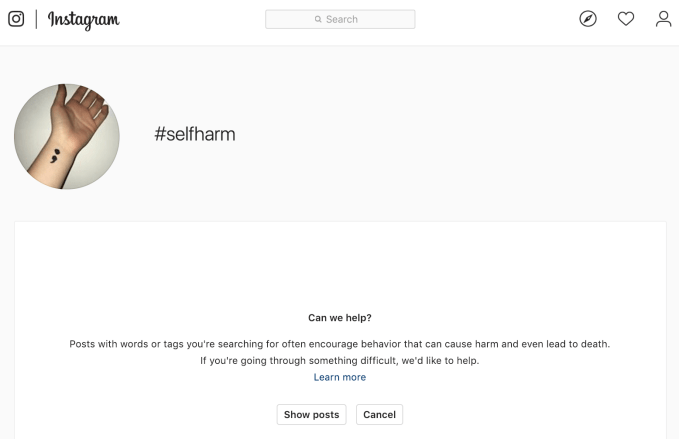
These changes are expected in the “coming weeks.” For now, a simple search of Instagram’s #selfharm hashtag still reveals a huge ecosystem of self-harmers on Instagram, including self-harm related memes (some hopeful, some not) and many very graphic photos of cutting.

“It will take time and we have a responsibility to get this right,” Mosseri said. “Our aim is to have no graphic self-harm or graphic suicide related content on Instagram… while still ensuring we support those using Instagram to connect with communities of support.”

07 Feb 2019

T-Mobile plans to offer à la carte media subscriptions, but no TV ‘skinny bundle’

T-Mobile doesn’t want to compete with other carriers or teleco’s by developing its own “skinny bundle” of streaming TV channels, the company said today on its earnings call with investors, noting the market was already oversaturated on that front. Instead, the mobile operator’s strategy will focus on helping customers pick and choose which paid TV subscriptions they want to access — a move that very much sounds like T-Mobile is going the “Amazon Channels” route with its mobile streaming plans.

According to T-Mobile President Mike Sievert, today’s customers have a number of choices for streaming TV thanks to the massive expansion of OTT (over-the-top) services that are now available.

“It’s subscription-palooza out there. Every single media brand either has or is developing an OTT solution, and most of these companies don’t have a way to bring these products to market,” he said. “They’re learning about that. They don’t have distribution networks like us; they don’t have access to the phone like we have.”

Instead, the exec explained that T-Mobile wants to help customers access paid subscriptions that already exist, by simplifying aspects of that process such as search, discovery and billing.

“We don’t have plans to develop an nth undifferentiated skinny bundle,” Sievert continued. “There are plenty of those. We think there’s a more nuanced role for us to play in helping you get access to the great media brands out there that you love, and to be able to put together your own media subscription — and smaller pieces five, six, seven or eight dollars at a time,” he said, adding that T-Mobile would begin this work in 2019.

The cord cutting-focused news site The Streamable was first to report T-Mobile’s news.

T-Mobile’s announcement comes at a time when the carrier’s mobile TV plans have been more of a focus, as everyone is trying to figure out what the carrier is up to.

Recently, a Cheddar report said T-Mobile would be launching a free mobile TV service in the weeks ahead. But that turned out to be just a “snackable content app” for T-Mobile’s Metro brand, MetroPCS, and only on two phones to start.

T-Mobile’s decision to go with an Amazon Channels-like offering, where consumers build their own “skinny bundles” by mixing and matching paid subscriptions, is not an uncommon choice. This is the same direction that many in the industry are heading, as of late.

This week, for example, Viacom said it would add paid subscriptions to its newly acquired free TV service, Pluto TV. Roku recently rolled out paid subscriptions to its free TV and movies hub, The Roku Channel. And Dish’s Sling TV last year launched à la carte paid subscriptions to premium networks, without requiring the core package subscription.

However, the mobile operators aren’t necessarily going that route. AT&T, for instance, has been leveraging its Time Warner acquisition to launch multiple streaming services. Meanwhile, Verizon (disclosure: TechCrunch parent) saw its some of its streaming TV ambitions dashed with go90’s failure last year.

As the over-the-top streaming TV market is still a sliver of the larger pay TV space, it still remains to be seen which strategies and services will ultimately win over consumers. But companies are placing their bets now, experimenting, and sometimes failing then starting again.

Separately, T-Mobile today discussed its Layer3 home TV service, which was expected to launch nationwide in late 2018. That service is now planned for the first half of 2019, the company said.

07 Feb 2019

Netflix launches ‘smart downloads’ feature on iOS to automate offline viewing

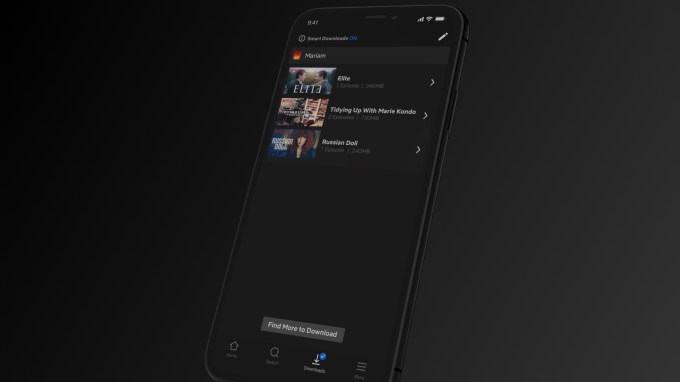
Netflix today is launching a new feature on iOS devices that will help make it easier to watch its shows when you’re offline. The “smart downloads” feature, as it’s called, will automatically delete a downloaded episode after you’ve finished watching, then download the next one – but only when you’re connected to Wi-Fi.

The idea is that users will no longer have to go through the tedious work of managing their downloads – deleting those they’ve watched or downloading new titles, for example. Instead, the app can manage the downloads for you, so people can spend more time watching Netflix shows.

Smart downloads makes sense for those who plan for intermittent connectivity – like commuters who take underground trains, for instance, or those who travel through dead spots where wireless coverage drops. It also makes sense for those on limited data plans, who are carefully about not using streaming video apps unless they’re on Wi-Fi.

Offline features like this are key to attracting and retaining users in emerging markets where connectivity concerns are the norm. That’s likely why Netflix prioritized Android over iOS, for the initial launch of smart downloads.

The feature had first arrived on Android last summer. It’s now offered across platforms, including iOS and in the Windows 10 Netflix app, the company says.

Offline access is only one area where Netflix is focusing on the needs of those in developing markets. The company late last year also began testing a more affordable, mobile-only subscription.

Non-U.S. users accounted for 7.31 million of the 8.8 million new subscribers Netflix added in the last quarter, as the U.S. market has become more saturated.

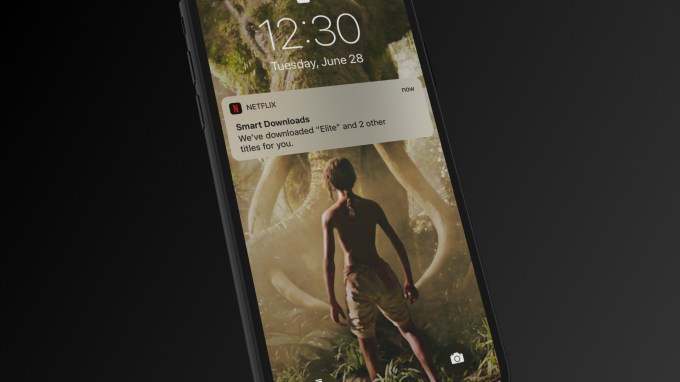
To use smart downloads on iOS, you can toggle the option in the Netflix app settings. It then turns itself on when you’re connected to Wi-Fi, to ensure your data plan won’t be used and your device storage won’t fill up as you watch offline. The feature will alert you when the episode in question has been downloaded.

“The faster our members can get to the next episode of their favorite stories, the better. Now, fans on the Netflix iOS app can get in on the fun and convenience of Smart Downloads, spending less time managing their downloads and more time watching,” said a Netflix spokesperson, in a statement about the launch. “The feature is one more way we’re making it easier for Netflix fans to take the stories they love wherever they go,” they added.

07 Feb 2019

Apple to compensate teenager who found Group FaceTime eavesdrop bug

Apple has said it will compensate the teenager who first found a security bug in Group FaceTime that allowed users to eavesdrop before a call was picked up.

The bug was initially reported to Apple by 14-year-old Grant Thompson and his mother, but the family struggled getting in contact the company before the bug was discovered elsewhere and went viral on social media.

The payout will fall under Apple’s bug bounty, which incentivizes security researchers to claim a reward for privately submitting security bugs and vulnerabilities to the company. Apple will also offer an unspecified additional gift to Thompson’s education.

“In addition to addressing the bug that was reported, our team conducted a thorough security audit of the FaceTime service and made additional updates to both the FaceTime app and server to improve security, an Apple spokesperson told TechCrunch. “This includes a previously unidentified vulnerability in the Live Photos feature of FaceTime.”

“To protect customers who have not yet upgraded to the latest software, we have updated our servers to block the Live Photos feature of FaceTime for older versions of iOS and macOS,” said Apple.

Apple rolled out iOS 12.4.1 on Thursday, which Apple says “provides important security updates and is recommended for all users.” The company’s separate security advisory also credited Thompson with finding the bug.

07 Feb 2019

Woody Allen just sued Amazon for $68 million

Woody Allen filed a $68 million suit with the Southern District of New York today over a four-picture deal with Amazon. The suit arrives as Allen’s latest film, “A Rainy Day in New York” has been set in limbo, months after release.

The film, which stars Selena Gomez, Elle Fanning and Jude Law, among others, has been shelved following the latest round of controversy around the filmmaker’s 1992 sexual assault allegations. A number of the film’s stars have since expressed regret at participating in the picture and others have agreed to donate their salaries to charity.

“Amazon has tried to excuse its action by referencing a 25-year-old, baseless allegation against Mr. Allen, but that allegation was already well known to Amazon (and the public) before Amazon entered into four separate deals with Mr. Allen,” the suit reads, “and, in any event it does not provide a basis for Amazon to terminate the contract,” the suit alleges. “There simply was no legitimate ground for Amazon to renege on its promises.”

The Amazon/Allen deal has already resulted in the release of two films — “Wonder Wheel” and “Cafe Society” — with more on the way. As Variety notes, the initial agreement was met with a then tongue-in-cheek comment from Allen, stating, “Like all beginning relationships, there is much hope, mutual affection and genuine goodwill — the lawsuits come later.” 

The rise of the Me Too movement, however, brought past Allen allegations back into the spotlight, and Amazon has noted the increased scrutiny it has experienced as a result.

07 Feb 2019

MIT’s insulin pill could replace injections for people with diabetes

Insulin pills have long been a kind of Holy Grail for people living with diabetes. A research team at MIT believes it may have taken an important step toward that dream with a new blueberry-sized capsule made of compressed insulin.

Once ingested, water dissolves a disk of sugar, using a spring to release a tiny needle made up almost entirely of freeze-dried insulin. The needle is injected into the stomach — which the patient can’t feel, owing to a lack of pain receptors in the stomach. Once the injection has occurred, the needle can break down in the digestive tract.

The pill is able to orient itself once swallowed, in order to make sure it injects in the right spot. That bit was apparently inspired by tortoise shells.

According to MIT, “The researchers drew their inspiration for the self-orientation feature from a tortoise known as the leopard tortoise. This tortoise, which is found in Africa, has a shell with a high, steep dome, allowing it to right itself if it rolls onto its back. The researchers used computer modeling to come up with a variant of this shape for their capsule, which allows it to reorient itself even in the dynamic environment of the stomach.”

So far, the team has been testing the pill successfully in pigs, delivering up to 300 micrograms of insulin in a go. No word on how long it might take to arrive in pharmacies.