Author: azeeadmin

07 Feb 2019

Africa Roundup: Zimbabwe’s net blackout, Partech’s $143M fund, Andela’s $100M raise, Flutterwave’s pivot

A high court in Zimbabwe ended the government’s restrictions on internet and social media last month.

After days of intermittent blackouts at the order of the country’s Minister of State for National Security, ISPs restored connectivity per a January 21 judicial order.

Similar to net shutdowns around the continent, politics and protests were the catalyst. Shortly after the government announced a dramatic increase in fuel prices on January 12, Zimbabwe’s Congress of Trade Unions called for a national strike.

Web and app blackouts in the southern African country followed demonstrations that broke out in several cities. A government crackdown ensued, with deaths reported.

On January 15, Zimbabwe’s largest mobile carrier, Econet Wireless, confirmed that it had complied with a directive from the Minister of State for National Security to shutdown internet.

Net access was restored, taken down again, then restored, but social media sites remained blocked through January 21.

Throughout the restrictions, many of Zimbabwe’s citizens and techies resorted to VPNs and workarounds to access net and social media, as reported in this TechCrunch feature.

Global internet rights group Access Now sprung to action, attaching its #KeepItOn hashtag to calls for the country’s government to reopen cyberspace soon after digital interference began.

The cyber-affair adds Zimbabwe to a growing list of African countries — including Cameroon, Congo and Ethiopia — whose governments have restricted internet expression in recent years.

It also provides another case study for techies and ISPs regaining their cyber rights. Internet and social media are back up in Zimbabwe — at least for now.

Further attempts to restrict net and app access in Zimbabwe will likely revive what’s become a somewhat ironic cycle for cyber shutdowns. When governments cut off internet and social media access, citizens still find ways to use internet and social media to stop them.
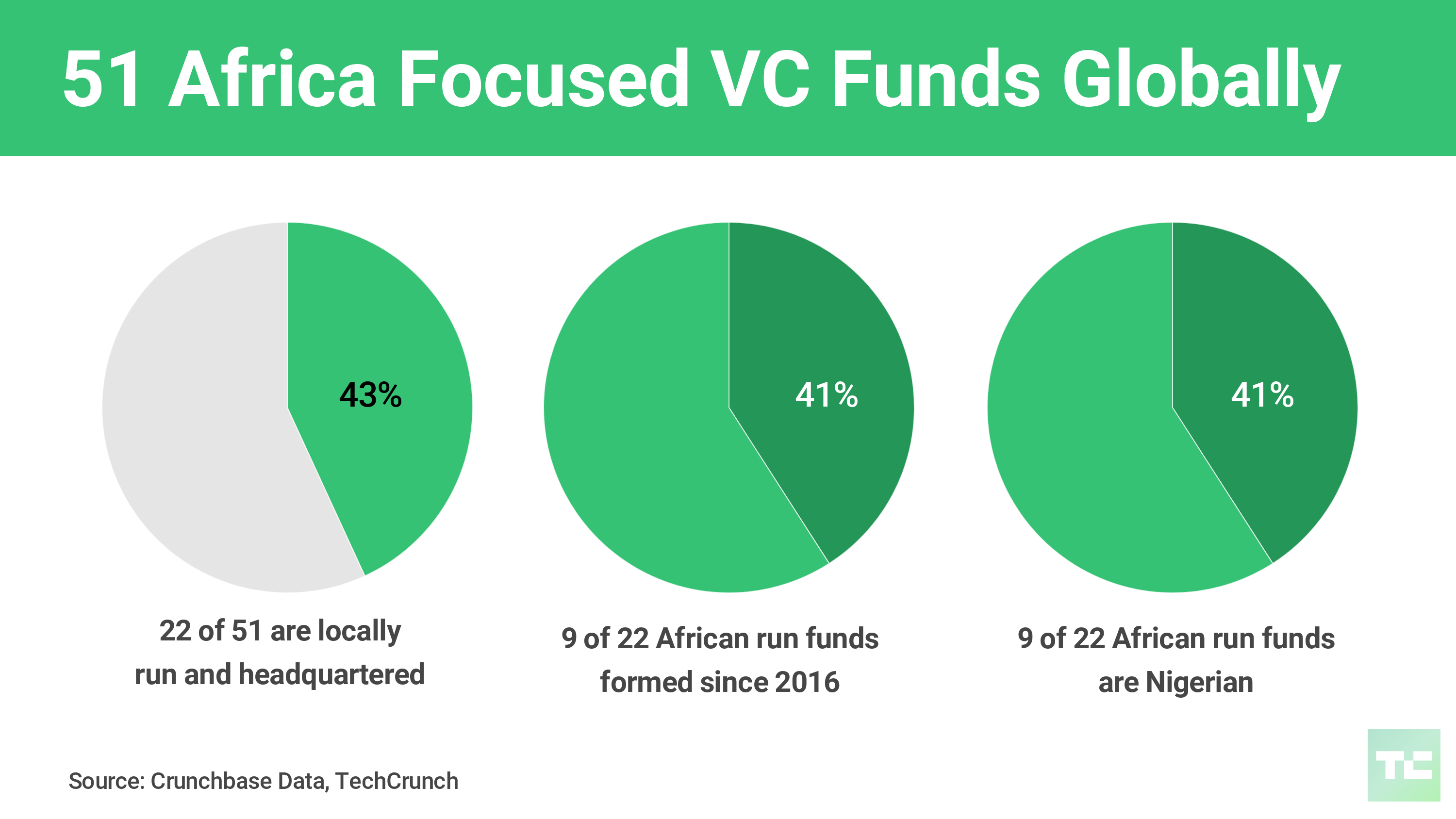
Partech doubled its Africa VC fund to $143 million and opened a Nairobi office to complement its Dakar practice.

The Partech Africa Fund plans to make 20 to 25 investments across roughly 10 countries over the next several years, according to general partner Tidjane Deme. The fund has added Ceasar Nyagha as investment officer for the Kenya office to expand its East Africa reach.

Partech Africa will primarily target Series A and B investments and some pre-series rounds at higher dollar amounts. “We will consider seed-funding — what we call seed-plus — tickets in the $500,000 range,” Deme told TechCrunch for this story on the new fund. Partech is open to all sectors “with a strong appetite for people who are tapping into Africa’s informal economies,” he said.

Partech Africa joined several Africa-focused funds over the last few years to mark a surge in VC for the continent’s startups. Partech announced its first raise of $70 million in early 2018 next to TLcom Capital’s $40 million, and TPG Growth’s $2 billion.

Africa-focused VC firms, including those locally run and managed, have grown to 51 globally, according to recent Crunchbase research.

Andela, the company that connects Africa’s top software developers with technology companies from the U.S. and around the world, raised $100 million in a new round of funding.

The new financing from Generation Investment Management (an investment fund co-founded by former VP Al Gore) puts the valuation of the company at somewhere between $600 million and $700 million—based on data available from PitchBook on the company’s valuation.

The company now has more than 200 customers paying for access to the roughly 1,100 developers Andela has trained and manages.

With the new cash in hand, Andela says it will double in size, hiring another thousand developers, and invest in new product development and its own engineering and data resources. More on Andela’s recent raise and focus here at TechCrunch.
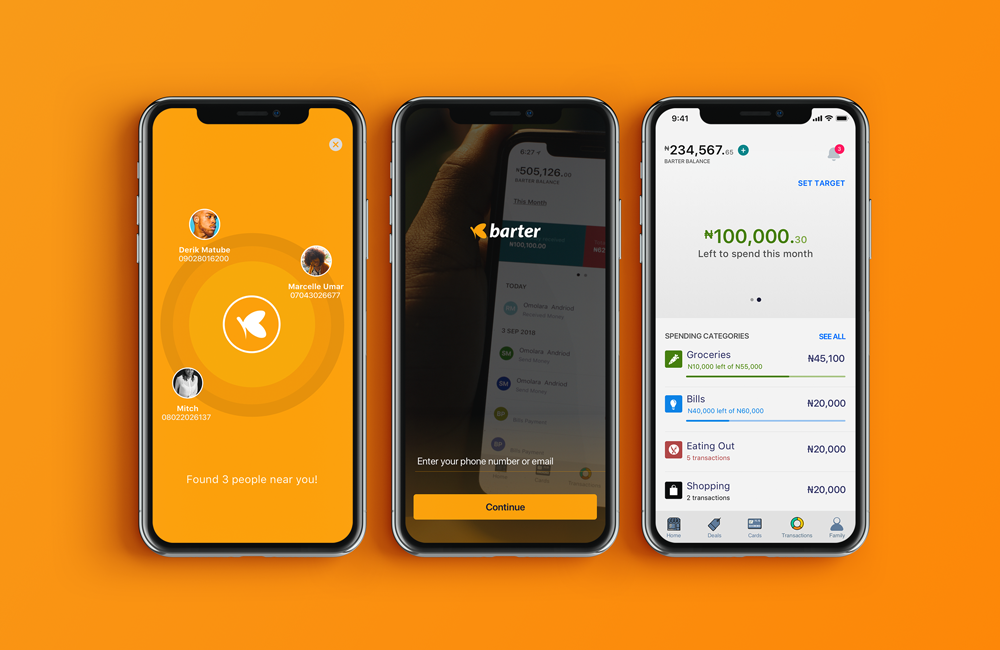
Fintech startup Flutterwave announced a new consumer payment product for Africa called GetBarter, in partnership with Visa.

The app-based offering is aimed at facilitating personal and small merchant payments within and across African countries. Existing Visa  cardholders can send and receive funds at home or internationally on GetBarter.

The product also lets non-cardholders (those with accounts or mobile wallets on other platforms) create a virtual Visa card to link to the app.  A Visa spokesperson confirmed the product partnership.

GetBarter allows Flutterwave  — which has scaled as a payment gateway for big companies through its Rave product — to pivot to African consumers and traders.

The app also creates a network for clients on multiple financial platforms to make transfers across payment products and national borders, and to shop online.

“The target market is pretty much everyone who has a payment need in Africa. That includes the entire customer base of M-Pesa,  the entire bank customer base in Nigeria, mobile money and bank customers in Ghana — pretty much the entire continent,” Flutterwave CEO Olugbenga Agboola told TechCrunch in this exclusive.

Flutterwave and Visa will focus on building a GetBarter user base across mobile money and bank clients in Kenya, Ghana, and South Africa, with plans to grow across the continent and reach those off the financial grid.

Founded in 2016, Flutterwave has positioned itself as a global B2B payments solutions platform for companies in Africa to pay other companies on the continent and abroad. It allows clients to tap its APIs and work with Flutterwave developers to customize payments applications. Existing customers include Uber,  Facebook,  Booking.com and African e-commerce unicorn Jumia.com.

Flutterwave added operations in Uganda in June and raised a $10 million Series A round in October The company also plugged into ledger activity in 2018, becoming a payment processing partner to the Ripple and Stellar blockchain networks.

Headquartered in San Francisco, with its largest operations center in Nigeria, the startup plans to add operations centers in South Africa and Cameroon, which will also become new markets for GetBarter.

And sadly, Africa’s tech community mourned losses in January. A terrorist attack on Nairobi’s 14 Riverside complex claimed the lives of six employees of fintech startup Cellulant and I-Dev CEO Jason Spindler. Both organizations had been engaged with TechCrunch’s Africa work over the last 24 months. Condolences to  family, friends, and colleagues of those lost.

More Africa Related Stories @TechCrunch

African Tech Around The Net    

07 Feb 2019

Twitter Q4 beats on sales of $909M and EPS of $0.33, but MAUs slump to just 321M

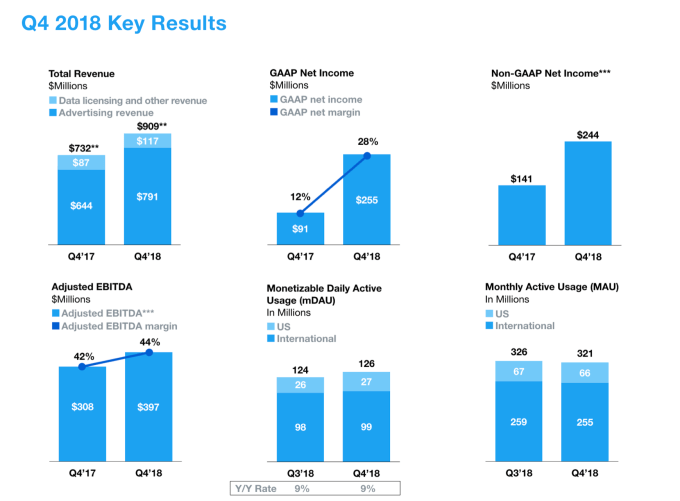
After strong results from Facebook and Snap this quarter, all eyes were on Twitter to see if the other big, publicly listed social network could deliver a hat trick of growth. If we judged the company on financials alone, the company did not disappoint, with revenues coming in at $909 million (up 24 percent on a year ago) and diluted earnings per share of $0.33 with a net income of $244 million. On average, analysts had been expecting revenues of $859.5 million on an EPS of $0.25.

However, user growth has now slumped to at 321 million monthly active users, falling short even of estimates that were expecting a decline.

Advertising revenues were $791 million, accounting for 87 percent of the company’s revenues. “Monetizeable daily active users” are now at 126 million up from 124 million in the previous quarter.

Shares are equally slumping in pre-market trading, down more than seven percent so far.

To put user growth into some context, Twitter has long-standing issues with user growth that even predate the company going public, and many quarters (such as last quarter, when it also beat estimates on revenues of $758 million and earnings per share of 21 cents; and a year ago, when it also crushed ) user numbers, specifically monthly active users, remained flat or even shrunk.

(Even analysts factor in declines to their own estimates. Analysts had been expecting 324 million monthly active users in Q4, according to a poll from Bloomberg, down from 326 million in Q3.)

Some of Twitter’s challenges on the user-number front have included the fact that despite its almost addictive popularity with some people, a strong showing from very high profile figures “speaking to the people” on Twitter, and the fact that it’s become a go-to for the media both to source news as well as broadcast — the real-time aspect of the feed lends itself well to all of these — it has been hard for it to find that groove with everyone.

Especially for many later adopting, newer users Twitter has proven to be confusing or too much work to use. That’s led to the company regularly tweaking the service to try to make it more user-friendly, with the latest move being that the company is planning a “beta” app to run multiple experiments simultaneously on a live audience receptive to seeing those and giving feedback.

As with Snap’s Snapchat, Twitter has worked to mitigate those numbers another way, too: by focusing on daily active over monthly active users. Here the numbers are up:

The reason why user numbers ultimately matter is that the general thinking goes that, in a business based around advertising and user data, as Twitter is, the larger audience you have the more revenue you can make off them as a product — a turn that Google and Facebook have made to great effect.

But despite Twitter’s issues with user growth, the company has been coming up trumps (sorry) with its business model, specifically initiatives around advertising and marketing and figuring out more clever ways of targeting those who are on there. Its ad revenues were up 23 percent, and Twitter said that new formats around video media are in particular showing strong results. Video accounted for more than half of Twitter’s ad revenues in the quarter and for all of 2018.

Less strong this quarter were the company’s various enterprise efforts. The company said that data licensing and other revenue totalled $117 million, an increase of 35 percent but still a small proportion of overall revenues. 

Facebook’s strong results this quarter came at the same time that the company has been weathering a ton of bad publicity around how its platform has been exploited (seemingly with little resistance from Facebook) to manipulate democratic processes, and how Facebook itself has been exploiting users to extract more data to help it build products. The fact that one (financials) do not seem to be impacted by the other (bad PR) raises a lot of questions: does the public really not care about all these things, or will the commercial ramifications come down the line as a delayed reaction?

It’s not clear, but Facebook has been taking measures to try to set things aright, both in terms of hiring more people to “fix” some of these issues, and also to reorient its whole staff to prioritise cleaning up the platform both when planning for future products, and in their daily work.

I mention all this because Twitter also dedicated some time in its earnings to highlighting how it has been battling abuse — which has been one of its big points of criticism from users, both as observers and as first-hand recipients of harassment. It noted that there has been a 16 percent year-over-year decrease in abuse reports. And it highlighted how it has improved security, updated rules for hateful conduct, and ramped up monitoring “behavior-based signals” to better manage what Tweets are viewed. 

It’s not clear how this will longer-term have an impact on the company’s bottom line — even if it has apparently affected how the company was viewed once as an acquisition target. But there is an argument to be made to fix it regardless, and that is what Twitter is trying to do.

It said that it will also focus on this in 2019, with a “more proactive approach to reducing abuse and its effects on Twitter, with the goal of reducing the burden on victims of abuse and, where possible, taking action before abuse is reported.” Specifically, it said it would focus on abuse that could cause severe or immediate harm; and a better sign-up process to screen for bad actors.”

More to come.

07 Feb 2019

Twitter Q4 beats on sales of $909M and EPS of $0.33, but MAUs slump to just 321M

After strong results from Facebook and Snap this quarter, all eyes were on Twitter to see if the other big, publicly listed social network could deliver a hat trick of growth. If we judged the company on financials alone, the company did not disappoint, with revenues coming in at $909 million (up 24 percent on a year ago) and diluted earnings per share of $0.33 with a net income of $244 million. On average, analysts had been expecting revenues of $859.5 million on an EPS of $0.25.

However, user growth has now slumped to at 321 million monthly active users, falling short even of estimates that were expecting a decline.

Advertising revenues were $791 million, accounting for 87 percent of the company’s revenues. “Monetizeable daily active users” are now at 126 million up from 124 million in the previous quarter.

Shares are equally slumping in pre-market trading, down more than seven percent so far.

To put user growth into some context, Twitter has long-standing issues with user growth that even predate the company going public, and many quarters (such as last quarter, when it also beat estimates on revenues of $758 million and earnings per share of 21 cents; and a year ago, when it also crushed ) user numbers, specifically monthly active users, remained flat or even shrunk.

(Even analysts factor in declines to their own estimates. Analysts had been expecting 324 million monthly active users in Q4, according to a poll from Bloomberg, down from 326 million in Q3.)

Some of Twitter’s challenges on the user-number front have included the fact that despite its almost addictive popularity with some people, a strong showing from very high profile figures “speaking to the people” on Twitter, and the fact that it’s become a go-to for the media both to source news as well as broadcast — the real-time aspect of the feed lends itself well to all of these — it has been hard for it to find that groove with everyone.

Especially for many later adopting, newer users Twitter has proven to be confusing or too much work to use. That’s led to the company regularly tweaking the service to try to make it more user-friendly, with the latest move being that the company is planning a “beta” app to run multiple experiments simultaneously on a live audience receptive to seeing those and giving feedback.

As with Snap’s Snapchat, Twitter has worked to mitigate those numbers another way, too: by focusing on daily active over monthly active users. Here the numbers are up:

The reason why user numbers ultimately matter is that the general thinking goes that, in a business based around advertising and user data, as Twitter is, the larger audience you have the more revenue you can make off them as a product — a turn that Google and Facebook have made to great effect.

But despite Twitter’s issues with user growth, the company has been coming up trumps (sorry) with its business model, specifically initiatives around advertising and marketing and figuring out more clever ways of targeting those who are on there. Its ad revenues were up 23 percent, and Twitter said that new formats around video media are in particular showing strong results. Video accounted for more than half of Twitter’s ad revenues in the quarter and for all of 2018.

Less strong this quarter were the company’s various enterprise efforts. The company said that data licensing and other revenue totalled $117 million, an increase of 35 percent but still a small proportion of overall revenues. 

Facebook’s strong results this quarter came at the same time that the company has been weathering a ton of bad publicity around how its platform has been exploited (seemingly with little resistance from Facebook) to manipulate democratic processes, and how Facebook itself has been exploiting users to extract more data to help it build products. The fact that one (financials) do not seem to be impacted by the other (bad PR) raises a lot of questions: does the public really not care about all these things, or will the commercial ramifications come down the line as a delayed reaction?

It’s not clear, but Facebook has been taking measures to try to set things aright, both in terms of hiring more people to “fix” some of these issues, and also to reorient its whole staff to prioritise cleaning up the platform both when planning for future products, and in their daily work.

I mention all this because Twitter also dedicated some time in its earnings to highlighting how it has been battling abuse — which has been one of its big points of criticism from users, both as observers and as first-hand recipients of harassment. It noted that there has been a 16 percent year-over-year decrease in abuse reports. And it highlighted how it has improved security, updated rules for hateful conduct, and ramped up monitoring “behavior-based signals” to better manage what Tweets are viewed. 

It’s not clear how this will longer-term have an impact on the company’s bottom line — even if it has apparently affected how the company was viewed once as an acquisition target. But there is an argument to be made to fix it regardless, and that is what Twitter is trying to do.

It said that it will also focus on this in 2019, with a “more proactive approach to reducing abuse and its effects on Twitter, with the goal of reducing the burden on victims of abuse and, where possible, taking action before abuse is reported.” Specifically, it said it would focus on abuse that could cause severe or immediate harm; and a better sign-up process to screen for bad actors.”

More to come.

07 Feb 2019

German antitrust office limits Facebook’s data-gathering

A lengthy antitrust probe into how Facebook gathers data on users has resulted in Germany’s competition watchdog banning the social network giant from combining data on users across its own suite of social platforms without their consent.

The investigation of Facebook data-gathering practices began in March 2016.

The decision by Germany’s Federal Cartel Office, announced today, also prohibits Facebook from gathering data on users from third party websites — such as via tracking pixels and social plug-ins — without their consent.

Although the decision does not yet have legal force and Facebook has said it’s appealing.

In both cases — i.e. Facebook collecting and linking user data from its own suite of services; and from third party websites — the Bundeskartellamt says consent must be voluntary, so cannot be made a precondition of using Facebook’s service.

The company must therefore “adapt its terms of service and data processing accordingly”, it warns.

“Facebook’s terms of service and the manner and extent to which it collects and uses data are in violation of the European data protection rules to the detriment of users. The Bundeskartellamt closely cooperated with leading data protection authorities in clarifying the data protection issues involved,” it writes, couching Facebook’s conduct as “exploitative abuse”.

“Dominant companies may not use exploitative practices to the detriment of the opposite side of the market, i.e. in this case the consumers who use Facebook. This applies above all if the exploitative practice also impedes competitors that are not able to amass such a treasure trove of data,” it continues.

“This approach based on competition law is not a new one, but corresponds to the case-law of the Federal Court of Justice under which not only excessive prices, but also inappropriate contractual terms and conditions constitute exploitative abuse (so-called exploitative business terms).”

Commenting further in a statement, Andreas Mundt, president of the Bundeskartellamt, added: “In future, Facebook will no longer be allowed to force its users to agree to the practically unrestricted collection and assigning of non-Facebook data to their Facebook user accounts.

“The combination of data sources substantially contributed to the fact that Facebook was able to build a unique database for each individual user and thus to gain market power. In future, consumers can prevent Facebook from unrestrictedly collecting and using their data. The previous practice of combining all data in a Facebook user account, practically without any restriction, will now be subject to the voluntary consent given by the users.

“Voluntary consent means that the use of Facebook’s services must not be subject to the users’ consent to their data being collected and combined in this way. If users do not consent, Facebook may not exclude them from its services and must refrain from collecting and merging data from different sources.”

“With regard to Facebook’s future data processing policy, we are carrying out what can be seen as an internal divestiture of Facebook’s data,” Mundt added. 

Facebook has responded to the Bundeskartellamt’s decision with a blog post setting out why it disagrees. The company did not respond to specific questions we put to it.

One key consideration is that Facebook also tracks non-users via third party websites. Aka, the controversial issue of ‘shadow profiles’ — which both US and EU politicians questioned founder Mark Zuckerberg about last year.

Which raises the question of how it could comply with the decision on that front, if its appeal fails, given it has no obvious conduit for seeking consent from non-users to gather their data. (Facebook’s tracking of non-users has already previously been judged illegal elsewhere in Europe.)

The German watchdog says that if Facebook intends to continue collecting data from outside its own social network to combine with users’ accounts without consent it “must be substantially restricted”, suggesting a number of different criteria are feasible — such as restrictions including on the amount of data; purpose of use; type of data processing; additional control options for users; anonymization; processing only upon instruction by third party providers; and limitations on data storage periods.

Should the decision come to be legally enforced, the Bundeskartellamt says Facebook will be obliged to develop proposals for possible solutions and submit them to the authority which would then examine whether or not they fulfil its requirements.

While there’s lots to concern Facebook in this decision, it isn’t all bad for the company — or, rather, it could have been worse.

The authority makes a point of saying the social network can continue to make the use of each of its messaging platforms subject to the processing of data generated by their use, writing: “It must be generally acknowledged that the provision of a social network aiming at offering an efficient, data-based business model funded by advertising requires the processing of personal data. This is what the user expects.”

Although it also does not close the door on further scrutiny of that dynamic, either under data protection law (as indeed, there is a current challenge to so called ‘forced consent‘ under Europe’s GDPR); or indeed under competition law.

“The issue of whether these terms can still result in a violation of data protection rules and how this would have to be assessed under competition law has been left open,” it emphasizes.

It also notes that it did not investigate how Facebook subsidiaries WhatsApp and Instagram collect and use user data — leaving the door open for additional investigations of those services.

On the wider EU competition law front, in recent years the European Commission’s competition chief has voiced concerns about data monopolies — going so far as to suggest, in an interview with the BBC last December, that restricting access to data might be a more appropriate solution to addressing monopolistic platform power vs breaking companies up.

In its blog post rejecting the German Federal Cartel Office’s decision, Facebook’s Yvonne Cunnane, head of data protection for its international business, Facebook Ireland, and Nikhil Shanbhag, director and associate general counsel, make three points to counter the decision, writing that: “The Bundeskartellamt underestimates the fierce competition we face in Germany, misinterprets our compliance with GDPR and undermines the mechanisms European law provides for ensuring consistent data protection standards across the EU.”

On the competition point, Facebook claims in the blog post that “popularity is not dominance” — suggesting the Bundeskartellamt found 40 per cent of social media users in Germany don’t use Facebook. (Not that that would stop Facebook from tracking those non-users around the mainstream Internet, of course.)

Although, in its announcement of the decision today, the Federal Cartel Office emphasizes that it found Facebook to have a dominant position in the Germany market — with (as of December 2018) 23M daily active users and 32M monthly active users, which it said constitutes a market share of more than 95 per cent (daily active users) and more than 80 per cent (monthly active users).

It also says it views social services such as Snapchat, YouTube and Twitter, and professional networks like LinkedIn and Xing, as only offering “parts of the services of a social network” — saying it therefore excluded them from its consideration of the market.

Though it adds that “even if these services were included in the relevant market, the Facebook group with its subsidiaries Instagram and WhatsApp would still achieve very high market shares that would very likely be indicative of a monopolisation process”.

The mainstay of Facebook’s argument against the Bundeskartellamt decision appears to fix on the GDPR — with the company both seeking to claim it’s in compliance with the pan-EU data-protection framework (although its business faces multiple complaints under GDPR), while simultaneously arguing that the privacy regulation supersedes regional competition authorities.

So, as ever, Facebook is underlining that its regulator of choice is the Irish Data Protection Commission.

“The GDPR specifically empowers data protection regulators – not competition authorities – to determine whether companies are living up to their responsibilities. And data protection regulators certainly have the expertise to make those conclusions,” Facebook writes.

“The GDPR also harmonizes data protection laws across Europe, so everyone lives by the same rules of the road and regulators can consistently apply the law from country to country. In our case, that’s the Irish Data Protection Commission. The Bundeskartellamt’s order threatens to undermine this, providing different rights to people based on the size of the companies they do business with.”

The final plank of Facebook’s rebuttal focuses on pushing the notion that pooling data across services enhances the consumer experience and increases “safety and security” — the latter point being the same argument Zuckerberg used last year to defend ‘shadow profiles’ (not that he called them that) — with the company claiming now that it needs to pool user data across services to identify abusive behavior online; and disable accounts link to terrorism; child exploitation; and election interference.

So the company is essentially seeking to leverage (you could say ‘legally weaponize’) a smorgasbord of antisocial problems many of which have scaled to become major societal issues in recent years, at least in part as a consequence of the size and scale of Facebook’s social empire, as arguments for defending the size and operational sprawl of its business. Go figure.

07 Feb 2019

Deepomatic raises $6.2 million for its industrial computer vision technology

French startup Deepomatic just raised a new funding round of $5.1 million in equity funding and $1.1 million in debt. Hi Inov is leading the round, with Alven Capital and Bertrand Diard also participating.

Deepomatic lets you build your own computer vision applications for your industrial needs. The company gives you all the tools to train a model and connect it to your video feeds. You can then deploy your new shiny service at the edge or on your own infrastructure, wherever you need it. You remain in control of your data.

After that, you can integrate that brick with the rest of your infrastructure using API calls. With such a low barrier to entry, it takes you around three months to deploy Deepomatic.

And it’s already working quite well for some companies. For instance, Compass Group is using it in some of its cafeterias. Instead of waiting in line for the cashier when your food is getting cold on your tray, you can simply pass your tray in front of a camera.

The camera will take a photo of your food and automatically recognize what you got — it works pretty much like Amazon Go. There’s no QR code, no RFID tags. There are 15,000 people using this system every day already.

Belron, the company behind Carglass, Autoglass, Safelite and other vehicle glass repair shops, is also using Deepomatic. Employees can take a photo of a broken windshield with a coin for scale, and the service will tell you the next steps — replacing the windshield, fixing it with resin, etc.

Parking company Indigo is also leveraging Deepomatic’s technology for its security cameras. In addition to traditional CCTV, security cameras can detect if someone is acting suspicious based on various factors — Indigo is keeping those factors confidential so that people can’t defeat the system.

Deepomatic customers pay annual subscription fees like other enterprise software solutions. The startup is going to focus on energy, transportation and infrastructure companies at first.

This is quite a departure from Deepomatic’s first product. The company started with a sort of ‘Shazam for fashion’ using computer vision. “Shopping and retail weren’t in our DNA, we are engineers,” co-founder and CEO Augustin Marty told me.

With today’s funding round, the company is opening a new office in New York to focus on the American market. Deepomatic currently has 20 clients but could quickly become an essential technological brick for many big companies.

07 Feb 2019

Skype can now blur the background during video calls

Thanks to the rise of WhatsApp and other free calling and messaging apps, Skype is no longer the go-to service it once was for many people. But the company just added a new feature which might raise its appeal among users.

The Microsoft-owned service’s latest addition is a screen-blurring feature designed to obscure your messy room or any other background details that you’d rather weren’t on display to the other party on the line.

Skype said that the feature — which is similar to the blurring added to Microsoft Teams last year — uses artificial intelligence to keep the focus on the caller. That also means it will detect features such as hair, hands and arms.

The feature is rolling out to Skype for desktop, the web and mobile although it doesn’t support all devices yet. It can be enabled in Skype’s settings or from the video call button inside the service.

07 Feb 2019

Musiio raises $1M to let digital music services use AI for curation

Musiio, a Singapore-based startup that uses AI to help digital music companies with discovery and creation, has pulled in a $1 million seed round.

The capital comes from Singapore’s Wavemaker Partners, U.S. investor Exponential Creativity Ventures and undisclosed angels. The deal represents the first outside round for Musiio, which was founded at the Entrepreneur First program in Singapore where CEO Hazel Savage, a former streaming exec, met CEO Aron Pettersson. It also makes Musiio the first venture capital-backed music AI startup in Southeast Asia and one of the most notable EF graduates from its Asian cohorts.

We first wrote about Musiio last April when it had raised SG$75,000 ($57,000) as part of its involvement in EF, the London-based accelerator that has big ambitions in Asia. Since then, it has increased its team to seven full-time staff.

The company is focused on reducing inefficiencies for music curation using artificial intelligence by augmenting the important work of human curators. In short, it aims to give those without the spending power of Spotify the opportunity to automate or partially automate a lot of the heavy lifting when it comes to scouring through music.

“Musiio won’t replace the need to have people listening to music,” Savage told TechCrunch last year. “But we can delete the inefficiencies.”

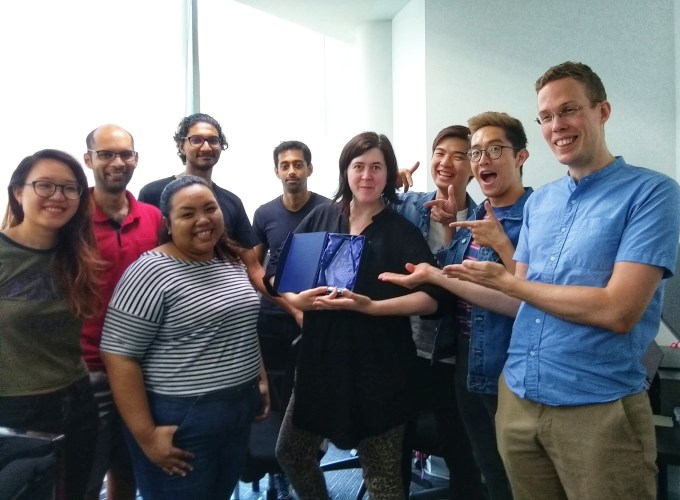
The Musiio team at its office in Singapore

The company’s first public client is Free Music Archive (FMA), a Creative Commons-like free music site developed by independent U.S. radio station WFMU. Musiio developed a curated playlist which raised the profile of a number of songs that had become ‘lost’ in the catalog. In particular, it helped one track double the number of plays it had received over eight years within just two days.

The FMA deal was really a proof of concept for Musiio, and Savage said that the company is getting close to announcing deals.

“Over the next month or two, there will be two or three commercial announcements,” Savage said this week. “We’re working with streaming companies and sync companies.”

07 Feb 2019

Car subscription service Cluno scores $28M in Series B funding led by Peter Thiel’s Valar Ventures

Cluno, the Munich startup providing what it calls a “car subscription” service, has raised $28 million in Series B funding. The round is led by Valar Ventures, the U.S.-based venture capital firm founded by Peter Thiel.

Acton Capital Partners and Atlantic Labs, which both backed the company’s Series A round, also participated. It brings total raised by Cluno to $36 million in funding in under one year.

Founded in 2017 by the same team behind easyautosale (which exited to Autoscout24 in 2015), Cluno offers an alternative to car ownership or a more restrictive lease by enabling you to subscribe to a car for an all-inclusive monthly fee. Available in Germany only, you book your car online or via the Cluno app, with the monthly fee covering all costs except fuel. After a minimum term of six months, subscribers can return or switch their car with three months notice.

Cluno says it will use the additional capital to further accelerate the company’s growth and to invest in its technology. This sees bookings, as well as credit checks and signatures, all carried out paperlessly via the Cluno app. In terms of car choice, the startup offers almost 50 models from nine different car companies, including BMW, VW, Audi and Ford. Models span small cars to SUVs, including hybrid and electric vehicles.

“Cluno is a full-stack provider,” is how Cluno co-founder and CEO Nico Polleti frames the company. “We control the whole value chain”. This, he tells me, includes doing solvency checks, scoring, buying and financing the cars, analysing and estimating residual values, insurance, and more. “One of the VCs I spoke to said Cluno is 50 percent mobility and 50 percent fintech,” he says. “We invest time and money in structured financing to buy more Cluno cars and make more customers happy”.

The Cluno team is now 55 strong and will grow to around 85 by the end of the year. In particular, Cluno is hiring tech, finance and marketing people based at its office in Munich. The product roadmap still has a way to go, too.

“At the moment, the app only allows you to subscribe to a car out of the predefined Cluno portfolio,” explains Polleti. “[The] next step will be the Cluno app giving access to dealer stock via an API”. This will see Cluno form partnerships with dealers and OEMs to grow the supply side of its offering.

07 Feb 2019

The plot to revive Mt. Gox and repay victims’ Bitcoin

It was the Lehman Brothers of blockchain. 850,000 Bitcoin disappeared when cryptocurrency exchange Mt. Gox imploded in 2014 after a series of hacks. The incident cemented the industry’s reputation as frighteningly insecure. Now a controversial crypto celebrity named Brock Pierce is trying to get the Mt. Gox flameout’s 24,000 victims their money back and build a new company from the ashes.

Pierce spoke to TechCrunch for the first interview about Gox Rising — his plan to reboot the Mt. Gox brand and challenge Coinbase and Binance for the title of top cryptocurrency exchange. He claims there’s around $630 million and 150,000 Bitcoin are waiting in the Mt. Gox bankruptcy trust, and Pierce wants to solve the legal and technical barriers to getting those assets distributed back to their rightful owners.

The consensus from several blockchain startup CEOs I spoke with was that the plot is “crazy”, but that it also has the potential to right one of the biggest wrongs marring the history of Bitcoin.

The Fall Of Mt. Gox

The story starts with Magic: The Gathering. Mt. Gox launched in 2006 as a place for players of the fantasy card game to trade monsters and spells before cryptocurrency came of age. The Magic: The Gathering Online eXchange wasn’t designed to safeguard huge quantities of Bitcoin from legions of hackers, but founder Jed McCaleb pivoted the site to do that in 2010. Seeking to focus on other projects, he gave 88 percent of the company to French software engineer Mark Karpeles, and kept 12 percent. By 2013, the Tokyo-based Mt. Gox had become the world’s leading cryptocurrency exchange, handling 70 percent of all Bitcoin trades. But security breaches, technology problems, and regulations were already plaguing the service.

Then everything fell apart. In February 2014, Mt. Gox halted withdrawls due to what it called a bug in Bitcoin, trapping assets in user accounts. Mt. Gox discovered that it had lost over 700,000 Bitcoins due to theft over the past few years. By the end of the month, it had suspended all trading and filed for bankruptcy protection, which would contribute to a 36 percent decline in Bitcoin’s price. It admitted that 100,000 of its own Bitcoin atop 750,000 owned by customers had been stolen.

Mt. Gox is now undergoing bankruptcy rehabilitation in Japan overseen by court-appointed trustee and veteran bankruptcy lawyer Nobuaki Kobayashi to establish a process for compensating the 24,000 victims who filed claims. There’s now 137,892 Bitcoin, 162,106 Bitcoin Cash, and some other forked coins in Mt. Gox’s holdings, along with $630 million cash from the sale of 25 percent of the Bitcoin that Kobayashi handled at a precient price point above where it is today. But five years later, creditors still haven’t been paid back. 

A Rescue Attempt

Brock Pierce, the eccentric crypto celebrity

Pierce had actually tried to acquire Mt. Gox in 2013. The child actor known from The Mighty Ducks had gone on to work with a talent management company called Digital Entertainment Network. But accusations of sex crimes led Pierce and some team members to flee the US to Spain until they were extradited back. Pierce wasn’t charged and paid roughly $21,000 to settle civil suits, but his cohorts were convicted of child molestation and child pornography.

The situation still haunts Pierce’s reputation and makes some in the industry apprehensive to be associated with him. But he managed to break into the virtual currency business, setting up World Of Warcraft gold mining farms in China. He claims to have eventually run the world’s largest exchanges for WOW Gold and Second Life Linden Dollars.

Soon Pierce was becoming a central figure in the blockchain scene. He co-founded Blockchain Capital, and eventually the EOS Alliance as well as a much-derided “crypto utopia” in Puerto Rico called Sol. His eccentric, Burning Man-influenced fashion made him easy to spot at the industry’s many conferences.

As Bitcoin and Mt. Gox rose in late 2012, Pierce tried to buy it, but “my biggest investor was Goldman Sachs. Goldman was not a fan of me buying the biggest Bitcoin exchange” due to the regulatory issues, Pierce tells me. But he also suspected the exchange was built on a shaky technical foundation that led him to stop pursuing the deal. “I thought there was a big risk factor in the Mt. Gox back-end. That was my intuition and I’m glad it was because my intuition was dead right.”

After Mt. Gox imploded, Pierce claims his investment group Sunlot Holdings successfully bought founder McCaleb’s 12 percent stake for 1 Bitcoin, though McCaleb says he didn’t receive the Bitcoin and it’s not clear if the deal went through. Pierce also claims he had a binding deal with Karpeles to buy the other 88 percent of Mt. Gox, but that Karpeles tried to pull out of the deal that remains in legal limbo.

The Supposed Villain

Sunlot has since been trying to take over the rehabilitation proceedings, but that arrangement was derailed by a lawsuit from CoinLab. That company had partnered with Mt. Gox in 2012 to run its North American operations but claimed it never received the necessary assets, and sued Mt. Gox for $75 million. Mt. Gox countersued, saying CoinLab wasn’t legally certified to run the exchange in the US and that it hadn’t returned $5.3 million in customer deposits. For a detailed account the tangle of lawsuits, check out Reuters’ deep-dive into the Mt. Gox fiasco.

CoinLab co-founder Peter Vessenes

This week, CoinLab co-founder Peter Vessenes increased the claim and is now seeking $16 billion. Pierce alleges “this is a frivolous lawsuit. He’s claiming if [the partnership with Mt. Gox] hadn’t been cancelled, CoinLab would have been Coinbase and is suing for all the value. He believes Coinbase is worth $16 billion so he should be paid $16 billion. He embezzled money from Mt. Gox, he committed a crime, and he’s trying to extort the creditors. He’s holding up the entire process hoping he’ll get a payday.” Later, Pierce reiterated that “Coinlab is the villain trying to take all the money and see creditors get nothing.” Industry sources I spoke to agreed with that characterization

Mt. Gox customers worried that they might only receive the cash equivalent of their Bitcoin according to the currency’s $483 value when Gox closed in 2014. That’s despite the rise in Bitcoin’s value rising to around 7X that today, and as high as 40X at the currency’s peak. Luckily, in June 2018 a Japanese District Court halted bankruptcy proceedings and sent Mt. Gox into civil rehabilitation which means the company’s assets would be distributed to its creditors (the users) instead of liquidated. It also declared that users would be paid back their lost Bitcoin rather than the old cash value.

The Plan For Gox Rising

Now Pierce and Sunlot are attempting another rescue of Mt. Gox’s  $1.2 billion assets. He wants to track down the remaining cryptocurrency that’s missing, have it all fairly valued, and then distribute the maximum amount to the robbed users with Mt. Gox equity shareholders including himself receiving nothing.

That’s a much better deal for creditors than if Mt. Gox paid out the undervalued sum, and then shareholders like Pierce got to keep the remaining Bitcoins or proceeds of their sale at today’s true value. “I‘ve been very blessed in my life. I did commit to giving my first billion away” Pierce notes, joking that this plan could account for the first $700 million he plans to ‘donate’.

“Like Game Of Thrones, the last season of Mt. Gox hasn’t been written” Pierce tells me, speaking in terms HBO’s Silicon Valley would be quick to parody. “What kind of ending do we want to make for it? I’m a Joseph Campbell fan so I’m obviously going to go with a hero’s journey, with a rise and a fall, and then a rise from the ashes like a phoenix.”

But to make this happen, Sunlot needs at least half of those Mt. Gox users seeking compensation, or roughly 12,000 that represent the majority of assets, to sign up to join a creditors committee. That’s where GoxRising.com comes in. The plan is to have users join the committee there so they can present a united voice to Kobayashi about how they want Mt. Gox’s assets distributed. “I think that would allow the process to move faster than it would otherise” Pierce says. “Things are on track to be resolved in the next three to five years. If [a majority of creditors sign on] this could be resolved in maybe 1 year.”

Beyond providing whatever the Mt. Gox estate pays out, Pierce wants to create a Gox Coin that gives original Mt. Gox creditors a stake in the new company. He plans to have all of Mt. Gox’s equity wiped out, including his own. Then he’ll arrange to finance and tokenize an independent foundation governed by the creditors that will seek to recover additional lost Mt. Gox assets and then distribute them pro rata to the Gox Coin holders. There are plenty of unanswered questions about the regulatory status of a Gox Coin and what holders would be entitled to, Pierce admits.

Meanwhile, Pierce is bidding to buy the intangibles of Mt. Gox, aka the brand and domain. He wants to then relaunch it as a Gox or Mt. Gox exchange that doesn’t provide custody itself for higher security. Despite the recent crypto recession with prices at multi-year lows, he believes there’s room for another exchange with a brand tied to the early heyday of Bitcoin.

“We want to offer [creditors] more than the bankruptcy trustee can do on its own” Pierce tells me. He concedes that the venture isn’t purely altruistic. “If the exchange is very successful I stand to benefit sometime down the road.” Even if the revived Mt. Gox never rises to legitimately challenge Binance, Coinbase, and other leading exchanges, Piece believes it’s all worth the effort. He concludes, “Whether we’re successful or not, I want to see the creditors made whole.” Those creditors will have to decide for themselves who to trust.

07 Feb 2019

Tink, the European open banking platform, scores €56M in new funding

Tink, the European open banking platform headquartered in Sweden, has deposited €56 million in new funding. Leading the round is U.S.-based Insight Venture Partners. Existing backers Sunstone, SEB, Nordea Ventures and ABN AMRO Digital Impact Fund also participated.

A number of other investors have been added to Tink’s cap table, too. They include Christian Clausen, former Chairman of the European Banking Federation, and — most notably — Nikolay Storonsky, co-founder of banking app and fintech ‘unicorn’ Revolut. According to sources, the new round of funding gives Tink a post-money valuation of €240 million.

Originally launched in Sweden in 2013 as a consumer-facing finance app with bank account aggregation at its heart, Tink has since repositioned its offering to provide the same underlying technology and more to banks and other financial service providers who want to ride the open banking/PSD2 train.

Through various APIs, Tink provides four pillars of technology: “Account Aggregation,” “Payment Initiation,” “Personal Finance Management” and “Data Enrichment”. These can be used by third parties to roll their own standalone apps or integrated into existing banking applications.

To that end, Tink says its developer platform is launching in five new markets, significantly boosting the fintech’s European coverage. They are U.K., Austria, Germany, Belgium and Spain, adding to the company’s Nordics base and bringing the total number of markets to nine countries.

Armed with new capital, Tink says the plan is to get to 20 markets by the end of 2019, targeting a range of customers “from big banks to individual developers”. In other words, the aim is to become a truly pan-European open banking platform. To help with this, headcount will increase significantly.

As it stands, Tink employs 150 people at its Stockholm headquarters, and recently opened an office in London. It plans to establish four more offices this year, doubling its European team to around 300. Customers include SEB, ABN AMRO, BNP Paribas Fortis, Nordea and Klarna.

Cue statement from Daniel Kjellén, co-founder and CEO, of Tink: “This funding round allows us to accelerate our European roll-out but also invest further in our data services. As Europe gradually embraces open banking, our platform has proved to be its rails and brains – delivering the technology that makes it possible. We attribute our success to being the first platform provider to combine account aggregation and payment initiation, the scale of our connectivity and our smart data products that make it all understandable”.

That’s not to say that Tink isn’t without competition, even if open banking/PSD2 feels like a bronze stroll rather than a gold rush so far, although things are definitely starting to heat up. Other fintechs in the space with overlapping products include Bud (which is backed by a host of banks, including HSBC), Meniga, and upstart TrueLayer.