Author: azeeadmin

30 Jan 2019

China continues 5G push despite economic slowdown and Huawei setbacks

China will fast-track the issuance of commercial licenses for 5G as part of a national plan to boost consumer spending, said a notice published this week by the National Development and Reform Commission. The move appears to be multifaceted, for 5G plays a key role in China’s bid to lead the global technology race and one of its biggest 5G champions, Huawei, has been facing troubles on a global scale.

In its statement, the economic regulator calls on local governments to support the promotion and showcase of services utilizing the super-fast network technology. Ultra-high definition TVs, virtual/augmented reality handsets and other futuristic products will be eligible for government subsidies, though the regulator didn’t outline the detailed criteria.

The acceleration of 5G licenses comes as Beijing copes with a weakening national economy, a move that will “drum up demand with upgraded technology experiences across devices, automotive and manufacturing leveraging 5G technology,” said Neil Shah, research director at Counterpoint Research, to TechCrunch. 5G is on course to generate 6.3 trillion yuan ($947 billion) worth of economic output and 8 million jobs for China by 2030, according to estimates from the China Academy of Information and Communications Technology.

Beijing has been gearing up to be the world leader in the next-generation network tech, pouring resources into 5G research and infrastructure. But it has been hit with a speed bump overseas as western countries grow increasingly wary of spy threat posed by Chinese 5G equipments. A souped-up domestic drive, therefore, could help neutralize some of the global setbacks faced by its 5G crown jewels like Huawei.

The U.S. and Australia have banned local firms from procuring equipment from Huawei, and Canada and the U.K. are currently reviewing whether to continue using 5G parts made by the Chinese telecom equipment giant. Meanwhile, Huawei is facing a list of criminal charges from the U.S. for stealing state secrets and its financial chief Meng is accused of bank fraud.

“Aaccelerating 5G licenses should indirectly help Huawei gain competitive edge for 5G considering it will be supplying solutions to the world’s largest mobile cellular market, China,” observes Counterpoint’s Shah. “This also gives Huawei an early platform to showcase its technology to the world and attract more global business.”

Huawei has continued with its 5G push despite being dogged by a string of global woes. Last week, the Shenzhen-based conglomerate unviled a 5G chipset for multiple commercial uses across smartphones, home and work. The chip, dubbed the Balong 5000, will be launching in February at a Barcelona tech trade show.

30 Jan 2019

China continues 5G push despite economic slowdown and Huawei setbacks

China will fast-track the issuance of commercial licenses for 5G as part of a national plan to boost consumer spending, said a notice published this week by the National Development and Reform Commission. The move appears to be multifaceted, for 5G plays a key role in China’s bid to lead the global technology race and one of its biggest 5G champions, Huawei, has been facing troubles on a global scale.

In its statement, the economic regulator calls on local governments to support the promotion and showcase of services utilizing the super-fast network technology. Ultra-high definition TVs, virtual/augmented reality handsets and other futuristic products will be eligible for government subsidies, though the regulator didn’t outline the detailed criteria.

The acceleration of 5G licenses comes as Beijing copes with a weakening national economy, a move that will “drum up demand with upgraded technology experiences across devices, automotive and manufacturing leveraging 5G technology,” said Neil Shah, research director at Counterpoint Research, to TechCrunch. 5G is on course to generate 6.3 trillion yuan ($947 billion) worth of economic output and 8 million jobs for China by 2030, according to estimates from the China Academy of Information and Communications Technology.

Beijing has been gearing up to be the world leader in the next-generation network tech, pouring resources into 5G research and infrastructure. But it has been hit with a speed bump overseas as western countries grow increasingly wary of spy threat posed by Chinese 5G equipments. A souped-up domestic drive, therefore, could help neutralize some of the global setbacks faced by its 5G crown jewels like Huawei.

The U.S. and Australia have banned local firms from procuring equipment from Huawei, and Canada and the U.K. are currently reviewing whether to continue using 5G parts made by the Chinese telecom equipment giant. Meanwhile, Huawei is facing a list of criminal charges from the U.S. for stealing state secrets and its financial chief Meng is accused of bank fraud.

“Aaccelerating 5G licenses should indirectly help Huawei gain competitive edge for 5G considering it will be supplying solutions to the world’s largest mobile cellular market, China,” observes Counterpoint’s Shah. “This also gives Huawei an early platform to showcase its technology to the world and attract more global business.”

Huawei has continued with its 5G push despite being dogged by a string of global woes. Last week, the Shenzhen-based conglomerate unviled a 5G chipset for multiple commercial uses across smartphones, home and work. The chip, dubbed the Balong 5000, will be launching in February at a Barcelona tech trade show.

30 Jan 2019

Wanna Kicks, a new AR app from Wannaby, lets you virtually “try on” your next pair of kicks

Wannaby, a startup out of Belarus that is building “AR commerce” experiences, has launched a beta of its latest app, which aims to make it easier to find the perfect sneakers.

Dubbed “Wanna Kicks,” the iOS app uses augmented reality to let you “try on” various pairs of sneakers. You simply choose a pair of kicks from the list of 3D models, point your camera at your feet and — bingo — you’re now virtually wearing your chosen footwear.

The effect is pretty instant and tracks reasonably well as you move and rotate your feet or change camera angle. You can even try walking and the AR app will follow your footsteps. It doesn’t work quite as well standing in front of a mirror, which would be more useful, but that is something Wanna Kicks’ makers say they are working on.

Ultimate, however, Wannaby believes its technology can help both customers and retailers. The premise is simple: the better idea you have of how a pair of sneakers will look when you’re actually wearing them, the more likely you are to make the right purchase and the less likely you are to return an item. Online retailers spend a lot of their margins trying to get customers to convert, and arguably even more servicing returns.

“Our mission is to break online shopping barriers,” Wannaby CEO and ex-Googler Sergey Arkhangelskiy tells me. “We believe that AR try-on can help customers to shop online and will wash away the difference between online and offline shopping. We see two major problems in the shoe market. Online conversions are quite low, and returns are quite high, in comparison to traditional ‘brick-and-mortar’ shopping. The ability to try sneakers with your phone before buying online should shift conversions, engagement, and returns”.

Arkhangelskiy argues that AR is also a great marketing tool. Unsurprisingly, Wanna Kicks lets you save a photo of your feed clad in new virtual sneakers, which you can then share on social media. Video sharing is in the pipeline, too.

“Many shoe brands are presenting their new releases both online and offline,” he says. “Lots of customers are eager to know more about new sneaker releases, and AR is a great new way for people to experience sneakers that are new to the market or are about to get to the market. Essentially, this is the main idea behind Wanna Kicks: allowing users to choose and decide whether they like a shoe or not without visiting a physical store”.

Under the hood, Wannaby says it uses sophisticated “3D geometry algorithms” together with neural networks to identify the position of the shoe in space. It’s these algorithms that the startup says are its secret sauce and the company’s main innovation. To onboard sneakers into the app, Wannaby utilises its own studio to create bespoke 3D models.

“We’ve built Wanna Kicks for Gen Z and millennials who are interested in buying sneakers and eager to know whether they will fit their style or not,” adds Arkhangelskiy. “The AR and AI community will love our launch as well — we’ve accomplished a really difficult task in computer vision and rendering”.

Meanwhile, Wannaby is backed by Bulba Ventures, and Haxus. The startup has raised $2 million in seed funding to date.

30 Jan 2019

Your smartphone may soon pack 1TB in storage thanks to Samsung’s new memory chip

Sick of filling the limited space on your phone with apps, photos and videos? Sometime in the near future, your smartphone could ship with more than one-terabyte (1TB) of internal storage and run 10 times faster than a standard memory card.

Samsung is best known for making smartphones but the company’s memory division — one of its most profitable units — just announced that it has begun mass-producing a 1TB flash storage chip for phones. There’s no word on when they’ll be inside smartphones but Samsung said it plans to increase production during the first half of this year.

“Smartphone enthusiasts will soon be able to enjoy storage capacity comparable to a premium notebook PC, without having to pair their phones with additional memory cards,” Samsung said.

That 1TB capacity is double the previous highest that the Korean firm has produced. Its newest chip gave the Galaxy Note 9 a 512GB model which passes the terabyte milestone when a 512GB SD card is added. This new breakthrough promises to offer that without the help of a card, but the company also boasted of improved performance.

Samsung said its new tech reaches speeds of up to 1,000 megabytes per second (MB/s) — that would transfer a 5GB-sized full HD video in just five seconds to transfer, as opposed to nearly one minute with conventional microSD cards. Increased memory will also enable better quality high-resolution video shooting thanks to faster random read speed, it said.

Sounds good, but might this ship before the end of the year? The Samsung rumor mill is already speculating that the upcoming Galaxy Note 10 could include a 1TB model, but at this stage there is no concrete evidence. Keep an eye out for future leaks for more hints.

30 Jan 2019

Chat app Line’s mobile payment service is getting its own Visa card

Brown, Cony and the gang are coming to a credit card near you in Japan. Line, the messaging app company behind the cute sticker characters, announced today that it is bringing its payment service to plastic through a tie-in with Visa.

Line is Japan’s largest chat app with an estimated 50 million registered users. The cards will be released later this year and they’ll allow Line Pay, the company’s digital wallet service, to stretch beyond its existing merchant base to allow users to pay at any retailer accepting Visa . In addition, the first year of use will see customers get 3 percent of their spending back in Line’s ‘Points’ virtual currency, which is used to buy stickers and other content.

The partnership is a step up from Line’s own payment cards, which were introduced in 2016 and supported by JCB.

It’s an interesting deal because mobile is generally seen as being the future form factor for payments. In China, for example, using cash or card to pay is considered antiquated — you’ll get glares from other patrons forced to wait while you complete your transaction — but digital payments face a struggle in most other markets.

WeChat and Alipay have become de facto in China, but retailers — and particularly smaller ones — don’t always have the awareness, confidence or resources to add support for Line or other digital wallets. Japan, where cash is still king, is perhaps most emblematic of that struggle. The government is making a sustained push towards cashless — particularly ahead of the 2020 Olympics — and Line, as the country’s dominant chat app, may help that along with this partnership.

Line wrapped up a deal with WeChat last November that allows users of the China-based chat app to make payment via Line Pay points of sale. Tencent’s WeChat and Alipay from Alibaba have spent recent years developing a system that lets Chinese tourists pay while they are overseas.

30 Jan 2019

Altice to acquire majority stake in OTT startup Molotov

Telecom company Altice is about to close a significant investment in French startup Molotov — the two companies have entered into exclusive negotiations. While terms of the deal are undisclosed, Altice should end up with a majority stake in Molotov for hundreds of millions of euros.

This is an interesting move as it greatly increases the reach of Molotov and opens up some new opportunities when it comes to internationalization, content and more.

Molotov is an over-the-top streaming platform in France. You can find all major TV channels, stream live content and watch replays for free. There are optional subscriptions to unlock more features, such as cloud recordings and premium channels.

The service is available on all major platforms — desktop, mobile, tablet, Apple TV, Android TV, Amazon Fire TV, smart TVs from Samsung, LG, Panasonic, etc. It is one of the most popular apps on tvOS and Android TV, always at the top of the stores with Netflix and myCanal.

When I last covered Molotov, the company told me that it has 7 million users in France. Every day, 1.2 million users watch something on Molotov. They stream a total of 1.1 million hours of content. As you can see, those Molotov sessions can be quite long.

Altice currently operates in France under the name SFR, Israel, Portugal, Dominican Republic and the U.S. following the acquisition of Cablevision. Like many telecom companies, Altice and its founder Patrick Drahi also has invested in content and media.

The company owns NextRadioTV (BFM TV, BFM Business, BFM Paris, RMC Story and RMC Découverte). It operates premium sports channels as the company currently has the distribution rights of the Premier League in France. It owns different newspapers and magazines, such as Libération and L’Express.

Interestingly, Altice has also acquired video adtech company Teads. You could already imagine new monetization opportunities for Molotov and Teads.

As Altice has already negotiated distribution rights with every TV network in France for its own set-top boxes, you can imagine a better offering on Molotov in the coming months. For instance, you could imagine being able to subscribe to Canal+ or BeIN Sports from Molotov.

Molotov had raised around $35 million from Idinvest (Benoist Grossmann), Sky, TDF, Cherry Tree Invest and others. While the service will remain available to everyone even if you’re an Orange subscriber for instance, SFR customers will get an extended version of Molotov for free. Altice will keep the name Molotov.

Molotov co-founder and CEO Jean-David Blanc will remain at the head of Molotov. With this open approach, Altice doesn’t just want to integrate the service into its offering. Molotov will remain an independent service and grow independently from Altice’s telecom operations.

30 Jan 2019

iRobot’s robotic lawnmower was 10 years in the making

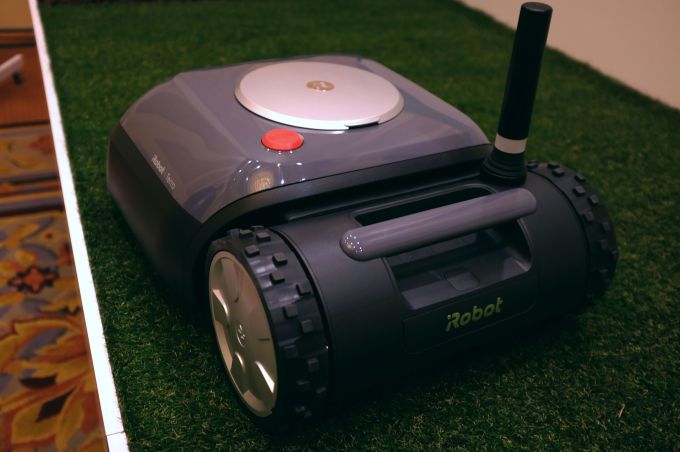
Meet Terra, the latest product line from iRobot destined to be forever known as the “Roomba for lawns.” There are worse names, of course. After all, with the Roomba line, iRobot was able do what countless startups have tried and failed before and after — introduce a truly mainstream home robot. If the Massachusetts-based hardware company is able to do the same for yard work, it will be a truly impressive feat indeed.

Like most of what iRobot does, however, work on the lawn-mowing robot has been slow and deliberate. In a closed-door meeting with the company at CES this year, CEO Colin Angle lifted the veil off of the robot. It was a kind of grand unveiling for a party of one. But first he explained why, precisely, it had taken iRobot so long to get into the space.

After all, the Terra is far from the first product to attempt to do for lawns what the Roomba has done for floors. Honda has already entered the space, along with lesser-known names like Robomow and Worx. But iRobot has one key thing none of the competition has — 17 years of experience building and evolving the Roomba line.

Even so, Angle tells me that Terra (Codenamed: Wichita) was nearly a decade in the making, with a team of between 35 and 50 members of its R&D staff devoted solely to the new product. There are many moving parts — both figuratively and literally — required to get a product like this just right. And certainly moving outdoors on uneven surfaces with a new objective requires more than simply iterating on the Roomba team’s work. The slanted legs on trampolines have apparently proven particularly difficult for roboticists to get their brains around.

In fact, the company has been covertly testing the mower outdoors, in a fenced-off section of the company’s Bedford, Mass. parking lot that was once a battleground for its military robotics (spun off in 2016 as Endeavor Robotics). I know I’d visited the company’s HQ a few times in those intervening years and wasn’t any the wiser.

The Terra’s operations should prove familiar to anyone who has spent time with recent versions of the Roomba. The mower lives primarily on a charging dock. The first time you send it out, the mower cases the joint using iRobot’s Imprint smart mapping technology — a larger-scale version of what you’ll find on the Roomba. The vision system is more equipped for obstacles and uneven lighting situations that arise in the outdoor setting.

The top of the robot opens to reveal a small remote control so the driver can cruise it around manually the first time to help show Terra where to go. The remote can also be used later, for those who’d prefer to take it for a joy ride.

Similar to the Roomba, the system utilizes a beacon system (it ships with two). Here they’re relatively unobtrusive poles that stake into the ground, helping create virtual boundaries for yards that don’t have fences or other natural borders. The system also utilizes the same Home app as Roomba, so users can remotely monitor its progress and the like.

Terra doesn’t have a bag on board, instead relying on a mulching system like you get on most industrial mowers. The robot takes on a lawn in a much more orderly fashion than Roomba, going back and forth to stripe the lawn. The battery should be more than enough for most residential lawns, but if it runs out of juice, Terra will return to its base to charge back up and pick up where it left off.

The system is weatherproof — though if you live in a particularly cold area, if might be best to bring it in when the snow piles up. There’s also a security system on board that assures Terra can’t be used if moved from its given lawn.

Lots of details like pricing are still forthcoming. Interestingly, the robot will launch first in Germany, later this year, with a beta program launching in the U.S., so the company can continue to tweak the system.

30 Jan 2019

Several top Pandora executives, including CEO Roger Lynch, will leave after its acquisition by SiriusXM

Pandora announced today that shareholders have approved its $3.5 billion acquisition by SiriusXM. After the transaction closes, several key Pandora executives will leave, including CEO Roger Lynch, general counsel Steve Bene, CFO Naveen Chopra, and chief human resources officer Kristen Robinson. SiriusXM CEO Jim Meyer will lead the combined company.

Pandora and SiriusXM announced the proposed acquisition last September, with SiriusXM offering to pay $3.5 billion in stock, or $10.14 per share, for Pandora.

Sirius and Pandora services will continue as before the acquisition. The deal is meant to “capitalize on cross-promotion opportunities,” as the companies put it, so this means customers can expect to see new offerings like subscription packages with both SiriusXM radios and Pandora streaming music included or Pandora’s content made available through SiriusXM’s car radio distribution channels.

SiriusXM says it has about 36 million subscribers in North America and 23 million annual trial listeners, while Pandora has 70 million monthly active users—but only 6.8 million of them were subscribers as of Q3 2018, compared to 87 million and 50 million subscribers for Spotify and Apple Music, respectively.

30 Jan 2019

Pinterest puts an IPO on its pinboard, hiring Goldman Sachs and JPMorgan to lead an offering this year

Pinterest, the 11-year-old, San Francisco-based site known for the photos its users post about everything from wedding to beauty trends, has hired Goldman Sachs and JPMorgan Chase as lead underwriters for an IPO that it’s planning to stage later this year.

Reuters first reported the news. TechCrunch sources have since confirmed the development. A Pinterest spokesperson declined to “comment on rumors and speculation” when asked this afternoon for more information.

Pinterest has raised roughly $1.5 billion over the years and was valued at $12 billion by its private investors during its last fundraising round in 2017. Notably, its backers include Goldman Sachs Investment Partners, among many other investment firms, both early and later-stage, like Valiant Capital Partners, Wellington Management, Andreessen Horowitz and Bessemer Venture Partners.

The company’s revenue last year was $700 million, more than double what the company generated in revenue in 2017.

It has 250 million monthly active users, compared with the 200 million monthly active users who were on the platform as of mid 2017.

Whether Pinterest has ever been profitable, we couldn’t learn this afternoon. But the company employs 1,600 people across 13 cities globally, including Chicago, London, Paris, São Paulo, Berlin, and Tokyo, and half its users now live outside the U.S., with the international market its fastest-growing segment.

Perhaps unsurprisingly, more than 80 percent of people access the service via its mobile app.

Assessing how Pinterest’s shares might be received by public market shareholders has become a favorite parlor game for Silicon Valley denizens. In a recent report, the outlet The Information posited that Pinterest’s offering could suffer because it’s a social media company that’s frequently lumped together with companies like Facebook and Twitter that have repeatedly raised concerns about users’ privacy and have faced a nearly year-long backlash as a result.

Yet Pinterest is far afield from what most users think of as social media and more akin to a visual search and discovery platform, with people looking for ideas and inspiration rather than to reach other people. So thinks venture capitalist Venky Ganesan of Menlo Ventures, who noted on a recent  TechCrunch podcast that “there are no Russian trolls” on Pinterest. More, he’d said, “I haven’t seen Pinterest sell [users’] data. They’re using data to [figure out] advertising on Pinterest; they aren’t brokering [that information] to others.”

Another potential concern for Pinterest is its reliance advertising, which is often the easiest expense for companies to slash when an economy begins to cool, as may be happening here in the U.S. Ads make up 100 percent of the company’s revenue. Here, too, however, Pinterest could prove more durable than some of its competitors. While brand-image driven advertising often gets cut when budgets tighten, direct response advertising often does even better in down markets, as companies seek out clearer returns on their investment, and much of Pinterest’s revenue is driven by direct response advertising. Users see, they click, and they buy. As Ganesan offered during that same podcast visit, “I’ve got three daughters at home, and they spend a lot of time on Pinterest, and they buy stuff.” (Ganesan isn’t an investor in the company; neither is the broader Menlo Ventures team.)

Pinterest could reportedly seek to raise up to $1.5 billion in an offering, according to past media reports. Whether it targets more or less, we’re likely to learn soon, but an IPO has been expected for some time, in part because the company is now getting up there in years as startups go, in part because of its continued growth, and in part because of some new hires that seemed to suggest the company has been gearing up to become publicly traded.

In November, for example, Pinterest brought aboard its first-ever chief marketing officer in Andréa Mallard, who joined the company from Athleta, Gap’s activewear brand, and who now oversees its global marketing and creative teams.

Roughly a year ago, Pinterest also recruited its first COO, hiring  Francoise Brougher, who was previously a  business lead at Square and a VP of SMB global sales and operations at Google before that.

In fact, unlike many of today’s buzziest companies, Pinterest seems to have retained almost all of the executives who work at the company with one notable exception, In late 2017, it parted ways with its then president, Tim Kendall, who’d been with Pinterest for more than five years at the time and who left to start his own health wellness company.

29 Jan 2019

Facebook pays teens to install VPN that spies on them

Desperate for data on its competitors, Facebook has been secretly paying people to install a “Facebook Research” VPN that lets the company suck in all of a user’s phone and web activity, similar to Facebook’s Onavo Protect app that Apple banned in June and that was removed in August. Facebook sidesteps the App Store and rewards teenagers and adults to download the Research app and give it root access in what may be a violation of Apple policy so the social network can decrypt and analyze their phone activity, a TechCrunch investigation confirms. Facebook admitted to TechCrunch it was running the Research program to gather data on usage habits.

Since 2016, Facebook has been paying users ages 13 to 35 up to $20 per month plus referral fees to sell their privacy by installing the iOS or Android “Facebook Research” app. Facebook even asked users to screenshot their Amazon order history page. The program is administered through beta testing services Applause, BetaBound and uTest to cloak Facebook’s involvement, and is referred to in some documentation as “Project Atlas” — a fitting name for Facebook’s effort to map new trends and rivals around the globe.
We asked Guardian Mobile Firewall’s security expert Will Strafach to dig into the Facebook Research app, and he told us that “If Facebook makes full use of the level of access they are given by asking users to install the Certificate, they will have the ability to continuously collect the following types of data: private messages in social media apps, chats from in instant messaging apps – including photos/videos sent to others, emails, web searches, web browsing activity, and even ongoing location information by tapping into the feeds of any location tracking apps you may have installed.” It’s unclear exactly what data Facebook is concerned with, but it gets nearly limitless access to a user’s device once they install the app.

The strategy shows how far Facebook is willing to go and how much it’s willing to pay to protect its dominance — even at the risk of breaking the rules of Apple’s iOS platform on which it depends. Apple could seek to block Facebook from continuing to distribute its Research app, or even revoke it permission to offer employee-only apps, and the situation could further chill relations between the tech giants. Apple’s Tim Cook has repeatedly criticized Facebook’s data collection practices. Facebook disobeying iOS policies to slurp up more information could become a new talking point. TechCrunch has spoken to Apple and it’s aware of the issue, but the company did not provide a statement before press time.

“The fairly technical sounding ‘install our Root Certificate’ step is appalling,” Strafach tells us. “This hands Facebook continuous access to the most sensitive data about you, and most users are going to be unable to reasonably consent to this regardless of any agreement they sign, because there is no good way to articulate just how much power is handed to Facebook when you do this.”

Facebook’s surveillance app

Facebook first got into the data-sniffing business when it acquired Onavo for around $120 million in 2014. The VPN app helped users track and minimize their mobile data plan usage, but also gave Facebook deep analytics about what other apps they were using. Internal documents acquired by Charlie Warzel and Ryan Mac of BuzzFeed News reveal that Facebook was able to leverage Onavo to learn that WhatsApp was sending more than twice as many messages per day as Facebook Messenger. Onavo allowed Facebook to spot WhatsApp’s meteoric rise and justify paying $19 billion to buy the chat startup in 2014. WhatsApp has since tripled its user base, demonstrating the power of Onavo’s foresight.
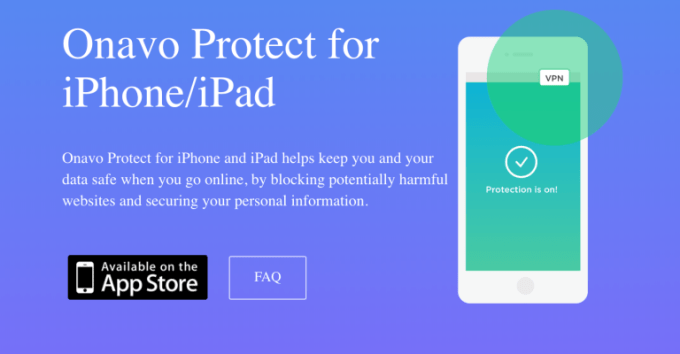
Over the years since, Onavo clued Facebook in to what apps to copy, features to build and flops to avoid. By 2018, Facebook was promoting the Onavo app in a Protect bookmark of the main Facebook app in hopes of scoring more users to snoop on. Facebook also launched the Onavo Bolt app that let you lock apps behind a passcode or fingerprint while it surveils you, but Facebook shut down the app the day it was discovered following privacy criticism. Onavo’s main app remains available on Google Play and has been installed more than 10 million times.

The backlash heated up after security expert Strafach detailed in March how Onavo Protect was reporting to Facebook when a user’s screen was on or off, and its Wi-Fi and cellular data usage in bytes even when the VPN was turned off. In June, Apple updated its developer policies to ban collecting data about usage of other apps or data that’s not necessary for an app to function. Apple proceeded to inform Facebook in August that Onavo Protect violated those data collection policies and that the social network needed to remove it from the App Store, which it did, Deepa Seetharaman of the WSJ reported.

But that didn’t stop Facebook’s data collection.

Project Atlas

TechCrunch recently received a tip that despite Onavo Protect being banished by Apple, Facebook was paying users to sideload a similar VPN app under the Facebook Research moniker from outside of the App Store. We investigated, and learned Facebook was working with three app beta testing services to distribute the Facebook Research app: BetaBound, uTest and Applause. Facebook began distributing the Research VPN app in 2016. It has been referred to as Project Atlas since at least mid-2018, around when backlash to Onavo Protect magnified and Apple instituted its new rules that prohibited Onavo. Facebook didn’t want to stop collecting data on people’s phone usage and so the Research program continued, in disregard for Apple banning Onavo Protect.

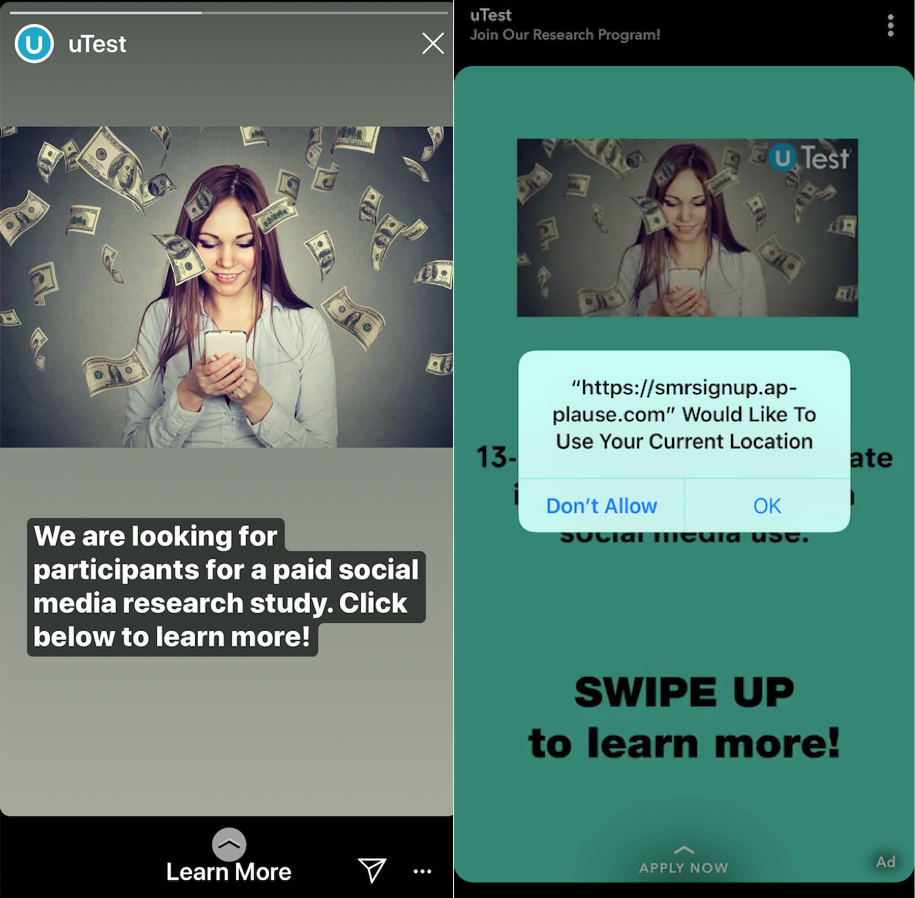
Ads (shown below) for the program run by uTest on Instagram and Snapchat sought teens 13-17 years old for a “paid social media research study.” The sign-up page for the Facebook Research program administered by Applause doesn’t mention Facebook, but seeks users “Age: 13-35 (parental consent required for ages 13-17).” If minors try to sign-up, they’re asked to get their parents’ permission with a form that reveal’s Facebook’s involvement and says “There are no known risks associated with the project, however you acknowledge that the inherent nature of the project involves the tracking of personal information via your child’s use of apps. You will be compensated by Applause for your child’s participation.” For kids short on cash, the payments could coerce them to sell their privacy to Facebook.

The Applause site explains what data could be collected by the Facebook Research app (emphasis mine):

“By installing the software, you’re giving our client permission to collect data from your phone that will help them understand how you browse the internet, and how you use the features in the apps you’ve installed . . . This means you’re letting our client collect information such as which apps are on your phone, how and when you use them, data about your activities and content within those apps, as well as how other people interact with you or your content within those apps. You are also letting our client collect information about your internet browsing activity (including the websites you visit and data that is exchanged between your device and those websites) and your use of other online services. There are some instances when our client will collect this information even where the app uses encryption, or from within secure browser sessions.”

Meanwhile, the BetaBound sign-up page with a URL ending in “Atlas” explains that “For $20 per month (via e-gift cards), you will install an app on your phone and let it run in the background.” It also offers $20 per friend you refer. That site also doesn’t initially mention Facebook, but the instruction manual for installing Facebook Research reveals the company’s involvement.
 

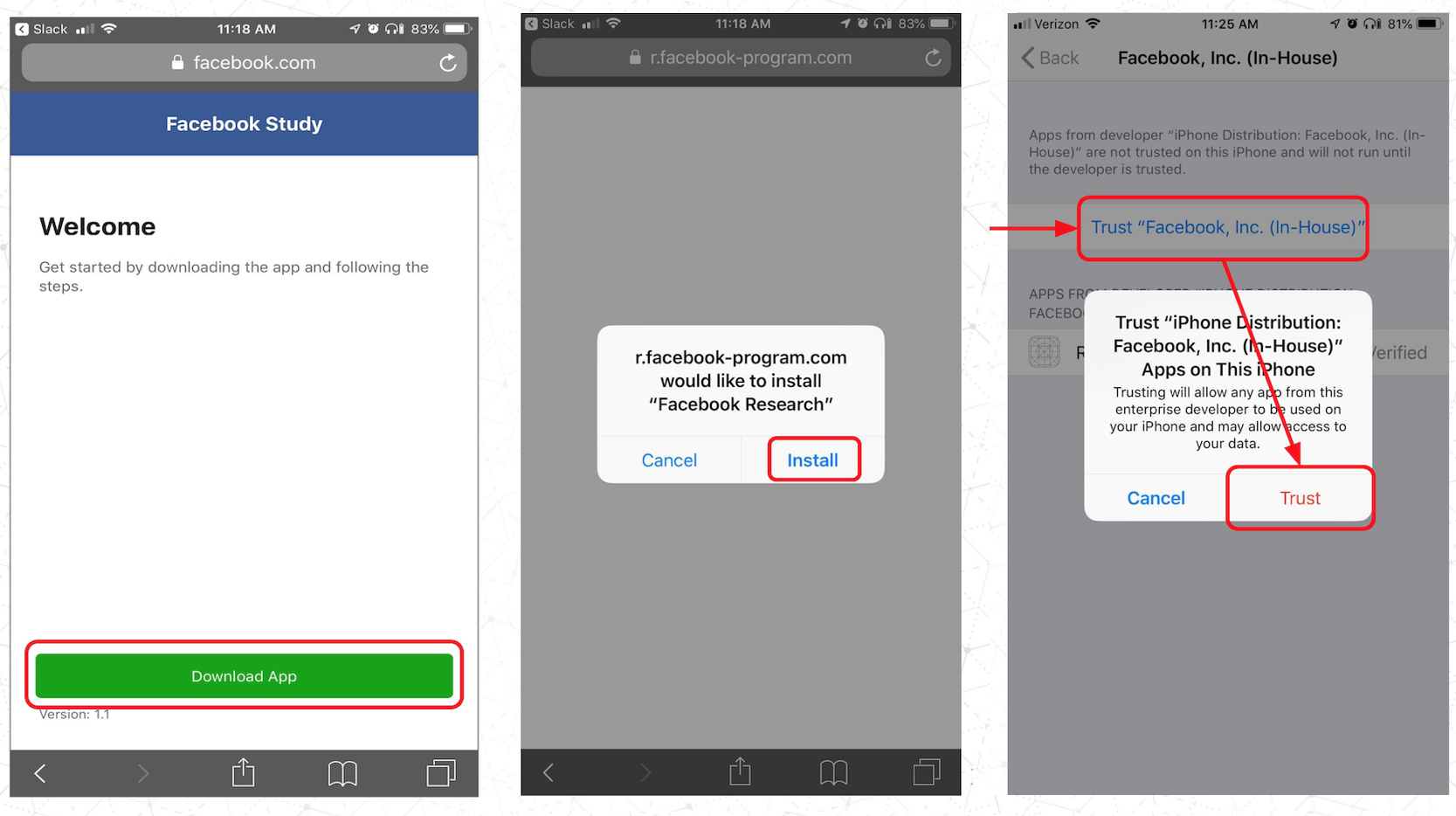
Facebook seems to have purposefully avoided TestFlight, Apple’s official beta testing system, which requires apps to be reviewed by Apple and is limited to 10,000 participants. Instead, the instruction manual reveals that users download the app from r.facebook-program.com and are told to install an Enterprise Developer Certificate and VPN and “Trust” Facebook with root access to their phone plus much of the data it transmits. Apple requires that developers agree to only use this certificate system for distributing internal corporate apps to their own employees. Randomly recruiting testers and paying them a monthly fee appears to violate the spirit of that rule.
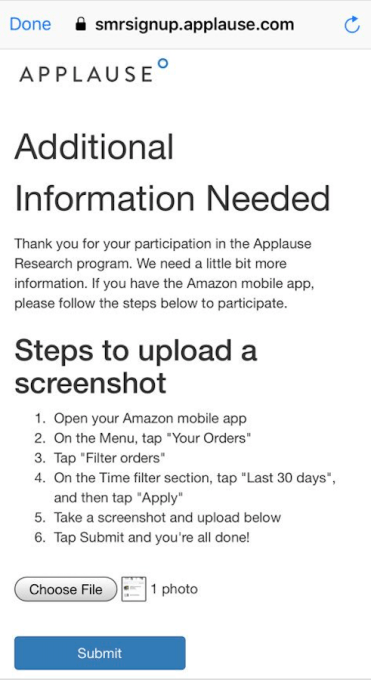
Once installed, users just had to keep the VPN running and sending data to Facebook to get paid. The Applause-administered program requested that users screenshot their Amazon orders page. This data could potentially help Facebook tie browsing habits and usage of other apps with purchase preferences and behavior. That information could be harnessed to pinpoint ad targeting and understand which types of users buy what.

TechCrunch commissioned Strafach to analyze the Facebook Research app and find out where it was sending data. He confirmed that data is routed to “vpn-sjc1.v.facebook-program.com” that is associated with Onavo’s IP address, and that the facebook-program.com domain is registered to Facebook, according to MarkMonitor. The app can update itself without interacting with the App Store, and is linked to the email address PeopleJourney@fb.com. He also discovered that the Enterprise Certificate indicates Facebook renewed it on June 27th, 2018 — weeks after Apple announced its new rules that prohibited the similar Onavo Protect app.

“It is tricky to know what data Facebook is actually saving (without access to their servers). The only information that is knowable here is what access Facebook is capable of based on the code in the app. And it paints a very worrisome picture,” Strafach explains. “They might respond and claim to only actually retain/save very specific limited data, and that could be true, it really boils down to how much you trust Facebook’s word on it. The most charitable narrative of this situation would be that Facebook did not think too hard about the level of access they were granting to themselves . . . which is a startling level of carelessness in itself if that is the case.”

“Flagrant defiance of Apple’s rules”

In response to TechCrunch’s inquiry, a Facebook spokesperson confirmed it’s running the program to learn how people use their phones and other services. The spokesperson told us “Like many companies, we invite people to participate in research that helps us identify things we can be doing better. Since this research is aimed at helping Facebook understand how people use their mobile devices, we’ve provided extensive information about the type of data we collect and how they can participate. We don’t share this information with others and people can stop participating at any time.”

Facebook’s spokesperson claimed that the Facebook Research app was in line with Apple’s Enterprise Certificate program, but didn’t explain how in the face of evidence to the contrary. They said Facebook first launched its Research app program in 2016. They tried to liken the program to a focus group and said Nielsen and comScore run similar programs, yet neither of those ask people to install a VPN or provide root access. The spokesperson confirmed the Facebook Research program does recruit teens but also other age groups from around the world. They claimed that Onavo and Facebook Research are separate programs, but admitted the same team supports both as an explanation for why their code was so similar.

However, Facebook claim that it doesn’t violate Apple’s Enterprise Certificate policy is directly contradicted by the terms of that policy. Those include that developers “Distribute Provisioning Profiles only to Your Employees and only in conjunction with Your Internal Use Applications for the purpose of developing and testing”. The policy also states that “You may not use, distribute or otherwise make Your Internal Use Applications available to Your Customers” unless under direct supervision of employees or on company premises. Given Facebook’s customers are using the Enterprise Certificate-powered app without supervision, it appears Facebook is in violation.

Facebook disobeying Apple so directly could hurt their relationship. “The code in this iOS app strongly indicates that it is simply a poorly re-branded build of the banned Onavo app, now using an Enterprise Certificate owned by Facebook in direct violation of Apple’s rules, allowing Facebook to distribute this app without Apple review to as many users as they want,” Strafach tells us. ONV prefixes and mentions of graph.onavo.com, “onavoApp://” and “onavoProtect://” custom URL schemes litter the app. “This is an egregious violation on many fronts, and I hope that Apple will act expeditiously in revoking the signing certificate to render the app inoperable.”

Facebook is particularly interested in what teens do on their phones as the demographic has increasingly abandoned the social network in favor of Snapchat, YouTube and Facebook’s acquisition Instagram. Insights into how popular with teens is Chinese video music app TikTok and meme sharing led Facebook to launch a clone called Lasso and begin developing a meme-browsing feature called LOL, TechCrunch first reported. But Facebook’s desire for data about teens riles critics at a time when the company has been battered in the press. Analysts on tomorrow’s Facebook earnings call should inquire about what other ways the company has to collect competitive intelligence.

Last year when Tim Cook was asked what he’d do in Mark Zuckerberg’s position in the wake of the Cambridge Analytica scandal, he said “I wouldn’t be in this situation . . . The truth is we could make a ton of money if we monetized our customer, if our customer was our product. We’ve elected not to do that.” Zuckerberg told Ezra Klein that he felt Cook’s comment was “extremely glib.”

Now it’s clear that even after Apple’s warnings and the removal of Onavo Protect, Facebook is still aggressively collecting data on its competitors via Apple’s iOS platform. “I have never seen such open and flagrant defiance of Apple’s rules by an App Store developer,” Strafach concluded. If Apple shuts the Research program down, Facebook will either have to invent new ways to surveil our behavior amidst a climate of privacy scrutiny, or be left in the dark.

Additional reporting by Zack Whittaker.