Category: UNCATEGORIZED

15 Oct 2019

Spearhead will give $1M to 15 founders to invest freely

Spearhead, an investment fund launched by AngelList’s Naval Ravikant and Accomplice’s Jeff Fagnan, plans to raise roughly $100 million for its third fund to provide founders $1 million each to invest in technology startups of their choosing.

The firm, created in 2017, initially provided founders $200,000 in investment capital sourced from Spearhead I, a $25 million vehicle, followed by Spearhead II, a $35 million vehicle. The group now plans roughly $100 million to give its founders 5x more capital to play with.

Each founder is allotted 15% carry in his or her fund, while Spearhead holds on to 5%. This time around, says Spearhead’s Jeff Fagnan, standout “leads,” or those tapped to deploy capital from the fund, will also have the opportunity to receive another $10 million to invest at the end of the two-year program during a culminating demo day-like event.

Spearhead is designed to train founders, who tend to be well-connected to the tech ecosystem and knowledgeable about startups, to be effective angel investors. Previous Spearhead leads include Shippo co-founder and chief executive officer Laura Behrens Wu, Scale AI founder and CEO Alex Wang and Rippling co-founder and chief technology officer Prasanna Sankar. To date, 35 founders have completed the program.

Applications to join Spearhead’s third cohort will become available this week. Those who participate will be encouraged to write checks at the pre-seed stage.

“There’s starting to be gap opening up again at the pre-seed,” Fagnan tells TechCrunch. “Founders are the right way to fill that gap. Founders backing their most talented friends … founders backing founders is the right way for this to go. We need to redefine who thinks of themselves as an angel investor.”

To be eligible to become a Spearhead lead, you must live in San Francisco, Los Angeles, Boston or New York City and run, or very recently have run, a startup. The firm plans to accept around 15 applicants.

“We are trying to build an active community within the leads and we’ve found smaller equals better; fewer people coming together and taking deeper accountability,” Fagnan said.

Spearhead leads can invest their capital in any tech startups, so long as there’s no existing equity relationship. Existing Spearhead investments include ZeroDown, Altitude Networks, Scythe, Airgarage, Cloosiv, Height, O.School, PopSQL, Superplastic and Sword Health.

15 Oct 2019

Entrepreneur First, the ‘talent investor’, pulls out of Hong Kong

Entrepreneur First (EF), the Greylock-backed “talent investor” that recruits and backs individuals pre-team and pre-idea to enable them to found startups, is pulling out of Hong Kong, TechCrunch has learned.

According to sources, the London HQ’d company builder has told provisional candidates for its 2020 Hong Kong cohort that they should instead apply to one of its other international outposts, which includes Berlin, Paris, Singapore, Bangalore, London and (most recently) Toronto.

The immediate Hong Kong operations aren’t changing, however, and the current cohort will complete the program and present at January’s Demo Day as planned. Hong Kong alumni will also continue to receive investment support as usual.

“We’ve decided not to recruit for further cohorts in Hong Kong after January 2020,” EF co-founder Matt Clifford tells me, confirming the news. “There’s no change to the current cohort and we’ll be running exactly the same program for them as for the previous Hong Kong cohorts. We’ll be in Hong Kong at the end of the month to run our investment process as usual and the companies we back will take part in our Demo Day in January as normal”.

Clifford also confirmed that EF had made a handful of early offers to individuals for the next Hong Kong cohort (originally planned for 2020). “We really rate them all, so we’ve offered to transfer their offer to any other EF site,” he says.

As for why EF is pulling out of Hong Kong, Clifford says that although there has been three “good cohorts” in Hong Kong, the talent pool there hasn’t proven big enough to support two cohorts per year “in the long run”. In the first two Hong Kong cohorts, EF has backed around 100 individuals and 11 companies, many of which have gone onto raise external funding.

“The quality is very high, but we need higher volume to make a site work at scale,” he explains. “We’ve always said to our investors that we’ll deploy capital wherever we see the best long term opportunities and, while Hong Kong might well have been viable for another cycle or two, we see more sustainable opportunities elsewhere”.

What Clifford doesn’t mention, of course, is the current political unrest in Hong Kong, which continues to see pro-democracy protests and a subsequent police clamp down. This has included lethal force and the use of controversial “emergency powers” by the Hong Kong administration. Clearly any such climate will make it difficult to attract talent to the country, which a program like EF is reliant on.

Meanwhile, Clifford says there’s no change to the scale of EF’s plans, more broadly. The talent investor still plans to back around 1,000 founders globally in 2020. “We’ve obviously got the Toronto expansion we announced recently coming up and some other sites in the pipeline, so the total number of individuals and companies we expect to invest in remains the same,” he says.

I also understand that the four full-time permanent members of the Hong Kong team have been offered roles elsewhere at EF, meaning that there are likely no net job losses.

15 Oct 2019

Annie Leibovitz used the Pixel 4 to shoot a new collection of photos

Google ended today’s hardware event by going deep on the photo technology in its new Pixel 4, and brought out someone who’s actually been using the camera — legendary photographer Annie Leibovitz.

The company announced that it’s working with Leibovitz back in October 2018. Today, she spoke about the experience of working with the Pixel 3 and Pixel 4 for the past year.

Leibovitz told the audience that while she’s been using cameraphones for a while, she was “dying for this opportunity, to be given this opportunity by Google” to go out and use a cameraphone as a professional photographer.

The discussion didn’t include too many details about the project itself — from what I gathered, it’s a collection of photos of a wide range of activists and “changemakers.” Leibovitz said each portrait is a “diptych,” combining a photo of the ostensible subject with a second photo of something that’s important to them and their work.

She admitted that in the beginning, she had “a little bit of a rough start,” but as time went on, Leibovitz said, “I just relaxed and I totally enjoyed myself.” For example, she said her final shoot was with soccer star Megan Rapinoe, and she described the experience as one where “it really felt like we were just floating … I wasn’t really thinking about the camera.”

Google’s Lily Lin ended their conversation by asking about “pro tips” for other photographers.

“It’s all inside you,” Leibovitz replied. “You just go out and you do it … I mean, we all are using this camera, and it’s a brand new language.”

15 Oct 2019

Google aims to change the definition of good photography with Pixel 4’s software-defined camera

Google’s new Pixel 4 camera offers a ton of new tricks to improve its photographic chops, and to emphasize the point, it had Professor Mark Levoy, who leads camera technology development at Google Research, up on stage to talk about the Pixel 4’s many improvements, including its new telephoto lens, updated Super Res Zoom technology and Live HDR+ preview.

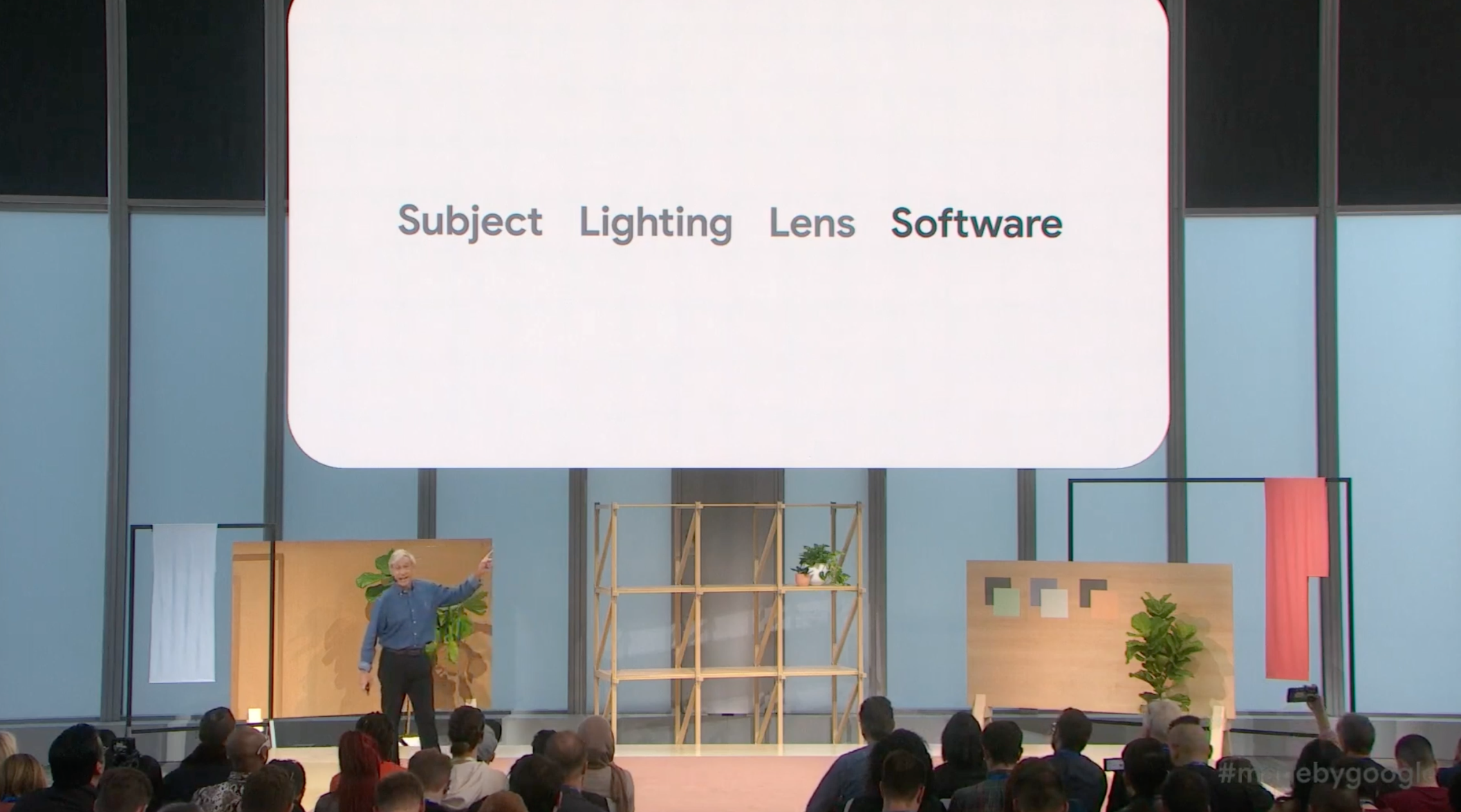
Subject, Lighting, Lens, Software

Levoy started by addressing the oft-cited saying among photographers that what’s most important to a good photo is first subject, then lighting and followed after that by your hardware: ie., your lens and camera body. He said that he and his team believe that there’s a different equation at play now, which replaces that camera body component with something else: Software.

Screen Shot 2019 10 15 at 10.59.55 AM

Lens is still important in the equation, he said, and the Pixel 4 represents that with the addition of a telephoto lens to the existing wide angle hardware lens it offers. Levoy also offered the opinion that a telephoto is more useful generally than a wide angle, clearly a dig at Apple’s addition of an ultra-wide angle hardware lens to its latest iPhone 11 Pro models.

Google Pixel 4 Camera

In this context, that means Google’s celebrated “computational photography” approach to its Pixel camera tech, which handles a lot of the heavy lifting involved when it takes a photo from a small sensor, which tend to be bad, and turns that into something pretty amazing.

Levoy said that he calls their approach a “software-defined camera,” which most of the time just means capturing multiple photos, and combining data from each in order to produce a better, single final picture.

Screen Shot 2019 10 15 at 11.07.56 AM

What’s new for Pixel 4

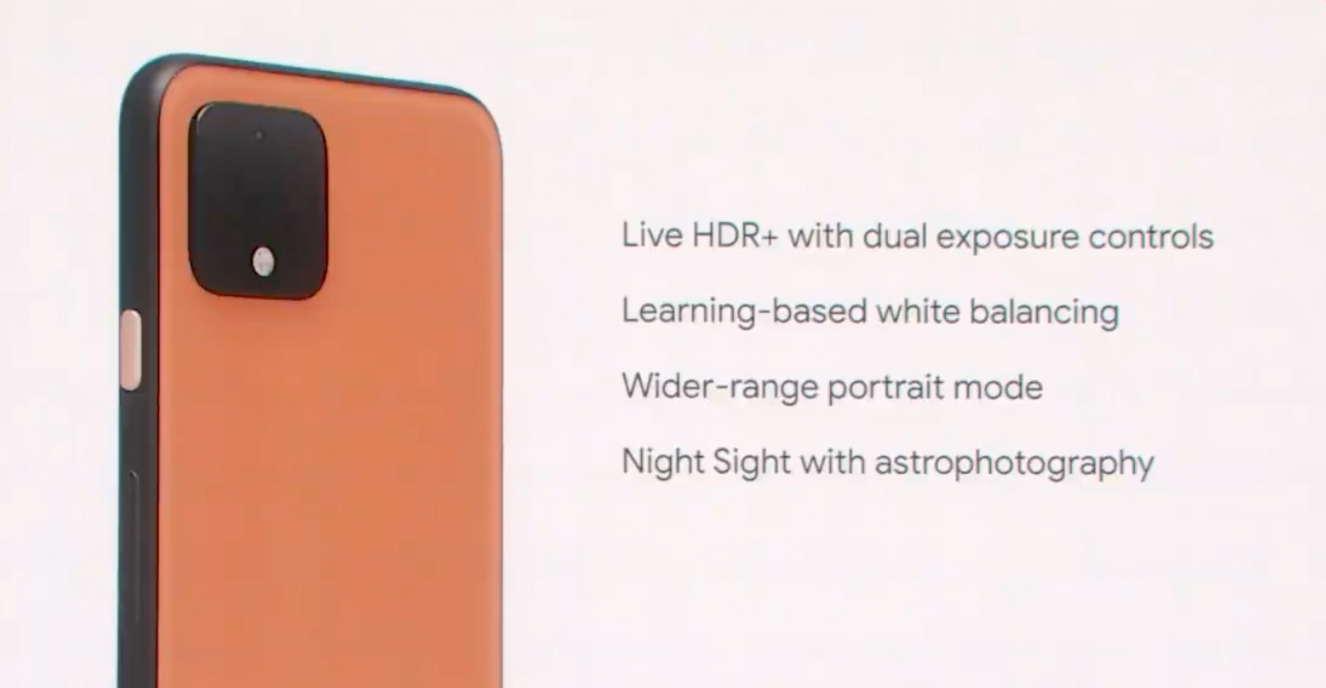
There are four new features for the Pixel 4 phone powered by computational photography, which include Live HDR with dual exposure controls, which shows you a real-time image of what the final photo will look like with the HDR treatment applied, instead of just giving you a very different looking final shot. It also bakes in exposure controls that allow you to adjust the highlights and shadows in the image on the fly, which is useful if you want bolder highlights or silhouettes from shadows, for instance.

Also new is “Learning-based white balance,” which addresses the tricky issue of getting your white balance correct. Levoy said that Google has been using this approach in white-balancing night sight photos since the introduction of that feature with Pixel 3, but now it’s bringing it to all photo modes. The result is cooler colors, and particularly in tricky lighting situations when whites tend to be incorrectly exposed as orange or yellow.

Screen Shot 2019 10 15 at 11.02.01 AM

The new wide-range portrait mode makes use of info from both the dual-pixel imaging sensors that Pixel 4 uses, as well as the new second lens to derive more depth data and provide an expanded, more accurate portrait mode to separate the subject from the background. It now works  on large objects and portraits where the person in focus is standing further back, and it provides better bokeh shape (the shape of the defocused elements int eh background) and better definition of strands of hair and fur, which has always been tricky for software background blur.

Lastly, Night Sight mode gets overall improvements, as well as a new astral photography mode specifically for capturing the night sky and star fields. The astral mode provides great looking night sky images with exposure times that run multiple minutes, but all with automatic settings and computational algorithms that sort out issues like stars moving during that time.

google pixel 4 sample images

Still more to come

Google wanted to emphasize the point that this is a camera that can overcome a lot of the problems faced typically by small sensors, and it brought out heavyweight photography legend Annie Lebowitz to do just that. She showed some of the photos she’s been capturing both with Pixel 3 and Pixel 4, and they did indeed look great, although the view from the feed doesn’t say quite as much as would print versions of the final photos.

[gallery ids="1897442,1897441,1897440"]

Levoy also said that they plan to improve the camera over time via software updates, so this is just the start for Pixel 4. Based on what we saw on stage, it definitely looks like a step-up from the already excellent Pixel 3, but we’ll need more time hand-on to see what it does compared to Apple’s much-improved iPhone 11 camera.

15 Oct 2019

Amazon migrates more than 100 consumer services from Oracle to AWS databases

AWS and Oracle love to take shots at each other, but as much as Amazon has knocked Oracle over the years, it was forced to admit that it was in fact a customer. Today in a company blog post, the company announced it was shedding Oracle for AWS databases, and had effectively turned off its final Oracle database.

The move involved 75 petabytes of internal data stored in nearly 7,500 Oracle databases, according to the company. “I am happy to report that this database migration effort is now complete. Amazon’s Consumer business just turned off its final Oracle database (some third-party applications are tightly bound to Oracle and were not migrated),” AWS’s Jeff Barr wrote in the company blog post announcing the migration.

Over the last several years, the company has been working to move off of Oracle databases, but it’s not an easy task to move projects on Amazon scale. Barr wrote there were lots of reasons the company wanted to make the move. “Over the years we realized that we were spending too much time managing and scaling thousands of legacy Oracle databases. Instead of focusing on high-value differentiated work, our database administrators (DBAs) spent a lot of time simply keeping the lights on while transaction rates climbed and the overall amount of stored data mounted,” he wrote.

More than 100 consumer services have been moved to AWS databases including customer-facing tools like Alexa, Amazon Prime and Twitch among others. It also moved internal tools like AdTech, its fulfillment system, external payments and ordering. These are not minor matters. They are the heart and soul of Amazon’s operations.

Each team moved the Oracle database to an AWS database service like Amazon DynamoDB, Amazon Aurora, Amazon Relational Database Service (RDS), and Amazon Redshift. Each group was allowed to choose the service they wanted, based on its individual needs and requirements.


15 Oct 2019

Here’s everything Google just announced at the Made By Google 2019 event


Google held its annual “Made By Google” hardware event this morning in New York City, where they launched all sorts of new gear back to back to back.

Didn’t have time to watch the whole stream, but still want to know the bulletpoints of what’s new? We’ve got you covered.

Stadia Launch

Stadia, Google’s cloud video game streaming service, will launch on November 19th.

Pixel Buds

Google Pixel buds

Google went back to the drawing board with its answer to the AirPods. Shipping sometime in “Spring 2020”, the new Pixel Buds will cost $179. Google says the battery should last about 5 hours per charge, with the familiar floss-style charging case packing an additional 24 hours worth of charge. On-board microphones will adapt the sound based on your environment, and help to cancel out background noise like wind.

Pixelbook Go

Google Pixelbook Go

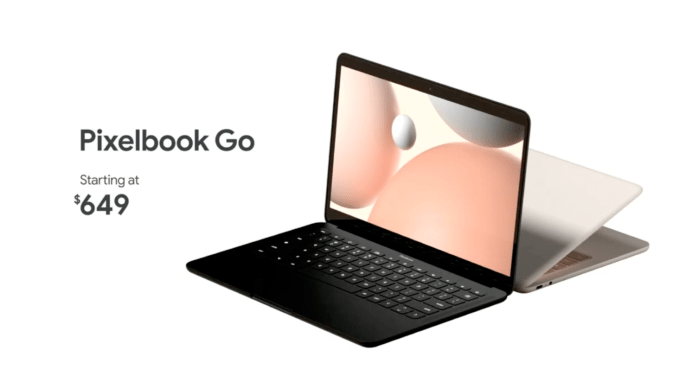
It’s been a while since Google shipped a higher-end Chrome OS laptop — but with Pixelbook Go, they’re taking another swing at it. It’s got a 13.3″ display, up to 16GB of RAM, up to 256GB of storage, with the company promising around 12 hours of battery life. It’ll weigh roughly 2lbs, with a base model that’ll cost $649.

New Nest Aware

Nest Aware (which lets you add cloud recording to your Nest cameras) used to cost a few bucks per device. Now it’s a flat fee, regardless of how many cameras you’ve got. $6 per month gets you 30 days of “event” history (read: just the bits of video where things are actually happening), while $12 per month gets you 10 days of 24/7 video history.

Nest Aware also now lets you put your Nest Minis/Nest Hubs into a security-centric listening mode, with the smart speakers listening for things like smoke alarms and dogs barking and sending you notifications accordingly.

They’ll switch to the new tier structure in “early 2020”.

Nest WiFi

EG7TM0pXYAIlB

As rumored over the past few weeks, Google is mashing up the concepts of its Google Wifi mesh router with its Google Home speakers, voltroning them into Nest WiFi — a router/smart speaker hybrid. They’ll ship starting on November 4th; a two pack will cost $269, with a three pack going for $349.

New Nest Mini

Google Nest Mini

The Google Home Mini is now the “Nest Mini” — and a bit has changed beyond the name. It’s now wall mountable without any adapters, with a speaker that Google says offers up double the bass. Its got a new machine learning chip on board for faster responses, and more microphones to work better in louder environments. It’ll ship on October 22nd for $49.

Pixel 4

Google Pixel 4

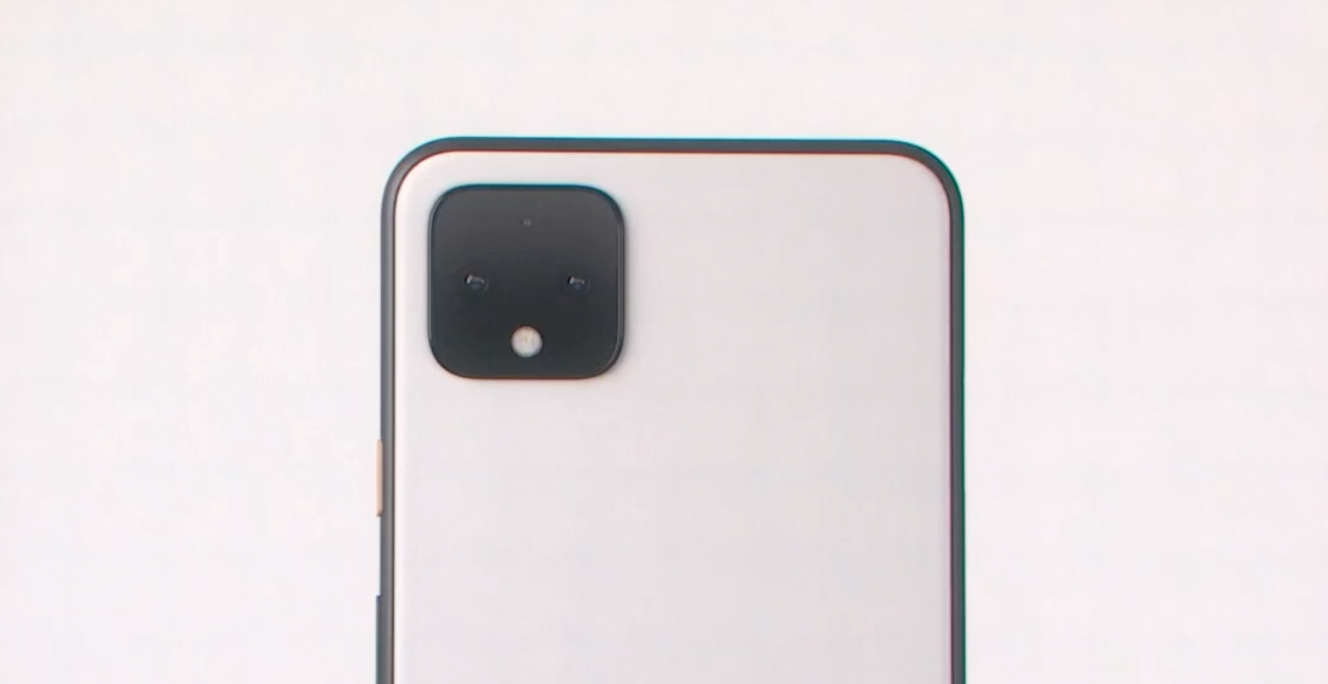
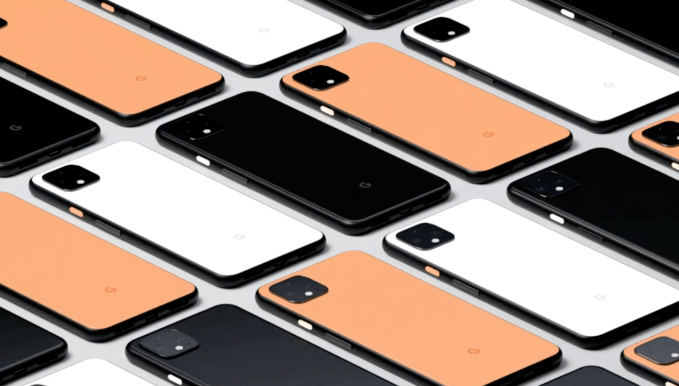
After an endless series of leaks, the next generation of Pixel — Google’s flagship Android phone — is officially official. The Pixel 4 will come in at 5.7″ with a 2,800mAh battery, while the Pixel XL 4 comes in at 6.3″ with a 3,700mAh battery. They’re both running on the Snapdragon 855 chipset with 6GB of RAM. They’ve both got “Project Soli” radar chips inside, allowing you to do things like switch songs, snooze alarms, or silence calls by waving your hand over the phone without actually touching it.

The main focus here for Google is the cameras, with the company leaning hard into the idea of using machine-learning and AI-centric software to improve photos — things like dual exposure controls, AI-driven “learning” white balance, and an improved Night Sight mode that can handle taking photos of star-lit nights. Both phones have two cameras on the back (12.2 megapixel f/1.7 main camera and a 16 megapixel f/2.4 telephoto lens) and one on the front (8 megapixels).

It’ll ship starting October 24th, starting at $799.

15 Oct 2019

Headless CMS company Strapi raises $4 million

French startup Strapi has raised a $4 million seed round led by Accel and Stride.vc. The company has been working on an open-source Node.js headless content management system.

That’s a lot of technical words in a row, but it’s not that hard to understand what Strapi is. Content management systems, or CMS, are web applications that let you publish and manage content on a website. It can be a blog, a corporate websites with multiple pages, a portfolio, etc. The most popular CMS in the world is WordPress.

Over the past few years, many companies and developers have started to separate the CMS back end (the administration pages where you write and upload content) and the front end (the public website accessible to anyone).

This way, you can run a CMS in the back end, and develop your own custom front end that queries the back end using API calls — this is what’s called a headless CMS. It provides a ton of flexibility and should make your website faster. This is how TechCrunch.com works for instance, with WordPress running as a headless CMS.

Strapi has become quite popular in the headless CMS space with 500,000 downloads and 250 contributors to the open-source project. The first version was released on GitHub in 2015.

Anybody can download Strapi and run it on their own server. You can then develop your front end, fetch content in your mobile app using the Strapi API and more. Strapi lets you customize the admin panel so that you only see the fields you need when you add content. It works with SQLite, MongoDB, MySQL and Postgres databases.

The company plans to build an ecosystem of plugins to expand the features of your CMS installation. Eventually, the startup could launch a hosted version of Strapi so that you don’t have to manage the server infrastructure yourself.

Solomon Hykes, Guillermo Rauch and Eli Collins are also participating in today’s round. Existing investors include Bpifrance, SGPA, François-Charles Debeunne, Jean-Philippe Bellaiche, Kima Ventures, Nicolas Debock, Patrick Dalsace and Nicolas Rosset.

15 Oct 2019

Google Pixel 4, Pixel 4 XL not launching in India

The Google Pixel 4 and Pixel XL smartphones, that Google just unveiled at a press conference in New York, won’t launch in India, one of the company’s most important overseas markets, the Android-maker said on Tuesday.

The bottleneck lies with Project Soli, a radar-based motion-sensing technology baked into the new Pixel smartphones that relies on using certain frequency bandwidth — 60GHz mmWave. The company failed to secure permission from the local authority in India to use this frequency range, a person familiar with the matter told TechCrunch. You may remember that in the U.S., the FCC approved the commercial usage of Soli earlier this year.

“Google has a wide range of products that we make available in different regions around the world. We determine availability based on a variety of factors, including local trends, and product features. We decided not to make Pixel 4 available in India. We remain committed to our current Pixel phones and look forward to bringing future Pixel devices to India,” a Google spokesperson said in a statement.

The radar sensors on the new Pixel smartphones enable a number of human interactions, Sabrina Ellis, VP of Product Management at Google, said at the event. “For instance, Pixel 4 has the fastest secure face unlock on a smartphone, because the process starts before you have even picked up the smartphone,” she claimed. “Motion sense prepares the camera when you reach for your Pixel 4, so you don’t need to tap the screen,” she added.

The radar sensor also enables other applications such as rejecting a call by just gesturing at the phone, Ellis said.

This is the first time Google has had to skip the launch of a phone in India, the second largest smartphone market and where all the Nexus and Pixel smartphones have launched a few days after their global unveiling.

Not launching the new Pixel smartphones won’t really hurt the company… at least financially speaking. The Pixel smartphones have failed to receive any substantial acceptance in the Indian marker, especially as their prices increased over the years.

Even as 99% of smartphones shipped in India last year ran Android mobile operating system, the vast majority of handsets carried a price tag of $200 or lower, research firm Counterpoint told TechCrunch.

15 Oct 2019

Google’s new voice recorder app transcribes in real-time, even when offline

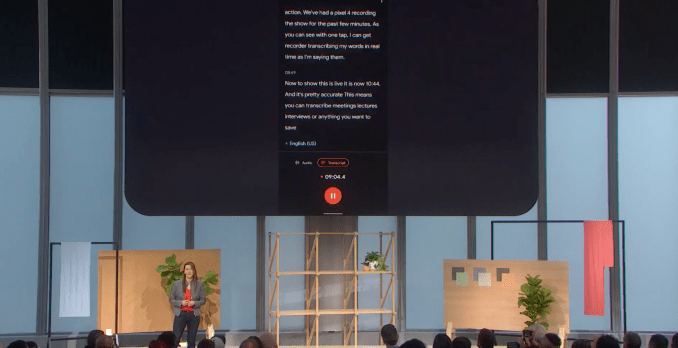
At Google’s Pixel 4 hardware event this morning, the company introduced a new voice recorder app for Android devices which will tap into advances in real-time speech processing, speech recognition and A.I. to automatically transcribe recordings in real-time as the person is speaking. The improvements will allow users to take better advantage of the phone’s voice recording functionality, as it will be able to turn the recordings into text even when there’s no internet connectivity.

This presents a new competitor to others in voice transcriptions that are leveraging similar A.I. advances, like Otter.ai, Reason8, Trint, and others, for example.

As Google explained, all the recorder functionality happens directly on the device — meaning you can use the phone while in airplane mode and still have accurate recordings.

“This means you can transcribe meetings, lectures, interviews, or anything you want to save,” said Sabrina Ellis, VP of Product Management at Google.

voice recorder

The Recorder app was demonstrated on stage during the event, live, and was offering — from what was shown — an error-free transcription. In real-world environments, voice transcription apps often fail because of background noise or bandwidth issues. It’s unclear how well the Recorder app will fare when it’s not hooked up directly to an audio source, as it likely was for this event, but rather placed on a tabletop or used in a noisier environment.

pixel voice recorder

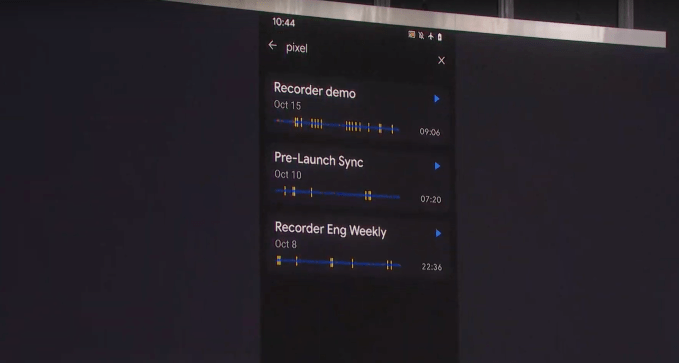
The app also offers an advanced search functionality where you’ll be able to search for sounds, words, or phrases. In the search results, everywhere the search term was spoken are highlighted in the playback bar so you can tap to go right to the part of the recording you need.

15 Oct 2019

Google overhauls Nest Aware cloud recording plan

Google is updating the Nest Mini today, the device formerly known as Google Home Mini. And the company used this opportunity to announce an update to its home awareness product, Nest Aware.

If you have Nest security cameras, you can subscribe to a Nest Aware plan. It currently costs $5 a month for 5-day video history, $10 per month for 10-day history and $30 per month for 30-day history. All plans include continuous recording, intelligence alerts, clips and more.

But it can get complicated when you have multiple cameras. Additional cameras require their own subscription plan, but those additional plans are a bit cheaper.

Google is going to simplify all that with plans that cover your whole home. New plans will cost $6 per month for 30-day event history and $12 per month for 60-day event history as well as 10-day 24/7 video history.

As you can see, you now have to pay $12 per month for continuous recording as the basic plan doesn’t include continuous recording anymore. But if you have 8 cameras, you’ll only have to play for a single subscription.

New plans will roll out in early 2020 with the option to switch to the new plans.

And now, Nest Mini and Nest Hubs integrate with Nest Aware. For instance, when your non-connected smoke detector is triggered by a fire, your Nest Mini will notice the alarm and send you a push notification.

You can listen live to confirm that it is a smoke alarm. You can confirm the alarm and the Home app then calls 911 or your local emergency service directly.