Category: UNCATEGORIZED

08 Oct 2019

CBS News is bringing a 60 Minutes-inspired news show to streaming service Quibi

Jeffrey Katzenberg’s streaming service Quibi, due to launch in April, has partnered with CBS News to modernize “60 Minutes”-style programming for the era of bite-sized video. Instead of an hour-long newsmagazine, CBS News will launch “60 in 6,” which will condense original news stories into 6-minute long episodes, designed for consumption on mobile devices.

The deal will see 60 Minutes producing one original story per week, as part of Quibi’s licensing agreement.

“This is a perfect opportunity to bring 60 Minutes’ style of storytelling, in-depth reporting, and investigative journalism to a new audience,” said 60 Minutes executive producer Bill Owens, in a statement. “We are excited to launch ’60 In 6,’ as our digital footprint is more important than ever,” he said.

CBS isn’t the first news partner coming to the upcoming streaming service. NBC will build out a full production team exclusively for its Quibi programming, which will include a 6-minute morning and evening news show for the service. The BBC and Quibi, meanwhile, are developing an international news show for millennials, that’s five minutes in length. And ESPN just agreed to do a sports highlights and news show.

“60 Minutes has been, is, and will continue to be the gold standard of storytelling news journalism,” added Jeffrey Katzenberg, Quibi founder and chairman of the board, in a statement. “Bringing their talent and resources to a new form of storytelling could not be more exciting for us at Quibi,” he said.

News programming is only one aspect to Quibi, which will also include a variety of entertainment offerings from big-name talent, like Sam Raimi, Guillermo del Toro, Antoine Fuqua, and producer Jason Blum, among others. Quibi will also feature a show about Snapchat’s founding, an action-thriller starring Liam Hemsworth, a murder mystery comedy from SNL’s Lorne Michaels, a beauty docuseries from Tyra Banks, a Steven Spielberg horror show, a comedy from Thomas Lennon, a car-stunt series with Idris Elba and more.

Quibi’s premise is taking premium content and chopping it up into “quick bites” (hence the name), and delivering it to mobile viewers in both horizontal and vertical formats. The idea, essentially, is to build a Netflix for the Snapchat generation. This is a risky endeavor, given that the targeted demographic — Gen’s Y and Z — is quite happy with their Netflix subscriptions for higher-production value entertainment, and with YouTube for more casual video viewing from the creator community.

Quibi also seems to ignore the fact that most subscription-based video is still watched on TVs, not mobile devices. Meanwhile, on users’ phones, Quibi will have to compete with a range of other apps and games — including the new titles from Apple Arcade — as well as other time fillers, like YouTube, Instagram, TikTok and Snapchat.

That said, having Katzenberg at the helm has brought a lot of industry support to Quibi. The company has raised $1 billion from Disney, WarnerMedia, 21st Century Fox and others, and was looking to raise more. It also said this summer it had booked $100 million in ad sales pre-launch.

Quibi will launch in April 2020, and “60 in 6” will be available at that time. The service will cost $5 per month, or $8 to go ad-free.

08 Oct 2019

Robinhood revives checking with new debit card & 2% interest

This time it actually has insurance. Zero-fee stock trading app Robinhood is launching Cash Management, a new feature that earns users 2.05% APY interest on uninvested money in their account with the ability to spend it through a special Mastercard debit card. The waitlist opens today in the US with the first users to be admitted soon. “If you have $5000 in your account while you’re thinking about what to invest in, you’d have an extra $105 at the end of the year” thanks to Robinhood Cash Management’s interest, co-CEO Baiju Bhatt tells me.

The $7.6 billion-valuation startup first attempted something similar in December with Robinhood Checking, promising 3% interest. But the product turned into a PR disaster when the Securities Investor Protection Corporation that was supposed to insure users’ funds declared Robinhood ineligible, with its CEO noting it had never agreed to cover checking account. That led Robinhood to shelve the feature, scrub its site of any mention of Checking, and apologize.

Robinhood Debit Card

Robinhood Cash Management’s debit cards, featuring the same design from the scrapped Checking launch

Now despite Bhatt claiming “Cash Management is a brand new program built from the ground up”, it will offer the exact same debit card design and network of 75,000 ATMs . It’s even using an identical promo image for its half-translucent green, black, white, and American flag debit card designs. But each user’s funds will be covered by the Federal Deposit Insurance Corporation up to $1.25 million. To get around the $250,000 FDIC limit per bank, Robinhood is partnering with five banks that it will spread a user’s cash across as necessary to bundle up to that sum. Robinhood earns money by taking a chunk of the interchange fees from transactions on its debit card run in partnership with Sutton Bank, and from a few paid by the five banks cash gets swept into.

To help it avoid further regulatory missteps, Robinhood yesterday added former SEC commissioner Dan Gallagher as its first independent board member. He joins the startup’s recently hired COO, CFO, Chief Compliance Officer, VP of risk & compliance, and VP of legal & regulatory to bring more supervision to Robinhood.

Baiju Bhatt Vlad Tenev Co Founders and Co CEOs 1

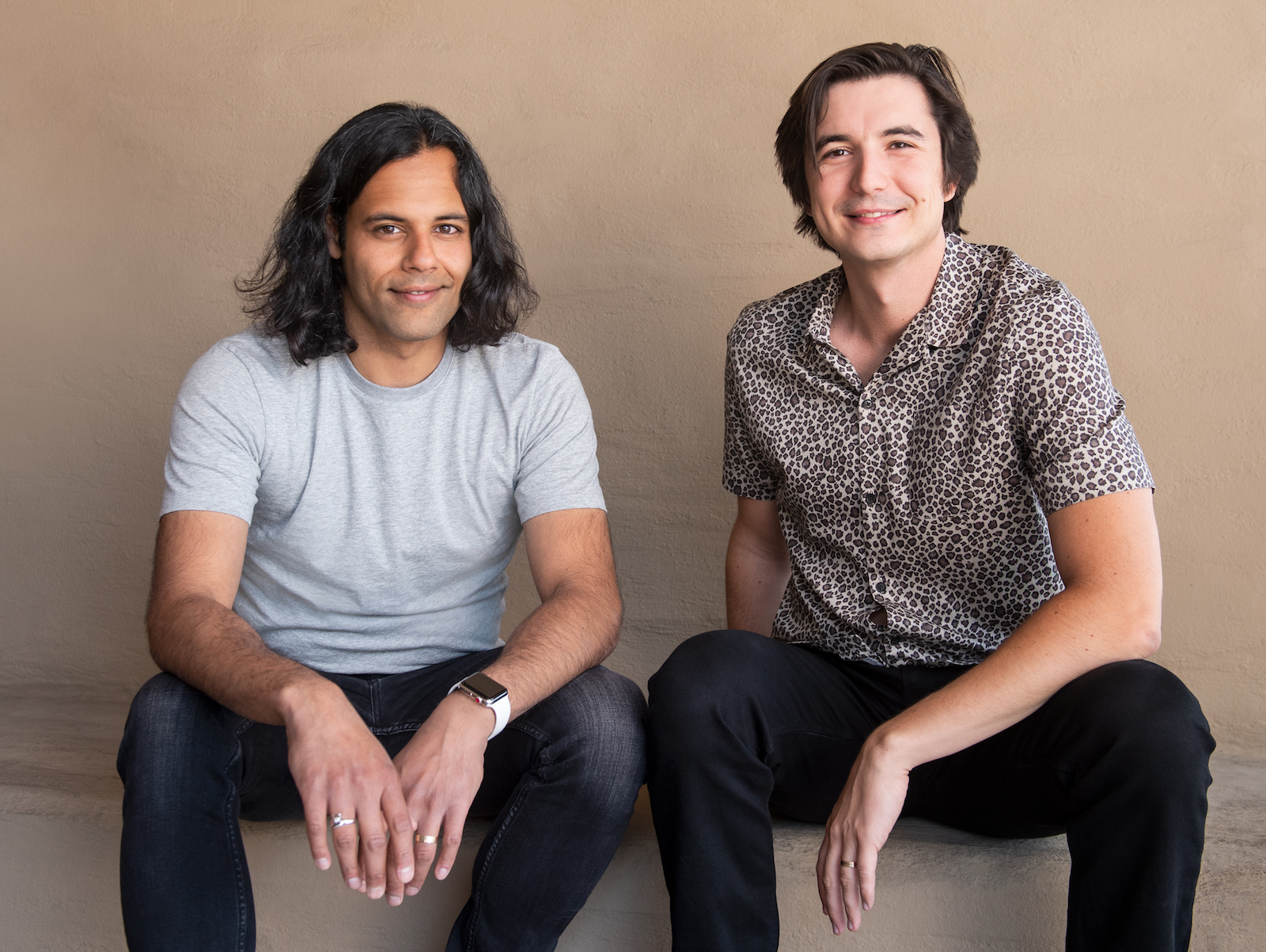
Baiju Bhatt Vlad Tenev Co- Founders and Co-CEOs (from left): Baiju Bhatt and Vlad Tenev

The opt-in feature prevents users from missing out on earning interest if they keep money in their Robinhood account, and makes funds from stock sales quickly accessible via the debit card for spending or withdrawal. That convenience could give Robinhood an edge as its loses one if its key differentiators. Last week, its top incumbent competitors Charles Schwab, E*Trade, and AmeriTrade all dropped their $4.95 to $6.95 fees on stock trades to match Robinhood’s free offering. That makes Cash Management and Robinhood Crypto even more critical to its continued grow. That’s necessary to justify the $7.6 billion valuation from its recent $323 million Series E raise led by DST Global that brings it to $860 million in total funding.

How Robinhood Cash Management Works

“We decided the best thing to do is giving people the peace of mind that their money is held at these banks, while trying to pay back the very best interest rates” Bhatt tells me. [Disclosure: I know Robinhood’s co-founders from college together]

With Cash Management, once users deposit cash into the Robinhood accounts and opt into the program, they’re eligible to earn interest. Any balance on their account including returns from sales of securities or cryptocurrencies is swept into the FDIC-insured partner banks via Promontory’s debit suite system. If one of those banks folds, the FDIC will make customers whole up for up to $250,000, equaling $1.25 million across all five working with Robinhood.

There the cash earns a variable annual percentage yield (APY) that may fluctuate based on market factors like the Fed funds rate. Currently Robinhood offers a 2.05% APY, but refused to compare it to competitors. However, it ranks relatively high amongst popular banking options like these according to Bankrate, especially given it has no minimum balance:

Cash Management Product 1

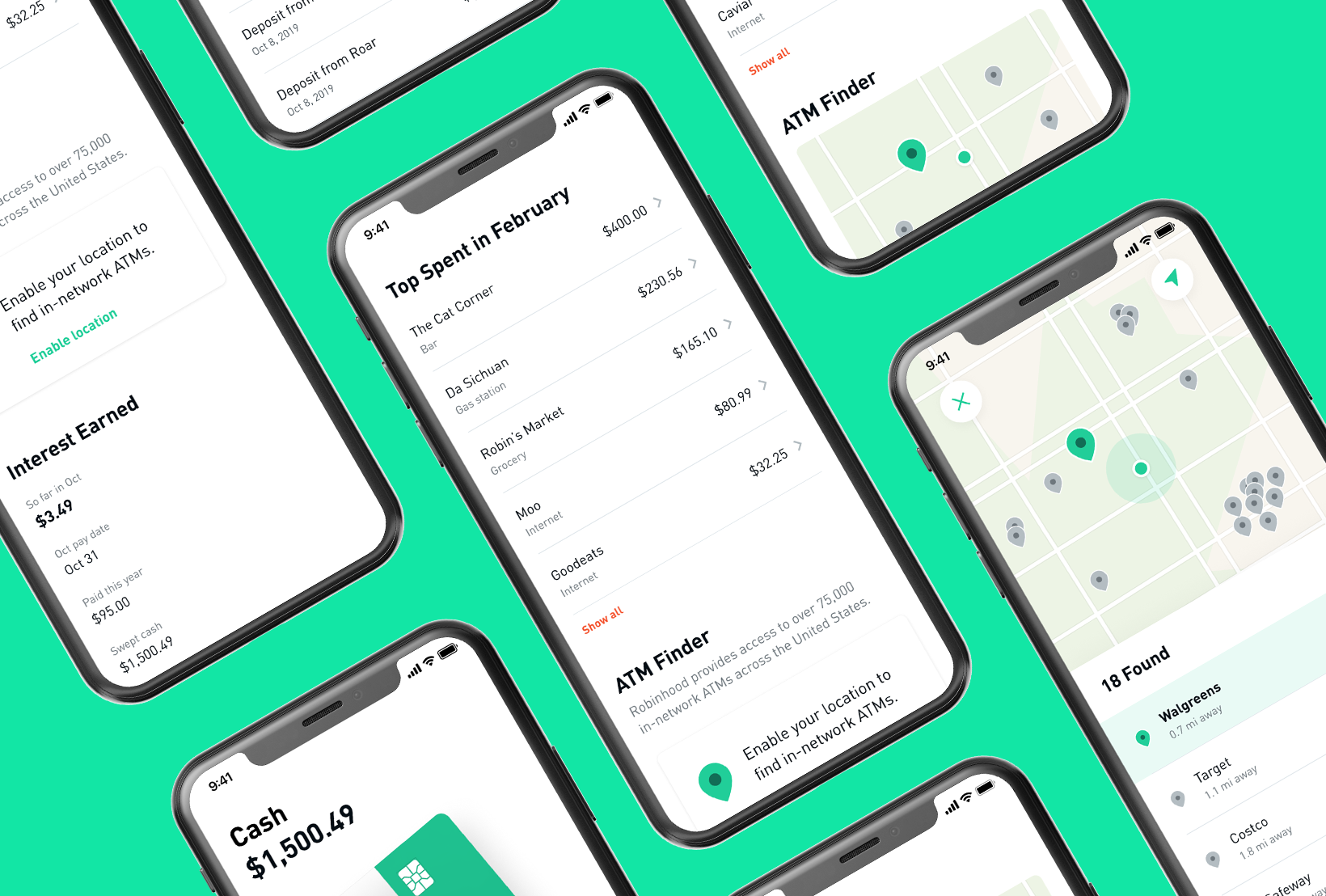
Cash Management users can select from the four debit cards styles that are accepted anywhere that takes Mastercard, plus 75,000 ATMs. It also works with Apple Pay, Google Pay, and Samsung Pay. There’s no foreign transaction fees, maintenance fee, or account minimum.

A variety of new Cash Management features are being added to the Robinhood app. You can get notifications and emails for all your transactions, and lock the card from your phone if you suspect fraud. You can also opt for location protection, which alerts you if your card is used too far away from your phone. An in-app ATM finder shows users where they can get cash out without a fee.

“Partially we want this to be a good business but we also want this to be a big part of customer’s lives” says Robinhood VP of product Josh Elman. Instead of nickel and diming Cash Management users, the startup monetizes by charging its partners. But the bigger strategy is to get more users on Robinhood in hopes some will subscribe to Robinhood Gold. There users pay a variable monthly fee depending on how much they want to borrow from the startup to trade on margin.

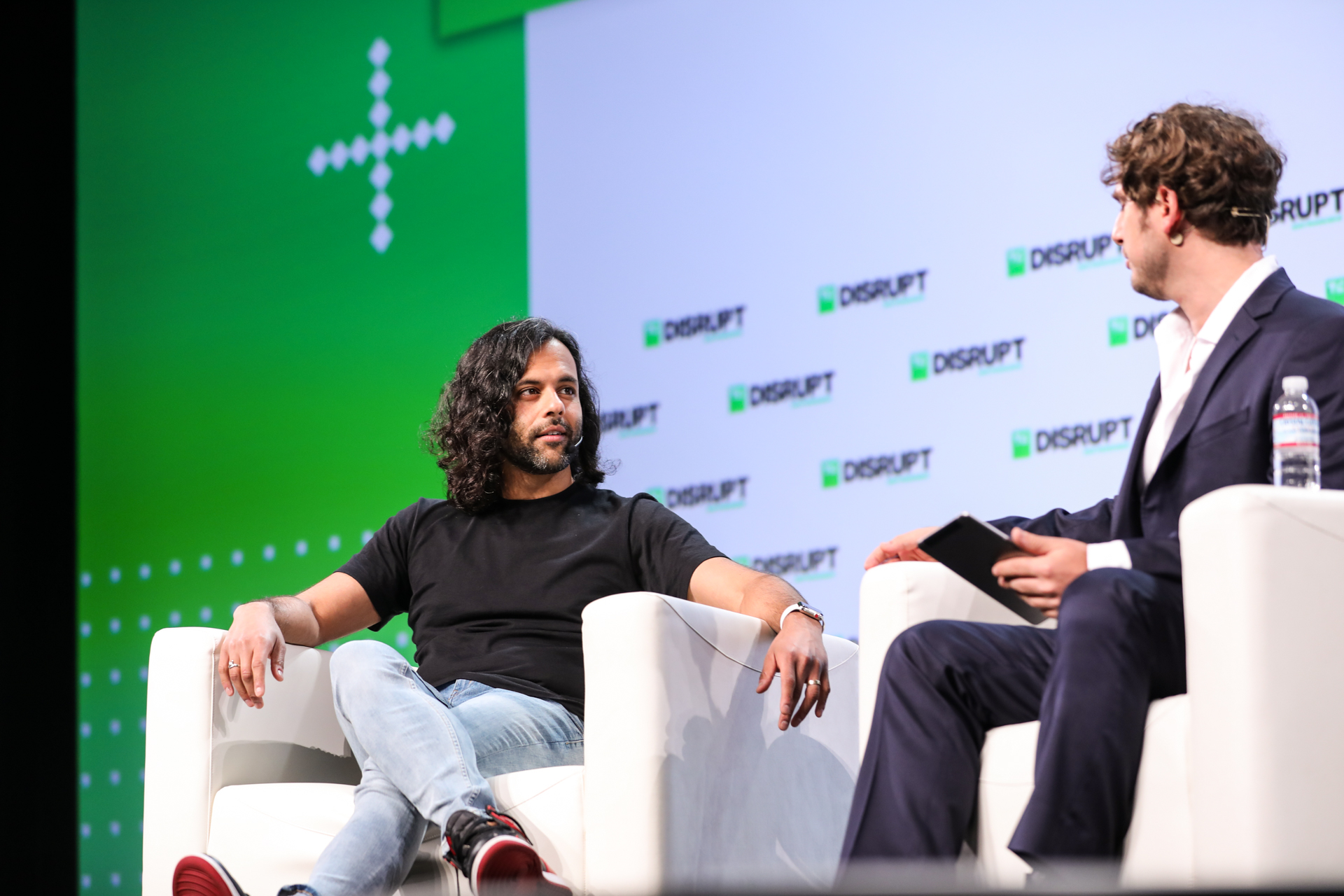
Robinhood co-CEO Baiju Bhatt speaks with TechCrunch’s Josh Constine at Disrupt SF 2018

“I think the main takeaway over the last year has been that since last December, our company has been very committed to building an organization on that has a really strong culture [of compliance]” Bhatt concludes. “We’ve grown the leadership team over the last year with experience from risk and finance backgrounds. We think that’s reflected pretty clearly in how Robinhood operates and the diligence that went into building this new program.”

No longer a scrappy startup, the budding fintech giant must now grapple with much greater regulatory scrutiny. With over 6 million users, the SEC won’t stand for it putting people’s finances in in jeopardy.

08 Oct 2019

Sony’s next console is…the PlayStation 5, arriving holidays 2020

Part of me wishes Sony had gone for something a little flashier. The PlayStation Unicorn or PlayStation Trebuchet or something. But there’s something to be said for consistency. Simplicity. The next version of Sony’s perennial favorite gaming console will be, drumroll…the PlayStation 5.

The company notes that nothing is particularly revelatory in this morning’s reveal. That information, it seems, is still coming. And there’s still plenty of time and lots of gaming-centric shows in which the company can spill more about the system. “These updates may not be a huge surprise,” SIE President and CEO Jim Ryan writes, “but we wanted to confirm them for our PlayStation fans, as we start to reveal additional details about our vision for the next generation.”

There’s a smattering of additional details. Ryan highlights the upcoming system’s controllers, for one thing. There’s new haptic feedback on board, in place of the more traditional rumble technology that’s been around for some time. That should give a better approximation of the simulated experiences during game play.

Also new is “adaptive triggers,” which are being added to the L2 and R2 buttons. Ryan again,

Developers can program the resistance of the triggers so that you feel the tactile sensation of drawing a bow and arrow or accelerating an off-road vehicle through rocky terrain. In combination with the haptics, this can produce a powerful experience that better simulates various actions. Game creators have started to receive early versions of the new controller, and we can’t wait to see where their imagination goes with these new features at their disposal.

The PlayStation 5 will be available in time for the 2020 holiday season. More information soon, one assumes. 

08 Oct 2019

Forward Networks raises $35M to help enterprises map, track, and predict their networks’ behavior

Security breaches and other activity that causes network surges and outages are all on the rise in the enterprise, and today, a startup called Forward Networks, which has built a clever way to help businesses monitor their network traffic to identify when things are going wrong, has raised a round of $35 million to continue expanding its business to meet that demand.

The money, a Series C, is being led by Goldman Sachs, which in this case is both a strategic and financial investor. David Erickson, the startup’s co-founder and CEO, said the investment bank started out as a customer, and Joshua Matheus, MD for technology at Goldman Sachs, was so pleased with the results that he recommended that the bank also invest in the company. Others participating in this round include Andreessen Horowitz, Threshold Ventures (previously DFJ Venture) and A. Capital, the three investors that were behind Forward Networks’ previous round of $16 million in 2017.

Erickson, along with other co-founders Nikhil Handigol, Brandon Heller and Peyman Kazemian, were all Stanford PhDs, and the company’s technology is based around work that they had done there around mathematical modelling. Here, that concept is applied to a company’s network to create essentially a replica of a company’s network architecture, which is in turn used to simulate individual processes and apps running on the network to figure out how they interact and what would represent “normal” versus “abnormal” behavior, which in turn is applied both in real time to monitor the network, and to predict what might happen on it. This is not a fixing platform per se, but in developer operations, there is a fundamental need and gap in the market for products that help engineers identify what is not working right in order to know what to try to fix.

If you are familiar with Honeycomb.io — a devops platform for running apps to determine when and where bugs or conflicts might arise (which itself recently raised funding) — this seems to be taking a similar approach but on a network scale.

Considered together, it seems that we’re starting to see a new wave of services and platforms designed to provide more granular and intelligent pictures of how apps and networks behave in our modern technology landscapes.

Erickson tells me that today, the vast majority of Forward Networks’ customers are using the product to monitor on-premises rather than cloud architectures.

“We launched a public cloud product for AWS towards the end of last year, which today is in use by customers, but the dominant use case for us is on-prem,” Erickson said, who said that while the media (ahem) loves to talk about cloud, in many cases large enterprises have actually been slower to migrate processes in cases where legacy services still work well, and they still harbour distrust of public cloud security and reliability. “We see growth towards the cloud but it’s baby steps.”

The company has been growing steadily and today its network monitoring covers some 75,000 devices. In that context, Goldman Sachs is a significant client, with some 15,000 devices in its network alone.

Looking ahead, Erickson said that the funding would be used in part for R&D and in part to continue its business development. The are a number of other solutions and services out there that have identified the opportunity of providing better network management as a route to identifying security threats and other risks, so that also presents an opportunity for M&A for Forward, although Erickson declined to comment further on that.

“We continue to see the value that Forward Networks’ platform brings to large enterprises running complex networks,” said Bill Krause, board partner at Andreessen Horowitz. “They have solved a critical business problem, which presents a real growth opportunity.”


08 Oct 2019

Chinese firms Tencent, Vivo, and CCTV suspend ties with the NBA over Hong Kong tweet

Smartphone maker Vivo, broadcaster CCTV, and internet giant Tencent said today they are suspending all cooperation with the National Basketball Association, becoming the latest Chinese firms to cut ties with the league after a tweet from a Houston Rockets executive supporting Hong Kong’s pro-democracy protesters offended many in the world’s most populous nation.

Vivo, which is a key sponsor for the upcoming exhibition games to be played in Shanghai and Shenzhen this week, said in a statement on Chinese social networking platform Weibo, that it was “dissatisfied” with Rockets General Manager Daryl Morey’s views on Hong Kong.

In a tweet over the weekend, Morey voiced his support for protesters in Hong Kong. He said, “Fight for freedom, stand with Hong Kong.” Even as he quickly moved to delete the tweet and the NBA attempted to smoothen the dialogue, Morey’s views had offended many in China, which maintains a low tolerance for criticism of its political system.

In a statement, the NBA said it was “regrettable” that Morey’s views had “deeply offended many of our friends and fans in China.” This stance from the NBA, which has grown accustomed to seeing its star players speak freely and criticize anyone they wish including the U.S. president Donald Trump, in turn, offended many.

Earlier today, Chinese state broadcaster CCTV said it was also suspending broadcasts of the league’s games to be played in China.

In a statement today, NBA Commissioner Adam Silver tried to steer the league from the controversy. “It is inevitable that people around the world — including from America and China — will have different viewpoints over different issues. It is not the role of the NBA to adjudicate those differences. However, the NBA will not put itself in a position of regulating what players, employees and team owners say or will not say on these issues. We simply could not operate that way,” he said.

China remains a key strategic nation for the NBA. According to official figures, more than 600 million viewers in China watched the NBA content during the 2017-18 season. The league’s five-year partnership with Chinese tech giant Tencent for digital streaming rights of matches is reported to be worth $1.5 billion.

In a statement issued today, Tencent Sports said it was “temporarily suspending” the pre-season broadcast arrangements. Over the weekend, Chinese sportswear maker Li-Ning Company and Shanghai Pudong Development Bank suspended their cooperation with Houston Rockets team.

Users on Twitter reported today that e-commerce giants Alibaba and JD.com appear to have taken a stand, too. Searches in Chinese for “Houston Rockets” and “Rockets”, which previously surfaced NBA franchise products, now return no results.

In an unrelated event, several Chinese services banned an episode of satirical animated show “South Park” last week. In the episode, titled “Band in China”, the show criticized China’s policies on free speech and U.S. corporates’ efforts to bow down to the world’s most population nation to avoid any repercussions.

In a statement on Monday, South Park creators issued a mock apology. They said, “like the NBA, we welcome the Chinese censors into our homes and into our hearts. We too love money more than freedom. Long live the Great Communist Party of China! May this autumn’s sorghum harvest be bountiful! We good now China?”

08 Oct 2019

Contentstack raises $31.5M Series A round for its headless CMS platform

Contentstack, a startup that offers a headless CMS platform for enterprises, today announced that it has raised a $31.5 million Series A round led by Insight Partners. Existing investors Illuminate Ventures and GingerBread Capital also participated in this round.

The company says that it saw its revenue grow by 4x in the first half of 2019 compared to the same time period last year. Without a baseline, that’s not exactly a meaningful number for a startup founded in 2018, of course, but sales cycles in the enterprise are notoriously long and the company does have a number of marquee customers like Shell, Walmart and Cisco.

The Contentstack founding team, Neha Sampat, Nishant Patel and Matthew Baier, recently sold Built.io to Software AG . “With Contentstack, the opportunity feels even larger, but there is also a strong sense of urgency,” said Sampat when I asked her about why she decided to raise at this point, which comes relatively late for a company with Contentstack’s ambitions. “Being able to do more right now and scale the company’s operations to match the opportunity right in front of us required more resources than the company’s organic growth would provide us.”

Sampat also noted that she believes that brands are not realizing that their customers don’t want billboards but customized experiences across channels. Yet, at the same time, they often don’t know what’s working and how to get the most value out of the content they create.

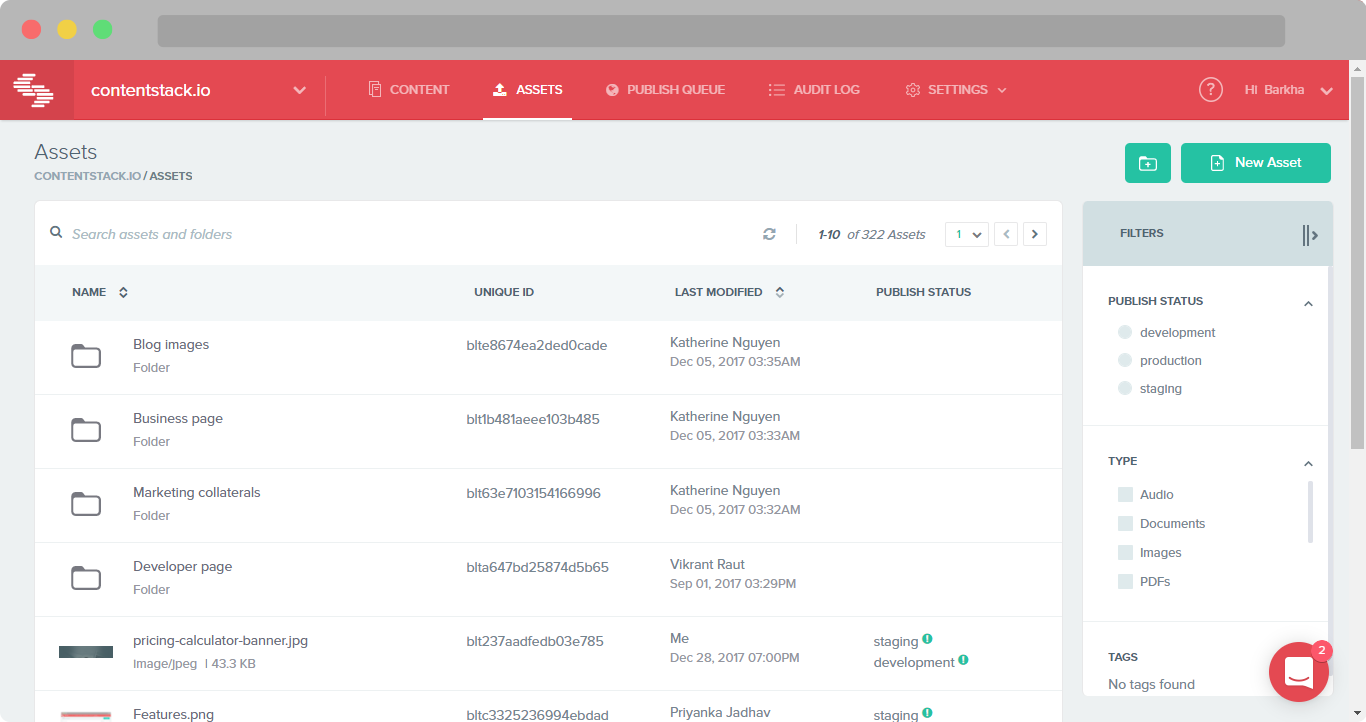
headless cms assets management

“The belief that a single platform or product can ‘do it all’ is being replaced with the realization you can do more, better by bringing together the best technologies the market has to offer,” she said. “This wasn’t an option before, because integrations were so complex and clunky. But now, with the emergence of extensible content experience platforms, companies can actually get to market FASTER using this approach, compared to using a single-vendor approach that wasn’t built for the modern era.”

The company tells me that it is getting traction across industries, but retail, travel/hospitality, sports/entertainment and tech are doing especially well.

Like most companies at the Series A stage, Contentstack says it will use the new funding to scale its sales and marketing team and build out its partner ecosystem and community around the product. Sampat also tells me that the company plans to expand beyond its core regions of the U.S., India and Europe by moving into the APAC region in the first half of 2020, mostly with a focus on Australia and New Zealand.

08 Oct 2019

With a possible Apple tag waiting in the wings, Tile unveils Sticker, an adhesive device for tracking objects

We are still waiting to see if Apple officially unveils a new spin on the business of tracking tags — the small devices that you put on ‘dumb’ objects like keys, wallets and other objects you have a habit of losing or leaving places to be able to pinpoint their location — but in the meantime, Tile, one of the pioneers of this technology, is upping its game today with its least-obtrusive device yet: a sticker.

Today, the startup unveiled Sticker, a new, waterproof tracking device that it created in collaboration with 3M, which uses adhesive to attach to objects to be able to track them by Bluetooth to a range of 150 feet, or further using Tile’s community network by way of its app.

Alongside this, the startup is also announcing enhancements to its existing range of Tile tracking devices. The Slim is now in the shape and thinness of a credit card, designed for wallets and other places where you might insert card-shaped information (for example, in luggage ID compartments), and its range has been extended to 200 feet with a battery life of three years.

And the Mate and Pro tags — the square-shaped fobs that Tile is most famous for — are also getting their ranges extended to 400 feet.

All four models are going on sale as of today at a range of prices: Tile Stickers starting from $39.99 for a 2-pack, $59.99 for a 4-pack; Tile Slim at $29.99; Tile Mate at $24.99; and Tile Pro at $34.99. The message here is that Tile is continuing to increase its flexibility and use cases with these updates and new Sticker release.

“Over the years we’ve seen our customers use Tile for a variety of items,” said CJ Prober, Tile CEO, in a statement. “From wallets to remote controls, power tools to backpacks, our customers have shown us they want a Tile for everything. We’ve designed our new product line to empower the Tile community to find literally anything.”

The moves come on the heels of a competitive time for Tile. On the one hand, the business area that it identified early on has clearly caught the attention of a number of other companies, underscoring the opportunity. But the flip side of that is a lot of new competition in an area that is already crowded and has seen some high-profile failures.

On the launch front, in addition to Apple’s reported interest in launching a competitor, earlier this year Verizon (which also owns TechCrunch) also launched its own IoT play in this area, and Google has also created tighter integrations for people to use its Home devices and Android platform to locate objects. At the same time, some of Tile’s earliest competitors have been heavily challenged to make a go of it: Trackr last year rebranded to Adero and just weeks later laid off nearly half its staff, a decline that we’ve heard has not been halted in the months since.

For its part, Tile last summer raised $45 million last summer on the heels of some interesting strategic partnerships with the likes of Comcast — which, similar to Verizon, Apple, and Google, sees an opportunity in doing more with item tracking as part of a bigger end-to-end connected home play. The feeling is that Tile raised the money to help leverage its bigger market profile in the hopes of staving off this wave of competitors and the many others that already existed before that.

Indeed, if you search on something like Amazon for Bluetooth tracking stickers, you’ll see that this is not exactly a new thing, and there are a number of alternatives out there (one of the big reasons why this market has been a challenging one).

One big differentiator with Tile has been the wider network and economies of scale that it promises to its users: once you are out of the Bluetooth range of your tag, you are able to track the object by way of its app and the wider Tile community, which forms a Bluetooth-based P2P network of sorts to be able to locate items. Of course, the premise of this is that enough people are using Tiles to begin with to create the locating network in the first place, which is one reason why forming collaborations with the likes of Google and Comcast can be very critical longer term to Tile’s success.

08 Oct 2019

Opera’s desktop browser gets built-in tracking protection

Browser maker Opera today announced the launch of version 68 of its flagship desktop browser. The marquee feature of the launch is the addition of a tracker blocker that will make it harder for advertisers and others to track you while you browse the web — and which has the additional benefit of speeding up your browsing session. Indeed, Opera argues that turning on both the tracking protection and the built-in ad blocker can speed up page loads by up to 23 percent.

The new tracking protection feature is off by default (as is the existing ad blocker). The tracking feature uses the EasyPrivacy Tracking Protection List, which has been around for quite a few years now.

“We consider the tracker blocker to be a browser feature which can be kept on at all times, “writes Opera PC product manager Joanna Czajka. “Our browser, however, also has plenty of extended privacy features which come in handy when someone feels the need to increase the privacy of their browsing even further.”

In addition to the new tracking protection, which is increasingly becoming standard among browser vendors (and which is surely putting some additional pressure on Google and its Chrome browser), Opera is also introducing a new screenshotting feature with this update. That’s not an unusual feature, but it’s a pretty full-featured implementation, with the ability to blur parts of a page and draw on the screenshots.

opera screenshot


08 Oct 2019

Eight Chinese tech firms placed on U.S. Entity List for their role in human rights violations against Muslim minority groups

Eight Chinese tech firms, including SenseTime and Megvii, have been added to the U.S. government Entity List for their role in enabling human rights violations against Muslim minority groups in China, including the Uighurs. The firms were among 28 total organizations, mostly Chinese government agencies, that were implicated “in the implementation of China’s campaign of repression, mass arbitrary detention, and high-technology surveillance against Uighurs, Kazakhs and other members of Muslim minority groups” in the Xinjiang Uighur Autonomous Region, according to an announcement by the U.S. Commerce Department.

According to the United Nations, up to one in 12 Muslim residents of Xinjiang region, or about a million people, are being held in detention camps, where they are subjected to force labor and torture.

Being placed on the Entity List means that these organizations must apply for additional licenses in order to purchase products from U.S. suppliers. But approval is difficult to obtain, which essentially means they are blocked from doing business with American companies. After Huawei was placed on the Entity List earlier this year, founder and CEO Ren Zhengfei said that he expected the company to lose $30 billion in revenue, among other financial repercussions.

The government organizations placed on the Entity List today include the Xinjiang Uighur Autonomous Region People’s Government Public Security Bureau and several associated government agencies, and tech companies video surveillance manufacturers Dahua Technology and Hikvision, AI tech firms Yitu, Megvii, SenseTime and iFlyTek, digital forensics company Meiya Pico and Yixin Technology Company.

Sense Time, the world’s most highly-valued AI startup, has supplied software to the Chinese government for its national surveillance system, including CCTV cameras and smart glasses worn by police officers.

Both Megvii, the maker of Face++, and Yitu Technology focus on facial recognition technology and have worked with the Chinese government on software used in mass surveillance systems. According to the New York Times, Hikvision made a recognition system designed to identify ethnic minorities, but began phasing it out last year.

In a 2017 report, the Human Rights Watch said voice recognition company iFlyTek supplied voiceprint technology to police bureaus in Xinjiang Province, which was used to build biometric databases for mass surveillance.

The impact of the blacklisting will depend on how deeply entrenched each company is with U.S. business partners, but many Chinese firms have begun reducing their reliance on American technology in light of the trade war. For example, Meiya Pico told the Chinese Securities Journal, a state-run publication, that overseas sales revenue makes up less than 1% of the company’s total revenue and most of its suppliers are domestic companies.

TechCrunch has contacted the eight companies for comment. In a statement, a Hikvision spokesperson said “Hikvision strongly opposes today’s decision by the U.S. Government and it will hamper efforts by global companies to improve human rights around the world. Hikvision, as the security industry’s global leader, respects human rights and takes our responsibility to protect people in the U.S. and the world seriously. Hikvision has been engaging with Administration officials over the past 12 months to clarify misunderstandings about the company and address their concerns.”

08 Oct 2019

German tech investor leads Series A for Germany’s first medical Cannabis startup

German just hit a new milestone in the space where venture capital and the burgeoning Cannabis industry meet.

Berlin startup Demecan has completed a Series A financing round of 7 million euros to expand its production facility for medical cannabis and the wholesale trade in Germany. It’s become the only German company allowed to produce medical cannabis in Germany.

This is a watershed for the country and is the first investment in this sector for btov Partners, a private investor network. The other half of the funding came from a single, named German family office, which is understood to have its roots in the consumer goods sector. Only two other companies, two of them from Canada, were awarded the contract to produce medical cannabis in Germany in May 2019.

btov Partners manages assets of €420 million and has previously invested in tech startups such as Blacklane, Data Artisans, DeepL, Facebook, Foodspring, ORCAM, Raisin, SumUp, Volocopter and XING.

The green light from Germany’s Federal Institute for Drugs and Medical Devices (BfArM), means Demecan will be able to produce at least 2,400 kilograms of dried cannabis flowers over the next four years. Demecan is also active as an importer and wholesaler of medical cannabis and can thus cover the entire value chain. Since the German government allowed cannabis to be prescribed for therapeutic purposes in 2017 demand has outstripped supply.

Jennifer Phan of btov Partners said in a statement: “Demecan operates in a very attractive market at the right time. Germany currently represents the third-largest market for medical cannabis in the world and is on a growth path. We believe that the company has a first-mover advantage in a highly regulated market environment, especially as it is the only German manufacturing and trading company in the European market”.

Dr. Constantin von der Groeben, co-founder of Demecan, added: “In recent years, we have intensively dealt with the market and reached an important milestone by winning the tender process. We are now focusing on further growth and the start of production in 2020.”