Category: UNCATEGORIZED

25 Sep 2019

Arceo.ai raises $37 million to expand cyber insurance coverage and access

Critical cyber attacks on both businesses and individuals have been grabbing headlines at an alarming rate. Cybersecurity has moved from a background risk for enterprises to a critical day-to-day threat to business operations, forcing executive teams to pour time and hundreds of billions in capital into monitoring and prevention efforts.

Yet even as investment in security ticks up, the frequency and cost of cybercrime to businesses continues to rapidly accelerate, with the World Economic Forum estimating the economic loss due to cybercrime could reach $3 trillion by 2020.

More companies are now turning to cyber insurance as a means of mitigating financial exposure. However, for traditional insurers, cybersecurity remains a relatively nascent and unfamiliar issue, requiring risk-assessment data points and methodologies largely different from those seen in traditional insurance products. As a result, businesses often struggle to get the scale of cybersecurity coverage they require.

Arceo.ai is hoping to expand the size and scope of the cyber insurance market for both insurers and companies, by providing insurers with effective real-time data, analytics and context, necessary for safely and efficiently underwrite cyber risk.

This morning, Arceo took a major step in achieving that goal, announcing the company has raised a $37 million round of funding led by Lightspeed Venture Partners and Founders Fund with participation from CRV and  UL Ventures.

Using an expansive set of global sources across a customer’s digital footprint, Arceo.AI collects internal, external and macro cyber risk data which it uses to evaluate a company’s security and cyber risk management behavior. By automating the data collection process and connecting it with insurer underwriting processes, Arceo is able to keep its data and policy assessments up to date in real-time and enable faster, more efficient quotes.

A vital component of Arceo’s platform is its analytics offering. Using patented data science and cyber risk models, Arceo generates analytics-driven insights for insurance carriers, brokers and end-insured customers. For end-insured customers, Arceo helps companies understand whether they’re using the best mitigation strategies by providing policy recommendations and industry benchmarking to help contextualize day-to-day cyber behavior and hygiene. For underwriters, Arceo can provide specific insurance recommendations based on particular policy coverages.

Ultimately, Arceo looks to provide both insurers and the insured with actionable answers to key questions such as how one assesses cyber risk, how one determines what risks can be mitigated with technology alone, how one knows which systems are best and whether those systems are being used appropriately.

Raj Shah

Arceo.ai Chairman Raj Shah. Image via Arceo.ai

In an interview with TechCrunch, Arceo Chairman Raj Shah explained that the company’s background expertise, proprietary data systems, and deep pedigree in both the security and insurance truly differentiate Arceo from competing solutions. For starters, both Shah and Arceo co-founder and CEO Vishaal Hariprasad have spent close to the entirety of their careers in national security and cybersecurity. Hariprasad started his career in the Airforce’s first cohort of cyber warfare officers, before teaming up with Shah to start Morta Security in 2012, a security startup the two sold to Palo Alto networks in just roughly two years.

After selling the company, Shah and Hariprasad remained in the security world before realizing that there was a natural intersection between security and insurance, and a real opportunity for risk transfer solutions.

“Having studied the market, we saw that people are spending more and more dollars on cybersecurity products… There are hundreds of thousands of new vendors every year… Spend is going up, but we don’t feel any safer!” Shah told TechCrunch.

“That’s when we said ‘Hey, we need to move beyond just thinking about technology points and products, and think about holistic cyber risk management.’ And this is where insurance has historically done a great job. Putting a price on behavior and making people think and letting them take risks… From life and death and health to buyers and property and casualty. And so cyber is that next class risk… So that’s really why we started the business. We wanted to provide a real way to manage the cyber stress that they’re facing and that will impact every single one of our digital lives.”

Since the company’s founding, Raj and Vishaal have been joined by a deep network of cyber and insurance experts. Today, Arceo also announced that Hemant Shah, founder and former CEO of catastrophe risk modeling company RMS has joined Arceo’s Board of Directors. Additionally, earlier this month, the company announced that Mario Vitale, the former CEO of publically-traded insurance companies Willis Towers Watson and Zurich Insurance Group, would be joining the Arceo team as the company’s President.

The company noted that participation from high-profile industry vets like Hemant and Mario not only further advance Arceo’s competitive advantage but also acts as another major validation of the company’s future and work to date.

According to Arceo Chairman Raj Shah, after years of investing in R&D, the latest funds will be used towards expansion efforts and scaling Arceo to the broader ecosystem of insurance and brokers. Longer-term, the company hopes to offer the most complete combined cybersecurity and risk transfer solution to insurers and the insured, easing the stress around cyber threats for both enterprises and individuals and ultimately improving broader cyber resiliency.

If you’d like to hear more from Arceo’s Raj Shah, Raj will also be joining us this year on the Extra Crunch stage at TechCrunch Disrupt SF, where he’ll discuss how founders and companies should think about potential US government investment. We hope to see you there!

25 Sep 2019

Unbabel gets $60M for its blended approach to business translation

Unbabel, a Lisbon-based startup that’s built a platform for translating customer service messages at scale by combining the speed of machine translation with native (human) speaker nuance and expertise, has closed a $60 million Series C round.

The investment was led by Point72 Ventures, with participation from e.ventures, Greycroft, and Indico Capital Partners. The 2013-founded startup last raised a $23M Series B in January 2018. The latest round brings its total funding to date to $91M.

Unbabel describes its approach as “AI augmentation” and translation as a service — by which it means it combines the speed and low cost of machine translation with a layer of human expertise powered by a “global community” of human translators.

Last year its network of human translators was said to number around 55,000. The company told us it now has more than 100k registered translators providing translation services for its platform.

Unbabel classifies these workers as freelancers — saying it pays them online, into an Unbabel account, every time they complete a translation job.

The business itself lists just 200+ full time employees on its books.

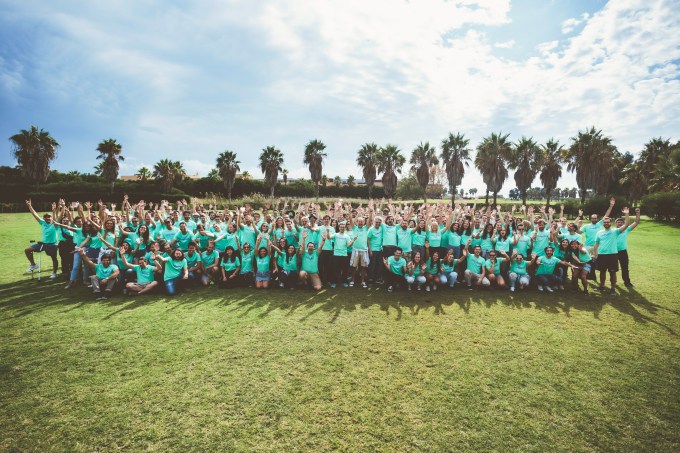
UNBABEL TEAM

Customers signed up to use Unbabel’s translation platform to scale the global reach of their customer support services include the likes of Facebook, Microsoft, Booking.com and easyJet.

Unbabel says it has more than 150 enterprise customers using its platform, mainly in the travel, high tech, gaming and ecommerce sectors. It touts cost savings of up to 76% vs other translation methods and increased customer satisfaction.

It also claims it’s just seen its strongest quarter yet in terms of revenue growth (though it’s not breaking figures out), and also in machine learning “breakthroughs”, as it puts it (on the latter it references a shared task win in machine quality at the WMT19 conference this year).

Unbabel says the Series C funding will go on ramping up growth in the US, Europe and Asia, as well as on enhancing the capabilities of its AI — including building out an artificial intelligence research lab it recently announced in Pittsburgh.

“We are now translating over 1,000,000 customer service messages a month. That’s over five times the volume we saw in 2018, which underscores the global demand for agile multilingual customer service,” said co-founder and CEO Pedro Vasco in a statement.

“We were inspired by Unbabel’s vision to provide enterprise-grade translations at the click of a button and impressed with the human-in-the-loop translation technology they’ve built,” added Sri Chandrasekar, partner at Point72 Ventures, in a supporting statement. “We believe that Unbabel is poised to transform the translation industry, and we are incredibly excited to partner with them on this journey.”

25 Sep 2019

Ford expands self-driving vehicle fleet to Austin

Ford is adding another city to the list of places it’s going to be deploying self-driving vehicles: Austin. The automaker revealed that the Texas city would join Miami-Dade County and Washington, D.C. as the third deployment location for its autonomous vehicle testing and commercial service development.

As with its prior roll-outs, Ford will first begin by putting its Fusion Hybrid AV test vehicles, which are powered by Argo AI autonomous driving technology, on Austin roads by the end of November to begin mapping the city. Mapping cars will have a safety driver and an observer on board, and the cars will be collecting data to build the HD maps needed for eventual deployment of pilot commercial services with partners.

Ford will be announcing the specific location of the terminal from which its AVs will be operating soon, but said that the cars will be operating in the Downtown and east Austin areas to start, but that eventually they’ll look to expand as much as the market requires, going “as big as Austin allows us from a delivery standpoint,” according to Sherif Marakby, the CEO of Ford Autonomous Vehicles.

Marakby said on a briefing with journalists that Austin represents another very different and varied environment in which to test its technology, with a busy downtown, college areas and more. Autonomous vehicles should be able to “solve some issues” when working in tandem with the city, he added.

Ford’s strategy in developing and deploying AVs is to work on both the autonomous technology and the business aspects simultaneously, which is why it’s going to be looking for pilot businesses to partner with in the area. In the course of its research both in Austin and in its existing cities, it’s looking to figure out what the right mix is in terms of goods and package delivery, and ride-hailing and personal transportation.

Marakby says that Ford is still planning to deploy its AV fleet commercially for customers by 2021, and that Austin will be part of that deployment. He added that this will incorporate both passenger and goods transportation in response to a question about whether package delivery would precede moving people, but that the “exact mix will be determined as they work on segmentation.”

As for the vehicles themselves, the current Fusion Hybrid AVs are testing vehicles only, which are useful to Ford in developing and testing their technology stack, but the vehicles in actual commercial service will be purpose-built cars designed specifically for autonomous use.

21A0021 C1

This vehicle will be a hybrid-electric, which “makes sense from the perspective of running all day” and decreasing down-time due to charging, Marakby says. It’ll also be a commercial-grade vehicle, since “in autonomous mode, it’s hundreds of thousands of miles in a short period of time,” he added. The vehicle will also feature easy entry and exit and comfortable seating for passengers, but there will be a custom version that will be focused on goods transportation as well.

25 Sep 2019

Holberton School is coming to Tulsa, Oklahoma

Holberton School, the coding school that bills itself as an alternative to college for budding software engineers from all walks of life, keeps expanding. After recently opening up schools in Colombia and Tunisia, the organization today announced that it will open new campus in Tulsa, Oklahoma in January 2020. With this, Holberton will soon operate three schools in the U.S. (San Francisco, New Haven and Tulsa), three in Colombia (Bogota, Cali and Medellin), and one in Tunis, Tunesia.

For the Tulsa campus, Holberton is partnering with the George Kaiser Family Foundation (the third largest charitable foundation in the U.S.) and the Charles and Lynn Schusterman Family Foundation to offer students a need-based living assistance of $1,5000 per month to help cover expenses. Once students pass the blind entrance exam and gain admission to its two-year program, classes at Holberton are free until you get a job that pays more than $40,000. At that point, you pay Holberton a share of your income for the next 42 months, capped at $85,000.

“Holberton education will bring Silicon Valley skills to America’s heartland,” said Pauline Cohen Vorms, Holberton’s director of business development and partnerships. “By training students in the Tulsa area in high-paying, in-demand jobs, we can contribute to both the workforce development and economic growth in Tulsa.”

The school argues that its admissions process has enabled it to recruit one of the most diverse classes in the tech industry and that it has placed students at companies including Apple, Facebook, LinkedIn and Tesla. As with some of its other campuses, Tulsa brings Holberton’s curriculum to communities that aren’t typically seen as competitors to Silicon Valley but that surely have a large pool of engineering talent.

25 Sep 2019

QC Ware Forge will give developers access to quantum hardware and simulators across vendors

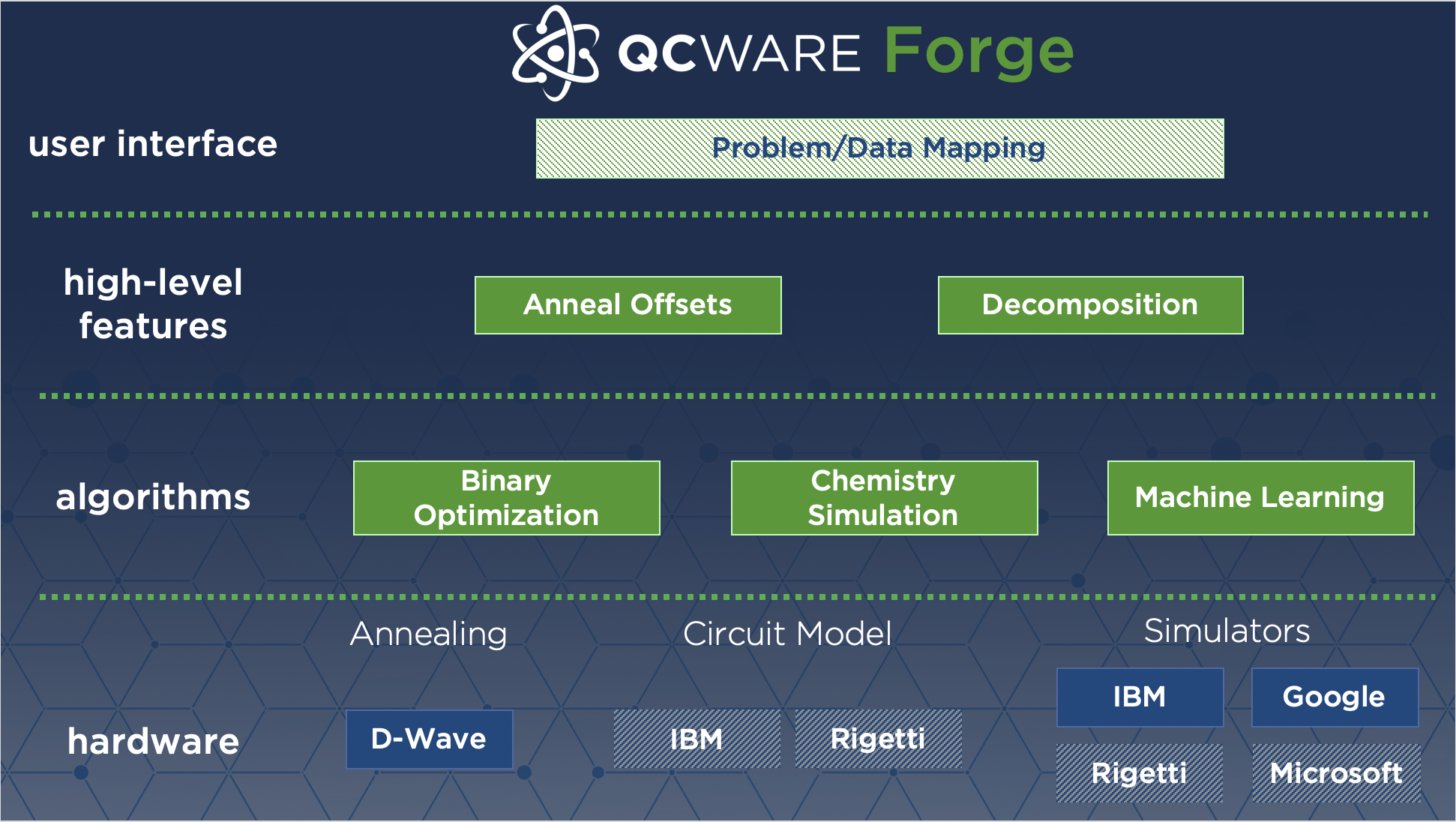
Quantum computing is almost ready for prime time, and, according to most experts, now is the time to start learning how to best develop for this new and less than intuitive technology. With multiple vendors like D-Wave, Google, IBM, Microsoft and Rigetti offering commercial and open-source hardware solutions, simulators and other tools, there’s already a lot of fragmentation in this business. QC Ware, which is launching its Forge cloud platform into beta today, wants to become the go-to middleman for accessing the quantum computing hardware and simulators of these vendors.

Forge, which like the rest of QC Ware’s efforts is aimed at enterprise users, will give developers the ability to run their algorithms on a variety of hardware platforms and simulators. The company argues that developers won’t need to have any previous expertise in quantum computing, though having a bit of background surely isn’t going to hurt. From Forge’s user interface, developers will be able to run algorithms for binary optimization, chemistry simulation and machine learning.

Screen Shot 2019 09 19 at 2.16.37 PM

“Practical quantum advantage will occur. Most experts agree that it’s a matter of ‘when’ not ‘if.’ The way to pull that horizon closer is by having the user community fully engaged in quantum computing application discovery. The objective of Forge is to allow those users to access the full range of quantum computing resources through a single platform,” said Matt Johnson, CEO, QC Ware. “To assist our customers in that exploration, we are spending all of our cycles working on ways to squeeze as much power as possible out of near-term quantum computers, and to bake those methods into Forge.”

Currently, QC Ware Forge offers access to hardware from D-Wave, as well as open-source simulators running on Google’s and IBM’s clouds, with plans to support a wider variety of platforms in the near future.

Initially, QC Ware also told me that it offered direct access to IBM’s hardware, but that’s not yet the case. “We currently have the integration complete and actively utilized by QC Ware developers and quantum experts,”  QC Ware’s head of business development Yianni Gamvros told me. “However, we are still working with IBM to put an agreement in place in order for our end-users to directly access IBM hardware. We expect that to be available in our next major release. For users, this makes it easier for them to deal with the churn. We expect different hardware vendors will lead at different times and that will keep changing every six months. And for our quantum computing hardware vendors, they have a channel partner they can sell through.”

Users who sign up for the beta will receive 30 days of access to the platform and one minute of actual Quantum Computing Time to evaluate the platform.

25 Sep 2019

Watch a Roscosmos rocket launch the next crew of the International Space Station live

NASA astronaut Jessica Meir, Rocscosmos cosmonaut Oleg Skripochka and first-time UAE spaceflight traveler Hazza Ali Almansoori are all set to launch aboard a Roscosmos rocket in a Soyuz capsule, as part of the Expedition 61 crew launch to the International Space Station.

The crew is set to take off from Kazakhstan at 9:57 AM EDT, and the spacecraft will dock with the ISS at around 3 PM EDT, roughly six hours after take-off. This is Skripochka’s third trip to space, but it’s the first for both Meir and Almansoori, with Almansoori on an eight-day mission contracted by the UAE with Russia’s space agency.

Once they arrive on the station, there will be 9 total occupants on board. Both Meir and Skripochka will be spending over six months on the ISS, condign research and experiments.

25 Sep 2019

Devin Wenig steps down as eBay CEO

eBay this morning announced that Devin Wenig has stepped down from the role of CEO. A former executive at Reuters, Wenig joined the company eight years ago this month as president of its global market place division. He was appointed to the CEO role in July 2015, following eBay’s spinoff of PayPal.

“Devin has been a tireless advocate for driving improvement in the business, particularly in leading the Company forward after the PayPal spinoff,” Chairman of the Board Thomas Tierney said in a release tied to the news. “Indeed, eBay is stronger today than it was four years ago. Notwithstanding this progress, given a number of considerations, both Devin and the board believe that a new CEO is best for the company at this time.”

Scott Schenkel, the company’s Senior Vice President and Chief Financial Officer has been appointed interim CEO by eBay’s board. Schenkel has been with the company for 12 years, having previously spent several years in management at GE. eBay says it will “consider internal and external candidates” as it searches for someone to fill the position on a permanent basis.

The move comes amid turmoil at the company. Earlier this year, investors Elliott Management suggested key structural changes to help reinvigorate a floundering company.  “Today eBay suffers from an inefficient organizational structure, wasteful spend and a misallocation of resources,” it wrote in a letter at the time. eBay went through layoffs and restructuring, in the wake of the letter.

As part of these new changes up top, eBay will be appointing Vice President, Global Financial Planning and Analysis, Andy Cring, to the position of interim CFO.

25 Sep 2019

Vannevar Labs comes out of stealth to bring best-in-class AI tech to national security agencies

Few organizations have the complex data and analytics problems that challenge the defense and intelligence communities every single day. Whether it is managing petabytes of text, audio, or video data, finding extraordinarily small patterns in the noise, or processing multilingual analytics, the agencies at the heart of America’s national security system confront cutting-edge problems every day.

Despite the desire for better tools though, intelligence analysts are often stymied to procure up-to-date software due to the byzantine rules that drive Pentagon and intelligence procurement.

That’s why a former intelligence official and former intelligence investor are looking to build a new platform that connects the best minds in artificial intelligence, machine learning, and natural language processing and bundling it together into a service purchasable by these government agencies.

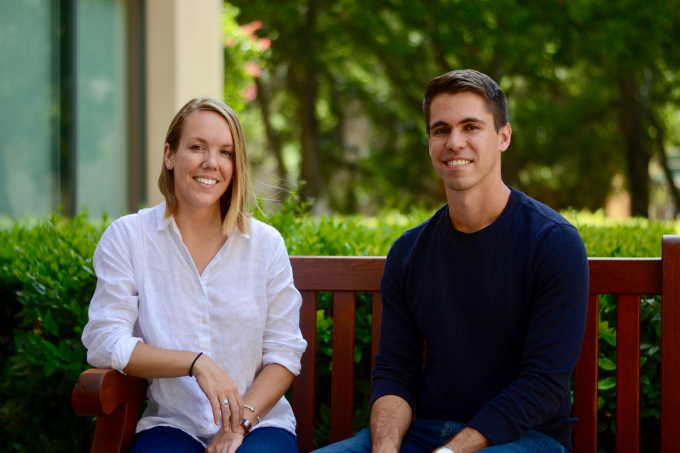
Through Palo Alto-based Vannevar, co-founders Brett Granberg and Nini Moorhead are hoping to launch their first product, which is focused on bringing NLP technologies like feature detection to international counterterrorism missions.

Vannevar Labs

Co-founders Nimi Moorhead and Brett Granberg of Vannevar Labs. Photo via Vannevar Labs.

The company is named for Vannevar Bush, who is often credited with inventing an early form of the computer, putting together the Manhattan Project which led to the atom bomb, and for writing a seminal essay that sort of predicted the internet decades before its inception.

The two chose this particular product as an entrée because of their past experiences. Before beginning Vannevar, Granberg spent two years at In-Q-Tel, the non-profit VC firm that works deeply with the intelligence community to supply agencies with the best in startup technology. He also was an advisor at Lilt, a real-time deep learning translation product that spun out of Chris Manning’s famed Stanford NLP research lab.

Meanwhile, Moorhead spent seven years working as a counterterrorism officer within the intelligence community, working to disrupt terrorist networks.

The two met while they overlapped at Stanford GSB and realized they had seen similar problems that they both wanted to solve. While in business school, “top of mind for me was some of the technological challenges that I encountered as an end user [and] analyst in the intelligence community,” Moorhead said. “We immediately connected and shared a lot of experiences in common in terms of seeing gaps between the really hard domain problems that I’d been working on in my career as an analyst and some of the technology that was available to me,” she said. The two actually met the first day of school.

Their approach is to take proven techniques and attempt to translate them into government use cases. “We’re not sort of inventing new math to solve these problems, we’re more taking cutting-edge approaches and just applying them to specific use cases,” Granberg said.

While the project is early, the team raised a $4.5 million seed venture capital funding from fellow GSB alum Katherine Boyle of General Catalyst and Costanoa Ventures. Boyle has made a big push into defense and highly-regulated industries as part of her investment practice, where she previously funded Anduril, the company started by Oculus founder Palmer Luckey that has attempted to apply ML technology to security issues such as battlefield awareness and border control (and gotten into some controversy along the way as well).

She is particularly excited about new ways for startups to secure government contracts at a speed faster than the sun burning out. Talking to me about the potential in this industry, she said:

We’ve been spending a lot of time with companies that are going after what’s known as Other Transaction Authorities, which are a new type of contracting vehicle that was developed in 2015 by former Secretary of Defense Ash Carter, to help tech companies work very quickly with the Department of Defense and with the intelligence community. So what historically might have taken 18 months to get a contract now takes 30 to 60 days for critical pieces of technology

Boyle explained that Vannevar fits directly into her thesis for the future of government procurement. “Our view is that the companies that do best in the space are people who have worked in government or understand how to sell to governments,” she said. She noted that the company is very early, and her investment was primarily focused on the team.

I asked about recent controversies that have hit companies like Google, which saw a revolt by some employees over its involvement with a defense program called Project Maven, which attempted to use machine learning technology and apply that to the battlefield, so that, for instance, drones could increase their effectiveness during strikes.

Granberg said that “we think that the people that defend our country should have access to the best tools and technologies to do their job. We know these people, we used to work with them, and we want to help them.”

He understands the concerns of critics though, and says that Vannevar intends to work with the government to ensure ethics remains core to its product. “We believe it’s our responsibility to sort of shape that technology and help the government think about putting in place policies that … prevent the misuse from happening.”

Boyle agreed. “One of the things that we’ve noticed is that if you’re very transparent and upfront about the types of products you’re going to be building in the beginning, it’s not a recruitment problem, it’s not an ethics problem.” Unlike Google, which had a six-figure large workforce with many employees who don’t want to touch defense-related code, the hope for Granberg and Moorhead is that a company like Vannevar can build a coalition of the willing, as it were, and maybe solve some serious security problems as well.

25 Sep 2019

Hack with these APIs at the Disrupt SF 2019 Hackathon

If you’re one of the 800 code poets lucky enough to score a seat for the TechCrunch Hackathon at Disrupt San Francisco 2019 on October 2-4, congratulations! The event is completely full, so if you missed out, try your luck next time.

The TC Disrupt SF Hackathon is a week away, and we bet you can’t wait to learn about what APIs you’ll be able to build on, correct? Without further ado, check out the APIs you’ll use to breathe life into your creation.

Filestack is the number-one file handling service for developers. Upload files into your app with 100x more reliability. Take those uploads and transform images at any URL by adding a few parameters and automatically generating a fully transformed image. Filestack provides responsive, reliable and secure delivery so that your files are delivered with unparalleled speed and control. Simplify content tasks using Filestack Workflows, an easy-to-manage UI that lets you automate commands into a single API call. Add intelligence to your workflow so your content is tagged, SFW and virus free before it ever hits your app. We’ve coded in the logic so that you don’t have to. Implement all of this with just a few lines of code.

Snap: Snap Kit is a collection of developer tools that help third parties build integrations with Snapchat. This collection developer libraries and APIs lets you build exciting new features for your app that Snapchatters love. Share to Snapchat’s camera, bring a user’s Bitmoji into your app, log in with Snapchat, and more!

Intersystems: InterSystems IRIS™ is a data platform for rapidly developing and deploying applications. It includes a massively scalable multi-model database, and automated mechanisms for deployment, in a reliable, unified platform spanning data management, interoperability, transaction processing, and analytics. We are providing our FHIR server and sample patient data so that you can build a healthcare solution using a simple REST interface. InterSystems IRIS supports relational and non-relational models and can be deployed through a variety of programing languages and available for on-premises, private or public cloud-based and hybrid deployments.

Kinship

Kinship will provide data around pet nutrition, location, activity, health and genetic health, breed info and more.

Humana: Teams may use approaches, tools and emerging technologies such as:

  • Sketch, InDesign, Balsamiq, Azure, Adobe XD, etc.
  • Web experiences, tablets or smartphone apps
  • Alexa, Google Home, Siri, etc.
  • Artificial Intelligence, Machine Learning
  • Natural Language Processing

Plaid will open up their libraries for use.

Plus we’ll have API information from United Airlines in the coming days.

The TechCrunch Hackathon takes place on October 2-4 at Disrupt SF 2019. Get ready to make your mark and revel in some high-pressure, exhilarating competition. We can’t wait to see what you create, and which team will take home the TechCrunch $10,000 grand prize for the best over-all hack.

Is your company interested in sponsoring the Hackathon at Disrupt SF 2019? Contact our sponsorship sales team by filling out this form.

25 Sep 2019

With a new $20 million in funding, electronic stethoscope startup Eko wants to research your beating heart

It’s hard to compete against the Apple Watch or even an app on your phone when it comes to personal heart rate monitors these days. However, Eko, a startup best known for creating an electronic stethoscope to monitor your heart rhythm, hopes further research and development will help give its more clinically promoted device a leg up as a leader in the fight against heart disease.

To get there, the company recently closed on a $20 million round of Series B financing, led by Artis Ventures. New and returning investors in the round also include DigiTx PartnersNTT Venture Capital (NTTVC)3M VenturesMayo ClinicSeraph Group, and XTX Ventures.

On top of that, the company has teamed up with some well-known health partners such as the Mayo Clinic, Northwestern Medicine and Sutter Health, to further connect data points and screen patients using the Eko device.

EkoIt’s no leap to say technology has made great strides in cardiac care in the last decade. Today, we can use a number of devices to find out if there’s some sort of arrhythmia in a matter of seconds. However, choosing the way we do that is critical — getting the right information from trained professionals before jumping to conclusions is even more necessary.

It also does more than just test your heart rate, Eko co-founder and COO Jason Berler told Techcrunch. “While Eko helps screen for AFib, we’re also focused on screening for structural heart diseases and heart failure, which Apple is not,” he said. “Eko captures both heart sounds and EKG simultaneously, giving physicians the most holistic assessment of a patient’s health, and the information needed to make better-informed decisions.”

While Eko faces stiff competition from many heart rate monitoring devices out on the market today, it seems to grasp the need to go beyond a simple heart rate app for further knowledge on determining heart health through doctors and specialists who can identify and further inform patients in need.

“Eko is transforming cardiac care as we know it,” Artis Venture partner Vasudev Bailey said in a statement. “They are the perfect example of how machine learning using quality data sets can positively influence patient outcomes and improve quality of care. This demonstrates the potential for an immense pipeline of life-saving applications where sound can aid in the screening of many other diseases.”