
Category: UNCATEGORIZED

25 Sep 2019

ZenBusiness raises $10m to help founders launch and grow “worry-free”

There are two sides to starting a new business. On one side, entrepreneurs need creativity, imagination — a dream, essentially — to find, build, and market a new product to users and consumers. But on the other side, they have to deal with the regulatory state and all the minutia that comes with running any business in the 21st century.

That includes such delightful topics as choosing a particular model for incorporation, ensuring that a business has the right licenses to operate, and tracking all the legal changes happening in 50 state legislatures every year. It can be inordinately complicated (and expensive!) to ensure that your business is ready and legal.

That’s where ZenBusiness comes in. The Austin-based startup wants to empower entrepreneurs to build businesses large and small by dramatically simplifying the processes required to launch a business and then grow it.

When I last chatted with the company 18 months ago, they had just raised a $4.5 million seed round and had launched its platform. Today, it’s announcing that it has raised a new $10 million series A round led by return backer Greycroft, along with returning investors Lerer Hippeau and Revolution’s Rise of the Rest fund, alongside new investors Rosecliff Venture Partners, Interlock Partners and Recruit Strategic Partners.

The company launched with a product that was essentially an automated registered agent for new entrepreneurs. Under state incorporation laws, companies must designate a so-called “registered agent” to receive official notices from regulatory agencies, and so ZenBusiness chose this strategic point for entry into the market.

When I last chatted with CEO Russ Buhrdorf, he described rolling up this market as one of the key initial targets for the company:

ZenBusiness is the brainchild of Ross Buhrdorf, who joined vacation rental marketplace HomeAway five months after its inception as founding CTO, and stayed for a decade until its acquisition by Expedia in 2015 for $3.9 billion. Buhrdorf intended to take a year off, but “didn’t quite make it a year” he told me.

He explained to me that HomeAway in many ways followed a rollup playbook, “raising $400 million and acquired 26 companies.” Bringing that rollup lens while exploring new spaces, he ran into the corporate legal services market, which offers help to companies to keep them in compliance with the law. Buhrdorf liked what he saw. “It’s different in all 50 states, highly-regulated, which is great for technology, it is overpriced, and they underserve their customers.” He says the space is “completely ripe for disruption.”

Since that time, the company has expanded its product to help entrepreneurs get beyond merely incorporating to actually building out their business by recommending services like banking, lending, tax preparation, website building, and more. The hope is to provide a “worry-free” guarantee to entrepreneurs so that they can get those early critical logistics out of the way and back to actually operating and growing their business.

“Small businesses come through this funnel, they don’t necessarily know exactly what to do. So we curate that solution, and then we provide them with the basics for them to get up and running and to be successful,” Buhrdorf said.

He explained that the company has built out some tools itself such as a simple webpage creator, but in the long run, he hopes to partner with other providers who integrate into the ZenBusiness platform. For instance, ZenBusiness has partnered with Xero as the company’s main accounting provider, while also backstopping that offering with accountants working at ZenBusiness. The idea is that the automated tooling plus a little human touch can help most owners handle the day-to-day challenges of running a business.
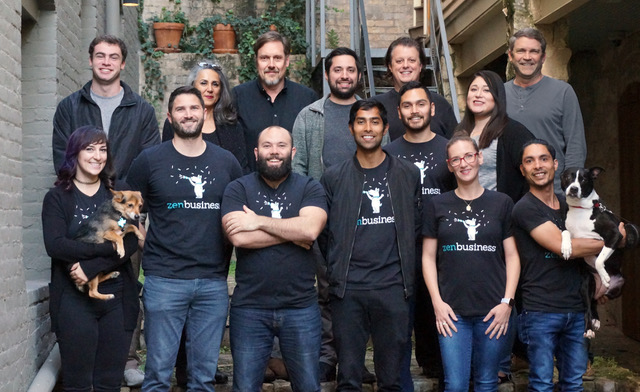
TeamPhoto2018

The ZenBusiness team in 2018. Photo via ZenBusiness.

Buhrdorf is particularly focused on keeping the product very self-service and automated to allow it to focus on these smaller customers. “Many of the companies that you cover that are in the enterprise space, who provide solutions for medium-sized businesses, they have to charge, they have to have sales forces, it’s very competitive there,” Buhrdorf said. “What we’re after is the segment that’s underserved, it’s the long tail of the small business segment.”

ZenBusiness has expanded its services, and it is hoping to use the fresh infusion of capital to invest in building out community features that will allow small business owners to swap tips with each other and help one another grow their businesses (presumably with some guidance from ZenBusiness community managers and experts).

The company is now 40 employees predominantly in Austin with a small office in Peru. Since we last checked in, the company has transitioned to become a public benefit corporation, which Buhrdorf said was an attempt to better align the company’s charter with its mission orientation to help small business entrepreneurs.

25 Sep 2019

ZenBusiness raises $10m to help founders launch and grow “worry-free”

There are two sides to starting a new business. On one side, entrepreneurs need creativity, imagination — a dream, essentially — to find, build, and market a new product to users and consumers. But on the other side, they have to deal with the regulatory state and all the minutia that comes with running any business in the 21st century.

That includes such delightful topics as choosing a particular model for incorporation, ensuring that a business has the right licenses to operate, and tracking all the legal changes happening in 50 state legislatures every year. It can be inordinately complicated (and expensive!) to ensure that your business is ready and legal.

That’s where ZenBusiness comes in. The Austin-based startup wants to empower entrepreneurs to build businesses large and small by dramatically simplifying the processes required to launch a business and then grow it.

When I last chatted with the company 18 months ago, they had just raised a $4.5 million seed round and had launched its platform. Today, it’s announcing that it has raised a new $10 million series A round led by return backer Greycroft, along with returning investors Lerer Hippeau and Revolution’s Rise of the Rest fund, alongside new investors Rosecliff Venture Partners, Interlock Partners and Recruit Strategic Partners.

The company launched with a product that was essentially an automated registered agent for new entrepreneurs. Under state incorporation laws, companies must designate a so-called “registered agent” to receive official notices from regulatory agencies, and so ZenBusiness chose this strategic point for entry into the market.

When I last chatted with CEO Russ Buhrdorf, he described rolling up this market as one of the key initial targets for the company:

ZenBusiness is the brainchild of Ross Buhrdorf, who joined vacation rental marketplace HomeAway five months after its inception as founding CTO, and stayed for a decade until its acquisition by Expedia in 2015 for $3.9 billion. Buhrdorf intended to take a year off, but “didn’t quite make it a year” he told me.

He explained to me that HomeAway in many ways followed a rollup playbook, “raising $400 million and acquired 26 companies.” Bringing that rollup lens while exploring new spaces, he ran into the corporate legal services market, which offers help to companies to keep them in compliance with the law. Buhrdorf liked what he saw. “It’s different in all 50 states, highly-regulated, which is great for technology, it is overpriced, and they underserve their customers.” He says the space is “completely ripe for disruption.”

Since that time, the company has expanded its product to help entrepreneurs get beyond merely incorporating to actually building out their business by recommending services like banking, lending, tax preparation, website building, and more. The hope is to provide a “worry-free” guarantee to entrepreneurs so that they can get those early critical logistics out of the way and back to actually operating and growing their business.

“Small businesses come through this funnel, they don’t necessarily know exactly what to do. So we curate that solution, and then we provide them with the basics for them to get up and running and to be successful,” Buhrdorf said.

He explained that the company has built out some tools itself such as a simple webpage creator, but in the long run, he hopes to partner with other providers who integrate into the ZenBusiness platform. For instance, ZenBusiness has partnered with Xero as the company’s main accounting provider, while also backstopping that offering with accountants working at ZenBusiness. The idea is that the automated tooling plus a little human touch can help most owners handle the day-to-day challenges of running a business.

TeamPhoto2018

The ZenBusiness team in 2018. Photo via ZenBusiness.

Buhrdorf is particularly focused on keeping the product very self-service and automated to allow it to focus on these smaller customers. “Many of the companies that you cover that are in the enterprise space, who provide solutions for medium-sized businesses, they have to charge, they have to have sales forces, it’s very competitive there,” Buhrdorf said. “What we’re after is the segment that’s underserved, it’s the long tail of the small business segment.”

ZenBusiness has expanded its services, and it is hoping to use the fresh infusion of capital to invest in building out community features that will allow small business owners to swap tips with each other and help one another grow their businesses (presumably with some guidance from ZenBusiness community managers and experts).

The company is now 40 employees predominantly in Austin with a small office in Peru. Since we last checked in, the company has transitioned to become a public benefit corporation, which Buhrdorf said was an attempt to better align the company’s charter with its mission orientation to help small business entrepreneurs.

25 Sep 2019

Social care startup Lifted raises £1.5M for end-to-end elderly care platform

The number of elderly adults requiring home care is set to grow at an alarming rate in most western countries as people live progressively longer. But underinvestment in technology and healthcare means society is at risk of vastly under-delivering. It’s very hard to scale these service and subsequently, no company has more than a low percentage market share. Few home care brands have much trust. In the UK 38% of people caring for a loved one (81% of whom are women) drop out of the workforce to have to deal with elderly relatives.

In the UK, a few companies are trying to address this issues: Traditional incumbents like Bluebird Care and Home Instead which are traditional home care agencies which don’t scale; “Introductory agencies” like Supercarers and Elder who do not train their carers directly with the associated problems; and so-called tech-enabled new players like Cera which have limits tech deployment as it is.

London-based Lifted plans to address some of these shortcomings with a full-blown end-to-end ‘Apple-like’ solution.

It’s now raised £1.5m in seed funding after being founded by Rachael Crook and Sam Cohen. Crook is a former Cabinet Office and McKinsey Consultant, who started Lifted after a frustrating experience trying to arrange care for her mother after she was diagnosed with dementia aged 56.

The startup was incubated inside Zero 1, a new corporate venture builder.

The company is a CQC-regulated care provider which gives families real-time updates on care, and a set of wellness data about their loved one. The Care Management Platform is a way to schedule visits, keep a check on tasks that have been completed and receive notifications when care begins and ends.

The default rate is £19 an hour for hourly care and £950 a week for live-in care. Clients can choose to purchase this as an additional service for which they will charge a subscription fee.

Crook says: “There are few more important decisions than who to trust to look after your loved ones. Yet the current market is broken with a lack of transparency, poor quality care and poor working conditions for carers. Precious data languishes in paper files. Lifted is on a mission to change this by harnessing the power of technology and data to transform the quality of care and improve the lives of carers and families.”

Lifted’s future plans include broadening their service offering by combining professional care and in-home technology. This will bring together health alerts, in-home sensors, and professional carers to transform what it means to care.

Lifted will develop AI-based analytics to predict and prevent health deterioration.

Unlike other start-up care providers, Lifted directly employs its carers and pays the London Living Wage, which is 20% above the market average for hourly care and enabled by operational savings achieved by using a technology platform.

Founded in 2018 by Finn MacCabe, Damian Cristian and Guy Conway, Zero 1 has built three new companies in Insurance, Cloud Compute and Health Care, in partnership with FTSE 100 companies.

25 Sep 2019

Duda nabs $25M to take on WordPress with a web development platform aimed at agencies

WordPress last week secured its position as a top dog in the world of web development when its parent company Automattic announced a $300 million raise at a $3 billion valuation, just weeks after it snapped up Tumblr from Verizon. But true competition never really ends, and today brings the latest development on that front: Duda, which provides a cloud-based website building platform for developers — in its case targeting potentially non-technical builders at digital agencies and SaaS platforms — is today announcing that it has raised $25 million from a single investor, Susquehanna Growth Equity.

The funding, which brings the Palo Alto-based startup to $50 million raised to date, comes as Duda hits some strong milestones. There have been more than 560,000 websites built on its platform to date from some 6,000 web professionals — a mark of the B2B2C channel that Duda uses to grow (on an average this would work out to around 93 sites per developer or agency).

Itai Sadan, Duda’s co-founder and CEO, said in an interview that the plan will be to use the funding to continue investing in its platform — it has a team of engineers in Israel — as well as in sales and marketing, and specifically in convincing customers to make the switch to its platform from bigger competitors.

To wit: if you do a quick Google search for Duda WordPress, you’ll see that the company has already put a lot of effort into creating tools to port sites from the latter to the former, and articulating the reasons why Duda is faster to use, better for pushing updates and preferable for publishing further websites and web pages at scale. (Duda claims that those making the switch achieve a 50% reduction in site build times.)

The company began life as a mobile-first web development company, at a time when many thought that mobile web would be a viable, and potentially larger, alternative to building native apps for mobile platforms. That, of course, never quite materialised as a big business, since apps did indeed continue to boom, and responsive web design meant that it was much easier to build once for the web and have it simply work on mobile, rather than invest in a separate mobile-web-only build.

That doesn’t mean, however, that all the platforms that are on the market today have been a perfect fit for agencies or SaaS platforms that might be working on bringing dozens or hundreds of sites, or pages of sites, online simultaneously.

“We are very familiar with the frustration many web professionals experience daily due to the lack of suitable web design platforms. Our team has developed a product that integrates all of the components needed for professional-grade web design to effectively serve digital agencies and SaaS platforms and allow them to scale their business,” said Itai Sadan, Co-Founder and CEO of Duda, in a statement.

Working with agencies and others that may not be hard-coding websites, the company has build a suite of tools to help those who are non-technical designers to be able to build and update sites with minimal fuss and bugs.

The idea here is to provide something much more advanced and customizable than what you might get on a platform like Wix, but without some of the hiccups that Duda claims you are likely to encounter on WordPress (or via a provider that works on WP), in part because, as Sadan described it to me, the open source foundation on which WordPress has been built can throw up a catalog of errors that are complicated to fix, even for engineers let alone non-technical staff.

The features, for example, include something Duda calls its Widget Builder, so that a tool or action that is repeated across multiple sites can be turned into a widget to be implemented more quickly and easily. These also come with APIs to integrate other data sources into Duda sites. It also has a tool to manage site comments — not commenting by site visitors, but a way for clients to better mark requests and changes for their agencies. Asset sharing is also possible on the platform.

The pitch is that this is what customers need today.

“While the Susquehanna team and I were initially impressed with the product, it wasn’t until we started speaking with customers that we realized just how powerful the platform is for the thousands of web professionals it serves. Time and again, customers told us that Duda catalyzed the growth of their agencies,” said Noa Wolfson, Investor at SGE, in a statement. “The ability to have all site building and client management needs on a centralized, and more importantly, secure, platform saves web professionals time and money.” Noa Wolfson has also joined the company’s board.

With tens of thousands of agencies globally still to tackle, the ambitions are high at the company. “We’re just scratching the surface,” said Sadan.

25 Sep 2019

Nintendo’s ‘Mario Kart Tour’ is out now for iPhone and iPad

Mario Kart Tour, Nintendo’s latest mobile game, is now available on iOS for iPhone, iPad and iPod touch. The game, like Nintendo’s other iOS releases, is free-to-play with in-app purchases (in-game currency called ‘rubies’) that you use for upgrades and unlocks.

Players immediately unlock one rider and get a tutorial to start, which introduces you to the Mario Kart Tour driving mechanics, which are slightly different than the ones you’re probably used to if you’ve played Mario Kart games for Nintendo’s various consoles. Specifically, your kart will always be moving forward, so there’s no acceleration to press, and instead you slide your finger side-to-side on the screen to steer left and right, with a tap firing off any items or weapons you might pick up.

High scores earn you points that can be redeemed for in-game unlocks, and the game also features other new mechanics like ‘frenzy mode,’ which gives you a timed period of unlimited item use whenever you pick up three of the same. Special challenges are also new in this mobile iteration, which introduce new ways to win instead of just placing first in a race with other kart drivers. Mario Kart Tour also features online ranking with other mobile players worldwide.

The ‘Tour’ component of the game is also a new twist: Nintendo is mixing courses inspired by real-world cities in with levels that are taken from classic Mario Kart games, and these will be cycling every two weeks for a fresh global tour on a regular basis. In-game characters will also get costume variants that are inspired by these globe-trotting destinations.

Based on Nintendo’s past track record, Mario Kart Tour should be perfectly playable without any in-game purchases, but players may feel that they hit a progression wall pretty quickly without picking up some currency. It’ll be interesting to see how this one fares, given that Apple has just introduced its own Arcade subscription service focused on games that eschew in-app purchase mechanics – including cart racer Sonic Racing, which looks very much like it was once intended to offer similar in-app mechanics before Arcade came along.

25 Sep 2019

Kreditech, the AI-based near-prime loans platform, nabs $22M under new CEO to expand globally

Cash advances (or simply, loans) continue to be a lucrative area for startups to tackle. By leveraging new AI-based tools to evaluate potential customers, the network effect of the internet and the quick efficiency of digital money transfer, they’re taking on incumbent banks to disrupt a consumer lending market estimated to be worth some $284 billion in 2018 and around $300 billion this year.

Today, one of the earlier players in the space that specifically targets emerging economies is announcing a round of funding to expand its business: Kreditech, the Hamburg, Germany-based provider of loans and point-of-sale financing to near-prime borrowers in countries that include Poland, Spain, Russia and India, has picked up €20 million ($22 million).

The funding is being led by Russian VC Runa Capital, with participation also from an unnamed German private investor, and previous investors HPE Growth and Amadeus Capital Partners, along with unnamed fintech angels. Valuation is not being disclosed, but as a point of reference Kreditech was valued at around €500 million in its last fundraise. Other investors in the company include Peter Thiel, Rakuten and the IFC.

This is an equity round that it will be using to continue building its business specifically in the latter of those four countries — doubling down on the fact that India is not only one of the world’s biggest economies, but one of the fastest-growing, too. It’s also a country where Kreditech has been working to build its business for years at this point: its last big funding round before this was in 2017, when Naspers’ PayU invested €110 million in the company as part of a strategic partnership to offer Kreditech financing in India.

Kreditech was founded originally around the idea of using AI to make better assessments of potential borrowers in developing economies (and manage the underwriting using that data and automation), the idea being to target those who have little or no credit history behind them. The company started to shift this strategy in 2017 to concentrate instead on “near prime” borrowers — those who may have a credit history, but not a particularly good one.

It’s a strategy it has continued to pursue under newish CEO David Chan (he joined in 2018 as part of a larger management overhaul and comes with a pretty impressive background with executive roles at Barclay’s consumer division, Citigroup and American Express). The company now projects that it will be clearing €1 billion in revenues by 2025 (so, roughly in the next five years) following this strategy. It will only be disclosing its current turnover and other financials next month.

Today’s funding round is not the biggest you will see in fintech, a capital-intensive business that regularly sees rounds in the hundreds of millions (or even in the multiple billions of dollars) to help startups in their expansion efforts. But it also comes after a relatively cool period for fintech funding, where the very biggest acquisitions — such as Alibaba yesterday reupping its stake in Ant Financial by 33 percentage points — have been closures of deals that actually first materialised a year ago.

With that backdrop, the company has been somewhat under the radar in the last couple of years, but appears now to be lifting its head again above the parapet.

“We are on track to realize our vision, which is to be one of the leading technology-enabled consumer-lending companies; a fintech platform of choice for both individuals and POS and e-commerce partners. With a new strategy in place, a solid capital base and our highly motivated and experienced team, we are perfectly positioned to achieve our goals”, says David Chan, Kreditech CEO, in a statement.

“I am really excited about our growth plans in India,” he continued. “We hold a first-of-its-kind digital NBFC (non-banking financial company) license in a large and fast-growing market. We have been successful in finding our niche and have established the right proof of concept. Now it’s time to scale up while a key target customer segment remains unaddressed by the competition.”

Runa’s involvement is a sign that we will see Kreditech also active in Russia and other Eastern European markets, is my guess.

“We are excited to be partnering with Kreditech as it continues on its path to becoming a global leader in digital near-prime lending. We believe that access to credit will continue to be improved through innovation and we see Kreditech as the emerging leader in this space, especially considering its presence in multiple fast-growing markets around the world,” said Andre Bliznyuk, General Partner at Runa Capital, in a statement.

“We are keen to support Kreditech,” Tim van Delden, co-founder of HPE Growth, added in a statement. “We have great trust in the new management team that Kreditech put in place in 2018. Kreditech’s track record over the last eighteen months, together with its business focus, strategy refinement and path to profitability has been truly impressive. For these reasons, HPE is convinced that Kreditech has the right management team to scale the business into the near-prime market. Kreditech’s core pillars of success remain the same – it is a technology and data-driven company that is able to use machine learning scoring models to make credit decisions in real time and with greater accuracy.”

25 Sep 2019

MaxAB raises $6M seed round to optimize Egypt’s B2B grocery markets

Cairo based startup MaxAB looks to optimize the supply-chain network for Egypt’s food and grocery retailers.

The B2B e-commerce company raised a $6.2 million seed-investment co-led by Beco Capital and 4DX Ventures. Others to join the round were 500 Startups, Endure Capital, and Outlierz Ventures.

Founded in 2018, MaxAB has built a digital platform to manage procurement and delivery of grocery products to shops in Egypt. The startup’s developer team created an app for store-owners to purchase goods, another logistics app for its delivery fleet, and one for its customer support team.

MaxAB’s target market is small-scale retailers in Egypt, who sell to the country’s 100 million population.

“The Wal-Mart’s and the Krogers and Walgreen’s of Egypt only represent 10% of the market; 90% of this $50 billion market gets transacted through small mom and pop shops,” MaxAB CEO Belal El-Megharbel told TechCrunch on a call from Cairo.

He developed the startup idea while working as a General Manager at Careem — the Middle Eastern ride-hail company acquired by Uber in 2019 — and co-founded MaxAB with Mohamed Ben Halim.

Both saw an opening to reduce cost and complication in Egypt’s B2B food and grocery markets.

MaxAB Belal El Megharbel CEO“It’s a very segmented supply-chain. Small shops in Cairo have to go through six or seven-layers in between — the shipping,  unboxing, determining product quality, and setting base prices — and that’s what we’re fixing for them,” said El-Megharbel.
MaxAB has a fleet of 60 trucks and a large warehouse that serves Cairo. The startup tailored a logistics practice for Egypt to make sure it can meet retail customer needs. “We’ve come up with our own model we call just-in-case inventory, where we keep three to four days additional inventory to accommodate for supplier unreliability,” explained El-Megharbel.

MaxAB has a staff of 270 and 9,000 retailers on its app, according to a company release. The venture generates revenue on margins it earns from the buy to sell price of the products it offers. Unsurprisingly, El-Megharbel names achieving scale as the path to profitability. “The bigger your scale the better the margins you gain on supply,” he said.

Drawing on its seed-round, MaxAB also aims to generate revenue by expanding its offerings to working-capital financing and data-analytics services to its retail clients. The startup will expand its operations to several different cities in Egypt and grow its tech team.

The company has no immediate plans to operate outside of Egypt, according to El-Megharbel, but could consider expansion in North Africa in the future.

Briter Bridges Map Logistics Africa CroppedMaxAB will raise another funding round in approximately a year’s time, he said. 4DX Ventures  Managing Partner Peter Orth confirmed the fund’s participation in the $6.2 million seed-financing. Orth will take a board seat with MaxAB.

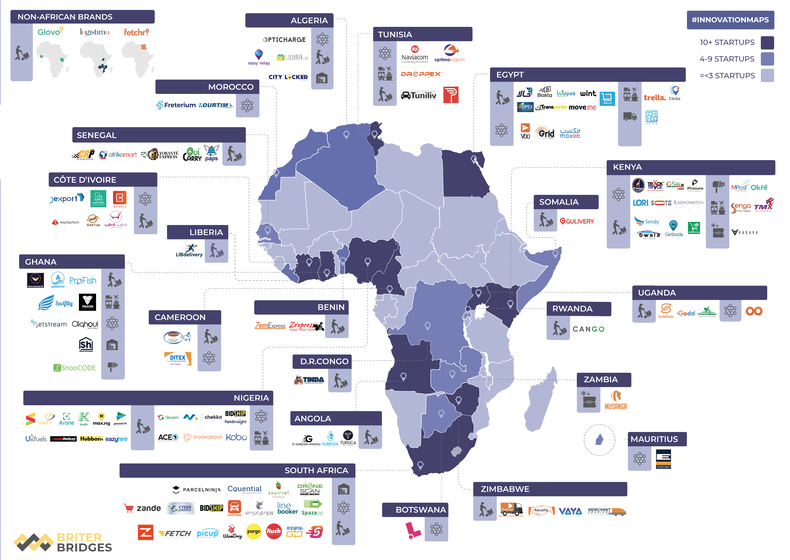
Transport-tech focused startups received the largest share of the $33 million in VC invested in Egypt in 2018, according to WeeTracker. Research by Briter Bridges tracks 120 logistics and supply-chain related startups in Africa.

In 2018, MaxAB investor 4DX ventures led a $2 million round in Kenya based B2B supply-chain startup Sokowatch, founded by Daniel Yu.

The companies share a similar retail logistics focus, but the founders don’t appear poised to enter each other’s markets or become competitors just yet. “Daniel’s a really smart-guy. We meet and talk quite often,” MaxAB CEO Belal El-Megharbel said.


25 Sep 2019

MaxAB raises $6M seed round to optimize Egypt’s B2B grocery markets

Cairo based startup MaxAB looks to optimize the supply-chain network for Egypt’s food and grocery retailers.

The B2B e-commerce company raised a $6.2 million seed-investment co-led by Beco Capital and 4DX Ventures. Others to join the round were 500 Startups, Endure Capital, and Outlierz Ventures.

Founded in 2018, MaxAB has built a digital platform to manage procurement and delivery of grocery products to shops in Egypt. The startup’s developer team created an app for store-owners to purchase goods, another logistics app for its delivery fleet, and one for its customer support team.

MaxAB’s target market is small-scale retailers in Egypt, who sell to the country’s 100 million population.

“The Wal-Mart’s and the Krogers and Walgreen’s of Egypt only represent 10% of the market; 90% of this $50 billion market gets transacted through small mom and pop shops,” MaxAB CEO Belal El-Megharbel told TechCrunch on a call from Cairo.

He developed the startup idea while working as a General Manager at Careem — the Middle Eastern ride-hail company acquired by Uber in 2019 — and co-founded MaxAB with Mohamed Ben Halim.

Both saw an opening to reduce cost and complication in Egypt’s B2B food and grocery markets.

MaxAB Belal El Megharbel CEO“It’s a very segmented supply-chain. Small shops in Cairo have to go through six or seven-layers in between — the shipping,  unboxing, determining product quality, and setting base prices — and that’s what we’re fixing for them,” said El-Megharbel.

MaxAB has a fleet of 60 trucks and a large warehouse that serves Cairo. The startup tailored a logistics practice for Egypt to make sure it can meet retail customer needs. “We’ve come up with our own model we call just-in-case inventory, where we keep three to four days additional inventory to accommodate for supplier unreliability,” explained El-Megharbel.

MaxAB has a staff of 270 and 9,000 retailers on its app, according to a company release. The venture generates revenue on margins it earns from the buy to sell price of the products it offers. Unsurprisingly, El-Megharbel names achieving scale as the path to profitability. “The bigger your scale the better the margins you gain on supply,” he said.

Drawing on its seed-round, MaxAB also aims to generate revenue by expanding its offerings to working-capital financing and data-analytics services to its retail clients. The startup will expand its operations to several different cities in Egypt and grow its tech team.

The company has no immediate plans to operate outside of Egypt, according to El-Megharbel, but could consider expansion in North Africa in the future.

Briter Bridges Map Logistics Africa CroppedMaxAB will raise another funding round in approximately a year’s time, he said. 4DX Ventures  Managing Partner Peter Orth confirmed the fund’s participation in the $6.2 million seed-financing. Orth will take a board seat with MaxAB.

Transport-tech focused startups received the largest share of the $33 million in VC invested in Egypt in 2018, according to WeeTracker. Research by Briter Bridges tracks 120 logistics and supply-chain related startups in Africa.

In 2018, MaxAB investor 4DX ventures led a $2 million round in Kenya based B2B supply-chain startup Sokowatch, founded by Daniel Yu.

The companies share a similar retail logistics focus, but the founders don’t appear poised to enter each other’s markets or become competitors just yet. “Daniel’s a really smart-guy. We meet and talk quite often,” MaxAB CEO Belal El-Megharbel said.


25 Sep 2019

Manila-based payments processing startup PayMongo raises $2.7 million in seed funding

Manila-based financial tech startup PayMongo has raised $2.7 million in seed funding to give merchants in the Philippines and other Southeast Asian markets simple ways to set up online payments. Investors included Founders Fund, Peter Thiel and Stripe, with participation from Y Combinator (PayMongo is the first Philippine fintech company it has funded), Global Founders Capital, Soma Capital, Tinder co-founder Justin Mateen and other angel investors.

PayMongo was launched in June by a founding team that includes CEO Francis Plaza, COO Edwin Lacierda, CTO Jamie Hing and chief growth officer Luis Sia. Since then, more than 1,000 businesses have started using its platform and the startup says its total transaction value processed is growing at an average of 117% week over week. PayMongo’s seed round will be used for hiring, product development, business acquisitions and strategic partnerships.

paymongo founders

PayMongo founders

The startup will focus on the Philippines first, where the country’s central bank has set a target of increasing the rate of cashless payments to 20%. Plaza says PayMongo’s goal is to become the largest payment service provider in the country before expanding to other markets in Southeast Asia.

Prior to launching PayMongo, its team spent several years working on other projects. During that time, they realized payments were the hardest feature to integrate into products and services. Even though the Philippines’ Internet economy is growing quickly (a report from Google expects it to increase from $5 billion in 2018 to $21 billion by 2025) and more people are using e-commerce, online payments have lagged behind the rest of the world, Plaza says.

“When you want to launch something online for a payment gateway, you have to deal with banks and many different financial institutions. It takes months, we tried it ourselves, from negotiating rates to submitting paperwork. It takes a long time, and then in the end you are charged high fees,” he tells TechCrunch.

Even after businesses finish dealing with banks, they need to figure out payment gateways that are often difficult for people with little tech experience to start using.

PayMongo has already partnered with several financial institutions and its technology, including a payments API that Plaza says can be set up in minutes, is designed to be user friendly. Since many online merchants in the Philippines sell through social media platforms and messaging apps, like Facebook, Instagram, Viber and WhatsApp, PayMongo also provides customizable payment links that they can send to customers.

The credit card penetration rate in the Philippines is only about 6%, Plaza says, so PayMongo also supports e-wallets like GCash and PayMaya and services that allow people to pay for online purchases in cash at convenience stores. PayMongo’s products for micro-entrepreneurs, like freelancers and people who sell items through social media, help it differentiate from competitors like Paynamics, Dragonpay and PesoPay that typically focus on serving larger businesses (though Plaza says PayMongo has also been adopted by large retail chains).

In a statement, Y Combinator partner Kevin Hale said “At YC, we love companies who build services that empower startups. We believe PayMongo will provide the infrastructure that is needed for more Filipinos to become founders who are in charge of their own destiny.”

25 Sep 2019

Fidel raises $18M to let developers build on top of payment data from Visa, MasterCard and Amex

Fidel, the U.K.-headquartered startup that offers an API to let developers build functionality, such as rewards, on top of the major card payment networks, has raised $18 million in Series A funding.

The pretty sizeable round is co-led by U.S.-based fintech funds Nyca Partners and QED Investors. Also participating are Citi Ventures, Commerce VC, Elefund, Horizons Ventures, RBC Ventures Inc. (a subsidiary of Royal Bank of Canada), and 500 Startups. Several angel investors also joined in, such as Cris Conde, former CEO of Sungard, and Taavet Hinrikus, founder of TransferWise.

Meanwhile, Hans Morris, former President of Visa and Managing Partner of Nyca Partners, and Yusuf Ozdalga, Partner at QED Investors, will join the company’s board.

Fidel says the new funding will be used to expand the Fidel team and support the company’s growth, product development and international ambitions in North America, the Nordics and APAC.

Working in partnership with Mastercard, Visa and American Express, put simply Fidel has developed a suite of APIs that make it easy to link a user’s payment card to an app. This means that developers are able to build card-linked applications “in a matter of minutes,” such as loyalty-based rewards and more innovative use-cases afforded by access to the real-time data that card payment networks can provide.

Not only does Fidel offer a single point of integration — thanks to its partnerships with all three card networks — but the company also removes the burden of regulatory compliance from its customers by securely tokenising card numbers. “All of this helps businesses get to market and scale faster,” says Fidel co-founder and CEO Subrata Dev.

“Card-linking is the optimal choice for any user journey that relies upon real-time payment information, location accuracy and a frictionless customer experience,” he says. This includes loyalty, digital receipts, PFM/expense management, and “online-to-offline attribution”.

Loyalty is currently Fidel’s main use case. This typically sees a user sign up to a loyalty program, where they can earn points, rewards and cash back automatically when they pay using a registered card. It’s the card-linking aspect that Fidel makes possible, regardless of what type of card it is and who the user banks with. Of course, with any such loyalty app, cards are only linked when a user opts in.

Fidel Mobile SDK ios

One example of Fidel-powered card-linking is the British Airways Executive Club app that lets members earn Avios points automatically when they shop with any linked credit or debit card at participating retailers.

Dev tells me the benefits of using Fidel instead of “open data sources” enabled through Open Bankking/PSD2 is that card network data is real-time and granular. In contrast, bank account data, especially that offered by legacy banks as apposed to challengers, can be slow and quite limited.

“We are able to see specific information including – crucially – location, in real-time, which is pivotal to many use cases,” he explains. “Open data sources typically provide much lower quality data, even once scraped. Card-linking is also frictionless for the user, who registers their card once and shops as usual. Again, this is key for loyalty and retention use cases where open banking’s requirement for customers to re-authenticate every 90 days would cause far too much friction and dropout”.

With that said, as it stands, Dev says that Fidel rarely competes against Open Banking API solutions, as the choice of data source is generally dependent on the specific use case. “Many of our customers are using a combination of the two sources to gather a more holistic view and create better user experiences,” he adds. “So whilst there may be some level of overlaps, account-linking and card-Linking are largely complementary”.