Category: UNCATEGORIZED

19 Sep 2019

Airbnb says it will go public next year

Airbnb has said that it will have its initial public offering in 2020.

The company is one of the last of the big unicorn herd that grew up roughly a decade ago and includes Uber, Lyft, the We Company, and Postmates, to declare its public market intentions.

Yesterday evening the company announced that it had hit over $1 billion in revenue for the second quarter 2019. It’s the second time in the company’s history that it pulled in more than $1 billion, according to the statement.

Airbnb also said that through September 15, 2019 users who list their homes and rooms on the company’s marketplace have made more than $80 billion since the company’s launch. The supplemental income for underpaid teachers alone clocks in at $160 million alone and roughly 51% of people surveyed by the company said hosting has helped them afford their home.

The company also said that Airbnb’s housing stock now includes 7 million listings in over 100,000 cities around the world. Airbnb says that over 1,000 cities have more than 1,000 listings — eight years ago, that figure was only 12.

Airbnb is also pulling in more money from its tourism business, with more than 40,000 tours and “experiences” booked in over 1,000 cities.

All of this travel has led to over $100 billion in economic impact across thirty countries, the company said.

This growth hasn’t come without controversy and Airbnb’s success will depend on its ability to continue to thread the needle between government regulation over the company’s impact on housing prices and the creation of vacant apartments and homes that are only investment properties which increase Airbnb’s housing stock.

The company’s imminent public offering is good news for investors like Andreessen Horowitz, Manhattan Venture Partners, Sequoia Capital, TCV, Firstmark and Altimeter Capital, which have collectively invested roughly $4.4 billion into the company, according to Crunchbase.

19 Sep 2019

Ginkgo Bioworks’ dev shop for genetic programming is now worth $4 billion

Ginkgo Bioworks is now worth $4 billion after a $290 million capital infusion that will give the company the cash to dramatically expand its developer shop for genetic programming.

The Boston-based company is one of a handful of U.S.-based early-stage companies that are on the forefront of developing the tools to modify genetic material for everyday applications.

“Cells are programmable similar to computers because they run on digital code in the form of DNA.” said Jason Kelly, CEO and co-founder of Ginkgo Bioworks, in a statement. “Ginkgo has the best compiler and debugger for writing genetic code and we use it program cells for customers in a range of industries. Today’s fundraise will allow us expand our technology and continue our drive to bring biology into every physical goods industry – materials, clothing, electronics, food, pharmaceuticals, and more. They are all biotech industries but just don’t know it yet.”

Ginkgo makes money in two ways. The company sells its development services to anyone who comes in with an idea. Kelly said that it’d be like any agreement with an entrepreneur who hires a coding shop to develop an application.

For example, if an entrepreneur wanted to develop houseplants that smelled like roses or lilies, they could approach Ginkgo, pay a (not-insignificant) fee, and Ginkgo would do the research into designing something like a lily-scented fern. (Kelly puts the sticker price on that kind of development somewhere in the neighborhood of $10 million, so a founder best believe their product can sell.)

“You don’t need to come in with deep biological know-how,” Kelly says. “The question is, is capital interested in the problem?”

The other way that Ginkgo is approaching the market is by taking equity stakes in businesses that rely on its technology.

Those take the form of joint ventures with companies like Bayer (the first joint venture partner for Ginkgo) and the launch of Joyn, a $100 million spin-out that was created in the summer of 2018.

The two companies are collaborating on the development of seeds that require less fertilizer for growth — something that could save the industry millions and decrease pollution associated with traditional chemical fertilizers.

Since that first spinout, Ginkgo has created three other companies. There’s the $122 million deal to produce rare cannabinoids with the Canadian cannabis company, Cronos; a partnership with Roche that was born out of Ginkgo’s acquisition of Warp Drive Bio; and Motif Foodworks, which is working on manufacturing alternative proteins with a $120 million in financing.

Alongside these large-scale initiatives, Ginkgo has signed partnerships with the West Coast powerhouse accelerator program from Y Combinator and a new Boston-based life sciences-focused group called Petri to conduct development work for startups from those programs in exchange for an equity stake.

“We’re not going to have all the good ideas,” says Kelly. “We want to tap the much larger pool of smart people and really have them building on our platform. Of all of the people we can give value to, we can give the most to startups. If we can offer them to do their biowork without all of the fixed costs of build a lab,” that’s valuable, he says.

Investors in the company include Y Combinator, DCVC, MassChallenge, Felicis Ventures, General Atlantic, Baillie Gifford, Bill Gates, and Viking Global.

19 Sep 2019

‘The best VC on Instagram’ is now VC-backed

About 18 months ago, Jenny Gyllander created an Instagram account by the name @thingtesting.

The premise was simple. Gyllander, who was at the center of the London startup ecosystem as an investor with the British seed fund Backed.VC, would upload photos of interesting direct-to-consumer products with a caption that served as a bite-sized review. The experiment began with Birchbox, a provider of curated boxes of beauty products that rose to prominence amid the subscription box hype of yesteryear. In her short review, tailored perfectly for the Instagram generation, Gyllander admitted to being “like 10 years late to this much hyped subscription-everything party,” adding that “after two boxes and ten products, only three products were relevant to me.” Her honesty, and perhaps more importantly, her brevity, garnered her a small following of venture capitalists, founders and consumer brand enthusiasts.


View this post on Instagram


A post shared by thingtesting (@thingtesting) on

Since that first post, Gyllander has featured and reviewed more than 100 products on her Instagram account — which today counts 32,800 followers — quit her day job and began building an Instagram inspired, full-fledged review business.

“I found something I am very, very passionate about,” Gyllander tells TechCrunch. “Finding the D2C niche was for me a little bit of a holy grail. It’s where brands and startups align for the first time in a concrete way.”

With a $300,000 pre-seed investment from angel investor and Homebrew co-founder Hunter Walk, who previously called Thingtesting “The best VC on Instagram,” early Spotify investor Shakil Khan and more, Gyllander wants to create a full-scale D2C review platform with a team of reviewers and content creators, and a portal for her loyal followers to write and submit their own reviews. She compares what she envisions for Thingtesting to that of Rotten Tomatoes. Akin to the popular website for movie and television reviews, each product review on her future website will include a Thingtesting score and an audience score. The goal is to help consumers shop smarter and filter through the D2C noise.

“People are confused right now by the sheer amount of products launching,” Gyllander said. “I want Thingtesting to be a filter for people to consume better … It’s a role department stores used to have back in the day but no body has really filled that role in the online world.”

[gallery ids="1883585,1883587,1883588"]

Gyllander, already making money from what was once a side project, has plans in store to generate significantly more revenue. Currently, she’s capitalizing off Instagram’s Close Friends list, which the social media hub launched last year to allow users to share content to fewer people. Gyllander, like a slew of other Instagram Influencers, however, quickly realized an opportunity to monetize content using the feature, a trend explained in detail in a recent report from The Atlantic.

Gyllander charges a lifetime fee of $100 to her followers hoping for a spot on her Close Friends list. Those followers are then provided exclusive content, including behind-the-scenes looks at her product review journeys. So far, 300 people have been granted access to the exclusive group as others sit on the waitlist. Gyllander explains she hasn’t green-lit every request to enter the coveted group because she wants to maintain a sense of community as the account grows in popularity. Early next year, she hopes, she will have launched a Thingtesting website and a new subscription-based membership tier targeting D2C connoisseurs, investors and anyone interested in a front seat view of the booming D2C industry.

As Thingtesting morphs into a digital review platform and expands from the bounds of Instagram, Gyllander will have to work harder to differentiate what she’s built from other review sites and D2C blogs. Her secret weapon, she believes, is her authenticity.

“It’s my honesty,” Gyllander said. “And it’s the fact that there’s no payment involved from the brands and that I’m not being paid to review products. That’s something quite rare in the Instagram world today. There aren’t that many accounts that are just talking about new products with non-monetary incentives.”


View this post on Instagram


A post shared by thingtesting (@thingtesting) on


Since launching with a review of Birchbox, Gyllander has shared her thoughts on Magic Spoon, a D2C cereal company: “one bowl kept me full for hours,” she wrote, ultimately concluding she wouldn’t continue eating the cereal. More recently, she referred to the D2C aperitif brand Haus as “stunning;” wrote a lukewarm review of the blue light-protecting eyewear brand Felix Gray; and posted a glowing summary of Dripkit, a D2C coffee brand.

To secure a spot on Gyllander’s grid, a product must bring something new to the market, as well as boast killer branding and packaging. The former VC says she tries out about 20 products a month and shares official reviews of four or five.

“The majority of people today, when it comes to modern brands, they have their first interaction through an ad or an influencer telling them about the product,” Gyllander explained. “Discovery is in a weird place right now when it comes to the general consumer.”

It’s difficult to imagine a venture-scale business within Gyllander’s vision for Thingtesting. But one should never underestimate the value of an exclusive and hyper-focused network. Gyllander, in a short time, has created a meeting place for D2C aficionados and venture capitalists and, as she’s proven, her thoughts are worth paying for.

19 Sep 2019

Quilt Data launches from stealth with free portal to access petabytes of public data

Quilt Data‘s founders, Kevin Moore and Aneesh Karve, have been hard at work for the last four years building a platform to search for data quickly across vast repositories on AWS S3 storage. The idea is to give data scientists a way to find data in S3 buckets, and then package that data in forms that a business can use. Today, the company launched out of stealth with a free data search portal that not only proves what they can do, but also provides valuable access to 3.7 petabytes of public data across 23 S3 repositories.

The public data repository includes publicly available Amazon review data along with satellite images and other high-value public information. The product works like any search engine, where you enter a query, but instead of searching the web or an enterprise repository, it finds the results in S3 storage on AWS.

The results not only include the data you are looking for, it also includes all of the information around the data, such as Jupyter notebooks, the standard  workspace that data scientists use to build machine learning models. Data scientists can then use this as the basis for building their own machine learning models.

The public data, which includes over 10 billion objects, is a resource that data scientists should greatly appreciate it, but the company is offering access to this data out of more than pure altruism. It’s doing so because it wants to show what the platform is capable of, and in the process hopes to get companies to use the commercial version of the product.

Screen Shot 2019 09 16 at 2.31.53 PM

Quilt Data search results with data about the data found. Image: Quilt Data

Customers can try Quilt Data for free or subscribe to the product in the Amazon Marketplace. The company charges a flat rate of $550 per month for each S3 bucket. It also offers an enterprise version with priority support, custom features and education and on-boarding for $999 per month for each S3 bucket.

The company was founded in 2015 and was a member of the Y Combinator Summer 2017 cohort. The company has received $4.2 million in seed money so far from Y Combinator, Vertex Ventures, Fuel Capital and Streamlined Ventures along with other unnamed investors.

19 Sep 2019

Impossible Foods will debut in SoCal grocery stores on Friday as first step in phased national rollout

Congratulations Southern California Gelsons store shoppers, you’re getting Impossible Foods on your grocery shelves.

The meatless ground meat substitute will be appearing in stores across the Southern California as the first step in a phased nationwide rollout on Friday.

With the step into groceries, Impossible Foods moves into direct competition with its bigger, publicly traded rival Beyond Meat, which is already selling its patties and sausages in major stores nationwide.

Impossible Foods, which has had some supply chain hiccups as it began to increase its production in the wake of large deals with fast food chains, will be taking a phased approach to its national expansion. Expect it to begin appearing on store shelves in other parts of the country throughout the end of the year. Its next stop is going to be another store chain on the East Coast later this month, the company said.

To celebrate the debut, Impossible Foods has tapped Chrissy Teigen’s grandmother for a VIP event on Thursday night and will be handing out samples at a Los Angeles-area Gelsons on Friday.

“Our first step into retail is a watershed moment in Impossible Foods’ history,” said Impossible Foods’ Senior Vice President Nick Halla, who oversees the company’s retail expansion. “We’re thrilled and humbled that our launch partners for this limited release are homegrown, beloved grocery stores with cult followings in their regions.”

Gelsons and Los Angeles are something of a natural first stop for the company, given LA’s place in the nation’s food, environmental, and entertainment cultures.

Indeed, celebrities are some of the backers of Impossible Foods. In the company’s last, $300 million round, Jay-Z, Katy Perry, Serena Williams, Jaden Smith, Trevor Noah and Zedd all invested.

The Impossible Burger is made to have as much iron and protein as a traditional burger and contains 14 grams of total fat, 8 grams of saturated fat and comes in at 240 calories per 4-ounce servicing. It’s not better for a person than eating a traditional burger patty, but it is better for the environment. (The company says that a conventional 4-ounce patty has 80 milligrams of cholesterol, 23 grams of total fat, 9 grams of saturated fat and 290 calories.)

Founded in 2011 by chief executive officer and former Stanford biochemistry professor Pat Brown, Impossible Foods has raised nearly $700 million from investors including Bill Gates, Khosla Ventures, the slew of celebrities, the Singaporean government’s investment fund, and Hong Kong billionaire Li Kashing (along with his venture capital fund).

The company has set itself the goal of eliminating the need for animals in the food chain by 2035.

Already selling in White Castle, Burger King and Qdoba and is, according to a GrubHub survey, the  most popular . late-night delivery item in the U.S.

19 Sep 2019

HappyOrNot raises $25M for its customer satisfaction terminals for stores and other locations

Customer experience in they physical world has been getting a major infusion of tech in recent years. We now have systems being built to replace cashiers, sensors in stores and other physical locations to track where customers are walking, and smart mirrors that suggest items you might like to try on. Today, one of the brigade of startups that is enhancing that experience further is announcing a round of funding to fuel its growth.

HappyOrNot — which makes both hardware to record whether customers are satisfied or something a little less positive by tapping a face, usually on their way out of a location, and software to parse and analyse the resulting data the comes out of that input — is today announcing that it has raised $25 million in funding, money that it will use to continue building out its technology and its customer base.

Today, it’s already a 4,000-strong list across 135 countries that includes the likes of McDonald’s, Heathrow Airport, the San Francisco 49ers, and my local swimming pool and hospital here in London. To date, HappyOrNot has record 1.3 billion feedback responses, representing a massive trove of customer sentiment that stretches from basic responses “Yes, I’m happy” or “No, I’m not happy” through to more nuanced answers around why, in the case of their interactive tablets.

(As a point of reference, when it last raised money, $14.5 million in 2017, HappyOrNot had 3,000 customers, CEO and co-founder Heikki Väänänen told me in an interview.)

The funding, a Series A, is taking the total raised by the Finnish company (which also has offices in Florida) to $40 million and is being led by Verdane, with previous investor Northzone — a storied backer of some of the biggest startups to come out of the Nordics — also participating. The valuation is not being disclosed but Väänänen said it was a big boost upwards, as the company works towards a $100 million annual run rate. (It’s not there yet and it’s not profitable.)

The face of retail sales — along with anything else that involves physical interactions with customers — has been irreversibly changed by the rise of the internet. E-commerce has taken away trade, and new digital screen-based services have emerged as strong competitors to more traditional analog experiences. And on top of that, there is now a wide range of tools to measure what customers are doing all the time on these new platforms.

HappyOrNot is giving that physical world a boost at a time when it’s under the gun. Väänänen noted to me that one of the very typical use cases where his company is stepping in, is when a retailer, in order to avoid going out of business because of losses, has had to cut retail staff. Using these terminals, they are able to figure out whether they have enough staff at certain times of the day, and whether they need to rebalance that, given that they will likely be unable to operate a full complement of employees as they had in the past. Sad times, but perhaps better than seeing business shutter altogether.

Väänänen co-founded the company out of his own experience. Working as a games designer — a big industry in Finland — he had a terrible experience at a store when he couldn’t find anyone to help him with his queries. Later, complained about the situation to his friend and coworker Ville Levaniemi. It got Levaniemi thinking and he started looking to see if anything like a measurement company to gauge this kind of sentiment existed already. Turns out, bizarrely in these days of sentiment analysis everywhere you go on the web that it did not, and they right away decided to form this startup.

The games DNA should not be underestimated: the hardware looks not unlike a controller on a games console — or more appropriately like the buttons on an old-school arcade game. And the tablet-version of the interactive console — also sold directly by HappyOrNot to customers — also plays with the idea of gamification. Similarly, he says that the analytics and motivation behind forming the company are also a hat tip to the world of gaming.

“Games are purely about user experience,” Väänänen said. “If gamers they like the games, they play them. Otherwise we go bankrupt. And it’s the same with this. If people didn’t use it, we would have abandoned the idea.”

SmileyTerminal EN HON branded Front A3 01 1The next stage of its development will likely see HappyOrNot adding in more analytics to its services. Right now, about half of the terminals located across various locations feature tablets rather than the more basic terminals with physical buttons on them. (The decision of which to use is based on how fast typically a client wants to shift customers out of their locations.)

The tablets open the door to getting more details on why customers might be happy or unhappy with their experiences.

“We’re looking forward to helping HappyOrNot scale even further, continue to win major brands as customers, and bolster its analytics and insights capabilities,” said Janne Holmia, Principal at Verdane, in a statement. “With the knowledge we possess as a leading growth equity investor in software, combined with HappyOrNot’s market dominance, and the vast potential of the customer experience market, we are confident that together we will achieve huge success.”

“There is enormous potential in the real time CX analytics market as companies across all industries wise up to how important it is to listen to the opinions of consumers and staff, and act on them in real time,” said Marta Sjögren, Partner at Northzone. “HappyOrNot is known all over the world from their presence in airports, but it’s their growth across retail, healthcare, travel, and lifestyle industries that makes the future really exciting. This is yet another huge milestone in HappyOrNot’s journey to creating a global happiness index, and thereby redefining what good service looks like vertical by vertical. In a world where instant feedback is often mainly broadcast in a one-way communication stream on social media, being able to provide it to staff in the service industry in an actionable, realtime format is truly a game-changer.”

19 Sep 2019

Rocket Lab moves closer to opening U.S. launch facility with landing pad completion

Rocket Lab is nearing completion of its second launch facility – its first in the U.S., located on Wallops Island in Virginia. The company announced that it has finished installing the launchpad at Launch Complex 2, which is set to finish construction as early as the end of this year, with the first launches taking off from the site in early 2020.

All final build and integration of launch systems are expected to be done by December, according to the company, which will then allow for final testing and readiness prep of the launch site itself ahead of the first rocket actually launching from LC-2 next year. Rocket Lab’s first Electron launch from the U.S. will be a key milestone for the company – not only because it will double their potential mission capacity when combined with their existing facility in New Zealand, but also because a U.S. launch site will open up additional business for Rocket Lab in the form of lucrative government launch contracts.

WE don’t yet know who the first customer to launch on board a Rocket Lab customer from the Wallops facility will be, but Rocket Lab says it will reveal this info in short order, with a reveal planned for later this year.

LC-2 construction began in February this year, and the facility largely mirrors the existing Rocket Lab launch complex in New Zealand, which has been successfully serving clients with launches since early 2018.

19 Sep 2019

Automattic raises $300 million at $3 billion valuation from Salesforce Ventures

Automattic, the company behind WordPress.com, WooCommerce and soon Tumblr, has closed a $300 million funding round at a $3 billion post-money valuation. The Series D round has a single investor, Salesforce Ventures.

Founding rounds are something special for Automattic . While the company has been around for nearly 15 years, it hasn’t raised a ton of money. It closed a $160 million Series C round back in 2014 and raised little money before that.

Automattic and the WordPress open source project have a shared history. Many people are already familiar with WordPress, the most popular content management system on the planet. The company contributes to the open source project and also runs some of the most popular services on top of that project, such as WordPress.com and the Jetpack plugin, WordPress.com VIP (which TechCrunch uses) and WooCommerce.

This freemium business model with an open source philosophy at its core has been working well for the company. In 2014, Automattic had between 200 and 300 employees. The company will have close to 1,200 employees when the Tumblr acquisition closes.

Back in 2014, 22% of the world’s top 10 million websites used WordPress. There are now 34% of the world’s top 10 million websites running on WordPress.

“I think there’s potential to get to a similar market share as Android, which I believe now has 85% of all handsets. When you think about it, open source has a virtuous cycle of adoption, people building on the platform and more adoption,” Automattic founder and CEO Matt Mullenweg told me.

While WordPress started as an open source blogging platform, it has evolved into a highly customizable content management system. You can use it to show a portfolio, build a restaurant website, run an e-commerce company or even distribute news articles to millions of people.

“What we want to do is to become the operating system for the open web. We want every website, whether it’s e-commerce or anything to be powered by WordPress. And by doing so, we’ll make sure that the web can go back to being more open, more integrated and more user-centric than it would be if proprietary platforms become dominant,” Mullenweg told me.

And with the rise of social networks and closed platforms, such as Facebook, YouTube or Medium, Automattic is at odds with many of the dominant trends. Mullenweg still believes that the open source model creates some great network effects.

Instead of optimizing Automattic’s services for engagement and time spent, the company wants to empower content creators with great tools. Mullenweg mentioned Ben Thompson’s Stratechery as a great example of a content creator in control of his own destiny.

“The problem we’re tying to solve is likely multigenerational. It can take the rest of our lives and we need to pass it on to the generation that comes after to continue to work on it. Hopefully for the rest of humanity because I can’t imagine a time when humanity cannot benefit from an open, free, connected web,” Mullenweg told me.

When it comes to today’s funding round, Salesforce Ventures isn’t your traditional investor — and Mullenweg is well aware of that. There could be some partnerships and integrations between Salesforce and Automattic in the future.

“We’ve been a long time customer of Salesforce, we’re big fan of the platform. And definitely, you could imagine, given a lot of thoughts, how WordPress could complement their products,” he said.

Automattic doesn’t want to change course. With the new influx of cash, there won’t be any big departure from the current lineup of products and services. Automattic insists on its slow-paced and sustainable approach when it comes to launching and iterating on products.

“The roadmap is the same. I just think we might be able to do it in five years instead of ten,” Mullenweg said.

We’ll share a full interview with Matt Mullenweg in a few minutes.

19 Sep 2019

Roku unveils a new streaming player lineup, plus Roku OS 9.2 launch

Roku is getting a jump on the holiday shopping season with the arrival of new and updated devices. The company is expanding its media player lineup for the U.S. and abroad with updated versions of both its entry-level and high-end players, the Roku Express and Roku Ultra, respectively. It’s also introducing a new version of the Roku Express exclusively for Walmart, and a Streaming Stick that will be exclusively sold at Best Buy. Alongside the new hardware, it’s beginning to roll out an update to Roku’s operating system, with Roku OS 9.2, that focuses on improved search and discovery features, including the launch of curated search results it’s calling “Roku Zones.”

On the hardware side, the low-end Roku Express ($29.99) has been redesigned to be 10% than the last version, and can now be fully powered by most TVs’ USB port to reduce clutter.

Roku Express with Remote

And while we haven’t yet seen the results of the recent announcement of Roku’s plans to offer products to Walmart to be sold under the retailer’s own Onn brand, Roku is continuing to work with its retail partner on exclusive devices. The Roku Express+ model has dropped last year’s support for the analog inputs designed to work with older TVs, and instead bundles in the Roku voice remote for $39.99.

Roku’s entry-level 4K player, the Roku Premiere, will be sold at the same price point with a standard remote.

The two streaming stick form factors, the Streaming Stick+ and Streaming Stick+ HE, will both be $59.99 for the time being. While both are 4K-ready, the latter will be sold exclusively at Best Buy and will swap in an Enhanced Voice Remote with the headphone jack for private listening and Roku headphones. The Streaming Stick+ will offer the voice remote with TV controls instead. That begs to see a price point drop, but Roku isn’t yet announcing anything on that front.

New Roku Ultra RemoteMeanwhile, at the upper end of the lineup sits the Roku Ultra ($99.99). This more expensive device supports HD, 4K and HDR picture quality, and features a quad-core processor, 802.11ac dual-band wireless, Ethernet, a USB port and a MicroSD slot for local media playback, and supports Dolby and DTS Digital Sound. It ships with Roku’s Enhanced Voice Remote with JBL headphones for private listening.

This remote has been upgraded, too, with personal shortcut buttons that can be mapped to any Roku voice command. For example, you could say “Watch Disney+” or “Watch Brooklyn Nine-Nine” or “play jazz on Pandora” and make that one of your buttons.

What’s new this year is an entry-level Ultra edition for $79.99 that will be a Walmart exclusive. The device drops a few features like the Remote Finder and USB port, and it sports the older specs. It ships with the Enhanced Voice Remote with TV control and Roku headphones.

The Roku Express and Roku Ultra are available for pre-order at Roku.com today. The Roku Express and Roku Express+ will be available at the end of September with the rest of the devices on sale in October.

Roku Ultra LT

The Roku Express, Roku Premiere and Roku Streaming Stick+ are expected to be available outside the U.S. in the weeks ahead in Canada, the U.K., the Republic of Ireland and select countries in Latin America.

ROKU OS 9.2

As per usual, Roku’s fall update isn’t only hardware-focused. The operating system that powers its players is being updated, too, with the launch of Roku OS 9.2.

The standout feature is a search and discovery update called Roku Zones.

These “zones” are actually curated content collections organized around a genre, like “drama movies and TV,” or a theme, like holiday movies, for example. The zones will appear in the search results when you do a relevant search. Unlike the typically text-based search results, zones are visual guides with thumbnail images, scrollable rows, and content sourced from Roku’s partners — the same partners whose content would otherwise appear in its search results.
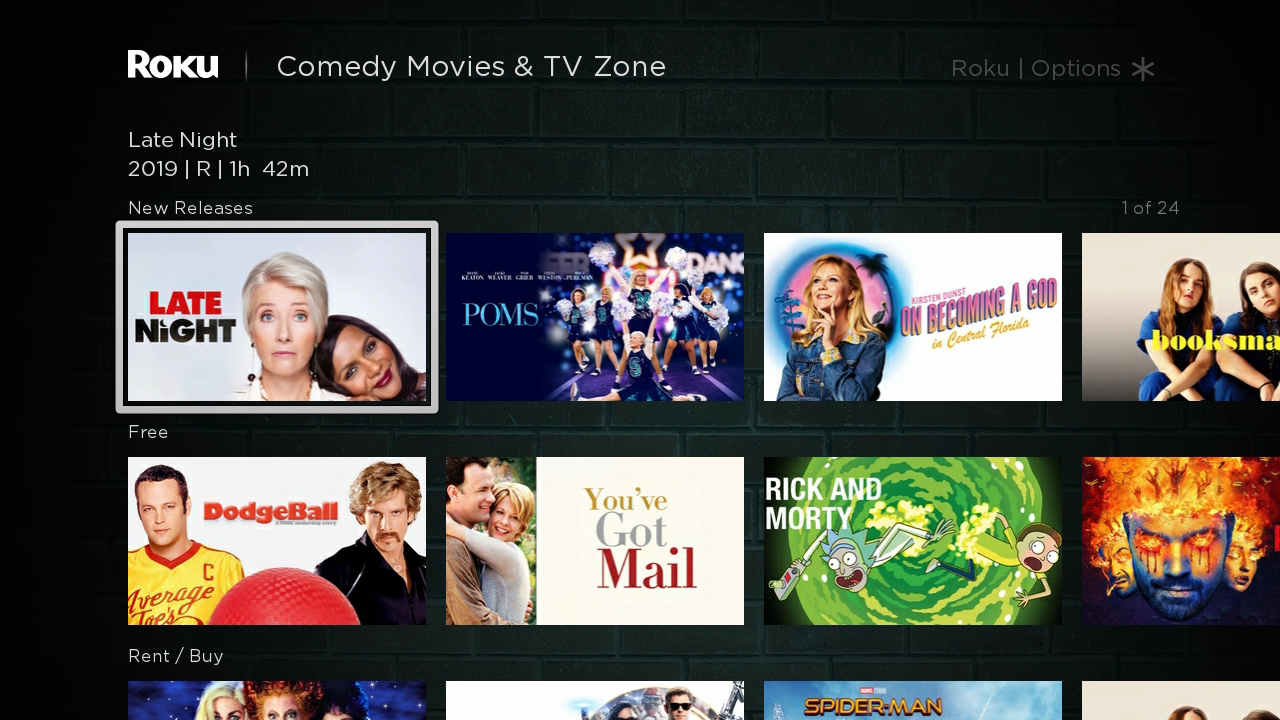
Roku Comedy Zone

Today, that’s grown to nearly 40 partners, including both free and paid channels. It will also feature content from your subscriptions and The Roku Channel.

The Roku OS update additionally includes a redesigned 4K spotlight channel that now uses the Zones architecture to similarly organize content; plus a new “Tips & Tricks” channel with helpful how-to videos on using Roku; the addition of voice-controlled sleep timers on Roku TVs; and a fun feature that lets you search for movie quotes by voice.
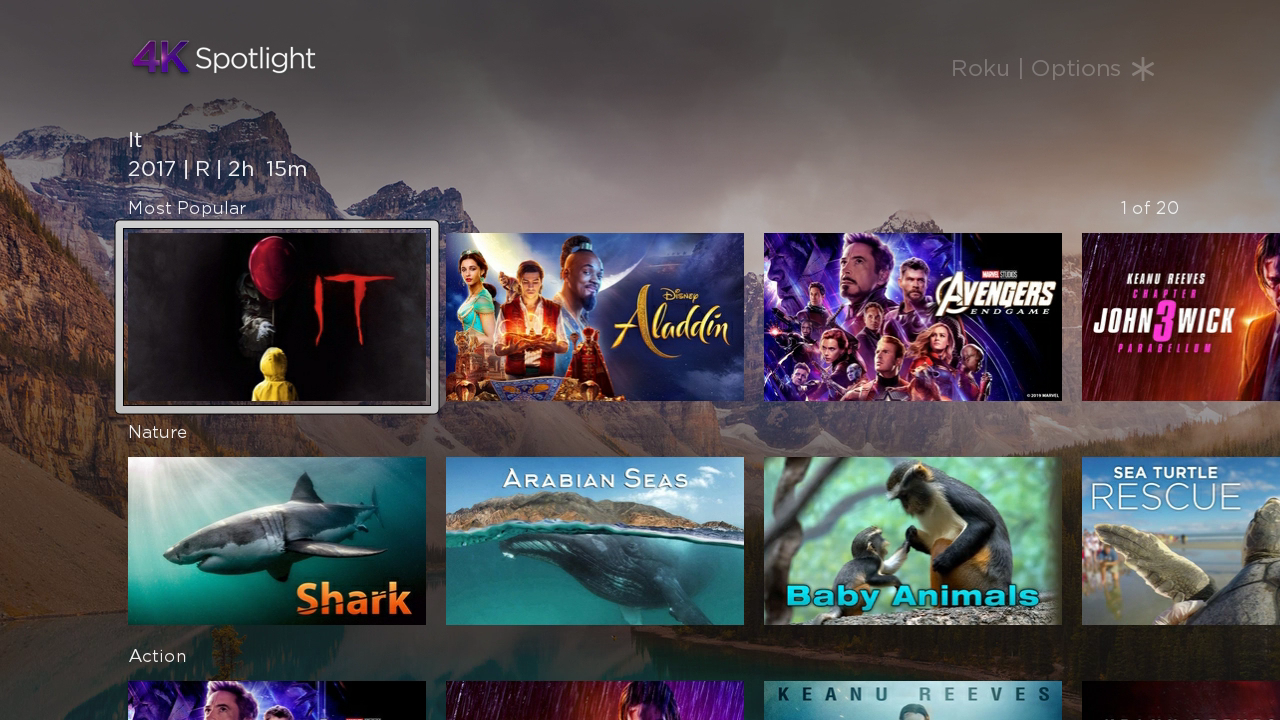
Roku 4K Spotlight Channel

Roku Voice search can now find 4K movies and users can now control personal music, movies, and photos using voice commands, too. Alexa and Google Assistant users can control multiple Roku devices in the home with voice commands, with the 9.2 update.

The update will also bring support for the new Roku Wireless Subwoofer when Roku TV Wireless speakers are paired to a Roku TV, as earlier promised.

And it’s introducing a new “shortcuts” feature that will let you stick common actions — like adding channels, setting sleep timers or powering off the TV (soon) — right on the Roku homescreen.
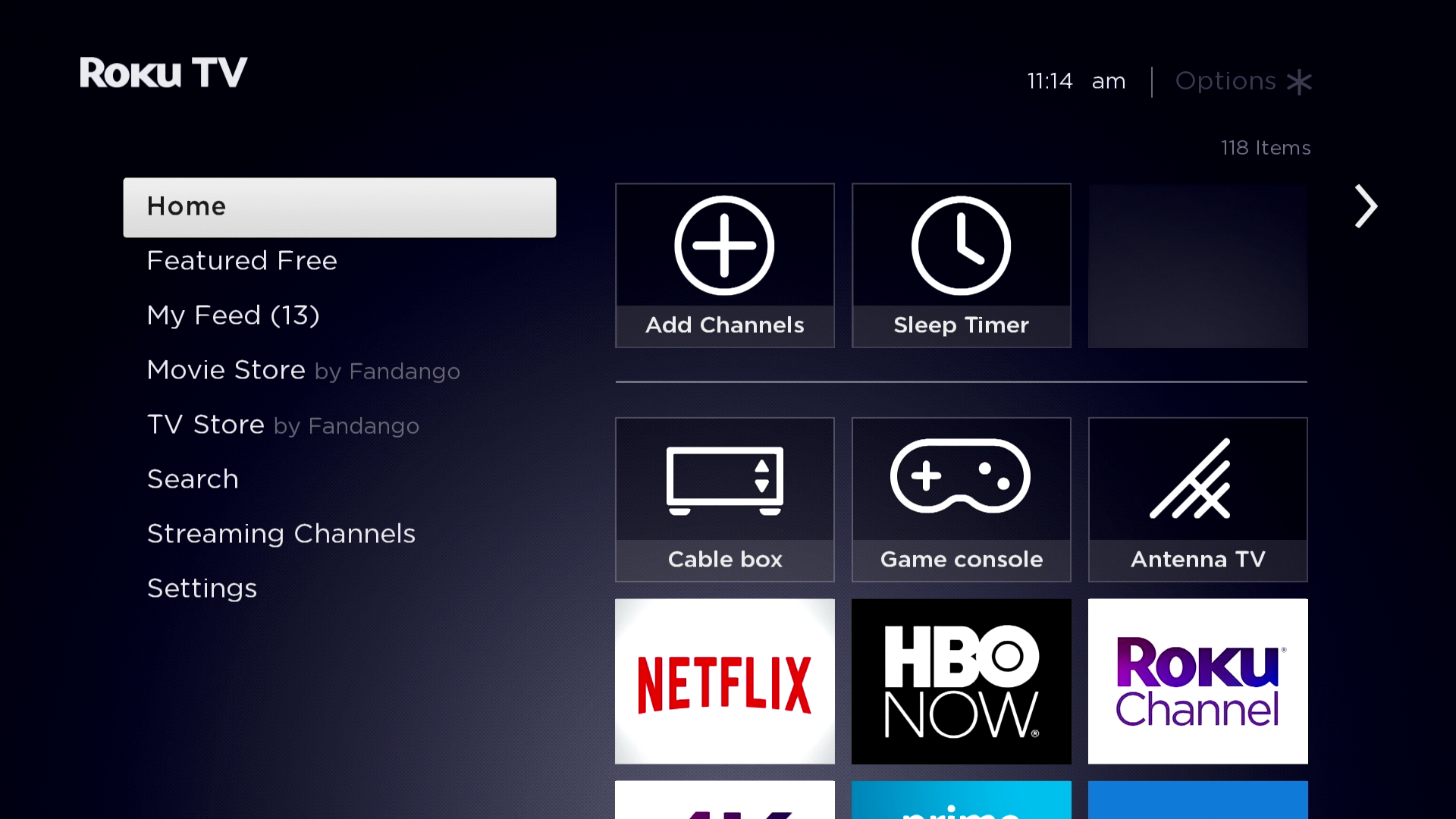
Roku TV with Shortcuts

The company says Roku OS 9.2 will begin rolling out to select Roku players this month and is expected to roll out to all supported streaming players, including the recently launched Roku Smart Soundbar, in the next few weeks.

Roku TV models are expected to receive the update in phases in the next few months.

[gallery ids="1883345,1883344,1883343,1883342,1883341,1883340,1883339,1883338,1883336,1883335,1883334,1883328,1883333,1883332,1883331,1883330,1883329"]


19 Sep 2019

Built Robotics raises $33M for its self-driving construction equipment


Built Robotics, a company aiming to make construction equipment autonomous, is announcing a $33M Series B round this morning.

With the construction industry facing a global labor shortage, Built’s aim is to allow one equipment operator to oversee a fleet of vehicles working autonomously in parallel, hopping in the cab only for tasks the machine can’t handle.

Rather than building its own vehicles, Built focuses on converting the popular construction equipment thats already out there. They sell a kit that straps to the top of things like excavators, bull dozers, and skid steers, taking tech like LIDAR, GPS, and WiFi and meshing them into the machine’s innards to give it autonomous smarts. They sell the conversion boxes to other companies, help them get installed, then charge a usage fee whenever the machines are in autonomous mode.

No one wants a 20-ton piece of machinery blasting around a construction site without a care for those around it, so the autonomous machines try to keep a constant eye on their surroundings. As I wrote back in April:

Cameras on and around the vehicles are constantly checking for anyone who might stray too close. If something goes wrong and the machine starts to tip too much, or if on-board sensors detect that something is in the way underground? Power gets cut. And there’s a big red emergency stop button on the back of each machine (and a wireless button meant to stay on the operator’s desk) for good measure.

We also took a look at some of Built’s gear a few months back:

The round is lead by Next47 (the investment arm of the European mega company Siemens), along with Building Ventures and previous investors Founders Fund, Presidio Ventures, Lemnos, and NEA. As part of the deal, Next47’s T.J. Rylander will be joining Built’s board of directors.

The company had previously disclosed a $15M Series A it raised in 2017, bringing its total funding up to $48M. Built co-founder Noah Ready-Campbell tells me that the company has roughly doubled in headcount over the past few months, with the team now sitting at roughly 40 people.