Category: UNCATEGORIZED

19 Sep 2019

Is that supplement safe to take? This AI tool scours research to find out

Dietary supplements are used by millions who accept the occasionally scarce evidence they help out with some condition or another. But also scarce is documentation of potential harmful interactions with other supplements or drugs. A new tool called Supp.ai looks through years of health research papers to extract potential conflicts that may not be listed anywhere else.

It’s not meant as a fear-mongering anti-supplement thing, though. The simple fact is that supplements don’t face the same regulations, aren’t studied as closely, and have less clinical documentation than prescription drugs. That leaves the door open for scary situations where a little-known supplement has a dangerous interaction with a drug not commonly taken.

There are a handful of common interactions that some people may know to avoid, but many of them are hidden behind medical industry paywalls, and many not reported at all. But just because they aren’t easily reported doesn’t mean they haven’t been found — the info is just buried somewhere in the thousands of research papers out there. How to find it?

Fortunately researchers at the Allen Institute for AI (AI2) already did a large part of the work with the creation of Semantic Scholar, a natural language processing system that ingests enormous numbers of papers and identifies key words, results, and other aspects, making them able to be easily searched and cross-referenced.

The team repurposed some of this work, tweaking and augmenting it so it could pick out evidence of interactions between supplements and other drugs and organizing them into a single searchable database: Supp.ai.

“Both supplements and drugs are pharmacologic entities, with the distinction more attributable to marketing and social pressures rather than functional differences,” say the researchers in their paper describing the new system.”However, due to this somewhat arbitrary distinction, supplement entities are less well represented in databases of pharmaceutical entities, and less information is publicly available on their interactions. Our work is an attempt to close this gap.”

For instance, deep in some paper looking at a cross-section of the diabetic population, there might be a sentence noting that a person taking a glucosamine supplement saw slower uptake of insulin into the bloodstream. In fact there is such a sentence — dozens of them, actually, as I found out when I searched for glucosamine on the tool.
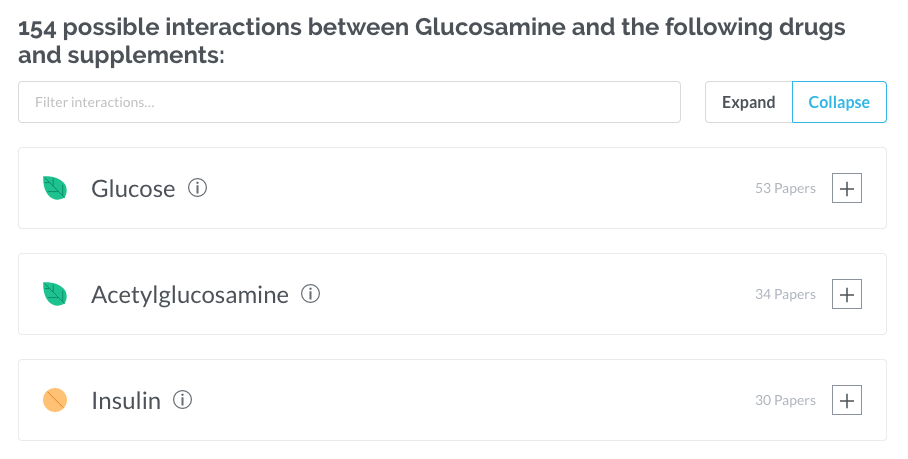
gluco suppai

Supp.AI is smart enough to recognize the search term and any abbreviations, like GlcN, and liberally interprets evidentiary sentences so that it errs on the side of inclusion. An interaction may be big or small, helpful or harmful — but what matters is that it was documented, and that a user be made aware of that documentation.

Snippets are provided from the papers, but they’re unlikely to be understood by the average person searching for info on a supplement they’re taking. The intention, however, is more to raise awareness of these potential interactions so that the user can ask their doctor or search for a specific combination they might be worried about.

“Currently, no comprehensive tool exists for consumers to determine if their supplement might interact with other medications. This information is particularly important because there is no law requiring supplement companies to place supplement-drug interactions on the label of dietary supplements,” said Harvard’s Pieter Cohen, who has addressed this before and whom AI2 asked to review the paper.

He suggested Supp.ai will become “an essential resource for consumers,” and that being able to select drug-supplement or supplement-supplement pairs to dive deeper into specific interactions is a natural direction to expand.

Supp.ai is free to use and should be updated with new information “periodically” as new papers are added to the database, but the data used to create the service is also freely available should you want to build your own version or examine the corpus yourself.


19 Sep 2019

Amazon’s “climate pledge” commits to net zero carbon emissions by 2040 and 100% renewables by 2030

In Washington today, Amazon announced a series of initiatives and issued call for companies to reduce their carbon emissions ten years ahead of the goals set forth in the Paris Agreement as part of sweeping effort to reduce its own environmental footprint.

“We’re done being in the middle of the herd on this issue—we’ve decided to use our size and scale to make a difference,” said Jeff Bezos, Amazon founder and chief executive, in a statement. “If a company with as much physical infrastructure as Amazon—which delivers more than 10 billion items a year—can meet the Paris Agreement 10 years early, then any company can.”

Bezos’ statement comes as employees at his own company and others across the tech industry plan for a walkout on Friday to protest inaction on climate change from their employers.

Amazon’s initiatives include an order for 100,000 delivery vehicles to Rivian, a company in which Amazon has previously invested $440 million.

Electric vans will appear on roads by 2021 and Amazon expects to have 10,000 of the new electric vehicles on the road by 2022 and 100,000 by 2030. The fleet is expected to reduce carbon emissions by 4 million metric tons per year by 2030, the company said.

In addition, Amazon said it would commit another $100 million to reforestation projects through the Right Now Climate Fund in partnership with The Nature Conservancy. That fund will invest in the protection of forests, wetlands and peatlands that now serve as carbon sinks which remove millions of metric tons of carbon from the atmosphere.

Finally, the . company said it will speed up its adoption of renewable energy with the goal of converting 80 percent of the company’s energy sources to renewable energy by 2024, with the goal of reaching 100% renewable energy use by 2030.

Amazon has already initiated 15 utility-scale wind and solar renewable energy projects that will generate 1.3 gigawatts of renewable capacity and deliver some 3.8 million megawatt hours of clean energy, according to the company.

All of these efforts will be backstopped by a new sustainability reporting initiative, which will be housed on a new website monitoring and tracking the company’s progress toward its sustainability goals, the company said.

These steps are part of a push from Amazon to get other companies to sign on to a global non-binding agreement . to accelerate the adoption of renewable energy and the reduction of carbon emissions.

Companies that sign on to Amazon-inspired “Climate Pledge” agree to measure and report greenhouse gas emissions regularly; implement decarbonization strategies on a timeline that matches the Paris Agreement; and neutralize remaining emissions with quantifiable and permanent offsets to achieve net zero annual carbon emissions by 2040.

“I’ve been talking with other CEOs of global companies, and I’m finding a lot of interest in joining the pledge. Large companies signing The Climate Pledge will send an important signal to the market that it’s time to invest in the products and services the signatories will need to meet their commitments,” Bezos said in a statement.

The initiative is backed by international political luminaries like Christiana Figueres, the former climate change chief and founding partner of Amazon’s collaborator on the Climate Pledge, Global Optimism.

“Bold steps by big companies will make a huge difference in the development of new technologies and industries to support a low carbon economy,” said Figueres, in a statement. “With this step, Amazon also helps many other companies to accelerate their own decarbonization. If Amazon can set ambitious goals like this and make significant changes at their scale, we think many more companies should be able to do the same and will accept the challenge. We are excited to have others join.”

19 Sep 2019

Groww, an investment app for millennials in India, raises $21.4M

Of the 1.3 billion people who live in India, more than 100 million of whom are using digital payment apps each day, only about 20 million today invest in mutual funds and stocks. An Indian startup that is betting on changing that figure by courting millennials has just received a big backing.

Groww, a Bangalore-based startup, said today it has raised $21.4 million in a Series B financing round that was led by US-based VC firm Ribbit Capital. Existing investors Sequoia India and Y Combinator also participated in the round, said the two-year-old startup that has raised about $29 million to date.

Groww allows users to invest in mutual funds, including systematic investment planning (SIP) and equity-linked savings. The app, which maintains a very simplified user interface to make it easier for its largely millennial customer base to comprehend the investment world, offers every fund that is currently available in India.

Lalit Keshre, co-founder and CEO of Groww, told TechCrunch in an interview earlier this week that the market of the mutual funds is increasingly widening in India and the startup is hoping to accelerate its growth with the fresh capital. Other than that, he plans to double Groww’s headcount to 200 in the coming months.

Groww has amassed about 2.5 million registered users, two-thirds of which are first-time investors, Keshre said. Groww is currently free to use and does not charge any commission on transactions. The startup eventually plans to offer a paid service as it looks to monetize its user base, but Keshre declined to share a timeline on how soon that would happen.

Groww will also soon begin to offer the ability to purchase stocks from its eponymous app, said Keshre, a former executive at Flipkart who co-founded Groww with three other Flipkart colleagues (Harsh Jain, Neeraj Singh and Ishan Bansal).

In a statement, Micky Malka, founder of Ribbit Capital, said, “We backed the Groww team because we believe in their mission. They have built the most trusted product in this space and are on the path to create a category-defining product.”

Ribbit Capital has made a number of investments in India in recent months. Last month, it invested in Cred, a startup that is trying to improve the financial behavior of credit card holders, and BharatPe, a payments solution for businesses.

In recent years, a number of startups such as INDWealth and Cube Wealth have emerged in India to offer wealth management platforms to country’s growing internet population.

Ashish Agarwal, a principal partner at Sequoia Capital India, said, “Investment products such as mutual funds and stocks were traditionally sold offline through financial advisors, who were mis-incentivized to sell high commission products. Groww is taking a refreshing approach with a zero-commission mobile first model, enabling investors to make their own investment choices through a slick and easy user interface.”

19 Sep 2019

Daily Crunch: Automattic raises $300M

The Daily Crunch is TechCrunch’s roundup of our biggest and most important stories. If you’d like to get this delivered to your inbox every day at around 9am Pacific, you can subscribe here.

1. Automattic raises $300 million at $3 billion valuation from Salesforce Ventures

Automattic, the company behind WordPress.com, WooCommerce and soon Tumblr, has raised new funding at a $3 billion post-money valuation. And the entire $300 million round comes from one investor — Salesforce Ventures.

“What we want to do is to become the operating system for the open web,” said founder and CEO Matt Mullenweg. “We want every website, whether it’s e-commerce or anything to be powered by WordPress.”

2. Roku unveils a new streaming player lineup, plus Roku OS 9.2 launch

The company is announcing updated versions of both its entry-level and high-end players. It’s also introducing a new version of the Roku Express exclusively for Walmart, and a Streaming Stick that will be exclusively sold at Best Buy.

3. Airbnb says it will go public next year

The company is part of a big unicorn herd that emerged roughly a decade ago (a herd that includes Uber, Lyft, The We Company and Postmates), and is one of the latest to declare its public market plans.

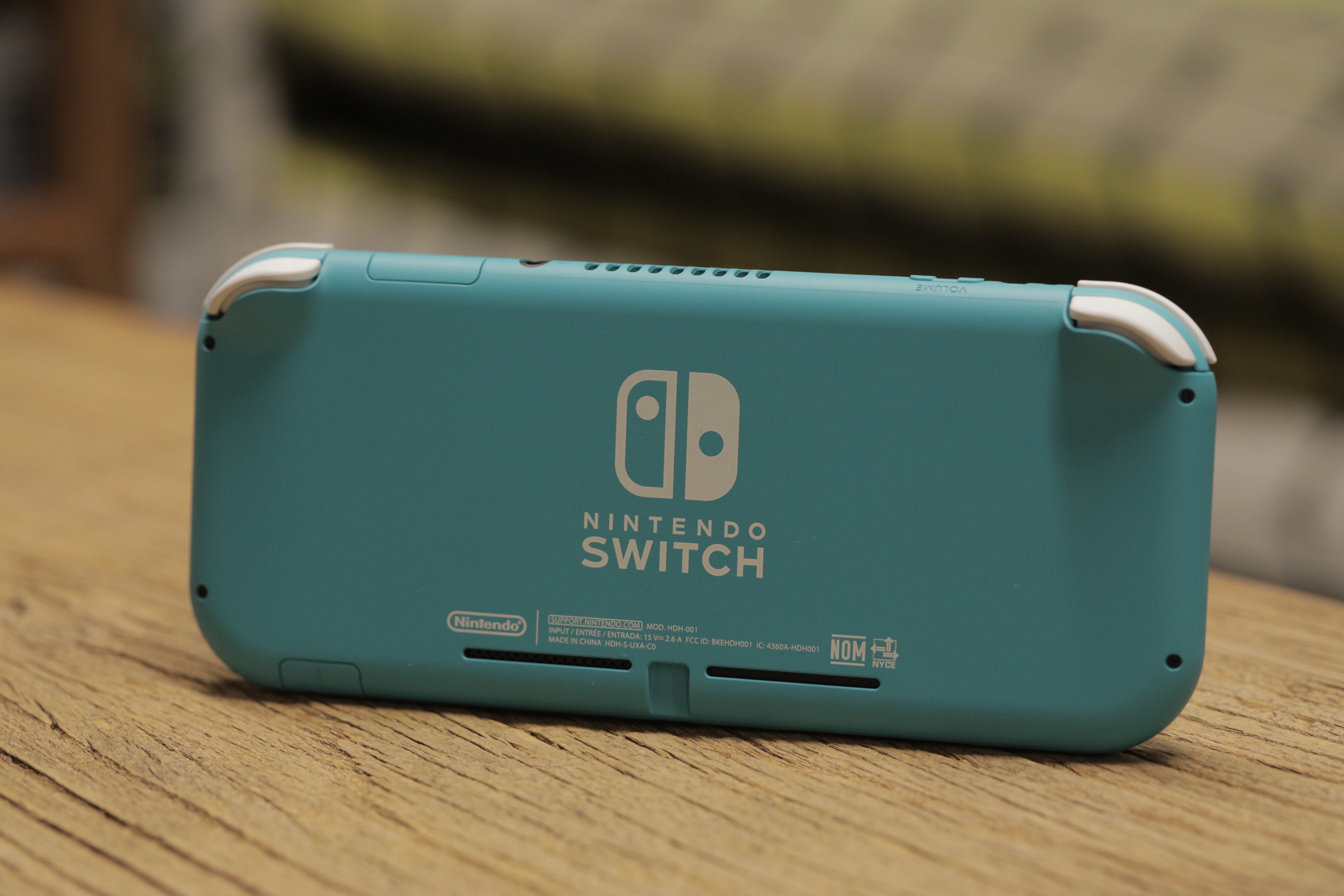
Nintendo Switch Lite

4. Nintendo Switch Lite review

Brian Heater says that if he was choosing between the Switch and the Switch Lite, he’d go for the Lite — but he’d grit his teeth a bit at the idea of sacrificing a couple hours of battery life in the process.

5. Netflix co-founder Marc Randolph on the company’s earliest days, the streaming wars and moving on

Randolph also shared why it took him 16 years to tell his story about what has become one of the most impactful companies in the history of television. (Extra Crunch membership required.)

6. Google completes controversial takeover of DeepMind Health

The personnel move had been delayed as trusts associated with the National Health Service considered whether to shift their existing DeepMind contracts to Google. (Ultimately, they did shift to Google.)

7. Stephen Curry Brings SC30 Inc. to Disrupt SF

When Golden State Warriors point guard and two-time MVP Stephen Curry isn’t playing basketball, he’s working with his business partner and former college basketball teammate Bryant Barr. Together, Barr and Curry run SC30 Inc., which manages Curry’s investment, media, philanthropy and brand partnership interests.

19 Sep 2019

Marissa Mayer and Alfred Lin are coming to Disrupt SF 2019

Twenty+ startups, each with six minutes to tell the world what they’re about. If they can prove to our panel of judges that they’re the best of the best, they’ll walk away with $100,000 and their name forever etched on the Disrupt cup.

That’s the core idea behind the Startup Battlefield, a pillar of TechCrunch Disrupt SF — which, as you might know, is just weeks away. As the event approaches, the list of incredible speakers and world-renowned judges only grows.

We’re thrilled to announce that Alfred Lin and Marissa Mayer will be joining us as Battlefield finals judges.

Alfred Lin is a partner at Sequoia Capital, and by no means a stranger to the startup world. He helped to helm LinkExchange as VP of Finance leading into its $265M acquisition by Microsoft in 1998, and COO at Zappos leading into its billion-dollar acquisition by Amazon. He now sits on the board of companies like Airbnb, Dia&Co, Houzz, and DoorDash.

Marissa Mayer was one of the earliest employees at Google, where she’d go on to lead the company’s search and mapping divisions. She led Yahoo! as President and CEO from 2012 to 2017, including through its acquisition by Verizon (disclosure: TechCrunch’s parent company) for nearly $5 billion in 2016. She’s now the co-founder of Lumi Labs, a stealthy incubator/lab in Palo Alto, the website of which says is “focused on building consumer applications enabled by artificial intelligence”.

Lin and Mayer join an outright amazing list of speakers, panelists, and judges coming to Disrupt, including the likes of Marc Benioff, Marillyn Hewson, Cyan Banister, Will Smith, Ashton Kutcher, Michael Seibel, Ellen Pao, James Park, Aaron Levie, Joseph Gordon-Levitt, Aileen Lee, and many, many (seriously, many) more.

Disrupt SF runs from October 2nd to 4th at the Moscone Center. Need tickets? You can find those right here.

19 Sep 2019

Darkstore raises $21 million Series B round

Darkstore, the tech-driven fulfillment solution to enable e-commerce companies to offer same-day delivery, just raised a $21 million Series B round led by EQT Ventures. The deal will bring EQT Principal Laura Yao to Darkstore’s board of directors.

This Series B round comes less than one year after Darkstore raised a $7.5 million Series A round. In total, Darkstore has raised over $30 million in funding.

Darkstore works by exploiting excess capacity in storage facilities, malls and bodegas and enables them to be fulfillment centers with just a smartphone. The idea is that brands without local inventory can store it in a Darkstore and then ship out same-day. Darkstore charges brands across three areas: fulfillment, storage and delivery.

“Consumer expectations are relentless,” Yao told TechCrunch via email. “We want things now, now, now. Obviously, it’s in a brand’s best interest to be able to meet those demands. The amazing team at Darkstore has built a platform-agnostic, cost-effective way for brands to do so, and in the process has unlocked a new revenue stream for urban infrastructure, and created valuable partnerships with last-mile delivery services.”

Currently, Darkstore has more than 600 fulfillment centers across 39 cities in the U.S., including Honolulu, Toledo, Ohio and Omaha, Neb.

Darkstore is unable to share the full roster of its customers, but it’s worked with the likes of Nike, premium headphones maker Master & Dynamic, mattress startup Tuft & Needle and others. With the additional funding, Darkstore plans to grow the general team, as well as the management team.

Yao added, “We’ve worked with Lee and the team for over a year and have been able to see this Darkstore flywheel come to life, and are excited to see what the future holds.”

19 Sep 2019

Silicon Valley is terrified of California’s privacy law. Good.

Silicon Valley is terrified.

In a little over three months, California will see the widest-sweeping state-wide changes to its privacy law in years. California’s Consumer Privacy Act (CCPA) kicks in on January 1 and rolls out sweeping new privacy benefits to the state’s 40 million residents — and every tech company in Silicon Valley.

California’s law is similar to Europe’s GDPR. It grants state consumers a right to know what information companies have on them, a right to have that information deleted and the right to opt-out of the sale of that information.

For California residents, these are extremely powerful provisions that allow consumers access to their own information from companies that collect an increasingly alarming amount of data on their users. Look no further than Cambridge Analytica, which saw Facebook profile page data weaponized and used against millions to try to sway an election. And given some of the heavy fines levied in recent months under GDPR, tech companies will have to brace for more fines when the enforcement provision kicks in six months later.

No wonder the law has Silicon Valley shaking in its boots. It absolutely should.

It’s no surprise that some of the largest tech companies in the U.S. — most of which are located in California — lobbied to weaken the CCPA’s provisions. These companies don’t want to be on the hook for having to deal with what they see as burdensome requests enshrined in the state’s new law any more than they currently are for Europeans with GDPR.

Despite the extensive lobbying, California’s legislature passed the bill with minor amendments, much to the chagrin of tech companies in the state.

“Don’t let this post-Cambridge Analytica ‘mea culpa’ fool you into believing these companies have consumers’ best interests in mind,” wrote the ACLU’s Neema Singh Guliani last year, shortly after the bill was signed into law. “This seeming willingness to subject themselves to federal regulation is, in fact, an effort to enlist the Trump administration and Congress in companies’ efforts to weaken state-level consumer privacy protections,” she wrote.

Since the law passed, tech giants have pulled out their last card: pushing for an overarching federal bill.

In doing so, the companies would be able to control their messaging through their extensive lobbying efforts, allowing them to push for a weaker statute that would nullify some of the provisions in California’s new privacy law. In doing so, companies wouldn’t have to spend a ton on more resources to ensure their compliance with a variety of statutes in multiple states.

Just this month, a group of 51 chief executives — including Amazon’s Jeff Bezos, IBM’s Ginni Rometty and SAP’s Bill McDermott — signed an open letter to senior lawmakers asking for a federal privacy bill, arguing that consumers aren’t clever enough to “understand rules that may change depending upon the state in which they reside.”

Then, the Internet Association, which counts Dropbox, Facebook, Reddit, Snap, Uber (and just today ZipRecruiter) as members, also pushed for a federal privacy law. “The time to act is now,” said the industry group. If the group gets its wish before the end of the year, the California privacy law could be sunk before it kicks in.

And TechNet, a “national, bipartisan network of technology CEOs and senior executives,” also demanded a federal privacy law, claiming — and without providing evidence — that any privacy law should ensure “businesses can comply with the law while continuing to innovate.” Its members include major venture capital firms, including Kleiner Perkins and JC2 Ventures, as well as other big tech giants like Apple, Google, Microsoft, Oracle and Verizon (which owns TechCrunch).

You know there’s something fishy going on when tech giants and telcos team up. But it’s not fooling anyone.

“It’s no accident that the tech industry launched this campaign right after the California legislature rejected their attempts to undermine the California Consumer Privacy Act,” Jacob Snow, a technology and civil liberties attorney at the ACLU of Northern California, told TechCrunch.

“Instead of pushing for federal legislation that wipes away state privacy law, technology companies should ensure that Californians can fully exercise their privacy rights under the CCPA on January 1, 2020, as the law requires,” he said.

There’s little lawmakers in Congress can do in three months before the CCPA deadline, but it won’t stop tech giants from trying.

Californians might not have the CCPA for long if Silicon Valley tech giants and their lobbyists get their way, but rest easy knowing the consumer won — for once.

19 Sep 2019

Amazon orders 100K electric delivery trucks from Rivian as part of going carbon neutral by 2040

Amazon will be stepping up its efforts to reduce its climate impact, CEO Jeff Bezos announced on Thursday. The company will be ordering 100,000 electric delivery trucks from Michigan’s Rivian as part of this commitment, Bezos said. The commerce giant will seek to meet its goal of becoming carbon neutral by 2040 – 10 years earlier than is outlined by the United Nations Paris Agreement.

Bezos said at a National Press Club event in Washington where he made the announcement that the updated timeline is due to the increase in climate change, which has been more aggressive than even some of the more serious predictions had anticipated five years ago whine the Paris agreement was reached.

Amazon’s overarching efforts to make the company carbon neutral are bundled under a plan the company is calling the “Climate Pledge,” which will be open to other companies as well. In addition to efforts like the Rivian order for emission-free delivery vehicles, Amazon will also be seeking  to reduce its footprint through other means, including solar energy and carbon offsets.

Rivian noted that this was the largest order to date of any electric delivery vehicles, and that they’d begin actually deploying for Amazon starting in 2021. Amazon led a $700 million investment round in Rivian in February, and the company announced a further $350 million from auto industry giant Cox automotive earlier this month.

Developing…

19 Sep 2019

Facebook expands its playable and AR ad formats

Ahead of Advertising Week, Facebook is the announcing the expansion of three interactive ad formats.

First, it says that poll ads (which you may already have seen in Instagram Stories) are moving to the main feed of the Facebook mobile app. Second, the augmented reality ads that Facebook has already been testing are moving into open beta this fall. Third, Facebook is making playable ads available to all advertisers, not just gaming companies.

The company showed off each format at a press event yesterday in New York City.

E!, for example, says it ran ads with interactive polls to promote one of its TV shows, leading to a 1.6x increase in brand awareness. Meanwhile, Vans created a playable ad where players could guide skateboarder Steve Van Doren down a mountain, resulting in a 4.4% lift in ad recall. And WeMakeUp ran an AR ad campaign allowing users to virtually try on new shades of makeup, leading to a 27.6% lift in purchases.

Mark D’Arcy, Facebook’s chief creative officer and vice president of global business marketing, said that while the initial playable ad examples had “very literal gaming mechanics, doing brands in a game,”  there could be “a whole range” of different interactions over time.

D’Arcy also acknowledged that including polls, games and AR in ads aren’t exactly new ideas, but he suggested that in the past, they’ve generally been “heavy” experiences, requiring things like a separate microsite. By bringing them front-and-center on Facebook, the company is making them “super lightweight, fun and super scalable.”

As result, he suggested that each of these formats will evolve as more advertisers get to experiment with them: “In 12 months, even six months, we’re going to look at these examples and they’ll be fundamentally different.”

And if you’re wondering how these new formats will handle user data, the Facebook team said that only the aggregate results of polls — not individual user data — will be shared with advertisers. Similarly, any images created by users through an AR ad can be saved to their camera roll, but won’t be shared with advertisers.

19 Sep 2019

Nintendo Switch Lite review

Let me preface this by saying: I realize that I’m not necessarily the target user for the original Nintendo Switch. First: I don’t own a TV, and haven’t since high school. Second: I travel all the time for this damn job.

The combination of these things have made the device’s convertible form factor a bit of a nuisance. It’s big and heavy and the Joy-Cons semi-frequently slip off during game play. And while I’ve occasionally considered playing it in convertible mode, with the kickstand up, controllers detached as the console sits on, say, an airplane tray table, the capability ultimately isn’t worth the trade-offs.

It seems odd that “built-in controllers” is listed as a feature on a gaming console, but, then, I suppose it kind of is.

Nintendo Switch Lite

That’s all a lot of words to say that I was excited when the rumors around the Switch Lite first dropped. That enthusiasm carried over to a recent hands-on with the device. And now, here we are. Honestly, the Switch Lite is pretty much what I’d hoped for.

The Lite is noticeably smaller and lighter than the standard model, even without having both models handy, but here’s a shot from our hands-on for reference:

Nintendo Switch Lite

Of course, the form factor is still considerably larger than a majority of smartphones, which, at the end of the day are the Lite’s true competitor when it comes to mobile gaming. But Nintendo’s put a focus on first-party hardware, and the value of that proposition has played out remarkably well during the Switch’s nearly three-year life. Nintendo’s line has always been about making software for the hardware, and that certainly follows with the Switch line. It’s hard to imagine most of these first-party games successfully making the jump to mobile intact.

Nintendo certainly did right by the color scheme. As I wrote in the hands-on, the hardest question for me wouldn’t be whether or not to purchase a Switch Lite, but which color to get. Nintendo made the choice easy, sending a turquoise number in for review. The gray and yellow are also quite nice in different ways, but I was already leaning in that direction.

Nintendo Switch Lite

The portability’s the thing here, but shrinking the device down comes with some compromises. In addition to the loss of dockable TV versatility, the screen has been shrunk down from 6.2 to 5.5 inches (the resolution is the same admittedly unremarkable 720p). This is mostly noticeable in places like the menu, where the font has become more difficult for my aging eyes to read (the menu UI, admittedly, could still use some work). Longtime Switch players will notice the difference during gameplay, as well, but you’ll adjust soon enough — especially if you’ve grown accustomed to playing games on your phone.

The battery, too, is smaller, down to 3579mAh from 4310mAh, per FCC filings. Even so, the company is claiming three to seven hours of battery, compared to the original Switch’s 2.5 to 6.5. That slight upgrade appears to have been accomplished through a combination of a less power hungry (smaller) display and a more power efficient processor. The newer version of the classic Switch, meanwhile, sports a 4.5 to nine-hour battery. Given that a truncated life was the first gen’s biggest complaint, I’d have hoped that the company would have made battery progress on both sides — but you can’t win them all, I guess.

Nintendo Switch Lite

The headphone jack stayed put for the Lite. So, too, did the microSD and game card slots. Physical media isn’t quite dead in the gaming word just yet. The kickstand is gone because, well, there’s really no point without the detachable Joy-Cons. The other key physical difference is the addition of an omnidirectional D Pad, replacing the less-useful four arrows. I’ve honestly grown fairly accustomed to using the left stick for basically everything. Still, the arrival of the Lite’s D Pad is timed nicely with the addition of NES and Super NES titles to the Switch Online library. The button’s usefulness on standard Switch titles is a lot more limited, however. The pad also felt a bit softer than I was anticipating — something that takes some getting used to.

The Switch’s real killer app, however, is price: $200 feels just about right for the console. That’s down $100 from the standard Switch. Couple that with the surprisingly affordable $4 a month (or $20 a year) for Switch Online and you’ve got a pretty killer deal for a platform in its third year of life.

Forced to choose between the two models today, I’d almost certainly go for the Lite. Though I would grit my teeth a bit at the idea of sacrificing a couple of hours of battery life in the process. Of course, not everyone is me (thankfully). Most of you, for instance, are normal, well-adjusted people with television sets in their homes, and moving to the Lite means sacrificing the Switch’s namesake and most innovative feature.

[gallery ids="1883183,1883182,1883181,1883180,1883179,1883178,1871342,1871341,1871340,1871339,1871338,1871337,1871336,1871335,1871334,1871333,1871332,1871331,1871330"]

As someone who spends much of his life on subway cars and planes, this is the Switch I (and others, I’m sure) have been waiting for.