Category: UNCATEGORIZED

17 Sep 2019

NBCU’s streaming service ‘Peacock’ announces originals slate, including a Battlestar Galactica reboot

NBCUniversal is sharing a few more details about its new streaming service, due to launch in April 2020, including the service’s name and content lineup. In a nod to the NBC logo, the service will be called “Peacock,” (yes, really), and will offer subscribers over 15,000 of content, including both film and TV, plus original content.

Notably, Peacock will be home to “The Office,” which Netflix will lose as a result of NBCU paying $500 million to pull the hit from Netflix when its deal ends in 2021. Peacock will also host other classic shows, like “Parks and Recreation,” plus news, sports, late-night TV, and Spanish-language programming, along with films from Universal Pictures, Focus Features, DreamWorks Animation, Illumination, and others.

In terms of its popular and classic TV lineup, Peacock will include: “30 Rock,” “Bates Motel,” “Battlestar Gallactica,” “Brooklyn Nine-Nine,” “Cheers,” “Chrisley Knows Best,” “Covert Affairs,” “Downton Abbey,” “Everyone Loves Raymond,” “Frasier,” “Friday Night Lights,” “House,” “Keeping Up with the Kardashians,” “King Of Queens,” “Married…With Children,” “Monk,” “Parenthood,” “Psych,” “Royal Pains,” “Saturday Night Live,” “Superstore,” “The Real Housewives,” “Top Chef,” and “Will & Grace.”

On the film side, the service promises  “American Pie,” “Bridesmaids,” “Knocked Up,” “Meet the Parents,” “Meet the Fockers,” “A Beautiful Mind,”“Back to the Future,” “Brokeback Mountain,”“Casino,” “Dallas Buyers Club,” “Do the Right Thing,” “Erin Brockovich,” “E.T. The Extra Terrestrial,” “Field of Dreams,” “Jaws,” “Mamma Mia!,” “Shrek,” and “The Breakfast Club.” It will also feature films from the franchises: “Bourne,” “Despicable Me,” and “Fast & Furious.”
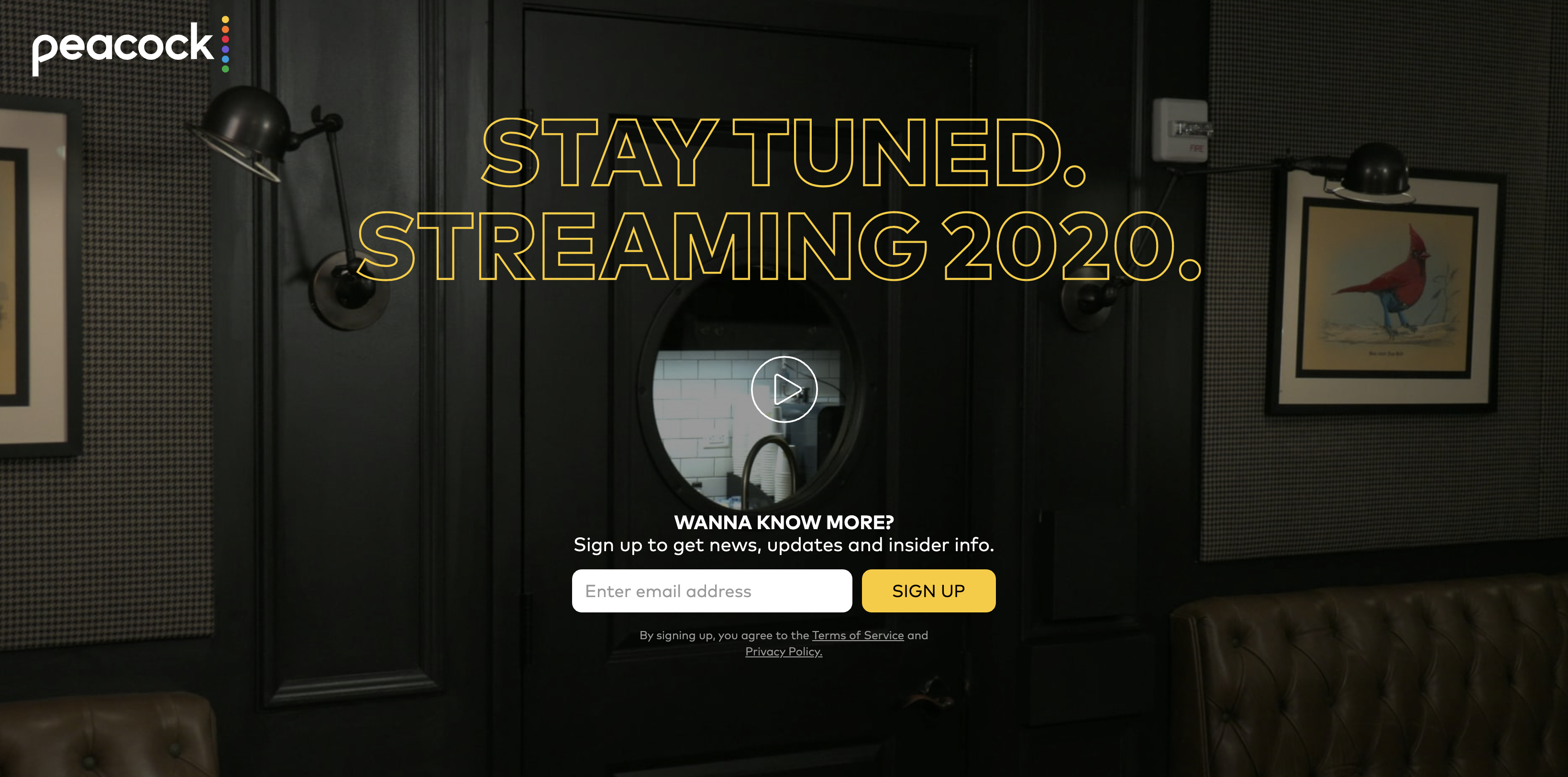
peacock homepage

What’s more interesting (or concerning, if you’re a “Battlestar Galactica” fan) are Peacock’s plans for original content. This includes a reboot of the sci-fi classic (nooo, don’t do it!), as well as reboots of “Saved by the Bell,” and “Punky Brewster.”

The company this morning announced the following originals:

  • “Dr. Death,” based on the true-crime podcast starring Jamie Dornan, Alec Baldwin, and Christian Slater
  • A “Battlestar Galactica” reboot from Golden Globe winner and Emmy-nominated “Mr. Robot” and “Homecoming” EP Sam Esmail
  • “Brave New World,” based on the dystopian novel by Aldous Huxley and starring Alden Ehrenreich (“Solo: A Star Wars Story”) and Demi Moore
  • “Angelyne,” a limited series from Emmy Rossum
  • “One of Us Is Lying,” based on the New York Times best-selling young adult mystery-thriller.
  • “Rutherford Falls,” co-created by Emmy and Peabody Award-winner Mike Schur, Ed Helms, and Sierra Teller Ornelas, and starring Ed Helms
  • “Straight Talk,”from Emmy Award nominee Rashida Jones and NAACP Image Award winner Jada Pinkett Smith;
  • “Saved By the Bell” reboot from Emmy Award winner Tracey Wigfield (“30 Rock”), featuring original cast members including Elizabeth Berkley and Mario Lopez
  • “Punky Brewster,” starring Soleil Moon Frye as a grown-up version of her former character;
  • A new season of “A.P.Bio,” starring Glenn Howerton and Patton Oswalt
  • The second movie spinoff from the long-running series “Psych.”
  • A new “Saturday Night Live” docuseries, “Who Wrote That,” from creator Lorne Michaels, exploring the famous personalities in front of and behind the camera
  • An original talk show series from Jimmy Fallonin collaboration with Matador Content and Universal Television Alternative Studio
  • A weekly late-night show starring Amber Ruffin and executive produced by Seth Meyers
  • Another spinoff of Bravo’s “The Real Housewives” franchise.

Much was already known about NBCU’s streaming service, ahead of today. The company had already discussed its vision and the launch time frame during Comcast’s second-quarter earnings call. At the time, NBCU noted the serivce’s April 2020 arrival, as well as its monetization strategy.

The company said then that the service would be ad-supported with a paid, ad-free option. It has not yet announced its pricing or distribution plans, however.

The service is launching at a time when competition among streamers is heating up, as more companies enter the fray to battle with Netflix. In addition to the big three — Netflix, Amazon, and Hulu — Disney+ is poised to launch Nov. 12, and Apple just announced Apple TV+ would arrive Nov 1. HBO Max is also right around the corner, in spring 2020.

Surprisingly, it’s the classic shows that the media giants are fighting over, in massive, multi-billion dollar deals.

NBCU snagged “The Office,” Netflix’s most-watched series, for $500 million. WarnerMedia (HBO Max) grabbed “Friends” from Netflix for $425 million. Netflix got back in the game yesterday, with a $500 million-plus deal for “Seinfeld” that includes global streaming rights. And just this morning, WarnerMedia broke records with a multi-billion dollar streaming deal for “Big Bang Theory,” for HBO Max.

Peacock, its terrible name notwithstanding, has a shot at grabbing at least some of the market, given its decent back catalog, which includes hits like “The Office” and “Parks and Rec,” and its access to a larger film library. It also snagged some high-caliber Hollywood names for its originals.

The service will be heavily promoted during the Summer Olympics, airing on NBC.

“The name Peacock pays homage to the quality content that audiences have come to expect from NBCUniversal – whether it’s culture-defining dramas from innovative creators like Sam Esmail, laugh-out-loud comedies from legends like Lorne Michaels and Mike Schur, blockbusters from Universal Pictures, or buzzy unscripted programming from the people who do it best at Bravo and E!,” said Bonnie Hammer, Chairman of Direct-to-Consumer and Digital Enterprises, in a statement about today’s news. “Peacock will be the go-to place for both the timely and timeless – from can’t-miss Olympic moments and the 2020 election, to classic fan favorites like ‘The Office’.”

 

17 Sep 2019

SpaceX’s orbital Starship prototype construction progress detailed in new photos

SpaceX is making progress assembling its Starship orbital spacecraft prototype, as seen in new photos shared by SpaceX CEO Elon Musk . This full-scale testing version of the Starship will take over for the StarHopper, which was a scaled down version used to test the Raptor engine initially with low-altitude ‘hop’ flights.

The Starship Mk I Prototype and Mk II prototypes, which are under construction simultaneously at SpaceX facilities in South Texas and Florida, will be used to test flight at higher altitudes and higher speeds, and will use as many as three to six Raptor engines simultaneously, vs. the single engine used with the StarHopper.

[gallery ids="1882522,1882523"]

The round sections of the prototype you see in the photos being lowered on top of one another measure 9 meters (about 30 feet) in diameter, and unlike the StarHopper, these will feature a smooth curved top section, which you can see in the second photo. Once complete, SpaceX will run a first test of the orbital prototype with the goal of reaching a height of 12 miles, or 63,000 feet, before moving on to higher velocity testing at similar heights, and finally a first orbital flight.

Ultimately, SpaceX’s goal with Starship is have it become the workhorse of all of its commercial operations, replacing entirely the Falcon 9, Falcon Heavy and Dragon Capsule spacecraft and servicing both Earth orbital needs, as well as trips to ferry supplies and astronauts to Mars, and potentially beyond.

17 Sep 2019

Remagine secures $35M fund backed by media giants to focus on entertainment and media tech

Remagine Ventures is a relatively new European VC fund which focuses on investments in entertainment tech, including AI, gaming, sports & eSports, AR/VR, consumer and commerce. It’s now completed $35 million in funding from a number of entertainment and media corporations, including Axel Springer and ProsiebenSat1, Japanese Adways and American Liontree LLC. Last year global media group Sky put $4 million into the fund as part of the launch of its new innovation office in Berlin.

To date, the fund has invested in six entertainment start-ups, including: Minute Media, a user-generated content platform for sports, Syte.ai a visual search startup, Novos, a gamer training platform, HourOne, which operates in the world of synthetic media, Vault-ai.com, predictive analytics for film and television and Madskil, an eSports company in stealth.

Started by investor/entrepreneurs Kevin Baxpehler and Eze Vidra, Remagine focuses on early-stage (seed and pre-seed) investments in Israel and UK, with synergies between the two territories.
Traditionally, Israel has been better know for it’s ‘deep tech’capabilities but there’s a growing ecosystem of entertainment tech and consumer startups looking to disrupt traditional traditional industries.

Vidra established Campus London, Google’s first physical hubs for startups and later expanded the Campus model internationally. He was also a general partner Google Ventures (GV), the company’s investment arm in Europe.

Baxpehler, is a former entrepreneur and investment banker from in Germany. He most recently led the investment activity of German entertainment giant ProSiebenSat.1 in Israel, investing in Dynamic Yield (which recently sold for $300 million to McDonalds) and Magisto, which was acquired by Vimeo for $200 million.

Vidra said: “We operate in a relatively new market in the Israeli ecosystem. The Entertainment-tech sector has tremendous momentum, and Israeli founders are expanding at a rapid pace in this world and we recognize huge potential in it.” Baxpehler added: “Eze and I have experience in the investment world, the entrepreneurial world and the corporate world. We want to meet startups very early, to accompany and guide them even before investing.”

17 Sep 2019

Amazon launches Amazon Music HD with lossless audio streaming

Amazon has a new, high-quality streaming tier of its music service called Amazon Music HD. It’s priced at $12.99 per moth for Prime members ($14.99 per month for everyone else) and you can add it to your existing Amazon Music subscription for an additional $5 per month, whether you’re an individual or family plan subscriber. What you get for the additional cost is access to over 50 million songs in what Amazon is calling HD (16-bit, 44.1kHz or around what you’d expect from a CD), and then “millions” in Ultra HD (24-bit, up to 192kHz), which the company says is the highest available quality for any music streaming.

The most popular music streaming offering for quality-seeking audiophiles to date has probably been Tidal, which launched to serve that specific need. Tidal hasn’t exactly been able to compete with industry-leading music streaming services like Apple and Spotify in terms of subscriber numbers, but its continued existence suggests there’s a demand out there for better quality music. Amazon might be well-positioned to capitalize, since they can offer this easily alongside their existing offering as a niche upsell without likely too much in the way of additional cost.

You can try out Amazon Music HD for free for 90 days at launch (ps there are both streaming and download options for the high quality music), which is a generous initial free sample period as far as these things go. That should be plenty of time to figure out if your ears care overmuch about the added fidelity you’ll get – but be warned, it might be so good you’ll never be able to go back to pedestrian, standard definition streaming quality.

17 Sep 2019

Meet Venn, the company hoping to build MTV for the gaming generation

Maybe a network will be the thing that replaces the single streaming media star.

VENN, a new company launching with $17 million in funding from some of the biggest names in gaming is hoping to harness the power of streaming media’s online celebrities and funnel them into a channel that can command the kind of advertising revenues of the networks of old.

The vision harkens back to the golden days of MTV, when shows like TRL ruled the media landscape and a New York-based network set the cultural agenda through the prism of pop music.

For the creators of VENN, who include Ariel Horn, a four-time Emmy winning producer who brought the commercial storytelling from his network days working on Olympics broadcasts for NBC (a division of Comcast) to the esports phenomenons of Riot Games and Blizzard Entertainment; and Ben Kusin, a former global director of new media at Vivendi Games, MTV is the template for creating a cultural commodity from what’s becoming the lingua franca of a new generation of consumers.

Where music (and particularly music videos) was once the genre-spanning language for a generation, the two entrepreneurs see gaming culture as the touchstone for a new audience. And where fragmentation has created a confusing market for advertisers to reach that audience, the content funnel and single source that a network can provide offers an attractive alternative to reaching out to a single celebrity gamer, streamer, or platform.

Tthat’s the pitch behind VENN, which not only stands for Video Game Entertainment News Network, but also represents the venn diagram whose center resides at the intersection of gaming, music, fashion, and entertainment broadly, according to the two co-founders.

Ben Kusin Ariel Horn

VENN co-founders Ben Kusin and Ariel Horn

“You’re looking at a $150 billion per-year industry,” says Kusin. “We think streamers, casters, content creators, these are the new celebrities… what MTV TRL used to be back in the day if that were to launch today what would it look like? This culture would be seen through the lens of gaming.”

His co-founder, Horn, agrees. “We see gaming as the lens through which we want to create and contextualize Gen Z,” says Horn.

Horn knows the potential audience better than nearly anyone. In his last job, he presided over eSports events that commanded viewership in the hundreds of millions. Both Kusin and Horn think that the same sized audience could exist for their network — if not larger, because the two producers and their channel aren’t beholden to a single title, franchise or publisher.

Nor are they subject or beholden to a single distribution platform.

“We’re a universal network,” says Kusin. “We will be distributed on Twitch, on YouTube, and on Pluto, Hulu, and Roku… Anywhere and everywhere that our customers are consuming content.”

The company is currently looking to recruit top-tier talent and bring their sponsor-based streams and formats into a traditional network environment, with higher production values and something approximating the types of talent contracts and deals that would be afforded to a network figure. These streamers, gamers, and others would be able to supplement their existing sponsor-based income with their work on VENN, the two-co-founders said.

The executives would not comment on what, specifically, the programming would include, but indicated that VENN was in discussions with a number of the top streamers in the gaming corners of services like YouTube and Twitch from which they’d pull programming. One genre that will likely make its way onto the network is an American Ninja Warrior-style competitive show for speedruns through different levels of games.

“There are already shows on Twitch,” says Horn. “It’s reported out there for you in real-time. You’re getting all kinds of feedback.” What’s necessary, he says, is to elevate the production value and add other kinds of more traditional programming around it.

“There are two hundred million people consuming YouTube gaming content… There are esports teams [like] Liquid [and] G2 whose talent consider themselves entertainers,” says Kusin. “We’re giving the entire industry a home and a heartbeat.”

The appeal for brands is obvious. If there’s a single place to go to capture the audience that follows streaming celebrities like Ninja, Tfue, or VanossGaming, that real estate is far more desirable than pursuing independent sponsorship deals with each individual streamer.

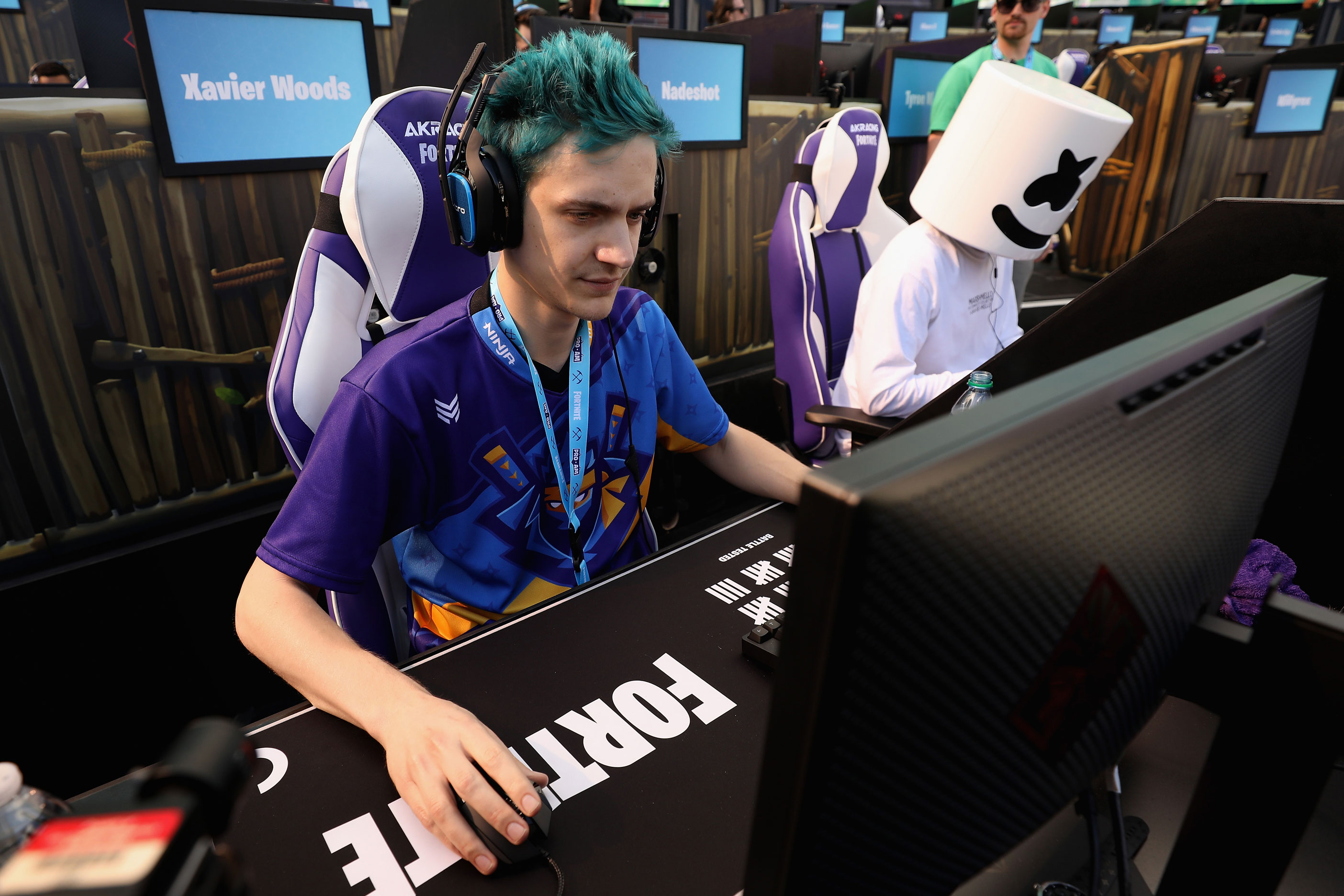
LOS ANGELES, CA – JUNE 12: Gamers ‘Ninja’ (L) and ‘Marshmello’ compete in the Epic Games Fortnite E3 Tournament at the Banc of California Stadium on June 12, 2018 in Los Angeles, California. (Photo by Christian Petersen/Getty Images)

Brands trying to put their money into gaming is not that straightforward,” says Horn.”There isn’t really a network  like this that exists right now… that exists for the industry at large.”

Other companies that have emerged to capture advertising dollars or create networks of entertainers in something akin to an agency model may beg to differ. These are companies like 3blackdot or Popdog, which represent a significant chunk of online gaming talent. Or more traditional sites that have significant followings like IGN, which bills itself as the #1 games media company.

Beyond the competition, VENN is still rolling the dice on whether the new generation of consumers wants to have a more produced, mediated entertainment network rather than continue to gravitate to the unmediated experience of watching live streams of their peers do the things that they’re doing themselves. YouTube is more than just a vehicle to mainstream stardom, these streamers are their own mainstream stars for millions of viewers who seem fine with the no-fi production values that YouTube almost demands.

Investors are betting that they are, because VENN has raised a $17 million treasure chest to spend on bringing its vision to the market. The money comes from some of the biggest names in gaming, led by the European investment firm BITKRAFT. Additional investors include: Marc Merrill, the co-founder of Riot Games; Mike and Amy Morhaime, the co-founder of Blizzard Entertainment and its former head of global esports; Kevin Lin, the co-founder of Twitch; and aXiomatic Gaming, an esports investment group with stakes in Epic Games, Team Liquid and Niantic. 

“It’s about time we significantly raise the bar for video content in gaming and esports. We need to elevate the stars and stories in our community and provide a better and larger opportunity for brands to reach gamers,” said Jens Hilgers, Founding Partner of BITKRAFT in a statement.   

17 Sep 2019

LinkedIn launches skills assessments, tests that let you beef up your credentials for job hunting

LinkedIn, the social networking service for the working world, is today taking the wraps off its latest effort to provide its users with better tools for presenting their professional selves, and to make the process of recruitment on the platform more effective. It will now offer a new feature called Skills Assessments: short, multiple-choice tests that users can take to verify their knowledge in areas like computer languages, software packages and other work-related skills.

The feature is being rolled out globally today but in a small test mode, LinkedIn says that 2 million tests have already been taken and applied across the platform, a sign of how it might well be a very popular, and needed, feature. First up are English-language tests covering some 75 different skills, all free to take, but the plan, according to Emrecan Dogan, the group product manager in its talent solutions division, is to “ramp that up agressively” in the near future, both adding in different languages and more test areas.

(Important sidenote: Dogan joined LinkedIn when his company ScoreBeyond was quietly acquired by LinkedIn last year. ScoreBeyond was an online testing service to help students prep for college entrance exams. Given LinkedIn’s efforts to get closer to younger users — again, in part because of competitive pressure — I suspect that is one area where LinkedIn will likely want to expand this assessment tool longer term, if it takes off.)

The skills assessment tool is coming at an important moment for LinkedIn.

The Microsoft-owned company now has nearly 650 million people around the world using its social networking tools to connect with each other for professional purposes, most often to network, talk about work, or find work.

That makes for a fascinating and lucrative economy of scale when it comes to rolling out its products. But it comes with a major drawback, too: the bigger the platform gets, the harder it is to track and verify details about each and every individual on it. The skills assessment becomes one way of at least being able to verify certain people’s skills in specific areas, and for that information to start feeding into other channels and products on the platform.

It’s also a critical competitive move: the company is by far the biggest platform of its kind on the internet today, but smaller rivals are building interesting products to chip away at that lead in specific areas. Triplebyte, for example, has created a platform for those looking to hire engineers, and engineers looking for new roles, to connect by way of the engineers — yes — taking online tests to measure their skills and match them up with compatible job opportunities. Triplebyte is focused on just one field — software engineering — but the template is a disruptive one that, if replicated in other verticals, could slowly start to chip away at LinkedIn’s hegemony.

And testing on actual skills is just one area where verification has fallen short on LinkedIn: another big trend in recruitment is the push for more diverse workforces. The thinking is that traditionally too many of the parameters that have been used up to now to assess people — what college was attended, or where people have worked already — have been essentially cutting many already-disenfranchised groups out of the process. Given that LinkedIn currently has no way of ascertaining when people on its platform are from minority backgrounds, a skills assessment — and especially a good result on one — might potentially help tip the balance in favor of meritrocracy (if not proactive diversity focused hiring as such).

For regular users, the option to take skills assessments and add them to your profile will appear for users as a button in the skills and endorsements area of their profiles. Users take short tests — currently only multiple choice — which Dogan says are created by professionals who are subject area experts that already work with LinkedIn, for example to write content for LinkedIn learning.

[gallery ids="1882476,1882475,1882474,1882473,1882472,1882470,1882469"]

These tests measure your knowledge in specific areas, and if you pass, you are given a badge that you can apply to your profile page, and potentially broadcast out to those who are looking for people with the skills you’ve just verified you have. (This is presuming that you are not cheating and having someone else take the test for you, or taking it while looking up answers elsewhere.) You can opt out of sharing the information anywhere else, if you choose.

If you fail, you have three months to wait before taking it again, and in the meantime LinkedIn will use the moment to upsell you on its other content: you get offered LinkedIn Learning tests to improve your skills.

For those who pass, they will need to retake tests every year to keep their badges and credentials.

On the side of recruiters, they are able to use the data that gets amassed through the tests as a way of better filtering out users when sourcing candidate pools for job openings. This is a huge issue on a platform like LinkedIn: while having a large group of people on there is a boost for finding matches, in fact there can be too many, and too much of a challenge and time suck to figure out who is genuinely suitable for a particular role.

[gallery ids="1882463,1882462,1882460,1882458,1882457,1882456,1882455"]

There is another angle where the skills are being used to help LinkedIn monetise: those who are putting in ads for jobs can now buy ads that are targeted specifically to people with certain skills that have been verified through assessments.

There are still some shortfalls in the skills assessment tool as it exists now. For example, coding tests are all multiple choice, but that’s not how many coding environments work these days. (Triplebyte for example offers collaborative assessments.) And of course, skills is just one aspect of how people might fit into a particular working environment. (Currently there are no plans to bring in psychometric or similar assessments, Dogan said.) This is an interesting start, however, and worth testing the waters as more interesting variations in recruitment and connecting professionals online continue to proliferate.


17 Sep 2019

Ironclad raises $50M Series C round for its digital contracting platform

Ironclad, a startup that makes it easier for legal teams to manage their contracts workflow, today announced that it has raised a $50 million Series C round led by Y Combinator Continuity, with participation from Emergence Captial, as well as existing investors including Access and Sequoia Capital. This round brings Ironclad’s total funding to $83 million, according to Crunchbase.

In addition to the new funding, Ironclad, which was part of Y Combinator’s Summer 2015 class, also today announced the launch of its Workflow Designer. This tool allows teams to easily create their own custom workflows based their individual business processes and timelines. Setting up those workflows looks be a pretty straightforward process. After tagging the existing contract, teams can then set up their processes based on what’s in a specific document. If a contract is over a specific value, for example, they can add a payment clause, or set up an approval process based on that value.

Workflow Designer complements the service’s existing tools for managing the contract lifecycle and collaborating on legal documents.

The company says it will use the new funding to expand into new geographies and expand its product.

“This round and our continued momentum highlights how big the opportunity is to streamline contracting for every type of company in the world,” said Jason Boehmig, co-founder and CEO of Ironclad. “Our newest investors bring a depth of later stage company experience and a vision for what Cloud companies will look like in the future. Our new funding will fuel continued product innovations, like our new Workflow Designer, which is accelerating contracting time by 85% for our customers.”


17 Sep 2019

Casper has created CBD gummies in partnership with Plus

That’s right: Mattress startup Casper is launching its own version of CBD-infused gummies, created in partnership with edibles company Plus.

This is just the latest in Casper’s efforts to expand beyond mattresses with the addition of sheets, pillows, dog beds, portable lamps and more. In a recent New York Times profile, the company said its goal is to become the “Nike of sleep,” with an ever-widening lineup of sleep-related products.

Casper may be feeling extra pressure to grow the business model since a recent funding round valued the company at $1.1 billion. And mattresses alone don’t make for frequent recurring purchases.

Even with all that in mind, I wasn’t expecting the company’s next launch to involve CBD. But in a statement, Casper co-founder and Chief Strategy Officer Neil Parikh connected this launch to the company’s bigger vision:

The options for sleep improvement have been historically limited to a late night Google search or a prescription from your doctor. It’s our mission to change that as the world’s first Sleep Company. Introducing CBD sleep gummies with PLUS allows us to bring a new way to relax and rest to those who need it.

It looks like Plus is handling the actual sales of the CBD Sleep Gummies, which will cost $35 for a package of 14. Each blackberry tea-flavored gummy is supposed to include 25 milligrams of CBD, along with chamomile extract and 1 milligram of melatonin.

Plus says it ships to all U.S. states except Alaska, Idaho, Iowa, Hawaii, Mississippi, Oklahoma and South Dakota.

17 Sep 2019

GitLab hauls in $268M Series E on 2.768B valuation

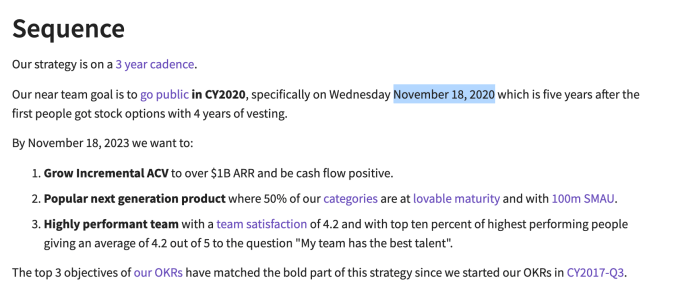
GitLab is a company that doesn’t pull any punches or try to be coy. It actually has had a page on its website for sometime stating it intends to go public on November 18, 2020. You don’t see that level of transparency from late-stage startups all that often. Today, the company announced a huge $268 million Series E on a tidy $2.768 billion valuation.

Investors included Adage Capital Management, L.P, Alkeon Capital, Altimeter Capital, Blackrock, Inc., Capital Group, Coatue Management, D1 Capital Partners, Franklin Templeton, Light Street Capital, Tiger Management Corp and Two Sigma Investments LP.

The company seems to be primed and ready for that eventual IPO. Last year, GitLab co-founder and CEO Sid Sijbrandij says that his CFO Paul Machle told him he wanted to begin planning to go public, and he would need two years in advance to prepare the company. As Sijbrandij tells it, he told him to pick a date.

“He said, I’ll pick the 16th of November because that’s the birthday of my twins. It’s also the last week before Thanksgiving, and after Thanksgiving, the stock market is less active, so that’s a good time to go out,” Sijbrandij told TechCrunch.

He said that he considered it a done deal and put the date on the GitLab Strategy page, a page that outlines the company’s plans for everything it intends to do. It turned out that he was a bit too quick on the draw. Machle had checked the date in the interim and realized that it was a Monday, which is not traditionally a great day to go out, so they decided to do it two days later. Now the target date is officially November 18, 2020.

Screenshot 2019 09 17 08.35.33 2

GitLab has the date it’s planning to go public listed on its Strategy page.

As for that $268 million, it gives the company considerable runway ahead of that planned event, but Sijbrandij says it also gives him flexibility in how to take the company public. “One other consideration is that there are two options to go public. You can do an IPO or direct listing. We wanted to preserve the optionality of doing a direct listing next year. So if we do a direct listing, we’re not going to raise any additional money, and we wanted to make sure that this is this is enough in that case,” he explained.

Sijbrandij says that the company made a deliberate decision to be transparent early on. Being based on an open source project, it’s sometimes tricky to make that transition to commercial company, and sometimes that has a negative impact on the community and the number of contributions. Transparency was a way to combat that, and it seems to be working.

He reports that the community contributes 200 improvements to the GitLab open source product every month, and that’s double the amount of just a year ago, so the community is still highly active in spite of the parent company’s commercial success.

It did not escape his notice that Microsoft acquired GitHub last year for $7.5 billion. It’s worth noting that GitLab is a similar kind of kind of company that helps developers manage and distribute code in a DevOps environment. He claims in spite of that eye-popping number, his goal is to remain an independent company and take this through to the next phase.

“Our ambition is to stay an independent company. And that’s why we put out the ambition early to become a listed company. That’s not totally in our control as the majority of the company is owned by investors, but as long as we’re more positive about the future than the people around us, I think we can we have a shot at not getting acquired,” he said.

The company was founded in 2014 and was a member of Y Combinator in 2015. It has been on a steady growth trajectory ever since. hauling in over $436 million. The last round before today’s announcement was a $100 million Series D last September.

17 Sep 2019

The Sony RX100 VII is the best compact camera you can buy

Sony’s latest advanced compact camera is the highly pocketable RX100 VII, the seventh iteration of the RX100. Since its debut, this line of cameras has proven a very popular option among enthusiasts looking for a great travel camera, vloggers, and even pros who want a compact backup option just in case. The RX100 VII should suit all those needs very well, provided you’re okay with coughing up the $1,200 asking price.

Not that $1,200 is too expensive for what you’re getting, since Sony has packed tremendous value in the Mark VII, including an extremely versatile 24-200mm (35mm equivalent) zoom range, 20fps continuous burst mode shooting, a flip-up touch screen, built-in images stabilization and the same powerful autofocus technologies you’ll find on its flagship full-frame interchangeable lens pro cameras.

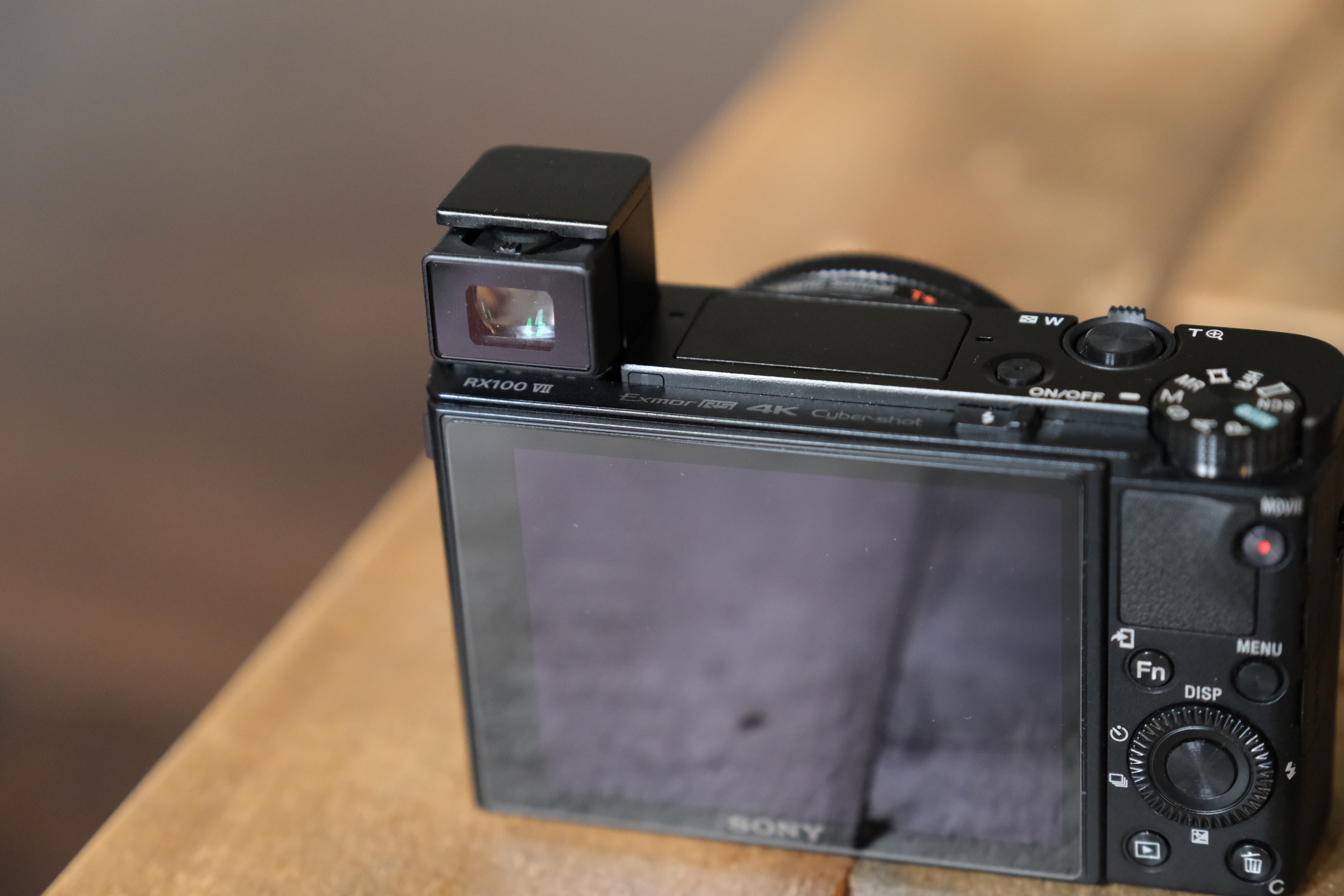
Sony RX100 VII 2

Pocket power

The Sony RX100 VII satisfies a specific need, but it’s one that a lot of people probably have: Striking a balance between image quality, range and portability. One the convenience end of the spectrum, the ultimate device is probably your smartphone, since you have that with you always. On the IQ and range side, you’re looking at a top-end DSLR with a high-quality, low aperture zoom lens that can weigh more than a large dog. The RX100 VII manages to be so impressive because it can delivery near the portability of a smartphone, with some of the photography chops of a setup that typically requires its own suitcase.

Inside the RX100 VII you’ll find a 1-inch sensor, which is very big relative to smartphone imaging sensors. This is important because it means there’s no contest between which will capture a better image, with lower noise, greater depth-of-field and better color rendering. For all the software magic that companies like Apple and Google can bring to the photography table, nothing yet can totally compensate for simply having a larger sensor.

Sony RX100 VII 4

The RX100 VII’s compactness isn’t just impressive because of the large sensor it packs inside, however; you also get an EVF, an integrated flash, an external microphone jack and an articulating LCD display. To get all of this into a package this small is astounding – the EVF in particular is a great feature for anyone who wants to be a bit more direct and particular with their shot composition, while the flip-up LCD means you can also have a great selfie screen and monitor for use when vlogging.

Sony RX100 VII 5

Last but not least in terms of its portability benefits, you can charge the RX100 VII via USB directly so that you can leave any additional charging hardware at home. The camera has a micro USB port for both data and power, and while it would’ve been nice to see this upgraded to USB-C on this camera to keep up with the latest in terms of computer and smartphone charging, it’s still better than requiring an external charger.

Zoom zoom

Sony decided on a very long zoom range for the RX100 VII, which sports a 24-200mm (35mm equivalent) f/2.8-4.5 powered retracting zoom lens. That’s the same range and aperture as the RX100 VI, which opts for more range over the brighter 24-70mm f/1.8-2.8 lens found on the V and earlier.

While you’ll lose some ability to separate your subject from the background vs. a brighter lens, you get a lot more reach for shooting action or wildlife. The added range definitely makes it a better all-around travel camera, too, and makes it possible to get some shots you otherwise just wouldn’t be able to get at all with a shorter lens.

The long end of the zoom range also offers stunningly sharp images, especially in bright, daylight conditions. In the examples below, you can see some of the 200mm samples shot on the RX100 VII next to the 24mm wide versions of the same scenes to get a sense of just how close you can get with this lens, and the quality of the images possible even at those extreme zoom lengths.

[gallery ids="1881962,1881963,1881944,1881943,1881946,1881947,1881889,1881888"]

At the wide end, you have plenty of real estate to capture great sweeping architectural or landscape shots, and the sharpness is also fantastic in great light. There’s some distortion, but it’s mostly corrected by Sony’s software on JPG output. That 24mm wide angle is also the right width for arm-length selfies, though you’re probably going to want at least a short selfie stick for vlogging applications to give yourself a little more in the way of framing options.

DSC03049

Sticky AF

Leaving aside the fact that this is one of the better sensors available on the market for a camera this size, there’s another very compelling reason to pick up this camera, and one that likely gives it the edge over competitors from other companies. I’m talking about Sony’s autofocus system, and the RX100 VII gets the latest and greatest that Sony has developed, which is found only in much more expensive cameras from the company like the A9 and the new A7R IV.

You get face and eye tracking, for both human and animal subjects, and these are both best-in-class when compared with other camera makers’ systems. The animal one in particular is a Sony speciality, and worked amazingly well on my real dog – and on Sony’s Aibo robot dog, captured at the Sony Ginza experience center in Tokyo.

[gallery ids="1881912,1881911"]

The face and eye detection settings are available in both still shooting and movies, and you can set eye preference (left or right), too. The newest AF feature, however, is object tracking, which allows you to point your AF point at a specific object and have the camera automatically track that object as you zoom or move, or as the object moves within frame. You can choose from a range of options regarding how large of a focal area to track, and this works in tandem with human face detection so that the camera will automatically focus on the subject’s face when it’s visible, and on them more generally when it’s not, which is amazing for sports or action photography.

In practice, this works extremely well. Sony’s claims about how well this sticks, and how good it is at picking a subject back up after it moves behind an object, for instance, are spot on. This is really the best AF system available on a camera in the pocketable category, at any price point, and it’s truly amazing to experience. In the shots below, you can see how it allowed me to capture a very clear picture of a soaring hawk at the 200mm tele zoom, how it tracked a bike in motion and got a clear image of the rider’s face, and how it froze a motor bike in motion during a burst series (all the shots were in focus, by the way).

[gallery ids="1881884,1881883,1881881,1881887,1881936"]

Low light

Another area where Sony’s RX100 VII and its 1-inch sensor are going to have a leg up on your smartphone is in sub-optimal lighting conditions. Bigger sensors mean bigger pixels and less noise, with better blacks and shadows. Sony is also using a backside illuminated stacked sensor, and there’s built-in optical image stabilization which means you can take sharper photos at lower shutter speeds, letting in more light for clearer images.

In practice, what you get are pretty good low light photos, especially outdoors with ambient light present, or in decently well-lit indoor settings. In poorer lighting conditions or when you’re trying to freeze action in low light, you’re going to get fairly noisy results, especially when compared to an APS-C or full-frame camera. Sony’s tech can do a lot to make the most of less than ideal photographic conditions, but at some point, it runs up against the limits of what’s possible.

Sony also doesn’t get quite as aggressive with computational photographic techniques for digitally compensating for lower available light, as do the Pixel phones and the latest iPhone 11. That’s not necessarily a bad thing, though – the images from the RX100 VII present more accurate night and indoor photos, by comparison, and you can still get much better indoor images with the RX100 VII than you can with any smartphone.

[gallery ids="1881909,1881908,1881907,1881906,1881905,1881904,1881903,1881902,1881901,1881900,1881899,1881898,1881897,1881896,1881895,1881894,1881878,1881877"]

As you can see in the gallery above, the camera does extremely well as long as there’s one well-lit subject or element in frame. It’s less effective when the image overall is uniformly dim, but if you’re looking for great photos in those conditions, you should probably consider upgrading to a larger camera with a larger sensor anyways.

Movie maker

The RX100 VII’s greatest strength might just be how good it is at shooting video for a device this size. Video out of the camera with very minimal adjustment from the default shooting settings produces highly usable results, for both home video enthusiasts and for YouTubers or vloggers looking to produce great looking content without lugging an entire film production studio along with them on their travels.

Once again, the versatile zoom range really shines here, and the you can even shoot at the tele end of the zoom handheld and get totally usable footage provided you’re a bit careful about movement, as you can see in the third clip in the sequence below, which was shot at the 200mm range. Low-light footage looks great, as is evident from the second clip in sequence, and at the wide end you can capture sweeping landscape vistas or flip up the screen and turn the camera around for selfie-style video.

The added microphone port makes it an even more powerful filmmaking tool, and if you pick up their optional VCT-SGR1 shooting grip, combined with a small shotgun mic or something like the Rode Wireless Go, you’ve got everything you need to create very compelling travel diaries in an incredibly lightweight package that will be able to produce quality and get zoom and wide shots that are impossible on a smartphone.

Bottom line

The RX100 VII is a delight of a camera and an easy recommendation to make. There’s nothing that compares in this size category in terms of the range of features, autofocus capabilities, video prowess and performance as a general all-rounder. This is the do-everything travel camera that you could really only dream of five years ago, and it’s become more ideal for this use with every generation that Sony introduces.

Whether you’re looking to step up your photographic possibilities from your smartphone, or you want to supplement your professional or advanced enthusiast equipment with a pocket camera that’s available as a b-camera for video or to grab a few choice stills, the RX100 VII is hard to top. It’s only downside is that $1,200 asking price, which is definitely above average for a compact camera – but on a value basis, $1,200 isn’t at all expensive for everything this camera has to offer.

Full sample gallery

[gallery ids="1881963,1881962,1881961,1881960,1881959,1881958,1881957,1881956,1881955,1881954,1881953,1881952,1881951,1881950,1881949,1881948,1881947,1881946,1881944,1881943,1881942,1881941,1881940,1881939,1881938,1881937,1881936,1881935,1881933,1881932,1881931,1881930,1881929,1881928,1881927,1881926,1881925,1881924,1881923,1881922,1881921,1881920,1881919,1881918,1881917,1881916,1881915,1881914,1881913,1881912,1881911,1881910,1881909,1881908,1881907,1881906,1881905,1881904,1881903,1881902,1881901,1881900,1881899,1881898,1881897,1881896,1881895,1881894,1881893,1881892,1881891,1881890,1881889,1881888,1881887,1881886,1881885,1881884,1881883,1881882,1881881,1881880,1881879,1881878,1881877,1881876,1881875,1881874"]