Category: UNCATEGORIZED

10 Sep 2019

Where have all the seed deals gone?

When it comes to big business, the numbers rarely lie, and the ones PitchBook and other sources have pulled together on the state of seed investing aren’t pretty. The total number of seed deals, funds raised and dollars invested in seed deals were all down in the 2015-2018 time frame, a period too long to be considered a correctable glitch.

The number of seed deals, defined as U.S.-based deals under $1 million, dropped to 882 in Q4 2018 from 1,500 three years earlier, a 40% drop. The number of seed funds raised and the total dollars invested in seed rounds were both down roughly 30% over the same time period. And the trend isn’t limited to the U.S. — venture capital investment volume outside the U.S. dropped by more than 50% between 2014 and 2017.

The rise before the fall

To discover the reason behind the precipitous drop in seed deals requires a trip back in time to 2006, which was the start of a seed boom that saw investing rise 600% over a nine-year period to 2014. If you’re an internet historian, 2006 should ring a bell. It’s the year Amazon unveiled their Elastic Compute Cloud, or EC2, its revolutionary on-demand cloud computing platform that gave everyone from the government to your next-door neighbor a pay-as-you-go option for servers and storage.

Gone were the days of investing millions of dollars in tech infrastructure before writing the first line of code. At the same time, the proliferation of increasingly sophisticated and freely available open-source software provided many of the building blocks upon which to build a startup. And we can’t forget the launch of the iPhone in 2007 and, more importantly for startups, the App Store in 2008.

With the financial barrier to starting a business obliterated, and coupled with the launch of an entirely new and exciting mobile platform, Silicon Valley and other innovation hubs were suddenly booming with new businesses. Angel investors and dedicated seed funds quickly followed, providing capital to support this burgeoning ecosystem. As more capital became available, more companies were formed, leading to a positive reinforcing cycle.

Enter stagnation

But this cycle began to slow in 2015. Had investor optimism waned, or was the supply of founders dwindling? Had innovation simply stopped? To find the answer, it’s helpful to understand a key role of the traditional venture capitalist. Once the Series A round of financing closes, the lead investor will join the company’s board of directors to provide support and guidance as the company grows. This differs from the seed round of financing when investors typically do not join the board, if one exists at all. But even the most zealous and hardworking of VCs can only sit on so many boards and be fully engaged with each portfolio company.

An old-fashioned logjam

If you’ve ever ridden Splash Mountain at Disneyland, you’ve likely experienced a moment when the boats stack up due to a hiccup in the flow somewhere farther down the route. This is what happened with seed companies looking to raise a Series A round of financing in 2015.

Venture capital remains a hands-on business.

With venture investors limited by the number of board seats they could responsibly hold, a huge percentage of seed-stage companies failed to successfully raise more capital. Inevitably, many seed funds also felt this pain as their portfolios started to underperform. This led to tighter availability of capital, which led to a tougher fundraising environment for seed-stage companies. Series A investors could not absorb the giant wave of seed opportunities — the virtuous cycle had turned vicious.

The scaling of venture capital

In its simplest form, venture investing has three distinct phases: seed, venture and growth.

Because seed investors are not weighed down by the constraints of active board roles, they have the ability to build large portfolios of companies. In this sense, seed funds are more scalable than traditional early-stage venture funds.

At the other end of the spectrum, growth funds are able to scale their volume of dollars invested. With the average age of a company at IPO now being 12 years, companies are staying private longer than ever, which affords growth funds an opportunity to invest enormous amounts of capital and raise ever-larger funds.

It’s in the middle — traditional venture — where achieving scalability, by quantity of deals or dollars, is the most challenging. It was this inability to scale that led to the great winnowing of seed companies hoping to raise their Series A.

It’s a situation that is unlikely to change. Venture capital remains a hands-on business. The tight working relationship between investors and founders makes venture capital a unique asset class. This alchemy doesn’t scale.

The irony for traditional Series A venture investors is that the trait they find most desirable in a startup — scalability — is the one thing they themselves are unlikely to achieve.
10 Sep 2019

What the iPhone 11 says about Apple’s present — and future

No matter how much polish and Apple magic the company put on today’s big event, there was one unshakable truth that colored the event: phones just aren’t selling like they used to. And unlike other industry-wide trends, Apple isn’t immune. The large scale slow down of smartphone sales has had an undeniable impact on the company’s bottom line.

Casual observers may not have noticed, but that harsh truth impacted nearly every mobile announcement on stage today at the Steve Jobs theater. Two elements in particular really stood out, however:

  1. Content and services taking center stage
  2. Apple rethinking how the iPhone is positioned.

10 Sep 2019

These brothers just raised $15 million for their startup, Dutchie, a kind of Shopify for dispensaries

Ross Lipson comes from an entrepreneurial family, so perhaps it’s no wonder that as a college student, he dropped out of school to jump into the online food space, including cofounding, then selling, one of Canada’s first online food ordering service startups.

It’s even less surprising that having gone through that experience, Lipson would use what he learned in the service of another startup: Dutchie, a two-year-old, Bend, Oregon-based startup whose software is used by a growing number of cannabis dispensaries that pay the startup a monthly subscription fee to create and maintain their websites, as well as to accept orders and track what needs to be ready for pickup.

The decision is looking like a smart one right now. Dutchie says it’s now being used by 450 dispensaries across 18 states and that it’s seeing $140 million in gross merchandise volume. The company also just locked down $15 million in Series A funding led by Gron Ventures, a new cannabis-focused venture fund with at least $117 million to invest. Other participants in the round include earlier backers Casa Verde Capital, Thirty Five Ventures (founded by NBA star Kevin Durant and sports agent Rich Kleiman), Sinai Ventures and individual investors, including Shutterstock founder and CEO Jon Oringer.

Altogether, Dutchie (named after the song), has now raised $18 million. We talked earlier today with Lipson about the company, its challenges, and working with his big brother Zach, himself a serial entrepreneur who cofounded Dutchie and today serves as its chief product officer while Ross serves as CEO.

TC: It’s always interesting when siblings team up. Did you always get along with your brother?

RL: We complement each other strongly. I’m energy, I’m sales and business development. I’m fast-moving by nature and the guy who wants to drive the car as fast as possible. Zach is the one who wants to make sure that we’re doing everything right. He’s the methodical one. We really do understand each other quite well and appreciate each other’s strengths and weaknesses, which enables us to meet in the middle on a lot of things.

TC: It’s also interesting that you’ve both been founders beginning around the time you were in college. Were your parents entrepreneurs?

RL: Our father is a founder and has run his own business for the last 35 years. Our parents also always pitched us that anything is possible and encouraged us to go for it. He was the dreamer and our mom was the cheerleader, which is a pretty nice combination.

TC: You started Dutchie a couple of years ago. Is running this startup more or less challenging than your experience in the food delivery business?

RL:  It’s our second year in business, and we’ve seen some explosive, unprecedented growth. As for whether it’s harder or easier than food, we’re very product and user centric, and by that we mean consumers but also dispensaries. We’re focused on the customer all day, every day, with a team that ensures that they have support, that they receive their orders, that the orders are out the door quickly or at least, ready for pickup. We make sure the photos work, that different potencies are marked. Our system is kind of like a Shopify of the cannabis space maybe meets DoorDash.

TC: You don’t deliver, though.

RL: No. We don’t do delivery for legal reasons; the dispensaries [handle this piece].

TC: You’re charging like other software-as-service businesses. Do you also take a cut of each sale?

RL: We don’t charge on transaction volume.

TC: You’re working with 450 dispensaries. Is there any way to know what percentage of the overall market that is, and how much is left for you to chase after?

RL: First, there are more than 30 states where cannabis is either medically legal or that have legalized the recreational use of marijuana and we operate in both types of markets. It’s hard to know the actual count [of dispensaries], because they are always being formed, getting acquired, or going out of business, but counting registered dispensaries, we work with more than 15 percent of them right now.

TC: Who are you biggest competitors? Eaze? Leafly? They also help consumers find cannabis and, in Eaze’s case, deliver it, too.

RL: Eaze is more focused on delivery where we’re more focused on pickup. It’s also only avaiable in California and Oregon, whereas we’re in 18 states. They educate the consumer about online ordering, which is great, but they also own the consumer experience, where we’re really powering the dispensary.

Leafly and Weedmaps are really different types of platforms; they’re mostly known for their dispensary and strain reviews, where we’re strictly an online ordering service.

TC: You’ve raised a big Series A for a company in the cannabis space. Do you have concerns about there being later-stage funding available when you need it?

RL: It’s true the most investors still haven’t touched cannabis, though you are seeing bigger deals. Thrive Capital led that [$35 million] round in [the online cannabis inventory and ordering platform] LeafLink [last month]. You saw Tiger Global [lead a $17 million round ] in [the software platform for cannabis dispensaries] Green Bits last summer. It’s a big advantage to the funds that can right now invest because there are these barriers to entry and they are finding deals that are promising and they can get in early and without competition.

Pictured, left to right, above: Ross and Zach Lipson

10 Sep 2019

Peloton plots $1.2B Nasdaq IPO

Peloton, which debuted its IPO prospectus last month, plans to charge as much as $29 per share in its upcoming Nasdaq listing.

In an amended S-1 filing released Tuesday afternoon, the developer of internet-connected stationary bikes and treadmills announced a proposed price range of $26 to $29 per share, allowing the company to raise as much as $1.2 billion in its 2019 public offering.

At the high end of the proposed price, Peloton’s valuation would surpass $8 billion. The business is expected to launch its IPO roadshow as soon as Wednesday, according to Bloomberg.

New York-based Peloton will trade under the ticker symbol PTON. Goldman Sachs & Co. and J.P. Morgan Securities are managing the IPO as lead underwriters.

Peloton, founded in 2012, raised $550 million in venture capital funding last year at a valuation of $4.15 billion. In total, the company has attracted $994 million in venture capital investment, according to PitchBook. Its S-1 filing lists CP Interactive Fitness (5.4% pre-IPO stake) — an entity connected to the private equity firm Catterton — TCV (6.7%), Tiger Global (19.8%), True Ventures (12%) and Fidelity Investments (6.8%) as principal stakeholders, or investors with at least a 5% stake in the company.

Peloton reported an impressive $915 million in total revenue for the year ending June 30, 2019, an increase of 110% from $435 million in fiscal 2018 and $218.6 million in 2017. Its losses, meanwhile, hit $245.7 million in 2019, up significantly from a reported net loss of $47.9 million last year.

The company’s upcoming float is expected to be one of the largest of the year.

10 Sep 2019

AdRoll becomes NextRoll and launches new platform services business

The AdRoll Group has a new name — NextRoll — designed to reflect the company’s moves beyond ad retargeting.

“We have, for the longest time, been pigeonholed as a retargeting company, but the reality is that we have really been evolving,” CEO Toby Gabriner told me.

To be clear, the AdRoll retargeting business isn’t going away. But the company subsequently introduced RollWorks, which offers business-to-business marketing tools, and today it’s launching a third unit, NextRoll Platform Services.

Gabriner became CEO of AdRoll in November 2017, and he said the rebrand has been in the works for a while now. When the company launched the RollWorks product last year, both business units continued to operate under The AdRoll Group umbrella, but Gabriner said that was always “a temporary placeholder.”

He added, “We’re now a year and a half into the RollWorks brand launch and it’s firmly planted on its own two feet. It makes a ton of sense for us to move onto onto the NextRoll brand. This was always planned.”

As for how NextRoll Platform Services fits into that strategy, the company describes as a “marketing-technology-as-a-service offering.” Granier explained that it provides access to AdRoll’s underlying technologies through APIs, allowing businesses bring these capabilities into other ad products, or to resell them as part of their own platforms.

The initial offerings are Channels-As-A-Service, which allows businesses to extend their marketing to new channels, and Audiences-As-A-Service, which turns audience data into targetable segments.

“This is something we’ve been pulled by a lot of customers to do,” Gabriner said. “What we’ve been doing over the last couple of years is externalizing those services so people outside of the company. developers, would have an easier time using them. [Now we’ve] gone that last mile of making them commercially friendly.”

10 Sep 2019

Hatebase catalogues the world’s hate speech in real time so you don’t have to

Policing hate speech is something nearly every online communication platform struggles with. Because to police it, you must detect it; and to detect it, you must understand it. Hatebase is a company that has made understanding hate speech its primary mission, and it provides that understanding as a service — an increasingly valuable one.

Essentially Hatebase analyzes language use on the web, structures and contextualizes the resulting data, and sells (or provides) the resulting database to companies and researchers that don’t have the expertise to do this themselves.

The Canadian company, a small but growing operation, emerged out of research at the Sentinel Project into predicting and preventing atrocities based on analyzing the language used in a conflict-ridden region.

“What Sentinel discovered was that hate speech tends to precede escalation of these conflicts,” explained Timothy Quinn, founder and CEO of Hatebase. “I partnered with them to build Hatebase as a pilot project — basically a lexicon of multilingual hate speech. What surprised us was that a lot of other NGOs [non-governmental organizations] started using our data for the same purpose. Then we started getting a lot of commercial entities using our data. So last year we decided to spin it out as a startup.”

You might be thinking, “what’s so hard about detecting a handful ethnic slurs and hateful phrases?” And sure, anyone can tell you (perhaps reluctantly) the most common slurs and offensive things to say — in their language… that they know of. There’s much more to hate speech than just a couple ugly words. It’s an entire genre of slang, and the slang of a single language would fill a dictionary. What about the slang of all languages?

A shifting lexicon

As Victor Hugo pointed out in Les Miserables, slang (or “argot” in French) is the most mutable part of any language. These words can be “solitary, barbarous, sometimes hideous words… Argot, being the idiom of corruption, is easily corrupted. Moreover, as it always seeks disguise so soon as it perceives it is understood, it transforms itself.”

Not only is slang and hate speech voluminous, but it is ever-shifting. So the task of cataloguing it is a continuous one.

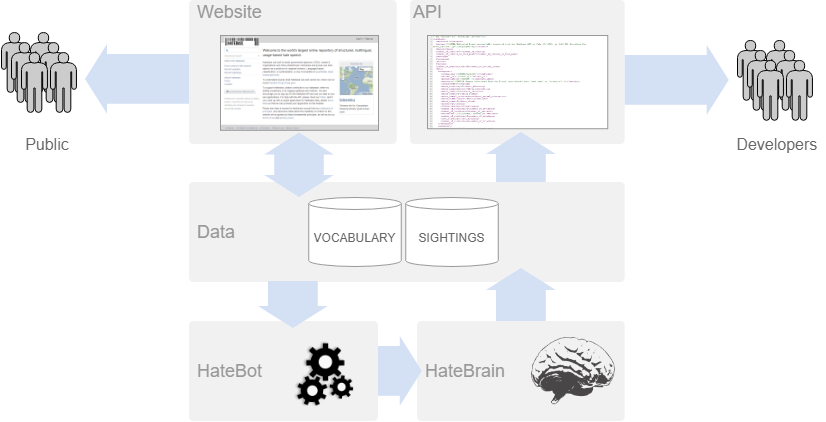
Hatebase uses a combination of human and automated processes to scrape the public web for uses of hate-related terms. “We go out to a bunch of sources — the biggest, as you might imagine, is Twitter — and we pull it all in and turn it over to Hatebrain. It’s a natural language program that goes through the post and returns true, false, or unknown.”

True means it’s pretty sure it’s hate speech — as you can imagine, there are plenty of examples of this. False means no, of course. And unknown means it can’t be sure; perhaps it’s sarcasm, or academic chatter about a phrase, or someone using a word who belongs to the group and is attempting to reclaim it or rebuke others who use it. Those are the values that go out via the API, and users can choose to look up more information or context in the larger database, including location, frequency, level of offensiveness, and so on. With that kind of data you can understand global trends, correlate activity with other events, or simply keep abreast of the fast-moving world of ethnic slurs.

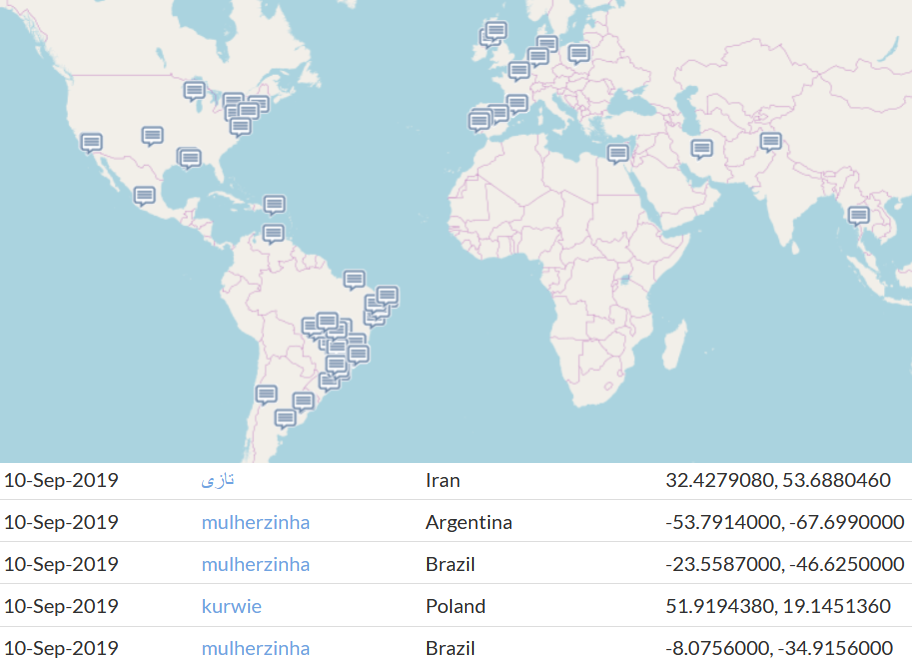
hatebase map

Hate speech being flagged all around the world — these were a handful detected today, along with the latitude and longitude of the IP they came from.

Quinn doesn’t pretend the process is magical or perfect, though. “There are very few 100 percents coming out of Hatebrain,” he explained. “It varies a little from the machine learning approach others use. ML is great when you have an unambiguous training set, but with human speech, and hate speech, which can be so nuanced, that’s when you get bias floating in. We just don’t have a massive corpus of hate speech, because no one can agree on what hate speech is.”

That’s part of the problem faced by companies like Google, Twitter, and Facebook — you can’t automate what can’t be automatically understood.

Fortunately Hatebrain also employs human intelligence, in the form of a corps of volunteers and partners who authenticate, adjudicate, and aggregate the more ambiguous data points.

“We have a bunch of NGOs that partner with us in linguistically diverse regions around the world, and we just launched our ‘citizen linguists’ program, which is a volunteer arm of our company, and they’re constantly updating and approving and cleaning up definitions,” Quinn said. “We place a high degree of authenticity on the data they provide us.”

That local perspective can be crucial for understanding the context of a word. He gave the example of a word in Nigeria, which when used between members of one group means friend, but when used by that group to refer to someone else means uneducated. It’s unlikely anyone but a Nigerian would be able to tell you that. Currently Hatebase covers 95 languages in 200 countries, and they’re adding to that all the time.

Furthermore there are “intensifiers,” words or phrases that are not offensive on their own but serve to indicate whether someone is emphasizing the slur or phrase. Other factors enter into it too, some of which a natural language engine may not be able to recognize because it has so little data concerning them. So in addition to keeping definitions up to date, the team is also constantly working on improving the parameters used to categorize speech Hatebrain encounters.

Building a better database for science and profit

The system just ingested its millionth hate speech sighting (out of perhaps tens times that many phrases evaluated), which sounds simultaneously like a lot and a little. It’s a little because the volume of speech on the internet is so vast that one rather expects even the tiny proportion of it constituting hate speech to add up to millions and millions.

But it’s a lot because no one else has put together a database of this size and quality. A vetted, million-data-point set of words and phrases classified as hate speech or not hate speech is a valuable commodity all on its own. That’s why Hatebase provides it for free to researchers and institutions using it for humanitarian or scientific purposes.

hatebase how

But companies and larger organizations looking to outsource hate speech detection for moderation purposes pay a license fee, which keeps the lights on and allows the free tier to exist.

“We’ve got, I think, four of the world’s ten largest social networks pulling our data. We’ve got the UN pulling data, NGOs, the hyper local ones working in conflict areas. We’ve been pulling data for the LAPD for the last couple years. And we’re increasingly talking to government departments,” Quinn said.

They have a number of commercial clients, many of which are under NDA, Quinn noted, but the most recent to join up did so publicly, and that’s TikTok. As you can imagine, a popular platform like that has a great need for quick, accurate moderation.

In fact it’s something of a crisis, since there are laws coming into play that penalize companies enormous amounts if they don’t promptly remove offending content. That kind of threat really loosens the purse strings; If a fine could be in the tens of millions of dollars, paying a significant fraction of that for a service like Hatebase’s is a good investment.

“These big online ecosystems need to get this stuff off their platforms, and they need to automate a certain percentage of their content moderation,” Quinn said. “We don’t ever think we’ll be able to get rid of human moderation, that’s a ridiculous and unachievable goal; What we want to do is help automation that’s already in place. It’s increasingly unrealistic that every online community under the sun is going to build up their own massive database of multilingual hate speech, their own AI. The same way companies don’t have their own mail server any more, they use Gmail, or they don’t have server rooms, they use AWS — that’s our model, we call ourselves hate speech as a service. About half of us love that term, half don’t, but that really is our model.”

Hatebase’s commercial clients have made the company profitable from day one, but they’re “not rolling in cash by any means.”

“We were nonprofit until we spun out, and we’re not walking away from that, but we wanted to be self-funding,” Quinn said. Relying on the kindness of rich strangers is no way to stay in business, after all. The company is hiring and investing in its infrastructure, but Quinn indicated that they’re not looking to juice growth or anything — just make sure the jobs that need doing have someone to do them.

In the meantime it seems clear to Quinn and everyone else that this kind of information has real value, though it’s rarely simple.

“It’s a really, it’s a really complicated problem. We always grapple with it, you know, in terms of, well, what role does hate speech play? What role does misinformation play? What role do socioeconomics play?” he said. “There’s a great paper that came out of the University of Warwick, they studied the correlation between hate speech and violence against immigrants in Germany over, I want to say, 2015 to 2017. They graph it out. And its peak for peak, you know, valid for Valley. It’s amazing. We don’t do a hell of a lot of analysis — we’re a data provider.”

“But now have like, almost 300 universities pulling the data, and they do those kinds of those kinds of analyses. So that’s very validating for us.”

You can learn more about Hatebase, join the Citizen Linguists or research partnership, or see recent sightings and updates to the database at the company’s website.

10 Sep 2019

Ford unveils lineup for Europe to outpace gas and diesel vehicle sales by 2022

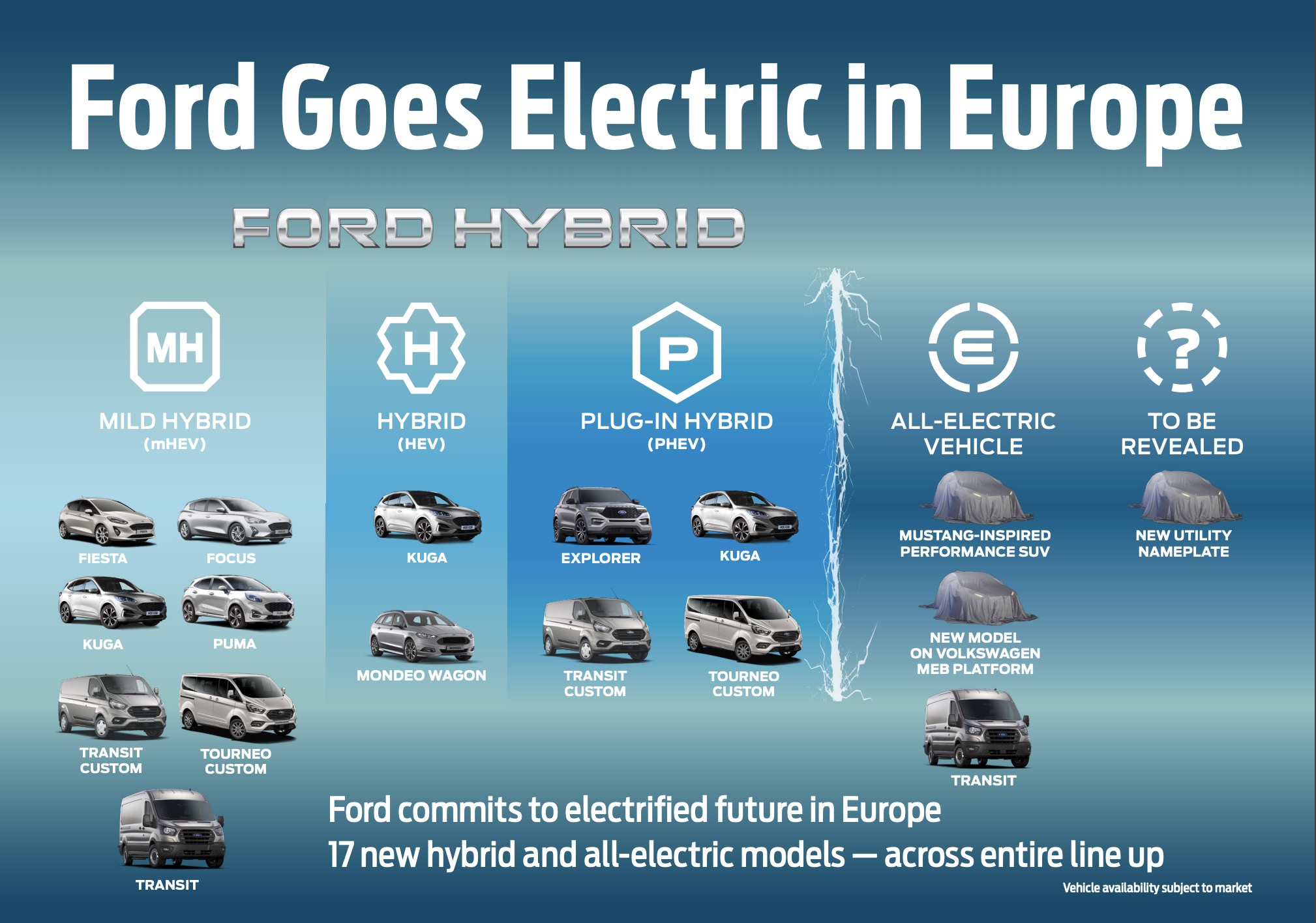
Ford unveiled a range of hybrid vehicles Tuesday at the Frankfurt Motor Show as part of its plan to reach sales of 1 million electrified vehicles in Europe by the end of 2022.

Ford introduced hybrid and plug-in hybrid versions of the Mondeo wagon, Puma compact crossover, Kuga (shown below) and Explorer SUVs as well as the new Tourneo “people mover” at the show.

FORD KUGA SIDE CHARGING

But more are coming. Ford said earlier this year it plans to bring eight electrified vehicles to market this year and another nine that will be produced by 2024. One of those, an all-electric Mustang-inspired SUV, will come to market in 2020. The electric SUV with Mustang styling has a targeted range of 600 km (more than 370 miles) calculated using the World Harmonised Light Vehicle Test Procedure (WLTP), and fast-charging capability.

Ford expects that electrified vehicles will account for more than 50% of its car sales in Europe by 2022, surpassing combined sales of conventional petrol and diesel models.

Ford’s upcoming portfolio is part of its broader plan to make its Europe division leaner and more profitable. The company said in June it will cut 12,000 jobs and consolidate its manufacturing footprint to a proposed 18 facilities by the end of 2020. Most of the job cuts, 2,000 of which are salaried position, will occur through voluntary separation programs.

The automaker also announced Tuesday partnerships with six energy suppliers in Europe, including Centrica in the U.K. and Ireland, to install home charging wall boxes and provide green energy tariffs. A partnership with NewMotion aims to help drivers locate and pay for charging more easily at more than 118,000 charging points in 30 countries.

“With electrification fast becoming the mainstream, we are substantially increasing the number of electrified models and powertrain options for our customers to choose from to suit their needs,” Ford of Europe President Stuart Rowley said in a statement.

Electrified doesn’t mean every vehicle will be solely powered by electricity. The term means the vehicles can use hybrid, plug-in hybrid or battery-electric technology. The showcase Tuesday supports the automaker’s earlier commitment that every new Ford passenger vehicle will include an electrified option.

Ford Europe plans

While some automakers have stuck to an all-electric strategy, Ford plans to produce a range of hybrids, plug-in hybrids and battery electric vehicles.

“There is no ‘one-size-fits-all’ solution when it comes to electrification – every customer’s circumstances and travel needs are different,” said Joerg Beyer, executive director of engineering at Ford of Europe. “Our strategy is to pair the right electrified powertrain option to the right vehicle, helping our customers make their electrified vehicle experience easy and enjoyable.”

Ford isn’t doing this alone. The automaker announced in July a partnership with Volkswagen Group that covers collaboration on electric vehicles and development of autonomous technology via a $2.6 billion investment by VW into Argo AI.

Under the EV part of the tie-up, Ford will use VW’s MEB platform, the underlying architecture for its upcoming line of passenger electric vehicles, to develop at least one fully electric car for Europe. VW debuted Monday the ID.3, the first model with MEB platform.

10 Sep 2019

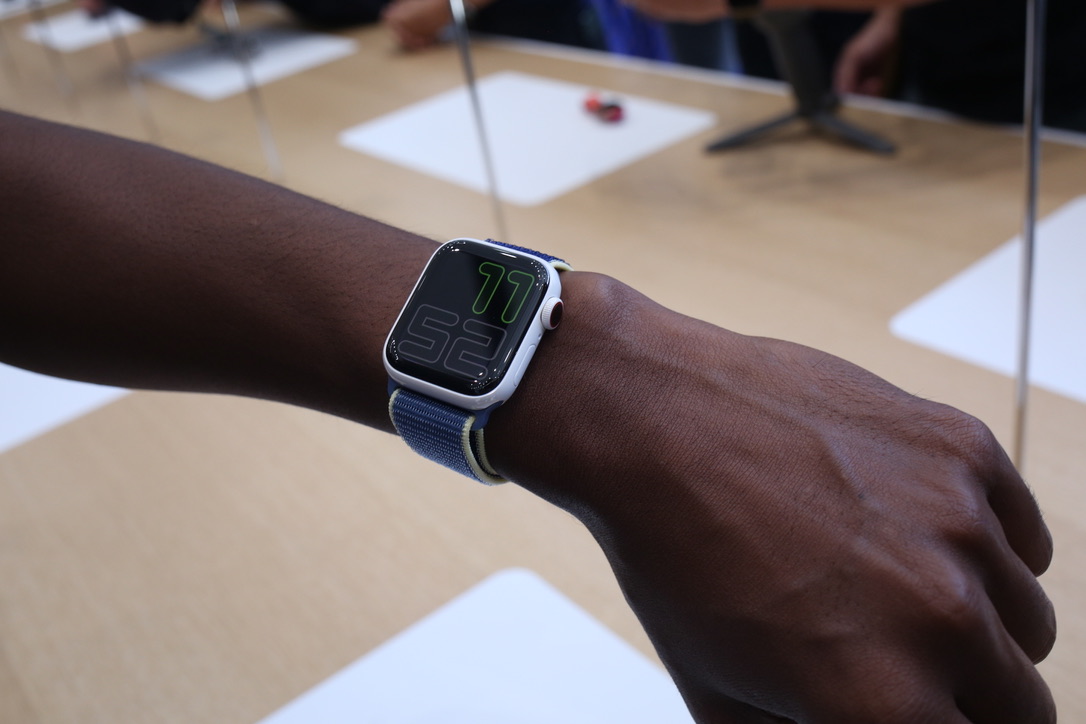
Apple Watch Series 5 hands-on

The new Apple Watch is even harder to distinguish from its predecessor than the new iPhone. Given the fact that Fitbit’s smartwatches appear more and more Apple-like with every new generation, however, maybe the company’s onto something here. Like the iPhone, Apple hasn’t touched the Watch’s design for a while now, leading one to wonder if there’s much to be done on that front.

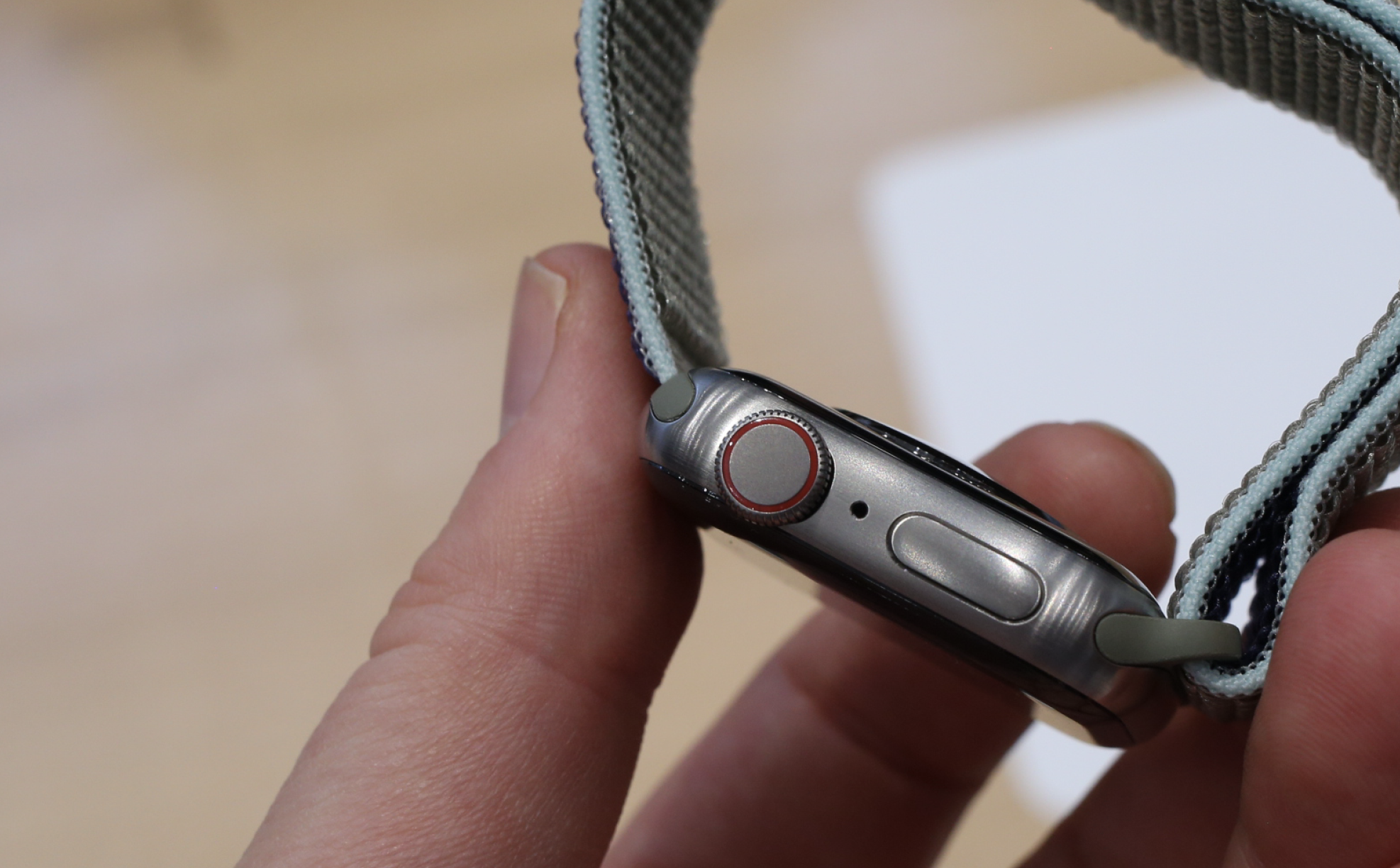
The new titanium and ceramic cases are nice to look at, but they’ll cost you. There are some nice new magnetic straps, as well, and Apple’s new in-store customization options will go a little ways toward helping wearers stand out from the crowd.

Apple Watch Series 5

On the whole, the Series 5 doesn’t feel like a huge step forward. There’s nothing on here that’s quite as radical a shift as the addition of LTE from a while back. The addition of sleep tracking, meanwhile, appears to have been put on the back burner for a bit — owing perhaps to battery constraints. The truth of the matter is that 18 hours is more than enough to get you through a day, but wearing the watch to sleep is another matter.

That said, there has been some battery improvement. The listed battery life is the same as the last model, but that time now factors in the always-on display. That’s probably the useful day to day addition for the new device. Even when you’re not actively engaging with it, the screen stays on.

Apple Watch Series 5

Like other smartwatches, it accomplishes this with the low-energy display. But the switch is less radical than on, say, the new Fitbit Versa. Instead, the faces invert while keeping complications and other features visible. I got a demo of the feature, which was triggered when either covering the light sensor with a hand or, more naturally, swinging your arm down to the side.

I’ve been using always on with the Fitbit and find it to be kind of a mixed bag. It sucks when sleeping (you’re better off turning it off at night) and would probably be a pain in, say, a movie theater. That said, there are plenty more instances when you just want to check the time without actively engaging the watch. Among other things, Apple appears to be laying the ground work for battery improvements and, hopefully, the aforementioned sleep tracking.

[gallery ids="1880001,1880002,1880003,1879998,1880008,1880009,1880067,1880062"]

The inclusion of the compass is nice. It’s easy to see how developers can leverage it, going forward. The best demo I got was Night Sky. The familiar star gazing app is neat when you can move the watch around to get a full spherical look at the constellations.

The Series 5 starts at $399 for the standard version and $499 for LTE. Titanium is around $700. Like the iPhone, they hit stores September 20.

10 Sep 2019

iPhone 11 Pro hands-on

More than any other iPhone event in recent memory, today’s big launch was content-first. Apple began the show with several gaming demos from Arcade, before moving along to TV+ premieres. The new iPhone didn’t necessarily take a backseat, but there’s little question that this event was a key piece in shifting messaging for the company.

The big announcement also saw a shift in iPhone positioning against a backdrop of declining smartphone sales. There are a number of reasons why device sales are down across the board, of course — I along with everyone else in the industry have written about them dozens if not hundreds of times. Price creep is a big one, and the iPhone 11 finds the company readjusting accordingly.

The device takes the spot of the R line — a big seller for Apple. This time the entry-level “flagship” is $699, while the Pro and Pro Max step in for the premium-tier devices, priced at $999 and $1,099, respectively. Apple set those prices with the iPhone X two years ago and hasn’t looked back.

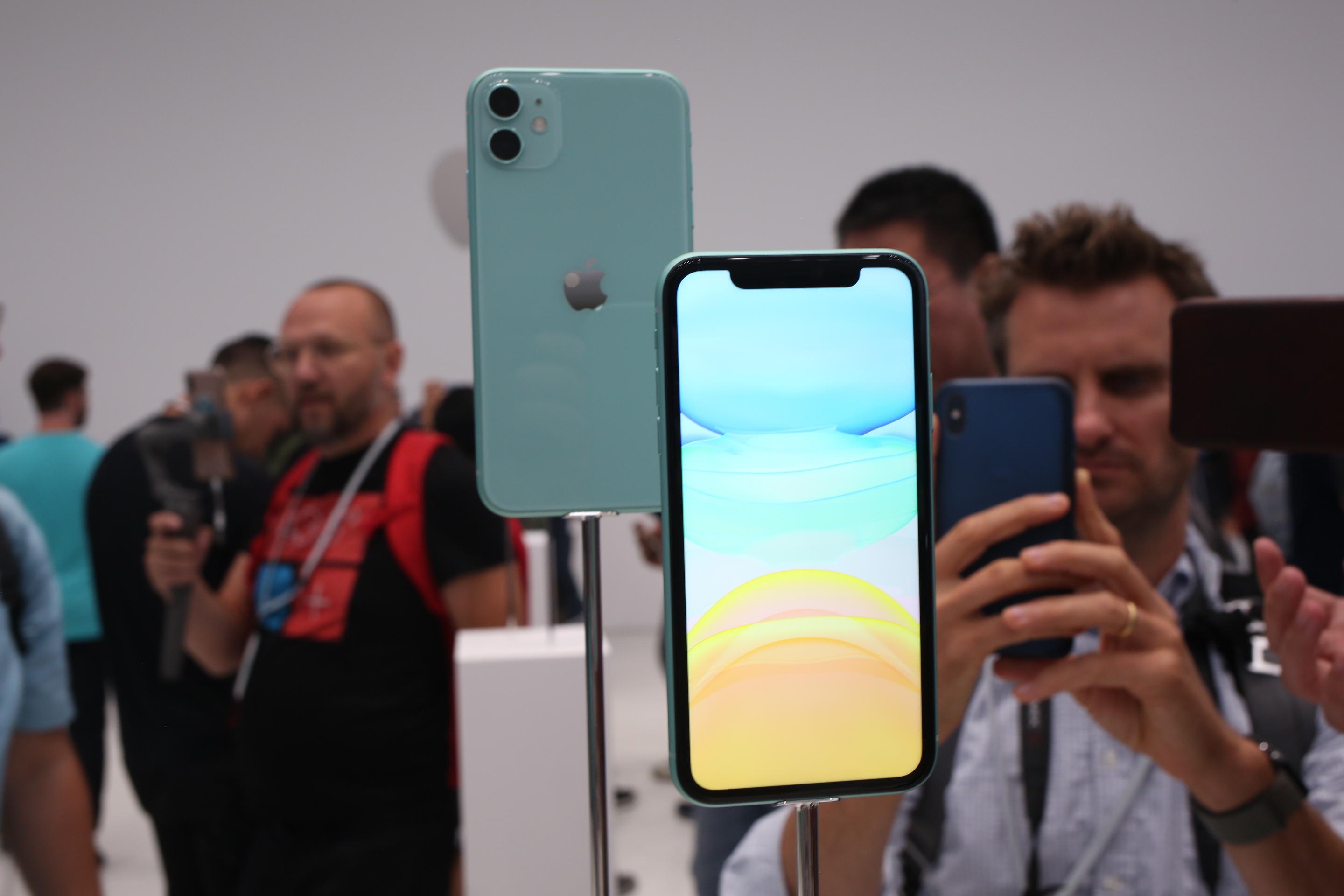
Apple has also really settled into a style. The 11s are virtually indistinguishable from their predecessors, head on. The screens have been souped-up to “Super Retina XDR” on the Pros. Both are 458 PPI, at 5.8 and 6.5 inches, respectively.

Apple iPhone 11

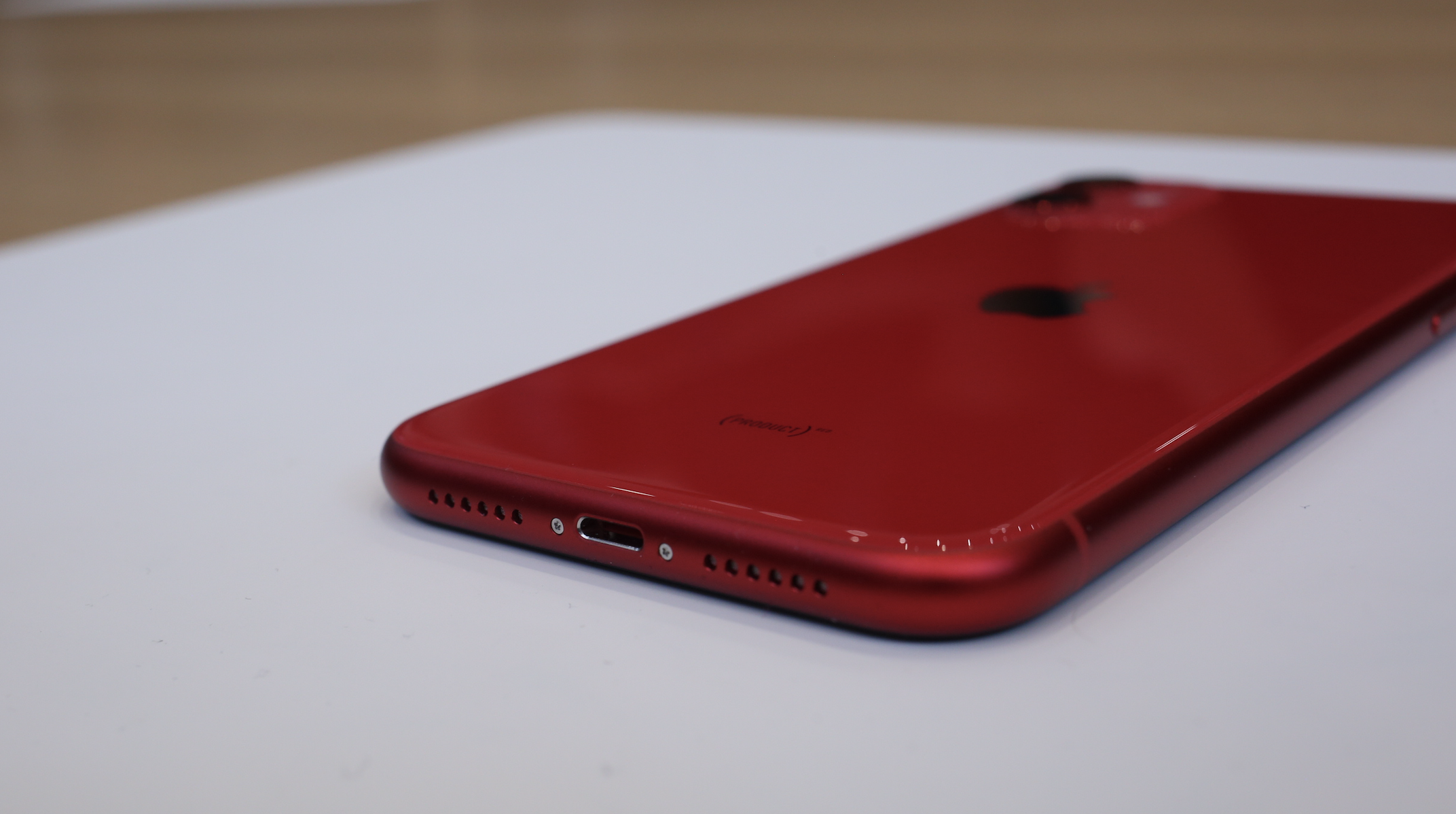
The notch remains, even as companies like Samsung push into a subtler cut-out model (not to mention all of those companies currently experimenting with pop-up cameras). Ditto, unfortunately, for the Lightning port. Apple’s ditched it for USB-C on the iPad Pro and, honestly, I can’t wait for it to follow suit on the iPhone. I go through what feels like a Lightning cable a month, due to wear and tear on the connection.

That will have to wait until 2020 (fingers crossed). So, too, will 5G, though the company did allude to “faster cellular” in a quick rundown of all the features it didn’t have time to announce onstage. Ditto for the rumored improved FaceTime camera. That should work faster and from more angles, so you’ll (theoretically) be able to check messages while the phone is laying flush on a table. Huge, if true.

Apple iPhone 11 8245 4CCE AEA3 A3CC65F5E188

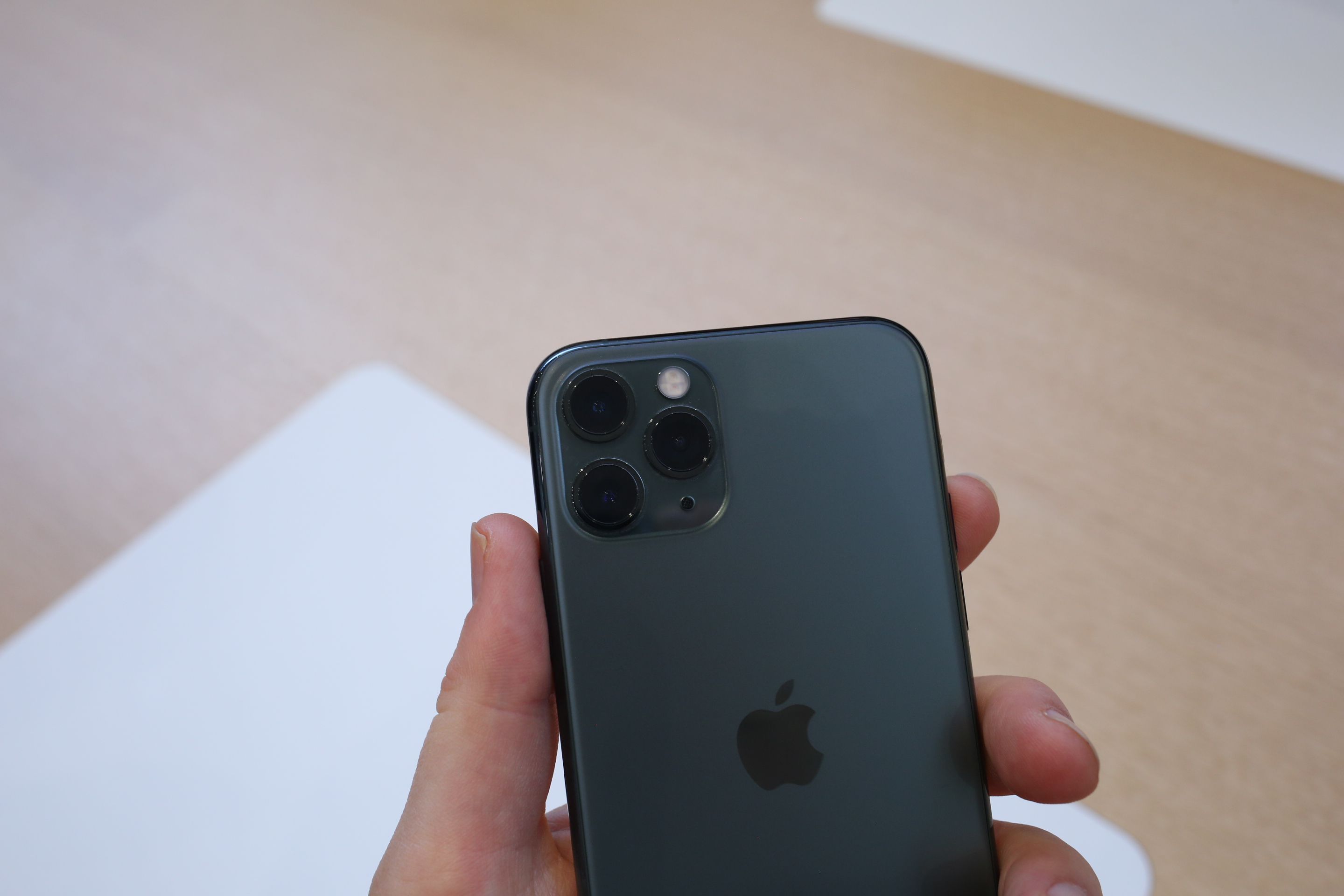
Speaker of cameras, that’s the biggie here, of course. It continues to be the last vestige for smartphone innovation. Again, hardware is just kind of good on smartphones. There doesn’t appear to be a ton of room for innovation, but for the camera. The iPhone 11 ditches telephoto, for wide and ultra-wide-angle lenses. The Pros, meanwhile, add telephoto it back in.

The three cameras on the Pros are as follows:

12MP wide angle camera (26mm f/1.8), a 12MP ultra wide (13mm f/2.4), plus a 12MP telephoto camera (52mm f/2.0). All are capable of shooting 4K video at 60FPS.

They’re in an odd square array (versus, say, the three down vertical on Samsung’s latest). In fact, all versions of the iPhone 11 have a camera box bump on the rear, for the sake, one imagines, of aesthetic uniformity. As we’ve noted before, most of the innovation in smartphone cameras is happening on the software side, and that appears to be the case here. The big feature is Deep Fusion.

iPhone 11 Apple

It works similarly to HDR photos, creating a massive composite. Here it uses nine photos, with the optimal pixels chosen by on-board machine learning for super-fancy photos that should greatly reduce image noise.

The devices are the first to sport Apple’s new A13 chip, which promises much faster processing — the “fastest ever on a smartphone,” according to the company. That, naturally, means more and better gaming, bringing us right back around to the content play we were discussing at the top of this story.

[gallery ids="1880064,1880063,1880061,1880060,1880006,1880000,1880005,1879991,1879992"]

Understandably, what you can do with the phone has become a much larger selling point for Apple than the phone itself. You’ll be able to get your hands on the device starting September 20. 

10 Sep 2019

iPhone 11 Pro hands-on

More than any other iPhone event in recent memory, today’s big launch was content-first. Apple began the show with several gaming demos from Arcade, before moving along to TV+ premieres. The new iPhone didn’t necessarily take a backseat, but there’s little question that this event was a key piece in shifting messaging for the company.

The big announcement also saw a shift in iPhone positioning against a backdrop of declining smartphone sales. There are a number of reasons why device sales are down across the board, of course — I along with everyone else in the industry have written about them dozens if not hundreds of times. Price creep is a big one, and the iPhone 11 finds the company readjusting accordingly.

The device takes the spot of the R line — a big seller for Apple. This time the entry-level “flagship” is $699, while the Pro and Pro Max step in for the premium-tier devices, priced at $999 and $1,099, respectively. Apple set those prices with the iPhone X two years ago and hasn’t looked back.

Apple has also really settled into a style. The 11s are virtually indistinguishable from their predecessors, head on. The screens have been souped-up to “Super Retina XDR” on the Pros. Both are 458 PPI, at 5.8 and 6.5 inches, respectively.

Apple iPhone 11

The notch remains, even as companies like Samsung push into a subtler cut-out model (not to mention all of those companies currently experimenting with pop-up cameras). Ditto, unfortunately, for the Lightning port. Apple’s ditched it for USB-C on the iPad Pro and, honestly, I can’t wait for it to follow suit on the iPhone. I go through what feels like a Lightning cable a month, due to wear and tear on the connection.

That will have to wait until 2020 (fingers crossed). So, too, will 5G, though the company did allude to “faster cellular” in a quick rundown of all the features it didn’t have time to announce onstage. Ditto for the rumored improved FaceTime camera. That should work faster and from more angles, so you’ll (theoretically) be able to check messages while the phone is laying flush on a table. Huge, if true.

Apple iPhone 11 8245 4CCE AEA3 A3CC65F5E188

Speaker of cameras, that’s the biggie here, of course. It continues to be the last vestige for smartphone innovation. Again, hardware is just kind of good on smartphones. There doesn’t appear to be a ton of room for innovation, but for the camera. The iPhone 11 ditches telephoto, for wide and ultra-wide-angle lenses. The Pros, meanwhile, add telephoto it back in.

The three cameras on the Pros are as follows:

12MP wide angle camera (26mm f/1.8), a 12MP ultra wide (13mm f/2.4), plus a 12MP telephoto camera (52mm f/2.0). All are capable of shooting 4K video at 60FPS.

They’re in an odd square array (versus, say, the three down vertical on Samsung’s latest). In fact, all versions of the iPhone 11 have a camera box bump on the rear, for the sake, one imagines, of aesthetic uniformity. As we’ve noted before, most of the innovation in smartphone cameras is happening on the software side, and that appears to be the case here. The big feature is Deep Fusion.

iPhone 11 Apple

It works similarly to HDR photos, creating a massive composite. Here it uses nine photos, with the optimal pixels chosen by on-board machine learning for super-fancy photos that should greatly reduce image noise.

The devices are the first to sport Apple’s new A13 chip, which promises much faster processing — the “fastest ever on a smartphone,” according to the company. That, naturally, means more and better gaming, bringing us right back around to the content play we were discussing at the top of this story.

[gallery ids="1880064,1880063,1880061,1880060,1880006,1880000,1880005,1879991,1879992"]

Understandably, what you can do with the phone has become a much larger selling point for Apple than the phone itself. You’ll be able to get your hands on the device starting September 20.