Category: UNCATEGORIZED

05 Sep 2019

RippleMatch nabs $6M for a diversity-focused graduate recruitment platform powered by AI

LinkedIn, with 645 million users in 200 countries, is the undisputed leader when it comes to being the world’s biggest network of professionals, a position that it uses to leverage products in areas like recruitment and e-learning. But in achieving that size, it hasn’t really developed products for a more targeted approach for specific verticals or audiences. And that has opened the field of a wide variety of startups to fill in the gaps and compete with it. Today, one these hopefuls — a startup called RippleMatch that has built a recruitment platform to help organizations specifically to connect with recent graduates from more diverse backgrounds that match their needs — is announcing a Series A of $6 million to do just that.

The funding — which will be used to expand the platform as well as for business development — is being led by G20 Ventures, with Work-Bench, and previous investors Accomplice, Bullpen Capital, and AlleyCorp. also participating.

The company is not disclosing its valuation but from what I understand is that it’s a “material step up”, as it has been on a steady growth curve and counts companies like Pfizer, TripAdvisor, and Qualtrics among its customer base. This is also the first significant outside money that it has raised. RippleMatch’s very first funding, in fact, was the signing bonus that co-founder Eric Ho had received when he once got a job at Facebook. “It was the need to pay that back that led us to raising this Series A,” joked Andrew Myers, the other co-founder who is also the CEO.

Myers and Ho met and started the company when they were still students at Yale University. Ho was about to graduate, but Myers was still in the thick of his undergrad degree, which he still has yet to complete (and, as is the way of tech founders, may never finish).

The idea for the company came when Myers — who studied history and political science — was thinking about the predicament that a lot of his friends from back home in Colorado were facing in the working world.

Like Myers, they were also undergraduates. But unlike him, they were not at Yale nor any other top-shelf school that has the benefit not only of prestigious name recognition, but typically strong recruiting pipelines to some of the most competitive companies hiring graduates for lucrative entry-level positions.

“I was very cognisant of the divide coming from different socio-economic backgrounds,” Myers said in an interview. “I could see that a lot of my friends from home would be better hires for places than some of the people I knew at Yale. They just didn’t have the same opportunities. We didn’t think of this as a business venture in the early days: it was a problem that our friends had that I wanted to solve.”

Using AI to cut out the recruiter

RippleMatch’s approach is relatively straightforward: the company has built a platform that takes a potential candidate through a relatively quick set of questions about his/her career and geographical ambitions, interests and so on, along with a copy of the candidate’s resume.

It then combines these with basic information about a candidate’s GPA and test scores. Taking all that and combining it with more information sources outside of the candidate’s own input, it comes up with some 300 data points that it crunches that together to match candidates with job and internship opportunities. On the employer side, it not only sources job vacancies of the moment, but also works on matching up an employer’s wider hiring strategy with this trove of people — the idea being that it’s bringing up possibilities that the employer might have otherwise passed over, or even seen to begin with.

Myers says that the matching algorithms, which include the ability to ascertain what people might directly and indirectly be best suited to do, that RippleMatch has built essentially cut out the “middle man” in the process — that is, the recruiter, but also potentially of the relationships and pipelines that may already exist, and as a result level the playing field for everyone, making it just as likely that an employer will discover their next star hire from a small college in the midwest as from Stanford.

As Mike Troiano, the partner at G20 who led the firm’s investment in RippleMatch, describes it, a school’s name recognition and networking prowess aren’t the only things standing in the way of qualified candidates getting a look in the door. His daughter was having a hard time getting a response from a company she contacted for an internship and when they put together her LinkedIn profile, they realised that she simply lacked the professional network to figure out if there was someone to contact and help.

“College hiring is kind of a black box through traditional channels. The surveys RippleMatch uses to collect info from students and employers about who they are and what they want create this proprietary data set,” said Troiano. “LinkedIn is about relationships more than attributes. The college market is a niche they’re ill suited to, and one I think they’ll leave alone for now.”

Indeed, while LinkedIn has proven to be a strong starting point for many professionals in their career progression, its shortcomings are most obvious in more specific examples like these. (It was one reason that LinkedIn made a big push some years ago to start trying to bring younger users on to the platform, to work on ways of getting them to start building up their profiles and networks.)

RippleMatch is part of a growing number of startups that have been identifying and (for their purposes) exploiting these kinds of holes in LinkedIn’s wider platform. Another startup that has been building a platform also aimed at graduates and specifically at trying to help source more diverse pools of candidates is Handshake (which itself raised $40 million less than a year ago).

Handshake takes a different approach in that it offers job boards and proactively works with universities and recruitment organizations and offers users a social network / community of sorts from which to source advice and exchange information. All this has helped boost that company’s database to 14 million people as of last year, likely more now that it’s opened up access to all university students in the US.

Others that have been pecking away at the LinkedIn hegemony include the likes of Triplebyte, another well-capitalised recruitment startup that targets specifically software engineers. The startup has built its own assessment platform (used by RippleMatch to recruit, incidentally) which its CEO and co-founder Harj Taggar also believes can help level the playing field between those who are coming from big-name companies and schools and those who are not, focusing solely on a person’s ability to code. LinkedIn might have millions of profiles of engineers to Triplebyte’s thousands, but the key with the smaller company is that it has profiles of people “who are actively job searching,” which he notes stands in contrast to the unsolicited contacts that many people get on LinkedIn, just by virtue of being there. “We’re getting two times the rate of responses that recruiting teams see on LinkedIn,” Taggar claimed. It’s now ramping up with a premium tier aimed at those recruiting at scale.

RippleMatch is still at a relatively small and early stage of its life in comparison to these two. While it has partnerships with some 1,200 diversity focused organizations on campuses to bring in more candidates, and today some 60% of its candidate pool are from underrepresented backgrounds, the company today only has about 100,000 candidates in total on the platform and agreements with 60 companies who tap RippleMatch to find them. But, at a time when the economic, societal and geographic rifts seem insurmountable in countries like the US, it’s more important than ever to work on ways to help close those gaps, paving the way for a big opportunity for tech-based solutions like RippleMatch’s.
05 Sep 2019

Spirable refuels with $7.4M to serve more personalized video ads in the US

London based adtech startup Spirable has closed a £6M Series A. The round was led by Smedvig Capital, with existing backers Frontline Ventures, Downing Ventures and 24 Haymarket also participating.

The startup is one of several playing in the customized video ads space — offering a platform that simplifies and scales video ad creation by enabling brands and advertisers to combine video templates with creative and data sources to automate the creation and delivery of scores of personalized marketing messages.

Spirable says its platform, which launched in 2014, is now used by more than 50 customers. Campaigns have run across 75+ countries, with more than 100M personalised videos distributed since launch.

Its most successful industries to date are CPG (consumer packaged goods), travel and telco, according to co-founders Dave and Ger O’Meara.

On the travel front, they give the example of a Deutsche Bahn ‘No Need to Fly’ campaign that used dynamic video to show a location-sensitive side by side comparison of flight costs juxtaposed with cheaper train trips to local beauty spots — which Spirable claims achieved a 397% increase in click throughs; a 849% performance increase; and 59% reduction in cost per click vs the control.

Another example they cite is a Vodafone campaign to promote two own brand smartphone models which integrates multiple data feeds (such as contextual weather and date data) with creative assets in order to dynamically spotlight different features of the devices. The personalized marketing messages were served across Facebook, YouTube and Display channels via APIs baked into the platform.

From five video templates the tech automated the creation of more than five and a half thousand “unique” videos, tweaked to be more relevant to the targeted viewers.

On that particular campaign, Spirable says Vodafone saw sales of its own-brand devices increase by 100%. While ad performance increased by up to 50%.

“We can use all the targeting available in Facebook and layer this with contextual live data like the weather, live sports scores etc. So if we know someone is in London (via geo-targeting via Facebook), we can pull the local weather for that location and tailor the video to people in that audience and also update the video when a goal is scored in a match by a team that the audience supports,” they explain. “Once set up the whole process if fully automated. When the weather, sports data etc change the videos update and change.”

As well as automating serving up personalized ads, the platform provides performance reports on the backend, and uses machine learning technology to optimize ad creative to boost engagement.

The startup notes it’s been a Facebook Marketing Partner for more than two years.

The privacy implications of such highly targeted ads are — or should be — plain.

Among the laundry list of data sources that Spirable’s platform lets advertisers plug in to automate “personalized” ads are “CRM data” which it says includes personal data, purchase data, website browsing, service usage data and preferences; “social audience data”, including behavioral data, audience persona, interests, preferences and intents; and “contextual” signals such as store locations, weather (including pollen and UV levels), markets and stock levels live spots, trending events, pricing, time & date, live travel data, Google traffic data and supermarket wi-fi data.

So, for example, a parent who recently logged into a supermarket’s wi-fi network to check their Facebook account and was tracked lingering near shelves of diapers might find themselves being served video ads for a discount on girlie pink baby products at a nearby store.

The sheer volume of data integrations Spirable offers is one of the areas it claims sets its platform apart from competitors — name-checking Clinch and Idomoo as its main rivals in personalized video ads.

“Spirable has an unparalleled amount of data integrations to uniquely personalise video ads in real-time,” it says, further claiming Idomoo “doesn’t talk about live data and pre-render ads and upload to Facebook — so there is a lack of data-driven pipelines”.

Other areas where it reckons its approach stands out vs the competition is because it’s offering a ‘self-serve’ platform — meaning advertisers and brands can use it to “create, scale and optimise personalised video in-house”, without the need for specialist teams or agencies trained in video effects software (such as After Effects) to make use of the platform.

The video ad building process is also “modular” and “100% customisable” — vs the two named rivals not supporting layer level manipulation, meaning it’s less easy for their users to make changes on the fly to optimize ads.

Another claimed differentiator is that Spirable’s platform is cross-channel — with support for “all major social, email, messenger and display channels”.

It says the Series A funding will go on expanding the business in the US, with a plan to ramp up spending there on sales, customer support and marketing. Product development will also get investment.

“We have an exciting product roadmap of new features that will enable us to reach our vision of making video ads as engaging and useful as any other content a person sees on digital. This requires investment to scale up our engineering and product teams,” the co-founders tell TechCrunch.

Commenting on the funding in a statement, Joe Knowles, principal at Smedvig Capital, added: “Spirable is a critical enabler of personalised video advertising, one of the major trends in video advertising today. Every marketer wants to use video in a more personalised way. But so far, slow and expensive content creation has been a barrier to mass adoption. Spirable’s Software as a Service removes this barrier and makes real time, automated video personalisation at scale a reality.

“Having tracked the business for over a year, we are excited to work with Ger, Dave and the high-quality team they are building at Spirable.”

05 Sep 2019

YouTube launches a dedicated Fashion vertical

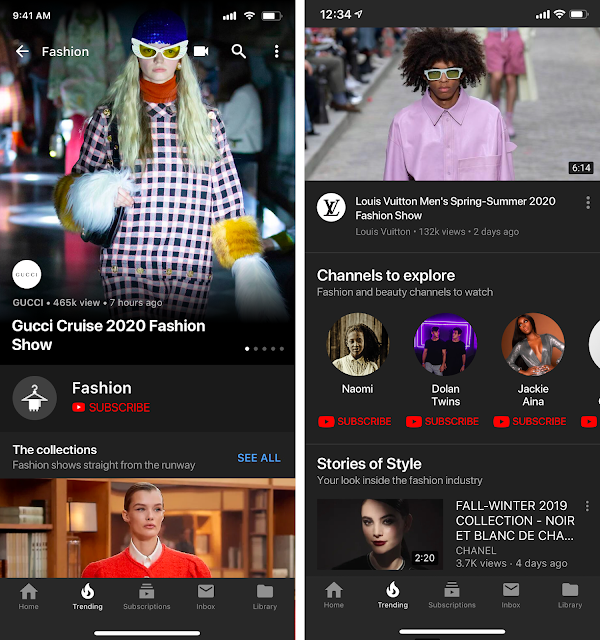
YouTube today is launching a new vertical called YouTube Fashion that aims to capitalize on the popular style and beauty content that attracts millions of viewers to its platform. According to Statista, beauty videos last year alone generated more than 169 billion views on YouTube, and more recently, some of fashion’s biggest names have set their sights on YouTube. Today, YouTube says the number of Fashion & Beauty channels on the site have grown over 6 times from 2014 to 2018, and combined, generated billions of views in 2018.

The new vertical, YouTube.com/Fashion, will attempt to better organize some of this content, including style videos from top creators, industry collabs, live streams from the runway, inside looks into the fashion industry, behind-the-scenes video, vlogs from fashion icons, and more.

Among the names and brands YouTube mentioned as prominent examples of what you’ll find on the new, top-level destination, there’s:

fashion

The launch comes at a time when Instagram has so well established its platform as a destination for style and fashion that it’s now entered into the e-commerce market as well, enabling brands to sell directly to Instagram users who can shop and check out through the social app itself. And with its IGTV platform for long-form videos, it’s working to become more of a YouTube rival.

YouTube, meanwhile, is better known for establishing beauty stars like Yuya, Bethany Mota, Michelle Phan,  Zoe Sugg, James Charles, Tati Westbrook, Jaclyn Hill, and others, who have gained traction for their makeup reviews and tutorials — and sometimes, their feuds. It has even launched a new ad unit targeting the beauty category, that uses AR to let viewers try on makeup themselves.

The company knows the potential in fashion, however — even if it’s been accused in the past of not paying enough attention to the category, despite having fashion-focused creators with millions of subscribers and hundreds of millions of video views.

Things are now starting to change on this front. Last June, YouTube hired Derek Blasberg, previously the host of CNN Style and a Vanity Fair contributor, as its new head of fashion and beauty partnerships. At YouTube, Blasberg has fostered collaborations between top creators and brands in order to better elevate the profiles of the brands and the YouTube stars.

With the launch of /Fashion, YouTube now plans to bring more international voices to the new destination and localize the page for global markets, Blasberg says, writing on the YouTube blog.

Dedicating a vertical to a particular type of content is nothing new for YouTube. As YouTube moved away from running a standalone Twitch competitor, for example, it launched a /Gaming destination on YouTube.com. It’s now one of the fastest-growing verticals on the site.

YouTube Fashion can be found on the YouTube homepage and in the mobile app, where you can subscribe to the category itself, instead of just individual creators.

It’s now one of only a few categories to get top billing on YouTube — a list that also includes Movies & Shows, Gaming, and Live.


05 Sep 2019

What to expect from Apple’s September 10 iPhone event

Here’s what we know for sure: Apple’s holding a big event on its campus at 10AM PT on September 10.

Here’s what we almost certainly know for sure: The iPhone 11 will launch with a new camera configuration. There will be probably be three different models.

From there, things get a bit more complicated.

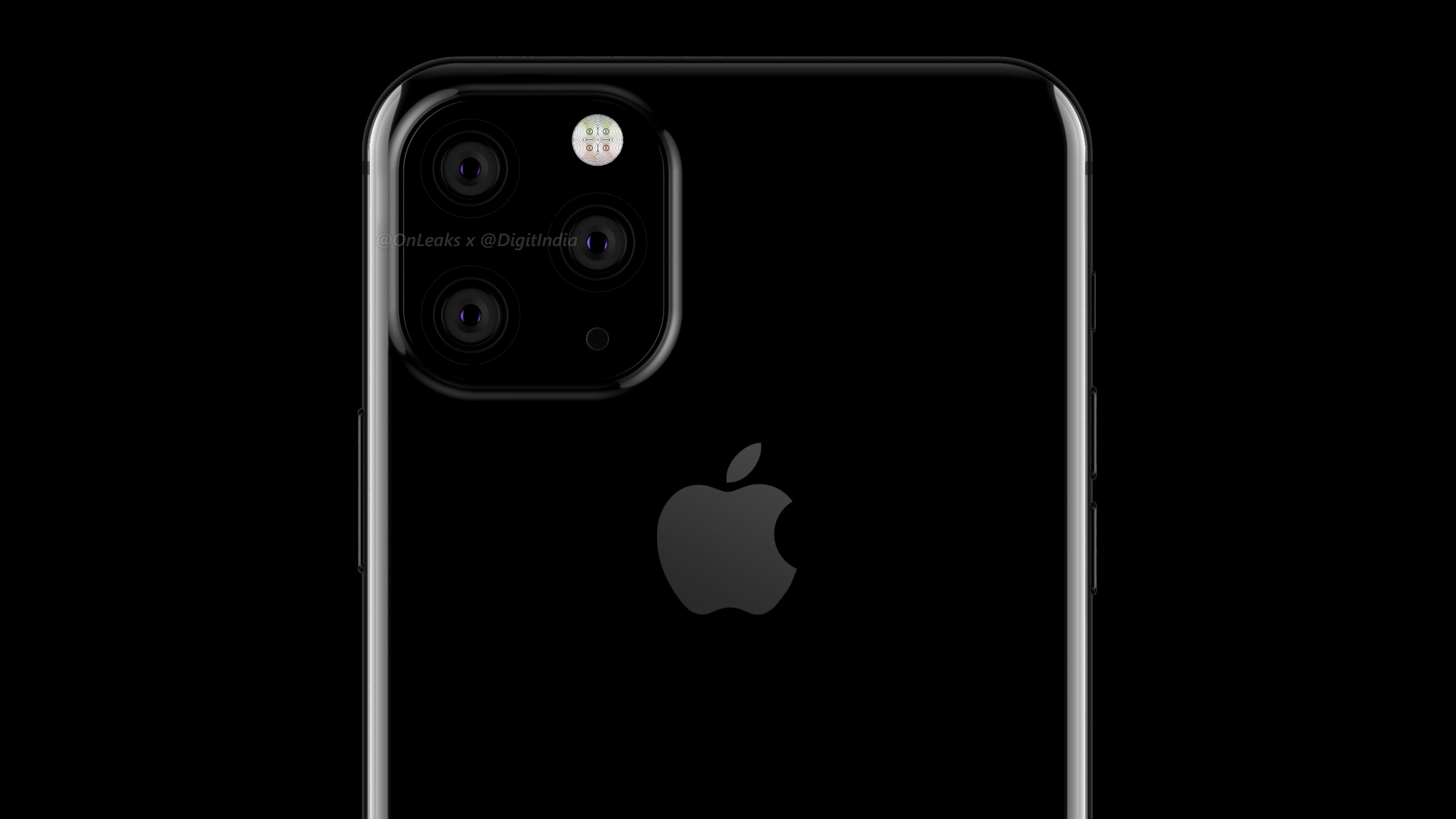
iPhone rumor OnLeaks Digit

There’s some speculation around whether the company will continue to offer the budget-minded iPhone R as an alternative to the flagship devices. Some rumors thus far have suggested that this year’s models will present a kind of paradigm shift for the line. Rather than introducing an iPhone 11R, the cheaper model could become the base level iPhone 11, with two pricier models taking up the Pro moniker, with a Pro and Pro Max model distinguishing the different screen sizes.

The shift would make some sense from the standpoint of the broader smartphone market. Pricing is one of the key reasons smartphone adoption has slowed considerably. Premium devices like the iPhone and Samsung’s S series routinely top $1,000. If Apple can reposition the price point, that could go a ways toward justifying a faster upgrade cycle.

One of the key distinguishing factors between the iPhone 11 and the Pro models is likely to be the camera. The base model will retain the XS’s two-camera setup, while the Pros will move to a three-camera array in a square configuration. The third lens will bring an additional wide angle to the device, similar to a number of Android handsets.

Using on-board AI and software, the cameras are said to create a composite image that can correct certain shooting errors, offer higher-resolution shots and get better images in low light. The video software on the Pro models is said to be significantly improved, as well, letting users correct color balances and apply effects on-device. The front-facing camera, meanwhile, is said to have a wider field of view, which should help face unlock work from more angles, including while lying down on a table — one of the biggest complaints with the current Face ID configuration.

The device build is largely expected to stay the same, including the top notch, which has remained unchanged since the introduction of the iPhone X. Some have suggested that the invitation hints at additional colors for the handset, which would be in keeping with other entry-level devices, like the iPhone R. The Lightning port, for better and worse, is expected to remain, in spite of the addition of USB-C on the iPad Pro.

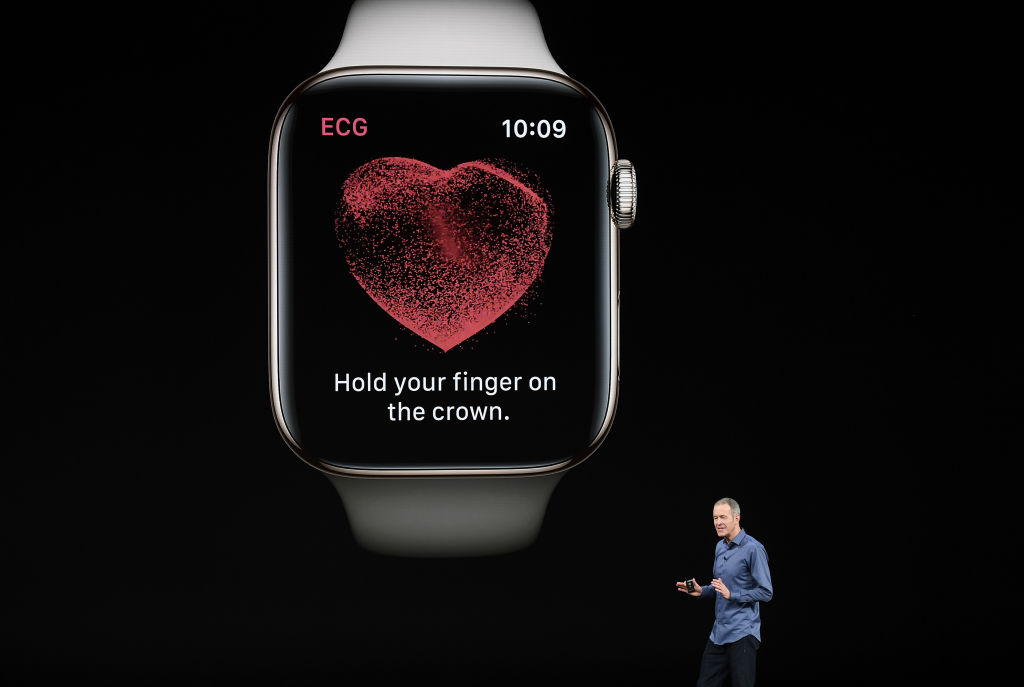
Jeff Williams, chief operating officer of Apple Inc., speaks during an event at the Steve Jobs Theater in Cupertino, California, U.S., on Wednesday, Sept. 12, 2018. Apple will kick off a blitz of new products this week, ending a year of minor updates and setting the technology giant up for a potentially strong holiday quarter. Photographer: David Paul Morris/Bloomberg via Getty Images

A couple of rumors have been floating around hinting at the arrival of a new Apple Watch. The Series 4 device is reportedly getting a new (likely very pricey) Titanium version. The line is also set to finally add some solid sleep tracking into the mix.

The event may well see some new MacBooks, the first to include new switch mechanisms for the keyboard. That will hopefully alleviate longstanding complaints against several generations of keyboard switches.

Expect some firm dates on the software and content front, as well, including availability for the public launch of MacOS Catalina, iPadOS and iOS 13. There’s a pretty good chance that the company will also firm up launch dates for long-awaited content plays like Apple TV+ and Arcade.

All (or some) of this and more (or less) will be revealed on Tuesday September 10. TechCrunch will, as always, be on hand, bringing it to you live.

05 Sep 2019

Here are this year’s Breakthrough Prize Winners

Today, at the 8thth annual Breakthrough Prize Awards, hundreds of scientists will win their share of $10 million in awards for their outstanding work in the fields of Fundamental Physics, Life Sciences, and Mathematics.

Breakthrough Prize was founded by DST Global partner and billionaire Yuri Milner, who has a particular passion for the sciences. In fact, Milner has invested $100 million of his own money to the related, but separate, Breakthrough Initiative, a multi-strategy approach to identifying intelligent extraterrestrial life.

Milner sees the Breakthrough Prize as the ‘Oscars of Science,’ and the award has grown tremendously in significance among the scientific community. Not only does the Breakthrough Prize rival the Nobel in terms of monetary awards (the Nobel is roughly $1 million), it is also beholden to less stringent rules than the Nobel, which requires real world observation of a theory to be awarded.

So without any further ado, here are the 2020 Breakthrough Prize winners:

Fundamental Physics:

The Event Horizon Telescope Team
For the first image of a supermassive black hole, taken by means of an Earth-sized alliance of telescopes.

You may remember seeing the news of the first-ever image of a black hole being captured by scientists on the Event Horizon Telescope team. Not only was this an incredible feat of collaboration — it took 347 astrophysicists across 60 institutions in 20 different countries using eight high-powered telescopes to pull it off — but it also gave us our first real look at the massive M87 black hole.

Each of the scientists who worked on the project will split the prize.

Life Sciences:

Jeffrey M. Friedman (The Rockefeller University)
For the discovery of a new endocrine system through which adipose tissue signals the brain to regulate food intake.

Since he discovered the molecular pathway that regulates body fat in 1994, Friedman has been uncovering the genetic and hormonal pathways that regulate when, what and how much we eat, aiming to put an end to fat-shaming.

Franz-Ulrich Hartl (Max Planck Institute of Biochemistry) and Arthur L. Horwich (Yale University)
For discovering functions of molecular chaperones in mediating protein folding and preventing protein aggregation.

Hartl and Horwich discovered the intra-cellular machinery that support proteins as they properly fold into their precise shapes within the body. As humans age, that machinery gets sloppier and results in protein clumping, which creates an environment ripe for cancer, Alzheimer’s, Parkinson’s and other neurodegenerative diseases. Because of this discovery, researchers are investigating how to keep that cell machinery working smoothly as we age.

David J. Julius (University of California, San Francisco)
For discovering molecules, cells, and mechanisms underlying pain sensation.

Julius has taken our understanding of pain to a much deeper level, looking at the cellular signaling mechanisms around how our bodies signal pain to our brain. For example, Julius’ work led to his discovery of the fact that chili peppers share a signaling pathway with things like a hot stove, telling your brain that something is ‘burning hot’ even if your tongue isn’t literally near fire. Through this work, his team is building the foundation for a new wave of non-opioid precision analgesics to deal with the chronic pain of IBS, arthritis, cancer, etc.

Virginia Man-Yee Lee (University of Pennsylvania)
For identifying TDP43 as a key protein aggregating in the cytoplasm in frontotemporal lobular dementia and amyotrophic lateral sclerosis, and for capitalizing on the toxicity of alpha-synuclein to gain insight into cellular drivers of Parkinson’s disease and multiple system atrophy.

Dr. Lee and her team developed the tau hypothesis, which posited that the cellular tangles found in the brains of Alzheimer’s patients might themselves be the cause of the neurons not firing properly. They worked to replicate the pathological evolution of the tau proteins that cause these tangles, giving neuroscientists and researchers a more thorough framework to develop treatments.

Mathematics:

Alex Eskin (University of Chicago)
For revolutionary discoveries in the dynamics and geometry of moduli spaces of Abelian differentials, including the proof of the “magic wand theorem” with Maryam Mirzakhani.

Eskin worked with famous Iranian mathematician Maryam Mirzakhni, before her death in 2017, via Skype to develop theorems of dynamical, moduli spaces. Here’s what Alex had to say about the five-year process: “Like climbers on a mountain that had never been scaled, we could see the summit. But then we got stuck in a deep ravine for about a year-and-a-half, before going to the other side to create another path. That path didn’t get us to the summit either; but we had developed the tools to go back, build a bridge across the ravine, and make our final assent.”

Special Breakthrough Prize in Fundamental Physics

Sergio Ferrara (CERN), Daniel Z. Freedman (MIT and Stanford), Peter van Nieuwenhuizen (Stony Brook University)
For the invention of supergravity, in which quantum variables are part of the description of the geometry of spacetime.

The discovery of supergravity in 1976 has yet to be empirically proven, which has kept the achievement out of the running for a Nobel prize despite its influence over the development of string theory and the advancement of physics as a whole.

Alongside the $3 million awards for each category of Breakthrough Prize, the awards also recognize early-career achievements in the form of $100K New Horizons prizes for physics, life sciences and mathematics.

05 Sep 2019

Apple could add in-screen fingerprint reader to 2020 iPhone

According to a new report from Bloomberg, Apple has been working on in-screen fingerprint readers. But that feature won’t be ready for the new iPhone that will be announced next week. It could be released in 2020, or maybe 2021 if Apple’s suppliers can’t meet deadlines.

If you’ve played with the most recent smartphones from Samsung, Huawei and other Android manufacturers, you know that in-screen fingerprint readers already work quite well. When you unlock your phone, you can see a fingerprint icon on the screen. It then works just like any fingerprint reader — you put your finger on the icon and it unlocks your phone.

In 2017, Apple introduced Face ID for the iPhone X as a replacement to Touch ID, its fingerprint technology. But it sounds like the company now wants to give users multiple options by re-adding Touch ID to its smartphones.

All 2018 iPhone models as well as the most recent iPad Pro models now all work with Face ID. But you can still buy some Touch ID devices, such as the iPad Air or the MacBook Pro. The fingerprint readers are integrated in a separate button.

Bloomberg also confirms a Nikkei report about a future iPhone SE. Apple could launch a new low-cost iPhone SE.

Despite the name, it would be based on the iPhone 8 design instead of the previous iPhone SE design. It would feature the same 4.7-inch display that you can find on the iPhone 6, iPhone 6S, iPhone 7 and iPhone 8.

05 Sep 2019

Lime stops working with freelancers in Paris

Scooter startup Lime is ending the juicer model in Paris. The company has announced that it will stop working with freelancers to recharge scooter batteries at night. Lime is switching to Amazon’s model by partnering with third-party companies.

Lime has often been criticized for relying on freelancers to take care of its scooters. As Libération reported back in May, the company used to pay freelancers €20 per scooter and slowly decreased that amount to €5 per scooter.

Juicers received a notification today telling them that their accounts will be deactivated in 45 days. The company probably doesn’t want to end the juicer program overnight so that freelancers have enough time to look for another job.

After that, Lime isn’t going to hire all juicers directly. The company is now looking for third-party companies that can help them manage the scooter fleet in Paris.

Lime says that those companies will have to comply with multiple quality and safety standards. For instance, the company will first select companies that use electric vehicles and renewable electricity. Based on wording, it seems like it doesn’t mean that all partners have to use electric vehicles and renewable electricity.

Finally, Lime says that former juicers will get some opportunities to become Lime employees. The company will also try to help some of them create a formal company to keep working with Lime.

This structure is quite reminiscent of Amazon in France. Amazon doesn’t hire delivery persons directly. They partner with third-party companies. Libération also reported that Amazon takes advantage of that relationship to foster productivity at all costs. If your company doesn’t perform well enough, Amazon just stops giving you packages to deliver.

Back in June, the City of Paris announced that it would clamp down on scooter startups. There are just too many of them currently operating in Paris. The city plans to select two or three companies and give them a license to operate.

It’s clear that Lime wants to improve its processes to get a license. Paris said that it would select companies based on how they pay workers charging scooters overnight and how they handle broken scooters.

05 Sep 2019

Google Assistant, navigation and apps coming to GM vehicles starting in 2021

GM is turning to Google to provide in-vehicle voice, navigation and other apps in its Buick, Cadillac, Chevrolet and GMC vehicles starting in 2021.

GM began shipping vehicles with Google Android Automotive OS in 2017, starting with the Cadillac CTS and expanding to other brands. Android Automotive OS shouldn’t be confused with Android Auto, which is a secondary interface that lies on top of an operating system. Android Automotive OS is modeled after its open-source mobile operating system that runs on Linux. But instead of running smartphones and tablets, Google modified it so it could be used in cars.

Now, GM is taking the additional step of embedding the Google services that so many people already use through their phones and smart speakers. GM was convinced by its own customer research to bring Google into its cars, Santiago Chamorro, GM’s vice president for global connected customer experience, told TechCrunch.

Google voice, navigation and apps found in the Google Play Store will be in compatible GM brands starting in 2021. Broad deployment across all GM brands is expected to occur in the years following.

Future GM infotainments, powered by Android, will have a built-in Google Assistant that drivers can use to make calls, text, play a radio station, change the climate in the car or close the garage door, if they have rhe requisite connected smart home device. The Google Assistant integration will continue to evolve over time, so that drivers in the future will be able to simply use their voice to engage with their vehicle, which could include renewing their
OnStar or Connected Services plans, checking on their tire pressure, scheduling service, according to GM and Google.

Google Maps will also be embedded in the vehicle to help drivers navigate with real-time traffic information, automatic re-routing and lane guidance. Google Assistant is tied into maps, allowing drivers to use voice to
navigate home, share their ETA or find the nearest gas station and EV charging stations.

The infotainment system will include in-vehicle apps from the Google Pay store.

GM isn’t ditching all of its own features for Google, Chamorro said, adding that the automaker will continue to offer its own infotainment features such as service recommendations, vehicle health status, in-vehicle commerce and more, with the Google applications and services complementing our offerings.

In May, Google announced that it was opening its Android  Automotive operating system up to third-party developers to bring music and other entertainment apps into vehicle infotainment systems. Media app developers are now able to create new entertainment experiences for Android Automotive OS.

Google has been pushing its way into the automotive world, first through Android Auto and then with its operating system, for several years now.

In 2017, Volvo announced plans to incorporate a version of its Android  operating system into its car infotainment systems. A year later, the company said it would embed voice-controlled Google Assistant, Google  Play Store, Google Maps and other Google services into its next-generation Sensus infotainment system.

Polestar  2, an all-electric vehicle developed by Volvo’s standalone electric performance brand, also has the Android OS. Renault-Nissan-Mitsubishi Alliance anf Fiat Chrysler Automobiles have also announced plans for Android Automotive OS.

“Cars are quickly transforming and opening up a lot of opportunity,” Patrick Brady, vice president of engineering at Google, said in a recent interview. “Its the beautiful thing about having a platform like this. There are services that we might not be thinking about today and that be here tomorrow.”

05 Sep 2019

We Company reportedly mulls slashing its valuation ahead of its initial public offering

The Wall Street Journal is reporting that the company formerly known as WeWork is considering slashing its valuation as it looks to woo public market investors.

The company is reportedly considering a valuation of somewhere in the $20 billion range for its initial public offering, a figure that’s far less than the $47 billion valuation it received when it raised its last round of private funding.

Since filing for its initial public offering earlier this summer, questions have swirled around the viability of The We Company (as it’s now known).

According to the Journal, the company’s chief executive officer and co-founder Adam Neumann flew to Tokyo last week to meet with SoftBank Group — one of the company’s largest investors.

Neumann went to see if SoftBank would make another investment into the company — reportedly coming in as an anchor investor for the public offering and taking a big bite of the $3 billion to $4 billion the company was looking to raise. Neumann also reportedly discussed using SoftBank cash to delay the public offering until 2020.

A few billion here and a few billion there, and soon you’re talking about real money.

SoftBank has already balked at putting more cash into the We Company ahead of the public offering, and it’s not clear whether the company will step in as a white knight now.  

What is clear is that We needs money and its long term viability as a business is contingent on the infusion of massive amounts of cash.

Indeed, the company has a $6 billion line of credit at stake, which would be pulled if the public offering underperforms.

If the company fails to hit the $3 billion mark in its public offering, then the credit line promised from the big banks that are underwriting the public offering goes away.  That would be a pretty devastating turn of events for a company that’s currently racking up losses in the billions of dollars.

All of this comes during a shuffling of deck chairs designed to make the company look somewhat better to institutional investors and the public. Stories like this, however, don’t instill confidence that the We Company can avoid the iceberg that is its own business model.

05 Sep 2019

TCL adopts Tempow’s multi-device bluetooth streaming tech

Here’s an interesting bit of news out of IFA today. TCL this morning announced a deal with Tempow that will bring the French company’s clever bluetooth streaming protocol to its forthcoming Plex flagship device.

TCL follows Motorola in adopting the Tempow Audio Profile (TAP) technology. The protocol, which Tempow showed off a few IFAs back, is software-based, allowing devices to stream to multiple bluetooth headphones and speakers simultaneously.

The company has clearly gained notice, tasing a $4 million funding round back in March of 2018. As Romain noted in his write up of that news, more than five million devices using Tempow’s stack, with the Moto X4 leading the way.

TCL and Tempow are making no bones about who they’re going after with this one. A press release touting the news mentions Apple several times, clearly targeting the chips that form the connections between its handsets and headphones/speakers. (Surely the news arriving a week before the new iPhones is a key part of that positioning.)

“There is a significant movement across mobile manufacturers to innovate and unlock the true potential of Bluetooth – the most recent example being Apple’s rumored Audio Sharing in iOS13.” said Tempow CEO Vincent Nallatamby said in a release. “What TCL built with Tempow far outstrips Apple’s sharing features, which are limited to two devices and only AirPods or Beats products.”

The Plex looks to be a solidly built mid-tier  6.53-inch handset, set for launch in parts of Europe and Australia. Meantime, I wouldn’t be too surprised to see Tempow’s tech hit an even wider adoption among Android handset makers in the coming year.