
Category: UNCATEGORIZED

29 Aug 2019

The Hong Kong Internet Service Providers Association warns that restricting online access would be ruinous for the region

After Hong Kong’s leader suggested she may invoke emergency powers that could potentially include limiting Internet access, one of city’s biggest industry groups warned that “any such restrictions, however slight originally, would start the end of the open Internet of Hong Kong.”

While talking to reporters on Tuesday, Hong Kong Chief Executive Carrie Lam suggested the government may use the Emergency Regulations Ordinance in response to ongoing anti-government demonstrations. The law, which has not been used in more than half a century, would give the government a sweeping array of powers, including the ability to restrict or censor publications and communications. In contrast to China’s “Great Firewall” and routine government censorship of internet services, Hong Kong’s internet is currently open and mostly unrestricted, with the exception of laws to prevent online crime, copyright infringements and the spread of obscene material like child pornography.

In an “urgent statement” addressed to Hong Kong’s Executive Council, the Hong Kong Internet Service Providers Association (HKISPA) said that because of technology like VPNs, the cloud and cryptographies, the only way to “effectively and meaningfully block any services” would entail putting all of Hong Kong’s internet behind a large-scale surveillance firewall. The association added that this would have huge economic and social consequences and deter international organizations from doing business in Hong Kong.

Furthermore, restricting the internet in Hong Kong would also have implications in the rest of the region, including in mainland China, the HKISPA added. There are currently 18 international cable systems that land, or will land, in Hong Kong, making it a major telecommunications hub. Blocking one application means users will move onto another application, creating a cascading effect that will continue until all of Hong Kong is behind a firewall, the association warned.

In its statement, the HKISPA wrote that “the lifeline of Hong Kong’s Internet industry relies in large part on the open network,” adding “Hong Kong is the largest core node of Asia’s optical fiber network and hosts the biggest Internet exchange in the region, and it is now home to 100+ data centers operated by local and international companies, and it transits 80%+ of traffic for mainland China.”

“All these successes rely on the openness of Hong Kong’s network,” the HKISPA continued. “Such restrictions imposed by executive orders would completely ruin the uniqueness and value of Hong Kong as a telecommunications hub, a pillar of success as an international financial centre.”

The HKISPA urged the government to consult the industry and “society at large” before placing any restrictions in place. “The HKISPA strongly opposes selective blocking of Internet Services without consensus of the community,” it said.
29 Aug 2019

Pinterest starts displaying information from health organizations for searches related to vaccines

As part of its efforts against health misinformation, Pinterest is now displaying information from public health organizations for keywords like “measles” or “vaccine safety.” The social media platform had previously blocked vaccination-related search terms, but a new announcement says the company wants to close the “data void” that results from false information being spread more widely than accurate information.

“What we and others have observed is an enthusiasm gap between those creating and disseminating harmful health misinformation and those creating resources rooted in settled science,” wrote Ifeoma Ozoma, Pinterest’s public policy and social impact manager. “Generally, there’s more accessible and visually compelling health misinformation than science-based journal articles on the virtues of vaccinations. In addition, we’ve found that some purveyors of health misinformation have a financial incentive.”

Pinterest search results for health-related keywords will now display information from the World Health Organization, the Vaccine Safety Net (created by WHO to provide vaccine information in different languages), the American Academy of Pediatrics and the Centers of Disease Control.

In addition, an information card on top of the results notifies users that “pins about this topic often violate our Community Guidelines, which prohibit harmful medical misinformation. Because of this, we’ve limited search results to Pins from internationally-recognized health organizations. If you’re looking for medical advice, please contact a healthcare provider.”

Users also won’t see recommendations or comments on Pins in these search results. “We’re taking this approach because we believe that showing vaccine misinformation alongside resources from public health experts isn’t responsible,” said Ozoma.

The new search feature is currently available in English on Pinterest’s website and iPhone and Android apps and will be expanded into other languages. Ozoma wrote that Pinterest will focus on vaccine-related searches first but “keep evolving our list of terms for which we block medical misinformation and provide expert advice as people try to get around our safeguards. We’ll also continue to remove this content and accounts that spread it from our service.”

Importantly for a visually-based platform, Pinterest, which has more than 300 million visitors a month, is also developing resources that health organizations can use to create eye-catching pins for text-based information.

Once filled with anti-vaccine pins (in 2016, researchers found that most vaccine-related posts on Pinterest contained anti-vaccine sentiment), Pinterest has become one of the most active social media platforms in terms of stemming the spread of misinformation about vaccines. In 2017, it began banning pins with “anti-vaccination advice,” which have always been prohibited by its advertising policies.

Facebook, Twitter and YouTube have also begun taking measures to stop the proliferation of anti-vaccine content, which has contributed to the return of diseases like measles around the world. In the U.S., the Centers of Disease Control said that between January 1 and August 22, 1,215 cases of measles were confirmed, the greatest number of cases reported in the country since 1992, and since measles was declared eliminated in 2000.

29 Aug 2019

Federal grand jury indicts Paige Thompson on two counts related to the Capital One data breach

The Department of Justice said today that a federal grand jury has indicted software engineer Paige Thompson on two counts related to the Capital One data breach that affected over 100 million customers. The charges in the indictment carry penalties of up to 25 years in prison. Thompson will be arraigned in U.S. District Court in Seattle on Sept. 5.

Thompson allegedly created created software that allowed her to see which customers of a cloud computing company (the indictment does not name the company, but it has been identified as Amazon Web Services) had misconfigured their firewalls and accessed data from Capital One and more than other 30 companies.

Much of the information in today’s indictment was already included in the FBI’s criminal complaint filed in July. In the indictment, however, the Department of Justice includes the new allegation that Thompson used the cloud servers she allegedly breached for cryptojacking. Though Thompson had previously made references to cryptojacking, or stealing someone else’s processing power to mine cryptocurrencies, in Slack messages reported by Forbes, today’s indictment does not contain new evidence about why the Department of Justice is making those claims.

Research has found that cryptojacking may be on the rise, in part because many organizations do not have adequate security measures in place.

In its statement, the Department of Justice said it has identified some of the victims of the data breach, including a state agency and a public research university located outside Washington state and a telecommunications conglomerate outside of the U.S. The indictment did not name the victims, but security firm CyberInt has said that Vodafone, Ford, Michigan State University and the Ohio Department of Transportation may all be victims of the data breach, which also included 106 credit card applications and files copied from a cloud server by Thompson.

29 Aug 2019

Google’s legal chief, David Drummond, comes under the spotlight following new allegations about his personal conduct

Alphabet Chief Legal Officer David Drummond is at the center of a media firestorm, following a new Medium post authored by a former Google employee who was engaged in a years-long relationship with Drummond more than 10 years ago.

Though the extramarital affair was originally reported on last fall by the New York Times in the broader context of Google’s permissive workplace culture, the former employee, Jennifer Blakely, says in a new and far more detailed account of their relationship that Drummond was a serial philanderer, leaving his wife for Blakely, then leaving Blakely after a son that he fathered with her for another now-former Google employee.

She adds that Drummond also had “an affair with his ‘personal assistant’ who he moved into one of his new homes.”

We reached out to Google, asking for comment either from the company or Drummond, and have yet to hear back.

It’s an enormously unflattering portrait and it comes at a delicate time for Google, which found itself at the center of the #metoo movement last year, after the Times revealed that another former executive, Andy Rubin, had been awarded a handsome exit package following a sexual misconduct claim that the company reportedly found credible.

In addition to accusing Drummond of neglecting her, Blakely also accuses him of being an absentee parent to a son who she says was very much planned by the couple, writing that “[m]onths or years would go by where he wouldn’t see [their son] or respond to my calls or texts with updates and pictures of him or even ask how he was doing, let alone how he might help out, knowing full well I was alone and in desperate need.”

Elsewhere in her post, Blakely says that following a custody battle over the boy that she won when he was four-and-a-half-years old, “David began providing ample child support.”

According to several sources familiar with the situation, the situation is more nuanced than Blakely describes and it was not a particularly happy union, though these same individuals acknowledge that much of her account is true. Drummond, who was Google’s general counsel back in 2001 when they met, was married when he began an affair with Blakeley, who’d been hired into Google’s legal department as a senior contracts manager. Though Google merely discouraged managers from having affairs with subordinates at the time (it wasn’t against the company’s code of conduct), when Drummond finally told the company in 2007 that Blakeley was pregnant with his child, she was moved into a role in the company’s sales department, far from the company’s legal department.

Blakely writes she had “zero experience in sales” and that it was a hard transition to make: “I did my best to keep up but I was floundering and became depressed at work.”

She left the company roughly one year later, in 2008. She says she and Drummond and their son were living together by that time, adding that seven months later, he broke up with her via text, saying he was “never coming back” to their shared home.

“And he didn’t,” she writes.

Drummond’s star has continued to rise at Google, where he has now spent 17 years and currently serves as its senior vice president of corporate development, as well as the chief legal officer for Google’s parent company, Alphabet.

Google has made numerous changes in the face of criticisms that male executives at the company have not faced consequences in the past for sexual misconduct at work — criticisms that boiled into anger, then walk-outs by tens of thousands of Google employees.

Among them: Google no longer force employees to settle disputes with the company in private arbitration, including in cases of sexual harassment or assault; employees can now lodge complaints relating to harassment and other misconduct via a dedicated website; an and they can bring colleagues to support them to meetings related to investigations.

Still, Google has never commented specifically on Blakely’s allegations and it will be curious to see if this newest salvo forces its hand.

The affair, and others at the company, don’t seem to have forced dramatic changes to its official code of contact, in any case.

According to a section titled: “Friends and Relatives; Co-Worker Relationships,” it cautions employees  that “romantic relationships between co-workers can, depending on the work roles and respective positions of the co-workers involved, create an actual or apparent conflict of interest. If a romantic relationship does create an actual or apparent conflict, it may require changes to work arrangements or even the termination of employment of either or both individuals involved. Consult Google’s Employee Handbook for additional guidance on this issue.”

28 Aug 2019

ZTE tries for a US return with an affordable flagship

ZTE’s U.S. government dealings have never been as high-profile as fellow Chinese smartphone maker Huawei, but it has had its fair share of scuffles. Last summer, the company got smacked with a $1 billion fine over sanction violations. All in all, 2018 was not a great year for ZTE here in the States.

It all amounted to a big blow for a manufacturer that was actually doing pretty good business selling mid-range devices in the largest smartphone market. With the Axon 10 Pro, it seems ZTE is finally done licking its wounds and is ready to try again here in the States, even as trade tensions continue to loom large in dealings between the two super powers.

I’ve got to say, it’s looking like a pretty solid device. The company seems to be positioning the product in the same sliver of the market that OnePlus has found a home. At $549, it’s a breath of fresh air in a world of $1,000+ flagships, without skimping on the design language or features. It’s doubly compelling given that OnePlus’s own prices have been creeping up a bit as well, as the company has pushed into more premium territory.

The device has a 6.47-inch display with a small camera notch up top and an in-screen fingerprint reader. There’s the latest Qualcomm Snapdragon chip on-board (855), paired with a a beefy 4,000 mAh battery. Around back are three cameras, including a 48-megapixel, a telephoto and a wide-angle. The headphone jack, however, is MIA.

With Huawei more or less out of the picture here in the States, maybe there’s some room for ZTE to thrive, after all. Of course, the company still has to contend with a shrinking smartphone market, just like everyone else.

28 Aug 2019

Uber proposes policy that would pay drivers a minimum wage of $21 per hour

On the heels of a driver-led protest outside Uber’s San Francisco headquarters, where drivers showed their support for gig worker protections legislation (via Assembly Bill 5) and demanded a union, Uber is circulating a petition urging people to “protect ridesharing in California.” In the petition, Uber advocates for a policy that would offer drivers a minimum of $21 per hour, paid time off, sick leave and compensation if they are injured while driving, as well as a collective voice and “the ability to influence decisions about their work.”

Uber has also created a new website called “Independent Driver” to showcase stories from drivers who want to remain independent contractors. Lyft, similarly, is circulating a petition urging people to demand legislators “fix AB 5.”

“We agree with the bill’s goal to protect workers, but we don’t agree that this protection should come at the cost of the flexibility our community relies on to supplement their income, support their families, and set their own schedules,” Lyft wrote in its petition. “After talking with thousands of California drivers and listening to experts in labor laws, we’re proposing a revision that protects driver earnings and the flexibility to earn when and how you want. Our proposal includes additional workplace protections for drivers and a minimum earnings floor.”

I’ve reached out to Gig Workers Rising, one of the organizations responsible for bringing drivers together to support AB-5 and demand the right to unionize. I’ll update this story if I hear back. But, based on the organization’s recent tweet, what Uber is offering isn’t enough.

“$21 isn’t a living wage for any category of worker in the San Francisco metro area except a single adult or two adults living together,” Gig Workers Rising tweeted. “What they’re offering is the floor, while hoping to kneecap any efforts to raise wages down the line & create a real union.”

These petitions are clearly Hail Marys by Lyft and Uber to try to prevent the passage of AB-5, which seeks to codify the ruling established in Dynamex Operations West, Inc. v Superior Court of Los Angeles. In that case, the court applied the ABC test and decided Dynamex wrongfully classified its workers as independent contractors based on the presumption that “a worker who performs services for a hirer is an employee for purposes of claims for wages and benefits…”

According to the ABC test, in order for a hiring entity to legally classify a worker as an independent contractor, it must prove the worker is free from the control and direction of the hiring entity, performs work outside the scope of the entity’s business and is regularly engaged in an “independently established trade, occupation, or business of the same nature as the work performed.”

In short, AB-5, which has already passed in the California State Assembly, would ensure gig economy workers are entitled to minimum wage, workers’ compensation and other benefits.

28 Aug 2019

Uber proposes policy that would pay drivers a minimum wage of $21 per hour

On the heels of a driver-led protest outside Uber’s San Francisco headquarters, where drivers showed their support for gig worker protections legislation (via Assembly Bill 5) and demanded a union, Uber is circulating a petition urging people to “protect ridesharing in California.” In the petition, Uber advocates for a policy that would offer drivers a minimum of $21 per hour, paid time off, sick leave and compensation if they are injured while driving, as well as a collective voice and “the ability to influence decisions about their work.”

Uber has also created a new website called “Independent Driver” to showcase stories from drivers who want to remain independent contractors. Lyft, similarly, is circulating a petition urging people to demand legislators “fix AB 5.”

“We agree with the bill’s goal to protect workers, but we don’t agree that this protection should come at the cost of the flexibility our community relies on to supplement their income, support their families, and set their own schedules,” Lyft wrote in its petition. “After talking with thousands of California drivers and listening to experts in labor laws, we’re proposing a revision that protects driver earnings and the flexibility to earn when and how you want. Our proposal includes additional workplace protections for drivers and a minimum earnings floor.”

I’ve reached out to Gig Workers Rising, one of the organizations responsible for bringing drivers together to support AB-5 and demand the right to unionize. I’ll update this story if I hear back. But, based on the organization’s recent tweet, what Uber is offering isn’t enough.

“$21 isn’t a living wage for any category of worker in the San Francisco metro area except a single adult or two adults living together,” Gig Workers Rising tweeted. “What they’re offering is the floor, while hoping to kneecap any efforts to raise wages down the line & create a real union.”

These petitions are clearly Hail Marys by Lyft and Uber to try to prevent the passage of AB-5, which seeks to codify the ruling established in Dynamex Operations West, Inc. v Superior Court of Los Angeles. In that case, the court applied the ABC test and decided Dynamex wrongfully classified its workers as independent contractors based on the presumption that “a worker who performs services for a hirer is an employee for purposes of claims for wages and benefits…”

According to the ABC test, in order for a hiring entity to legally classify a worker as an independent contractor, it must prove the worker is free from the control and direction of the hiring entity, performs work outside the scope of the entity’s business and is regularly engaged in an “independently established trade, occupation, or business of the same nature as the work performed.”

In short, AB-5, which has already passed in the California State Assembly, would ensure gig economy workers are entitled to minimum wage, workers’ compensation and other benefits.

28 Aug 2019

Uber proposes policy that would pay drivers a minimum wage of $21 per hour

On the heels of a driver-led protest outside Uber’s San Francisco headquarters, where drivers showed their support for gig worker protections legislation (via Assembly Bill 5) and demanded a union, Uber is circulating a petition urging people to “protect ridesharing in California.” In the petition, Uber advocates for a policy that would offer drivers a minimum of $21 per hour, paid time off, sick leave and compensation if they are injured while driving, as well as a collective voice and “the ability to influence decisions about their work.”

Uber has also created a new website called “Independent Driver” to showcase stories from drivers who want to remain independent contractors. Lyft, similarly, is circulating a petition urging people to demand legislators “fix AB 5.”

“We agree with the bill’s goal to protect workers, but we don’t agree that this protection should come at the cost of the flexibility our community relies on to supplement their income, support their families, and set their own schedules,” Lyft wrote in its petition. “After talking with thousands of California drivers and listening to experts in labor laws, we’re proposing a revision that protects driver earnings and the flexibility to earn when and how you want. Our proposal includes additional workplace protections for drivers and a minimum earnings floor.”

I’ve reached out to Gig Workers Rising, one of the organizations responsible for bringing drivers together to support AB-5 and demand the right to unionize. I’ll update this story if I hear back. But, based on the organization’s recent tweet, what Uber is offering isn’t enough.

“$21 isn’t a living wage for any category of worker in the San Francisco metro area except a single adult or two adults living together,” Gig Workers Rising tweeted. “What they’re offering is the floor, while hoping to kneecap any efforts to raise wages down the line & create a real union.”

These petitions are clearly Hail Marys by Lyft and Uber to try to prevent the passage of AB-5, which seeks to codify the ruling established in Dynamex Operations West, Inc. v Superior Court of Los Angeles. In that case, the court applied the ABC test and decided Dynamex wrongfully classified its workers as independent contractors based on the presumption that “a worker who performs services for a hirer is an employee for purposes of claims for wages and benefits…”

According to the ABC test, in order for a hiring entity to legally classify a worker as an independent contractor, it must prove the worker is free from the control and direction of the hiring entity, performs work outside the scope of the entity’s business and is regularly engaged in an “independently established trade, occupation, or business of the same nature as the work performed.”

In short, AB-5, which has already passed in the California State Assembly, would ensure gig economy workers are entitled to minimum wage, workers’ compensation and other benefits.

28 Aug 2019

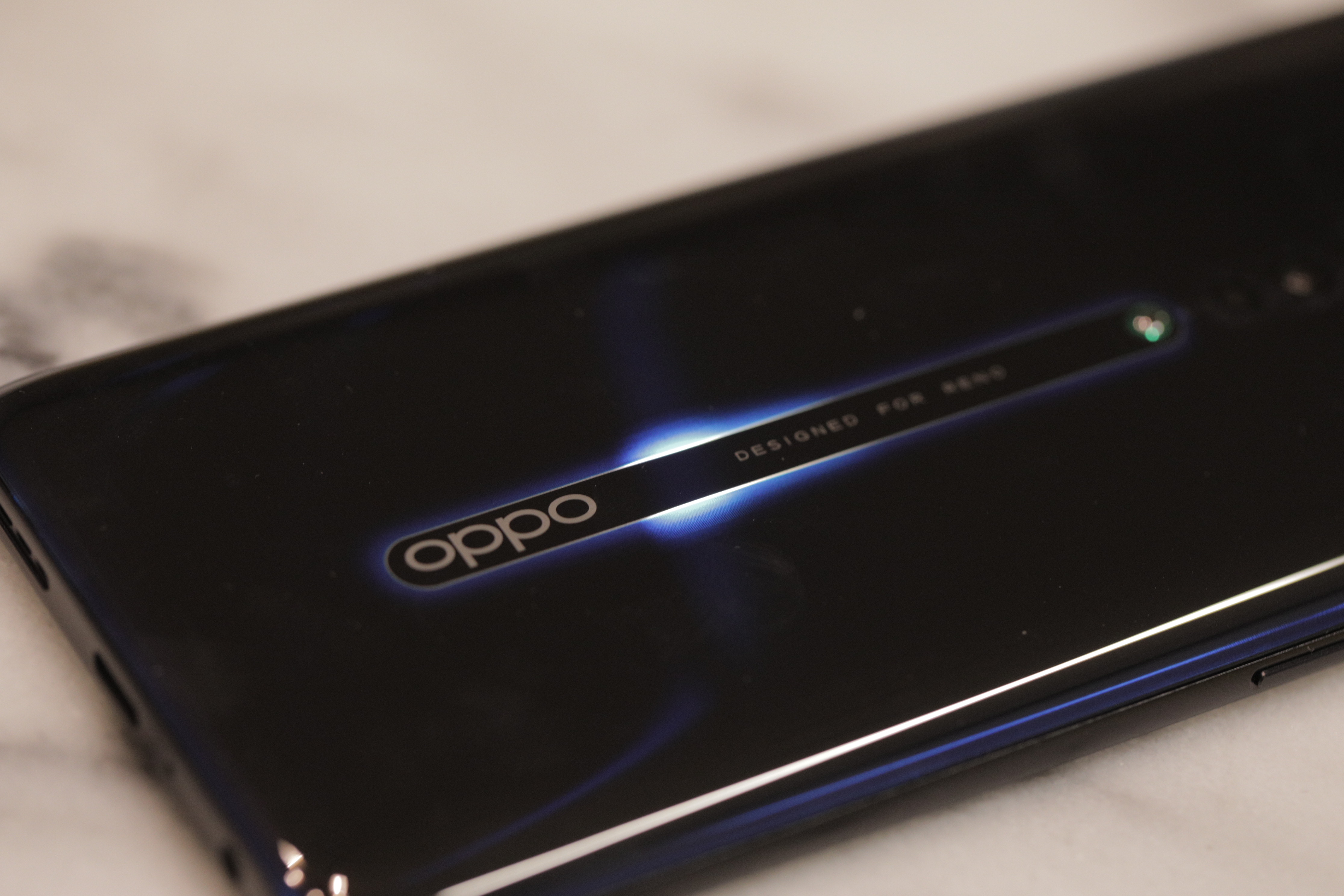
Behold the shark fin selfie-camera on Oppo’s latest

You would, of course, be completely forgiven for not recognizing Oppo’s name here in the States. In its native China, however, the company is a powerhouse, regularly capturing around 20 percent of the world’s largest smartphone market and handily beating out more familiar names (here, at least) like Apple and Samsung.

India (the number two global market) has been a pretty solid market for the company as well, generally landing itself in the top five. The Reno 2 was just announced for that country today, bringing with it some of the unique, boundary-pushing features that have become Oppo’s stock-in-trade.

CMB 8068

Most notable here is the “shark fin.” That’s the in-house name for the triangular mechanical selfie camera that pops out the top. It’s a return feature and one a number of other manufacturers have implemented in some form, including the Oppo-connected OnePlus, which has a much stronger U.S. presence.

The other big thing here are the cameras on the other side. It’s a pretty impressive set up back there, including a 48 megapixel lens with optical image stabilization, wide angle lens and telephoto. At 5x hybrid, it’s a step down the 10x Zoom the company launched a while back.

At Rs. 36,900, it’s priced at just over $500, putting it at the mid-range here in the States. I’ve been playing around with it a bit at our New York office, and it’s not a bad little phone — albeit a little bit chunky compared to some flagships. That’s not really a surprise at that price point. Nor is the continued inclusion of a headphone jack, which continues to be an important feature for markets like India.

28 Aug 2019

How UK VCs are managing the risk of a ‘no deal’ Brexit

Grab your economic zombie mask: A Halloween “no deal” Brexit is careening into view. New prime minister Boris Johnson has pledged that the country will leave the European Union on October 31 with or without a deal — “do or die” as he put it. A year earlier as the foreign secretary, he used an even more colorful phrase to skewer diplomatic concern about the impact of a hard Brexit on business — reportedly condensing his position to a pithy expletive: “Fuck business.”

It was only a few years ago during the summer of 2016, following the shock result of the UK’s in/out EU referendum, the government’s aspiration was to leave in a “smooth and orderly” manner as the prelude to a “close and special” future trading partnership, as then PM Theresa May put it. A withdrawal deal was negotiated but repeatedly rejected by parliament. The PM herself was next to be despatched.

Now, here we are. The U.K. has arrived at a political impasse in which the nation is coasting toward a Brexit cliff edge. We’re at the brink here, with domestic politics turned upside down, because “no deal” is the only leverage left for “do or die” brexiteers that parliament can’t easily block.

Ironic because there’s no majority in parliament for “no deal.” But the end of the Article 50 extension period represents a legal default — a hard deadline that means the U.K. will soon fall out of the EU unless additional action is taken. Of course time itself can’t be made to grind to a halt. So “no deal” is the easy option for a government that’s made doing anything else to sort Brexit really really hard.

After three full years of Brexit uncertainty, the upshot for U.K. business is there’s no end in sight to even the known unknowns. And now a clutch of unknown unknowns seems set to pounce come Halloween when the country steps into the chaos of leaving with nada, as the current government says it must.

So how is the U.K. tech industry managing the risk of a chaotic exit from the European Union? The prevailing view among investors about founders is that Brexit means uncertain business as usual. “Resilience is the mother of entrepreneurship!” was the almost glib response of one VC asked how founders are coping.

“This is no worse than the existential dread that most founders feel every day about something or other,” said another, dubbing Brexit “just an enormous distraction.” And while he said the vast majority of founders in the firm’s portfolio would rather the whole thing was cancelled — “most realize it’s not going to be so they just want to get on.”