Category: UNCATEGORIZED

28 Aug 2019

Tesla promises up to 30% lower rates with new car insurance play

Tesla said Wednesday it has launched an insurance product, promising owners of its electric vehicles to deliver rates 20% and even as high as 30% lower than other insurance providers.

For now, the product known as Tesla Insurance, will only be available to owners in California. The business will expand to additional U.S. state in the future, Tesla said without naming where or providing a timeline.

The announcement follows Tesla CEO Elon Musk’s promise back in April that the company would launch an insurance product “in about a month.” At the time, he said it would be “much more compelling than anything else out there.”

The company argues that Tesla Insurance will be able provide insurance at a lower cost by leveraging the “advanced technology, safety, and serviceability of our cars.” In short, Tesla is saying that it deep insight and familiarity with its own vehicles gives it a better understanding of the technology and repair costs. This helps eliminate fees taken by traditional insurance carriers.

Tesla says the cost of each policy will be based on an individual’s driving record and “other factors that can typically impact a person’s insurance rates.” The company says it won’t, however, use or record vehicle data, such as GPS or vehicle camera footage, when pricing insurance.

That policy seems in direct conflict with Musk’s comments during a first-quarter earnings call with analysts in April when he said Tesla has an “information arbitrage opportunity, explaining that it’s able to capture driving data, giving the company direct knowledge of the risk profile of the driver and car.

If customers want to buy Tesla insurance they might have to agree to “not drive the car in a crazy way,” Musk said at the time. He later added that they can drive crazy, they’ll just have a higher insurance rate.

Tesla insurance won’t cover commercial services such as using the vehicle for ride-hailing or car-sharing services.

Owners looking to insure multiple Tesla vehicles may also be eligible for further discounts, the company said,

Existing Tesla customers in California, and eventually owners in other states, are able to purchase a policy through a dedicated webpage. Customers ordering new vehicles can request a quote prior to delivery once a VIN has been assigned to their Tesla Account, according to the company.
28 Aug 2019

‘Behind the Screen’ illuminates the invisible, indispensable content moderation industry

The moderators who sift through the toxic detritus of social media have gained the spotlight recently, but they’ve been important for far longer — longer than internet giants would like you to know. In her new book “Behind the Screen,” UCLA’s Sarah Roberts illuminates the history of this scrupulously hidden workforce and the many forms the job takes.

It is after all people who look at every heinous image, racist diatribe, and porn clip that gets uploaded to Facebook, YouTube, and every other platform — people who are often paid like dirt, treated like parts, then disposed of like trash when worn out. And they’ve been doing it for a long time.

True to her academic roots, Roberts lays out the thesis of the book clearly in the introduction, explaining that although content moderators or the companies that employ them may occasionally surface in discussions, the job has been systematically obscured from sight.

The work they do, the conditions under which they do it, and for whose benefit are largely imperceptible to the users of the platforms who pay for and rely upon this labor. In fact, this invisibility is by design.

Roberts, an assistant professor of information studies at UCLA, has been looking into this industry for the better part of a decade, and this book is the culmination of her efforts to document it. While it is not the final word on the topic — no academic would suggest their work was — it is an eye-opening account, engagingly written, and not at all the tour of horrors you may reasonably expect it to be.

After reading the book, I talked with Roberts about the process of researching and writing it. As an academic and tech outsider, she was not writing from personal experience or even commenting on the tech itself, but found that she had to essentially invent a new area of research from scratch spanning tech, global labor, and sociocultural norms.

“Opacity, obfuscation, and general unwillingness”

“To take you back to 2010 when I started this work, there was literally no academic research on this topic,” Roberts said. “That’s unusual for a grad student, and actually something that made me feel insecure — like maybe this isn’t a thing, maybe no one cares.”

That turned out not to be the case, of course. But the practices we read about with horror, of low-wage workers grinding through endless queues of content from child abuse to terrorist attacks, while they’ve been in place for years and years, have been successfully moderated out of existence by the companies that employ them. But recent events have changed that.

“A number of factors are coalescing to make the public more receptive to this kind of work,” she explained. “Average social media users, just regular people, are becoming more sophisticated about their use, and questioning the integration of those kinds of tools and media in their everyday life. And certainly there were a few key political situations where social media was implicated. Those were a driving force behind the people asking, do I actually know what I’m using? Do I know whether or how I’m being manipulated? How do the things I see on my screen actually get there?”

A handful of reports over the years, like Casey Newton’s in the Verge recently, also pierced the curtain behind which tech firms carefully and repeatedly hid this unrewarding yet essential work. At some point the cat was simply out of the bag. But few people recognized it for what it was.

28 Aug 2019

India liberalizes foreign investment rules in a win for Apple

India has further liberalized its foreign direct investment (FDI) rules for many sectors, opening new avenues for global investors and giants such as Apple as Asia’s third-largest economy attempts to jump-start its years-low economic growth.

New Delhi said Wednesday evening that it is easing sourcing norms for single-brand retailers like Apple. As part of the new proposal, which has been approved, the government said single-brand retail companies will be allowed to open online stores before they set up presence in the bricks-and-mortar market.

This would allow Apple, which has yet to set up retail stores in the country, to start selling a range of products through its own online store. Currently, Apple sells its products in India through partnered third-party offline retailers and e-commerce platforms such as Amazon India, Flipkart and Paytm Mall.

Over the years, Apple has requested the government numerous times to relax the local foreign direct investment (FDI) rules. Company executives have long expressed disappointment at Amazon India, Flipkart and Paytm Mall for offering heavy discounts on the iPhone and MacBook Air to boost their respective GMV metrics.

Even as this boosted the sales of iPhones in India, the discounts diluted the brand image of iPhones in the country, executives felt.

Apple will soon explore selling its products through its online store in India, a person familiar with the matter told TechCrunch. But the move is unlikely to materialize before next year, the person said, requesting anonymity.

Apple did not immediately respond to a request for comment.

New Delhi previously also forced companies like Apple to source 30% of their productions locally (PDF). Now the government says it is broadening the definition to include both materials sold in India and those exported in the local sourcing law.

“It has been decided that all procurements made from India by the single brand retail trade entity for that single brand shall be counted towards local sourcing, irrespective of whether the goods procured are sold in India or exported. Further, the current cap of considering exports for five years only is proposed to be removed, to give an impetus to exports,” Piyush Goyal, Commerce and Industry Minister, said in a press conference.

Apple had urged the government previously to ease this requirement, as well.

India has emerged as one of the world’s biggest battlegrounds for smartphone vendors. As sale of smartphones slow or decline in nearly every corner of the world, Indians are showing a growing appetite for handsets.

The local smartphone market, which is the fastest growing globally and also second largest, was once commanded by local smartphone manufacturers. But things have dramatically changed in recent years with Chinese phone makers such as Xiaomi, Vivo, OnePlus, Oppo and Realme and South Korean giant Samsung together controlling 90% of the market.

Apple continues to largely focus on users looking for a premium smartphone in India. Even as the iPhone maker’s market share in India stands below 2%, per research firms IDC, Counterpoint and Canalys, Apple CEO Tim Cook has said on a number of earnings calls that the company sees major opportunity in India.

To boost sales in India, Apple has started to assemble several iPhone models locally and reached a stage where it can begin to export to overseas markets phones produced in India. Assembling phones in India allows Apple — as it does other phone makers — to enjoy some tax benefits that Narendra Modi’s government provides.

As part of today’s announcement, the government is now also allowing foreign investment in digital media to take up to 26% stakes in companies — a figure that now stands at 100% for the coal mining industry and associated infrastructure and sales of fuel.

“The extant FDI policy provides for 49% FDI under approval route in Up-linking of ‘News &Current Affairs’ TV Channels. It has been decided to permit 26% FDI under government route for uploading/ streaming of News & Current Affairs through Digital Media, on the lines of print media,” it said in a press release.

India’s move today comes as the nation grapples with a slowing of economic growth. The economic growth in the quarter that just ended stood at 5.8%, a five-year low in the nation.

28 Aug 2019

Daily Crunch: Peloton finances revealed

The Daily Crunch is TechCrunch’s roundup of our biggest and most important stories. If you’d like to get this delivered to your inbox every day at around 9am Pacific, you can subscribe here.

1. Peloton files publicly for IPO

Peloton previously filed a confidential S-1, but now its IPO documents have been revealed publicly, showing that the fitness tech company brought in $915 million in revenue during its most recent fiscal year, with losses of $245.7 million.

Co-founder and CEO John Foley laid out a grand vision in the documents, writing that “Peloton is so much more than a Bike — we believe we have the opportunity to create one of the most innovative global technology platforms of our time.”

2. Anthony Levandowski, former Google engineer at center of Waymo-Uber case, charged with stealing trade secrets

If convicted, Levandowski faces a maximum sentence of 10 years and a fine of $250,000 — plus restitution — for each violation, according to the U.S. Attorney’s office.

3. Fitbit’s CEO discusses the company’s subscription future

At a small event in Manhattan this week, Fitbit laid out its future for the press. Tellingly, the event was far more focused on the company’s software play. (Extra Crunch membership required.)

Image via Getty Images /
franckreporter

4. US border officials are increasingly denying entry to travelers over others’ social media

The latest case saw a Palestinian national living in Lebanon and would-be Harvard freshman denied entry to the U.S. just before the start of the school year.

5. ThoughtSpot hauls in $248M Series E on $1.95B valuation

ThoughtSpot was started by a bunch of ex-Googlers looking to bring the power of search to data. Seven years later the company is growing fast, sporting a valuation of almost $2 billion and looking ahead to a possible IPO.

6. Google will shut down Google Hire in 2020

Google built Hire in an effort to simplify the hiring process, with a workflow that integrated into Google’s G Suite things like searching for applicants, scheduling interviews and providing feedback about potential hires.

7. Rwanda to phase out gas motorcycle taxis for e-motos

The government of Rwanda will soon issue national policy guidelines to eliminate gas motorcycles in its taxi sector in favor of e-motos.

28 Aug 2019

Softly, softly, catchy jelly: This ‘ultragentle’ robotic gripper collects fragile marine life

The creatures of the depths live in a very different world — one lethal to us. But our world is lethal to them as well, all sharp edges and rapid movements. If we’re to catch and learn about the soft-bodied denizens of the deep, our machines too must be soft — and that’s what this Harvard robotics research is all about.

Collection of samples from the deep ocean is a difficult task to do safely: Although these animals are subject to pressures and temperatures well beyond what any surface creature could handle, they are nevertheless very easily damaged by handling. Existing methods to collect them for study often involve sucking them into little containers that are kept pressurized and brought to the surface. But it would be nice to be able to snatch an intriguing critter up and inspect it in vivo, wouldn’t it?

To that end researchers at Harvard’s Wyss Institute have been working on simpler, safer ways to entrap these creatures temporarily, letting them go seconds or minutes later once the collector has gotten some good images or (I don’t know) sampled some mucus.

A little more than a year ago, they created an “underwater Pokeball,” a kind of soft geodesic form that could close around something like a jelly or drifting fish. But even with that kind of method, there’s still the possibility that it could get squished during closure.

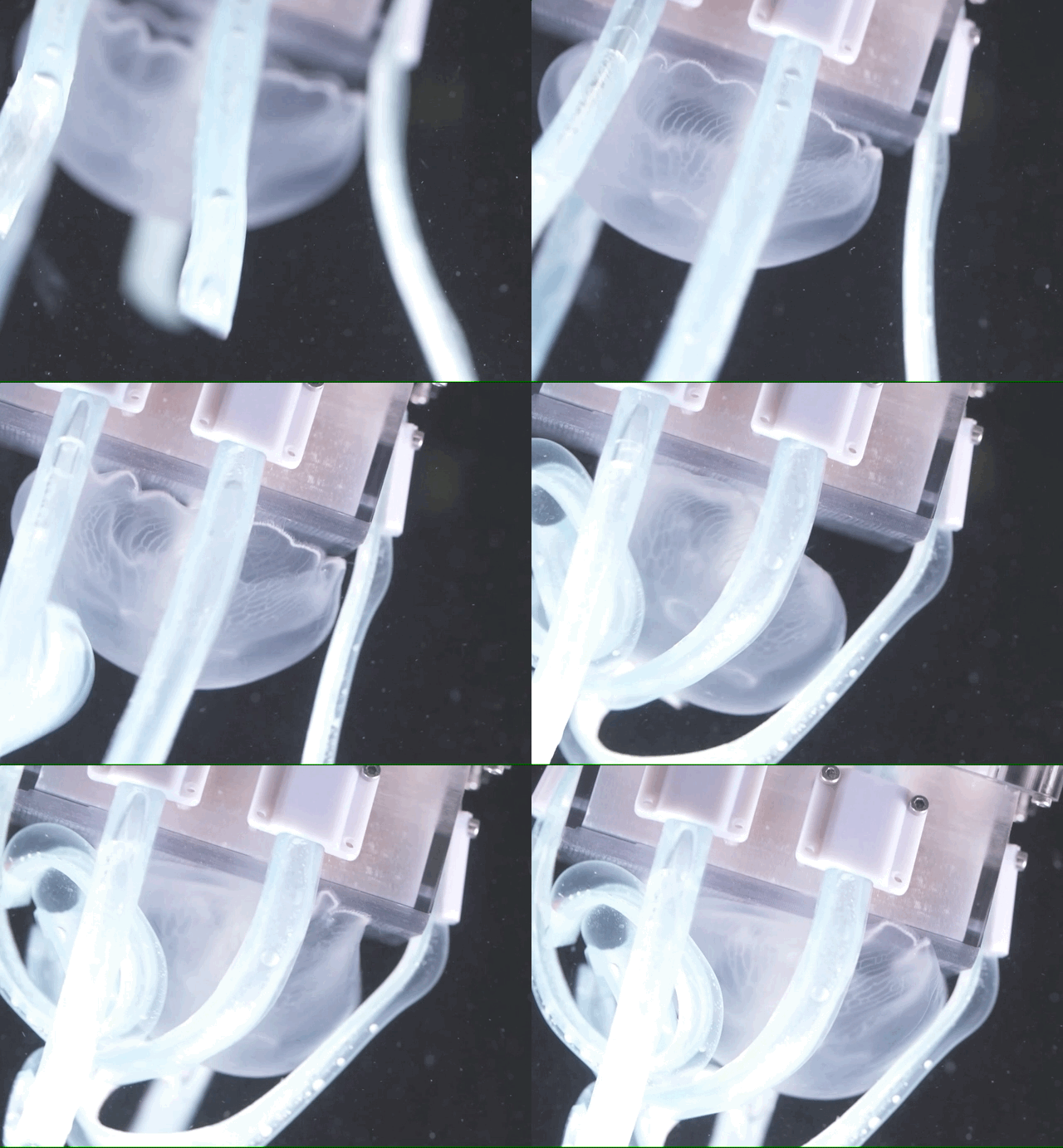
So they continued their work, pursuing instead “noodle-like appendages” that, when not activated, are as pliable and harmless as cooked spaghetti, or rather fettuccine considering their shape.

Each “finger” is made of an “elastic yet tough silicone matrix,” and inside it are tiny fibers that remain slack when not in use, but which can be stiffened using a tiny amount of hydraulic pressure. This causes the whole finger to bend in a specific direction, in this case inwards at the same time as the others, scooping whatever is in their range into the soft 3D-printed “palm.” The grip is soft enough that it won’t harm the creature, but firm enough that it can’t just wriggle out.


gripper1

Sinatra et al. / Science Robotics

At that point the researchers are free to do what they wish, though presumably after taking such care to catch the animal unharmed, they won’t be doing anything too rough with it.

There are few limitations on the size or length of the fingers, meaning they can be customized for different operations. The device you see pictured was made to be effective in catching common jellies, but the whole thing could easily be scaled up or down to handle bigger or smaller animals.

Of course the whole thing can be attached to a submersible, but it’s small and simple enough that it can also be made into a handheld gadget for manual sampling, should that what a given researcher prefers. They put together a prototype and “demonstrated the use of this hand-held soft gripper to successfully perform gentle grasping of three canonical jellyfish species.”

Here’s hoping this means less shredded jellies in our oceans, and perhaps one day you’ll be able to rent such a grabber while snorkeling and have a chance to examine fragile marine life closely without having to grab it with your hands (not recommended).

The researchers’ work was published today in the journal Science Robotics.

28 Aug 2019

Bestmile raises $16.5 million to manage human and AI-driven fleets

Bestmile, a transportation software startup, has raised $16.5 million in a Series B round led by Blue Lagoon Capital and TransLink Capital.

Existing investors Road Ventures, Partech, Groupe ADP, Airbus Ventures, Serena and others also participated in the round. The company, which launched in 2014, has raised $31 million to date.

Bestmile has developed fleet management software that orchestrates the delicate balance between demand for, and supply of transportation. Managing fleets isn’t new. However, the emergence of new and varied ways for people and packages to move within cities has created new opportunities for software companies.

Bestmile is aiming to become the preferred platform for public transit operators, automakers and taxi companies that offer ride-hailing, microtransit, autonomous shuttle services and even robotaxis. While Bestmile emphasizes the ability of the platform to manage more futuristic means of travel, namely autonomous shuttles, fleet management software is designed to be agnostic. This means it will work for human-driven fleets like traditional taxi cabs as well as autonomous shuttles and, someday, robotaxis.

The startup’s investors also see opportunities for the platform that extend beyond microtransit, ride-hailing and autonomous shuttles. For instance, Airbus Ventures sees Bestmile as a key enabler for urban air mobility, according to Thomas d’Halluin, a managing partner at the Airbus’ venture arm.

The platform works by collecting real-time data such as weather, traffic, demand and vehicle telemetry. It then uses the data to squeeze the most out of the fleet. That means balancing demand from customers with the cost of operations.

The startup, which is based in Lausanne, Switzerland and has an office in San Francisco, already has a number of customers, including autonomous shuttle operators. The company’s software is managing 15 deployments globally. Bestmile announced earlier this week that it has partnered with Beep, an autonomous shuttle company in Orlando, Fla.

Blue Lagoon partners Rodney Rogers and Kevin Reid have joined Bestmile’s board. Rogers is now board chairman. The pair, which have first-hand experience as co-founders, should be able to provide the kind of insight needed to scale a company. Rogers and Reid co-founded enterprise cloud services company Virtustream, which was acquired by EMC Corporation in 2015 for $1.2 billion. The business is now part of Dell Technologies.

28 Aug 2019

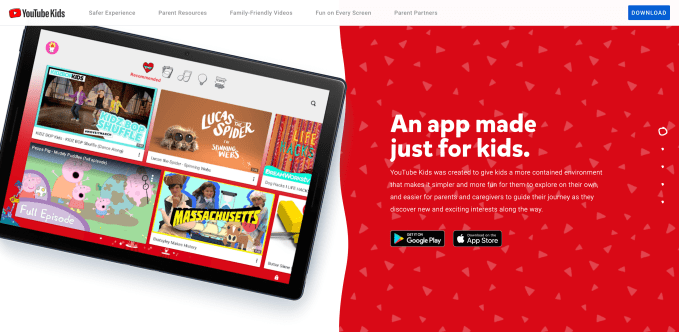
Ahead of FTC ruling, YouTube Kids is getting a website

Ahead of the official announcement of an FTC settlement which could force YouTube to direct under-13-year-old users to a separate experience for YouTube’s kid-friendly content, the company has quietly announced plans to launch its YouTube Kids service on the web. Previously, parents would have to download the YouTube Kids app to a mobile device in order to access the filtered version of YouTube.

By bringing YouTube Kids to the web, the company is prepared for the likely outcome of an FTC settlement which would require the company to implement an age-gate on its site, then redirect under-13-year-olds to a separate kid-friendly experience.

In addition, YouTube Kids is gaining a new filter which will allow parents to set the content to being preschooler-appropriate.

The announcement, published to the YouTube Help forums, was first spotted by Android Police.

It’s unclear if YouTube was intentionally trying to keep these changes from being picked up on by a larger audience (or the press) by publishing the news to a forum instead of its official YouTube blog. (The company tells us it publishes a lot of news the forum site. Sure, okay. But with an FTC settlement looming, it seems an odd destination for such an announcement.)

It’s also worth noting that, around the same time as the news was published, YouTube CEO Susan Wojcicki posted her quarterly update for YouTube creators. The update is intended to keep creators abreast of what’s in store for YouTube and its community. But this quarter, her missive spoke solely about the value in being an open platform, and didn’t touch on anything related to kids content or the U.S. regulator’s investigation.

However, it’s precisely YouTube’s position on “openness” that concerns parents when it comes to their kids watching YouTube videos. The platform’s (almost) “anything goes” nature means kids can easily stumble upon content that’s too adult, controversial, hateful, fringe, or offensive.

The YouTube Kids app is meant to offer a safer destination, but YouTube isn’t manually reviewing each video that finds its way there. That has led to inappropriate and disturbing content slipping through the cracks on numerous occasions, and eroding parents’ trust.

youtube kids website

Because many parents don’t believe YouTube Kids’ algorithms can filter content appropriately, the company last fall introduced the ability for parents to whitelist specific videos or channels in the Kids app. It also rolled out a feature that customized the app’s content for YouTube’s older users, ages 8 through 12. This added gaming content and music videos.

Now, YouTube is further breaking up the “Younger” content level filter, which was previously 8 and under, into two parts. Starting now, “Younger” applies to ages 5 through 7, while the new “Preschool” filter is for the age 4 and under group. The latter will focus on videos that promote “creativity, playfulness, learning, and exploration,” says YouTube.

YouTube confirmed to TechCrunch that its forum announcement is accurate, but the company would not say when the YouTube Kids web version would go live, beyond “this week.”

The YouTube Kids changes are notable because they signal that YouTube is getting things in place before an FTC settlement announcement that will impact how it handles kids content and the site’s continued use by young children.

It’s possible that YouTube will be fined by the FTC for its violations of COPPA, as Musical.ly (TikTok) was earlier this year. One report, citing unnamed sources, says the FTC’s YouTube settlement has been finalized and includes a multimillion-dollar fine.

YouTube will also likely be required to implement an age-gate on its site and in its apps that will direct under-13-year-olds to the YouTube Kids platform instead of YouTube proper. The settlement may additionally require YouTube to stop targeting ads on videos aimed at children, as has been reported by Bloomberg. 

We probably won’t see the FTC issuing a statement about its ruling ahead of this Labor Day weekend, but it may do so in advance of its October workshop focused on refining the COPPA regulation — an event that has the regulator looking for feedback on how to properly handle sites like YouTube. 


28 Aug 2019

Ahead of FTC ruling, YouTube Kids is getting a website

Ahead of the official announcement of an FTC settlement which could force YouTube to direct under-13-year-old users to a separate experience for YouTube’s kid-friendly content, the company has quietly announced plans to launch its YouTube Kids service on the web. Previously, parents would have to download the YouTube Kids app to a mobile device in order to access the filtered version of YouTube.

By bringing YouTube Kids to the web, the company is prepared for the likely outcome of an FTC settlement which would require the company to implement an age-gate on its site, then redirect under-13-year-olds to a separate kid-friendly experience.

In addition, YouTube Kids is gaining a new filter which will allow parents to set the content to being preschooler-appropriate.

The announcement, published to the YouTube Help forums, was first spotted by Android Police.

It’s unclear if YouTube was intentionally trying to keep these changes from being picked up on by a larger audience (or the press) by publishing the news to a forum instead of its official YouTube blog. (The company tells us it publishes a lot of news the forum site. Sure, okay. But with an FTC settlement looming, it seems an odd destination for such an announcement.)

It’s also worth noting that, around the same time as the news was published, YouTube CEO Susan Wojcicki posted her quarterly update for YouTube creators. The update is intended to keep creators abreast of what’s in store for YouTube and its community. But this quarter, her missive spoke solely about the value in being an open platform, and didn’t touch on anything related to kids content or the U.S. regulator’s investigation.

However, it’s precisely YouTube’s position on “openness” that concerns parents when it comes to their kids watching YouTube videos. The platform’s (almost) “anything goes” nature means kids can easily stumble upon content that’s too adult, controversial, hateful, fringe, or offensive.

The YouTube Kids app is meant to offer a safer destination, but YouTube isn’t manually reviewing each video that finds its way there. That has led to inappropriate and disturbing content slipping through the cracks on numerous occasions, and eroding parents’ trust.

youtube kids website

Because many parents don’t believe YouTube Kids’ algorithms can filter content appropriately, the company last fall introduced the ability for parents to whitelist specific videos or channels in the Kids app. It also rolled out a feature that customized the app’s content for YouTube’s older users, ages 8 through 12. This added gaming content and music videos.

Now, YouTube is further breaking up the “Younger” content level filter, which was previously 8 and under, into two parts. Starting now, “Younger” applies to ages 5 through 7, while the new “Preschool” filter is for the age 4 and under group. The latter will focus on videos that promote “creativity, playfulness, learning, and exploration,” says YouTube.

YouTube confirmed to TechCrunch that its forum announcement is accurate, but the company would not say when the YouTube Kids web version would go live, beyond “this week.”

The YouTube Kids changes are notable because they signal that YouTube is getting things in place before an FTC settlement announcement that will impact how it handles kids content and the site’s continued use by young children.

It’s possible that YouTube will be fined by the FTC for its violations of COPPA, as Musical.ly (TikTok) was earlier this year. One report, citing unnamed sources, says the FTC’s YouTube settlement has been finalized and includes a multimillion-dollar fine.

YouTube will also likely be required to implement an age-gate on its site and in its apps that will direct under-13-year-olds to the YouTube Kids platform instead of YouTube proper. The settlement may additionally require YouTube to stop targeting ads on videos aimed at children, as has been reported by Bloomberg. 

We probably won’t see the FTC issuing a statement about its ruling ahead of this Labor Day weekend, but it may do so in advance of its October workshop focused on refining the COPPA regulation — an event that has the regulator looking for feedback on how to properly handle sites like YouTube. 


28 Aug 2019

Microsoft wants to bring exFAT to the Linux kernel

ExFAT, the Extended File Allocation Table, is Microsoft’s file system for flash drives and SD cards, which launched in 2006. Because it was proprietary, mounting these drives and cards on Linux machines generally involved installing additional software. Today, however, Microsoft announced that it is supporting the addition of exFAT to the Linux kernel and publishing the technical specifications for exFAT.

“It’s important to us that the Linux community can make use of exFAT included in the Linux kernel with confidence. To this end, we will be making Microsoft’s technical specification for exFAT publicly available
to facilitate development of conformant, interoperable implementations.”

In addition to wanting it to become part of the Linux kernel, Microsoft also says that it hopes that the exFAT specs will become part of the Open Invention Network’s  Linux definition. Once accepted, the code would benefit “from the defensive patent commitments of OIN’s 3040+ members and licensees,” the company notes.

Microsoft and Linux used to be mortal enemies — and some in the Linux community definitely still think of Microsoft as anti-open source. These days, though, Microsoft has clearly embraced open source and Linux, which is now the most popular operating system on Azure and, optionally, part of Windows 10, thanks to its Windows Subsystem for Linux. It’ll still be interesting to see how the community will react to this proposal. The aftertaste of Microsoft’s strategy of  “embrace, extend and extinguish” still lingers in the community, after all, and not too long ago, this move would’ve been interpreted as yet another example of this.

28 Aug 2019

Microsoft wants to bring exFAT to the Linux kernel

ExFAT, the Extended File Allocation Table, is Microsoft’s file system for flash drives and SD cards, which launched in 2006. Because it was proprietary, mounting these drives and cards on Linux machines generally involved installing additional software. Today, however, Microsoft announced that it is supporting the addition of exFAT to the Linux kernel and publishing the technical specifications for exFAT.

“It’s important to us that the Linux community can make use of exFAT included in the Linux kernel with confidence. To this end, we will be making Microsoft’s technical specification for exFAT publicly available
to facilitate development of conformant, interoperable implementations.”

In addition to wanting it to become part of the Linux kernel, Microsoft also says that it hopes that the exFAT specs will become part of the Open Invention Network’s  Linux definition. Once accepted, the code would benefit “from the defensive patent commitments of OIN’s 3040+ members and licensees,” the company notes.

Microsoft and Linux used to be mortal enemies — and some in the Linux community definitely still think of Microsoft as anti-open source. These days, though, Microsoft has clearly embraced open source and Linux, which is now the most popular operating system on Azure and, optionally, part of Windows 10, thanks to its Windows Subsystem for Linux. It’ll still be interesting to see how the community will react to this proposal. The aftertaste of Microsoft’s strategy of  “embrace, extend and extinguish” still lingers in the community, after all, and not too long ago, this move would’ve been interpreted as yet another example of this.