Category: UNCATEGORIZED

01 Aug 2019

TikTok adds Giphy integration to import Stickers and export TikTok memes to the rest of the world

TikTok is the breakout hit in social media apps at the moment — it’s currently ranked first in entertainment, and 12th overall in terms of download popularity on iOS, and 8th on Android in the US — and today it’s starting a partnership that should give it an even wider profile, with the added benefit of bring another key tool in for creators on the platform to use: the app is now working with Giphy, the GIF platform, to make it possible to import Giphy GIFs, specifically its animated Stickers, into TikTok posts, and at the same time, to be able to create new GIFs for Giphy based on what you are doing in TikTok.

file 2TikTok tells me that this is not a commercial deal: there’s no money exchanging hands, a spokesperson said in an email. “We’re excited to continue enhancing our creative tools with this integration,” she continued, “as well as share some of TikTok’s most iconic memes with GIPHY keyboards everywhere!”

The spokesperson said that this is the first partnership for TikTok — owned by China’s Bytedance — to integrate a third-party GIF/Sticker content into its platform. On the side of Giphy, though, this is the latest of a string of integrations that it’s used over the years to expand its reach. You can call up Giphy GIFs in Twitch, enterprise apps like Slack and Quip, and (after ironing out a little controversy with how well GIFs were being vetted) on Snapchat and Instagram, among others.

(Note: TikTok does have deals with other kinds of third parties, though, for example music labels and publishers, who are apparently in the process of rethinking those agreements, in light of just how huge TikTok has become, and its role as the primary place where music is being played, heard and appropriated.)

TikTok will be putting the Giphy integration front and center into the app, with creators able to add a sticker to a post by hitting a Giphy button to call up a directory. It sounds like an algorithm will surface a pared-down selection for users: TikTok said that it worked with Giphy Studios to create stickers that reflect some of the more popular memes and hashtags on TikTok (eg #oddlysatisfying or a dog sticker). You can also search on #getGiphy to find more.

At the same time, TikTok’s using the integration to give creators on its platform a little more amplification: the most popular stickers based on TikTok memes will also get surfaced now on Giphy itself, and wherever it is integrated. You find these by searching on #TikTok in the Giphy libarary search bar. At a time when there is a lot of heated competition to bring the most popular creators to do their best original work on a specific platform, this potentially could be one way to help woo them to TikTok over others.

But that’s not to say that anyone’s Giphy stickers will appear anywhere that Giphy is.

“Giphy users can create and upload their own Stickers to the platform. However, their content won’t be indexed in Giphy’s search and will not show up in third party apps like TikTok unless they are a verified channel on Giphy,” a spokesperson told us. “Giphy Studios has worked with a wide array of brands and partners, such as TikTok, to create custom content, which they do on a case by case basis. TikTok worked with the creators and the Giphy Studios team to turn popular TikTok memes into GIFs. To create this content, we invited a group of creative, funny, and diverse creators, @DreaKnowBest, @Gabe, @BenoftheWeek who are excited to immortalize TikTok memes in GIF form.”

Doubtless if this takes off, there will be more added to that mix.

TikTok doesn’t share how many users it currently has on its platform, but the app — and before that, its predecessor Musically — has proven to be a massively popular channel for sharing fun and occasionally sentimental short videos set to music. But even that loose remit, which has attracted so many users, has its limitations. If you browse enough TikTok, a lot of the posts start to meld together. Adding in a sticker option gives a little extra nudge of differentiation.

There is a longer-term option that this brings to the platform, too: While TikTok has yet to turn the advertising taps on to full volume, stickers can become an obvious way of bringing in more #brands and messaging in a way that keeps the fun ethos of the platform intact.

01 Aug 2019

Asana launches Workload to help prevent burnout

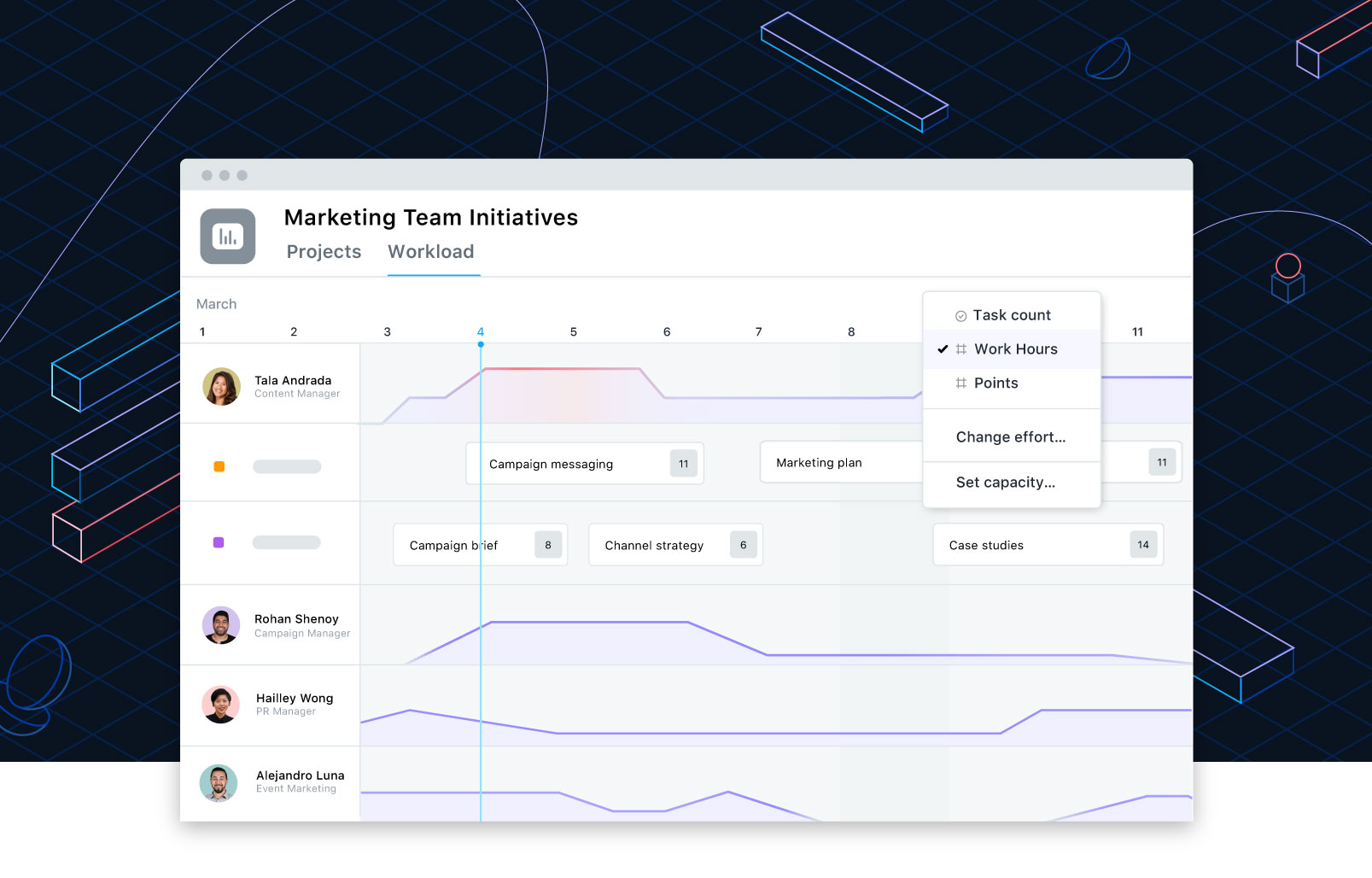
Asana, the work management platform led by Facebook co-founder Dustin Moskovitz, today launched Workload, a new feature for its paying users that aims to help prevent burnout. It does so by making it easier for businesses to fairly distribute work across their teams and, if necessary, redistribute it.

“The most productive and happiest teams are those that have clarity of who is doing what by when,” said Alex Hood, the Head of Product at Asana . “While today’s workplace has more ways to communicate and collaborate than ever before, the majority of teams are still turning to outdated spreadsheets and email chains to plan and manage work.”

The general idea behind Workload is that it provides a central view of how much more work any given team can currently handle. Team members can customize their own workload based on criteria like points or hours and, maybe most importantly, set capacity limits.

EN Workload With Effort Blog Header v2

One of the first companies to test Workload was fast-casual chain Panera. “Panera’s creative team averages 45 projects a week, and before Workload, we didn’t have a simplified way to review the team’s bandwidth,” said Jenny Williams, Marketing Traffic Manager at Panera Bread. “With Workload, we can easily see assigned tasks and react to bandwidth concerns by negotiating deadlines and, if needed, make a case for additional resources.”

The general ideas behind all of these tools always sound good, of course. It’s no secret that burnout is a major problem and according to Asana’s own research, 80 percent of global knowledge workers say they consistently feel overworked and close to burnout. I would take those results with a grain of salt, though, given that few people are going to say that they are barely doing anything — even if they are and their colleagues consistently wonder what they are doing all day. Still, anything that helps to bring down the actual number of burned-out workers is a good thing.

01 Aug 2019

A Q&A with Multiple, the quiet agency behind many a startup’s success story

When Multiple first started in 2015 the concept of an agency specifically geared to the strategic branding and culture of startups was definitely not new, but the fact that it was starting in Europe definitely was. At the time, I remember startups in Silicon Valley having access to, literally, multiple ways of scaling up their concept, from growth hacking partners to branding agencies, to many different types of assistance. Plenty of those mountains of VC cash wasn’t employed by the startups only internally, but also externally, on helpful agencies. In London and Europe the attitude was different: “Don’t spend it on agencies, spend it on building the product”! But as soon as Multiple appeared, I realized this was a sign that the European ecosystem was in fact maturing to be able to support this more sophisticated approach.

Part of the reason Silicon Valley has become so powerful is that it supports a wide variety of these wider ecosystem players, and doesn’t just dole out cash to raw entrepreneurs who often are pretty experienced in company and brand building. Europe, it seemed, was finally growing up.

Four years on and, I decided it was time to find out from Multiple co-founder Katy Turner, as a former entrepreneur and VC herself, to discuss what she and her cofounder Gabbi Cahane have learned form dealing day in and day out with high-growth startups. After all, here at least it an organization that has seen it all in terms of company building…

The timing is opportune. After several years in the market it’s also launching it’s “Scale Partners network”: A crack team of experienced players from the UK and European tech ecosystem to extend its capabilities and help their client companies grow faster.

The network includes names such as Laurence Bret-Stern (former CRO at Pipedrive); Tracy Doree (founder at Kindred Capital); Dhiraj Mukerjee (co-founder, Shazam); Alicia Navarro (President, former CEO and founder at Skimlinks); and Rabin Yaghoubi (former CCO at Babylon Health, Director of Strategic Partnerships for Google EMEA, Doubleclick); among others.

Mike Butcher: How did Multiple start?

Katy Turner: Gabbi and I originally met each other through the network of Seedcamp mentors. We had a lot in common, having been investors, operators and (in Gabbi’s case) founders, and we recognized that having access to experienced external expertise is really valuable. We’d also been non-technical people working in and around tech companies and understood the power of brand, culture and growth when it comes to company building. Multiple originated from these conversations and we founded the business in 2015.

MB: Multiple isn’t just an agency is it? You look at a startup pretty holistically. Can you explain that?

KT: We try to supercharge a startup’s progress through both brand and culture. We support progressive companies to build the capabilities, culture and communications that will enable them to take out the competition, take a big exit or, in the classic phrase, take over the world. We’ve worked alongside the founders of companies such as Pipedrive, WeTransfer, Unbabel, Kalo, Aire, beryl (formerly Blaze), Verve, Drover, Favro and Trouva; and the Partners of funds such as Kindred, Connect, Whitestar and Albion. Often founders need help with clarifying their purpose, shaping their vision, positioning, strategy, you name it. That’s what we’re good at.

MB: What are the biggest lessons you’re learned from advising startups?

KT: We’ve found there’s huge value in being fully aligned around a clear purpose, mission and vision. These are the strategic foundations which provide the platform for success. Purpose is ‘the why’, the mission is ‘the what’ and vision is ‘the where’. Codifying these drives the fundamental alignment of the startup which then goes on to supercharge their progress.

MB: Is there such a thing as a founder who is beyond help? Do they personally need something special?

KT: It’s hard to help a founder if they don’t want help. Ideally, founders are coachable and willing to learn, versus having a fixed mindset. In our team, we’ve been founders, operators and investors —so we always remember how it feels in those everyday scenarios, stresses and situations that founders may face. It’s easier to empathize when you’ve done it yourself!

MB: When should startup founders bring inexperienced “operators”, if they don’t have any, or can they grow into the role? When do find that you guys get asked into the picture?

KT: We find we get asked to come in at the point at which real scale is needed with experienced heads – either inside or outside the business. This can, obviously, be extremely valuable. However we absolutely believe that founders can grow into the role of CEO, and we often see it as part of our job to help them do that.

We typically get involved at key inflection points in the lifecycle of the business. For example, when you need to lift your head up from building the product and start to build the company. Or perhaps it might be during a significant fundraise; international expansion; a rebrand; a desire to codify and refine the culture ahead of a key hiring spree etc. It’s about achieving the next stage of progress as effectively as possible. Everyone goes through that, as I guess we have the advantage of having been on that journey many times with many different kinds of founders at all sorts of stages.

MB: Everyone always says ‘leadership is key’ but what have you found are the best kinds of leadership?

KT: Obviously, different leadership styles are appropriate for different companies depending on the culture you want build and steer. But we’ve found there’s no singular leadership style that is ‘right’, really. Leaders can have styles that are charismatic, transactional, situational or participative. They can all work, depending on the context.

In a startup and scaleup context, we’ve experienced that ‘transformational leadership’ and ‘servant leadership’ styles can produce highly-effective organizations.

MB: What do you mean by those terms?

KT: A transformational leader is the visionary who leads their team with enthusiasm and energy, whereas a servant leader is driven by the need to have a deep impact and to help others.

In both cases, these leaders create highly collaborative, innovative and autonomous cultures, through their ultimate desire to facilitate the success of others.

MB: What have been the worst kinds of leadership?

KT: We’ve seen a few examples in our time, given we deal so closely with entrepreneurs, but for the worst I’d say “transactional”. It’s just very non-motivating to feel that someone who is in charge is only ever dealing with their team on a transactional basis, as in “did you do this?” Or “you must do this in order for this to happen” etc. The other one is “situational”. Dealing with things on a situation-by-situation basis, where there’s just no obvious, overall strategy, shows a lack of consistency and will ultimately undermine the confidence of the team in their leadership.

MB: How much can you plan ahead in high growth companies?

This is highly stage-dependent. The earlier the company, the shorter the time horizon for forward planning. Having clarity over your mission is critical to the planning process. The mission is the master ‘OKR’ (Objectives and Key Results) https://en.wikipedia.org/wiki/OKR

in the business. It has to be trackable and measurable. For a high growth company, a 3-5 year mission makes sense. Then you can build shorter-term plans which act as staging posts along the way – so for example what’s the plan for the next 12 months if our 5 year mission is to become the market leader in our category or enable a billion people to access education?

MB: What are the organizational structures you’ve seen which work best with tech startups?

KT: To paraphrase Ben Horowitz, “the first rule of organizational design is that all organizational design is imperfect”. Structures that allow for small, multidisciplinary, cross-functional teams delivering against clearly defined objectives work extremely well. The use of DRIs (directly responsible individuals) and OKRs help to keep the team on track, enabling clear ownership and priorities so that individuals can do their best work.

MB: Is there such as thing as transitioning from startup to “scaleup” or is that just another funding round?

KT: In our experience, the moment of transition comes when a product has established validation and traction in its market. And when the organization requires the systems and processes to enable it to retain and grow its customer base. In essence, it comes after product-market fit, where you need to deliver the product and revenue in a measurable and repeatable manner. We’ve found that from a funding round perspective, Series B is when the journey towards real scale is being tackled.

MB: What are the best ways to establish Product/Market Fit?

KT: The route to product-market fit is highly dependent on the kind of product you are building for the market you are serving. Product market fit needs to happen repeatedly at every stage. At early stage, people are willing to pay for your product even when its imperfect, because it’s the best or only way to address the problem they have. And what constitutes product-market fit at Series A might change as you scale beyond Series B. Product market fit = solid and sustainable unit economics and a product that your customers can’t live without. At every stage, ongoing customer development, obsession and experimentation are critical.

MB: Have you assisted in fund-raising? What are the lessons learned? Especially in the UK.

KT: The short answer answer is yes. We’ve contributed to our companies’ fundraising at every key investment stage from seed to Series C. What we’ve learned is that like all human beings, investors respond positively to powerful stories that illustrate the ambition of the organization and the ‘ ent’ it wants to make in the universe. The fundraising narrative must also be shot through with the personality of the organization. Investment decks that don’t reflect the brand will not cut the mustard. Investors in the UK are like investors anywhere else – they want to believe in a team with a strong sense of purpose and a big vision.

MB: What is some of the hiring advice you give?

KT: We find it’s best to ensure you have enshrined values and practices that are imperative or directive, that can be used as a guide to hire against. Then build out a hiring process that tests whether the individual’s personal goals and ambitions marry with those of the organization.

MB: When should startups think about branding?

KT: Branding is often thought of far too narrowly. We believe that brand is everything you make, say, do and provide. Your tech, your code, your pricing, and of course your positioning and personality are all elements of your brand. So even if an organisation hasn’t been intentional about building out their brand, they will have one anyway. The earlier you can be intentional, the greater chance you have of being consistent and coherent in your execution.

MB: Can you fix a bad tech brand?

KT: Yes. However, it takes an investment of time, resource, capital and desire to ensure that it’s fit for purpose. We always go back to the foundation stones of purpose, mission and vision as the starting point for this work. Everything builds from these strategic assets that direct the why, what and where.

MB: Is a relaunch the kiss of death?

KT: If it’s done badly and built on weak foundations then yes. However, if you are thoughtful and intentional about why you are doing it, then it can be successful. Are you simply painting the hallways, or are you rebuilding the house from the ground up i.e. infusing the brand with clarity around its positioning and personality that expresses genuine meaning and benefits which add value to the team, the business and your customers?

MB: Should you build a company culture or a cult?

KT: You should build a culture. Cultures adapt and evolve, survive and thrive. Cults ultimately self-immolate, let’s face it…

MB: Here’s a list of 18 startup mistakes from legendary startup guru and investor Paul Graham.
What would be your 19th?

KT: Number 19: The inability to sell. Selling is existential – in the broadest sense. You always need to be selling whether bringing on board a co-founder, selling a story to the market, convincing a customer or raising funding. We sometimes joke: “I sell, therefore I am…”


01 Aug 2019

With the acquisition closed, IBM goes all in on Red Hat

IBM’s massive $34 billion acquisition of Red Hat closed a few weeks ago and today, the two companies are now announcing the first fruits of this process. For the most part, today’s announcement further IBM’s ambitions to bring its products to any public and private cloud. That was very much the reason why IBM acquired Red Hat in the first place, of course, so this doesn’t come as a major surprise, though most industry watchers probably didn’t expect this to happen this fast.

Specifically, IBM is announcing that it is bringing its software portfolio to Red Hat OpenShift, Red Hat’s Kubernetes-based container platform that is essentially available on any cloud that allows its customers to run Red Hat Enterprise Linux.

In total, IBM has already optimized more than 100 products for OpenShift and bundled them into what it calls “Cloud Paks.” There are currently five of these Paks: Cloud Pak for Data, Application, Integration, Automation and Multicloud Management. These technologies, which IBM’s customers can now run on AWS, Azure, Google Cloud Platform or IBM’s own cloud, among others, include DB2, WebSphere, API Connect, Watson Studio and Cognos Analytics.

“Red Hat is unlocking innovation with Linux-based technologies, including containers and Kubernetes, which have become the fundamental building blocks of hybrid cloud environments,” said Jim Whitehurst, president and CEO of Red Hat, in today’s announcement. “This open hybrid cloud foundation is what enables the vision of any app, anywhere, anytime. Combined with IBM’s strong industry expertise and supported by a vast ecosystem of passionate developers and partners, customers can create modern apps with the technologies of their choice and the flexibility to deploy in the best environment for the app – whether that is on-premises or across multiple public clouds.”

IBM argues that a lot of the early innovation on the cloud was about bringing modern, customer-facing applications to market, with a focus on basic cloud infrastructure. Now, however, enterprises are looking at how they can take their mission-critical applications to the cloud, too. For that, they want access to an open stack that works across clouds.

In addition, IBM also today announced the launch of a fully managed Red Hat OpenShift service on its own public cloud, as well as OpenShift on IBM Systems, including the IBM Z and LinuxONE mainframes, as well as the launch of its new Red Hat consulting and technology services.

01 Aug 2019

With a new $800M fund, Oak HC/FT is staying true to its name

Five years ago a venture capital fund spun-out of Oak Investment Partners focused exclusively on healthcare and fintech. Naturally, the trio behind the new fund called themselves Oak HC/FT, a nod to the two industries they felt weren’t receiving enough investment.

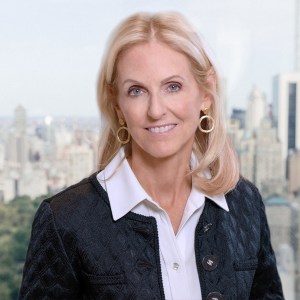
Now on its third fund, an $800 million vehicle announced this morning, general partners Annie Lamont, Andrew Adams and Tricia Kemp remain laser-focused on the two sectors.

“There are at least 5 or 10 times as many startups in those spaces than there were 10 years ago,” Lamont, who joined Oak Investment Partners in 1986, tells TechCrunch.

To keep up with the influx of technology upstarts, Oak HC/FT has raised its largest fund yet. The firm previously raised $500 million and $600 million for its first and second funds, respectively.

“Every year the opportunity to reinvest becomes greater,” Lamont said, noting the firm has grown from three general partners to 30 investment professionals across San Francisco, Boston and Greenwich. “We’ve just magnified our network and that’s fed an incredible pipeline of opportunities.”

Annie Lamont3

Oak HC/FT co-founder and managing partner Annie Lamont.

Recently, Oak HC/FT led a $35 million Series B in Unite Us, a startup developing a care coordination and outcome tracking platform connecting healthcare and social service providers. It’s one of several companies in the healthcare portion of Oak HC/FT’s portfolio, which also includes Medicare startup Devoted Health and One Medical founder Tom Lee’s new business, Galileo.

“When you have a market worth $300 billion there’s a lot to be done,” Adams, who oversees the healthcare investment practice alongside Lamont, tells TechCrunch. “We’ve been in these markets for a long time … It’s that level of experience that gives us an edge in terms of partnering with companies and better supporting companies.”

Kemp, who manages the fintech practice with Lamont, says Kryon, a robotic process automation startup that uses an AI analytics engine to evaluate business processes, is also among the firm’s most recent bets.

Venture capital investment in the fintech sector has exploded this year and large rounds at high valuations have brought new players to the forefront of the industry.

“Two or three years ago there was a lot of hype for lending companies and now you are seeing a lot of interest in challenger banks,” Kemp tells TechCrunch. “There is a large market opportunity which supports certain valuations, but you don’t know what the outcome is going to be.”

“There will absolutely be major disappointments but there will also be major winners,” Lamont adds.

In addition to Kryon, Oak HC/FT’s fintech portfolio includes Poynt, the maker of a smart payments terminal, compensation claims software tool Clara Analytics, and insurtech business Groundspeed.

As they begin deploying capital from their third fund, Oak HC/FT’s GPs say they hope the next generation of entrepreneurs are familiar with their brand and their expertise in the fintech and healthcare spaces.

“We have networks that can access talent, we have relationships with all the largest stakeholders, we have in-house expertise from folks that are deep into technology, and we have that on both sides, the healthcare and the fintech side,” Adams said.

01 Aug 2019

Amazon-backed food delivery startup Deliveroo acquires Edinburgh software studio Cultivate

As two of the largest players in online-food ordering and delivery in Europe work on a $10 billion merger to expand their footprint and economies of scale, one of its biggest rivals has made an acquisition to expand its own tech muscle.

Deliveroo, the London-based food delivery startup backed by Amazon that is itself valued in the billions, has acquired a small Scottish startup called Cultivate, a software development and user experience design house that has worked with a number of big names, including Deliveroo itself.

Deliveroo — which today has 80,000 restaurants and 60,000 riders on its books across 500 cities in 14 markets in Europe and beyond (Australia, Belgium, France, Germany, Hong Kong, Italy, Ireland, Netherlands, Singapore, Spain, Taiwan, United Arab Emirates, Kuwait and the United Kingdom) — is subsequently creating a new fintech hub in Edinburgh, where Cultivate is headquartered. It will be run by Andy Robinson, currently chief commercial officer for Cultivate.

“We have a fantastic relationship with Deliveroo, supporting them through an amazing period of growth. We were attracted by the array of interesting problems being tackled by their team, and how they are addressing them using modern and emerging technology,” Robinson said in a statement. “We’re proud to have built such a great team here in Edinburgh, and today’s announcement is a testament to their hard work and expertise in building world-class software. We are excited to continue this work, create highly skilled jobs, and build a centre of tech excellence here in Edinburgh.”

The plan will be to expand the team to 50 in the next three years, hiring engineers, product managers, user researchers, and designers and data scientists. (It’s worth pointing out too that Amazon has been a major employer in Edinburgh, where it also has a key R&D operation working in various areas including AI and search.)

Terms of the acquisition were not disclosed but it’s likely to be a modest deal.

Cultivate itself was a small (likely around only 15 employees) but profitable business, from the looks of its filings with Companies House. It was also off the radar somewhat as a startup. Originally founded in 2007, Cultivate was initially acquired in 2009 ago by Texas firm EdgeCase, which was then itself acquired by Canadian web firm GroupBy in 2017 in a bid to take on Shopify and rebranded to become Neo. Subsequent to that, Cultivate was amicably spun out again. In that time it had raised an undisclosed amount of funding from unnamed investors.

Deliveroo, founded in 2013 by William Shu and Greg Orlowski, was most recently valued at over $2 billion, although that was before Amazon put $575 million into the company earlier this year. It has raised around $1.5 billion in funding to date.

Cultivate — which had worked for many of clients — will now be working for just one, its owner. The two had already built Deliveroo’s payments technology, but as Deliveroo continues to work on ways to differentiate itself from its competitors through tech, it will be investing more in this area.

In addition to building new (not yet launched) services, some of the other areas of focus for the new Edinburgh operation will be to create more efficient payment systems for riders (which today use a Cash Out feature to access earnings quickly) and restaurants; to expand Deliveroo’s analytics for restaurants to figure out how to better plan for surges and to figure out what is popular and what is not; and (for both restaurants and riders) to better manage finances.

Cultivate had been involved in a number of social enterprise community initiatives to promote technology education alongside its paid work and Deliveroo said these efforts will continue.

“Cultivate have always been at the centre of the tech scene in Edinburgh and have supported events and initiatives across the board,” said Stephen Coleman, CEO of CodeBase, the tech campus in Edinburgh where Cultivate was based. “We are really pleased for the Cultivate team and Deliveroo’s plans to grow here in Scotland and are looking forward to having one of Europe’s top tech companies based here at CodeBase.”

News of this acquisition comes in the same week that Takeaway.com and Just Eat announced that their respective boards had agreed on the basic terms of a merger to create an expanded footprint across Europe.

The deal, if it completes, will not only give the two more economies of scale, and thus a better return on their own tech investment, but the aim will be to help them compete better against the likes of Uber Eats (a major priority for now-public Uber) as well as Deliveroo, which is now continuing its growth now with the might and will of Amazon behind it.

In that context, the Cultivate acquisition is demonstration not just of Deliveroo’s own investments into its tech, but specifically into what is a sizeable and important tech hub in the region, where Amazon has also been very active.

“Deliveroo is proud to be investing in Edinburgh and creating more high skilled jobs in the UK,” said Dan Winn, Deliveroo VP of engineering, in a statement. “Edinburgh is one of the UK’s fastest growing tech hubs, with access to an excellent talent pool of highly skilled people and university graduates. Deliveroo is committed to offering riders flexible, well-paid work and helping restaurants to grow their businesses. Building on Cultivate’s expertise, we are excited to create new products and services that will help us achieve this.”


Notes to Editors


Deliveroo is one of the UK’s leading tech unicorns and a British tech success story. Its investment in world-leading proprietary technology yields substantial benefits for customers, restaurants and riders. The Frank algorithm – which finds the optimal way to deliver food from restaurant to customer – has cut the average delivery time by nearly 20%, significantly reducing customer wait times. Frank’s machine-learning capabilities improves the allocation of orders and reduces restaurant waiting times for riders, helping them to earn higher fees without riding longer hours. And Deliveroo’s innovative products and tools give restaurants unique insights into their customer base, allows them to provide in-app offers to customers and improves their efficiency when preparing meals.

A photo of Andy Robinson (Chief Commercial Officer, Cultivate), Dan Winn (VP of Engineering, Deliveroo) and Paul Wilson (Managing Director, Cultivate) is available here.

01 Aug 2019

A newly discovered hacking group is targeting energy and telecoms companies

There’s a new hacking group on the radar targeting telecommunications and oil and gas companies across Africa and the Middle East.

Industrial security company Dragos, which discovered the group, calls it “Hexane,” but remains largely tight lipped on its activities. The security company said Thursday, however, that that the group’s activity has ramped up in recent months amid heightened tensions in the region since the group first emerged a year ago.

Dragos said Hexane, the latest in a list of nine hacking groups it tracks, was observed targeting telecoms companies, potentially as a “stepping stone” to gain access to the networks of oil and gas companies.

“Targeting telecommunications firms can potentially enable third-party access to downstream refining or upstream production operations via cellular networks,” said Casey Brooks, a senior adversary hunter at Dragos, told TechCrunch.

Dragos would not go into specifics about the threat group but hinted that it targets and compromises “devices, firmware, or telecommunications networks” in the supply chain which could be used to breach a victim’s network from within.

The researchers have “moderate confidence” that Hexane does not yet have an attack capability to disrupt industrial control networks critical to the continued operations of power plants, energy suppliers and other critical infrastructure, but the group may use its leverage on telecommunications networks as a “precursor” to an attack on industrial control networks.

Dragos said Hexane is expected to increase targeting oil and gas companies in the region.

Hexane was first observed in mid-2018, said the company, which specializes in finding and understanding the threats faced by critical infrastructure. The group followed a similar trend as other similar groups targeting industrial control systems. But Hexane isn’t the only threat group targeting third-party companies. Dragos said other groups it tracks target hardware and software suppliers used in industrial control networks.

Hexane has “similar behaviors” to OilRig, a previously reported threat group with suspected Iranian ties. But Dragos said that Hexane’s behaviors, tools, and targeted victims make the hacking group “a unique entity” compared to other observed groups.

Dragos said the hacking groups said oil and gas remain a high target for causing “major process and equipment destruction or loss of life.”

01 Aug 2019

Facebook reveals early results from its subscription-focused local news accelerator

It’s been more than a year since Facebook announced that it would be funding a Local News Subscriptions Accelerator. Now the company is sharing some of the ways in which program has led to new initiatives at different publishers.

The accelerator is administered by the Lenfest Institute for Journalism, and in an email, the institute’s director of operations Ken Herts said the program “brought together an important set of metro news organizations in a boot-camp format, to learn from each other and from other industries,” then provided grant funding so the organizations could launch new programs to experiment and increase digital subscriptions.

“The Lenfest Institute’s mission is to develop and support sustainable business models for local journalism,” Herts said. “We strongly believe that digital subscriptions are part of the solution.”

According to Facebook, the projects funded through the program have led to tens of thousands of new digital subscriptions, as well as hundreds of thousands of new email subscribers, resulting in an estimated $5 million in additional value across the 14 participating metro newspapers.

For example, the San Francisco Chronicle held an “ultra sale” in the winter of 2018, signing up more than 5,000 new subscribers, making it its best digital subscription initiative so far. At the same time, the Advance Local-owned site Syracuse.com increased its newsletter subscriptions by 30,000 (275%) as preparation for its subsequently launched digital subscription business.

Facebook also pointed at the Philadelphia Inquirer’s creation of “a cross-functional agile team from marketing, circulation and data/analytics,” and at the Seattle Times’ efforts to personalize the messages asking readers to subscribe, and to study pricing elasticity.

And there are some broader lessons across the accelerator’s publishers, namely: 1) The leading publishers are still seeing increasing gains in digital subscriptions, 2) there’s a lot of room for email growth (half the accelerator publishers saw gains of more than 50,000 new subscribers), 3) that growth is important since 5% and 10% of email subscribers will convert to paid subscribers, 4) building user loyalty is crucial for future paid subscriptions and 5) retention among existing subscribers is also key — which is why the accelerator reconvened this year to focus on retention.

I got a chance to discuss about these initial results with Facebook Local News Partnerships Lead Josh Mabry and Accelerator Program Manager for News Partnerships David Grant.

“We want to make it a place where a cohort learns together, but then we share those learnings, those lessons out to the industry [so that everyone] benefits] more broadly,” Mabry said.

When I told them I was encouraged that publications that aren’t, say, New York Times-level can still grow their subscription programs, Grant replied, “Can local news do it? The answer to that is yes.”

He also quoted an accelerator instructor who told participants, “In your region, you are going to be The New York Times … You need to have that level of sophistication, with excellent products and excellent marketing.”

Grant also acknowledged that the first thing most publishers ask is: Why is Facebook doing this? Is it just to drive more usage of Facebook products like Instant Articles? In fact, he estimated that 99% of the program has nothing to do with Facebook.

“It’s not about Facebook tools and services,” he said. “Really, the focus is on building the right type of community. We’re trying to solve problems; we’re not trying to adopt products.”

01 Aug 2019

For the next month, the Impossible Whopper will be available at Burger Kings across the country

Starting in one week, the Impossible Foods plant-based Impossible Burger will be available at Burger King restaurants across the country.

The world’s second largest fast food chain is rolling out the Impossible Whopper nationwide at all of its 7,200 U.S. locations for the next month as it tests the potential demand for the meaty-tasting meatless patty.

Burger King first launched the Impossible Whopper at 59 restaurants in the St. Louis area on April Fool’s day. But the joke seems to be on the restaurant chain for not trying to make the nationwide rollout happen sooner.

Foot traffic to restaurants that sold the Impossible Whopper soared a whopping 18.5%, according to the market analysis firm, inMarket Insights. Over the same period, foot traffic to the company’s restaurants elsewhere in the U.S. declined 1.75%, according to the study, which analyzed location data of 50 million Comscore-verified users.

It’s been a busy week for Impossible Foods, which announced only yesterday that it had inked a partnership with a manufacturer to boost supplies of its heavily in-demand patties. The company also cleared the final regulatory hurdle it faced to bring its Impossible Burgers to grocery stores around the country. So just as Burger King wraps up its trial run, customers across the country will be able to find the patties on store shelves.

Burger King wasn’t the first chain to see the value in adding Impossible Burgers to the menu. Roughly a year ago, White Castle became the first major fast food chain to offer an Impossible Slider on its menu. The burgers can also be found at more upscale fast-casual restaurant chains like Bareburger, Applebee’s, Red Robin, and Five Napkin Burger joints.

While the other chains may have been first, the Burger King rollout is by far the largest.

“From the launch of our test in St. Louis, we knew that our guests really enjoyed the taste of the flame-grilled Impossible Whopper,” said Chris Finazzo, President, North America, Burger King Corporation, in a statement. “We’re now making the Impossible Whopper available for our guests across the country at an unbeatable price for a limited time only so visit one of our restaurants before they sell out.”

One day after the in-store launch, Burger King and DoorDash will offer an “Impossible Taste Test” where customers can order an Impossible Whopper and the original sandwich for $7. For orders of $10 or more, DoorDash will waive the delivery fee.

Suggested retail price for the Impossible Whopper is $5.59, which also puts the burger at a lower price point than many of the other fast food chains slinging Impossible products.

While the Impossible Whopper may be made entirely of plants, it’s not much healthier than eating a regular burger. The patties, made of water, soy protein, coconut oil, sunflower oil and leghemoglobin (that’s the company’s secret ingredient) aren’t designed to be healthier option than a burger — they’re just designed to be a more environmentally conscious replacement for beef.

Impossible Foods’ recent wins come as its chief rival, Beyond Meat, is raking in piles of cash as a publicly traded company and building up a sizable war chest to conduct research and development for new products.

Impossible Foods has raised nearly $700 million to date as a private company. Its backers include  Khosla Ventures,  Bill Gates, Google Ventures, Horizons Ventures, UBS, Viking Global Investors, Temasek, Sailing Capital and Open Philanthropy Project.

01 Aug 2019

TikTok-parent is getting into mobile search

China’s ByteDance, which owns popular video sharing app TikTok, is already working to enter the smartphone business and the music streaming space. It appears the world’s most valued startup also has ambitions about developing its own search engine. Kind of.

A company spokesperson told TechCrunch on Thursday that it has introduced a search function in ByteDance’s Toutiao news app.

“The function is in line with Toutiao’s mission of “information creates value”. Users can try the function in the app and provide feedback and suggestions on the new function,” the spokesperson said.

The search function gleans information not just from content on Toutiao, but the entire world wide web, TechCrunch understands.

From the looks of it, ByteDance’s current search functionality is more alike WeChat’s in-app search function than local giant Baidu’s or Google’s offering.

On WeChat, when a person looks up a keyword, they see news articles about that topic, followed by mentions of it from their friends. This is followed by random articles about the subject. When a user clicks on any of these article or news links, WeChat serves them the page through its in-app browser, giving them no option to leave the walled-garden.

The idea is to change the way people think about — and use — a search engine altogether. And in China, where apps such as WeChat and TikTok have gained gigantic reach on mobile, perhaps it’s an idea worth exploring.

ByteDance’s interest in a search engine became public on Wednesday after it published a recruitment post on its WeChat account. The startup said its “search engine” is aimed at “hundreds of millions of mobile users in China.”

“We will build a universal search engine with a better user experience from 0 to 1. Only you don’t want to search, there is no [info] you can’t find, because we can search the whole network,” the company said in the post.

According to the description in the listing, ByteDance has already hired people from other search engines such as Google, Baidu, Bing, and 360.

An analysis of LinkedIn listings by TechCrunch found more than 100 people from Google, Microsoft, and Baidu, many of whom worked around search divisions at the previous companies, have joined ByteDance.

Baidu currently holds more than 75% of the search engine market in China, according to StatCounter Global Stat, a third-party service that tracks web usage. Microsoft’s Bing is also operational in the country though its market share remains in the low single-digit. Google currently does not offer its search feature in China — though it has attempted to change that in recent months to no luck.