Category: UNCATEGORIZED

27 Jul 2019

The Great Hack tells us data corrupts 

This week professor David Carroll, whose dogged search for answers to how his personal data was misused plays a focal role in The Great Hack: Netflix’s documentary tackling the Facebook-Cambridge Analytica data scandal, quipped that perhaps a follow up would be more punitive for the company than the $5BN FTC fine released the same day.

The documentary — which we previewed ahead of its general release Wednesday — does an impressive job of articulating for a mainstream audience the risks for individuals and society of unregulated surveillance capitalism, despite the complexities involved in the invisible data ‘supply chain’ that feeds the beast. Most obviously by trying to make these digital social emissions visible to the viewer — as mushrooming pop-ups overlaid on shots of smartphone users going about their everyday business, largely unaware of the pervasive tracking it enables.

Facebook is unlikely to be a fan of the treatment. In its own crisis PR around the Cambridge Analytica scandal it has sought to achieve the opposite effect; making it harder to join the data-dots embedded in its ad platform by seeking to deflect blame, bury key details and bore reporters and policymakers to death with reams of irrelevant detail — in the hope they might shift their attention elsewhere.

Data protection itself isn’t a topic that naturally lends itself to glamorous thriller treatment, of course. No amount of slick editing can transform the close and careful scrutiny of political committees into seat-of-the-pants viewing for anyone not already intimately familiar with the intricacies being picked over. And yet it’s exactly such thoughtful attention to detail that democracy demands. Without it we are all, to put it proverbially, screwed.

The Great Hack shows what happens when vital detail and context are cheaply ripped away at scale, via socially sticky content delivery platforms run by tech giants that never bothered to sweat the ethical detail of how their ad targeting tools could be repurposed by malign interests to sew social discord and/or manipulate voter opinion en mass.

Or indeed used by an official candidate for high office in a democratic society that lacks legal safeguards against data misuse.

But while the documentary packs in a lot over an almost two-hour span, retelling the story of Cambridge Analytica’s role in the 2016 Trump presidential election campaign; exploring links to the UK’s Brexit leave vote; and zooming out to show a little of the wider impact of social media disinformation campaigns on various elections around the world, the viewer is left with plenty of questions. Not least the ones Carroll repeats towards the end of the film: What information had Cambridge Analytica amassed on him? Where did they get it from? What did they use it for? — apparently resigning himself to never knowing. The disgraced data firm chose declaring bankruptcy and folding back into its shell vs handing over the stolen goods and its algorithmic secrets.

There’s no doubt over the other question Carroll poses early on the film — could he delete his information? The lack of control over what’s done with people’s information is the central point around which the documentary pivots. The key warning being there’s no magical cleansing fire that can purge every digitally copied personal thing that’s put out there.

And while Carroll is shown able to tap into European data rights — purely by merit of Cambridge Analytica having processed his data in the UK — to try and get answers, the lack of control holds true in the US. Here, the absence of a legal framework to protect privacy is shown as the catalyzing fuel for the ‘great hack’ — and also shown enabling the ongoing data-free-for-all that underpins almost all ad-supported, Internet-delivered services. tl;dr: Your phone doesn’t need to listen to if it’s tracking everything else you do with it.

The film’s other obsession is the breathtaking scale of the thing. One focal moment is when we hear another central character, Cambridge Analytica’s Brittany Kaiser, dispassionately recounting how data surpassed oil in value last year — as if that’s all the explanation needed for the terrible behavior on show.

“Data’s the most valuable asset on Earth,” she monotones. The staggering value of digital stuff is thus fingered as an irresistible, manipulative force also sucking in bright minds to work at data firms like Cambridge Analytica — even at the expense of their own claimed political allegiances, in the conflicted case of Kaiser.

If knowledge is power and power corrupts, the construction can be refined further to ‘data corrupts’, is the suggestion.

The filmmakers linger long on Kaiser which can seem to humanize her — as they show what appear vulnerable or intimate moments. Yet they do this without ever entirely getting under her skin or allowing her role in the scandal to be fully resolved.

She’s often allowed to tell her narrative from behind dark glasses and a hat — which has the opposite effect on how we’re invited to perceive her. Questions about her motivations are never far away. It’s a human mystery linked to Cambridge Analytica’s money-minting algorithmic blackbox.

Nor is there any attempt by the filmmakers to mine Kaiser for answers themselves. It’s a documentary that spotlights mysteries and leaves questions hanging up there intact. From a journalist perspective that’s an inevitable frustration. Even as the story itself is much bigger than any one of its constituent parts.

It’s hard to imagine how Netflix could commission a straight up sequel to The Great Hack, given its central framing of Carroll’s data quest being combined with key moments of the Cambridge Analytica scandal. Large chunks of the film are comprised from capturing scrutiny and reactions to the story unfolding in real-time.

But in displaying the ruthlessly transactional underpinnings of social platforms where the world’s smartphone users go to kill time, unwittingly trading away their agency in the process, Netflix has really just begun to open up the defining story of our time.

27 Jul 2019

Hit indie game Cuphead is headed to Tesla vehicles in August

Tesla’s games library is getting bigger, and the latest announced title is probably a familiar one to gaming fans: Cuphead. This indie game was released in 2017 for Xbox One and Windows after making a big debut in 2013, attracting a lot of attention thanks to its hand-drawn, retro Disney-esque animation style.

Tesla CEO Elon Musk revealed that Cuphead would be getting a Tesla port sometime in August, replying to a post in which Tesla announced its latest addition to the in-car arcade library: Chess. The game will run at 60fps on the in-car display, Musk added, noting that while 4K isn’t supported for Tesla’s screens, the game “doesn’t need” that high resolution.

Cuphead has since been released for both macOS and Nintendo Switch, and has gained critical acclaim for its challenging gameplay in addition to its unique graphic style. The game works with one or two players (which Tesla cars also now support via gamepad controllers for some other titles) and basically involves side-scrolling run-and-gun action punctuated by frequent boss fights.

Musk continued on Twitter regarding the Cuphead port that it will use a Unity port for Tesla’s in-car OS, which is already done, and currently they’re in the process of refining the controls. A limit of available onboard storage will be solved by allowing added game storage via USB, so that Tesla owners will be able to add flash drives to hold more downloaded games.

Earlier this month, Netflix announced that it would be developing an animated series based on Cuphead, and the game has sold over 4 million copies world-wide so far. Tesla launched Tesla Arcade last month as a dedicated in-car app to host the growing collection of games it’s brought to the car – and it’s worth noting that you can only access these games while in park.


27 Jul 2019

Gatik’s self-driving vans have started shuttling groceries for Walmart

Gatik AI, the autonomous vehicle startup that’s aiming for the sweet middle spot in the world of logistics, is officially on the road through a partnership with Walmart .

The company received approval from the Arkansas Highway Commissioner’s office to launch a commercial service with Walmart . Gatik’s autonomous vehicles (with a human safety driver behind the wheel) is now delivering customer online grocery orders from Walmart’s main warehouse to its neighborhood stores in Bentonville, Arkansas.

The AVs will aim to travel seven days a week on a two-mile route — the tiniest of slivers of Walmart’s overall business. But the goal here isn’t ubiquity just yet. Instead, Walmart is using this project to capture the kind of data that will help it learn how best to integrate autonomous vehicles into their stores and services.

Gatik uses Ford transit vehicles outfitted with a self-driving system. Co-founder and CEO Gautam Narang has previously told TechCrunch that the company can fulfill a need in the market through a variety of use cases, including partnering with third-party logistics giants like Amazon, FedEx  or even the U.S. Postal Service, auto part distributors, consumer goods, food and beverage distributors as well as medical and pharmaceutical companies.

The company, which emerged from stealth in June, has raised $4.5 million in a seed round led by former CEO and executive chairman of Google Eric Schmidt’s Innovation Endeavors. Other investors include AngelPad, Dynamo Fund, Fontinalis Partners, Trucks Venture Capital and angel investor Lior Ron, who heads Uber Freight.

Gatik isn’t the only AV company working with Walmart. Walmart has partnerships with Waymo and Udelv. Both of these partnerships involve pilot programs in Arizona.

Udelv is testing the use of autonomous vans to deliver online grocery orders to customers. Last year, members of Waymo’s early rider program received grocery savings when they shopped from Walmart.com. The riders would then take a Waymo car to their nearby Walmart store for grocery pickup.

27 Jul 2019

The scientist behind Juul launches a Juul alternative for China

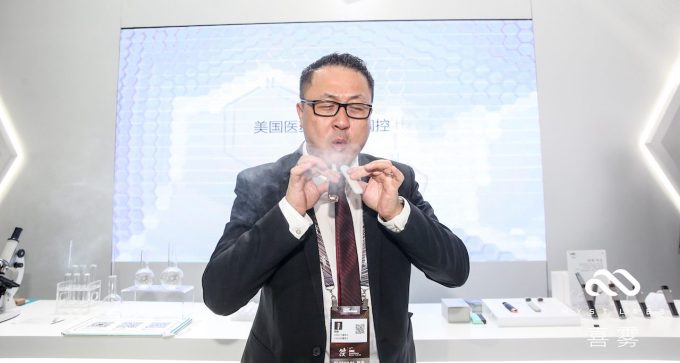
The chemist who helped create the magic sauce behind Juul, Xing Chenyue, unveiled the product of her new startup Myst Labs this week after two years of development: electronic cigarette alternatives designed for China’s 350 million smokers, the world’s biggest smoking population.

This new contender makes for a potentially heated battlefield given that Juul will reportedly enter China soon. TechCrunch has reached out to Juul about its expansion, but has not heard back at the time of writing.

Pax Labs — the company that spun out Juul in 2017 — was a 20-person team when Xing joined as one of its first scientists in 2013. During her nearly three-year post at what would become America’s largest vaping company, Xing helped invent nicotine salts, the compounds that made Juul an instant hit. The patented technology inspired a raft of followers because it allows high levels of nicotine to be inhaled more easily and with less irritation, according to the U.S. Centers for Disease Control and Prevention.

Xing left Juul when the company made a foray into marijuana vaporizers, a move that didn’t particularly interest the scientist, a non-smoker whose ambition is to “help smokers meet their nicotine needs whilst reducing the harmful substances they consume,” Xing told TechCrunch in a phone interview.

myst

Myst says it spends about 20% of its money raised on research and development. / Photo: Myst Labs

The China-born scientist took up a project management role at publicly-traded pharmaceutical company Dermia before eventually returning to cigarettes research by starting Myst Labs, which she co-founded in 2017 with Thomas Yao, a venture capitalist she had met over a decade ago at Fudan University in Shanghai.

As Myst began to take form, Juul was on course to reach its whopping $38 billion valuation even while it was under fire for luring teenagers into vaping. Meanwhile in China, vaping had just begun to catch on. Research from Soochow Securities (in Chinese) shows that China, despite being the world’s biggest producer of vaping devices, accounts for merely 6% of the world’s e-cig market. Xing wanted to seize the opportunity and this time, she’s in control over what comes out of the lab.

“We certainly want to reach the same level of society-wide impact in China as Juul does in the U.S. We hope Myst can leave a positive mark on Chinese smokers,” said Xing. “Myst can slowly transform the way people smoke and gradually reduce the level of their nicotine intake.”

Myst’s first product, dubbed the P1 series, is a 399 yuan ($58) flash-drive-shaped device that comes with a nicotine level of 3% or 5% and sports a retractable cigarette holder for hygiene and a “click” sound that mimics a lighter. Myst will ship in China through online and offline channels and said it plans to sell in international markets down the road. Its price point is comparable to Juul’s pricing in the U.S.

Myst does not market itself as a smoking cessation tool because to do so would require approval from China’s drug regulator. Rather, the startup bills itself as a “new type of cigarette substitute for adult smokers.” It has avoided using images of young, cool-looking models, the style of campaigns that backfired on Juul. To verify customers’ age, Myst applies facial recognition, an increasingly ubiquitous technology in China where people scan their face to pay for things or access certain entertainment services such as video games and live videos.

myst 4

Myst says its products are priced and marketed to target ‘adult smokers,’ not young people. / Photo: Myst Labs

That positioning also allows the company to potentially evade stepping on the toes of China’s powerful cigarette monopoly, which provides the government with handsome sums of tax revenues.

From Silicon Valley to Shenzhen

Myst deploys about half of its 20-person team to conduct research and development in Silicon Valley. The rest of the company mainly works out of Shenzhen, the electronics manufacturing hub that also produces the majority of the world’s vaporizers.

“We are combining Silicon Valley research and China’s supply chain, a strategy that sets us apart from most vaporizers on the market,” Yao, who heads up business development at Myst, told TechCrunch.

He compared China’s vaping craze to what happened to smartphones between 2010 and 2011 when copycats of incumbents crowded the market in a gold rush. Countless knockoffs of Juul and other established brands now flood the market. Companies with various degrees of development capabilities have also mushroomed — at least 20 Chinese e-cig startups have received venture investment in the last seven months.

As with the smartphone market that’s now dominated by a small rank of players, Yao believed the bad apples in vaping will eventually be weeded out. “This [counterfaiting] happens whenever China experiences a technological breakthrough. Chinese brands get eliminated at a rate to which no other country can compare. Perhaps a lot of [e-cig] companies will go out of business by the end of this year.” A sector reshuffle will result in part from government regulation, which can arrive in China anytime soon.

myst 5

Myst co-founder Thomas Yao introduced his co-founder and the company’s chief scientist Xing Chenyue, a former scientist at Juul. / Photo: Myst Labs

Xing believes Myst’s edge lies in the quality of its products. According to Yao, the company spends about 20% of the money raised on R&D.

Yao declined to disclose how much the company has banked but said it has sufficient funds in the coffer and that “money isn’t an issue” because he has personally invested in Myst. Yao had previously picked some winners by backing mobility unicorn Lime and India’s wallet leader Paytm in their early days.

The co-founder has also brought to the table key personnel for the business, including Myst’s chief executive officer Daniel Chen, who previously managed Hong Kong-listed robotics firm Super Robotics; chief operation officer Martin Liu, former CEO of Blackberry China; head of product Yingqun Cao, a former product manager at Google Home and Juul; and lastly head of design Jiandong Hao, previously a design director at global design firm IDEO.

The pool of talent is reflective of Myst’s vision to digitize smoking, which can manifest in the form of a connected vaporizer that tracks users’ health conditions just like a smart wristband does. Myst’s current generation of products does not yet enable the futuristic scenario, but Yao maintained that digitization is key to smoking.

“For smokers, vaporizers could become the second most used electronic devices after smartphones,” he said.

27 Jul 2019

Bellingcat journalists targeted by failed phishing attempt

Investigative news site Bellingcat has confirmed several of its staff were targeted by an attempted phishing attack on their Protonmail accounts, which the journalists and the email provider say failed.

“Yet again, Bellingcat finds itself targeted by cyber attacks, almost certainly linked to our work on Russia,” wrote Eliot Higgins, founder of the investigative news site in a tweet. “I guess one way to measure our impact is how frequently agents of the Russian Federation try to attack it, be it their hackers, trolls, or media.”

News emerged that a small number of Protonmail email accounts were targeted during the week — several of which belonged to Bellingcat’s researchers who work on projects relating to activities by the Russian government. A phishing email purportedly from Protonmail itself asked users to change their email account passwords or generate new encryption keys on a similarly named domain set up by the attackers. Records show the fake site was registered anonymously, according to an analysis by security researchers.

In a statement, Protonmail said the phishing attacks “did not succeed” and denied that its systems or user accounts had been hacked or compromised.

“The most practical way to obtain email data from a ProtonMail user’s inbox is by compromising the user, as opposed to trying to compromise the service itself,” said Protonmail’s chief executive Andy Yen. “For this reason, the attackers opted for a phishing campaign that targeted the journalists directly.”

Yen said the attackers tried to exploited an unpatched flaw in third-party software used by Protonmail, which has yet to be fixed or disclosed by the software maker.

“This vulnerability, however, is not widely known and indicates a higher level of sophistication on the part of the attackers,” said Yen.

It’s not known conclusively who was behind the attack. However, both Bellingcat and Protonmail said they believe certain tactics and indicators of the attack — and the fact that the targets were Bellingcat’s researchers working on the ongoing investigation into the downing of flight MH17 by Russian forces and the release of nerve agent in the U.K. — may point to hackers associated with the Russian government.

Higgins said in a tweet that this week’s attempted attack likely targeted a number of people “in the tens” unlike earlier attacks attributed to the Russian government-backed hacker group, known as APT 28 or Fancy Bear.

Bellingcat in the past year has gained critical acclaim for its investigations into the Russian government, uncovering the names of the alleged Russian operatives behind the suspected missile attack that blew up Malaysian airliner MH17 in 2014. The research team also discovered the names of the Russian operatives who were since accused of poisoning former Russian intelligence agent Sergei Skripal and his daughter Yulia in a nerve agent attack in Salisbury, U.K. in 2018.

The researchers use open-source intelligence and information gathering where police, law enforcement and intelligence agencies often fail.

It’s not the first time that hackers have targeted Bellingcat. Its researchers were targeted several times in 2016 and 2017 following the breach on the Democratic National Committee which saw thousands of internal emails stolen and published online.

A phone call to the Russian consulate in New York requesting comment was not returned.

27 Jul 2019

Startups Weekly: SoftBank’s second act

Hello and welcome back to Startups Weekly, a weekend newsletter that dives into the week’s noteworthy startups and venture capital news. Before I jump into today’s topic, let’s catch up a bit. Last week, I noted some challenges plaguing mental health tech startups. Before that, I wrote about Zoom and Superhuman’s PR disasters.

Remember, you can send me tips, suggestions and feedback to kate.clark@techcrunch.com or on Twitter @KateClarkTweets. If you don’t subscribe to Startups Weekly yet, you can do that here.

Anyway, onto the subject on everyone’s mind this week: SoftBank’s second Vision Fund.

Well into the evening on Thursday, SoftBank announced a target of $108 billion for the Vision Fund 2. Yes, you read that correctly, $108 billion. SoftBank indeed plans to raise even more capital for its sophomore vehicle than it did for the record-breaking debut vision fund of $98 billion, which was majority-backed by the government funds of Saudi Arabia and Abu Dhabi, as well as Apple, Foxconn and several other limited partners.

Its upcoming fund, to which SoftBank itself has committed $38 billion, has attracted investment from the National Investment Corporation of National Bank of Kazakhstan, Apple, Foxconn, Goldman Sachs, Microsoft and more. Microsoft, a new LP for SoftBank, reportedly hopped on board with the Japanese telecom giant as part of a grand scheme to convince the massive fund’s portfolio companies to transition to Microsoft Azure, the company’s cloud platform that competes with Amazon Web Services . Here’s more on that and some analysis from TechCrunch editor Jonathan Shieber.

News of the second Vision Fund comes as somewhat of a surprise. We’d heard SoftBank was having some trouble landing commitments for the effort. Why? Well, because SoftBank’s investments have included a wide-range of upstarts, including some uncertain bets. Brandless, a company into which SoftBank injected a lot of money, has struggled in recent months, for example. Wag is said to be going downhill fast. And WeWork, backed with billions from SoftBank, still has a lot to prove.

Here’s everything else we know about The Vision Fund 2:

  • It’s focused on the “AI revolution through investment in market-leading, tech-enabled growth companies.”
  • The full list of investors also includes seven Japanese financial institutions: Mizuho Bank, Sumitomo Mitsui Banking Corporation, MUFG Bank, The Dai-ichi Life Insurance Company, Sumitomo Mitsui Trust Bank, SMBC Nikko Securities and Daiwa Securities Group. Also, international banking services provider Standard Chartered Bank, as well as “major participants from Taiwan.”
  • The $108 billion figure is based on memoranda of understandings (MOUs), or agreements for future investment from the aforementioned entities. That means SoftBank hasn’t yet collected all this capital, aside from the $38 billion it plans to invest itself in the new Vision Fund.
  • Saudi and Abu Dhabi sovereign wealth funds are not listed as investors in the new fund.
  • SoftBank is expected to begin deploying capital fund from Fund 2 immediately, and a first close is expected in two months, per The Financial Times.
  • We’ll keep you updated on the Vision Fund 2’s investments, fundraising efforts and more as we learn about them.

On to other news…

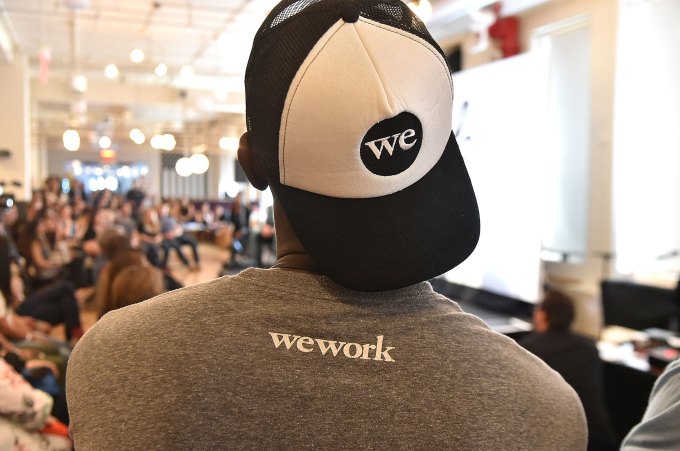
iHeartMedia And WeWork's "Work Radio" Launch Party

IPO Corner

WeWork is planning a September listing

The company made headlines again this week after word slipped it was accelerating its IPO plans and targeting a September listing. We don’t know much about its IPO plans yet as we are still waiting on the co-working business to unveil its S-1 filing. Whether WeWork can match or exceed its current private market valuation of $47 billion is unlikely. I expect it will pull an Uber and struggle, for quite some time, to earn a market cap larger than what VCs imagined it was worth months earlier.

Robinhood had a wild week

The consumer financial app made headlines twice this week. The first time because it raised a whopping $323 million at a $7.6 billion valuation. That is a whole lot of money for a business that just raised a similarly sized monster round one year ago. In fact, it left us wondering, why the hell is Robinhood worth $7.6 billion? Then, in a major security faux pas, the company revealed it has been storing user passwords in plaintext. So, go change your Robinhood password and don’t trust any business to value your security. Sigh.

Another day, another huge fintech round

While we’re on the subject on fintech, TechCrunch editor Danny Crichton noted this week the rise of mega-rounds in the fintech space. This week, it was personalized banking app MoneyLion, which raised $100 million at a near unicorn valuation. Last week, it was N26, which raised another $170 million on top of its $300 million round earlier this yearBrex raised another $100 million last month on top of its $125 million Series C from late last year. Meanwhile, companies like payments platform Stripesavings and investment platform Raisintraveler lender Uplift, mortgage backers Blend and Better and savings depositor Acorns have also raised massive new rounds this year. Naturally, VC investment in fintech is poised to reach record levels this year, according to PitchBook.

Uber’s changing board

Arianna Huffington, the CEO of Thrive Global, stepped down from Uber’s board of directors this week, a team she had been apart of since 2016. She addressed the news in a tweet, explaining that there were no disagreements between her and the company, rather, she was busy and had other things to focus on. Fair. Benchmark’s Matt Cohler also stepped down from the board this week, which leads us to believe the ride-hailing giant’s advisors are in a period of transition. If you remember, Uber’s first employee and longtime board member Ryan Graves stepped down from the board in May, just after the company’s IPO. 

Startup Capital

Unity, now valued at $6B, raising up to $525M
Bird is raising a Sequoia-led Series D at $2.5B valuation
SMB payroll startup Gusto raises $200M Series D
Elon Musk’s Boring Company snags $120M
a16z values camping business HipCamp at $127M
An inside look at the startup behind Ashton Kutcher’s weird tweets
Dataplor raises $2M to digitize small businesses in Latin America

Extra Crunch

While we’re on the subject of amazing TechCrunch #content, it’s probably time for a reminder for all of you to sign up for Extra Crunch. For a low price, you can learn more about the startups and venture capital ecosystem through exclusive deep dives, Q&As, newsletters, resources and recommendations and fundamental startup how-to guides. Here are some of my current favorite EC posts:

  1. What types of startups are the most profitable?
  2. The roles tools play in employee engagement
  3. What to watch for in a VC term sheet

#Equitypod

If you enjoy this newsletter, be sure to check out TechCrunch’s venture-focused podcast, Equity. In this week’s episode, available here, Equity co-host Alex Wilhelm, TechCrunch editor Danny Crichton and I unpack Robinhood’s valuation and argue about scooter startups. Equity drops every Friday at 6:00 am PT, so subscribe to us on Apple PodcastsOvercast and Spotify.

That’s all, folks.

26 Jul 2019

Ethics in the age of autonomous vehicles

Earlier this month, TechCrunch held its annual Mobility Sessions event, where leading mobility-focused auto companies, startups, executives and thought leaders joined us to discuss all things autonomous vehicle technology, micromobility and electric vehicles.

Extra Crunch is offering members access to full transcripts of key panels and conversations from the event, such as Megan Rose Dickey‘s chat with Voyage CEO and cofounder Oliver Cameron and Uber’s prediction team lead Clark Haynes on the ethical considerations for autonomous vehicles.

Megan, Oliver and Clark talk through how companies should be thinking about ethics when building out the self-driving ecosystem, while also diving into the technical aspects of actually building an ethical transportation product. The panelists also discuss how their respective organizations handle ethics, representation and access internally, and how their approaches have benefitted their offerings.

Clark Haynes: So we as human drivers, we’re naturally what’s called foveate. Our eyes go forward and we have some mirrors that help us get some situational awareness. Self-driving cars don’t have that problem. Self-driving cars are designed with 360-degree sensors. They can see everything around them.

But the interesting problem is not everything around you is important. And so you need to be thinking through what are the things, the people, the actors in the world that you might be interacting with, and then really, really think through possible outcomes there.

I work on the prediction problem of what’s everyone doing? Certainly, you need to know that someone behind you is moving in a certain way in a certain direction. But maybe that thing that you’re not really certain what it is that’s up in front of you, that’s the thing where you need to be rolling out 10, 20 different scenarios of what might happen and make certain that you can kind of hedge your bets against all of those.

For access to the full transcription below and for the opportunity to read through additional event transcripts and recaps, become a member of Extra Crunch. Learn more and try it for free. 

Megan Rose Dickey: Ready to talk some ethics?

Oliver Cameron: Born ready.

Clark Haynes: Absolutely.

Rose Dickey: I’m here with Oliver Cameron of Voyage, a self-driving car company that operates in communities, like retirement communities, for example. And with Clark Haynes of Uber, he’s on the prediction team for autonomous vehicles.

So some of you in the audience may remember, it was last October, MIT came out with something called the moral machine. And it essentially laid out 13 different scenarios involving self-driving cars where essentially someone had to die. It was either the old person or the young person, the black person, or the white person, three people versus one person. I’m sure you guys saw that, too.

So why is that not exactly the right way to be thinking about self-driving cars and ethics?

Haynes: This is the often-overused trolley problem of, “You can only do A or B choose one.” The big thing there is that if you’re actually faced with that as the hardest problem that you’re doing right now, you’ve already failed.

You should have been working harder to make certain you never ended up in a situation where you’re just choosing A or B. You should actually have been, a long time ago, looking at A, B, C, D, E, F, G, and like thinking through all possible outcomes as far as what your self-driving car could do, in low probability outcomes that might be happening.

Rose Dickey: Oliver, I remember actually, it was maybe a few months ago, you tweeted something about the trolley problem and how much you hate it.

Cameron: I think it’s one of those questions that doesn’t have an ideal answer today, because no one’s got self-driving cars deployed to tens of thousands of people experiencing these sorts of issues on the road. If we did an experiment, how many people here have ever faced that conundrum? Where they have to choose between a mother pushing a stroller with a child and a regular, normal person that’s just crossing the road?

Rose Dickey: We could have a quick show of hands. Has anyone been in that situation?

26 Jul 2019

Siri recordings “regularly” sent to Apple contractors for analysis, claims whistleblower

Apple has joined the dubious company of Google and Amazon in secretly sharing audio recordings of its users with contractors, confirming the practice to The Guardian after a whistleblower brought it to the outlet. The person said that Siri queries are routinely sent to human listeners for closer analysis, something not disclosed in Apple’s privacy policy.

The recordings are reportedly not associated with an Apple ID, but can be several seconds long, include content of a personal nature, and are paired with other revealing data, like location, app data, and contact details.

Like the other companies, Apple says this data is collected and analyzed by humans to improve its services, and that all analysis is done in a secure facility by workers bound by confidentiality agreements. And like the other companies, Apple failed to say that it does this until forced to.

Apple told The Guardian that less than one percent of daily queries are sent, cold comfort when the company is also constantly talking up the volume of Siri queries. Hundreds of millions of devices use the feature regularly, making a conservative estimate of a fraction of one percent rise quickly into the hundreds of thousands.

This “small portion” of Siri requests is apparently randomly chosen, and as the whistleblower notes, it includes “countless instances of recordings featuring private discussions between doctors and patients, business deals, seemingly criminal dealings, sexual encounters and so on.”

Some of these activations of Siri will have been accidental, which is one of the things listeners are trained to listen for and identify. Accidentally recorded queries can be many seconds long and contain a great deal of personal information, even if it is not directly tied to a digital identity.

Only in the last month has it come out that Google sends clips to be analyzed in like wise, and that Amazon, which we knew recorded Alexa queries, retains that audio indefinitely.

Apple’s privacy policy states regarding non-personal information (which Siri queries would fall under):

We may collect and store details of how you use our services, including search queries. This information may be used to improve the relevancy of results provided by our services. Except in limited instances to ensure quality of our services over the Internet, such information will not be associated with your IP address.

It’s conceivable that the phrase “search queries” is inclusive of recordings of search queries. And it does say that it shares some data with third parties. But nowhere is it stated simply that questions you ask your phone may be recorded and shared with a stranger. Nor is there any way for users to opt out of this practice.

Given Apple’s focus on privacy and transparency, this seems like a major, and obviously a deliberate, oversight. I’ve contacted Apple for more details and will update this post when I hear back.

26 Jul 2019

Lessons from the hardware capital of the world

A week is obviously not enough time to truly understand a market as massive and fascinating as China. Hell, it’s not really even enough time to adjust to the 12-hour time difference from New York. That said, each of the three visits I’ve taken to the country in the past two years has yielded some useful insights into my role as hardware editor here at TechCrunch.

Late last week, I got back from an eight-day trip to Shenzhen in the Guangdong Province of South China and nearby Hong Kong. In some respects, the cities are worlds apart, though a newly opened high-speed rail system has reduced the trip to 30 minutes. Customs issues aside, it’s the height of convenience. Though for political and cultural reasons I’ll not get into here, some have bemoaned the access it’s provided.

This particular visit was sort of a scouting trip. In November, TechCrunch will be hosting its first Hardware Battlefield event in a couple of years. Previous events had been held at CES for reasons of easy access to young startups. This time out, however, we’ve opted to go straight to the source.

The birthplace of hardware

26 Jul 2019

Fintech decacorn Nubank raises $400m led by TCV

Another day, another mega round for a fintech startup. And this one is mega mega.

Brazil-based Nubank, which offers a suite of banking and financial services for Brazilian consumers, announced today that it has raised a $400 million Series F round of venture capital led by Woody Marshall of TCV, the growth-stage fund best known for its investment in Netflix but which also made fintech a priority, with over $1.5 billion in investments in the space. According to Nubank, the company has now raised $820 million across seven venture rounds.

Katie Roof of the Wall Street Journal reported this morning that the company secured a valuation above $10 billion, potentially making it one of a short list of startup decacorns. That’s up from a $4 billion valuation we wrote about back in October 2018.

Part of the reason for that big ticket round is the company’s growth. Nubank said in a statement that it has now reached 12 million customers for its various products, making it the sixth-largest financial institution by customer count within its home market. Brazil has a population of roughly 210 million people — indicating that there is still a lot of potential local growth even before the company began to consider international expansion options. It announced a few weeks ago that it will start to expand its offerings to Mexico and Argentina.

Over the past year, the company has expanded its product offerings to include personal loans and cash withdrawal options as part of its digital savings accounts.

As I wrote earlier this week, part of the reason for these mega rounds in fintech is that the cost of acquiring a financial customer is critical to the success of these startups. Once a startup has a customer for one financial product — say, a savings account — it can then upsell customers to other products at a very low marketing cost. That appears to be the strategy at Nubank as well with its quickly expanding suite of products.

As my colleague Jon Shieber discussed last month, critical connections between Stanford, Silicon Valley and Latin America have forged a surge of investment from venture capitalists into the region as the continent experiences the same digital transformation seen in many other places throughout the world. As just one example from health care, Dr Consulta has raised more than nine figures to address the serious health care needs of Brazilian consumers. SoftBank’s Vision Fund, which was rumored to be investing in Nubank earlier this year, has vowed to put $5 billion to work in the region. That fund recently invested $231 million in fintech startup Creditas.

In an email from TCV, Woody Marshall said that, “Leveraging unique technology, David Vélez and his team are continuously pushing the boundaries of delivering best in class financial services, grounded in a culture of tech and innovation. Nubank has all the core tenets of what TCV looks for in preeminent franchise investments.”

NuBank was founded in 2013 by co-founders Adam Edward Wible, Cristina Junqueira, and David Velez. In addition to TCV, existing backers Tencent, DST Global, Sequoia Capital, Dragoneer, Ribbit Capital, and Thrive Capital also participated in the round.