Category: UNCATEGORIZED

29 Jul 2019

Joy Capital closes $700M for early-stage investments in China

Joy Capital, the venture capital firm that’s backed Luckin, NIO, Mobike and other investor darlings in China, just raised $700 million for a new fund focusing on early-to-growth stage startups.

Launched in 2015 by a team of former investors at Legend Capital, the investment arm of PC maker Lenovo’s parent company, Joy Capital made the news official (in Chinese) on Monday. It didn’t identify the limited partners in this new corpus of funding but said they include “top” public pension funds and insurance companies. Its existing pool of investors counts those from sovereign wealth funds, education-focused endowment funds, family funds and parent funds.

The fresh money boosted Joy’s total tally to over 10 billion yuan ($1.45 billion) under management, with a focus on backing cutting edge technologies and companies involved in the digital upgrade of China’s traditional sectors, or what Joy’s founding partner Liu Erhai (pictured above) dubbed the “new infrastructure” in an op-ed for the China Securities Journal. Targets can include the likes of logistics companies, online car rental platforms or bike-sharing apps.

As a relatively young fund, Joy Capital has so far achieved a few large outcomes. One of its portfolio companies NIO became China’s first electric vehicle startup to go public in the U.S. as a rival to Tesla. It’s also funded Luckin, the Starbucks nemesis from China that floated in the U.S. only 18 months after inception. The fund’s other big wins include Mobike, the bike-sharing pioneer that was sold to Meituan Dianping for $2.7 billion and fast-growing house-sharing unicorn Danke Apartment.

Joy Capital’s new raise arrived at a time when Chinese venture investors are coping with a cash crunch amid a cooling economy exacerbated by the expansion of U.S. tariffs. We reported that private equity and venture capital firms in the country raised 30% less in the first six months of 2019 compared to a year earlier, and the number of investors that managed to attract fundings was down 52% in the same period.

29 Jul 2019

Fortnite World Cup has handed out $30 million in prizes, and cemented its spot in the culture

The Fortnite phenomenon — the wildly popular battle royale game from Epic Games — has manifested itself in concerned articles, cultural shoutouts and now has sealed its place in the cultural firmament by wrapping up its first “World Cup” which saw the company give away $30 million in prizes.

The big winner in today’s solo challenge was sixteen year-old Kyle “Bugha” Giersdorf, who won $3 million for beating out the competition in the solo tournament. And, as sports writer Darren Rovell noted on Twitter, Giersdorf’s prize pool is only $800,000 smaller than the pot for the winner of the U.S. Open, which is set to begin in a few weeks at the same stadium.

Indeed, the esports prize pool is one of the biggest awards for a popular competitive event. Wimbledon winners will take home less than $3 million and Tiger Woods won $2 million for besting the field of competitors at the Masters. \

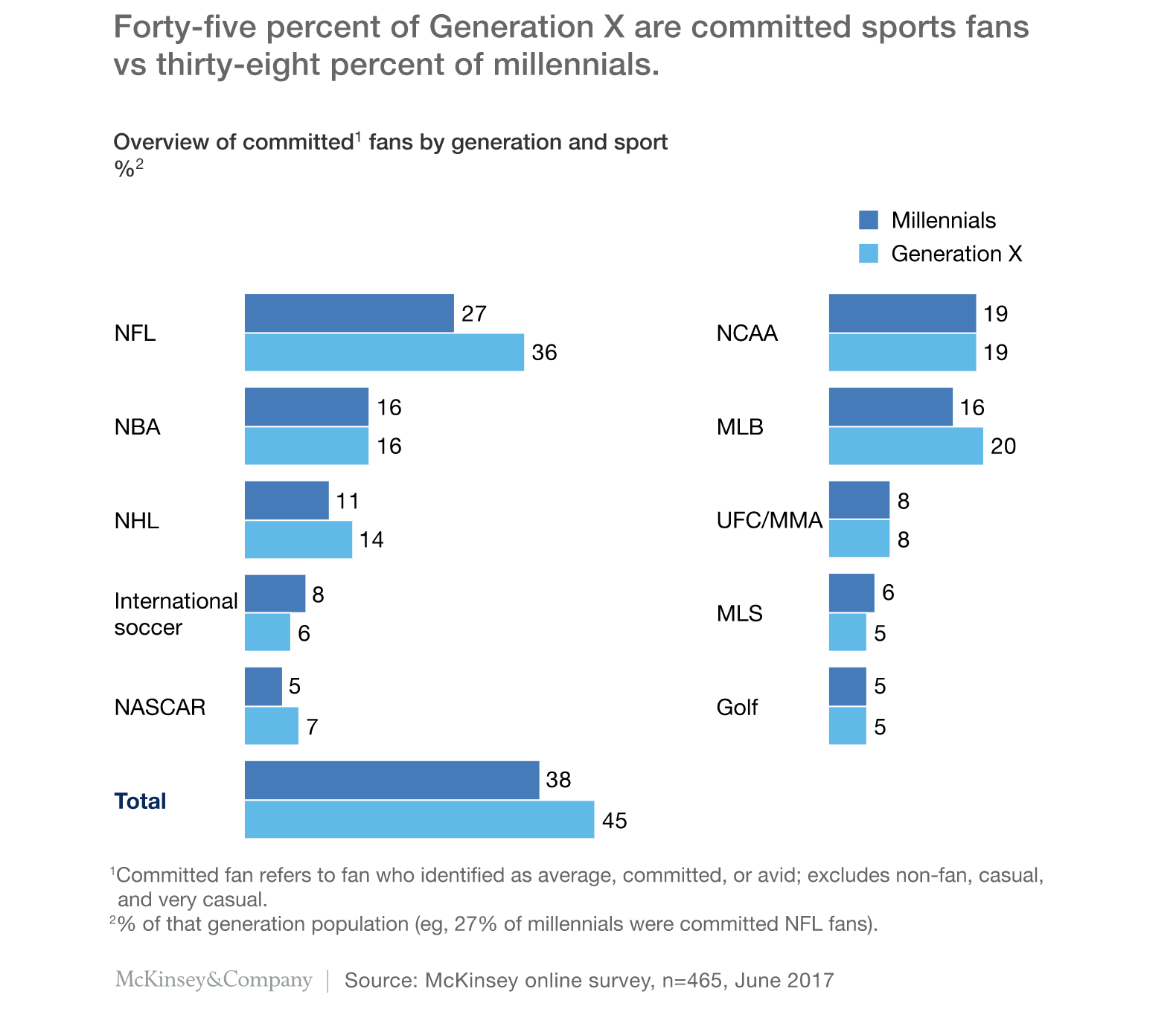
Fortnite’s big moment is also a big deal for competitive esports in the U.S. The biggest prize pool for an esports event in the U.S. was likely meant to plant a flag and show that competitive gaming is something that can capture the attention of a younger audience that has drifted away from watching more traditional pastimes and watching less sports, according to a McKinsey study.

Screen Shot 2019 07 28 at 6.01.13 PM

Courtesy of McKinseys

Giersdorf, who hails from Pennsylvania and plays professionally for the Los Angeles-based esports team, the Sentinels, became the inaugural Fortnite World Cup solo champion by putting in a dominant performance over the entire weekend of competition.

For folks who’ve never played the game (or had it explained to them) Fortnite involves dropping 100 players onto an island where they have to find weapons, build bases and try and eliminate the competition until only one player’s left standing.

It’s a cartoon version of the Hunger Games with no bloodshed, a lot of victory dances, and hours of social networking.

The game has turned its publisher, Epic Games into a multi-billion dollar business. Certainly it’s one that can afford to front a $30 million prize purse for a few days of competition.

The tournament wasn’t just about solo-play. The company had different rounds for the duos competition featuring two-player teams. That competition, which ended on Saturday, also featured a $3 million prize pool and was won by the European duo of Emil “Nyhrox” Bergquist Pedersen and David “Aqua” W.

Epic pulled out all of the stops it could for the multi-day event at Arthur Ashe stadium. In addition to pulling in some of the top names in livestreaming and competitive esports to participate in the event, the company also brought in the DJ Marshmello for a performance.

The tournament pulled in nearly 9 million viewers for the final day of the competition on YouTube alone. Over 40 million people tried out for a slot in the World Cup finals.

And while the prize pot takes a significant chunk out of the $100 million that Epic has committed to spend on competitions this year, the returns in terms of the social capital and cache’ that Epic has given to the esports world can’t be underestimated.

It’s certainly going to change the life of its first World Cup champion. A fact that Giersdorf knows all too well himself.

“Emotionally, right now, I don’t feel too much, except I know that this could pretty much change my life forever,” Giersdorf said in an interview with ESPN. “It’s just absolutely unreal.”

28 Jul 2019

Last-mile training and the future of work in an expanding gig economy

The future of work is so uncertain that perhaps the only possible job security exists for the person who can credibly claim to be an expert on the future of work.

Nevertheless, there are two trends purported experts are reasonably certain about: (1) continued growth in the number of jobs requiring substantive and sustained interaction with technology; and (2) continued rapid expansion of the gig economy.

This first future of work trend is evident today in America’s skills gap with 7 million unfilled jobs — many mid- or high-skill position requiring a range of digital and technology capabilities.

Amazon’s recent announcement that it will spend $700 million over the next six years to upskill 100,000 of its low-wage fulfillment center employees for better digital jobs within Amazon and elsewhere demonstrates an understanding that the private sector must take some responsibility for the requisite upskilling and retraining, as well as the importance of establishing pathways to these jobs that are faster and cheaper than the ones currently on offer from colleges and universities.

These pathways typically involve “last-mile training”, a combination of digital skills, specific industry or enterprise knowledge, and soft skills to make candidates job-ready from day one.

The second trend isn’t new; the gig economy has existed since the advent of the “Help Wanted” sign. But what’s powered the gig revolution is the shift from signs and classified ads to digital platforms and marketplaces that facilitate continued and repeated matching of gig and gig worker. These talent platforms have made it possible for companies and organizations to conceptualize and compartmentalize work as projects rather than full-time jobs, and for workers to earn a living by piecing together gigs.

Critics of the gig economy decry the lack of job security, healthcare and benefits, and rightly so. If it’s hard to make ends meet as a full-time employee making a near-minimum wage, it’s impossible to do so via a gig platform at a comparable low wage. But rather than fighting the onset of the gig economy, critics might achieve more by focusing on upskilling gig workers.

To date, conversations about pathways and upskilling have focused on full-time employment. In the workforce or skills gap vernacular, upskilled Amazon workers might leave the fulfillment center for a tech support job with Amazon or another company, but it’s always a full-time job. But how do these important concepts intersect with the rising gig economy?

GettyImages 924636730

Image via Getty Images / PeterSnow

Just as there are low-skill and high-skill jobs, there are gig platforms that require limited or low skills, and platforms that require a breadth of advanced skills. Gig platforms that can be classified as low-skill include Amazon’s Mechanical TurkTaskRabbitUber and Lyft, and Instawork (hospitality). There are also mid-tier platforms like Upwork that span a wide range of gigs. And then there are platforms like Gigster (app development), and Business Talent Group (consulting and entire management functions) that require the same skillset as the most lucrative, in-demand, full-time positions.

So just as Amazon is focused on last-mile training programs to upskill workers and create new pathways to better jobs, in the gig economy context, our focus should be on strategies and platforms that allow gig workers to move from lower-skill to higher-skill platforms i.e., pathways for Uber drivers to become Business Talent Group executives.

One high-skill gig platform has developed an innovative strategy to do exactly this. CreatorUp is a gig platform for digital video production that has built in a last-mile training on-ramp. CreatorUp offers low-cost or free last-mile training programs on its own and in conjunction with clients like YouTube and Google to upskill gig workers so they can be effective digital video producers on the CreatorUp platform.

CreatorUp’s programs are driven by client demand; because the company saw significant demand from clients for AR/VR video production, it launched a new AR/VR training track. Graduates of CreatorUp’s programs join the platform and are staffed on a wide range of productions that clients require to engage customers, suppliers, employees and/or to build their brands.

Screen Shot 2019 07 28 at 4.39.10 PM

The good news for CreatorUp and other high-skill gig platforms that begin to incorporate last-mile training is that investing in these pathways can start the flywheel that every successful talent marketplace requires. Clients only patronize talent marketplaces once there’s a critical mass of talent on the platform. So how do platforms attract talent? One way is to be first-to-market in a category. A second is to attract billions in venture capital. But a third might be to use last-mile training to create new talent.

CreatorUp believes its last-mile training programs have allowed it to grow a network that serves diverse client needs better than any other video production platform. For not only has last-mile training allowed CreatorUp to understand and certify the skills of talent on the platform, and therefore to meet the needs of more clients, it has also allowed CreatorUp to bid more competitively because newly trained talent is often willing to work for less.

Last-mile training has the potential to be a win-win for the gig economy. It’s a strategy that may allow gig platforms to scale, matching more talent with more clients. Meanwhile, by allowing workers to upskill from lower-tier gig platforms to higher skill platforms, it’s also the first gig economy solution for social mobility.

28 Jul 2019

Reports claims all three new iPhones planned for 2020 will support 5G

Apple analyst Ming-Chi Kuo — sometimes described as “the most accurate Apple analyst in the world” — has written a new note to investors saying that the three iPhones expected to launch in 2020 will feature support for 5G. In previous Kuo reports, it’s said the 2020 iPhones could be available in new sizes: a 5.4 and 6.7-inch high-end iPhones with OLED displays, along with a 6.1-inch model with an OLED display.

Previously, he predicted that only two of the three new iPhones slated for 2020 would support 5G. But with well-spec’d Androids flooding the market, he says it looks like Apple will offer 5G in all models in order to better compete. He’s also confirmed the view that Apple will be able to throw more resources into developing the 5G iPhone now that it has acquired Intel’s smartphone modem chip business.

The report, leaked to MacRumors, contains this quote:

We now believe that all three new 2H20 iPhone models will support 5G for the following reasons. (1) Apple has more resource for developing the 5G iPhone after the acquisition of Intel baseband business. (2) We expect that the prices of 5G Android smartphones will decline to $249-349 USD in 2H20. We believe that 5G Android smartphones, which will be sold at $249-349 USD, will only support Sub-6GHz. But the key is that consumers will think that 5G is the necessary function in 2H20. Therefore, iPhone models which will be sold at higher prices have to support 5G for winning more subsidies from mobile operators and consumers’ purchase intention. (3) Boosting 5G developments could benefit Apple’s AR ecosystem.

The report expects all three 2020 iPhone models to support both mmWave and Sub-6GHz spectrum (two different kinds of 5G) for the US market. Whether Apple will launch a 5G iPhone that only supports Sub-6GHz, allowing for a lower price and thus making it suitable for the Chinese market, remains unclear.

mmWave is the ‘fastest 5G’ that’s most often referred to, but as it is suited to denser, urban areas, it will not be used as much in rural or suburban areas, where mid-bands and low-bands, called sub-6GHz 5G, will be employed. All are banks are faster than 4G, with mmWave the fastest.

Apple will use modem chips from Qualcomm in its 2020 5G iPhones, while it works on its own modem chips, due in 2021.

28 Jul 2019

Original Content podcast: Our love for ‘Queer Eye’ isn’t quite as strong

It’s been barely more than a year since the “Queer Eye” revival premiered on Netflix, but the series is already back for its fourth season.

This time around, the Fab Five finds new makeover subjects in Kansas City (with a detour to Quincy, Illinois, where hairstylist Jonathan Van Ness grew up), offering their custom mix of lifestyle tips and intense emotional conversations. In many ways, the new season serves as a reminder that “Queer Eye” remains one of the most compelling titles in Netflix’s reality TV lineup.

At the same time, some of our excitement is wearing off. That’s not to say that the show is weaker, exactly — but the formula is becoming more familiar, and the contrivance of whirlwind life changes all taking place in a handful of days feels a little harder to swallow.

We also had reservations about Karamo’s big decision in “Disabled But Not Really,” where he asks the episode’s subject Wesley to meet with the man who shot and paralyzed him years earlier. It makes for suspenseful and moving TV, and Wesley seems to find the conversation rewarding, but we argued about whether the sequence felt more contrived and exploitative than helpful.

In addition to reviewing the latest season of “Queer Eye,” we also discussed our first impressions of the new Netflix science fiction series “Years and Years,” which Jordan was particularly excited about because it stars Katee Sackhoff of “Battlestar Galactica.” This, in turn, led to our thoughts on the new trailer for “Star Trek: Picard.”

You can listen in the player below, subscribe using Apple Podcasts or find us in your podcast player of choice. If you like the show, please let us know by leaving a review on Apple. You can also send us feedback directly. (Or suggest shows and movies for us to review!)

And if you’d like to skip ahead, here’s how the episode breaks down:
0:00 Intro
0:28 “Another Life” first impressions
17:32 “Queer Eye” season 4 review

28 Jul 2019

What will happen when the bad times come?

Here in America we are now in the longest economic expansion in history. That doesn’t mean it’s about to end. But it does raise the question: what happens when it does? When the economic cycle finally inverts into recession, perhaps unexpectedly and with no obvious cause, perhaps because of some geopolitical crisis? We know what happens to the overall economy — but what happens to the tech sector?

Last time around, the answer was: “surprisingly little.” Late 2008 saw widespread expectations that tech was about to crater along with all other sectors. This was the era of Sequoia Capital’s infamous “R.I.P. Good Times” deck. They could hardly have been more wrong.

Instead the Great Recession everywhere else was more of a speed bump in Silicon Valley. In fact it was arguably the birth of the modern startup boom. The number of startups tracked by CrunchBase rose rapidly from 1200 in 2007, by at least 25% every year, to 5700 five years later.

Meanwhile, YoY revenue growth at Google did drop into single digits in 2008-09 … but only for a few quarters, never actually stalled, and quickly returned to 20%+. Amazon growth never fell below double digits. Apple’s went negative for one lonesome quarter, but otherwise stayed north of 20%.

Go back a little further, though, and you come to the dot-com crash, in which tech was — of course, and rightly — hit hard. This was not entirely a bad thing. Even at the time it was clear that to some extent the chaff was being sifted from the industry, albeit at widespread painful personal cost. However, that unpleasant correction set the stage for the nonstop growth since.

So: will the next downturn parallel 2008, or 2001? Will tech growth slow but not stop, or has the time come again for a great economic threshing which will separate wheat from chaff? Or will the next downturn take its own, very different shape? Tech is both much larger now, and much more tightly woven into every other sector.

One could argue a recession will accelerate the demise of legacy businesses and systems, and their replacement with newer, more efficient, software- / API- / AI-driven ones, so the tech industry will actually see a net benefit from any downturn. I’m skeptical of this vulture theory, though. A sinking tide ultimately lowers all boats.

Still, the Big Five — Alphabet, Amazon, Apple, Facebook, Microsoft — will probably sail though relatively untouched. They may stop hiring as aggressively (Google has grown by 18,000 employees to 107,000 in just the last year) but they have enough cash on hand, and diverse enough revenue streams, to weather a storm. Even Google is no longer totally reliant on ads, now that it’s making $8 billion/year from GCP.

The one possible exception is Facebook, which remains the most precarious of the Big Five, given the increasing vitriol it attracts, its relative lack of room to grow in wealthy markets, and, probably most important, the fact it remains a one-trick revenue pony. Could the next recession see Facebook drop from Big Five status? Very possibly.

Lesser companies, though — those outside of tech proper, and even the herd of growth-stage unicorns — will almost certainly be forced into major layoffs. Will the newly-laid-off flock back to school, as happened in 2008? Or will they rush to roll the dice with new startups? Given the rising costs of, and increasing skepticism aimed at, traditional higher education, it seems likely that instead we’ll suddenly see an enormous bloom of new startups.

On the one hand, this means more ideas flung at the proverbial wall, and so more innovation. But on the other, these will presumably mostly be low-cost web / app startups, which as I’ve argued before are increasingly played out, from people who are founding them as a reaction to being laid off rather than because they have a vision they can’t ignore, in a downturn during which funding will presumably grow ever harder to acquire.

There’s a school of thought which says more startups is always better, and another which says that bad startups are like an algal bloom, choking the oxygen (money, attention, talent) from the ambient environment and making things worse for the overall ecosystem. It seems likely that the next downturn will serve as a natural experiment testing these hypotheses. Let’s hope the former is more true. And if (but only if) you have your own burning startup idea in you, it might be best to beat the eventual recessionary rush.

28 Jul 2019

Week in Review: Regulation boogaloo

Hello, weekenders. This is Week-in-Review, where I give a heavy amount of analysis and/or rambling thoughts on one story while scouring the rest of the hundreds of stories that emerged on TechCrunch this week to surface my favorites for your reading pleasure.

Last week, I talked about how services like Instagram had moved beyond letting their algorithms take over the curation process as they tested minimizing key user metrics such as “like” counts on the platform.


John Taggart/Bloomberg via Getty Images

The big story

The big news stories this week intimately involved the government poking its head into the tech industry. What was clear between the two biggest stories, the DoJ approving the Sprint/T -Mobile merger and the FTC giving Facebook a $5 billion slap on the wrist, is that big tech has little to worry about its inertia being contained.

It seems the argument from Spring and T-Mobile that it was better to have three big telecom companies in the U.S. rather than two contenders and two pretenders, seems to have stuck. Similarly, Facebook seems to have done a worthy job of indicating that it will handle the complicated privacy stuff but that they’ll let the government orgs see what they’re up to.

Fundamentally, none of these orgs seem to want to harm the growth of these American tech companies and I have a tough time believing that perspective is going to magically get more toothy in some of these early antitrust investigations. The government might be making a more concerted effort to understand how these businesses are structured, but even focusing solely on something like the cloud businesses of Microsoft, Google and Amazon, I have little doubt that the government is going to spend an awfully long time in the observation phase.

The danger is erraticism and for that the worst government fear for tech isn’t a three-letter agency, it’s the Twitter ramblings of POTUS.

feedback -> @lucasmtny

Onto the rest of the week’s news.

Intel and Apple logos

(Photo: ALASTAIR PIKE,THOMAS SAMSON/AFP/Getty Images)

Trends of the week

Here are a few big news items from big companies, with green links to all the sweet, sweet added context:

  • Apple dropping $1 billion on Intel’s modem business
    Apple is snapping up a missing link in its in-house component production with the $1B purchase of most of Intel’s modem business. This follows a dramatic saga between Intel, Qualcomm and Apple over the past year, but Apple will be making its own smartphone modems the question is when they actually end up in new iPhones. Read more here.
  • Microsoft dropping $1 billion on OpenAI
    Microsoft announced this week that it is dumping $1 billion into Sam Altman’s OpenAI research group. The partnership is pretty major, but it’s just one of the interesting avenues Microsoft is using to ensure its Azure services gain notable customers. Read more here.
  • Galaxy Fold is coming back!
    After a very embarrassing soft launch, Samsung which managed to make it a several devices beyond the Note 7 before another garbage fire is trying its hand at the Galaxy Fold again and will be releasing it sometime in September. It seems like the carriers are a little dubious of the prospect and T-Mobile has already opted out of carrying it. Read more here.

darkened facebook logo

GAFA Gaffes [Facebook Edition!!]

How did the top tech companies screw up this week? This clearly needs its own section, in order of badness:

  1. Facebook gets five:
    [Facebook settles with FTC: $5 billion and new privacy guarantees]
  2. FTC isn’t quite done with Facebook:
    [Facebook says it’s under antitrust investigation by the FTC]
  3. Facebook dismissed CA warnings:
    [Facebook ignored staff warnings about sketchy Cambridge Analytica in September 2015]
  4. Facebook left kids vulnerable:
    [Facebook fails to keep Messenger Kids safety promise]

Extra Crunch

Our premium subscription service had another week of interesting deep dives. This week, my colleague Danny spoke with some top VCs about why fintech startups have been raising massive amounts of cash and he seemed to walk away with some interesting impressions.

Why fintech VC mega rounds have become so common

“…The biggest challenge that has faced fintech companies for years — really, the industry’s consistent Achilles’ heel — is the cost of acquiring a customer. Financial customer relationships are incredibly valuable, and the cost of acquiring a user for any product is among the most expensive in every major channel.

And those costs are going up…”

Here are some of our other top reads for premium subscribers.

We’re excited to announce The Station, a new TechCrunch newsletter all about mobility. Each week, in addition to curating the biggest transportation news, Kirsten Korosec will provide analysis, original reporting and insider tips. Sign up here to get The Station in your inbox beginning in August.

27 Jul 2019

A mistakenly exposed password let a hacker access internal Comodo files

A hacker gained access to internal files and documents owned by security company and SSL certificate issuer Comodo by using an email address and password mistakenly exposed on the internet.

The credentials were found in a public GitHub repository owned by a Comodo software developer. With the email address and password in hand, the hacker was able to log into the company’s Microsoft-hosted cloud services. The account was not protected with two-factor authentication.

Jelle Ursem, a Netherlands-based security researcher who found the credentials, contacted Comodo vice president Rajaswi Das by WhatsApp to secure the account. The password was revoked the following day.

Ursem told TechCrunch that the account allowed him to access internal Comodo files and documents, including sales documents and spreadsheets in the company’s OneDrive — and the company’s organization graph on SharePoint, allowing him to see the team’s biographies, contact information including phone numbers and email addresses, photos, customer documents, calendar, and more.

comodo calendar

A screenshot of a staff calendar on Comodo’s internal site. (Image: supplied)

He also shared several screenshots of folders containing agreements and contracts with several customers — with the names of customers in each filename, such as hospitals and U.S. state governments. Other documents appeared to be Comodo vulnerability reports. Ursem’s cursory review of the data did not turn up any customer certificates private keys, however.

“Seeing as they’re a security company and give out SSL certificates, you’d think that the security of their own environment would come first above all else,” said Ursem.

But according to Ursem, he wasn’t the first person to find the exposed email address and password.

“This account has already been hacked by somebody else, who has been sending out spam,” he told TechCrunch. He shared a screenshot of a spam email sent out, purporting to offer tax refunds from the French finance ministry.

We reached out to Comodo for comment prior to publication. A spokesperson said the account was an “automated account used for marketing and transactional purposes,” adding: “The data accessed was not manipulated in any way and within hours of being notified by the researcher, the account was locked down.”

It’s the latest example of exposed corporate passwords found in public GitHub repositories, where developers store code online. All too often developers upload files inadvertently containing private credentials used for internal-only testing. Researchers like Ursem regularly scan repositories for passwords and report them to the companies, often in exchange for bug bounties.

Earlier this year Ursem found a similarly exposed set of internal Asus passwords on an employee’s GitHub public account. Uber was also breached in 2016 after hackers found internal credentials on GitHub.

27 Jul 2019

The Knight Foundation launches $750,000 initiative for immersive technology for the arts

The John S. and James L. Knight Foundation is looking for pitches on how to enhance and augment traditional creative arts through immersive technologies.

Through a partnership with Microsoft the foundation is offering a share of a $750,00 pool of cash and the option of technical support from Microsoft, including mentoring in mixed-reality technologies and access to the company’s suite of mixed reality technologies.

“We’ve seen how immersive technologies can reach new audiences and engage existing audiences in new ways,” said Chris Barr, director for arts and technology innovation at Knight Foundation, in a statement. “But arts institutions need more knowledge to move beyond just experimenting with these technologies to becoming proficient in leveraging their full potential.”

Specifically, the foundation is looking for projects that will help engage new audiences; build new service models; expand access beyond the walls of arts institutions; and provide means to distribute immersive experiences to multiple locations, the foundation said in a statement.

“When done right, life-changing experiences can happen at the intersection of arts and technology,” said Victoria Rogers, Knight Foundation vice president for arts. “Our goal through this call is to help cultural institutions develop informed and refined practices for using new technologies, equipping them to better navigate and thrive in the digital age.”

Launched at the Gray Area Festival in San Francisco, the new initiative is part of the Foundation’s art and technology focus, which the organization said is designed to help arts institutions better meet changing audience expectations. Last year, the foundation invested $600,000 in twelve projects focused on using technology to help people engage with the arts.

“We’re incredibly excited to support this open call for ways in which technology can help art institutions engage new audiences,” says Mira Lane, Partner Director Ethics & Society at Microsoft. “We strongly believe that immersive technology can enhance the ability for richer experiences, deeper storytelling, and broader engagement.”

Here are the winners from the first $600,000 pool:

  • ArtsESP – Adrienne Arsht Center for the Performing Arts

Project lead: Nicole Keating | Miami | @ArshtCenter

Developing forecasting software that enables cultural institutions to make data-centered decisions in planning their seasons and events.

  • Exploring the Gallery Through Voice – Alley Interactive

Project lead: Tim Schwartz | New York | @alleyco@cooperhewitt@SinaBahram

Exploring how conversational interfaces, like Amazon Alexa, can provide remote audiences with access to an exhibition experience at Cooper Hewitt, Smithsonian Design Museum.

  • The Bass in VR – The Bass

Project lead: T.J. Black | Miami Beach | @TheBassMoA

Using 360-degree photography technology to capture and share the exhibit experience in an engaging, virtual way for remote audiences.

  • AR Enhanced Audio Tour – Crystal Bridges Museum of American Art

Project lead: Shane Richey | Bentonville, Arkansas | @crystalbridges

Developing mobile software to deliver immersive audio-only stories that museum visitors would experience when walking up to art for a closer look.

  • Smart Label Initiative – Eli and Edythe Broad Art Museum at Michigan State University

Project lead: Brian Kirschensteiner | East Lansing, Michigan | @msubroad

Creating a system of smart labels that combine ultra-thin touch displays and microcomputers to deliver interactive informational content about artwork to audiences.

  • Improving Arts Accessibility through Augmented Reality Technology – Institute on Disabilities at Temple University, in collaboration with People’s Light

Project lead: Lisa Sonnenborn | Philadelphia | @TempleUniv,@IODTempleU@peopleslight 

Making theater and performance art more accessible for the deaf, hard of hearing and non-English speaking communities by integrating augmented reality smart glasses with an open access smart captioning system to accompany live works.

  • ConcertCue – Massachusetts Institute of Technology (MIT); MIT Center for Art, Science & Technology

Project lead: Eran Egozy | Cambridge, Massachusetts | @EEgozy,@MIT,@ArtsatMIT@MIT_SHASS

Developing a mobile app for classical music audiences that receives real-time program notes at precisely-timed moments of a live musical performance.

  • Civic Portal – Monument Lab

Project lead: Paul Farber and Ken Lum | Philadelphia | @monument_lab@PennDesign@SachsArtsPhilly@paul_farber

Encouraging public input on new forms of historical monuments through a digital tool that allows users to identify locations, topics and create designs for potential public art and monuments in our cities.

  • Who’s Coming? – The Museum of Art and History at the McPherson Center

Project lead: Nina Simon | Santa Cruz, California | @santacruzmah@OFBYFOR_ALL

Prototyping a tool in the form of a smartphone/tablet app for cultural institutions to capture visitor demographic data, increasing knowledge on who is and who is not participating in programs.

  • Feedback Loop – Newport Art Museum, in collaboration with Work-Shop Design Studio

Project lead: Norah Diedrich | Newport, Rhode Island | @NewportArtMuse

Enabling audiences to share immediate feedback and reflections on art by designing hardware and software to test recording and sharing of audience thoughts.

  • The Traveling Stanzas Listening Wall – Wick Poetry Center at Kent State University Foundation

Project lead: David Hassler | Kent, Ohio | @DavidWickPoetry,@WickPoetry,@KentState@travelingstanza

Producing touchscreen installations in public locations that allow users to create and share poetry by reflecting on and responding to historical documents, oral histories, and multimedia stories about current events and community issues.

  • Wiki Art Depiction Explorer – Wikimedia District of Columbia, in collaboration with the Smithsonian Institution

Project lead: Andrew Lih | Washington, District of Columbia | @wikimedia@fuzheado

Using crowdsourcing methods to improve Wikipedia descriptions of artworks in major collections so people can better access and understand art virtually.


27 Jul 2019

Spacetech growth, the future of micromobility, and how to solve the hell of open offices

Is space truly within reach for startups and VC?

With the 50th anniversary of the moon landing taking place this past week, Darrell Etherington takes a temperature check of the current state of spacetech, chatting with startups like Wyvern and NSLComm. What he finds is actually a fairly positive picture — not only are there a huge number of original ideas and serious dollars flowing into the … space (couldn’t resist), but there are also clear trajectories to real products in the short-to-medium term. Writing about satellites:

Now, driven largely by miniaturization and manufacturing efficiency gains resulting from the ubiquity of home computing and smartphones, those components are a lot more affordable and a lot more available. High-quality optics can be had off the shelf for a relative song; antennas, solar cells, batteries and more have all dropped off a cliff in terms of manufacturing cost. Consumer hardware startups benefited from this trend as well, but it’s paying dividends to companies with higher-altitude ambitions, too.

[…]

Thanks to improvements in materials science, NSLComm was able to develop a proprietary technology to quickly deploy long communications antennas in orbit from relatively small craft, letting them offer high-bandwidth ground and air connectivity at a fraction of the cost needed by large satellite operators, while still maintaining favorable margins.

How top VCs view the new future of micromobility

Transportation into the cold vacuum of space isn’t the only hot zone for VC investment. Transportation itself is still getting a lot of love, but the investment theses are changing as more data comes in from the first wave of micromobility startups. At our Sessions: Mobility event, we had our VC reporter Kate Clark interview Sarah Smith of Bain Capital Ventures, Michael Granoff of Maniv Mobility, and Ted Serbinski of TechStars Detroit to discuss the future of this market, and we’ve now posted an exclusive edited transcript for Extra Crunch members.