Category: UNCATEGORIZED

05 Jul 2019

Alphabet’s Wing launches OpenSky, a safety app for Australian drone operators

Drone delivery service Project Wing (or just Wing as it’s now called) graduated from Google X last year to become an independent Alphabet business, and recently won governmental approval to operate in the suburbs outside Australia capital, Canberra. There, its service delivers food, coffee, pet supplies, and more to area residents. Related to these efforts, Wing this week launched a new app for drone flyers, OpenSky, to help them find safe places and times to fly their drones or drone fleets.

The app quietly launched on the iOS App Store and Google Play on Tuesday, and is targeted at both recreational drone owners as well as commercial drone operators.

As the Wing website explains, OpenSky wants to make it easier to find out when and where you can fly, whether you’re a “hobbyist who loves to fly” or a business that “uses unmanned aircraft to survey land or deliver goods.”
Screen Shot 2019 07 05 at 11.34.12 AM

CASA says it’s retiring its own “Can I fly there?” app in favor of a remotely piloted aircraft systems (RPAS) digital platform that app developers can connect their own drone safety apps to. OpenSky is the first third-party app to be approved that uses this new system.

In addition to its launch on the app stores, OpenSky is also available on the web.

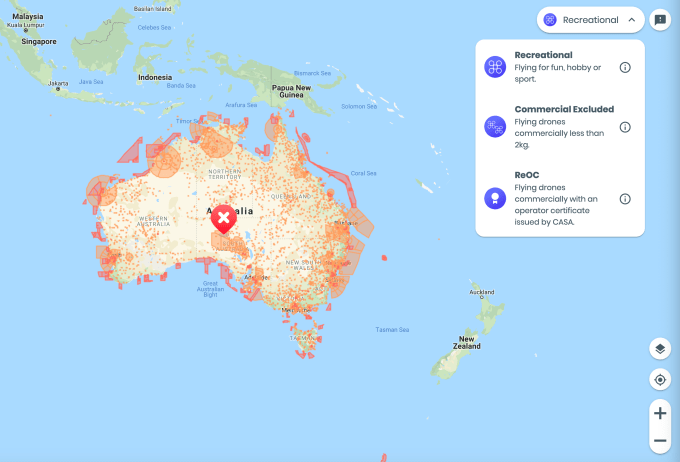
The new app itself is straightforward to use. From a menu, you select what type of drone operator you are — either recreational, commercial (flying drones commercially less than 2kg), or ReOC (flying drones commercially with an operator certificate issued by CASA).
Screen Shot 2019 07 05 at 10.49.25 AM

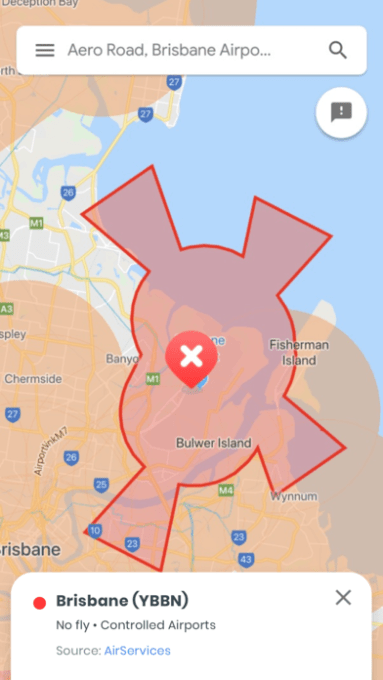
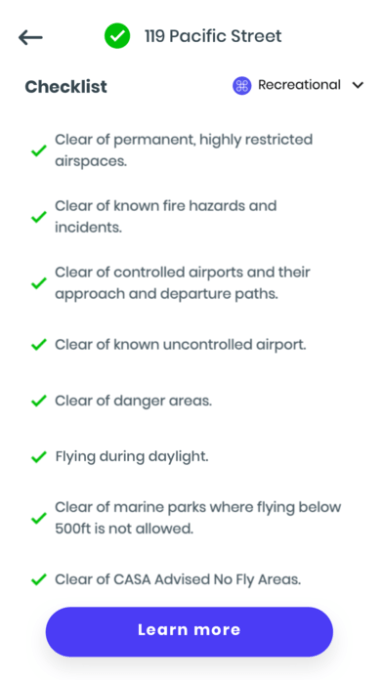
You can then enter addresses in the map’s search box to look up information about the no-fly zones and other restrictions that may be in place, as well as view the related CASA compliance maps for guidance. There are also features to help you identify flight hazards and a link to report unsafe drone operations directly to CASA.

In June, Wing had published a blog post explaining that it would assist CASA with launching an ecosystem of apps to support safe drone flight. However, it hadn’t yet said what sort of apps it was launching or when they would arrive.
696x696bb 3

“Australia’s Civil Aviation Safety Authority (CASA) is taking an innovative approach to giving drone operators information to enable safe and predictable flight,” wrote Wing Project Manager Reinaldo Negron, in the post. “By allowing the drone industry to implement a diverse ecosystem of apps and services which drone flyers can use to obtain flight-related information, CASA is creating space for innovation while ensuring a strong baseline of public safety and regulatory oversight,” he said.

In addition to the drone safety apps, Wing said it was also developing tools for CASA to communicate with drone flyers during major events such as sporting matches, concerts, and emergency response incidents.
696x696bb 2

“Over time, a CASA-approved ecosystem of apps and services will enhance drone operator choice, public safety, and spur further innovation in the drone industry. By enabling this ecosystem, CASA and the Australian Government provide a compelling example to other countries seeking to safely integrate drones into their national aviation system, and we’re excited to help support the future of Australian drone flight with them,” said Negron.

We reached out to Wing for more information, and will update if the company comments further.

 

05 Jul 2019

New LightSail 2 mission dashboard lets anyone check in on solar sail spacecraft’s progress

The Planetary Society has launched a new mission control dashboard for LightSail 2, a crowdfunded spacecraft currently in orbit that’s going to test the performance of a true solar sail that’s moved only by the force of photons from the sun bouncing off its fabric. The dashboard provides the most up-to-date information available for anyone to check, and even download for whatever use they might have for this kind of info.

It’s definitely in keeping with the spirit of LightSail 2, which raised over $1 million during its Kickstarter crowdfunding campaign. The project, organized and led by Bill Nye’s Planetary Society non-profit organization, saw its second prototype spacecraft launch aboard SpaceX’s most recent Falcon Heavy rocket launch.

The LightSail 2 Mission Control dashboard will tell you when it last got data from the spacecraft, which is preparing to actually deploy its solar sail for the first time. It gets data whenever LightSail 2 is within communications range of one of the ground communications stations on Earth that The Planetary Society is working with for its research, hence the sometimes delayed info.

Visitors can see how long LightSail 2 has been on its mission, whether the solar sail is stowed or deployed, how much power left it has in its onboard battery, what the temperature is inside the craft, its degree of rotation and what control mode it’s currently using to control its attitude (basically its orientation in space). You can also check out a map with the LightSail 2’s current location, and any overhead passes it’ll make relative to where you are when you’re checking out the dashboard. This is handy because you’ll actually be able to potentially see the spacecraft from Earth once its sails are deployed, which is the next major mission milestone.

If you want even more information, you can hit ‘Download recent data’ at the bottom of the dashboard to get a full archive of all the data transmitted by the spacecraft to date. There’s… a lot, and it’s beyond me, but it could be a wonderful research for amateur and professional space enthusiasts and researchers.

05 Jul 2019

Karamel is an app to find activities for your kids

French startup Karamel wants to help you find things to do for your kids. The company is launching a mobile app that lets you find and book kid-friendly activities around you.

The startup also just raised a $450,000 round (€400,000) from Kima Ventures, Roxanne Varza and Thibaud Elzière. Varza participates in the Atomico Angel Programme, which means that Atomico handed out $100,000 to invest in multiple early-stage companies. Atomico and Varza both see returns if the company eventually succeeds.

Karamel wants to become a one-stop shop for things your kids can do. When you open the app, you get a curated selection of activities around you so that you can find something to do this weekend for instance.

If you’re looking for something specific, you can search for activities based on multiple criteria, such as the age of your child, an activity category, price, distance and a day of the week.

You can also find recurring activities in case your child really wants to learn a new instrument or start a new sport for instance.

On the other side of the marketplace, there are many different organizations in charge of activities. It’s a fragmented market and those organizations don’t always know how to reach parents efficiently.

Thanks to Karamel, those organizations should get more traffic and could focus more on activities themselves. The startup doesn’t charge any monthly subscription fee. Instead, Karamel is taking a cut on transactions. Parents pay the same price if they book directly or though Karamel.

The service is currently live in Paris. And if you live in Marseille, Lyon, Bordeaux and Montpellier, you can search for activities but can’t book through the app just yet.

In the U.S., KidPass provides something vaguely similar, but with a monthly subscription fee. KidPass opted for a credit-based system like Audible or ClassPass.

Karamel

05 Jul 2019

Toyota testing improved solar roof for electric cars that can charge while driving

Toyota is testing a new and improved version of the solar power cells it previously launched on the Japan-exclusive Prius PHV, in a pilot along with partners Sharp and Japanese national research organization NEDO. This demo car’s prototype cells can convert solar energy at 34% and up, which is much better than the existing commercial version’s 22.5%, and unlike its predecessor it can also charge the car’s driving battery while the car is actually moving, recouping significant range while the vehicle is in use.

The new system will provide up to 44.5 km (27.7 miles) of additional range per day while parked and soaking up sun, and can also add up to 56.3 km (35 miles) of power to both the driving system and the auxiliary power battery on board, which runs the AC, navigation and more.

Using a redesigned solar battery cell film that measures only 0.03 mm (that’s 0.001 inches), the vehicles engineers could put the film over a much broader surface area of the vehicle compared to the existing production version, with solar cells that wrap around covered body components, the rear door and the hood with relative ease. And as mentioned, the system can now work while the car is actually driving, thanks to changes in how generated power is fed to the system, which is a huge step up from the last generation which could only push power to that auxiliary battery to run the radio, etc. when in motion.

[gallery ids="1852423,1852422,1852421,1852420"]

This new test vehicle will hit the road in Japan in late July, and perform trials across a range of different regions to test its abilities in different weather and driving conditions. Ultimately, the goal is to use this research to facilitate the commercial deployment of more efficient solar power generation tech that can work in a number of transportation applications.

Solar powered cars to date have been a bit of an outlier proposition: There’s Toyota’s own Prius PHV, but it’s quite limited in terms of what you gain vs. a traditionally plug-in electric. Lightyear One, a startup from The Netherlands, unveiled its own solar electric consumer car last month, but production on that vehicle isn’t set to start until 2021, and it’s a new entrant into the market, at that.

05 Jul 2019

Internet group brands Mozilla ‘internet villain’ for supporting DNS privacy feature

An industry group of internet service providers has branded Firefox browser maker Mozilla an “internet villain” for supporting a DNS security standard.

The U.K.’s Internet Services Providers’ Association (ISPA), the trade group for U.K. internet service providers, nominated the browser maker for its proposed effort to roll out the security feature, which they say will allow users to “bypass UK filtering obligations and parental controls, undermining internet safety standards in the U.K.”

Mozilla said late last year it was planning to test DNS-over-HTTPS to a small number of users.

Whenever you visit a website — even if it’s HTTPS enabled — the DNS query that converts the web address into an IP address that computers can read is usually unencrypted. The security standard is implemented at the app level, making Mozilla the first browser to use DNS-over-HTTPS. By encrypting the DNS query it also protects the DNS request against man-in-the-middle attacks, which allow attackers to hijack the request and point victims to a malicious page instead.

DNS-over-HTTPS also improves performance, making DNS queries — and the overall browsing experience — faster.

But the ISPA doesn’t think DNS-over-HTTPS is compatible with the U.K.’s current website blocking regime.

Under U.K. law, websites can be blocked for facilitating the infringement of copyrighted or trademarked material or if they are deemed to contain terrorist material or child abuse imagery. In encrypting DNS queries, it’s claimed that it will make it more difficult for internet providers to filter their subscribers’ internet access.

The ISPA isn’t alone. U.K. spy agency GCHQ and the Internet Watch Foundation, which maintains the U.K.’s internet blocklist, have criticized the move to roll out encrypted DNS features to the browser.

But the ISPA’s nomination quickly drew ire from the security community. Amid a backlash on social media, the ISPA doubled down on its position. “Bringing in DNS-over-HTTPS by default would be harmful for online safety, cybersecurity and consumer choice,” but said it encourages “further debate.”

When reached, a Mozilla spokesperson did not immediately comment.

Mozilla isn’t the first to roll out DNS-over-HTTPS. Last year Cloudflare released a mobile version of its 1.1.1.1 privacy-focused DNS service to include DNS-over-HTTPS. Months earlier Google-owned Jigsaw released its censorship-busting app Infra, which aimed to prevent DNS manipulation.

Mozilla has yet to set a date for the full release of DNS-over-HTTPS in Firefox.

05 Jul 2019

Investing elsewhere with Revolutions’s Clara Sieg

Hello and welcome back to Equity, TechCrunch’s venture capital-focused podcast, where we unpack the numbers behind the headlines.

I was in the studio alone this week with the wonderful Clara Sieg of Revolution, an early-stage venture capital fund that invests in disruptive startups from underrepresented geographies. As you might have guessed, we talked about the rising trend of investors backing companies from “second-tier” markets like Austin, Atlanta, Denver, Philadelphia, Seattle, etc.

Clara herself hails from Pittsburgh, an up and coming market for technology startups and venture capital investments. We discuss how that has influenced her career in VC and how she landed at Revolution (she’s been there for nearly a decade!) in the first place.

In this special episode, Clara also teaches me how cities become tech hubs. It’s a special kind of recipe. A city must have a great university, or a few, nearby to provide a constant flow of talent. They need some big corporations around for the same reason. They need a healthy community of angel investors ready and willing to get things going. And… well, listen to the episode to learn the rest.

Finally, I ask Clara what investment she regrets not making the most. Her answer might surprise you.

Extra Crunch subscribers can read a transcript of each week’s episode every Saturday. Read last week’s episode here and learn more about Extra Crunch here.

Equity drops every Friday at 6:00 am PT, so subscribe to us on Apple PodcastsOvercast, Pocket Casts, Downcast and all the casts.

05 Jul 2019

Sony’s new wireless earbuds pack in great noise-canceling and battery life

I’ve got a 16 hour flight coming up in about a week, so I’m hoping our review units come through before then. For now, my time with the WF-1000XM3 has been limited to a few minutes in a conference room, but so far I like what I’ve heard. The sound on Sony’s new fully wireless earbuds is quite sharp and noise canceling is impressive given the form factor.

Honestly, these things seem custom built for long flights. With the carrying case factored in, they promise 24 hours of life on a charge with noise canceling on and 36 with it off. That’s almost enough to forgive the downright massive carrying case here.

What they’re not designed for, however, are workouts. For that reason, these are more AirPod than PowerBeats competitors. There’s no waterproof rating for sweat, and the buds don’t have any built in mechanism for staying in place when going for a run. The headphone industry seems pretty content on keeping travel and exercise headphones in two distinct baskets.


Sony’s targeting frequent travelers here — the target audience that’s traditionally gone in for products like Bose’s QC or its own over-ear headphones. At $230, they’re pricier than AirPods, but there are a fair number of amenities on board, including things like the Quick Attention attention feature, which lowers the volume and lets more ambient noise in with a tap.

All in all (and in spite of Sony’s traditionally clunky naming conventions), the WF-1000XM3 look to be a pretty solid high end addition to the increasingly crowded world of bluetooth earbuds. They’re up for preorder now and will be shipping next month.

05 Jul 2019

Image recognition, mini apps, QR codes: how China uses tech to sort its waste

China’s war on garbage is as digitally savvy as the country itself. Think QR codes attached to trash bags that allow a municipal government to trace exactly where its trash comes from.

On July 1, the world’s most populated city Shanghai began a compulsory garbage sorting program. Under the new regulations (in Chinese), households and companies must classify their wastes into four categories and dump them in designated places at certain times. Noncompliance can lead to fines. Companies and properties that don’t comply risk having their credit rating lowered.

The strict regime became the talk of the city housing over 24 million residents, who criticized the program’s inflexibility and confusing waste categorization. Gratefully, China’s tech startups are here to help.

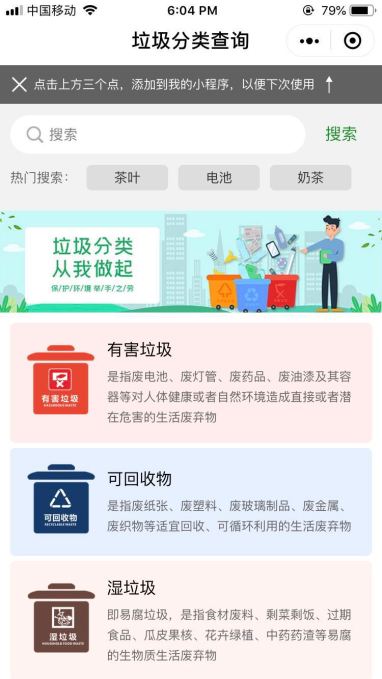
For instance, China’s biggest internet companies responded with new search features that help people identify what wastes are “wet” (compostable), “dry”, “toxic”, or “recyclable”. Not even the most environmentally conscious person can get all the answers right. Like, which bin does the newspaper you just used to pick up dog poop belong to? Simply pull up a mini app on WeChat, Baidu or Alipay and enter the keyword. The tech firms will give you the answer and why.

wechat garbage sorting

A WeChat mini program that lets users learn the category of cash

Alipay, Alibaba’s electronics payment affiliate, claims its garbage sorting mini app added one million users under just three days. The lite app, which is available without download inside the e-wallet with one billion users, has so far indexed more than 4,000 types of rubbish. Its database is still growing, and soon it will save people from typing by using image recognition to classify trash when they snap a photo of it. Alibaba’s answer to Alexa Tmall Genie can already answer (in Chinese) the question “what kind of trash is a wet wipe?” and more.

If people are too busy or lazy to hit the collection schedule, well, startups are offering valet trash service at the doorstep. A third-party developer helped Alipay build a recycling mini app (“垃圾分类回收平台”) and is now collecting garbage from 8,000 apartment complexes across 11 cities. To date, two million people have sold recyclable material through its platform.

Ele.me, Alibaba’s food delivery arm, added trash pickup to its list of valet services its fleets offer on top of “apologize to the girlfriend” and dog walking.

Besides helping households out, companies are also building software to make property managers’ life easier. Some residential complexes in Shanghai began using QR codes to trace the origin of garbage, state-owned media outlet Xinhua reported. Each household is asked to attach a unique QR code to their trash bags, which will be scanned for sources and classification when they arrive at the waste management station.

shanghai garbage

Workers at a waste management station in Shanghai scan codes on trash bags to check their source. / Screenshot from Xinhua feature

This way, regulators in the region know exactly which family has produced the trash — although the city’s current garbage regulations do not require real-name tracking — and those who correctly categorized receive a small reward of 0.1 yuan, or 1.45 cents, per day, according to another report (in Chinese) from Xinhua.

05 Jul 2019

Clever Cloud launches GPU-based instances

French startup Clever Cloud is a cloud hosting company that operates a Platform as a Service (or PaaS). The company just launched GPU-based instances for machine learning purposes under a new brand, Clever Grid.

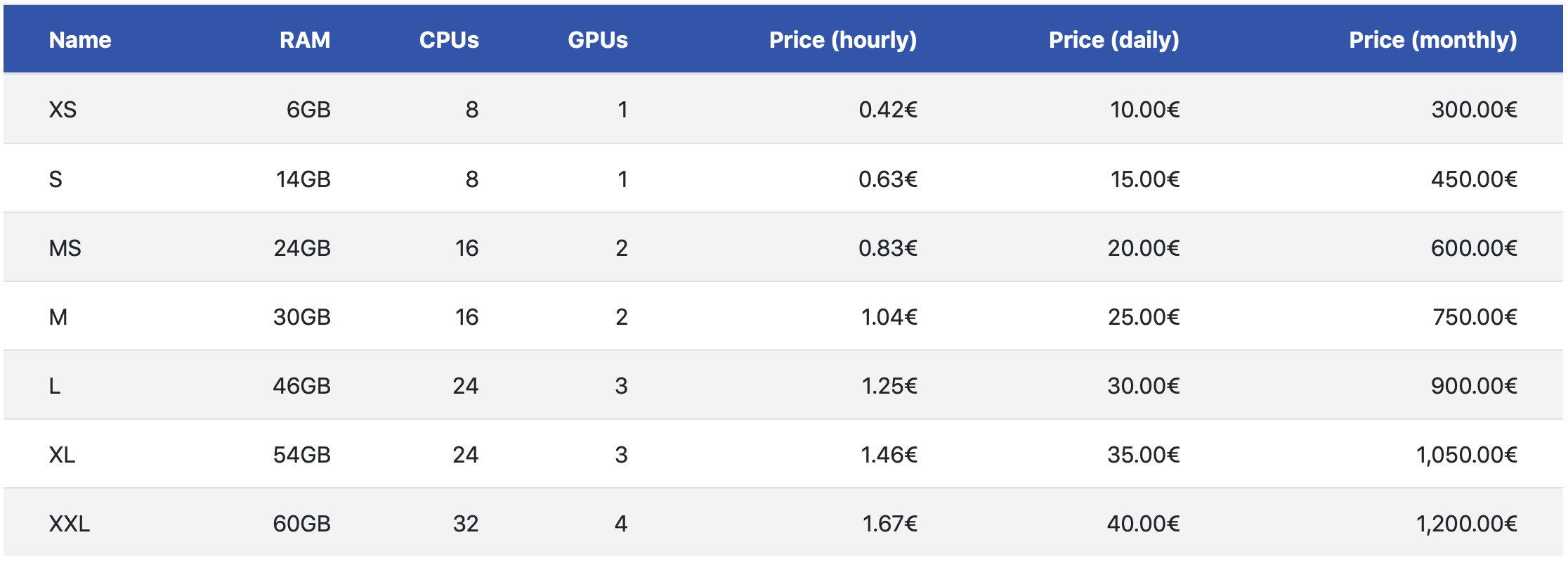
Behind the scene, the company uses Nvidia GeForce GTX 1070. You get billed by the minute and the most basic instance costs €0.42 per hour, or €10 per day, or €300 per month. For this price, you get 6GB of RAM, an 8-core CPU, a one GPU and 250GB of storage.

Of course, you can pay more to access beefier machines. If you max out your GPU instance, you get 60GB of RAM, 32 CPU cores and 4 GPUs on the same instance. It can cost as much as €1,200.

Screen Shot 2019 07 04 at 6.59.39 PM

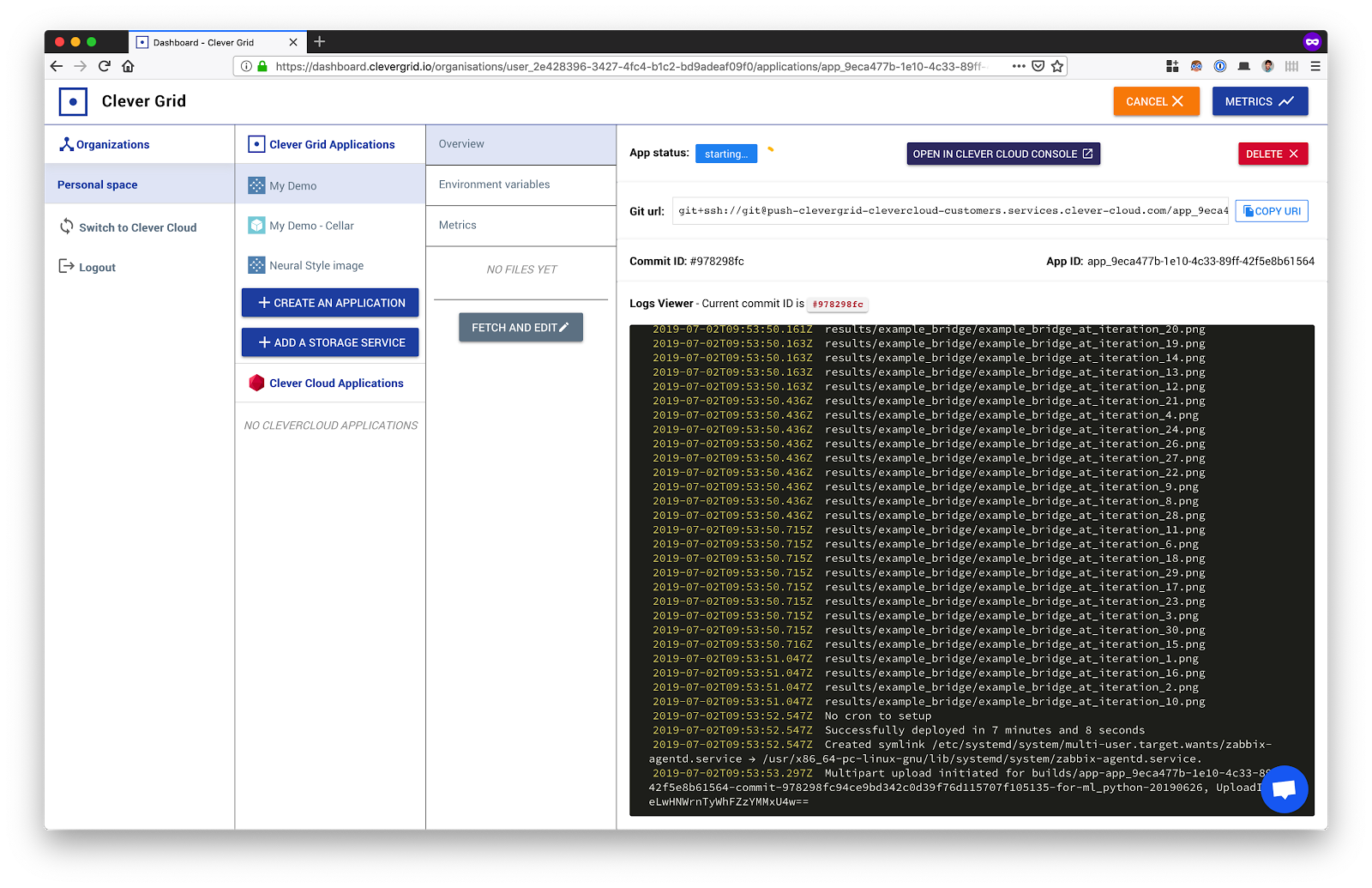
If you’re a data scientist and don’t know much about cloud infrastructure, Clever Cloud tries to abstract infrastructure management as much as possible. You can run your Python code directly on your cloud instance using a web interface.

Those instances also support Tensorflow, Scikit learn, CUDA, Keras and pytorch. You can also run Docker containers on those GPU instances.

One of the advantages of Clever Cloud is that it integrates directly with a GitHub repository. You can connect to your GitHub account and start a cloud instance based on a repository. The company then deploys and runs your code on a server.

In addition to seamless deployments, Clever Cloud has additional features to make sure your service runs smoothly, such as monitoring, backups and security updates.

Clever Cloud clients include Airbus, MAIF, Compte Nickel, Sogeti and the South African Ministry of Health.

Clever Grid

05 Jul 2019

Smart scooter company Gogoro launches GoShare, an end-to-end vehicle sharing platform

Founded in 2011, Gogoro now makes the best-selling electric scooters in Taiwan, where it is headquartered. The startup has always seen itself as an end-to-end platform developer, however, and today it marked a major milestone with the announcement of a new vehicle sharing system. Called GoShare, the program will start operating with a pilot fleet of about 1,000 Gogoro smart scooters next month in Taoyuan City, Taiwan, before becoming available as a turnkey solution for partners.

Gogoro, which develops everything from their scooters and batteries to software, telematics control units and backend servers, describes GoShare as “first fully integrated mobility sharing platform and solution.” Co-founder and CEO Horace Luke tells TechCrunch that Gogoro wants to work with partners to expand GoShare into international markets in Europe, Australia and Asia next year. He adds that building the entire platform, including its unique swappable battery system, gives Gogoro an advantage over vehicle sharing programs from companies like Uber, Lyft, Lime, Bird and Coup because it can constantly track vehicle performance, fine-tune the system and incorporate feedback into new designs.

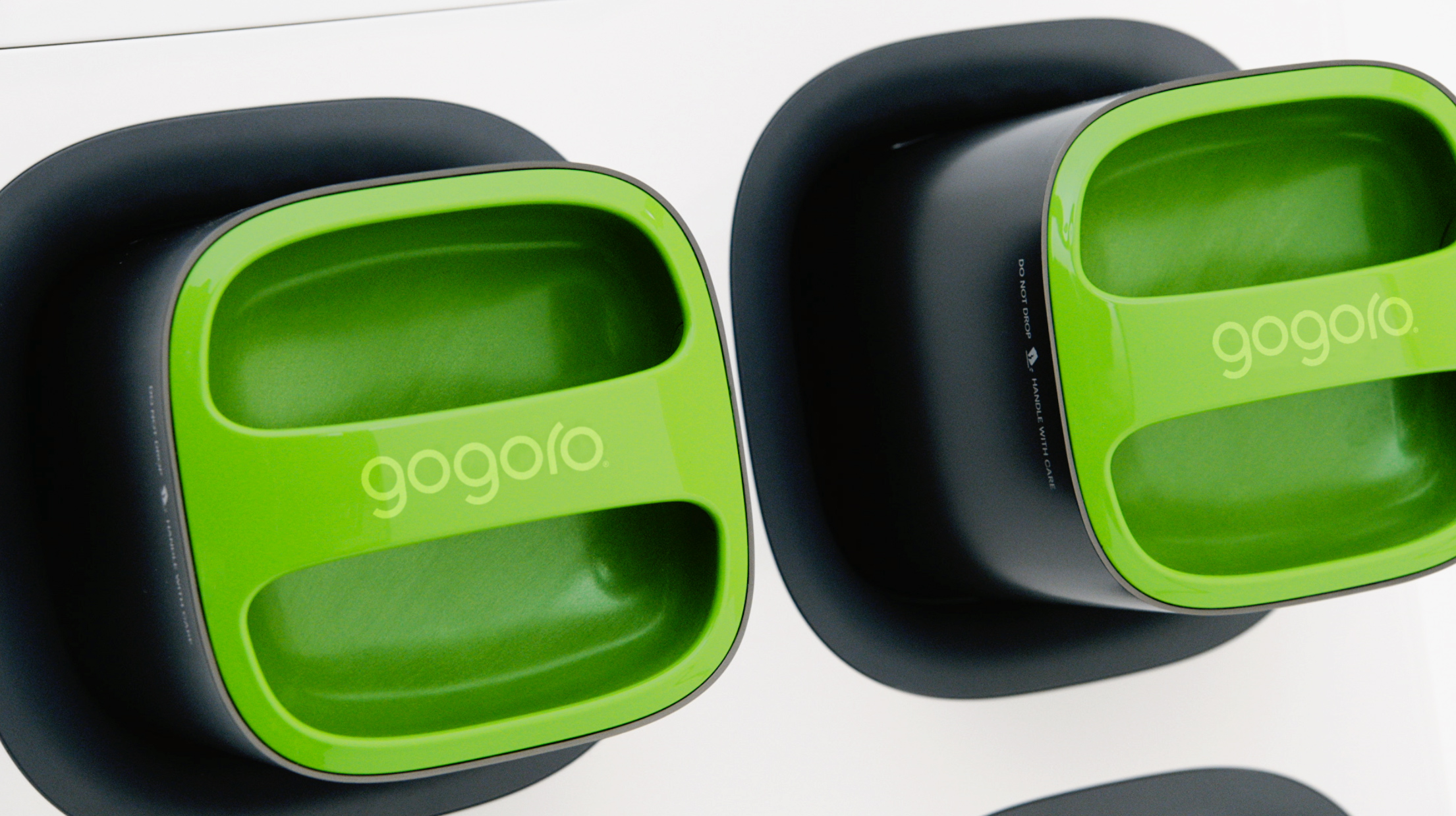
One of Gogoro scooters’ main advantages are their batteries, which are about the size of shoeboxes and slide in and out of scooters and charging kiosks. In Taiwan, batteries can be swapped at kiosks found at gas stations and more offbeat locations, including retail stores and cafes. GoShare scooters can use the same kiosks as privately-owned Gogoro vehicles. This means that users can keep riding the same vehicle all day, swapping batteries whenever necessary (on average, Gogoro scooters can travel about 80 km on one charge). Once they are done using them, they can leave them wherever it is legal to park scooters.

Battery 20150616 02 0617

“We’re a platform, we create hardware, software and server technology to serve the transportation of the future and if we can make cities cleaner and healthier, we will do it anyway possible, whether through ownership and charging batteries at home or buying scooters and swapping batteries in the system we provide or, in this case, not even buying a vehicle, but sharing it,” says Luke.

To sign up, users download an iOS or Android app and upload a photo of their driver’s license. Gogoro then uses AI-based face scanning software to check if they match the license’s photo before asking for payment information. Once enrolled, drivers can use the app to locate and reserve scooters. GoShare’s pricing has not been announced yet, but Luke says it will be competitive with public transportation. Gogoro is working with Taoyuan City’s government to offer incentives like free parking in an effort to reduce pollution and traffic.

In a press statement, Taoyuan City Mayor Wen-Tsan Cheng said “We are confident this Gogoro partnership will continue producing remarkable reductions in air pollution caused by vehicle emissions and will accelerate the transformation of Taoyuan into a smart, livable city.”

With other vehicle sharing systems, “it has always been the dream to have the vehicles be free-floating and autonomous in management. But they are not autonomous,” says Luke. “Most are used once or twice a day because they run out of power, or the battery is low and people are worried about them running out of energy. That is where Gogoro comes in, because we have a network that enables people to ride vehicles for as long as they want.”

There are currently about 1,200 charging kiosks in Taiwan, with about 200 in Taoyuan City, delivering power to about 200,000 scooters. Eight years after it launched, Luke says Gogoro now holds a 97 percent share of electric scooters sold each month in the country. When counted as part of the larger vehicle market in Taiwan, including gas vehicles, Gogoro now holds a 17 percent share.

Luke says the company sees Taiwan, where scooters are very popular but also a major contributor to air pollution, as Gogoro’s pilot market. It recently launched the Gogoro 3, and announced partnerships with Yamaha, Aeon and PGO to develop scooters that will run on its batteries.

The ultimate goal of Gogoro’s end-to-end system is to package it as a turnkey solution for partners around the world, says Luke. “You don’t need to shop around anymore. You can come to us with your vehicle-sharing program and say you want to turn it on.”