Category: UNCATEGORIZED

02 Jul 2019

Only 2% of genomic material available for research comes from Africa, 54gene wants to change that

New advances in genetic mapping and manipulation hold the promise of reshaping medical treatments in the 21st century, but thanks to a lack of sufficient infrastructure and apparent scientific disregard, an entire continent is at risk of being left out.

Only 2% of genetic material used for pharmaceutical research comes from the African continent, while genetic data on caucasians makes up 90% of the data and samples available. This is despite the fact that Africans and people of African ancestry are more genetically diverse than all of the other populations in the world combined.

At the beginning of the last century the American sociologist and scholar W. E. B. Dubois wrote, “the problem of the Twentieth Century is the problem of the color-line”, and as the twenty first century dawns, Abasi Ene-Obong, the founder of 54gene, is trying to make sure that the color line doesn’t circumscribe the ability of Africa to participate in science’s next great era of discovery.

Named for the 54 countries that make up the African continent, Ene-Obong has set himself no less ambitious a goal than building the first and largest biobank of African DNA for the entire continent.

Born in Calabar, Nigeria (the first capital of Nigeria and a port for the nation’s slave trade in its colonial past) to parents who were both researchers and academics, Ene-Obong is uniquely qualified for the job. He has doctorate in Cancer Biology from the University of London, a Masters in Business Administration from Claremont College in California, and a Masters degree in Human Molecular Genetics from the Imperial College of London.

Ene-Obong says he became fascinated with genetics from the first moment he took a class in the subject in university.

Abasi and team

“I always wanted to do stuff that brought the African continent into the global healthcare debate,” says Ene-Obong, and 54gene is the fulfillment of that ambition. “Going into consulting I knew that I wanted to leave at some point to start the company,” says Ene-Obong. “I just wasn’t sure what company I’ll be starting… I went back to Nigeria blind because I wasn’t sure what to do and I wanted to see what the opportunity was.”

There’s precedent for Ene-Obong’s belief that African genetic data may hold the key to unlock untold medical discoveries. The osteoporosis drug Somosozumab was discovered by investigating a genetic mutation in South African Afrikaner patients and Alirocumab, a cholesterol drug, was discovered by researchers at the University of Texas at Austin, who identified a genetic mutation in an African population, says Ene-Obong.

The thesis behind Ene-Obong’s company was enough to attract the attention of Y Combinator, where the business model for 54gene was refined, and bring in $4.5M in seed from Y Combinator, Fifty Years, Better Ventures, KdT Ventures, Hack VC, and Techammer — among others.

The company is currently collecting data from ten of the largest research and public hospitals in Nigeria and expects to hold 40,000 samples of participants in its biobank. The current focus is on sampling the genetic material of cancer patients, patients with cardiovascular diseases and metabolic diseases like diabetes and sickle cell anemia.

The company has been vetted by the institutional review boards at each of the hospitals where it is collecting genetic material and receives an informed consent from all of the patients who choose to give their DNA to the project, Ene-Obong said.

The company intends to start bringing in revenue through paid partnerships with pharmaceutical companies and will be leveraging its San Francisco and Lagos locations to ensure that it can continue to collect material and develop the partnerships it needs to grow.

Helping with that process are two new hires, Jessica Rich, who joined the company as chief commercial officer after spending seven years at Illumina; and Delali Attipoe, a thirteen year veteran of Genentech who most recently served as head of market access in East Africa for Roche before joining the 54gene team as chief operating officer.

The genomics capabilities in Africa are really non-existent,” Ene-Obong said. “That’s one reason you’re not getting genetic data out. We want to change that.”

02 Jul 2019

Facebook News Feed changes downrank misleading health info and dangerous ‘cures’

No, drinking bleach is not a miracle cure for diseases and other conditions — but that’s the sort of bogus health claim that’s floating around the web these days, getting blocked by sites like Amazon and YouTube. Now you can add Facebook to that list of sites taking action — well, kind of! The social network today announced it will minimize the spread of health content that’s sensational or misleading.

No, not block it. Not ban it. Minimize it.

Facebook says it’s taking the same approach to reduce the spread of misleading health information as it did when it previously changed the News Feed algorithms to downrank clickbait and other low-quality content. (Not that clickbait ever killed anyone the way that fake miracle cures have. But we digress.)

In two algorithm changes, which actually rolled out a month ago but are only today being detailed, Facebook says it’s reducing the spread of posts that make exaggerated or sensational health claims, as well as those trying to sell products or services based on health-related claims.

The former will go to address the dangerous miracle cures while the latter will be more focused on reducing the spread of posts trying to make a buck through unsubstantiated claims — like those touting weight loss pills, for example.

“Posts with sensational health claims or solicitation using health-related claims will have reduced distribution,” explains Facebook. “Pages should avoid posts about health that exaggerate or mislead people and posts that try to sell products using health-related claims. If a Page stops posting this content, their posts will no longer be affected by this change,” it says.

Unfortunately, with a focus on Facebook Pages, the changes may overlook a popular means of spreading misleading health information: individuals. A number of people directly post misinformation to their own Facebook timeline — either intentionally or because they’re also misinformed. This can range from the relatively harmless homemade cures that aren’t as effective as they claim, to those that are actually pretty bad  — like a recipe for homemade sunscreen that puts people at risk of skin cancer because it doesn’t block UV rays — to outright dangerous information.

The change also won’t seemingly block the sort of “social selling” where MLMs like AdvoCare, Herbalife, or It Works!, for example — require their salespeople to post to their own profile pages with posts they write themselves, in a knowing effort to get around News Feed changes like this. (And this is especially true if the profile owner’s friends interact with the content, which makes the post seem — to an algorithm at least —  like quality fare.)

Facebook says that it anticipates that “most Pages won’t see any significant changes to their distribution in News Feed as a result of this update.”

So helpful!

02 Jul 2019

Security flaws in a popular smart home hub let hackers unlock front doors

When is a smart home not so smart? When it can be hacked.

That’s exactly what security researchers Chase Dardaman and Jason Wheeler did with one of the Zipato smart hubs. In new research published Tuesday and shared with TechCrunch, Dardaman and Wheeler found three security flaws which when chained together could be abused to open a front door with a smart lock.

Smart home technology has come under increasing scrutiny in the past year. Although convenient to some, security experts have long warned that adding an internet connection to a device increases the attack surface, making the devices less secure than their traditional counterparts. The smart home hubs that control a home’s smart devices, like water meters and even the front door lock, can be abused to allow landlords entry to a tenant’s home whenever they like.

In January, security expert Lesley Carhart wrote about her landlord’s decision to install smart locks — forcing her to look for a new home. Other renters and tenants have faced similar pressure from their landlords and even sued to retain the right to use a physical key.

Dardaman and Wheeler began looking into the ZipaMicro, a popular smart home hub developed by Croatian firm Zipato, some months ago but only released their findings once the flaws had been fixed.

The researchers found they could extract the hub’s private SSH key for “root” — the user account with the highest level of access — from the memory card on the device. Anyone with the private key could access a device without needing a password, said Wheeler.

The later discovered that the private SSH key was hardcoded in every hub sold to customers — putting every home with the same hub installed at risk.

Using that private key, the researchers downloaded a file from the device containing scrambled passwords used to access the hub. They found that the smart hub uses a “pass-the-hash” authentication system, which doesn’t require knowing the user’s plaintext password, only the scrambled version. By taking the scrambled password and passing it to the smart hub, the researchers could trick the device into thinking they were the homeowner.

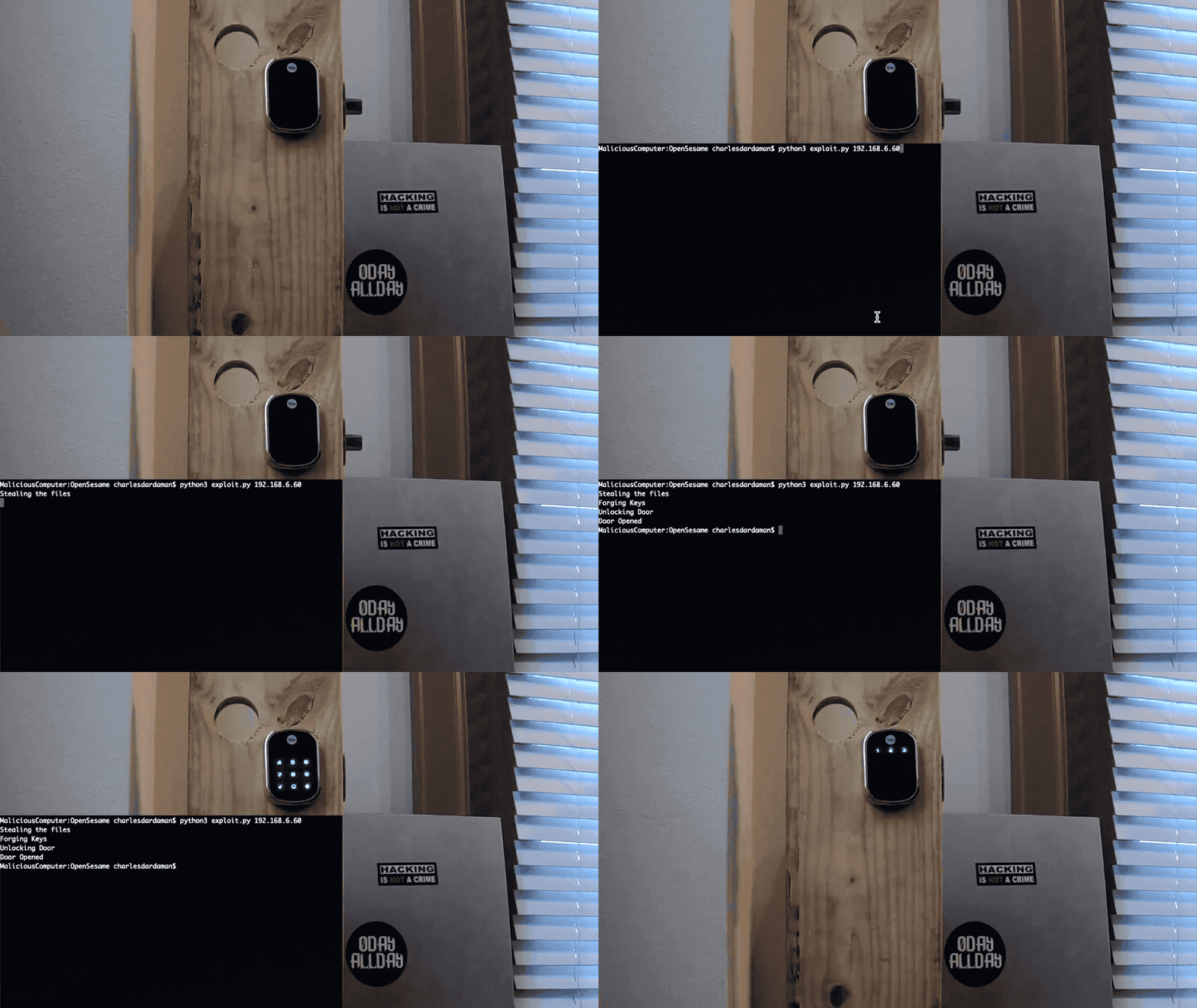
All an attacker had to do was send a command tell the lock to open or close. With just a few lines of code, the researchers built a script that locked and unlocked a smart lock connected to a vulnerable smart hub.

The proof-of-concept code letting the hackers unlock a smart lock. (Image: Chase Dardaman, Jason Wheeler)

Worse, Dardaman said that any apartment building that registered one main account for all the apartments in their building would allow them to “open any door” from that same password hash.

The researchers conceded that their findings weren’t a perfect skeleton key into everyone’s homes. In order to exploit the flaws, an attacker would need to be on the same Wi-Fi network as the vulnerable smart hub. Dardaman said any hub connected directly to the internet would be remotely exploitable. The researchers found five such vulnerable devices using Shodan, a search engine for publicly available devices and databases.

Zipato says it has 112,000 devices in 20,000 households, but the exact number of vulnerable hubs isn’t known.

We asked SmartRent, a Zipato customer and one of the largest smart home automation providers, which said fewer than 5% of its apartment-owning customers were affected by the vulnerable technology. A spokesperson wouldn’t quantify the figure further. SmartRent said it had more than 20,000 installations in mid-February, just weeks before the researchers’ disclosure.

For its part, Zipato fixed the vulnerabilities within a few weeks of receiving the researchers’ disclosure.

Zipato’s chief executive Sebastian Popovic told TechCrunch that each smart hub now comes with a unique private SSH key and other security improvements. Zipato has also since discontinued the ZipaMicro hub in favor of one of its newer products.

Smart home tech isn’t likely to go away any time soon. Figures from research firm IDC estimates more than 832 million smart home devices will be sold in 2019, just as states and countries crack down on poor security in internet-connected devices.

That’s also likely to bring more scrutiny to smart home tech by hackers and security researchers alike.

“We want to show that there is a risk to this kind of tech and apartment buildings or even individual consumers need to know that these are not necessarily safer than a traditional door lock,” said Dardaman.

02 Jul 2019

Loon breaks its stratospheric balloon flight record with 223 days aloft

Alphabet’s Loon is gearing up for its first big commercial trial later this year, but it’s also breaking records in terms of pure performance. The company announced today that it just retrieved P-496, one of its balloon flight systems that earned the notable distinction of breaking the record for longest time spent continuously in the air.

P-496 launched on November 18, 2018 from Puerto Rico, and spent a total of 223 days flying in the Earth’s stratosphere, where it did one whole circuit around the world, and also spent over half of its time aloft (140 continuous days) sticking to a defined area just off the west coast of South America, testing its ability to navigate a relatively fixed spot for a prolonged period, which is key to Loon’s goal of using these balloons to blanket underserved areas in high-speed cellular network connectivity.

223 days beats Loon’s previous record of 198 days in the air by nearly a month, which is great news for the company’s mission of being able to do this stuff with even more efficiency, which is huge for its ability to prove out the commercial viability of its method for delivering connectivity where it’s been difficult or impossible previously.

0

Loon isn’t the only company aiming to turn stratospheric balloons into commercial success – startup World View intends to offer clients high-altitude balloons for a range of potential commercial services. Its own record flights pale in comparison to Loon’s, but it’s not exactly an apples to apples comparison since Loon is aiming very specifically at high-flying network infrastructure and World View is targeting high-altitude imaging and other applications including even potential stratospheric tourism.

02 Jul 2019

Samsung shuts down its AI-powered Mall shopping app in India

Samsung has quietly discontinued an app that it built specifically for India, one of its largest markets and where it houses a humongous research and development team. The AI-powered Android app, called Samsung Mall, was positioned to help users identify objects around them and locate it on shopping sites to make the purchase.

The company has shut down the app a year and a half after its launch. Samsung Mall was exclusively available for select company handsets and was launched alongside the Galaxy On7 Prime smartphone. News blog TizenHelp was first to report about the development.

At the time of the launch, Samsung said Mall app will complement Bixby, the company’s virtual assistant. Bixby already offers a functionality that allows users to identify objects through photos. But it does not let users make the purchase.

“The first insight while developing Samsung Mall was that consumers may be looking to find the price, the colour, delivery options and a lot of other things. Indian consumers want to find the best deals first. They aren’t tied up with one particular portal as well,” Sanjay Razdan, Director of Samsung India told local outlet India Today at the time of the launch.

Samsung had partnered with Amazon, Shopclues and TataCLiQ to show relevant results from these retailers on its “one-stop online experience” app. Users were also able to compare prices to see which website was offering them the item at lowest cost.

Samsung Mall app was downloaded about five million times from Google Play Store in India since March 2018, Randy Nelson, Head of Mobile Insights at analytics firm SensorTower told TechCrunch. The app had begun to lose its popularity in recent months, though.

“Downloads in May totaled 275,000 — which was down 38% year-over-year from 476,000 in May 2018. It was ranked No. 1,055 by downloads in India’s Google Play store in May — down from 487 a year ago,” said Nelson.

Once the top smartphone vendor in India, Samsung has lost that crown to Xiaomi. The Chinese smartphone maker has held the tentpole position in India for two straight years now, according to research firm IDC.

A Samsung spokesperson in India, reached out by TechCrunch on Monday, has yet to comment on the story.

02 Jul 2019

Nvidia’s RTX GPUs get a speed boost with the new Super series

Nvidia made a somewhat unusual announcement today: it’s launching a set of updated GPUs that will come in at the same price points as the existing GeForce RTC 2060, 2070 and 2080 GPUs with ‘Super’ variants that offer better performance at the same price and with the same power consumption specs.

Prices for the GeForce RTX 2060 Super, GeForce RTX 2070 Super and GeForce RTX 2080 Super will start at $399, $499 and $399 respectively. Nvidia will also continue to sell the entry-level non-Super RTX 2060 for $349, as well as the high-end RTX 2080 Ti, which starts at $999.


GeForce Super 2080 angle

Most of the cards this new Super series replaces aren’t all that old, but the technology that makes it stand out, Nvidia’s new real-time raytracing tech that allows game developers to render far more realistic characters and environments, is still pretty new. The performance gains, however, aren’t software-based. Instead, Nvidia improved its manufacturing process and is now able to turn on more cores on the 2060 and 2070 variant — and tweak the memory speed of the 2080 Super to 15.5Gbps. Thanks to this, the new 2060 Super is on average 15% faster than the 2060 it replaces. The 2070 boasts similar numbers.

2019 07 01 1603It’s worth noting that the 2060 Super now also comes with 8GB of memory instead of 6GB.

The new 2060 and 2070 Super GPUs will go on sale on July 9, while those who want to have the high-end 2080 Super will have to wait until July 23.

“The ecosystem driving real-time ray tracing is immense — tens of millions of GPUs, industry standard APIs, leading game engines and an all-star roster of game franchises,” said Matt Wuebbling, head of GeForce Marketing for NVIDIA . “This killer lineup of SUPER GPUs delivers even more performance for demanding PC gamers and ensures that they’re prepared for the coming wave of real-time ray tracing blockbusters.”

This new lineup of GPUs will allow Nvidia to better compete with AMD’s upcoming ‘Navi’ GPUs, which are also scheduled to launch next week. Nvidia obviously doesn’t want AMD to get all of the mindshare, so today’s announcement makes sense (and was prefigured by a number of leaks in recent weeks).

GeForce Super 2060

02 Jul 2019

Polyrize raises $4M for its next-gen authorization platform

In enterprise security, there’s been a slow but steady move toward implementing zero trust security models and moving away from trusting anybody solely based on the fact that they have access to the company VPN, for example. That, to some degree, shifts the line of defense to the authentication service, which has to ensure that the users who try to log on are really who they say they are.

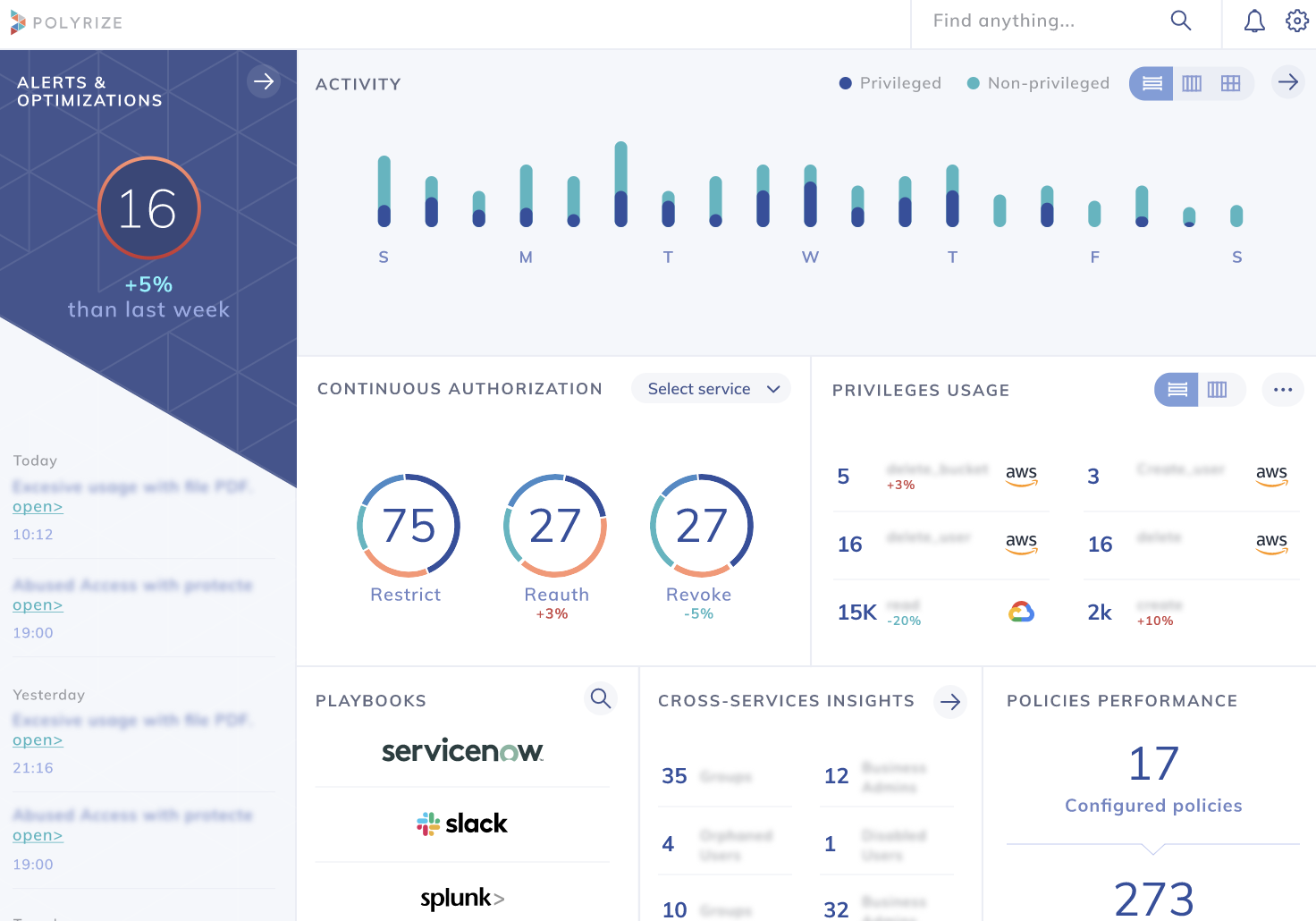
Tel Aviv-based Polyrize, which is coming out of stealth today, is tackling this problem by providing enterprises with a secure, proxyless authorization platform that gives enterprises the ability to better manage how its employees can access third-party SaaS services. The company also today announced that it has raised a $4 million seed round led by Glilot Capital Partners .

polyrize

“Today’s enterprise security teams fly blind post login,” said Kobi Samboursky, co-Founder & Managing Partner at Glilot Capital Partners. “They simply lack the tools to understand who has access to what, and why. As emphasis is moving toward cloud and Zero Trust, access becomes the last defense line. When we first met Nati and the team, we were immediately aligned with their vision and mission of securing authorization. We are thrilled to have the company join our portfolio and to play a role in its growth and success for years to come.”

The service continuously authorizes identities across SaaS and IaaS platforms ranging from Google’s G Suite and Office 365 to Box, Slack and GitHub .

Using its own proprietary engine, augmented by machine learning, the service constantly watches for unusual behavior. What’s maybe just as important, though, is that it also provides security teams with the ability to provide granular access privileges — and instantly revoke those of users who leave the company.

02 Jul 2019

Alphabet’s Loon balloons get their first commercial trial in Kenya

Google spinout and now fellow member of the Alphabet family of companies Loon will get a big test in the coming weeks, as it begins its first commercial trial in Kenya in partnership with Telkom Kenya .

Loon’s entire mission is to provide internet connectivity to areas that are typically underserved, using high-altitude balloons with solar-powered cellular network gear on board, replacing the need for permanent tower infrastructure in environments where that kind of option either isn’t practical or affordable.

With this new commercial trial, Telkom Kenya will be providing access to customers spread out across a number of villages located in a mountainous region of the country at rates on par with what it offers its existing customers through its more traditional network infrastructure.

According to Reuters, Loon still has work to do in terms of proving out that its novel model for delivering connectivity makes business sense for carrier partners, who seem to be skeptical of its ability to provide reliable service at a cost that still makes sense in terms of profitability.

For its part, Loon seems eager to prove out its commercial viability, after having already demonstrated that its balloon networks have the technical chops to provide connectivity on the ground via engagements in Peru and Puerto Rico where its tech was used for free by local carriers to bolster networks brought down by natural disasters.

Alphabet’s balloon-based internet will eventually compete with satellite networks aiming to provide the same kind of coverage to low-density areas not covered by tower-based infrastructure, including efforts like SapceX’s own Starlink network.

02 Jul 2019

Kabbage secures $200M to fuel its AI-based loans platform for small businesses

Kabbage, the AI-based small business loans platform backed by Softbank and others, is adding more firepower to its lending machine: the Atlanta-based startup has secured an additional $200 million in the form of a revolving credit facility from an unnamed subsidiary of a large life insurance company, managed and administered by 20 Gates Management, and Atalaya Capital Management.

The money comes on the heels of a $700 million securitization Kabbage secured just three months ago and it is notable not just for its size but its terms: it’s a four-year facility, a length of time that underscores a level of confidence in the company’s performance.

Kabbage, which loans up to $250,000 in a single deal to small and medium businesses, has built a platform that harnesses the long tail of big data from across the web. It uses not just indicators from a company’s own public activities, but it also sources comparative information from across a wider group of similar companies, with “2 million live data connections” currently helping to feed its algorithm.

Together, these help Kabbage determine whether to provide the loans, and at what rates. Notably, the whole process takes mere minutes, making Kabbage disruptive to the traditional route of applying for loans from banks, which can come at higher rates, often take longer to close and may never get approved.

The company was last valued at $1.2 billion in its most recent equity round from the Vision Fund in 2017, with about $500 million raised in equity to date from it and other investors including BlueRun Ventures, Mohr Davidow Ventures. Rob Frohwein, the co-founder and CEO, confirmed to me via email that there are “no plans on the equity side right now.” We’ve asked about IPO plans and will update if we learn anything more on that front.

More importantly, alongside its equity story is the company’s business story: Kabbage has to date loaned out $7 billion in capital — amassed through securitizations and other facilities alongside that — to 185,000 businesses, and the company has seen an acceleration of business activity over the last two years. Nearly $700 million was loaned out in Q2 of this year, passing the record in Q1 of $600 million. This puts Kabbage on track to loan out between $2.4 billion and $3 billion this year.

“This transaction further diversifies Kabbage’s committed sources of funding and prepares us to meet the escalating demand for capital access among small businesses,” said Kabbage Head of Capital Markets, Deepesh Jain, in a statement. “2019 has proven to be a tide-shifting year as customers accessed more than $670 million from Kabbage in Q2 2019, well surpassing our previously set record last quarter.”

While a lot of Kabbage’s business has come out of its direct consumer relationships, it’s also been expanding by way of more third-party relationships. It has white-label partnerships with banks to power their own loans offerings for SMBs, and earlier this year it was also tapped by e-commerce giant Alibaba to provide loans to its small business customers of up to $150,000 to help finance purchases, part of the latter company’s redoubled efforts to build out its business in the US by way of its quiet acquisition of OpenSky.

02 Jul 2019

NASA performs successful test of Orion spacecraft launch abort crew escape system

NASA has completed a key test in preparing for its planned crewed space mission to return to the Moon, successfully testing the Launch Abort System (LAS for short) for its Orion spacecraft.

This is the first full stress test of the LAS, which involved launching both an Orion test craft and the full LAS system aboard a rocket booster (smaller scale than would be used to propel the Orion craft to orbit). The goal was to show that in the case of an emergency during an actual launch, the abort system could do its intended job and jettison the Orion crew craft to a safe distance away from the rocket, very quickly.

During this test, there obviously wasn’t anyone on board, but the demonstration still seems to have gone off as planned – the booster shot the Orion and LAS up about 31,000 feet into the air, or about cruising height for commercial aircraft. At its target height, the abort system fired its own abort motor, which separates the crew module from the rocket with about 400,000 pounds of thrust.

This is designed to throw the Orion crew module clear of any potential explosion in the case of an emergency during the time the actual launch rocket is at ‘max-Q’, or the point during launch when it’s under the most stress from aerodynamic forces during the launch sequence.

As you can see above, the LAS managed to separate successfully, then turn around as planned to correctly orient the Orion test vehicle, and then separate itself from the crew capsule. The crew capsule then ejected its own onboard data recorders to provide NASA engineers with the detailed flight records they need to ensure everything went as intended with the LAS test.

The LAS is a new component of NASA’s crew launch system designed for Orion and will help to ensure that this is the safest rocket launch system ever designed by NASA. It can activate in mere milliseconds and move the crew component of the spacecraft away from the rocket at a much higher velocity than even the rocket itself can move.

AA2 liftoff 1