Category: UNCATEGORIZED

02 Jul 2019

How safe are robotaxis? BMW, Intel, Aptiv (and 8 others) just laid out a safety blueprint

Self-driving vehicles are often trumpeted as the answer to the million of injuries and deaths that occur each year on the world’s roadways.

Developers and proponents of the technology argue that an automated system that can see, hear, react and make better decisions than humans will reduce the number of crashes that occur every year. And that’s a considerable promise. Some 1.35 million people died in vehicle crashes in 2016, according to the most recent statistics from the World Health Organization.

Still, there is no way for companies to guarantee that every self-driving vehicle put on the world’s roads can guarantee the same robust level of safety and security.

Eleven companies have formed a consortium to change that.

Tier 1 suppliers Aptiv and Continental, automakers Audi, BMW, Daimler, Fiat Chrysler and Volkswagen as well as chipmakers Intel and Infineon, mapping consortium HERE and China’s internet search giant Baidu released Tuesday a 157-page white paper that outlines how to build, test and operate a safe automated vehicle. (the white paper is embedded below)

The idea behind the “Safety First for Automated Driving,” group (SaFAD for short) is to create a blueprint of sorts that lays out 12 principles for designing — and later testing and validating — safe automated vehicles, Karl Iagnemma, president of Aptiv Mobility told TechCrunch.

This isn’t meant to be a static effort. One technological breakthrough could render portions of the white paper moot. The intent was to create a “living” document that grows and adapts along with technology and the industry, Iagnemma said.

Nor does the document pick technological winners or losers. Those who sift through the white paper won’t find endorsements for certain sensors, for example. Instead, the group is pushing for common ground on safety.

The papers lays down certain “safety by design” rules that engineers should be thinking about and following from the beginning. This first section of the document lays out 12 guiding design principles such as proper cybersecurity, protections if the system degrades or fails, operational design domain and data recording. A number of the principles deal with how a vehicle operator and the automated driving system interact with each other, including ensuring that if a handover does need to occur (this would be in vehicles that could switch between manual and automated controls) that it is properly and explicitly communicated to the human.

The principles also delve into the behavior of the automated vehicle to ensure that its predictable for the user and easy-to-understand for surrounding road users like bicyclists, pedestrians and other drivers.

The architects of this framework even weigh in on the safety of the interior of these automated vehicles. It’s seemingly small, yet important guideline. So many of the futuristic concept shown at tech and auto shows depict lounge-like interiors where people can face each other. The guidelines simply state that occupants should be protected even when there are new uses for the interior.

The second half of the document covers the validation and verification of these systems. In other words, how do you make sure that the automated vehicle you designed and built actually works? The consortium believes proper validation and verification should include testing on tracks, open roads and in simulation.

One more interesting note found within the pages of the white paper is an appendix that deals with machine learning and more specifically deep neural networks, namely how to ensure they’re developed, deployed and properly validated.

All of this, of course, sounds like common sense. And yet, companies have been working on automated driving systems without a single standard to guide them.

Many companies might be following a similar rules laid out in the framework released Tuesday, but it’s impossible to know exactly what they’re all up to, especially when considering this on a global scale. The goal of the framework’s architects is to get as many companies as possible to sign on until they hit a critical mass within the industry.

Sure, companies have signed onto consortiums like this before to push for safe automated vehicles or promote public education campaigns. It’s worth noting that this effort was apparently driven by engineers within these companies, and not a marketing team or board of directors.

It should be noted that there is an existing international standard called ISO 26262 that covers the functional safety of electrical and electronic systems in production vehicles. And another standard ISO 21448 or “Safety of the Intended Functionality” is in the works to handle advanced driver assistance systems and autonomous vehicles. The SaFAD consortium as well as another group the European Association of Automotive Suppliers, or CLEPA), which is being led by Nvidia, are involved in the development of ISO 21448.

The hope is that out of these various efforts, a single, clear standard rises to the top that can be validated and verified. Without it, companies may have trouble building trust with a wary and fickle public.

02 Jul 2019

Data says there are only two seasons for fundraising and one secret window

One of the top things that keeps a startup CEO up at night is the worry of running out of money. As a second-time founder and CEO of DocSend, I consider raising money and keeping my startup sufficiently funded a primary responsibility.

If “don’t run out of money” is a universally accepted warning, then the next question becomes when should you raise your next round of funding? There’s a lot to consider in coming up with an answer. If you start too soon before you have some wins to share, you might fail. If you wait too long you might put yourself in a bad negotiating position or worse, run out of money altogether!

DocSend has been used by over 20,000 founders and VCs for fundraising, and over the years we have published data-backed findings about pitch deck sharing and viewing. Recently, I contributed an article about the seasonality in fundraising and when VCs actually look at the decks.

The data included in this research came from companies that explicitly opted in to participate by responding to an automated email sent to them. We are incredibly appreciative to these founders for making this research possible. You can read more about our startup opt-in process and other aspects of our methodology here.

In this article, I’ll talk about how to apply some of the key takeaways from this research to inform your fundraising efforts.

There are really only two main fundraising seasons

I’ve often heard these anecdotes: “Don’t raise in August because VCs are on vacation,” and “VCs come back in January looking to do a deal.” But this is the first time there’s ever been data to support or disprove these statements. (See the analysis here). 

My first big takeaway is that there are two big spikes during the year when VCs review a ton of pitch decks: October and November, then March. The summer definitely flattens out a bit, but August is not as bad as people think and December is actually way worse than most anticipate.

Sure, you might be the exception to this data and you might have pulled off a fundraise over the summer or in December. But if you have control over your timing, why take that risk?

How to think about runway and when to raise

Image via Getty Images / runeer

A startup’s “runway” is how much time they have until they run out of money. The assumption here is that a startup isn’t profitable yet, and is using VC investment to grow their business more quickly at the expense of short-term profitability.

Often a founder will raise a Series Seed and plan to “burn through” all that money in 18 months either investing in product or growing the team. To raise a round successfully at a good valuation you need to be growing at a crazy high rate (which is what you’re burning money on).

YC says you should be growing 7% a week, although that applies to very early stage pre-funding. Once you’ve gotten a bit of traction, the conventional wisdom is that you need to be on the “triple triple double double” path (see the detailed overview here).

So if you raise a Series Seed or A at $2m in ARR, you need to get to $6m in ARR in twelve months (that’s a 9.6% compounding monthly growth rate). If you’re only on track to double in a year, you are likely not VC-fundable and need to go the bridge round route and steer the business towards profitability.

In other research from DocSend we’ve found that the median time spent to fundraise is about three months. If as a CEO you can’t raise capital at the right price, the responsible thing to do is to leave a bit of buffer so you can either reduce your burn rate to extend your runway or find a buyer for your business. Again, the CEO’s main goal is to not run out of money.

This means that ideally you begin to fundraise no less than six months before you anticipate running out of cash. So if you raise capital for 18 months of runway, you need to be back out in the market a short 12 months after popping the champagne to celebrate your last round.

The Q4 fundraising trap you need to avoid

The fundraising data at the end of each year tells a fascinating tale of hope and then a rising fervor of activity before falling off a cliff in December. The lesson in this is that if you can’t get your round closed by the end of November, you run the risk of losing momentum during the holidays and having to reset your process or deal with worse terms by having fewer potential investors at the table. As a VC, you also run the risk of missing out on a hot deal if you can’t get it closed before the holiday.

The story the data shows is that VC visits start low in August at the end of the summer low season and steadily build to their annual peak in November before falling off sharply in December. Entrepreneurs sending decks starts low and steadily builds to a peak in October, which makes sense because you need to send your decks in advance of VCs being able to view them.

So if you are scrambling to get your deck out to VCs in October, realize that you are behind the ball and are at risk of missing the window which means you might be better off waiting until the new year (if you have that luxury).

The secret window

Another surprising discovery in the data was when pitch decks get the most attention. It’s a time of year when relatively few pitch decks are sent, but the viewing of those pitch decks by VCs is incredibly high. This means if you do go out to fundraise in this window, you’ll get significantly more attention than you would at other times of the year. To see the data deep dive on this as well as the overall monthly sending and viewing stats, check out the deep dive in Extra Crunch.

Smart windows to raise capital

This research highlights the need for CEOs to pay closer attention to timing their fundraising activities. Let’s say you raise your Series Seed round in March. You might assume that you should go out to the market again in 12 months.

However, knowing what we do, it could be more advantageous to start raising money a couple months earlier, in January. You’ll get a whole lot more attention and will beat the entrepreneur rush in March. Plus, you don’t want to be caught fundraising in summer.

If there are four things you should take away from this research, they are:

  • Peak fundraising times are in October/November and in March.
  • Don’t spend too much time celebrating after raising; you’ll like need to go out for your next round in just 12 months.
  • Budget a minimum of 6 months to go out and fundraise and try to time to your advantage.
  • If you’re raising at the end of the year, you should get started in September at the latest unless you think you’re in a very strong position to raise your round quickly.

Good luck and happy fundraising!

02 Jul 2019

When is the right time to pitch VCs for funding?

A compelling pitch deck that quickly and clearly presents your startup as an exceptional investment opportunity is a clear edge when raising a round.

But could fundraising be more effective if you knew when to send your pitch deck – the times of year when it’s more likely to be reviewed and when it’s likely to be viewed more often?

If we all had a magical algorithm that could predict exactly which investors would review your deck and when, we’d be fundraising geniuses — closing our round faster and with far less effort.

No such algorithm exists (at least not yet), but I can share some useful data that offers insights into some of these seasonal fundraising trends, with a few that seem to defy conventional wisdom.

The data included in this research came from companies that explicitly opted in to participate by responding to an automated email sent to them. We are incredibly appreciative to these founders for making this research possible. You can read more about our startup opt-in process and other aspects of our methodology here.

What are the best times of year to share your pitch deck with VCs?

02 Jul 2019

VizibleZone wants to make pedestrians more visible to autonomous cars

Israel-based Viziblezone wants to make it easier for self-driving cars to spot pedestrians, even if they aren’t yet in the field of view of the car’s sensors. I haven’t heard of all that many pedestrian detection startups, but there is a first for everything and if nothing else, Viziblezone is tackling an important issue, with millions of pedestrians being injured by cars every year.

To warn cars of nearby pedestrians, Viziblezone, which is part of OurCrowd’s Labs/02 incubator, is relying on smartphones and detectors inside the vehicle. The company argues that its solution will become especially useful once self-driving cars become the norm.

“Viziblezone offers a cost-effective, software-based ‘pedestrian detector’ that effectively turns in-vehicle and mobile phone RF facilities into a kind of an ‘Iron Dome’ for people on the streets and sidewalks,” said Gabi Ofir, the company’s CEO and founder, whose resume includes 20 years of work on communication protocols at Motorola . “By utilizing the wide distribution of mobile devices among pedestrians, it transforms them into “smart beacons” that cars can see and then avoid. ”

The company’s solution is obviously looking ahead to self-driving cars, but the company argues that its solution, when coupled with smartphones in the car, could be used now. Since it doesn’t rely on visual sensors, it works under in any weather and at ranges of up to 150 meters.

image009

02 Jul 2019

MIT develops tiny ‘walking’ motor that helps more complex robots self-assemble

MIT Micro Robots 0It’s becoming increasingly apparent that robots of the future will be less ‘Wall-E’ and more ‘Voltron meets ant swarm’ – case in point, this new ambulatory motor created by MIT professor Neil Gershenfeld and his students at the school. The motor above is little more than a magnet and coil with some structural parts, but it can ‘walk’ back and forth or make the gears of a more complicated machine move back and forth.

On its own, this little moving microbes is impressive enough, but its real potential lies in what could happen were it to be assembled with others of its ilk, and with other building-block robotics components made up of simple parts, which is the vision of Gershenfeld and his research team. Previously, they’ve already shown that other core components can be assembled from the same limited set of fundamental ingredients, and in future, the idea is that these tiny core machines could actually automatically self-assemble into larger structures capable of carrying out specific tasks.

micro robots 2

These tiny bots can also move gears, which is key in terms of having them build bigger, more context systems. Credit: MIT.

That’s right: This little moving motor and its ilk might one day become part of a system that can become a agricultural robot one minute and a disaster relief bot the next. That’s an end-state that will take a lot of work to achieve, but Gershenfeld is already working with MIT graduate student Will Langford on a machine that combines 3D-printing with automated circuit builds, but that can handle much more sophisticated creation of fully functional robots using only digital blueprints as input.

Automated self-assembly is a tempting carrot in the world of cutting-edge robotics, and it’s obvious why. Here’s hoping they just don’t achieve T-1000 efficacy without proper behavioural limitations in place.

02 Jul 2019

U.S. retail group offers to help antitrust investigators in going after Amazon and Google

A leading U.S. retail group, whose members including Walmart, Target, Best Buy and others, has penned a letter to the Federal Trade Commission that details its concerns over big tech companies’ dominance. The letter specifically calls out Amazon and Google for their control over the majority of internet product searches, how price and product information reaches consumers, and other concerns.

The letter, written by The Retail Industry Leaders Association (RILA), urges the FTC to take a closer look at the big tech platforms. The group also offers to help in any antitrust investigations.

“It should…be quite concerning to the Commission that Amazon and Google control the majority of all Internet product search, and can very easily affect whether and how price and product information actually reaches consumers,” write the RILA. “Moreover, these firms are extraordinarily adept at determining how small changes in the way in which information is conveyed affect consumer behavior — given that nearly everything they do is drive by big-data science and machine learning models,” the letter continues.

“To put the matter as simply as possible, a firm does not need to have the power to control prices if it has the power to control effective access to price information,” it says.

The RILA says it understands the consumer benefits to e-commerce, in that it provides fast and efficient access to products at a scale that exceeds what’s possible in the physical realm. But it also presents their case where the major tech firms are called out as “bottleneck technology platforms,” where information about products is not transparently shared with consumers.

The group asks the FTC to consider rules and enforcement actions that require companies to disclose where products come from, whether they’re new or used, whether their sale is authorized and how the price from one seller compares to others. Amazon is mentioned here as an example of the problems that can arise when a firm controls an “essential platform” like Amazon Marketplace and also competes on that same platform.

Additionally, the letter asks the FTC to look beyond the consumer benefit of lowered prices or free services — sometimes by subsidizing the platform with other profit streams.

“…Retailers believe antitrust regulators’ traditional reliance on price is ripe for reevaluation and are encouraged by recent statements by policymakers indicating a renewed commitment to evaluating non-price competition harms,” the letter says.

Pointing to how much power Amazon has, the RILA notes that nearly two-thirds of consumers search directly on its site when looking for products, allowing it to collect massive amounts of data on consumer shopping habits, which its privacy policy allows it to share with others — and it doesn’t offer an opt-out.

Plus, the retailer group argues that smaller sellers are forced to operate on Amazon because of its dominance, which in turn provides Amazon with data to then capture their business if it’s profitable or growing.

For example, Amazon searches will direct consumers in a way that make it seem as if a product is sold on the site, even if the brand doesn’t sell on Amazon. The letter references the Williams-Sonoma lawsuit in this case. The suit claims Amazon is infringing on Williams-Sonoma’s patent by directing searchers to its products, without making it clear those products aren’t coming from Williams-Sonoma itself.

Related to this, counterfeiters are a problem on Amazon’s site — as recent lawsuits in which Amazon is participating, also show.

The organization ends the letter by offering to work with the FTC as it investigates antitrust claims over any of these matters.

Aware of the increased insight, Amazon has been making its own case to counter these claims, saying it’s only a “small player” in global retail, as 90% remains in the physical realm.

The FTC is one of two U.S. government bodies now investigating big tech. The FTC is overseeing probes into Facebook and Amazon, while the DOJ (Dept. of Justice) is looking into Google and Apple. In addition, the House Judiciary’s antitrust subcommittee began in June to look into how Facebook and Google are impacting the news industry. 


02 Jul 2019

Netflix is officially making a show based on Neil Gaiman’s ‘Sandman’ comics

Netflix has placed an 11-episode series order for “The Sandman,” a show based on the critically-acclaimed comics by writer Neil Gaiman.

While there have been Sandman comic-book characters since 1939, Gaiman’s version (co-created by artists Sam Kieth and Mike Dringenberg) first appeared 50 years later. Instead of a costumed crimefighter, he was a brooding deity known variously as Dream and Morpheus, and who ruled over the world of dreams.

Over the course of 75 issues, as well as subsequent follow-ups like the gorgeous prequel “Overture,” Gaiman and his collaborators told a sprawling dark fantasy story. In the process, they paving the way for Vertigo (DC’s soon-to-shutter imprint for creator-owned comics aimed at mature readers) and helped popularize the practice of collecting comic storylines into trade paperbacks.

A number of different “Sandman” adaptations have failed to reach the screen over the years, including one with Joseph Gordon-Levitt’s involvement. Meanwhile, Gaiman’s work has recently been adapted in the Starz series “American Gods” and the Amazon Prime series “Good Omens.”

“The Sandman” comics are often held up as an example of what the medium has to offer beyond superheroes, but it’s worth noting that they started out as part of DC’s superhero universe, with early issues featuring appearances by members of the Justice League.

So it seems notable that the show will be made for Netflix, rather than the DC Universe streaming service. The service recently canceled its “Swamp Thing” series, and its place in WarnerMedia’s larger plans remains unclear.

The Hollywood Reporter broke the news over the weekend that a deal was in the works, and it claimed that this will be DC Entertainment’s most expensive TV series yet.

According to Netflix’s subsequent announcement, Allen Heinberg (who co-wrote the recent “Wonder Woman” film) will serve as showrunner. Gaiman will also be involved, writing the first episode alongside Heinberg and David S. Goyer.

“We’re thrilled to partner with the brilliant team that is Neil Gaiman, David S. Goyer and Allan Heinberg to finally bring Neil’s iconic comic book series, The Sandman, to life onscreen,” said Netflix’s vice president of original series Channing Dungey in a statement. “From its rich characters and storylines to its intricately built-out worlds, we’re excited to create an epic original series that dives deep into this multi-layered universe beloved by fans around the world.”

02 Jul 2019

Software development analytics platform Sourced launches an enterprise edition

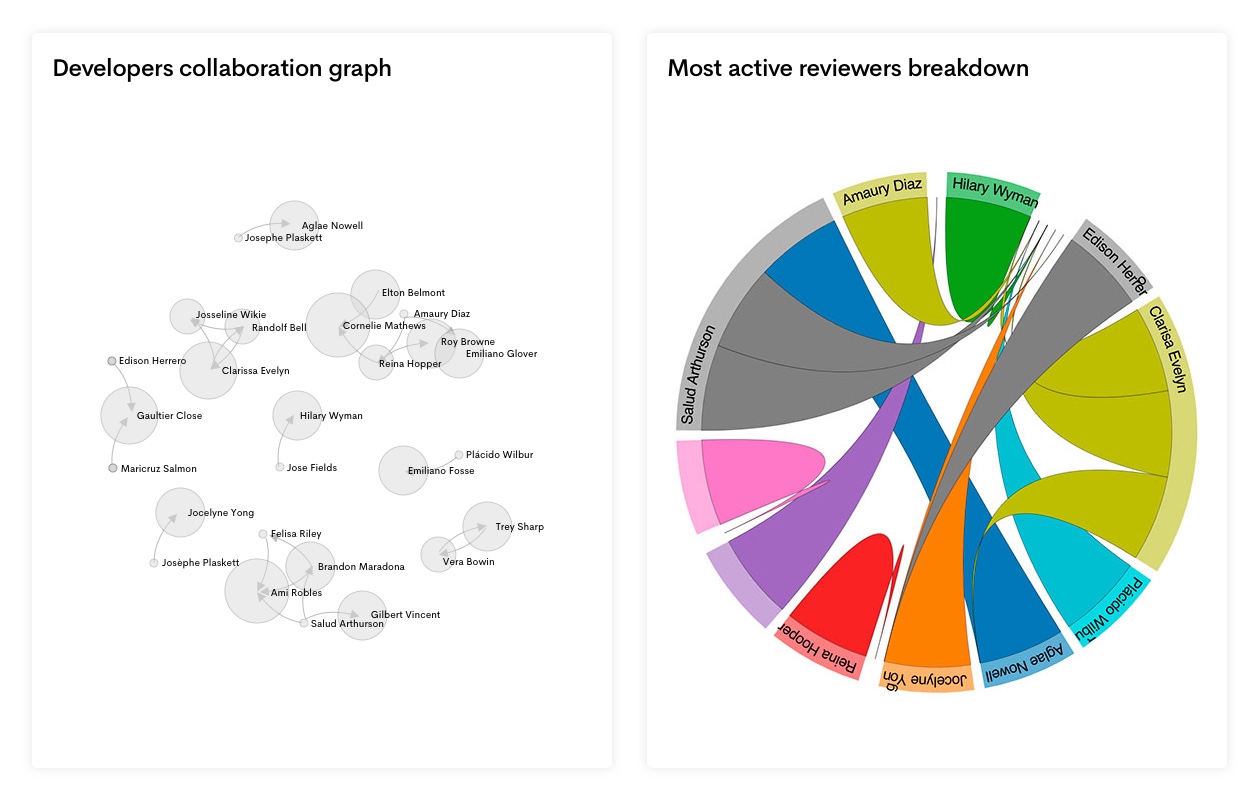
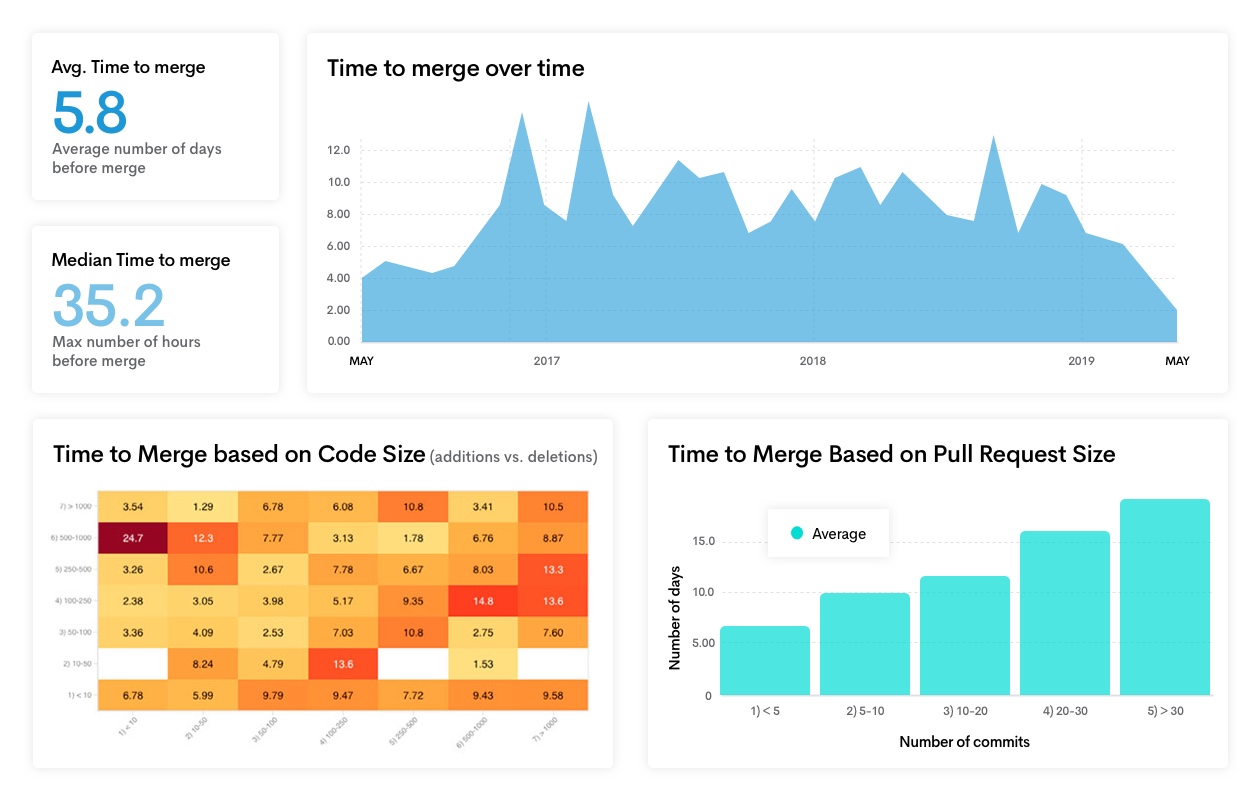
Sourced, or source{d}, as the company styles its name, provides developers and IT departments with deeper analytics into their software development lifecycle. It analyzes codebases, offers data about which APIs are being used and provides general information about developer productivity and other metrics. Today, Sourced is officially launching its Enterprise Edition, which gives IT departments and executives a number of advanced tools for managing their software portfolios and the processes they use to create them.

“Sourced enables large engineering organizations to better monitor, measure and manage their IT initiatives by providing a platform that empowers IT leaders with actionable data,” said the company’s CEO Eiso Kant. “The release of Sourced Enterprise is a major milestone towards proper engineering observability of the entire software development life cycle in enterprises.”

Engineering Effectiveness Efficiency

Since it’s one of the hallmarks of every good enterprise tools, it’s no surprise that Sourced Enterprise also offers features like role-based access control and other security features, as well as dedicated support and SLAs. IT departments can also run the service on-premise, or use it as a SaaS product.

The company also tells me that the enterprise version can handle larger codebases so that even complex queries over a large dataset only takes a few seconds (or minutes if it’s a really large codebase). To create these complex queries, the enterprise edition includes a number of add-ons to allow users to create these advanced queries. “These are available upon request and tailored to help enterprises overcome specific challenges that often rely on machine learning capabilities, such as identity matching or code duplication analysis,” the company says.

Cloud Migration

The service integrates with most commonly used project management and business intelligence tools, but it also ships with Apache Superset, an open-source business intelligence application that offers built-in data visualization capabilities.

These visualization capabilities are also now part of the Sourced Community Edition, which is now available in private beta.

“Sourced Enterprise gave us valuable insights into the Cloud Foundry codebase evolution, development patterns, trends, and dependencies, all presented in easy-to-digest dashboards,” said Chip Childers, the CTO of the open-source Cloud Foundry Foundation, which tested the Enterprise Edition ahead of its launch. “If you really want to understand what’s going on in your codebase and engineering department, Sourced is the way to go.”

To date, the company has raised $10 million from Frst VC, Heartcore Capital, Xavier Niel and others.

Talent Assessment Managment

02 Jul 2019

Fast Forward raises new war chest to fight Silicon Valley’s inequality machine

San Francisco is a city of extremes, with multi-billion dollar glass-cladded obelisks piercing the SoMa sky while thousands of the city’s long-term residents fail to find even the basic rudiments of housing and other social services.

The tech industry has created the world’s greatest inequality machine, solving every one of our problems except the ones like housing affordability, education access, and healthcare availability that might lead to greater agency and equality.

Now though, a growing list of the Valley’s leading companies are engaging with the issues in their own neighborhoods and globally — as are their employees.

Fast Forward, an accelerator of tech non-profits based in SF, announced today that it has raised $5 million in new philanthropic funding from leading companies like Google.org, Twilio.org, Blackrock, the Hewlett Packard Enterprise (HPE) Foundation, Okta, PagerDuty, AWS, Github and many more.

Like traditional accelerators such as Y Combinator, Fast Forward selects a batch of very early-stage startups working on large social challenges and helps them scale their products, culminating in a series of three demo days in SF, Silicon Valley and New York City. Fast Forward invests an unrestricted $25,000 in each startup.

We’ve covered the accelerator before, but in addition to raising more cash than the last time we checked in, co-founders Shannon Farley and Kevin Barenblat explained to me that an emerging pattern is the depth of engagement from tech workers. “We have doubled the number of partners that support” us, said Farley. She said that when they started, they only had support from a couple of groups like Google and Blackrock, but that the list now includes more than 40 different tech companies.

As those companies have invested more resources into Fast Forward, company employees are also engaging more fervently in the program. More than 100 mentors — many drawn from funders — now act as mentors in the program. In addition, working through Fast Forward, HPE’s 60,000 employees were given $1 million in gift cards to invest in tech non-profits as part of a company-wide philanthropic initiative. 31 tech non-profits received funding as part of the HPE Accelerating Impact program.

Barenblat explained that as a non-profit accelerator, they can take a much broader role in building out this particular niche. “Compared to a for-profit accelerator that is interested in growing their portfolio … we actually do quite a bit to support [the ecosystem] beyond just the organizations that come through our program,” he explained.

The accelerator has now worked with 41 startups. This summer’s batch includes ten startups like Almost Fun SAT, which is helping under-resourced students get access to better college test prep exercises, FreeFrom, which helps domestic violence survivors get access to compensation, and Hikma Health, a health management platform for refugees.

Tech nonprofit entrepreneurs in the 2019 cohort

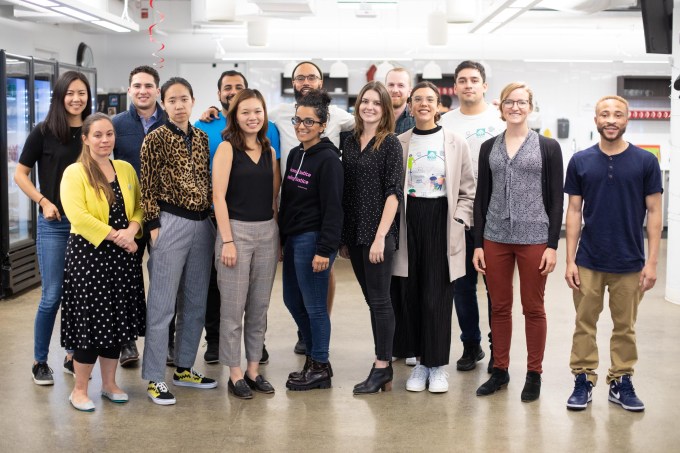
Founders in Fast Forward’s summer 2019 batch. Photo courtesy of Fast Forward.

As the tech non-profit sector garners more attention, Farley and Barenblat believe that there is an opportunity to “10x” the number of startups and the level of capital heading into them. They said that this new funding would help to create a “tech non-profit playbook,” which they hope will help guide entrepreneurs interested in targeting hard challenges to get started.

As these startups grow, Barenblat hopes that more tech employees will get personally involved in philanthropy since the startups will look and feel familiar but are solving tough social challenges. We expect to “see more and more leaders in the tech community” standing up for these issues, he said.

Ultimately, the two hope to make the next batch of startups into household names. “Most of your readers know Wikipedia, and Mozilla, and Khan Academy,” Barenblat said. Fast Forward wants the next-generation of tech non-profits to reach that level of stature.

With some effort, the tech and product thinking that made books and taxis arrive at our doorstep in minutes can be transferred to other challenges — building a more equal world in the process.

02 Jul 2019

A Cloudflare outage is impacting sites everywhere

If you’ve been experiencing “502 Bad Gateway” notices all morning, for better or worse, you’re not alone. Cloudflare has been experiencing some major outages this morning, leaving many sites reeling in its wake. In fact, the company’s System Status page, which collects global incidents, reads like a laundry list of every major city across the globe.

Cloudflare has acknowledged what looks to be an extremely widespread issue, and appears to be working to address the issue. “Cloudflare has implemented a fix for this issue and is currently monitoring the results,” the company writes. “We will update the status once the issue is resolved.” We’ve reached out to the company for more information and will do the same.

For now, maybe go take a walk around the block. It’s nice outside.