Category: UNCATEGORIZED

02 Jul 2019

NASA picks a dozen science and tech projects to bring to the surface of the Moon

With the Artemis mission scheduled to put boots on lunar regolith as soon as 2024, NASA has a lot of launching to do — and you can be sure none of those launches will go to waste. The agency just announced 12 new science and technology projects to send to the Moon’s surface, including a new rover.

The 12 projects are being sent up as part of the Commercial Lunar Payload Services program, which is — as NASA Administrator Jim Bridenstine has emphasized strongly — part of an intentional increase in reliance on private companies. If a company already has a component or rover or craft ready to go and meeting a program’s requirements, why should NASA build it from scratch at great cost?

In this case the selected projects cover a wide range of origins and intentions. Some are repurposed or spare parts from other missions, like the Lunar Surface Electromagnetics Experiment. LuSEE is related to the Park Solar Probe’s STEREO/Waves instrument and pieces from MAVEN, re-engineered to make observations and measurements on the moon.

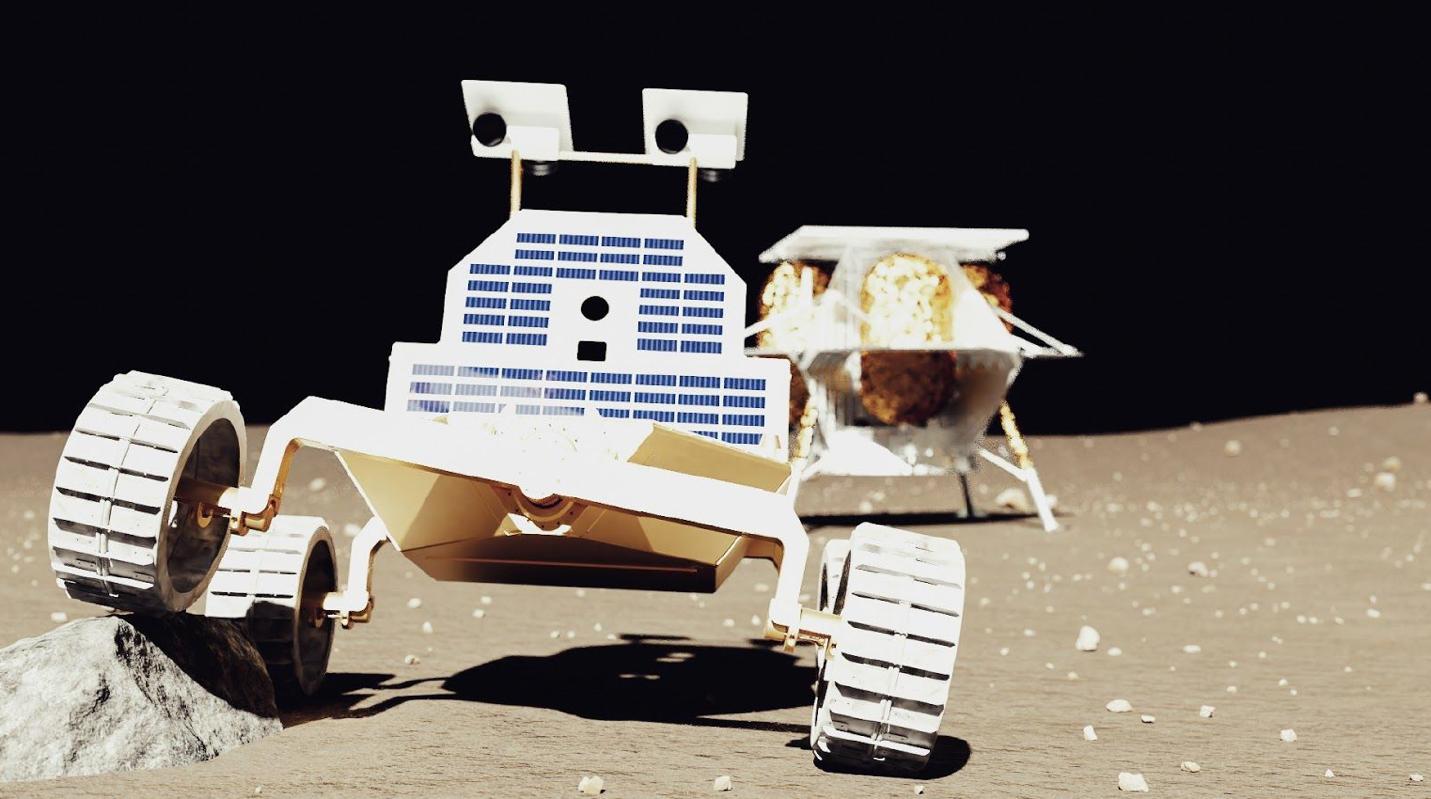
moonrangerOthers are quite new. Astrobotic, which was also recently awarded an $80 million contract to develop its Peregrine lunar lander, will now also be putting together a rover, which it calls MoonRanger (no relation to the NES game). This little bot will autonomously traverse the landscape within half a mile or so of its base and map it in 3D.

The new funding from NASA amounts to $5.6M, which isn’t a lot to develop a lunar rover from scratch — no doubt it’s using its own funds and working with its partner, Carnegie Mellon University, to make sure the rover isn’t a bargain bin device. With veteran rover engineer Red Whittaker on board, it should be a good one.

“MoonRanger offers a means to accomplish far-ranging science of significance, and will exhibit an enabling capability on missions to the Moon for NASA and the commercial sector. The autonomy techniques demonstrated by MoonRanger will enable new kinds exploration missions that will ultimately herald in a new era on the Moon,” said Whittaker in an Astrobotic news release.

The distance to the lunar surface isn’t so far that controlling a rover directly from the surface is nearly impossible, like on Mars, but if it can go from here to there without someone in Houston twiddling a joystick, why shouldn’t it?

To be clear, this is different from the upcoming CubeRover project and others that are floating around in Astrobotic and Whittaker’s figurative orbits.

“MoonRanger is a 13 kg microwave sized rover with advanced autonomous capabilities,” Astrobotic’s Mike Provenzano told me. “The CubeRover is a 2 kg shoebox sized rover developed for light payloads and geared for affordable science and exploration activities.”

While both have flight contracts, CubeRover is scheduled to go up on the first Peregrine mission in 2021, while MoonRanger is TBD.

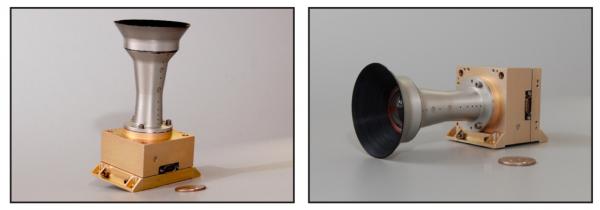
Another NASA selection is the Planetary Science Institute’s Heimdall, a new camera system that will point downward during the lander’s descent and collect super-high-resolution imagery of the regolith before, during, and after landing.

heimdall

“The camera system will return the highest resolution images of the undisturbed lunar surface yet obtained, which is important for understanding regolith properties. We will be able to essentially video the landing in high resolution for the first time, so we can understand how the plume behaves – how far it spreads, how long particles are lofted. This information is crucial for the safety of future landings,” said the project’s R. Aileen Yingst in a PSI release.

The regolith is naturally the subject of much curiosity, since if we’re to establish a semi-permanent presence on the Moon we’ll have to deal with it one way or another. So Projects like Honeybee’s PlanetVac, which can suck up and test materials right at landing, or the Regolith Adherence Characterization, which will see how the stuff sticks to various materials, will be invaluable.

RadSatg Deployed w Crop

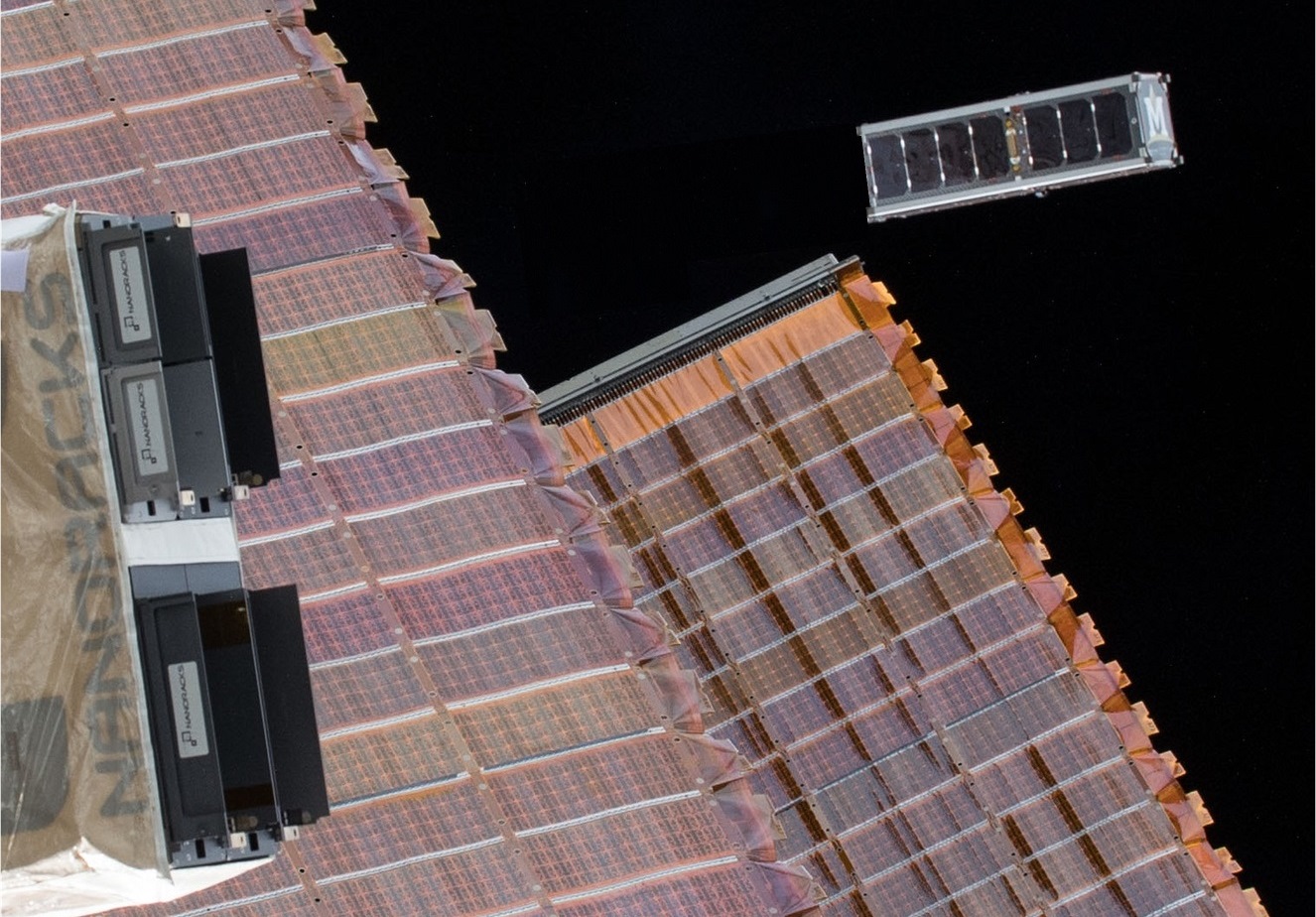
RadSat-G deployed from the ISS for its year-long mission to test radiation tolerance on its computer systems.

Several projects are continuations of existing projects that are great fits for lunar missions. For example, the lunar surface is constantly being bombarded with all kinds of radiation, since the Moon lacks any kind of atmosphere. That’s not a problem for machinery like wheels or even solar cells, but for computers radiation can be highly destructive. So Brock LaMere’s work in radiation-tolerant computers will be highly relevant to landers, rovers, and payloads.

LaMere’s work has already been tested in space via the Nanoracks facility aboard the International Space Station, and the new NASA funding will allow it to be tested on the lunar surface. If we’re going to be sending computers up there that people’s lives will depend on, we better be completely sure they aren’t going to crash because of a random EM flux.

The rest of the projects are characterized here, with varying degrees of detail. No doubt we’ll learn more soon as the funding disbursed by NASA over the next year or so helps flesh them out.

02 Jul 2019

Apple Sans Ive

Well, this has been interesting. After almost 30 years with Apple, Jony Ive is leaving, to found his own firm LoveFrom with his friend and frequent collaborator Marc Newson — also leaving Apple. The response to this news has been predictably histrionic from Apple watchers and press.

The narratives, to summarize, are essentially that:

  • Jony had checked out, become incompetent or just plain lazy
  • Apple is doomed because he is leaving

If those narratives look contradictory then you have eyes.

If you take the sum of the breathless (dare I say thirsty) stories tying together a bunch of anecdotes about Jony’s last couple of years, they are trying to paint a picture of a legendary design figure that has abandoned the team and company he helped build, leading to a stagnation of forward progress — while at the same time trying to argue that the company is doomed without him.

Ok.

Ironically (or perhaps inevitably) even the phrasing of the tweets that accompanied these stories were couched in inflammatory positioning. Tim Cook’s email (actually quite plainly stated) was touted as ‘scathing’, the Journal posited the question: ‘Why hasn’t Apple had a hit product in years? A look at the internal drama around the departure of its design chief helps explain.’ A conclusion that its story only hints at.

Most watchers of the company that I know who were asking and listening to Apple people over the past couple of years are aware that Jony has been on borrowed time with the company. Shocking, this was not — a surprise it was always guaranteed to be given how much control Jony keeps over how and when he does press.

Back in 2015, it was clear that Jony wanted to do less paper pushing and more pencil pushing. And the past decade of Apple has been nothing if not an explosion of management challenges. Enormous growth in product volumes, splintering product lines that made an attempt to leave less room under the pricing and feature umbrella and, yeah, a hell of a lot more people.

“Many of Apple’s critics are purely nostalgic,” Ben Bajarin of Creative Strategies puts it. “Wanting Apple to go back to the days when some of the designs were more bold, iconic, possibly polarizing, but in that time Apple was selling tens of millions of products not hundreds of millions of products. This is a crucially important point that many in the public sphere miss. “

All of that growth means that the job of someone like Jony would naturally shift from scooting a pencil around a drafting board to something more like management — or, in Apple’s case, teaching.

I’m not the Journal’s (or any other publication’s, thank god) public editor. So I will not be fisking the stories that have come out about Jony and his work habits. I’ve never been that good at it and I don’t really have the stomach for it these days. I do have thoughts, though about the way that these anecdotes are tied together in a narrative.

Given that I have covered the company closely for years, I know a lot of the people who were involved in some of these situations. Jony did, in fact, move to holding design meetings at his house in SF. They absolutely held design meetings at The Battery to collate device opinion. He has a design studio in other homes like Hawaii and London. He has absolutely spent more time in the city than down at Apple headquarters over the past few years. The design teams, in and out of the industrial design people, absolutely saw less of him than before.

There are also bits and pieces in the various stories over the past few days that are not, as I understand them, accurate, or represented in an accurate context. But the more important point is that no one I know felt that Jony had checked out or abandoned the team.

As he stated himself, Jony was just plain tired. What prolific designer do you know that is excited about doing more management and less design?
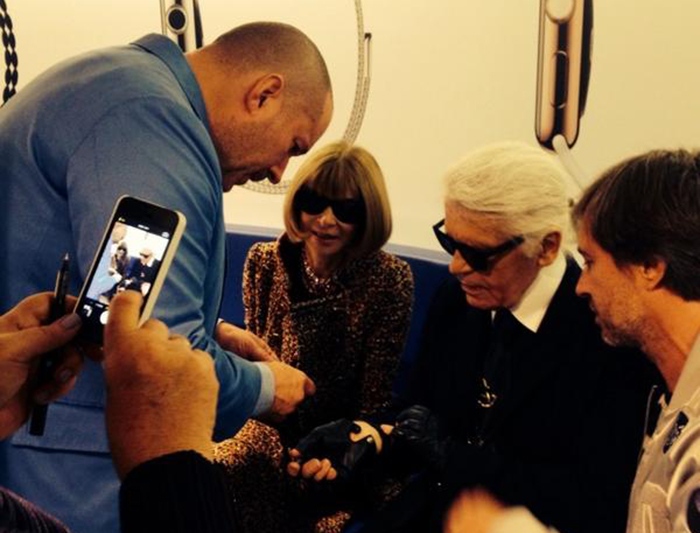
Also, I fully reject the narrative that Apple has somehow floundered because Jony has been absentee. During the period, the company has shipped some enormously successful products — including the major category hit Apple Watch. As one note, I found the criticism that Jony wanted a gold watch so that made the Apple Watch a boondoggle to be enormously hilarious.

The gold watch had 2 distinct purposes:

  • Jony wanted to make it
  • It set expectation that this was a product worth wearing all day

I think it is 100% possible and fair to argue that the first point means Jony had too much power or that it was him exercising that power in a way that felt foreign to Apple’s egalitarian ideals about computing. But the fact is that, regardless of how many they sold, it made a splash and did, in fact, push Apple into the world of fashion and wearable conversation in a way that it hadn’t ever before.

That toe-hold gave them time to figure out what the Watch is actually for and it is a very real success for the company. During the same period, Apple shipped the iPhone X months ahead of schedule, and major updates to every line including the iMac.

I can certainly understand one or more members of the design team resenting the lack of intimate one-on-one time that Jony used to spend with the team when Apple shipped fewer products in more time. And not all of Jony’s influence over the past few years is pristine in hindsight. The MacBook keyboards still suck, I’ll give you that one.

Basically, all design is worth critiquing, and Jony isn’t above that. If something doesn’t work consistently or feel human centric, then it doesn’t matter if 1950’s Dieter Rams himself designed it, it’s crap.

But the argument that Jony derailed product at Apple looks like complete nonsense when you observe the facts. And every design team member I’ve spoken to over the last 4 years has said that Jony, while at times difficult, demanding and intense, has also been an enormous enabling force when it comes to spending the time, resources and energy it took them to get a product or feature to the level they wanted. Resources like on-the-ground materials consultation in China, collaborations with artists around the world, research into the effects of a design — the willingness to ‘do the most’ in search of a solution. None of that went away.

That said, if Jony doesn’t like managing, guess what Jony is not going to be enthusiastic about? As Shel Silverstein put it: “If you have to dry the dishes, and you drop one on the floor, maybe they won’t make you dry dishes any more.”

There is certainly calculus in everything an executive at any big company says publicly — but I think you can believe Jony when he says that he feels like he can be useful elsewhere.

“I certainly have an ambition and feel almost a moral obligation to be useful,” he says in this FT piece. “I feel I’ve been fortunate enough to work with remarkable people over the last 30-plus years and have worked on some very interesting projects and solved some very difficult problems. I feel keenly aware of a responsibility to do something significant with that learning.”

He wants out, and that’s what he’s doing. But he’s not leaving the company in terrible shape, from either an overall perspective and from an internal perspective.

Let’s move away from the anecdotal. What’s more interesting to me than any of this Jony shit talking is where Apple design goes from here.

Apple has put Evans Hankey and Alan Dye in charge of design, reporting to Jeff Williams. Wring your hands all you want about Apple becoming an operations company but, like, where have you been for the last 10 years?

Yes, Apple is a different company now, and it should be. While Jony has given us some amazing work (and some amazing what the hell moments) over the years, its going to be fascinating to watch a new leadership tackle the next era at Apple.

I think it’s also smart of Apple not to announce a single ‘Jony replacement’ at this juncture. Any immediate comparison would likely not do them any favors and this gives the team time to find a new center and a new direction over the next couple of years. I think someone will emerge as the design lead here eventually, but I’m not sure who.

Evans, as I understand it, was hand picked by Jony to lead the ID team as a manager, a job she’s already been doing. She’s a capable design manager with hundreds of patents to her name. More importantly, Apple has a historic and systemic policy that they don’t just put people in to do a job, they put them there to learn from them and to teach them. The Apple way of doing things is institutionalized and taught to new hires.

This institutional tissue, I believe, will survive Jony leaving.

One of the things that struck me the most about a lot of the recent stories is that it painted members of the design team as feckless automatons that could not proceed without Jony approving every move. That’s not true and honestly not even possible. There’s no way Apple could ship on the schedule they have done over the past few years if Jony being late to a meeting would handicap them.

There are a lot of very smart and very talented people at Apple and they are not all named Jony.

I’m also very interested to see how Alan Dye gets on with Apple. He’s got a calm, understated demeanor in person that can come across a bit flat, but he’s clearly very engaged with the task. He’s respected by Apple designers who feel that his work speaks for itself internally and that he has the chops. One of the arcs of Dye’s tenure has been to unify the look and feel of iOS across its platforms in terms of typography like San Francisco.

One of the biggest potholes that the software design team has ever hit, in my opinion, was iOS 7. It needed to be a break with the past for some legitimate reasons, like the expansion of iOS onto new platforms like the car, the watch and beyond. But Jony brought print, not interaction, designers from other parts of Apple in to flesh out the final design and that ended up presenting as a radical new but also radically less usable iOS.

iOS 7, to me, has always reminded me of an apocryphal saying I heard but can’t remember where. It’s about the notoriously difficult to drive Porsche 911: Porsche made a beautiful mistake, and it’s spent 50 years fixing it.

The 911 was a car that was designed to be imbalanced from the beginning by placing the engine in the rear, to emphasize power transfer to the ground via weight and traction. Also, no joke, so you could still fit groceries in it.

Unfortunately, it also enabled massive oversteer, with the car swinging wide on corners incredibly suddenly if pushed too hard. Porsche has refined that design with every iteration, improving every other aspect of the vehicle like traction, larger wheelbase, steering, braking and gearing. Just to get it to a place where the original vision remained intact, but, you know, less fire and dying.

Apple has done much the same since iOS 7, taking a concept that it felt was necessary and continuing to pull it back into a place that feels more usable.

One of the things that stood out to me at the time was that iOS 7 led with a ‘panes of glass’ metaphor. They weren’t all that explicit about it then but it seemed clear to me that they saw this as a way to support all kinds of interfaces from palm first to heads up. An evolution of the information appliance.

Dye and the design team (and Jony, tbf) have spent the last couple of years making big strides fixing the mechanical issues, but it was very exciting to me to see the panes of glass metaphor heavily emphasized at WWDC this year. They’re just panes with depth, texture and hopefully more accessible context this time around.

Even though Jony is a ‘unicorn’ designer, Apple has always thrived on small teams with decision makers, and they’re not all one person. The structure of Apple, which does not rely on product managers, still leaves an enormous amount of power in the hands of the people actually doing the work. I’m not as concerned as a lot of people are that, with Jony leaving, there will suddenly be a slavish hewing to the needs of ‘ops over all’. It’s not in the DNA.

That doesn’t mean however, that there aren’t still question marks. Jony was an enormous force in this company. It is completely natural to be curious, excited and, hell yeah even worried about what his departure will do to the design focused Apple people love to love.
daniel arsham adidas futurecraft 4d bd7400 where to buy 2

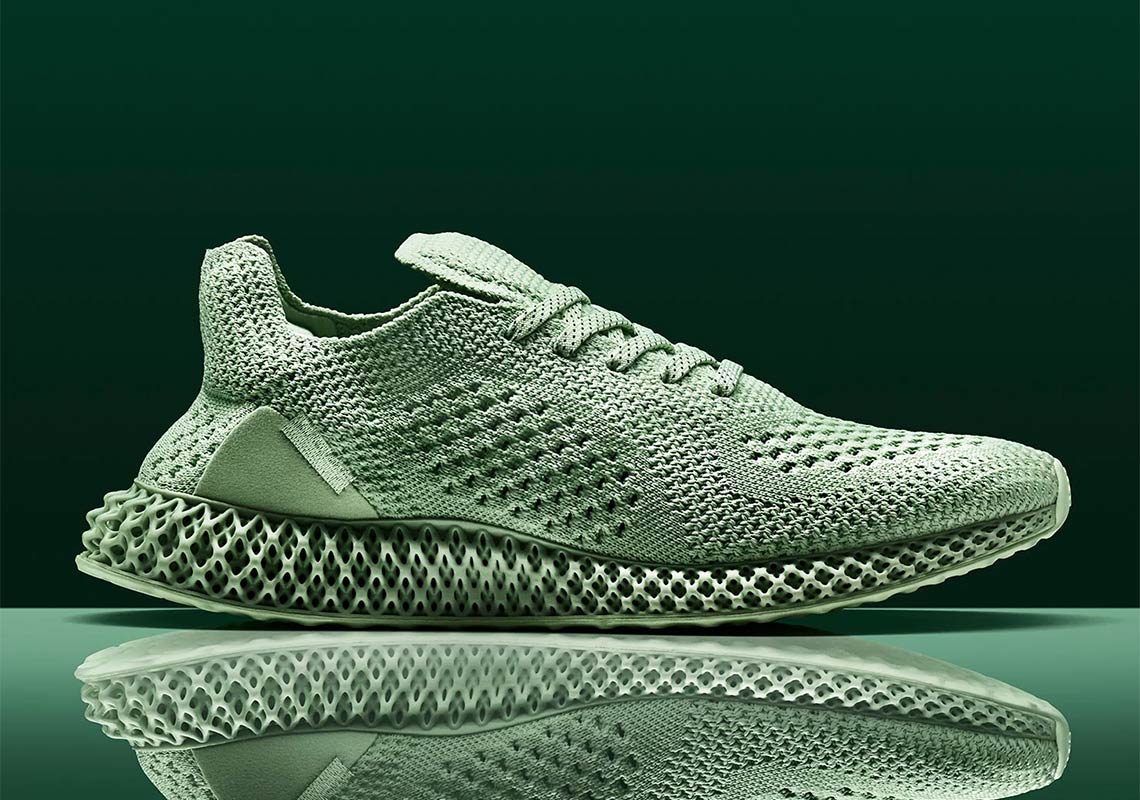
An Adidas Futurecraft shoe with a midsole printed by Carbon

As for me, I hope that there can be a balance struck between the established patterns of Apple design and new schools of thought. No company should remain rooted in the past completely. There are wildly interesting things happening in design and manufacturing at the moment. Trends like programmatic or “AI” design that allow designers to define an algorithm and a set of constraints, and then generate ‘impossible’ shapes out of edgy materials to obtain a result unable to be sketched or sculpted by traditional processes.

The shoe pictured above is a collaboration between an artist and an algorithm. Daniel Arsham, Adidas and a startup called Carbon made this with the help of a design program that understands the goals and materials its working with, but charts its own path to getting there. This is the new school of design.

The compression of the design and manufacturing stacks into one segment is going to be the defining characteristic of this age of product development in my opinion. Apple needs to jump on that wave and ride it.

There’s a Steve quote, prominently displayed on the wall of the Infinite Loop 4 building in its old Cupertino headquarters.

“I think if you do something and it turns out pretty good, then you should go do something else wonderful, not dwell on it for too long. Just figure out what’s next.”

I’d love to see Apple’s design teams do just that, embrace these new schools of thought and find ways to integrate them into the way that it has always worked. There hasn’t been a more fascinating time to follow this company in years. Whatever happens it won’t be boring.


02 Jul 2019

Waymo is now allowed to transport passengers in its self-driving vehicles on California roads

Waymo, the Google’s former self-driving that is now a business under Alphabet, has been given permission by California regulators to transport passengers in its robotaxis, TechCrunch has learned. The approval is a milestone for the company as it begins to ramp up towards a commercial service.

The California Public Utilities Commission today granted Waymo a permit on Tuesday to participate in the state’s Autonomous Vehicle Passenger Service pilot. Waymo confirmed the approval. A statement from a Waymo spokesperson provides some hints as to how and where the company intends to use this permit.

“The CPUC allows us to participate in their pilot program, giving Waymo employees the ability to hail our vehicles and bring guests on rides within our South Bay territory,” the spokesperson said in a statement. “This is the next step in our path to eventually expand and offer more Californians opportunities to access our self-driving technology, just as we have gradually done with Waymo One in Metro Phoenix.”

The approval from CPUC is different than the permits issued by the California Department of Motor Vehicles to test self-driving vehicles in the state. More than 60 companies have a permit to test in the state.

Instead, this gives Waymo permission to use its self-driving vehicles — which are the Chrysler Pacifica hybrid minivans and eventually the Jaguar I-PACE electric vehicle — to transport people. The company still faces certain restrictions. It can’t charge for rides and the vehicles must have safety drivers behind the wheel. Waymo will also have to provide reports to CPUC with information on total passenger miles traveled and safety protocols.

The CPUC also gave Waymo an exemption that will allow the autonomous vehicle technology startup to use a third-party company to contract out safety operators. Waymo argued in a letter requesting the exemption that while the company’s “team of test drivers will include some full-time Waymo employees, operating and scaling a meaningful pilot requires a large group of drivers who are more ewfficiently engaged through Waymo’s experienced and specialized third-party staffing providers.”

Waymo confirmed that all test drivers go through its proprietary driver training program.

Waymo isn’t the first to receive the permit. Back in December, Zoox scored the inaugural permit from the CPUC. Pony.ai and and AutoX, which started as an autonomous delivery company, also have received permits.

02 Jul 2019

Trump taps conservative pundits for ‘social media summit’

Turning Point USA founder Charlie Kirk and PragerU are among the conservative voices that have been tapped to attend next week’s White House “social media summit.” That news is courtesy of The Washington Post, which highlights some of the plans for the July 11 event, set to focus on “opportunities and challenges of today’s online environment.”

The move event won’t come as a surprise to anyone whose followed the news cycle since Trump arrived in office. While social media sites have been the subject of plenty of criticism from both the left and the right, conservatives in particular have had companies like Google, Facebook and Twitter in their sights over claimed “liberal biases.”

Just yesterday, Trump told Fox News’ Tucker Carlson that the sites have been “fighting” him. “I know for a fact a lot of people try and follow me and it’s very hard,” the President said. “I have so many people coming up that they say, ‘Sir, it’s so hard. They make it hard to follow.’ What they’re doing is wrong and possibly illegal. And a lot of things are being looked at right now.”

While Trump offered no specific evidence around his claims, the move follows a pattern of accusing different platforms of “shadow banning” Trump and other conservative voices. Last week, Twitter announced that it would be issuing warnings for “abusive behavior” from prominent news figures. While not a block or a ban, the move is an attempt to walk the line between curbing abuse and maintaining “newsworthy” content. Many saw the move as specifically targeting Trump.

02 Jul 2019

Instagram’s new chat sticker lets friends ask to get in on the conversation directly in Stories

Instagram has a new sticker type rolling out today that lets friends and followers instantly tap to start conversations from within Stories. The new sticker option, labelled “Chat,” will let anyone looking at a story request to join an Instagram group DM conversation tied to the post, with the original poster still getting the opportunity to actually approve the requests coming in from their friends and followers.

Instagram’s Direct Messages provide built-in one-to-one and one-to-many private messaging for users on the platform, and are one key way that the social network owned by Facebook has used to fend off, anticipate and adapt features from would-be competitor Snapchat. The company confirmed in May that it was discontinuing development of Direct, its own standalone app version of the Instagram DM feature, but its clearly still interested on iterating the core product to make it more engaging for users and better linked to Instagram’s other core sharing capabilities.

02 Jul 2019

Daily Crunch: Tim Cook fires back at the WSJ

The Daily Crunch is TechCrunch’s roundup of our biggest and most important stories. If you’d like to get this delivered to your inbox every day at around 9am Pacific, you can subscribe here.

1. Tim Cook hits ‘send’

Apple’s CEO isn’t happy with The Wall Street Journal.

A day after a WSJ report describing departing design guru Jony Ive’s cooling relationship with Apple, Tim Cook made the rare move of responding directly in an email sent to a reporter at NBC, where he called the story “absurd” and said it doesn’t “match with reality.”

2. Facebook News Feed changes downrank misleading health info and dangerous ‘cures’

The social network today announced it will minimize the spread of health content that’s sensational or misleading. (Maybe it should go ahead and block this stuff, instead of just downranking it?)

3. Loon breaks its stratospheric balloon flight record with 223 days aloft

This beats the Alphabet-owned company’s previous record of 198 days in the air by nearly a month, and it’s great news for its goal of delivering internet connectivity to hard-to-reach areas.

LONDON, ENGLAND – OCTOBER 21: Cloudflare Partner, Matthew Prince appears on stage at the 2014 TechCrunch Disrupt Europe/London, at The Old Billingsgate on October 21, 2014 in London, England. (Photo by Anthony Harvey/Getty Images for TechCrunch)

4. A Cloudflare outage is impacting sites everywhere

If you’ve been experiencing “502 Bad Gateway” notices all morning, for better or worse, you’re not alone.

5. Netflix is officially making a show based on Neil Gaiman’s ‘Sandman’ comics

The Hollywood Reporter broke the news over the weekend that a deal was in the works, and it claimed that this will be DC Entertainment’s most expensive TV series yet.

6. Calm raises $27M to McConaughey you to sleep

Meditation app unicorn Calm lets you doze off to the dulcet tones of actor Matthew McConaughey’s southern drawl or writer Stephen Fry’s English accent.

7. How startups can make influencer marketing work on a budget

Influencer marketing has ballooned into a $25 billion industry, yet for many marketing managers, it’s not delivering the results to justify the hype. (Extra Crunch membership required.)

02 Jul 2019

Crowdfunded solar sail spacecraft moves closer to flying on light alone

The Planetary Society’s crowdfunded LightSail 2 spacecraft reported back some good news today: It’s officially orbiting on its own after being delivered to space via rocket ride share about SpaceX’s Falcon Heavy last week.

LightSail 2 “phoned home” today in the wee hours of the morning, a good sign that it’s well set up to achieve its main mission of actually unfurling its solar sail, which will propel the spacecraft forward in a planned course that will raise its orbit higher than its current point. It’l do this using only the force generated by photons produced by sunlight actually hitting the 105-foot square reflective Mylar sheet. Note that this is very different from solar power, which converts energy from sunlight into electricity.

Should it succeed in deploying its sail, it’ll be the first demonstration of a LightSail craft doing so (the first one was meant to merely test other systems and didn’t actually sail). But don’t expect space based speed trials – this type of craft actually generates very little thrust, but its design could theoretically prove an efficient, effective and affordable way to operate for specific types of missions where acceleration isn’t as important as eventual top speed. Even a very light push, once multiplied by many other light pushes, can produce a lot of speed in the vacuum of space.

02 Jul 2019

Canadian startup Sweet Reason as sparkling spin on CBD beverages

Sweet Reason chief executive Hilary McCain says she launched her sparkling CBD-infused water brand because of her own obsession with cannabis beverages.

That obsession, coupled with the lax regulatory environment in Canada where marijuana is already legalized, led the former Boston Consulting Group consultant and longtime food industry insider to launch the sparkling water company.

“The recreational legalization of cannabis was on the horizon. A lot of my mentors and advisers from the food industry were switching over to cannabis… and I believe beverage is the most social and healthiest way to consume cannabis.”

Sweet Reason describes its product as a “premium sparkling water infused with 7mg of… unique form of CO2-extracted CBD.” Its CBD is water-soluble and the company’s drinks contain no sugar, sweeteners, sodium, carbs, or artificial ingredients. The company sources its cannabinoid extract from a hemp grower in Colorado and uses a co-packing facility for bottling and distribution.

McCain contends that the beverage is meant to be enjoyed throughout the day as a mild stimulant compared to something like a Red Bull or a soda. But, reader, I’m one bottle into the day already and let me tell you, I’m definitely not going to be able to drink a second one if I want to get anything done.

In January 2018, McCain started the company with a personal investment of a couple hundred thousand dollars. The money went into market research, brand development and the creation of her CBD-infused concoctions. And when getting a new consumer business off the ground, especially one operating in the regulatory gray area of cannabis and marijuana, the first thing to do is understand the regulatory environment, says McCain.

By the end of the year, she was ready to go to market, but regulatory changes in Canada meant that her home country wouldn’t be the first port of call for the beverage brand. Instead, McCain hit the U.S. market, landing first in New York and selling around the country through online sales channels. 

Screen Shot 2019 07 02 at 9.26.05 AM

After the sales started rolling in, the company began attracting the attention of some pretty heavy hitters in the consumer venture capital market.

Sweet Reason now has $2.5 million in new financing thanks to a seed financing round led by ​Lerer Hippeau — the investment firm behind startups like Glossier, Warby Parker, Allbirds, Casper, and Soylent. Other investors included ​RiverPark Ventures and the New York-based consumer internet investor ​Max Ventures. Subversive Capital​, a cannabis investor financed by the Peter Thiel-backed Privateer Holdings also committed capital to the round. 

“With Sweet Reason, we’re betting on a team that’s laser-focused on delivering superior quality and building a best-in-class brand,” says Lerer Hippeau’s Caitlin Strandberg. “Hilary’s deep domain expertise in the food industry as well as her passion for health and wellness will accelerate Sweet Reason into a category leader.”

While cannabis, cannabis extracts and marijuana have become hot commodities in startup land, many companies are still wrestling with the ways in which they can help undo some of the damage that the criminalization of marijuana and cannabinoid sales previously experienced. Sweet Reason is no different.

“There is a responsibility for cannabis companies and hemp companies by affiliation to support those efforts and initiatives to help remedy the damage that’s been done,” says McCain.

However, her company has not determined what steps it will take to support amnesty for non-violent drug offenders incarcerated for marijuana-related crimes, or how it will address issues of promoting entrepreneurship in the communities ravaged by the “War on Drugs.”

Sweet Reason is planning to donate 1% of its sales to mental health initiatives — something that could wind up benefiting the company if those donations go toward investigating the role that CBD can play in the treatment of mental illnesses.

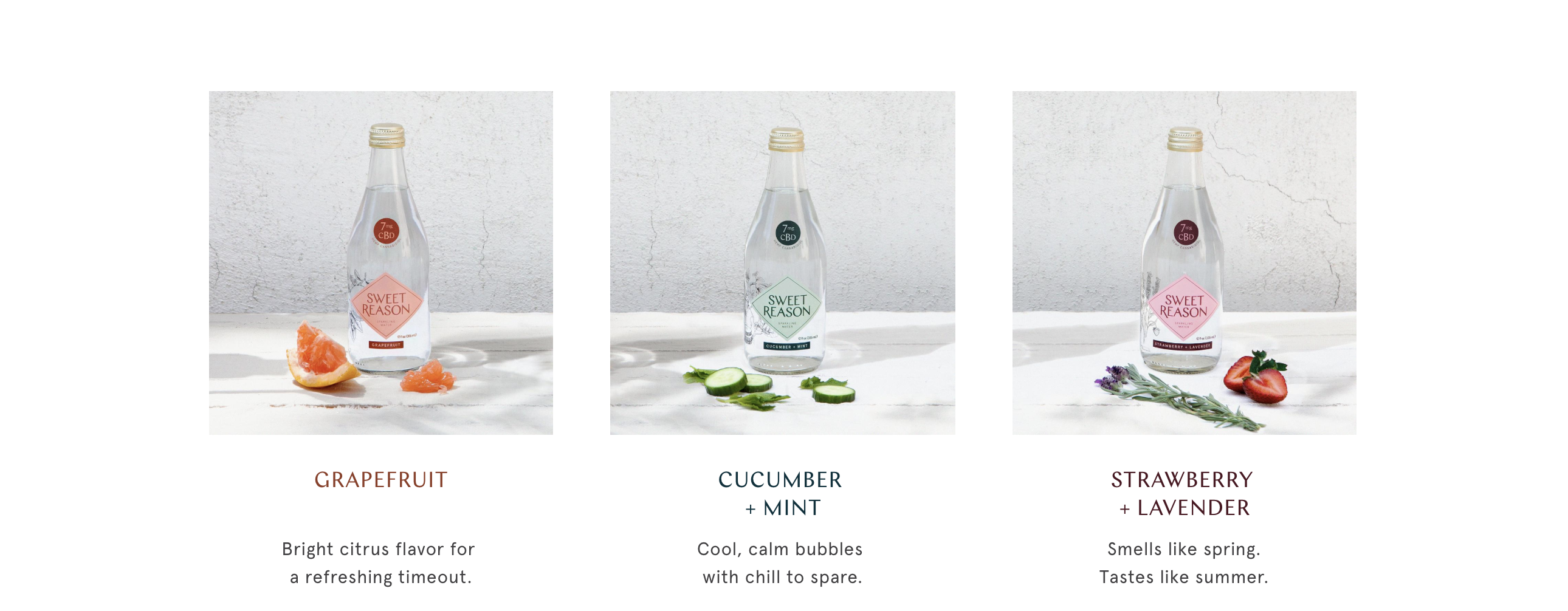
The company’s sparkling cannabinoid-infused concoctions are available in Dean and Deluca, Westside Market, and other fine upscale purveyors of fancy foods and drinks. The drinks come in three flavors — grapefruit, cucumber mint, and strawberry lavender, and retail for $5.99.

02 Jul 2019

File storage app 4shared caught serving invisible ads and making purchases without consent

With more than 100 million installs, file sharing service 4shared is one of the most popular apps in the Android app store.

But security researchers say the app is secretly displaying invisible ads and subscribes users to paid services, racking up charges without the user’s knowledge — or their permission — collectively costing millions of dollars.

“It all happens in the background… nothing appears on the screen,” said Guy Krief, chief executive of London-based Upstream, which shared its research exclusively with TechCrunch.

The researchers say the app contains suspicious third-party code which allowed the app to automate clicks and make fraudulent purchases. They said the component, built by Hong Kong-based Elephant Data, downloads code which is “directly responsible” for generating the automated clicks without the user’s knowledge. The code also sets a cookie to determine if a device has previously been used to make a purchase, likely as a way to hide the activity.

Upstream also said the code deliberately obfuscates the web addresses it accesses and uses redirection chains to hide the suspicious activity.

Over the past few weeks Upstream said it’s blocked over 114 million suspicious transactions originating from two million unique devices, according to data from its proprietary security platform, which the company said would cost consumers if they are not blocked. Upstream only has visibility in certain parts of the world — Brazil, Indonesia, and Malaysia to name a few — suggesting the number of observed suspicious transactions was likely a fraction of the total number.

Then in mid-April, 4shared’s app suddenly disappeared from Google Play and was replaced with a near-identical app with the suspicious components removed.

At the time of writing, 4shared’s new app has more than 10 million users.

Irin Len, a spokesperson for 4shared, told TechCrunch that the company was “unaware” of the fraudulent ad activity in its app until we reached out, but confirmed the company no longer works with Elephant Data.

Len said the old app was removed by Google “without reason,” but its suspicions quickly fell on the third-party components, which the company removed and resubmitted the app for approval. But because their old app was pulled from Android’s app store, 4shared said it wasn’t allowed to push an update to existing users to remove the suspicious components from their devices.

Google did not respond to TechCrunch’s request for comment.

We sent Elephant Data several questions and follow-up emails prior to publication but we did not hear back.

4shared, owned by New IT Solutions based in the British Virgin Islands, makes a brief reference to Elephant Data in its privacy policy but doesn’t explicitly say what the service does. 4shared said since it’s unable to control or disable Elephant Data’s components in its old app, “we’re bound to keep the detailed overview of which data may be processed and how it may be shared” in its privacy policy.

Little else is known about Elephant Data, except that it bills itself as a “market intelligence” solution designed to “maximize ad revenue.”

The ad firm has drawn criticism in several threads on Reddit, one of which accused the company of operating a “scam” and another called the offering “dodgy.” One developer said he removed the components from his app after it began to suffer from battery life issues, but Elephant Data was “still collecting data” from users who hadn’t updated yet their apps.

The developer said Google also banned his app, forcing him to resubmit an entirely new version of his app to the store.

It’s the latest app in recent months to be accused of using invisible ads to generate fraudulent revenue. In May, BuzzFeed News reported similar suspicious behavior and fraudulent purchases in Chinese video app VidMate.

02 Jul 2019

Disrupt SF 4-day flash sale: save an additional $300 off passes

Here comes the 4th of July — the traditional time for fireworks, picnics and…low, low prices! But seriously folks, our kind of fireworks involves discounts to Disrupt San Francisco 2019 to the tune of an additional $300 off select passes. Founder passes start at $795 and, depending on which pass you purchase, you can save up to $1,600. Oooh, ahhh! That’s some star-spangled savings.

Go ahead and enjoy the hot dogs and apple pie, but this four-day sale disappears in a flash. Be sure to buy your passes to Disrupt SF before the deadline hits at 11:59 p.m. (PT) on July 5.

You also can score big savings on a Startup Alley Exhibitor Package with an additional $300 off and set up shop in the exhibition floor alongside 1,200 early-stage startups and sponsors. Talk about a networking opportunity. Demo your tech to thousands of Disrupt attendees, founders, investors and media types. You might even win a shot at the Startup Battlefield. TechCrunch editors will choose two Wild Card contenders from Startup Alley to join the chase for a $100,000 equity-free cash prize.

There’s still time to apply to be a TC Top Pick and exhibit in Startup Alley for free — the deadline is July 19. Your startup must fall into one of these categories: AI/Machine Learning, Biotech/Healthtech, Blockchain, Fintech, Mobility, Privacy/Security, Retail/E-commerce, Robotics/IoT/Hardware, SaaS and Social Impact & Education. TechCrunch editors will vet every application carefully and select up to five outstanding startups to represent each category. Top Picks receive VIP treatment and a lot of attention from investors and media. No cost. No catch. Nothing but a ton of opportunity.

Disrupt SF always delivers on the programming front. Four stages feature a wide variety of content — iconic speakers, founders and investors who’ve done the hard work will step onstage to share their insights. People like Ray Dalio, the founder of Bridgewater investment firm (managing $150 billion in assets) and one of the most successful financial entrepreneurs of all time.

We’ll sit down with Dalio on the Extra Crunch stage to talk about the right way to build a culture at a startup. The man has strong opinions on the subject, and it’s hard to argue with his success.

Fintech phenom and Brex CEO Henrique Dubugras will also join us for a fireside chat. Not familiar with Brex? The startup’s valuation went from $0 to $1 billion in less than two years. We can’t wait to learn more about this company that’s currently valued at $2.6 billion.

There’s so much more to experience at Disrupt San Francisco 2019 and — for four days only — you can buy passes with an automatic $300 savings. Save up to $1,600, people. The savings expires at 11:59 p.m. (PT) on July 5. Get clicking and join us in October.