Category: UNCATEGORIZED

24 Jun 2019

Facebook makes another push to shape and define its own oversight

Facebook’s head of global spin and policy, former UK deputy prime minister Nick Clegg, will give a speech later today providing more detail of the company’s plan to set up an ‘independent’ external oversight board to which people can appeal content decisions so that Facebook itself is not the sole entity making such decisions.

In the speech in Berlin, Clegg will apparently admit to Facebook having made mistakes. Albeit, it would be pretty awkward if he came on stage claiming Facebook is flawless and humanity needs to take a really long hard look at itself.

“I don’t think it’s in any way conceivable, and I don’t think it’s right, for private companies to set the rules of the road for something which is as profoundly important as how technology serves society,” Clegg told BBC Radio 4’s Today program this morning, discussing his talking points ahead of the speech. “In the end this is not something that big tech companies… can or should do on their own.

“I want to see… companies like Facebook play an increasingly mature role — not shunning regulation but advocating it in a sensible way.”

The idea of creating an oversight board for content moderation and appeals was previously floated by Facebook founder, Mark Zuckerberg. Though it raises way more questions than it resolves — not least how a board whose existence depends on the underlying commercial platform it is supposed to oversee can possibly be independent of that selfsame mothership; or how board appointees will be selected and recompensed; and who will choose the mix of individuals to ensure the board can reflect the full spectrum diversity of humanity that’s now using Facebook’s 2BN+ user global platform?

None of these questions were raised let alone addressed in this morning’s BBC Radio 4 interview with Clegg.

Asked by the interviewer whether Facebook will hand control of “some of these difficult decisions” to an outside body, Clegg said: “Absolutely. That’s exactly what it means. At the end of the day there is something quite uncomfortable about a private company making all these ethical adjudications on whether this bit of content stays up or this bit of content gets taken down.

“And in the really pivotal, difficult issues what we’re going to do — it’s analogous to a court — we’re setting up an independent oversight board where users and indeed Facebook will be able to refer to that board and say well what would you do? Would you take it down or keep it up? And then we will commit, right at the outset, to abide by whatever rulings that board makes.”

Speaking shortly afterwards on the same radio program, Damian Collins, who chairs a UK parliamentary committee that has called for Facebook to be investigated by the UK’s privacy and competition regulators, suggested the company is seeking to use self-serving self-regulation to evade wider responsibility for the problems its platform creates — arguing that what’s really needed are state-set broadcast-style regulations overseen by external bodies with statutory powers.

“They’re trying to pass on the responsibility,” he said of Facebook’s oversight board. “What they’re saying to parliaments and governments is well you make things illegal and we’ll obey your laws but other than that don’t expect us to exercise any judgement about how people use our services.

“We need as level of regulation beyond that as well. Ultimately we need — just as have in broadcasting — statutory regulation based on principles that we set, and an investigatory regulator that’s got the power to go in and investigate, which, under this board that Facebook is going to set up, this will still largely be dependent on Facebook agreeing what data and information it shares, setting the parameters for investigations. Where we need external bodies with statutory powers to be able to do this.”

Clegg’s speech later today is also slated to spin the idea that Facebook is suffering unfairly from a wider “techlash”.

Asked about that during the interview, the Facebook PR seized the opportunity to argue that if Western society imposes too stringent regulations on platforms and their use of personal data there’s a risk of “throw[ing] the baby out with the bathwater”, with Clegg smoothly reaching for the usual big tech talking points — claiming innovation would be “almost impossible” if there’s not enough of a data free for all, and the West risks being dominated by China, rather than friendly US giants.

By that logic we’re in a rights race to the bottom — thanks to the proliferation of technology-enabled global surveillance infrastructure, such as the one operated by Facebook’s business.

Clegg tried to pass all that off as merely ‘communications as usual’, making no reference to the scale of the pervasive personal data capture that Facebook’s business model depends upon, and instead arguing its business should be regulated in the same way society regulates “other forms of communication”. Funnily enough, though, your phone isn’t designed to record what you say the moment you plug it in…

“People plot crimes on telephones, they exchange emails that are designed to hurt people. If you hold up any mirror to humanity you will always see everything that is both beautiful and grotesque about human nature,” Clegg argued, seeking to manage expectations vis-a-vis what regulating Facebook should mean. “Our job — and this is where Facebook has a heavy responsibility and where we have to work in partnership with governments — is to minimize the bad and to maximize the good.”

He also said Facebook supports “new rules of the road” to ensure a “level playing field” for regulations related to privacy; election rules; the boundaries of hate speech vs free speech; and data portability —  making a push to flatten regulatory variation which is often, of course, based on societal, cultural and historical differences, as well as reflecting regional democratic priorities.

It’s not at all clear how any of that nuance would or could be factored into Facebook’s preferred universal global ‘moral’ code — which it’s here, via Clegg (a former European politician), leaning on regional governments to accept.

Instead of societies setting the rules they choose for platforms like Facebook, Facebook’s lobbying muscle is being flexed to make the case for a single generalized set of ‘standards’ which won’t overly get in the way of how it monetizes people’s data.

And if we don’t agree to its ‘Western’ style surveillance, the threat is we’ll be at the mercy of even lower Chinese standards…

“You’ve got this battle really for tech dominance between the United States and China,” said Clegg, reheating Zuckerberg’s senate pitch last year when the Facebook founder urged a trade off of privacy rights to allow Western companies to process people’s facial biometrics to not fall behind China. “In China there’s no compunction about how data is used, there’s no worry about privacy legislation, data protection and so on — we should not emulate what the Chinese are doing but we should keep our ability in Europe and North America to innovate and to use data proportionately and innovat[iv]ely.

“Otherwise if we deprive ourselves of that ability I can predict that within a relatively short period of time we will have tech domination from a country with wholly different sets of values to those that are shared in this country and elsewhere.”

What’s rather more likely is the emergence of discrete Internets where regions set their own standards — and indeed we’re already seeing signs of splinternets emerging.

Clegg even briefly brought this up — though it’s not clear why (and he avoided this point entirely) Europeans should fear the emergence of a regional digital ecosystem that bakes respect for human rights into digital technologies.

With European privacy rules also now setting global standards by influencing policy discussions elsewhere — including the US — Facebook’s nightmare is that higher standards than it wants to offer Internet users will become the new Western norm.

Collins made short work of Clegg’s techlash point, pointing out that if Facebook wants to win back users’ and society’s trust it should stop acting like it has everything to hide and actually accept public scrutiny.

“They’ve done this to themselves,” he said. “If they want redemption, if they want to try and wipe the slate clean for Mack Zuckerberg he should open himself up more. He should be prepared to answer more questions publicly about the data that they gather, whether other companies like Cambridge Analytica had access to it, the nature of the problem of disinformation on the platform. Instead they are incredibly defensive, incredibly secretive a lot of the time. And it arouses suspicion.

“I think people were quite surprised to discover the lengths to which people go to to gather data about us — even people who don’t even use Facebook. And that’s what’s made them suspicious. So they have to put their own house in order if they want to end this.”

Last year Collins’ DCMS committee repeatedly asked Zuckerberg to testify to its enquiry into online disinformation — and was repeatedly snubbed…

Collins also debunked an attempt by Clegg to claim there’s no evidence of any Russian meddling on Facebook’s platform targeting the UK’s 2016 EU referendum — pointing out that Facebook previously admitted to a small amount of Russian ad spending that did target the EU referendum, before making the wider point that it’s very difficult for anyone outside Facebook to know how its platform gets used/misused; Ads are just the tip of the political disinformation iceberg.

“It’s very difficult to investigate externally, because the key factors — like the use of tools like groups on Facebook, the use of inauthentic fake accounts boosting Russian content, there have been studies showing that’s still going on and was going on during the [US] parliamentary elections, there’s been no proper audit done during the referendum, and in fact when we first went to Facebook and said there’s evidence of what was going on in America in 2016, did this happen during the referendum as well, they said to us well we won’t look unless you can prove it happened,” he said.

“There’s certainly evidence of suspicious Russian activity during the referendum and elsewhere,” Collins added.

We asked Facebook for Clegg’s talking points for today’s speech but the company declined to share more detail ahead of time.


24 Jun 2019

Cartier, Bulgari and other luxury brands are flocking to WeChat

Not long ago, people in China would need to visit a posh, stylish mall for luxury shopping. That’s rapidly changing as high-end brands race to embrace digital channels, which aren’t just the obvious options of ecommerce platforms or brand-owned sites. In China, Louis Vuitton, Cartier, Bulgari and other luxury brands are now connecting and selling to millions of customers through WeChat .

Many know WeChat as China’s largest messaging app, and perhaps how it has over time morphed into an all-in-one ecosystem that lets one chat, run errands, hire services, and shop for an infinite list of things. Now the flurry of different products people find on WeChat may include a $10,000-plus purse.

The trend, according to Pablo Mauron, partner and managing director for China at Digital Luxury Group, a luxury marketing agency, reflects WeChat’s huge potential as an app tailored to transactions and services.

“I think WeChat is finally becoming what it’s supposed to be for luxury brands, which is not just a social media app,” Mauron told TechCrunch over a phone interview. “One [function] could be for customers to buy the product. Another could be for brands to build a loyalty program. Customers can pre-order a product or set up an appointment with the [offline] store.”

Indeed, according to a new report from market research firm Gartner L2, 60% of the fashion luxury brands it surveyed have at least one WeChat store, surging from just 36% in 2018.

Like Facebook, WeChat allows businesses to set up their online shops. The Chinese app now boasts more than 1 billion monthly users, but these people aren’t readily exploitable as customers. WeChat, unlike Alibaba, isn’t a marketplace and does not have a central search engine that indexes all the merchants selling over its platform.

A WeChat store is thus more comparable to a site store — it exists in the online universe but requires a lot of marketing before consumers stumble upon it. People may discover Wechat stores by scanning a QR code at a brick-and-mortar outlet, clicking on an ad embedded in an online article or through a slew of other creative ways that merchants devise.

Loyalty building

Despite the challenges in driving traffic, WeChat stores hold great appeal to brands for they offer a large toolbox for boosting customer loyalty, observed Mauron.

Shoppers can, for instance, talk to shop assistants over WeChat or check their membership status with just a few taps on the screen. It’s the social prowess of WeChat that separates it from entrenched ecommerce candidates like Alibaba and JD.com, which focus more on transactions. In a way, WeChat is not directly taking on Alibaba but playing a complementary role by providing customer relationship management (CRM) capabilities.

louis vuitton china

Screenshot of Louis Vuitton’s WeChat mini app for customers in China

A lot of these service-oriented features are powered by so-called “mini programs,” which are essentially stripped-down versions of native apps that run within a super app such as WeChat. As the Gartner L2 report points out, the rise in WeChat store adoption is linked to the increased use of mini programs by luxury brands.

A total of 69% the luxury brands in the sample group have at least one mini program. The adoption rate among fashion-focused luxury brands grew from 40% in 2018 to 70% in 2019, while the watch and jewelry category climbed from 36% to 62% over the same time period.

“WeChat is becoming the most appealing option for brands that want to think about CRM, ecommerce strategies or simply other value-added services without having to rely on external partners,” Mauron suggested, referring to Alibaba, JD and others that are traditionally the more popular choices for digital sales.

From social to shopping

While WeChat imposes certain rules on sellers, it’s built a reputation for being more laissez-faire compared to conventional ecommerce companies. For one, WeChat doesn’t (yet) take commissions from ecommerce transactions as online marketplaces normally do. As Mauron noted, “Tencent’s business model is not so much about making money out of the mini program transactions.”

On the other hand, WeChat’s e-wallet WeChat Pay benefits from processing transactions happening inside the chat app where Alibaba’s Alipay isn’t available.

That’s a crucial development because WeChat Pay has been for the most part associated with micropayments, thanks to a series of early campaigns that encouraged people to send cash-filled digital packets to each other, a tradition deep-rooted in a culture of exchanging cash during holidays.

Alipay, by contrast, is more extensively used for online shopping given its ties to Alibaba.

With the rise of mini app-enabled ecommerce, however, people are starting to use WeChat Pay for big-item purchases too.

“This allows WeChat to take market share in online payments. That’s the other big battle, which is between Alipay and WeChat Pay,” said Mauron.

As of January, Alipay had at least 1 billion monthly active users through its own app and mobile wallet partners around the world. WeChat doesn’t break out the user number for its e-wallet but said daily transaction volume passed 1 billion in 2018.

24 Jun 2019

Xiaomi’s new Mi CC brand will develop ‘trendy’ smartphones for young people

Huawei may be on the ropes as it battles sanctions from the U.S. government, but fellow Chinese smartphone rival Xiaomi is in expansion mode with the launch of a new brand that’s aimed at winning friends (and sales) among the young and fashionable.

“Mi CC” is the newest brand from Xiaomi. Unveiled on Friday, the phone-maker said it stands for “camera+camera” in reference to its dual-camera feature, but that apparently also segues into “a variety of meanings including chic, cool, colorful and creative.”

The end goal of that marketing bumf is a target customer that Xiaomi describes as “the global young generation.”

Essentially, what Xiaomi is doing here is breaking out a dedicated set of phones for those who care more about aesthetics than performance. To date, the company has built its brand on developing phones that are as good — well, nearly as good — as top smartphone rivals but at a fraction of the cost. The result of that is that a lot of marketing focus is on the technical details, even though Xiaomi has been lauded for some attractive designs, and CC adjusts that balance to target a different kind of audience.

Since Xiaomi has a history of bringing innovation into affordable devices, CC is one to watch out for.

Xiaomi’s CC teaser image doesn’t give much away, apart from the logo

The new division is the result of Xiaomi’s acquisition of the smartphone business belonging to Meitu, a selfie app maker.

Xiaomi bought the business last November to go after new demographics and build on the work of Meitu, which had sold just over 3.5 million after getting into the smartphone business in 2013. Those numbers weren’t enough to justify the continuation of Meitu’s phone business but, evidently, Xiaomi saw promise in that segment. Meitu retains a similarly positive outlook on the fashionable audience and it has a lot to gain financially from the success of CC, too.

Terms of the acquisition deal mean that Meitu will take 10 percent of all profits, with a minimum guaranteed fee of $10 million per year. Big sales could be significant for Meitu, which reported revenue of $406 million in 2018. Notably, two-thirds of that income was from phone sales but Meitu’s smartphone revenue dropped by 51 percent year-on-year. Hence, Xiaomi has come to the rescue with its know-how.

There’s no word on exactly what Mi CC devices will look like or where they will be sold, but Xiaomi is already trumpeting its differentiation.

“Mi CC is created by one of the youngest product teams in Xiaomi, among which half are art majors and are dedicated to creating a trendy design for young consumers,” it wrote in an announcement.

Gavin Thomas plays with a Mi CC phone in a teaser that the brand posted to its Weibo account

The first look is a teaser that features Gavin Thomas — an eight-year-old who went viral in China for his ability to speak Mandarin — but the phone itself is kept hidden in the video thanks to well-placed stickers.

As you’d expect from Meitu, there’s a lot of emphasis on selfies, stickers and other graphics.

Xiaomi has had success with brands, some of which include Redmi — its big-selling budget division — Poco, its ‘performance’-focused division, its gaming brand Shark, which looks much like Razer’s phones.

Outside of mobile, the company develops and sells a range of smart home products, many of which are licensed from third-party partners.

24 Jun 2019

Xiaomi’s new Mi CC brand will develop ‘trendy’ smartphones for young people

Huawei may be on the ropes as it battles sanctions from the U.S. government, but fellow Chinese smartphone rival Xiaomi is in expansion mode with the launch of a new brand that’s aimed at winning friends (and sales) among the young and fashionable.

“Mi CC” is the newest brand from Xiaomi. Unveiled on Friday, the phone-maker said it stands for “camera+camera” in reference to its dual-camera feature, but that apparently also segues into “a variety of meanings including chic, cool, colorful and creative.”

The end goal of that marketing bumf is a target customer that Xiaomi describes as “the global young generation.”

Essentially, what Xiaomi is doing here is breaking out a dedicated set of phones for those who care more about aesthetics than performance. To date, the company has built its brand on developing phones that are as good — well, nearly as good — as top smartphone rivals but at a fraction of the cost. The result of that is that a lot of marketing focus is on the technical details, even though Xiaomi has been lauded for some attractive designs, and CC adjusts that balance to target a different kind of audience.

Since Xiaomi has a history of bringing innovation into affordable devices, CC is one to watch out for.

Xiaomi’s CC teaser image doesn’t give much away, apart from the logo

The new division is the result of Xiaomi’s acquisition of the smartphone business belonging to Meitu, a selfie app maker.

Xiaomi bought the business last November to go after new demographics and build on the work of Meitu, which had sold just over 3.5 million after getting into the smartphone business in 2013. Those numbers weren’t enough to justify the continuation of Meitu’s phone business but, evidently, Xiaomi saw promise in that segment. Meitu retains a similarly positive outlook on the fashionable audience and it has a lot to gain financially from the success of CC, too.

Terms of the acquisition deal mean that Meitu will take 10 percent of all profits, with a minimum guaranteed fee of $10 million per year. Big sales could be significant for Meitu, which reported revenue of $406 million in 2018. Notably, two-thirds of that income was from phone sales but Meitu’s smartphone revenue dropped by 51 percent year-on-year. Hence, Xiaomi has come to the rescue with its know-how.

There’s no word on exactly what Mi CC devices will look like or where they will be sold, but Xiaomi is already trumpeting its differentiation.

“Mi CC is created by one of the youngest product teams in Xiaomi, among which half are art majors and are dedicated to creating a trendy design for young consumers,” it wrote in an announcement.

Gavin Thomas plays with a Mi CC phone in a teaser that the brand posted to its Weibo account

The first look is a teaser that features Gavin Thomas — an eight-year-old who went viral in China for his ability to speak Mandarin — but the phone itself is kept hidden in the video thanks to well-placed stickers.

As you’d expect from Meitu, there’s a lot of emphasis on selfies, stickers and other graphics.

Xiaomi has had success with brands, some of which include Redmi — its big-selling budget division — Poco, its ‘performance’-focused division, its gaming brand Shark, which looks much like Razer’s phones.

Outside of mobile, the company develops and sells a range of smart home products, many of which are licensed from third-party partners.

24 Jun 2019

The power of Ravelry’s stance against white supremacy reaches beyond the knitting community

I am a knitter. It is more than just my hobby. Knitting has been a core part of my identity since I was five years old, when my grandmother patiently taught me how to make my first garter stitch square. I am also a person of color. Over the past few years, it’s been painful to see the empowerment racists derive from the Trump administration, but even more troubling to see how many people insist that taking a stance against racism is “being political.” And I’ve been a member of Ravelry for 11 years.

Today the site, which currently counts eight million members, and is one of the most influential online communities dedicated to knitting and other yarn crafts, enacted a policy that explicitly bans support of Donald Trump and his administration in content posted to the site, including knitting projects, patterns, forum posts and profiles.

Ravelry credits rules enacted last year on roleplaying game site RPG.net for much of the writing in its new policy. At a time when all the biggest social media platforms, including Facebook, Twitter and YouTube, are constantly prevaricating about their role in enabling the spread of racism, hate speech and harassment, it is extraordinarily brave and meaningful for these much smaller—but still influential—sites to take a stance that unequivocally calls out the link between the Trump administration and white supremacy.

To quote from Ravelry’s policy update:

We cannot provide a space that is inclusive of all and also allow support for open white supremacy. Support of the Trump administration is undeniably support for white supremacy.

Policy notes:
• You can still participate if you do in fact support the administration, you just can’t talk about it here.
• We are not endorsing the Democrats nor banning Republicans.
• We are definitely not banning conservative politics. Hate groups and intolerance are different from other types of political positions.
• We are not banning people for past support.
• Do not try to weaponize this policy by entrapping people who do support the Trump administration into voicing their support.
• Similarly, antagonizing conservative members for their unstated positions is not acceptable.

Ravelry states that posts violating this policy will be made invisible or returned to drafts (it adds that the site will never delete project data and will provide any member who is banned with a backup copy).

To be clear, and to reiterate what it says in its policy update, Ravelry has not banned people who support Trump from the site. Instead, they are requesting that they keep their support of Trump and his administration off of Ravelry. This is not the first time the site has taken action against racist, xenophobic and white supremacist sentiment. For example, it does not allow patterns with the Confederate flag and in January removed a pattern for a hat that said “Build the Wall.”

Knitting: more than just another hobby

I have never met the team behind Ravelry, but the site has been a big part of my personal life for more than a decade. Reading commentary about their policy update today felt strange because I am watching decisions made by a team I’ve come to respect and admire for their thoughtfulness dissected by people who are clearly not familiar with Ravelry, and who obviously do not knit.

A lot of comments are incredulous that a “knitting site” can be so opinionated. Others are dismissive of Ravelry’s stance because most of its audience are hobbyists. But the value of knitting, especially hand-knitting, is beginning to be recognized beyond the crafting sphere. For example, researchers are studying the properties of knitted fabric to guide innovation in fields like biomedical engineering and soft robotics.

It is also important to recognize that textile arts have been intertwined with social issues for centuries. For a long time, making garments, bed linens and other essential items were among the few ways women were able to gather for hours and talk by themselves. In “No Idle Hands: The Social History of American Knitting,” published in 1988, Anne L. Mcdonald charts the roles knitters played during both wartime, galvanizing support and providing clothing for troops, and peacetime, supporting political movements across the centuries like American independence, abolition and suffragism. As Julia Bryan-Wilson, the author of “Fray: Art and Textile Politics” and a professor at U.C. Berkeley, wrote, “no one book…could possibly account for the ways that textiles have been used across history for both pacifying and radical causes.”

Protesters march on Pennsylvania Avenue during the Women’s March on Washington on January 21, 2017 in Washington, DC. (Photo by Paul Morigi/WireImage)

One of the most striking recent examples of knitting’s impact beyond its “niche” was the Pussyhat Project. An estimated one hundred thousand hats were made and distributed to participants in the Women’s March by volunteers, creating the sea of pink seen in photos taken at demonstrations across the world.

Knitters have also been at the forefront of many difficult but important conversations. For example, after the Women’s March, discussions arose in crafting groups about how the Pussyhat Project sent an exclusionary message to transgender women and women of color. Many people put the hats they had knit or crochet away to show solidarity. Earlier this year, knitters began talking about racism within the community itself and how discrimination among crafters intertwines with discrimination in other contexts as well. With its policy update today, Ravelry has the potential to launch important discussions about the site that online sites and their moderators have in shaping public discourse, starting within specific groups and spreading further.

Many years ago, knitting designer and teacher Elizabeth Zimmerman wrote, “Properly practiced, knitting soothes the troubled spirit, and it doesn’t hurt the untroubled spirit either.” As a group, knitters, and textile artists in general, have never been afraid of making decisive statements, and decisions like the one Ravelry announced today have the potential to reverberate much, much further. For many knitters and other textile crafters who have struggled to make sense of the past few years, it is a beacon of hope and support in a dark time. For others, it will hopefully serve as a call to reflection.


24 Jun 2019

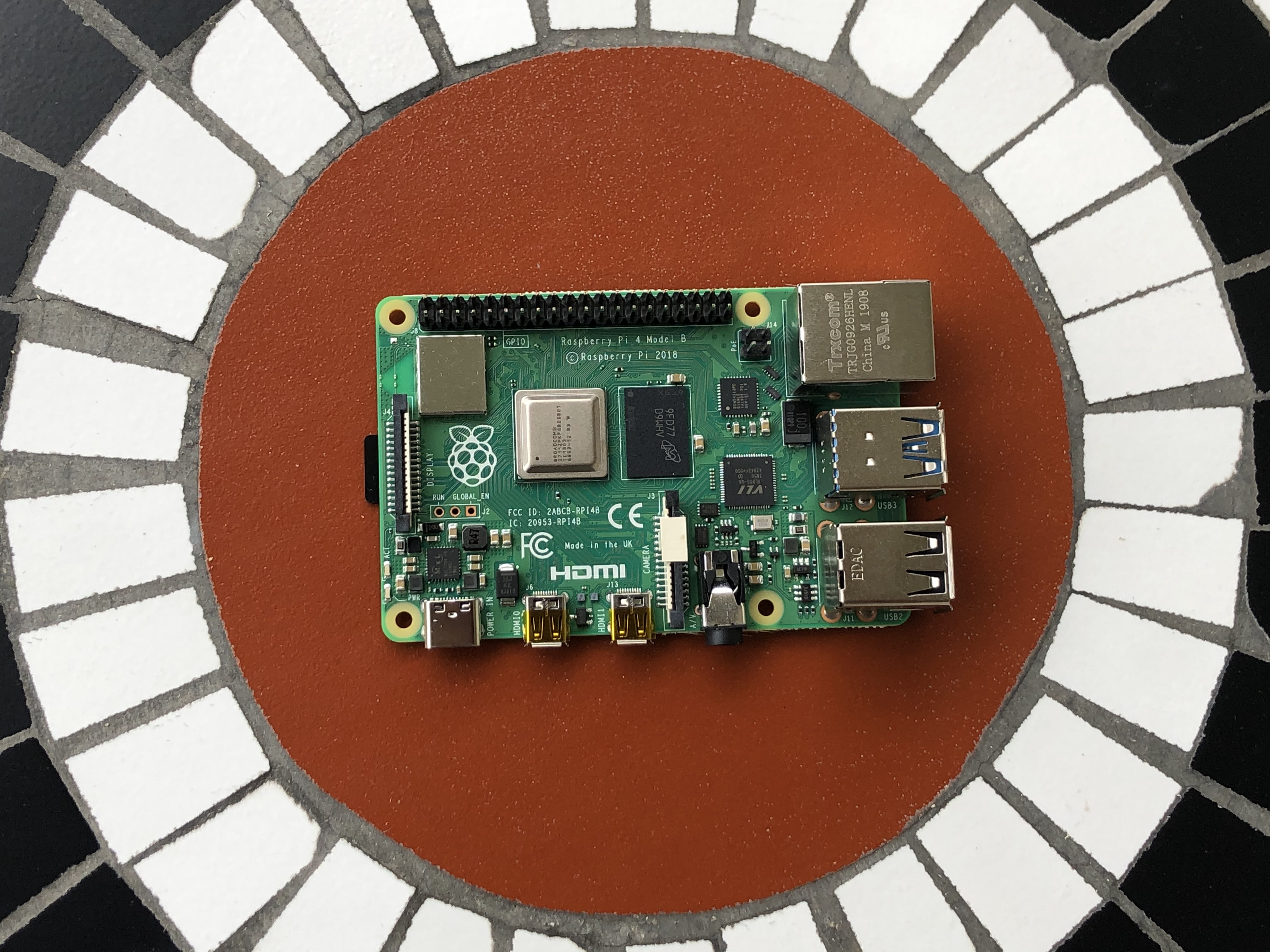
The Raspberry Pi Foundation unveils the Raspberry Pi 4

The Raspberry Pi 4 is here — and it’s an awesome upgrade. Earlier rumors said that it would take a while before a major Raspberry Pi upgrade, but it’s available starting today.

When it comes to physical design, the Raspberry Pi 4 Model B looks a lot like the Raspberry Pi 3 Model B+, the previous flagship model. It’s a single-board computer with a lot of connectors that is the size of a deck of cards.

But everything has been updated. It starts with a faster system-on-a-chip. The processor now uses the Cortex-A72 architecture (quad-core 64-bit ARMv8 at 1.5GHz). It supports H.265 hardware video decoding for instance.

The Raspberry Pi has been stuck at 512MB or 1GB of RAM for years. For the first time, you can buy models with more memory if you want more memory. The base model still starts with 1GB of RAM. But you can optionally buy a model with 2GB RAM or even 4GB of RAM.

In addition to raw memory capacity, memory transfer speeds should be faster as the foundation is switching from LPDDR2 to LPDDR4.

The Raspberry Pi Foundation has already sent me a Raspberry Pi 4 and I plan to run some benchmarks and share the results. I’m just waiting for the Raspbian update as the existing release doesn’t run on the new architecture — I realized that after formatting the microSD card to replace the pre-installed NOOBS operating system with Raspbian Lite (oopsie).

When it come to connectivity, the two big changes are that you now get true Gigabit Ethernet (instead of Ethernet over USB 2.0). It should open up a ton of potential use cases for servers and headless Raspberry Pi devices.

There are now two USB 3.0 ports and two USB 2.0 ports. And you now get a USB-C port for the power brick. Bluetooth is also getting an update from Bluetooth 4.2 to Bluetooth 5.0.

The final big hardware change is that the full-size HDMI port is gone. You now get two micro-HDMI ports, which let you plug two 4K displays at 60 frames per second using one Raspberry Pi. I haven’t tested that setup yet. I’m sure it would be fine to run two statics dashboards in your office for instance, but I wouldn’t expect crazy dual-screen performances.

The rest of the specifications should look familiar to anybody who has used a Raspberry Pi in the past. There’s a microSD card slot so that you can put the operating system and user data on a memory card. There’s a 40-pin GPIO header that should be compatible with existing add-on boards.

The product is launching today through authorized Raspberry Pi retailers. The base model still costs $35, while the 2GB RAM model costs $45 and the 4GB RAM model costs $55.

While the Raspberry Pi first started as a simple computer designed to teach kids how to code, it has become a versatile device with many different use cases. I’ve been using a few for the past couple of years and I learned a lot about programming, system administration, Docker containers and networking. And it looks like today’s update will be a hit for kids, parents and makers.

24 Jun 2019

Razer goes big on payments with Visa prepaid card

The latest pairing between a tech upstart and a financial titan is a digital prepaid card targeted at Southeast Asia’s 430 million-plus unbanked and underserved population.

On Monday, Razer, the Singapore-based company best known for its gaming laptops and peripherals, announced a partnership with Visa to develop a Visa prepaid solution. The service, which allows unbanked users to top up and cash out easily, will be available as a mini program embedded in Razer Pay, the gaming company’s mobile payments app. That means Razer’s 60 million registered users will be able to pay at any of the 54 million merchant locations around the world that take Visa.

Going virtual is the natural step given the region’s fast-growing digital population, but the pair does not rule out the possibility to introduce a physical prepaid card down the road, Razer’s chief strategy officer Li Meng Lee told TechCrunch over a phone interview.

Both parties have something to gain from this marriage. Hong Kong-listed Razer has in recent years been doubling down on fintech to prove it’s more than a hardware company. Payment services seem like an inevitable development for Razer whose users in the region are accustomed to buying in-game credits at convenience stores.

“For many years, the people who have been making digital payments before it became a sexy word in the last couple of years… [many of them] are the gamers who go to a 7-Eleven, pay in cash, and get a pin code to buy virtual skins for the games,” noted Lee. “Because of that, we’ve been able to build up more than a million service points across Southeast Asia.”

The key differentiator of Razer’s prepaid service, Lee said, is that customers paying at Visa merchants don’t have to already own a bank account, whereas that prerequisite is common for many other e-wallet services.

The Razer Pay app is handling transactions for a slew of internet services like Lazada and Grab and has made a big offline push, boasting a network of more than one million touchpoints through retailers including 7-Eleven and Starbucks where it’s accepted.

All in all, Razer Pay claimed it processed over $1.4 billion in payment value last year. It first launched in Malaysia in mid-2018 and recently branched into Singapore as its second market. Lee said the service plans to roll out in the rest of Southeast Asia soon, upon which the Visa prepaid mini app will also be available in those markets.

For Visa, the tie-up with an internet firm could be a potential boost to its reach in the mobile-first Southeast Asia where some 213 million millennials and youths live.

“This is a great opportunity for us to be working with Razer in addressing how we work to bring the unbanked and underserved population into the financial system,” Chris Clark, Visa’s regional president for the Asia Pacific, told TechCrunch. “We will be doing some work with Razer on financial literacy and financial planning to bring that education to the population across the region.”

Razer’s fintech ambition has been evident since it announced to gobble up MOL, a company that offers online and offline payments in Southeast Asia, in April 2018. Besides payments, Lee said other microfinance services such as lending and insurance are also on the cards as part of an effort to ramp up user stickiness for Razer’s fintech arm.

24 Jun 2019

Gillmor Gang: Cash Machine

The Gillmor Gang — Frank Radice, Michael Markman, Keith Teare, Esteban Kolsky, and Steve Gillmor . Recorded live Sunday June 23, 2019. Streamed live to Twitter, or just slightly after the fact. Debates and free media, or how Facebook could take crypto global with Libra and the Democrats the White House in 2020.

Produced and directed by Tina Chase Gillmor @tinagillmor

@fradice, @mickeleh, @ekolsky, @kteare, @stevegillmor, @gillmorgang

Liner Notes

Live chat stream

The Gillmor Gang on Facebook

23 Jun 2019

Two days left to apply to Startup Battlefield at Disrupt SF 2019

What do early-stage startups Forethought, Pi and Recordgram have in common with successful tech companies like Dropbox, Mint and TripIt? They all competed in Startup Battlefield, our epic pitch competition.

If you’re ready to step up, go big and launch your startup to the world, you need to get moving. We stop accepting applications in just two days — on June 25th at 11:59 p.m. (PT). Apply to compete in the Startup Battlefield right now.

When we say, “go big” we mean it in every sense of the word. The crowd — more than 10,000 people flock to our flagship event. The stakes — a $100,000 equity-free cash prize. The competition — if you make the cut, you’ll go up against some of the finest early-stage startups on the Disrupt Main stage in front of an audience of thousands.

The room will be packed with founders, investors — and tech journalists from more than 400 media outlets. We’re talking influential people who can take your startup dreams and make them a reality. They’ll expect the best, and you’ll deliver.

You have nothing to lose. Applying and participating in Startup Battlefield is free. The selection process is competitive, and TechCrunch editors will choose approximately 15-30 startups to compete. Participating founders receive free, extensive pitch coaching to ensure peak performance.

On the big day, teams get six-minutes to pitch and present a live demo to the judges, a panel consisting of expert VCs and technologists. And that’s followed by a round of Q&A. Survive the first round and you’ll lather, rinse and repeat in front of a new set of judges.

One outstanding startup will emerge to claim the $100,000, the Disrupt Cup and serious bragging rights to become the toast of Disrupt SF ‘19.

But the benefits of competing extend to all Startup Battlefield participants. You’ll enjoy the VIP treatment at Disrupt — including invitations to private investor receptions, and you get free exhibit space in Startup Alley for all three days of the show. You’ll have access to CrunchMatch — our investor/startup matching program that simplifies networking. Oh, and we live-stream the entire event on TechCrunch.com, YouTube, Facebook and Twitter. Plus, it’s available later on-demand.

Disrupt San Francisco 2019 takes place on Oct. 2-4. Don’t miss your chance to step up, go big and go home with $100,000. Apply to Startup Battlefield before the deadline on June 25th at 11:59 p.m. (PT).

Not quite ready for prime time on the Disrupt Main stage? No worries. Why not apply for our TC Top Picks program? Our TC Top Picks receive a free Startup Alley Exhibitor Package, VIP treatment and plenty of media and investor exposure.


23 Jun 2019

Who’s going to use the big bad Libra?

There is so much to write about Libra, and so much which has already been written misses the mark, mostly, I think, because most pundits haven’t spent much time in the developing world, which is very clearly the target market here. Just look at its launch video:

I’ve seen apocalyptic reactions warning of Libra ushering in a new dystopia: the alleged logic appears to be 1) Libra will immediately conquer the world 2) Libra comes from Facebook 3) Facebook is evil 4) it’s the end of the world! I am most baffled by that first postulate. If you’re a rich Westerner, there are already dozens of payment systems out there, most of which offer huge advantages compared to Libra, such as reversible / contestable transactions, frequent-flier miles, and credit lines.

I’ve seen dozens of technical and regulatory and political and high-level analyses of Libra, many of which are worthwhile, but so far, little which has dwelt on its actual intended users, according to the white paper: the unbanked. That isn’t quite the category for whom Libra is something new, interestng, and important. But no one else seems to be talking about this. It’s strange to see this cornucopia of hotly argued reactions which go deep on pretty much everything but its actual users.

The white paper cites 1.7 billion people as “unbanked,” a number which is … questionable. Its source is the 2017 World Bank Global Findex database. “Aha,” you might think, “that sounds pretty definitive and recent,” and it does — but the same source also notes that 515 million people became “banked” between 2014 and 2017. By the time Libra actually launches, the “1.7 billion unbanked” might have dropped by fully half. Not because of banks: because of mobile money providers.

From its birth with M-Pesa in East Africa, mobile money has expanded massively worldwide. Orange Money in West Africa, Ovo in Indonesia, Paytm in India, and of course WeChat and Alipay in China: money on your phone is nothing at all new in most of the developing world.

This might make you think that Libra already has a legion of competitors who speak the local languages, understand the markets, and have pervasive distribution, just as in the rich world — but no. The whole point of Libra, after all, is that it’s not a local currency, but a global currency, which is both its competitive advantage and its Achilles heel. And its true market isn’t the unbanked per se; it’s people who might have a mobile money account, but no straightforward access to any global currency.

Why would that access matter? Because international remittances, transfers to the developing world from (usually) family members in the rich world, total half a trillion dollars a year, much of which is sent by slow, high-fee processors such as Western Union. The Libra whitepaper, accordingly, prominently cites “remittances” in its problem statement …

… but makes only a few handwavey mentions of exchanges. Why does that matter? Because remittances are indeed a huge marked () but as I’ve argued before, “yes, it’s great if you can send five thousand FaceCoin to your family in Ghana for an 0.1% fee. But then your family in Ghana has to somehow convert them to cedis at an exchange — a task which is, as of this writing, likely to be slower, much clumsier, far more user-hostile, and very possibly even more expensive than the usual medium(s) of remittances.”

“So what,” you might think, “doesn’t matter if the local businesses take Libra.” But a) it’s very hard to get every local business in a developing country to accept a new payment method b) eventually they too will have to pay exchange fees, in order to pay local taxes. (Before any dreamers suggest governments accept taxes in Libra and use it as a national currency, I assure you they won’t be eager to give up all control over their monetary supply.)

So for truly mass adoption, especially for business and institutional transactions, the exchange experience will be absolutely key. There’s a lot of competition in the remittance space, and they usually handle the actual currency exchange for you. It seems like Facebook is implicitly relying on the marketplace to provide highly competitive, liquid, effective, efficient, well-publicized Libra-to-local exchanges in every nation where it is used. Maybe. But that’s asking for a lot.

On the smaller scale, though — individuals and families — Libra makes a lot more sense. It won’t replace M-Pesa, but I don’t think it’s trying to. Instead Libra wants to be to M-Pesa what the US dollar is to the Kenyan shilling. Libra could become the global mobile reserve currency, maybe not for institutions, but for individuals. And on that level, exchanges are less important.

The US dollar is acceptable, and transferable, in small amounts almost everywhere around the world; there’s hardly a poor country where it doesn’t act as a de facto shadow currency. (I’ve been to places where taxi drivers are experts on the various different issuances of the US $20 become some are easier to forge than others.) Furthermore, it’s often hoarded purely because it’s hard currency, unlike the local currency — consider Venezuela, or Zimbabwe, even Argentina.

I expect the same will be true of Libra. Individuals won’t need to open an account at any exchange; instead they’ll follow the Local Bitcoins model, and just transfer Libra to a local moneychanger, who will receive their Libra and send back local currency in exchange for — hopefully — a very competitive fee.

If that happens, if Facebook’s sheer size and reach makes that option near-universally available, then even if Libra doesn’t catch on in the rich world, or with businesses and institutions, then for the first time ever, individuals and families around the world will be able to receive, save, spend, and exchange a global hard currency, immediately, across borders, using only their phones, for fees (hopefully) drastically less than e.g. Western Union — without having to deal with the volatility, limited utility, and user-hostility of decentralized cryptocurrencies. That would be a huge deal, and a great good thing.

It’s by no means guaranteed. Much about Libra remains uncertain. It will somehow have to crack the extremely tough nut of the identity problem. And while not technically part of Facebook, it still comes from Facebook, a company increasingly despised by politicians and regulators (and journalists), which is at least one strike against it from the beginning, and makes many people question the true motives behind Libra.

But let’s not throw the proverbial baby out with the bathwater. If Libra manages to succeed, at scale, it will be massively important and highly important to an enormous number of people around the world. Be skeptical, by all means. Be concerned about privacy. Ask pointed questions. Remain well aware that it is not a decentralized solution and may never be. I’m with you: I’m a well-documented harsh critic of Facebook myself.

But in your rush to outrage and condemnation — as righteous as those might feel — please don’t ignore Libra’s potential to do a whole lot of good for many millions of the world’s poorest and most vulnerable. Do you think a decentralized, permissionless, censorship-resistance version would be better? I agree! Call me when one is anywhere near as usable as Libra is likely to be.