Category: UNCATEGORIZED

12 Jun 2019

Creative Destruction Lab’s second Super Session is an intense two-day startup testbed

Canadian startup program Creative Destruction Lab (CDL) escapes succinct description in some ways – it’s an accelerator, to be sure, and an incubator. Startups show up and present to a combined audience of investors, mentors, industry players (some of whom, like former astronaut Chris Hadfield, verge on celebrity status) – but it’s not a demo day, per se, and presentations happen in focused rooms with key, vertically aligned audience members who can provide much more than just funding to the startups who participate.

North founder Stephen Lake on stage at CDL’s Super Session 2019.

Seven years into its existence, CDL really puts on a show for its cornerstone annual event (itself only two years old) clearly shows the extent to which the program has scaled. From an inaugural cohort of just 25 startups with a focus on science, CDL has grown to the point where it’s graduating 150 startups spanning cohorts across six cities associated with multiple academic institutions. It has consistently added new areas of focus, including a space track this year, for which Hadfield is a key mentor, as is Anousheh Ansari, the first female private space tourist to pay her own way to the International Space Station and the co-founder and CEO of Prodea Systems.

The ‘Super’ in Super Session

This is the second so-called ‘Super Session’ after the event’s debut in 2017. It includes roughly 850 attendees, made up of investors, mentors, industry sponsors and the graduating startups themselves. As CDL Fellow Chen Fong put it in his welcoming remarks, CDL’s Super Session is an opportune moment for networking, mentorship and demonstration of the companies the program has helped foster and grow.

A keynote track included talks by Ansari and Hadfield, as well as from Celmatix CEO and founder Piraye Beim, and a fireside chat with North founder and CEO Stephen Lake. Subjects ranged from the importance of the linkage between exploration and technology, to what Beim described as “probably the first CDL talk to include menstrual health, vibrators, incontinence, and menopause, all in the span of 15 minutes.” Lake meanwhile discussed the future of seamless human-computer interfaces, and Ansari discussed her work founding the XPRIZE program and the impetus behind the current moment and interest in private space innovation.
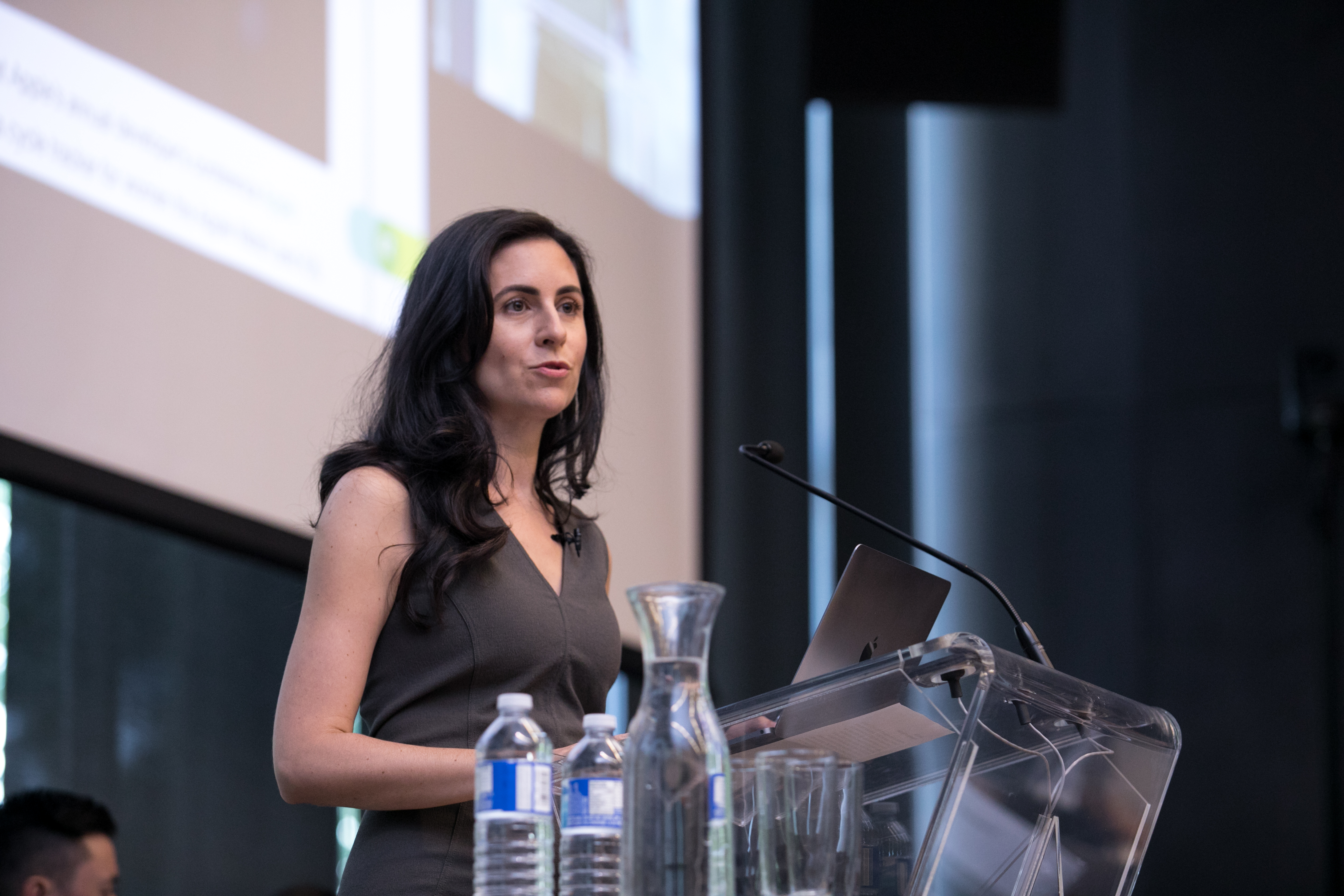
Celmatix CEO and founder Piraye Beim speaking at the 2019 Creative Destruction Lab Super Session in Toronto.

The variety in the keynote speaker mix and topic selection is reflective of the eclectic and comprehensive nature of CDL’s modern program, which scouts globally for prospective startup participants. Its six hubs then enter into a matching process with startups signed on to take part, where each scores the other and that leads to placement.

How CDL works

CDL’s originating thesis is all about supplying the limiting resource in a startup ecosystem; the thing which the program’s organizers think is the missing ingredient that differentiates Silicon Valley from any other innovation hub in the world. Namely, CDL theorizes that this missing ingredient is what CDL Associate Director Kristjan Sigurdson calls “entrepreneurial judgement.”

Sigurdson explains that this basically boils down to the ability to know what are the most important things you need to do as an entrepreneur, and in what order. The missing piece, he says, isn’t ideas, funding availability or a lack of effort – instead it’s the kind of judgement that results from experience. CDL’s model, which emphasizes five sessions held periodically during which a panel of mentors helps startups set three clearly defined objectives they can accomplish within the next eight weeks.

After each of these sessions, some triage occurs – essentially CDL mentors gathered in closed door meetings and are asked if they’d work with any of the startups that presented during the session. If startups don’t receive sponsorship in these closed door meetings, then they’re not asked to participate in the next session, and effectively are out of the program. All told, the program graduates around 40-45 percent of the startups that enter the program, Sigurdson said.
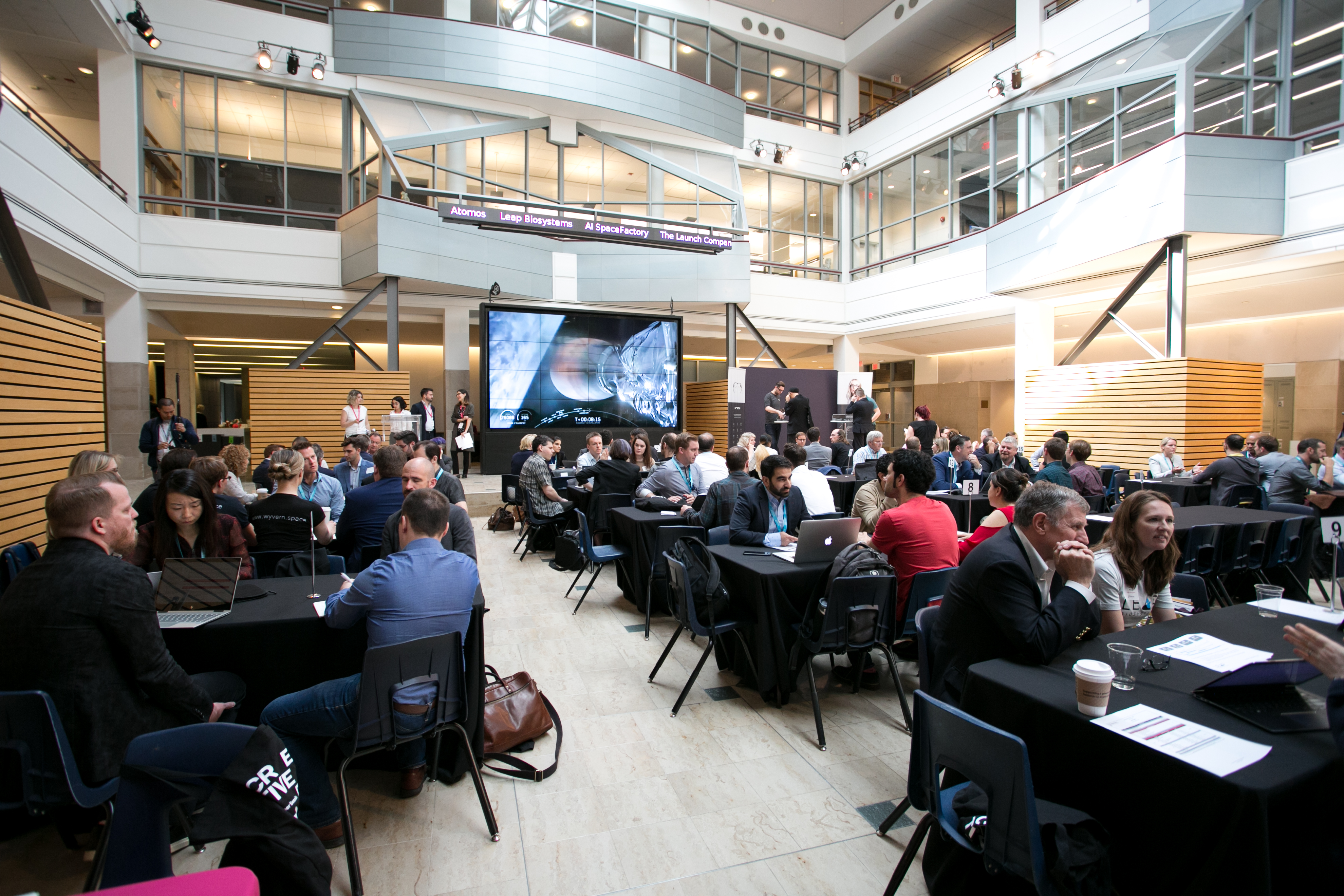
Group session with small group mentoring on site at Creative Destruction Lab’s 2019 Super Session in Toronto.

CDL is also a bit out of the ordinary in that it takes no equity from the startups it works with – it’s fundamentally an academic program, started by the University of Toronto, and its designed to provide real-world business cases for the school’s MBA students to work on. But it’s become so much more – providing mentorship and guidance as described, and also connecting researchers who often enter into formal advisory roles with CDL companies.

Sigurdson also noted that CDL has actually seen “much higher investment levels” vs. the average for more traditional incubation or acceleration programs. “It’s a program that I think allows companies to raise money much more organically even though it’s an artificial program we created,” he said, referencing CDL’s own comparative research.

Lab-grown and forged in fire

True to its name, Creative Destruction Lab in practice feels like a generative cauldron of ideas, shared with peers and industry specialists for debate, discussion and reformation. Sessions are remarkable to witness – where else are you going to see brand new companies get direct feedback from astronauts and representatives of global space agencies, for instance.
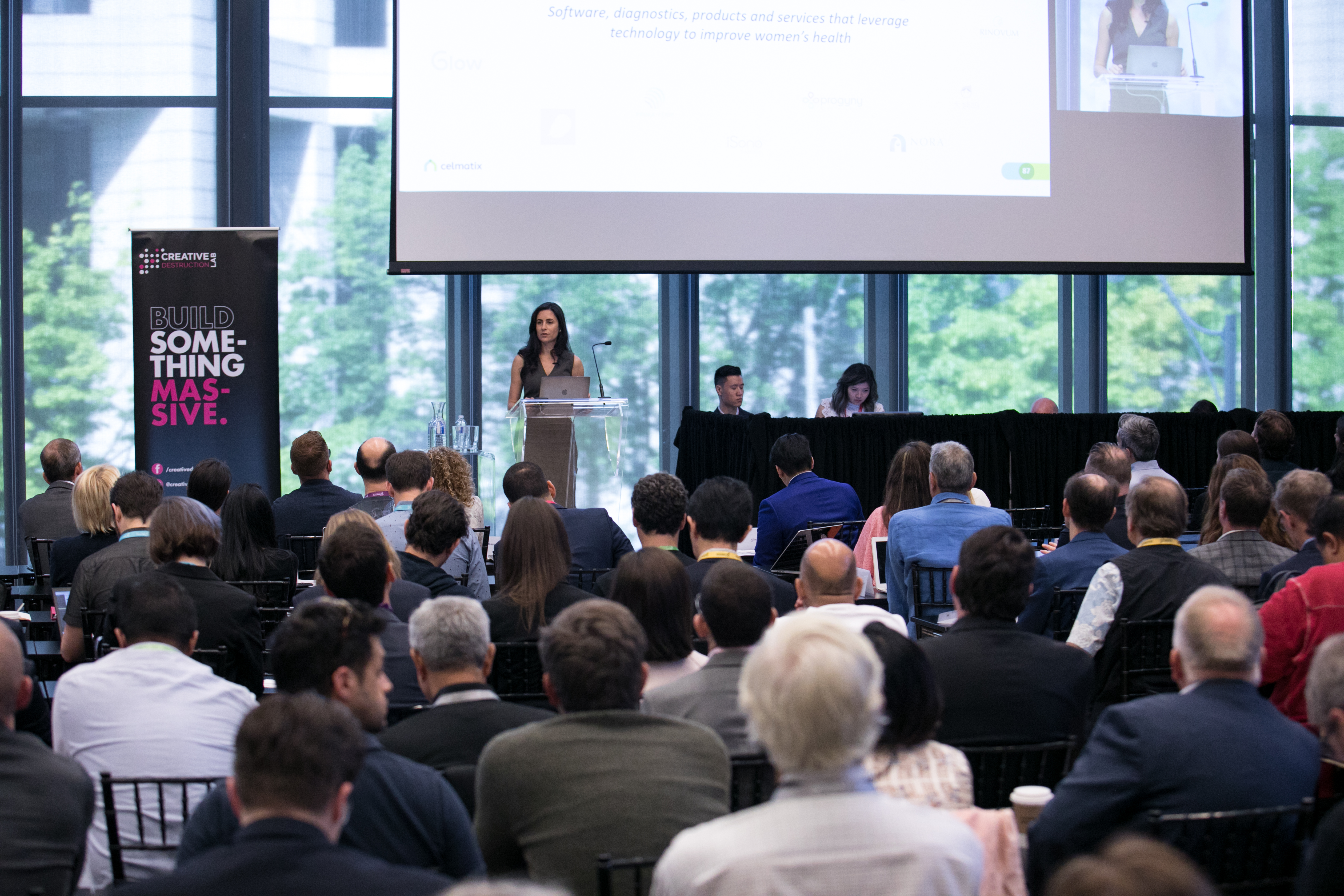
Creative Destruction Lab opening keynote for its Super Session 2019 event.

The model is unique, but clearly effective, and able to scale – as evidenced from its growth to what it is today, from its starting point in 2012, when one founder described it as ‘7 people in a room.’ The room featuring presentations from space track companies alone featured around 50 people in attendance for instance – almost all of which were top-flight industry leaders and investors, including Hadfield, Ansari, CDL alumni Mina Mitry of Kepler Communications, and prominent Toronto angel investor Dan Debow. Startups presenting in the space track included Wyvern, a hyperspectral imaging company; Mission Control, a startup that wants to be the software layer for Moon rovers; and Atomos, which is building space tug for extra-atmospheric ‘last-mile’ transportation solutions.

It’s easy to see why this program results in solid investment pipeline, given the profile of the sponsors and mentors involved. And it’s another strong stake in the ground for the claim that Canada’s startup scene, with Toronto as its locus of gravity, is increasingly earning (and outperforming) its reputation as a global center of innovation.

12 Jun 2019

NFC gets a lot more powerful in iOS 13

NFC — the technology that helps to power Apple Pay as well other clever features for iOS apps like Launch Center Pro’s tappable stickers – is getting a big upgrade with the launch of iOS 13, due out this fall. Instead of only allowing iPhone apps to read NFC tags — apps will be able to write directly to blank tags, as well as interact with tags through native protocols. This opens up a range of new application possibilities, Apple told attendees at its Worldwide Developer Conference last week, including the ability to create apps that read passports, contactless smart cards, and interact with NFC-enabled hardware.

We’ve already seen the potential for NFC that goes beyond just an easier way to check out at point-of-sale in a traditional retail environment, as with Apple Pay.

For example, both Apple and Google recently announced support for Apple Pay- and Google Pay-enabled contactless payments for the NYC Subway. Portland offers something similar, as do several other international cities.

With the updates to the core NFC framework, however, the iPhone’s NFC capabilities will get even more powerful.

With iOS 13 (on iPhone 7 and up), users will be able to read a range of contactless smartcards and tags, including NFC-enabled passports and other government IDs.

There are already solutions in the works that will take advantage of this new feature.

For example, both Engadget Japan and Nikkei have reported the Japanese government will add support for NFC tag reading to Japan’s national ID (Individual Number Card) when iOS 13 launches later this year.

The news was confirmed by the Japanese government, via a tweet from an advisor to the government’s CIO:

In addition, the U.K. government’s NFC passport reader app, ReadID, will now work on the iPhone as a result of the iOS 13 updates.

“This announcement means that ReadID will also work on iPhones, using the embedded internal NFC capability,” the company said in a blog post.

“Needless to say we are very excited about this. We’re convinced this will have a major impact on the online use cases such as mobile onboarding for banks, especially for countries with a high iPhone penetration,” the announcement read.

Beyond ID-scanning, iOS apps will be able to write to NFC tags (i.e. NDEF writing), and even lock the tag so it can’t be written to again, if the developer chooses.

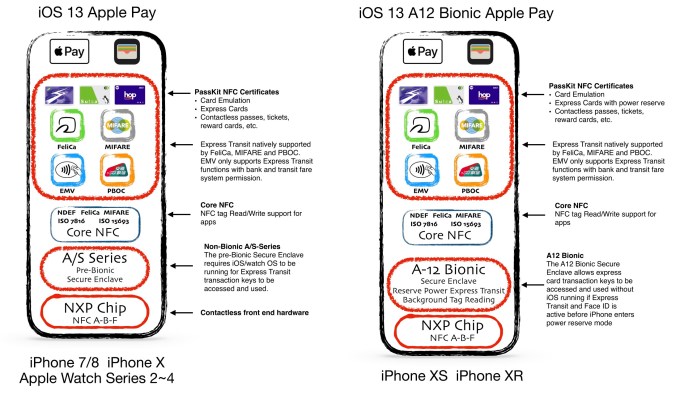
And now, the core NFC framework will support tag reading and writing across various formats, including not only NFCNDEFTag (for NDEF tags, as offered today), but also Mifare, FeliCa, ISO 7816 (e.g. for passports), and ISO 15693.

That means NFC will work in more places with more type of tags than what’s available today.

Above Image Credit: Ata Distance, which covers Apple Pay and contactless news 

Apple had unveiled some of its plans around NFC by pre-announcing support for NFC stickers and tags that can trigger Apple Pay payments at the Transact conference in Las Vegas, just ahead of WWDC.

Bird (scooters), Bonobos (retailer), and PayByPhone (parking meters) said they would soon support this feature which enables NFC transactions without a terminal or special app from the vendor.

This is enabled by way of new support for Value Added Service (VAS) tags, which also support loyalty sign-ups with merchants. On this front, Apple said that Dairy Queen, Dave & Buster’s, and Caribou Coffee will later this year use NFC tags that make it easier for their customers to sign up for their loyalty programs.

Panera Bread, Yogurtland, and Jimmy John’s Gourmet Sandwiches will also pilot instant enrollment.

At Apple’s WWDC, the company demonstrated NFC’s expanded abilities in a real-world scenario.

As an example of NFC in action on an iOS 13 device, the company showed off how a merchant could use NFC tags that displayed a product description after the customer scanned it, as well as how another NFC tag could offer the customer a coupon for their purchase, when scanned.

Launch Center Pro developer, David Barnard who had been selling NFC tags that were pre-encoded and locked so they couldn’t work with other apps beyond his own, is now unloading older inventory in preparation for iOS 13. The developer tweeted that his app will soon be able to write to blank NFC stickers, which you can buy in bulk on Amazon.

In addition, the upgrade to Apple’s Siri Shortcuts app means users could kick off an action or even a multi-step workflow just by scanning an NFC tag.

Developers have wanted more NFC capabilities for some time, and Apple has delivered. Consumers may not understand the underlying technology or know what it’s called. However, they will get the “tap to interact” functionality thanks to broad Apple Pay adoption which taught them the behavior.

12 Jun 2019

Google leaks its own phone

Details of the Pixel 4 have been swirling around this week, so Google has decided to just leak the design of its next phone via its official Twitter account, revealing the backplate and new camera module on the smartphone.

Well, since there seems to be some interest, here you go! Wait ’til you see what it can do. #Pixel4″ the tweet from the company’s verified @MadeByGoogle account read.

Renders of the Pixel 4 had leaked this week via smartphone blog Pricebaba.

The back of the phone makes some big changes. Most noticeable is the now-square camera module with a pair of lenses, a flash module and a couple of other sensor modules. Also noteworthy is the apparent lack of a rear fingerprint reader, in contrast to past models. There’s not much else evident here, they didn’t post renders of the device’s front.

Google’s Pixel 3 release kind of cemented that Google doesn’t stake much of the Pixel line’s strengths on hardware specs, it’s all about what it can leverage machine learning software tricks to do within those bounds.

On that note, it’s worth noting that Google has been pretty late to the two-camera rear module setup; at past event the company has always justified this by suggesting that because of their software they can do more with one than most can do with two. This was clearly the case given the strengths of their cameras, but there are undoubtedly advantages to having dual cameras with different specs, it seems Google is now ready to take this plunge.


12 Jun 2019

Daily Crunch: Fortnite-maker acquires Houseparty

The Daily Crunch is TechCrunch’s roundup of our biggest and most important stories. If you’d like to get this delivered to your inbox every day at around 9am Pacific, you can subscribe here.

1. Fortnite maker Epic acquires social video app Houseparty

The company behind the Unreal Engine and the ridiculously successful Fortnite phenomenon has just picked up Houseparty . Terms of the deal were not disclosed.

Founded in 2015, Houseparty is a social network that delivers video chat across a number of different platforms, including iOS, Android and macOS. Epic CEO Tim Sweeney said, “By teaming up, we can build even more fun, shared experiences than what could be achieved alone.”

2. Facebook will not remove deepfakes of Mark Zuckerberg, Kim Kardashian and others from Instagram

The work, featured in a site-specific installation in the U.K. as well as circulating in video online, was the first high-profile test of Facebook’s content review policies since the company’s decision not to remove a manipulated video of House Speaker Nancy Pelosi.

3. Here’s Mary Meeker’s 2019 Internet Trends report

Meeker highlighted slowed growth in e-commerce sales, increased internet ad spending, data growth, as well as the rise of freemium subscription business models, telemedicine, photo-sharing, interactive gaming, the on-demand economy and more.

4. Uber will start testing Eats drone delivery

This comes after the Federal Aviation Administration awarded Uber and San Diego the right to test commercial food delivery via drone.

5. Adjust raises $227M to measure mobile ads and prevent fraud

Adjust says it’s now being used in more than 25,000 mobile apps for customers like NBCUniversal, Zynga, Robinhood, Pinterest and Procter & Gamble.

6. Facebook’s Blood Donations feature arrives in US, will alert donors in times of need

Since 2017, the company has been working with blood donation centers worldwide that have been able to use the platform to reach potential donors and then reach out to them in times of need. Now, Facebook is bringing its Blood Donations feature to the U.S.

7. The future of car ownership: Building an online dealership

Several young companies — like Carvana, Shift, Vroom and Joydrive — are attempting to put the dealership online, allowing customers to buy, trade-in and even test drive vehicles without talking to a salesman in an oversized golf pullover. (Extra Crunch membership required.)

12 Jun 2019

London’s LocalGlobe just closed on two funds totaling $295 million

Seven months ago, TechCrunch’s Steve O’Hear reported that LocalGlobe had begun the fundraising process for two separate funds. The London-based seed-stage venture firm was raising yet another seed-stage venture fund, O’Hear said at the time; he also noted that LocalGlobe was also expect to raise its first opportunities fund.

Fast forward and today, the firm, founded by father and son duo Robin and Saul Klein, says it has closed both, having secured $115 million in capital commitments for its seed fund and $180 million in capital commitments for the second fund, dubbed “Latitude,” which it says it will use to support its “winners” at the Series B and later stages.

As we’d written earlier, it’s no surprise that LocalGlobe decided to institutionalize some of its later-stage investments. It’s become a trend in recent years for early-stage firms to raise separate funds to capture more of the upside when their portfolio companies begin to break away from the pack, rather than watch their stakes get hammered down in subsequent funding rounds.

And LocalGlobe already has a bit of a track record in supporting its growing portfolio companies, writing follow-on checks to companies like the property listings startup Zoopla and the money transfer service TransferWise, among others. (Others of the outfit’s best-known investments include the transportation app Citymapper and the SpatialOS software company Improbable.)

Still, LocalGlobe remains even more active on the seed-stage front. One of its newest bets is on Yapily, a two-year-old, London-based maker of an API for connecting enterprises to banks that just raised $5.4 million in seed funding co-led by LocalGlobe and HV Holtzbrinck Venturesand LocalGlobe.

Another new investment is Soda Says, a two-year-old, U.K.-based e-commerce marketplace for daily tech gadgets, from breast pumps to alarm clocks. It raised $2.5 million from investors, including LocalGlobe, late last month.

12 Jun 2019

Do VC associates matter, women’s fertility, online auto marketplaces, and Salesforce + Tableau

Editor’s Note: New feedback buttons

You might have noticed at the top and bottom of this newsletter that we have added new feedback buttons. These are a quick way to express your happiness (or unhappiness, as it were) about this Extra Crunch Roundup newsletter. What do you like, and what do you don’t? All feedback is welcome and extremely valuable as we continue to improve Extra Crunch for members. And as always, you can just hit reply and let me know directly.

Fundraising 101: Do VC associates matter?

There are hundreds of associates working at VC firms traipsing through meetups and coffee meetings trying to find the best new startups. If you are looking to fundraise though — and fundraise quickly — how do you approach these nebulous non-check-writers?

This week, I wrote a guide based on my experience as a VC associate at two firms. The answer is that yes, they can matter, and it usually is quickly apparent how valuable they can be.

Associates can be helpful, they can and should be nice, and they have a useful role to play in the venture landscape. But let’s be clear: they can’t write checks, and checks is what you are looking for. They can be useful mechanisms to get the right meetings with the right partners at exactly the moment you are ready to fundraise. You probably shouldn’t piss them off by being an asshole to them, but at the end of the day, they are not the decision-maker. And if you learn anything about sales, it is that you want to pitch the person that holds the purse strings.


What top VCs look for in women’s fertility startups

Women’s fertility is a major area of investment for VC firms these days, and several prominent investors are doing deep dives into the space. Our healthtech writer Sarah Buhr interviewed several VCs about what they’re seeing in the space and why fertility is suddenly in the limelight:

12 Jun 2019

Against Gravity is building a VR world that won’t stop growing

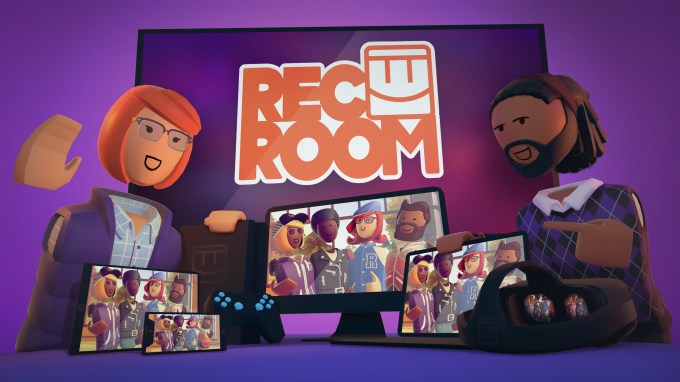
The quest to create a social auditorium in virtual reality has eaten many VC dollars over the years. While plenty of contenders have emerged, it’s likely Against Gravity’s href="https://rec.net/"> Rec Room that has been the most creative in its approach to capturing a niche market while plotting how to build a sustainable business based on users in VR headsets talking to one another.

The Seattle startup has told TechCrunch exclusively that it has bagged $24 million over two rounds of funding. The studio’s Series A was led by Sequoia and their Series B, which just recently closed, was led by Index Ventures. Against Gravity has a bevy of top investors that also participated in the rounds including First Round Capital, Maveron, Anorak Ventures, Acequia Capital, Betaworks and DAG Ventures.

The company didn’t break down the specific details of the rounds. Against Gravity was authorized to raise up to $15.4 in its Series B at up to a $126 million post-money valuation according to Delaware stock authorization docs we got from Pitchbook. The company didn’t comment on the valuation.

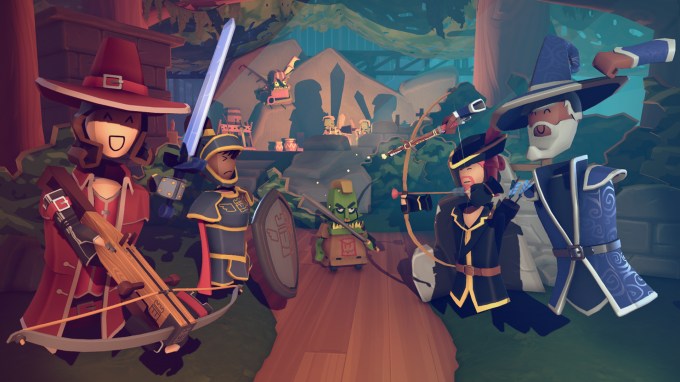
Rec Room is hardly a household name compared to some major console titles, but among virtual reality users, the title has been a standby known for the diversity of gameplay available inside its walls and its wide support for hardware. Users are able to create experiences or “rooms” that can be accessed by other users. They don’t need any coding knowledge to build these spaces, creation all happens within the game and can be done by multiple users simultaneously.

Rec Room is also about to surpass one million rooms created by users on the platform. The company says these environments include “sports games, shooters, adventure quests, nightclubs, club houses, and escape rooms.”

While companies like Linden Labs, the creator of Second Life, have focused their VR efforts on realistic but unvarying user-created environments, Against Gravity has seemingly one-upped their strategy by focusing on dynamic gameplay modes where the emphasis is on user interactions as opposed to graphic fidelity.

The Seattle startup, which was founded in 2016, now has 35 employees building out and maintaining Rec Room. The company is playable on a variety of platforms, and is about to add iOS support to its roster, an expansion that could bring a lot more users onto the VR-centric platform.

Rec Room’s content isn’t monetized too aggressively at the moment, CEO Nick Fajt thinks that some of the user-generated experiences are going to offer an interesting opportunity down the road, prompting users to spend in-game tokens on more than just upgrades to the platform’s Playmobil-like avatars.

“I think a direction that we’re actually excited about is that we want to let the users creating some of this content charge tokens to play them,” Fajt tells TechCrunch. “I think that’s one that we’re kind of on the cusp of doing and we’re hoping to get that out later this year.”

For Against Gravity, timing has always been a key consideration for expansion, especially inside the slow-growing VR market, which has only recently seemed to hit a stride. I chatted with Fajt back in 2017 and he told me that the key for VR startups surviving was staying lean and biding their time until standalone mobile headsets with positional tracking and motion controllers were released. Facebook’s Oculus Quest headset which came out less than a month ago is perhaps the first clear device to fit that vision.

One of Facebook’s head AR/VR executives shared earlier this week that over $5 million in Quest content had been sold in the company’s store in the first two weeks after the device’s launch. That’s a major development for an industry that hasn’t seen many smash hits, but for free-to-play game makers like Against Gravity, which has now raised $29 million to date, there’s plenty of maturation in the VR market that still needs to happen.

12 Jun 2019

MIT develops a better way for robots to predict human movement

People and robots working together has tremendous potential for factory and construction site settings, but robots are also potentially incredibly dangerous to people, especially when they’re large and powerful, which is typically the case for industrial robots.

There are plenty of efforts to make ‘corobotics’ a reality, including production machines like the YuMi produced by German robotics giant ABB . But a new algorithm created by MIT researchers could help make humans and robots working together even safer.

Researchers working with automaker BMW and observing their current product flow workflow noticed that the robots were overly cautious when it came to watching out for the humans in the plant – they’d lose lots of potentially productive time waiting for people to cross their paths long before there was any chance of the people actually doing that.

They’ve not developed a solution that greatly improves the ability of robots to anticipate the trajectory of humans as they move – allowing robots that typically freeze in the face of anything even vaguely resembling a person walking in their path to continue to operate and move around the flow of human foot traffic.

Researchers managed this by eschewing the usual practice of borrowing from how music and speech processing works for algorithmic prediction, which are much better when it comes to predicting predictable paths of travel, and instead came up with a ‘partial trajectory’ method that references real-time trajectory data with a large library of reference trajectories gathered before.

This is a much better way of anticipating human movement, which is very rarely consistent and involves a lot of stops and starts, even in a factory worker performing the same action repeatedly over thousands of instances.

This could have potential consumer applications too – researchers note that human movement even in the home would be better predicted using this moment, which could have benefits in terms of robotic long-term in-home care for the elderly, for instance.

12 Jun 2019

Simpo raises $4.5M Seed to help install software faster and more efficiently

Simpo is a startup with a simple idea. It wants to help project managers at large companies get software into the hands of its employee users faster. Today, the company announced a $4.5 million seed investment.

The round was led by Redpoint Ventures with participation from Janvest, UpWest, Seedcamp, Elad Gil and other unnamed investors.

The idea behind Simpo is to offer a no-code platform for distributing software and educating end users on how to use it. Any friction in this process can reduce adoption and Simpo created a platform for project managers without a lot of technical know-how to set up software distribution workflows with the goal of driving greater adoption.

There is an element of Robotics Process Automation (RPA) here too, by letting project manager build logical workflows, and then as users interact with the software, it can learn and offer next steps to help further drive usage. This approach really attracted Satish Dharmaraj, managing partner at lead investor Redpoint Ventures.

“Simpo is really exciting [to me] because it has solved so much of the software adoption problem in a sophisticated, yet incredibly simple way. Robotic process automation is a transformative force, and now product managers are able to harness its power for the first time. As software continues to dominate the enterprise, Simpo is a critical piece in driving adoption and informing how and what products will be built,” Dharmaraj said in a statement.

The company counts Walmart, DuPont and Jet as customers.

12 Jun 2019

What do subscription services and streaming mean for the future of gaming?

The future of gaming is streaming. If that wasn’t painfully obvious to you a week ago, it certainly ought to be now. Google got ahead of E3 late last week by finally shedding light on Stadia, a streaming service that promises a hardware agnostic gaming future.

It’s still very early days, of course. We got a demo of the platform right around the time of its original announcement. But it was a controlled one — about all we can hope for at the moment. There are still plenty of moving parts to contend with here, including, perhaps most consequentially, broadband caps.

But this much is certainly clear: Google’s not the only company committed to the idea of remote game streaming. Microsoft didn’t devote a lot of time to Project xCloud on stage the other day — on fact, the pass with which the company blew threw that announcement was almost news in and of itself.

It did, however, promise an October arrival for the service — beating out Stadia by a full month. The other big piece of the announcement was the ability for Xbox One owners to use their console as a streaming source for their own remote game play. Though how that works and what, precisely, the advantage remains to be seen. What is clear, however, is that Microsoft is hanging its hat on the Xbox as a point of distinction from Google’s offering.

It’s clear too, of course, that Microsoft is still invested in console hardware as a key driver of its gaming future. Just after rushing through all of that Project xCloud noise, it took the wraps off of Project Scarlett, its next-gen console. We know it will feature 8K content, some crazy fast frame rates and a new Halo title. Oh, and there’s an optical drive, too, because Microsoft’s not quite ready to give up on physical media just yet.