Category: UNCATEGORIZED

06 May 2019

Microsoft launches React Native for Windows

Microsoft today announced a new open-source project for React Native developers who want to target Windows. “React Native for Windows,” as the project is unsurprisingly called, is meant to be a new ‘performance-oriented’ implementation of React for Windows under the MIT License.

Being able to target Windows using React Native, a framework for cross-platform development that came out of Facebook, isn’t new. The framework, which allows developers to write their code in JavaScript and then run it on Android and iOS, already features plugins and extensions for targeting Windows and macOS.

With React Native for Windows, Microsoft is reimplementing React Native and rewriting many components in C++ to get maximum performance. It allows developers to target any Windows 10 device, including PCs, tablets, Xbox, mixed reality devices and more. With Microsoft backing the project, these developers will now be able to provide their users with faster, more fluid apps.

Microsoft the project is now available on GitHub and ready for developers to test, with more mature versions following in the near future.

06 May 2019

Windows gets a new terminal

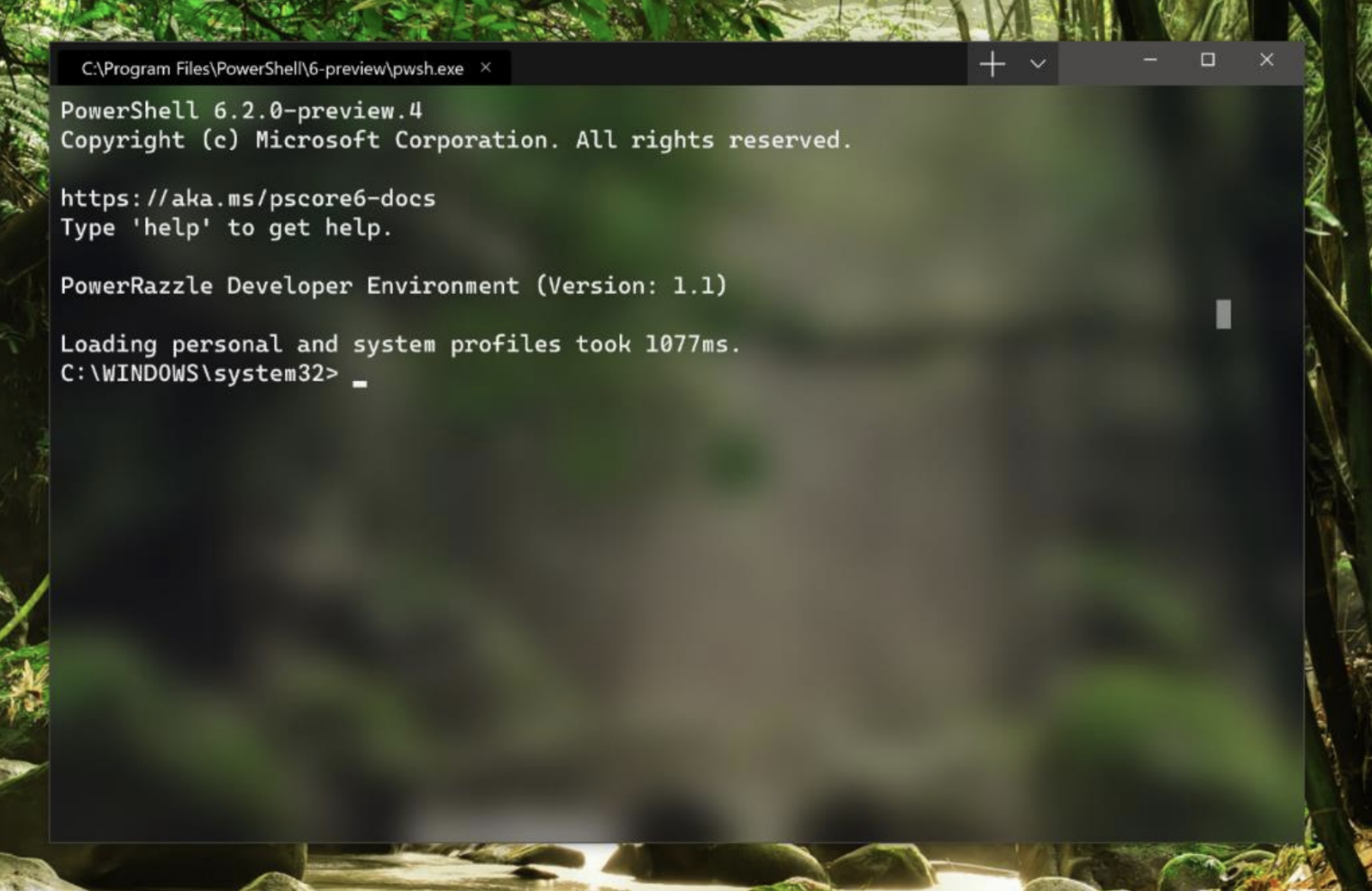
Windows 10 is getting a new terminal for command-line users, Microsoft announced at its Build developer conference today.

The new so-called ‘Windows Terminal’ will launch in mid-June and promises to be a major update of the existing Windows Command Prompt and PowerShell experience. Indeed, it seems like the Terminal will essentially become the default environment for PowerShell, Command Prompt and Windows Subsystem for Linux users going forward.

The new terminal will feature faster, GPU-accelerated text rending and “emoji-rich” fonts, because everything these days needs to support emojis and those will sure help lighten up the command-line user experience. More importantly, though, the Windows Terminal will also support shortcuts, tabs, tear-away windows, and theming, as well as extensions. It will also natively support Unicode and East Asian fonts.

The idea here, Microsoft says, is to “elevate the command-line user experience on Windows.”

The first preview of the new Windows Terminal is now available.

06 May 2019

Microsoft and Red Hat launch a new event-driven Kubernetes autoscaling tool

It’s not a developer conference until somebody talks about Kubernetes, so it’s no surprise that Microsoft is highlighting a number of new features around the container orchestration service at its Build conference today.

Most of these are relatively minor and involve features like better support for Azure Policy, new tools for building and debugging containers, and updates to the Azure Container registry which now allows users to automate their continuous integration and deployment workflows using Helm charts.

What’s most interesting here, however, is KEDA, a new open-source collaboration between Red Hat and Microsoft that helps developers deploy serverless, event-driven containers. Kubernetes-based event-driven autoscaling, or KEDA, as the tool is called allows users to build their own event-driven applications on top of Kubernetes. KEDA handles the triggers to respond to events that happen in other services and scales workloads as needed.

KEDA works in any public or private cloud and on-premises, including, unsurprisingly, Azure Kubernetes Service and Red Hat’s OpenShift. With this, developers can also now take Azure Functions, Microsoft’s serverless platform, and deploy it as a container in Kubernetes clusters, including on OpenShift.

06 May 2019

Microsoft and GitHub grow closer

Microsoft’s $7.5 billion acquisition of GitHub closed last October. Today, at its annual Build developer conference, Microsoft announced a number of new integrations between its existing services and GitHub. None of these are earth-shattering or change the nature of any of GitHub’s fundamental features, but they do show how Microsoft is starting to bring GitHub closer into the fold.

It’s worth noting that Microsoft isn’t announcing any major GitHub features at Build, though it’s only a few weeks ago that the company made a major change by giving GitHub Free users access to unlimited private repositories. For major feature releases, GitHub has its own conference anyway.

So what are the new integrations? Most of them center around identity management. That means GitHub Enterprise users can now use Azure Active Directory to access GitHub. Developers will also be able to use their existing GitHub accounts to log into Azure features like the Azure Portal and Azure DevOps. “This update enables GitHub developers to go from repository to deployment with just their GitHub account,” Microsoft argues in its release announcement.

As far as selling GitHub goes, Microsoft also today announced a new Visual Studio subscription with access to GitHub Enterprise for Microsoft’s Enterprise Agreement customers. Given that there is surely a lot of overlap between Visual Studio’s enterprise customers and GitHub Enterprise users, this move makes sense. Chances are, it’ll also make moving to GitHub Enterprise more enticing for current Visual Studio subscribers.

Lastly, the Azure Boards app, which offers features like Kanban boards and sprint planning tools, is now also available in the GitHub Marketplace.

06 May 2019

Microsoft wants you to work less

Microsoft today announced updates to its MyAnalytics platform and a new Outlook feature that are meant to help you work less, find more time to focus on the work that actually matters and, by extension, get more downtime.

Until now, for example, MyAnalytics, Microsoft’s tool for helping employees track their productivity, would provide you with a measure of how much time you spent working after hours. That’s not necessarily a healthy number to track. Going forward, MyAnalytics will track the number of days you managed to unplug after work and didn’t check your email or work on a document at 8pm (something Microsoft’s own PR department could learn from given that it has a tendency to provide essential press materials for next-day embargoes at 6:30pm). The idea here, obviously, is to get employees to focus on this number instead of how much they work when they are off the clock.

“Our customers often tell us they spend all day in meetings with little time to focus on pressing tasks and projects,” Microsoft communications chief Frank X. Shaw also noted in a press briefing ahead of today’s announcement.

To combat this, the company today launched a few new features that will let you set up regular ‘focus time.’ The first of this is a tool that lets you set up focus time each week, as well as a feature in Microsoft teams that will alert your fellow employees when you are trying to get things done.

Since your colleagues often don’t care about your flow, though, and are prone to scheduling yet another unnecessary meeting during those times, Microsoft is also launching a new AI-powered Outlook plugin that will help you rebook your focus time and find times for focusing on specific to-do items.

In the future, the company also plans to introduce well-being, networking and collaboration plans.

Focus plans will become available in preview in the next few months for Microsoft 365 and Office 365 users, with E5 customers getting them first.

06 May 2019

Microsoft’s Chromium-based Edge browser will get new privacy controls, IE mode and Collections

Microsoft today announced a number of new features for its new Chromium-based Edge browser, which saw its first public release only a few weeks ago. One of these features addresses some worries from business customers, who need compatibility with the old pre-Edge Internet Explorer, in addition to new privacy controls and an interesting new take on bookmarks.

The feature that users will likely care most about here is Collections, which Microsoft describes as a way to address “the information overload customers feel with the web today.” With Collections, users can collect, organize and share content from across the web. This feature will also offer an integration with Microsoft’s Office suite, though the details of how this will work remain unclear.

On the privacy front, Microsoft announced that the new Edge will get three privacy settings: unrestricted, balanced and strict. These settings will influence how third parties will be able to track you across the web.

As far as IE mode goes, this feature shows that Microsoft is still haunted by the legacy of a browser it first launched in 1995 and replaced by the first version of Edge in 2015. Too many businesses still rely on legacy applications that only run on Internet Explorer, so with this IE mode in Edge, users will be able to open legacy sites in what is essentially an IE tab in the new browser.

It still feels weird to say this, but Edge moving to Chromium is probably the most exciting thing to happen to browsers in this space in a long time. Instead of having to focus on trying to make all of the moving parts of the browser engine work, Microsoft now has a chance to put its considerable engineering force to actually develop innovative features for users and, by extension, force its competitors to innovate as well. That vision is slowly coming together now that the company has a stable platform to work from.

For now, this is all Windows 10-only, though. While some expected Microsoft to start releasing the macOS and Linux versions of the new Edge at its Build developer conference today, that did not happen.

06 May 2019

Microsoft wants to reinvent documents and collaboration with its new Fluid Framework

At its Build developer conference, Microsoft today announced the Fluid Framework, a new software development kit that is meant to help developers build faster and more flexible distributed applications that will change the way people think about document and collaborative editing. Microsoft itself plans to integrate Fluid into some of its Office 365 applications later this year.

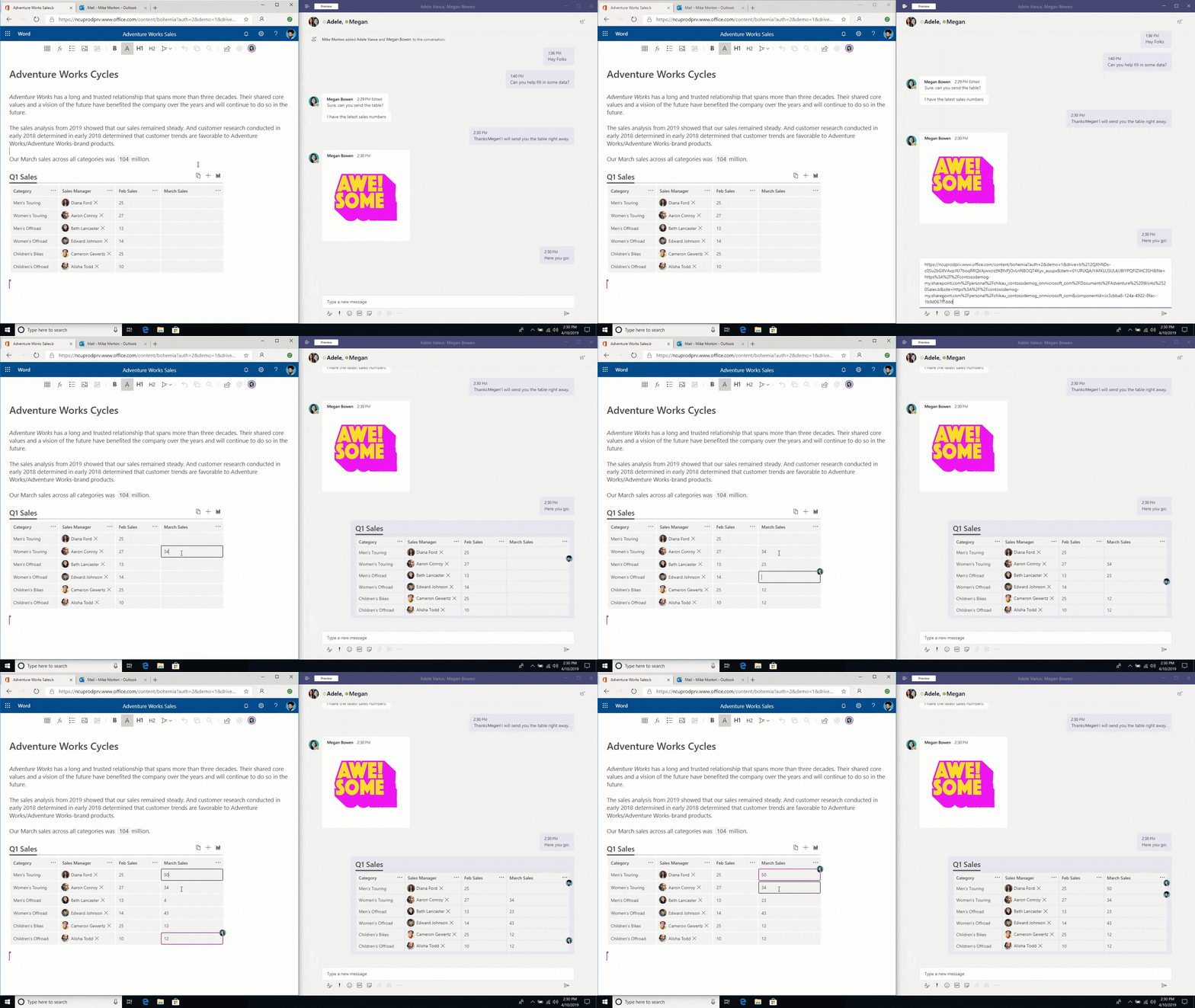
At its core, Fluid is a framework for building collaborative editing experiences, but because it can be integrated across applications, that also means that users will be able to, say, edit a document in an application like Word and then share a table from that document in Microsoft Teams (or even a third-party application like Slack, if Slack decided to integrate this technology). All of the changes sync in real time, of course.

In one of Microsoft’s demos, the company shows how a preview version of Word can’t just handle multiple simultaneous edits, but how users could use formulas to calculate a cell in a spreadsheet inside the text document to calculate a number that is then automatically updated.

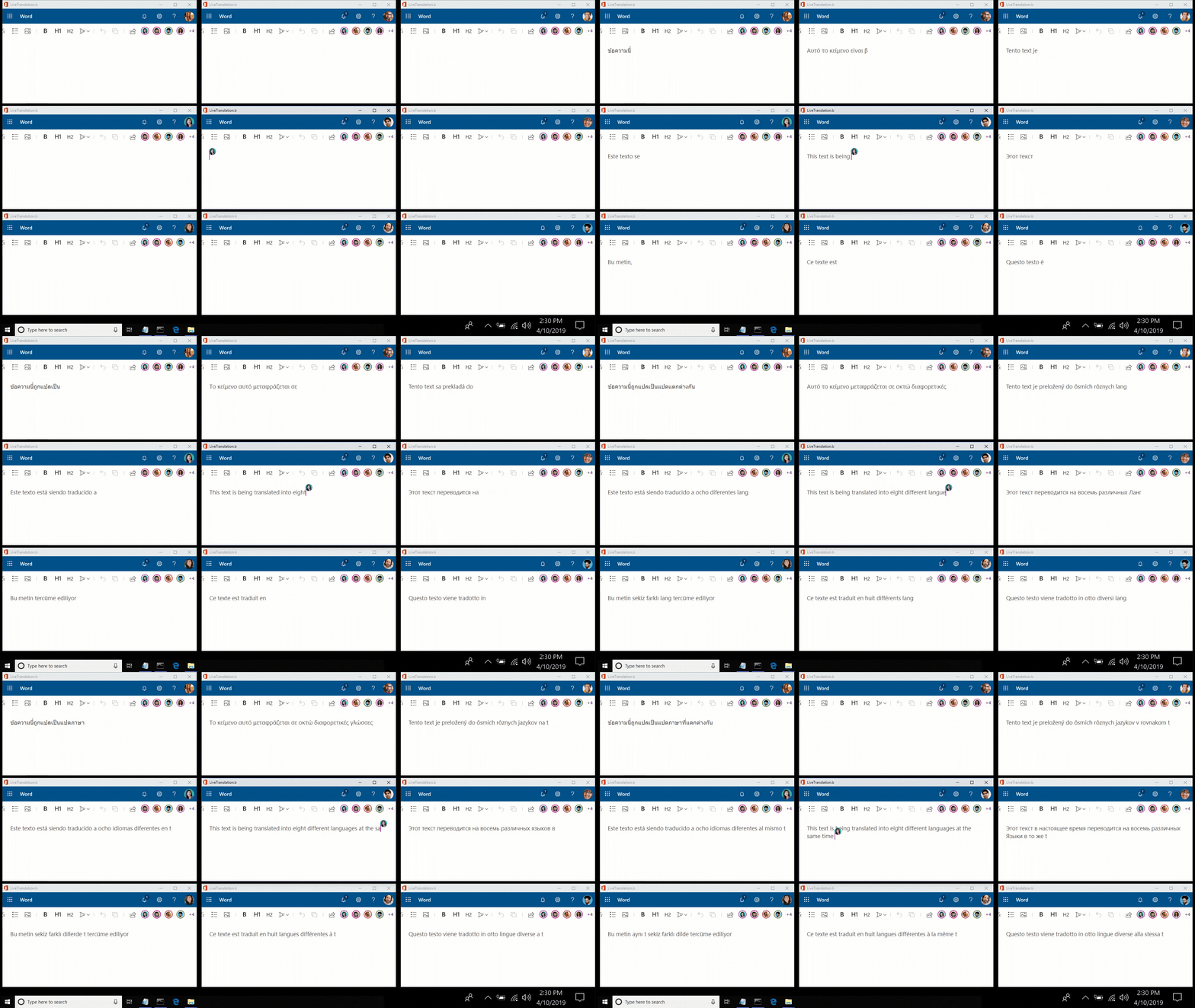
In another example, Microsoft shows how developers can create a document that is then automatically translated in real-time to a variety of languages, while still allowing everybody to edit it in their own language.

Collaborative editing isn’t new, of course, but Microsoft promises that the Fluid Framework will sync faster than anything else currently on the market and, what’s maybe more important, give developers the tools to deconstruct and reconstruct documents into different modular components so that they can then be integrated into different applications.

What’s maybe even more interesting is that in a press briefing ahead of today’s announcement, Microsoft PR head honcho Frank X. Shaw described Fluid as a way to “break down the barriers of the traditional document as we know it, and usher in the beginning of the free-flowing canvas.” And indeed, the Fluid Framework isn’t just about collaborative editing but it’s really a rethinking of how modern documents should work.

Some startups like Coda, Airtable and more established players like Smartsheet are putting some pressure on Microsoft to rethink its productivity suite by offering modern takes on document editing. That’s something Microsoft has to react to, but it’s also part of the company’s recent push to modernize its applications to better match how employees work today.

06 May 2019

Carta was just valued at $1.7 billion by Andreessen Horowitz, in a deal some see as rich

Carta, a seven-year-old, San Francisco-based startup, is the newest unicorn in tech. The company, which helps private and public companies, investors and employees manage their equity and ownership, tells TechCrunch it has raised $300 million in a Series E round at a $1.7 billion valuation, led by Andreessen Horowitz. Firm co-founder Marc Andreessen is also joining the board.

The round has been a poorly kept secret. The outlet The Information reported more than a month ago the details that Carta is sharing today. In fact, that leak has given people in the industry who understand Carta’s business time to quietly ask of its valuation whether it isn’t high for a company that does what it does.

Unsurprisingly, Carta argues that it is not, that it has evolved considerably from the outset — which is true. Though it launched as a way for venture capitalists to more easily manage their equity in private companies, by 2014, Carta, formerly known as eShares, had moved beyond replacing paper records for stock options and shares and into selling as a monthly service appraisals of the fair market value of private companies’ common stock in order to determine their strike price. It calls this  “409A-as-a-service.”

Carta has continued tacking on more services. Among the most notable was the launch last year of a fund administration product designed to help venture capital firms not only manage their portfolio stakes more easily but to more seamlessly work with their own investors or limited partners. Toward this end, Carta now provides portfolio analytics, including deal IRRs and cash management, it helps VCs distribute their quarterly investor reports and it integrates with third-party tax and payroll providers.

Carta has so many pieces in place that in a call on Friday, founder and CEO Henry Ward told us Carta is taking what may be its biggest step yet and becoming the first real “private stock market for companies.” Its massive new funding round is “about act three,” he said. “Now that you have this network of companies and investors all on one platform and the ability to transfer securities, you can build liquidity on top of it.” It’s this vision that enticed Andreessen to jump aboard, he suggested.

There’s unquestionably a need for a kind of private stock market. Private funding has been outpacing IPO funding for years, and it shows no sign of stopping. It’s largely why the SEC is trying to better enable people who are not accredited investors to access private company shares. Most of the U.S. has missed out on the wealth creation happening before companies go public or sell to other companies.

It’s also true that Carta has its hooks into a meaningful number of startups and venture firms at this point. The company says more than 700,000 shareholders are on its platform, that it works with more than 11,000 companies and that its fund administration product now serves 143 venture firms.

Still, some longtime industry observers wonder if Carta isn’t mashing together a lot of disparate, moderately lucrative businesses and positioning it as the next-big platform company, and the view resonates. For one thing, Carta likes to talk about assets managed, though it’s really talking about how much in assets the startups and VCs that use its platform control, which is $575 billion altogether. Carta — which now employs nearly 600 employees across seven offices — says its own annual revenue run rate is currently $55 million.

Relatedly, while Ward says Carta’s primary revenue right now is its software subscription business — another revenue stream is the money it’s paid by the venture firms that use it as a fund administrator — people who question Carta’s fundraising note the people-intensive nature of the kind of work that Carta has been systemizing. Yes, there’s a sophisticated software component, but Carta is more Accenture than Salesforce, and services businesses are valued very differently.

There’s also the question of growth. Ward points to the roughly 450 startups that are garnering venture funding each month right now — all potential customers for Carta. But plenty of companies are also quietly going out of business all the time, a process that will accelerate whenever this very long funding boom finally slows.

This newest business conveys the impression that big things are coming, though it doesn’t sound exactly like a private stock market as Ward describes it, either. Primarily, it won’t provide the relative transparency that stock markets do. We don’t think that’s the case, anyway. Ward was somewhat dismissive of questions we asked about how Carta’s newest business will be fundamentally different than that of secondary players in the market that are already making it possible for shareholders to value and transact shares.

Indeed, though Carta says it’s changing how assets are acquired, valued and transacted, Ward also did not respond to several simple follow-up queries sent to him on Friday about the mechanics of this new business, dubbed CartaX. Instead, he thanked us for our efforts to understand and articulate Carta’s business. Meanwhile, his press team told us it was limited in what it can say about how CartaX operates for now.

Carta has savvy investors. In addition to Andreessen Horowitz, this newest round includes Lightspeed Venture Partners, Goldman Sachs Principal Strategic Investments, Tiger Global, Thrive Capital and earlier backers Tribe Capital, Menlo Ventures and Meritech Capital.

No doubt that in valuing the company, they took into account that Solium — a Canada-based software-as-a-service for stock administration, financial reporting and compliance that was publicly traded — sold for $900 million in cash earlier this year to Morgan Stanley. That’s roughly double Carta’s total funding so far of $447 million.

If they were viewing the company based on its potential as a kind of more liquid market, they must also have considered that the parent company of both the NYSE and the Chicago Stock Exchange has a market cap of $6.28 billion.

Perhaps most important to them, Carta is now as well-positioned as anyone to capture and cater to the growing number of privately held companies looking to provide more of their employees liquidity and to cash out early investors. Add to the mix a mega-round and a star board member, and the company may well get to where Ward and his investors want it to go.

We’ll be watching to see.

06 May 2019

Watch Microsoft’s Build 2019 keynotes right here

It’s early May, and that means it’s time for all the big developer conferences. After Facebook F8 last week, this week, it’s Microsoft’s and Google’s turn, with Microsoft going first. The company is hosting its annual Build developer conference in Seattle this week, with about 6,000 developers in attendance. As far as we can tell, the event didn’t sell out, but Microsoft still expects about 6,000 attendees to be in Seattle.

Likely because Google scheduled its I/O keynotes for tomorrow, when Microsoft would traditionally hold its more technical Day 2 keynotes, Microsoft actually went ahead and announced virtually all of its cloud news at the rather odd time of 2pm PT last Thursday (including a minor HoloLens update). This means that today’s festivities will likely focus on the company’s other platforms, including Windows, Office 365, Microsoft 365 and others.

The event will kick off at 8:00am PT/17:00 CET with the finals of Microsoft’s Imagine Cup student competition, which are happening at Build for the very first time. Satya Nadella will then take the stage at 8:30am PT/17:30 CET for his “vision keynote.” This part of the event will likely be less technical and focus more on Microsoft’s overall vision for the future of work. This should last about an hour and a half.

Later in the morning, at 11am PT/20:00 CET, Microsoft is splitting the keynote into two, with simultaneous technical keynotes by Scott Guthrie and Rajesh Jha.

The company also promises a physical setup for the keynote, which could easily turn out to be a weird gimmick that takes away from the content of the event.

06 May 2019

Marshall continues to impress with new retro portable speakers

Marshall, the headphone company and not the loudspeaker company of the same vintage, today announced two new portable speakers. Like the company’s previous offerings, these speakers ooze a retro vibe. The two new speakers, the Stockwell II and Tufton, join the Kilburn II, but stand tall, literally and figuratively, apart from the rest of Marshall’s speakers as portable models with a vertical orientation, internal batteries, wireless capabilities and a rugged casing that should survive a trip outside.

The large Tufton impresses with clear, powerful sound even when on battery. The highs carry over a solid low-end. It’s heavy. This isn’t a speaker you want to take backpacking, but, if you did, the casing has an IPX4 water-resistant rating, so it’s tough enough to handle most weather. Marshall says the battery lasts up to six hours.

The smaller Stockwell II is much smaller. The little speaker is about the size of an iPad Mini, though as thick as a phone book. The internal battery is good for four hours and the casing is still tough, though sports an IPX2 rating, so it’s not as durable as the Tufton. The speaker is a bit smaller and the music quality is as well. The Stockwell II is a great personal speaker, but it doesn’t produce a pounding sound like the Tufton. Use the Stockwell II for a quiet campfire and the Tufton for a backwoods bonfire.

Sadly, these speakers lack Google Assistant or Amazon Alexa integration. Users either have to connect a device through a 3.5mm port or Bluetooth.

I’ve been a fan of every Marshall speaker I’ve tried. For my money, they feature a great balance of sound and classic design. Each one I’ve tried lives up to the Marshall name and these two new speakers are no different. Portability doesn’t come cheap. These speakers cost a bit more than their stationary counterparts. The small Stockwell II retails for $249 while the large Tufton is $399.