Category: UNCATEGORIZED

02 May 2019

Life-size robo-dinosaur and ostrich backpack hint at how first birds got off the ground

Everyone knows birds descended from dinosaurs, but exactly how that happened is the subject of much study and debate. To help clear things up, these researchers went all out and just straight up built a robotic dinosaur to test their theory: that these proto-birds flapped their “wings” well before they ever flew.

Now, this isn’t some hyper-controversial position or anything. It’s pretty reasonable when you think about it: natural selection tends to emphasize existing features rather than invent them from scratch. If these critters had, say, moved from being quadrupedal to being bipedal and had some extra limbs up front, it would make sense that over a few million years those limbs would evolve into something useful.

But when did it start, and how? To investigate, Jing-Shan Zhao of Tsinghua University in Beijing looked into an animal called Caudipteryx, a ground-dwelling animal with “feathered forelimbs that could be considered “proto-wings.”

Based on the well-preserved fossil record of this bird-dino crossover, the researchers estimated a number of physiological metrics, such as the creature’s top speed and the rhythm with which it would run. From this they could estimate forces on other parts of the body — just as someone studying a human jogger would be able to say that such and such a joint is under this or that amount of stress.

What they found was that, in theory, these “natural frequencies” and biophysics of the Caudipteryx’s body would cause its little baby wings to flap up and down in a way suggestive of actual flight. Of course they wouldn’t provide any lift, but this natural rhythm and movement may have been the seed which grew over generations into something greater.

To give this theory a bit of practical punch, the researchers then constructed a pair of unusual mechanical items: a pair of replica Caudipteryx wings for a juvenile ostrich to wear, and a robotic dinosaur that imitated the original’s gait. A bit fanciful, sure — but why shouldn’t science get a little crazy now and then?

In the case of the ostrich backpack, they literally just built a replica of the dino-wings and attached it to the bird, then had the bird run. Sensors on board the device verified what the researchers observed: that the wings flapped naturally as a result of the body’s motion and vibrations from the feet impacting the ground.

The robot is a life-size reconstruction based on a complete fossil of the animal, made of 3D-printed parts, to which the ostrich’s fantasy wings could also be affixed. The researchers’ theoretical model predicted that the flapping would be most pronounced as the speed of the bird approached 2.31 meters per second — and that’s just what they observed in the stationary model imitating gaits corresponding to various running speeds.

You can see another gif over at the Nature blog. As the researchers summarize:

These analyses suggest that the impetus of the evolution of powered flight in the theropod lineage that lead to Aves may have been an entirely natural phenomenon produced by bipedal motion in the presence of feathered forelimbs.

Just how legit is this? Well, I’m not a paleontologist. And an ostrich isn’t a Caudipteryx. And the robot isn’t exactly convincing to look at. We’ll let the scholarly community pass judgment on this paper and its evidence (don’t worry, it’s been peer reviewed), but I think it’s fantastic that the researchers took this route to test their theory. A few years ago this kind of thing would be far more difficult to do, and although it seems a little silly when you watch it (especially in gif form), there’s a lot to be said for this kind of real-life tinkering when so much of science is occurring in computer simulations.

The paper was published today in the journal PLOS Computational Biology.

02 May 2019

Activision Blizzard has five franchises lined up for its new Call of Duty esports league

Activision Blizzard said it has lined up five franchises for a new, city-based Call of Duty esports league.

Atlanta, Dallas, New York, Paris and Toronto will all play host to franchise teams that will compete in a professional league based on what is perhaps Activision Blizzard’s most successful title, the company announced after its earnings call earlier today.

Each city is partnering with existing Overwatch League team owners to leverage the existing framework that Activision has labored over for the past few years to lay the groundwork for a global, city-based Call of Duty league, the company said.

The first teams are Atlanta Esports Ventures, the joint venture owned by Cox Enterprises and Province Inc.; the Envy Gaming esports team which has been active in Call of Duty competitive play since 2007 and with Dallas Fuel Overwatch league team; New York’s Sterling.VC, a sports media company backed by Sterling Equities (owners of the New York Mets); c0ntact Gaming, which owns the Overwatch League team Paris Eternal and the Paris-based Call of Duty team; and Toronto’s OverActive Media.

“The upcoming launch of our new Call of Duty esports league reaffirms our leadership role in the development of professional esports. We have already sold Call of Duty teams in Atlanta, Dallas, New York, Paris and Toronto to existing Overwatch League team owners, and we will announce additional owners and markets later this year,” said Bobby Kotick, chief executive of Activision Blizzard. “Our owners value our professional, global city-based model, the success we have had with broadcast partners, sponsors and licensees, and the passion with which our players have responded to our events.”

The announcement came on the heels of an earnings announcement that saw the company report earnings of $1.825 billion for the quarter, beating its outlook of $1.715 billion but down slightly from the year ago period when the company brought in almost $2 billion.

The company credited esports and its  Overwatch League and the newly announced Call of Duty city-based league (including selling its first five teams to cities) for contributing to the better-than-expected numbers.

02 May 2019

A quiet London-based payments startup just raised among the biggest Series A rounds ever in Europe

You probably haven’t heard of Checkout, a digital payments processing company that was founded in 2012 in London. Apparently, however, investors have been keeping tabs on the low-flying company and like what they see. Today, Checkout announced that it has raised $230 million in Series A funding at a valuation just shy of $2 billion co-led by Insight Partners and DST Global, with participation from GIC, the Singaporean sovereign-wealth fund; Blossom Capital; Endeavor Catalyst; and other, unnamed strategic investors.

It’s the first institutional round for the company; it’s also one of the the biggest Series A rounds ever for a European company.

What’s so special about Checkout that investors felt compelled to write such big checks? In a sea filled with fintech startups, it’s hard to know at first glance what differentiates it — or whether investors merely spy a huge opportunity, particularly given the company’s recent revenue numbers.

Checkout helps businesses — including Samsung, Adidas, Deliveroo, and Virgin, among others — accept a range of payment types across their online stores around the world.  According to the WSJ, the fees from these services is adding up, too. It says Checkout’s European business generated $46.8 million in gross revenue and $6.7 million in profit in 2017, information it dug up through Companies House, the United Kingdom’s registrar of companies.

Checkout also plays into two huge trends that seem to be lifting all boats — the ongoing boom in online shopping, and the growing number of businesses using online payments. Little wonder that investors poured into payments startups last year more than four times what they invested in them in 2017 ($22 billion, according to Dow Jones VentureSource data cited by the WSJ).

Little wonder, too, that payments startups that have gone public are faring well, including the global payments company Adyen, which IPO’d on the Euronext in June of last year and has mostly seen its shares move in one direction since. Indeed, the company, valued at $2.3 billion by investors in 2015, is now valued at nearly $21 billion.

Though Checkout’s Series A is stunning for its size, according to Dealroom data, it isn’t the largest for a European company, though nearly. Among other giant rounds, the U.K.-based biotech company Immunocore closed on $320 million in Series A funding in 2015. In 2017, another U.K. fintech, OakNorth, a digital bank that focuses on loans for small and medium enterprises, raised $200 million in Series A funding. (It has gone on to raise roughly $850 million altogether.)

More recently, TradePlus24, a two-year-old, Zurich, Switzerland-based fintech company that insures the account receivables of small and mid-size businesses against default, also raised a healthy amount:  $120 million in Series A funding. Its backers include Credit Suisse and the insurance broker Kessler.

02 May 2019

Microsoft makes a push to simplify machine learning

Ahead of its Build conference, Microsoft today released a slew of new machine learning products and tweaks to some of its existing services. These range from no-code tools to hosted notebooks, with a number of new APIs and other services in-between. The core theme, here, though, is that Microsoft is continuing its strategy of democratizing access to AI.

Ahead of the release, I sat down with Microsoft’s Eric Boyd, the company’s corporate vice president of its AI platform, to discuss Microsoft’s take on this space, where it competes heavily with the likes of Google and AWS, as well as numerous, often more specialized startups. And to some degree, the actual machine learning technologies have become table stakes. Everybody now offers pre-trained models, open-source tools and the platforms to train, build and deploy models. If one company doesn’t have pre-trained models for some use cases that its competitors support, it’s only a matter of time before it will. It’s the auxiliary services and the overall developer experience, though, where companies like Microsoft, with its long history of developing these tools, can differentiate themselves.

Microsoft’s Eric Boyd

“AI is really impacting the way the world does business,” Boyd said. “We see 75% of commercial enterprises are doing more with AI in the next several years. It’s tripled in the last couple years, according to Gartner. And so, we’re really seeing an explosion in the amount of work that’s coming from there. As people are driving this forward, as companies are driving this forward, developers are on the front lines, trying to figure out how to move their companies forward, how to build these models and how to build these applications, and help scale with all the changes that are moving through this.”

What these companies — and their developers — need is more powerful tools that allow them to become more productive and build their models faster. At Microsoft, where these companies are often large enterprises, that also includes being able to scale up to the needs of an enterprise and offer the security guarantees they need.

As companies start adopting machine learning, though, they are now also getting to a point where they have moved from a few tests to maybe running a hundred models in production. That comes with its own challenges. “They are trying to figure out how to manage the life cycle of these models,” he said. “How do I think of the operational cycle? How do I think about a new model that I’m ready to deploy? When is it ready to go?”

Only a few years ago, the industry started moving to a DevOps model for managing code. What Microsoft essentially wants to move to is MLOps for managing models. “It’s very similar to DevOps, but there’s some distinct differences in terms of how the tools operate,” Boyd noted. “At Microsoft, we’re really focusing on how do we solve these problems to make developers way more productive, using these enterprise tools to drive these changes that they need across their organization.” This means thinking about how to bring concepts like source control and continuous development to machine learning models, for example, and that will take new tools.

It’s no surprise then that adding more MLOps capabilities is a major part of today’s releases. The company is integrating some of these functions into Azure DevOps, for example, that allows them to trigger release pipelines. The company is also giving developers and data scientists tools for model version control, for example, to track and manage their assets and to share machine learning pipelines.

These are very much tools for advanced machine learning practitioners, though. On the other side of the spectrum, Microsoft also announced a number of automated machine learning tools, including one that essentially automates all of the processes, as well as a visual model builder, which grew out of the Azure ML Studio. As Boyd told me, even companies like British Petroleum and Oregon’s Deschutes Brewery (try their Black Butte Porter if you get a chance) now use these tools.

“We’ve added a bunch of features into automated machine learning to simplify how people are trying to use this kind of work,” Boyd noted.

Microsoft today also launched a number of new services in its Cognitive Services lineup, including a new personalization service, an API for recognizing handwriting and another one for transcribing conversations with multiple speakers. The personalization service stands out here because it uses reinforcement learning, a different machine learning technique from most other Cognitive Services tools, and because it is far easier to implement than similar services. For business users, there’s also the Form Recognizer, which makes extracting data from forms easy.

What’s more interesting that the specific features, though, is that Microsoft is shifting its emphasis here a little bit. “We’re moving away from some of the first-level problems of ‘here’s the table stakes, you have to have an AI platform,’ to much more sophisticated use cases around the operations of these algorithms, the simplification of them, new user experiences to really simplify how developers work and much richer cognitive services,” Boyd explained.

02 May 2019

Microbiome testing service uBiome puts its co-founders on administrative leave after FBI raid

The microbiome testing service uBiome has placed its founders and co-chief executives, Jessica Richman and Zac Apte, on administrative leave following an FBI raid on the company’s offices last week.

The company’s board of directors have named John Rakow, currently the company’s general counsel, as its interim chairman and chief executive, the company said in a statement.

Directors of the company are also conducting an independent investigation into the company’s billing practices which is being overseen by a special committee of the board.

It was only last week that the FBI went to the company’s headquarters to search for documents related to an ongoing investigation. What’s at issue is the way that the company was billing insurers for the microbiome tests it was performing on customers.

“As interim CEO of uBiome, I want all of our stakeholders to know that we intend to cooperate fully with government authorities and private payors to satisfactorily resolve the questions that have been raised, and we will take any corrective actions that are needed to ensure we can become a stronger company better able to serve patients and healthcare providers,” Rakow said in a statement.

”My confidence is based on the significant clinical evidence and medical literature that demonstrates the utility and value of uBiome’s products as important tools for patients, health care providers and our commercial partners.” added Mr. Rakow.

It’s been a rough few weeks for consumer companies working on developing microbiome testing services and treatments based on those diagnosis. In addition to the FBI raid, the Seattle-based company, Arivale, was forced to shut down its “consumer program” after raising more than $50 million from investors, including Maveron, Polaris Partners and ARCH Venture Partners.

uBiome is backed by investors including Andreessen Horowitz, OS Fund, 8VC, Y Combinator, DNA Capital, Crunchfund, StartX, Kapor Capital, Starlight Ventures, and 500 Startups.

02 May 2019

Microsoft extends its Cognitive Services with personalization service, handwriting recognition APIs and more

As part of its rather bizarre news dump before its flagship Build developer conference next week, Microsoft today announced a slew of new pre-built machine learning models for its Cognitive Services platform. These include an API for building personalization features, a form recognizer for automating data entry, a handwriting recognition API and an enhanced speech recognition service that focuses on transcribing conversations.

Maybe the most important of these new services is the Personalizer. There are few apps and web sites, after all, that aren’t looking to provide their users with personalized features. That’s difficult, in part, because it often involves building models based on data that sits in a variety of silos. With Personalizer, Microsoft is betting on reinforcement learning, a machine learning technique that doesn’t need the kind of labeled training data typically used in machine learning. Instead, the reinforcement agent constantly tries to find the best way to achieve a given goal based on what users do. Microsoft argues that it is the first company to offer a service like this and the company itself has been testing the services on its Xbox, where it saw a 40% increase in engagement with its content after it implemented this service.

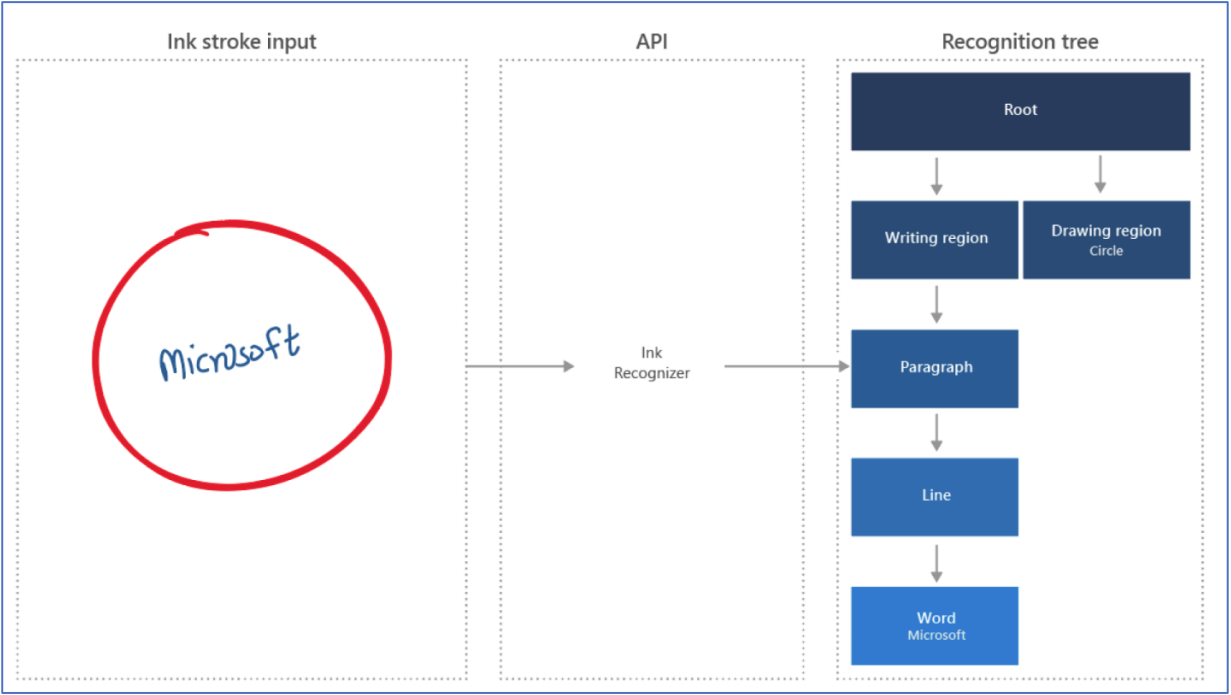
The handwriting recognition API, or Ink Recognizer as it is officially called, can automatically recognize handwriting, common shapes and documents. That’s something Microsoft has long focused on as it developed its Windows 10 inking capabilities, so maybe it’s no surprise that it is now packaging this up as a cognitive service, too. Indeed, Microsoft Office 365 and Windows use exactly this service already, so we’re talking about a pretty robust system. With this new API, developers can now bring these same capabilities to their own applications, too.

Conversation Transcription does exactly what the name implies: it transcribes conversations and it’s part of Microsoft’s existing speech-to-text features in the Cognitive Services lineup. It can label different speakers, transcribe the conversation in real time and even handle crosstalk. It already integrates with Microsoft Teams and other meeting software.

Also new is the Form Recognizer, a new API that makes it easier to extract text and data from business forms and documents. This may not sound like a very exciting feature, but it solves a very common problem and the service needs only five samples to understand how to extract data and users don’t have to do any of the arduous manual labeling that’s often involved in building these systems.

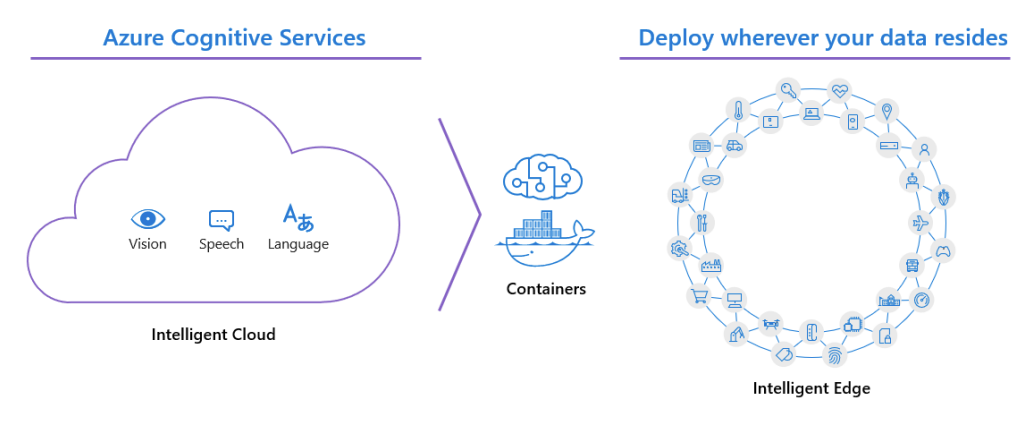
Form Recognizer is also coming to cognitive services containers, which allow developers to take these models outside of Azure and to their edge devices. The same is true for the existing speech-to-text and text-to-speech services, as well as the existing anomaly detector.

In addition, the company also today announced that its Neural Text-to-Speech, Computer Vision Read and Text Analytics Named Entity Recognition APIs are now generally available.

Some of these existing services are also getting some feature updates, with the Neural Text-to-Speech service now supporting five voices, while the Computer Vision API can now understand more than 10,000 concepts, scenes and objects, together with 1 million celebrities, compared to 200,000 in a previous version (are there that many celebrities?).

02 May 2019

Microsoft brings Plug and Play to IoT

Microsoft today announced that it wants to bring the ease of use of Plug and Play, which today allows you to plug virtually any peripheral into a Windows PC without having to worry about drivers, to IoT devices. Typically, getting an IoT device connected and up and running takes some work, even with modern deployment tools. The promise of IoT Plug and Play is that it will greatly simplify this process and do away with the hardware and software configuration steps that are still needed today.

As Azure corporate vice president Julia White writes in today’s announcement, “one of the biggest challenges in building IoT solutions is to connect millions of IoT devices to the cloud due to heterogeneous nature of devices today – such as different form factors, processing capabilities, operational system, memory and capabilities.” This, Microsoft argues, is holding back IoT adoption.

IoT Plug and Play, on the other hand, offers developers an open modeling language that will allow them to connect these devices to the cloud without having to write any code.

Microsoft can’t do this alone, though, since it needs the support of the hardware and software manufacturers in its IoT ecosystem, too. The company has already signed up a number of partners, including Askey, Brainium, Compal, Kyocera, STMicroelectronics, Thundercomm and VIA Technologies . The company says that dozens of devices are already Plug and Play-ready and potential users can find them in the Azure IoT Device Catalog.

02 May 2019

Microsoft launches a fully managed blockchain service

Microsoft didn’t rush to bring blockchain technology to its Azure cloud computing platform, but over the course of the last year, it started to pick up the pace with the launch of its blockchain development kit and the Azure Blockchain Workbench. Today, ahead of its Build developer conference, it is going a step further by launching Azure Blockchain Services, a fully managed service that allows for the formation, management and governance of consortium blockchain networks.

We’re not talking cryptocurrencies here, though. This is an enterprise service that is meant to help businesses build applications on top of blockchain technology. It is integrated with Azure Active Directory and offers tools for adding new members, setting permissions and monitoring network health and activity.

The first support ledger is J.P. Morgan’s Quorum. “Because it’s built on the popular Ethereum protocol, which has the world’s largest blockchain developer community, Quorum is a natural choice,” Azure CTO Mark Russinovich writes in today’s announcement. “It integrates with a rich set of open-source tools while also supporting confidential transactions—something our enterprise customers require.” To launch this integration, Microsoft partnered closely with J.P. Morgan.

The managed service is only one part of this package, though. Microsoft also today launched an extension to Visual Studio Code to help developers create smart contracts. The extension allows Visual Studio Code users to create and compiled Etherium smart contracts and deploy them other on the public chain or on a consortium network in Azure Blockchain Service. The code is then managed by Azure DevOps.

Building applications for these smart contracts is also going to get easier thanks to integrations with Logic Apps and Flow, Microsoft’s two workflow integration services, as well as Azure Functions for event-driven development.

Microsoft, of course, isn’t the first of the big companies to get into this game. IBM, especially, made a big push for blockchain adoption in recent years and AWS, too, is now getting into the game after mostly ignoring this technology before. Indeed, AWS opened up its own managed blockchain service only two days ago.

02 May 2019

Microsoft launches a drag-and-drop machine learning tool

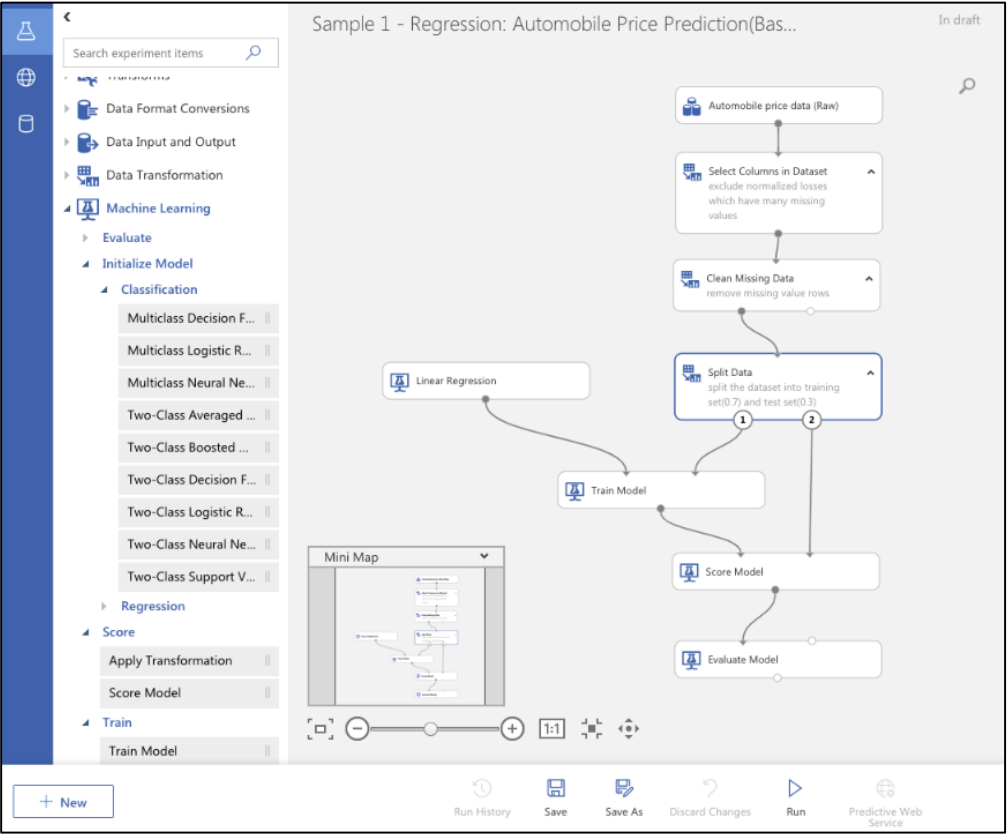
Microsoft today announced three new services that all aim to simplify the process of machine learning. These range from a new interface for a tool that completely automates the process of creating models, to a new no-code visual interface for building, training and deploying models, all the way to hosted Jupyter-style notebooks for advanced users.

Getting started with machine learning is hard. Even to run the most basic of experiments take a good amount of expertise. All of these new tools great simplify this process by hiding away the code or giving those who want to write their own code a pre-configured platform for doing so.

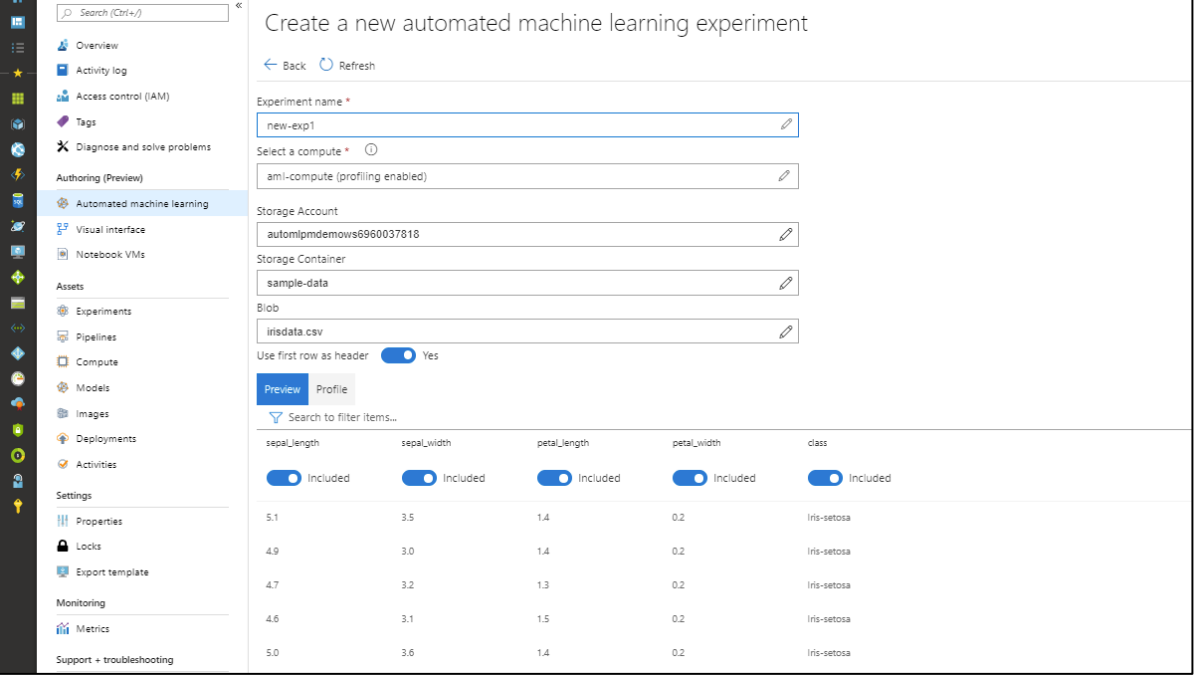
The new interface for Azure’s automated machine learning tool makes creating a model as easy importing a data set and then telling the service which value to predict. Users don’t need to write a single line of code, while in the backend, this updated version now supports a number of new algorithms and optimizations that should result in more accurate models. While most of this is automated, Microsoft stresses that the service provides “complete transparency into algorithms, so developers and data scientists can manually override and control the process.”

For those who want a bit more control from the get-go, Microsoft also today launched a visual interface for its Azure Machine Learning service into preview that will allow developers to build, train and deploy machine learning models without having to touch any code.

This tool, the Azure Machine Learning visual interface looks suspiciously like the existing Azure ML Studio, Microsoft’s first stab at building a visual machine learning tool. Indeed, the two services look identical. The company never really pushed this service, though, and almost seemed to have forgotten about it despite that fact that it always seemed like a really useful tool for getting started with machine learning.

Microsoft says that this new version combines the best of Azure ML Studio with the Azure Machine Learning service. In practice, this means that while the interface is almost identical, the Azure Machine Learning visual interface extends what was possible with ML Studio by running on top of the Azure Machine Learning service and adding that services’ security, deployment and lifecycle management capabilities.

The service provides an easy interface for cleaning up your data, training models with the help of different algorithms, evaluating them and, finally, putting them into production.

While these first two services clearly target novices, the new hosted notebooks in Azure Machine Learning are clearly geared toward the more experiences machine learning practitioner. The notebooks come pre-packaged with support for the Azure Machine Learning Python SDK and run in what the company describes as a “secure, enterprise-ready environment.” While using these notebooks isn’t trivial either, this new feature allows developers to quickly get started without the hassle of setting up a new development environment with all the necessary cloud resources.

02 May 2019

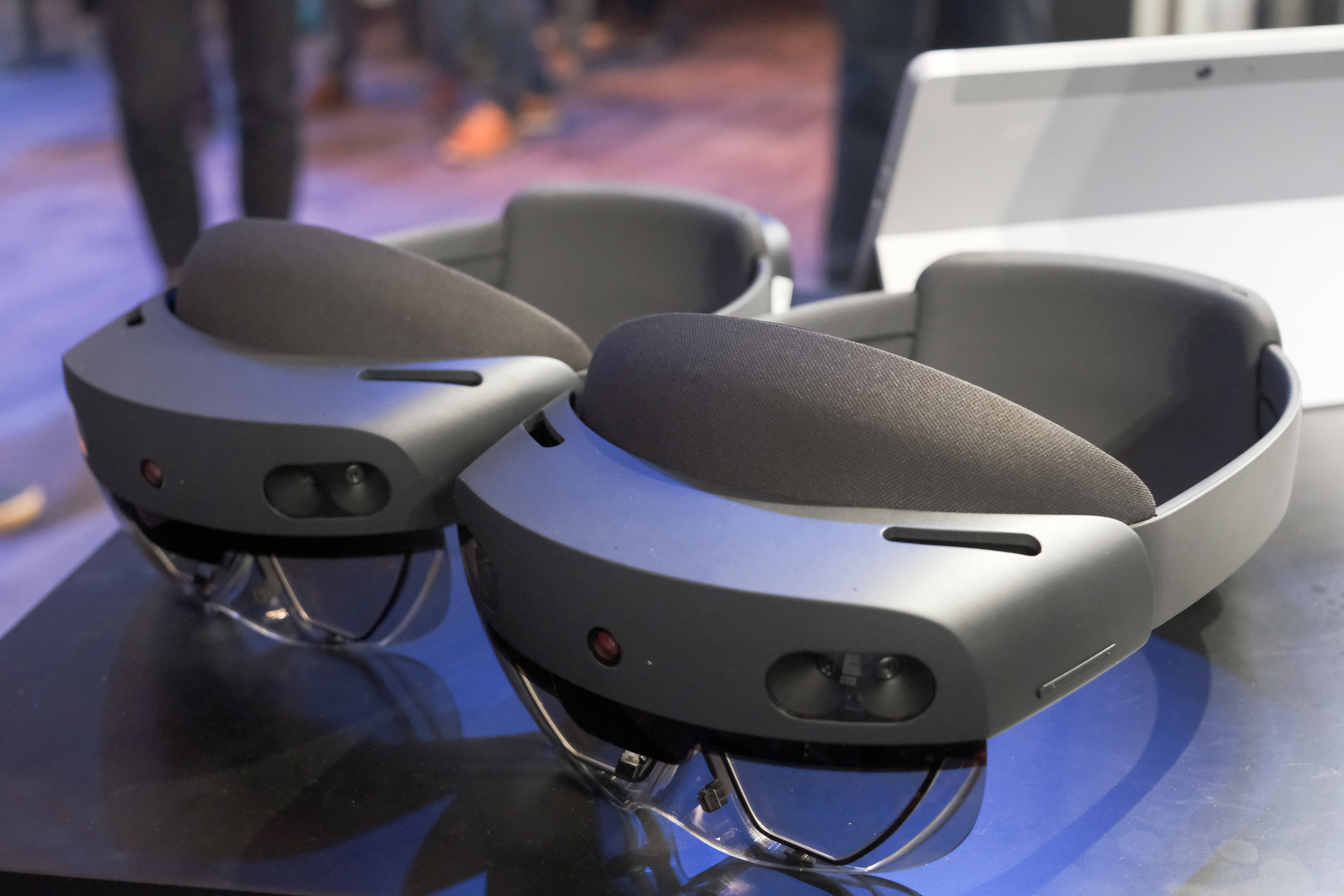
Microsoft announces the $3,500 HoloLens 2 Development Edition

As part of its rather odd Thursday afternoon pre-Build news dump, Microsoft today announced the HoloLens 2 Development Edition. The company announced the much-improved HoloLens 2 at MWC Barcelona earlier this year, but it’s not shipping to developers yet. Currently, the best release date we have is “later this year.” The Development Edition will launch alongside the regular HoloLens 2.

The Development Edition, which will retail for $3,500 to own outright or on a $99 per month installment plan, doesn’t feature any special hardware. Instead, it comes with $500 in Azure credits and 3-month trials of Unity Pro and the Unity PiXYZ plugin for bringing engineering renderings into Unity.

To get the Development Edition, potential buyers have to join the Microsoft Mixed Reality Developer Program and those who already pre-ordered the standard edition will be able to change their order later this year.

As far as HoloLens news goes, that’s all a bit underwhelming. Anybody can get free Azure credits, after all (though usually only $200) and free trials of Unity Pro are also readily available (though typically limited to 30 days).

Oddly, the regular HoloLens 2 was also supposed to cost $3,500. It’s unclear if the regular edition will now be somewhat cheaper, cost the same but come without the credits, or really why Microsoft isn’t doing this at all. Turning this into a special “Development Edition” feels more like a marketing gimmick than anything else, as well as an attempt to bring some of the futuristic glamour of the HoloLens visor to today’s announcements.

The folks at Unity are clearly excited, though. “Pairing HoloLens 2 with Unity’s real-time 3D development platform enables businesses to accelerate innovation, create immersive experiences, and engage with industrial customers in more interactive ways,” says Tim McDonough, GM of Industrial at Unity, in today’s announcement. “The addition of Unity Pro and PiXYZ Plugin to HoloLens 2 Development Edition gives businesses the immediate ability to create real-time 2D, 3D, VR, and AR interactive experiences while allowing for the importing and preparation of design data to create real-time experiences.”

Microsoft also today noted that Unreal Engine 4 support for HoloLens 2 will become available by the end of May.